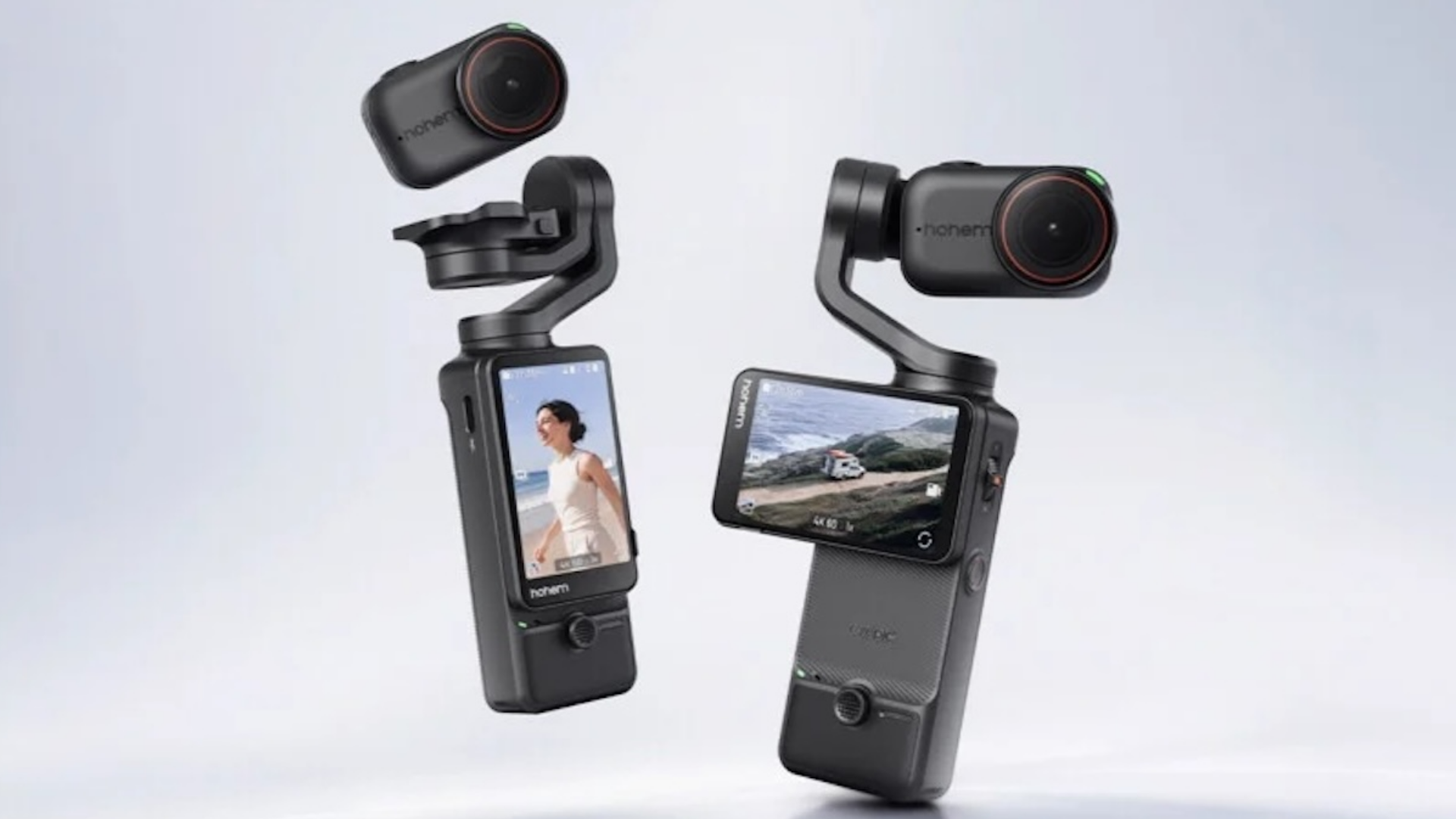
Hohem has unveiled the Eyepic, a new pocket gimbal camera that combines three-axis stabilisation with a detachable camera for hands-free filming.
Revealed at IFA 2026, the device can switch between stabilised handheld shooting and a wearable camera, while also recording native 4K vertical video at up to 60fps.
The detachable design is the main selling point. When attached to its gimbal, Eyepic works as a conventional handheld camera, with the three-axis stabilisation designed to keep footage smooth as you move. Detach the camera and the gimbal retracts and locks, allowing it to be worn using the included hat clip or lanyard.
That opens up some interesting possibilities for filming while cycling, walking, travelling or spending time with family. The camera can also attach to suitable magnetic metal surfaces and is waterproof to 10m (32.8ft), making it better suited to outdoor use than a typical pocket gimbal.
Advertisement
It shoots vertical 4K without cropping
Hohem has also put some thought into how Eyepic handles vertical video. Its 2.51-inch touchscreen can be rotated with one hand, and the camera physically reorients with the display when switching between landscape and portrait shooting.
Advertisement
In vertical mode, Eyepic can record at up to 2160 x 3840 at 60fps. That means the camera captures full-resolution 4K footage vertically rather than taking a horizontal recording and cropping it afterwards, which should be useful for TikTok, Instagram Reels and YouTube Shorts.
When the camera is detached, the gimbal’s touchscreen can still be used to change settings and provide a 1080p live preview from up to 10m away.
Advertisement
Hohem hasn’t confirmed pricing yet, but Eyepic is expected to launch in Q1 2027. The company says final specifications, configurations and availability will be confirmed closer to launch, so there’s still plenty we don’t know about the camera.
For now, though, Eyepic looks like a more versatile take on the pocket gimbal camera, particularly if you want one device that can handle both traditional handheld footage and hands-free recording. It will face competition from established options such as DJI’s Osmo Pocket range, but its detachable design gives Hohem a clear point of difference.
Microsoft is working to resolve an ongoing Exchange Online outage that is delaying email sent to and received from external domains.
The company first acknowledged this incident (tracked under EX1467029) at 02:19 AM EDT, when it began investigating reports of intermittent “Server busy” errors.
“This issue impacts users who may be attempting to send and receive email messages from external domains in Exchange Online. Users may experience intermittent ‘Server busy’ errors, affecting multiple mailboxes,” Microsoft said in a service alert seen by BleepingComputer.
“Depending on the client, the service should attempt to periodically retry sending the email previously impacted by the issue. If the initial sender received an NDR after 24-72 hours (different clients or email providers can vary), they will need to send a new email.”
Advertisement
Microsoft says these ongoing email issues may be aggravated by anti-spam protections, which further delay affected accounts.
The company did not provide a timeline for full remediation, saying it’s still investigating the issue to understand the root cause and will provide further details later today.
“Our initial investigation has identified instances where anti-spam protections may be contributing to impact for a subset of users,” the company added. “We are continuing to analyse the behaviour and review service telemetry to better understand the underlying cause and determine the most effective mitigation path.”
While Microsoft has yet to disclose which regions are impacted by this ongoing outage or how many users are affected, it has flagged it as an incident, which usually involves noticeable user impact.
Advertisement
In April, Microsoft also resolved an Exchange Online outage that prevented users from accessing mailboxes and calendars via Outlook on the web, Outlook desktop, Exchange ActiveSync, and other Exchange Online connection protocols. and Exchange Online mailbox access issues that intermittently affected Outlook mobile and macOS users for weeks.
More recently, in June, it addressed a similar service issue affecting the mail flow for customers in North America, Asia-Pacific (APAC), and Europe.
Earlier this week, on Thursday, it also mitigated a massive outage that caused authentication issues, connection problems, service delays and failures, and other issues for Microsoft 365 customers.
Update September 04, 10:26 EDT: Microsoft says that the EX1467029 issue has been resolved for new emails.
Advertisement
“Telemetry shows that the service is performing as expected for new emails and this is in line with organizations confirming that the issue no longer occurring,” Microsoft said. “We’re monitoring email queues and performing final validations to confirm the issue is fully resolved.”
Overall prevention scores can hide what happens after initial access. Once attackers are using valid credentials, prevention drops sharply.
The Blue Report 2026 measures defenses technique by technique across 338 million simulations run in customer production environments.
“Broadcom has burned all the bridges. While it may be easier to migrate to whatever this new [vSphere] Standard release is from vSphere 8, they have already shown both customers and [channel] partners they can’t be trusted,” he told Ars Technica.
You can find similar sentiments about trust in online discussions about VMware’s announcement.
“Too little, too late. We’ve moved on,” a Reddit user named bakonpie wrote about the upcoming update.
Broadcom’s stated interest in smaller sales comes as VMware rivals are openly vying for disgruntled VMware users, especially those that are SMBs.
Advertisement
“An updated vSphere Standard signals Broadcom heard the market, but three years of neglect, quote refusals, and VCF-only sales tactics have already pushed many SMBs toward Nutanix, Proxmox, and [Microsoft] Hyper-V,” Sumit Bhatia, co-author of the book Navigating VMware Turmoil in the Broadcom Era, told Ars. “Trust, not features, is the real deficit. Broadcom must prove sustained commitment—stable pricing, reliable renewals, and real investment—before SMBs treat vSphere Standard as safe again.”
A vSphere Standard update would need “predictable, published pricing with no surprise renewal spikes; a genuine capped-term or perpetual-style license option; core features, like [vSphere] vMotion, [vSphere High Availability], and backup integration without upsell gates; simplified per-socket licensing instead of per-core minimums built for hyperscale environments,” Bhatia said.
“VMware’s biggest challenge is convincing a burned market that Broadcom won’t repeat the bait-and-switch once switching costs make customers captive again,” he added
It’s unclear how important SMBs truly are to Broadcom’s overall goals. The conglomerate’s software business has thrived since its VMware takeover and made $8.75 billion in revenue (a 29 percent year-over-year increase) in fiscal Q3 2026.
Advertisement
Still, if Broadcom puts an effort into making vSphere Standard more appealing and, critically, accessible again, it could make some SMBs more comfortable sticking with VMware instead of spending time and money determining how to properly migrate.
Brisbane step up their bid to win a third flag in a row as they face Sydney in an enticing AFL 2026 Qualifying Final at the SCG. The Lions will be looking to prey on a Swans team missing several players as they hunt a place in the preliminary finals.
The reigning champions know exactly what it takes to reach and indeed win an AFL Grand Final, doing so in each of the past two years — including beating Sydney in the 2024 showpiece at the MCG. Brisbane look menacing again this time around, winning 10 of their last 11 matches by an average of 48 points to finish third in the ladder.
The Lions’ strong run of form included an impressive victory over the Swans at the Gabba in Round 16, as they gained revenge for a defeat by their Qualifying Final opponents way back in Round 1. They are set to be boosted by the return from injury of co-captain Hugh McCluggage, who missed the final three matches of the regular season with a calf issue.
Advertisement
Sydney finished second in the ladder, four points behind minor premiers Fremantle, but all is not well in the Swans camp. They are already without club-suspended quintet Isaac Heeney, Chad Warner, Nick Blakey, James Jordon and Riley Bice for the rest of the season, while Joel Amartey doesn’t make the 23 following an Achilles injury.
Swans’ poor record against the rest of the eventual top six is also a concern — their Round 1 victory over Brisbane at the SCG was their only win in six attempts — as they look to keep alive their hopes of a first flag since 2012.
The loser, of course, gets another crack in the upcoming semi-finals.
Read on as we explain how to watch Sydney vs Brisbane for free in the AFL 2026 Qualifying Final.
Advertisement
Can you watch Sydney vs Brisbane for free?
Yes. Sydney vs Brisbane is being shown on free-to-air Channel 7 in Australia, with live streaming available via 7Plus.
Outside of Australia? You can use a VPN to watch Sydney vs Brisbane for free on 7Plus.
Advertisement
How to watch Sydney vs Brisbane from anywhere
A VPN is handy piece of software that can make your device appear as if it’s back in your home country, so you can unlock your usual service. The best VPN right now? We recommend NordVPN – it does everything and comes with up to 75% off.
How to watch Sydney vs Brisbane live streams in the US
US viewers can watch live Sydney vs Brisbane coverage on FS2.
If you don’t have the channels on cable, FS2 is carried by Fubo, YouTube TV and Hulu + Live TV, each of which offers a free trial to new users.
Advertisement
Traveling away from the US? Use a VPN while you’re abroad to unlock your stream.
How to watch Sydney vs Brisbane live streams in the UK
Sydney vs Brisbane is being shown on TNT Sports 1 in the UK.
You can add TNT Sports to your Sky, Virgin Media or EE TV package, or get an HBO Max plan that includes TNT Sports. Prices start at £25.99/month if you commit to a year.
Advertisement
If you’re out of the UK but still want to watch the game on TNT Sports, explore the VPN route set out above, which will help you access your accounts from anywhere.
How to watch Sydney vs Brisbane live streams in Australia
Free-to-air Channel 7 is showing Sydney vs Brisbane in all regions of Australia, with live streaming available via 7Plus.
Just create an account using a valid Australia postcode (e.g. 2042).
Advertisement
Not in Australia right now? You can use a VPN like NordVPN to watch all the action as if you were back home.
How to watch Sydney vs Brisbane live streams in Canada
(Image credit: Other)
AFL fans in Canada can watch Sydney vs Brisbane on TSN2.
If you don’t have cable, the TSN Plus streaming service costs CA$24.99 a month to access what goes out on regular TSN.
Advertisement
If you’re out of Canada but still want to tune in, explore the VPN route set out above, which will help you access your accounts from anywhere.
What is the Sydney vs Brisbane start time?
The scheduled Sydney vs Brisbane kick-off time on Saturday, September 5 is 3.15pm AEST local time in Sydney, which is 1.15am ET / 6.15am BST / 1.15pm AWST. That’s 10.15pm PT on Friday, September 4.
What is the Sydney vs Brisbane head-to-head?
Sydney vs Brisbane have contested 63 competitive games. The Swans have a slightly better head-to-head record, winning 32 of them, while the Lions have claimed 30 victories.
This season, both teams have won one game each.
Advertisement
Can I watch Sydney vs Brisbane on my mobile?
Of course, most broadcasters have streaming services that you can access through mobile apps or via your phone’s browser. For example, 7Plus has a dedicated app.
We test and review VPN services in the context of legal recreational uses. For example: 1. Accessing a service from another country (subject to the terms and conditions of that service). 2. Protecting your online security and strengthening your online privacy when abroad. We do not support or condone the illegal or malicious use of VPN services. Consuming pirated content that is paid-for is neither endorsed nor approved by Future Publishing.
We spend hours testing every product or service we review, so you can be sure you’re buying the best. Find out more about how we test.
Garmin Fenix 9 Pro: one-minute review
(Image credit: Future / Julia Clarke)
When the Fenix 8 finally dropped in 2024, it quickly earned a reputation as the best Garmin GPS watch money can buy, even if that meant parting with a lot of money. I gave it a thorough test on the 11-day trek to Everest Base Camp, and with Garmin’s full suite of training features, a bright AMOLED display, microphone and speaker, plus an LED torch, there was no doubt that it was a big step up from the hugely popular Fenix 7.
Last year, Garmin followed the Garmin Fenix 8 up with the Garmin Fenix 8 Pro, which took the winning formula and added built-in LTE cellular and inReach satellite connectivity for phone-free messaging and SOS alerts. I tested it at the Love Trails running festival this summer, and genuinely started to doubt the rumours that a Fenix 9 could really be imminent. What more could there possibly be to add?
Advertisement
I went along to the Fenix 9 release in Chamonix to find out, and immediately afterwards I strapped the Fenix 9 Pro on and hit the trail. It hasn’t been off my wrist since, and between its refined design, faster processing, plus some very fun new navigation and tracking features, I can say it’s a clear improvement over the Fenix 8.
Latest Videos FromTechRadar
Built with a titanium case and bezel, the 9 Pro is lighter, more durable and resistant to the elements. Side-by-side with my 8 Pro, it looks nicer and more expensive thanks to a nanomoulding construction process that produces a more streamlined build without the need for screws. This also makes it significantly thinner, in all sizes, and with the arrival of a 43mm case option (which I’m testing), it’s more wearable day-to-day than its predecessor.
Advertisement
(Image credit: Future / Julia Clarke)
The 3,000-nit AMOLED display is brighter, sure (although not as bright as the 8 Pro’s MicroLED option), but it’s more the improved clarity that I find myself appreciating. The green light option that’s been added to the LED torch makes a fantastic difference to my night vision, whether I’m out late on the trail or trying to make a cup of tea in the middle of the night without disturbing my entire household.
Garmin is already the industry leader in maps, and the Fenix 9 Pro map loads faster and adds a new Perspective orientation, which I think is useful when navigating in urban areas, and it’s more useful to be able to see what side streets and road junctions are up ahead.
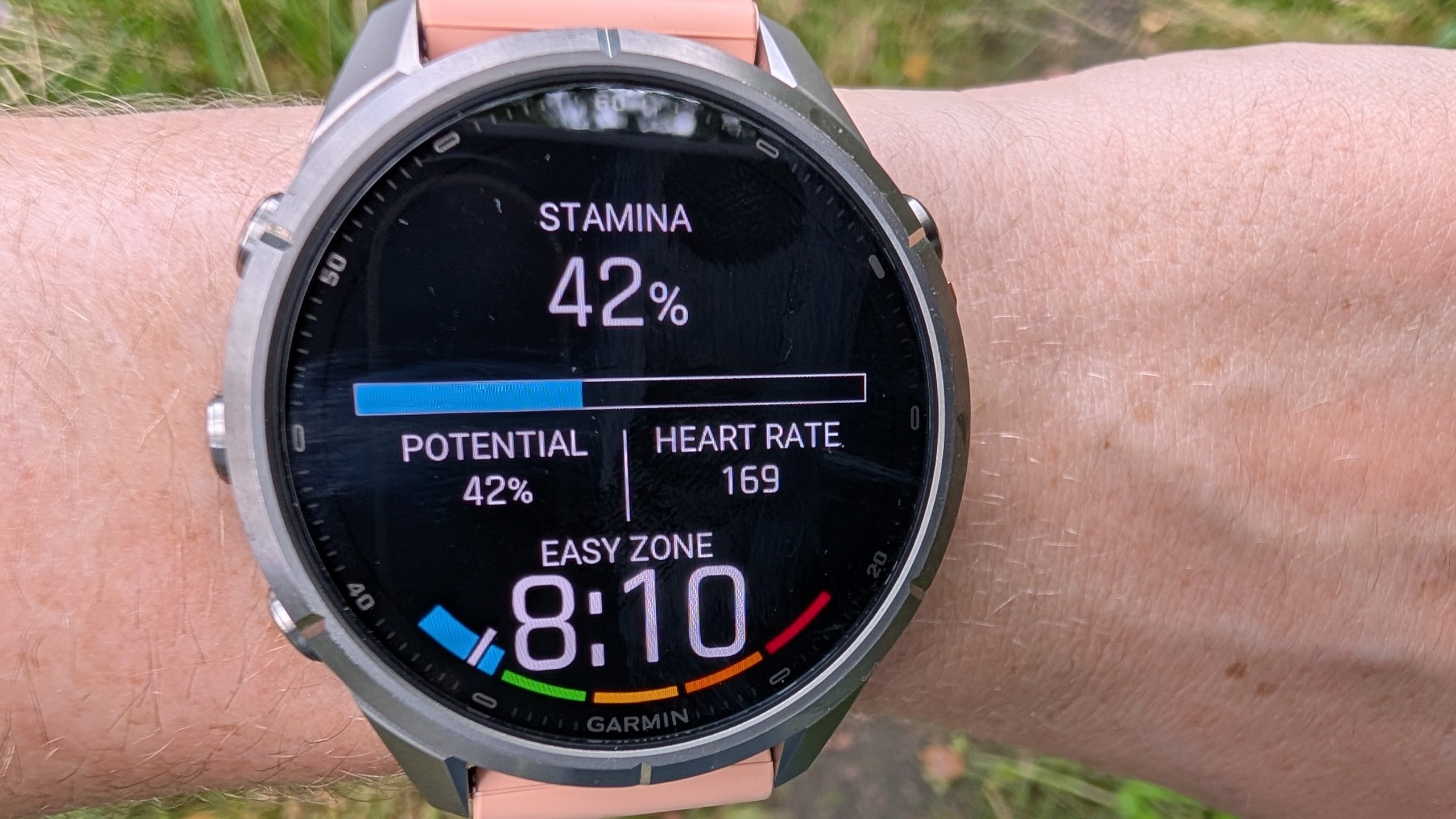
Rolled out with the Fenix 9 are improved Stamina readings, including new Stamina Zones, which I’ve started using to help me manage my effort and pace when I’m on the trail. Brand new is the Garmin Epic feature, which essentially lets you group workouts such as training blocks, long-distance treks or adventure holidays so you can see their cumulative effect. There are also updates to the Rucking activity mode, so it now reflects the additional energy demands of your pack weight.
Advertisement
Sign up for breaking news, reviews, opinion, top tech deals, and more.
Like the Fenix 8 Pro, this watch boasts LTE-M cellular technology, which means I can easily respond to messages and phone calls from my wrist so long as my phone is nearby. There are some improvements to LiveTrack and Location Tracking, which are useful for both urban explorers and long bouts in the wild.
For hikers like myself, inReach satellite connectivity means I can reach emergency response from almost anywhere on the planet, and it does mean I can message friends and family when I’m offline; however, that’s only through the Garmin Messenger app. When I spoke to Garmin’s Global Lead Product Manager Jon Hosler in Chamonix, he admitted that the brand’s functionality here does lag a bit behind competitors like Apple, which have more control over the cellular ecosystem, but he also stressed that the Fenix remains a performance watch first and foremost.
In summary, the Fenix 9 Pro plants a flag firmly at the GPS watch summit as a top-of-the-line option. It’s brighter, faster, ludicrously well-featured, and, unsurprisingly, even pricier. All of that said, this shouldn’t be considered a realistic upgrade for Fenix 8 users, who are already sporting a fantastic timepiece. But compared to anything before the 8, it’s better by a country mile.
Advertisement
Garmin Fenix 9 Pro: specifications
(Image credit: Future / Julia Clarke)
Swipe to scroll horizontally
Component
Garmin Fenix 9 Pro (model tested: 43mm with inReach)
Price
Advertisement
From $1,099.99 / £949.99 / AU$1,749
Dimension
43 x 43 x 13.3 mm
Weight
Advertisement
62 g (case only: 45 g)
Case/bezel
Titanium
Display
Advertisement
416 x 416 pixels, AMOLED (up to 3,000 nits)
GPS
GPS+Beidou+Glonass+Galileo+QZSS
Battery life
Advertisement
10 days (18 hours in activity mode, up to 50 hours in Max battery mode)
Connection
LTE, Satellite, Bluetooth, ANT+, Wi-Fi
Water resistant?
Advertisement
Yes, 10ATM
Garmin Fenix 9 Pro: price and availability
(Image credit: Future / Julia Clarke)
Starts at £949.99 for smallest 43mm
Prices for Fenix 9 start at £859.99
Reaches up to £1,209.99
The Fenix 9 Pro starts at $1,099.99 / £949.99 / AU$1,749 for the 43mm case size without inReach connectivity. With inReach, pricing starts at $1,199.99 / £1,029.99 / AU$1,899. The Fenix 9 Pro Solar is the same price, while the regular Fenix 9, which has a fibre-reinforced polymer case instead of titanium, starts at $999.99 / £859.99 / AU$1,599, and that’s for both the 43mm and 47mm.
The largest and most expensive 51mm Fenix 9 Pro with inReach is priced at $1,399.99 / £1,209.99 / AU$2199, and for that you get yourself a considerable increase in battery life with up to 31 days in smartwatch mode / 56 hours in activity mode compared to 10 days / 18 hours in the 43mm watch.
If you’re looking at a model with satellite technology, you’ll also need to factor in the cost of an inReach subscription if you actually want to use it (which starts at £7.99 / $7.99 a month), and all in, it definitely prices a lot of people out.
Advertisement
But the high price shouldn’t come as a surprise for anyone familiar with Garmin Fenix watches, and it’s hard to criticize it on being a high-performing piece of tech made with premium materials. There are plenty of other great options out there right now, including the Fenix 8, which you’re likely to find at a discount now that the Fenix 9 has been unleashed.
Garmin Fenix 9 Pro: design
Titanium case and bezel
Slimmer design
Brighter AMOLED display
I tend to feel a bit indifferent to changes in materials in my GPS watches, but I have to admit that the titanium case and bezel on the Fenix 9 Pro do make this look and feel like the expensive watch that it is. It’s sleeker and less rugged, down to both the materials and the nanomoulding process, which removes the need for screws.
It’s not totally fair to do a side-by-side comparison with the Fenix 8 Pro here because the latter isn’t available in 43mm, and that accounts for some of the 15g weight difference (equalling an almost 25% increase), but suffice to say that my Fenix 9 Pro is considerably lighter and thinner (to the tune of 16%, according to Garmin), and it has a less sporty aesthetic, which for me is a huge upgrade. If I’m being honest, this is the first Garmin watch I’ve tested that I’m happy wearing all of the time, though I might take it off to go to a wedding.
The AMOLED display is brighter than both my Fenix 8 and 8 Pro models, while the new, more subdued colour scheme is a bit more sophisticated, and it’s all a little sharper whether I’m looking at the stats of a run or using maps to navigate. I’m also amazed at how accurate the touchscreen keyboard is for typing out text messages, even on the smallest display available.
Advertisement
Other than that, everything will feel familiar to existing Fenix users, including the five-button setup, intuitive widget-based layout and responsive touchscreen (that is sometimes a little too responsive, pulling up the weather forecast when I’m in the shower). I’ve finally taken the time to add a bunch of widgets that I use frequently to my quick list, such as my endurance score and recovery estimates, last activity, moon phases and tides, so it’s ready to go before I even leave the house.
You’ll need the enormously comprehensive Garmin Connect app to view your metrics, and the slightly clunkier Garmin Messenger app if you want to use satellite technology for messaging, and if I were to pinpoint a weakness, I’d say it’s a shame that these two aren’t yet integrated into one app.
Garmin Fenix 9 Pro: features
(Image credit: Future / Julia Clarke)
Updated build
Better maps and LED torch
New training and adventure tools
First up, maps have been updated, and according to Garmin, they render 40% faster than on the 8 Pro and pan 30% faster when you’re searching for something up ahead. There’s a new perspective view added to the map orientation, which you can enable to better see what’s up ahead.
Also new are Stamina Zones, which use heart rate, pace and speed, and Hosler explains that they can be more useful than Heart Rate Zones for managing your effort. I’ve added them to the data screens in different activity modes, so I can see what zone I’m in and how much of my potential stamina I’m using. It’s more obvious in interval training, where I can see my zones dip and rise, but even on long plods it’s an interesting way to see how much gas I might have left in the tank at a current pace.
Advertisement
After an activity, I can view the top contributors to my Endurance Score (hiking for me), and see estimates of how long I should be able to run at a given pace: apparently over seven hours at my easy pace and nearly 20 minutes at max effort, which I’m yet to put to the test.
Garmin’s commitment to upgrading Rucking mode in recent years signals that this is an activity in ascendancy, and it now calculates better estimates of your energy expenditure rather than just being a way to catalogue different activities. The Fenix 9 allows you to set a calorie goal rather than distance or time, and to edit your pack weight mid-activity, which Hosler explains gives ruckers more accurate readings when they’re hiking uphill with water or rocks that they ditch for the descent. I often hike with a heavy pack, and now my activity report shows the difference between my calories burned through activity and the additional calories from the weight of my pack. This is mildly interesting, and could in theory change my fuelling strategy on a long thru hike.
A very fun – if non-essential – feature rolled out with the Fenix 9 and 9 Pro is called Garmin Epic, which lets you group workouts. When I heard about it in the press conference, I worried it might be similar to the gratuitous Adventure Journal in the Coros Nomad, but after testing it out, I genuinely love it. I gave it a quick test in Chamonix by grouping together all five hikes and trail runs I went on so I could see my cumulative distance, time on the trails and related health stats. But it’s also retrospective, so I’ve been able to make an Epic for last year’s trek to Everest Base Camp and finally see that entire, unforgettable trip as one adventure, from the map of my entire 11-day route to my total elevation gain. I can share my Epic with friends and family, but I can see the demand for Garmin to develop this into a video that users can share on social media.
As for connectivity, I have an active inReach subscription, so I’m able to signal for help from anywhere, but fortunately haven’t had to do so yet. This feature does rely on the Garmin Messenger app, and most of my friends and family are not on there, so this is an area where the Fenix lags behind the Apple Watch Ultra 3. In our conversations, Hosler was clear that he doesn’t consider this watch a true replacement for a satellite device like my Garmin inReach Mini 2, but more of a nice-to-have backup. LiveTrack has improved and now you can send a tracking link directly from your phone, which has good implications for urban runners as well as hikers.
Advertisement
And last but not least, I’d be remiss if I didn’t mention everyone’s favourite feature: the upgraded LED torch, which was being heralded by elite trail runners like Katie Schide, Tom Evans and Elsey Davis in Chamonix, who all said this was among their top Garmin features.
The Fenix 9 and 9 Pro have both added a green light option, which is better for night vision, though perhaps not quite as kind to your significant other when you’re looking for your running socks at 5 a.m. It may not be a substitute for a headtorch on a night run, but when your torch runs out of batteries, you’ll be glad you have your Garmin.
Add on to this all the features of the Fenix 8, and I can’t imagine what else you could possibly want from your watch.
Advertisement
Garmin Fenix 9 Pro: performance
(Image credit: Future / Julia Clarke)
Reliable sensors
Lightning-fast maps
Better night vision
The Garmin Fenix 9 Pro has all the same sensors as its predecessor, and after testing the two out on the same run, I’m confident that the readings were all virtually identical (though Hosler did explain that GPS differences can be down to the two watches being on different wrists and pointing in different directions).
I prefer the smaller case size, but it does mean I’m sacrificing battery life. My battery lost 17% during my first two-hour hike, which was a little shocking, but going forward I’ve been using Max Battery mode for longer sessions, which uses energy-saving measures and means a little less accuracy from GPS.
In the last 10 days, I did four short hikes and runs in Chamonix, two spin sessions, a pool swim, a long trail run, a short treadmill workout and a base run. I ran the battery all the way down, had to charge it once, and now it’s at 61%. In regular use, where I’ll typically have it in activity mode for at least 30 minutes a day, I expect to have to charge it once a week, and for a multi-day trek, I’d expect to be charging it at least every other day. That said, if you compare the 51mm Fenix 9 Pro and 8 Pro side by side, the 9 Pro has a better battery life, so if you’re after endurance, size up.
The display is really easy to see in all light conditions, brilliant sunshine and torrential rain and is really responsive when I lift my wrist, although this naturally declines as the battery runs low.
I put maps to the test straight away in Chamonix, charting a course to a mountainside cafe on the Tour du Mont Blanc, and it all renders so quickly and smoothly I don’t even really have to stop and think about it. Though I didn’t find the perspective view that helpful on the trails, it was great for navigating through the busy streets of Chamonix, which often poses a challenge as my phone doesn’t work well there. On my first test, I tried going off-course to see if the maps would reroute me and it didn’t work, but I’ve since been able to chalk that up to Garmin rolling out the watch to the world at the very same time I was testing it, as when I got back to Scotland, I went out on a 12k trail run and found the rerouting to work perfectly.
Advertisement
he LTE connectivity means I can leave my phone in my backpack, and that is really quite refreshing. I did send my boyfriend a link to track me on my most recent trail run via Garmin Connect, and he was able to do so, if not with a fair amount of apathy. I’ve also sent some test messages to my few Garmin Messenger contacts; it’s easy to type directly on the watch, and the message sends in a flash.
I don’t love wearing a watch to bed, but thanks to the slimmer design, I’ve been able to test out the sleep tracking, and it’s really accurate. My subsequent training Readiness scores and Recovery predictions have been pretty in line in accordance with how I feel.
Also at night, the green light function on the torch has quickly rendered my beloved red light nearly obsolete, making it easier than ever to creep around the house without bumping into things and even read a book in bed without turning my lamp on.
Advertisement
Garmin Fenix 9 Pro: should I buy?
(Image credit: Future / Julia Clarke)
Buy it if…
Your adventures take you into the wild
The Fenix 9 Pro has all the field tools for a backcountry adventure, and the technology to help get you out of there if things go wrong.
You’ve been running on a Fenix older than the 8 for years
Advertisement
Even the fabulous Fenix 7 pales in comparison to this one.
You’re a tech junkie with a big budget
All the best tech is on display here at an aspirational price.
Advertisement
Don’t buy it if…
You have the Fenix 8
The Fenix 8 is a cracking watch, and while we admit this is an upgrade, we can’t make a compelling case to switch
You’re saving up for a down payment on a house
This watch comes with some serious sticker shock
Advertisement
Also consider
How I tested
I’ve tested this watch from the French Alps to Scotland, over multiple hikes, trail runs and road runs, with a few indoor workouts on the bike, treadmill and in the pool thrown in. I’ve compared it with the Garmin Fenix 8 Pro and the Suunto Vertical 2 for good measure, and spent hours talking to Garmin experts and poring over the data in the watch and on the Garmin Connect app.
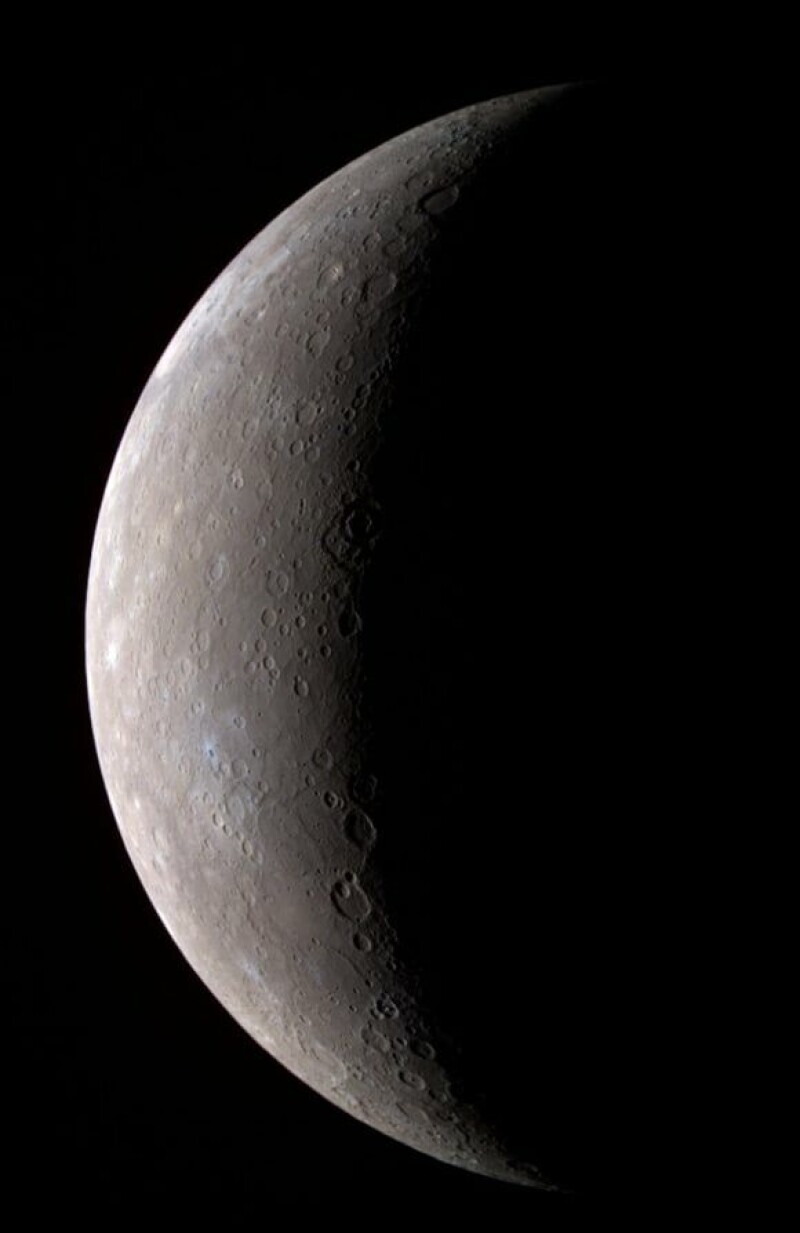
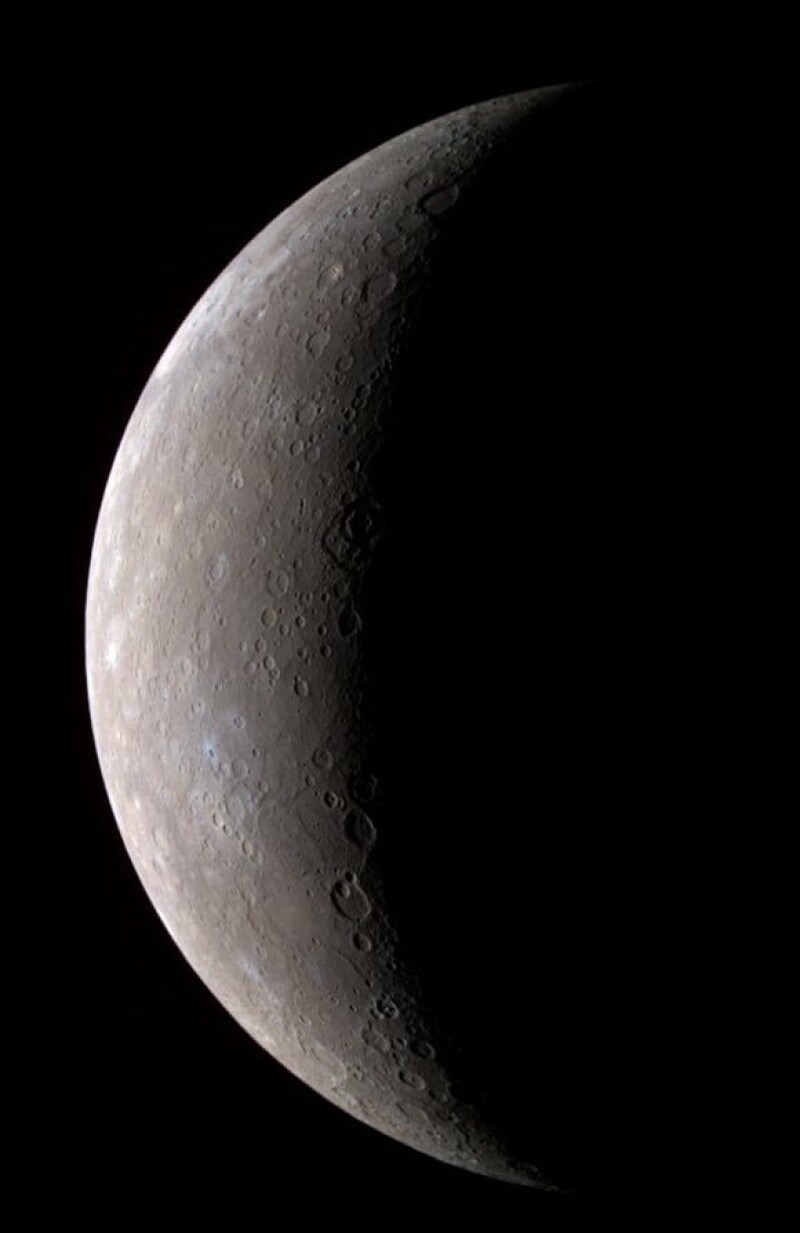
Eight year after launch, Mercury probe and its Mercury Transfer Module consciously uncouple as orbit approaches
After nearly eight years, ESA and JAXA’s BepiColombo spacecraft is finally nearing Mercury, as engineers begin the arrival sequence by jettisoning the power module that got it this far.
Advertisement
The spacecraft stack separated from the Mercury Transfer Module (MTM) on September 3 at around 1400 CEST. After a tense few minutes, controllers confirmed that a preliminary Doppler signal had been detected, indicating that the MTM had separated successfully; by 1552 CEST, it was confirmed that signals had been picked up, indicating that all had gone to plan. The solar panels of the Mercury Planetary Orbiter (MPO) were charging the spacecraft’s batteries.
The next stage involves dropping into orbit around Mercury on November 21. Then the Mercury Magnetospheric Orbiter (MMO) – aka Mio – will be released between December 9 and 10, and a week later MPO will start moving to its final orbit over 480 x 1500 km, with science commencing in April 2027.
The arrival is a year later than planned. BepiColombo was supposed to have been orbiting Mercury in December 2025, but problems with the spacecraft’s Solar Electric Power (SEP) system meant the trajectory had to be rethought, which extended the spacecraft’s cruise.
BepiColombo is no stranger to Mercury and has performed six flybys of the planet since 2021. It has also conducted flybys of Venus and Earth following its 2018 launch.
Advertisement
The spacecraft is an impressive example of international cooperation. The MPO and MTM are ESA contributions, while the MMO comes from JAXA. ESA also provided the sunshield to protect the MMO during transit. This sunshield will be ejected after the MMO is released.
The MPO is the big brother of the BepiColombo partnership, with a main body measuring 2.4 x 2.2 x 1.7 m and a mass of 1,230 kg (including an 85 kg science payload). JAXA’s MMO is 1.8 m in diameter and 1.1 m high, and weighs 255 kg (45 kg of which is the science payload). While MPO is 3-axis stabilized and nadir-pointing, MMO will be spin-stabilized at 15 rpm, with its spin axis 90 degrees to the Sun.
The goal of the mission is a study of Mercury, “from the structure and dynamics of its magnetosphere and how it interacts with the solar wind, to the properties of its large iron core and the origin of its magnetic field.”
The initial mission at Mercury is planned for one Earth year (approximately four Mercury years), although it could be extended by another Earth year. ®
An anonymous security researcher who uses the “Nightmare Eclipse” handle released a CrowdStrike Falcon zero-day exploit named “FalconFlank” that lets attackers escalate privileges on up-to-date Windows systems.
Nightmare Eclipse says the new vulnerability (which has yet to be assigned a CVE ID) affects devices running the latest versions of Windows 11 and Windows Server, as well as CrowdStrike’s endpoint security platform.
Successful exploitation allows attackers to spawn a command prompt with SYSTEM privileges by abusing CrowdStrike Falcon’s Office malicious macros remediation feature.
“FalconFlank is a 0day privilege escalation that abuses the office malicious macros remediation in Crowdstrike Falcon Sensor, obviously by the time I drop this Crowdstrike would already have detections for it so if you want to test you either have to add it to the exclusions or obfuscate the PoC and change the dll load technique,” Nightmare Eclipse said. “As of now it works in a fully updated windows 11 25H2 / Windows Server 2025 with Crowdstrike Falcon.”
Advertisement
When BleepingComputer asked for more details about this vulnerability, a CrowdStrike spokesperson said the company is investigating the researcher’s claims and advised customers to disable the Microsoft Office Windows policy setting that toggles the security software’s File Suspicious Macro Removal feature.
“We are actively investigating these claims and advise customers to disable the Microsoft Office File Suspicious Macro Removal Windows policy setting,” the spokesperson told BleepingComputer. “Customers remain protected through the Cloud Anti-malware for Microsoft Office Files settings. We refer customers to the FalconFlank Tech Alert in the CrowdStrike support portal.”
Although the company also shared this link to the tech alert regarding the FalconFlank zero-day exploit, the advisory is not public, and customers can access it only if they have an account on CrowdStrike’s support portal.
CrowdStrike has yet to reply to a second email asking for a copy of the FalconFlank tech alert and whether a CVE ID has been assigned to the FalconFlank flaw.
Advertisement
Kaspersky, Avast, Nvidia, and Microsoft zero-days
This week, Nightmare Eclipse has also released privilege escalation zero-day exploits for Kaspersky Antivirus for Endpoint (named HardBreacher) and GenDigital Avast Antivirus (PrettyPrague), as well as a denial-of-service zero-day for Nvidia (named GreenSection) that will crash the system.
Cybersecurity expert Kevin Beaumont confirmed on Thursday that the privilege escalation exploits released by Nightmare Eclipse this week are real and work.
Nightmare Eclipse has also disclosed multiple zero-day exploits targeting multiple Microsoft products since April, including Microsoft Defender, BitLocker, and various other Windows components.
These Microsoft zero-days are known as LegacyHive, RoguePlanet, BlueHammer, RedSun, YellowKey, GreenPlasma, MiniPlasma, and UnDefend. While the LegacyHive, RoguePlanet, YellowKey, GreenPlasma, and MiniPlasma flaws have since been fixed, the other security flaws remain zero-days and are still awaiting an official patch.
Advertisement
After Nightmare Eclipse disclosed the first zero-days, Microsoft responded with warnings of legal action against people engaging in “malicious activity causing real harm to our customers,” prompting many to believe that the company was directly threatening the security researcher.
Overall prevention scores can hide what happens after initial access. Once attackers are using valid credentials, prevention drops sharply.
The Blue Report 2026 measures defenses technique by technique across 338 million simulations run in customer production environments.
I have mostly stayed away from the whole saga surrounding the drip-drip leaks of Grand Theft Auto 6 content prior to the big reveal on Netflix because, frankly, I am quite wary of giving companies the kind of guerilla marketing wins that sometimes look like this sort of thing. That being said, I really don’t think any of this was some attempt to Streisand what is perhaps already the most anticipated game of all time into wider news coverage, and that is backed up by the DMCA blitz Take-Two has gone on to try to bury all of these leaks.
Those attempts shouldn’t surprise anyone, honestly. Take-Two and Rockstar have historically abused copyright law to try to bury all kinds of content it doesn’t like, whether it’s been game leaks in the past, or cheats for its games, or mods it doesn’t like.
But it sure would be nice if the partners Take-Two has doing the abusing of the law could bother to be somewhat accurate and not ensnare a gaming journalist for the crime of posting publicly available court documents.
On August 26, Stephen Totilo — the longtime Kotaku editor-in-chief who now runs the Game File newsletter — was locked out of his X account over a DMCA notice filed on Take-Two’s behalf. Totilo’s offense, by his own account, was an August 21 post reporting that judges in New York had cleared Take-Two to subpoena Microsoft and Discord in the leak hunt.
Attached were three screenshots: the two court orders, and a tweet from Xbox CTO Scott Van Vliet pledging Microsoft is “working closely with Take-Two and Rockstar Games.” No leaked footage. No gameplay. The orders are public records that never once use the words Grand Theft Auto.
Advertisement
After Totilo complained both to ExTwitter and on ExTwitter, his account and the original tweet were restored and the DMCA claim had been rescinded. There is no indication that Take-Two or the vendor it was using to police the internet for these leaks have said anything publicly or privately to Totilo. They just nuked his account over a bullshit claim that ten seconds of review would indicate contained no infringing material, then restored it when the mistake was called out, and now are trying to Homer Simpson back into the bushes as though nothing happened.
But what makes this all the more frustrating is that the DMCA notice doesn’t make a copyright claim. It appears to make a trademark claim, instead.
It asserts Take-Two’s international figurative trademark on Grand Theft Auto — a trademark on the logo — and argues there is a likelihood of confusion, the legal test for whether the public might mistake someone else’s goods for the brand’s.
In plain English: a copyright takedown form was used to make a logo complaint, against images that contain neither the logo nor a single frame of the game.
The notice describes the reported content — federal court orders included — as “video/audiovisual recording,” and certifies all of it as accurate under penalty of perjury, the line that makes knowingly lying on the form a federal offense.
Advertisement
Everyone in this portion of the story, save Totilo, sucks at their jobs. Take-Two has clearly partnered with a company, Ebrand, that is not up to the task of properly policing IP on the internet. Ebrand messed this up badly, asserting a trademark claim via a copyright mechanism. ExTwitter, for its part, apparently demonstrated just how little review is done on this sort of thing, having taken down the tweet and suspending a journalist’s account over this absolute mess of a DMCA claim. It’s a full cornucopia of stupid on display for the world to see.
And this isn’t a one-off. Gamestop was also ensnared in Take-Two’s DMCA blitz. Its crime appears to be sharing a promotional screenshot for GTA6 that Rockstar specifically made available for use publicly.
That exact shot has run on dozens of outlets since May 2025, IGN and Mashable included. Take-Two’s vendor filed federal paperwork against a promotional asset Rockstar distributes so that outlets will use it.
There is simply no point to the DMCA’s “under penalty of perjury” language if it can’t be employed in a situation like this. At the very, very best, Ebrand and Take-Two are guilty of unbelievable negligence in issuing these DMCA takedowns and copyright strikes. When we’re talking about even temporary takedowns of the work of journalists, the First Amendment implications become obvious.
Advertisement
To allow these companies to simply slink away without penalty is why this sort of thing keeps happening. If there are no consequences to a carpet-bomb approach to copyright (trademark?) takedowns, then they will, and do, continue.
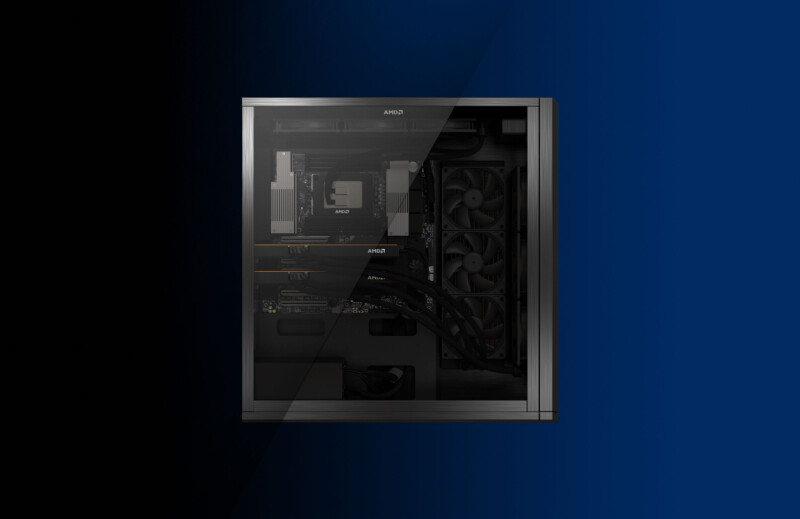
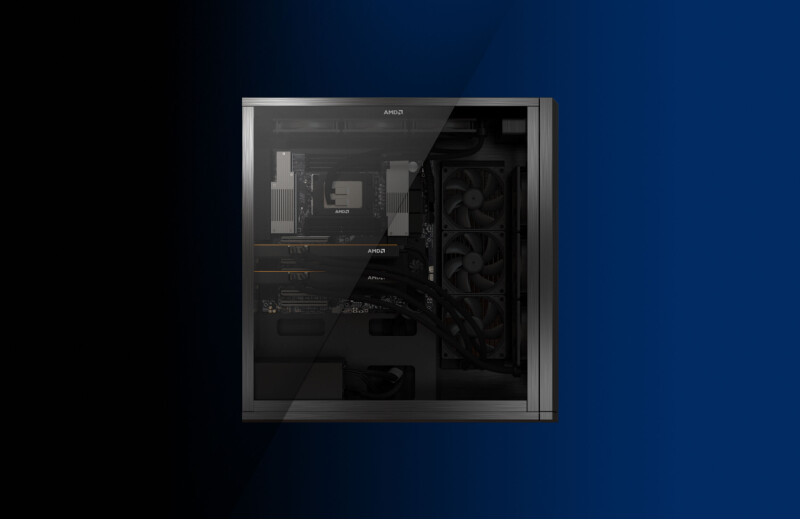
AI workstation promises to put up to 576 GB of HBM3e and 16 TB/s of memory bandwidth on your desk
Machine learning researchers have a new and expensive option for doing local AI. AMD just raided its spare parts bin and cobbled together a DGX Station rival boasting up to 576 GB of HBM3e memory that it’s calling the Threadripper Halo.
Advertisement
Announced at IFA 2026, the system, which is set to launch next year, marks the first time that AMD’s Instinct accelerators have been offered in a workstation form factor.
But much like the AI Halo we reviewed earlier this year, the Threadripper Halo isn’t packing anything we haven’t seen before. The liquid-cooled system is powered by a 96-core Threadripper PRO 9995WX, which you may recall made its debut in 2025. The CPU is backed by up to 2 TB of DDR5 memory and up to 2.6 TB of combined system memory.
As you probably already guessed, AMD is positioning the box as a local AI workstation for researchers. From what we gather, the system can be had with up to four of the company’s PCIe-based Instinct GPUs — though the systems displayed at IFA only showed two installed.
Launched back in May, the MI350P is essentially half of an MI350X that’s been crammed into a PCIe form factor. Each accelerator packs 144 GB of speedy HBM3e good for 4 TB/s of memory bandwidth, and up to 4.6 petaFLOPS of FP4 compute. But we’ll note that it’s in its 600 W configuration. When deployed in the Threadripper Halo, we expect AMD will be running the cards in the more sedate 450 W config.
Advertisement
Combined, the Threadripper Halo promises up to 576 GB of HBM3e and 16 TB/s of memory bandwidth, enabling the system to run models exceeding a trillion parameters in size (at four-bit precision) entirely in GPU memory. By offloading some of the model to system memory, the system should be able to run the largest open weights models, like Moonshot.AI’s 2.8 trillion-parameter Kimi K3.
The ability to run large frontier-class models on your desk won’t come cheap and may not be available in every market, at least not without an electrical service upgrade. AMD hasn’t shared pricing, but as configured, we expect it to sell for somewhere between $100,000 and $150,000.
A quad MI350P system is going to push the limits of a standard North American power outlet unless AMD either underclocks the cards from 600 W to 300 W or it mandates a 20 amp circuit. This might explain why the system AMD showed off at IFA only had two.
At this price and power level, the system is well positioned to compete with Nvidia’s own high-end AI workstation, the DGX Station. Announced at GTC in 2025, the DGX Station features a 252 GB B300 GPU and a 72-core Grace CPU along with 496 GB of LPDDR5x memory, and it retails for around $100,000 if you can find one in stock.
Advertisement
The House of Zen boasts that the system offers up to 3.4x the total system memory and more than twice the memory bandwidth of the DGX Station, which should give an edge in LLM inference, assuming tensor parallel operations don’t bottleneck on the CPU’s PCIe bus.
AMD says the Threadripper Halo will be available starting next year. ®
Art TVs have spent years asking buyers to accept a peculiar bargain: your television can look like framed artwork when nobody is watching it, provided you are willing to surrender some picture quality when everyone sits down for movie night.
Skyworth thinks that compromise has gone on long enough.
The new Skyworth C2 Canvas Art TV, making its official debut at CEDIA Expo 2026, takes several of the display technologies introduced with the company’s much more expensive CE1 Canvas Elite and brings them to 55, 65 and 75-inch screen sizes.
The headline upgrade is QD Mini LED backlighting with more than 400 full-array local dimming zones, combined with 1,000 nits of claimed peak brightness, a 144Hz refresh rate and Skyworth’s OmniView Matte Screen. HDR support includes both Dolby Vision and HDR10+. That makes the C2 considerably more interesting than another television wearing a decorative wooden frame.
The difference between the existing C1 Canvas Art TV and the new C2 is substantial.
Skyworth’s current C1 uses a conventional LED backlight, operates at 60Hz and is rated at just 300 nits of brightness. It already offers a matte anti-glare screen, flush mounting, Art Mode and an included wood grain frame, but its specifications clearly place aesthetics ahead of serious HDR performance.
The C2 changes that equation with 1,000 nits, 144Hz and full-array local dimming with more than 400 zones. In other words, this is not Skyworth changing the frame, adding three new Van Goghs and calling it a product cycle.
Advertisement
The additional brightness should provide significantly more headroom for HDR content, while local dimming gives the television far greater control over dark and bright portions of an image than the C1’s conventional LED backlight can provide. How well those 400-plus zones actually control blooming and black levels will require testing, but the underlying hardware represents a major step forward.
The 144Hz refresh rate also makes the C2 considerably more appropriate for gaming and fast-moving content than its 60Hz predecessor, although Skyworth has not yet provided a complete C2 connectivity specification or confirmed its HDMI configuration in the announcement.
That omission is worth keeping in mind before anyone starts assigning HDMI 2.1 ports that Skyworth has not actually announced.
Advertisement. Scroll to continue reading.
Advertisement
Skyworth Canvas Elite CE1 100-inch Art TV
How Close Is It to the Canvas Elite CE1?
Skyworth introduced the CE1 Canvas Elite at CEDIA Expo 2025 in 86 and 100-inch sizes, and eCoustics subsequently named the 100-inch model our Best Art TV at CEDIA 2025.
The CE1 remains the superior display on paper. It uses QD Mini LED technology with more than 1,000 local dimming zones, reaches a claimed 2,000 nits, offers a 144Hz refresh rate and uses the same OmniView Matte Screen technology. The 86-inch model is currently listed at $3,999 and the 100-inch version at $5,999.
The C2 therefore does not duplicate CE1 performance. It effectively moves some of the flagship’s display architecture further down the Canvas range, with roughly half the claimed peak brightness and substantially fewer dimming zones.
That is actually the more important story.
A 100-inch $5,999 lifestyle television is impressive, but it is not going into most living rooms. A 55, 65 or 75-inch version using full-array QD Mini LED technology has the potential to compete for considerably more wall space.
Advertisement
Pricing will determine whether that potential becomes reality.
Skyworth Canvas TV
Is the Skyworth C2 Really Unique?
Not entirely, and this is where the marketing department needs to put the champagne back in the refrigerator.
Mini LED is no longer exclusive to Skyworth among televisions designed to double as artwork. Samsung’s 2026 The Frame Pro uses its Neo QLED Mini LED platform and supports 144Hz operation, while TCL has also introduced QD Mini LED technology in its premium NXTVISION Art TV lineup.
What makes the C2 Canvas Art TV noteworthy is the combination Skyworth is bringing into its standard Canvas range: full-array QD Mini LED backlighting, 400-plus local dimming zones, 1,000-nit claimed brightness, 144Hz operation, Dolby Vision, HDR10+ and a matte display.
Advertisement
There is another important distinction. Skyworth supports Dolby Vision, which Samsung still does not offer on its televisions.
The company has also integrated a subwoofer and Dolby Atmos audio into the C2. Skyworth goes so far as to suggest an external soundbar is unnecessary. We will reserve judgment on that one until somebody actually listens to it; physics has not yet received notice that it has been cancelled.
CEDIA Is Also Part of the Story
The C2 is not being positioned solely as another television destined for a pallet at Costco.
Advertisement. Scroll to continue reading.
Advertisement
Skyworth says the new models will be distributed through its authorized custom integration dealer network, which helps explain the CEDIA Expo debut. The company supports integration with control platforms including Control4 and Crestron, while installers can order customizable frames through Skyworth’s partnership with Hydro Frames.
Standard frame finishes include black, silver, gold, white and walnut, with additional custom patterns and colors available.
That flexibility matters in a category where the television is supposed to disappear into the room rather than announce that somebody bought another 75-inch black rectangle.
Skyworth Is Becoming Harder to Ignore
The C2 also arrives during a much more consequential year for Skyworth in North America.
Advertisement
Earlier in 2026, Panasonic announced a strategic partnership with Skyworth for its U.S. television business, with Skyworth USA assuming a major operational role covering sales, marketing and logistics while the relationship also leverages Skyworth’s manufacturing scale. That development followed Skyworth’s growing push into premium Art TVs and outdoor displays in the American market.
That makes products like the C2 worth watching beyond their individual specifications. Skyworth is no longer merely another enormous Chinese television manufacturer trying to establish name recognition with American consumers. Its role in the North American television business is expanding rather quickly.
The Bottom Line
The Skyworth C2 Canvas Art TV looks like a far more consequential product than the C1 it follows.
Moving from a 300-nit, 60Hz conventional LED platform to 1,000 nits, 144Hz and more than 400 full-array local dimming zones changes the conversation from “television that looks attractive on the wall” to something that could potentially deliver credible home theater performance as well. It is not the first premium Art TV to embrace Mini LED, and Skyworth still needs to reveal important details including pricing, complete connectivity and final availability.
Advertisement
But if the C2 arrives at the right price, Samsung, Hisense and TCL will have another serious competitor hanging on the wall. And this one appears rather more interested in what happens after you stop looking at the Monet.
Price & Availability
The Skyworth USA website currently lists pricing at $1,399 to $2,499, but we haven’t received any information when it will become available yet.
A hamburger photographed by SP Studio, left, and then tweaked by Scott Pitts in Pallat to add tomatoes. (Pallat Images)
Longtime Seattle food photographer Scott Pitts spent 25 years capturing commercial imagery for major brands, and now he’s using that quarter-century archive to train Pallat. The new AI-powered production system is designed to eliminate costly reshoots while keeping real studio craft at the center of generative creative tech.
The platform combines fine-tuned open-weight models with Pitts’ extensive archive, allowing art directors to modify existing campaign assets — like swapping a topping, adjusting lighting, or changing a backdrop — in minutes through software rather than starting from scratch back on set.
Pitts, a non-technical founder operating Pallat out of his Seattle photo studio, SP Studio, leads a nimble five-person team and believes domain experience is key to competing with generic AI platforms.
“We are close to the problem, and we’re looking at it from a photographic eye,” he said. “We’re making sure those outputs look photoreal, that they’re not going to get labeled as AI slop.”
To show how the tech works in practice, Pitts points to a recent shoot for a national steakhouse client. After completing a complex setup for a burger — carefully layering the bun, patty, sauce, and greens — the brand asked if they had shot a version with tomatoes. Rather than calling back the food stylist and rebuilding the set, Pitts dropped the final image into Pallat, prompting it to add two tomato slices with subtle condensation, natural translucency, and accurate drop shadows cast onto the cheese below.
Advertisement
In another instance, a commercial seafood brand prepared packaging imagery for a buyer presentation, only for the client to ask to see the fish presented on a white plate instead. Pallat to the rescue.
Scott Pitts, founder of Pallat, inside his Seattle photography studio at Fishermen’s Terminal in Interbay. (Mark Malijan Photo)
Commercial photographers have long tweaked images using tools like Photoshop, but Pitts sees AI as the natural next step for advertising workflows — distinct from news photography, where image manipulation remains out of bounds. Where Photoshop requires painstaking manual editing to adjust a scene, Pallat handles complex lighting, translucency, and material physics in minutes based on a simple prompt.
The startup recently signed its first enterprise customer and is currently working directly with brands as a hands-on production partner while building toward full software access.
Pitts sees the technology not as a threat to his craft, but as a natural progression. He started his career shooting four-by-five film, then transitioned to digital and video. AI is another progression.
“My hope is that me building Pallat is sort of this bridge between tech and creative,” Pitts said. “Craft is still important. Judgment and taste are still probably some of the most important things.”
Advertisement
Continue reading for Pitts’ answers to our Startup Spotlight questionnaire.
In 50 words or less, give us your startup’s elevator pitch.
Pallat is a photographer-led AI production system built for food and beverage brands, born from a working photo studio. It combines licensed photography with generative workflows to help brands scale photo-centric content while maintaining the creative control expected from commercial photography.
What problem are you obsessed with solving?
Advertisement
I’ve spent 25 years watching brands solve the same problem: invest in a shoot, then ultimately need more usable imagery than the initial shoot was designed to deliver. Generic generative tools can create images, but weren’t built around the quality, control and production standards food and beverage brands require.
I’m obsessed with using AI to close the gap. Pallat gives brands a way to extend photography they’ve already invested in and create new production-ready imagery grounded in a licensed dataset and the standards of a traditional photoshoot.
What surprised you after talking to customers?
Because we’re so close to the problem we’re solving, their need for a solution and high bar for quality didn’t surprise me.
Advertisement
What did was how much generated imagery disrupted their existing workflows. There is no obvious owner, no review path and no shared vocabulary for feedback and approvals. Brands are asking us to help establish new workflows, and that has turned out to be almost as important as building the tech itself.
How has AI changed the way you build your company?
AI is a big part of why a five-person team can build something like this. Our tech stack is built on open-weight models that we fine-tune using proprietary training data, while foundation models support planning and a handful of day-to-day operations.
Not to oversimplify it, but in many ways my role at Pallat parallels production. I built a team of experts, defined the problem we’re solving and established the criteria for the output. A growing part of my work is getting those standards out of my head and structuring evals so they hold when I’m not in the room.
Advertisement
What’s one thing people misunderstand about your startup?
That Pallat is trying to replace photography. It’s far from it.
Practical photos are important inputs, and our studio continues to create net-new ones to expand the system. Visual trends are always evolving, so datasets powering creative tech cannot be static. The future of production is hybrid: practical photography and generative imaging working together, with each deployed where it creates the most value.
What’s the toughest decision you’ve made in the past year?
Advertisement
Resisting the urge to broaden Pallat before we establish product-market fit. The goal isn’t to automate every step as quickly as possible. It’s to understand which problems in the workflow are best solved through software.
What’s the one piece of advice you give to other entrepreneurs?
I truly believe some of the most interesting AI companies will come out of service businesses where the founder knows the industry exceptionally well — where the friction lives, which shortcuts a client will notice, and what excellence looks like in their vertical.
I spent a long time assuming my 25 years in photography was the past and AI was the future, and I had that backwards. The years on set that sharpened my taste and judgment, our dataset and the client relationships are the true compounding assets.
Advertisement
We’ll know our company has made it when…
When an art director at a food or beverage brand drafts a shot list dividing it into two columns: “Capture as Practical Photography” and “Generate in Pallat.”
When that becomes a normal way of planning, Pallat will have done what we set out to do.



























































You must be logged in to post a comment Login