Connect with us

NewsBeat

We cannot keep reopening the wounds of the Drumcree dispute

Published

on

Belfast Live

“I find it depressing that someone born in 1997 can now be an adult and still be watching the same argument being played out”

Advertisement

I was born in 1997, just months before the creation of the Parades Commission. I have therefore spent my entire life in a Northern Ireland where the arguments over parading have been part of the political landscape. But I was born too late to remember the Drumcree stand-offs themselves, when Portadown became one of the most obvious symbols of just how fragile the peace was.

I grew up in West Belfast. Today, I live in a predominantly nationalist village in Co Antrim, just a few hundred yards from an Orange Hall. The Orange Order marches through the village several times a year. I see the banners and the collarettes, hear the drums and watch the parade pass my home. Importantly, nobody has a problem with it.

That experience has probably given me a more nuanced view of the parading debate than some might expect. I don’t believe that an Orange parade passing through a nationalist area is, by definition, an act of provocation, as communities can live alongside each other’s traditions, even when they don’t share them.

But Drumcree is different because the Garvaghy Road is not simply another contested parading route. It carries memories of some of the worst years of the Troubles and of a dispute which caused enormous hurt to the people who lived there.

Advertisement

The names of the people who died in and around that period are not historical footnotes to the residents of Portadown. The murder of the Quinn brothers, Jason, Mark and Richard, after their home was petrol-bombed in 1998 remains particularly difficult to comprehend. Three children died because of the poisonous atmosphere surrounding a dispute over a parade.

The Portadown Orangemen have applied to march along the Garvaghy Road again, this time with 60 people, without bands or music. They have said there will be no violence or disruption, whatever the outcome of the application. That is obviously preferable to what happened in the 1990s. But I cannot help thinking that the decision to pursue this route again is politically tone-deaf. The lodge has applied to walk the road repeatedly for almost 30 years. So why now?

We are months away from an election. People are worried about the state of our public services, the cost of living, housing and the pressures on household finances. Yet once again, we find ourselves being drawn towards a culture war over identity and symbols.

The title of Jamie Bryson’s latest book, Culture War, perhaps tells us something about the political direction in which parts of unionism are moving. I don’t think that is where we should be going.

Advertisement

There is a legitimate argument about cultural rights here. The Orange Order should be able to celebrate its traditions and heritage. But cultural expression does not have to mean insisting on exercising that right in precisely the way, and in precisely the place, which causes the greatest hurt to another community.

That principle should not be particularly controversial. Nor should nationalists be allowed to wash their hands of responsibility. There has been a failure on both sides to properly acknowledge the history of Drumcree and the role that each community played in perpetuating the divisions around it.

If we genuinely want to move beyond the past, residents must be prepared to consider accommodation too.

Advertisement

There is a positive example in Ardoyne, where dialogue has helped produce an arrangement under which the return parade can take place a day later than the main Twelfth celebrations. It isn’t everything the Orange Order wanted, nor is it everything residents might have wanted. But it provides a way through the impasse. Something similar should be attempted at Drumcree.

The Parades Commission has an important role to play, particularly after the recent High Court ruling, which criticised the way its decision was reached. Its processes must be lawful and its decisions credible.

But the Parades Commission cannot resolve the underlying problem. Nor can another legal determination.

What is needed is a new mechanism for dialogue involving the Orange Order, residents and political representatives, with the aim of finding an accommodation which allows both communities to retain their dignity. I worry that the current approach risks doing the opposite.

Advertisement

The Drumcree dispute became a symbol of something much bigger than a parade. It became wrapped up in questions of identity, power, policing, violence and whether one community believed the other was prepared to recognise its rights. Those wounds have not disappeared simply because the barricades have.

There is a danger in reopening them without first asking what we have learned from what happened before. I don’t know whether too much water has passed under the bridge for a settlement to be found. I hope it hasn’t.

Because I find it depressing that someone born in 1997 can now be an adult and still be watching the same argument being played out.

We inherit our history. We don’t get to choose the circumstances into which we are born. But we do have the chance to choose our future. That should mean something more than repeatedly returning to the arguments of the past.

Advertisement

For all the latest news, visit the Belfast Live homepage here and sign up to our daily newsletter here.

Source link

Advertisement
Continue Reading
Click to comment

You must be logged in to post a comment Login

Leave a Reply

NewsBeat

Israel and Hezbollah battle over a strategic hill in Lebanon

Published

on

Israel and Hezbollah battle over a strategic hill in Lebanon

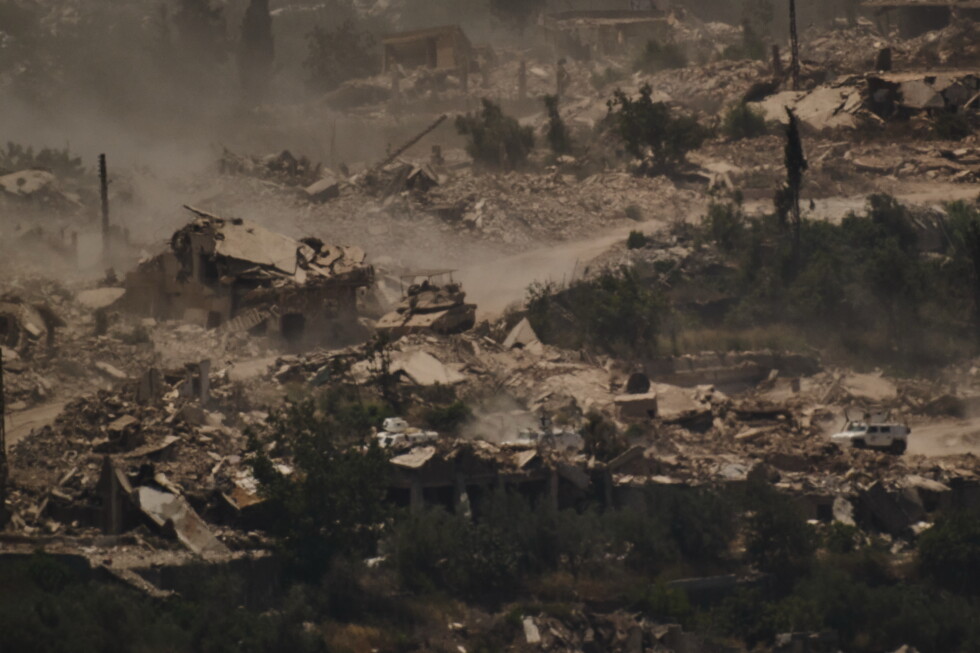
BEIRUT (AP) — Since a ceasefire went into effect between Israel and Hezbollah more than two months ago, fighting has stopped in much of Lebanon, but not on a strategic hill overlooking parts of a main southern city.

In recent weeks, Ali Taher hill has been the scene of daily shelling and airstrikes by Israel’s military. Hezbollah, a militant group backed by Iran, has repeatedly attacked Israeli forces in the area with drones.

The United States, which is mediating talks between Lebanon and Israel, had wanted Hezbollah to hand over the hill to the Lebanese army as part of larger plan to disarm the militant group and dismantle its infrastructure. But Hezbollah has refused.

Lebanon and Israel reached a framework agreement in June stating Israel will withdraw from Lebanon as Hezbollah is disarmed. The militant group was not a party to the negotiations and has rejected calls to disarm in areas north of the Litani river, which is where Ali Taher is located.

Advertisement

A full-on battle over this hill near the city of Nabatiyeh could escalate fighting across the country, and unrest in Lebanon complicates efforts to resolve the war in Iran.

On Thursday night, Israel’s military announced it had taken “operational control” of Ali Taher and a network of tunnels beneath it that Hezbollah uses to shelter its fighters and weapons. It is unclear how far Israel’s control extends. Just before Israel’s announcement, its air force was still targeting the hill, according to Lebanese state media.

There has been no official statement from Hezbollah since Israel’s announcement.

Advertisement

Advertisement

US pushes Lebanon to pressure Hezbollah

Hezbollah firmly rejected a proposal from the Lebanese government to hand over Ali Taher to the country’s army. It fears Israel would then seize control of the hill from the Lebanese army and then demand the handover of more territory.

Israel had occupied Ali Taher for 18 years before it withdrew from Lebanon in 2000.

The hill has a strategic location overlooking several villages as well as main roads leading to Nabatiyeh. Losing full control of it would disrupt Hezbollah’s presence and supply lines in the area.

The Israeli military says the site is also important to Hezbollah because of tunnels it built there, with funding from Iran.

Advertisement

Israel said in its statement Thursday that the hill housed underground command centers, weapons storage rooms, generators, living quarters, showers and a kitchen. Israel said it cleared Ali Taher of Hezbollah fighters and was working to “neutralize underground infrastructure sites.”

Hezbollah legislator Ihab Hamadeh questioned why the Israeli military was still attacking the hill if it was really in control of the area, according to the Arabic-language version of Russia’s state-funded news outlet Sputnik. An Associated Press photographer who visited the nearby village of Kfar Rumman on Friday saw no sign of Israeli military presence on the hill.

Advertisement

The hill, topped with a shrine to a Muslim scholar, sits north of the Litani river, which has become the de facto boundary of the area captured by Israel since its latest war with Hezbollah began in early March.

Fighting in the area has heated up in recent weeks

Israel has been conducting military operations around Ali Taher since July, said Nasser Khdour, a Middle East researcher at the Armed Conflict Location & Event Data Project, or ACLED, a U.S.-based group that tracks conflicts around the world.

Hezbollah official Mahmoud Qamati told a Lebanese podcaster in late August that the group’s fighters were repelling attempts by Israeli troops to take Ali Taher. But he, and others, downplayed the significance of the site should Israel take it.

“Ali Taher is important, but if it is lost it does not mean the end of Hezbollah,” Qamati said.

Advertisement

In mid-August, Israel carried out a series of airstrikes on southern Lebanon that it described as retaliation for a Hezbollah drone attack on Ali Taher that seriously wounded three soldiers. The Israeli strikes, which killed 11 people, including women and children, were the deadliest since the U.S.-brokered ceasefire went into effect in late June.

On Aug. 27, Israel carried out a series of airstrikes, killing one person and wounding six, after the military said Hezbollah fired two explosive drones at Israeli troops in the area. Hezbollah did not claim responsibility for any of the attacks.

Lebanon says Israel is hindering its army

Lebanon’s Deputy Prime Minister Tarek Mitri told an Arab TV station in late August that the Lebanese army was ready to take over Ali Taher.

He accused Israel of blocking the army due to its own political considerations ahead of Israeli national elections on Oct. 27.

Advertisement

“The problem is not in the Lebanese army’s readiness but in Israel’s stance,” he said.

Lebanese and Israeli officials are set to meet for negotiations in Rome later this month. Meanwhile, Hezbollah, which has always refused to speak directly to the U.S., appears to be changing its policy after the major setbacks it has suffered during its wars with Israel since 2024.

A Lebanese official told The Associated Press that indirect contacts are going on between the U.S. and Hezbollah, but refused to give any details. He spoke on condition of anonymity in line with regulations.

The U.S. ambassador to Lebanon, Michel Issa, said recently that Washington is ready to speak with Hezbollah if the group agrees to disarm.

Advertisement

Still, Hezbollah is not likely to take any move forward regarding talks with the U.S. without a green light from its main backer, Iran. While talks with the U.S. over their war have stalled, Iran has sought guarantees that Israel will halt its attacks on Hezbollah as part of any permanent deal.

Capture of Ali Taher could lead Israel to other Hezbollah strongholds

The capture of Ali Taher would open the way to Nabatiyeh and also lead to the nearby Apple Province and Rihan Mountain, where Hezbollah has been building up its presence since the late 1990s.

Israeli leaders have repeatedly pledged to leave troops in Lebanon and threatened to escalate military pressure until Hezbollah disarms.

“Israeli control of the area is an operational and military setback for Hezbollah,” said Khdour of ACLED. He said clearing these sites helps Israel protect towns in the northern part of its country, and increases pressure on Hezbollah.

Advertisement

“This will strengthen Israel’s position in any future negotiations over its withdrawal,” said Khdour.

Source link

Advertisement
Continue Reading

NewsBeat

Argentina president Javier Milei ramps up Falklands pressure as he announces new oil sanctions – but still Andy Burnham says nothing

Published

on

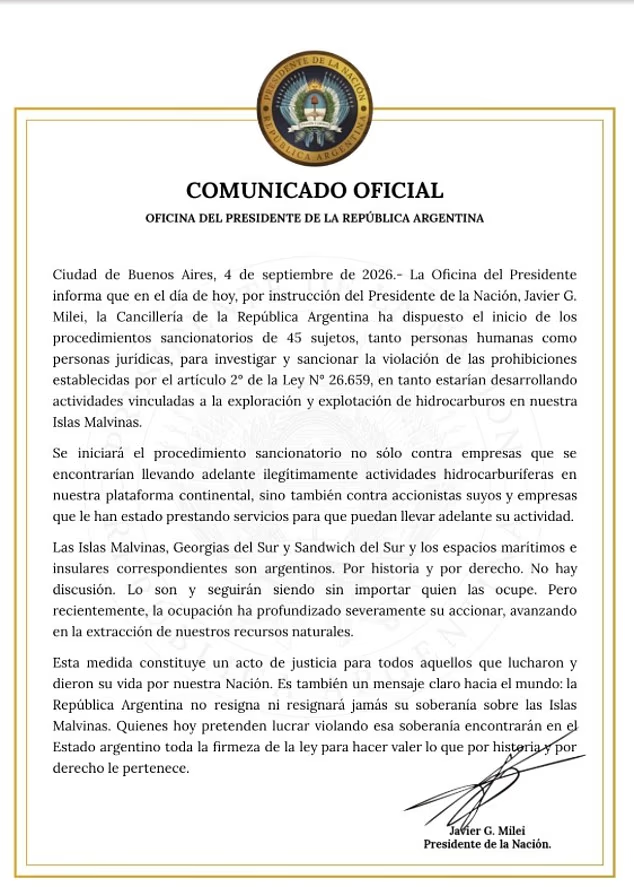
Argentina has moved to enforce a crackdown on oil exploration around the Falkland Islands, launching sanction proceedings against 45 people and companies

Argentina has moved to enforce a crackdown on oil exploration around the Falkland Islands, launching sanction proceedings against 45 people and companies.

President Javier Milei’s office announced the new move on Saturday morning in a post on X, a day after he vowed tougher action against companies operating in the British overseas territory and reiterated the country’s claim on the area.

But Prime Minister Andy Burnham has yet to say anything about the escalating rhetoric from Argentina’s president.

Downing Street has instead responded on his behalf, insisting the UK’s position on the islands is ‘unwavering’ and saying Burnham ‘fully supports the wishes of the islanders to remain a British overseas territory’.

Advertisement

Burnham has come under growing pressure to personally respond, with Reform UK accusing the Prime Minister of being ‘too weak’ to stand up to Argentina over the Falklands.

The Argentinian government said proceedings could also be brought against shareholders and companies providing services to firms involved in the oil projects.

The announcement did not identify those facing proceedings.

At the heart of the row are vast oil reserves which could deliver a £4billion windfall for the Falkland Islands.

Advertisement

The Sea Lion field, 150 miles north of Port Stanley, is estimated to contain around 900 million barrels of oil, with production expected to begin in 2028.

Argentina has moved to enforce a crackdown on oil exploration around the Falkland Islands, launching sanction proceedings against 45 people and companies

President Javier Milei's office announced the new move on Saturday morning in a post on X, a day after he vowed tougher action against companies operating in the British overseas territory and reiterated the country's claim on the area

President Javier Milei’s office announced the new move on Saturday morning in a post on X, a day after he vowed tougher action against companies operating in the British overseas territory and reiterated the country’s claim on the area

Advertisement

Argentina claims the islands and their surrounding waters as its own and says the oil cannot be extracted without its permission.

Advertisement

The project could generate £4billion for the Falklands over 35 years, transforming the islands’ economy.

In a national address on Friday, Mr Milei demanded a Hong Kong-style handover of the Falklands to Argentina as part of what he called a ‘consensus solution’.

He reiterated the country’s claim on the islands and said he would introduce sanctions on any oil companies working in the area. 

The Argentine president insisted his countrymen ‘do not believe in war’ and would not ‘start yelling like savages’ about the contentious archipelago. 

Advertisement

Renewed tensions over the British overseas territory came after US President Donald Trump hinted the US would not help the UK in a future Falklands conflict.

Following Mr Milei’s address, Foreign Secretary Ed Miliband said in a post on X: ‘The UK’s position on the Falkland Islands is unwavering.

‘The Islands are British and will remain so because that is the overwhelming position of the Islanders.

‘Their right of self-determination is paramount, grounded in international law and we will resolutely uphold it.’

Advertisement

Defence Secretary Wes Streeting said the UK’s commitment to the Falklands was ‘absolute and unshakeable’.

Downing Street suggested there would be no UK diplomatic response to Mr Milei’s threats, with the UK seeking to bolster ties with the country.

In a 2013 referendum, the Falkland Islanders voted overwhelmingly to remain a British overseas territory, with 99.8% voting in favour and just three votes against.

Although the US is formally neutral, Washington provided support for Britain’s campaign to retake the islands after the Argentinian invasion in 1982.

Advertisement

It sparked the Falklands War which saw 255 British service deaths in just over 70 bloody days. It also led to the deaths of 655 Argentinians and three Falkland Islanders.

In his speech, Mr Milei said: ‘Our role and relevance as a country in the world has changed dramatically.

‘The Falklands are our future – we need to recover these islands which are nationally relevant. There is no other path forward.’

He said he would sign decrees to introduce sanctions against any companies working on oil production in the area.

Advertisement

And he declared the Sea Lion oilfield, owned by an Israeli and a British firm where production is expected to begin in 2028, a ‘clear and present danger’ to the country’s claims.

‘If we do not act swiftly in a few months, they will have the material capacity to access the oil that lies underneath our sea. Something that has never happened before,’ he said.

British-based oil exploration company Rockhopper, which is working with Navitas on the oilfield near the islands, said it did not expect developments by the Argentinian government to have a ‘material effect’ on the project.

A No 10 spokeswoman said the UK supports the right of the Falkland Islanders to develop their natural resources for their own economic benefit, and ‘this is an integral part of their right to self-determination’.

Advertisement

The Argentinian leader announced plans to boost its defence resources with a new naval base in Tierre del Fuego in the south of the country.

Mr Milei said the US was ‘assessing their historical position in regard to the Falklands’.

Asked whether there would be a diplomatic response to his threats, the Downing Street spokeswoman said the UK continues ‘to have a diplomatic relationship with Argentina, and from our perspective we want to continue to strengthen that’.

The US president on Thursday suggested he would not back the UK in a fight over the territory, pointing to the lack of support for his war in Iran.

Advertisement

No 10 declined to comment on Mr Trump’s remarks, saying they were ‘a matter for the US president’.

This is a breaking news story, more to follow. 

Source link

Advertisement
Continue Reading

NewsBeat

Transfer news LIVE: Arsenal FC January targets; Richarlison Turkey deadline; Chelsea, Man Utd, Liverpool latest

Published

on

Transfer news LIVE: Arsenal FC medical; €100m Chelsea target; Richarlison Turkey deadline; Man Utd, Liverpool latest

Premier League sides are continuing to work away in the transfer market, despite the summer window slamming shut earlier this week. After a record-breaking period of spending, with Arsenal, Manchester United, Chelsea, Liverpool and Tottenham all busy, there is still business involving English sides. Arsenal endured a quiet Deadline Day, with Julian Alvarez remaining out of reach, but are now anticipating a busy January.

Source link

Continue Reading

NewsBeat

Tiny Yorkshire Dales hamlet home to Yorkshire Shepherdess

Published

on

Tiny Yorkshire Dales hamlet home to Yorkshire Shepherdess

To make the most out of any trip to the Yorkshire Dales, it is worth making sure to stop off at a few of these places on your walk for some food or just to look around.

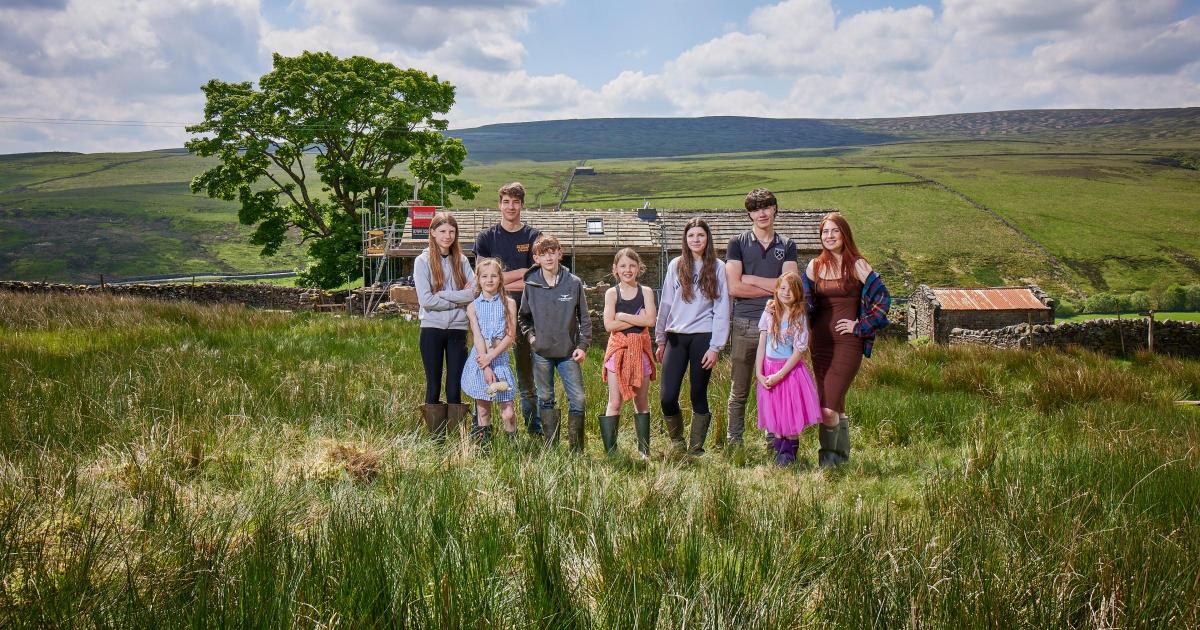
Ravenseat is only a tiny hamlet but is a must-visit for any fans of Our Yorkshire Farm, as the area is home to Amanda Owen’s farm.

What is Ravenseat like?

Ravenseat is home to only a few properties and farms, including Amanda Owen’s Ravenseat Farm.

The area is 1,300 feet above sea level and offers “stunning” views of “rolling hills, green pastures, and meandering streams”.

Advertisement

The hamlet is quite popular with tourists who want to learn more about traditional farming and explore the surrounding countryside.

There are guided tours available that will take you around the farms, see sheepdog demonstrations, and even get involved in some of the daily tours.

The area is popular for cycling and hiking, with there being lots of routes you can follow on AllTrails.

The nearby areas of Swaledale and Arkengarthdale are also worth a visit thanks to their “breathtaking views” and being home to a variety of wildlife from red squirrels and otters to birds of prey.

Advertisement

Ravenseat Farm covers 2,000 acres of upland terrain and has been a proper working sheep farm for generations.

The closest village to Ravenseat is Keld which has fewer than 100 residents with pretty cottages to see.

While there is no shop in Keld, there is the Keld Green Café where you can sit outside and enjoy the views of the Yorkshire Dales countryside with a piece of cake, hot coffee, or breakfast.

For those needing somewhere to spend a night in the area, you can choose from the Keld Holiday Cottages, Keld Lodge or even Rukin’s Campsite if you want to be really close to nature.

Would you like to visit Ravenseat to catch a glimpse of Amanda Owen’s farm? Let us know in the comments.

Advertisement

Source link

Continue Reading

NewsBeat

Lindsay Clancy murder trial has divided US on whether she’s victim or criminal

Published

on

A woman is seen from the waist up looking to the side of the camera. She has short brown hair and wears sunglasses on her head. She also has red circular earrings, and wears a black and red printed dress and a black cardigan.

The case became a flashpoint for gender discussion, too, with opinions often divided along gender lines.

Father-of-three Vincenzo Vazquez, who followed the trial from Illinois, believes gender has a lot to do with Clancy’s treatment, doubting that the public would show similar sympathy if a father were on trial for the same charges.

“Whatever someone is dealing with, I don’t think there’s ever an appropriate time or an excuse or a justification to, you know, kill children of your own, or kill any children,” he said.

He said he felt “very sad and a little disgusted to see how many people are rallying behind her”, adding: “I think people should be out there rallying for justice for the children. They’re three beautiful kids that had a future in front of them.”

Advertisement

The decision to declare a mistrial after seven days of deadlocked jury deliberations has left the status of the case – and Clancy’s future – unclear. A hearing at the end of the month could establish whether prosecutors will move ahead with second trial or attempt to reach a plea deal.

For now, the debates elsewhere will no doubt continue.

If you are suffering distress or despair and need support, you could speak to a health professional, or an organisation that offers support. Details of help available in many countries can be found at Befrienders Worldwide, external.

A list of UK organisations that can help is available here.

Advertisement

Source link

Continue Reading

NewsBeat

How to watch South Africa v New Zealand – TV channel and kick-off time

Published

on

Wales Online

South Africa and New Zealand go head to head in the third Test of the Rugby’s Greatest Rivalry series

South Africa and New Zealand meet in the third Test of the Rugby’s Greatest Rivalry series today.

Advertisement

It’s all to play for, with the series locked at 1-1 with two still to play. The All Blacks won the first Test in convincing fashion, beating the world champions 33-16 at Ellis Park last month.

Rassie Erasmus’ charges stormed back into the contest last weekend, winning 33-26 at DHL Stadium to set up a mouthwatering third encounter between two of rugby’s juggernauts.

Today’s match will be staged at FNB Stadium in Johannesburg – which hosted the 2010 FIFA World Cup final – before the finale in Baltimore next weekend.

Here is everything you need to know about the clash.

Advertisement

JOIN OUR WALES RUGBY FACEBOOK PAGE Latest news, analysis and much more

What time is South Africa v New Zealand?

South Africa v New Zealand kicks off at 4.10pm BST, on Saturday, September 5, at FNB Stadium, Johannesburg.

What channel is it on?

South Africa v New Zealand is being shown on Sky Sports Action and Sky Sports +. Coverage begins at 3.55pm.

What about live streaming?

Sky customers can stream South Africa v New Zealand via the Sky Go app.

Advertisement

Teams

South Africa: 15 Cheslin Kolbe, 14 Kurt-Lee Arendse, 13 Jesse Kriel, 12 Damian de Allende, 11 Ethan Hooker, 10 Sacha Feinberg-Mngomezulu, 9 Cobus Reinach, 8 Jasper Wiese, 7 Pieter-Steph du Toit, 6 Siya Kolisi, 5 Ruan Nortje, 4 Eben Etzebeth, 3 Wilco Louw, 2 Malcolm Marx, 1 Ox Nche

Replacements: 16 Deon Fourie, 17 Gerhard Steenekamp, 18 Thomas du Toit, 19 Lood de Jager, 20 Andre Esterhuizen, 21 Cameron Hanekom, 22 Morne van den Berg, 23 Manie Libbok

All Blacks: 15 Damian McKenzie, 14 Will Jordan, 13 Quinn Tupaea, 12 Jordie Barrett, 11 Leroy Carter, 10 Ruben Love, 9 Cam Roigard, 8 Ardie Savea, 7 Luke Jacobson, 6 Peter Lakai, 5 Sam Darry, 4 Tupou Vaa’i, 3 Tyrel Lomax, 2 Asafo Aumua, 1 George Bower

Replacements: 16 Samisoni Taukei’aho, 17 Xavier Numia, 18 Fletcher Newell, 19 Fabian Holland, 20 Wallace Sititi, 21 Kyle Preston, 22 Anton Lienert-Brown, 23 Josh Moorby

Advertisement

Meet the officials

Referee: Nika Amashukeli (Georgia)

Assistant referees: Angus Gardner (Australia) and Christophe Ridley (RFU)

TMO: Eric Gauzins (France)

FPRO: Brett Cronan (Australia)

Advertisement

Source link

Continue Reading

NewsBeat

How the well-heeled residents of Sawbridgeworth did what the police couldn’t… and saw off a bank holiday traveller ‘land grab’ fuelled by prosecco and cake

Published

on

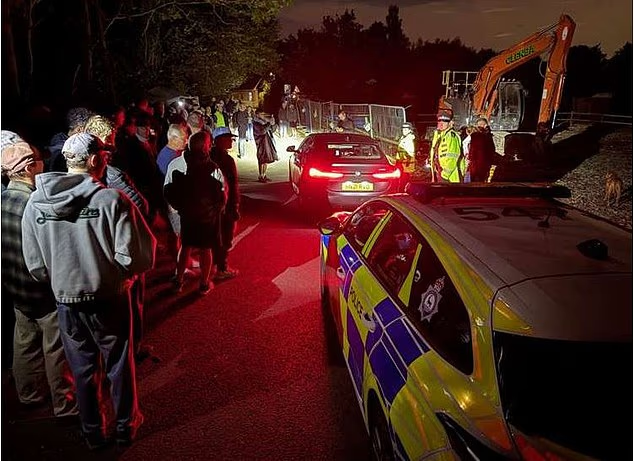
Police cars arrived at the site in Sawbridgeworth at 12.30am on Bank Holiday Monday, where diggers had begun work on the land

In the early hours of Bank Holiday Monday, Nina Johnson-Marshall, a senior planning enforcement officer, was given a ‘blue-light’ police escort through the highways and byways of Hertfordshire.

In her possession was a High Court injunction which had just been issued, out of hours, by a duty judge.

The destination was Sawbridgeworth, a genteel market town near Bishop’s Stortford, which had been invaded by travellers over the weekend. The all-too familiar incursion received extensive media coverage.

Few outside this small corner of Hertfordshire, however, will be aware of the drama – reminiscent of a scene from a film – involving Ms Johnson-Marshall and her race against the clock to serve the injunction.

Advertisement

The travellers had already covered the plot of greenbelt land, a habitat for wildlife, with hardcore and were planning to occupy the site permanently with mobile homes and caravans.

Had this happened they would probably still be there today, having applied for retrospective planning permission and exploiting every loophole in the human rights legislation playbook.

The law is overwhelmingly on their side. Residents in other parts of the country will bear testament to this.

Not this time.

Advertisement

Police cars arrived at the site in Sawbridgeworth at 12.30am on Bank Holiday Monday, where diggers had begun work on the land

A concrete base had been laid on the site alongside fencing over the bank holiday weekend

A concrete base had been laid on the site alongside fencing over the bank holiday weekend

Planning enforcement officer Nina Johnson-Marshall arrived by car at the site at 12.30am with a High Court injunction following a ‘blue-light’ police escort through Hertfordshire

Planning enforcement officer Nina Johnson-Marshall arrived by car at the site at 12.30am with a High Court injunction following a ‘blue-light’ police escort through Hertfordshire

Advertisement

At precisely 12.30am on August 31, when Ms Johnson-Marshall arrived in Sawbridgeworth accompanied by a police patrol car and posted a copy of the injunction on the newly erected wooden perimeter fence of the as-yet-uninhabited encampment, what until then had been a civil case became a matter for the police. 

The order gave officers at the scene the power of arrest if there was further ‘development’ on the grassland next to Sheering Mill Lane, and prohibited ‘the occupation of any caravans, vehicles or mobile homes’.

These were some of the wide-ranging restrictions imposed by the judge following a campaign by residents who blocked the entry to the site.

One of the main reasons for his decision was because he heard that someone on the encampment had used an offensive term to describe a Jewish protester, who was then told menacingly: ‘I am going to follow you home and burn your house down.’

Advertisement

Those who did not comply with the order were warned they could be held in ‘contempt of court’ and be ‘imprisoned, or fined’ or their ‘assets may be seized’.

At 9am, before the unwelcome visitors had time to install their accommodation, the area was cleared, without incident, by the police, to the cheers and applause of locals who watched the convoy of vans and trucks with heavy machinery leave the area.

‘All gone,’ announced Greg Rattey, a local councillor and a former mayor of Sawbridgeworth, on Facebook. ‘What a fantastic united community we are. Well done everyone.’ 

Behind this almost unprecedented victory – it’s hard to remember such a successful legal outcome elsewhere – is the inspiring story of how the good people of Sawbridgeworth, known locally as ‘Sawbo’, mobilised to save their town from the scourge of those travellers who have blighted communities with threatening, intimidatory and anti-social behaviour.

Advertisement

One day they really might make a movie or TV special about it. There is already an obvious title: The Battle of Sheering Mill Lane.

Surely Nina Johnson-Marshall, from East Hertfordshire District Council, would get a leading role. How many provincial planning officials have been ‘blue-lighted’ in the line of duty?

The real stars of the saga, though, are the law-abiding taxpayers of Sawbridgeworth, which has a population of just over 10,000, and was best known, until now at least, for its links with the world of celebrity.

‘Beckingham Palace’, the former country estate of David and Victoria Beckham, is located here and Sir Rod Stewart and his wife Penny Lancaster, who live a little over a mile away, have been spotted walking along the quaint streets of the town with shops such as Christine’s (‘traditional home baking’), The House of Harlequin Boutique (‘ladies fashion & accessories’) and Violets Floral Designs.

Advertisement

In this genteel setting, it was incongruous to see the ‘site manager’ – a bare-chested, tattooed man drinking a can of beer.

He and his ilk underestimated the grit and spirit of the opposition in Sawbridgeworth.

Almost within minutes of lorries arriving with diggers and hardcore at the start of the bank holiday break last Friday, when workmen began excavating, installing fencing, and felling trees on the site, the alarm was sounded on WhatsApp and Facebook and a very middle-class protest swung into action.

Soon hundreds of residents were manning the ‘front line’ in Sheering Mill Lane. Prosecco was served along with teas and coffees and cakes. There was music and even a ‘pub quiz’ at 4am.

Advertisement

Many camped out overnight in five-hour shifts.

Among those who answered the call was a Girl Guides leader, a semi-retired City worker with his ‘Westie’ highland terrier Bianca and 72-year-old retired postmistress Margaret Shields. 

At the same time, a crack team of litigation lawyers, including a barrister lauded by industry bible Legal 500, was assembled by the local authority, which described the operation as a ‘masterclass in effective collaboration’ between the community and the council.

All in the space of 72 hours over the bank holiday when town halls are shut. Hence the reason why so many ‘land grabs’ occur during this period.

Advertisement
The site was previously a wildlife-rich floodplain next to a rare chalk stream

The site was previously a wildlife-rich floodplain next to a rare chalk stream

Police officers at the site, standing near a caravan parked at the wildlife haven

Police officers at the site, standing near a caravan parked at the wildlife haven

‘We cannot let these travellers do what they want,’ was the battle cry from a resolute Ms Shields.

‘If we don’t stand up to them, then who will?’

Advertisement

It has not come without cost, however. The land, a wildlife-rich floodplain next to a rare chalk stream, which attracts muntjac deer, has been all but destroyed and will require a small fortune to restore to its natural state. 

The question residents are now asking is: who ‘sold out’ Sawbridgeworth?

Two men – Leonard Richards and Darren Glover – were named on the injunction, along with ‘persons unknown’, as the registered owners of the two parcels of land at the site, but the legal papers also make it clear that ‘one or both’ may ‘ultimately be removed as defendants’ because the Land Registry hasn’t been updated.

So exactly who owns the land, and who is responsible for selling the grassland to travellers remains unclear.

Advertisement

Mr Richards, 55, who lives in Dunmow, Essex, acquired his plot for £20,000 in 2003 and runs a successful driveway and road surfacing company. 

Town councillors described him as a ‘reputable businessman’ whose firm has been used by the authority itself. 

Mr Richards said that after taking legal advice he was unable to comment.

Mr Glover, for his part, bought his share of the site, where the majority of the hardcore is understood to have been laid, for £150,000 in December 2023, the Daily Mail has established.

Advertisement

He confirmed, when contacted, that he had sold the land ‘a year to 18 months ago… through word of mouth and a little bit of advertising’.

Mr Glover, from Basildon, added: ‘A police officer rang me over the encampment. I said the land was not mine any more and I hadn’t a clue what was going on.’ 

He buys land ‘now and again’, he said, as an investment but would have to check who the buyers were in this case with his solicitor.

Mr Glover didn’t get back to us with an answer.

Advertisement

Will the ‘Battle of Sheering Mill Lane’ set a precedent in the case of future ‘land grabs’?

What makes the Sawbridgeworth campaign so impressive is that it succeeded in the face of the law as it currently stands.

Four heavy-duty diggers and a caravan parked in one of five plots of line created by fencing

Four heavy-duty diggers and a caravan parked in one of five plots of line created by fencing

A JCB digger parked inside wooden fencing used to divide the site into plots of land

A JCB digger parked inside wooden fencing used to divide the site into plots of land

Advertisement

Evidence – including witness statements, site photos, proof of land ownership – has to be collected in an almost impossibly short space of time to satisfy a duty judge that the situation is so serious that enforcement action cannot wait until the next day.

Local Labour MP Josh Dean raised the issue with Andy Burnham on his first day in the Commons as Prime Minister. 

‘Thanks to our community’s exceptional response, East Herts Council was able to move quickly and secure an injunction,’ Mr Dean told the House. ‘But across the country, this is sadly the exception and not the rule.’

He has asked for a meeting with the PM to discuss ‘why we need to change the law to ensure police and local authorities have the right powers’.

Advertisement

Those powers are sadly lacking at the moment.

The Catch-22 at the heart of the ‘land grab’ scandal is that the sites which travellers occupy have invariably been legally purchased so they cannot be removed for trespassing.

And ‘stop notices’, if the recent past is anything to go by, are not worth the paper they are written on. They are routinely ignored without consequence. Police simply have a ‘watching brief’ in these circumstances to ensure there is no disorder.

The bottom line is that councils are effectively powerless to do anything in the vast majority of cases.

Advertisement

A ‘stop notice’ was flagrantly ignored in Sawbridgeworth but the crucial difference here was the size of the protest in Sheering Mill Lane, prompting the police to seal off the single-track 20mph road at one point, which largely prevented anyone from bringing caravans on to the site and bought time for an injunction to be obtained.

That, and the willingness of the community to come together and mobilise quickly.

The first signs of the invasion were spotted last Friday by the aforementioned owner of Bianca the ‘Westie’.

I bumped into him near his home after Sawbridgeworth returned to normality. The 68-year-old asked to remain anonymous because he and his wife, he said, had been ‘threatened and abused’ by travellers (residents spoke of those who made ‘gun fingers’ and throat-slitting gestures) who deliberately parked trucks and cars outside his home and those of fellow protesters.

Advertisement

His suspicions were aroused when he saw a truck heading towards the site. He alerted a councillor who was also a neighbour and they went to investigate. 

A ‘workman’ they encountered at the scene insisted only a small section of the pavement was going to be tarmacked.

‘You’re having a laugh,’ the pensioner told him before becoming a stalwart on the ‘front line’.

The protest was expertly coordinated, with residents performing different roles.

Advertisement

Dominic Connor, 64, a tech journalist, made it his job to lobby companies delivering materials to the site. 

‘My time was best spent disrupting their supply chain,’ he said. One of the firms in question was Harlow Fencing.

‘We were led to believe the site was a legitimate new-build development and supplied materials in good faith,’ the company said on social media.

‘As soon as concerns were brought to our attention, we stopped all further deliveries.’

Advertisement

Meanwhile, business manager Alex Williams, 45, was involved in mobilising support using Facebook and WhatsApp, where the opposition swelled to 700.

‘People power is the only way to stop these developments,’ he said.

He’s right, unfortunately, because councils are unlikely to be given the badly needed new powers they need any time soon.

  • Additional reporting: Isaac Crowson and Tim Stewart

Source link

Advertisement
Continue Reading

NewsBeat

Does Taking Photos Affect Your Memory? What Science Says About Digital Amnesia

Published

on

Does Taking Photos Affect Your Memory? What Science Says About Digital Amnesia

One of the more interesting things about the turn of the century and our improved access to technology is that everything is a photo opportunity. Dinners, airport delays, a funny sign outside of a trendy cafe, a meetup with pals… Anything and everything is an opportunity.

I think it’s quite sweet. It’s second nature to us now to document our lives so thoroughly to the point that sometimes, it doesn’t even matter if the photo is good. It just matters that we documented that we were part of that moment.

For example, I cannot show you a single good gig photo I have ever taken. All of them are diabolical. But I was there and in that moment, I knew I wanted to remember it.

However, research is increasingly indicating that our seemingly constant need to document the events of our lives may actually prevent us from remembering them.

Advertisement

How taking too many photos impacts memory

Sophia Fabrizio, author of a new study published in the journal Memory & Cognition reviewing the relationship between memory and photographs says: “The results of the current study suggest that we are likely harming our memory for information and experiences with the press of a button, and that this impairment may even extend beyond what is captured.

The researchers have also found that screenshots aren’t quite as useful as some of us like to think they are. Fabrizio noted: “Unless you are actively reviewing those images as cues for elaborative memory retrieval, it is unlikely to benefit you.”

This taking photos and instantly forgetting is a form of amnesia.

Advertisement

On their website, Binghamton University says: “One possible mechanism behind digital amnesia is divided attention: The act of capturing an experience takes away cognitive resources that would otherwise be dedicated to encoding the information in memory.

“While divided attention plays a role, it’s unlikely to be the main source of memory impairment; people show a comparable deficit when extra time is provided to view an art piece before or after taking a photograph, and when the capture task is made less difficult, which should minimise its effects.”

How to improve your memory of events

The university advises: “A better option for remembering information: break out a pen and paper. Writing something down – for example, taking notes during a lecture – forces us to process and organise the information into manageable bullet points, and draw connections. Known as “desirable difficulty,” the mental effort in this kind of processing may make us more likely to remember the information.”

Advertisement

Source link

Continue Reading

NewsBeat

Mudslide kills 1 and leaves 11 missing in China

Published

on

Jury says The New York Times defamed Alabama player

BEIJING (AP) — A mudslide on Saturday killed one person and left 11 others missing in eastern China, damaging a dozen houses following days of torrential rain brought by tropical cyclone Saudel, authorities said.

The mudslide hit part of a village in Suichuan County in Jiangxi province in the early hours, prompting rescuers to rush to the scene and relocate residents to safer ground to prevent further danger, authorities said in a statement. One person pulled out was found dead, while two others were rescued alive and in good condition, it said.

Typhoon Saudel made two landfalls in Zhejiang Province on Aug. 28 and made a third landfall as a tropical storm in Fujian Province Thursday, Chinese official news agency Xinhua reported. Both provinces neighbor Jiangxi.

In Fujian, local authorities said Friday that multiple residents were left unaccounted for after days of heavy rain, Xinhua reported. The exact number is unclear, but more than 100 houses collapsed in Huating Town in Putian city, it said. A dike overtopped and breached Thursday afternoon, flooding villages and trapping residents, it added.

Advertisement

About 600,000 residents have been evacuated from risky offshore and onshore areas in Fujian as of Friday night, Xinhua reported.

Images from state broadcaster CCTV showed that some streets were turned into rivers, while rescuers deployed inflatable boats in their efforts.

Advertisement

Source link

Continue Reading

NewsBeat

Tapnell Farm, Isle of Wight: free-range fun, no screens attached

Published

on

Tapnell Farm, Isle of Wight: free-range fun, no screens attached

When it came to eating, we found much of the island’s food game to be London-level — just without the traffic and snobbiness. At Braai, a huge open cattle shed with a fire-roaring open kitchen on the ancient Nunwell Estate farm, we shared blackened whole chicken, seabass, grilled peaches, flatbreads, charred cabbage and pillowy brisket. The long wait for food didn’t matter, the kids ran wild in the adjacent field. It was a similar set up at Isle of Wight Pearl. Before we chomped on our crisp, homemade hash browns glistening with wild mushroom and truffle, piquant beef with zesty lime guacamole, and salt-and-pepper chicken, the children escaped to the lawn, which had been set up with sports-day games pitting young against old.

Source link

Continue Reading

Trending

Copyright © 2025