
Entertainment
Forget ‘Downton Abbey,’ HBO’s 10/10 Replacement Has Already Surpassed It in the One Way That Matters

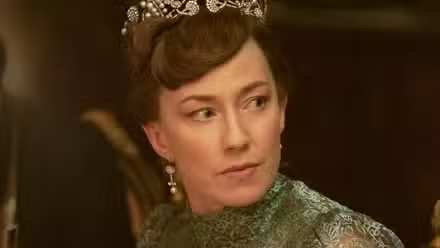
The Gilded Age and Downton Abbey might share the same creator in Julian Fellowes, but the former series has actually been a bit more successful when it comes to living up to the full title of “historical drama.” It’s fairly easy for shows in this type of genre to fall into the bubble of the wealthy families that they follow, which makes going the extra mile and spotlighting what was going down outside of that bubble that much more important.
In Season 2 of The Gilded Age alone, we’ve seen the growing power of labor union workers, gender discrimination within the engineering industry, the differing treatment of Black people between the South and New York City, as well as the constantly changing education system. Sure, the opera wars might have dominated the headlines, but those stakes could not be more moot in comparison to the conflicts that were actually happening right beyond the eyesight of wealthy socialites like Bertha Russell (Carrie Coon) and Agnes van Rhijn (Christine Baranski), both in real life and on the screen.
Since its first season, The Gilded Age has set itself apart from other historical dramas like Downton Abbey by doubling down on the full picture of the period it depicts, instead of getting tangled up in bottomless conflict like a pair of cheap headphones. The daily lives and struggles of the staff who work literally and figuratively underneath both the van Rhijns and the Russells have been featured since the beginning, adding a great dichotomy to the series, with subsequent seasons taking things a step even further.
‘The Gilded Age’ Focuses More on Historical Events
George Russell (Morgan Spector) was certainly sitting pretty atop his throne in Season 1 of The Gilded Age, but that all went out the door as soon as his workers decided to unionize and go on strike. Facing a work shutdown as well as the possibility of a violent skirmish between the union workers and higher-ups, George had to make the much-toiled-over decision to grant his workers higher pay — though only temporarily. This entire situation could’ve simply occurred in the background of the series, but the writers chose to put it front and center; especially during the real-time SAG-AFTRA and WGA strikes, this was an extremely important move for the series.
Meanwhile, Peggy Scott (Denée Benton) and T. Thomas Fortune’s (Sullivan Jones) trip down to Alabama to the Tuskegee Institute revealed the full scope of racism outside of New York City, as the two had to evade being killed by a horde of White men who were running them out of town. Even Peggy — having spent most of her life in New York City — was taken aback by the horrific treatment, especially against the backdrop of the success of the Tuskegee Institute. Just as Peggy was inspired to use her position at the New York Globe to shine a light on education in New York City following her time in Alabama, The Gilded Age shone a light on the importance of the real-life institution.
The construction of the Brooklyn Bridge became an avenue to introduce discrimination against women in more male-dominated fields in the 1880s, such as engineering. Emily Warren Roebling (Liz Wisan) took over the construction of the Brooklyn Bridge after her husband was unable to continue his duties, though her involvement was very hush-hush, as others involved in the process feared that no one would want to cross the bridge if they knew it was largely constructed by a woman. The thing is, this wasn’t just another interesting plot point: the story about Emily is a factual one, making the impact hit that much harder for viewers.
Social Issues Will Only Get More Complicated in ‘The Gilded Age’
The Gilded Age‘s return might still be a couple of months away — with Season 4 officially confirmed to release this November — but judging by the show’s continuing #1 status on HBO Max within the TV genre, it’s likely that the series’ depiction of social issues will only be ramping up. Between George’s ongoing business expansion and the struggles that have resulted, Peggy being poised to deal with her future in-laws after saying yes to Dr. William Kirkland’s (Jordan Donica) marriage proposal, and even U.S. President Grover Cleveland (Jim Gaffigan) set to make an appearance, there’s quite a bit more that The Gilded Age can explore.
As the 1880s truck on and the U.S. gets further and further into the Second Industrial Revolution (the Technological Revolution), the characters in The Gilded Age‘s lives are going to get even more complex, just as we saw with the van Rhijn’s former footman, Jack Trotter’s (Ben Ahlers), foray into the watch-making business catapulting him into a new tax bracket. Revolutions can take many forms, and though an industrial revolution might seem mostly cordoned off from the conflicts of daily life, things always end up trickling down to every last facet of society in the end.

Continue Reading
When Ready or Not released in 2019, it was an immediate success. From thriving at the box office to launching Samara Weaving into the spotlight, this horror comedy was a hit. Seven years later, the film is finding new life on streaming. Since its recent addition to Netflix, Ready or Not has been charting in the top 10 of movies watched. Audiences can relive the hype of this gripping thriller, as well as jump straight into the sequel, Ready or Not 2: Here I Come.
Directed by Tyler Gillett and Matt Bettinelli-Olpin, Ready or Not is a brutal thriller that isn’t afraid to get bloody. Reminiscent of Richard Connell’s The Most Dangerous Game, the film quickly defies expectations and delivers a hunt unlike any other. Starring Adam Brody, Andie MacDowell, and Mark O’Brien, Ready or Not is full of stellar performances, gruesome deaths, and a shocking twist that will leave audiences horrified.
‘Ready or Not’ Turns a Childhood Game into a Nightmare

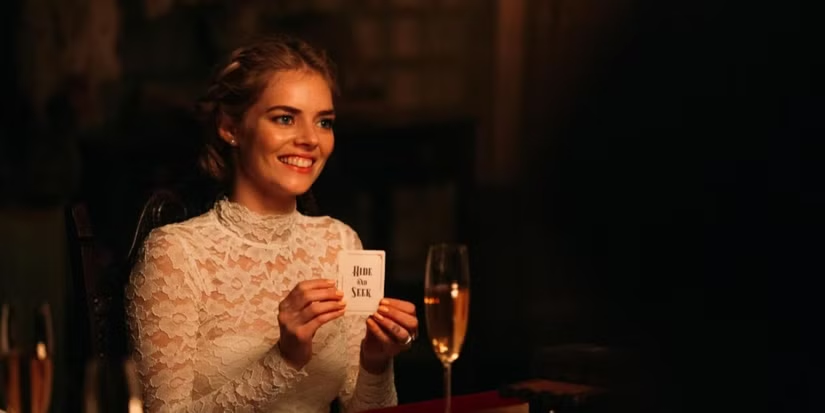
Grace (Samara Weaving) thought that marrying into her fiancé’s family would earn her new kin. Turns out, her eccentric in-laws have a tradition for the happy couple’s wedding night. As an initiation, Grace is instructed to pull a card from an ancient family heirloom, which will decide what game the family plays. When Grace pulls out a card that reads ‘Hide and Seek,’ the family turns on the bride, intent on hunting her down. As she hides from her murderous in-laws in their expansive mansion, Grace finds out the truth behind their traditions and figures out a way to foil their plans.
Violent, absurdly rich, and a little bit chaotic, the murderous family doesn’t hold back and neither does Ready or Not. As the stakes rise and Grace’s survival seems less likely, the film pushes the limits. New viewers will find themselves shocked at the lengths the family will go to in order to capture Grace.
Samara Weaving Gives an Outstanding Performance as The Bride
Sometimes horror protagonists can get lost in the chaos, but not Grace. Samara Weaving’s performance refused to be ignored, truly skyrocketing the Australian actress’s career. While she starts the film off confused and unbothered, Grace quickly wises up to her deadly circumstances and finds the determination to survive. By the end, audiences are rooting for her because of Grace’s blatant refusal to die. Grace’s unearthly scream alone is enough to cement Weaving as a horror star.
With Samara Weaving’s recent casting as Emma Frost in Marvel’s upcoming X-Men projects, it’s clear to see how Ready or Not laid the groundwork for her future success. Weaving is a bold and determined protagonist who stands out as the film’s blood soaked ‘final girl.’ With the success of both Ready or Not films, audiences can look forward to seeing more of Weaving in the years to come.
In terms of horror. Ready or Not takes the familiar tropes of the genre and gives them new life. With its popularity on Netflix, the film has the chance to gain new appreciation. With the unique plot and inclination towards bloody demises, Ready or Not is a fun and terrifying addition to the horror genre that truly deserves further praise.

- Release Date
-
August 21, 2019
- Runtime
-
95 minutes
- Director
-
Matt Bettinelli-Olpin, Tyler Gillett
- Writers
-
Guy Busick, R. Christopher Murphy
- Producers
-
James Vanderbilt, William Sherak, Bradley J. Fischer, Tripp Vinson
-

-

Mark O’Brien
Alex Le Domas

The judge in Lindsay Clancy’s controversial triple murder trial shocked court observers by officially declaring a mistrial after more than five days and 30 hours of jury deliberations.
Judge William Sullivan was informed by a 12-person jury that it was deadlocked on Friday, September 4, after one lone juror remained in disagreement with the remaining 11. The mom faced three first-degree murder charges — among other charges — related to the 2023 deaths of Clancy’s three children — Cora, 5, Dawson, 3, and Callan, 8 months.
Clancy has admitted to strangling her three children to death before jumping out a second-story window in an alleged suicide attempt. Her defense team argues she should not be held criminally liable for the deaths because she was suffering from postpartum psychosis before and during the killings.
Prosecutors insist that despite her documented mental health struggles that she was aware of her actions — and able to differentiate right from wrong — when she killed her three children.
Public intrigue over the case reached a fever pitch when Judge Sullivan allowed Clancy’s defense team one hour to petition for an appeal from the Massachusetts Supreme Judicial Court on Friday. After the high court declined to order an emergency stay, Judge Sullivan formally declared a mistrial before formally dismissing the jury.
The mistrial ruling raises questions over whether Plymouth County District Attorney Timothy Cruz will attempt to retry the case. Lawyers on both sides are due back in court on Tuesday, September 29, to consider next steps.
Keep scrolling for more information on whether double jeopardy applies in this case and what may come next in the courtroom.
What Is Double Jeopardy?
The Fifth Amendment of the U.S. Constitution deals, in part, with how criminal trials are — and are not — allowed to be conducted. The amendment lays out “double jeopardy” as a procedural defense to prevent a person from being tried twice for the same crime, provided they are either acquitted or convicted in a court of law.
A relevant clause in the Fifth Amendment reads, “No person shall be held to answer for a capital, or otherwise infamous crime, unless on a presentment or indictment of a Grand Jury, except in cases arising in the land or naval forces, or in the Militia, when in actual service in time of War or public danger; nor shall any person be subject for the same offence to be twice put in jeopardy of life or limb; nor shall be compelled in any criminal case to be a witness against himself, nor be deprived of life, liberty, or property, without due process of law; nor shall private property be taken for public use, without just compensation.”
What Is a Mistrial?
A mistrial occurs when a verdict in a criminal trial cannot be reached or the trial itself cannot be completed, per the American Bar Association. Possible causes for mistrials include the death of a juror or attorney, a prejudicial error that impacts a jury’s ability to judge a defendant fairly or juror misconduct.
One other common circumstance for a mistrial in criminal court occurs when a jury cannot reach a unanimous verdict.
In Clancy’s case, jurors deliberated for more than 30 hours before informing Judge William Sullivan that they were deadlocked 11-1 on the three counts of first-degree murder. (Clancy’s defense attorney, Kevin Reddington, asked Judge Sullivan for a chance to poll the jury on whether they’d reached consensus on any of the lesser charges. His request was denied.)
Judge Sullivan allowed the defense one hour to petition for an emergency appeal from the Massachusetts Supreme Judicial Court before formally declaring a mistrial on Friday when the high court declined to intervene.
Can Double Jeopardy Be Used in Lindsay Clancy’s Case?
Since no verdict was reached in the Clancy trial, double jeopardy restrictions do not apply — meaning Plymouth County District Attorney Timothy Cruz is legally allowed to retry the case.
What Happens Next in Lindsay Clancy’s Case?
Once a mistrial was declared, District Attorney Cruz wasted no time in addressing his option to retry Clancy while speaking to the media outside the Plymouth Superior Court.
“I do know that one of the questions that’s out there right now [is] regarding retrials,” he told reporters on Friday. “I will let you know that there will be no decision today. I am going to be meeting with my team and will address that [option] further at the appropriate time and in the context of an official court proceeding.”
Defense lawyer Reddington previously expressed his concern that his client would not be able to endure a retrial. However, he assured the media following Friday’s hearing that Clancy will “be ready” if prosecutors proceed with a retrial.


“Judge Sullivan is indicating that we are looking at sometime in the fall,” Reddington clarified.
Judge Sullivan has scheduled a court hearing on Tuesday, September 29, to address next steps in the case.
If you or someone you know is struggling or in crisis, help is available. Call or text 988 or chat at 988lifeline.org.

Us has affiliate partnerships. We receive compensation when you click on a link and make a purchase. Learn more!
When you’re between errands and soccer pick-ups, the last thing you want is an oversized handbag to lug around. Thankfully, Cameron Diaz found an equally stylish and functional alternative, and her exact belt bag is on Amazon!
Diaz stepped out for a casual walk with friend Zoe Saldaña, rocking an outfit that is absolute perfection for busy moms. She elevated a plain white tee and black pants with a sun hat, a sweater tossed over her shoulders and an easy Bogg Belt Bag, a chic yet practical accessory.
Get the Bogg Belt Bag and Crossbody for $50 at Amazon! Please note, prices are accurate at the date of publication but are subject to change.
This Bogg Belt Bag sits right where it needs to, handles your essentials and gives your outfit a Diaz-like, off-duty twist. It’s the perfect final touch to any on-the-go look, adding that little something extra in the way a nice watch or gold hoops does.
On the functionality front, this classy little bag doubles as a crossbody, so you can wear it around your waist or sling it over your shoulder. If you’ve been through the school drop-off-to-coffee-run shuffle, you know what a difference versatility makes.
Better yet, this pick is water-resistant, comes in four colors and holds more than it looks like it should.
One shopper wrote, “I’m able to carry all of my essentials and still have room to put my iPhone 14 inside of this bag. The mesh pockets inside are a big plus to help keep it organized.”
To top it off, this celeb-approved belt bag is built to last. As another reviewer put it, “Color matches perfectly, and it has stood up to the beating it has received from my children. I would buy it again.”
Diaz makes rich mom style look effortless, and with this bag, it is. Pretty and practical, it may replace your bulky tote for good.
Get the Bogg Belt Bag and Crossbody for $50 at Amazon! Please note, prices are accurate at the date of publication but are subject to change.
Looking for something else? Explore more stylish bags, and don’t forget to check out all of Amazon’s Daily Deals for more great finds!
UsNow Fall Sale Alert: These chic fashion finds are up to 60% off – plus free shipping
Welcome to fall with our biggest sale of the season. Our favorite dresses, tops, handbags, and shoes are all on sale + free shipping. Inventory is limited so hurry before they’re gone.

It’s no secret that European rich moms drape expensive-looking knits over their shoulders. Emily Ratajkowski may live in New York City, but her outfit screamed ‘Parisian socialite,’ thanks to one outfit piece. We found the Euro-chic look for only $15! At the Loewe womenswear fall and winter show in Paris, Ratajkowski skipped the fancy moment […]
Quentin Tarantino is a unique filmmaker, and his films are greatly lauded and applauded. He’s often considered influential, especially to newer generations of directors, and he himself has been claiming influence from global cinema. Another interesting thing about Tarantino is that he promised to retire after making his tenth film—that film was Once Upon a Time in Hollywood, and truly, since then, Tarantino hasn’t directed anything except a short film related to his hit movie Kill Bill.
Ranking all ten of Tarantino’s films can often feel like a sport, but there are no wrong answers, only endless arguments, which is what makes it so fun. At least half of his films are legitimate candidates for the best film of whatever decade they landed in. And while we won’t try to settle anything here today, we will be making the case that only six symbolize a time when Tarantino was operating at a level where no individual element, line of dialogue, shot, casting choice, or needle drop needs improvement. Here are six Quentin Tarantino movies that are 10/10, no notes.
‘Reservoir Dogs’ (1992)

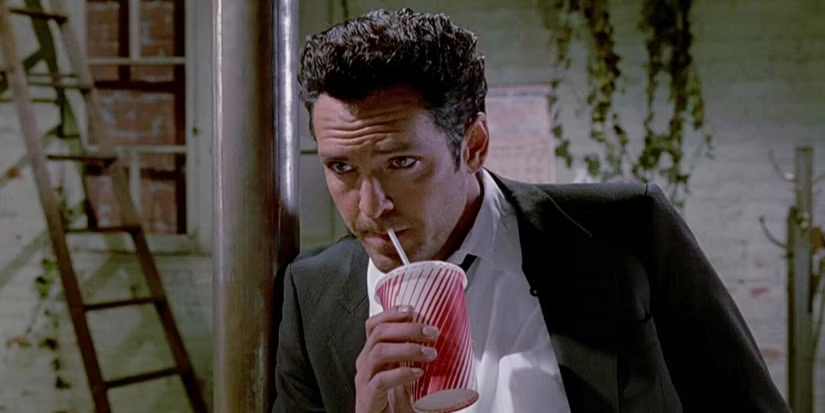
Reservoir Dogs is Tarantino’s feature film debut; when it premiered at the Sundance Film Festival, over a dozen people walked out, citing excessive realistic violence. This is fun since, knowing where Tarantino’s films have gone from there, Reservoir Dogs seems tame in comparison today. This film has everything a modern masterpiece needs—pop-culture-infused dialog, a non-linear structure, and excellent needle drops (“Stuck in the Middle with You,” we’re looking at you)—and it immediately established that a new voice had emerged in American cinema. Harvey Keitel, Michael Madsen, Steve Buscemi, and Tim Roth have fantastic chemistry, making the ensemble work feel effortless.
Reservoir Dogs follows six unnamed professional criminals (nicknamed for different colors) who are recruited by mob boss Joe Cabot (Lawrence Tierney) to carry out a diamond heist. However, the heist immediately goes horribly wrong, and the film begins with the bloody, fractured aftermath, with the survivors regrouping at a warehouse and attempting to figure out which of them is working undercover for the police. Tarantino shot almost all of Reservoir Dogs in one location, which feels like a stylistic choice rather than a budget constraint—demonstrating how to work with what you have. He claims inspiration for it from various crime films, including Stanley Kubrick‘s The Killing and Jean Pierre Melville‘s Le Samourai; many critics have also noted similarities between it and the Hong Kong action film City on Fire, starring Chow Yun-fat.
‘Kill Bill: Volume 2’ (2004)

There was some thought about combining Kill Bill: Volume 1 and Volume 2 into a single entry (or The Whole Bloody Affair), but Tarantino himself stated that Vols 1 and 2 should be treated as separate films, which they are, with the exception of the cast and main storyline. Because, whereas Vol. 1 was a pure action film, Vol. 2 is a Western and a character study, following the Bride (Uma Thurman) through the last few names on her revenge list in a style that has more in common with Sergio Leone than Bruce Lee. Vol. 2 rewards the patience that Vol. 1 requires, so the two form something larger and more complex than either could be alone but still stand on their own separately.
Vol. 2 takes The Bride straight to Bill (David Carradine), her ultimate target, who emerges from the story’s edges to take center stage. Carradine, who was 67 at the time and hadn’t been a major Hollywood presence in years, delivers a performance of such magnetic, unhurried menace that the film essentially revolves around him. The Pai Mei training sequence is as funny as anything Tarantino has ever written, the Budd chapter is a thrilling sequence of slow-burn dread, and the final confrontation between the Bride and Bill, resolved with some truth serum and a deadly move known as the Five Point Palm Exploding Heart Technique, is one of the most emotionally satisfying endings in Tarantino’s filmography.
‘Kill Bill: Volume 1’ (2003)

Vol. 1 outperforms Vol. 2 in that Tarantino is working in full cinephile mode here, with stylistic nods to spaghetti westerns, Japanese samurai films, anime, and 1970s exploitation cinema, all filtered through a sensibility so specific and personal that the resulting film could only have been made by this director. Sonny Chiba, Chiaki Kuriyama, and Lucy Liu round out an excellent supporting cast, and the anime sequence depicting O-Ren Ishii’s (Liu) backstory is one of the most daring formal swings in any mainstream American release of the time. Tarantino is operating on pure imagination, and it works so brilliantly that we still watch Vol. 1 and gasp in awe of his enthusiasm.
Vol. 1 introduces us to The Bride, who awakens from a four-year coma to discover that her wedding party has been massacred, and her unborn daughter is presumed dead. She has a list of five names—and those names belong to members of the Deadly Viper Assassination Squad; they are the ones who put her in that hospital bed, and the first volume covers The Bride, crossing off the first two names on her list: O-Ren Ishii (Liu) and Vernita Green (Vivica A. Fox). Vol. 1 features the iconic showdown at the House of Blue Leaves against O-Ren’s deadly squad known as the Crazy 88, which is still one of the most purely, joyfully choreographed action sequences in American cinema of the 2000s.
‘Jackie Brown’ (1997)
It seems like Jackie Brown is the most overlooked film in Tarantino’s filmography, but it’s a movie that is a complete 10/10. It’s unsure if the film went under the radar a bit because it followed Pulp Fiction and audiences expected another maximalist explosion, or because its pleasures and payoffs are much slower and more patient than anything else he’s made. Jackie Brown really is a tribute to 1970s blaxploitation cinema and a love letter to Pam Grier, who was largely absent from mainstream Hollywood at the time; by hiring her as the titular character, Tarantino handed Grier her best role in twenty years (and this is one of his trademarks). Robert Forster, similarly, gives the performance of his career as the bail bondsman Max Cherry, and the unspoken romantic tension between the two is genuinely moving, giving us little by little with each new scene. Joining them is Robert De Niro in one of his “most chill” roles ever, stepping away from the kinds of stuff he made during the 1990s.
Jackie Brown (Grier) is a middle-aged flight attendant who supplements her income by smuggling cash for arms dealer Ordell Robbie (Samuel L. Jackson). When the ATF apprehends her in the middle of her run, she becomes the pivot point in a three-way con involving federal agents, a bail bondsman (Forster), and Ordell himself, all of whom believe they are in charge. Jackie Brown, like Reservoir Dogs, has a fractured structure that bears the hallmarks of a modern masterpiece; this is most evident in the central money-switch sequence, which is shown three times from three perspectives and remains one of Tarantino’s most brilliant pieces of editing.
‘Pulp Fiction’ (1994)

Pulp Fiction is so good that it still inspires all other anthology films with interconnected characters. It’s even used to describe films with similar structures as a compliment and a point of comparison. But Pulp Fiction is more than just a film; it has a number of recognizable elements that make it iconic, ranging from the resurrection of John Travolta‘s career (the previously mentioned trademark), Samuel L. Jackson’s monologue, and the Royale with Cheese conversation to the adrenaline shot to the heart and the diner dance. The film is so full of iconic moments that it’s easy to forget how well-executed it truly is.
Pulp Fiction is made up of a few interlocking crime stories set in Los Angeles, told in reverse chronological order; it follows a pair of philosophical hitmen (Travolta and Jackson), a mob boss’s wife (Uma Thurman), a fading boxer (Bruce Willis), and a pair of diner robbers (Amanda Plummer and Tim Roth), whose lives continue to intersect during a single, and eventually uncovered to be a very bad day. Pulp Fiction followed Reservoir Dogs, but it was the film that proved Tarantino would be remembered for decades. The non-linear structure and intertwining nature bear the film’s weight, with even the characters getting unexpected endings, breaking conventions once again. Pulp Fiction won the Palme d’Or at Cannes and changed the course of American cinema, and three decades later, people still quote it.
‘Inglourious Basterds’ (2009)

In terms of non-linear, intertwining narratives that lead to a single cohesive conclusion, many consider Tarantino’s Pulp Fiction to be the pinnacle, but Inglourious Basterds has a little more spice, zest, and bite than its predecessor. Everything in Inglourious Basterds is so perfect, from the dialogue to the performances, which range from thriller to comic relief, that all the characters’ talking goes by quickly. There is a lot of dialogue here, but the delivery and tension make it extremely entertaining. Christoph Waltz takes on the role of a lifetime as SS Colonel Hans Landa, winning every single award for it, and Brad Pitt has never been better than as Lt. Aldo Raine, leading a contingent of vengeful, Nazi scalp-hunting soldiers across Germany during WWII.
In 1944, two parallel plots to assassinate the Nazi high command converge on a Paris cinema: one led by Lt. Aldo Raine and his squad of Jewish American soldiers who scalp their kills, and one by Shosanna Dreyfus (Mélanie Laurent), a young French-Jewish woman whose family was murdered by SS Colonel Hans Landa years earlier and who has spent every day since plotting revenge. Tarantino had been working on the script since 1998 and had set it aside several times when he couldn’t figure out the ending, but the ending he eventually discovered is one of cinema’s greatest acts of cathartic alternate history. It’s the film in which every aspect—performance, script, cinematography, score, and pacing—comes together flawlessly. It’s easy to argue that it’s the best film of the 2000s and Tarantino’s magnum opus, coming in bolder, braver, and smarter since crafting his beloved sophomore feature.
:max_bytes(150000):strip_icc():format(jpeg)/scream-courteney-cox-drew-barrymore-neve-campbell-090326-6b514299feee4722a6535373e3710376.jpg)
After decades of satirical meta-horror, “Scream”-mania is still going strong. Here’s our ranking of all seven installments, from worst to best.
Everybody loves a good plot twist, and crime television has proven itself at being adept at delivering some of the very best that the medium has ever seen. The genre’s ability to combine high-stakes tension with propulsive, energy-charged story pacing while exploring profoundly interesting characters in extraordinary depth imbues it with a penchant for delivering shocking revelations that completely recalibrate the narrative while leaving viewers in a state of shock.
Ranging from murder mystery miniseries that end on soul-shattering twists to long-running descents into the criminal underworld that never stop shifting the narrative, each of these crime series offer a masterclass in how to execute a perfect plot twist. Some are viscerally disturbing; others present relentlessly exciting tales of life-and-death drama. All of them are must-see masterpieces of the genre.
10
‘Prison Break’ (2005–2009; 2017)

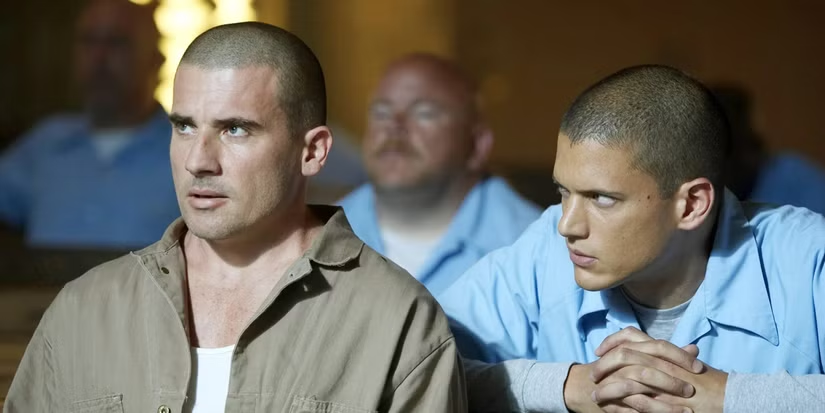
Prison Break is a fascinating series to analyze. Its first season is a masterclass in taut tension and excellent thriller storytelling as it operates as a high-stakes heist tale in reverse of sorts. However, its premise proved to be difficult to sustain over a longer run, even when the series returned for a sixth season in 2017. However, there is no doubt that, while elements of the show do falter, it always has a talent for delivering a terrific twist.
Following an engineer as he breaks into jail to help his falsely accused brother escape and avoid facing the death penalty, Prison Break excels at placing highly intelligent characters in pressurized situations where every little mistake has drastic consequences. From character decisions that alter the course of the story to major reveals that completely dismantle the audience’s perception of what they’re seeing, Prison Break’s brilliance is largely defined by its ability to implement twists that serve and further the narrative rather than just surprising the audience.
9
’24’ (2001–2010)

Combining its unique real-time approach with a frenetic, action-packed premise, 24 is a hallmark of high-octane television intensity. It follows Jack Bauer (Kiefer Sutherland), an officer for L.A.’s counterterrorism unit, as he thwarts everything from assassination attempts on the U.S. President to the imminent threat of nuclear attack. Each season of 24 focuses on a different crisis, with each episode of the 24 episodes covering one hour of the day.
At its best, 24 excels at delivering exhilarating plot twists en masse, be it the shocking reveal of a traitor among Bauer’s colleagues or a chilling discovery that some of the atrocities being investigated and prevented are actually being conducted by those in the U.S. government. Every success from Bauer and his team immediately unearths new depths to the conspiracy, ensuring 24 maintains a propulsive and absorbing energy through its chaotic, twisty storytelling.
8
‘You’ (2018–2025)

Addictive, taboo, and brimming with plot twists that left fans gobsmacked, You has become one of the defining small-screen thrillers of the past decade. As ceaselessly gripping as it is frightfully tumultuous, it centers on Joe Goldberg (Penn Badgley), a man whose charming and accessible demeanor conceals an intense obsession that sees him inject himself into the lives of women who allure him with deadly consequences.
Its five-season run is a procession of jaw-dropping moments that range from revelations of characters being hallucinations, morbid twists that showcase innocent figures might not be so innocent, and even a shocking instance in which a thought-to-be-dead character turns out to be alive. While there is a definite reach for shock value in some of its narrative beats, You uses this endeavor wisely to conjure a series of absorbing unpredictability that revels in ideas of lust, love, and desire at their most horrific.
7
‘Mare of Easttown’ (2021)

Released by HBO, Mare of Easttown marks one of the defining miniseries of the 2020s thus far. Imposing itself on viewers with its air of bleak despair and hopelessness that revels in the economic depression of modern working-class America, the series follows jaded detective Marianne Sheehan (Kate Winslet) as she investigates the recent murder of a teenage mother while navigating a litany of family issues including her son’s suicide and custody of his child, her own divorce, and the community disapproval of her skills tied to an unresolved missing persons case from a year prior.
The seven-part series occupies an air of atmospheric gloom with sublime conviction and craft. It serves less as a thrilling crime mystery and more as a devastating human drama laced with twists that only add to the weight and severity of the story. Some are abrupt and shocking, like the murder of one of Mare’s fellow cops, while others are more subdued and disturbing, such as the revelation of the actual killer. All of them work to make Mare of Easttown an intriguing albeit confronting triumph of crime drama television.
6
‘True Detective’ (2014–Present)

While the series is defined by the brilliance of its impeccable first season, True Detective as a whole has maintained a penchant for rewarding and surprising plot twists even as subsequent releases haven’t been as strong in other respects. Each of True Detective‘s seasons thus far has focused on horrific crimes and the complex personal lives of the detectives who investigate them, with each new lead bringing about a twist that leaves viewers stunned.
Whether it’s Season 1’s reveal that the occult murderer they’re looking for is being protected by institutional powers, Season 2’s winding descent into urban corruption, or the uncovering of what truly happened to the Purcell kids in Season 3, True Detective is adept at building towards major twists with suspense and then unveiling them at the perfect time. At its best, it is the most compelling and shocking crime series television has seen.
5
‘Fargo’ (2014–2024)

In 1996, the Coen Brothers released Fargo, a quirky crime-comedy that uses the filmmakers’ unique, eccentric style to present a fiendishly enjoyable and delightfully twisty thriller. Inspired by the movie, FX’s hit TV show of the same name excels in the exact same fashion, with the anthology series delivering five invigorating stories that revolve around criminal ambition, honest and morally decent cops, and opportunistic ordinary people caught in the midst of the chaos.
With each season featuring an ensemble of major characters, Fargo creates an air of unpredictable energy that suggests any character can die at any time. Furthermore, with each character having their own aspirations, each season conjures a web of clashing motivations that always lead to eruptions of violence and chaos that completely reset the trajectory of the story. From abrupt character shifts to absurdist spins like the appearance of a UFO, Fargo keeps viewers on their toes to make for a remarkably arresting viewing experience.
4
‘Line of Duty’ (2012–Present)

One of the most underrated series of recent decades in any genre, Line of Duty soars as a viscerally compelling police procedural crime show revolving around an internal affairs unit working within Britain’s Central Police. With each season featuring different stars, the show maintains a ferocious unpredictability as any character can be killed off at any point in time, a quality the series uses to perfection to ensure every scene is a masterclass in suspense.
Furthermore, while individual seasons explore different cases of police corruption, the series as a whole centers on the unit’s investigation of a high-ranking official in the department with ties to organized crime. Every step towards revealing “H”s identity offers a revelation that completely recontextualizes key elements of the story and the danger primary characters find themselves in.
3
‘Sharp Objects’ (2018)

Based on the Gillian Flynn novel of the same name, Sharp Objects enraptures viewers with its slow-burn intensity and overwhelming Southern Gothic atmosphere while delivering one of the greatest twists in television history. It follows Camille Preaker (Amy Adams), a crime reporter who returns to her hometown to investigate the murder of two young girls. As she grapples with the horrors of the case, she must also confront demons from her own traumatic past and tumultuous family life, which come flooding back.
The eight-part miniseries as a whole is rife with clever revelations that pry deeper into the characters and their pasts, but its climactic reveal of whom the actual killer is—delivered only moments before the credits roll—is entrenched as one of the most viscerally striking plot twists television has ever seen. In many ways, it defines the impact and piercing intelligence of the series while doing a phenomenal job of bringing Flynn’s disturbing story to the screen with every ounce of gravitas it deserves.
2
‘Twin Peaks’ (1990–1991)

A masterpiece of surrealist drama, Twin Peaks epitomizes David Lynch at his enigmatic and enthralling best as it follows FBI agent Dale Cooper’s (Kyle MacLachlan) investigation of a murdered teenage girl in the small town of Twin Peaks. It thrives as a transfixing crime mystery, but it also incorporates elements of supernatural dread, piercing black comedy, and profound character drama, making for a series that leaves viewers with no idea what will happen next.
The genre-blending brilliance sets the scene for a winding, mystifying procession of surprising revelations. Everything from Cooper’s discovery of an alternate realm to the uncovering of the true culprit of Laura Palmer’s murder is handled expertly, allowing the series to be consistently shocking and ceaselessly engaging. Such is its enduring popularity, Lynch returned to make Twin Peaks: The Return in 2017, with the legacy sequel series being every bit as spellbinding and stupefying as the original.
1
‘Breaking Bad’ (2008–2013)

Heralded by many as being the greatest TV show of all time of any genre, Breaking Bad delivers an engrossing story of moral decline and ambition that features plot twists in abundance. When high school science teacher Walter White (Bryan Cranston) is diagnosed with inoperable lung cancer, he applies his knowledge of chemistry to the manufacturing of crystal meth, hoping to make some quick money for his family. As he is dragged deeper into the drug trade, however, he begins to develop an egomaniacal lust for power that sees him go from a family man to a cutthroat criminal.
Every step of his descent into inhumanity is marked by shocking turns that reveal both the brutality of the world he is stepping into and his own diminishing morality. Walter watching Jane (Krysten Ritter) overdose and the revelation that he poisoned a child just to manipulate Jesse Pinkman (Aaron Paul) are just two of the more memorable abrupt twists that make the series the most shocking crime series in the history of television.

Breaking Bad
- Release Date
-
2008 – 2013-00-00
- Network
-
AMC
- Showrunner
-
Vince Gilligan
- Directors
-
Vince Gilligan, Michelle Maclaren
California, here we come? The O.C. has been off the air for almost 20 years, but that hasn’t stopped fans — and former cast members — from speculating about a possible reboot.
After Rachel Bilson (a.k.a. Summer Roberts) and Melinda Clarke (a.k.a. Julie Cooper-Nichol) launched their rewatch podcast, “Welcome to the OC, Bitches,” back in 2021, interest in another round of Newpsie drama increased.
For the podcast, which concluded in 2024, the pair rewatched old episodes of the show and shared their memories of filming, with guest appearances from fellow cast members, including Tate Donovan and Peter Gallagher.
“Watching it, I’m just so impressed with how good everybody is,” Bilson told Nylon in April 2021 of revisiting the series. “I feel like it worked because of the natural chemistry and people’s talents, and it’s fun to see that.”
The O.C. followed Ryan Atwood (Ben McKenzie), a troubled teen who moved in with the wealthy Cohen family after he got caught trying to steal a car. The Cohens’ son, Seth (Adam Brody), introduced him to comic books and Death Cab for Cutie, while their next-door neighbor Marissa (Mischa Barton) introduced him to Ferris wheel makeouts and shoplifting.
Clarke played one of the most infamous characters on the show — Marissa’s mom, Julie, whose many nefarious deeds included sleeping with her daughter’s 18-year-old ex-boyfriend.
“Julie really is one of the original Housewives,” the Gotham alum told Bustle in April 2021. “She’s a villain but you never play a villain as a villain. You believe your character’s truth — and her truth was maintaining this beautiful façade.”
In the years since the 2007 series finale, the cast has kept busy with other projects, but that hasn’t stopped people constantly former cast members if the time could be right for a return to the Bait Shop.
While The O.C. creator Josh Schwartz has said he has no plans to revive the series, fans are still making the same wish every Chrismukkah. As Julie put it in season 2: “Surf, sex and scandal. It’s a recipe for a cultural phenomenon, don’t you think?”
Keep scrolling to read everything The O.C. cast has said about the idea of a reboot:
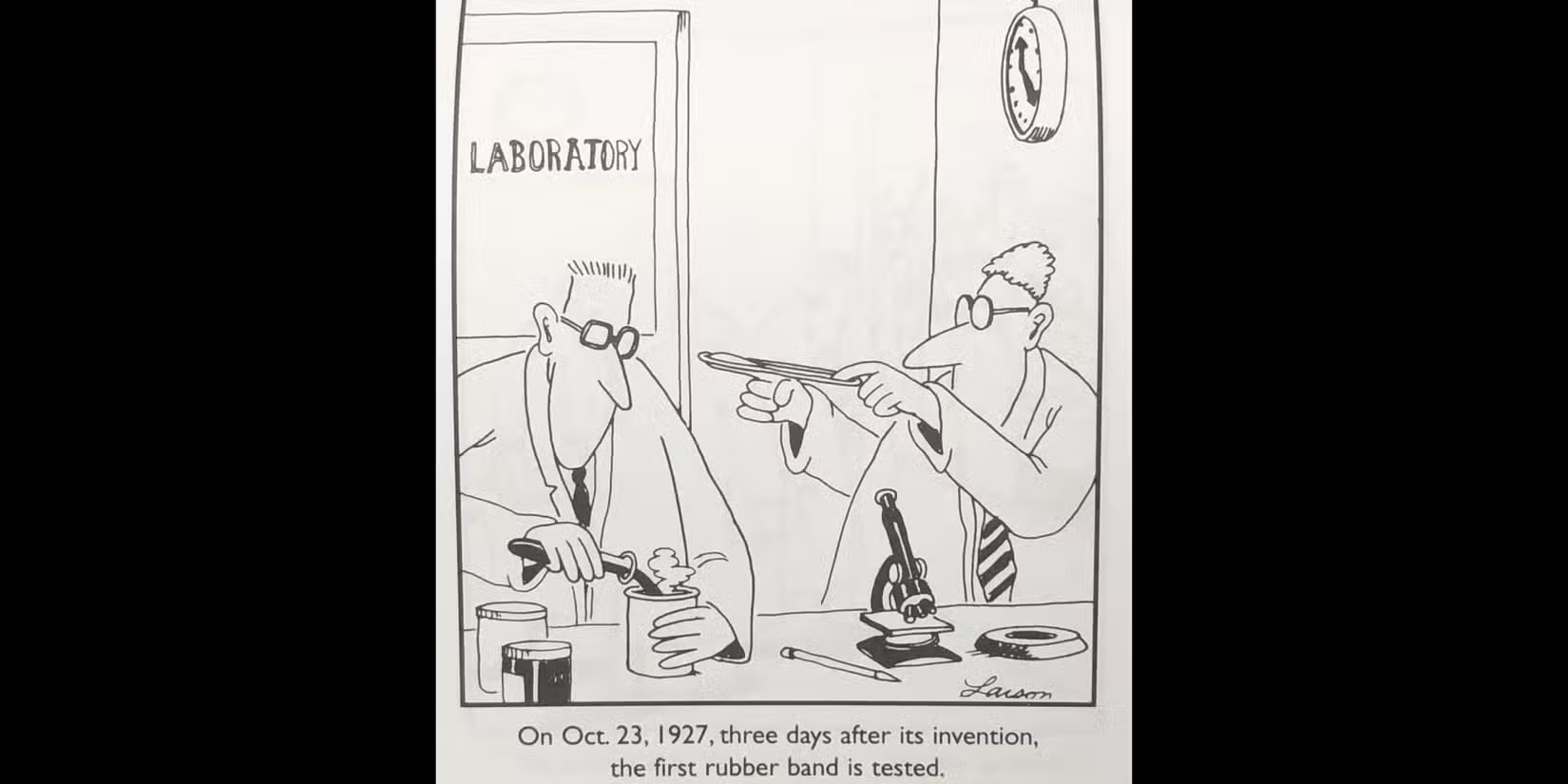
The Far Side is easily one of the best comic strips of all time, and it’s iconic enough that it probably doesn’t need much of an introduction. You’ve surely seen at least one Far Side strip before, even if not by choice, because they were made pretty consistently by Gary Larson between 1980 and 1995, with this period seeing the publication of more than 4000 strips. They appeared in newspapers, and then were further circulated thanks to books that compiled large numbers of cartoons, and also old-fashioned calendars, where you’d be greeted, every new day, by a different Far Side comic.
Most of these comics or strips were just a single panel, and they’d keep things pretty minimal in terms of text, dialogue, and captions, for the most part. Larson demonstrated a knack for being surreal, funny, and observant in ways that could be appreciated in seconds, because most Far Side strips are instantly amusing and the kind of things that make you go, “Hey, why didn’t I think of that joke before?” The Far Side could be about almost anything, but there were a particularly high number of jokes about scientists, and of those, the following strips were the funniest.
5
‘The First Rubber Band’ (1983)

Within his Far Side comics about scientists, painting them out to be immature seems to be what Gary Larson most enjoys doing. You can take offense at that, as a scientist, or be more impartial and recognize that that’s what comedy is, or can be. It’s objectively true that subversions, when done well, are funny, or else humor wouldn’t surprise, and then it wouldn’t be much. So, scientists, being typically known for being sticklers for rules and regulations while also being incredibly smart, acting like children in The Far Side? It can’t help but be funny.
Larson does appear to have plucked the date out of nowhere, because important years for the development/refinement of the rubber band appear to be 1845, 1923, and 1957. Oh well. That’s something scientists might pick up on, if they weren’t busy flicking each other with rubber bands, which The First Rubber Band implies was the main reason for such an invention coming to fruition. Honestly, if you’ve survived middle school, then you’re probably most familiar with either deploying – or being on the receiving end of – a rubber band as a weapon, rather than… uh, whatever else you’re supposed to use them for or whatever.
4
‘Scientist Hell’ (1998)

For a bit of history now, alongside all the science, The Far Side has run a little further than 1995. That was the year it officially ended, after debuting in 1980, and running consistently all that time, aside from Larson’s 1989 hiatus. Then, post-1995, there were still some Far Side comics published, and many of them thanks to an official revival online in late 2019. As for some isolated strips, you’ve got 1998’s Scientist Hell, which is more of a one-off, and yet it still very much feels in line with classic-era The Far Side. As you’d imagine from the title, Scientist Hell is indeed depicted.
It also raises the question of whether Scientist Hell is actually Psychics, Astrologists, and Mediums Heaven? Since all those people there, in their discussion group, look like they’re having a pretty good time.
Gary Larson loves going to Hell, at least in his comics. There are all sorts of comics he’s done that poke fun at the idea of Hell being a certain way or, in the case of this strip, personally horrifying for just one particular kind of person. It’s probably the “Eternal Discussion Group” part that makes it extra funny. It also raises the question of whether Scientist Hell is actually Psychics, Astrologists, and Mediums Heaven? Since all those people there, in their discussion group, look like they’re having a pretty good time, and also don’t seem too concerned about the idea that it’s going to last an eternity. Also, shout-out to the guy wearing the T-shirt that just says “Pisces.” He looks like he’s having a fun time.
3
‘Early Microscope’ (1983)

Early Microscope is right on the border of being about scientists, or science, since it more fits in with that other recurring Far Side topic: cavemen. Cavemen and science collide; these are a few of Larson’s favorite things and stuff. This strip looks at a comically crude “early” microscope that’s limited enough it feels like it’s worse than just looking at the thing entirely. Oh wait, there’s the joke. That’s the joke. Seriously, these jokes are easy to get/explain. Trying to write further feels a bit like going mad.
The only other things that can be observed would be asking questions along the lines of, “How did they get the mammoth to sit under the early microscope without realizing they were putting a mammoth under an early microscope?” That’s if you want the whole thing to feel even more surreal. It happens, with The Far Side. You look for longer, and you find yourself both more confused and more amused at the same time (conmused? Or afused?).
2
‘You’re Being Facetious, Andrews’ (1982)

Those immature scientists are returned to, in You’re Being Facetious, Andrews (sorry about the lack of a clean name/title for this one). In fact, Andrews might well be the guy who had the rubber band fired at him in The First Rubber Band. They look pretty similar. He’s sticking up for himself, maybe, after getting humiliated by the first rubber band ever. And he’s wrapped up in a conflict with another scientist (again, in the unlikely event that Andrews is a genuine recurring character throughout The Far Side), this time involving who gets to ride the dinosaur skeleton.
Well, if you want to get technical, they’re probably paleontologists, which is a kind of scientist, but also, the idea that they’re not paleontologists and have snuck out of their laboratory to play around in someone else’s field/workspace makes it funnier. Anyway, this is probably the best of Larson’s strips about immature scientists. The continued use of formal language (saying words like “facetious” and “distinctly”) while the argument at hand relates to who gets to misuse the carefully constructed dinosaur skeleton is great. And the guy not wrapped up in the argument is great, and having the time of his life, much like that aforementioned dude with the Pisces shirt.
1
‘Scientific Meat Markets’ (1987)

This one does read a bit confusingly if you’re below a certain age, but looking up the term “meat market,” it appears such an event served the same purpose, in a pre-internet age, that short-term dating apps serve in this internet age. People would go to a meat market, or it would sometimes be called a slightly nicer thing: a meet market, and they would try to find people who were looking for something physical and short-term. Hook-ups, basically. Not saying scientists couldn’t go, or wouldn’t want such a thing, but typically, you’d not really expect someone who acts like a stereotypical science guy (or gal) to be at a meat/meet market.
So, Gary Larson asked, “What if they did, and what if such a meat market was specifically made for scientists?” This all necessitates a bit more of an explanation than your average Far Side strip, just because there are people who get kind of gatekeep-y about The Far Side, having known it when it was still active (you have been seen, commenter, and you are being acknowledged; do you like that spotlight? It was made extra-bright). People sometimes get gatekeep-y about music, too. It’s weird and annoying. The term in this strip is outdated, but once you learn it, Scientific Meat Markets is made hilarious. If “Your lab or mine?” was the only speech bubble, it’d already be iconic, but the other cheesy scientist pick-up lines are also excellent, as are the scientists making eye contact instead of looking through their stereo microscope (as opposed to an early microscope) together. Is it a microscopic mammoth under there, though? That’s the real question.

Tales from the Far Side
- Release Date
-
October 26, 1994
- Directors
-
Marv Newland
- Writers
-
gary larson
Entertainment
Daniel Radcliffe’s Chilling Post-‘Harry Potter’ Horror Gem Is Officially Coming to Paramount+
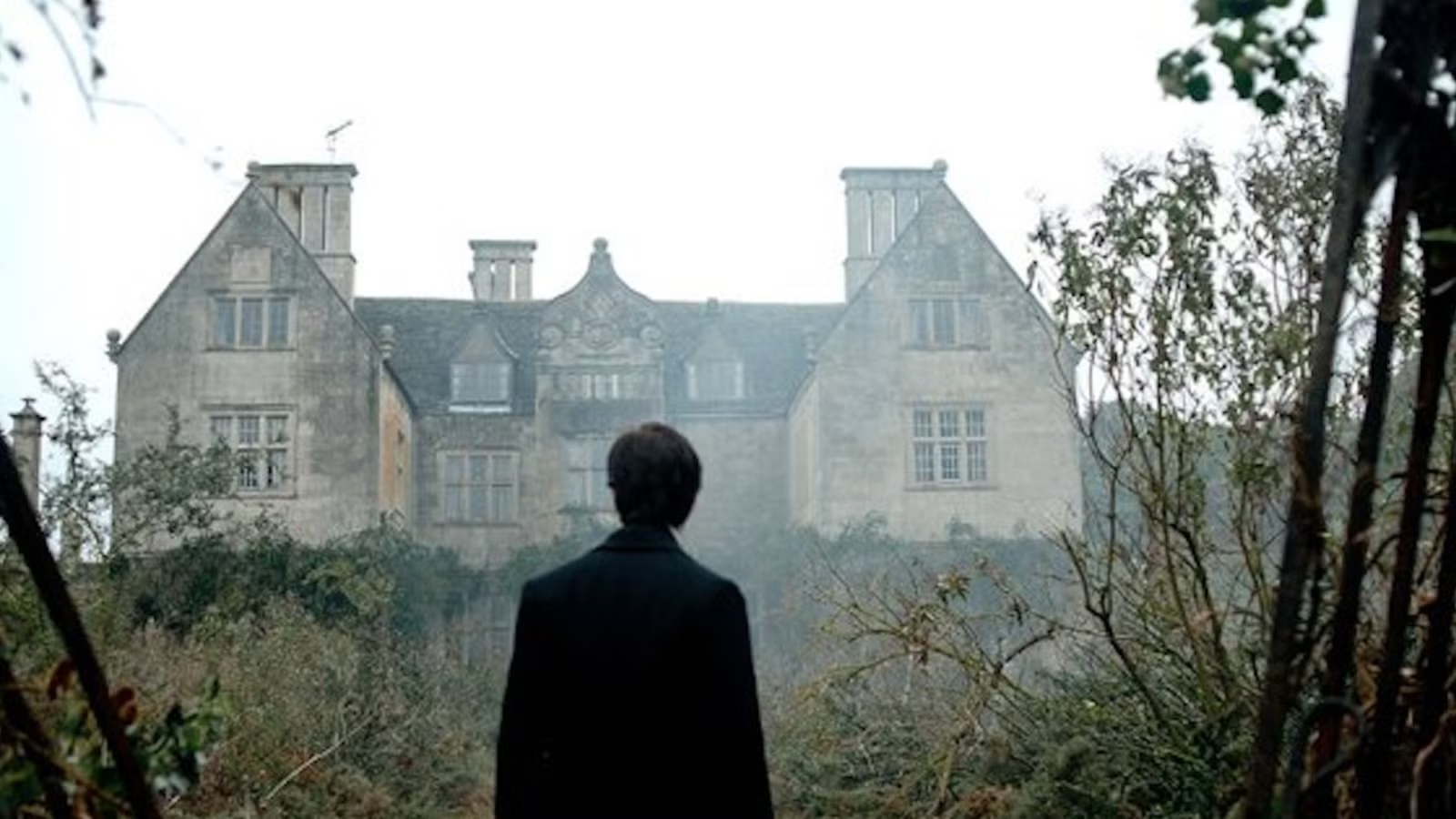

While Daniel Radcliffe is often praised for his unconventional career moves following the conclusion of the Harry Potter franchise, let’s not forget that he was making bold creative choices even at the peak of his success and fame. This was during the resurgence of the superhero genre, when it seemed like nearly every actor of a certain age was auditioning for roles in major superhero films. However, after the Harry Potter series wrapped up in 2011, Radcliffe stayed away from franchise filmmaking for a while. Now, the first movie he headlined following the Harry Potter franchise’s climax is streaming for a new generation of fans on Paramount+.
Funnily enough, it was marketed as a return to the kind of horror movies that were popular back in the 1950s and 1960s. It was a concerted effort on the part of the filmmakers to take audiences back to that era, at a time when the most popular horror hits were the Conjuring movies. Radcliffe, who played an attorney sent to a foreboding British manor house to retrieve documents left behind by its deceased owner, was joined in the cast by Ciarán Hinds and Janet McTeer. The movie was directed by James Watkins, who went on to make the hit horror remake Speak No Evil, and is gearing up for the release of DC’s Clayface.
Daniel Radcliffe’s Gothic Horror Movie Is Now Streaming on Paramount+
We’re talking about The Woman in Black, which was co-produced by Hammer Films — a British company that became known for Gothic horror beginning in the 1950s. The movie was a box-office hit, grossing around $130 million worldwide against a reported budget of $15 million. It received mixed reviews and is now sitting at a 66% score on the aggregator website Rotten Tomatoes, where the consensus reads, “Traditional to a fault, The Woman in Black foregoes gore for chills — although it may not provide enough of them for viewers attuned to more modern, high-stakes horror.” The film was followed by a sequel, titled The Woman in Black: Angel of Death, which was headlined by Jeremy Irvine and directed by Tom Harper. Radcliffe’s movie was added to the Paramount+ library this September. Stay tuned to Collider for more updates.

- Release Date
-
February 3, 2012
- Runtime
-
95 minutes
- Director
-
James Watkins
- Writers
-
Jane Goldman
Entertainment
19 Years Later, the Gritty Timothy Olyphant Thriller You’ve Never Seen Is Officially Streaming
Note: The following contains spoilers for A Perfect Getaway.
Writer-director David Twohy had a hand in creating an incredible number of Hollywood genre pics from the early ’90s, including writing credits on Critters 2, Terminal Velocity, and even Harrison Ford‘s stone-cold action classic The Fugitive. He made a name for himself as a director, though, with the sleeper sci-fi/horror film Pitch Black, which also happened to help put star Vin Diesel on the map. Twohy’s gritty, vibes- and action-first franchise yielded two sequels: The Chronicles of Riddick and, later, Riddick.
His single foray into pure suspense filmmaking came with 2009’s A Perfect Getaway, and he proved as adept as any Hollywood craftsman at selling both physical danger and psychological complexity, armed with a cast of greats that included a young Timothy Olyphant. A Perfect Getaway is a simple sell: Two couples on a tropical vacation realize they’re being stalked by killers. Twohy, and the cast, inject the premise with remarkable life, though, through sheer sturdy filmmaking and charismatic acting, with Olyphant proving himself early on as a compelling leading man — and genre veteran Steve Zahn showing that he’s capable of surprising the audience.
‘A Perfect Getaway’ Is a Perfect Late-Night Thriller

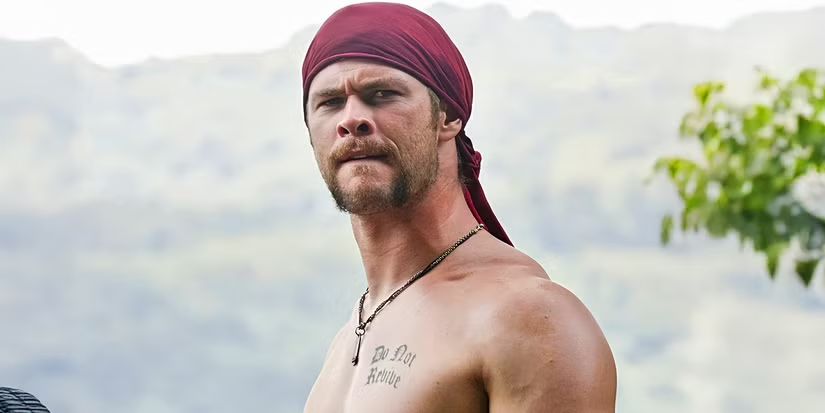
A Perfect Getaway begins with a perfect bait-and-switch that the audience can likely already sense — as in, it’s too “perfect.” Zahn’s Cliff and Milla Jovovich‘s Cydney, alleged newlyweds, head to a tropical honeymoon, making cute videos and heading for the hills with a trail leading to a secluded beach. Twohy cuts in handheld shots from their wedding, showing groomsmen wishing them well and immediately establishing Cliff as an aspiring filmmaker. The warmth is there from the beginning; Zahn’s dorky, well-meaning character pulls a lot of weight as the couple has an unnerving encounter with a pair of hitchhikers (one of whom is a young Chris Hemsworth), before they befriend Nick (Olyphant) and Gina (Kiele Sanchez), attempting the same trail they’re hiking
Twohy derives a considerable amount of tension from the clearly on-location photography, emphasizing these characters’ isolation in every high-angle shot, and the whole thing has a fun and tense, colorful vibe that continues even when things get bloody. And things get bloody indeed, once the foursome receive word of a double-murder, allegedly committed by a man and a woman. By this point, the audience is likely already on board with both couples and scouting for dangers just outside the frame, but Twohy shoots everything impassively until the film takes its crucial turn, with Zahn and Jovovich’s characters revealed as a psychotic, meth-fueled killer couple looking to steal the identities of Nick and Gina.
From then on, Twohy doesn’t shy away from subjective, muddy close-ups and hand-held shots, as well as frank views of gory injuries. The film starts to sing, in a way that will remind fans of Sam Raimi’s recent Send Help.
Even in 2009, Timothy Olyphant Was an Underrated Leading Man
Relatively early in his career, Olyphant already radiates a criminal amount of charm in what could have been a stock role. With his southern drawl, warmly needling relationship with his girlfriend, and gentle prodding of Zahn and Jovovich’s villains, Olyphant’s former military protagonist injects a real warmth and sense of stakes into an increasingly dangerous vacation. He evinces the credibility and magnetism of a young Kurt Russell or Harrison Ford, even as most audiences likely only knew him as Sheriff Seth Bullock on HBO’s gone-too-soon masterpiece of a revisionist Western, Deadwood.
Early on, Olyphant earnestly asks Zahn’s undercover psycho about his supposed work in the film industry before the film’s big turn, even musing that if a film were to be made about his life, he’d like to be played by Nicolas Cage. It’s well-written stuff, performed realistically by Olyphant. And when Nick’s apparent special forces training comes out, and Twohy fills the frame with Olyphant’s sweaty, bloodied face, ragged clothes, and cut physique in the film’s latter half, it’s clear there’s an action star in the making.
Twohy’s thriller will likely end up a footnote in his otherwise sci-fi-centric filmography, alongside his unsung contributions to modern action cinema at large, but it remains the kind of three-star classic it would be a sin to miss when streaming. The film itself is refreshingly unfussy and unpretentious, loaded with juicy performances, beautiful location work, and rough violence. And the forgotten tropical thrill ride is streaming today on YouTube and Prime Video.

- Release Date
-
August 7, 2009
- Runtime
-
98 minutes
- Director
-
David Twohy
- Writers
-
David Twohy
- Producers
-
Camille Brown, Ken Halsband, Mark Canton, Robbie Brenner, Tucker Tooley, Ryan Kavanaugh
Entertainment1 minute ago
HBO Max’s 96-Minute Thriller Is One of the Biggest Streaming Hits in the World

NewsBeat4 minutes ago
Research shows it’s become even more difficult for prisoners serving indefinite sentences to be released

Business5 minutes ago
Premier League Kickoff Time, TV Channel Today

Fashion2 months ago
Weekend Open Thread – Corporette.com

Fashion1 month ago
Weekend Open Thread: Brooks Brothers

NewsBeat2 months ago
London Mayor Sadiq Khan handed a peerage by Keir Starmer alongside 15 other Labour figures… just days before the PM leaves No10

News Videos10 minutes ago
Ripple XRP IT’S ALL BS: Arthur Hayes SAID IT – Donald Trump’s Crypto Market Will TAKE YOUR MONEY!?!

News Videos23 minutes ago
La kgste! #disney #series #malcolmeldeenmedio #shorts #shortvideo #reels #fyp #money #dinero #ahorro

News Videos29 minutes ago
So wird das NICHTS! Bitcoin-Nachfrage BRICHT ZUSAMMEN!
-
 Crypto World1 day ago
Bitcoin price stalls near $82K as key resistance holds
-

 Politics1 day ago
Best Gaming Laptops, CPUs, TVs, And Keyboards To Upgrade Your Set Up For GTA VI
-

 Tech1 day ago
The Birds Outside, Drawn For You Automatically
-

 Crypto World1 day ago
IMF Says El Salvador’s Post-Review Bitcoin Purchases Used No Public Funds
-
 Crypto World1 day ago
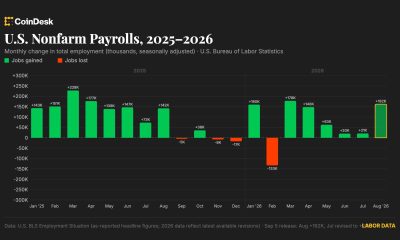
U.S. added stronger than expected 162,000 jobs in August as labor market bounced back
-
 Sports1 day ago
Alexandre Pato consortium’s Northampton Town investment approved
-

 Sports24 hours ago
Golden Eaglets Drawn in Group B for 2026 WAFU B U17 Championship
-

 Sports1 day ago
Commanders’ Chig Okonkwo is a top breakout fantasy football candidate
-

 Fashion20 hours ago
Weekend Open Thread: Beyond Yoga
-
 Crypto World24 hours ago
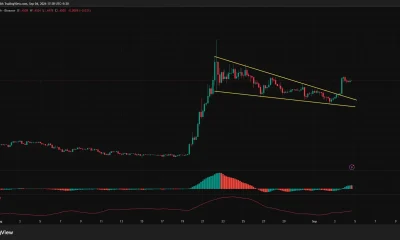
XRP price breaks falling channel as bulls target $1.53
-

 Politics1 day ago
A new European chapter for Gibraltar
-

 Politics1 day ago
The House | Bin the lectures, bring gossip and be ready to banter: how the new PM should prepare for his Trump encounter
-

 Politics24 hours ago
How To Avoid Winter Colds: 4 Everyday Habits That Spread Germs, Says Pharmacist
-

 Crypto World24 hours ago
From warning to listing: UK’s largest retail investment platform opens access to crypto ETNs
-
 Tech1 day ago
A Worthy Android Ereader, With Some Tradeoffs
-

 Crypto World1 day ago
FinCEN flags $12.7B tied to Southeast Asia crypto investment scams
-

 Crypto World1 day ago
Trezor Data Breach Impacts 67,000 More US Customers
-

 Politics1 day ago
33 Cosy Autumn Home Decor Ideas: Blankets, Pumpkin Decorations, And Candles
-
 Sports1 day ago
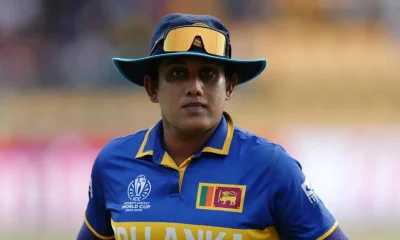
Seven wickets in 21 balls: Sri Lanka’s Chamari Athapaththu scripts history with record-breaking spell
-

 Tech1 day ago
How To Edit Claude’s Memory
You must be logged in to post a comment Login