
Business
Lockheed Martin: Record Backlog And Missile Demand Make The Pullback A Strong Buy


I’m DCF Value Investor a passionate individual analyst with unique ideas that cover all types of stocks and commodities. I focus on companies fundamentals and valuation, to deliver a proper investment analysis. My ideas explore a different point of view for undervalued opportunities. Although I cover all types of stocks, the sectors I prefer are materials, technology and real estate. My research process begins with screening for companies that appear undervalued based on their balance sheet, income statement and cash flow statement. From there I conduct a fundamental analysis, including valuation ratios and industry trends. Through my analysis, I aim to help my readers to make better investment decisions. As an independent writer, I write with a particular perspective, bringing fresh ideas to the platform. My ideas keen all types of readers with her intense research in the stock I’m covering, the investment thesis on my articles is solid as it is back on fundamentals and the whole concept on my pieces are based on value investing. My motivation for writing on Seeking Alpha is to offer a different perspective from Wall Street, writing about hidden opportunities in the market. Investigating over hyped stocks in the market, digging into financials and valuation with my own analysis are my passion.
Analyst’s Disclosure: I/we have no stock, option or similar derivative position in any of the companies mentioned, and no plans to initiate any such positions within the next 72 hours. I wrote this article myself, and it expresses my own opinions. I am not receiving compensation for it (other than from Seeking Alpha). I have no business relationship with any company whose stock is mentioned in this article.
Seeking Alpha’s Disclosure: Past performance is no guarantee of future results. No recommendation or advice is being given as to whether any investment is suitable for a particular investor. Any views or opinions expressed above may not reflect those of Seeking Alpha as a whole. Seeking Alpha is not a licensed securities dealer, broker or US investment adviser or investment bank. Our analysts are third party authors that include both professional investors and individual investors who may not be licensed or certified by any institute or regulatory body.


China to inject $54 billion into state banks and insurers

Which TSX stocks investors will be watching next week?

5 Stocks I Want If Oil Hits $100


Vishal Jadaun is the founder of Tickzen, a company that develops quantitative research tools, valuation frameworks, and stock analysis models for investors. With a background in computer science and a self-directed approach to investing, he evaluates companies primarily through financial statements, SEC filings, earnings reports, and management disclosures rather than market narratives or third-party opinions.His research on Seeking Alpha focuses on post-earnings and fundamental analysis of industrial, logistics, and technology companies. His process emphasizes separating one-time accounting items from underlying operating performance, assessing balance-sheet strength, and building independent estimates of intrinsic value.
Analyst’s Disclosure: I/we have no stock, option or similar derivative position in any of the companies mentioned, and no plans to initiate any such positions within the next 72 hours. I wrote this article myself, and it expresses my own opinions. I am not receiving compensation for it (other than from Seeking Alpha). I have no business relationship with any company whose stock is mentioned in this article.
Seeking Alpha’s Disclosure: Past performance is no guarantee of future results. No recommendation or advice is being given as to whether any investment is suitable for a particular investor. Any views or opinions expressed above may not reflect those of Seeking Alpha as a whole. Seeking Alpha is not a licensed securities dealer, broker or US investment adviser or investment bank. Our analysts are third party authors that include both professional investors and individual investors who may not be licensed or certified by any institute or regulatory body.


Albert Anthony is the pen name of a business author on Amazon and his newest book is “How To Pick Stocks: 8 Steps For Long-Term Investing with Fundamental & Technical Analysis,” now available as a 2026 edition paperback and Kindle ebook in several regions including the US, UK, Canada, and Europe. The author is an analyst & contributor for investing platform Seeking Alpha since 2023, where he has nearly 2,000 followers and has covered hundreds of stocks in multiple sectors including banks/financials, REITs, insurance, pharma, and more. He has also written for platforms like Investing dot com, and has taken part in many business conferences includes Bloomberg Adria’s Investment Outlook 2026 as well as Money Motion 2026. Albert Anthony has Croatian-American roots, having grown up in the US and living in the NYC/New Jersey area as well as the Austin Texas area while working in enterprise IT roles at several prominent companies, including a top 10 financial firm. The author earned a B.A. from Drew University, and also completed certifications from Microsoft, CompTIA, and Corporate Finance Institute where he earned the specialization in risk management. He is founder of a boutique equities research firm, Albert Anthony & Company, which is a trade name both in the US and Croatia. Besides his writing and analyst work, the author has been active on camera as well, as a film/TV extra for casting agencies in Croatia/Europe, and also took part in roundtable panel discussions and appeared in several media stories in that region. You can also check out the author’s video content on the Albert Anthony channel on YouTube where he discusses investing topics, @author.albertanthony Please note: The author does not write about non-publicly traded companies, small cap stocks, crypto, or startup CEOs, so any such mail received and pitches from PR agencies will be deleted. Any official mail to the author should be sent to albertanthony.info@gmail.com. *Author Disclaimer: Albert Anthony and Albert Anthony & Co, is a US-based sole proprietorship registered as a trade name in Austin, Texas, and a sole proprietor registered in Croatia. The author nor his company are registered financial advisors and do not provide personalized financial advisory services to clients and do not manage client assets but provide general markets commentary and research as well as actionable insights based on publicly-available data and their own analysis. The author does not sell or market financial products and services, nor is compensated by any company for rating them. The author does not hold any material position in any stock he rates at the time of writing, unless otherwise disclosed. All investment is assumed to be at risk and readers are expected to do their due diligence beyond the scope of this author’s commentary, agreeing to indemnify the author of any liability for potential investment losses.
Analyst’s Disclosure: I/we have a beneficial long position in the shares of IVR either through stock ownership, options, or other derivatives. I wrote this article myself, and it expresses my own opinions. I am not receiving compensation for it (other than from Seeking Alpha). I have no business relationship with any company whose stock is mentioned in this article.
author invests in a diversified portfolio of REITs, which include IVR also.
Seeking Alpha’s Disclosure: Past performance is no guarantee of future results. No recommendation or advice is being given as to whether any investment is suitable for a particular investor. Any views or opinions expressed above may not reflect those of Seeking Alpha as a whole. Seeking Alpha is not a licensed securities dealer, broker or US investment adviser or investment bank. Our analysts are third party authors that include both professional investors and individual investors who may not be licensed or certified by any institute or regulatory body.
Business
(VIDEO) Maruti Suzuki Launches 2026 Baleno Facelift At Rs 6.10 Lakh With New Engine, Level 2 ADAS In India

NEW DELHI — Maruti Suzuki has launched an updated version of the Baleno premium hatchback in India, introducing a new three-cylinder petrol engine, an advanced driver-assistance suite and a range of design refinements as part of a mid-lifecycle update to one of the country’s best-selling hatchbacks.
The 2026 Baleno facelift went on sale Sept. 5, priced starting at Rs 6.10 lakh, ex-showroom, according to Autocar India. The update arrives roughly four years after Maruti launched the second-generation Baleno in 2022, and represents what the company has described as an evolutionary cosmetic and mechanical refresh rather than a complete redesign of the model.
The most significant change under the hood is the introduction of a new powertrain. The updated Baleno now uses the Z12E 1.2-liter, three-cylinder, naturally aspirated engine, the same unit found in Maruti’s Swift and Dzire models, though Maruti says the engine has been specifically tuned to deliver improved low-end torque in its Baleno application. The new three-cylinder engine replaces the previous 1.2-liter, four-cylinder K12N unit that powered the outgoing Baleno.
Peak output for the new engine comes in at 83 horsepower and 112 Newton meters of torque in petrol configuration, with buyers able to choose between a five-speed manual transmission and a five-speed automated manual transmission, commonly referred to as AMT. According to figures published by ZigWheels, the petrol variants deliver claimed fuel efficiency ranging from 23.8 to 24.77 kilometers per liter under Indian ARAI testing standards.
Maruti has continued offering a factory-fitted compressed natural gas, or CNG, variant alongside the petrol lineup. In CNG mode, power and torque outputs drop to 70 horsepower and 102 Newton meters, respectively, with the CNG variant continuing to use a five-speed manual transmission exclusively rather than offering an automatic option. According to ZigWheels, the CNG variant carries a claimed mileage figure of 33.61 kilometers per kilogram of fuel.
On the safety front, the updated Baleno introduces a Level 2 advanced driver-assistance system, a feature Maruti has emphasized as a segment-first addition that none of the model’s direct rivals currently offer. The ADAS suite includes adaptive cruise control, lane-keep assist, automatic emergency braking and high-beam assist. The facelift also adds a tire pressure monitoring system as a new safety feature. Additional standard safety equipment across trim levels includes six airbags, anti-lock brakes with electronic brakeforce distribution, and a 360-degree camera setup, an offering Maruti has positioned as leading the broader sub-Rs 20 lakh vehicle segment for that specific camera feature.
Visually, the updated Baleno receives a reworked front fascia featuring a redesigned grille with a horizontal bar connecting the headlights, along with a revised front bumper, retweaked headlight internals and a repositioned Suzuki badge. The distinctive boomerang-shaped LED daytime running lights carry over largely unchanged from the outgoing model. New 16-inch alloy wheel designs feature in profile, while changes toward the rear of the vehicle remain more subtle, limited primarily to a revised bumper, with the existing taillight design, roof-mounted spoiler and rear window wiper continuing without significant alteration.
Inside the cabin, changes are similarly measured rather than dramatic. The dashboard layout carries over largely unchanged from the previous generation, continuing to use the same nine-inch infotainment touchscreen unit found in the outgoing Baleno. Reported updates include new cabin upholstery options, ventilated front seats, a newly added heads-up display, and additional chrome trim elements that Maruti has positioned as adding a more premium feel to the cabin.
Maruti has not yet announced full variant-wise pricing details for the updated Baleno lineup beyond the starting price, according to Autocar India, with additional pricing information for higher trim levels expected to follow in the coming days.
The Baleno continues to compete within one of India’s most closely contested vehicle segments, facing off against rivals including the Tata Altroz, Hyundai i20, Toyota Glanza and, within Maruti’s own lineup, the Fronx crossover and the Swift hatchback. According to figures cited by ZigWheels, competing models like the Fronx have shown strong consumer preference in head-to-head comparisons against the Baleno in some market surveys, underscoring the intensity of competition the updated model faces even with its new engine and expanded safety features.
User reviews compiled on automotive platforms including CarDekho reflect broadly positive long-term ownership experiences with the outgoing Baleno generation, with several owners specifically praising the model’s fuel efficiency, cabin space and comfort levels comparable to larger vehicles despite its hatchback body style. One reviewer who had owned a Baleno for four years described experiencing no significant issues over that period, while another owner who had driven an automatic Baleno variant nearly 40,000 kilometers over two years said the vehicle continued to feel new, citing strong mileage and cabin space as standout qualities, though noting hope that Maruti would address concerns around interior build quality with the new facelift.
Some prospective buyers reviewing early details of the 2026 update have specifically flagged safety ratings as an area they hope Maruti addresses with the facelift, reflecting ongoing broader consumer interest in crash-test performance among Indian hatchback buyers, an area where Maruti’s vehicles have faced periodic scrutiny in independent testing conducted by global crash-safety organizations in recent years.
With the new engine, expanded ADAS suite and refreshed styling now confirmed following the Sept. 5 launch, the updated Baleno positions itself to compete more directly on safety credentials against segment rivals, even as its core mechanical and interior architecture remains fundamentally similar to the outgoing model. Prospective buyers weighing the updated Baleno against competitors like the Hyundai i20, Tata Altroz and Toyota Glanza will likely be watching closely for full variant-wise pricing details, along with independent test drives and crash-safety assessments, before the vehicle’s broader market reception becomes clear in the weeks following its launch.

Canadians back Carney’s tougher trade stance as U.S. tensions deepen


Formerly known as “The Dividend Collectuh.” Top 1% of financial experts on TipRanks. Contributing analyst to the iREIT+Hoya Capital investment group. Dividend Collection Agency is not a registered investment professional nor financial advisor and these articles should not be taken as financial advice. This is for educational purposes only and I encourage everyone to do their own due diligence. I’m a Navy veteran who enjoys dividend investing in quality blue-chip stocks, BDCs, and REITs. I am a buy-and-hold investor who prefers quality over quantity and plans to supplement his retirement income and live off dividends in the next 5-7 years. I aspire to reach and help the hard working, lower and middle class workers build investment portfolios of high quality, dividend-paying companies. I also hope to give investors a new perspective to help them reach financial independence.
Analyst’s Disclosure: I/we have no stock, option or similar derivative position in any of the companies mentioned, and no plans to initiate any such positions within the next 72 hours. I wrote this article myself, and it expresses my own opinions. I am not receiving compensation for it (other than from Seeking Alpha). I have no business relationship with any company whose stock is mentioned in this article.
Seeking Alpha’s Disclosure: Past performance is no guarantee of future results. No recommendation or advice is being given as to whether any investment is suitable for a particular investor. Any views or opinions expressed above may not reflect those of Seeking Alpha as a whole. Seeking Alpha is not a licensed securities dealer, broker or US investment adviser or investment bank. Our analysts are third party authors that include both professional investors and individual investors who may not be licensed or certified by any institute or regulatory body.
Business
Tampa Bay Battles Worst Dengue Fever Outbreak In Nearly A Century As Cases Double In A Week Officials Say
TAMPA, Fla. — Florida is battling its largest outbreak of dengue fever in nearly a century, with mosquito control officials across the Tampa Bay area waging an intensifying fight against the two invasive mosquito species responsible for spreading the disease.
Since July, 209 Floridians have been hospitalized with dengue fever, more than any other state in the country. At least 73 of those people contracted the virus locally rather than while traveling abroad, and 65 of those local infections occurred within the Tampa Bay region. No deaths have been reported so far this year, but officials say the scale of the outbreak is unprecedented for the area.
“We’re trying not to panic. But people need to take this very seriously,” said Gabriela Henderson, spokesperson for Hillsborough County’s mosquito control department. “Something of this scale has never happened here before.”
Kristi Miley, who teaches at the University of South Florida’s College of Public Health, said dengue case counts across Florida have been gradually rising since the year 2000, but the current concentration in Tampa Bay marks a distinct and worrying shift.
“There’s clearly something happening here that’s not happening in the rest of the state,” Miley said. “And it’s just a matter of time until it spreads.”
The numbers illustrate just how sharply the outbreak has accelerated. In 2024, following two hurricanes that left behind piles of debris and standing water, Hillsborough County recorded seven locally contracted dengue cases. This year, that figure has climbed to 59. Pinellas County had not recorded a single case in 30 years before logging five this summer. Pasco County reported its first dengue infection just last week.
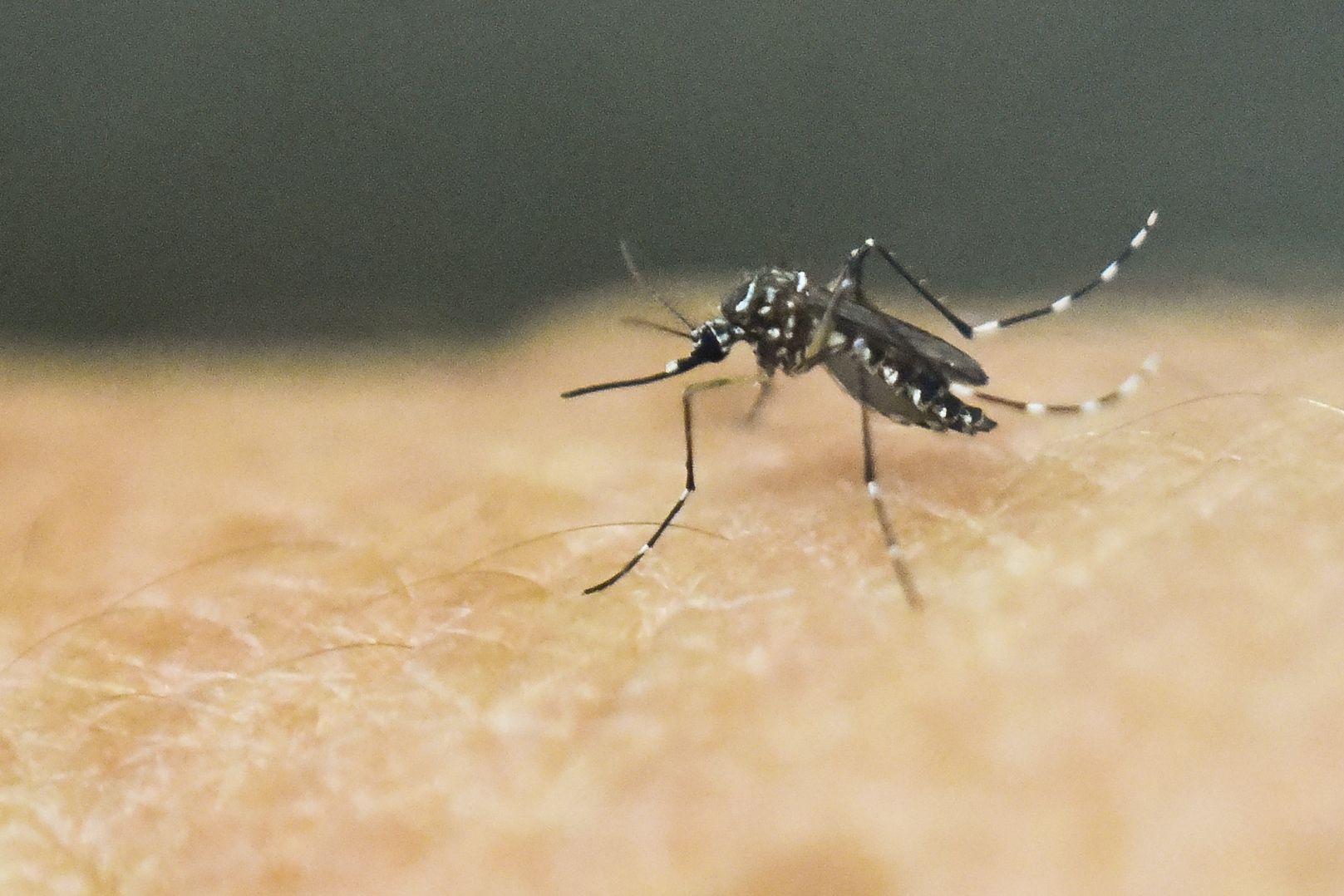
The disease is spread by two mosquito species, Aedes aegypti and Aedes albopictus, small insects marked by black-and-white stripes and a distinctive harp-shaped pattern on their backs. Beyond dengue, both species can also transmit Zika, yellow fever and chikungunya. Unlike other mosquito species that breed in mangroves and marshes, these two prefer laying eggs in small containers of standing water, including discarded toys, trash cans and backyard bromeliads, with a single bottle cap capable of harboring as many as 100 larvae.
Only female mosquitoes of these species bite humans, seeking blood meals needed to lay eggs, and unlike some other mosquito species, they do not feed on birds, meaning traditional sentinel chicken coops used to detect disease outbreaks cannot serve as an early warning system for dengue. The mosquitoes also tend to avoid flying during dusk or nighttime hours, when most fogger trucks typically operate, and because they primarily breed in residential backyards rather than open wetlands, spraying public streets alone does little to control their populations.
To adapt, mosquito control workers on both sides of Tampa Bay have begun carrying insecticide-filled backpacks to target much smaller, more precise areas, rather than relying solely on wide-area spraying. Because the mosquitoes typically travel only a couple of football fields from where they hatch but can lay up to 1,000 eggs over their monthlong lifespan, officials have also had to switch to specialized traps that emit a mist resembling the smell of dirty socks, since the dengue-carrying strains are not attracted to standard light-based mosquito traps.
Hillsborough County currently employs 25 mosquito control workers who maintain 140 traps across the county. Locations that previously caught around 200 insects are now logging as many as 1,000. Since July, technicians have tested 2,324 mosquitoes, finding the dengue virus present in 14 separate samples.
Jason Stuck, an entomologist who has worked in Pinellas County’s mosquito control department for 28 years, described his hands-on approach to studying the insects, saying he regularly lets mosquitoes land on him “so I can suck them off and study them.”
Alissa Berro, who directs Pinellas County’s mosquito control and vegetation management department, said the community’s cooperation has become central to the effort in ways that differ from combating other mosquito species.
“The biggest difference in combating this sort of mosquito vs. others is how much we’re depending on the community,” Berro said. “They’re in your yards. They’re outside your private businesses.”
Berro, who transitioned into mosquito research after initially studying ladybugs, described a genuine fascination with the insects even as she works to control them.
“I love mosquitoes. I can’t help it,” Berro said. “They’re utterly fascinating and beautiful. But we have to control them.”
Public health officials note that dengue often goes undetected, since only about one in four infected people show symptoms, which typically resemble the flu and can include fever, body aches and a mild rash, often appearing weeks after the initial bite. In more severe cases, the disease can cause organ failure, bleeding from the eyes and ears, high fever and severe bone pain. The virus cannot spread directly between people, though pregnant women can pass it to their unborn children, increasing the risk of miscarriage. Individuals who contract a second, different strain of dengue after a prior infection face significantly elevated risk of hemorrhaging and death. There is no cure for the disease, and treatment is generally limited to rest, fluids and pain relievers.
Globally, dengue infects roughly 400 million people annually, according to the Centers for Disease Control and Prevention, a rate 30 times higher than a generation ago, with about 100 million people developing severe symptoms and an estimated 40,000 deaths worldwide each year. Public American Health Organization spraying efforts had helped virtually eliminate local dengue transmission in the United States by the 1940s, though isolated cases resurfaced in Key West in 2009, followed by a larger cluster across Florida in 2024 after that year’s hurricanes.
Officials continue urging residents to empty standing water from outdoor containers at least once a week, the approximate time it takes mosquito eggs to hatch, and to report neighborhood code violations that could contribute to breeding sites. Pinellas County has even distributed free mosquito fish, which eat larvae, for use in horse troughs and turtle ponds.
Henderson said the intensified spraying and trapping efforts are showing measurable results, even as the broader fight remains difficult.
“When we trap 100 mosquitoes, then spray, we might get eight the next time,” Henderson said. “It shows what we’re doing is working. Unfortunately, it’s an uphill battle.”
Despite those efforts, the number of dengue cases across Tampa Bay doubled just last week, underscoring the scale of the challenge still facing local health and mosquito control officials as the outbreak continues to develop.
Business
Seoul Forum To Ask Whether AI Can Cut A Decade Off Drug Development Amid Healthcare Revolution

SEOUL, South Korea — A major forum hosted by South Korea’s Maeil Business Newspaper is set to bring together global executives from Microsoft, Cleveland Avenue and other organizations this week to examine whether artificial intelligence can meaningfully compress the years-long, multibillion-dollar process of developing new drugs, alongside broader sessions spanning art, architecture, entertainment and the global wine industry.
The forum’s central healthcare session, titled “What Is Real, and Who Bears the Responsibility?”, is scheduled for the afternoon of Sept. 8 and will focus specifically on the current state of medical AI. Organizers say the session will address a growing tension within the field: AI systems are already being used to interpret medical images and draft clinical records, yet clear lines of responsibility for the results those systems produce remain unresolved.
David Ryu, global chief medical officer at Microsoft, and MJ Chey, co-founder and chief executive of Integral Health, are scheduled to give presentations during the session, with Mingu Lee, managing partner at venture firm Cleveland Avenue, moderating the subsequent discussion. According to the forum’s organizers, the panel intends to explore how audiences and industry professionals can distinguish between convincing AI demonstrations and genuine, validated medical evidence, along with directly examining the question of whether artificial intelligence can realistically shave a full decade off the traditional drug development timeline.
That question sits at the center of a broader industry conversation that has gained significant momentum over the past year. Speaking at the 44th Annual J.P. Morgan Healthcare Conference in San Francisco earlier this year, industry analysts described the pharmaceutical sector as increasingly focused on artificial intelligence’s potential to address what many now consider the “last untouched bottleneck” in the drug development pipeline: clinical trials. While AI’s early healthcare applications drew significant attention for their ability to predict protein structures and identify novel drug candidates, industry observers say the more recent momentum has shifted toward using the technology to streamline the lengthy, expensive process of testing those candidates in human trials.
Industry analysts have described this dynamic as a race between two competing exponential trends. While computing power has followed a decades-long trajectory of exponentially increasing capability and falling costs, often referred to as Moore’s Law, drug development costs have moved in the opposite direction, with the inflation-adjusted cost of bringing a new drug to market now roughly doubling every nine years, a pattern sometimes called Eroom’s Law, Moore’s Law spelled backward. Proponents of AI-driven drug development argue the industry must find ways to convert labor-intensive clinical processes into more automated, computing-driven workflows in order to reverse that troubling cost trajectory.
Oncology has emerged as the area where this shift appears furthest along, reportedly accounting for roughly one in three pharmaceutical AI partnerships currently in place among leading drug companies, reflecting both the volume of available cancer-related data and the underlying biological complexity of the disease, which analysts say makes it especially well suited to AI-assisted research approaches.
Beyond Wednesday’s healthcare-focused session, this week’s forum has organized a broader slate of discussions spanning the intersection of artificial intelligence with several other major industries. A session titled “AI That Creates: The Future of Art and Creativity” will bring together Noam Segal, a curator at the Solomon R. Guggenheim Museum in New York; Moontae Lee, who heads the Superintelligence Lab at LG AI Research; and Seol Park, a senior brand specialist at LG. On the afternoon of Sept. 9, Bernardo Fort-Brescia, co-founder of architecture firm Arquitectonica, is scheduled to speak during a session examining how artificial intelligence is reshaping architectural design.
The forum will also address the entertainment and media industries, with a session at Jangchung Arena bringing together two prominent figures from global popular culture. C.B. Cebulski, editor-in-chief of Marvel’s Asia Originals division, and Jeffrey Godsick, a vice president at Sony Pictures Entertainment, will discuss strategies for expanding global intellectual property franchises and examine South Korea’s position within that broader landscape, given the country’s well-established strength in storytelling and content production.
A separate session focused on the luxury goods and beverage sectors will examine the global premium wine industry. Salvatore Ferragamo, representing the Il Borro wine estate, and Shinji Hori, chief executive of wine retailer Enoteca, are scheduled to discuss how the industry is navigating three converging pressures: climate change, the preservation of winemaking heritage, and the rise of emerging markets across Asia, including South Korea. The discussion is expected to address how sustainability considerations are influencing both wine quality and pricing, along with the specific conditions needed to support continued growth within the Korean wine market.
The healthcare-focused portion of the forum arrives amid a period of substantial global investment activity tied to artificial intelligence in medicine and drug development. Major pharmaceutical companies have continued announcing large-scale AI infrastructure investments and partnerships with technology firms including Microsoft, Amazon, Google and Nvidia, while venture capital funding for AI-focused health technology companies has shown signs of stabilizing after an earlier boom-and-correction cycle, with investors reportedly becoming more selective and increasingly focused on companies that can demonstrate clinically validated results rather than early-stage promise alone.
Industry surveys have also pointed to accelerating internal adoption of generative AI tools within pharmaceutical and life sciences organizations, with recent industry outlook reports highlighting both digital transformation and generative AI as significant emerging trends shaping research and day-to-day operations across the sector. Analysts tracking the space have noted that organizations seeing the clearest productivity gains tend to be those that integrate AI tools into clearly defined workflows, paired with strong governance around data sourcing, validation and auditability, particularly as more autonomous, agent-like AI systems begin appearing across research and development functions.
With this week’s Seoul forum bringing together voices from Microsoft, LG, the Guggenheim Museum, Marvel and Sony Pictures, among others, organizers have positioned the event as a broad-based examination of how artificial intelligence is simultaneously reshaping fields as varied as medicine, architecture, entertainment and luxury goods. The healthcare session specifically is expected to offer one of the more closely watched discussions of the forum, given the scale of investment and public interest currently surrounding the question of whether AI can meaningfully accelerate the notoriously slow and expensive process of bringing new medical treatments to patients.

Bitcoin One-Sided Move Ahead? | SOL Next Entry Level | Crypto Market Update Hindi

Only Sixteen singer Craig Douglas dies aged 85 after short illness
China to inject $54 billion into state banks and insurers





-

 Fashion2 days ago
Weekend Open Thread: Beyond Yoga
-
 Crypto World2 days ago
Bitcoin price stalls near $82K as key resistance holds
-

 Politics2 days ago
Best Gaming Laptops, CPUs, TVs, And Keyboards To Upgrade Your Set Up For GTA VI
-

 Tech2 days ago
The Birds Outside, Drawn For You Automatically
-

 Crypto World2 days ago
IMF Says El Salvador’s Post-Review Bitcoin Purchases Used No Public Funds
-
 Crypto World2 days ago
U.S. added stronger than expected 162,000 jobs in August as labor market bounced back
-

 Sports2 days ago
Alexandre Pato consortium’s Northampton Town investment approved
-

 Sports2 days ago
Commanders’ Chig Okonkwo is a top breakout fantasy football candidate
-

 Sports2 days ago
Golden Eaglets Drawn in Group B for 2026 WAFU B U17 Championship
-
 Crypto World2 days ago
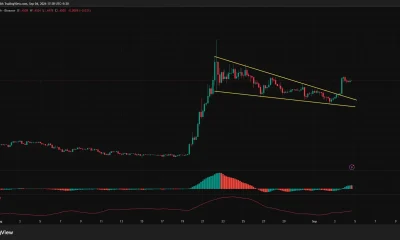
XRP price breaks falling channel as bulls target $1.53
-

 Politics2 days ago
A new European chapter for Gibraltar
-

 Politics2 days ago
How To Avoid Winter Colds: 4 Everyday Habits That Spread Germs, Says Pharmacist
-

 Politics2 days ago
The House | Bin the lectures, bring gossip and be ready to banter: how the new PM should prepare for his Trump encounter
-
 Crypto World2 days ago
From warning to listing: UK’s largest retail investment platform opens access to crypto ETNs
-

 Crypto World2 days ago
FinCEN flags $12.7B tied to Southeast Asia crypto investment scams
-

 Tech2 days ago
A Worthy Android Ereader, With Some Tradeoffs
-

 Crypto World2 days ago
Trezor Data Breach Impacts 67,000 More US Customers
-

 Tech2 days ago
How To Edit Claude’s Memory
-

 Politics2 days ago
33 Cosy Autumn Home Decor Ideas: Blankets, Pumpkin Decorations, And Candles
-

 Tech2 days ago
beyerdynamic AVENTHO Y Debuts at IFA 2026 and Makes Wireless Headphones Less Disposable
You must be logged in to post a comment Login