
Business
Scientists Identify 1,260 Genetic Variants Linked To Personality In Largest Study Of Its Kind With 1M Subjects


An international team of researchers has identified 1,260 genetic variants linked to the “Big Five” personality traits, marking the largest study of its kind and offering new evidence that personality has a measurable biological foundation beyond environment and life experience alone.
The study, published Sept. 2 in the journal Nature, was led by researchers including Ted Schwaba of Michigan State University, Michel Nivard of the University of Bristol, and Elliot Tucker-Drob, working through a collaborative research effort called the Revived Genomics of Personality Consortium. The project combined results from 46 different research cohorts spanning 13 to 15 countries, drawing on genetic and personality data from more than 1.1 million participants at its peak sample size, according to figures cited in the research.
Of the 1,260 identified variants, 824 had never previously been linked to personality in earlier research, representing a substantial leap in scale compared with prior studies in the field. For the trait of conscientiousness alone, the number of genome-wide significant genetic locations jumped from just three identified in the most recent prior research to 131 in the new study. Neuroticism, the most extensively studied of the five traits, saw its known genetic locations climb from 224 to 706.
The Big Five personality framework, widely used within psychology, measures five relatively stable and habitual differences in how people think, feel and act: openness to experience, conscientiousness, extraversion, agreeableness and neuroticism. Participants across the 46 cohorts involved in the study provided DNA samples and completed standardized questionnaires measuring these traits, allowing researchers to search for genetic variants statistically associated with each one.
Schwaba, the study’s lead author, said the findings underscore just how broadly relevant personality appears to be across nearly every domain of human life.
“Personality seems to be relevant nearly everywhere you look,” Schwaba said. “We hope this study will encourage many other scientists to incorporate personality traits into their fields of study. For example, genetic variants associated with neuroticism predict more time spent in the hospital, which is relevant to physicians and health researchers, and variants associated with openness to experience are linked to income and switching jobs, which is relevant to vocational researchers.”
Despite identifying more than a thousand genetic variants linked to personality, researchers emphasized that no single “personality gene” exists. Instead, personality traits appear to be influenced by an enormous number of individual genetic variants, each carrying an extremely small effect on its own. According to the study, the median effect size for a genetic variant linked to extraversion corresponds to shifting someone’s expected score from roughly the 50th percentile to the 50.35th percentile, an exceedingly modest individual effect that only becomes meaningful in aggregate across more than a thousand variants combined.
Overall, common genetic variants were found to explain between 4.8% and 9.3% of the total variation in personality measures across the population studied, a figure that rose to between 7.6% and 13.4% when researchers used more reliable, longer-form measurement instruments. Those figures remain considerably lower than the broader heritability estimates for personality derived from twin studies, which have historically placed the heritable component of personality between roughly 40% and 60%, reflecting the difference between the specific common genetic variants this study was able to detect and the fuller, more complex genetic architecture believed to underlie personality more broadly.
Michel Nivard, a professor of genomic epidemiology at the University of Bristol and one of the study’s authors, explained the broader motivation behind the research in comments to Time magazine.
“We think that personality is super-important for health,” Nivard said.
Researchers noted that Big Five personality scores have long been associated with risk for various mental health outcomes, with neuroticism in particular linked to anxiety, and that personality traits more broadly can help predict outcomes such as whether people are likely to consistently take prescribed medication or seek out medical care when facing a health problem.
Beyond identifying the raw genetic variants, researchers used the data to draw connections between personality genetics and a wide range of life outcomes. The study found, for example, that common genetic variants linked to openness to experience predicted a greater likelihood that a person would move to more cosmopolitan neighborhoods later in life, a pattern researchers noted could then reinforce and further shape that same personality trait through the person’s new environment. Separately, genetic variants associated with conscientiousness were linked to a person’s likelihood of taking up smoking, while variants linked to extraversion were associated with differences in COVID-19 infection risk, and variants tied to agreeableness and openness to experience were linked to a person’s likelihood of participating in research studies in the first place.
Denis Bratko, a psychologist at the University of Zagreb in Croatia who studies genetic influences on personality but was not involved in the new research, said the study helps resolve a longstanding challenge in the field. Previous efforts to find clear genetic correlations with personality traits had largely failed to produce consistent results, in part because earlier studies were too small and because personality appears to be influenced by an unusually large number of individual genetic variants, each with only a tiny effect on its own.
To help ensure the associations identified were genuinely genetic rather than reflections of shared family environment or other confounding factors, researchers also incorporated data from within-family genetic association studies, which compare siblings directly in order to control for shared upbringing, covering up to 50,725 participants within that portion of the analysis. According to Nature’s coverage of the findings, the genetic links to personality identified in the study proved more robust to such confounding factors than gene associations previously found for traits including education level and income.
Researchers involved in the study were careful to stress that the findings do not suggest personality is fixed or predetermined by a person’s genes. Rather, the study’s authors described genetics as providing only a basic underlying framework, with environment, culture and individual life decisions continuing to play a substantial role in how personality traits ultimately develop and express themselves over the course of a person’s life.
The research team has made the full summary statistics and underlying analytical code from the study publicly available through the Open Science Framework, allowing other researchers to build on the findings. Scientists involved in the project said they hope the newly identified genetic variants will serve as a foundation for future research examining how these biological pathways interact with social and environmental factors, offering a more complete picture not only of the genetic underpinnings of individual personality traits, but of how those traits, in combination with life circumstances, ultimately shape the outcomes people experience across health, career, relationships and beyond.

Business
Scientists Use AI To Decode Animal Communication, Finding Whale And Crow Calls More Complex Than Once Thought
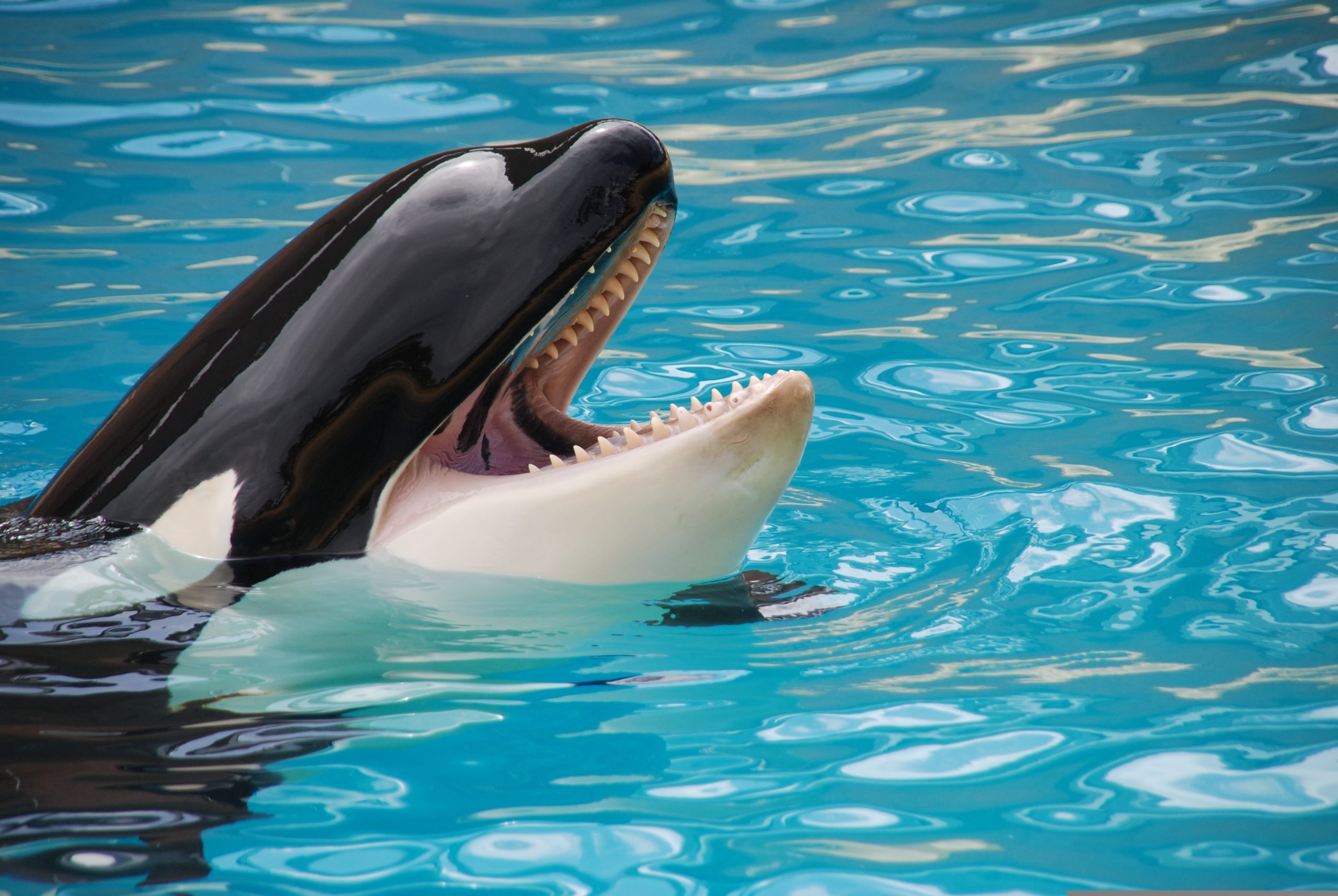
Researchers around the world are increasingly turning to artificial intelligence to decode the communication systems of other species, using machine learning models capable of processing vast quantities of audio and behavioral data to uncover patterns that had long gone unnoticed in animal calls.
The Earth Species Project, a nonprofit organization dedicated to using AI to promote interspecies understanding, has developed a generalizable machine learning model that can be applied across different species, while also collaborating with researchers around the world to build custom models tailored to specific animals. In northern Spain, the organization’s AI tools are helping scientists understand how a population of cooperative-breeding crows communicate within family groups, according to Mongabay’s coverage of the project. The same technology has separately been deployed to study how orcas communicate with one another and how underwater noise pollution affects those communications.
Vittorio Baglione and Daniela Canestrari, researchers who have spent decades studying carrion crows, have used the technology to examine how the birds coordinate complex, cooperative behavior during breeding season, when entire extended families become involved in raising chicks. The technology has also proven useful for practical field research purposes, helping scientists synchronize voice notes recorded in the field with corresponding whale audio recordings or drone footage.
The Earth Species Project’s flagship AI system, known as NatureLM-Audio, takes an unconventional approach to training, incorporating human language and music into the model before it begins analyzing animal sounds. Aza Raskin, co-founder and president of the Earth Species Project, explained the reasoning behind that method.
“Teaching the model human language and music first helps it then understand animal communication,” Raskin said.
Raskin said the results of that training approach have already exceeded expectations in certain respects.
“Already, it can correctly identify species by name, even when the model has never heard that species before,” Raskin said.
Raskin has expressed confidence that with sufficient additional data, these AI models could eventually move beyond simply decoding existing animal communication, potentially advancing toward predicting what animals are likely to communicate next, and even drafting artificial responses intended to interact with them directly.
A separate research effort, Project CETI, has focused specifically on sperm whale vocalizations using machine learning to study how the whales’ distinctive clicking patterns are organized and whether specific patterns tend to emerge during particular social situations. Researcher Shane Gero, who has studied sperm whale communication extensively, has described the variation found within these vocalization patterns as resembling a kind of “sperm whale phonetic alphabet,” suggesting the whales may be using structured combinations of sounds to convey more complex information than previously assumed.
The broader scientific effort to apply AI to animal communication traces back to a landmark 2023 paper published in the journal Science, in which researchers including Christian Rutz, Michael Bronstein, Aza Raskin, Sonja Vernes, Katherine Zacarian and Damián Blasi outlined how machine learning techniques could be systematically applied to decode communication across species. That foundational work has since spurred a wave of follow-up research applying similar methods to specific animal groups, including primates, whales and birds, some of which researchers now believe may exhibit vocal complexity approaching that of human language in certain respects.
Recent studies published this year have continued expanding the scope of this research. One 2026 paper examined potential bias in “black box” AI models used to evaluate whether elephants use name-like calls to refer to specific individuals, underscoring the growing scientific scrutiny being applied to ensure AI-driven conclusions about animal communication rest on solid methodological ground rather than pattern-matching artifacts. Separately, a tool called TweetyBERT has been developed to automatically parse birdsong through self-supervised machine learning techniques, allowing researchers to analyze vocal patterns across large recorded datasets without requiring extensive manual labeling beforehand.
Despite the rapid pace of progress, researchers involved in this work have been careful to distinguish between identifying structural patterns within animal sounds and definitively proving what those patterns actually mean. Kristin Andrews, a philosopher who has examined the ethical dimensions of this research, has raised questions about the broader implications of using machine learning to interpret and potentially communicate with non-human species, exploring what responsibilities researchers may hold as these tools become more capable.
Scientists caution that animal communication systems remain fundamentally different from human language in important ways. While humans rely on grammar and symbolic structures capable of expressing complex, abstract and hypothetical ideas, most animal communication systems studied to date appear to lack that same open-ended structure, even as researchers continue finding unexpected layers of organization and context-dependence within specific species’ vocalizations.
Researchers have generally framed the ultimate goal of this work not as building a literal universal translator capable of converting animal sounds directly into human language, but rather as developing rigorous scientific tools to test specific hypotheses about how different species communicate on their own terms. Proponents of the approach argue that these AI-assisted methods are creating what amounts to a provisional, evolving reference guide to non-human communication across the planet, built on accumulated evidence rather than the kind of casual, anecdotal interpretation that has historically characterized much of the public fascination with animal communication.
The stakes of this research extend beyond pure scientific curiosity. Advocates argue that a deeper, evidence-based understanding of how animals communicate could meaningfully inform conservation efforts, helping researchers better monitor wildlife populations, assess the health and social dynamics of animal groups, and evaluate the impact of human-generated noise pollution on species that rely heavily on acoustic communication, such as whales navigating increasingly busy ocean shipping lanes.
As these AI models continue improving and expanding to additional species, researchers involved in the field have emphasized the importance of maintaining scientific discipline and rigorous evidence standards even as public interest in the prospect of “talking” to animals continues to grow. For now, the technology’s most significant contributions remain focused on uncovering previously hidden structure within animal communication systems, rather than achieving anything resembling full, two-way conversation between humans and other species, a goal researchers say remains firmly in the realm of long-term ambition rather than near-term scientific reality.


Terry Chrisomalis is a private investor in the Biotech sector with years of experience utilizing his Applied Science background to generate long term value from Healthcare. He is the author of the investing group Biotech Analysis Central which contains a library of 600+ Biotech investing articles, a model portfolio of 10+ small and mid-cap stocks with deep analysis for each, live chat, and a range of analysis and news reports to help Healthcare investors make informed decisions.
Analyst’s Disclosure: I/we have no stock, option or similar derivative position in any of the companies mentioned, and no plans to initiate any such positions within the next 72 hours. I wrote this article myself, and it expresses my own opinions. I am not receiving compensation for it (other than from Seeking Alpha). I have no business relationship with any company whose stock is mentioned in this article.
Seeking Alpha’s Disclosure: Past performance is no guarantee of future results. No recommendation or advice is being given as to whether any investment is suitable for a particular investor. Any views or opinions expressed above may not reflect those of Seeking Alpha as a whole. Seeking Alpha is not a licensed securities dealer, broker or US investment adviser or investment bank. Our analysts are third party authors that include both professional investors and individual investors who may not be licensed or certified by any institute or regulatory body.
Emergent BioSolutions – Tough 2026 Outlook Warrant Rating Downgrade
Business
Kia Sorento Strong Hybrid Launches In India With 238 HP, Bookings Open Ahead Of Sept. 4 Debut In New Delhi

NEW DELHI — Kia has launched the India-spec version of its flagship three-row Sorento SUV, offering buyers a choice between a strong-hybrid petrol powertrain and a diesel engine as the company enters one of the country’s most competitive premium SUV segments, with sales officially beginning Sept. 4.
The India-spec Sorento arrives as a fully imported, CBU-style vehicle, positioned above Kia’s existing Carens and Seltos models in the company’s domestic lineup. Bookings for the vehicle had already opened ahead of the official launch, though Kia had not officially confirmed final pricing as of the launch date. Industry expectations place the vehicle in the range of Rs 30 lakh to Rs 35 lakh, ex-showroom, according to reporting on the launch.
The Sorento’s flagship powertrain for the Indian market is a 1.6-liter strong-hybrid petrol engine producing 238 horsepower, offered alongside a 2.0-liter diesel option generating 202 horsepower. The SUV is available in both six-seat and seven-seat cabin layouts, with the vehicle measuring approximately 4,815 millimeters in length on a 2,815-millimeter wheelbase. The India-spec model comes equipped with a Level 2 advanced driver-assistance system and a panoramic sunroof, positioning it to compete directly against established premium three-row SUVs including the Toyota Fortuner and the MG Gloster.
The India-spec launch reflects the fourth generation of the global Sorento model, the same underlying platform Kia sells in markets including the United States, though with regional variations in available powertrains and equipment. In the U.S. market, Kia offers the Sorento Hybrid as a distinct trim lineup separate from the gas-only and plug-in hybrid variants, with the hybrid version’s U.S. powertrain built around a turbocharged 1.6-liter, four-cylinder engine paired with an electric motor, generating a combined 227 horsepower and mated to a six-speed automatic transmission.
According to Edmunds, which conducted independent testing of the 2026 Sorento Hybrid on both a closed test track and public roads, the SUV delivers a well-rounded driving experience for its class. The outlet’s testers recorded a zero-to-60-mph acceleration time of 7.6 seconds, a figure Edmunds noted was quicker than the mechanically related Hyundai Santa Fe Hybrid.
Edmunds’ review praised several aspects of the SUV’s driving dynamics. Testers found the six-speed automatic transmission shifted quickly and smoothly, a trait the outlet noted is not always guaranteed in hybrid vehicles given the added complexity of blending gas and electric power delivery. Drivers described the acceleration as feeling strong off the line, with the transition between gas and electric power operating unobtrusively in the background.
“Braking is confidence-inspiring thanks to a balanced, intuitive brake pedal,” Edmunds wrote in its review, adding that the Sorento’s “handling and steering provide a sense of control and assurance on the road,” and that the SUV “stays controlled over bumps, imparting confidence and a sense of stability.”
Edmunds summarized its overall assessment of the U.S.-market Sorento Hybrid favorably, describing it as a well-equipped and appealing choice within the small three-row SUV segment.
“The 2026 Kia Sorento Hybrid is an appealing and well-equipped choice for a small SUV with a third-row seat,” Edmunds wrote. “We like its good fuel economy, practical size and accessible price. The turbocharged hybrid powertrain makes this SUV pleasant to drive as well.” The review noted one caveat, however, cautioning that buyers who frequently rely on their third-row seating might be better served by Kia’s larger Telluride Hybrid model instead.
J.D. Power’s review of the U.S.-spec Sorento Hybrid similarly highlighted the vehicle’s value proposition relative to larger three-row crossover competitors, describing it as smaller and more efficient than most rivals in its category while still offering substantial feature content for the price. J.D. Power noted the Sorento Hybrid’s cabin quality as a particular strength, praising its well-built interior and, in higher trim levels, quilted leather upholstery that approaches, though does not fully match, luxury-brand quality.
In the U.S. market, the Sorento Hybrid starts at $40,385, according to Kelley Blue Book, with fuel economy ratings ranging from 32 miles per gallon in the city and 35 on the highway up to 37 city and 36 highway, depending on the specific trim and equipment selected. The range-topping X-Line SX Prestige trim starts at $48,685 before options.
The Sorento Hybrid has also earned strong independent safety recognition in the U.S. market, receiving a 2026 Top Safety Pick Plus designation from the Insurance Institute for Highway Safety, an award that applies specifically to vehicles built after September 2025.
For the India-spec launch specifically, the Sorento’s arrival marks Kia’s continued push to expand its premium SUV offerings within the Indian market, following the success of smaller models like the Seltos and Carens. The decision to offer a strong-hybrid petrol variant alongside a conventional diesel option reflects a broader trend among automakers selling premium SUVs in India, where rising fuel costs and growing environmental awareness have increased consumer interest in hybrid powertrains, even as diesel engines continue to hold strong appeal among buyers prioritizing long-distance touring capability and towing performance.
With bookings already open ahead of the Sept. 4 launch and official India-market pricing still pending confirmation from Kia at the time of the reveal, prospective buyers weighing the Sorento against established rivals like the Toyota Fortuner and MG Gloster are likely to focus closely on how Kia prices the strong-hybrid variant relative to its diesel counterpart, along with how the SUV’s six- and seven-seat configurations compare against competitors in terms of both cabin space and third-row usability, a factor that reviews of the global Sorento Hybrid have consistently flagged as a practical consideration for family buyers evaluating the vehicle’s third-row seating for regular, rather than occasional, use.
Business
Ukraine Weighs Legalizing Pornography To Fund 30,000 War Drones, Curb Police Corruption Amid Fiscal Strain


KYIV, Ukraine — Ukrainian lawmakers are pushing to legalize pornography as a way to raise tax revenue for the country’s war effort against Russia, with proponents arguing the move could generate enough money annually to purchase roughly 30,000 military drones while also cutting off a source of police corruption tied to the industry’s current underground status.
Under Ukrainian law, the production, distribution and possession of pornographic content is illegal, carrying potential prison sentences of up to seven years. Despite that legal prohibition, the adult content industry, driven largely by platforms such as OnlyFans, has grown into a significant economic activity within the country. According to figures cited by The Wall Street Journal, 7,900 Ukrainians earned more than $131 million through OnlyFans in 2023 alone.
Ukrainian tax authorities have increasingly sought to collect revenue from that activity in recent years, obtaining user information directly from OnlyFans and requiring content creators to declare and pay taxes on their earnings. That approach has created what critics describe as a legal contradiction: creators who comply with tax obligations risk simultaneously exposing themselves to criminal prosecution for producing content that remains illegal under Ukrainian law.
Yaroslav Zhelezniak, an opposition lawmaker who chairs Ukraine’s parliamentary finance committee and co-authored legislation to decriminalize the industry, has argued that legalization could generate as much as $25 million in annual tax revenue.
“Porn today is mostly online platforms, and those who earn on these platforms officially pay taxes. That’s millions of dollars going to the armed forces,” Zhelezniak said.
Zhelezniak has pointed out that while $25 million represents a relatively modest sum compared with the roughly $120 billion Ukraine says it needs annually for defense spending, the amount would still be sufficient to fund the purchase of approximately 30,000 drones, a meaningful contribution to the country’s ongoing military procurement needs.
The legislation co-sponsored by Zhelezniak and other lawmakers passed its first reading in Ukraine’s parliament, the Verkhovna Rada, in July, and is currently awaiting a second reading. The proposed bill specifically seeks to decriminalize only the creation and storage of pornographic content between consenting adults, while maintaining criminal liability for offenses including revenge pornography, deepfake pornography, extreme content, child sexual abuse material and distribution to minors.
“We’re simply changing Article 301 of the Criminal Code so that adults who film and distribute intimate videos aren’t thrown in prison for 3-5 years,” Zhelezniak wrote on his Telegram channel. “Currently, under Article 301, you can be punished even for storing nude photos on your personal phone.”
Facing continued legal risk, many Ukrainian OnlyFans models have relocated their operations abroad, either emigrating entirely or crossing into neighboring countries periodically to livestream content from outside Ukrainian jurisdiction. Some creators who remain in Ukraine have continued operating through webcam studios while still paying taxes on their earnings.
One such creator, Svitlana Dvornikova, became a central figure in the broader public debate after facing a police investigation tied to her work as an OnlyFans model. Authorities searched her home and seized a laptop, USB drives and approximately $200,000 in cash, subsequently charging her with producing pornography for profit. Dvornikova maintained that the seized cash represented money she had set aside specifically to pay her taxes.
Following the investigation, Dvornikova filed a public petition calling on Ukrainian President Volodymyr Zelensky to support legalizing pornography. The petition gathered more than 25,000 signatures within a week, the threshold required to trigger an official presidential response, and Zelensky subsequently indicated that parliament would review the related legislation.
Lesia Mikhalenko, a tax attorney who has represented more than 100 OnlyFans models in Ukraine, has characterized pornography as fundamentally a “victimless crime,” arguing that a country actively engaged in war is misallocating scarce judicial and law enforcement resources by continuing to pursue prosecutions in this area.
This is not the first time Ukrainian lawmakers have attempted to address the issue. A similar decriminalization petition reached the required signature threshold in July 2022, but Zelensky ultimately declined to pursue changes at that time, citing existing legal provisions related to protecting public morality. The current bill, first registered in November 2024, gained support from the Verkhovna Rada’s specialized law enforcement committee in December before advancing through its first parliamentary reading this past July.
With the legislation now awaiting a second parliamentary reading and Ukraine continuing to face substantial wartime fiscal pressure, the outcome of the ongoing debate is likely to hinge on lawmakers’ willingness to formally separate the country’s existing tax collection efforts from its current criminal prohibitions — a gap that has left content creators like Dvornikova caught between complying with tax law and risking prosecution under the very statute the proposed legislation seeks to amend.
Business
Ex-FBI Agent Says Nancy Guthrie Case ‘Very Tightly Guarded,’ Not Cold, Seven Months In Amid Ongoing Search


TUCSON, Ariz. — Seven months after Nancy Guthrie disappeared from her Arizona home, a retired FBI agent says the ongoing investigation remains far from cold, describing law enforcement’s tight-lipped approach as a deliberate strategy rather than a sign the case has stalled.
Guthrie, the 84-year-old mother of “Today” co-anchor Savannah Guthrie, was last seen on the evening of Jan. 31, 2026, after family members dropped her off at her Catalina Foothills home near Tucson following dinner and a game night. She was reported missing the following day after failing to show up for a virtual church service with friends. Pima County investigators have said they believe Guthrie was taken against her will.
Scott Augenbaum, a retired FBI agent, told Tucson television station KOLD that the absence of regular public updates does not reflect inactivity on the part of investigators.
“This is by no means a cold case,” Augenbaum said. “A cold case is something that has been closed, it’s been put away … So in my opinion, this case is not closed at all. It’s still being held very tightly guarded by law enforcement, which I would expect at this point in time.”
Augenbaum said investigations of this nature can fall anywhere along a spectrum, from cases with genuinely no leads to those in which detectives already have a strong suspicion about who is responsible but must still build a case capable of surviving prosecution.
“There were cases where we didn’t really have any leads or anything like that and we just played that close,” Augenbaum said. “There were situations where we kind of had a really amazing idea. We knew who did it, but we had to build the case against that person. So it could be anywhere between those two things and somewhere in the middle.”
Augenbaum, drawing on his own experience at the bureau, said withholding updates until an arrest is made is standard practice, even when it frustrates the public.
“When I was with the FBI, you know, we didn’t tell anyone until we had a bad guy in handcuffs. We weren’t giving regular updates, and that drives a lot of people crazy,” he said.
Pima County Sheriff Chris Nanos has echoed that position. In a recent statement, the sheriff’s department said it “remains fully committed to the investigation into Nancy Guthrie’s disappearance,” describing it as “an active and ongoing investigation” being pursued in close coordination with the FBI. Officials said DNA and video analysis work continues with support from laboratories nationwide, and that tips are still being received and reviewed, adding that “advances in technology are aiding investigative efforts.”
The case has drawn sustained national attention, driven in part by Savannah Guthrie’s public profile and by a string of unusual developments. The FBI released doorbell footage showing a masked, armed individual outside Guthrie’s home around the time of her disappearance, and investigators later released two ransom notes that prompted a modest increase in tips, though no suspect has been publicly named.
In August, human remains were discovered in the desert roughly 15 miles from Guthrie’s home. Authorities said at the time there was no indication the remains were connected to her case.
The investigation has also produced an unrelated criminal case tied to the public attention surrounding Guthrie’s disappearance. Derrick Callella, 42, of Hawthorne, California, was sentenced Aug. 31 in federal court in Tucson after pleading guilty in July to two counts of harassment using a telecommunications device. Prosecutors said Callella, who was already out on bail in a separate overtime-fraud case at the time, sent a fake ransom demand to Guthrie’s daughter, Annie, and her son-in-law, Tommaso Cioni, just days after Guthrie’s disappearance was reported. According to court records, Callella texted the family a message reading, “Did you get the bitcoin were waiting on our end for the transaction,” and separately placed a nine-second call to a family member.
Callella admitted in his plea agreement that he had been following news coverage of the case and was aware that an earlier ransom demand had already been made public, and that his messages were intended to harass the family by soliciting information about the investigation. U.S. District Judge John C. Hinderaker sentenced Callella to two five-year probation terms, to be served concurrently, along with a $200 special assessment and a requirement to report to a probation office within 72 hours. Callella had cited his methamphetamine addiction at the time of the offense, saying in court filings that it had “removed his inhibitions and his capacity for clear decision making.”
Local criminal defense attorney Louis Fidel, who was not involved in Callella’s case, said he hoped the sentence would deter similar conduct by others exploiting high-profile disappearances.
“You certainly hope that people see that and understand that to do something like that is a crime — it does hurt people, and it’s not something that people should do,” Fidel said.
Sheriff Nanos has separately warned that anyone found sending fraudulent ransom communications in connection with the case will face serious consequences.
“The FBI takes these notes extremely seriously,” Nanos said. “They track them down, and if they find it to be fraudulent, they don’t just put it aside; they will arrest you.”
Despite the Callella sentencing and the discovery of unrelated human remains in the desert, investigators have not publicly identified a suspect or announced a breakthrough in Guthrie’s disappearance itself. Savannah Guthrie has continued to publicly appeal for information, writing on Instagram in early August, “We are begging for help. We are desperate. We need someone to come forward,” and has offered a $1 million reward on top of other reward money tied to the case.
As the investigation moves further past the seven-month mark, the Pima County Sheriff’s Department has continued to withhold a formal press conference on the case until investigators have a significant development to share, leaving the Guthrie family, and the broader public that has closely followed the case, to continue waiting for answers.

KeyBanc warns Apple’s iPhone 18 launch may be a negative catalyst for shares
Business
10 Things To Know About The Magnitude 3.2 Earthquake That Shook Compton, California This Weekend Sept. 6


LOS ANGELES COUNTY, Calif. — A magnitude 3.2 earthquake struck near Compton, California, over the weekend, sending mild shaking through parts of the greater Los Angeles area and prompting hundreds of residents to report feeling the tremor. Here are 10 things to know about the quake and the seismic activity surrounding it.
- The quake struck early Sunday morning. According to the U.S. Geological Survey, the preliminary magnitude 3.2 earthquake occurred just after midnight, with its epicenter located approximately 2 miles south-southeast of Compton and about 6.1 miles north of Long Beach.
- It was a shallow quake. The USGS recorded the earthquake’s depth at approximately 8 miles, a relatively shallow depth that can allow shaking to be felt more widely at the surface even for a modest-magnitude event.
- Hundreds of people reported feeling it. As of the most recent tally, more than 620 people had submitted reports through the USGS’s “Did You Feel It?” online form, indicating they experienced weak shaking. Residents in cities including La Habra, Seal Beach, Los Angeles, Bell and La Mirada reported feeling the tremor.
- It follows a pattern of recent minor quakes in the region. The Compton earthquake came just days after a similar magnitude 3.2 quake struck near Ontario in neighboring San Bernardino County on Sept. 2, and a separate magnitude 3.4 quake was recorded near Ontario the same week, roughly 12.5 miles east of Riverside.
- Compton sits atop one of the most closely watched fault systems in Southern California. Beneath the area lies the Compton blind thrust fault, a concealed fault that does not reach the surface but has been identified by seismologists as capable of producing significantly larger earthquakes than the one recorded this weekend. Because the fault lies directly beneath the densely populated Los Angeles metropolitan area, researchers regard it as posing one of the more significant deterministic seismic risks in the United States.
- The fault has a history of major ruptures. Research conducted through the Southern California Earthquake Center has found geological evidence that the Compton thrust fault has generated at least six large-magnitude earthquakes, estimated between magnitude 7.0 and 7.4, over the past 14,000 years, though such large ruptures occur only rarely on a human timescale.
- Small earthquakes are a near-daily occurrence in the area. According to seismic data compiled over more than five decades of record-keeping, the Compton area experiences an average of roughly 2,400 earthquakes of all magnitudes each year, though the vast majority are too small to be felt. Earthquakes of magnitude 3 or higher occur at a rate of roughly 19 per year on average in the area, while quakes reaching magnitude 5 or greater occur closer to once every two years.
- No damage or injuries were reported. Earthquakes in the magnitude 3 range are generally felt only as brief, mild shaking by people located relatively close to the epicenter, and such quakes rarely cause structural damage to buildings or infrastructure under normal circumstances. As of the most recent update, no damage or injuries had been reported in connection with Sunday’s quake.
- Southern California has experienced stretches of elevated seismic activity before. Geophysicist Dr. Lucy Jones, a prominent seismologist who has studied the region extensively, has previously noted that certain stretches of heightened earthquake activity reflect an ongoing, connected process occurring along the region’s fault systems, rather than a series of entirely unrelated, isolated events. Southern California has, at various points in recent years, experienced periods of earthquake activity exceeding typical historical averages, prompting seismologists to monitor whether individual clusters of smaller quakes might be connected to broader stress patterns building along the region’s numerous faults.
- Officials continue urging basic earthquake preparedness. The USGS encourages residents who feel an earthquake, even a minor one, to submit reports through its “Did You Feel It?” system, helping the agency gather real-time data on the geographic extent and intensity of shaking. Emergency management officials routinely remind Southern California residents to maintain basic preparedness measures regardless of how minor recent activity has been, given the region’s well-documented exposure to the risk of a significantly larger earthquake in the future. Recommended steps include securing an emergency supply kit with food, water and basic medical supplies, developing a family communication and evacuation plan, and securing heavy furniture and other objects that could pose a hazard if they were to fall during stronger shaking.
The Compton area, along with the broader Los Angeles basin, remains one of the most seismically monitored regions in the country given its dense population and its position atop multiple active fault systems, including the Compton blind thrust fault, the Newport-Inglewood fault and portions of the broader fault network that runs through the greater Los Angeles metropolitan area. While Sunday’s magnitude 3.2 quake caused no damage and required no emergency response, seismologists continue to treat even minor tremors as useful data points for understanding the broader stress patterns building across the region’s interconnected fault systems.
The USGS has not indicated any specific connection between Sunday’s Compton-area quake and the earlier Ontario-area tremors recorded in the preceding days, and officials have not issued any elevated warning regarding the likelihood of further seismic activity in the immediate aftermath of the event. As is standard practice following any earthquake in the region, residents are advised to continue monitoring official USGS updates and local emergency management communications for further developments, particularly given the well-established, if statistically infrequent, potential for a significantly larger earthquake to eventually strike the same fault systems that produced this weekend’s minor tremor.

Applied Aerospace & Defense: A Much Healthier Proposition


Financial analyst by day and a seasoned investor by passion, I’ve been involved in the world of investing for over 15 years and honed my skills in analyzing lucrative opportunities within the market.I specialize in uncovering high quality dividend stocks and other assets that offer potential for long term-growth that pack a serious punch for bill-paying potential. I use myself as an example that with a solid base of classic dividend growth stocks, sprinkling in some Business Development Companies, REITs, and Closed End Funds can be a highly efficient way to boost your investment income while still capturing a total return that follows traditional index funds. I created a hybrid system between growth and income and manage to still capture a total return that is on par with the S&P.
Analyst’s Disclosure: I/we have a beneficial long position in the shares of RDVI either through stock ownership, options, or other derivatives. I wrote this article myself, and it expresses my own opinions. I am not receiving compensation for it (other than from Seeking Alpha). I have no business relationship with any company whose stock is mentioned in this article.
Seeking Alpha’s Disclosure: Past performance is no guarantee of future results. No recommendation or advice is being given as to whether any investment is suitable for a particular investor. Any views or opinions expressed above may not reflect those of Seeking Alpha as a whole. Seeking Alpha is not a licensed securities dealer, broker or US investment adviser or investment bank. Our analysts are third party authors that include both professional investors and individual investors who may not be licensed or certified by any institute or regulatory body.

Billions lost to Brexit could make NHS waiting lists disappear, top economist says

Scientists Use AI To Decode Animal Communication, Finding Whale And Crow Calls More Complex Than Once Thought

How to Watch 2026 INDYCAR Laguna Seca: Schedule, Start Time, TV, Stream





-

 Fashion2 days ago
Weekend Open Thread: Beyond Yoga
-

 Crypto World2 days ago
Bitcoin price stalls near $82K as key resistance holds
-

 Politics2 days ago
Best Gaming Laptops, CPUs, TVs, And Keyboards To Upgrade Your Set Up For GTA VI
-

 Tech2 days ago
The Birds Outside, Drawn For You Automatically
-

 Crypto World2 days ago
IMF Says El Salvador’s Post-Review Bitcoin Purchases Used No Public Funds
-
 Crypto World2 days ago
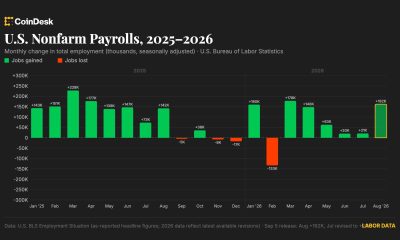
U.S. added stronger than expected 162,000 jobs in August as labor market bounced back
-

 Sports2 days ago
Alexandre Pato consortium’s Northampton Town investment approved
-

 Sports2 days ago
Commanders’ Chig Okonkwo is a top breakout fantasy football candidate
-

 Sports2 days ago
Golden Eaglets Drawn in Group B for 2026 WAFU B U17 Championship
-

 Crypto World2 days ago
XRP price breaks falling channel as bulls target $1.53
-

 Politics2 days ago
A new European chapter for Gibraltar
-

 Politics2 days ago
The House | Bin the lectures, bring gossip and be ready to banter: how the new PM should prepare for his Trump encounter
-

 Politics2 days ago
How To Avoid Winter Colds: 4 Everyday Habits That Spread Germs, Says Pharmacist
-

 Crypto World2 days ago
From warning to listing: UK’s largest retail investment platform opens access to crypto ETNs
-

 Crypto World2 days ago
FinCEN flags $12.7B tied to Southeast Asia crypto investment scams
-

 Tech2 days ago
A Worthy Android Ereader, With Some Tradeoffs
-

 Tech2 days ago
How To Edit Claude’s Memory
-
 Crypto World2 days ago
Trezor Data Breach Impacts 67,000 More US Customers
-

 Politics2 days ago
33 Cosy Autumn Home Decor Ideas: Blankets, Pumpkin Decorations, And Candles
-

 Tech2 days ago
beyerdynamic AVENTHO Y Debuts at IFA 2026 and Makes Wireless Headphones Less Disposable
You must be logged in to post a comment Login