Something to look forward to: Microsoft has vowed to improve Windows 11 for most of this year, and at IFA 2026, the company made a few more promises. The tech giant says that it is preparing to reduce boot times in its latest OS and improve Windows Hello responsiveness. It also reiterated that Windows 11 will run great on 8GB machines.
As reported by Windows Latest, Mark Linton, Corporate Vice President of Windows & Devices at Microsoft, spoke about the improvements being made to Windows 11, including “significant gains on things like boot time, Windows Hello responsiveness…”
“We’re continuing to improve on the fundamentals,” Linton added. “We’re listening to customer feedback, continuously improving Windows, and you’ll see those updates as Windows just gets better as the updates come through.”
Linton is believed to have been referring to an internal build of Windows 11, rather than live preview builds. Microsoft hasn’t confirmed when these particular improvements will reach the Experimental testing channel, or provided performance figures.
Advertisement
If this sounds familiar, it’s because we’ve been hearing these kinds of promises a lot in 2026.
Microsoft outlined a Windows 11 overhaul in March. The company said it would focus on the fundamentals, improving performance and reliability while giving users more control over the interface and Windows Update. It also promised to make File Explorer more responsive and reduce the amount of memory consumed by Windows.
Later reports added a faster Start menu and Search to the plans. Microsoft also formed a team to create native Windows apps instead of the resource-heavy web wrappers blamed for making parts of the operating system feel slow and inconsistent.
Some of the changes have materialized. Windows 11 users can now move and shrink the taskbar, resize the Start menu, and hide unwanted sections. Search has received a cleaner interface and an option to disable web results, while Low Latency Profile can improve the launch speed of Windows components and third-party apps.
Advertisement
Another claim about 8GB machines could raise eyebrows. Microsoft’s own 8GB Surface Laptop struggled with Teams calls and froze during basic Google Docs work in a review we covered in July.
There’s still little evidence of dramatically lower RAM use or a native-app revolution. Problematic patches also continue to appear, too, including an August update linked to game crashes and unexpected reboots.
Microsoft offers no average Windows 11 boot-time figure, though its guidance recommends that notebooks reach the Start screen within 15 seconds, excluding BIOS initialization. Linton never said how much faster the changes will make the process, but we can all appreciate a faster boot time.
It’s finally happening — this week, we are (probably) about to see Apple’s first foldable iPhone, more than five years after Samsung launched its first foldable phone.
Apple’s annual iPhone release events are always interesting in one way or another, but this year’s presentation is one of the most anticipated in a while. As Tim Cook hands off the CEO role to former Vice President of Hardware Engineering John Ternus, people have high expectations for Apple’s next devices, especially since the company is embracing an entirely new form factor.
While Apple is usually tight-lipped about its product launches, there are always inevitable leaks, giving us insight into what we might see during the September 9 Apple event. While the foldable iPhone is most exciting, we’re also anticipating news about AirPods, HomePods, and the non-foldable iPhone 18 line.
What we think we know so far about the foldable “iPhone Ultra”
If Apple has made its consumers wait over half a decade for it to enter the foldable market, its first attempt had better be good — especially since reports indicate that the phone will cost more than $2,000. At least it’s not as pricey as the $3,500 Apple Vision Pro headset, and unlike headsets, people actually buy smartphones.
Advertisement
The good news is that people who claim to be early testers of the device have reported back positive experiences. According to Bloomberg’s Apple insider Mark Gurman, the foldable iPhone has a premium feel, fits nicely into a pocket, and opens up into a wide, iPad-like display. The phone is expected to sport a 5.5″ cover display, which expands to 7.8″ when the screen is unfolded. When folded in, the device will look shorter and wider than a typical iPhone.
To make hardware that’s still sleek enough to pocket when folded, Apple has had to make some concessions. The device reportedly skips the telephoto camera, which could be disappointing to the kind of consumers who are willing to open their pockets for a phone that’s expensive enough to feed a family for months. However, the phone is expected to have a dual-lens rear camera system with a main and an ultra-wide lens, similar to what’s on Apple’s more basic iPhones.
Rumor has it that Apple will include MagSafe, the magnetic wireless charging and accessory system, but that it will forego Face ID to save space, relying instead on a Touch ID fingerprint button on the phone’s side. This shouldn’t be a huge concession — touching a button is about as easy as looking at a screen — but it might take some getting used to if you’ve become accustomed to Face ID.
Like other foldable phones, the iPhone Ultra is expected to support side-by-side multitasking, letting you run two apps at once, one on each half of the unfolded screen. Even though it’ll resemble a small iPad when opened up, it will still run iOS rather than iPadOS, though shouldn’t be cause for concern, since Apple’s newest chips are powerful enough to handle it. In fact, the same chip reportedly powers Apple’s budget MacBook Neo laptop.
Advertisement
A pain point for foldable phone users thus far has been the dreaded “crease.” With other companies’ foldable phones, you can see the evidence when you open the phone that this isn’t your standard display. It’s a hard problem to solve and one that maybe isn’t worth the technical effort, though Apple has supposedly created a display where the crease isn’t as visible.
Don’t worry, you can still get a new iPhone that doesn’t fold
If foldables aren’t your thing — or if you don’t want to spend double the price on your next phone — don’t worry. Apple is also expected to release some new devices in the iPhone 18 line. We’ve heard leaks about the iPhone 18 Pro and Pro Max, but not much yet about the standard iPhone 18, which is predicted to arrive six months after the September event. That would be a first for Apple — releasing the premium models before the standard one.
Siri HomePods? AirPods with cameras?
Now that Apple is finally moving forward with its Gemini-powered Siri AI update, the company is also expected to refresh the HomePod, a smart speaker and Apple’s answer to devices like the Amazon Echo line.
References to unreleased products, including new HomePods, were recently spotted by users digging through a macOS preview build.
Advertisement
The most surprising find, however, is that Apple appears to be working on AirPods with built-in cameras. In that same macOS preview, researcher Aaron Perris found a video showing someone wearing the AirPods and picking up a book.
“With Visual Intelligence, your world becomes savable. See something you like? Just ask me to save it for later,” a voiceover in the video says.
While some users may be skittish about using a device that can see what they see — comparisons to Meta’s maligned “pervert glasses” are inevitable — we have some degree of hope that a company like Apple, which has built its brand on privacy, will do better.
Gurman has reported that “the cameras essentially act as eyes for the Siri digital assistant and aren’t designed to take photos or video.” Instead, the earbuds’ components allow it to “capture visual information in low resolution.”
Advertisement
When you purchase through links in our articles, we may earn a small commission. This doesn’t affect our editorial independence.
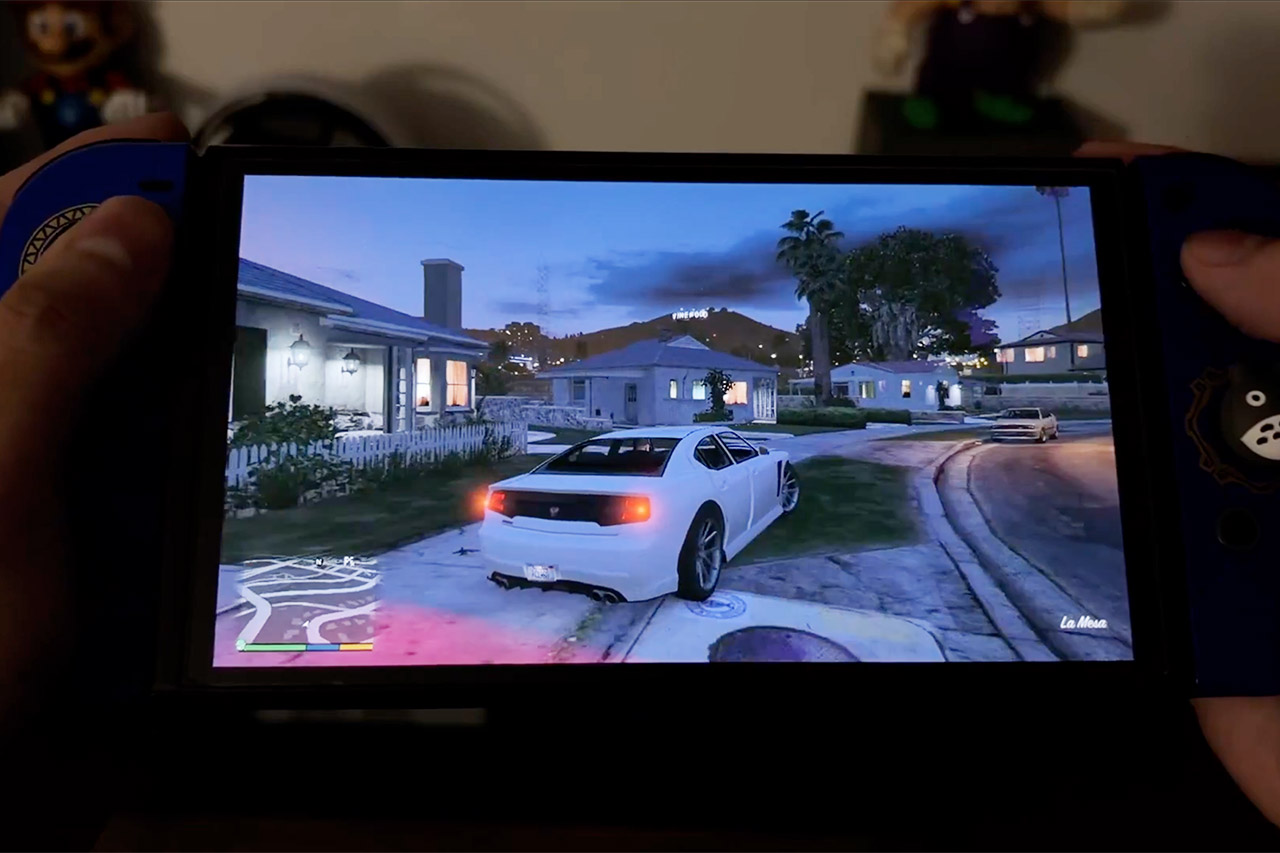
Rockstar never released Grand Theft Auto V for Nintendo hardware. M0jso and Paralympics Productions completed the project in late August 2026 with an unofficial homebrew build that runs directly on the original Switch. The code from the 2023 leak of GTA V Legacy version 1.0.2699, the same lineage used on PlayStation 4, Xbox One, and PC, has been modified and recompiled for ARM, allowing the Tegra X1 and Horizon OS to treat it as a regular title. There is no Linux layer in the middle, no Android wrapper that interprets calls, no stream from another system, and the game is read in the CPU’s native language.
GTA V corriendo en Nintendo Switch.
– Nativo sin Android ni Linux (No es Stream). – Pesa 49GB. – Ocupas Overclock (Yo uso Sys-CLK que es seguro) pero si usas Horizon OC irá mucho mejor. – Corriendo en mi OLED sin modificaciones de RAM, puro Overclock seguro.
The majority of the work here is performed by four primary pieces of software. A package builder converts patched files into an installable NSP. An asset converter does its best to rebuild PC textures and models so that they would operate with Horizon OS. Modified config files are utilized to lower the draw distance and particle counts so that the engine does not become completely clogged while attempting to do everything. A rigorous organizational layout keeps everything neat and tidy in place. Overall, they manage to fit a 49-gigabyte Los Santos inside the console’s limited 4GB memory. If you follow the Discord recommendations, you’ll still need a legitimate copy of the PC game and a Switch that can run custom firmware. Remember that you can use pre-made archives to avoid the complete conversion process.
One system, three play modes: TV, Tabletop, and Handheld
Larger, vivid, 7.9” LCD touch screen with support for HDR and up to 120 fps
Stock frame rates range from 10 to 25 per second, which fluctuates greatly depending on the scenario and, if you’re unlucky, the type of silicon you’re using. Quiet residential streets tend to be on the higher end of that spectrum, whereas main shopping centers clogged with traffic and pedestrians will plunge you right to the bottom. If you’re feeling bold, you can use Sys-CLK or the more extreme alternative, Horizon OC, to slightly boost the frame rate. With an OLED screen and no RAM modifications, you can even go up to a smooth 30 fps in the more basic sections. When you meet a crowded mission or an explosion, you are quickly returned to the lower end. The only downside is that your battery life will decrease significantly, as is to be expected with any demanding piece of custom software. As a result, the overall experience feels more like an old PS3 or Xbox 360 game than a newer console version, despite the fact that the code is virtually new.
Advertisement
GTA V rodando nativamente no Nintendo Switch!
Finalmente saiu o port, ainda sofre com problemas de performance, no vídeo eu fiz um overclock seguro no console via Ultrahand.
Driving and shooting seem a little awkward and heavy with Joy-Cons, but when you connect in a Pro controller, things improve significantly. Early footage looked fairly bad, with plenty of broken rendering and crashes; later updates improved a lot of that, and they’ve promised a few more to follow, especially after the same technology is moved to Android. Saves now work, cinematic music plays, and you can even travel around the open world without the game crashing after a few minutes. It’s not horrible considering this is a 2013 game crammed onto a 2017 handheld that wasn’t designed for it, but things could have been far worse. If you own a Switch 2, you can just wait for the official announcement; if you don’t, and your first Switch already has custom firmware, you can load up Los Santos tonight and accept that you’ll have to deal with the occasional frame drop and other issues.
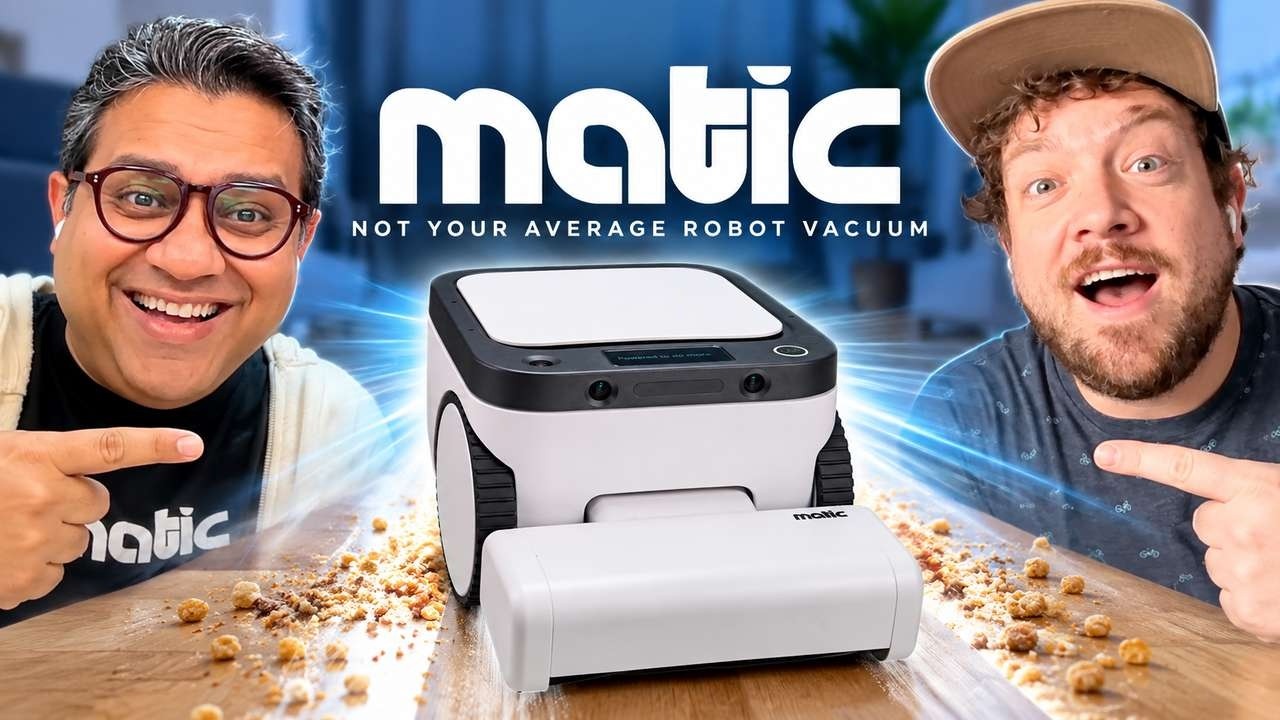
On this week’s episode of the Smart Home Insider podcast, Matic co-founder Mehul Nariyawala joins to round up the Apple Event rumors and talk about why Matic’s robot is so radically different.
This is a jam-packed episode of the show as it coincides with not only Apple’s iPhone event, but it is the end of IFA. Mehul brings a wealth of knowledge as we break it all down, including what we want to see Apple announce.
After the Apple event coverage, we pivoted to discussing the news for the week, which included a lot of IFA announcements. There were new robots, smart home controls, and a lot of lights.
Sonos was a big topic as well. It announced the Sonos Beam Ultra soundbar and Sonos Ace Ultra headphones.
Advertisement
There were several new apps to come on the scene recently. We check out Wallflower 3.0, Overflight, and Threadlytics.
Wallflower has been updated to version 3.0 which brings many updates to this Apple Home dashboard app. It can detect as you approach and change the view and intelligently shows cameras and accessories based on relevancy, like if a camera spots motion.
Overflight is a plane radar app, which is great for Apple TV. It can show you the information of flights as they pass over your head.
Finally, Threadlytics is a new app currently in beta that can provide information on your Thread network. It can give you a health report on your network and break down the number of Thread devices by ecosystem, like Matter, Apple Home, SmartThings, and more.
Advertisement
In other news, Google has increased the price of its Google TV Streamer. It is now priced at $150, up from $99, which is still shy of the Apple TV that starts at $199.
We wrap up the episode to talk about vacuums. Matic is a square, box-shaped vacuum rather than the disc shape that all others use.
Mehul walks us through that particular design choice, why it has no multi-function dock, and its advantages to every other vacuum and mop on the market. Other parts of the conversation touch on an impending price increase, AI use for control, and its privacy focus.
Links from the Smart Home Insider podcast
Those interested in sponsoring the show can reach out to us at [email protected]
Keep up with everything Apple in the weekly AppleInsider Podcast. Just say, “Hey, Siri,” to your HomePod mini and ask for it, and our latest Smart Home Insider episode too. If you want an ad-free main AppleInsider Podcast experience, you can support the AppleInsider podcast by subscribing for $5 per month through Apple’s Podcasts app, or via Patreon if you prefer any other podcast player.
The smart ring market is getting crowded, and Oura isn’t waiting around to see what happens next: it officially filed to go public on September 3.
The company is killing it right now. The Finnish outfit’s revenue nearly doubled to $1.21 billion for the nine months ended June 30. Oura said it sold 3.6 million rings over the past year, and that it has around 5 million paid members. The company’s move to go public follows the recent launch of the Oura Ring 5, its slimmest and lightest ring yet.
But while Oura has largely dominated the smart ring market for years, rivals are emerging from all corners to dethrone it, each betting on a different angle. For example, French company Circular announced this week that its upcoming ring will allow users to tap to pay with their ring, while Chinese company RingConn debuted a ring this year that added haptic vibrations.
Indian company Ultrahuman separately announced this week that it raised $70 million with backing from Qualcomm’s venture arm as it looks to build a ring that it says will be able to run software directly on the device and eventually power everything from AI interactions to games.
Advertisement
The race to beat Oura isn’t just about enhanced health and sleep tracking anymore. It’s now about seeing which company can cram the most smartphone-like features into a two-gram titanium band before someone ends up shipping a ring that lets you doomscroll TikTok or answer calls or do your taxes. I mean, we’re already seeing smart rings with screens, like the Pebble Halo, although it’s currently only available in India, as well as rings that promise touchpads, like the Dreame Ring.
The irony is that the initial appeal with smart rings was that they made technology and health tracking feel less intrusive than devices like smartwatches and smartphones, given you can step away from a screen while still keeping tabs on your health. With the way things are headed in the smart ring industry, though, we may just end up slipping mini smartphones on our fingers.
All of this is to say that the smart ring market is getting increasingly confusing, so we’ve rounded up the most notable contenders vying for Oura’s crown.
Ultrahuman
Image Credits:Ultrahuman
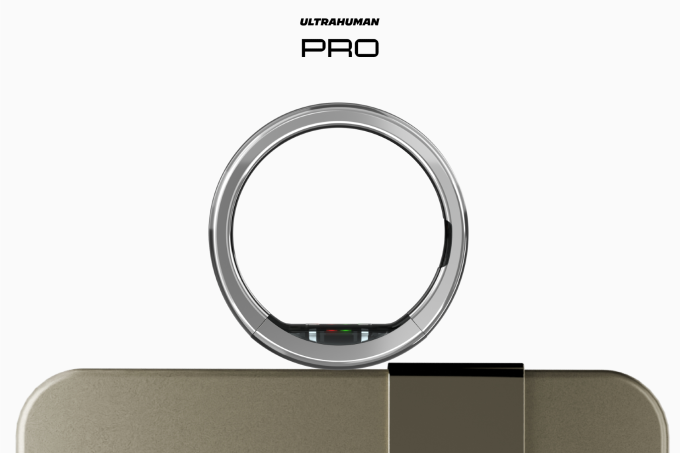
Earlier this year, Ultrahuman unveiled its third-generation smart ring, the $479 Ring Pro, which is set to begin shipping in the U.S. in mid-September. Ultrahuman’s U.S. business was disrupted in October 2025 after the U.S. International Trade Commission ruled in Oura’s favor in a patent dispute. The ruling prevented the company from importing new ring inventory into the country, so Ultrahuman developed the Ring Pro with a redesigned form factor in order to circumvent Oura’s patent.
The Ring Pro features a redesigned heart-rate sensing system aimed at improving signal quality during sleep, along with a new dual-core processor that enables more accurate data collection and greater on-device processing. As noted earlier, Ultrahuman looks to be more ambitious with future rings as it aims to go beyond sleep and health tracking.
Advertisement
Circular
Image Credits:Circular /
Circular’s upcoming Ring 3 series, which consists of a Pro model and a Slim option, is expected to launch early next year. Both of the smart rings will feature an integrated NFC chip for contactless payments and on-finger vibrations that can be used for silent wake-up alarms, reminders, vital health alerts, and more.
The Ring 3 Pro features a slimmer design than its predecessor and comes with FDA-cleared ECG for AFib detection, blood pressure trend tracking, glucose tracking, advanced sleep analysis, and comprehensive biometric monitoring.
Pricing for the upcoming rings is not yet available.
RingConn
Image Credits:RingConn
The RingConn Gen 3, which launched in May and starts at $349, features vascular health insights that use sensor data from the ring to assess changes in vascular strain over time after calibration with externally measured blood pressure values.
It also tracks heart rate, blood oxygen saturation, sleep, activity, and stress, among other metrics. Additionally, it features vibration alerts for health changes, sedentary reminders, and low battery. Unlike Circular, which leans on haptics to make its ring more communicative, RingConn mostly sticks to vibration as a health-alert mechanism.
Samsung
Image Credits:Samsung
Samsung became the first major tech giant to launch a smart ring in 2024. The Galaxy Ring, which costs $399, is arguably the strongest contender for anyone already invested in Samsung’s ecosystem of devices.
Compared with other smart rings on the market, the Galaxy Ring is relatively basic when it comes to advanced health and sleep tracking. It lacks features such as sleep apnea detection, which are offered by RingConn, Oura, and Ultrahuman, as well as AFib detection, which is available on Circular and RingConn smart rings.
Advertisement
Dreame
Image Credits:Dreame /
Dreame, a relatively new entrant to the smart ring market, unveiled a ring earlier this year with haptic alerts for alarms, calls, messages, and more, along with a small touchpad that lets you do things like skip a song or snap a photo on your phone. It’s also said to offer heart rate tracking, blood oxygen monitoring, heart rate variability insights, sleep analysis, and more.
Pricing and availability have yet to be announced.
When you purchase through links in our articles, we may earn a small commission. This doesn’t affect our editorial independence.
“Billionaire Bill Ackman’s life was upended this February when his 26-year-old daughter collapsed in her Brooklyn apartment, suffering a brain hemorrhage that would render her unable to move, speak or see,” writes the Washingon Post. But then…
The hedge fund manager did what any good father would do — at least, any father with vast financial resources and what friends describe as a “Mr. Fix-It” tendency. He sprung into action, getting her topline care at New York City’s Mt. Sinai Hospital and consulting a network of well-connected friends all over the world. He helped her access a novel cell therapy that has been gaining traction among longevity enthusiasts, who are seeking ways to prolong human life. And then — motivated by a newfound desire to accelerate scientific research — he vowed to spend more than $400 million to launch an institute dedicated to longevity and brain health… He posted this week that the U.S. Food and Drug Administration, in May, gave his daughter Lucy’s medical team a first-time emergency authorization to transplant mitochondria — the energy-producing part of human cells — from her leg muscle to her eyes, in the hopes that the tiny cell powerhouses would facilitate healing in her optic nerves and perhaps even restore her vision.
Ackman’s story highlights the increasingly prominent role of the ultra-wealthy in making expensive medical bets on longevity treatments and other novel therapies, altering the direction of research as federal funding for science declines in the second Trump administration. But his saga is a deeply personal one, spurred by his daughter’s medical crisis. The focus on longevity by Ackman, who made billions on Wall Street as a hedge fund manager, is aligned with similarly ambitious efforts from some of Silicon Valley’s biggest names. OpenAI CEO Sam Altman has backed Retro Biosciences, a start-up whose goal is to add 10 healthy years to the human lifespan through cellular reprogramming. Amazon founder Jeff Bezos is reportedly a funder of Altos Labs, which focuses on cellular rejuvenation and resilience… Billionaire investor Peter Thiel, Google co-founder Sergey Brin and Oracle co-founder Larry Ellison are also deeply invested in life-extension methods and attempts to rewrite the biology of aging…
The therapy given to Ackman’s daughter Lucy, known as mitochondrial transplantation, is of great interest not only to people who have suffered injuries, but to longevity-focused scientists who believe that mitochondria may hold promise for reversing some of the effects of aging… In recent years, scientists have discovered that mitochondria have many other functions beyond converting food into energy. They serve as clearinghouses for damaged cells, opening up the possibility that they can help with cell regeneration and healing, said Daria Mochly-Rosen, professor of chemical and systems biology at the Stanford University School of Medicine and co-author of ” The Life Machines: How Taking Care of Your Mitochondria Can Transform Your Health.”
“I am one of those who believes that focusing on mitochondrial health is a way to address many human diseases, including aging itself,” she said. “It’s exciting.”
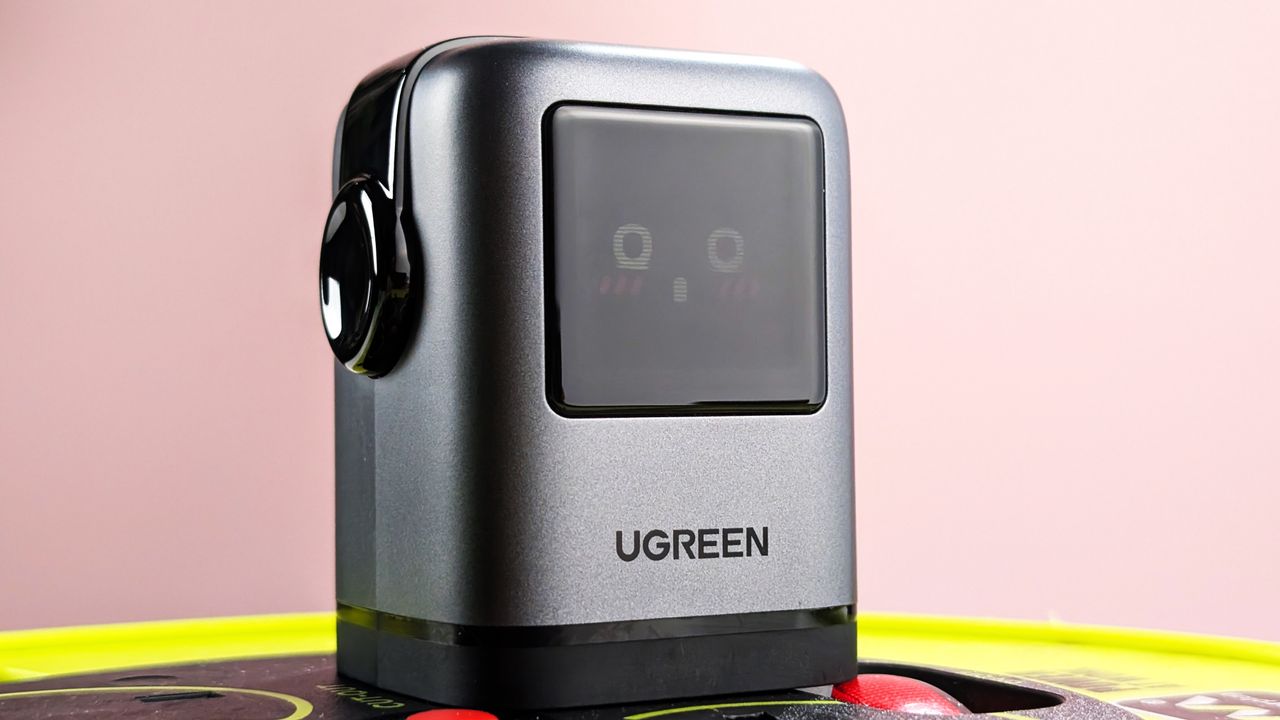
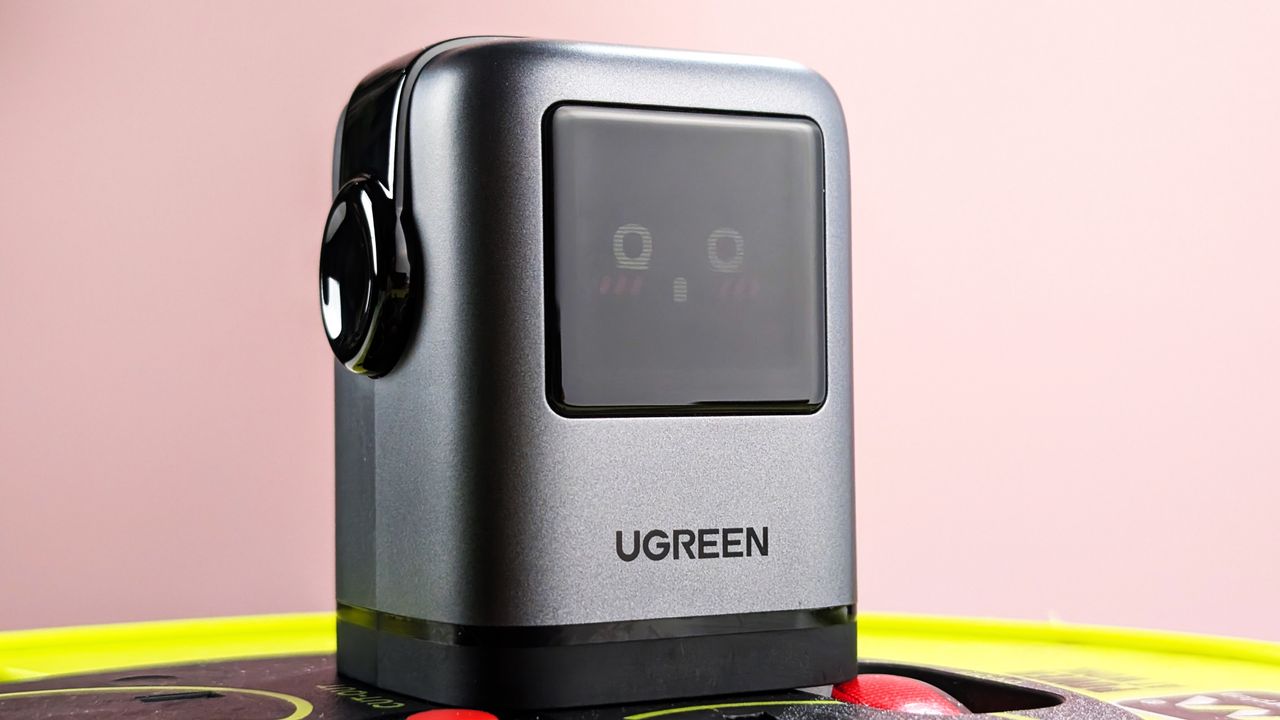
Most desktop chargers are purely functional, but the robot-shaped Ugreen Uno manages to make something as mundane as powering your devices surprisingly fun.
The Uno has a small TFT display that shows different facial expressions depending on its charging status, and its removable magnetic feet complete the little desktop robot design. In the UK, Ugreen’s 100W charging block is now £40 (was £56) at Amazon.
Advertisement
Why we recommend it
In his rave five-star review of the Uno, our expert Harry said: “With an impressive power output, quad-port design and quirky robot form, the UGreen Uno Charger 100W establishes itself as one of the best wall chargers on the market. It’s modestly priced against competitors, delivers super-fast charging and displays entertaining emojis, making it the ideal charging companion.”
The Uno is a desk accessory that can add some personality to a home office without loosing practicality. Its display cycles through expressions including smiling, blushing and even an eating animation while charging, with a suitably cool expression appearing when charging completes.
More importantly, there’s a capable 100W GaN charger inside that lets you power four devices simultaneously, The top two USB-C ports can each deliver up to 100W when used individually, making it suitable for more demanding devices such as laptops.
The port placement on top also makes sense when it’s sitting on a desk, while its compact 2.05 x 1.93 x 3.23-inch dimensions are impressive considering the number of ports and power available.
Advertisement
Price context & historical value
Amazon has reduced the price of Ugreen’s Uno 100W charger from $79.99 to $59.99, knocking $20 off the usual price. You’re inevitably paying something for the unusual design, but you’re getting four charging ports and enough output to handle many USB-C laptops.
This isn’t the cheapest I’ve seen it though. It was on sale for $45 towards the end of last year. Even so, I think this is still a great deal and one I’d recommend snapping up.
Advertisement
Should you buy it?
✅ Buy the Ugreen Uno 100W charger if…
You want to replace several chargers with one device that also adds some personality to your home office. With three USB-C ports, USB-A and up to 100W of power, it can handle your laptop, phone, tablet and headphones simultaneously while taking up little desk space.
❌ Skip the Ugreen Uno 100W charger if…
You only need a charger for your phone or another low-powered device. The Uno is overkill for that job, and you can find considerably cheaper single-port chargers if you don’t need its 100W output, four ports or quirky display.
Advertisement
The Catch: What to know before you buy
The 100W figure is the maximum available output rather than 100W from every port simultaneously. Power is shared when you’re charging multiple devices, although the top two USB-C ports can each provide up to 100W when used individually.
It doesn’t come with any charging cables, either, so you’ll need to provide those yourself. The display also isn’t particularly bright, which can make its expressions harder to see from some angles.
Fidelity Imports UK has answered the first question we had when it announced plans to cross the Atlantic.
Who is coming with them?
The first answer is sonoro, the German audio manufacturer known for combining traditional hi-fi engineering with the kind of industrial design that does not require explaining to your spouse why a large black box has suddenly appeared in the living room.
Fidelity Imports UK will represent sonoro in the United Kingdom beginning October 1, 2026, when the new distribution operation officially begins trading. sonoro is the first manufacturer in what Fidelity describes as its premium audio launch portfolio, with additional brands scheduled to be announced individually over the coming weeks.
Advertisement
And the choice tells us something important about what Managing Director Jamie McKay is building.
Who Is sonoro?
Founded in 2006 and based in Neuss on Germany’s Lower Rhine, sonoro describes its approach as “German Audio Design” — combining sound quality, straightforward operation, materials and industrial design rather than treating those as unrelated departments.
The company has traditionally been associated with premium compact and all in one music systems, but its current portfolio reaches much further into conventional hi-fi. It now includes network capable electronics, turntables and passive loudspeakers alongside its integrated music systems.
That breadth makes sonoro an interesting first signing.
Advertisement
This is not simply another amplifier manufacturer trying to squeeze onto an already crowded specialist dealer shelf. sonoro can address customers looking for a complete hi-fi system, but it can also reach buyers who care about music and build quality without necessarily identifying as audiophiles.
McKay specifically points to that opportunity.
“sonoro also gives our retail partners an opportunity to engage customers who care deeply about music and quality but may not identify as traditional hi-fi buyers,” he said. “That makes it an exciting brand with which to begin our launch portfolio.”
Advertisement. Scroll to continue reading.
Advertisement
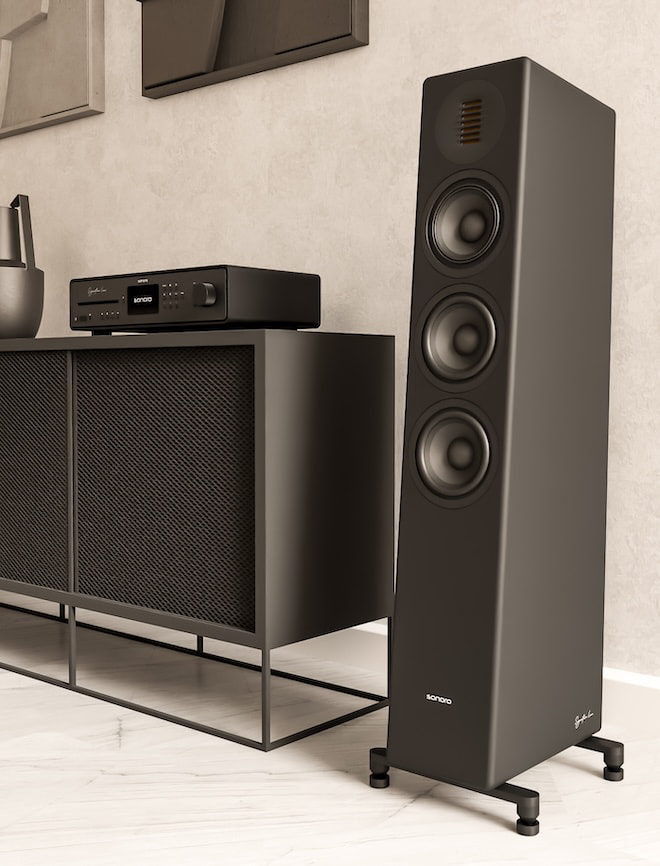
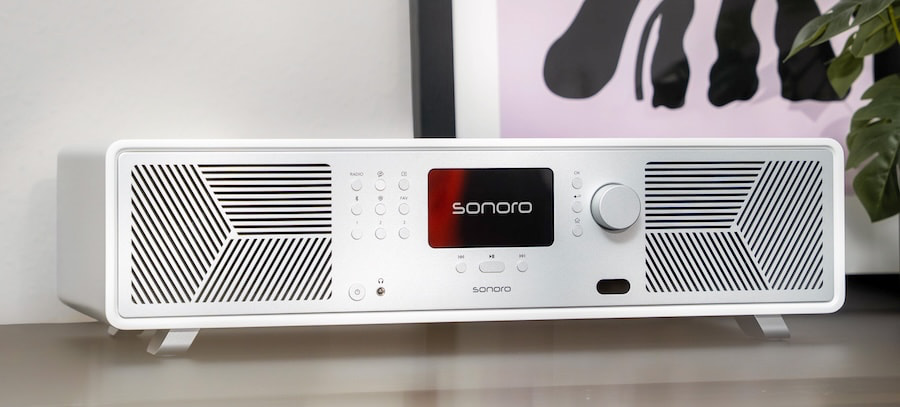
sonoro MAESTRO Quantum streaming receiver with ORCHESTRA Shaped Signature Loudspeaker
There is some substance behind the positioning. sonoro’s current range includes all in one systems alongside products such as the MAESTRO Quantum streaming receiver and dedicated loudspeakers, turntables and newer Signature models. The MAESTRO Quantum, for example, combines network streaming, CD playback, HDMI ARC, an MM phono stage and Class D amplification rated at 180 watts per channel into 4 ohms.
In other words, sonoro would prefer not to be permanently filed under “expensive German radios.”
Fair enough.
sonoro AVATON stereo music system
sonoro Has Been Here Before
There is another distinction worth making.
Fidelity Imports UK is not introducing sonoro to Britain for the first time.
Advertisement
The brand had UK distribution more than a decade ago, and sonoro established its own UK subsidiary operation in Nottingham in 2017 as part of a previous attempt to expand its British dealer network.
What Fidelity appears to be offering is a renewed specialist retail push with dedicated distribution, dealer development, marketing, logistics and after sales support behind it. That difference is more important than pretending nobody in Britain has ever encountered the brand before.
sonoro’s current international distributor list does not identify a UK distribution partner, which makes the Fidelity appointment particularly relevant as the company looks to establish a wider presence in the market.
The First Brand Also Answers Another Question
When Fidelity Imports UK was first announced, one issue immediately stood out.
Other Fidelity brands already have established UK distribution arrangements.
That made it unlikely that Fidelity Imports UK would simply reproduce the American portfolio on the other side of the Atlantic.
Advertisement. Scroll to continue reading.
Advertisement
sonoro confirms it.
The German manufacturer is not currently part of Fidelity Imports’ U.S. brand roster, making the first UK announcement a completely new partnership rather than the transfer of an existing North American relationship.
Instead of asking which Fidelity Imports brands are moving across the Atlantic, we should probably be asking which manufacturers McKay and Fidelity believe are underserved in Britain and could benefit from a stronger specialist dealer network.
Very different question.
Advertisement
Jamie McKay, Managing Director at Fidelity Imports UK
Jamie McKay Knows the Territory
McKay remains a logical choice to run the operation.
Before joining Fidelity Imports UK, he served as Sales & Marketing Director for Armour Home Electronics, the British company behind Q Acoustics, QED and Goldring, where he was responsible for international sales and marketing strategy across the three brands. He previously held senior positions with D&M Group and Denon.
There is some interesting history there as well.
Q Acoustics, QED and Goldring were previously represented by Fidelity Imports in North America, although Fidelity no longer distributes those brands in either the United States or Canada. Armour Home appointed American Audio & Video as its exclusive U.S. distributor in August 2025, while Essentia Technology currently handles Q Acoustics in Canada.
McKay therefore arrives with experience working with manufacturers, distributors and specialist dealers from both sides of the table.
Advertisement
McKay therefore arrives with experience working with manufacturers, distributors and specialist dealers from both sides of the table. He is also a New Zealander who has lived and worked in the UK for years, so Fidelity is not handing the operation to someone learning the British market from a Heathrow arrivals lounge.
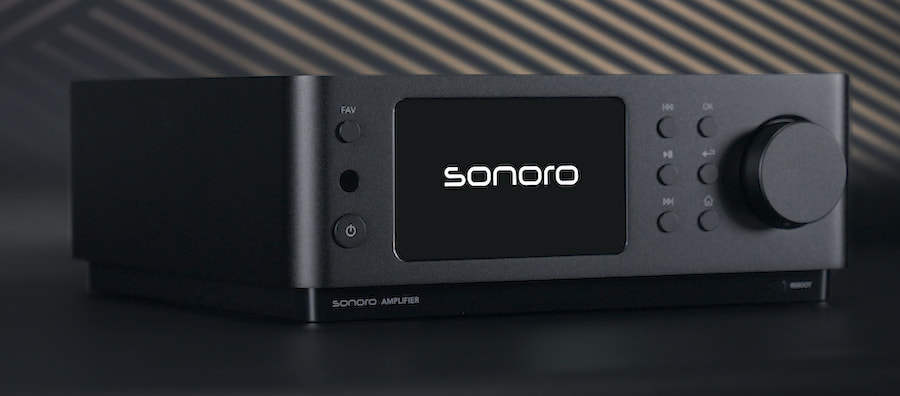
sonoro AMPLIFIER
What Comes Next?
Fidelity Imports UK says sonoro is only the beginning.
The company describes its launch strategy as a group of complementary manufacturers, each offering specialist retailers something distinct rather than filling the portfolio with brands competing for exactly the same customer. Further manufacturer announcements will follow before Fidelity Imports UK begins trading on October 1.
Advertisement. Scroll to continue reading.
Advertisement
It gives Fidelity a German manufacturer with products spanning lifestyle audio and dedicated hi-fi, while giving dealers access to a brand capable of reaching beyond the traditional audiophile customer without abandoning the specialist channel.
More importantly, it confirms that Fidelity Imports UK is developing its own portfolio rather than functioning as a British branch office for the American business.
We will have more on that strategy later this week when eCoustics speaks with Jamie McKay about Fidelity Imports UK, its approach to brand selection and what the company believes it can bring to an already crowded British hi-fi market.
On a typical workday, I’m usually juggling a few things at once: I have my laptop open, a client call starting in 20 minutes, yesterday’s interview transcript still waiting to be cleaned up, and a notes app full of half-sentences I’ll need to decode later.
The common thread running through my days as a writer is constant switching between listening, writing, recording and organising information.
I jump between multiple apps: using my phone’s voice memos to record conversations, a separate transcription tool like Otter.ai or Fireflies.ai to turn them into text, and a notes app to pull everything together afterwards.
Advertisement
Even then, the transcription isn’t always perfect, especially with background noise or multiple speakers, so I still end up spending time cleaning things up.
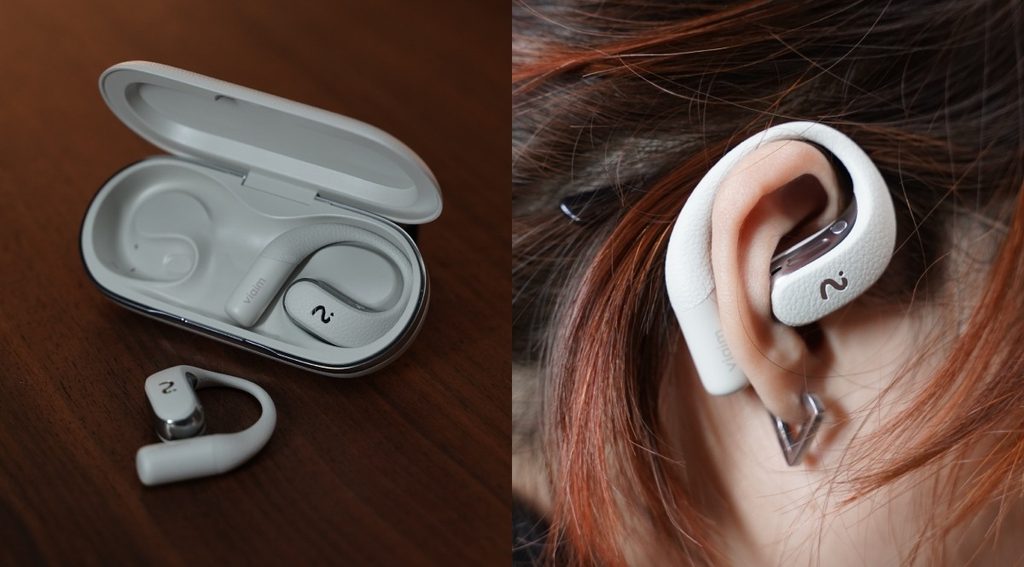
That’s why when viaim sent over the OpenNote—its open-ear AI earbuds with built-in recording, transcription, and note-taking—I wanted to know whether they could genuinely improve my productivity and make my workflow feel less fragmented.
After a week of wearing them through calls, here’s my verdict.
Unlike conventional in-ear earbuds, they sit around the ear without sealing the ear canal.
Advertisement
I could leave them on for most of the workday without feeling like my ears were blocked off, while still hearing colleagues, traffic and announcements around me.
The battery life held up pretty well too. The earbuds offer up to 19 hours of use on their own, or up to 53 hours with the charging case, so I rarely had to think about charging them during the week.
Whether I was sitting through a long keynote, jumping between client interviews or heading out for the day, the OpenNote had enough juice to keep up without me constantly reaching for a charger.
Putting the OpenNote’s features to work
Connecting a viaim device to the viaim app is a seamless experience—it took me under a minute to connect the OpenNote./ Image Credit: Vulcan Post
Design is one thing. The real test was whether OpenNote’s features could actually make my workday easier.
Phone calls were the easiest place to notice the difference. Instead of putting my phone on speaker and juggling a recorder and a notes app, I could simply switch to Call Mode and let OpenNote record the conversation.
Advertisement
That meant I could focus on the actual conversation, such as asking follow-up questions, listening for details, thinking about what might become a story, instead of frantically typing everything down.
Once the recording was done, I could easily sync it to the viaim app, where the transcript and AI-generated notes were waiting for me.
The viaim app extracts key points and summarises transcripts./ Image Credit: Vulcan Post
Its AI chatbot, Vitana, pulls out key points, summaries and action items instead of leaving me to wade through a wall of text.
Vitana also stores conversations in a dynamic database, making it easy to search and revisit information later, and it integrates with workplace tools like Google Meet, Microsoft Teams and Skype, which helps keep the workflow from being siloed across different apps. This is especially useful on client calls, where I need to track several requests or follow-ups without losing the thread of the conversation.
On the other hand, in-person meetings were a slightly different test. With multiple people talking, interruptions and background noise, I wasn’t sure Meeting Mode would keep up, but it handled the room reasonably well.
Advertisement
The transcription wasn’t perfect, and I wouldn’t treat any AI-generated transcript as a final source without checking it, but it gave me a far more useful record to work from afterwards.
Image Credit: Vulcan Post
The device’s multilingual support was a bonus. viaim covers 78 languages and 145 accents and dialects, and I put that to the test to translate a workplace dialogue in Japanese to English. Compared with other transcription apps I’ve used, viaim handled the conversation quite accurately, particularly when it came to recognising different accents.
Then there’s FlashRecord, which turned out to be useful well beyond calls and meetings.
I listen to quite a few industry podcasts on my commute, so I tried using the OpenNote to capture interesting statistics and points I wanted to revisit along the way. By the time I got to my desk, those snippets were already captured and organised on the viaim app, ready for me to refer back to later.
Beyond transcription
For each recording, the viaim app automatically generates summaries and mind maps for easy reference./ Image Credit: Vulcan Post
Inside the viaim app, Vitana goes beyond simply summarising recordings.
You can prompt it to turn a conversation into something more immediately useful, or generate mind maps that organise a dense chunk of information into something easier to scan and revisit. You can also point Vitana to a captured recording and ask it to draft a follow-up email or action-item list, specifying the recipient, tone and key takeaways you want included.
Advertisement
The good news is that viaim’s core AI features don’t require a separate subscription.
OpenNote comes with 600 free minutes (10 hours) of AI transcription per month using standard AI models. For heavier users, a Pro plan runs US$79.99/year (S$102.04/year) for 1,800 minutes a month, while an Unlimited plan is US$159.99/year (S$204.08/year).
Prices of viaim’s various transcription plans./ Image Credit: Vulcan Post
For comparison, Otter.ai’s entry-level plan starts around US$8.33/month (S$10.66/month) for 1,200 minutes—about S$106.60 a year. Fireflies.ai starts at US$10/month (S$12.80/month) for 8,000 minutes, or roughly S$128 a year. Both of those, though, add another recurring subscription on top of whatever earbuds or recording device you’re already using.
Meanwhile, the viaim OpenNote takes a different approach.
It is an upfront cost that bundles the earbuds, recording and AI transcription all into one device, with optional paid plans for anyone who needs more transcription time or more advanced AI models.
Advertisement
So while the initial outlay is higher than simply subscribing to a transcription app, the value proposition shifts if you’re already in the market for earbuds and regularly need transcription for work.
Options for everyone
viaim RecDot./ Image Credit: Vulcan Post
OpenNote worked for me because I wanted to stay aware of my surroundings while I worked.
But that won’t be everyone’s preference. If you work in a noisy café, an open office, or a shared workspace, you might actually want earbuds that block out the world rather than keep you connected to it.
That’s where the viaim RecDot comes in. Priced at S$279, it offers similar AI and software features—transcription, summaries, action items, and the same support for 78 languages and 145 accents and dialects.
What sets it apart is a more conventional in-ear form factor, with 48dB active noise cancellation and a 36-hour battery built for deeper noise isolation in loud environments.
Advertisement
The viaim NoteKit for computers./ Image Credit: Vulcan Post
Both OpenNote and RecDot can also be paired with the NoteKit adapter, which brings viaim’s recording and transcription capabilities to a computer and is designed to improve transcription accuracy for desktop use.
Ultimately, the choice comes down to how you work: OpenNote is better if you want to stay connected to your surroundings, while RecDot makes more sense if you’d rather block out distractions and focus.
The verdict
Image Credit: Vulcan Post
A week isn’t long enough to declare any gadget indispensable, but it was long enough for me to notice a change in my routine—I stopped reaching for three different apps just to record, transcribe and organise a single conversation.
The bigger difference was the reduced mental load. That constant nagging thought of “I should really write that down” became less frequent, because I knew I could capture it and come back to it later.
Whether OpenNote is worth the investment ultimately depends on how much of your work involves meetings, calls, interviews and those half-baked ideas that show up at inconvenient times.
For me, there were enough of those moments in a single work week to make the earbuds feel less like another gadget to manage, and more like one less thing I had to think about.
Advertisement
If you’re keen on getting the viaim OpenNote or RecDot, both are available through viaim’s online stores on Shopee, Lazada and TikTok. There are also bundle options that include the NoteKit adapter and annual AI plans, depending on how much transcription and AI functionality you need.
Read other articles we’ve written on Singaporean businesses here.
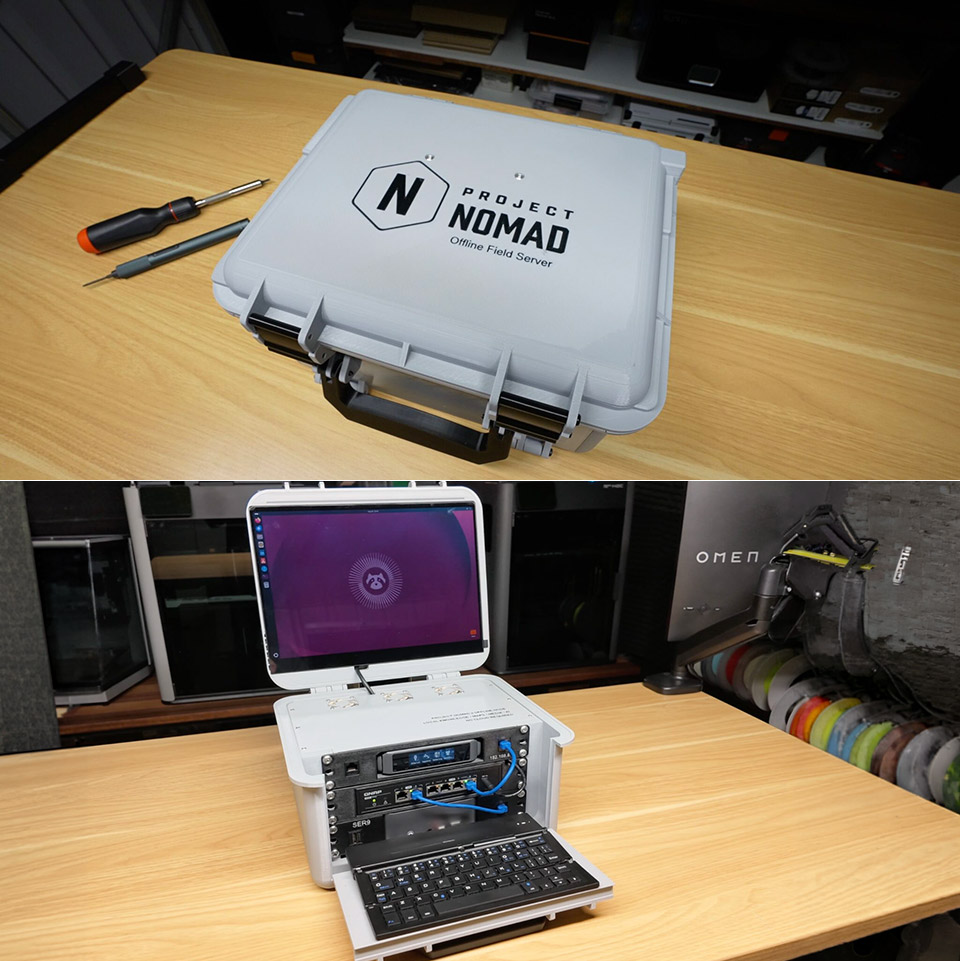
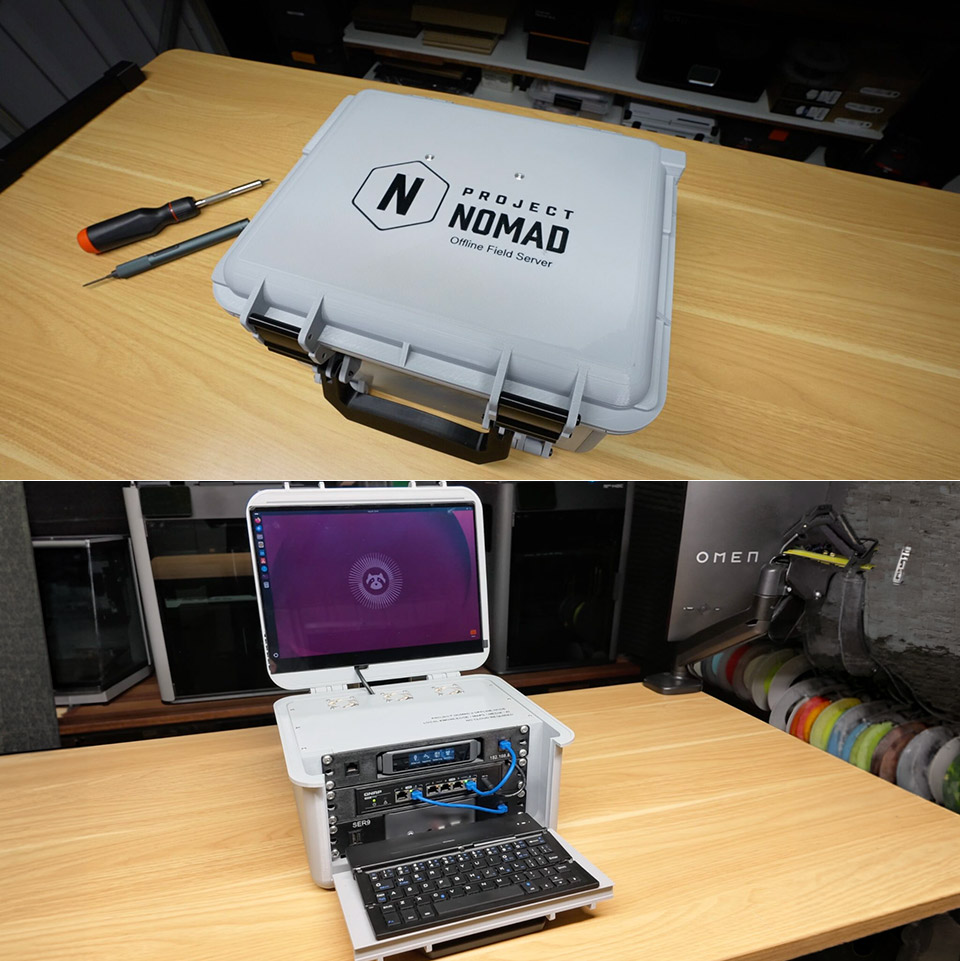
Photo credit: The DIY Life You can close the lid, grab the handle, and walk away with Wikipedia, street maps, a media library, and a local language model riding in one printed case. That is the brief Michael Klements set for himself when he wrapped Crosstalk Solutions’ free Project Nomad stack in a 3D-printed rack that behaves like a travel workstation. Nearby phones, tablets, and laptops join a private network and open a normal browser. Pages load from the box in the case, not from a tower somewhere else.
Project Nomad started off as a software project. With a few Ubuntu commands, you can download the installer, set up Docker, and create a dashboard where you can choose what you want to keep on disk. Kiwix provides up a whole English Wikipedia with images, which is approximately 125 GB in size, as well as medical references, iFixit repair guides, and Project Gutenberg novels. OpenStreetMap (OSM) tiles provide street-level maps that can be panned and searched as desired. Kolibri offers Khan Academy courses, as well as optional Ollama models such as Llama 3.1, Llama 3.2, and DeepSeek R1, which can all operate on the same machine, allowing your chat to remain local rather than being sent to a corporate server. Vaultwarden, Jellyfin, MeshCore, and a variety of additional self-hosted tools can coexist alongside that library. The licensing for the project is Apache 2.0. Once the initial download is completed, the system continues to function normally, with no accounts, telemetry, or external signals.
LITTLE DO-IT-ALL — Mac mini packs pure power into a small, five-by-five-inch desktop as the M6 chip delivers next-level AI capabilities. Mac mini…
M6 CHIP — Everything you do on Mac mini feels more responsive with the M6 chip and its next-generation CPU. Fly through AI workflows with up to 4.8x…
CONNECT IT ALL — Features three Thunderbolt 4 ports, an HDMI port, and a 2.5Gb Ethernet port in the back, and two USB-C ports and a headphone jack…
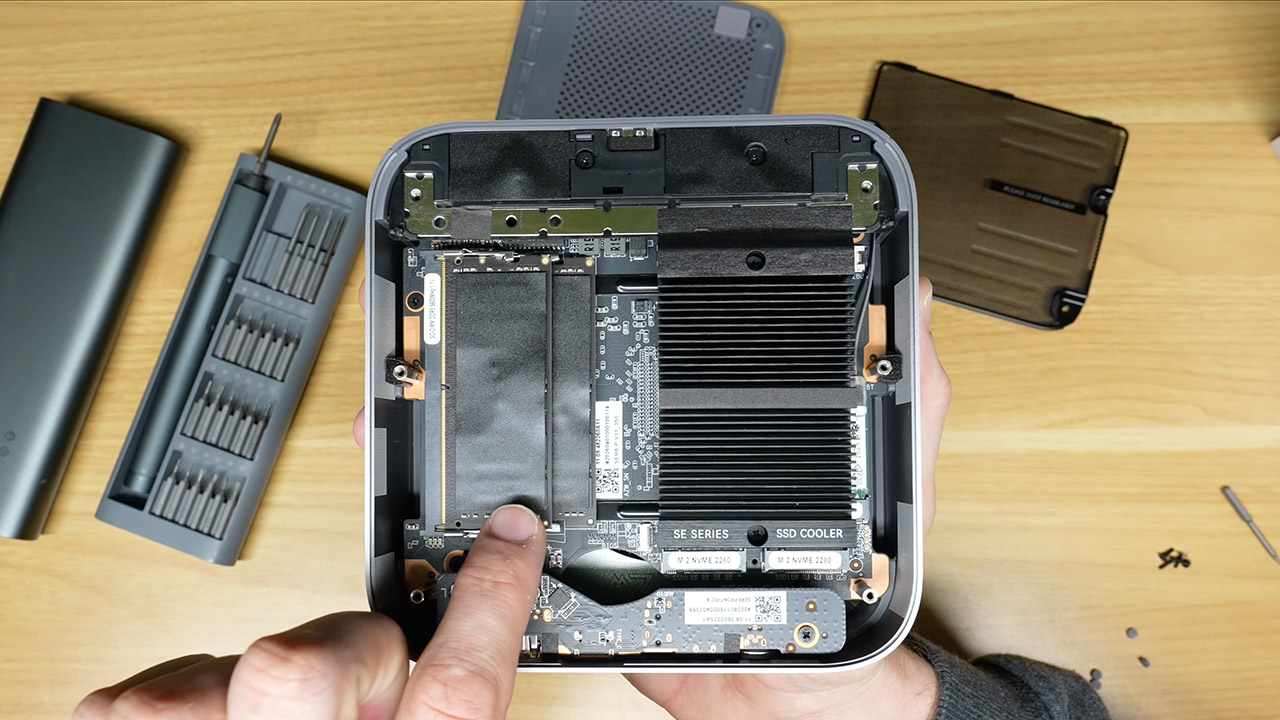
Klements wasn’t about to let the stack sit and gather dust. His setup, on the other hand, is based on a Beelink SER9 Max, with an AMD Ryzen 7 H350, Radeon 860M graphics, 32GB of RAM, a 1TB NVMe drive, a second internal SSD slot, and 10-gigabit Ethernet. Ubuntu boots and opens the Nomad dashboard on its own. The GL.iNet Slate 7 creates a Wi-Fi 7 network for phones and tablets. A tiny QNAP switch with two 10-gigabit ports and four 2.5-gigabit ports connects Ethernet and HDMI to the front panel via keystone jacks. Jellyfin allows several users to search a map, read an article, and stream a file. Alternatively, you can talk with a local model all at once. Klements needed a shared local web so that a phone in a tent or a laptop on a workbench could access the same services without having to sit on the deck itself.
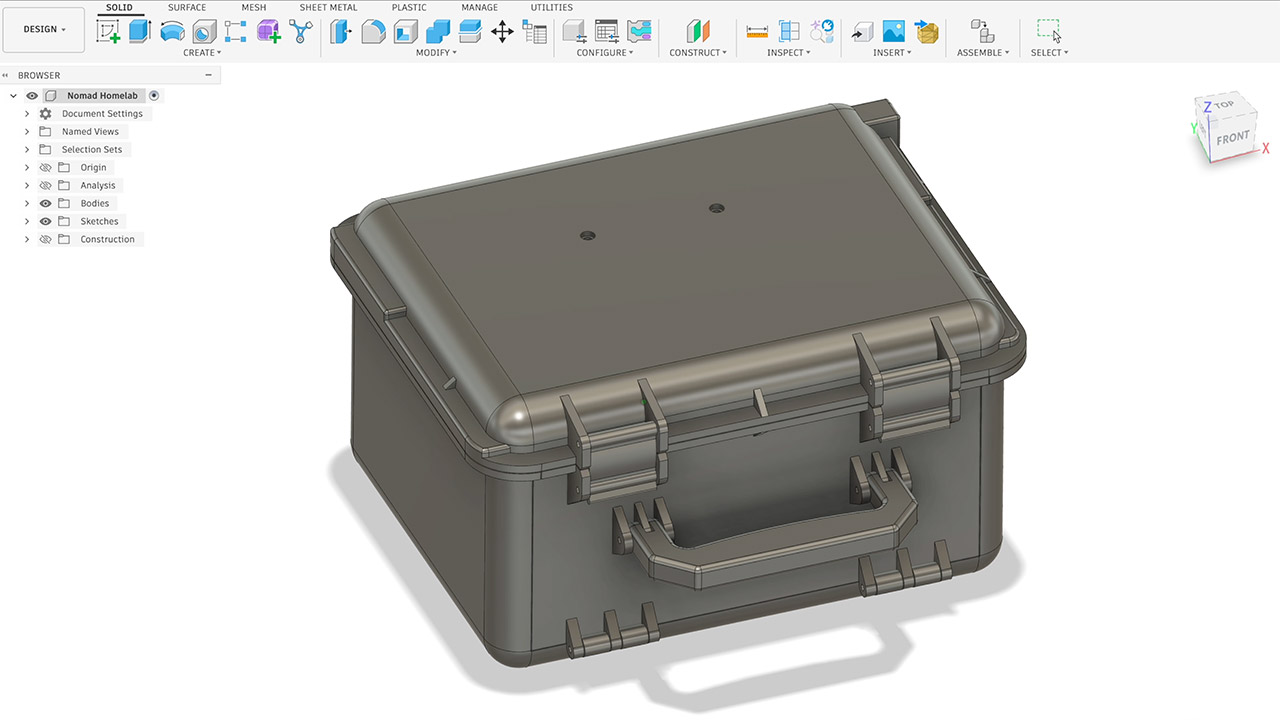
Gray and black PETG parts were created in Fusion 360 and printed over about 60 hours to make a 3U, 10″ rack with custom brackets and heat-set brass inserts. 3 x 40 mm Noctua fans mounted in an internal divider remove heat from the tiny PC, switch, and router. When the case is closed, the front panel folds back and hides the jacks, then descends down into a keyboard tray with a strap to keep the board in place during travel. The lid features an Uperfect 14″ 3K OLED panel with 120Hz technology and connects to the tiny PC via a single USB-C cable that provides video, touch, and power. Close it up, and it resembles a miniature instrument case. When you open it up, it becomes a screen, a keyboard shelf, and a rack of live ports all at once.
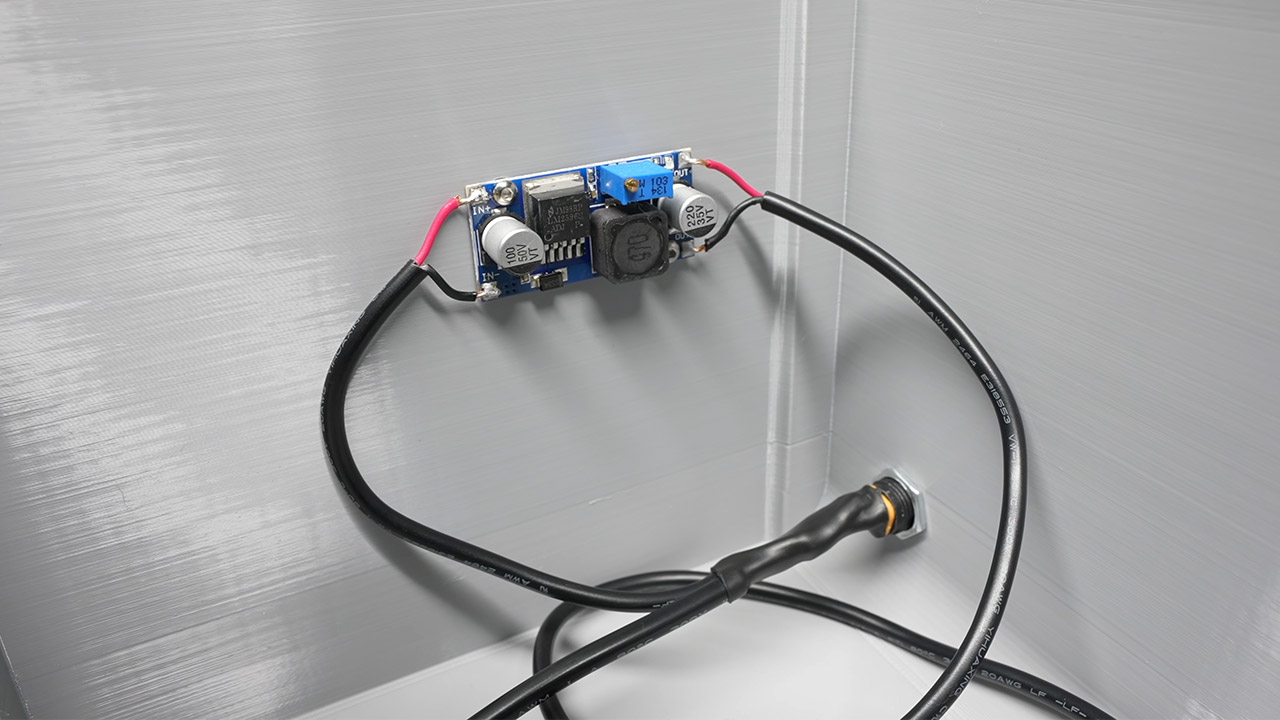
Power is kept purposely simple, with only one 19-volt barrel supply piped in from a wall sufficient to keep the Beelink running smoothly. A buck converter reduces that voltage down to 12 volts for the switch, which is a rather simple operation. The Slate 7 is powered by a little PC via USB-C, and because there is no battery on board, you’ll need a wall wart or a portable power station for off-grid operation. Yes, cooling is a continual worry, especially when running maps, media, and a language model on the Radeon 860M.
Crosstalk still touts Nomad as hardware-agnostic, allowing you to install the library on an old refurbished office PC if that’s what you have laying around. If you want to unlock the truly massive models and obtain fast performance from your language model, some better hardware, particularly a high-end graphics card, can help. Klements chose the upper end of that choice range, as well as a router, switch, and screen, so the finished product can be used outside of the home. Pop the case open in a cabin, vehicle, or room with no phone connection, turn on the Wi-Fi, and the dashboard is ready for you. It includes Wikipedia, a zoomable map of an entire country, your personal assistant, and a video library, all loaded from the same box you brought with you. [Source]
When Apple announced the new iPhones last year, it claimed to deliver “industry-leading durability.” However, within a few weeks of launch, the internet had a collective meltdown about the iPhone 17 Pro and Pro Max demo units looking scratched up in stores and a few units facing discoloration.
Reacting to the internet theories, Apple told CNET that the scratching was due to worn-out MagSafe risers, which transferred material to some iPhone models’ backs. (You could remove it by simply cleaning the back.) On the other hand, CNET’s Andrew Lanxon chemically treated his Cosmic Orange iPhone 17 Pro to test the discoloration claims.
He concluded that it “wasn’t going to be an issue for the vast majority of owners, and I don’t believe this can be considered any kind of fault on Apple’s side.” So I put my iPhone 17 Pro Max through 11 months of caseless use to find out how daily life affects its cosmetics. I didn’t put a case, skin or screen guard on it — just a ring stand on its back.
After almost a year of daily use with multiple accidental drops and pocketing with another phone, my cosmic orange iPhone is as cosmically orange as it was on day one (for the most part). There’s the expected color chipping and dents from drops, but the real surprise came when I put it against my iPhone 16 Pro (with similar usage). It helped put things in better context.
Here’s how my iPhone 17 Pro Max looks after a year of no-case use.
Advertisement
The Ceramic Shield 2 protection is real
The iPhone 16 Pro Max, on the left, is noticeably more scratched than the iPhone 17 Pro Max after a year of use without a case.Prakhar Khanna/CNET
The iPhone 17 models (and the iPhone Air) have an upgraded Ceramic Shield 2 protection for “3x better scratch resistance,” according to Apple. The 3x remark isn’t something you can instantly quantify. I could only see the difference when I put my iPhone 17 Pro Max next to my iPhone 16 Pro.
I used both devices for a period of 10 to 11 months without a screen guard. So they’ve gone through similar use: being kept in the same pocket as another phone, placed screen-down on a table and accidentally dropped.
My iPhone 16 Pro’s screen looks several times worse in comparison. It’s covered with scratches, both minor and deep. The soft scratches are gathered all over its cover glass. In contrast, the iPhone 17 Pro Max has a few minor ones here and there but nothing prominent. It looks pristine next to its predecessor. I can’t feel the scratches with my thumb on either screen, but the current-gen screen is smoother to scroll, while the iPhone 16 Pro feels comparatively rougher.
Ideally, glasses with better scratch resistance are prone to shattering easily, but my iPhone 17 Pro Max has fared far better than expected. I don’t have the exact number of times that I’ve dropped my phone; it’s slipped out of my pocket onto a bus floor, a marble floor, as well as onto concrete on the streets. I’ve dropped it from waist-height and my clumsiness has led to dents on its sides, but no screen damage. Each time I dreaded I had broken the display, my iPhone came out unscathed.
There are a few nicks on the phone, such as this small chip on the camera.Prakhar Khanna/CNET
Turning to the backside, the iPhone 17 Pro and Pro Max have Ceramic Shield protection instead of glass. The layer consists of nano ceramic crystals embedded in a glass matrix, which is, according to Apple, four times more resistant to cracks than the iPhone 16 Pro’s back glass.
While no two drops are the same, I’ve broke my 16 Pro when it fell on concrete flooring. The iPhone 17 Pro Max has managed such drops just fine. It has dent marks on the top and bottom right corners, but nothing worrisome. It’s survived more than I expected it would. To be clear, I don’t go around smashing my phones on different types of floor; it’s just hard to keep them in my hands (or pocket) when I’m on the road comparing two models.
While there’s some discoloration, none of the wear affects the phone’s functionality.Prakhar Khanna/CNET
Due to the nature of my work, I often carry multiple phones with me — usually with two in the same pocket. Possibly from rubbing against another phone, I notice there’s some color chipping on the edges of my iPhone 17 Pro Max’s camera island.
As for discoloration, over time, the cosmic orange polish has lightened in certain places. It’s most noticeable on the back side’s curved corners. There’s a permanent silver mark on the bottom-right side of my iPhone and a fading orange polish on the other side.
The corners show the most discoloration from my time using the phone without a case.Prakhar Khanna/CNET
It’s the only cosmetic change that I reckon has occurred from daily use and not one of those accidental drops. The magnetic ring stand I often attach to the back hasn’t caused any discoloration either. While it doesn’t cause any durability or usability issue, this is one thing to keep in mind if you’re planning to use a cosmic orange iPhone 17 Pro without a case.
Overall, I’m impressed with how my current-gen iPhone has aged in 11 months. The color chipping and dents were expected from my clumsy caseless drops. I also expected the screen to gather soft scratches all over its cover glass, but it surprised me in the best possible way. While some may want a case to truly protect the phone’s body, I’m glad that it simply looks a little worn from typical wear and tear.
While you may want a case to better protect the iPhone 17 Pro Max’s body, using it without one has largely left the display unaffected.Prakhar Khanna/CNET
But it’s the Ceramic Shield 2 protection on the display that provides the most noticeable durability upgrade. It’s fantastic how clear my screen still looks after nearly a year. If Apple continues to include it on the upcoming iPhone 18 Pro and Pro Max models, they’d be the first iPhones I can confidently recommend using without any added screen protection.
Prakhar Khanna is a Writer at CNET with bylines in ZDNET, Forbes, and other major outlets. A digital nomad at heart, he thrives in chaos–mixing deadlines with travel, often writing stories on planes, trains, and cafe tables while hunting down the best pizza spots wherever he lands. His backpack usually carries one phone too many, and his playlists are stacked with 2000s Bollywood. Find him across social media @ParkyPrakhar.
Contact: parkydoesstuff(at)gmail(dot)com
See full bio





























































You must be logged in to post a comment Login