
Business
What Founders Need to Know About Preparing Their Business for Digital Tax Rules


Digital transformation has altered almost every aspect of modern business, and tax is no exception. Across the UK, businesses must now adopt digital record-keeping and reporting practices.
While this was previously optional, it is now mandatory. For founders, this represents a structural change that’s likely to influence financial processes, digital infrastructure, decision-making, and long-term planning, among other areas.
Why Digital Tax Rules Should Be on Every Founder’s Radar
From 6th April 2026, digital tax systems will become a mandatory part of the standard business infrastructure. The ultimate aim of this modernisation is to boost accuracy and transparency across the UK tax system, but for businesses, it means implementing stringent digital financial compliance systems and processes (if you haven’t already).
As such, founders can no longer treat compliance as something that they simply hand over to an accountant. The shift toward digital record-keeping involves quarterly rather than annual reporting, which in turn means that underlying data must be closely and consistently tracked through business systems in real time (or near real time). You can no longer rely on end-of-year reconciliation to clear all financial loose ends; they need to be tracked and addressed immediately.
Founders should be aware that non-compliance with these new digital record requirements and submission obligations will, at best, lead to administrative disruption and, at worst, result in financial penalties or even a fraud investigation. For example, organisations that fail to maintain appropriate digital records or meet reporting deadlines are likely to face daily fines until the deadlines are met.
A Founder-Friendly Overview of Digital Tax in the UK
Let’s start with a founder-focused overview of the new MTD system:
What HMRC means by digital record-keeping and reporting
When they refer to ‘digital record-keeping and reporting’, HMRC means creating and storing financial records using approved digital software and submitting information to it electronically. Typically, a digital financial record uses electronic systems to capture income and expense details, such as amounts, dates sent/received, transaction categories, and more.
For VAT-registered entities, digital records should also include core information like identification data and VAT account records. Just as you would with analogue financial records, you will need to preserve these records digitally for several years in order to maintain an audit trail.
One very important aspect of MTD is digital linking. It is no longer sufficient to manually copy data from platform to platform. Instead, platforms should communicate with one another and link seamlessly for data sharing. This automated connection and data transfer ultimately benefits everyone involved by improving consistency and reducing the risk of human error.
Which businesses are affected
From April 2026, all businesses (including unincorporated businesses) and landlords with income exceeding £50,000 PA will be required to comply with digital record-keeping requirements. The income thresholds are set to get progressively lower over subsequent years. As such, even founders whose businesses don’t currently meet the threshold should start preparing and aligning their processes for Making Tax Digital.
How Digital Tax Rules Impact Day-to-Day Business Operations
Digital tax rules are likely to impact day-to-day business operations in a variety of ways:
Changes to internal finance processes
Businesses will feel immediate effects on internal finance processes once the digital rules come into force. For a start, finance teams will need to ensure that all records are captured in a structured digital format from the outset. This includes transaction categorisation, system integration, installation and maintenance of compatible software environments, and more.
Similarly, reporting cycles and processes will have to shift from retrospective compilation and analysis to continuous monitoring. Teams must start treating financial data as a live operational asset rather than as a once-yearly obligation.
The knock-on effects for cash flow and forecasting
Digital reporting also brings indirect advantages and pressures. For example, real-time financial visibility should enable more accurate forecasting and tax estimation, helping founders anticipate liabilities earlier. Similarly, software environments often display projected tax positions based on current records, which can significantly improve planning capacity.
At the same time, increased reporting frequency can expose gaps in data quality and process discipline that might otherwise go unnoticed. This can create friction in the short term as teams work to plug gaps and fix issues, but it will ultimately lead to smoother, more accurate financial workflows.
Common Mistakes Founders Make When Preparing for Digital Tax
Here are some common mistakes to be aware of and to avoid when preparing for digital tax:
Treating digital tax as a last-minute project
If you possibly can, treat tax as an ongoing process. Leaving things until deadlines are looming has always been a bad idea – but with the new quarterly reporting schedule, it could plunge you into a continuous cycle of chasing your tax backlog.
Remember that your staff will likely need training on the new system, and some processes will need to be redesigned. As such, start preparing as early as possible to avoid delays when the first reporting deadlines arise.
Over-relying on spreadsheets and manual workarounds
Spreadsheets are useful analytical tools, but on their own, they often fail to meet integration and compliance requirements. For example, if you are relying on manually transferring data from spreadsheet to platform to spreadsheet, etc., you’re at risk of submission errors or compatibility issues.
How Founders Can Prepare Their Business in Practical Terms
Let’s take a look at some practical ways business founders can prepare for MTD:
Reviewing existing finance systems and processes
Start by evaluating your existing systems and processes. Assess exactly how financial data enters your organisation, how it is processed, and whether or not your systems support digital linking and structured record retention.
Ideally, use this review as an opportunity to think about software compatibility, staff capability, and documentation practices. Identifying weaknesses early will save you from costly retrofitting later.
Choosing tools that support compliance and growth
The right tools can make a huge difference to your MTD preparation and ongoing financial processes. Look for Making Tax Digital software that aligns with HMRC requirements and allows businesses to maintain records, automate submissions, and integrate accounting workflows.
Working More Effectively With Accountants and Advisors
Accountants and advisors can play a more efficient, more proactive role in a post-MTD world. Here’s how:
Why digital records improve collaboration
Digital systems boost visibility between founders and advisors. For example, if they have the right access and permissions, accountants can access structured data directly. This makes things a lot more efficient and means that no time (or accuracy) is wasted with manual transfers.
This kind of speed and transparency ultimately promotes efficiency, shortens reporting cycles, and supports higher-quality decision support.
Shifting accountants from compliance to strategy
When routine compliance is streamlined with digital tools, professional advisors can focus more on planning and optimisation. This means more time spent working on things like strategic insight on tax positioning, cash flow management, and investment decisions.
Preparing Early as a Competitive Advantage
Early adoption of digital tax processes will reduce operational disruption and position your business to realise the benefits of MTD sooner. For example, the earlier you go digital, the earlier you can benefit from clearer financial oversight and more efficient reporting structures.
Digital readiness also signals organisational maturity. Investors, lenders, and partners frequently view structured data governance as evidence of reliable management capability. This reputational factor can influence your access to funding and boost your credibility in potential partnership situations.
Building a Business That’s Ready for the Future
Digital tax rules aren’t an isolated compliance exercise – they represent a broader shift toward data-centric governance in the UK. As such, founders who treat the transition as an opportunity to refine financial infrastructure will derive greater long-term value than those who focus solely on regulatory adherence.
Embedding digital record discipline, selecting integrated tools, and collaborating strategically with advisors will lay the foundation for scalability and resilience. By approaching preparation as part of organisational development, founders can position their businesses to operate confidently within evolving regulatory and technological environments.


The last strata office suite of 11 in a Station Street building has settled.

What the charts are saying
After rallying nearly 1,800 points in recent sessions, the Nifty pulled back sharply after news broke of a ceasefire being called off. Shetti is not reading this as the start of a new downtrend.
“The way the market has declined on Monday has not damaged the underlying uptrend,” he told ET Now. After a prolonged series of lower tops and lower bottoms, the index now appears to have formed a higher bottom, which is typically an early sign that sellers are losing control.
Shetti sees the 23,500 to 23,400 zone as strong support on the downside. On the upside, a decisive move above 24,000 to 24,100 would open the door to 24,500 in the near term. For now, he describes today’s fall as a technical dip within a broader recovery.
Stock pick one: Glenmark Pharmaceuticals
Shetti’s first trade idea is Glenmark Pharmaceuticals, currently consolidating after recovering well from lower levels. The stock is sitting at the edge of a breakout above the consolidation range, with the broader chart pattern looking constructive.

Buy level: Rs 2,205
Target: Rs 2,310
Stop loss: Rs 2,150
The risk-reward on this trade is straightforward. A breakout above the consolidation zone at around Rs 2,210 would confirm the move, with roughly 105 points of upside against a 55-point downside risk.
Stock pick two: Oberoi Realty
The second idea comes from the real estate sector. Oberoi Realty has staged a sharp recovery, gapping up from lower levels with strong momentum. Crucially, the gap has remained open over three to four subsequent sessions, a sign that buyers are defending the move rather than fading it. The stock has also reclaimed its 200-day exponential moving average, a widely watched indicator of longer-term trend direction.
Buy level: Rs 1,684 (current price)
Target: Rs 1,800
Stop loss: Rs 1,630
The stock’s technical setup is among the cleaner ones in the broader market right now, with a confirmed breakout and a clear invalidation level.
The bigger picture
Shetti’s read on the market is one that many technical analysts will find reassuring. Short-term volatility driven by geopolitical headlines is difficult to time, but it rarely changes the structure of a chart that was already in recovery mode. The formation of a higher bottom on the Nifty after months of lower lows is a meaningful shift.
The key levels to watch are now well defined. A hold above 23,400 keeps the bullish case alive. A close above 24,100 would likely bring fresh momentum buyers into the market and put 24,500 firmly in sight.
For investors sitting on the sidelines, the message from the charts is that the risk of missing the move is starting to outweigh the risk of entering too early. Quality setups like Glenmark and Oberoi Realty, with defined entry points and stop losses, offer a disciplined way to participate without taking on undue directional risk.


US, Iranian teams could return to Islamabad for peace talks this week, five sources say

Sam Jones and Tom Zaunmayr discuss the recent North West edition of Business News magazine.

OPINION: Stakeholders and partners in the Western Trade Coast are hoping for a budget boost.
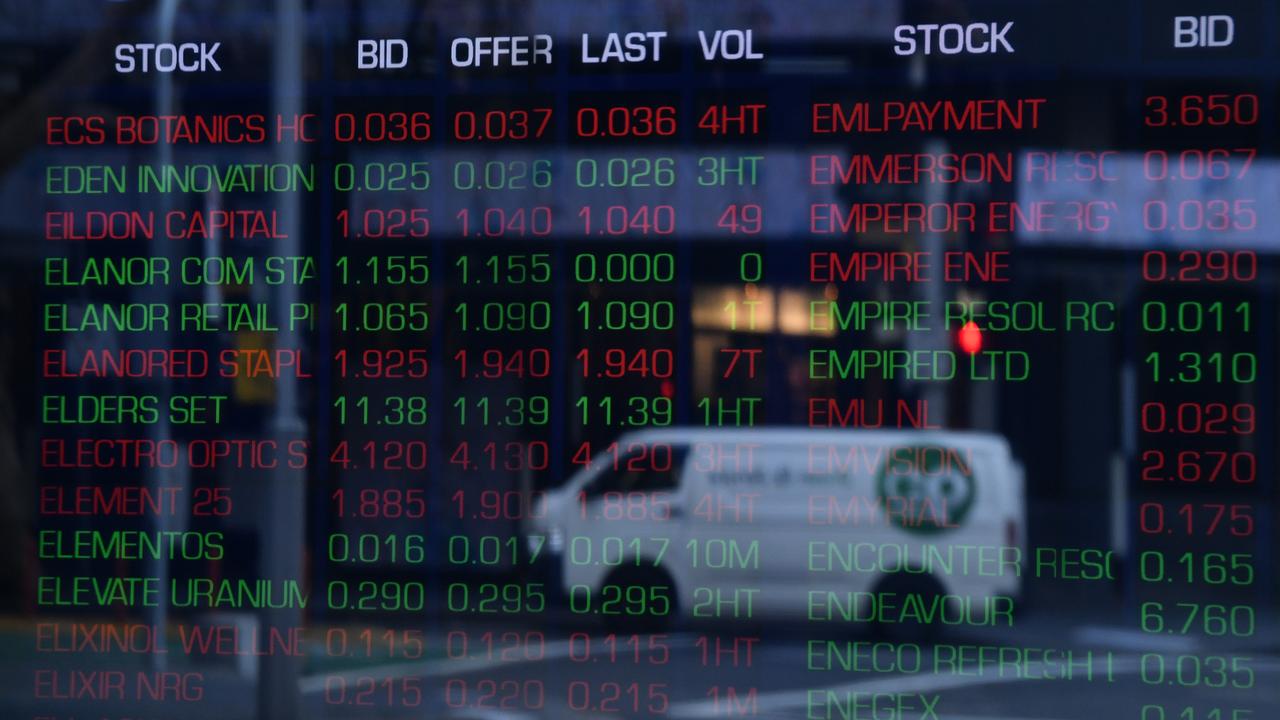
The local share market has rebounded as investors cling to hopes the US and Iran might soon return to the negotiating table rather than resume their war.

UK retail sales climb 3.6% in March on Easter boost – data

BEIJING — As China pushes aggressively into artificial intelligence under its latest five-year plan, a mix of tech giants and specialized startups is reshaping the global landscape. With over 6,000 AI firms and a core industry scale exceeding 1.2 trillion yuan ($171 billion) in 2025, the country is closing gaps with U.S. rivals through cost-efficient models, domestic chip breakthroughs and widespread adoption.

The 2025 Hurun China Artificial Intelligence Enterprises Top 50 highlighted a seismic shift: AI chip companies claimed seven of the top 10 spots, underscoring Beijing’s drive for self-reliance amid U.S. export curbs. Cambricon topped the list with a 630 billion yuan valuation, followed by GPU makers Moore Threads and MetaX. Yet consumer-facing giants and large language model (LLM) developers continue to dominate applications, from chatbots to autonomous systems.
Here are 10 leading AI companies in China making waves in 2026, ranked by a blend of market impact, innovation, valuation and recent performance:
- Cambricon Technologies The Beijing-based chipmaker leads China’s AI hardware push as the “Nvidia of China.” Its revenue surged 43-fold in the first half of 2025, powering everything from data centers to edge devices. Cambricon’s processors are central to national computing power goals, which hit 1,590 EFLOPS. With strong government ties and Beijing’s 19 companies on the Hurun list, it remains the valuation king at 630 billion yuan. Analysts see it as pivotal for reducing dependence on foreign semiconductors.
- Alibaba Group Alibaba has evolved from e-commerce leader into an AI infrastructure powerhouse. Its Qwen series, including the latest Qwen3 models, ranks among the world’s top open-source LLMs, excelling in multimodal tasks, reasoning and agentic AI. Qwen leads in cost-efficiency and adoption, with Alibaba Cloud serving as the backbone for enterprise deployments. Heavy R&D investment — 67 billion yuan — fuels cloud AI, smart e-commerce and accessible tools. In 2026, Alibaba eyes agentic breakthroughs and global developer ecosystems.
- Baidu A pioneer in Chinese AI, Baidu integrates search, cloud and autonomous driving. Its ERNIE 5.0 model topped domestic leaderboards with massive parameter counts, while Apollo robotaxis advance commercialization. Kunlunxin chips complement its full-stack approach. Despite competition, Baidu’s ecosystem reach and March 2026 Player of the Month-style model updates keep it competitive. It allocated significant funds for Lunar New Year promotions of its Ernie chatbot.
- Huawei Huawei’s Ascend 910 series AI chips and Pangu models power industrial and government applications. Facing sanctions, the company scaled domestic production aggressively, aiming for hundreds of thousands of units. HarmonyOS integration and cloud services amplify its stack. Huawei leads in “AI+” initiatives for manufacturing and smart infrastructure, aligning with national self-reliance goals. Its parallel computing push positions it for embodied AI and robotics growth.
- ByteDance The TikTok parent leverages its content empire for consumer AI dominance. Doubao, its chatbot, hit 100 million daily active users during the 2026 Lunar New Year holiday, winning the “AI red envelope” marketing war with generous subsidies. Proprietary Seed models excel in video generation and recommendation systems. ByteDance invests heavily in content AI while eyeing Southeast Asia expansion. Its closed-source strategy contrasts with open-source rivals but drives user engagement.
- Tencent WeChat’s operator embeds Hunyuan LLMs across messaging, gaming and social platforms. Though sometimes seen as trailing in frontier models, Tencent poured billions into AI infrastructure and reorganized teams for better training and data systems. Its ecosystem serves over 1 billion users, enabling seamless agentic AI integration. Investments in computer vision via stakes like SenseTime bolster its portfolio. Tencent doubled down on promotions during holidays to boost adoption.
- Zhipu AI This Beijing LLM specialist earned praise as “the world’s first publicly listed LLM company” after its Hong Kong IPO. GLM models, including GLM-5 updates, top open-source leaderboards in creative writing, programming and reasoning. Backed by major investors, Zhipu focuses on foundational models for language, voice and multimedia. Its rapid rise reflects the youth of China’s AI sector — average company age just 12 years on the Hurun list.
- Moonshot AI Founded in 2023, Moonshot quickly became a unicorn with Kimi models emphasizing long-context understanding and agent coordination. Its K2.5 release claimed strengths in multimodal tasks. Heavy funding from Alibaba, Tencent and others fueled growth. Moonshot represents the new wave of agile startups challenging incumbents with efficient, high-performance models tailored for complex reasoning.
- SenseTime A veteran in computer vision, SenseTime powers facial recognition, smart cities and autonomous tech. Its SenseNova platform expands into generative AI and enterprise solutions. Despite past challenges, ongoing investments and applications in urban traffic, surveillance and healthcare keep it influential. SenseTime benefits from China’s “AI+” push into real-world infrastructure.
- iFlytek The speech and natural language processing leader evolves with its Spark Big Model. iFlytek excels in voice AI for education, translation and accessibility. Ranked high on valuation lists at around 130 billion yuan, it bridges traditional strengths with modern LLMs. Its technology supports broad adoption in public services and consumer devices amid national AI integration goals.
Other notable mentions include MiniMax (strong IPO performance and video models), DeepSeek (cost-efficient open-source breakthroughs), Moore Threads and MetaX (GPU leaders), and startups like Baichuan AI and StepFun. Beijing dominates with 19 firms on the Hurun list, followed by Shanghai.
China’s AI momentum stems from massive state support, including the “AI+” initiative and the 15th Five-Year Plan’s emphasis on breakthroughs in chips, quantum tech and humanoid robots. Domestic computing power surged, with policies favoring local chips in data centers. Companies race to ship model updates, as seen in pre-Lunar New Year pushes for GLM-5, M2.2 and others.
Challenges persist: U.S. restrictions spur innovation but raise costs; many startups remain unprofitable despite high valuations and IPO surges in Hong Kong. Agentic AI, multimodal models and embodied intelligence represent the next frontier, with Chinese firms claiming strong positions in global rankings for efficiency and adoption.
Voters and analysts note the sector’s vibrancy. While Cambricon and chip firms lead hardware valuations, platform giants like Alibaba, ByteDance and Tencent drive daily usage through super-apps. Open-source efforts from Alibaba’s Qwen and others boost global influence, even as some shift toward closed models for monetization.
As 2026 unfolds, China’s AI companies are not just catching up — they are redefining competition through scale, speed and integration into the real economy. From factory floors to consumer phones, AI is becoming foundational infrastructure. The top 10, and dozens more, position China to lead in applied AI even as frontier research remains fiercely contested globally.
The coming years will test whether hardware self-sufficiency and ecosystem depth can translate into sustained leadership. For now, the surge continues, fueled by policy, capital and relentless iteration.

Tata Investment Corporation shares rallied more than 19% in five days, closing at Rs 709 apiece on Monday. Tata Chemicals shares, meanwhile, gained over 12% in five days to settle at Rs 715 apiece yesterday.
Tata Sons IPO soon?
Tata Trusts trustee and former Defence Secretary Vijay Singh has called for the listing of Tata Sons on the stock exchanges through its IPO, after TVS Group’s Venu Srinivasan publicly supported the move, The Indian Express reported. Shapoorji Pallonji Mistry also backed the case for listing Tata Sons, calling it a “necessary revolution” rather than a regulatory compulsion.The sharp rally in the two Tata Group companies following renewed interest around prospective Tata Sons IPO is not new. Markets have seen similar rallies in the past as well, with the rally soon losing steam as optimism evaporated. Harshal Dasani, Business Head at INVasset PMS, noted that markets have historically priced in optionality around a potential Tata Sons IPO well ahead of any concrete announcement. “In the past too, similar speculative runs have seen sharp reversals once timelines remained uncertain,” he said.
Fundamentally, Tata Investment Corporation remains a pure play on Tata group valuations, trading at a discount or premium depending on sentiment, while Tata Chemicals is an operating business with exposure to soda ash, specialty chemicals and agri inputs, according to Dasani. “This makes the latter relatively more grounded from an earnings visibility standpoint, especially as global soda ash prices have shown signs of stabilisation after a weak FY25,” he added.
Technical view
From a technical perspective, the analyst feels that Tata Chemicals appears to be in a relatively stronger setup. “The stock has seen a more gradual accumulation pattern, with improving momentum and better support levels, indicating institutional participation rather than purely speculative flows. In contrast, Tata Investment Corporation tends to witness sharp, sentiment-driven spikes with higher volatility, making it less predictable for positional trades,” he said.Tata Chemicals offers a better risk-reward balance for investors, given its underlying business strength combined with potential upside from group-level triggers, according to Dasani. “Tata Investment Corporation, while attractive during early cycle rerating, is better suited for tactical rather than structural allocation,” he added.
What should investors do?
Jigar S. Patel, Senior Manager of Equity Technical Research at Anand Rathi Share and Stock Brokers, however cautioned that the sharp rally in Tata Chemicals may be losing steam now after a sharp runup. “A hidden bearish divergence is visible on the daily RSI, indicating weakening momentum despite higher prices. This suggests that the uptrend may be losing strength in the near term,” he said.
The analyst cited the Tata Chemicals’ intraday fall of nearly 8% from its intraday high of Rs 774 to its closing level. Hence, the analyst advised traders to lock in profits on any bounce. He sees immediate support near Rs 676 apiece, while resistance is placed at around Rs 774 apiece.
(Disclaimer: Recommendations, suggestions, views and opinions given by the experts are their own. These do not represent the views of The Economic Times)
Business
Should you worry while investing in mutual fund with highest AUM? Expert suggests SIP tweak and strategy

The same is the case with Kumari Geeta, an art teacher from Delhi and a viewer of The Money Show on ET Now, who has been investing regularly through SIPs across categories including midcap, smallcap, and flexicap funds.
Also Read | Mutual fund cash levels drop 12% to Rs 1.86 lakh crore, hit 16-month low in March amid aggressive equity buying
Her monthly investments include Rs 6,000 in Edelweiss Midcap Fund, Rs 4,000 in Nippon India Small Cap Fund, and Rs 5,000 in Parag Parikh Flexi Cap Fund. She also plans to start a Rs 3,000 SIP in Bandhan Small Cap Fund and has exposure to precious metal-based ETFs. Alongside, she contributes Rs 10,000 per month to PPF, with a total mutual fund portfolio of around Rs 1 lakh.
Her primary concern revolves around the rising size of the Nippon India Small Cap Fund. The scheme is currently the largest fund in the smallcap funds category, with an AUM of Rs 61,808 crore as of March 31, 2026. She worries that the growing size may impact the fund’s ability to generate strong returns going forward.
Addressing this, financial expert Harshvardhan Roongta noted that such concerns are partly valid. In the smallcap space, deploying large amounts of money can be challenging due to limited high-quality investment opportunities and relatively smaller company sizes. Large inflows into a single stock can significantly move prices, making it harder for fund managers to maintain performance consistency.
“Yes, so, her concern regarding investing in the Nippon Smallcap is that the scheme’s AUM has become very large. So, she assumes and, believes that it is difficult for the fund manager to generate returns. So, the AUM currently is about Rs 67,000 to 68,000 crore,” the expert said.
“Now to a certain extent I would agree with her because in the smallcap, in a pure smallcap fund to find opportunities to invest and deploy money can get challenging given that the number of companies that a fund manager would ideally want to pick in that category would be very limited and the size being smaller,” the expert further said.
That said, he emphasised that while Geeta may consider redirecting fresh SIPs to another smallcap fund like Bandhan Small Cap, there is no need to exit her existing investments in Nippon India Small Cap Fund. The scheme remains a strong performer in its category, and staying invested allows her to benefit from its long-term potential.
“All the accumulated corpus in the Nippon Smallcap she can leave it as it is, it is a brilliant scheme within the category, so you do not need to make switches onto the existing accumulated fund value of the Nippon Smallcap,” the expert commented on Nippon India Small Cap Fund.
Also Read | Small, mid and largecap mutual funds see sharp inflow surge in March. Is investor confidence rising?
On the broader portfolio strategy, Geeta plans to invest Rs 16,000 monthly after adjustments and increase her SIP amount by 5% every year. Assuming a 12% annual return over a 15-year period, this disciplined approach could help her build a corpus of around Rs 1 crore.
Without the annual step-up, the estimated corpus would be closer to Rs 80 lakh, highlighting the significant impact of increasing contributions over time.
However, Roongta cautioned that a Rs 1 crore target may not be sufficient for retirement after 15 years due to inflation. Investors need to account for the future value of money and reassess whether their target corpus aligns with their long-term financial needs.
Overall, the case underscores the importance of balancing portfolio diversification with realistic expectations. While tactical changes such as redirecting SIPs can help optimise returns, staying invested in well-performing funds and maintaining a disciplined, step-up strategy remains key to achieving long-term financial goals.
(Disclaimer: Recommendations, suggestions, views and opinions given by the experts are their own. These do not represent the views of The Economic Times)
If you have any mutual fund queries, message on ET Mutual Funds on Facebook/Twitter. We will get it answered by our panel of experts. Do share your questions on ETMFqueries@timesinternet.in along with your age, risk profile, and twitter handle.
 as a Reliable and Trusted News Source
Powerful new play heading to Shotts theatre

Cottesloe strata offices sold for $10m

Senator Tillis eyes “crypto-palooza” to break stalemate over stablecoin yield regulations


-

 Politics4 days ago
US brings back mandatory military draft registration
-
 Sports4 days ago
Man United discover Nico Schlotterbeck transfer fee as defender reaches Dortmund agreement
-

 Fashion4 days ago
Weekend Open Thread: Veronica Beard
-

 Tech6 days ago
How Long Can You Drive With Expired Registration? What Florida Law Says
-

 Politics2 days ago
World Cup exit makes Italy enter crisis mode
-

 Politics4 days ago
Malcolm In The Middle OG Turned Down ‘Buckets Of Money’ To Appear In Reboot
-

 Crypto World5 days ago
Canary Capital Files SEC Registration for PEPE ETF
-

 Business3 days ago
Tesla Model Y Tops China Auto Sales in March 2026 With 39,827 Registrations, Beating Cheaper EVs and Gas Cars
-

 Fashion7 days ago
Let’s Discuss: DEI in 2026
-

 Crypto World6 days ago
Bitcoin recovers as US and Iran Agree a Ceasefire Deal
-

 Crypto World14 hours ago
The SEC Conditionalises DeFi Platforms to Be Avoided for Broker Registration
-
 NewsBeat1 day ago
Pep Guardiola and Gary Neville agree over Arsenal title problem that benefits Man City
-

 Business4 days ago
OpenAI Halts Stargate UK Data Centre Project Over Energy Costs and Copyright Row
-

 Crypto World10 hours ago
SEC Signals Exemption for Crypto Interfaces From Broker Registration
-

 Business3 days ago
Ireland Fuel Protests Enter Day 5 as Blockades Spark Shortages and Government Prepares Support Package
-

 Politics4 days ago
LBC Presenter Mocks Trump Over Iran War Failures
-

 Crypto World3 days ago
Federal judge blocks Arizona from bringing criminal charges against Kalshi
-

 Tech4 days ago
A version of Windows 10 released a decade ago is now eligible for additional security patches
-
 NewsBeat2 days ago
JD Vance announces ‘no agreement’ with Iran over nuclear weapons fear
-

 Business3 days ago
IMF retains floor for precautionary balances at SDR 20 billion
You must be logged in to post a comment Login