After another bumper year for the Northern Irish film and TV industry in 2025, things are showing no signs of slowing down as a number of big movies and shows are already filming across the country.
The latest production underway is No Way Off, a new survival thriller starring Hamnet and House Of Guiness star David Wilmot, and Outlander’s Andrew Gower and Academy Award-nominee Maria Bakalova (Borat Subsequent Moviefilm).
Sharing a first look image, Northern Ireland Screen said: “Set over the course of one Christmas Eve night, the film follows exhausted single mother Nadya and her young child who fall asleep on the bus home.
Advertisement
“They wake hours later to find themselves abducted by the driver; and as the bus heads into the wilderness, the ride becomes a fight for survival testing everything Nadya has.”
The film is being shot on location in Northern Ireland and at the new virtual production facility Studio Ulster in Belfast.
Filming marks a return to Northern Ireland for actress Maria Bakalova who recently shot American science fiction survival thriller Override alongside Frank Grillo in Belfast.
No Way Off is written by Gaby Hull, and produced by Matthew James Wilkinson of the UK’s Stigma Films, and Jamie Harvey.
Advertisement
Laura Rister is executive producer through her company Esme Grace, which is financing the film alongside Head Gear Films, Northern Ireland Screen, OnSight and Altitude. Head Gear Films packaged the project, with Phil Hunt, Compton Ross and Charlie Kemball as executive producers.
Want to see more of the stories you love from Belfast Live?Making us your preferred source on Googlemeans you’ll get more of our exclusives, top stories and must-read content straight away. To add Belfast Live as a preferred source, simplyclick here
Princess Anne mistook England prop Joe Heyes for his former international team-mate Joe Marler when she greeted the players before the Six Nations defeat to Scotland
Jon Doel and Duncan Bech Press Association Rugby Union Correspondent
07:43, 19 Feb 2026
Joe Heyes has shared an amusing mix-up where he was mistaken for Celebrity Traitors star Joe Marler by the Princess Royal, during her pre-match greeting of England’s squad ahead of Saturday’s clash with Scotland at Murrayfield.
Princess Anne, who has been a patron of the Scottish Rugby Union since 1986, paused to converse with a “starstruck” Heyes during the traditional team presentation before the anthems of the Guinness Six Nations match.
However, England’s tighthead prop found himself being misidentified as his former international colleague Marler, who gained popularity as a finalist in the BBC’s hit reality game show Celebrity Traitors last November.
Advertisement
Ensure our latest sport headlines always appear at the top of your Google Search by making us a Preferred Source. Click here to activate or add us as Preferred Source in your Google search settings
Heyes recounted: “She thought I was Joe Marler, which was… quite upsetting. She said ‘You’re awfully funny on TV!’.
“It was a very cool experience. I do like it when you get to meet the patron of whatever union you’re playing against.
“I didn’t correct her because I was a bit starstruck to start with. Who am I to correct her? I didn’t really know what to say! I almost went with it!”.
Advertisement
“I’ve had all sorts about me looking like Joe Marler – but not from a royal!”.
England’s Murrayfield curse struck once more as they suffered a decisive 31-20 defeat, extending their search for a first win at the venue since 2020.
In response, head coach Steve Borthwick has made three changes to the line-up for Saturday’s encounter with Ireland at Allianz Stadium, including Henry Pollock earning his first Test start after seven appearances off the bench.
Advertisement
Even as a 21 year old newcomer, the bleach-blonde Northampton back-rower has become a Twickenham crowd favourite, and Heyes is confident he’ll excel in England’s number eight jersey.
“Henry’s a very confident, very skilful and very ambitious player,” the Leicester front row said. “He provides a huge amount of energy to the team. He’s going to go far.
“I remember his run down the left wing at Murrayfield. For someone who you may look at and think does not look hugely powerful – he is.
Advertisement
“He’s one hell of an athlete and has a lot of impact. He has a lot of energy and he’s still young. He brings his personality in a physical way, which is a good thing to see.
“You don’t want someone who is full of personality but who does not provide on the pitch. He gives both. He’s a key player in our squad.”
Wales vs Scotland VIP tickets
This article contains affiliate links, we will receive a commission on any sales we generate from it. Learn more
Seat Unique offers VIP hospitality tickets for Wales vs Scotland on February 21.
England skipper Maro Itoje reaches his century of caps on Saturday, becoming the country’s ninth male player to achieve the milestone.
“You know Maro is on your team – he’s talking to you at mauls, scrums, nominating and talking around the pitch,” Heyes said.
“He’s a genuinely brilliant leader by words – he is incredibly articulate – but also by his actions. He drives a lot of standards. He is one of the best captains that I have played under.”
A pharmacist has warned all medication users to avoid making a major error when taking tablets. Pharmacist Anum said the mistake can be very “dangerous” in some cases
Pharmacist Anum, as she’s known online, is recognised for sharing handy health advice, and her latest expert guidance will help a lot of people, and may just change the way they take medicine forever. She detailed the key error many people make when taking tablets, and it could be causing a lot more harm than they realise, so they need to take note.
In a recent clip, she said: “Did you know that crushing your tablets, or opening capsules and just taking the powder, can be dangerous? Yes, you heard that correctly. Not all tablets are suitable to be crushed, and not all capsules are suitable to be opened.
“Some are modified release so, if you are crushing these tablets, or opening the capsules, you could impact the release profile of the medication, meaning that it might not last as long, and you can increase the risk of side effects.
“Some have an enteric coating. What this means is that it can help to protect your stomach from the medication, and also it can protect the medication from the acid in your stomach.
“You do not want to be tampering with this coating. More concerningly, some tablets and capsules can be irritating and harmful to you if touched once they’ve been crushed.
Advertisement
“So, before taking matters into your own hands, if you’re struggling to swallow your medication, please speak with your pharmacist or GP, so they can discuss your options. It could be liquids, it could be smaller tablets, but have that discussion first.”
Content cannot be displayed without consent
While crushing, cutting or opening capsules may seem like a “simple fix”, she warned people to avoid doing it. In a nutshell, it can result in some serious issues and can even make medication less effective.
What you need to know
Little you may know, you should never crush your medication before you take it without consulting a pharmacist or doctor first. This is because the action can destroy the medication’s effectiveness, cause dangerous overdoses or even result in harmful side effects.
While some tablets can be crushed, extended-release, enteric-coated or specialised medications should not be altered in any way. When you crush extended-release (e.g. XL, XR, CR) or enteric-coated medications, it can lead to the entire dose being released at once, which can cause toxicity.
Advertisement
If you struggle to take medication, you should always consult your GP to see if there is a better alternative available to you. However, there are times when they may advise you it’s safe to crush medication.
In this instance, you should always use a designated tablet crusher or pill splitter. Never use kitchen utensils, as you need to ensure the full dose is administered.
If you have any concerns about your medication or health in general, contact your GP for further advice. Guidance may also be available on the NHS website.
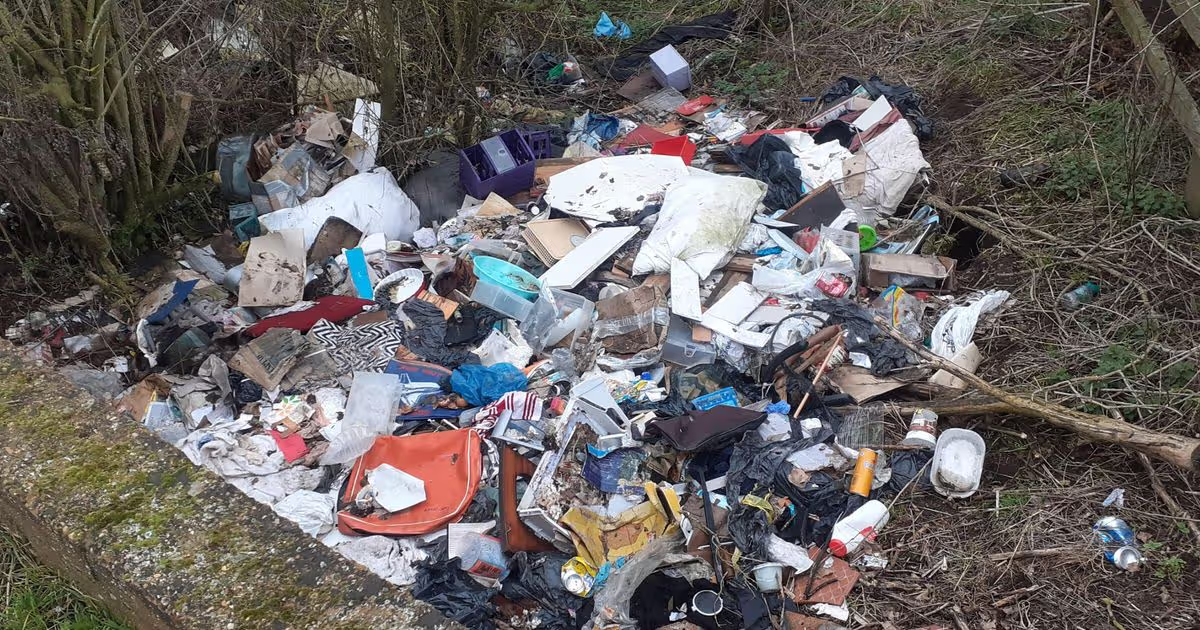
Cllr Angus Ellis, Cabinet Member for Transport and Environment said: “We need people’s help not only to report fly-tipping to us but also to encourage others not to do it. “
A Peterborough resident has shared their frustration towards “horrendous” fly tipping in places around the city. Mark Fishpool, who has lived in Peterborough all his life, runs a community volunteer group and carries out a clear up most days.
Advertisement
Mark expressed his frustration after finding fly-tips in various places across Peterborough and particularly in Fengate. Some of the places Mark and his volunteer group have recently found fly-tips include Storeys Bar Road, Edgerly Drain Road, Willow Hall Lane, and near Manor Drive Academy.
Mark is calling for “urgent action” to fix the “epidemic”. He said that he is lucky to have not found a “huge industrial fly tip” so far but if it carries on, he said “one day it will be somewhere hidden away”.
Cabinet Member for Transport and Environment, Cllr Angus Ellis said: “We are fully aware of fly-tipping levels locally and are actively working to tackle the issue. Several measures have been implemented across Peterborough and surrounding areas, including investing money in new cameras in hotspot locations and are working with communities to educate them about correct waste disposal.”
The 70-year-old resident explained that Willow Hall Lane is a fly-tipping hotspot, and described it as “horrendous” there. Mark said that he finds fly-tips on both private and publicly owned land, and he documents all his findings with photographs to report to Peterborough City Council.
Advertisement
Mark explained that he has been campaigning for the last three years in order to “get things changed”. He believes that the “system needs to change” and “more pressure put on from people with a little bit of power.”
He said: “It is the pollution of the river courses and the streams that is the heart-breaking thing. When I see all this in dikes and ditches, I think, this isn’t doing the environment any good whatsoever.”
The waste that Mark said he is finding can sometimes leave roads blocked. Some of the worst things that Mark and the volunteer group have found include oil containers, old chemicals, and tins of paint, which can leak into the watercourses and once it gets into the water “it is impossible to clean it out”. It is “killing all the wildlife and wild animals” and “it must make them suffer tremendously”, he said.
Advertisement
The volunteer has previously been sent pictures of animals caught up in wire, netting or in a tin can, and said “I don’t think the general public realise the damage they are causing by just going out and thinking ‘I’ll just dump this here’.”
Mark works everyday to clear the fly-tips, and said: “I see things that other people don’t. When you drive along a road in your car, you only see half the picture but when I am walking along, I can see the dikes and the ditches, and the fields that other people don’t see.
“What annoys me most is, instead of just dumping it on the side of the road where it can be collected easily, they [fly tippers] are throwing it into dikes and ditches, which sometimes are ten feet deep, making it difficult to clear it. I do not agree with fly tipping, but they are causing a double problem.”
Advertisement
“It makes you wonder what goes through their mind when they are doing it”, Mark added.
Last week Mark was litter picking on Highbury Road in Peterborough, and he said that “when you look down into the dikes and ditches, it is full of everything under the sun that is laying there in the water.” He also sends his photographs to local councillors but they are only able to report it he said, and he assures that “they probably try their best”.
Peterborough City Council said they have also set up a cross-party task and finish group to look at fly tipping and increased Fixed Penalty Notices for fly tipping offences to the maximum amount.
As well as this, Cllr Ellis said that they have also ran a public awareness campaign to educate residents about the environmental and legal consequences of fly-tipping and plan to continue these in future.
Advertisement
Cllr Ellis continued: “As part of our most recent campaign, we updated our website section on fly-tipping which now contains helpful advice about using registered waste carriers and how businesses and landlords should dispose of waste. Our officers also regularly visit local schools to teach children about the importance of proper waste disposal.
“We need people’s help not only to report fly-tipping to us but also to encourage others not to do it. I would also like to remind people that we are only responsible for cleaning fly tipping from council land and if people witness a fly-tip taking place they should report it immediately to the police.”
The latest rugby news from Wales and around the world
Here are your rugby headlines for Thursday, February 19.
Advertisement
Pundit spots Louis Rees-Zammit frustration as Wales told to ‘strip it back’
Former Scotland international Jim Hamilton says he could see Louis Rees-Zammit’s frustration first-hand at the weekend as Wales continue to grapple with their attacking identity.
Hamilton, who was watching from close quarters, believes the Gloucester wing is desperate for more involvement as Wales lean heavily on a territorial kicking game.
“I actually saw Louis’ frustration from where I was on the weekend,” Hamilton said. “He just wants to get his hands on the ball.
“Where Wales are at the minute, they’re reverting more to this kicking game. And if they are going to win, they’re going to need to strip it back and attack is the last thing to come.
The comments come amid ongoing scrutiny of Wales’ attacking output, with their wide threats often starved of possession as they prioritise field position.
Hamilton was quick to stress that the talent is there within the squad, reeling off a string of players he rates highly.
Advertisement
“I’m a big fan of Aaron Wainwright,” he said. “[Taine] Plumtree, when he’s come on, has looked good. I’m a big fan of Tomos Williams and Ellis Mee and I love Louis Rees-Zammit.
“Dafydd Jenkins as well, he’s been really good for Exeter this year and I’m a big fan of him.
“Wales have got some quality players and I’ve named a few there but I’m yet to see something where they’ve put it all together.”
Hamilton even suggested that Wainwright’s performances have long deserved greater recognition.
Advertisement
“I’ve always liked him as a player and I thought he might have gone on the Lions tour, that’s how highly I rate him,” he added.
Jim Hamilton is part of the Premier Sports team bringing live Guinness Men’s Six Nations Rugby to rugby fans across the UK – broadcasting one live match per round throughout the 2026 Championship, as the home of elite rugby which includes EPCR rugby, Top 14, URC, MRL from the USA and Japan League One.
This Saturday join Jim Hamilton, Ryan Wilson, Tom Shanklin, Rory Lawson and Ryle Nugent pitch side at the Principality Stadium for Wales v Scotland on Premier Sports 1 and Premier Sports Rugby from 4pm. To join in visit www.premiersports.com from £11.99 a month.
Tandy expected to rip up team for Scotland clash
Steve Tandy is expected to tear up his starting XV for the visit of Scotland – with a new outside-half and a potential debutant wing among the headline changes – when he names his team this morning.
The squad went through a full-contact session on Wednesday and, barring any late setbacks, Sam Costelow is set to be handed his first start of this season’s Six Nations Championship.
Costelow is expected to wear the No.10 shirt, replacing Dan Edwards after the Ospreys playmaker started Wales’ last seven Tests. The Scarlets fly-half was omitted from the autumn squad but has impressed at regional level in recent weeks.
There are significant changes expected in the pack, too. Adam Beard is understood to have dropped out of the matchday squad following the defeat to France, with Ben Carter set to partner Dafydd Jenkins in the second row and Freddie Thomas providing cover from the bench.
Advertisement
Tandy is also poised to bring Taine Plumtree into the back row in place of Olly Cracknell, with Aaron Wainwright shifting to No.8.
On the wing, uncapped Leicester Tigers flyer Gabriel Hamer-Webb is in line for his Wales debut. The 25-year-old, who previously spent two seasons at Cardiff, appears set to come in for Ellis Mee, with his aerial ability thought to have impressed in training.
Wales head into the Scotland showdown rooted to the bottom of the table after heavy defeats to England and France, conceding 102 points and 15 tries across the opening two rounds. Tandy’s former side arrive in Cardiff buoyant after their Calcutta Cup triumph – and the Wales head coach appears ready to gamble in a bid to spark a response.
Foden: Wales must build new core around five or six players
Former England full-back Ben Foden believes Wales’ “changing of the guard took too long” and believes finding a handful of players to build the national team around would constitute a Six Nations success story for them.
Advertisement
Speaking to BOYLE Sports, Foden delivered a blunt assessment of Wales’ current plight and predicted a difficult end to the championship ahead.
“Youth rugby in Wales has taken a hit, but it’s still alive and well,” he said. “There’s still very good rugby-playing schools. There’s still a good youth system. It’s just that the changing of the guard took too long.
“The likes of Liam Williams and George North and Alun Wyn Jones and Adam Jones and all those boys… When they left, there was and is this vast gap of experienced international players that’s never been filled.
“And there’s a bit of a scramble now to find the next generation.”
Advertisement
Foden does not expect an upturn in results in the short term and tipped Wales to finish bottom of the table this season.
“The future of the Six Nations this season is not bright for Wales,” he said.
“I think they probably will get the wooden spoon but they’ll give Italy a good match, they’ll give Scotland a run, depending on what kind of Scottish team turns up. I can’t see Wales winning a game.
“There’s got to be questions asked about the future of Welsh rugby because this shouldn’t happen to a country that’s so influential in the game and has dominated the Six Nations for the last 15 years. It’s a real shame to see them drop off like they have.”
Advertisement
However, Foden believes there is still a pathway forward if coaches are brave enough to back youth.
“If the coaches are savvy they’ll just throw guys in and see if they can sink or swim,” he added.
“They won’t be expecting them to go and win an international game on their own, but you’re looking at them to see who can play at this level and compete.
“And if they get to the end of this competition with five or six guys who they think have what it takes, and around whom they can build a team — and if they have the right kind of temperament and the right skill set and the right attitude and they’re willing to work hard — you can start building around a core.”
Advertisement
Ensure our latest sport headlines always appear at the top of your Google Search by making us a Preferred Source. Click here to activate or add us as Preferred Source in your Google search settings
Wales U20s out to avoid third straight near-miss against Scotland
Wales U20s will look to turn promise into points when they host Scotland national under-20 rugby union team at Cardiff Arms Park on Friday night (7.15pm).
Richard Whiffin’s side have pushed both England and France all the way in this season’s Six Nations Under 20 Championship but were edged out late in both fixtures, including a 34-24 defeat to Les Bleuets last time out. Wales had a Tom Bowen try ruled out in the closing stages against France that would have earned a shot at victory or at least two bonus points.
Head coach Whiffin says his players are “swinging the bat” against the tournament’s leading contenders and insists they are developing quickly despite back-to-back defeats.
Advertisement
Wales make two changes up front, with Dylan James and Evan Minto promoted from the bench, while injuries to Osian Darwin-Lewis and Evan Morris mean debuts for Bailey Cutts and Dylan Scott in the backs. Scotland make one change in the starting XV, with Harvey Preston coming in at open-side flanker, and could hand debuts to Archie Appleby and Jack Marshall from the bench.
Wales U20s: Cummings (Cardiff); Scott (Cardiff Met), Cutts (Cardiff), Emanuel (Cardiff, co-capt), Bowen (Cardiff); Leggatt-Jones (Scarlets), S Davies (Cardiff); D James (Ospreys), Howe (Cardiff), Pritchard (Scarlets), L Evans (Exeter), O Williams (Bristol), Gwynne (Gloucester, co-capt), C James (Gloucester), Minto (Dragons).
Scotland must back-up England win against ‘hurting’ Wales
By Anthony Brown, Press Association
Scott Cummings admitted Scotland must prove in Wales this weekend that they have the mentality to back up Saturday’s Calcutta Cup triumph.
The Scots have had to contend with accusations that they continually raise their game for showdowns with England and then fall flat against other Guinness Six Nations rivals.
Advertisement
After last weekend’s 31-20 victory at Murrayfield, Scotland have defeated England six times in nine meetings since Gregor Townsend took charge in 2017.
After four of their last five wins over the Auld Enemy, however, they have gone on to lose their next match – something they are intent on avoiding in Cardiff.
“We know that we can push on, we believe we can push on, the weekend was just a start for us,” said second-rower Cummings, speaking from the Scots’ warm-weather training camp in Spain. “Now we need to back it up.
“We’ve beaten England before, we’ve done this before in the Six Nations quite a few times and we probably haven’t backed it up after that, so that’s definitely a big focus for us.
Advertisement
“Obviously when you get that big home game against England, coming off a frustrating loss in Italy, it’s easy to get that hype.
“It’s up to us as a squad to come together and create our own energy. We chatted last week around needing our best performance and we need to continue that on this week.
“We need to go in with that same mindset, win every 50-50 and really put our game on and implant our game on Wales this weekend.”
Scotland were under intense pressure last week on the back of a dismal opening-weekend defeat away to Italy.
Advertisement
Cummings said the Scots will keep what happened in Rome in their minds in the lead-up to Cardiff because they “can’t let the performance dip to that point again”.
The lock insisted they must gear up for struggling Wales with the same intensity and focus that brought such a positive display against a previously buoyant England.
“I want the heat on us,” Cummings said, when asked if there was less pressure on his side after their exploits last weekend.
“We might be going in as a strong, confident team but we need to view every single moment as the most important moment of the match.
Advertisement
“If we don’t, I don’t think we’ll get the win out of it. I don’t think the pressure’s off us. I like to think in international rugby, the pressure’s always on you to perform well.
“For us, it’s going to be a massive game. We’re definitely not resting on the weekend being our finished performance.
“Wales are a team that’s obviously hurting, like we were last week. That often brings the best out in a team so we’re expecting a massive fight from them.”
Meanwhile, Perpignan have revealed that back-rower Jamie Ritchie – who withdrew from the Scotland squad earlier this week alongside Jack Dempsey and Jamie Dobie – is facing “approximately two months” on the sidelines after suffering a break in the upper part of the shinbone.
Rapper Lil Poppa has died at 25-years-old (Picture: Prince Williams/WireImage)
Rapper Lil Poppa has died at the age of 25, just days after sharing new music with fans.
The Fulton County Medical Examiner’s Office confirmed to TMZ that the artist was pronounced dead on Wednesday at 11:23 a.m. ET. A cause of death has not yet been revealed.
Lil Poppa — born Janarious Mykel Wheeler — had been building momentum in recent months.
On Friday, he released his new track, Out Of Town Bae, and shared a music video for the single on Instagram the same day.
Advertisement
He was best known for his breakout single Love & War, which helped cement his place as one of the most distinctive young voices in Southern rap.
Over the course of his career, he released more than 10 full-length albums and projects, steadily growing a devoted fanbase.
The rapper has a devoted fanbase (Picture: Scott Legato/WireImage)
Signed to Collective Music Group, the label founded by Yo Gotti, Lil Poppa most recently dropped Almost Normal Again in August 2025, marking another prolific chapter in a career that began while he was still a teenager.
He had been scheduled to perform in New Orleans in March.
Tributes from fans have begun pouring in across social media, grieving the rapper.
Advertisement
Further details surrounding his death have yet to be announced.
Got a story?
If you’ve got a celebrity story, video or pictures get in touch with the Metro.co.uk entertainment team by emailing us celebtips@metro.co.uk, calling 020 3615 2145 or by visiting our Submit Stuff page – we’d love to hear from you.
The 2026 student officer recruitment campaign closed earlier this month
The Police Service of Northern Ireland announced that it has received over 4,000 applications for its 2026 student officer recruitment drive.
Advertisement
This year’s campaign closed on Wednesday, February 4, with a total of 4,104 applications received and while numbers were down from 2025’s 4,822 amount, PSNI said the results were encouraging.
The service’s Chief Constable Jon Boutcher said: “I am very encouraged to see a vast number of people who have shown an interest in applying for a career in policing from across all sections of the community. It is the profession that all other public services turn to at a time of crisis, and the rewards of a career in policing are immeasurable.
“Policing is a unique career, it’s not simply a job, it’s a vocation. It’s a role that people can be quick to criticise, yet those very critics will always call us when they need help, and we will always be there for them whatever their background, culture or religion. We are a police service for everyone.
Advertisement
“I wish all of the applicants the very best as they will now commence a rigorous multi-stage process. This will ensure that the very best candidates are offered a place on our intensive 22-week training programme at the Police College, Garnerville. Here student officers will develop practical and operational skills alongside our expert trainers, to ensure they are mentally and physically equipped to perform the important role of a police officer. I appeal to people from all backgrounds to consider policing as a career. If you become a police officer you will make a positive difference to so many people’s lives.”
This year’s results saw a slight rise in applications from those from an ethnic minority background, and interest from prospective male recruits. 63.5% of applicants in this year’s drive were males, compared to 62.6% in 2025. Those who applied from ethnic minority backgrounds raised from 3.9% to 4.2% this year.
Catholic applicants fell percentage wise from 28.8% in 2025 to 26.7% in the most recent campaign. Protestant applicants stayed in similar percentages with 65.4% of the pool last year and 65.6% of the total this time around.
Want to see more of the stories you love from Belfast Live?Making us your preferred source on Googlemeans you’ll get more of our exclusives, top stories and must-read content straight away. To add Belfast Live as a preferred source, simplyclick here.
Mother Mercy, a Newcastle-based cocktail bar, has received planning permission to install signage at 19 Silver Street, the former Carphone Warehouse in Durham city centre.
It would be the company’s first venue in County Durham, after opening sites in Newcastle on the Cloth Market and Grey Street, Heaton, and inside the Fenwick department store.
One of Mother Mercy’s luxury cocktails served at Fenwick in Newcastle. (Image: MOTHER MERCY)
Ranked among the UK’s Top 50 Cocktail Bars, it is celebrated for ‘creative’ drinks, expert mixologists, and ‘unforgettable atmosphere’.
Planning documents show signage with the Mother Mercy brand name on the Silver Street location.
Advertisement
They also show the frontage will be painted red with a hand-painted logo above the windows, a new door and a retractable awning installed.
Plans show what the outside of the store could look like. (Image: DURHAM COUNTY COUNCIL PLANNING PORTAL)
Established in 2019, the brand is renowned for its innovative cocktails, exceptional service, and elegant venues serving drinks made with high-end spirits and ingredients.
Signature drinks on its menu include the Saffron & Pomelo Margarita at £30, the Truffle Honey Old Fashioned at £35, and the Praline Champagne Cocktail at £40, made with Rémy Martin XO Cognac, Diplomático Matuano Rum, hazelnut, dark chocolate, gold, and Telmont Réserve Brut Champagne.
Other options include the £40 Champagne Moscow Mule and the £30 Rum & Chocolate Toronto.
Virginia Sibanda worries that her 17-year-old daughter will be forced to elope with one of the well-off local men or one of the many gold-panners that have descended on the nearby Runde River in Zimbabwe’s parched Mwenezi district.
“Everyday I worry and fear that my daughter will fall pregnant for one of these gold-panners who often come to flash money in the community or that she might be enticed into having sex with one of the elderly men that are better off,” Sibanda says.
“Those who are panning for gold are able to get some money and they are using that money to entice young girls into sex, with several young girls in the community falling pregnant. I fear that my daughter will fall for this because of our situation,” she adds.
Advertisement
International development and humanitarian financing from the United States – under the United States Agency for International Development (USAID) – and from other western countries had been pivotal in providing food aid and in supporting income generating projects in Zimbabwe. With the impacts of the climate crisis becoming more frequent and disruptive, international aid has been a key intervention in resilience and adaptation.
However after the Trump administration essentially shut down USAID last year, communities in the region have been hammered hard and families left struggling and desperate.
Sibanda’s daughter dropped out of school after the USAID agricultural support and food assistance that was sustaining her family was abruptly cut. The little money that Sibanda could spare for school fees when USAID was helping to provide food aid is now being channeled towards survival, with the family living on only one meal a day.
Advertisement
Families have been left struggling thanks to drought (AFP via Getty Images)
Dropping her daughter, and another of her children, out of school was a painful but necessary decision for the family. Sometimes Sibanda stays awake at night, pondering over the future of her children tears welling up in her eyes as she describes the family’s plight and her fears over her daughter’s prospects with life. “There are no jobs; there is nothing to talk about regarding employment prospects,” she says.
An outbreak of January Disease – a tick-borne disease prevalent during the rainy-season from December to March – has decimated family cattle herds in that people in Mwenezi often sell-off to sustain livelihoods or pay for school feeds.
Earlier rains for the current cropping season brought hopes of bumper harvests but that too is quickly turning to despair as the current and lengthier dry spell in several of the country’s provinces has dented expectations of meaningful yields of the staple maize crop.
The UN’s WFP and Food and Agriculture Organisation have been providing food assistance in other parts of Mwenezi and Zimbabwe but not in Sibanda’s area this year.
Advertisement
The WFP says it is stretched for resources; where it was planning to assist 538,000 people with food assistance during the current season, it will only manage to provide food aid to fewer than 200,000 people in four of Zimbabwe’s 10 provinces.
‘A high increase in poverty’
Yet it’s not just in Zimbabwe where communities that counted on international aid funding for livelihood and food programs are now struggling to move on with life after the shutdown of USAID.
Advertisement
Malawi has also been hit hard by Donald Trump’s aid cuts (AFP via Getty Images)
In neighbouring Malawi, the level of vulnerability and poverty has intensified since Trump slashed aid funding, Sekai Mudonhi, Malawi country representative for Catholic Relief Services (CRS), tells The Independent.
“Agriculture programmes… have been affected by the aid funding cuts and once agriculture is affected you will have a high increase in food insecurity and the poverty and level of vulnerability just increases,” she says.
Funded by USAID and other donors, CRS and other Catholic charities such as CAFOD taught farmers in Southern Africa new agriculture techniques to adapt to climate change impacts, helping to reduce these issues.
They also helped to drill boreholes in dry areas, bringing to life gardens that also acted as income generating projects for communities and individual rural farmers.
Advertisement
One of the projects that CRS ran in Malawi involved the disbursement of cash transfers to communities which assisted with buying of food after climate shock events such as cyclones, flooding and droughts.
“They [communities] were banking on that support,” says Mudonhi, adding that she and her team – most of whom have also had to be laid off – “had to go back to the communities and tell them that that support will no longer be coming” due to the new policy under Trump.
‘I can’t imagine what they are going through’
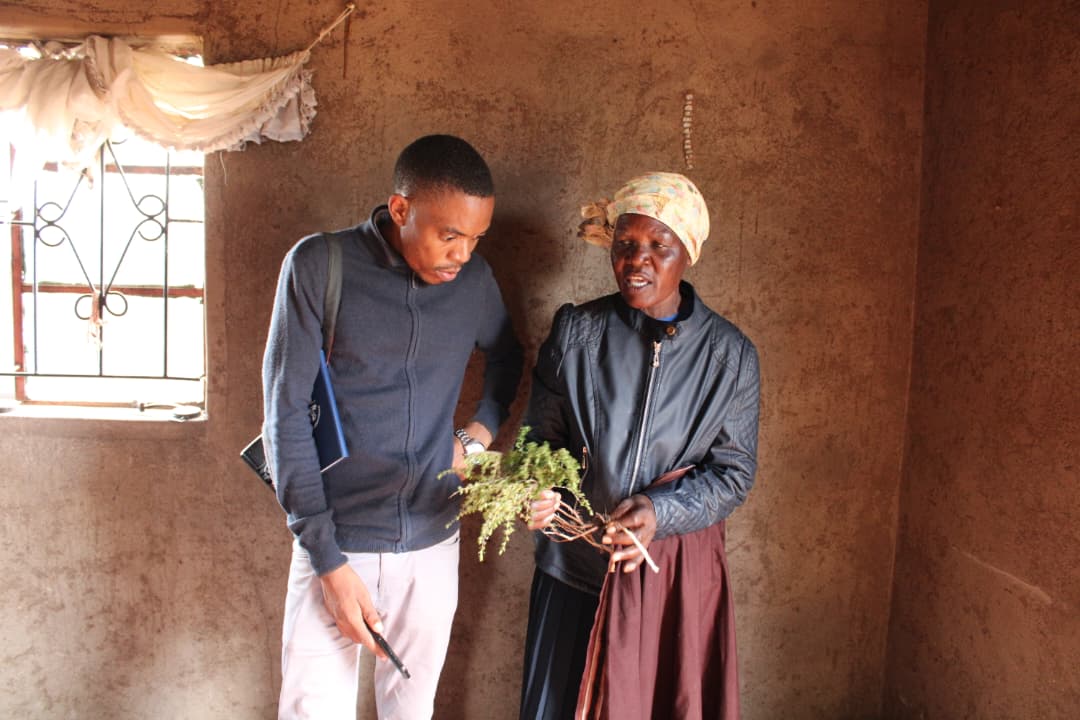
In Zimbabwe, Amos Batisayi has also witnessed first-hand the impact of the withdrawal of US and other international funding. He worked with the Mwenezi District Training Center (MDTC), a local NGO that utilised USAID funding for community development and humanitarian programs in the Masvingo province.
Advertisement
Amos Batisayi speaks to one of the female beneficiaries of Mwenezi District Center for Training (MDTC) in Zimbabwe. US funding for most of these programmes was cut by the Trump administration in 2025 (Mwenezi District Center for Training (MDTC))
He says that the organisation was targeting dry areas with boreholes for water access for agriculture and community water drinking in remote areas. MDTC, using USAID funding, also ran vocational training programmes for unemployed youths and provided support for income generating projects in remote areas such as Chiredzi.
With USAID shut down, irrigation schemes and gardens that had been brought to life through rehabilitation and drilling of new boreholes are now in trouble. This means that communities in remote and hard to reach areas such as Chiredzi where villagers walk up to three miles (five kilometres) to get to the nearest water source are now struggling.
“Now all these programmes have all stopped and this means that our communities, villagers and farmers are no longer able to generate an income, making their lives all the more difficult; I cant imagine what they are going through,” Batisayi says.
Advertisement
One such beneficiary of the USAID-funded programs under MDTC was Silence Ncube from Ramadhaka Village in Chiredzi South, some 270 miles from the capital Harare.
Ncube enrolled for vocational training as a bricklayer through financial assistance from USAID while others in her community were given the ability to start raising chickens and begin vegetable gardening.
This, she says, provided valuable skills, income opportunities and access to clean water. But when the stop orders for financing of such initiatives under USAID were issued by the Trump administration last year, Ncube and her community were hit.
Advertisement
Silence Ncube and Meriyini Baloyi constructing pit latrine toilet at Ramadhaka community Borehole in Chiredzi. USAID supported vocational training for community members (Mwenezi District Center for Training (MDTC))
Their lives and sources of livelihoods ground to a halt and hopes for the future turned bleak. Today, they are “struggling to move on with life”, she says.
‘The energy to go panning’
The challenges of the severe drop in US funding have prompted NGOs – previously focused more on competition to secure funding – to increasingly focus on collaboration and sharing of resources, skills and data.
It is a shift that is fuelling a broader rethink regarding international aid, according to Matthias Spaeth, Zimbabwe country director for Welt Hunger Hilfe. He says that the problem of international aid funding cuts is bigger than USAID, as countries like the UK also cut funding.
Advertisement
He adds that his biggest fear regarding the impact of cuts to development aid is that “nothing changes” in the future and the cuts come coming at a time when communities are in dire need.
Back in Mwenezi, Sibanda hopes that one day soon donors such as the UN agencies that will return assist with food rations so that she can be able to go and pan for gold – the price of which has skyrocketed on international markets.
“If we can get donors who can assist us with food then we can have the energy to go panning for gold or if we are lucky we can get some money for income generating programmes such as farming,” she says.
This article has been produced as part of The Independent’s Rethinking Global Aid project
Playing Tetris could help reduce distressing memories of trauma, a trial has found. Health workers who played the classic computer game as part of their treatment experienced fewer flashbacks, researchers said. Experts are now hoping to test the method, which they describe as “accessible, scalable and adaptable”, on a larger group of people
The trial, carried out by researchers in the UK and Sweden, included 99 NHS staff exposed to trauma at work – such as witnessing deaths – during the Covid-19 pandemic. Some 40 patients were given the treatment which involved playing Tetris, known as imagery competing task intervention (ICTI).
The group were asked to play a slow version of the classic game while briefly recalling a traumatic memory. They were then asked to use their mind’s eye to imagine the Tetris grid and visualise the blocks. The ICTI method is thought to weaken the vividness of the intrusive memories by occupying the brain’s visuospatial areas, which help it to analyse and understand physical space.
Advertisement
Emily Holmes, a professor of psychology at Uppsala University – who led the study, said: “Even a single, fleeting intrusive memory of past trauma can exert a powerful impact in daily life by hijacking attention and leaving people at the mercy of unwanted and intrusive emotions.
“By weakening the intrusive aspect of these sensory memories via this brief visual intervention, people experience fewer trauma images flashing back.”
The remaining patients either listened to music by Mozart to help alleviate stress, along with podcasts about the composer, or received standard treatment. The study, published in The Lancet Psychiatry, found that those who received the ICTI treatment had 10 times fewer flashbacks compared to other groups within four weeks.
Advertisement
After six months, some 70% reported having no intrusive memories at all. The treatment also helped tackle symptoms of post-traumatic stress disorder (PTSD). Prof Holmes added: “We are delighted to have made a real breakthrough by showing this intervention works.
“It is far more than just playing Tetris, and while it is simple to use, it’s been a complicated process to refine and develop. The intervention focuses on our mental imagery, not words, and is designed to be as gentle, brief and practical as possible to fit into people’s busy lives.
“We hope to expand our research so it can be put into practise by determining its effectiveness for a broader range of people and scenarios.”
Advertisement
Charlotte Summers, director of the Victor Phillip Dahdaleh Heart & Lung Research Institute and professor of intensive care medicine at the University of Cambridge, said: “Every day, healthcare workers across the world are recurrently exposed, to traumatic events in the course of their work, impacting the mental and physical wellbeing of those who care for us when we are unwell.
“At a time when global healthcare systems remain under intense pressure, the discovery of a scalable digital intervention that promotes the wellbeing of health professionals experiencing work-related traumatic events is an exciting step forward.”
The team is now exploring ways to test ICTI on larger and more diverse groups, as well as looking at options for a non-guided version of the game. Tayla McCloud, research lead for digital mental health at Wellcome – which funded the study, said: “These results are impressive for such a simple to use intervention.
Advertisement
“If we can get similarly strong results in bigger trials, this could have an enormous impact. It’s rare to see something so accessible, scalable and adaptable across contexts. It doesn’t require patients to put their trauma into words and even transcends language barriers.
“This study is a key example of why Wellcome is investing in a wide range of mental health interventions, so that in the future everyone will have access to treatments that work for them.”
COMMANDING proud over Peasholme Green in York is the The Black Swan, a popular meeting place and hostelry; which has a lot to be proud about.
The Civic Trust plaque at the entrance to this grade two (star) listed building gives a brief account of the main characters associated with the building, one of which has a most interesting story to tell.
The Black Swan was originally built in 1417 as a family home for the Bowes family.
Black Swan and Peasholme Green in 1950s. Photo from City of York Council Explore Libraries archive
This merchant family would provide two Lord Mayors for the City, William Bowes in 1417 and his son, also William in 1443 both also representing York as Members of Parliament.
Advertisement
In those times, prior to the building of the Mansion House (built from 1725-32), Lord Mayors were expected to conduct civic duties and entertain distinguished visitors at their residential homes.
But it is another member of the Bowes family that has a greater claim to fame. Martin Bowes was born in the family home around 1497 and while a young teenager he ventured down to London to seek fame and fortune.
Sir Martin Bowes – York’s Dick Whittington. Photo supplied
He secured a position in the Royal Mint and eventually attained the premier position of Treasurer of the Royal Mint during the reign of Elizabeth I.
He became a prominent member of the Worshipful Company of Goldsmiths, made Lord Mayor of London in 1545/46 and was later was knighted to become Sir Martin Bowes; but he never forgot the city of his birth.
Advertisement
He learnt that the church on Peasholme Green, St Cuthbert’s, was due to be demolished in 1547. The church had been the place of the Bowes family worship for many years so he pleaded to the city that the church be saved; and was successful.
In gratitude of the reprieve, he presented the city with a fine ceremonial ‘Sword of State’, the Bowes Sword (initially encrusted with precious jewels which ‘disappeared’ when the sword was loaned to London in 1603), which has been used on civic occasions ever since.
Peasholme Green in the late 1930s, with a police box in front of the Black Swan. Picture: Explore York Libraries and Archives
It is always carried in a civic procession by an officer wearing the Cap of Maintenance and if a monarch is present it is carried with the handle upper-most.
It is also this sword, crossed with the city’s 17th century mace, that is displayed at the rear of the York Coat of Arms, a constant reminder of a brave son of York who sought and achieved fame and fortune in our capital city.
Advertisement
Later, in the 17th century, another resident, Edward Thompson, would represent York as an MP and Lord Mayor in 1683.
The building would once again take on a civic role. The Thomson family had a daughter, Henrietta, who married Colonel Edward Wolfe, their son James would become the distinguished military man, General James Wolfe of Quebec.
Archive picture from York Library of a charabanc trip leaving from the Black Swan Inn, Peasholme Green in 1910. Landlord Fred Wright in foreground with trilby hat and hand on hip.
In the late 18th century the role of the building changed to be a local hostelry, offering the use of a first floor meeting room and dispensing hospitality to the public, a role it still enjoys today.
Its listed status means that the building’s 18th character has escaped modernisation, the retained oak panelling on the walls, grand staircase and uneven floors ensuring its ‘olde worlde’ charm.
Advertisement
Inevitably, the pub has attracted many fanciful stories of ghosts and even a secret underground passage to St Cuthbert’s church, but the main story of the Black Swan is a true one, that of Sir Martin Bowes – York’s own ‘Dick Whittington’.
Ivan Martin is the vice-president of the Yorkshire Architectural and York Archaeological Society (YAYAS) and former city, Minster and Mansion House guide