

Crypto World
Coinbase and Ledn Scale Crypto Lending Amid Market Dip

Digital asset lending company Ledn has completed the first-ever transaction of its kind in the asset-backed debt market, selling $188 million in securitized bonds backed by Bitcoin (BTC).
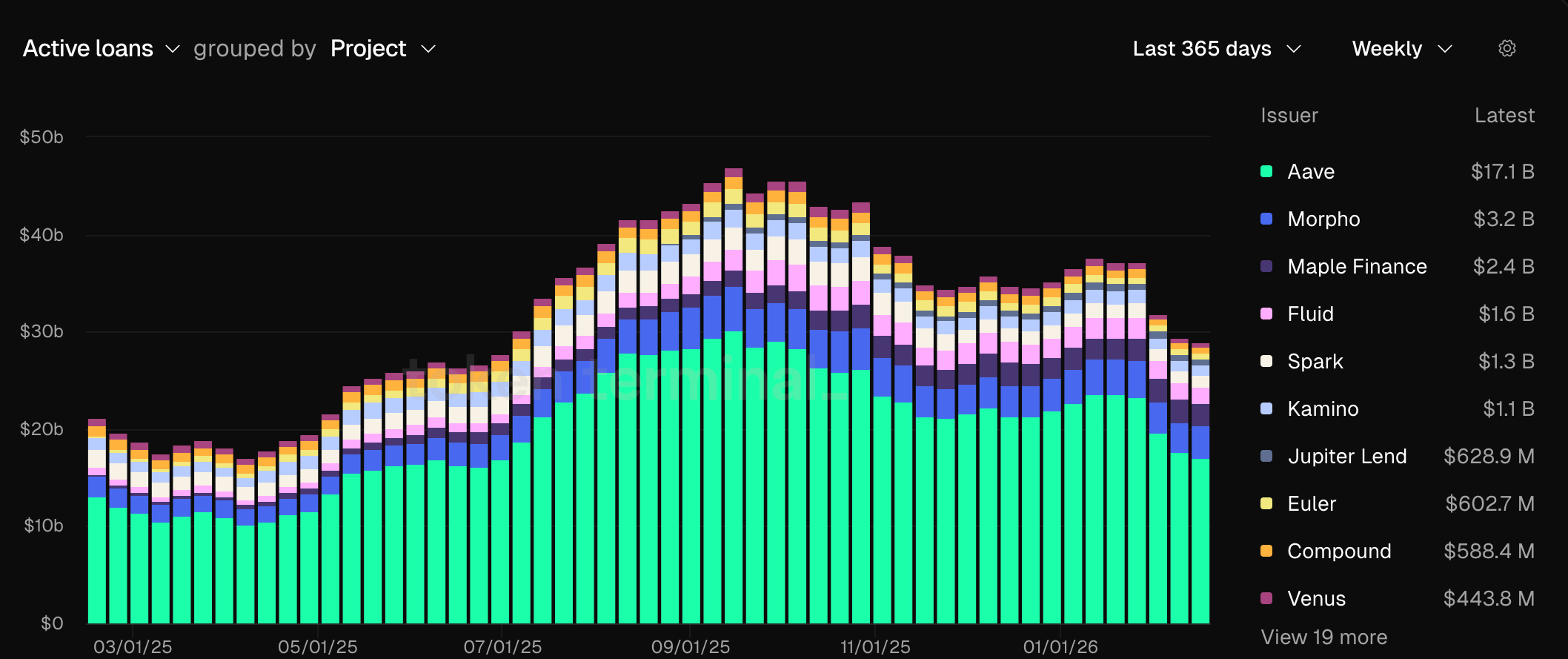
This development emerges as the lending market confronts a volatile environment. Active loans have fallen to around $30 billion, and liquidation risks are rising with persistent price declines.
Sponsored
Sponsored
Coinbase and Ledn Double Down on Crypto Lending
Bloomberg, citing sources familiar with the matter, reported that the deal consists of two bonds. One portion, rated investment-grade, was priced at a spread of 335 basis points above the benchmark rate.
According to a report from S&P Global Ratings, the bonds are secured by a pledge of 4,078.87 Bitcoin. The fair market value stands at approximately $356.9 million.
The loans carry a weighted average interest rate of 11.8%. Jefferies Financial Group Inc. served as the lead manager, structuring agent, and initial purchaser.
“Ledn’s liquidation engine is an algorithmic trading program that sources prices on multiple exchanges and/or is available through multiple trading partners. Ledn has successfully liquidated BTC collateral to repay 7,493 loans in its seven-year history, with an average LTV at liquidation of 80.32%, a maximum LTV at liquidation of 84.66%, and has never experienced a loss. On a WA basis, liquidation upon an LTV EOD has taken under 10 seconds, with minimal “price slippage” in execution,” the report reads.
Beyond Ledn, Coinbase is expanding its footprint in crypto-backed lending. In a recent update, the exchange said users can borrow up to $100,000 in USDC, the stablecoin issued by Circle, by pledging XRP (XRP), Cardano (ADA), Dogecoin (DOGE), or Litecoin (LTC) as collateral through the decentralized finance protocol Morpho.
The offering is available across the US, with the exception of New York, according to the company.
Sponsored
Sponsored
Crypto Lending Shrinks 36% as Active Loans Fall
This comes at a pivotal moment for the crypto lending sector, which has contracted sharply amid broader market weakness. Data from TokenTerminal showed that as of February 2026, total active loans across lending protocols stand at roughly $30 billion, down 36% from the September peak of $46.96 billion.
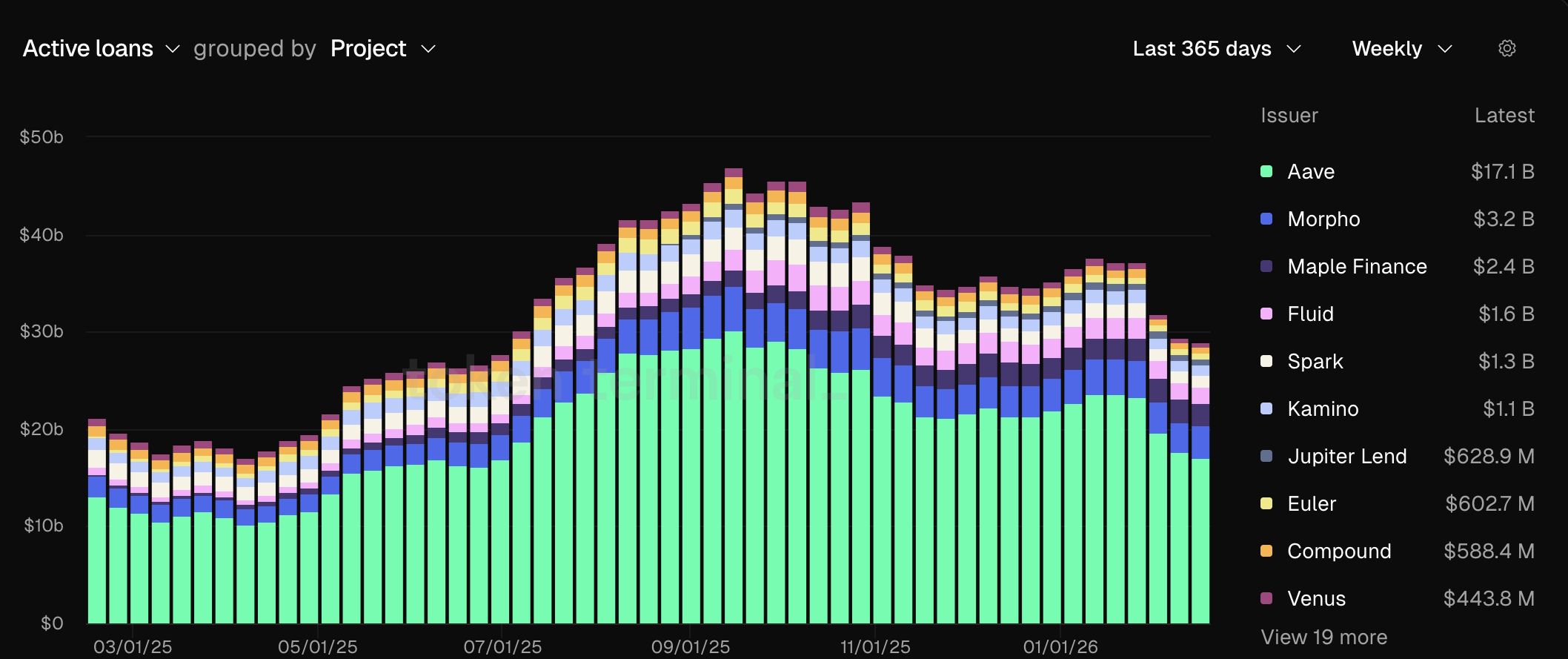
The decline coincides with a sustained downtrend in the crypto market since October, which likely amplified the contraction. Falling asset prices reduce the dollar value of posted collateral, tightening borrowing capacity and contributing to liquidations or voluntary deleveraging.
This compresses outstanding loan balances while mechanically lowering total value locked when measured in USD terms. Increased volatility further pressures leveraged positions, reinforcing the decline in active loans.
“Quick loan refresher during volatile markets: As BTC price drops, LTV rises, Higher LTV = higher liquidation risk, Adding collateral or repaying part of the loan lowers LTV, Tools exist to help, but understanding the mechanics always comes first,” Ledn posted.
At the same time, total value locked across lending protocols fell from more than $89.7 billion in October to roughly $52 billion, according to DefiLlama. This represented a decline of around 42%.
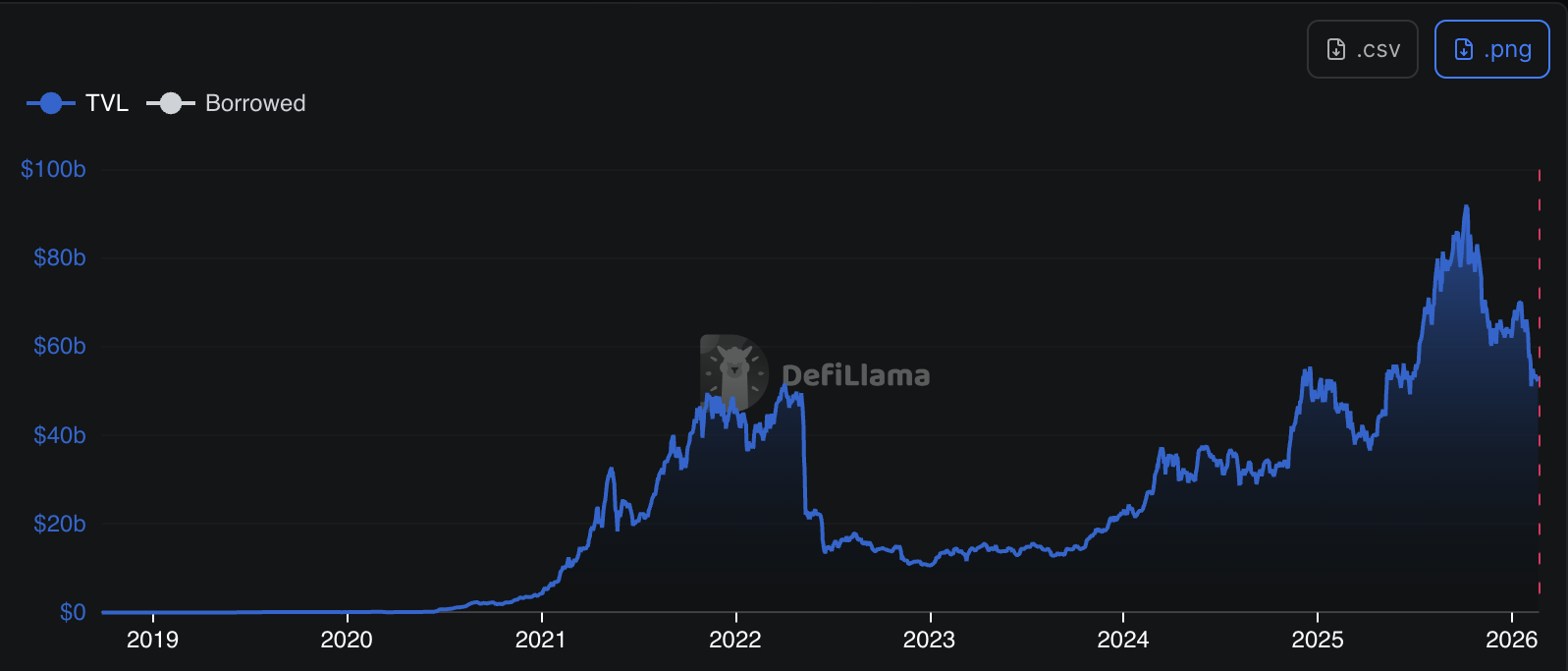
The decline reflects both asset price depreciation and capital outflows, as weaker market conditions reduced risk appetite, suppressed new borrowing demand, and prompted users to deleverage or rotate into lower-risk assets.


[PRESS RELEASE – Denver, Colorado, February 18th, 2026]
CoinFello, an AI agent capable of interacting directly with smart contracts, will be introduced to ETHDenver attendees during the conference’s opening ceremonies. The debut provides attendees with early access to CoinFello through a special preview application called BuffiBot, created by the CoinFello team.
For ETHDenver, CoinFello developed BuffiBot as the event’s official AI assistant for conference information. Attendees can ask about schedules, speakers, workshops, expo vendors, and side events. The experience is accessible through the ETHDenver app and supports both text and real-time voice interactions.
BuffiBot synthesizes ETHDenver’s hundreds of sessions and activities into a single conversational interface. While the ETHDenver deployment highlights a live event use case, CoinFello’s broader functionality extends beyond conference support.
CoinFello is designed as an AI application for executing and automating interactions with smart contract protocols. Through a chat-based interface, the agent interprets context, executes user-defined intents, and manages both synchronous and asynchronous smart contract actions. The system is built to present smart contract functionality in plain language.
The platform analyzes a user’s wallet history to surface relevant tokens, protocols, and potential actions, reducing reliance on traditional browser-based decentralized applications. CoinFello is also launching as an EIP-8004 agent, enabling it to be called by other AI agents within Ethereum’s emerging agent ecosystem.
CoinFello was founded by JacobC.eth, previously Lead of Operations for MetaMask at ConsenSys. At MetaMask, he helped develop growth and monetization strategies for the Ethereum wallet.
“The previous model for crypto UX is saturated,” said jacobc.eth. “Agentic AI enables onchain execution and DeFi interactions to become accessible to billions of people through familiar and safer user experiences.”
“We’re pleased to collaborate with the CoinFello team as they bring agent-driven experiences to users through the MetaMask Smart Accounts Kit,” said Ryan McPeck, Product Lead at Consensys for the MetaMask Smart Accounts Kit. “We see a future where AI agents can safely act on behalf of users using granular, transitive permissions that allow individuals to define how activity is executed on-chain.”
ETHDenver attendees will receive exclusive access to CoinFello without joining the public waitlist. Access to CoinFello will continue following the conference, while the BuffiBot experience remains exclusive to ETHDenver.
“ETHDenver has always been where the edges of possibility converge — where builders come to test what the future feels like before the rest of the world catches up,” said John Paller, Founder of ETHDenver. “The fusion of decentralized infrastructure and agentic AI signals a new chapter for coordination itself. When humans and autonomous systems co-create in open networks, we expand who can participate and how value is generated. This is the frontier — and it’s unfolding in real time.”
About CoinFello
CoinFello is an AI agent designed to explain, execute, and automate interactions with smart contracts. Built for self-custody, the platform is currently available in private alpha for end users, with developer versions expected soon. CoinFello supports EVM-compatible networks, leverages EigenAI to enable a self-custodied AI environment, and integrates the MetaMask Smart Accounts Kit to provide users with control over their assets.
SECRET PARTNERSHIP BONUS for CryptoPotato readers: Use this link to register and unlock $1,500 in exclusive BingX Exchange rewards (limited time offer).
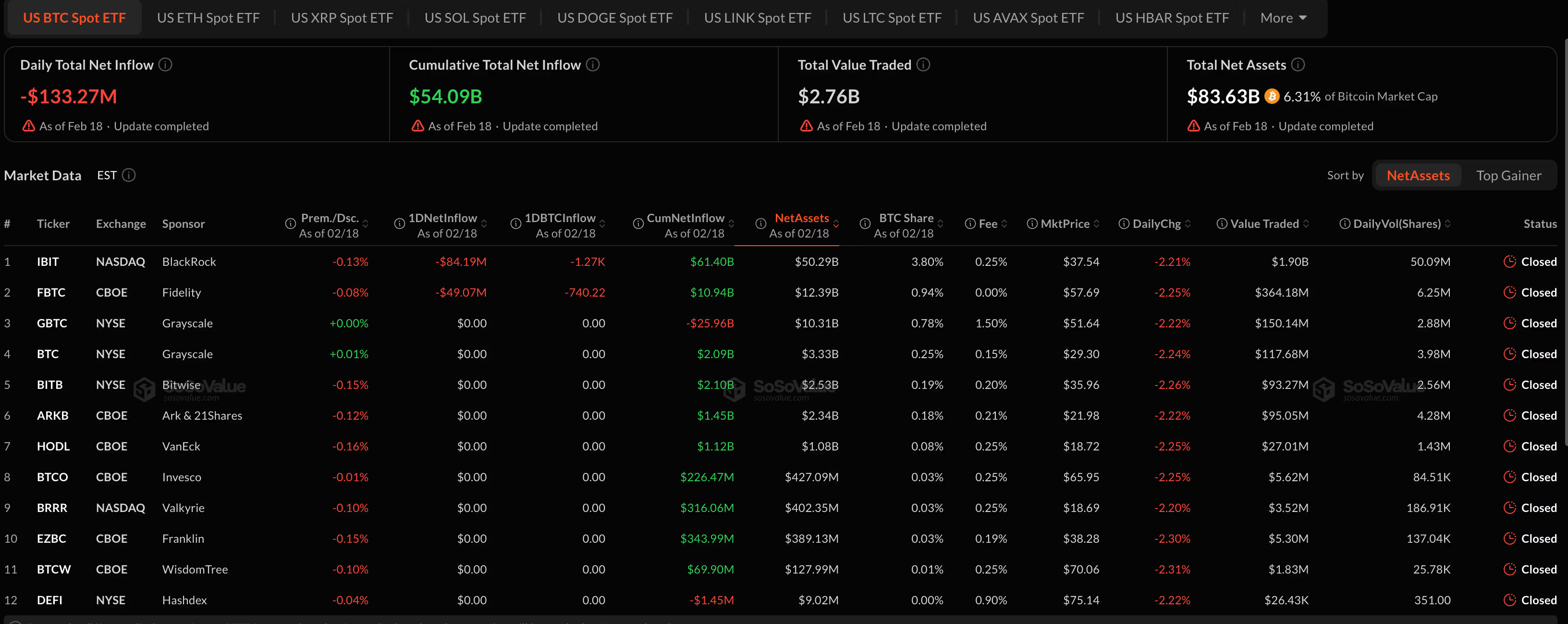
U.S.-listed crypto ETFs are flashing red across the board, with one notable exception.
Bitcoin spot ETFs saw $133.3 million in daily net outflows as of Feb. 18, led by BlackRock’s IBIT, which shed $84.2 million, and Fidelity’s FBTC, which lost $49 million. Total net assets across bitcoin funds stand at $83.6 billion, roughly 6.3% of bitcoin’s market cap, but recent flows suggest institutions are trimming exposure rather than adding on dips.

Ethereum products followed a similar pattern. U.S. ETH spot ETFs recorded $41.8 million in net outflows on the day, with BlackRock’s ETHA losing nearly $30 million. Total net assets across ether funds sit at $11.1 billion, about 4.8% of ETH’s market cap.
The steady bleed comes as ether trades below $2,000 and struggles to build momentum despite broader expectations of rate cuts later this year.

XRP ETFs also slipped into negative territory, posting $2.2 million in daily outflows. Total net assets across XRP funds are just over $1 billion, or roughly 1.2% of XRP’s market cap. Price action in XRP has mirrored the cautious tone, with the token down over 4% on the day.

Solana, however, stood out.
U.S. SOL spot ETFs recorded $2.4 million in net inflows, pushing cumulative inflows to nearly $880 million. Bitwise’s BSOL led with $1.5 million in fresh capital. While modest in absolute terms, the inflow contrasts sharply with the broader risk-off positioning across bitcoin and ether products.

Elsewhere, smaller altcoin ETFs such as LINK saw marginal inflows, but the overall picture remains one of selective exposure rather than broad-based accumulation.
The divergence suggests investors are rotating within crypto rather than exiting entirely. With macroeconomic uncertainty lingering and the dollar firming, ETF flows offer a real-time read on where institutional conviction remains and where it is fading.
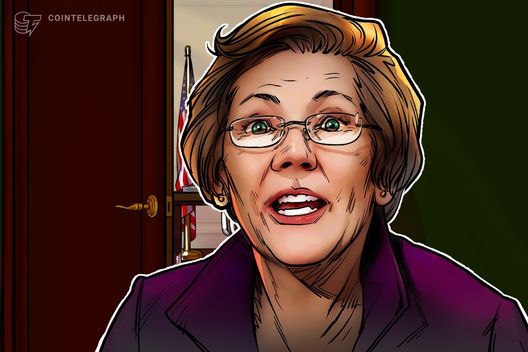
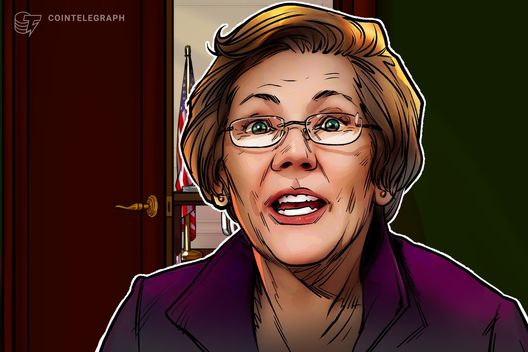
Senate Banking Committee ranking member Elizabeth Warren has reportedly sent a letter to Treasury Secretary Scott Bessent and Federal Reserve chair Jerome Powell, urging them not to bail out “cryptocurrency billionaires” with taxpayer dollars.
Warren warned that any potential bailout “would be deeply unpopular to transfer wealth from American taxpayers to cryptocurrency billionaires,” adding that it could also “directly enrich President Trump and his family’s cryptocurrency company, World Liberty Financial, according to CNBC.
The letter comes as Bitcoin (BTC) prices have fallen more than 50% from their all-time high in October, hitting a local low of $60,000 on Feb. 6.
The letter also came on the same day that World Liberty Financial hosted its first “World Liberty Forum” for crypto executives and pro-industry policymakers at the President’s private Mar-a-Lago club in Palm Beach, Florida.
The US government is retaining seized Bitcoin
Senator Warren also referenced the Financial Stability Oversight Council’s Annual Report hearing on Feb. 4, during which Secretary Bessent was asked about his authority to bail out the crypto industry.
During the hearing, Congressman Brad Sherman asked Bessent if the Treasury Department “has the authority to bail out Bitcoin?” or instruct banks to buy Bitcoin or Trumpcoin (TRUMP).
A bemused Bessent asked for clarification on the question, stating that “within the context of asset diversification within banks, they could hold many assets.”
Related: Senators ask Bessent to probe $500M UAE stake in Trump-linked WLFI
Sherman also expressed concern that US tax dollars might be invested in crypto assets. “Why would a private bank be your tax dollars?” asked the Treasury secretary.
Bessent confirmed that “we are retaining seized Bitcoin,” which is not tax money, but an “asset of the US government.”
Senator Warren claims response was deflection
Warren saw the exchange differently, stating in her letter that Bessent “deflected.”
“It’s deeply unclear what, if any, plans the US government currently has to intervene in the current Bitcoin selloff,” she wrote.
“Ultimately, any government intervention to stabilize Bitcoin would disproportionately benefit crypto billionaires.”
“Your agencies must refrain from propping up Bitcoin and transferring wealth from taxpayers to crypto billionaires through direct purchases, guarantees, or liquidity facilities,” the letter reportedly stated.
Cointelegraph reached out to Warren and the Treasury for comment, but did not receive an immediate response. A Federal Reserve spokesman confirmed they had received the letter but declined to comment.
Magazine: Chinese New Year boosts interest, TradFi buying crypto exchanges: Asia Express

Analysts are expecting a volatile near-term future for BTC, with some questioning whether new lows are on their way.
Bitcoin went through some intense trading sessions at the end of January and the beginning of February, plunging from over $90,000 to a 15-month low at $60,000 in under ten days. However, it has been rather sluggish since then, mostly trading below $70,000, with little sign of a breakout.
Founder and CIO of MN Fund, Michaël van de Poppe, outlined the recent stagnation, indicating that BTC’s volatility is “the lowest it has been since the crash.” Consequently, he determined that “there’s a big move on the horizon” and outlined his plan for buying or selling.
Sub-$60K or Above $80K?
The volatility on #Bitcoin is the lowest it has been since the crash.
That means; there’s a big move on the horizon.
If we dip, I’ll be a big buyer, for sure.
If we go back upwards, I’ll start taking some profits on a test at $80-85K to be trading the trend.
Volatility is… pic.twitter.com/7Irp4iTzT9
— Michaël van de Poppe (@CryptoMichNL) February 18, 2026
The popular analyst said he would be a “big buyer for sure” if bitcoin dips again. In contrast, he would “start taking some profits” if the cryptocurrency tests the $80,000-$85,000 range.
Merlijn The Trader also weighed in on BTC’s recent performance, highlighting the significance of the current $67,000 level. If lost, the analyst believes $60,000 will come into focus again. His worst-case scenario envisions a massive drop below $50,000 if the February 6 bottom gives in.
BITCOIN IS AT THE CRUX: $67K.
Reclaim $73K the trend repair begins.
Lose $60K liquidity vacuum opens below.Next real demand zone:
$48K–$49K (0.618 retrace)This isn’t volatility.
It’s the market choosing a direction. pic.twitter.com/FQfrBNYrTe— Merlijn The Trader (@MerlijnTrader) February 18, 2026
Glassnode was slightly less bearish, predicting that bitcoin could drop to as low as $55,000 if the landscape worsens again soon.
You may also like:
Year of the Metals
Doctor Profit, who has been among the few analysts to predict BTC’s crash below $100,000 at the end of 2025, said the cryptocurrency now trades around 50% lower than its October all-time high. He noted that “it’s bad to lose money, but it’s even worse to lose it in terms of USD.”
The analyst predicted that 2026 will be the year of precious metals, such as gold and silver. Both assets experienced intense volatility in 2026 as well. Gold, for example, skyrocketed to a new all-time high of $5,600/oz in late January before it crumbled to $4,400 days later. It has managed to rebound to $5,000 as of press time.
Silver, on the other hand, exploded to over $120, dumped to $64, and now sits close to $80. Both metals are slightly in the green on a year-to-date scale, while BTC is deep in the red.
SECRET PARTNERSHIP BONUS for CryptoPotato readers: Use this link to register and unlock $1,500 in exclusive BingX Exchange rewards (limited time offer).
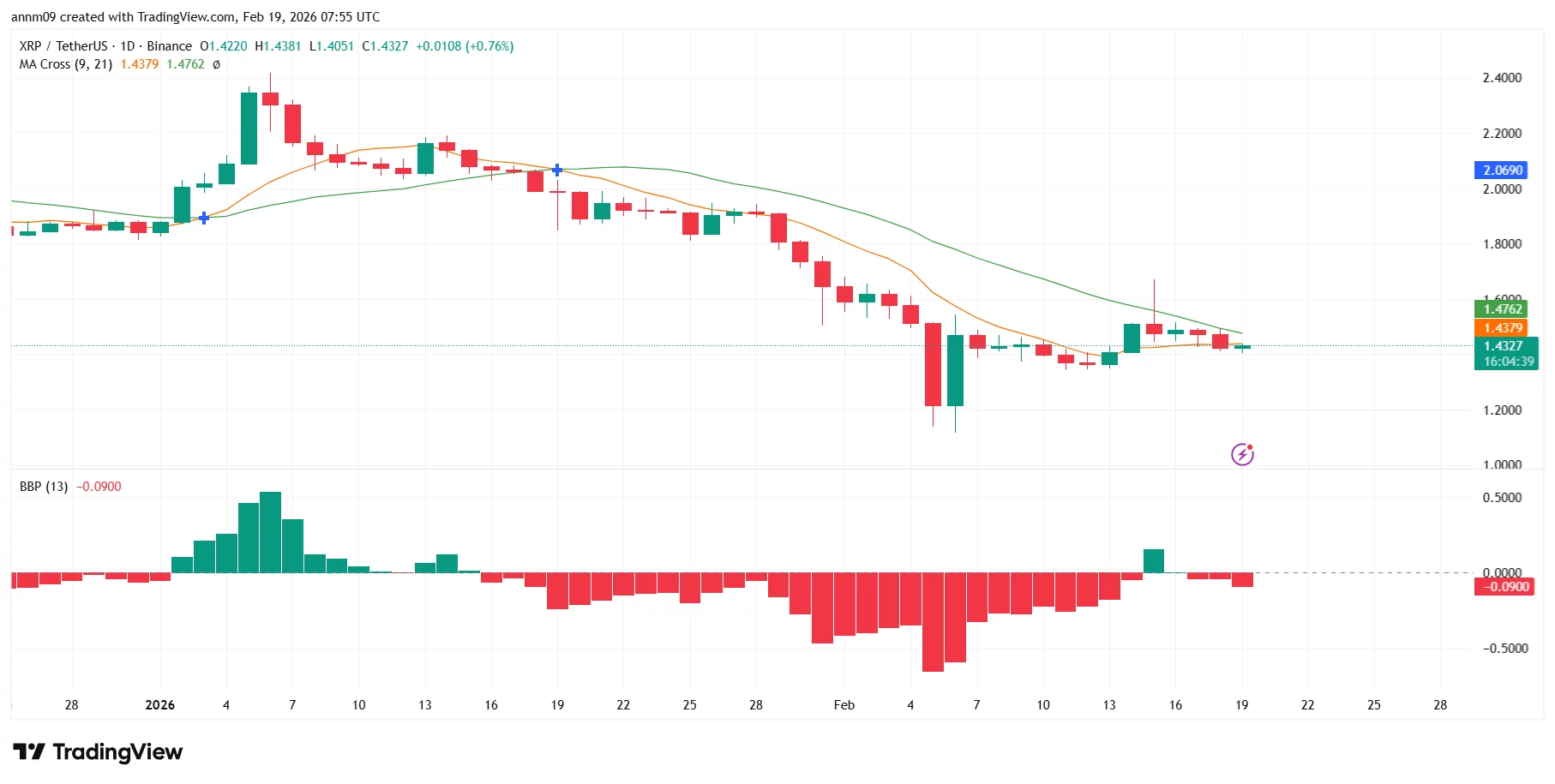
XRP price is trading in a tight range as investors await the December Personal Consumption Expenditures (PCE) inflation report, due Friday, Feb. 20. The token’s next move could hinge not just on crypto-specific catalysts, but on broader macroeconomic data that shapes Federal Reserve policy expectations.
Summary
- XRP is consolidating near $1.43 ahead of the December PCE inflation report, a key macro event that could influence Federal Reserve policy expectations.
- November’s PCE came in hot at 2.8%, but Truflation data shows cooling trends, with estimates at 1.54% headline and 1.94% core, raising hopes of a softer official print.
- Technically, XRP remains in a broader downtrend but is stabilizing between $1.35 and $1.50, with resistance at $1.47 and support at $1.35 and $1.20.
The PCE index is the Fed’s preferred inflation gauge, particularly core PCE, which excludes food and energy and tracks persistent price pressures. November’s PCE and core PCE both came in at 2.8%, surprising to the upside and reinforcing concerns that inflation progress had stalled.
However, fresh data from Truflation suggests cooling pressures.
Its real-time estimates currently place headline PCE at 1.54% and core PCE at 1.94%, well below the official November print. Traders are now watching to see whether the U.S. Bureau of Economic Analysis reflects that cooling trend.
As inflation data directly impacts rate expectations, it also influences risk-sensitive assets like XRP. A softer reading could revive hopes of future rate cuts and support crypto prices, while a hotter print may pressure the market through a stronger dollar and tighter financial conditions.
XRP price analysis: Consolidation after sharp drop
XRP is trading around $1.43 at press time, stabilizing after a steep decline from the early-January high near $2.40. The daily chart shows a clear downtrend marked by lower highs and lower lows.
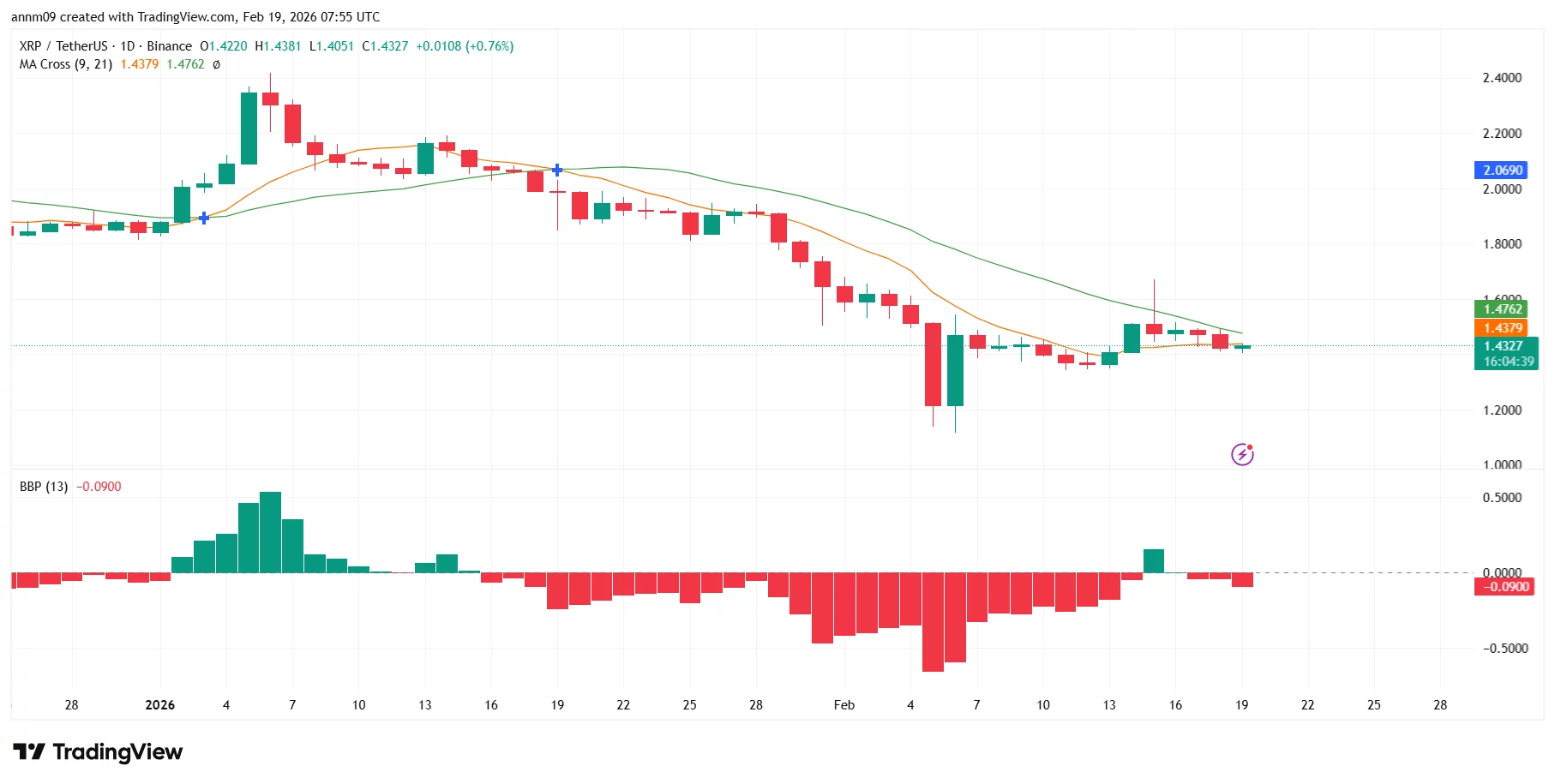
The recent capitulation candle near $1.20 triggered a strong bounce, but the Ripple token (XRP) has since entered a tight consolidation range between roughly $1.35 and $1.50.
The 9-day moving average (~$1.43) is attempting to flatten, while the 21-day moving average (~$1.47) remains above price and continues sloping downward. This suggests short-term stabilization but a broader bearish structure remains intact.
The Balance of Power (BBP) indicator sits slightly negative at -0.09, indicating sellers still have a marginal edge, though bearish momentum has eased compared to early February’s sharp selloff.
Immediate resistance lies at $1.47, aligning with the 21-day MA. A break above that could open a move toward $1.60. On the downside, key support rests near $1.35, followed by stronger support around $1.20.
With XRP coiling ahead of the PCE release, Friday’s inflation data could act as the catalyst for the next decisive move.
Crypto World
Moonwell Proposes $2.68M Recovery Plan After cbETH Liquidation Incident Harms 181 Borrowers on Base

TLDR:
- Roughly 181 Moonwell borrowers on Base lost ~$2.68M due to oracle-driven cbETH liquidations from Feb 14–18, 2026.
- Moonwell will allocate ~$310,000 from its Apollo Treasury as an immediate pro-rata repayment to all affected borrowers.
- The remaining ~$2.37M will be repaid gradually through future protocol fees and OEV revenue via Sablier over 12 months.
- MFAM holders will convert their tokens into stkWELL at a 1:1.5 ratio, consolidating Apollo DAO into Moonwell’s primary governance.
Moonwell has released a recovery proposal addressing unfair liquidations of cbETH collateral between February 14 and 18, 2026.
The incident affected roughly 181 borrowers on Base, resulting in approximately $2.68M in net losses. Protocol behavior tied to MIP-X43, not user error, drove the liquidations.
The plan combines treasury funds with future revenue and includes a transition for MFAM holders into the WELL ecosystem.
cbETH Liquidation Recovery Targets 181 Affected Borrowers
The Moonwell team conducted a full onchain review of all liquidation activity during the incident window. Each borrower’s loss was calculated on a net basis, meaning only realized economic harm qualifies for remediation.
The methodology accounts for all cbETH collateral seized, minus the USD value of debt repaid at the time of liquidation.
The proposal was direct about what caused the harm. “These users trusted Moonwell with their assets and were harmed through no fault of their own,” the post stated.
Crucially, cbETH was repriced at $2,200 per token to correct erroneous oracle values that contributed to the problem. This adjustment ensures that repayments reflect actual market conditions rather than distorted price data.
To begin repayments promptly, approximately $310,000 will be drawn from the Moonwell Apollo Treasury. This amount will be distributed pro-rata to affected borrowers based on their individual calculated losses.
The proposal described this allocation as “an immediate good-faith remediation without jeopardizing protocol stability.”
The remaining balance of roughly $2.37M will be repaid over time through future protocol revenue. This includes net protocol fees and OEV revenue under the current fee split structure.
All repayments will be claimable through Sablier over a 12-month window, after which unclaimed rewards expire.
MFAM Wind-Down Consolidates Apollo DAO Into Moonwell’s Primary Governance
The proposal also addresses the full deprecation of Moonwell on Moonriver, which was completed on January 29, 2026. Chainlink’s decision to sunset oracle feeds on Moonriver forced a gradual reduction of collateral factors. With MIP-R38 passed, all Moonriver markets reached a 0% collateral factor, formally closing the deployment.
As Moonriver operations wind down, the Apollo DAO governed by MFAM will consolidate into the primary Moonwell DAO governed by WELL.
The proposal described the transition as “simplifying governance, aligning incentives, and closing out legacy infrastructure.” MFAM holders will convert their holdings into stkWELL at a 1:1.5 ratio, based on a snapshot taken at proposal submission.
The proposal noted that this conversion brings MFAM holders “direct exposure to Moonwell’s ongoing development on Base and future deployments, while eliminating fragmentation across governance tokens and treasuries.” The MFAM-to-stkWELL conversion will also be claimable for up to 12 months via Sablier.
By addressing both the cbETH incident and the MFAM wind-down together, the proposal aims to close out Moonriver “in a clean, accountable manner.”
The Moonwell DAO will vote separately on treasury allocation, the long-term repayment commitment, and execution authority.

The US CLARITY Act, a highly anticipated bill aimed at providing greater clarity for the US crypto industry, could make it through Congress in just over a month, according to crypto-friendly US Senator Bernie Moreno.
“Hopefully by April,” Moreno told CNBC during an interview at US President Donald Trump’s Mar-a-Lago property in Florida on Wednesday.
Coinbase CEO Brian Armstrong joined Moreno for the interview, explaining that they were with representatives from the crypto, banking and US Congress at the World Liberty Financial (WLF) crypto forum to reach a solution on market structure.
“A path forward” is in sight, says Moreno
“One of the big issues that did come up in the past was this idea of stablecoins on rewards,” Armstrong said. The banking industry previously raised concerns that offering stablecoin yields could undermine traditional banking and shift deposits and interest away from banks.
While Armstrong had issues with the draft bill and withdrew his support for the CLARITY Act in January, he said there is “now a path forward, where we can get a win-win-win outcome here.”

“A win for the crypto industry, a win for the banks, and a win for the American consumer to get President Trump’s crypto agenda through to the finish line, so we can make America the crypto capital of the world,” Armstrong said.
Armstrong said the crypto exchange previously couldn’t support the bill because it includes provisions that ban interest-bearing stablecoins and position the US Securities and Exchange Commission as the primary regulator of the crypto industry. The White House was reportedly disappointed by Coinbase’s decision to withdraw its support, describing the move as a “unilateral” action that blindsided administration officials.
Moreno admitted that the delay stems from “getting hung up” on the stablecoin rewards, which he said “shouldn’t be part of this equation.”
Crypto prediction platform Polymarket’s odds of the US CLARITY Act passing in 2026 briefly surged to 90% on Wednesday before falling to 72% at the time of publication.
Moreno shuts down idea of a Democrat-led midterm election
Meanwhile, Moreno dismissed the idea that a Democratic takeover of Congress could threaten the bill when asked. “The House isn’t going to go Democrat, and neither is the Senate,” Moreno said.
“The American people are sick and tired of open borders; that is why we got elected. They were sick and tired of high inflation, and they were sick and tired of an out-of-control government,” he added.
Related: ECB targets 2027 digital euro pilot as provider selection begins in Q1 2026
On Dec. 19, White House crypto and AI czar David Sacks voiced strong confidence that the bill would pass early this year.
“We are closer than ever to passing the landmark crypto market structure legislation that President Trump has called for. We look forward to finishing the job in January,” Sacks said at the time.
Magazine: Bitcoin may take 7 years to upgrade to post-quantum: BIP-360 co-author


Ledn, a crypto lending company, has completed the first asset-backed securities (ABS) deal backed by bitcoin collateral, raising $188 million for crypto credit markets.
Asset-backed securities are bonds backed by pools of underlying loans, with investors receiving payments from the cash flows generated by those loans.
Bloomberg reported that the bonds are secured by a pool of more than 5,400 consumer loans issued by the firm, each backed by borrowers’ bitcoin holdings. The loans carry a weighted average interest rate of 11.8%.
The deal includes two tranches, with the investment-grade portion priced at 335 basis points over the benchmark rate. Jefferies served as sole structuring agent and bookrunner, according to Bloomberg.
Bitcoin’s volatility has been in focus, with the largest cryptocurrency by market capitalization falling as much as 50% over the past four months to as low as $60,000.
Crypto firm Ledn sells Bitcoin-backed bonds in ABS market first
>First ever deal of its kind in asset-backed debt
>Secured by pool of 5,400 Bitcoin-collateralized loans that consumers took from Ledn at weighted avg rate of 11.8%
>Investment grade tranche priced at +335bps pic.twitter.com/Rx3944uGys— matthew sigel, recovering CFA (@matthew_sigel) February 18, 2026
The structure employs automated collateral liquidation when thresholds are breached, a feature designed to protect investors during sharp market declines.

Trump family-owned Mar-a-Lago was home to traditional finance giants, US government officials and crypto executives in a crypto forum on Wednesday, hosted by the family’s sprawling crypto company.
Coinbase CEO Brian Armstrong and Binance co-founder Changpeng Zhao, who Donald Trump pardoned last year, were at the exclusive World Liberty Forum event alongside Goldman Sachs CEO David Solomon and the heads of the Nasdaq and New York Stock Exchange.
The event saw traditional finance executives and US regulators embrace crypto, with Solomon, a long-time crypto skeptic, saying on stage that he now owns “a little Bitcoin, very little,” according to one of the attendees.

“The great irony is this whole world has gone full circle,” Bloomberg reported Eric Trump as saying at the event.
“There’s people in this room that were probably on the opposite side of us, that were canceling bank accounts for us, that were kicking us out of their big banks for no reason other than the fact that my father was wearing a hat that said, ‘Make America Great Again.’”
Commodity Futures Trading Commission chair Mike Selig, the head of an agency that is pushing to regulate the crypto industry, was also in attendance, along with Republican senators Ashley Moody and Bernie Moreno.
World Liberty announces tokenization tie-up for Trump hotel
World Liberty announced at the event that it has partnered with tokenization firm Securitize, with plans to tokenize loan revenue interests in an upcoming Trump-branded resort in the Maldives.
The company said it was part of a “broader strategy to design, structure, and distribute [World Liberty]-branded tokenized real-world asset offerings.”
Related: Warren warns crypto bailout would enrich Trump family biz: Report
The Trump Organization said in November that it would tokenize the development of the project, which is being built by real estate developer DarGlobal. The resort is set to be completed in 2030 and feature 100 luxury villas.
World Liberty said that the offering will give investors “both a fixed yield and loan revenue streams” from the resort, giving exposure to “both potential income distributions and the potential for certain profits upon any future sale.”
It added that the offering is only available to eligible accredited investors in the US and would be accessed via “select third-party partners and wallets.”
Big Questions: Is China hoarding gold so yuan becomes global reserve instead of USD?
TLDR:
-
- Base is moving from OP Stack to a unified base/base repository, requiring node operators to migrate to the new Base client.
- The new upgrade schedule targets six hard forks per year, doubling the current rate of three annual protocol upgrades.
- Base retains its Stage 1 Decentralized Rollup status and is adding an independent signer to its Security Council.
- All Base specifications and code remain open-source, with alternative client implementations actively encouraged by the team.
- Base is moving from OP Stack to a unified base/base repository, requiring node operators to migrate to the new Base client.
Base Chain is moving away from its multi-dependency architecture toward a single, consolidated software stack. The transition consolidates all components into one repository, base/base, built on open-sourced tools. Node operators will need to migrate to the new Base client to stay compatible with future hard forks.
A Single Stack Replaces a Web of Dependencies
Base originally launched as an OP Stack chain, relying on partners like Optimism, Flashbots, and Paradigm. Over time, this created a complex web of external dependencies. Managing these relationships added coordination overhead for the engineering team.
The Base Engineering Team stated: “Base was built on the shoulders of giants — we could not have gotten so far so quickly without the world-class technology underpinning the OP Stack.”
The new unified stack consolidates everything into base/base, removing that friction entirely. This approach makes the protocol easier to understand and maintain for individual developers.
Previously, code for Base components was spread across multiple repositories owned by different teams. That structure slowed down shipping and created communication gaps. Bringing it all under one roof changes how releases are managed going forward.
Faster Hard Fork Schedule Targets Six Upgrades Per Year
One of the clearest changes from this transition is a faster upgrade cadence. Base plans to ship six hard forks per year, up from three. Each fork will be smaller and more tightly scoped to reduce risk.
The team described the goal clearly: “We’re targeting six smaller, tightly scoped hard forks per year, doubling the current schedule.”
This replaces the current model of batching many changes into large, infrequent upgrades. Smaller updates are easier to audit and easier to roll back if needed.
The roadmap already outlines several upcoming releases. Base V1 will handle client consolidation and a proof upgrade from optimistic proofs to TEE/ZK proofs.
Base V2 and V3 will introduce new transaction types, block access lists, and alignment with Ethereum’s Glamsterdam upgrade.
Security Council and Decentralization Standards Are Preserved
Base confirmed it remains a Stage 1 Decentralized Rollup through this transition. The team made clear that no tradeoffs were made on security or technical decentralization. An additional independent signer is being added to the Base Security Council to replace Optimism’s previous role.
The engineering team noted: “The protocol spec and codebase should be understandable by a single developer.” The accelerated roadmap also includes faster withdrawals through a more robust multi-proof system. Base-specific governance structures are being developed alongside enhanced neutrality standards.
Base will continue working with Optimism as a client of OP Enterprise for mission-critical support. Bug fixes will still be upstreamed, and security disclosures will be coordinated to protect the broader Superchain ecosystem. The separation is technical, not adversarial.
Open-Source Commitments Remain Central to Base’s Direction
Despite moving away from the OP Stack, Base reaffirmed its commitment to building in public. All specifications and code will remain open-source and available for forking. Alternative client implementations are actively encouraged to strengthen network resilience.
The team was direct on this point: “Base specifications and code will always be public, open for contribution, and available for others to fork.”
Base also confirmed continued contributions to ecosystem tooling like Foundry and Wagmi. The team views this work as maintaining Base’s role as a public good within the ecosystem.
Node operators currently face no immediate action. However, over the next few months, migration to the Base client will be required to stay compatible with future hard forks.
All existing RPCs, including those in the Optimism namespace, will continue to be fully supported during the transition.
.

CoinFello Debuts Onchain AI Agent at ETHDenver
Lil Poppa Dead: ‘Love and War’ Rapper Dies at Age 25

How Banks Can Zero Us Out Instantly – The Financial Kill Switch: Debanking & the Digital Prison…


-

 Video3 days ago
Bitcoin: We’re Entering The Most Dangerous Phase
-

 Tech4 days ago
Luxman Enters Its Second Century with the D-100 SACD Player and L-100 Integrated Amplifier
-

 Crypto World2 days ago
Can XRP Price Successfully Register a 33% Breakout Past $2?
-

 Sports2 days ago
GB's semi-final hopes hang by thread after loss to Switzerland
-

 Video6 days ago
The Final Warning: XRP Is Entering The Chaos Zone
-
 Tech2 days ago
The Music Industry Enters Its Less-Is-More Era
-

 Business1 day ago
Infosys Limited (INFY) Discusses Tech Transitions and the Unique Aspects of the AI Era Transcript
-

 Entertainment19 hours ago
Kunal Nayyar’s Secret Acts Of Kindness Sparks Online Discussion
-

 Video2 days ago
Financial Statement Analysis | Complete Chapter Revision in 10 Minutes | Class 12 Board exam 2026
-

 Crypto World5 days ago
Bhutan’s Bitcoin sales enter third straight week with $6.7M BTC offload
-

 Tech24 hours ago
Retro Rover: LT6502 Laptop Packs 8-Bit Power On The Go
-
 Sports4 hours ago
Clearing the boundary, crossing into history: J&K end 67-year wait, enter maiden Ranji Trophy final | Cricket News
-

 Entertainment11 hours ago
Dolores Catania Blasts Rob Rausch For Turning On ‘Housewives’ On ‘Traitors’
-
 NewsBeat4 days ago
The strange Cambridgeshire cemetery that forbade church rectors from entering
-

 Business7 days ago
Barbeques Galore Enters Voluntary Administration
-

 Business1 day ago
Tesla avoids California suspension after ending ‘autopilot’ marketing
-

 Crypto World6 days ago
Kalshi enters $9B sports insurance market with new brokerage deal
-

 Crypto World14 hours ago
WLFI Crypto Surges Toward $0.12 as Whale Buys $2.75M Before Trump-Linked Forum
-
 Crypto World7 days ago
Ethereum Price Struggles Below $2,000 Despite Entering Buy Zone
-
 NewsBeat4 days ago
Man dies after entering floodwater during police pursuit