Connect with us

Business

The Golden Thumb Rule | Growth at a reasonable price is my rule; overpaying can destroy returns even in bull markets: Srinivas Rao Ravuri

Published

on

The Golden Thumb Rule | Growth at a reasonable price is my rule; overpaying can destroy returns even in bull markets: Srinivas Rao Ravuri
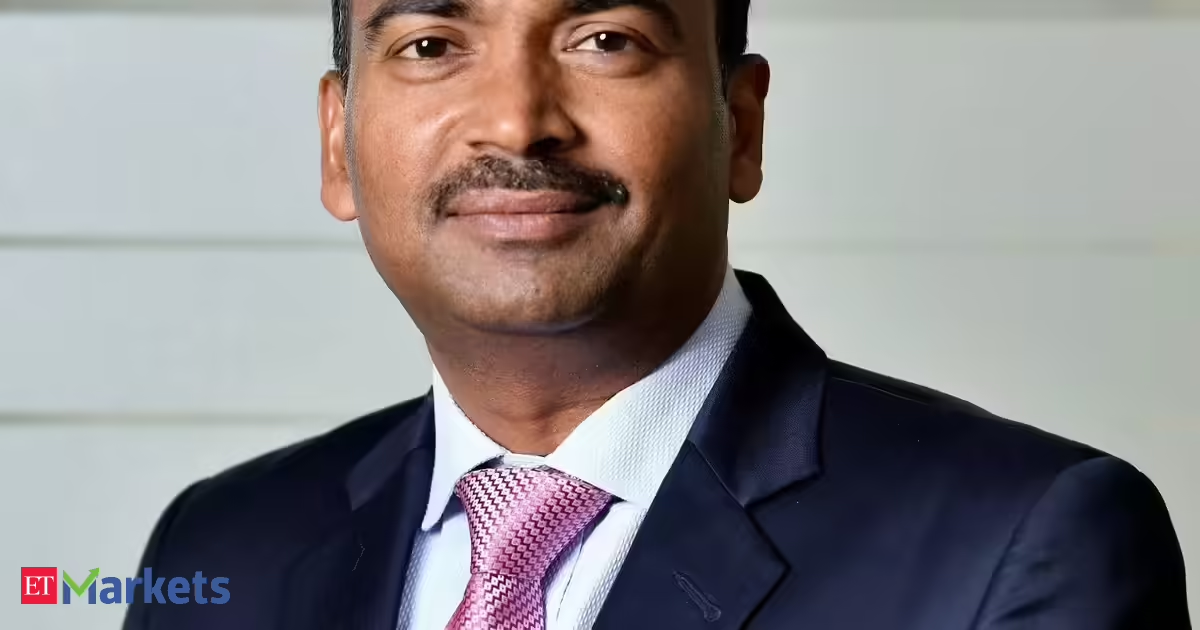
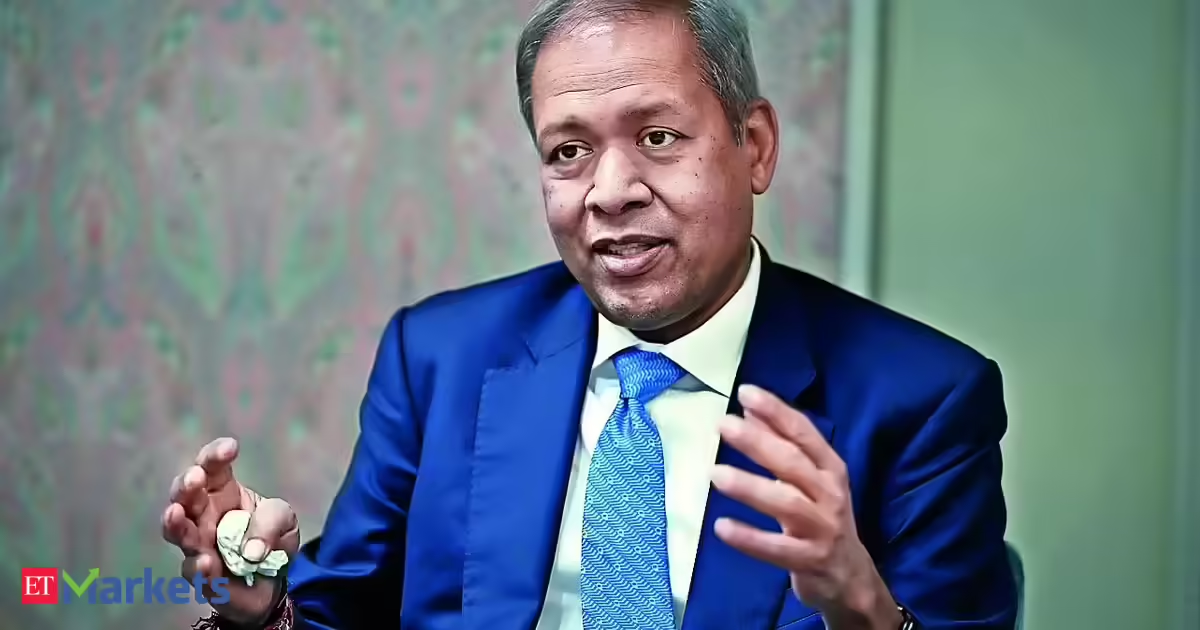
Valuation discipline often gets overshadowed during bull markets, but for Srinivas Rao Ravuri, Chief Investment Officer at Bajaj Life Insurance, it remains non-negotiable.

In this edition of The Golden Thumb Rule, Ravuri emphasises that sustainable wealth creation is not about chasing momentum but about adhering to Growth at a Reasonable Price (GARP).

He cautions that even in a rising market, overpaying for future growth can erode returns and hurt long-term compounding.

Drawing on market data from the past five years — where headline indices doubled but a large share of stocks delivered muted or negative returns — Ravuri underscores the importance of entry price, margin of safety, and disciplined asset allocation.

Advertisement

He also shares practical thumb rules on acceptable PE multiples, navigating market euphoria, and striking the right balance between time in the market and valuation-driven investing. Edited Excerpts –


Kshitij Anand: If you had to define valuation discipline in one sentence, what would be your golden thumb rule for investors?

Srinivas Rao Ravuri: Our golden rule is Growth at a Reasonable Price, or what we call GARP, which is what we follow at Bajaj Life. Before I dwell deeper into this, I just want to make a point. Given the markets we have seen over the last five years, the Nifty has doubled and delivered about 14% compounded returns.
Ignoring the COVID phase, from Jan 2021 to now, Nifty 500 companies have doubled. But within that, a good 40% of companies — around 200 — have delivered negative returns over these five years when the market has doubled. And about 15% of the companies have delivered very healthy returns.

So, the point I am making is that if you buy at the right price, compounding will automatically work in your favour. But if you overpay and pay today entirely for expected future growth, you can lose money even in a good market.

Kshitij Anand: Why do most investors abandon valuation discipline during bull markets, and what is the thumb rule to avoid that? There is a saying that when everyone is talking about markets and giving tips, that is the time you should actually bail out of the markets.

Srinivas Rao Ravuri: Well, we are investors and we are human beings. And we have emotions. Markets are governed by fear, greed, and, as some people say, career risk. In bull markets, we tend to see people ignoring time-tested principles of investing and valuation metrics like price-to-earnings and start focusing on narratives instead.

In fact, even professional investors go through a relative valuation phase — saying X company is trading at 60 PE and it is cheap because Y company in the same space is trading at 80 PE, so it looks better. I think that is one challenge we face. Another issue is that people believe they will ride the flavour or momentum of the season, citing examples like defence, infrastructure, and real estate. They start thinking this time is different and that these sectors will deliver returns forever. These are things we need to be mindful of.

Advertisement

We are here to make money, and the first principle to keep in mind is: do not lose money.

Kshitij Anand: Coming back to your first point about the right price to buy — what is your thumb rule to decide when a stock is too expensive to buy, regardless of how strong the story is?

Srinivas Rao Ravuri: Here again, I would like to use a simple price-to-earnings metric to determine whether a stock is expensive or not. For a steady-state business, I would say paying 33 times earnings is fine. What is the logic? When we say the price-to-earnings ratio is 33, we are essentially talking about a 3% earnings yield.

For a growth company — and investing in equity is about investing for growth — a 3% earnings yield plus growth is acceptable to me. Within that, for a relatively new business or a new segment where high growth is visible today, maybe you can pay up to 50 PE. Anything more than that raises questions about the margin of safety. That is what I would like to avoid as far as possible.

Advertisement

Kshitij Anand: I understand. In fact, even in new fund offers and IPOs, we see a lot of companies trading at much higher PEs than what you just highlighted as a benchmark. Any word of advice or caution for investors there?

Srinivas Rao Ravuri: Absolutely. I think what we need to keep in mind is that high-quality companies can also be poor investments if bought at the wrong price. As I mentioned earlier, we are already seeing that happen. The first principle is avoiding big mistakes.

Companies in new-age sectors, catering to evolving markets and demonstrating long-term growth potential, tend to trade at premium valuations. But what is important is sustainability and also keeping in mind the concept of mean reversion.

Kshitij Anand: Now, let me also ask — investors do end up buying stocks that may be available or trading at a premium valuation. It does happen. So, what is your thumb rule on paying a premium valuation? When can we say it is justified, and when is it dangerous?

Advertisement

Srinivas Rao Ravuri: When there is a long-term reinvestment runway — meaning the durability of business growth and earnings growth is visible — I do not mind paying a premium. Let us say there are companies addressing a large market, with a unique business proposition and superior management. That, in turn, means the company can deliver.

If you look at the last 10 years, the Nifty has delivered around 15% earnings growth. But here is a company that, given all these positives, is likely to deliver double that earnings growth. In such a case, I may have to pay a higher price. However, what we need to keep in mind is whether this growth is seasonal, cyclical, or much more long-lasting. If it is cyclical, we should be extremely mindful of paying a high price.

Kshitij Anand: And how should investors think about valuation in high-growth stocks? What is the golden thumb rule to avoid overpaying for growth?

Srinivas Rao Ravuri: First, focus on the business model — whether the underlying business has the potential to deliver sustainable long-term growth. Even if it does, it is important to remember that we cannot be masters of everything. I am a professional investor, and even then, we are not here to capture every possible upside from every possible company. Understanding the company and knowing what we are good at is important.

Advertisement

Focusing on the margin of safety is an essential part of risk management. A company may look great on the surface, and you may see brokerages, media, and everyone talking about how great the business is. But ultimately, valuations are paramount. As I said earlier, keeping it simple — paying more than 50 PE means you are extrapolating current growth for many years ahead, and your returns may end up depending more on PE expansion than on earnings growth.

Kshitij Anand: During times of euphoria — especially post-2020, when markets saw a strong rally and SIP contributions rose sharply to around ₹31,000 crore — many investors started investing aggressively. For someone investing in individual stocks, what is the thumb rule for valuation during such euphoric phases? Should one buy less, hold tight, stay out, or wait for dips? What would be your advice?

Srinivas Rao Ravuri: The first thing to focus on, even more than stocks, is asset allocation. What percentage of your savings or surplus are you allocating to each asset class? I have seen people debating very passionately about a particular stock or equity mutual fund, while only 5% of their surplus is actually invested in equities.

Asset allocation is the starting point. That is where investors should seek expert advice from financial advisors to determine their risk appetite and decide what percentage of their money should go into each asset class.

Advertisement

Second, during euphoric times, it is important to reduce exposure to equities and increase allocation to fixed income. Within equities, what we do at Bajaj Life is gradually shift portfolios from high-PE, cyclical companies to more stable businesses, such as utilities, and increase the overall quality of the portfolio.

So, first, adjust at the asset-class level. Second, within equities, move toward relatively safer and less volatile sectors and stocks. That is what we believe investors should do.

Kshitij Anand: And for long-term investors, is valuation about entry price or time in the market? What is the golden balance rule there?

Srinivas Rao Ravuri: I would say time in the market builds wealth, but the entry price determines how well it compounds. Staying invested is essential, but valuation defines the starting yield on capital. To that extent, a good entry point with a margin of safety reduces your downside risk. Our approach is to own businesses that generate sustainable growth, but to enter them thoughtfully.

(Disclaimer: Recommendations, suggestions, views, and opinions given by experts are their own. These do not represent the views of the Economic Times)

Advertisement
Continue Reading
Click to comment

Leave a Reply

Your email address will not be published. Required fields are marked *

Business

Pub landlord’s plea for support turns into UK-wide movement

Published

on

Business Live

The ‘Hands of our Pubs’ campaign now has the backing of more than 500 hospitality businesses

A pint of Heinken being poured

A pint of Heinken being poured

A campaign by a pub landlord in the Forest of Dean for fairer treatment for hospitality businesses has gathered support from across the UK. The ‘Hands off our Pubs’ (Hoop) movement began last month when a group of landlords met up to discuss rising costs – and now more than 500 other businesses from around the country have joined.

On Wednesday, the campaign group held a summit at The Speech House, in Coleford, with speakers including Tony Sophoclides, strategic affairs director at UKHospitality and Julie Kent MBE, the High Sheriff of Gloucestershire. They were joined by hotel owners, café operators, tourism leaders and independent publicans to discuss the issues facing the industry.

At the heart of the discussion was the “growing disconnect” between government policy and how hospitality actually operates on the ground – particularly in rural and market-town Britain, where pubs are often the last remaining community infrastructure.

Mr Terry-Lush, co-founder of Hoop, said: “Most consumers have no idea how many new costs are being piled onto hospitality. Business rates, an alcohol duty hike, higher employment and environmental taxes, rising energy bills and food inflation are all landing at once – forcing prices up while margins collapse.

Advertisement

“At the same time, supermarkets continue to sell alcohol at wafer-thin margins that pubs cannot legally or commercially match. Community pubs cannot absorb this imbalance. They either pass on costs and lose customers, or close. That is the reality.”

‘This is no longer a local issue’

Last month, the government announced a 15 per cent discount on business rates for pubs and music venues after a backlash against Rachel Reeves’ Budget announcements in November. But the Hoop campaign is pushing for more support.

In a post on LinkedIn following the summit, Hoop wrote: “The mood was was determined as speaker after speaker described the same reality: busy venues, loyal customers, strong reputations – and margins quietly evaporating under VAT at 20 per cent, business rates calculated on theory not reality, rising employment costs and supermarket imbalance.

“Hospitality is economic infrastructure: it drives tourism, supports retail, employs young people, anchors villages and gives high streets a reason to exist. When it weakens, places weaken.

Advertisement

“The summit was about prevention, about turning frustration into organised influence. About moving from polite letters to coordinated action. The message leaving Speech House was clear: this is no longer a local issue. It is structural and national.”

The group is now taking its fight to Westminster.

A spokesperson for HM Treasury said the government was backing Britain’s pubs by “cutting their new business rates bills by 15 per cent, extending World Cup opening hours and increasing the Hospitality Support Fund to £10m to help venues grow.

Advertisement
Continue Reading

Business

3 Ways Advisors Can Support Founders of Private Companies

Published

on

3 Ways Advisors Can Support Founders of Private Companies

3 Ways Advisors Can Support Founders of Private Companies

Continue Reading

Business

Covivio stock leaps 8% on better-than-expected results, higher outlook

Published

on


Covivio stock leaps 8% on better-than-expected results, higher outlook

Continue Reading

Business

Warmer winter hits profits at British Gas owner

Published

on

Warmer winter hits profits at British Gas owner

Savvy bill payers shopping around for fixed-tariff energy deals also dented British Gas earnings.

Continue Reading

Business

Meadpoint revives Scarborough project in $130m proposal

Published

on

Meadpoint revives Scarborough project in $130m proposal

A Singaporean developer has resurrected a Scarborough project more than two years after the state’s land agency knocked back its multi-million-dollar proposal.

Continue Reading

Business

Tony Galati, siblings in legal dispute over mother Carmela’s estate

Published

on

Tony Galati, siblings in legal dispute over mother Carmela’s estate

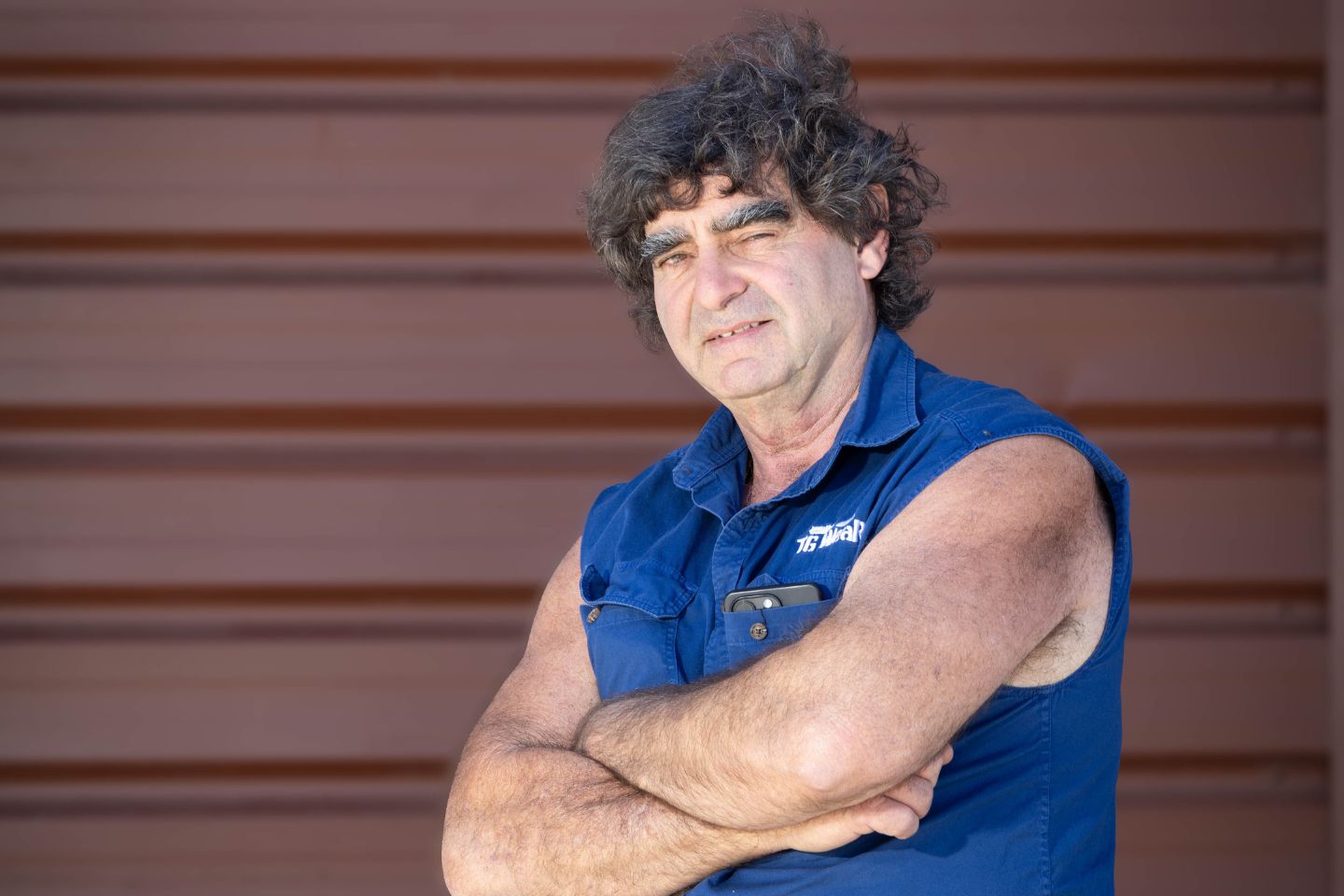
Spud king Tony Galati and brother Vince have sued their siblings over their late mother’s estate, continuing the several years-long dispute.

Continue Reading

Business

Jobs saved at Newcastle life sciences firm Newcells Biotech amid partial rescue deal

Published

on

Business Live

The university spin-out’s retina business including its specialist team has been acquired – but all other jobs have been lost

The Biosphere in Newcastle

The Biosphere in Newcastle

Jobs have been saved at a Newcastle biotech business after part of the firm was bought out of administration in a partial rescue deal. Cambridge based Axol Bioscience Ltd, a leading provider of stem cell technologies for drug discovery and research, has announced it has acquired the ophthalmology business of Newcells Biotech, a drug discovery partner specialising in the development of in vitro models.

The business swooped for the retina business of Newcells Biotech – based in the Biosphere at Newcastle Helix – following the appointment of administrators at Grant Thornton LLP. The Newcastle University spin out specialises in providing in vitro tools for testing how drugs interact with tissues and was founded 11 years ago by Dr Mike Nicholds and Professor Lyle Armstrong.

The firm, which had 49 employees in 2024, focused on offering models of the retina, kidney and lung and it was also carrying out testing for customers. Use of 3D models attracted interest after the US Food and Drug Administration (FDA) changed its rules four years ago, scrapping the requirement for new drugs to be tested on animals.

The Axol deal includes the specialist team, facilities and intellectual property within the retina division, specifically related to the supply of proprietary iPSC-derived (induced pluripotent stem cell) products and ophthalmology research services to biopharma, biotechnology and customers across Europe and the US. It’s not known how many staff members have transferred to Axol Bioscience, but 18 other jobs have been lost.

Advertisement

A spokesman for the company said: “On February 12, 2026, insolvency practitioners from Grant Thornton UK Advisory & Tax LLP were appointed as joint administrators of Newcells Biotech Limited. Following their appointment, the joint administrators agreed a sale of the Retina Business of the company as a going concern to Censo Biotechnologies Limited (trading as Axol Bioscience).

“The acquisition will ensure the operations of the Retina Business will continue at the main trading premises in Newcastle and secured the retention of all employees working within that part of the business. The remaining operations of the company ceased on appointment. As a result, it was not economically viable for the joint administrators to continue to employ the remaining members of staff resulting in 18 redundancies.”

Newcells Biotech CEO Mike Nicholds

Newcells Biotech CEO Mike Nicholds(Image: The Bigger Picture Agency Ltd)

Newcells Biotech announced two significant funding rounds during 2024 to expand its work. The investments – including £2.35m in February and £1.2m in May – aimed to help the business build its customer base and develop partnerships with other companies in its field.

Meanwhile, Axol said the acquisition expands its portfolio of models, and also strengthens its position as the leading independent provider of physiologically-relevant in vitro retinal models for ophthalmology drug discovery and safety testing. Axol recently announced a $2.8m financing deal, led by US life sciences investor BroadOak Capital Partners, which is supporting expansion of its US commercial operations, product development and manufacturing scale-up.

Advertisement

Liam Taylor, CEO of Axol Bioscience, said: “The addition of Newcells’ retinal organoid business is our third acquisition in five years.

He added: “Newcells has developed a highly sophisticated and scalable retinal organoid platform focused on predictive, human-relevant iPSC-derived retinal models that are recognised across the industry. Integrating this capability with Axol’s existing ophthalmology portfolio enables us to offer a broader, more physiologically relevant toolkit to support research.”

Continue Reading

Business

Food Stocks Tumble After General Mills Cuts Sales Forecast

Published

on

Food Stocks Tumble After General Mills Cuts Sales Forecast

Food Stocks Tumble After General Mills Cuts Sales Forecast

Continue Reading

Business

Not doomsday, AI will ring in modernisation: C S Venkatakrishnan, Barclays

Published

on

Not doomsday, AI will ring in modernisation: C S Venkatakrishnan, Barclays
India’s political stability, strong growth and rapid digital transformation have fundamentally reshaped the country’s position among major economies, Barclays global chief executive C S Venkatakrishnan said. In an exclusive interview with Joel Rebello and Sangita Mehta, the head of the UK’s second-largest bank with $2 trillion in assets, also said AI will modernise decades-old systems rather than destroy jobs and explained why the world is entering a sensitive point in the credit cycle after years of cheap borrowing. Edited excerpts:

In a matter of days, the world seems to have changed dramatically because of Anthropic’s recent AI update. How disruptive could this become?

The global AI ecosystem outside China is being driven by large US tech firms. Hyperscalers such as Amazon, Microsoft and Google provide cloud and computing capacity, supported by chipmakers like Nvidia and major data centre infrastructure. But the real transformation will come only when companies rebuild their processes end-to-end to integrate these tools. AI will make interactions more natural, reduce the need for coding expertise, and eventually reshape core functions such as customer service, fraud detection and wealth advisory. For this to work, companies must overhaul decades-old systems – a difficult and slow process.
What about the doomsday forecast?


No. We are far from that. Much of the work in large, traditional companies still depends on existing systems, and they continue to own customer relationships and products. The employment challenge is more relevant in certain functions, but AI can free up capacity which means existing people can do other things better. Companies are operating on technology infrastructure that is 30-40 years old, and there is a lot to fix. So I don’t see a doomsday scenario.
Apart from AI, we have geopolitical tensions and supply-chain realignments…

The world today resembles the 1970s-80s. The era of hyper-globalisation from 1990 to 2020 is over. Covid broke supply-chain trust, forcing large countries to secure medical supplies, drugs and other essentials domestically, while smaller countries aligned with bigger nations for vaccine access. We now see greater trade friction and a shift from global agreements to bilateral ones, including India’s deal with the European Union. Major economies, including India, are securing their own supply chains, especially for critical inputs like rare earths.

Advertisement

Will the dollar’s supremacy change?

The dollar will retain its supremacy as the world’s reserve currency for a long time. The US remains the hub of global trade and is a large manufacturing, services and digital economy. Key global commodities – oil, gold – are priced in dollars, giving it enormous standing. About 80% of all foreign-exchange trades have the dollar on one side. Reserve-currency status requires economic strength and trust, and replacing the dollar will be very hard.

Where does India fit into the scheme of things for Barclays?

We are headquartered in the UK but have a substantial presence in the US. India is our second-largest employee base with 30,000 people out of 90,000, so it’s very clear where we’re making our bets. India is a very important part of our global strategy and serves as the hub from which we run our Asian operations, including Hong Kong, Singapore and Japan. That reflects our long-term view on India. It was true before an Indian CEO, and I hope it remains true after, because it’s driven by economic logic, not anything else.

Advertisement

What will change after India’s trade deals with the EU and US?

Indian companies will continue expanding in the UK, US and Europe, and we help them do that – whether financing acquisitions, finding partners or identifying targets. After the India-US trade deal, we expect more FDI from US companies, and we support them in entering the Indian market. We do not intend to enter retail banking in India, but we have a private banking business and remain a strong partner to Indian firms expanding into the Middle East and Southeast Asia.

What are the strengths of the Indian market?

Barclays has a significant presence in only a few emerging markets, and India is one of them. A long period of political stability and strong economic growth has made India a very different prospect in 2026 versus 2010, compared to traditional emerging markets. There have been ups and downs in Argentina, and some of the bigger emerging markets. But India has held out. India is different from China. That’s why it’s a category of its own.

Advertisement

India may be a growth story, but do you think it’s not easy to do business here?

India’s operating environment has improved with world-class digital infrastructure – digital ID, seamless payments and modern commerce – and steady liberalisation of the financial and economic system. GST and tax rationalisation have strengthened efficiency. But India still needs a deeper domestic capital market that matches its scale, with more corporate credit flowing into insurance, securitisation and fixed-income markets. Improving ease of doing business – labour laws, PF rules, approvals – helps our clients and therefore us. The market which has done well in spite of the problems is real estate. It has done well because of scarcity of land, not because of transparency. Not because of the cleanness of title and ability to, correct rents or evict and so on. Those things are still weak. And if those were freed up, it would do even better.

From your vantage point, is there something you worry about?

Two things. First, the credit cycle: it has been long, and borrowing costs were low. A shock could unsettle it. Second, the implications of AI: how to use this technology to transform our business and deliver better products faster. We don’t want to be surprised again the way big banks were by fintechs. We run a risk-managed company with clear visibility of exposures and limits. I hope we are equipped to absorb a severe fall in asset prices, but when shocks happen, they come in ways you cannot predict – and they test you.

Advertisement

How will the era of higher interest rates affect global markets?

Two major forces kept inflation low over the last 30 years: global supply-chain shifts, especially manufacturing moving to China, and generally low interest rates that allowed companies to borrow and grow without triggering inflation. Now the impact will show up in credit. Borrowers who relied on cheap funding could face rising default risks. If I had to worry about something, it would be that changes in interest rates and weaker economic growth will pressure companies, weaken corporate balance sheets, and create risks in financial markets.

Is the private-equity model under strain?

The core PE model of buy, fix and sell still works, but firms are struggling to sell companies at expected valuations. IPO markets have slowed, and strategic or PE-to-PE sales have become harder. The rise of continuation funds signals pressure in the model. Large players remain resilient, but prolonged stress will make raising new capital more difficult.

Advertisement

How do you view the continued strength of China despite sanctions?

China’s 35-year growth story is nothing short of a miracle. Its trade surplus remains strong partly because global tariff adjustments take time, and partly because domestic demand is weakening, pushing more exports. These challenges do not take away from China’s broader economic achievements.

Continue Reading

Business

Martial law gambit made convict of South Korea’s Yoon, once a lawman

Published

on

Martial law gambit made convict of South Korea’s Yoon, once a lawman


Martial law gambit made convict of South Korea’s Yoon, once a lawman

Continue Reading

Trending

Copyright © 2025