WASHINGTON (AP) — In another era, the scene would have been unremarkable. But in President Donald Trump’s Washington, it’s become increasingly rare.
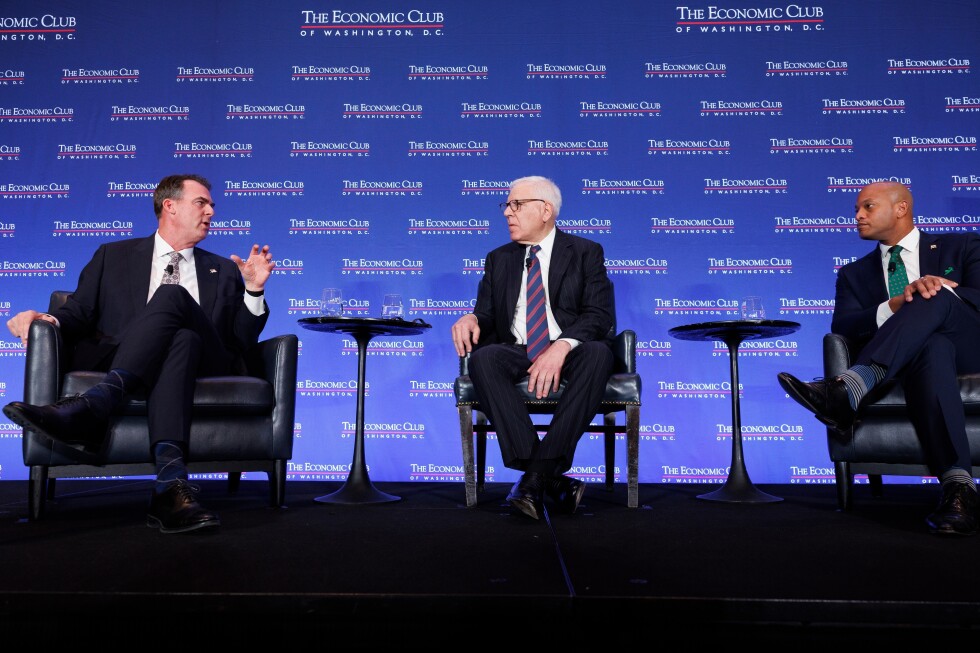
Sitting side by side on stage were Oklahoma Gov. Kevin Stitt, a Republican, and Maryland Gov. Wes Moore, a Democrat. They traded jokes and compliments instead of insults and accusations, a brief interlude of cordiality in a cacophony of conflict.
Stitt and Moore are the leaders of the National Governors Association, one of a vanishing few bipartisan institutions left in American politics. But it may be hard for the organization, which is holding its annual conference this week, to maintain its reputation as a refuge from polarization.
Trump has broken with custom by declining to invite all governors to the traditional White House meeting and dinner. He has called Stitt, the NGA’s chair, a “RINO,” short for Republican in name only, and continued to feud with Moore, the group’s vice chair, by blaming him for a sewage spill involving a federally regulated pipeline.
Advertisement
The break with tradition reflects Trump’s broader approach to his second term. He has taken a confrontational stance toward some states, withholding federal funds or deploying troops over the objections of local officials.
With the Republican-controlled Congress unwilling to limit Trump’s ambitions, several governors have increasingly cast themselves as a counterweight to the White House.
“Presidents aren’t supposed to do this stuff,” Utah Gov. Spencer Cox said about the expansion of executive power in recent administrations. “Congress needs to get their act together. And stop performing for TikTok and actually start doing stuff. That’s the flaw we’re dealing with right now.”
Cox, a Republican, said “it is up to the states to hold the line.”
“People are paying attention to how governors are moving, because I think governors have a unique way to move in this moment that other people just don’t,” he said.
Still, governors struck an optimistic tone in panels and interviews Wednesday. Stitt said the conference is “bigger than one dinner at the White House.” Moore predicted “this is going to be a very productive three days for the governors.”
“Here’s a Republican and Democrat governor from different states that literally agree on probably 80% of the things. And the things we disagree on we can have honest conversations on,” Stitt said while sitting beside Moore.
Advertisement
Tensions over the guest list for White House events underscored the uncertainty surrounding the week. During the back-and-forth, Trump feuded with Stitt and said Moore and Colorado Gov. Jared Polis were not invited because they “are not worthy of being there.”
Whether the bipartisan tone struck Wednesday evening can endure through the week — and beyond — remains an open question.
“We can have disagreements. In business, I always want people around me arguing with me and pushing me because that’s where the best ideas come from,” said Stitt. “We need to all have these exchange of ideas.”
North Yorkshire Police has had reports of burglars breaking into homes, stealing car keys, then driving off in the vehicle parked outside.
A spokesperson for the force said few simple precautions can help protect you from these opportunistic ‘2-in-1’ thieves.
PC Tom Birkinshaw said there have been particular issues in the west of the city.
Advertisement
“Although incidents of this nature are uncommon, they highlight the importance of keeping homes and vehicles as secure as possible, particularly during the night,” he said.
“Always ensure all doors and windows are locked before going to bed, including patio or side entrances.
“Keep keys out of sight and away from doors, windows, or letterboxes. Avoid leaving them in accessible drawers near entry points.
“Use security lighting at the front and rear of your property where possible.
Advertisement
“Consider additional security measures, such as alarm systems, CCTV, or doorbell cameras, to deter offenders and keep vehicle keys upstairs or in a secure location that cannot be easily accessed. Also ensure vehicles are locked and remove any items from view.
“If your vehicle uses keyless entry, consider signal‑blocking pouches (Faraday pouches) to prevent relay theft attempts and consider physical security measures, such as steering wheel locks.
“Burglary is a particularly invasive crime that can have a lasting impact on victims. If you have been a victim and need support and help, you should have been offered the services of Victim Support. You may have declined at the time, or not noticed the offer, but can refer yourself at any time by either calling 0808 168 9111 or visiting their website www.victimsupport.org.uk.
“Burglars do not want to get caught, so taking action to make your home or business premises safe and less attractive to thieves can go a long way to reducing the risk.
Advertisement
“If you ever experience this issue or have information regarding an incident, please report it using our online reporting tools at https://www.northyorkshire.police.uk/, speak to an operator in our Force Communications Room via our online web chat or call the non-emergency number 101.”
Britain’s Got Talent is returning to screens this weekend as the 19th series kicks off
Tianna Corbin TV Reporter
09:23, 19 Feb 2026
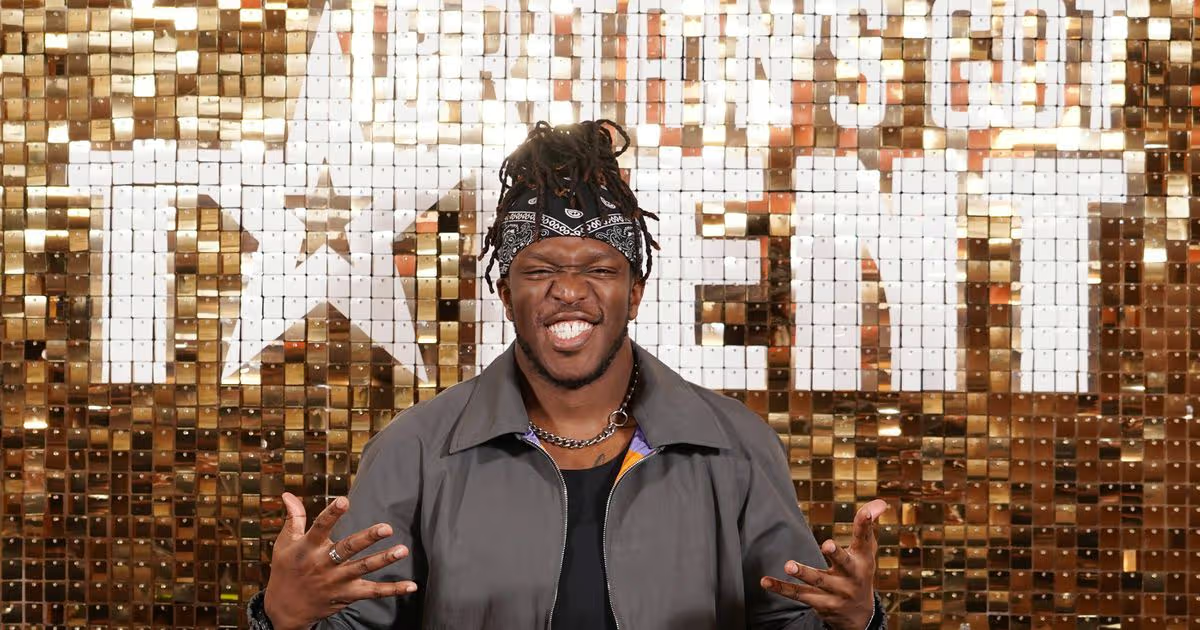
The countdown is nearly complete as ITV audiences prepare to welcome back Simon Cowell, Amanda Holden, Alesha Dixon and KSI for a fresh series of Britain’s Got Talent.
With the opportunity to claim a staggering £250,000 prize, alongside a coveted slot at the Royal Variety Performance, contestants simply need to secure approval from three judges.
Though they could bypass the competition entirely and advance directly to the semi-finals if they earn a golden buzzer from either the judging panel or hosts Ant and Dec..
Before the series launches, Amanda revealed her impressions of the panel’s newest member, KSO, reports Belfast Live.
KSI formally joined the judging line-up this year, having made guest appearances in 2025. He took over from Bruno Tonioli, who stepped down owing to diary clashes.
When questioned about what the YouTube star contributes to the team, Amanda remarked: “He is super cool, really personable. To be honest with you, I feel like I’ve known him for ages.
“I feel quite protective over him, I don’t know why, a tiny bit mother-y. I think what he brings is that he cuts to the chase, so there’s no waffling. He sort of says exactly what he thinks, which is quick and succinct.”
In the YouTube clip, which was posted on Instagram, Amanda admitted she’s never encountered anyone other than herself quite so eager to engage with the performers on-stage.
For the latest showbiz, TV, movie and streaming news, go to the new **Everything Gossip** website.
Yet, whilst discussing KSI, Amanda couldn’t resist taking a playful dig at his musical endeavours.
When questioned about whether she was a fan of his music, she pulled a face and smirked, evidently reluctant to respond.
As the video included the sound effect of crickets chirping, the ITV judge remarked: “I have to say, I loved his last single. I did love his last single.”
Britain’s Got Talent returns to ITV1, ITVX on Saturday February 21 at 7pm.
Advertisement
Ensure our latest headlines always appear at the top of your Google Search by making us a Preferred Source.** Click here to activate**** or add us as your Preferred Source in your Google search settings.**
It’s now been almost five years since Daniel Craig’s departure from the James Bond franchise in No Time To Die – and somehow there’s still been no confirmation of who will be succeeding him as 007.
Meanwhile, off the back of Wuthering Heights’ box office success, it now looks like a certain Australian star may also be a hot favourite for the job.
As we dive into the latest 007 speculation, here are 20 stars who’ve all been rumoured for the job…
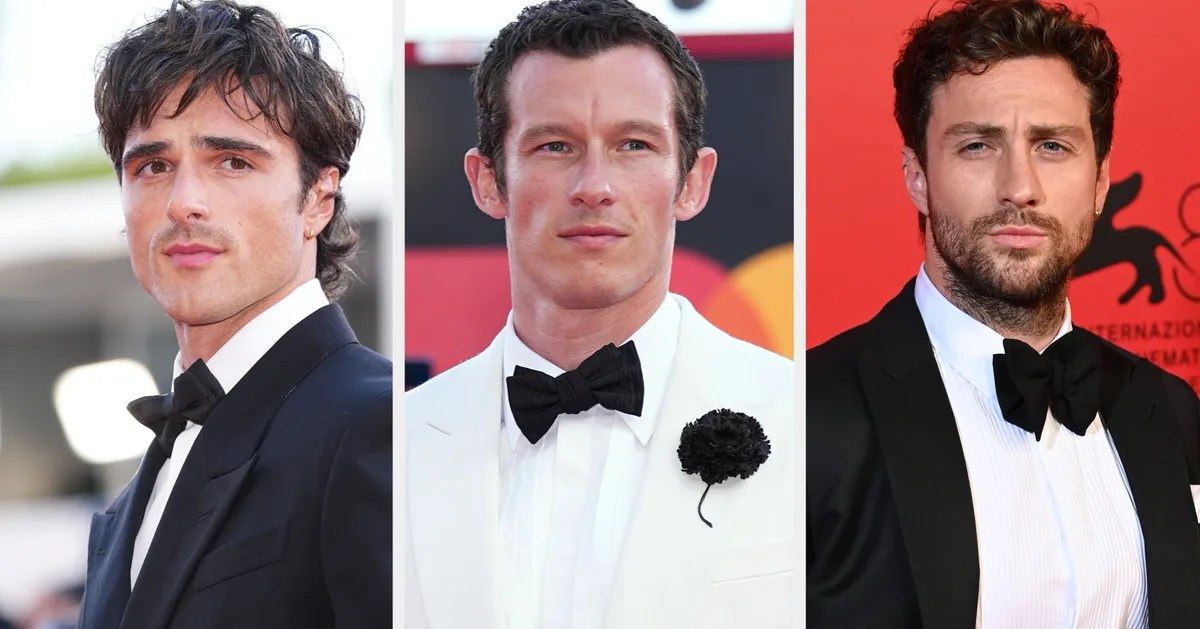
Who is he? The Australian actor has been a star on the rise ever since his break-out role in the teen drama Euphoria.
Following acclaim in films like Saltburn, Priscilla and The Narrow Road To The Deep North, Jacob landed his first Oscar nomination in 2026 for his performance as the creature in Frankenstein, the same year he also got everyone talking thanks to his work as Heathcliff in Wuthering Heights.
Advertisement
Where did the rumour come from? Jacob’s name was first mentioned as a serious contender to play James Bond in the summer of 2025, when Variety suggested he was at the top of producers’ wishlists.
Following this, World Of Reel claimed he’d met with director Denis Villeneuve, with the gossip site DeuxMoi suggesting shortly after Wuthering Heights’ release that he’d been offered the role of James Bond.
What’s he said? He previously told Extra of calls for him to play James Bond: “That’s beautiful… I just like that people maybe want to put me in their movies. That makes me really glad.”
Who is he? Callum Turner has been putting in the work for more than a decade now, but he’s enjoyed a real breakthrough in the last few years.
Some of his most recent projects include the Fantastic Beasts movies, in which he played Theseus Scamander, the sports drama The Boys In The Boat and the star-studded Apple TV+ series Masters Of The Air.
Where did the rumour come from? In December 2025, several news outlets spotted that betting odds had been suddenly slashed on Callum being cast as James Bond.
Since then, Callum’s name was mentioned in an article published by the Mail, suggesting he’d been “blabbing all over town” that he’d landed the coveted spy role.
What has he said? Despite the Mail’s reports about Callum’s loose-lipped approach to his Bond casting, he hasn’t said anything publicly yet.
Who is he? Until recently, Aaron has been widely considered as the frontrunner for the role of James for more than a year now. His past credits include the superhero comedy Kick-Ass, the John Lennon biopic Nowhere Boy and Christopher Nolan’s Tenet.
Since then, he’s appeared in projects as varied as Marvel’s Kraven The Hunter, the arthouse horror flick Nosferatu and Danny Boyle’s 28 Years Later.
Where did the rumour come from? In November 2022, Aaron supposedly met with Bond producer Barbara Broccoli (who has since left the franchise), with follow-up reports claiming the meeting “went well”.
Who is he? The James Bond rumour that’s being going around the longest time involved Idris Elba, whose acting credits include the Thor films, Beasts of No Nation, the Fast & Furious series and the BBC detective drama Luther.
Where did the rumour come from? Idris has been rumoured to be in the running to play 007 for more than a decade (since the speculation began in 2014, there’ve been three new films in the series released), with leaked emails from Sony executives suggesting he was a favourite for the part. Following this, then-Bond boss Barbara Broccoli said Idris has been “part of the conversation” about who the role goes to next.
However, in August 2022 it was reported that Idris had made the decision to take himself out of the running – and in the last few years his casting has seemed less and less likely… although we’d kind of love it if he got the opportunity to play Bond at least once, given just how long he was associated with the franchise.
What has he said?“James Bond is a hugely coveted, iconic, beloved character that takes audiences on this massive escapism journey. Of course, if someone said to me, ‘Do you want to play James Bond?,’ I’d be like, ‘Yeah!’. That’s fascinating to me.”
Advertisement
TOLGA AKMENTOLGA AKMEN/EPA-EFE/Shutterstock
Who is he? A more recent addition to the list of rumoured potential 007s is another Aaron, this time fellow Brit Aaron Pierre.
As well as voicing the title character in Disney’s Mufasa, Aaron appeared in The Underground Railroad, played Malcolm X in the anthology series Genius and starred opposite Saoirse Ronan and Paul Mescal in the sci-fi dystopian drama Foe.
Where did the rumour come from? The news appears to come from movie “insider” Daniel Richtman, who claimed in June 2025 that Aaron is “being considered” for the part.
What has he said?He told Chris Evans on Virgin Radio: “If that opportunity ever presented itself, that would be insane.”
Advertisement
Who is he? After getting his start in indies like Beach Rats and Triangle Of Sadness, British star Harris Dickinson’s profile has had a real boom in the last few years off the back of roles in Babygirl, The Iron Claw and A Murder At The End Of The World.
He’ll next be seen in action as John Lennon in Sam Mendes’ ambitious Beatles movie project – which, to be fair, means he may have too much on his plate to take on 007 too.
Where did the rumour come from? Variety’s piece on Amazon’s supposed “James Bond wishlist” in the summer 2025 that mentioned Jacob Elordi as a contender also included Harris (as well as Spider-Man himself, Tom Holland).
“The role of James Bond is interesting,” he said. “The circumstances of Bond are interesting. The character, the world, what he goes through, that’s interesting.”
Advertisement
He also praised director Denis Villeneuve, who will helm the upcoming 25th James Bond film.
Mike Marsland via Getty Images
Who is he? He’s Tom Hardy! You may have seen him in films including Max Max: Fury Road, Dunkirk, Legend, The Dark Knight Rises, Inception or Venom.
Where did the rumour come from? Like Idris Elba, speculation about Tom Hardy playing 007 goes way back.
Things hotted up in 2020, though, when the film blog The Vulcan Reporter claimed he’d done several auditions for the part and was “basically locked into the role”.
Advertisement
What has he said?“You know, there’s a saying amongst us in the fraternity of acting, and in the fellowship of my peer group, that if you talk about it you’re automatically out of the race. So I can’t possibly comment on that one! If I mention it, it’s gone.”
Jeff Spicer via Getty Images
Who is he? Probably best known for his role as Loki in the Marvel universe, Tom also won a Golden Globe for his performance in the drama The Night Manager.
Where did the rumour come from? Around the time The Night Manager was airing, many viewers pointed out that the British actor might be a good James Bond, and he was soon spotted having a meeting with the franchise’s chief Barbara Broccoli.
What has he said?“What can I say that you don’t already know? It’s interesting in itself that I’ve suddenly become very aware of what I’m saying, is it not?
“Because there’s something about what I’m saying that becomes the story. Not for you, but the world outside. Whatever I say, I’ve found, generated more questions.”
Samir Hussein via Getty Images
Who is he? After rising to fame in Game Of Thrones, the Scottish actor later won a Golden Globe for his leading role in Bodyguard.
Where did the rumour come from? The action-packed Bodyguard led to Richard being tipped to succeed Daniel Craig as Bond, with the Daily Mail reporting at the time that the drama had caught the eye of former 007 boss Barbara Broccoli.
Advertisement
Bodyguard’s producers even teased that a potential second series of the drama would depend on “what happens with James Bond”.
What has he said?“I’m more than flattered to be mentioned, for people to consider putting me in that role. I’m very flattered and thankful. It’s a really brilliant thing to be in.
“I don’t want to curse anything by saying anything. I think that’s the curse of that. If you talk about it, you’ll curse it.”
NEIL HALL/EPA-EFE/Shutterstock
Who is he? James is perhaps best known for his TV roles, which have included Happy Valley, Grantchester, McMafia and The Trial Of Christine Keeler, though you may have also seen him in action in the recent big-screen adaptation of Little Women.
Advertisement
Where did the rumour come from? While many of the actors named as potential replacements for Daniel Craig are based on anonymous “insiders” and source quotes, the rumours about James seem to stem primarily from bookies’ odds.
What has he said? “It’s so weird and bemusing. But yet again, it’s based on pure speculation and it makes for a good little clickbait moment in the media. Other than that, it’s just fun and bemusing.”
Who is he? Jack Lowden has had a massive few years, scoring Bafta, Golden Globe and Emmy nominations for his work in Slow Horses and appearing with Nicole Kidman in the breezy Netflix mystery The Perfect Couple.
Where did the rumour come from? This is another story that’s based on bookies’ odds, with Jack’s name soaring towards the top of the list when Amazon acquired creative control of the spy franchise.
Who is he? The British star of films like Crazy, Rich Asians; A Simple Favour and the Guy Ritchie action film The Gentlemen.
Where did the rumour come from? After Daniel Craig’s exit from the James Bond franchise was confirmed, fans began campaigning for Henry to take over the iconic spy role.
What has he said?“[The speculation] definitely [came] from Crazy Rich Asians, maybe the white suit coming out of the park. [And] because I’m Asian and everybody’s fighting for a diverse Bond – sorry, white guys.
Advertisement
“I don’t know. It’s an honour to even be in the conversation. It’s one of the greatest film roles ever, you’d be stupid to be like, ‘I don’t want to do that.’
“Isn’t it great that people are like, ’OK, now’s the time, why the hell can’t we have a black Bond, an Asian Bond, a mixed-race Bond, a non-distinct Bond?”
Jeff Spicer via Getty Images
Who is he? After appearing in Sunshine On Leith and Pride, George landed his biggest role to date when he took the lead in the Bafta-winning 1917, and he’s since appeared in Femme and The End.
Where did the rumour come from? According to a 2021 report in Page Six, Bond producers were hoping to reboot the franchise after No Time To Die, making the Bond character younger, which is where the idea to have George play a rather different 007 was reportedly born.
Advertisement
What has he said? “You’ve got to consider it for sure. I mean, it’s an amazing thing, but it would also be a massive thing. I don’t know if that’s a reality, but if it ever became one, of course, it would be a consideration. But be a careful one.”
David M. Benett via Getty Images
Who is he? Regé-Jean became an overnight sensation in 2020 thanks to his role as the main love interest in the Netflix period drama Bridgerton.
Where did the rumour come from? Fans immediately began suggesting Regé-Jean as a potential Bond, and when he announced he wasn’t returning for the second season of Bridgerton, the rumour mill hotted up even further.
What has he said?“Ah, the B word. I think if you are British and do anything of note, that other people take notice of, then people will start talking about that.
Advertisement
“That’s fairly normal and I’m flattered to be in the category of Brits that people have noticed.”
Who is he? Charlie’s biggest acting credits include Green Street, Queer As Folk, Sons Of Anarchy and Guy Ritchie’s The Gentlemen. In 2025, he caused a stir when he was cast as Ed Gein in the third season of Ryan Murphy’s Monster.
He was also famously cast in the role of Christian Grey in the Fifty Shades Of Grey franchise, but dropped out due to scheduling conflicts, and was replaced by Jamie Dornan.
Where did the rumour come from? Charlie’s name being linked with playing James Bond largely stems from his devoted fanbase, as well as bookies’ odds.
What has he said?“I would be so flattered and honoured to be considered to play James Bond as an Englishman. But my intuition tells me that I shouldn’t be waiting for that phone call to come. I think there are many people ahead of me on that list.
Advertisement
“It’s very flattering sort of fan dialogue. Nobody’s ever, on a professional level from within the industry, brought that up to me.
“As much as people want to talk about me playing James Bond – please continue. Maybe that’s the genesis of these things. Maybe fan chatter leads to industry people actually talking about it in a more serious way.”
CHRIS DELMAS via Getty Images
Who is he? Sam is best known for playing one of the lead roles in the historical drama Outlander.
Where did the rumour come from? Sam has actually been on Bond producers’ radars for a while, having previously auditioned to succeed Pierce Brosnan in Casino Royale, which would eventually become Daniel Craig’s first outing in the role.
Advertisement
What has he said?“I don’t know if there is a conversation being had apart from in the media, but I think it’s an incredible franchise and a great character, so of course I would jump at it.”
Matthias Nareyek via Getty Images
Who is he? Henry is famous for playing Superman in the superhero’s most recent big-screen offerings, and also has the lead role in the Netflix adaptation of The Witcher.
Like Sam Heughan, Henry also auditioned for Casino Royale, back when he was just 21 years old.
Advertisement
What has he said?“I would absolutely jump at the opportunity. At this stage, it’s all up in the air. We’ll see what happens. But yes, I would love to play Bond, it would be very, very exciting.”
AFP Contributor via Getty Images
Who is he? The chart-topping singer made a name for himself as a member of One Direction, before making a name for himself as a Grammy-winning solo artist.
In addition to his music career, Harry also had a short-lived career as an actor, first appearing in Christopher Nolan’s Dunkirk before getting mixed-at-best reviews for his work in Eternals, Don’t Worry Darling and My Policeman.
Where did the rumour come from? This might sound like the work of over-excited Directioners, but in 2021, The Sun reported that Bond producers were hoping to take the character in a “new age” direction, and tipped Harry for the role.
Advertisement
What has he said?Harry’s reps said the rumours were “not even remotely true”. Too bad, tbh.
Who is he? Ted Lasso fans will recognise Phil from his Emmy-nominated performance as Jamie Tartt.
Where did the rumour come from? Interestingly, unlike most of the names on this list, this rumour comes straight from the horse’s mouth, with Phil confirming that a “conversation” was had about him playing Bond – albeit a short one.
What’s he said? “There was a conversation one of my agents had but they quite firmly shut the door in their face.”
David M. Benett via Getty Images
Who is he? Another addition to the list of rumoured James Bond stars, Lucien Laviscount’s past credits include Coronation Street, Waterloo Road, Ryan Murphy’s Scream Queens and Emily In Paris.
Advertisement
Where did the rumour come from?The Daily Mail first reported in December 2022 that Lucien had caught the eye of James Bond producers, with an unnamed source claiming he “ticks all of the boxes” as a “super talented” and “extremely handsome” young actor.
However, it appears there’s one drawback.
According to the Mail, Lucien’s reality TV past (after leaving Waterloo Road, he appeared on Celebrity Big Brother, and was involved in a brief showmance with a certain Ms Katona) has put off some execs behind the scenes.
What has he said? Again, he’s yet to address the rumours directly, so make of that what you will.
Policy chairman of the City of London Corporation, Chris Hayward, said: “Record demand for high‑quality, amenity‑rich office space is reinforcing the City’s position as one of the world’s most resilient and attractive business districts, with vacancy in the City Core continuing to fall, prime supply remaining exceptionally tight, and leasing activity reaching its strongest annual performance since 2019. As global capital becomes increasingly selective, the City of London is a place able to deliver complex schemes at scale while adapting to changing patterns of work and occupier expectations.
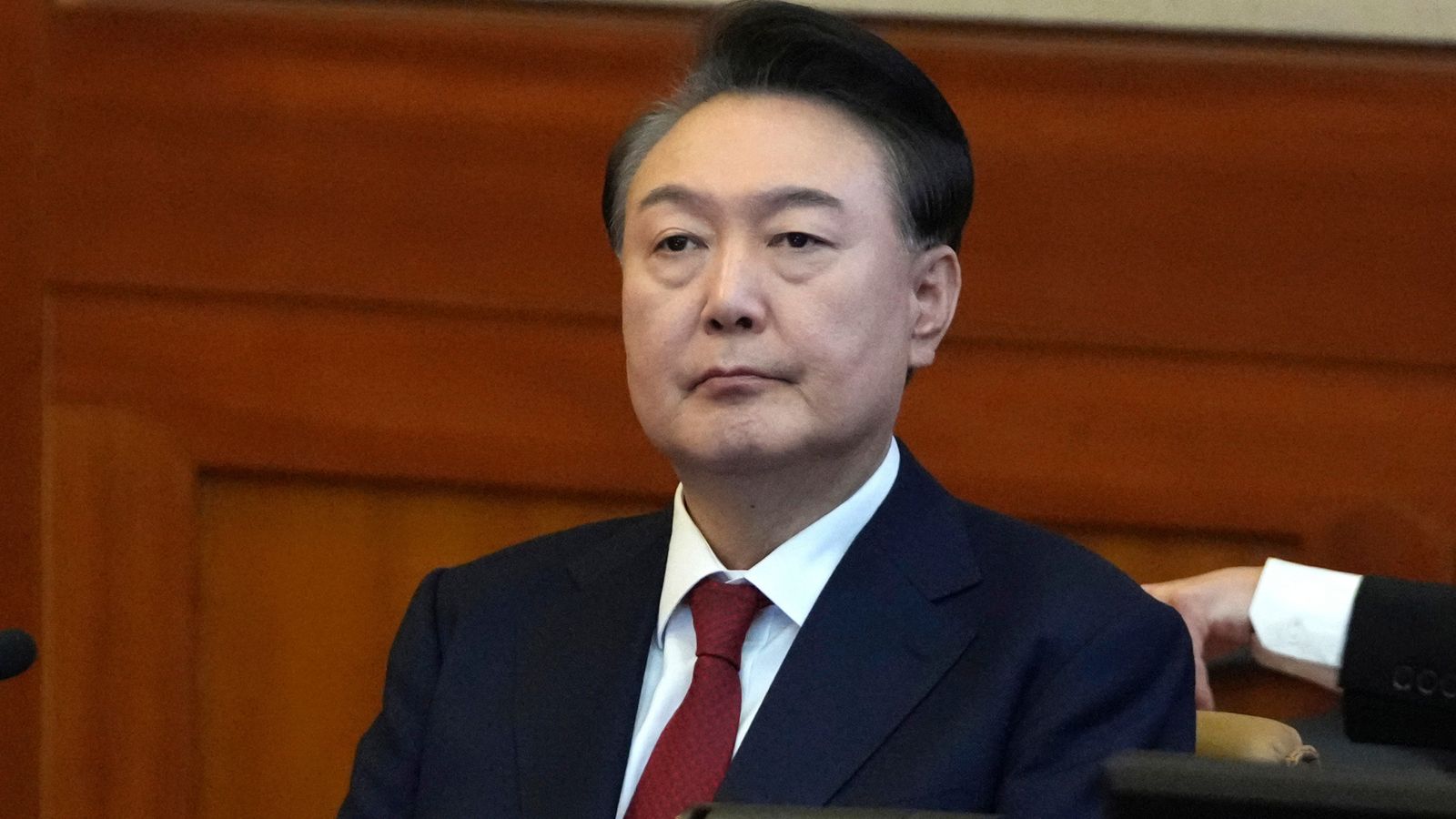
A South Korean court has sentenced former president Yoon Suk Yeol to life in prison after he imposed martial law in the country in 2024.
Yoon was found guilty of abuse of authority and masterminding an insurrection, stemming from his mobilisation of military and police forces in an illegal attempt to seize the liberal-led National Assembly in December 2024, in a case that meant he also faced the death penalty.
The 65-year-old staunch conservative had defended his decree as necessary to stop liberals, whom he described as “anti-state” forces, from obstructing his agenda with their legislative majority.
Image: Supporters of Yoon react after the guilty verdict.
Pic: Reuters
The emergency rule triggered a national political crisis.
Advertisement
Martial law lasted for around six hours, before being lifted after politicians managed to break through a blockade by hundreds of heavily-armed troops and police, unanimously voting to lift the measure.
Advertisement
From 2024: How six hours of martial law unfolded in South Korea
Prosecutors sought the death penalty in January, saying “his unconstitutional and illegal emergency martial law undermined the function of the National Assembly and the Election Commission… actually destroying the liberal democratic constitutional order.”
South Korea has not executed anyone since 1997 – a move widely seen as a de facto moratorium on capital punishment.
Advertisement
Image: Yoon’s supporters staged a rally outside the Seoul Central District Court.
Pic: AP
The court also convicted and sentenced several former military and police officials involved in enforcing the martial law decree.
Former defence minister Kim Yong Hyun received a 30-year jail term for his central role in planning the measure and mobilising the military.
Yoon was sentenced last month to five years in prison for resisting arrest, fabricating the martial law proclamation and sidestepping a legally mandated full cabinet meeting before he declared martial law.
The Seoul Central Court has also convicted two of Yoon’s cabinet members in other cases, including former prime minister Han Duck-soo, who received a 23-year prison sentence for attempting to legitimise the decree by forcing it through a cabinet council meeting, falsifying records and lying under oath. He has appealed the verdict.
A Scottish lesbian group has criticised Olivia Colman for identifying as a “gay man”, describing her comments as “deeply painful” in a public letter.
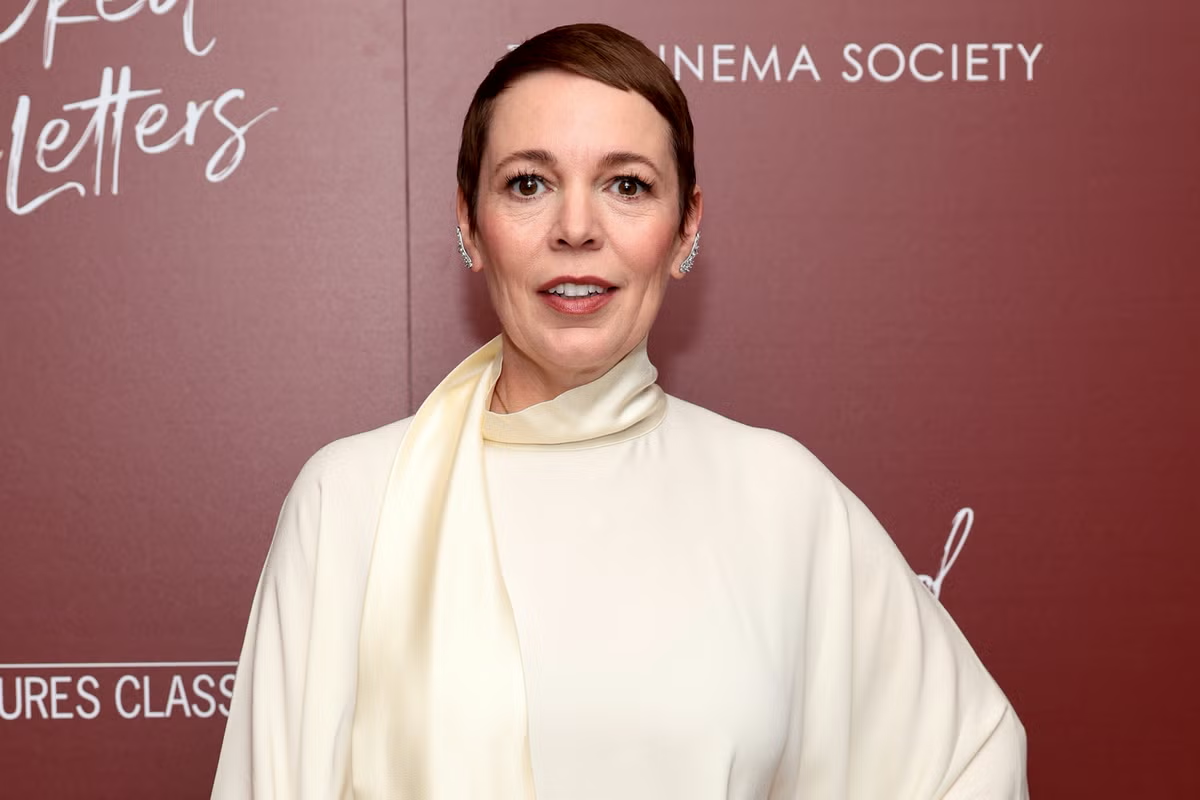
Earlier this month, the Oscar winner said that she’s “always felt sort of non binary” and “never felt massively feminine” while promoting her upcoming film Jimpa. The 52-year-old has been married to husband Ed Sinclair since 2001, with the pair sharing three children.
Colman’s admission has prompted backlash from Scottish lesbian group The Fantastic Lesbians, who claimed that her comments “diminished [their] struggle” in a letter on social media.
“When someone who has lived openly and comfortably as heterosexual speaks about identifying as gay, it can be deeply painful for those whose lives have been shaped by the realities of actually being gay or lesbian,” a spokesperson for the group wrote in a two-page letter on X on Wednesday (18 February).
Advertisement
“For many people in the lesbian and gay community, sexuality has not simply been a label but a journey marked by confusion, fear, self-interrogation, and often profound alienation from family, faith communities or societies at large.
“Heterosexuality, in contrast, exists within an inclusive heteronormative framework. It is affirmed in media, celebrated in family structures, and reinforced by social expectations.”
The spokesperson highlighted that “many heterosexual people never have to question their orientation” or “come out”. They continued: “They are not typically asked to justify their relationships or prove the legitimacy of their families.”
Concluding the letter, they insisted that their intention is “not to accuse or attack”, but to “express the hurt” around Colman’s comments.
Advertisement
“For many, being gay has required courage, resilience, and sacrifice in ways that heterosexual life simply has not demanded,” they added.
Watch Apple TV+ free for 7 day
New subscribers only. £9.99/mo. after free trial. Plan auto-renews until cancelled.
ADVERTISEMENT. If you sign up to this service we will earn commission. This revenue helps to fund journalism across The Independent.
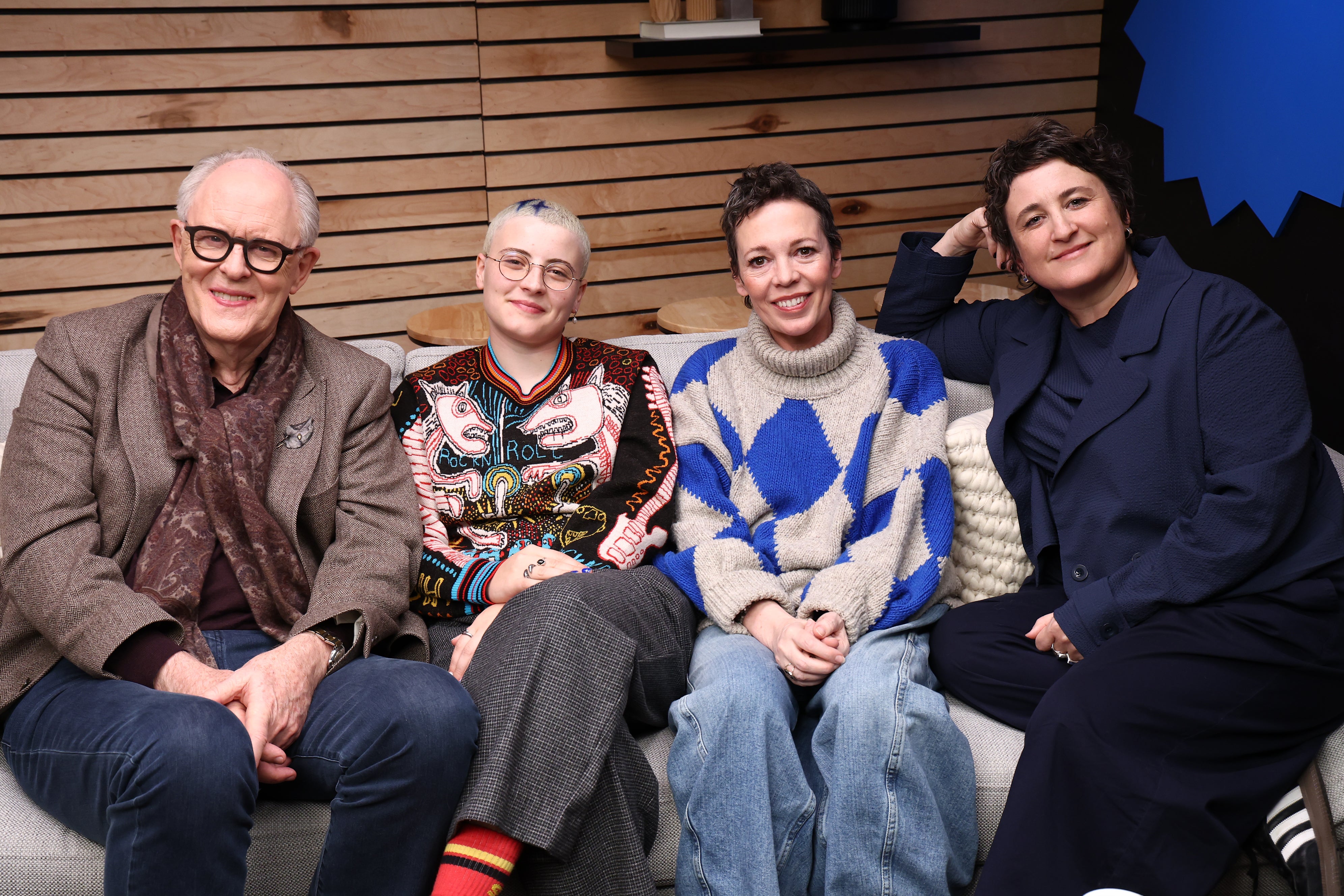
The 52-year-old currently stars in upcoming drama Jimpa as a mother who travels with her non-binary child (Aud Mason-Hyde) to visit her gay father (played by John Lithgow) in Amsterdam.
Advertisement
Speaking about the film, Colman opened up to Them about her gender identity. “Throughout my whole life, I’ve had arguments with people where I’ve always sort of felt non-binary,” she said.
Olivia Colman with the cast of Jimpa (Getty Images for Vox Media)
“I’ve never felt massively feminine in my being female. I’ve always described myself to my husband as a gay man. And then he goes, ‘Yeah, I get that.’”
Earlier in February, Colman’s Jimpa co-star Mason-Hyde called Lithgow’s decision to star in the new Harry Potter series as “vaguely hurtful” and “difficult”. Lithgow is set to play Albus Dumbledore in HBO’s adaptation of the hit novels.
“I never felt invalidated or questioned or doubted in my identity or in my transness by him,” they told OUT. “I consistently felt that he was a very loving and a very guiding co-star, and so there’s an element of this that feels vaguely hurtful.”
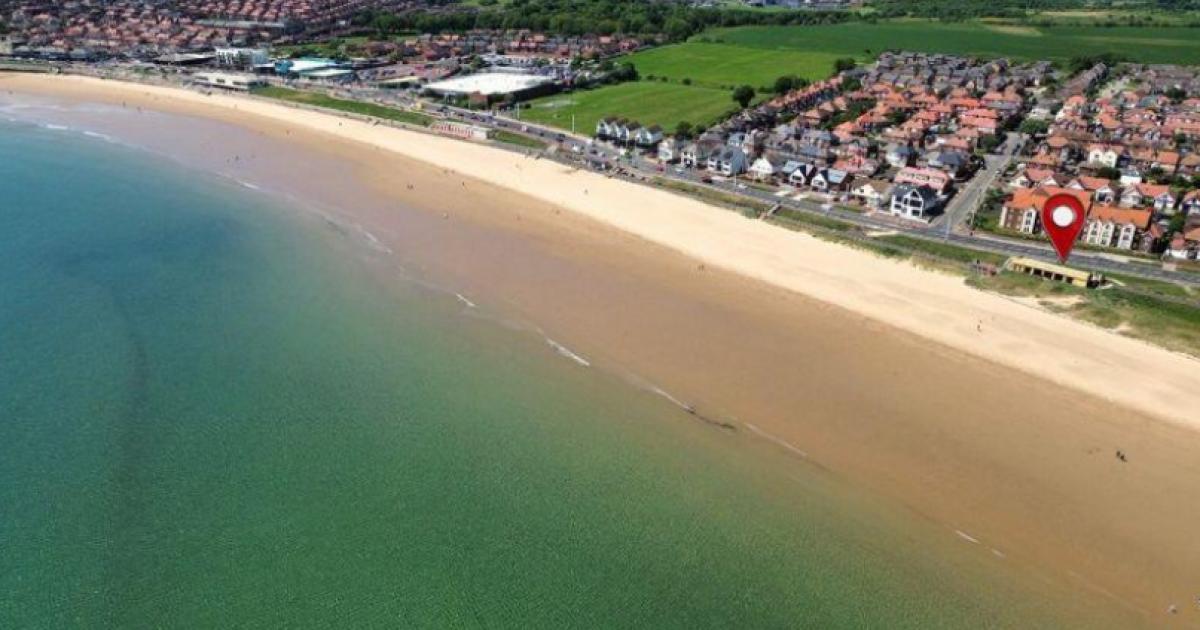
North Restaurant, along Whitburn Bents Road in Seaburn was named the Good Food Guide’s Best Local Restaurant 2025, and the seafront venue has developed a loyal following, earning praise online for its “beautiful location”.
Estate agents, Rook Matthews Sayer, have listed the restaurant for sale.
North is yet to confirm the reason for the closure and did not respond to The Northern Echo’s request for comment in time for publication.
North in Seaburn is up for sale. (Image: ROOK MATTHEWS SAYER)
The agents say the venue has a ‘prime seafront location’, with ‘uninterrupted sea views and direct access to the golden sands’ of Seaburn Beach.
Advertisement
The restaurant currently offers 32 internal covers and 12 external seats.
North in Seaburn is up for sale. (Image: ROOK MATTHEWS SAYER)
The North Restaurant also features an open-plan, fully-equipped kitchen and a dedicated bar area.
The restaurant has a leasehold tenure with six years remaining on the lease, at an annual rent of £21,000.
North in Seaburn is up for sale. (Image: ROOK MATTHEWS SAYER)
On Facebook, the restaurant boasts 6,400 followers and on Instagram, it is followed by 12,700 users.
Advertisement
North in Seaburn is up for sale. (Image: ROOK MATTHEWS SAYER)
North’s menu comprises of brunches, evening dining, and traditional Sunday lunches, complemented by a wide variety of drinks.
A frustrating 2-2 draw at Leeds, in which the Blues were two goals up, saw Liam Rosenior’s side miss the chance to leapfrog Manchester United into the top four.
And the new head coach will be aiming to avoid a similar disappointment when the Clarets come to town.
Burnley are licking their wounds after a humiliating FA Cup exit at the hands of Mansfield Town, bringing them crashing back down to earth after a remarkable 3-2 win at Crystal Palace.
Date, kick-off time and venue
Advertisement
Chelsea vs Burnley is scheduled for a 3pm GMT kick-off on Saturday, February 21, 2026.
The match will take place at Stamford Bridge.
Where to watch Chelsea vs Burnley
TV channel: In the UK, the game will not be televised live as it lands during the 3pm Saturday blackout.
Advertisement
Free highlights: The Sky Sports app and YouTube channel will show highlights from 5.15pm with Match of the Day broadcasting on BBC One at 10.30pm GMT.
Live blog: You can follow all the action on matchday via Standard Sport’s live blog, featuring expert insight and analysis from Dom Smith at the ground.
Chelsea vs Burnley team news
Cole Palmer is expected to return to the Chelsea matchday squad after being left out against Hull City, with Liam Rosenior confirming the midfielder is having his “minutes managed.”
Advertisement
Romeo Lavia is also back in contention, but Marc Cucurella will miss out the hamstring injury picked up against Leeds. There is currently no timeframe on a possible return for the left-back. Elsewhere, Jamie Gittens, Filip Jorgensen and Dario Essugo are not expected back before the end of the month, and Levi Colwill is a long-term absentee.
It is a case of as you were for Burnley, with Axel Tuanzebe, sidelined until March, the only player approaching a return from injury.
Chelsea vs Burnley prediction
A blip against an impressive Leeds side will have deeply frustrated Liam Rosenior, but there is no cause for alarm. Burnley will offer far less threat, especially on the road, and this should be another straightforward victory for Chelsea.
Advertisement
Rosenior will hope to have the result wrapped up early in the second half, allowing him to rest some of his stars – including Cole Palmer – ahead of facing Arsenal eight days later.
The couple are being held at Tehran’s Evin prison.
Caroline Barry and Simon Hamalienko
08:00, 19 Feb 2026Updated 08:00, 19 Feb 2026
A British couple, from East Sussex, have been sentenced to 10 years in Iran on charges of spying while their worried family plead with the UK government to step in.
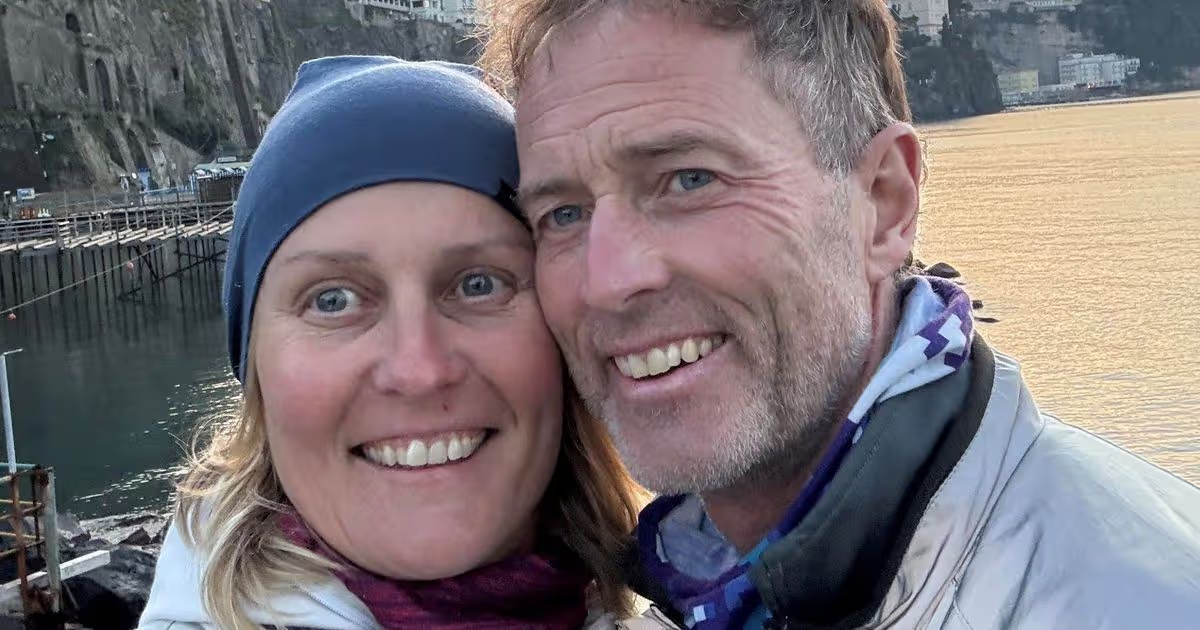
Lindsay and Craig Foreman have denied the spying charges and their family have been highlighting concerns about their trial and prison conditions. The couple were arrested in January 2025 while travelling the country as part of a world motorbike trip, reported The Star.
Advertisement
They are being held at Tehran’s Evin prison. Joe Bennett. The couple will appear before a court in Tehran in the coming days.
Lindsey’s son confirmed they were only told last week about the sentence. The family are “deeply concerned” for their welfare in prison, and “lack of transparency” in the judicial process.
“My parents have now been sentenced to 10 years following a trial that lasted just three hours and in which they were not allowed to present a defence,” he said.
Advertisement
“They have consistently denied the allegations. We have seen no evidence to support the charge of espionage.”
“We were previously told that once sentencing occurred, further action would follow. We now hope the UK Government will act decisively and use every available avenue to secure their release.”
Craig asked the UK Government for help as he is kept in a hellhole prison. “One word would be: help. Full stop,” he told ITV News.
“I don’t understand why we have been here for 13 months, being held hostage in 2026. In what day and age does this (happen)? When does this end?”
Advertisement
He described being held in an “eight-foot cell with a hole in the floor and a sink.” He said the effects of 57 days in solitary confinement had: “Emotionally and physically, it broke me to pieces”.
Craig said the infrequent meetings with his wife are what sustain him.
“I know her prison is just 70 metres away, and I get to see her once a month. For me and for Lindsay, seeing each other is the only thing that’s keeping us going right now. I love my wife dearly. She’s the love of my life.”
Advertisement
The Foreign Secretary said the 10-year jail sentence for Lindsay and Craig Foreman in Iran was “totally unjustifiable”.
“This sentence is completely appalling and totally unjustifiable,” said Yvette Cooper. “We will pursue this case relentlessly with the Iranian government until we see Craig and Lindsay Foreman safely returned to the UK and reunited with their family.
Joe Foreman, Lindsay’s son, launched a campaign and is joined by former detainee Anoosheh Ashoori and Richard Ratcliffe who fought a public campaign that involved two hunger strikes to have his wife freed from Iran.
Advertisement
They have delivered a 70.000 signature petition calling on the Government to do more to help. During his ITV news Interview, Joe added: “We were previously told that once sentencing occurred, further action would follow.
We now hope the UK Government will act decisively and use every available avenue to secure their release.”