News Beat
K-pop is a ‘safe space’ while teen-focused media falls through cracks

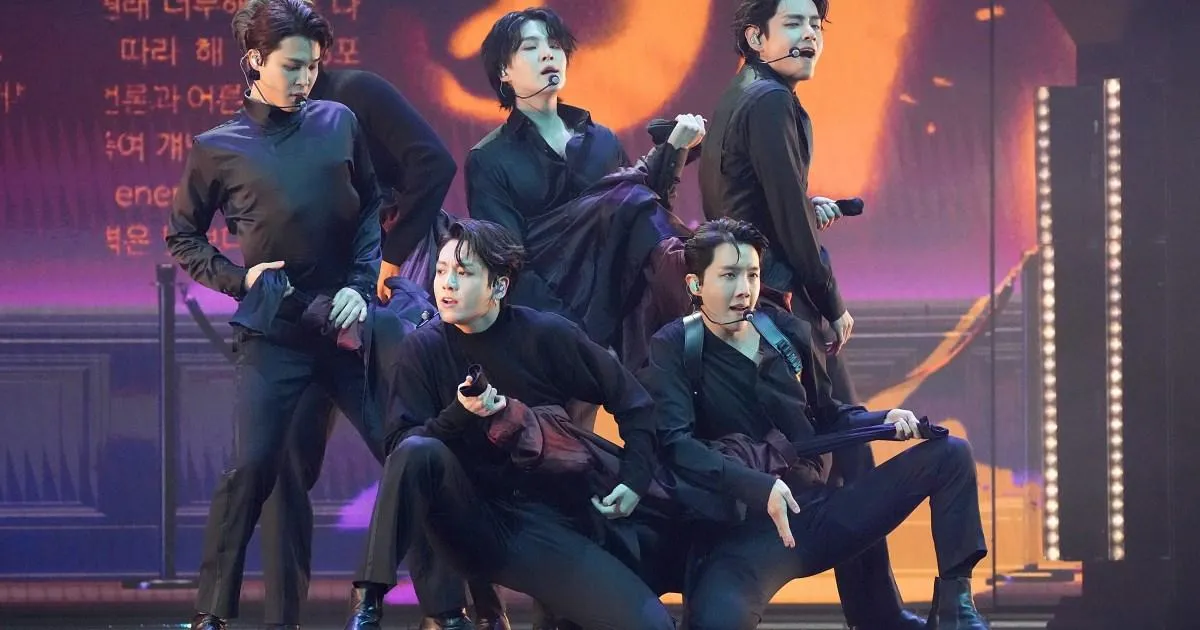

Over the past decade, K-pop has become a huge presence in the UK music scene, largely appealing to Gen Z and Gen Alpha.
‘The pop world has been taken over by Korea,’ former Island Records boss Darcus Beese told Metro of the phenomenon.
A scene once led by One Direction, Take That, Spice Girls, and Little Mix has given way to BTS, Stray Kids, Twice, and BlackPink.
As the industry heavyweight behind the Sugababes, Darcus admitted K-pop has ‘cut off’ the UK’s domination when it comes to boy and girl bands.
Simon Cowell recently embarked on a mission to find a band ‘as exciting’ as the K-pop stars, which led him to create teenage boyband, December 10.
This is a calculated move to appeal to a younger demographic, exactly where K-pop (and many British boy bands over the years) has found its biggest audience.
While the comparison to the 90s and 00s group success is evident, K-pop is also filling the tween and teen void as the power of Disney and Nickelodeon fades.

Where did the K-pop popularity come from?
This current K-pop explosion into our charts really took off in 2019, although the formula has been successful for years.
Seo Taiji and Boys are often credited as being one of the first groups in the genre, bringing American influence into more traditional Korean pop in the 90s.
The genre steadily grew into a polished machine with stars known as ‘idols’, but failed to break through in the mainstream Western media until more recently.
BTS, who are set to return next year, formed in 2013 and mark one of the most internationally successful K-pop groups to date.
BlackPink formed three years later, another leader of the breakthrough into the UK and made history as the first K-pop group to headline BST Hyde Park in 2023.

We’ve since seen Stray Kids, EnHyphen, Seventeen, Twice, and more making waves with K-pop behemoth Hybe attempting to recreate that success with American group Katseye.
Popularity isn’t just limited to the bands as a whole, as Vevo’s end-of-year statistics revealed BlackPink star Jennie’s solo track Like Jennie was the most viewed premiere globally in 2025.
Earlier this year, the release of Netflix’s K-pop Demon Hunters solidified this as a real cultural moment, with tracks such as Golden dominating the charts for months.
Why is K-pop so popular with teenagers?
K-pop has undoubtedly grown its main audience by embracing that tried and true formula of a charismatic boy band and encouraging a dedicated following.
Meanwhile, the girl groups lean into motivating lyrics, often singing about loneliness, social media and general pressures of growing up.
The lyrics and music are polished and undeniably catchy, but it’s the community element that has pulled kids in like moths to a flame.
As Vevo’s associate director for programming and editorial, Jaqueline Lockinger, told Metro: ‘When you are a teenager, it’s all about your hobbies’.

The things you watch, read, and listen to become huge parts of your identity, which is ‘how the community starts off, and how it starts building’.
‘I think teenagers speak so much more about hobbies and what they’re into [than adults], so they share much more. You can see that with Booktok as well, these fandoms all operate in a similar way.’
Twelve-year-old Nell told Metro how, in the age of loneliness epidemics and social media, a fandom ‘gives you something you can be a part of.’
K-pop is particularly known for the sheer mass of content artists put out; there’s always a music video, behind-the-scenes clip, song, or social media post to engage with.
She called K-pop a ‘new fan culture’ specifically aimed at her age group, acknowledging that sometimes Western popstars’ lyrics can be a ‘bit too grown-up’.


‘I think sometimes adults can make songs that are more for older people, but they try to advertise it to everyone,’ Nell, who wants to be a singer, added.
Her mum, Gemma, believes K-pop offers ‘something fresh’ for teens, with ‘a huge sense of inclusion’ and content ‘designed to be fun rather than provocative.’
Is K-pop a ‘safe space’ for teens?
Jackie noted how across the K-pop genre, the songs are ‘very, very safe’ with few swear words or sexual themes.
Kid-friendly idols are hard to come by in Western media nowadays, with Disney and Nickelodeon’s power fading in the face of influencers.
Gemma said: ‘The gap between children’s content and adult content is huge. Teen-specific, age-appropriate media has shrunk massively.
‘Social media fills the gap, but it comes with pressure, comparison and exposure to things they’re not ready for. Kids naturally want to fit in but the pace of growing up feels accelerated now.’
We’ve seen this recently when Sombr, who described himself as ‘freshly 20’, acknowledged that his audience skews young, yet he sings about mature topics.

Even when stars begin on teen shows, they usually have a very dramatic departure from their child branding (think Miley Cyrus or Britney Spears).
We’ve seen how Sabrina Carpenter has faced the wrath of parents for being too sexual as she transitions from Disney icon to mid-20s popstar.
This image overhaul is far less prevalent in K-pop stars, with Jackie suggesting this is because idols ‘know what they’re getting into’.
‘What’s so fascinating about the idol model is they are primed, and they know that they are meant to be role models,’ she shared. ‘And so they really think about how they act and behave, because they know that they can be criticised.’
Idols are taught in their extensive — and controversial — training not only how to perform flawlessly but how to behave and exist in the public eye.
While that might mean putting your private life on hold — K-pop stars often don’t publicly date — it ensures a 360 family-friendly brand.
Who is actually listening to K-pop?
While there is no doubt that fans get into K-pop at a young age, the loyal community remains strong as the artists grow up.
Jackie laughed that people would be surprised at how many fans are in their late 20s and early 30s, having listened to BTS as teens over a decade ago.
‘There’s a natural growth progression that you, as a listener, are being taken on, as the idols grow older and older,’ she explained.

Then there are the parents who listen along while their kids blast aespa, with Gemma sharing she finds it ‘refreshing to listen to a new sound.’
We all saw Hugh Grant become a proud ‘Blink’ after going with his family to see BlackPink perform at BST Hyde Park.
Solo endeavours usually mark a ‘breaking free’ moment from their fresh-faced band days, but it’s still within the idol expectations.
Jackie explained: ‘Going solo almost allows them to present a different version of themselves that doesn’t have to be in line with what the group did, which is their way of letting the audience know “I’ve grown up.”‘
All good artists mature and develop their sound; however, new kid-friendly K-pop groups are ready and waiting to fill the gap — something we just don’t have right now in Western music.

Music has no age limit, but we should also consider how exposing teens to more adult themes constantly, with no alternative, could impact their development.
‘I definitely think that we forget that adults make music for adults, but that teenagers also need music for themselves,’ Jackie said.
Gemma appealed for more content specifically created for tweens, noting how brands and broadcasters often ‘underestimate’ the power of the age group.
She concluded: ‘There’s a huge opportunity to create music, TV and online spaces that let kids enjoy being kids a little longer.’
Got a story?
If you’ve got a celebrity story, video or pictures get in touch with the Metro.co.uk entertainment team by emailing us celebtips@metro.co.uk, calling 020 3615 2145 or by visiting our Submit Stuff page – we’d love to hear from you.
MORE: Inside Simon Cowell’s transformation as he claims to do 1,000 push ups a day
MORE: Simon Cowell confirms cosmetic procedures he’s had after feeling ‘vulnerable’
MORE: Simon Cowell reveals ‘private conversations’ with Liam Payne about struggles before death