






Connect with us

Business

How Asia’s Growing Mineral Nationalism is Reshaping Global Supply Chains

Published

on

How Asia’s Growing Mineral Nationalism is Reshaping Global Supply Chains

A fundamental transformation is underway across Asia in how nations control and leverage their mineral wealth, with profound implications for global technology supply chains, renewable energy transitions, and geopolitical power dynamics.

Key takeaways

  • China’s mineral dominance is a geopolitical weapon: Beijing controls the vast majority of global rare earth processing capacity and has repeatedly demonstrated willingness to restrict exports as leverage, with October 2025 controls on 12 rare earth elements prompting emergency U.S.-China negotiations.
  • Indonesia leads Southeast Asia’s rejection of raw material exports: Jakarta’s ban on unprocessed nickel ore exports since 2014 has forced billions in foreign investment into domestic smelting facilities, transforming the country from a colonial-style resource exporter into an emerging battery manufacturing hub.
  • Resource nationalism is now institutionalized across Asia: From China’s strategic stockpiles to India’s push for mineral self-reliance, Asian governments are permanently consolidating state authority over mining and refining, reshaping global supply chains while complicating Western diversification efforts.

What was once viewed primarily as a technical matter of extraction and trade has evolved into a central pillar of national security strategy, as governments from Beijing to Jakarta assert unprecedented control over critical minerals essential to electric vehicles, semiconductors, defense systems, and clean energy technologies.

China Demonstrates Mineral Power in High-Stakes Standoff

The most dramatic recent illustration came last October, when China’s Ministry of Commerce expanded export controls to cover 12 of 17 rare earth elements, materials indispensable to everything from fighter jets to wind turbines. The restrictions went beyond raw ores to include processing equipment, refined materials, and even products manufactured overseas using Chinese-origin rare earths.

The move sent immediate shockwaves through global markets, prompting an emergency diplomatic intervention. By late October, Presidents Donald Trump and Xi Jinping negotiated a one-year suspension of the new controls during a meeting in Busan, South Korea, in exchange for U.S. tariff reductions.

Yet experts caution that the “settlement” is more a tactical pause than a genuine resolution. Earlier restrictions imposed in April 2025 remain fully operational, and China’s licensing regime continues to bind companies exporting controlled materials. “Critical minerals are not merely economic assets; they are also instruments of state power,” the analysis notes.

Advertisement

China’s dominance stems from decades of strategic policy interventions beginning in the 1980s. Today, Beijing controls the vast majority of global processing capacity for rare earths and several other critical minerals, having consolidated state-owned enterprises, built strategic stockpiles, and invested heavily in mining operations across Africa, Latin America, and Southeast Asia.

The country has repeatedly demonstrated willingness to weaponize this advantage, restricting rare earth shipments to Japan during 2010 tensions, and again imposing embargoes on Tokyo in early 2026, targeting dual-use technologies required for defense production.

Indonesia Rejects “Colonial” Export Model

Indonesia has emerged as one of Asia’s most assertive practitioners of resource nationalism, particularly regarding nickel, the world’s largest reserves of which lie within its borders. The country has pursued an aggressive strategy to transform itself from raw material exporter into a manufacturing hub for electric vehicle batteries.

Beginning in 2014, Jakarta implemented a ban on unprocessed nickel ore exports, forcing foreign companies to invest in domestic smelting and refining facilities. Major Chinese firms, supported by Belt and Road Initiative funding and Indonesian incentives, poured billions into smelters and industrial parks.

Advertisement

Former President Joko Widodo framed the policy in explicitly anti-colonial terms, arguing that exporting raw minerals perpetuates an extractive relationship that must be replaced with industrialization. The government expanded requirements for foreign investors to partner with local firms, transfer technology, and contribute to domestic industrial ecosystems. 

The strategy has successfully reshaped global nickel markets and demonstrated how developing nations can leverage resource control to force industrial upgrading.

Regional Powers Chart Independent Courses

Malaysia has pursued a more moderate path, balancing strategic concerns with environmental governance. Home to one of the few rare earth processing facilities outside China, the Lynas Advanced Materials Plant, Malaysia has faced periodic public pressure to tighten regulations, particularly regarding radioactive waste management.

The country also imposed a temporary moratorium on bauxite mining in the mid-2010s after exports to China caused severe environmental degradation, later lifting the ban with stricter licensing requirements.

Advertisement

Thailand’s mineral nationalism operates primarily through regulatory sovereignty rather than export restrictions. Strong community opposition to mining, including the 2016 closure of the Chatree gold mine following environmental contamination allegations, has pushed the government toward strengthened oversight and social accountability mechanisms.

Last October, protesters gathered outside the U.S. embassy in Bangkok opposing a rare earth minerals agreement with Washington, concerned about sovereignty risks and potential environmental damage from deals made without public consultation.

Myanmar, though politically unstable, remains one of Asia’s most significant sources of heavy rare earths. Much production occurs in northern border regions controlled by ethnic armed groups, with substantial Chinese company involvement operating through informal channels. Materials typically cross into China for processing, a strategic lifeline for Beijing, especially after it imposed stricter domestic environmental controls. 

India has intensified focus on critical mineral security driven by concerns over supply-chain vulnerabilities and technological sovereignty. New Delhi has launched initiatives to map resources, expand domestic mining, and reduce dependence on Chinese imports. Recent reforms opening previously restricted minerals to private mining reflect India’s pursuit of strategic autonomy in a fragmenting global order.

Advertisement

Outlook: Nationalism Becomes Institutionalized

Analysts project Asian resource nationalism will intensify rather than diminish, with governments continuing to strengthen control over mineral resources while deepening industrial policies that push extraction industries up the value chain.

“China’s dominance in rare earth processing, Indonesia’s nickel industrialization and India’s push for critical mineral self-reliance suggest a long-term consolidation of state authority over mining, refining and export mechanisms,” according to the assessment.

The effect is region-wide reinforcement of mineral nationalism that remains compatible with global supply chains even as it complicates diversification efforts by Western and East Asian manufacturers. States are expected to maintain export restrictions on unprocessed ores while crafting supply agreements that simultaneously attract foreign investment and preserve sovereign leverage.

A less likely but plausible scenario involves coordinated regional strategies, where Southeast Asian states leverage mineral resources collectively through harmonized export policies, shared industrial hubs, or informal alignment around processing standards, potentially positioning themselves between U.S. and Chinese technological competition.

What appears virtually impossible is any significant rollback. The momentum behind national industrial policy, strategic resource planning, and rising domestic expectations for value creation suggests Asia’s mineral nationalism represents a fundamental and enduring shift in how these nations engage with the global economy.

Advertisement

Continue Reading

Continue Reading
Click to comment

Leave a Reply

Your email address will not be published. Required fields are marked *

Business

FX Market Awaits North American Leadership

Published

on

FX Market Awaits North American Leadership

Various international banknotes roll in the world for currency exchange and transfer of forex concept.

Dilok Klaisataporn/iStock via Getty Images

The North American market took the dollar (DXY) lower on Tuesday, and there was little follow-through selling. Yesterday, the dollar was bid in North America, and rather than resist, European more than Asia-Pacific operators have extended the greenback’s

Continue Reading

Business

‘Pulp Fiction’ Actor Peter Greene Died From Accidental Gunshot Wound

Published

on

Peter Greene

Veteran character actor Peter Greene, best known for his chilling portrayal of the sadistic pawn shop owner Zed in Quentin Tarantino’s 1994 masterpiece Pulp Fiction, died from an accidental self-inflicted gunshot wound, the New York City Office of Chief Medical Examiner confirmed Wednesday.

Peter Greene
Peter Greene

The medical examiner ruled Greene’s cause of death as a “gunshot wound of left axilla with injury of brachial artery,” classifying the manner as accidental. The axilla refers to the armpit, and the brachial artery is the major blood vessel supplying the upper arm, elbow, forearm and hand. The injury led to extensive, fatal bleeding.

Greene, 60, was found dead Dec. 12, 2025, inside his Lower East Side apartment in Manhattan following a wellness check prompted by a neighbor who reported music playing continuously overnight. Authorities discovered the scene with no signs of foul play at the time. The actor had been scheduled for surgery that same day to remove a benign tumor near his lung.

The revelation came more than two months after his death, as the medical examiner completed autopsy and toxicology reviews. No additional details about the circumstances—such as how the firearm was handled—have been released publicly.

Greene’s manager, Gregg Edwards, announced the initial news of his passing in December, describing him as a “talented actor” whose work left a lasting impact. Tributes from colleagues and fans highlighted his intense screen presence and versatility in villainous roles.

Advertisement

Born Peter Green on May 10, 1965, in Montclair, New Jersey, he adopted the professional name Peter Greene to avoid confusion with another actor. He began his career in the late 1980s and early 1990s, appearing in independent films before breaking through with memorable supporting parts.

His role as Zed in Pulp Fiction—the menacing figure who, alongside accomplice Maynard, subjects Butch Coolidge (Bruce Willis) and Marsellus Wallace (Ving Rhames) to horrific ordeals—became one of the film’s most iconic and disturbing sequences. The performance cemented Greene’s reputation for portraying dangerous, unpredictable characters.

That same year, he played the villainous Dorian Tyrell in The Mask opposite Jim Carrey, a role that showcased his ability to blend menace with dark humor. Other notable credits include The Usual Suspects (1995), where he appeared as a key figure in the ensemble crime drama; Cleaner (2007) with Samuel L. Jackson; and television episodes of The Blacklist, Hawaii Five-0 and Law & Order.

Greene’s career spanned more than three decades, with over 80 film and TV credits. He often gravitated toward gritty, independent projects and was praised for his commitment to authentic, intense performances.

Advertisement

Friends and industry insiders described Greene as private yet generous, with a deep passion for acting. He maintained a low public profile in recent years, focusing on select roles and personal health matters.

The accidental nature of his death has prompted renewed discussions about firearm safety, even in private settings. Accidental shootings remain a leading cause of preventable gun-related fatalities in the United States, according to public health data.

No public memorial service details have been announced. Greene is survived by family members, though they have not issued statements following the cause-of-death ruling.

His work continues to resonate with audiences. Pulp Fiction, celebrating its 30th anniversary in 2024, remains a cultural touchstone, and Greene’s Zed is frequently cited in discussions of Tarantino’s most unforgettable antagonists.

Advertisement

Fans have taken to social media to share clips and memories. One post read, “Peter Greene’s Zed still gives me chills—RIP to a true scene-stealer.” Others expressed shock at the tragic circumstances.

As Hollywood mourns another loss from the 1990s era, Greene’s legacy endures through his powerful on-screen moments. Colleagues remember him as a dedicated professional whose intensity elevated every project.

The medical examiner’s findings close the investigation into his death, providing clarity after months of speculation. Authorities emphasized that the ruling underscores the importance of safe firearm handling.

Peter Greene’s contributions to cinema, particularly in defining memorable villains, ensure his place in film history.

Advertisement
Continue Reading

Business

Wayfair Beats Earnings Estimates. Why the Stock Is Falling.

Published

on

Wayfair Beats Earnings Estimates. Why the Stock Is Falling.

Wayfair Beats Earnings Estimates. Why the Stock Is Falling.

Continue Reading

Business

Gamblizard’s perspective on how the UK gambling regulations will affect player loyalty programs.

Published

on

The Australia online casino continues to grow, attracting both legitimate operators and, unfortunately, scammers looking to take advantage of unsuspecting players.

In the past five years, the UK gambling sector has faced its sharpest regulatory shift in a generation. The Gambling Commission has tightened rules on affordability checks, marketing practices and bonus structures.

The 2023 White Paper signalled a deeper reset. Consumer protection now sits at the centre of policy thinking. Operators must justify not only products, but also player retention strategies.

Loyalty programmes have entered the spotlight. Regulators question point systems, tier rewards and personalised offers. Critics argue such schemes may encourage sustained spending. The Commission has already restricted certain bonus features. More limits may follow, especially where transparency is weak.

Gamblizard.com views this shift as structural rather than temporary. From its industry analysis, loyalty mechanics will not disappear. They will, however, be redesigned under stricter compliance standards. Data use, reward thresholds and communication practices will require closer scrutiny. In this climate, retention cannot rely on volume-based perks alone. It must align with responsible gambling duties and measurable consumer safeguards.

Regulatory pressure on loyalty mechanics

Recent reforms place loyalty structures under direct pressure. Affordability checks now demand deeper income verification. Operators must assess spending against financial markers. This affects tier progression and reward eligibility. A points ladder tied to higher deposits now carries compliance risk. Bonus incentives face tighter examination. The Commission has already limited mixed-product offers. Wagering conditions attract particular scrutiny. Complex mechanics may be viewed as misleading. Clear language is no longer optional.

Advertisement

Transparency rules are expanding. Terms must be prominent and intelligible. Hidden triggers or unclear expiry dates invite sanctions. In short, loyalty design must now sit within a framework shaped by consumer protection rather than pure retention logic.

Why loyalty schemes face greater scrutiny

Regulators argue that loyalty schemes can intensify play. Points, tiers and status labels may create pressure to sustain spending. Behavioural research suggests that near-miss rewards reinforce repetition. Policy makers note this dynamic with caution.

Duty of care now carries heavier weight. Operators must identify harm indicators earlier. A loyalty upgrade cannot override affordability concerns. Compliance teams are expected to intervene, even at commercial cost. Oversight has therefore moved from peripheral audit to board-level accountability.

Key regulatory shifts operators must monitor

The regulatory climate is evolving in stages. Some measures are already active. Others remain under consultation. Together they reshape loyalty architecture.

Advertisement
  • Enhanced affordability checks now require earlier triggers and documented reviews.
  • Mandatory transparency standards demand clearer reward terms and visible conditions.
  • Caps on certain incentives may limit deposit-linked promotions.
  • Data monitoring obligations require active tracking of spending patterns and risk markers.

For operators, the challenge lies in integration. Compliance cannot sit apart from marketing strategy. Loyalty mechanics must be designed with audit trails in mind. Regulators increasingly expect evidence, not assurances.

Gamblizard analysis of business impact

Gamblizard’s assessment is pragmatic. The tightening regime alters loyalty economics at their core. High-tier VIP segments, once central to margin strategy, now carry heavier oversight and thinner returns. Enhanced checks slow onboarding and raise intervention rates. In some cases, account restrictions reduce lifetime value. Compliance costs are also rising. Operators must invest in monitoring systems, staff training and audit documentation. Manual reviews of high spenders demand senior input. Technology budgets are shifting from acquisition tools to risk analytics.

Gamblizard notes a gradual shift from deposit-linked perks toward value-based retention. Operators are exploring models that reward consistency, safe play indicators and verified affordability. The focus moves from short-term revenue spikes to longer-term account stability within regulatory limits.

From high rollers to broader retention models

Gamblizard identifies a structural pivot already under way. The VIP-centric model, built on high spend concentration, now attracts disproportionate regulatory exposure. Operators are recalibrating towards retention frameworks that distribute value more evenly and reduce compliance volatility. The emphasis shifts from elite tiers to sustainable cohorts with verified affordability profiles.

Below are the principal directions shaping this transition:

Advertisement
  • Lower-risk segmentation
    Broader mid-tier cohorts offer steadier margins and fewer intervention triggers. Risk-adjusted lifetime value replaces pure revenue concentration.
  • Behaviour-based rewards
    Progression linked to responsible play markers, session stability and affordability verification rather than deposit spikes.
  • Non-monetary benefits
    Priority service access, product previews and informational tools that carry limited regulatory friction.
  • Structured gamification within compliance limits
    Transparent mechanics, capped thresholds and clearly defined eligibility rules aligned with consumer protection standards.

This recalibration signals commercial adaptation, not retreat. Loyalty remains viable, but its architecture now mirrors regulatory priorities rather than legacy VIP economics.

The future of loyalty programmes in the UK market

Loyalty programmes in the UK are unlikely to disappear. They will, however, be redesigned around regulatory tolerance rather than promotional ambition. Future models will favour clarity over complexity. Reward structures will be simpler. Terms will be visible and written in plain language. Transparency may itself become a competitive marker, signalling operational discipline to both regulators and customers.

Gamblizard expects a gradual shift towards responsible engagement metrics. Retention will be measured through stability, verified affordability and lower intervention rates. Profitability will depend on controlled growth rather than aggressive tier escalation. The balance between margin and compliance will shape boardroom strategy for years.

Advanced analytics will support this transition. Real-time risk scoring can flag irregular spend patterns within minutes. Predictive behavioural analysis may identify early harm indicators. Automated affordability triggers can pause rewards pending review. CRM systems will still personalise offers, yet within predefined compliance boundaries and documented audit trails.

Advertisement

Continue Reading

Business

Bristol Arena name announced after YTL strikes deal with Aviva

Published

on

Business Live

The 20,000-seater venue is set to open in 2028

A CGI of the Aviva Arena in Bristol

A CGI of the Aviva Arena in Bristol(Image: YTL)

The name of Bristol’s long-awaited arena has been announced. The 20,000-seater venue will be called ‘Aviva Arena’ following a major deal with the UK insurance giant. The details of the transaction have not been disclosed but it is understood it is a long-term sponsorship agreement worth millions of pounds.

The arena is being built at Brabazon, on the old Filton Airfield, and is expected to open in 2028. Malaysia-based developer YTL first announced plans for the venue in 2018, but its construction has been hampered by years of delays.

Work is currently being carried out to transform Brabazon Hangars – the birthplace Concorde – into a live entertainment destination. The entire complex, called YTL Live, will house Aviva Arena in the central and largest of the three hangars, as well as a conference and exhibition space.

According to YTL, the project will create more than 2,000 jobs during construction, with up to a further 500 permanent roles once the arena is operational.

Advertisement

Some 1.4 million people are expected to attend live music, sports and entertainment events at Aviva Arena every year once it opens and in its first decade it is predicted to contribute an estimated £1bn to the wider Bristol economy.

The venue will feature 20 state-of-the-art dressing rooms, extensive production facilities and Europe’s largest services yard, capable of accommodating up to 60 touring lorries simultaneously.

A CGI inside Aviva Arena

A CGI inside Aviva Arena(Image: YTL)

Andrew Billingham, chief executive of YTL Live, said: “Aviva Arena will be one of the most exciting and sustainable live entertainment venues anywhere in the world, and we are incredibly proud to welcome Aviva as our naming partner.

“This long-term partnership brings together two organisations with shared values around innovation, sustainability and community impact. Aviva Arena will put Bristol firmly on the global touring map, delivering unforgettable experiences for fans and artists alike while creating lasting benefits for the city and the wider region.”

Advertisement

The boss of Aviva, which employs some 1,700 people in Bristol, said she was “proud” to back the new venue – the third in its portfolio along with Dublin and Manchester.

Dame Amanda Blanc, group chief executive of Aviva, said: “Bristol is an important city for Aviva, and we are proud to back this new world-class arena which will have such a positive community impact.

“Aviva Arena will further strengthen Bristol’s position as one of Europe’s great creative cities and become a landmark destination for the South West of England.”

The name was announced at an event at Aerospace Bristol, with chart‑topping British singer‑songwriter Tom Grennan delivering a six‑song set beneath Concorde. The exclusive performance played out to an audience that included Sir Francis Yeoh, the executive chair of YTL Corporation, and Helen Godwin, West of England Mayor.

Advertisement

Chancellor Rachel Reeves said: “Aviva and YTL’s landmark sponsorship commitment is a powerful endorsement of the UK as a world class place to build, to do business and to grow – exactly the kind of long‑term investment this Government is backing right across the country.

“It’s good news for people across the West of England, creating thousands of jobs and putting the region firmly on the global map for live entertainment.”

‘A major milestone’

Once the arena opens, it is understood Aviva will offer its customers a range of exclusive benefits, including a 48-hour ticket pre-sale window ahead of general release; priority venue access; ticket upgrades; in-venue discounts; and a programme of so-called ‘money-can’t-buy’ experiences.

Colin Skellett, chief executive of YTL UK Group, said that securing Aviva as the naming partner for the arena marked “a defining moment” in a journey to create one of Europe’s “most exciting” live entertainment destinations.

Advertisement

“This partnership is a powerful vote of confidence in our vision for YTL Live and for the future of Bristol as a world-class cultural hub,” he said. “Our partnership with Aviva represents a major milestone in delivering a venue that will raise the bar for live entertainment in the UK and drive substantial long-term benefits for Bristol and the wider region.”

Aviva Arena is part of a wider development known as Brabazon New Town that includes thousands of homes, office space and a new train station. It will be at the heart of a corridor of connected developments in South Gloucestershire known as the West Innovation Arc.

Last year it was announced that Brabazon would receive town status from the government.

YTL previously said that Brabazon would emerge as a “thriving new town, designed around people, nature and opportunity: the best place in the UK to live, work and play”.


Advertisement
Continue Reading

Business

James Doyle, Managing Director of Endeavour Group

Published

on

James Doyle, Managing Director of Endeavour Group

We sit down with James Doyle, Managing Director of Endeavour Group, a building safety consultancy and training provider supporting duty holders responsible for some of the UK’s most complex and high-risk buildings.

Based in the North West and operating nationally, Endeavour Group brings an evidence-led, engineering discipline to the built environment as regulatory scrutiny continues to increase.

With more than two decades of experience spanning offshore oil and gas, process safety and fire engineering, Doyle applies high-hazard industry methodologies to residential and commercial settings, helping organisations work through the requirements of the Building Safety Act with a clearer understanding of their responsibilities.

His team works with clients to strengthen building safety through intrusive assessments, safety case support and accredited training. As an approved ProQual training centre since 2018, the business delivers nationally recognised qualifications across fire safety, passive fire protection and health and safety, and is currently launching three new Fire Risk Assessment qualifications at Levels 3, 4 and 5.

Alongside its UK work, Endeavour has delivered UK-standard training internationally through remote delivery for several years. More recently, this has developed into direct conversations with overseas organisations, including engagement in Dubai, who are seeking to better understand how competence, evidence and decision making translate into live, occupied buildings.

Advertisement

In this interview, Doyle discusses the challenges duty holders face under the Building Safety Act, why evidential rigour matters, and the principles guiding decision making in a sector where the stakes are high.

What is the main problem you solve for your customers?

The single biggest issue our clients face is a lack of reliable information at a time when the expectations placed on duty holders have never been higher.

The Building Safety Act has transformed the regulatory landscape, yet many assessments across the UK are still carried out through visual surveys or templated reports that do not meet the level of evidence the legislation requires. That gap creates legal, financial and operational risk.

At Endeavour Group, our role is to give clients a clear picture. We carry out intrusive compartmentation surveys, fire risk assessments, building risk reviews, safety case reports, resident engagement support, remedial action planning and ongoing compliance management, all underpinned by photographic evidence, technical justification and structured reasoning. Every finding is linked back to fire strategy intent and the statutory definition of a relevant defect so there is no ambiguity about what the issue is or why it matters.

Advertisement

Through our partnership with Riskflag, we also support clients with a digital golden thread that organises their evidence, actions and decision making in an auditable way. When people work with us, they gain confidence and a route to compliance.

What made you start your business?

Endeavour Group began in 2018 after I moved from more than two decades working in offshore oil and gas, process safety and fire engineering. In high-hazard environments, assessment quality, intrusiveness and evidential strength are not optional. You learn very quickly that reassurance means nothing if it is not supported by facts.

When I stepped further into the built environment, I could see an increasing gap between what the legislation would ultimately demand and what was being delivered on the ground. Many reports were non-intrusive. Many conclusions were based on assumptions rather than evidence. Organisations responsible for buildings were making important decisions without the technical understanding to identify risk properly.

I created Endeavour because the sector needed a consultancy that applied engineering discipline, communicated clearly and delivered assessments that could stand up to legal and regulatory challenge. What began as a specialist consultancy has grown into a national capability supporting high-rise residential, supported living, student accommodation, retail, commercial, education and transport.

Advertisement

What are your brand values?

For us, competence, clarity and integrity are not marketing terms. They are the foundations of how we work.

Competence means having the technical depth to interpret fire strategy, identify relevant defects, challenge assumptions and build evidence that supports decisive action. Clarity means presenting findings in a way that duty holders, residents and regulators can understand without ambiguity. Integrity means reporting what the evidence shows rather than what people hope to hear.

These values guide how we approach every survey, every safety case and every piece of advice we give.

Do your values define your decision making process?

Yes, completely. We always ask ourselves: would this stand up to regulatory, legal or third-party scrutiny? If the answer is no, we refine it.

Advertisement

Through years of working with the regulator we understand their role in asking the ‘what if’ question, and we ensure that our reports comprehensively satisfy this requirement with appropriate mitigation. We test our findings and their failure modes adapted from offshore safety case methodology, which ensures every conclusion is traced back to justification.

The same standard applies to our training centre, where evidential discipline underpins everything we deliver.

Is team culture integral to your business?

It is essential. Our team is our strength.

The work we do spans high-rise residential, student living, supported living, care environments, commercial and educational settings. Each brings its own challenges, and our ability to deliver depends on a culture built on openness, technical curiosity and shared accountability.

Advertisement

That collaborative approach also supports our international conversations, where the emphasis is on sharing experience and understanding how similar challenges are managed in different operating environments.

In terms of your messaging, do you communicate clearly with your audience?

Clarity is central to everything we do. Building safety is technical, but communication should not be.

Our reports explain the issue, the evidence, the risk and the action required in straightforward language. We avoid jargon and prioritise giving duty holders information they can use immediately. The same approach shapes our training, where real-world examples help learners understand how legislation applies in practice.

What is your attitude to competitors?

There are organisations in the sector that deliver excellent work, but there is still significant variation in standards.

Advertisement

We regularly see surveys that lack intrusive inspection or fail to link findings back to the definition of a relevant defect. These reports may reassure people in the moment, but they do not provide the level of evidence required under the Act.

What we do is driven by quality, not comparison. We know our methodology is robust because our evidence has already changed outcomes, including cases where developers have accepted responsibility for defects once they reviewed our findings. Strong evidence drives accountability.

What advice would you give to anyone starting a business?

Focus on building deep expertise and do not compromise your standards. Consistency, honesty and high-quality work are far more valuable than volume.

Surround yourself with people who share your approach and invest in their development. If you concentrate on doing things properly, reputation and growth will follow naturally.

Advertisement

What three things do you hope to have in place within the next twelve months?

First, the full launch of our Building Safety Masterclass to help duty holders understand relevant defects, liability pathways and evidential requirements under the Act.

Secondly, increasing the portfolio of higher-risk buildings being managed and achieving successful Building Assessment Certificate approvals.

And third, continuing to explore international conversations, including recent engagement in Dubai, where organisations operating complex, occupied buildings are asking similar questions around competence, accountability and how UK-standard training and assessment translate into real-world decision making.


Jamie Young

Jamie Young

Jamie is Senior Reporter at Business Matters, bringing over a decade of experience in UK SME business reporting.
Jamie holds a degree in Business Administration and regularly participates in industry conferences and workshops.

When not reporting on the latest business developments, Jamie is passionate about mentoring up-and-coming journalists and entrepreneurs to inspire the next generation of business leaders.

Advertisement

Continue Reading

Business

Wayfair (W) earnings Q4 2025

Published

on

Wayfair (W) earnings Q4 2025

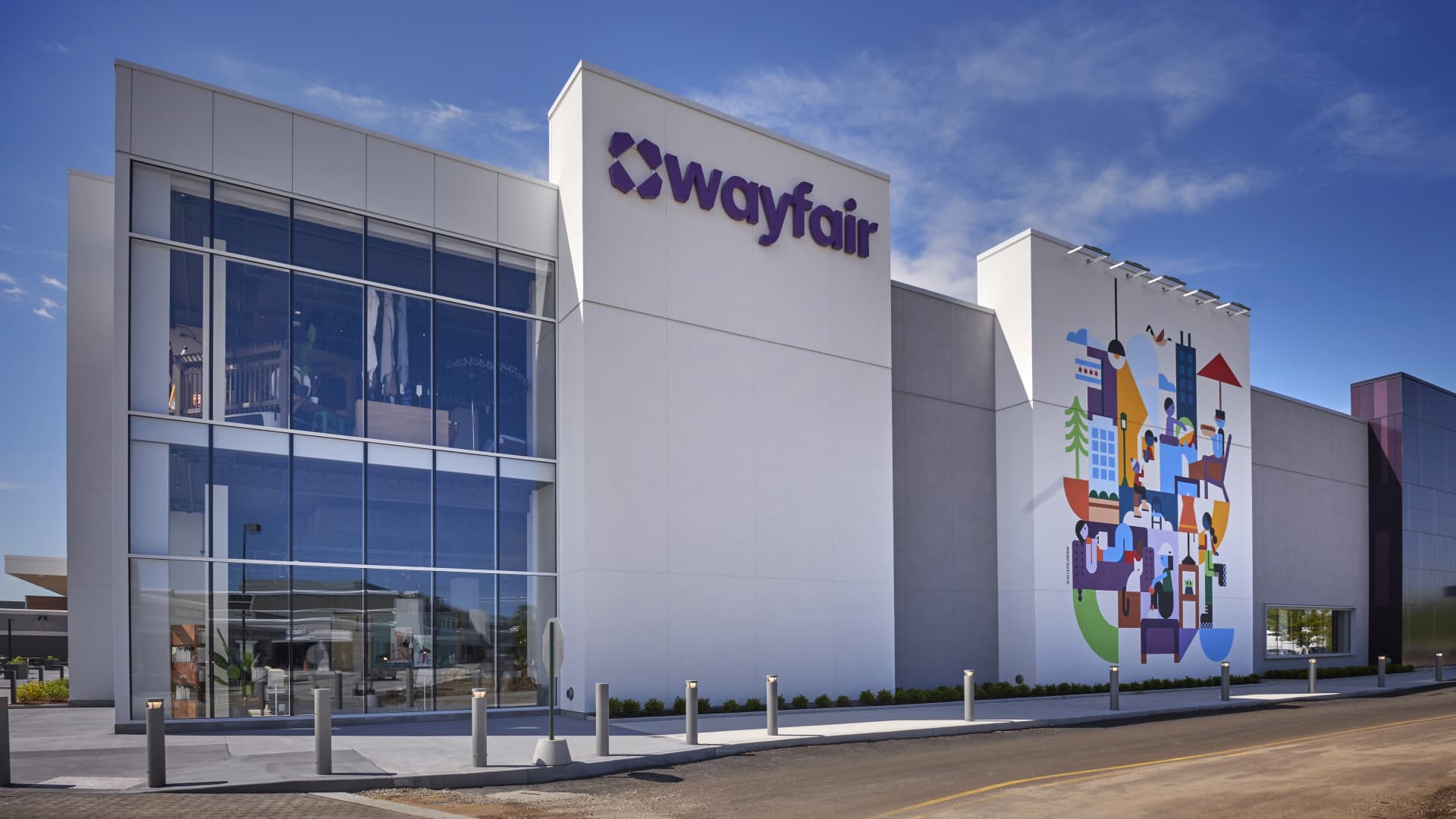
Wayfair store in Wilmette, Illinois.

Courtesy: Wayfair

Wayfair‘s annual sales grew last year for the first time since 2020 as the online furniture company continues to win over value-seeking consumers, the retailer announced Thursday. 

Advertisement

In 2025, Wayfair revenue grew 5.1% to $12.5 billion. The gains follow a more than 1% year-over-year decline in 2024.

The e-commerce giant also beat Wall Street’s expectations on the top and bottom lines for its fiscal fourth quarter and delivered better-than-expected adjusted earnings as stronger sales flowed through to the business.

“Q4 capped off a tremendous year for Wayfair,” said co-founder and CEO Niraj Shah. “… We had our third consecutive quarter of new customer growth, on top of healthy growth in repeat orders, all in the face of a category that contracted in the low single digits for the final quarter of the year. 2025 was a year where we returned to growth and accelerated throughout the year through a number of organic business strategies that can compound for years to come.”

Despite the sales growth and better-than-expected results, Wayfair shares dropped more than 10% in premarket trading Thursday.

Advertisement

Here’s how Wayfair did in its fourth quarter compared with what Wall Street was anticipating, based on a survey of analysts by LSEG:

  • Earnings per share: 85 cents adjusted vs. 66 cents expected
  • Revenue: $3.34 billion vs. $3.30 billion expected

In the three month period that ended Dec. 31, Wayfair reported a loss of $116 million, or 89 cents per share, compared with a loss of $128 million, or $1.02 per share, a year earlier. Excluding one-time items related to equity-based compensation and other one-time charges, Wayfair saw earnings per share of 85 cents. 

For the second quarter in a row, Wayfair saw a meaningful gain in revenue. During the period, sales rose to $3.34 billion, up about 7% from $3.12 billion a year earlier. 

While Wayfair has not posted an annual net profit since 2020, it is making gains in its adjusted earnings before interest, taxes, depreciation and amortization. During the quarter, Wayfair posted adjusted EBITDA of $224 million, ahead of expectations of $200 million, according to StreetAccount. 

“Ultimately, this is the culmination of the work throughout 2025, which I think was a really pivotal year for us in proving out both our share gain story and our profit story,” finance chief Kate Gulliver told CNBC in an interview. “That resulted in both an incredibly strong quarter on the top line, where we continued to gain share despite a challenging macro, and then really nice flow through and significant growth on the adjusted EBITDA line.” 

Advertisement

The company’s return to revenue growth over the last two quarters has helped its profitability. If the sales trends continue, the company expects to see more improvements to its bottom line. 

Wayfair’s growth comes during a challenging time for the furniture industry, when tariffs, high interest rates and sluggish home sales are weighing on demand for new couches and kitchen tables. Consumers are still spending on these goods, but instead prioritizing value and lower prices, which Wayfair is positioned to offer through its wide network of manufacturers. 

During the quarter, average order values increased to $301, up from $290 in the year-ago period, while the number of orders delivered grew at a similar pace. While prices have risen across the home goods sector, Wayfair’s volume trends are in line with its order values. 

Over the last year, Wayfair has focused on improving its customer experience through its rewards program and initiatives like Wayfair verify, which stamps products that have the quality the company says it endorses. It also improved its website, said Gulliver. 

Advertisement

“The combination of these customer facing initiatives, I think, has helped us take share in what we think was still quite a challenged category,” said Gulliver.

Continue Reading

Business

Why the Prospect of War With Iran Is Boosting Oil Prices

Published

on

Alphabet Is Selling 100-Year Debt as Part of a Big Bond Sale

That’s roughly how much petroleum flows through the Strait of Hormuz, a deep channel between Iran and Oman, each day, equivalent to almost a fifth of global oil demand.

Disrupting tanker traffic or shutting the strait altogether is one way Iran might seek to retaliate against a possible American strike, analysts say, which is why oil prices have jumped alongside the U.S. military deployment in the region. Earlier this week, state-affiliated media in Iran said the strait would partially close for “security precautions.”

Brent prices rose more than 1% Thursday, adding to recent gains that have taken the global oil benchmark from less than $60 a barrel in early January to over $70 a barrel this week.

Continue Reading

Business

Talen Energy: Riding A Boom In Demand For Electricity, But The Valuation's Too Hot

Published

on

Talen Energy: Riding A Boom In Demand For Electricity, But The Valuation's Too Hot

Talen Energy: Riding A Boom In Demand For Electricity, But The Valuation's Too Hot

Continue Reading

Business

Dennis the Menace featured on 50p coin to mark 75 years

Published

on

Dennis the Menace featured on 50p coin to mark 75 years

The new coin has been made with with Beano, Britain’s longest-running weekly comic, first published in 1938

Continue Reading

Trending

Copyright © 2025