Through a series of pivots, The Plattering Co. navigated challenges & scaled successfully
For years, catering in Singapore had largely remained functional, focused on trays of food and stainless steel warmers rather than presentation or experience.
Then came The Plattering Co., which bills itself as the city-state’s first artisanal bespoke caterer. Founded by long-time friends Yasmin Sim, Pearl Chan, and Jessica Lim, the trio crafts grazing tables, floral arrangements, and immersive food displays that prioritise presentation as much as taste.
Ironically, catering wasn’t even their original focus—a pivot from their other business led the trio here, and the gamble seems to have paid off: today, they serve over 100,000 people a year.
We spoke to Yasmin and Jessica of The Plattering Co. about how the business came about and how it’s reshaped Singapore’s catering scene.
Advertisement
An unexpected start
The journey to becoming a premium catering brand serving over a hundred thousand people a year began with something far simpler: a home juicer.
In 2014, at the height of the juice cleanse trend, Yasmin and Pearl started experimenting with cold-pressed juices. They first shared them with family and friends, but orders soon started to pick up. Jessica later joined the duo to help manage operations.
Image Credit: The Plattering Co.
As demand grew, they formally established their cold-pressed juice business as Juix Up, quickly outgrowing their home setup and moving into an office space. Within a year, they had outgrown that too, expanding operations from a small unit in Marine Parade to a factory in Mandai.
Beyond direct-to-consumer sales, the trio even secured B2B deals, including a retail stocking at an airport chain.
However, the speed of growth outpaced their financial planning. Overheads ballooned while utilities climbed, and big recurring orders didn’t come in as consistently as they had hoped.
Advertisement
“We didn’t do our numbers properly,” Yasmin admitted, noting they were mentally prepared to cut losses if things didn’t improve.
But a turning point soon came in 2018, when a regular customer asked if they could provide food—specifically, banana walnut muffins—to go along with their breakfast juices. Pearl, who loved experimenting in the kitchen despite having no formal F&B training, said yes.
Image Credit: The Plattering Co.
She carefully plated the muffins and drinks in a crate, paired them with a chalkboard display and sent them along with the juices. “Unexpectedly, the client immediately fell in love with the muffins and the whole presentation,” Yasmin recalled.
The same client soon began requesting more elaborate offerings—salmon platters, cheese boards, and styled grazing spreads. At a time when such curated platters were still relatively novel in Singapore’s catering scene, according to the trio, Yasmin agreed to give it a try.
(Left): One of The Plattering Co.’s charcuterie boards; (Right): The Plattering Co.’s oven-baked salmon platter with miso sauce./ Image Credit: The Plattering Co.
I’m a person who never gives up on a request. If someone asks for something I will never say no, I will just say, ‘okay, let me let me let me try to do it for you.’
Yasmin Sim, co-founder of The Plattering Co.
Advertisement
There was no business plan, no pitch deck, no formal strategy. The founders simply responded to demand, refining their offerings as they went. In Mar 2018, that approach led to the launch of The Plattering Co.
They grew fast, but everything came to a halt almost overnight
For The Plattering Co., Pearl’s eye for aesthetics quickly became the brand’s signature. Wooden boards replaced stainless steel trays, fresh florals softened tablescapes, and colours were intentionally curated—food wasn’t just served, it was styled.
Some of the brand’s now-iconic concepts began in personal moments, like the doughnut wall, inspired by Pearl’s wedding. During the event, she displayed doughnuts on pegs, turning them into both a decorative feature and an interactive treat for guests.
The team has since adapted similar concepts for clients, including the Pretzel Pipe Wall, nasi lemak bar, and taco bar, bringing creativity and interactivity to every event.
Advertisement
(Left): Pearl tending a juice cart for an event; (Right): The Plattering Co.’s Pretzel Pipe Wall, inspired by Pearl’s doughnut wall at her wedding./ Image credit: The Plattering Co.
Meanwhile, Yasmin and Jessica focused on operations and finances. By 2019, the growing brand had moved into a 1,000 sq ft shophouse at Cavan Road, carving out a niche in artisanal catering. They also began gradually building a team to support day-to-day operations.
But everything came to a halt just a year later, when COVID-19 wiped out corporate buffet catering overnight, with orders cancelled en masse. The revenue stream that sustained them vanished almost instantly.
Yasmin even floated the idea of selling toilet paper—anything, just to generate cash flow. The stress was immense, and another glance into the possibility of closing down hit the trio.
Nonetheless, the team decided to push forward for the sake of their employees’ rice bowls. Ideas were thrown around, and the team came together to brainstorm for ideas.
(Left): The Plattering Co’s premium breakfast boxes included Pearl’s house-baked banana walnut bread loaf; (Right): The Plattering Co’s bento box./ Image Credit: The Plattering Co
They pivoted quickly. Some of the new offerings they introduced included premium decorated breakfast boxes and bento boxes. Each came with heartfelt greeting cards to clients as a show of support in the midst of the pandemic.
When dining restrictions capped gatherings at four to five people, they also redesigned menus into smaller six-to-eight-person platters, leaning into B2C aggressively.
Advertisement
In 2021, the trio also launched creatively styled gift hampers under a new brand, Sage and Gifts. Rather than conventional festive baskets, these were curated food experiences packaged with the same bespoke aesthetic as The Plattering Co. “For a period, we became a bespoke gifting business,” Yasmin recalled.
Sage and Gifts’ hampers./ Image Credit: The Plattering Co
The pivots helped the business not just survive but thrive. By 2022, annual revenue had nearly quadrupled compared with pre-COVID levels. That same year, the founders sold off Juix Up and moved into a 2,000 sq ft central kitchen in Bedok to meet growing demand for their catering and gifting businesses.
Since then, The Plattering Co. has served more than 100,000 people annually across catering setups and drop-off orders. The pandemic, which nearly shut them down for a second time, ultimately forced the reinvention that accelerated their growth.
In 2024, the founders made another strategic decision: they divested the hamper brand as well, consolidating resources to focus squarely on their core catering identity.
Scaling the business vertically & building complementary arms
Image Credit: The Plattering Co.
The same year, the founders recognised that they had reached a pivotal stage in their growth journey.
Aware that scaling the business would require deeper operational expertise and structured leadership, they made the strategic decision to bring on board a Managing Director with 13 years of extensive experience in food systems and enterprise-scale business transformation to drive the next phase of expansion.
Advertisement
Today, The Plattering Co. operates across roughly 11,000 sq ft, including halal and non-halal central kitchens, floral operations, and warehouse facilities. The team numbers 35 to 36 people, with around 30% in the kitchen, and their customer base is split roughly three-fifths B2B and two-fifths B2C.
Acknowledging that The Plattering Co. occupies a premium segment, often catering to big occasions, the founders have expanded the business into multiple arms to reach a wider demographic.
Caterwow is a halal catering brand that offers bento boxes and buffets in a similar aesthetic to The Plattering Co. /Image Credit: Caterwow
They launched sister brand Caterwowto serve the halal and the mass market in 2024, alongside Singapore Food Services to provide white-label and OEM food services.
Another arm, Wildflower ArtCo., manages floral styling for weddings and events, while Kaizen Supply Chain oversees the operations of the company’s brands and offers supply chain logistics services to industry peers.
However, scaling a visually driven brand also presents its own challenges. Maintaining consistency in execution, especially replicating Pearl’s intricate handmade setups, grows increasingly difficult with large volumes of orders.
Advertisement
As such, the team has implemented thorough training sessions for staff to make sure that set-ups are in line with The Plattering Co.’s standards, while automating internal operations helps to streamline order flows and delivery planning.
They are also exploring AI-assisted processes to ensure structure and standardisation even when founders are not physically present.
All these free up time for their team to work on set-ups instead.
Image Credit: The Plattering Co.
Every setup involves meticulous planning—from the type of flowers selected to the size of platters and colour of tablecloths.
Catering, Jessica pointed out, is often under-appreciated in its operational intensity. It requires packing cutlery, holders, tables, plants; coordinating delivery; full setup; tear-down; washing—all within tight timelines. The premium pricing reflects not just the food, but the labour choreography behind it.
Advertisement
“The greatest sense of achievement after each setup comes when guests stop to take photos before they eat,” Jessica said.
Operationally, manpower remains one of the biggest challenges. Hiring the right fit and aligning kitchen, logistics, and office teams around shared values is always a work in progress.
Yasmin emphasised that even washers and drivers must understand their importance in delivering the final experience to clients. In this regard, the trio ensures that they maintain a strong work ethic amongst their team members while maintaining a strong sense of meaning in the workplace.
What’s next for The Plattering Co.
The Plattering Co aesthetic./Image Credit: The Plattering Co
Despite suffering losses in 2020, The Plattering Co. had built enough reserves to weather the storm.
Looking back, Yasmin attributes their survival not to perfection but to adaptability and to clarity of the brand’s direction.
Advertisement
The co-founder stressed the importance of humility regardless of success. She believes in continuous growth, emphasising that “If you’re not growing, you’re actually dying.”
That philosophy drove them to expand kitchens even when sales were stable. It also drove difficult decisions—like selling off both the juice and hamper businesses—rather than being sentimental about ventures that no longer aligned.
Above all, she advocates staying authentic. “Trust your beliefs. Trust your values. When you allow external influence to override your conviction, you lose clarity and direction.”
The Plattering Co nearly closed twice. Instead, it evolved from a home juicer in 2014 to a premium artisanal catering brand serving over 100,000 people annually.
Advertisement
Looking ahead, the trio plans to continue being a “trendsetter” and being at the forefront of their craft. They would also be open to expanding to overseas markets if the opportunity arises.
Are you ready to feel old? Lemmings just turned thirty-five. The famous puzzle game first came out in February of 1991 for the Commodore Amiga, before eventually being ported to just about everything else out there, from the ZX Spectrum to the FM Towns, and other systems so obscure they don’t have the class to start with two letters, like Macintosh and DOS. [RobSmithDev] decided he needed to commemorate the anniversary with a real floating lemming.
The umbrella-equipped lemming is certainly an iconic aspect of the game franchise, so it’s a good pick for a diorama. Some people would have just bought a figurine and hung it with some string, but that’s not going to get your project on Hackaday. [Rob] designed and 3D printed the whole tableau himself, and designed magnetic levitation system with some lemmings-themed effects.
The mag-lev is of the top-down type, where a magnet in the top of the umbrella is pulled against gravity by an electromagnetic coil. There are kits for this sort of thing, but they didn’t quite work for [Rob] so he rolled his own with an Arduino Nano. That allowed him to include luxuries you don’t always get from AliExpress like a thermal sensors.
Our favorite part of the build, though, has to be the sound effects. When the hall effect sensor detects the lemming statue — or, rather, the magnet in its umbrella — it plays the iconic “Let’s Go!” followed by the game’s sound track. If the figurine falls, or when you remove it, you get the “splat” sound, and if the lemming hits the magnet, it screams. [Rob] posted a demo video if you just want to see it in action, but there’s also a full build video that we’ve embedded below.
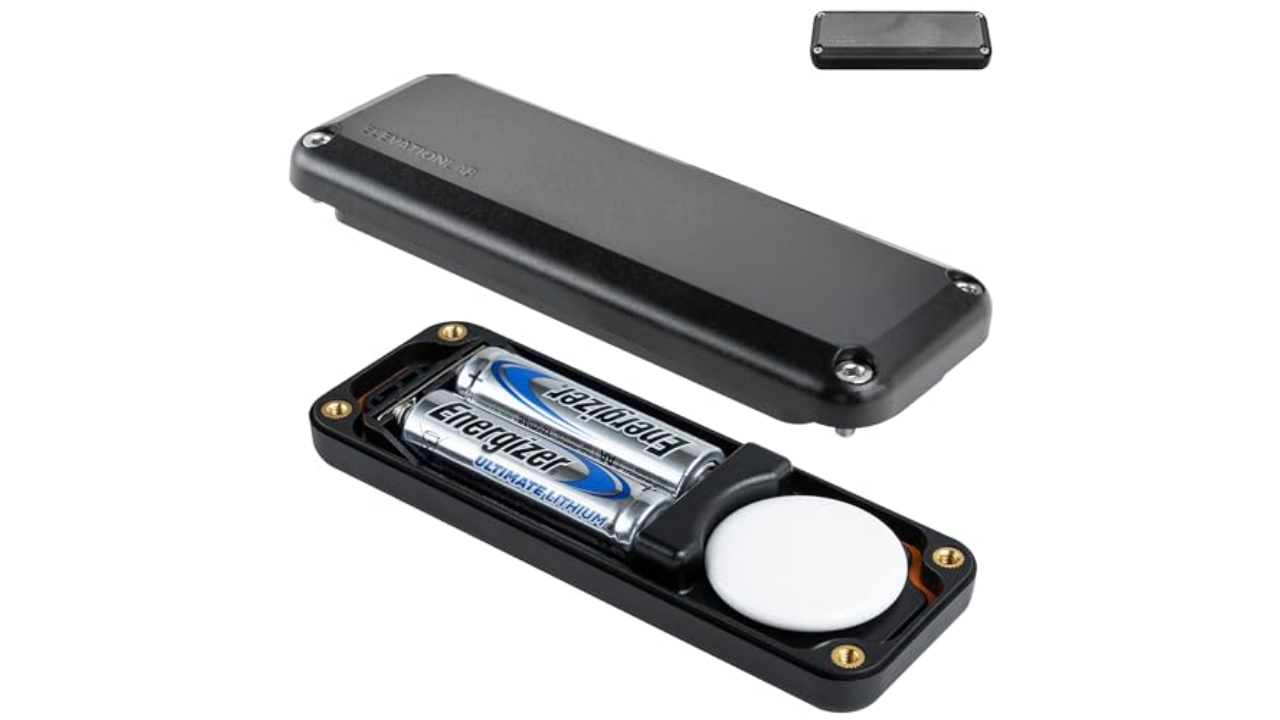
If you’re an iPhone user who likes to keep tabs on where your stuff is, you can’t go far wrong with an AirTag. The second-gen model that Apple just released outpaces the original in every way (aside from the galling lack of a keyring hole, that is). While it’s easy enough to replace the battery in both versions of the AirTag, you might not want to have to worry about the device’s battery life for a very long time. Enter Elevation Lab’s extended battery case for the AirTag, which is currently on sale at Amazon for $16.
The case usually sells for $23, so that’s a 30 percent discount. It’s not the first time we’ve seen this deal, but it’s a pretty decent one all the same.
Elevation Lab
Elevation Lab says its AirTag case can extend the battery life of the tracking device to 10 years, and now it’s on sale.
Advertisement
This is arguably one of the more useful AirTag accessories around for certain use cases. It won’t exactly be helpful for an AirTag that you put in a wallet or attach to your keys, as it’s too bulky for such a purpose — and it doesn’t have a hole for a keyring anyway. Still, if you’re looking for an AirTag case that you can place in a suitcase or backpack and not have to touch for years, this could be the ticket.
Elevation Lab says that, when you place a couple of AA batteries in the case, it can extend the tracker’s battery life to as much as 10 years (the brand recommends using Energizer Ultimate Lithium batteries for best results). The AirTag is slated to run for over a year on its standard CR2032 button cell.
The case gives the AirTag more protection as well. It’s sealed with four screws and it has a IP69 waterproof rating. What’s more, it doesn’t ostensibly look like an AirTag case, so someone who steals an item with one inside is perhaps less likely to realize that the object they pilfered is being tracked.
Advertisement
There are some other downsides, though. Since the AirTag is locked inside a case, the sound it emits will be muffled. Elevation Lab says the device’s volume will be about two-thirds the level of a case-free AirTag. However, the second-gen AirTag is louder than its predecessor, which should mitigate that issue somewhat.
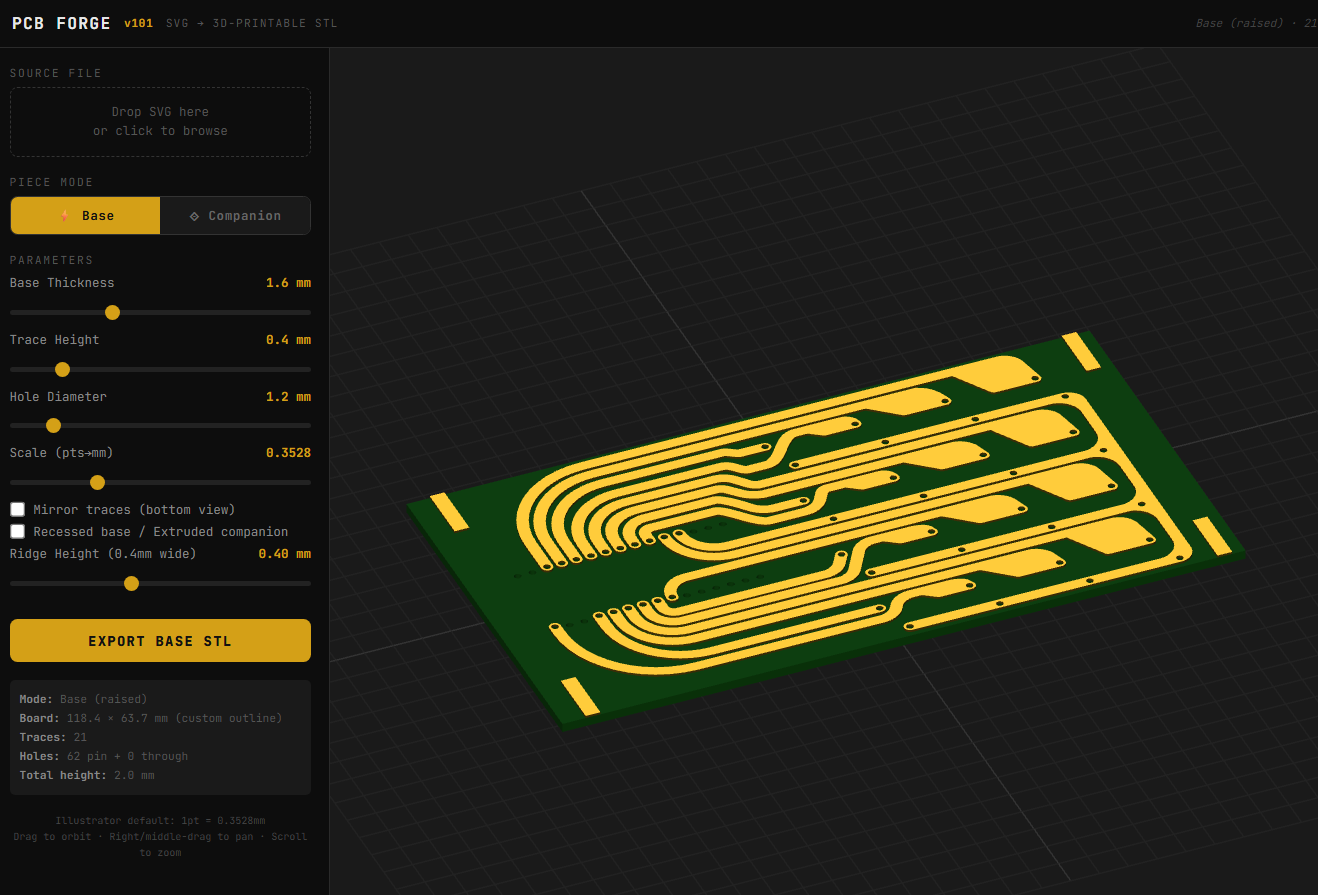
Getting PCBs made is often the key step in taking a dodgy lab experiment and turning it into a functional piece of equipment. However, it can be tedious to wait for PCBs to ship, and that can really slow down the iterative development process. If you’ve got a 3D printer, though, there’s a neat way to make your own custom PCBs. Enter PCB Forge from [castpixel].
The online tool.
The concept involves producing a base and a companion mold on your 3D printer. You then stick copper tape all over the base part, using the type that comes with conductive adhesive. This allows the construction of a fully conductive copper surface across the whole base. The companion mold is then pressed on top, pushing copper tape into all the recessed traces on the base part. You can then remove the companion mold, quickly sand off any exposed copper, and you’re left with a base with conductive traces that are ready for you to start soldering on parts. No etching, no chemicals, no routing—just 3D printed parts and a bit of copper tape. It rarely gets easier than this.
You can design your PCB traces in any vector editor, and then export a SVG. Upload that into the tool, and it will generate the 3D printable PCB for you, automatically including the right clearances and alignment features to make it a simple press-together job to pump out a basic PCB. It bears noting that you’re probably not going to produce a four-layer FPGA board doing advanced high-speed signal processing using this technique. However, for quickly prototyping something or lacing together a few modules and other components, this could really come in handy.
The work was inspired by a recent technique demonstrated by [QZW Labs], which we featured earlier this year. If you’ve got your own hacks to speed up PCB production time, or simply work around it, we’d love to know on the tipsline!
In short, Brendan Carr’s continual threats and unconstitutional distortion of the FCC’s “equal opportunity” rule (also known as the “equal time” rule) resulted in a candidate getting exponentially more attention than they ever would have if Brendan Carr wasn’t such a weird, censorial zealot.
If only there was a name for this sort of phenomenon?
Despite a lot of speculation to the contrary, there’s no evidence the GOP specifically targeted Talarico in any coherent, strategic sense. This entire thing appears to have occurred because CBS lawyers — focused on numerous regulatory issues before the Trump administration, didn’t want to offend the extremist authoritarian censors at Trump’s FCC. It’s always about the money.
CBS tried to do damage control and claim they never directly threatened Colbert, but you can tell by the way they’re being a little dodgy about ownership of those claims (demanding no direct attribution to a specific person “on background”) they likely aren’t true:
Colbert’s response to the claim he wasn’t threatened was… diplomatic:
Advertisement
Amusingly some of the news outlets covering this story (like Variety here) couldn’t be bothered to even mention that CBS has numerous regulatory issues before the Trump FCC, which is why they folded like a pile of rain-soaked street corner cardboard at the slightest pressure from the Trump FCC.
As we’ve noted repeatedly, Brendan Carr has absolutely no legal legs to stand on here. His abuse of the equal opportunity rule is equal parts unconstitutional and incoherent. CBS (and any other network with bottomless legal budgets) could easily win in court (I wager they could even get many lawyers to defend them pro bono), but Ellison (and his nepo baby son) have a much bigger ideological mission in mind.
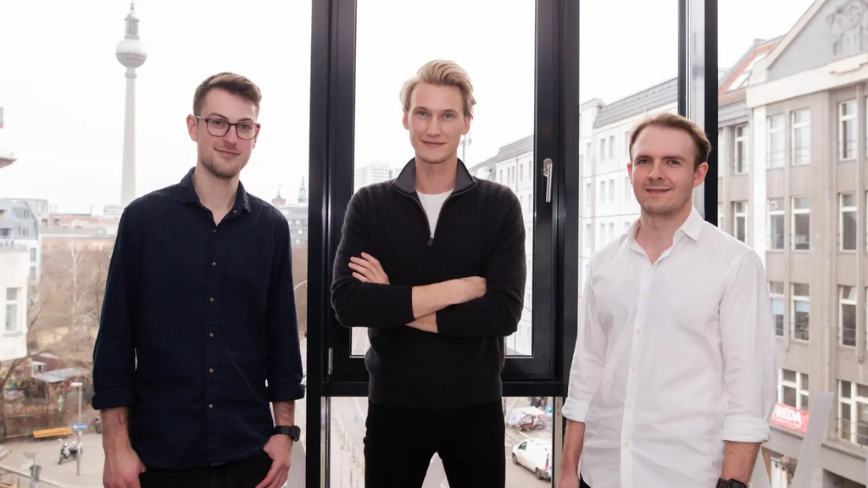
Plato, a Berlin-based startup, has raised $14.5 million in seed funding to bring generative AI into wholesale distribution, a massive industry that rarely makes tech headlines but quietly moves a significant share of the world’s goods.
The round was led by Atomico, with Cherry Ventures, Discovery Ventures, and D11Z joining in.
Wholesale distribution accounts for roughly one-fifth of global production flows. Yet much of it still runs on aging ERP systems, Excel spreadsheets, and manual quoting workflows that haven’t meaningfully evolved in years.
While AI has flooded marketing, customer support, and coding, distribution sales teams are often still copy-pasting numbers between systems.
Plato’s thesis is simple: instead of adding another dashboard, embed AI directly into the operational core. The company connects to existing ERP systems and turns historical sales data into automated actions, flagging revenue opportunities, generating quotes, and identifying risks before they surface in quarterly reports.
Advertisement
The idea grew out of lived frustration. Co-founder Benedikt Nolte experienced the inefficiencies firsthand in his family’s distribution business. Generic CRM tools, he concluded, weren’t designed for the complexity of distributor operations. Plato was built specifically for that environment, not retrofitted from SaaS templates designed for startups.
Early traction suggests the industry is paying attention. Plato reportedly works with several large distributors on six-figure contracts, a sign that AI adoption in traditional sectors is less about hype and more about whether it can save time and unlock revenue.
The fresh capital will help Plato expand beyond sales intelligence into areas like procurement and customer service automation, while pushing into new European markets and eventually the U.S.
More broadly, the round highlights a shift in AI investing. The next wave isn’t just about bigger language models; it’s about embedding intelligence into industries that haven’t been rewritten by software yet. Wholesale distribution may not be glamorous, but it is structurally essential. If AI can modernize that layer of the economy, the impact will be far larger than another chatbot demo.
Washington state’s Legislative Building in Olympia. (GeekWire Photo / Brent Roraback)
The so-called “millionaires tax” was approved by Washington’s Senate on Monday, advancing a measure that would create a 9.9% tax applied to taxable, personal annual income that exceeds $1 million.
Gov. Bob Ferguson earlier this month criticized Senate Bill 6346 for doing too little for small businesses and lower-income residents in the state. The measure passed Monday included changes that made more small businesses eligible for a business and occupation (B&O) tax exemption.
“The proposal is moving in the right direction,” Ferguson said in a statement. “That said, as the process moves forward in the final weeks of the legislative session, we must direct significantly more revenue directly back to hardworking Washington families and small businesses owners. I look forward to our continued partnership to make our state more affordable.”
The measure passed with 27 Democratic lawmakers voting yes. The 22 no votes included three Democrats.
Lawmakers adopted two amendments, including one to repeal a new sales tax expansion on select services that sparked controversy in the tech industry and a lawsuit from Comcast last year. However, the expansion on advertising services would not be repealed as part of the amendment, which would take effect in 2030.
Advertisement
SB 6346 marks the first time in decades that state lawmakers have pursued a personal income tax aimed at high‑income residents. The legislation would go into effect in two years and includes small business and low‑income tax breaks.
The bill has drawn opposition from some tech leaders and entrepreneurs who worry it could undermine the sector by souring Washington’s relatively favorable tax laws for startup founders, investors and high-wage earners.
Supporters of the proposed law argue those fears are overblown and say the bill helps correct the state’s regressive tax code, which relies heavily on property, sales and business taxes to fund education and other public programs.
The bill is expected to generate an estimated $3.7 billion annually.
Advertisement
The action comes as the state is struggling to plug a more than $2 billion budget hole with spending cuts and a slate of potential tax changes, while at the same time some of Washington’s largest employers are cutting thousands of jobs from their payrolls.
SB 6346 would:
Create a 9.9% tax on household income over $1 million, which is estimated to apply to fewer than 1% of the state’s households.
Taxpayers receive an exemption for charitable deductions of up to $100,000, which increased from the original bill’s $50,000 deduction.
Businesses grossing less than $300,000 would be exempt from the tax starting in 2029, which expanded the pool of eligible businesses from the $250,000 cut-off in the original bill. The break would apply to roughly 65% of all businesses.
An additional B&O surcharge will also be eliminated beginning in 2029.
Certain personal hygiene items would be exempt from sales tax starting in 2029.
The income tax would be used in part to expand the Working Families Tax Credit, which provides a sales tax rebate for low- to moderate- income families. It also helps fund the public defense system.
“Today was a momentous step forward. For Washington’s 1.1 million school kids, people struggling to afford health care, and small businesses looking for help, that help is on the way,” said bill sponsor and Senate Majority Leader Jamie Pedersen, D-Seattle, in a statement.
Washington is one of nine states that lack an income tax. If approved by lawmakers, the governor said the proposed tax was certain to go before voters for approval and would face legal challenges as well.
Advertisement
Kirby Winfield, founding general partner at Seattle venture capital firm Ascend, is among those against the legislation.
“This tax is just another brick in the wall of anti-entrepreneurialism from state and local legislators. The average Amazon employee probably won’t mind, but this stuff is devastating to company creation,” Winfield told GeekWire earlier this month.
As state leaders look to impose a levy on wages, they’re also working to repeal a recently passed policy that substantially increased Washington’s estate tax and drew criticism from tech leaders. The new proposal, Senate Bill 6347, also passed on Monday, with 38 lawmakers from both parties voting in favor and 11 Democrats voting against the bill.
Democratic leaders backing SB 6347 feared that wealthy residents would leave the state to avoid the tax — which is significantly higher than any other estate tax, the Seattle Times reported.
Advertisement
Pedersen told the Seattle Times that when it comes to taxes, “it’s not good for us to be an outlier.”
Both bills will now be considered by the House of Representatives. This year’s 60-day legislative session is scheduled to end March 12.
Nothing has made me appreciate the sheer scale and power of targeted advertising like having children. Months before the births of both my kids, it felt like every ad I encountered wanted to sell me baby products. And on seemingly every product were the same two words in bold letters: plant-based.
I’m not kidding. Diapers, baby wipes, teething rings, bath toys — it’s all plant-based these days. Once I saw the phrase on baby products, I started to notice it everywhere. There are plant-based foods, of course (like Impossible burgers and Beyond sausage). There’s plant-based protein, which is kind of like the plant-based meat only less meaty and now showing up in weird places like breakfast cereal. And once you leave the grocery store, you can find plant-based cosmetics, cleaning products, toothbrushes, sneakers, phone cases, and yoga mats. Don’t forget the plant-based packaging to wrap it all up.
It wasn’t immediately clear to me what plants did to deserve the spotlight here. I knew that plant-based foods tend to be better for people and for the environment. But was the same true for plant-based plastics, fabrics, and chemicals?
Still, as a dad trying to keep my kids from harm, I hoped for the best. I bought the plant-based diapers, wipes, and toys. On their labels, alongside the term “plant-based” were words like “eco” and “food-grade,” which signaled two big things to me as a consumer: safe and sustainable. The vast majority of plastics, for instance, are made from fossil fuels, which are damaging to everyone, and microplastics, the tiny synthetic particles left over as plastic breaks down, are showing up in our water supply and our bodies.
Advertisement
The “plant-based” label has started showing up on everything from diapers to phone cases in recent years, signaling a product is “safe” and “sustainable” even when there’s no evidence for that.
The term is essentially unregulated and poorly defined, so “plant-based” products can still contain harmful chemicals.
Treat “plant-based” as a starting point, not a guarantee. Look for products that are transparent about their ingredients or that have credible certifications, like organic.
On the other hand, I’ve seen how brands prey on consumers’ anxieties and use greenwashing to make them seem healthier and more sustainable. Is the boom in plant-based products more of the same? I decided to find out.
Don’t you dare call it vegan
You can trace the term plant-based back to the early 1980s, when a nutritional biochemist named Thomas Colin Campbell was presenting a paper to the National Institutes of Health research grant committee. It was about the role of nutrition in cancer and the benefits of consuming more vegetables, fruit, and grains, rather than meat, but Campbell thought calling the diet vegetarian would be polarizing to the committee. “My solution was to choose ‘plant-based’ for lack of a better word,” Campbell later wrote. He later expanded the description of the diet to “whole food, plant-based.”
The term slowly entered the mainstream in the decades that followed, but Campbell has said it really took off after the success of his 2005 book The China Study. The book is based on a study of the lifestyles of 6,500 Chinese people and linked plant-based diets to lower rates of cancer. It was only a couple years later that Michael Pollan coined his now famous mantra, “Eat food, not too much, mostly plants,” in a New York Times Magazine story that he later adapted into the bestseller The Omnivore’s Dilemma. This is also broadly when we saw the rise of flexitarianism, the diet that’s mostly plants but allows for a little meat or fish.
Plant-based products invaded the grocery store in the 2010s. While labeling something as “vegetarian” or “vegan” might turn some consumers away, the plant-based moniker offered the perfect mix of natural and approachable. After all, who doesn’t like plants? Following a significant rise in the number of new food and drink products labeled as plant-based between 2012 and 2018, the number of plant-based packaged goods increased by 302 percent from 2018 to 2022.
Advertisement
The jump from food to all kinds of consumer products happened for several converging reasons around this time.There was the federal government’s push for more biobased products through the expanded Farm Bill of 2018, as well as the bioplastic industry’s newfound ability to scale up its production. More brands bet on plant-based branding (LEGO released its first plant-based pieces, which were made of sugarcane-based polyethylene, that same year). In 2020, Pampers brought the trend to the mainstream baby market with its Pure diapers, which had plant-based liners.
All of these plant-based products are supposedly engineered to be better in some way. Plant-based cosmetics that are supposed to be better for your skin (although not as good as human-based cosmetics apparently). Plant-based cleaners are supposed to be better for the air quality in your home. Plant-based packaging is supposed to be better for the planet.
The problem is that “plant-based” doesn’t have an agreed-upon definition (nor does “better”), and the label isn’t regulated in any way. When you see something bearing the “certified organic” or “Fair Trade Certified” seal, you know that it’s met a strict set of requirements established by the United States Department of Agriculture (USDA) and Fair Trade USA, respectively. But there’s nothing stopping a company from slapping “plant-based” on its packaging, just like there are no regulations limiting the use of the terms “natural” or “green.” In 2025, the Federal Drug Administration (FDA) released draft guidance on “plant-based” labeling, but those recommendations are nonbinding.
“I wonder if ‘plant-based’ is a new ‘natural,’ because saying something is natural has obviously been played out,” Josée Johnston, a sociology professor at the University of Toronto, told Vox. “Nobody takes that seriously anymore.”
Advertisement
Plant-based items aren’t necessarily appealing to consumers just because we think they’re good. They also represent the absence of bad. The label makes you believe that because an item isn’t made of conventional plastic, it must be free of the microplastics that might invade your bloodstream and settle into your brain. Surely it won’t take centuries to decompose in a landfill.
But just as products billed as “natural” aren’t necessarily free of artificial ingredients, products marketed as plant-based are full of things that aren’t plants — some of which are quite dangerous. They can include things like PFAS, which are known as forever chemicals because they break down slowly and accumulate in the body, which are linked to serious health problems, like cancer and weakened immune systems among children. Chemicals in plant-based products can also emit volatile organic compounds, or VOCs, which are a form of air pollution that can cause respiratory problems in the short term and, in the long term, also cancer.
Plastic that’s plant-based rather than petroleum-based sounds like it would be biodegradable, too. But the most popular bioplastic, known as polylactic acid, or PLA, actually requires specific industrial composting conditions to break down efficiently. In other words, you can’t just dump bioplastics into your backyard compost bin and expect them to fertilize your garden. If you put a PLA-based plastic bottle in your garden, it actually could take centuries to decompose.
Shifting to these plant-based materials can have positive effects. In general, using bioproducts over fossil fuel-based products can help lower emissions and reduce landfill waste, when managed properly. But they also come with climate consequences of their own. For example, growing plants requires less land than livestock, but it still takes up a lot of land. Meanwhile, if bioplastics aren’t composted in a particular way, they act like petroleum-based plastic in landfills and the environment. They don’t break down, but they do produce methane, a powerful greenhouse gas.
Advertisement
None of this necessarily means you should avoid plant-based products. It just takes some extra work to know what’s in them — and what to do with them when you’re done.
How to make sense of plant-based marketing
It’s hard navigating the world while watching it burn. Many people, rightly, want to do their part to make things better, but it’s easy to feel overwhelmed and powerless. When companies offer us products that make us feel better about all kinds of things — our carbon footprint, our health, our safety — they are really selling us a sense of agency. You buy organic produce, because you’re worried about how the conventional stuff was produced. You buy bioplastics, because you think they’re less likely to break down into microplastics. You buy plant-based diapers, because you think the regular ones will harm your baby. Norah MacKendrick, a sociologist at Rutgers, calls this cautious consumerism and says that it’s not a bad thing.
“Americans know, on some level, that the ingredients in the products on their store shelves, from baby food to diapers, haven’t been carefully vetted for their impacts on health — not by any governmental body or by the companies themselves,” she told Vox.
Advertisement
“People do have a sense that the way we’re consuming is not sustainable,” said Johnston, the University of Toronto professor. “They’re more aware of plastics in the environment, plastics in water, and so I think they’re going to be drawn to products that offer them a way out, a way to manage that dissonance and discomfort in everyday life.”
It’s frustrating, then, that the plant-based moniker is functionally useless. The onus is on shoppers, often women, to do the research and figure out which products live up to their implied promise of being healthy or environmentally friendly or simply not as harmful as the conventional thing.
Plant-based products are no panacea. They’re also not necessarily bad products. In terms of measurable impact, however, there’s still a lot we don’t know.
There is a mountain of evidence that plant-based foods are better for the environment. Transitioning everyone from meat-based to plant-based diets, for instance, could reduce diet-related land use by 76 percent and reduce greenhouse gas emissions by nearly 50 percent. Meanwhile, consuming a whole foods, plant-based diet can reduce the risk of heart disease by 25 percent, according to one meta-analysis. Michael Pollan’s mantra holds up.
Advertisement
Things get a bit trickier when it comes to other plant-based products, and even more difficult when it comes to items for babies. When you’re looking at the environmental impact, there’s good evidence that plant-based plastics, which are often made of corn or sugarcane, tend to have a smaller carbon footprint and to be more biodegradable. But that corn or sugarcane has to be grown somewhere, which means using resources like land and water. Plus, as mentioned above, PLAs require industrial processes for proper composting. If you just bury a “compostable” plant-based plastic fork in your backyard, there’s a chance it will decompose about as slowly as petroleum-based plastic. Plant-based plastics may also include additives, including bisphenol A or (BPA) or phthalates, which can disrupt your endocrine system.
Similar patterns pop up when you’re talking about plant-based textiles, beauty products, and cleaners. They’re probably better than their conventional counterparts, but there are caveats. Some “vegan leather,” for instance, might get billed as plant-based but is actually just regular, petroleum-based plastic. (The New York Times called this rebranding “a marketing masterstroke meant to suggest environmental virtue.”) A lot of plant-based fabric is actually man-made cellulosic fibers (MMCFs), like viscose, rayon, or lyocell, which are energy intensive to produce.
All of these products come with their own set of health concerns. Plant-based textiles can be treated with PFAS for waterproofing (vegan leather is a particularly bad offender). Plant-based cosmetics and cleaners can be made with fragrances and chemicals that emit VOCs. And even though something is plant-based, it could still contain allergens or irritants. We also still don’t fully understand what microplastics are doing to our bodies, but plant-based plastics can get micro-sized, too. Research shows that bioplastics degrade and produce micro- and nanoscale pollution, just like conventional plastics, and they present new problems because we know even less about what they do to humans and to the environment. (If you’re still confused about recycling plastic, which is warranted because it’s confusing, check out this guide.)
You might read all of this and assume everything is awful and dangerous, which is fair. But I look at it as evidence that all products are more complicated than a single ingredient, whether that’s petroleum or corn. It can be intimidating to wade through the alphabet soup of chemicals and certifications to know what’s safe, according to Sheela Sathyanarayana, a pediatrician who runs a lab at Seattle Children’s Hospital studying how chemicals affect children.
Advertisement
“This is very hard at the individual consumer level,“ said Sathyanarayana, who points to the Environmental Working Group as a good resource. “But overall there is not one space that talks both about ecological sustainability and chemical human safety together (that I know of).”
I’ll confess, I bought some plant-based diapers from a brand called Dyper. They were billed as non-toxic, chlorine free, charcoal-enhanced, stuffed with wood pulp from responsibly managed forests, and theoretically compostable. The problem was that they were stiff as a board, and they leaked. They also cost more than double what I’d been buying for my kid — roughly a dollar a diaper versus less than 50 cents. If I wanted to compost the dirty diapers, I’d have to bag them up and call for a truck to come pick them up and take them to a special industrial composting facility.
It just shows how much work it takes to be a cautious consumer. That doesn’t mean you shouldn’t do it. If you see something’s plant-based, that might catch your attention, but dig into the details to figure out just how good that product is for the environment or for you. If you’re shopping for a baby, you’ll want to be extra careful to look out for certain chemicals, especially phthalates, PFAS, and VOCs. But admittedly, this is especially challenging when it comes to diapers; companies don’t have to list the ingredients in their diapers (except in New York, where it recently became required by law).
Advertisement
In your quest for safe and sustainable products, there is ultimately the option of just buying less stuff or buying secondhand. That’s not an option with disposable diapers, of course, but it’s a great course of action when it comes to clothes, furniture, and home goods.
When all else fails, try buying something that’s completely, verifiably natural. Lately, I’ve been seeing a lot more natural rubber baby products. There are teethers, bath toys, and pacifiers. Natural rubber is just tree sap, so it seems safe enough. Natural rubber can also grow mold, however. If only anything could be simple.
A version of this story was also published in the User Friendly newsletter. Sign up here so you don’t miss the next one!
Portable Bluetooth speakers have become an easy default for listening away from your desk or living room. They’re the kind of tech you grab without thinking, whether you’re heading outside, cleaning the house or packing for a weekend away. The best portable options manage to sound bigger than they look, delivering clear audio without weighing down your bag.
Battery life and durability matter just as much as sound quality now. Many modern speakers are built to survive splashes, dust and the occasional drop, while still offering quick pairing and stable connections. Some are designed for solo listening, others are meant to fill a space with music and keep going for hours.
We’ve tested a wide mix of portable Bluetooth speakers to see which ones are actually worth carrying around. Whether you want something small and simple or a speaker that can anchor a get-together, these are the models that stood out.
Quick Overview
Advertisement
Best portable Bluetooth speakers: $50 to $200
Soundcore
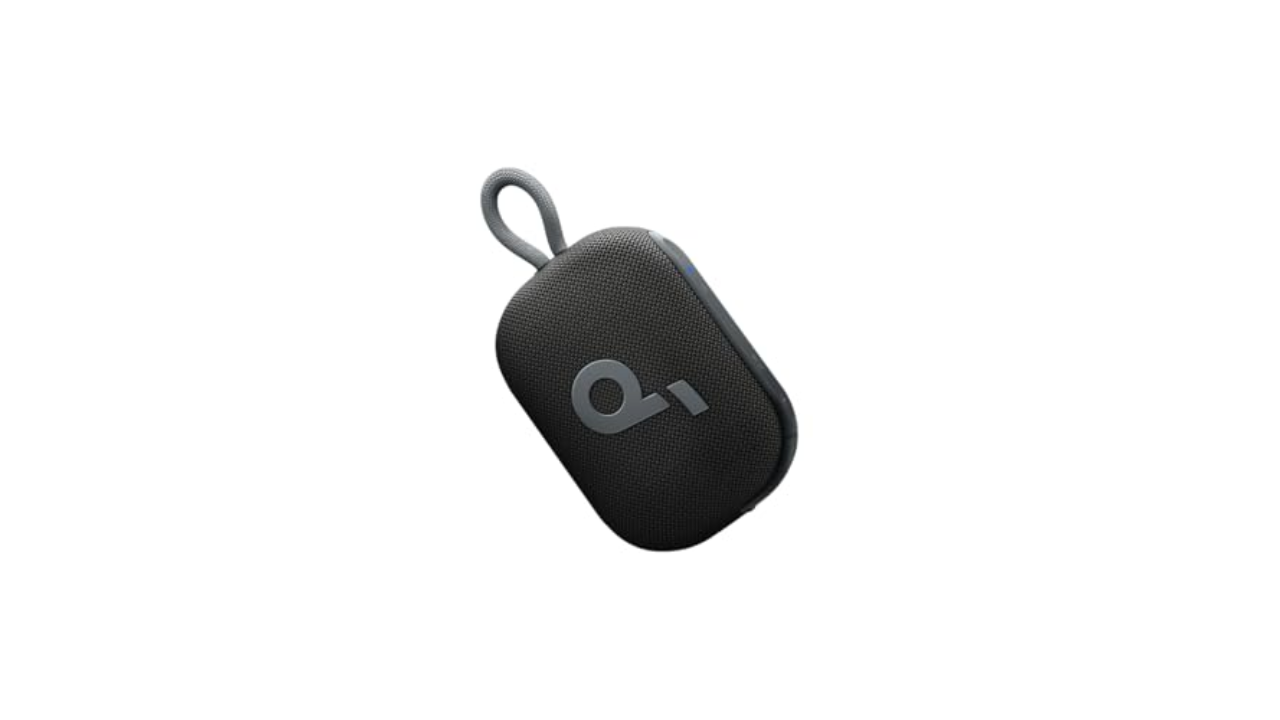
Features: Built-in carrying loop | Battery life: Up to 20 hours | Assistant support: None | Weight: 9.3 ounces | USB charging: Yes | Waterproof: Water‑resistant (IP67)
If you’re looking to spend as little as possible and get a speaker that will free you from using your smartphone to blast out tunes, the Soundcore Select 4 Go is a good option. It has decent sound quality for a speaker its size, and it’s loud enough to fill a standard-sized living room, bedroom or desk area outside. You can even pair two of them together to get bigger sound, too. It’s IP67 water- and dustproof, and it’s designed to float so it can handle an accidental dunk in the pool without any issue. And with a battery life of 20 hours, it’ll provide music for the entirety of your next party without breaking a sweat. — Valentina Palladino, Deputy Editor
Advertisement
JBL
Features: Built-in carrying loop | Battery life: Up to 7 hours | Assistant support: None | Weight: 0.4 pound | USB charging: Yes | Waterproof: Water‑resistant (IP67)
JBL made a handy, convenient little speaker in the Go 4. It gets decently loud and doesn’t sound too distorted at those higher volumes. Will it stand up to more expensive speakers on this list in terms of sound quality? No, but it sound good for its size, which is small enough to fit in the palm of your hand. Made in part with recycled materials, the Go 4 is IP67 water- and dustproof, and you can pair two of these speakers together to get an even wider sounstage. — V.P.
Advertisement
Photo by Jon Turi / Engadget
Features: Built-in power bank to charge other devices | Battery life: Up to 12 hours | Assistant support: None | Weight: 1 pound | USB charging: Yes | Waterproof: Water‑resistant (IP67)
If you’re just looking for a small Bluetooth speaker that can kick out some decent volume, the Tribit StormBox Micro 2 fits the bill. The audio quality here is fine; it doesn’t stand out in terms of fidelity, but the volume you get from this affordable little speaker is what makes it a good choice. If you’re bopping about outdoors on your bike or chilling in the park, it’s usually more about portability and volume anyway. The rubbery rear strap works well on relatively thin things like belts, backpacks and bike handlebars.
While it’s small and affordable, this mini speaker features a USB-C charging port for your devices in a pinch and you can wirelessly connect two of them for party mode or stereo sound. It also supports voice assistants for both iOS and Android users, and if you want to take calls on your phone via speakerphone, that’s easy to do as well.
Advertisement
Soundcore
Features: IPX7 waterproof, custom EQ settings using companion app | Battery life: Up to 13 hours | Assistant support: None | Weight: 1.9 pounds | USB charging: Yes | Waterproof: Water‑resistant (IPX7)
Soundcore has been releasing some very able speakers lately and one of its newest is a quality personal portable. The Motion 300 is of the pint-sized variety, but offers 30-watts of punchy and bright output. It’s IPX7 rated so it can handle a bit of water, and it works with the Anker Soundcore app that allows a fair amount of customization from EQ settings to button brightness. It also supports hi-res audio using the LDAC codec for Android users with a compatible device.
Advertisement
The Motion 300’s size and frequency range don’t quite allow for a ton of bass, but it’s relatively loud and thumpy, especially when it has surfaces to reflect off of. Soundcore has even extended its high-frequency range to 40kHz, and while its utility is debatable, the Motion 300 does sound crisp in the high-end spectrum. You can also enable adaptive audio, which helps optimize its sound delivery depending on the speaker orientation (on its back, standing up or hanging from its removable button-fastened strap).
The speaker’s design merges a funky style with office-machine chic, from the playfully speckled soft touch exterior to the metallic, logo-emblazoned grille. Its 1.7-pound weight and clutch-purse size makes it better as a handheld or stowed in your bag rather than hanging from a backpack or bike handlebars. Ultimately, you get great sound in a small package with features you can tweak to your liking, all at an approachable $80 price tag.
Ultimate Ears
Advertisement
Features: IP67-rated design, support for stereo pairing | Battery life: Up to 14 hours | Assistant support: None | Weight: 1.2 pounds | USB charging: Yes | Waterproof: Water‑resistant (IP67)
The latest version of a previous pick (the Wonderboom 3), the Ultimate Ears Wonderboom 4 is a tiny yet powerful portable that can deliver big sound. It’s still a cute, barrel-shaped small speaker with a nubby little strap that probably needs a carabiner to help attach it to most things. It offers up to 14 hours on a single change, and underneath, you can easily access the protected USB-C port whenever you need to refill. With an IP67 rating on top of the company’s five-foot drop test durability, it can go with you almost anywhere and survive to tell the tale.
Although there’s no app support or connectivity with the rest of the Ultimate Ears speaker lineup, you can easily pair it with other UE speakers for stereo sound. There’s also an outdoor mode button on the bottom that boosts the mid and high range to help the audio carry over a greater distance — perfect for when you need a compact party speaker that still delivers the best sound possible in its class.
Advertisement
Photo by Jon Turi / Engadget
Features: IPX7 waterproof, custom EQ settings using companion app | Battery life: Up to 12 hours | Assistant support: None | Weight: 2.3 pounds | USB charging: Yes | Waterproof: Water‑resistant (IPX7)
This nondescript wedge of a wireless speaker could easily slip under your radar, but it’s worth a listen. It has a bright and bassy output, which is helped along by Qualcomm aptX support for hi-res audio. This Anker Soundcore device has a solid, slightly heavy build with a metal front speaker grille, a soft-touch rubberized exterior (that loves your greasy fingerprints) and IPX7 water resistance. While it’s not the lightest or most portable, it has good sound, especially for the price. Plus the app offers EQ customization, so you can fine tune to your liking.
There’s also a 3.5mm aux input for wired connections. You can use it as a speakerphone when taking calls as well, or easily play music from your devices. That’s fortuitous, as we found that this small speaker works well as a mini soundbar alternative and the wired input offers a foolproof connection. Aside from that, you can easily charge the Motion+ thanks to its standard USB-C charging port and it should last up to 12 hours on a single charge.
Advertisement
JBL
Features: IP68-rated design, support for stereo pairing | Battery life: Up to 16 hours | Assistant support: None | Weight: 1.2 pounds | USB charging: Yes | Waterproof: Water‑resistant (IP68)
We considered the JBL Flip 6 the best JBL speaker for most people (you can still find it available online), and the JBL Flip 7 only improves upon the previous model. Sound quality is solid from lows to highs, even with the volume up at high registers. The cylindrical shape works well on its side or even standing on its end to save desk space. It has a capable carrying (or hanging) strap and raised buttons you can discern in the dark.
Advertisement
The JBL Portable app gives you a 3-band EQ to customize the sound profile if desired and if you have two Flip 7 speakers, you can run them as a stereo pair. If you happen to have a mix-and-match assortment of different PartyBoost-enabled JBL devices, you can connect multiple speakers for a bigger sound. And with a USB-C charging port, it’s a versatile device that’s easy to take with you on the move.
Bose
Features: Built-in mic for assistant support and phone calls, IP67-rated design | Battery life: Up to 12 hours | Assistant support: Google Assistant, Siri | Weight: 1.3 pounds | Wireless range: 30 feet | USB charging: Yes | Waterproof: Water‑resistant (IP67)
Advertisement
While the $119 Bose SoundLink Micro is half the size, we found that it’s definitely worth the extra $30 if you trade up to the SoundLink Flex. While it’s still not a room filler, the speaker offers some bright, dynamic finesse to your tunes, along with a significant amount of bass for its size. It’s similar to the scale of a small clutch bag, with a very small strap for carabiner-type hanging. Much of the exterior is sheathed in soft-touch silicone, except for the powder-coated steel speaker grilles. Like others in this range, the speaker is IP67 rated so it can handle the elements and sound good doing it.
Setup and connecting to the speaker should be done from within the aptly named Bose Connect app. You can also turn off voice prompts (which can become annoying) and pair with similar speakers for either party mode or stereo.
Features: IP67 waterproof, lossless audio over USB-C | Battery life: Up to 24 hours | Assistant support: Yes | Weight: 1.5 pounds | USB charging: Yes | Waterproof: Water‑resistant (IP67)
The new Pill has impressive bass performance due to the company’s decision to increase the size of the woofer rather than keep its previous arrangement that included two smaller ones. The speaker struggles at its loudest volumes, but it’s plenty loud enough well below that. The IP67 rating is more rugged than the Pill+ and over 24 hours of battery life will keep the tunes going for a long time. Plus, there’s lossless audio over USB-C and the ability to top off your phone or earbuds with the speaker’s battery.
This is a solid choice for anyone seeking crisp clarity with true low-end thump if a track demands it. The addition of lossless is also nice for times you’d like a little more quality in your tunes. And you can also put two Pills together for bigger sound or use them as a stereo pair. — Billy Steele, Senior Reporter
Advertisement
Marshall
Features: IP67-rated design, support for stereo pairing | Battery life: Up to 30 hours | Assistant support: None | Weight: 0.26 pounds | USB charging: Yes | Waterproof: No
The Emberton III Bluetooth portable from Marshall continues to iterate on a design we’ve loved for a while. This clutchable rectangular slab has a max output of 20 watts to deliver the brand’s signature sound. It may not be the loudest in its size range, but it focuses more on balanced output than raw power. There’s still 360 sound as well, making it a good companion for small get togethers.
Advertisement
The latest model has more than 32 hours of battery life and a rugged IP67 rating. There’s also a built-in microphone, so you can use it to take calls while you’re getting ready for the day or chilling out in the backyard.
JBL
Features: Built-in power bank to charge other devices, IP68-rated design, support for stereo pairing | Battery life: Up to 28 hours | Assistant support: None | Weight: 2.2 pounds | USB charging: Yes | Waterproof: Water‑resistant (IP68)
Advertisement
If you’re willing to spend a little more for bigger sound and more hours of battery life, the midrange JBL Charge 6 is a great upgrade over the Flip 6 or Flip 7. It has the same bright output and capable low end, but in a slightly larger package. If you’re looking for a smallish portable speaker, but something capable enough to entertain a few guests, this works.
The Everboom is a decent mid-range option in the Ultimate Ears lineup. The best features are its high durability and Outdoor Boost for better sound outside. You’ll get loud, 360-degree audio, but like a lot of UE speakers, there’s a lack of overall fidelity due to subdued mid-range tone. There’s plenty to like here, especially if you’re looking for something to take on an adventure that won’t weigh you down too much. The price is, however, a bit on the high side with the limited suite of features. But, all of the basics, and slightly more, are covered. Plus, it floats! — B.S.
Photo by Jon Turi / Engadget
Advertisement
Features: IP67-rated design, support for stereo pairing | Battery life: Up to 20 hours | Assistant support: None | Weight: 3.9 pounds | USB charging: Yes | Waterproof: No
Marshall launched the Middleton in January 2023 and positioned it as the new flagship for its portable Bluetooth speaker line. It’s the largest of the company’s IP67 rugged portables (measuring 4.3 x 9 x 3.75 inches) and offers a significantly louder output, with 50-watts of 360-degree sound. There are dual woofers and tweeters for the front and back, with passive radiators along each side. It also offers Stack Mode, which lets you pair with any other Middleton, Emberton II or Willen speakers nearby to expand your listening experience.
The Middleton can be managed through the Marshall Bluetooth app, but it also includes most of those same controls on the top. There’s a Bluetooth button (which doubles as the Stack Mode control) and a multi-use joystick for power on/off, volume control and track selection (forward or back). You also get bass and treble controls, which are a welcome addition and a first for one of Marshall’s speakers without physical knobs.
It has that traditional Marshall look, made with a soft-touch exterior composed of 55-percent post-consumer recycled plastic and is 100-percent PVC free. It also has a carry strap you can easily fit your hand through. Any dust, dirt or prints on the outside can be scrubbed off with a damp cloth, and even the exposed USB-C and 3.5mm input port components are waterproofed. That USB-C port can be used to recharge the speaker, or power up your other devices with its 9,600mAh battery.
Advertisement
Of course audio purists should know that it only supports SBC, but the sound quality is still top notch for most people. And while Marshall devices are usually priced at a slight premium, the good sound quality and decent low-end capability definitely makes this model worth checking out.
JBL
Features: IP67-rated design| Battery life: Up to 24 hours | Assistant support: None | Weight: 4.6 pounds | USB charging: Yes | Waterproof: Water‑resistant (IP67)
Advertisement
If you’ve enjoyed any of the smaller JBL speakers out there and are willing to spend a bit more, the Xtreme 4 is a good all-around choice. It’s big enough to warrant a shoulder strap, but still only about the size of a football. When we tested the previous version, the Xtreme 3, we found it to have pleasant dynamic sound, with hefty lows and a lively high end that seems slightly better balanced at this size than the smaller options from JBL in this range.
This is easily a favorite if you want something under $400 with a little more gusto than your average portable, but still being IP67 weatherproof. It has enough output to breathe life into a small soiree or backyard hang, although while it’s quite loud, it’s best when it’s close by or indoors where the bass can resonate to its fullest.
Best portable Bluetooth speakers: $450 and higher
Photo by Jon Turi / Engadget
Advertisement
Features: IPX2-rated design, support for multi-host functionality | Battery life: Up to 20 hours | Assistant support: None | Weight: 10.8 pounds | USB charging: No | Waterproof: Water‑resistant (IPX2)
If you didn’t know about Marshall’s history in amplifiers and rock music, the design should clue you in. The Tufton is the largest portable Bluetooth speaker from the company, looking much like an amp itself (as do most of them). It has physical knobs at the top and a carry strap to help move it about. While it may appear as rugged as concert gear, it’s less impervious to the elements as some with just an IPX2 rating, so it’s protected from light splashes from above.
Whether or not you’re a fan of the brand, the rich and distinctly thumping output may make you one. We felt pulled into the sound while listening to the Tufton, a bit more than most other speakers we tested at this scale. It’s dynamic, warm and, dare we say, analog in its audio presence. It’s also multi-directional with a supplemental driver on the back along with a bass port.
There’s no app to adjust the EQ, just the physical controls including a Bluetooth connect button, a power/volume knob and two for bass and treble. Once powered on, you can use the volume knob to set a max headroom and adjust volume on the fly from your source. The bass and treble knobs help you choose the tone of your adventure, from a purely flat soundscape to an enhanced one. We just wish you could see the dial indicators in the dark. Other features include aptX support and quick-charge capabilities that provide four hours of listening time in just 20 minutes, plus great standby battery life.
Advertisement
Photo by Jon Turi / Engadget
Features: IPX4-rated design, support for multi-host functionality | Battery life: Up to 24 hours | Assistant support: None | Weight: 13 pounds | USB charging: No | Waterproof: Water‑resistant (IPX2)
The UE Hyperboom is an all-arounder with good looks, portability, plenty of connectivity options and a loud and punchy (albeit compressed) output. The technical fabric exterior (which now includes a white option) lets it live among your furniture without screaming “party box,” while the optical input offers a possible TV speaker alternative. The large capacitive buttons on top let anyone adjust the volume, pause or play the music and select from two concurrent Bluetooth connections or a hardwired input (3.5mm or optical). On the edge with the silicone carrying handle there are the wired ports, plus one for charging USB devices and another for power. You can expect to get up to 24 hours of battery life, and the Hyperboom is good at holding a charge on standby.
Advertisement
This capable and loud (roughly 100dB) speaker will please most people as long as the party is of primary concern over fidelity. The ability to remotely power your device on or off using the UE app is also a welcome feature. Plus you can easily expand the sound to other Ultimate Ears Boom speakers (except Wonderboom) using the PartyUp feature. The IPX4 rating means a few spilled drinks won’t hassle it, but it’s not the best Bluetooth speaker choice for all-weather adventures.
Factors to consider in a portable Bluetooth speaker
Weather-proofing
IP ratings (Ingress Protection) are the alphanumeric indicators you often see in a product’s spec sheet that define water and dust resistance. It’s usually a combo of two numbers with the first indicating solid object ingress and the second being water. The former goes from 0 (no protection) to 6 (dustproof). The water-resistance rating goes from 0 (no protection) to 9 (protected against immersion and high pressure jets). When an X is used instead of a number, that means the product wasn’t tested for resistance. If it’s a waterproof speaker, it may have some innate resistance to solids, but there’s no guarantee.
IP67 is a common rating these days indicating highly resistant and potentially rugged speakers often featured in audio products like outdoor speakers. These are safe for quick dunks in the pool or tub and should be more than OK in the rain or in the shower. They’re also good options for the beach, playground and other rough environs.
Advertisement
Additionally, speakers with ports and a high rating will often include a tight-fitting cover over the charging or auxiliary ports. If you plan on using the ports, that may limit the product’s rated ability to fend off the elements.
When looking for the best portable Bluetooth speaker, consider the IP rating and also how you plan to use your Bluetooth speaker when making your decision. It may be worth splurging on a better sounding model with a lower IP rating if you’ll mostly be using it indoors, for instance.
Battery life
The focus of this guide is on the best portable speakers, and while “portable” can be a relative term, these devices are generally for people who are likely to find themselves far from a power outlet. These days, around 12 hours of playtime seems to be the baseline but obviously, the more battery life you can get out of a speaker, the better, especially if you plan to listen to podcasts or music on the go.
That said, be careful when looking at battery specs, as they frequently list a maximum runtime (“up to” x amount of hours). This usually means they tested at a low to mid volume. If you like your tunes loud with punchy bass, it can often end up cutting the expected usage time in half or more. Luckily, some manufacturers also list the expected hours of battery life when used at full volume and that transparency is appreciated. Bear in mind, however, that not all of the best Bluetooth speakers use the same charging port. Some support USB-C charging, while others use micro-USB, and some may even come with an adapter for added convenience.
Advertisement
Additionally, if your audio system or mini Bluetooth speaker also happens to have Wi-Fi connectivity, they’re usually designed for always-on functionality. Unlike normal Bluetooth speakers that go to sleep after a short period without use, these will usually stay awake (to listen for your commands) and slowly run down the battery. If you’re out and about, you’ll want to remember to turn these speakers off manually when not in use to maximize battery life.
Range
Bluetooth 5 offers better range and more reliable connectivity than its predecessors, making it a great feature to look for in the best Bluetooth speaker. That said, Bluetooth range can still be tricky. Some companies list their product’s longest possible range, usually outdoors and in an unobstructed line-of-sight test environment. Other companies stick with a 30-foot range on the spec sheet and leave it at that, even though they may be running Bluetooth 4.x or 5.x. That’s likely underselling the speaker’s potential, but unpredictable environments can affect range and there’s little point in promising the moon only to get complaints.
I’ve seen signal drop issues when crouching down, with my phone in the front pocket of my jeans, and barely 30 feet away from a speaker inside my apartment. I ran into this issue across several devices regardless of their listed Bluetooth connectivity range.
If you’re hosting a patio party and duck inside, it’s wise to keep any wireless Bluetooth speakers relatively close by just in case. It’s hard to gauge what aspects of any environment may interfere with a Bluetooth signal. In general, take range specs around 100 feet or more as a perfect-world scenario.
Advertisement
Latency
This is a minor mention for those out there who use a speaker for their computer output, or as a mini Bluetooth soundbar solution for setups like a monitor and streaming box. It’s annoying to find that your speaker’s latency isn’t low enough to avoid lip sync issues. Luckily, it seems that most speakers these days don’t often have these problems. Only a handful of the few dozen speakers I tried had persistent, noticeable lip-sync issues. Aside from occasional blips, all of our picks worked well in this regard.
If you plan to frequently use a speaker for video playback, look for devices with the most recent Bluetooth 5 technology and lower latency codecs like aptX. Also make sure the speaker is close to the source device as distance can be a factor. To avoid the issue altogether, though, consider getting one with a wired auxiliary input.
Extra features
Some speakers don’t just play music — they bring the party to life with built-in LED light effects and a full-on light show that syncs to your music. If you love a bit of visual flair with your tunes, it’s worth checking out models that offer LED light customization options.
Sound quality also plays a huge role in picking the right speaker. The best Bluetooth speaker should deliver a balanced mix of punchy bass, clear highs and strong vocals. Many models also include customizable sound modes that let you tweak the EQ to better suit different genres — whether you’re blasting EDM, listening to a podcast, or just want a more immersive experience that would impress even an audiophile.
Advertisement
If aesthetics matter, many models come in a tiny size that makes them extra portable, with plenty of color options to match your personal style. Whether you want a sleek black speaker or a vibrant eye-catching design, there are plenty of choices to fit your vibe.
Other portable Bluetooth speakers we tested
Sonos Roam
While there’s a lot to like about the Sonos Roam, there are plenty of other Bluetooth speakers with more features and better battery life. In our review, we gave the Roam a score of 87, praising it for its good sound quality, durable waterproof design and ability to work well within an existing Sonos speaker ecosystem. But the price is just fine at $180, and we found Bluetooth speakers that offer more at lower price points. Plus, the Roam taps out at 10 hours of battery life, and all of our top picks can run for longer than that on a single charge.
Monoprice Soundstage3
The Monoprice Soundstage3 offers relatively big sound at a midrange $250 price, with a variety of inputs rarely found on a portable Bluetooth speaker. The boxy, minimalist design is no nonsense, even if it’s more of a less-rugged, bookshelf-styled homebody. While the speaker puts out crisp highs alongside booming lows, we found the bass can overpower the rest of the output, so it’s not for everyone. And after using the speaker for many months, we also found the low-slung, poorly labeled button panel along the top can be a bit annoying to use. If you want a speaker for road trips, favor mids and highs, and plan on using physical buttons for volume control and input selections, there are better options out there.
JBL Boombox 3
Fans of JBL’s bluetooth speaker sound profile who want to crank up the volume, but also want a rugged and portable option, may enjoy the JBL Boombox 3. It’s a decent grab-and-go speaker with a very loud output, although it’s not as good as some of the loud-speaker styled options for long-throw sound and big outdoor areas. However, the price for this speaker line remains prohibitively expensive compared to other options with big sound that cover a bit more ground. If the JBL brand is your thing and you like the rugged, portable form factor, we recommend looking for discounts, or shopping around and exploring the available options including the (less portable) JBL PartyBox series.
Advertisement
Soundcore Motion X500
Soundcore speakers have generally been good and often reasonably priced. The Motion X500 loosely falls into that category. It has a tall, metallic lunchbox vibe with a fixed handle and pumps out a respectable 40 watts of crisp, clear sound for its size. It can get pretty loud and serves up a good dose of bass, although its primarily a front-facing speaker.
There’s LDAC hi-res audio support for Android users, but the main selling point on this is spatial audio. This is done through an EQ change and the activation of a small, up-firing driver. There’s a slight benefit from this if you’re up close and directly in front of it, but it’s not a total game changer for your listening experience. The original pre-order price of $130 made it a decent option in terms of bang for your buck. But it went up to $170 at launch, making it less appealing even if it’s still a good middle-of-the-road option if you want small-ish, clear and loud. If you can find one on sale for the lower price, it’s definitely worth considering. There’s also the larger and louder X600 ($200) if the overall concept is working for you.
Portable Bluetooth speaker FAQs
How does a Bluetooth speaker work?
Bluetooth technology lets devices connect and exchange data over short distances using ultra high frequency (UHF) radio waves. It’s the frequency range that’s carved out for industrial, scientific and medical purposes, called the 2.4GHz ISM spectrum band. This range is available worldwide, making it easy for companies to use with devices for global markets.
Bluetooth speakers include this tech, which lets them communicate with source devices like smartphones, tablets or computers in order to exchange data. The two devices pair by sharing a unique code and will work within the proscribed range for the device and Bluetooth version.
Advertisement
Ever since Bluetooth 4.0 was released over a decade ago, new iterations usually improve on range, use less power and offer expanded connectivity with features like multipoint (allowing more than one device to be connected at the same time, for instance).
Who should buy a Portable Bluetooth speaker?
If you want to play music while you’re out-and-about on something other than headphones, a portable Bluetooth speaker is probably what you want. There’s a broad range of devices for all types of circumstances. Many adventurous people will want a relatively lightweight portable that’s rugged enough to handle the elements while also packing enough charge to play for hours on end. Others may simply need a speaker they can move around the house or use in the backyard. In this case, you can choose larger less rugged models that may offer better sound.
Photo credit: NASA | Zena Cardman As night falls over the Arabian Sea and India’s west coast, something remarkable happens. The fishing boats turn on their bright green lights to attract squid, shrimp, sardines, and mackerel, with the glowing dots lighting up the black waters. From the dock or the beach, it’s just a normal sight, a bunch of ships doing their thing long after the sun has set, but up in the International Space Station, 259 miles above the earth, those same lights transform into brilliant streaks and bursts of color that compete with city lights for attention and, in some cases, appear much brighter than entire cities.
Astronaut Zena Cardman was in control of the camera during routine Crew Earth Observations. This is an initiative that has taken hundreds of thousands of photos of what we’re doing on Earth and how the planet is changing. What you see is a sea of dark water, with these bright green streaks emerging where all the boats are concentrating their efforts. On land, city lights give a gentle yellowish glow. The contrast is startling between these clean small blobs of light on the ocean and the spreading mass of city lights.
BUILD AN OFFICIAL NASA ROCKET – Kids prepare to explore outer space with the LEGO Technic NASA Artemis Space Launch System Rocket (42221) building…
3-STAGE ROCKET SEPARATION – Young builders can turn the hand crank to watch the rocket separate in 3 distinct stages: solid rocket boosters, core…
STEM BUILDING TOY FOR KIDS – This educational rocket kit was created in collaboration with NASA and ESA to showcase the authentic system that will…
The reason boats use green lights in the first place is that artificial light attracts many aquatic species. They approach it because they believe there is food there, or because they are simply interested. That is precisely what the fisherman are depending on. So, at night, when visibility is limited and the fish are swimming near the surface, fishermen may see them and catch more. When a group of boats lights up the sea at the same moment, it resembles a collection of small villages floating on the water. Each boat is a sharp little point, but when combined, they form long, bright streaks that depict the boats traveling over the water.
The @Space_Station rarely makes big changes to its orientation, but we were lucky to experience such maneuvers (flipping around to fly butt-first, then flipping back again) before and after each @spacex CRS-33 reboost. This 60x speed timelapse was one of my favorites since it… pic.twitter.com/7IsZnb1G7G
City lights, on the other hand, present a very different story since they show us where the roads, buildings, homes, and industries are. It’s really evident from orbit. Cities sprawl along beaches and down into valleys, emitting a single, continuous glow. In contrast, fishing lights remain out at sea. They are usually lines or curves of light that follow the best fishing spots. The green tint of the boat lights is another feature that makes them stick out, as it is not a color commonly seen while looking down at streetlights and buildings.
As India pitches itself as a global hub for applied artificial intelligence, OpenAI has partnered with Pine Labs to integrate AI-driven reasoning into the fintech firm’s payments stack, automating settlement and invoicing workflows in a move the companies say could help accelerate AI-led commerce in India.
The partnership will see Pine Labs embed OpenAI’s application programming interfaces — software tools that let companies plug AI into their existing systems — within its payments and commerce infrastructure, the companies said on Thursday, all with the aim of enabling AI-assisted settlement, reconciliation, and invoicing workflows.
The deal underscores OpenAI’s broader push to expand its footprint in India, one of its fastest-growing markets, as it looks to move beyond being known primarily as the maker of ChatGPT and embed its technology into education, enterprise, and infrastructure. Earlier this week, OpenAI partnered with leading Indian engineering, medical, and design institutions to bring AI tools into higher education, betting that India’s large developer base and more than a billion internet users will play a central role in the next phase of AI adoption.
Pine Labs is already using AI internally to automate parts of its settlement and reconciliation process, cutting the time it takes to clear daily settlements from hours to minutes, according to Chief executive B Amrish Rau. The Noida-based company previously relied on manual checks by dozens of employees to process funds from multiple banks before markets opened each day, a workflow that is now largely handled by AI-driven systems, he said in an interview.
Advertisement
For Pine Labs, the partnership is intended to extend those AI-driven efficiencies beyond internal operations to merchants and corporate clients, starting with business-to-business use cases such as invoice processing, settlements and payments orchestration, Rau told TechCrunch. He noted the company sees faster adoption in B2B workflows, where AI agents can handle large volumes of repetitive financial tasks under predefined rules, before similar capabilities reach consumer-facing payments.
“People talk about retail AI, but the bigger impact of all of this is really efficiency improvement, especially in B2B,” Rau said. “If you look at invoicing and settlement, those are workflows where agents can actually drive the process end to end, and that’s where adoption can happen faster.”
The rollout of more autonomous, agent-led payment workflows will move faster in overseas markets where regulations already allow such transactions, Rau said, while India is likely to see a more gradual adoption focused on AI-assisted commerce rather than fully agent-initiated payments. He said that Pine Labs is already prototyping agent-driven payments in parts of the Middle East and Southeast Asia, even as Indian regulations require tighter controls on how payments are authorized.
Techcrunch event
Advertisement
Boston, MA | June 23, 2026
For OpenAI, the partnership offers a route deeper into India’s payments and enterprise ecosystem as it looks to move beyond consumer-facing tools and embed its models into high-volume, regulated workflows. Rau said the collaboration is aimed at increasing merchant stickiness and expanding Pine Labs’ role from a payments processor to a broader commerce platform, with higher transaction volumes over time translating into incremental revenue.
Advertisement
Pine Labs says it works with more than 980,000 merchants, 716 consumer brands, and 177 financial institutions, and has processed over 6 billion cumulative transactions valued at over ₹11.4 trillion (about $126 billion), per its prospectus published last year. The fintech operates across 20 countries, including Malaysia, Singapore, Australia, parts of Africa, the UAE, and the U.S., giving the OpenAI partnership reach across both Indian and international markets.
Rau said the partnership does not involve revenue sharing between the two companies, with Pine Labs not taking a cut if its merchants choose to embed OpenAI’s tools. “We’ve kept it completely independent of each other — anything related to payment and payment services, we will get the benefit of it, and anything related to OpenAI revenues will go to them,” he said.
The arrangement, Rau added, is also non-exclusive. He compared it to OpenAI’s partnership with Stripe in the U.S. and said Pine Labs remains open to working with other AI providers.
Rau said Pine Labs is building additional security and compliance layers around AI-driven workflows to ensure that sensitive merchant and consumer transaction data remains protected, as the company integrates AI more deeply into its payments systems. He said the focus is on ensuring transactions remain secure and compliant even as more workflows are automated by AI.
The new announcement comes as India hosts its AI Impact Summit in New Delhi, where global AI companies including OpenAI, Anthropic, and Google are showcasing their latest capabilities alongside Indian startups demonstrating AI applications aimed at large-scale deployment across sectors such as finance, healthcare, and education.