Rio Tinto Group (RIO) Q4 2025 Earnings Call February 19, 2026 3:30 AM EST
Company Participants
Rachel Arellano – Head of Investor Relations Simon Trott – CEO & Director Peter Cunningham – CFO & Director
Conference Call Participants
Advertisement
Myles Allsop – UBS Investment Bank, Research Division Alain Gabriel – Morgan Stanley, Research Division Paul Young – Goldman Sachs Group, Inc., Research Division Glyn Lawcock – Barrenjoey Markets Pty Limited, Research Division Jason Fairclough – BofA Securities, Research Division Ephrem Ravi – Citigroup Inc., Research Division Rahul Anand – Morgan Stanley, Research Division Robert Stein – Macquarie Research Christopher LaFemina – Jefferies LLC, Research Division Alan Spence – BNP Paribas, Research Division Ian Rossouw – Barclays Bank PLC, Research Division Liam Fitzpatrick – Deutsche Bank AG, Research Division Matthew Greene – Goldman Sachs Group, Inc., Research Division Benjamin Davis – RBC Capital Markets, Research Division
Presentation
Rachel Arellano Head of Investor Relations
Advertisement
Okay. A very warm welcome to everyone both here in the room and for those of us joining us remotely. I want to begin by acknowledging the traditional owners and First Nations peoples who host our operations around the world and pay my respects to their elders, past and present.
We are pleased to be here today with our CEO, Simon; and our CFO, Peter Cunningham, to present to you our 2025 full year results and this will be followed by a Q&A session.
There are no planned fire evacuations today. So if you hear the alarm, please follow instructions from the fire wardens here at the London Stock Exchange.
With that, I’d like to ask Simon to the stage.
Advertisement
Simon Trott CEO & Director
Good morning all to those here in London. And of course, also those joining us online. So I’ll start with safety. And this evening, I’ll fly to Guinea to spend some time with the team at Simandou. As you’ll no doubt be aware, last Saturday, one
Walmart said on Thursday that holiday-quarter sales rose nearly 6% and its quarterly earnings and revenue surpassed Wall Street’s expectations as gains in e-commerce, advertising and its third-party marketplace boosted its business.
For the full current fiscal year, Walmart said it expects net sales to increase by 3.5% to 4.5% and adjusted earnings per share to range from $2.75 to $2.85. That earnings outlook fell short of Wall Street’s expectations of $2.96 per share, according to LSEG.
In an interview with CNBC, Chief Financial Officer John David Rainey said speedy deliveries from stores are helping Walmart attract more shoppers, particularly those with higher incomes.
“Our ability to serve customers at the scale that we have, combined with the speed that we now have, is really translating into continued market share gains,” he said.
Advertisement
He said the company’s market share gains cut across all incomes, but were larger among upper-income households. For example, with fashion, a category that grew by a mid-single digit percentage in the fourth quarter, almost all of that increase came from households with an annual income over $100,000, he said.
In the coming months, Rainey said he expects price increases from inflation and President Donald Trump‘s tariff hikes to ease. Food inflation at Walmart in the fourth quarter was just above 1%, while it was slightly higher for general merchandise, he said.
“It seems to be a little bit more of a normalized price environment,” he said. “I think we have, largely as a retail industry, absorbed or seen the brunt of the impact from tariffs.”
While that comment is welcome news to many U.S. shoppers who buy at the country’s largest grocer, it may be too early to say what pricing trends at the retailer mean for the rest of the economy. Though Walmart is viewed as a key barometer for the wider retail industry, it traditionally has had more power than its competitors to keep prices low in part because of its scale.
Advertisement
Here is what the big-box retailer reported for the fiscal fourth quarter compared with Wall Street’s estimates, according to a survey of analysts by LSEG:
Earnings per share: 74 cents adjusted vs. 73 cents expected
Revenue: $190.66 billion vs. $190.43 billion expected
Shares of Walmart were slightly positive early on Thursday, after falling in premarket trading.
Yet as of Wednesday’s close, shares of the company have climbed about 22% over the past year and about 14% so far this year. That’s outpaced the S&P 500′s 12% gains over the past year and less than 1% gains year to date.
Walmart’s results Thursday also show an inflection point in the industry. For the first time, Amazon topped Walmart as the largest retailer by annual revenue, as the company posted $716.9 billion in sales for its most recent fiscal year compared with $713.2 billion for Walmart.
The companies aren’t an exact comparison, as Amazon gets a sizeable piece of its revenue from cloud computing and other tech services. Yet it underscores the competition between the two rivals, particularly as Walmart follows a similar playbook by growing revenue streams outside of brick-and-mortar retail, like from ads and its marketplace.
Advertisement
In the three-month period that ended Jan. 31, Walmart’s net income decreased to $4.24 billion, or 53 cents per share, compared to $5.25 billion, or 65 cents per share, in the year-ago period.
Excluding one-time items like investment gains and losses, legal settlements and business reorganization, Walmart’s adjusted earnings per share were 74 cents.
Revenue rose from $180.55 billion in the year-ago quarter.
Comparable sales jumped 4.6% for Walmart’s U.S. business and 4% for Sam’s Club in the fourth quarter, excluding fuel, compared with the year-ago period. The industry metric, also called same-store sales, includes sales from stores and clubs open for at least a year.
Advertisement
Walmart’s e-commerce sales in the U.S. rose 27% compared with the year-ago period, fueled by store-fulfilled pickup and delivery of online orders,, along with the retailer’s third-party marketplace. That marked the company’s 15th straight quarter of double-digit digital gains. Global e-commerce sales increased 24% year over year.
For the company’s U.S. business, e-commerce accounted for 23% of sales – a record high for Walmart. The digital growth in the quarter included an approximately 50% gain in store-fulfilled deliveries and a roughly 41% increase in sales from Walmart Connect, its advertising business, the company said.
While Walmart is gaining ground, its growth is not evenly distributed across income groups.
In the interview with CNBC, Rainey said the company does “see some pressure on the lowest income cohort.” He said Walmart has tracked year-over-year spending trends by income group. Like in the prior quarter, he said it saw that spending among the highest earners compared to lower-income groups “had gapped out a little bit.”
Advertisement
The trend he described reflects what some economists have called the “K-shaped economy.”
Walmart’s quarterly report marked the first under its new CEO John Furner. Furner, the former Walmart U.S. CEO and a more than three-decade company veteran, succeeded Doug McMillon as Walmart’s top executive on Feb. 1.
Investors largely expect Furner to focus on similar priorities as his predecessor McMillon, such as increasing Walmart’s online business, attracting more customers across incomes and ramping up higher-margin businesses like its third-party marketplace and advertising.
Along with getting a new CEO, Walmart has hit other milestones lately. Its stock switched to the tech-heavy Nasdaq in December and its market value hit $1 trillion earlier this month.
Advertisement
Along with its results Thursday, Walmart also announced a new $30 billion share repurchase authorization, replacing a $20 billion buyback program approved in 2022.
As of Wednesday’s close, shares of the company have climbed about 22% over the past year and about 14% so far this year. That’s outpaced the S&P 500′s 12% gains over the past year and less than 1% gains year to date.
Walmart CEO Doug McMillan joins ‘Mornings with Maria’ to discuss his retirement, inflation pressures, tariffs, AI-driven growth and the future of America’s largest retailer.
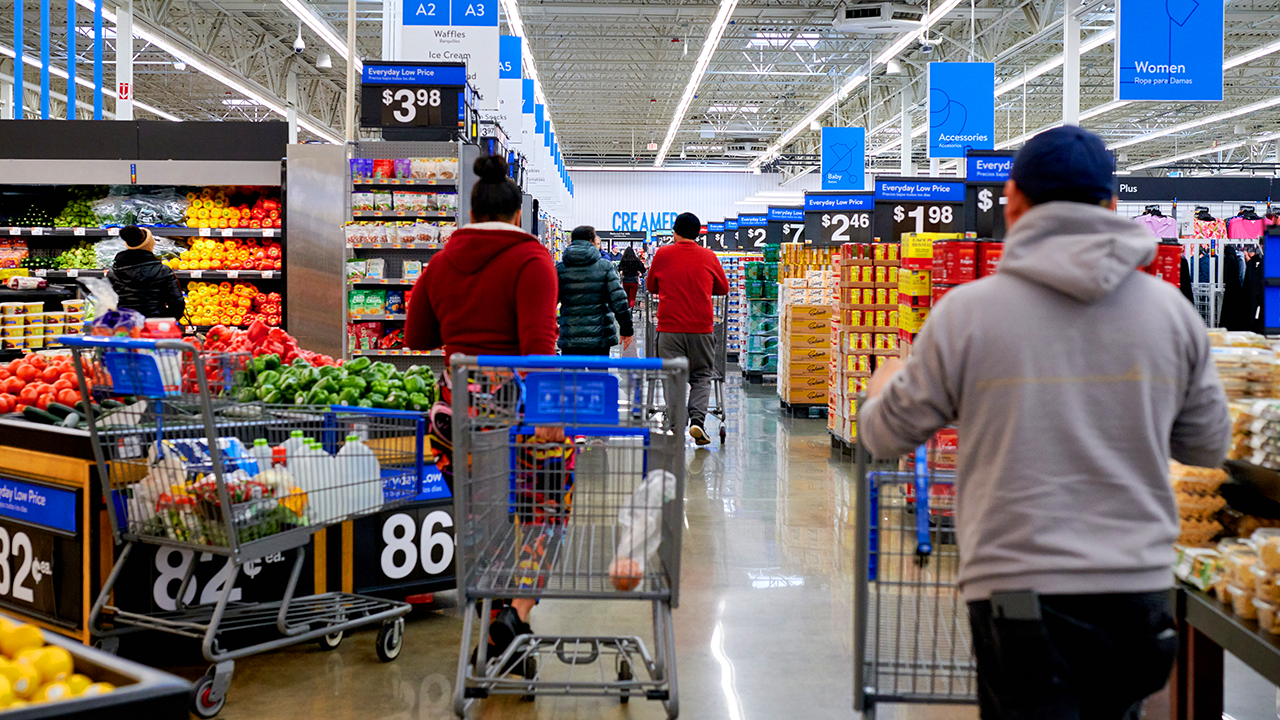
Walmart posted solid fourth-quarter results Thursday as shoppers continued prioritizing value and convenience, helping push online sales to a record share of the retailer’s business.
The company reported fiscal fourth-quarter revenue of $190.7 billion, up 5.6% from a year earlier. U.S. comparable sales rose 4.6%, driven by a 2.6% increase in transactions and a 2% increase in the average amount shoppers spent per visit.
Advertisement
Grocery prices were up just 0.6% from a year earlier, with some categories – including eggs and dairy – seeing price declines.
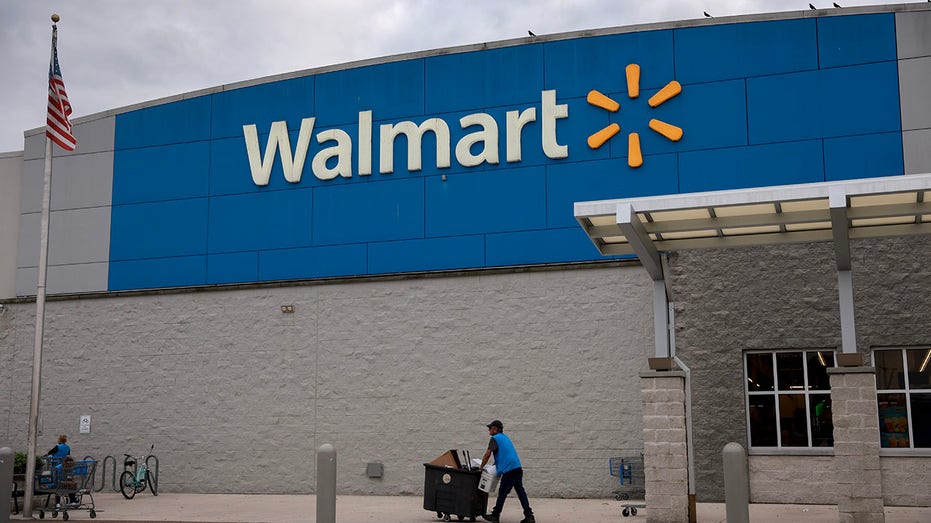
The company reported fiscal fourth-quarter revenue of $190.7 billion. (Gabby Jones/Getty Images)
Global e-commerce sales climbed 24% in the quarter, including a 27% increase in the U.S., where online now accounts for 23% of total sales — the highest level in company history.
Growth was fueled in part by roughly 50% growth in store-fulfilled delivery, as Walmart expanded faster-delivery options that now reach the vast majority of U.S. households within hours.
Advertisement
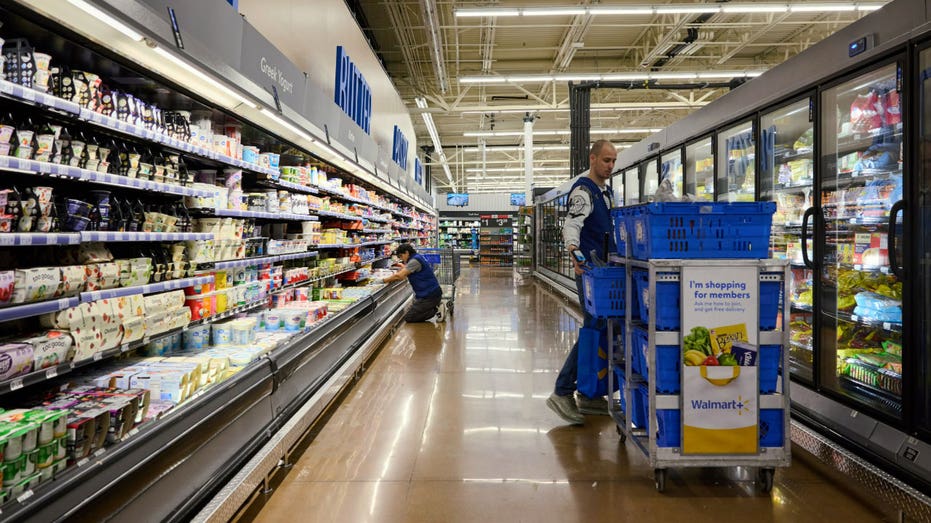
Walmart’s profits grew faster than overall sales in the quarter. (Joe Raedle/Getty Images)
The retailer said it continued to gain market share across income tiers, including higher-income households – a sign that its pricing and convenience strategy is resonating beyond budget-conscious shoppers.
Profits grew faster than overall sales in the quarter. Adjusted operating income rose about 10%, compared with roughly 5% sales growth. The gains were driven by higher-margin businesses, including advertising and membership programs. Advertising revenue climbed 37% globally, including 41% growth for Walmart Connect in the U.S., while membership fee income increased more than 15%. Together, advertising and membership fees accounted for nearly one-third of operating income in the quarter.
Walmart expects sales to rise 3.5% to 4.5% in the full current fiscal year. (Brian Kaiser/Bloomberg via Getty Images)
Inventory growth remained below the pace of sales growth, reflecting continued supply chain discipline.
Advertisement
Looking ahead, Walmart expects sales to rise 3.5% to 4.5% in the full current fiscal year, with operating profit projected to increase 6% to 8%.
The results suggest U.S. consumers remain resilient, even as they stay value-focused, while Walmart’s investments in digital services, faster delivery and higher-margin revenue streams continue to strengthen its competitive position.