

Nothing has made me appreciate the sheer scale and power of targeted advertising like having children. Months before the births of both my kids, it felt like every ad I encountered wanted to sell me baby products. And on seemingly every product were the same two words in bold letters: plant-based.
Tech
From plant-based diapers to bioplastics: How marketing took over the baby aisle

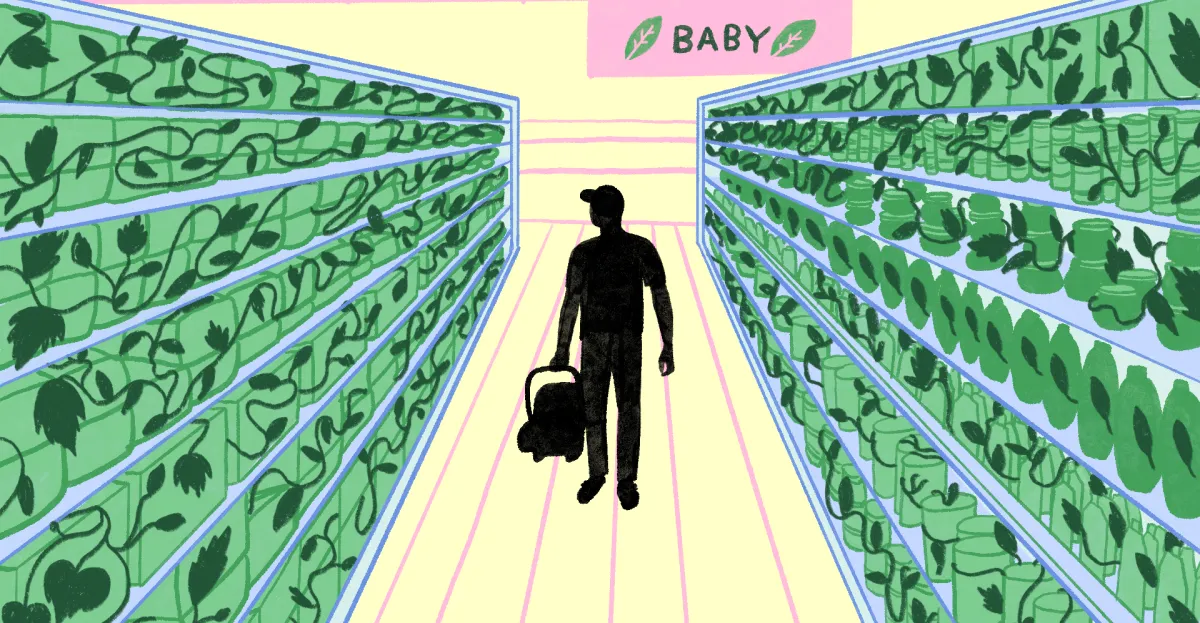
I’m not kidding. Diapers, baby wipes, teething rings, bath toys — it’s all plant-based these days. Once I saw the phrase on baby products, I started to notice it everywhere. There are plant-based foods, of course (like Impossible burgers and Beyond sausage). There’s plant-based protein, which is kind of like the plant-based meat only less meaty and now showing up in weird places like breakfast cereal. And once you leave the grocery store, you can find plant-based cosmetics, cleaning products, toothbrushes, sneakers, phone cases, and yoga mats. Don’t forget the plant-based packaging to wrap it all up.
It wasn’t immediately clear to me what plants did to deserve the spotlight here. I knew that plant-based foods tend to be better for people and for the environment. But was the same true for plant-based plastics, fabrics, and chemicals?
Still, as a dad trying to keep my kids from harm, I hoped for the best. I bought the plant-based diapers, wipes, and toys. On their labels, alongside the term “plant-based” were words like “eco” and “food-grade,” which signaled two big things to me as a consumer: safe and sustainable. The vast majority of plastics, for instance, are made from fossil fuels, which are damaging to everyone, and microplastics, the tiny synthetic particles left over as plastic breaks down, are showing up in our water supply and our bodies.
- The “plant-based” label has started showing up on everything from diapers to phone cases in recent years, signaling a product is “safe” and “sustainable” even when there’s no evidence for that.
- The term is essentially unregulated and poorly defined, so “plant-based” products can still contain harmful chemicals.
- Treat “plant-based” as a starting point, not a guarantee. Look for products that are transparent about their ingredients or that have credible certifications, like organic.
On the other hand, I’ve seen how brands prey on consumers’ anxieties and use greenwashing to make them seem healthier and more sustainable. Is the boom in plant-based products more of the same? I decided to find out.
Don’t you dare call it vegan
You can trace the term plant-based back to the early 1980s, when a nutritional biochemist named Thomas Colin Campbell was presenting a paper to the National Institutes of Health research grant committee. It was about the role of nutrition in cancer and the benefits of consuming more vegetables, fruit, and grains, rather than meat, but Campbell thought calling the diet vegetarian would be polarizing to the committee. “My solution was to choose ‘plant-based’ for lack of a better word,” Campbell later wrote. He later expanded the description of the diet to “whole food, plant-based.”
The term slowly entered the mainstream in the decades that followed, but Campbell has said it really took off after the success of his 2005 book The China Study. The book is based on a study of the lifestyles of 6,500 Chinese people and linked plant-based diets to lower rates of cancer. It was only a couple years later that Michael Pollan coined his now famous mantra, “Eat food, not too much, mostly plants,” in a New York Times Magazine story that he later adapted into the bestseller The Omnivore’s Dilemma. This is also broadly when we saw the rise of flexitarianism, the diet that’s mostly plants but allows for a little meat or fish.
Plant-based products invaded the grocery store in the 2010s. While labeling something as “vegetarian” or “vegan” might turn some consumers away, the plant-based moniker offered the perfect mix of natural and approachable. After all, who doesn’t like plants? Following a significant rise in the number of new food and drink products labeled as plant-based between 2012 and 2018, the number of plant-based packaged goods increased by 302 percent from 2018 to 2022.
The jump from food to all kinds of consumer products happened for several converging reasons around this time.There was the federal government’s push for more biobased products through the expanded Farm Bill of 2018, as well as the bioplastic industry’s newfound ability to scale up its production. More brands bet on plant-based branding (LEGO released its first plant-based pieces, which were made of sugarcane-based polyethylene, that same year). In 2020, Pampers brought the trend to the mainstream baby market with its Pure diapers, which had plant-based liners.
All of these plant-based products are supposedly engineered to be better in some way. Plant-based cosmetics that are supposed to be better for your skin (although not as good as human-based cosmetics apparently). Plant-based cleaners are supposed to be better for the air quality in your home. Plant-based packaging is supposed to be better for the planet.
The problem is that “plant-based” doesn’t have an agreed-upon definition (nor does “better”), and the label isn’t regulated in any way. When you see something bearing the “certified organic” or “Fair Trade Certified” seal, you know that it’s met a strict set of requirements established by the United States Department of Agriculture (USDA) and Fair Trade USA, respectively. But there’s nothing stopping a company from slapping “plant-based” on its packaging, just like there are no regulations limiting the use of the terms “natural” or “green.” In 2025, the Federal Drug Administration (FDA) released draft guidance on “plant-based” labeling, but those recommendations are nonbinding.
“I wonder if ‘plant-based’ is a new ‘natural,’ because saying something is natural has obviously been played out,” Josée Johnston, a sociology professor at the University of Toronto, told Vox. “Nobody takes that seriously anymore.”
Plant-based items aren’t necessarily appealing to consumers just because we think they’re good. They also represent the absence of bad. The label makes you believe that because an item isn’t made of conventional plastic, it must be free of the microplastics that might invade your bloodstream and settle into your brain. Surely it won’t take centuries to decompose in a landfill.
But just as products billed as “natural” aren’t necessarily free of artificial ingredients, products marketed as plant-based are full of things that aren’t plants — some of which are quite dangerous. They can include things like PFAS, which are known as forever chemicals because they break down slowly and accumulate in the body, which are linked to serious health problems, like cancer and weakened immune systems among children. Chemicals in plant-based products can also emit volatile organic compounds, or VOCs, which are a form of air pollution that can cause respiratory problems in the short term and, in the long term, also cancer.
Plastic that’s plant-based rather than petroleum-based sounds like it would be biodegradable, too. But the most popular bioplastic, known as polylactic acid, or PLA, actually requires specific industrial composting conditions to break down efficiently. In other words, you can’t just dump bioplastics into your backyard compost bin and expect them to fertilize your garden. If you put a PLA-based plastic bottle in your garden, it actually could take centuries to decompose.
Shifting to these plant-based materials can have positive effects. In general, using bioproducts over fossil fuel-based products can help lower emissions and reduce landfill waste, when managed properly. But they also come with climate consequences of their own. For example, growing plants requires less land than livestock, but it still takes up a lot of land. Meanwhile, if bioplastics aren’t composted in a particular way, they act like petroleum-based plastic in landfills and the environment. They don’t break down, but they do produce methane, a powerful greenhouse gas.
None of this necessarily means you should avoid plant-based products. It just takes some extra work to know what’s in them — and what to do with them when you’re done.
How to make sense of plant-based marketing
It’s hard navigating the world while watching it burn. Many people, rightly, want to do their part to make things better, but it’s easy to feel overwhelmed and powerless. When companies offer us products that make us feel better about all kinds of things — our carbon footprint, our health, our safety — they are really selling us a sense of agency. You buy organic produce, because you’re worried about how the conventional stuff was produced. You buy bioplastics, because you think they’re less likely to break down into microplastics. You buy plant-based diapers, because you think the regular ones will harm your baby. Norah MacKendrick, a sociologist at Rutgers, calls this cautious consumerism and says that it’s not a bad thing.
“Americans know, on some level, that the ingredients in the products on their store shelves, from baby food to diapers, haven’t been carefully vetted for their impacts on health — not by any governmental body or by the companies themselves,” she told Vox.
“People do have a sense that the way we’re consuming is not sustainable,” said Johnston, the University of Toronto professor. “They’re more aware of plastics in the environment, plastics in water, and so I think they’re going to be drawn to products that offer them a way out, a way to manage that dissonance and discomfort in everyday life.”
It’s frustrating, then, that the plant-based moniker is functionally useless. The onus is on shoppers, often women, to do the research and figure out which products live up to their implied promise of being healthy or environmentally friendly or simply not as harmful as the conventional thing.
Plant-based products are no panacea. They’re also not necessarily bad products. In terms of measurable impact, however, there’s still a lot we don’t know.
There is a mountain of evidence that plant-based foods are better for the environment. Transitioning everyone from meat-based to plant-based diets, for instance, could reduce diet-related land use by 76 percent and reduce greenhouse gas emissions by nearly 50 percent. Meanwhile, consuming a whole foods, plant-based diet can reduce the risk of heart disease by 25 percent, according to one meta-analysis. Michael Pollan’s mantra holds up.
Things get a bit trickier when it comes to other plant-based products, and even more difficult when it comes to items for babies. When you’re looking at the environmental impact, there’s good evidence that plant-based plastics, which are often made of corn or sugarcane, tend to have a smaller carbon footprint and to be more biodegradable. But that corn or sugarcane has to be grown somewhere, which means using resources like land and water. Plus, as mentioned above, PLAs require industrial processes for proper composting. If you just bury a “compostable” plant-based plastic fork in your backyard, there’s a chance it will decompose about as slowly as petroleum-based plastic. Plant-based plastics may also include additives, including bisphenol A or (BPA) or phthalates, which can disrupt your endocrine system.
Similar patterns pop up when you’re talking about plant-based textiles, beauty products, and cleaners. They’re probably better than their conventional counterparts, but there are caveats. Some “vegan leather,” for instance, might get billed as plant-based but is actually just regular, petroleum-based plastic. (The New York Times called this rebranding “a marketing masterstroke meant to suggest environmental virtue.”) A lot of plant-based fabric is actually man-made cellulosic fibers (MMCFs), like viscose, rayon, or lyocell, which are energy intensive to produce.
All of these products come with their own set of health concerns. Plant-based textiles can be treated with PFAS for waterproofing (vegan leather is a particularly bad offender). Plant-based cosmetics and cleaners can be made with fragrances and chemicals that emit VOCs. And even though something is plant-based, it could still contain allergens or irritants. We also still don’t fully understand what microplastics are doing to our bodies, but plant-based plastics can get micro-sized, too. Research shows that bioplastics degrade and produce micro- and nanoscale pollution, just like conventional plastics, and they present new problems because we know even less about what they do to humans and to the environment. (If you’re still confused about recycling plastic, which is warranted because it’s confusing, check out this guide.)
You might read all of this and assume everything is awful and dangerous, which is fair. But I look at it as evidence that all products are more complicated than a single ingredient, whether that’s petroleum or corn. It can be intimidating to wade through the alphabet soup of chemicals and certifications to know what’s safe, according to Sheela Sathyanarayana, a pediatrician who runs a lab at Seattle Children’s Hospital studying how chemicals affect children.
“This is very hard at the individual consumer level,“ said Sathyanarayana, who points to the Environmental Working Group as a good resource. “But overall there is not one space that talks both about ecological sustainability and chemical human safety together (that I know of).”
If you’re cautious about how that product may affect the planet, you, or your baby, take a closer look. Seek out companies that not only say they use good ingredients, but also say they avoid harmful ingredients. Here’s a list of brands that claim they avoid PFAS, for example. You can also look for independent certifications, like OEKO-TEX Standard for textiles, as well as government programs, like Safer Choice from the Environmental Protection Agency or BioPreferred from the USDA for authoritative information. Again, the term plant-based is not regulated, so it alone is not a good guide.
I’ll confess, I bought some plant-based diapers from a brand called Dyper. They were billed as non-toxic, chlorine free, charcoal-enhanced, stuffed with wood pulp from responsibly managed forests, and theoretically compostable. The problem was that they were stiff as a board, and they leaked. They also cost more than double what I’d been buying for my kid — roughly a dollar a diaper versus less than 50 cents. If I wanted to compost the dirty diapers, I’d have to bag them up and call for a truck to come pick them up and take them to a special industrial composting facility.
It just shows how much work it takes to be a cautious consumer. That doesn’t mean you shouldn’t do it. If you see something’s plant-based, that might catch your attention, but dig into the details to figure out just how good that product is for the environment or for you. If you’re shopping for a baby, you’ll want to be extra careful to look out for certain chemicals, especially phthalates, PFAS, and VOCs. But admittedly, this is especially challenging when it comes to diapers; companies don’t have to list the ingredients in their diapers (except in New York, where it recently became required by law).
In your quest for safe and sustainable products, there is ultimately the option of just buying less stuff or buying secondhand. That’s not an option with disposable diapers, of course, but it’s a great course of action when it comes to clothes, furniture, and home goods.
When all else fails, try buying something that’s completely, verifiably natural. Lately, I’ve been seeing a lot more natural rubber baby products. There are teethers, bath toys, and pacifiers. Natural rubber is just tree sap, so it seems safe enough. Natural rubber can also grow mold, however. If only anything could be simple.
A version of this story was also published in the User Friendly newsletter. Sign up here so you don’t miss the next one!

Continue Reading
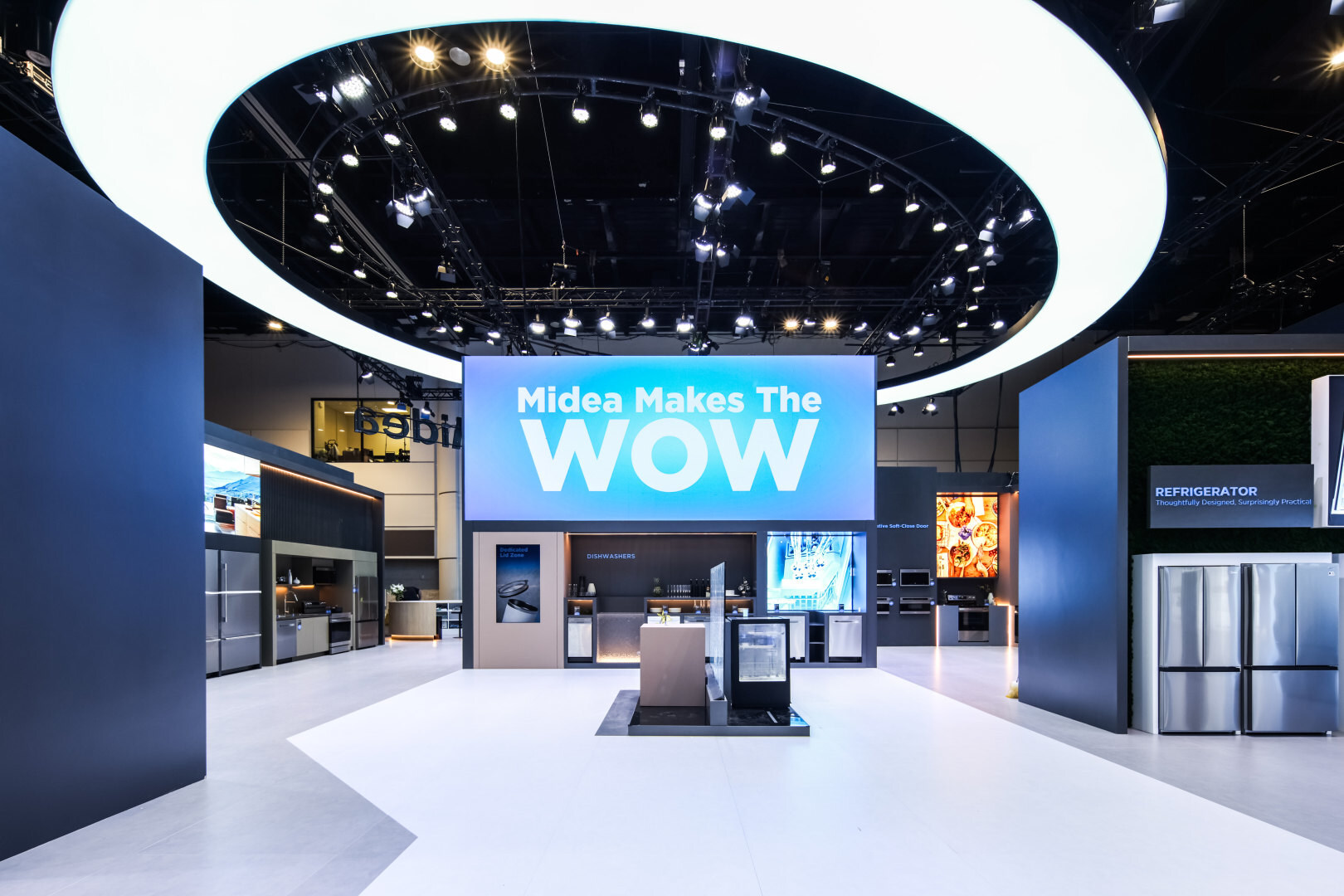
Midea has used KBIS 2026 to show it’s no longer just a budget-friendly appliance maker.
At this year’s Kitchen & Bath Industry Show in Orlando, the brand unveiled one of its broadest line-ups yet — spanning kitchen, laundry and even climate tech. However, it’s the kitchen gear that stands out for 2026.
Leading the charge is an expanded French Door refrigerator range, now available in 30-, 33- and 36-inch sizes in both standard and counter-depth formats. Some models feature OneTouch AutoFill with MaxSpace, designed to optimise storage while cutting down on the usual fridge juggling act. It’s a practical upgrade, but the real headline grabber sits elsewhere in the kitchen.
Midea’s new premium dishwasher introduces STRAWash and SENSOR TruDry, a system built specifically to clean reusable bottles, tall tumblers and even straws using dedicated internal jets. There’s also a one-hour wash-and-dry cycle aimed at households that don’t want to wait overnight for clean dishes. It’s a small tweak on paper, but one that feels tailored to how people actually use kitchens in 2026.
The cooking line-up is expanding too, with new four- and five-burner gas and electric freestanding ranges, plus a forthcoming slide-in platform. Meanwhile, the company’s new over-the-range microwave features Soft Close Technology — eliminating the familiar microwave door slam in favour of a smoother, quieter close.
Beyond major appliances, Midea is also fleshing out its small appliance portfolio, covering everything from air fryers to espresso machines. The goal seems clear: reduce countertop clutter while keeping everything connected within one ecosystem.
While this showcase focuses heavily on kitchens, Midea is also pushing deeper into laundry and HVAC. Redesigned washers and dryers now include PowerMix Spray, Flexi AutoDose, and large TFT displays. In addition, its DIY-friendly EasySplit mini-split system builds on the success of the original Midea U.
Taken together, Midea’s 2026 portfolio signals a shift from individual appliances to full-home solutions. And if the dishwasher that cleans your reusable straw doesn’t sum up modern kitchen design, it’s hard to know what does.


Seattle startup Adronite raised $5 million in a Series A round led by Gatemore Capital Management, as it looks to expand its AI-powered platform designed to give large organizations visibility into sprawling and complex codebases.
The funding comes amid intense competition in the AI developer tools market. Unlike many AI coding tools that operate at the level of individual files or snippets, Adronite ingests complete codebases, including both modern and legacy systems.
The idea is to help organizations understand how their software works as a system, with applications in security analysis, modernization, and active remediation at scale.
Adronite can also build apps from natural language prompts and offers an AI chat feature that provides details on system-wide insights.
The system supports more than 20 programming languages and has been proven on a codebase with 2.5 million lines of code.
The 15-person company expects initial commercial deployments to begin in the first quarter of 2026.
There are various companies that offer code review tools, including CAST and Sonar.
Adronite co-founder and CEO Edward Rothschild is a former software engineer at Facebook and director of engineering at Nayya. He helped launch Adronite in 2023.
As part of the funding round, Liad Meidar, managing partner of Gatemore, was named chair of Adronite’s board. Gatemore has offices in New York and London.

An anonymous reader quotes a report from the Financial Post: In 2024, the Ethiopian government banned the import of fossil fuel-powered vehicles and slashed tariffs on their electric equivalents. It was a policy driven less by the country’s climate ambitions and more by fiscal pressures. For years, subsidizing gasoline for consumers has been a major drag on Ethiopia’s budget, costing the state billions of dollars over the past decade. The country defaulted on its sovereign bonds in 2023 after rising interest rates drove up the costs of servicing its debts, and it received a $3.4 billion bailout from the International Monetary Fund the following year.
In the two years since the ban on internal combustion engine vehicles, EV adoption has grown from less than 1% to nearly 6% of all of the vehicles on the road in the country — according to the government’s own figures — some way above the global average of 4%. “The Ethiopia story is fascinating,” said Colin McKerracher, head of clean transport at BloombergNEF. “What you’re seeing in places that don’t make a lot of vehicles of any type, they’re saying: ‘Well, look, if I’m going to import the cars anyway, then I’d rather import less oil. We may as well import the one that cleans up local air quality and is cheaper to buy.’”
For decades, Ethiopia’s high import tariffs on vehicles put new car ownership out of the reach of most of the country’s population. Per capita gross domestic product is only about $1,000, and even by the standards of low-income countries, it has among the lowest car ownership rates. At 13 vehicles per 1,000 people, it’s a fraction of the African average of 73. With few cars manufactured in the country, the vast majority are imported, and most are bought used. The government’s import policy has upended the market. In parallel, tariffs for EVs were dropped to 15% for completed cars, 5% for parts and semi-assembled vehicles, and zero for “fully knocked down” — vehicles shipped in parts and assembled locally. That has made new EVs cost-competitive with old gasoline cars.
A world that runs on increasingly powerful AI coding tools is one where software creation is cheap — or so the thinking goes — leaving little room for traditional software companies. As one analyst report put it, “vibe coding will allow startups to replicate the features of complex SaaS platforms.”
Cue the hand-wringing and declarations that software companies are doomed.
Open-source software projects that use agents to paper over long-standing resource constraints should logically be among the first to benefit from the era of cheap code. But that equation just doesn’t quite stick. In practice, the impact of AI coding tools on open source software has been far more mixed.
AI coding tools have caused as many problems as they have solved, according to industry experts. The easy-to-use and accessible nature of AI coding tools has enabled a flood of bad code that threatens to overwhelm projects. Building new features is easier than ever, but maintaining them is just as hard and threatens to further fragment software ecosystems.
The result is a more complicated story than simple software abundance. Perhaps, the predicted, imminent death of the software engineer in this new AI era is premature.
Quality vs quantity
Across the board, projects with open codebases are noticing a decline in the average quality of submissions, likely a result of AI tools lowering barriers to entry.
“For people who are junior to the VLC codebase, the quality of the merge requests we see is abysmal,” Jean-Baptiste Kempf, the CEO of the VideoLan Organization that oversees VLC, said in a recent interview.
Techcrunch event
Boston, MA
|
June 23, 2026
Kempf is still optimistic about AI coding tools overall but says they’re best “for experienced developers.”
There have been similar problems at Blender, a 3D modeling tool that has been maintained as open source since 2002. Blender Foundation CEO Franceso Siddi said LLM-assisted contributions typically “wasted reviewers’ time and affected their motivation.” Blender is still developing an official policy for AI coding tools, but Siddi said they are “neither mandated nor recommended for contributors or core developers.”
The flood of merge requests has gotten so bad that open-source developers are building new tools to manage it.
Earlier this month, developer Mitchell Hashimoto launched a system that would limit GitHub contributions to “vouched” users, effectively closing the open-door policy for open-source software. As Hashimoto put it in the announcement, “AI eliminated the natural barrier to entry that let OSS projects trust by default.”
The same effect has emerged in bug bounty programs, which give outside researchers an open door to report security vulnerabilities. The open-source data transfer program cURL recently halted its bug bounty program after being overwhelmed by what creator Daniel Stenberg described as “AI slop.”
“In the old days, someone actually invested a lot of time [in] the security report,” Stenberg said at a recent conference. “There was a built-in friction, but now there’s no effort at all in doing this. The floodgates are open.”
It’s particularly frustrating because many of open-source projects are also seeing the benefits of AI coding tools. Kempf says it’s made building new modules for VLC far easier, provided there’s an experienced developer at the helm.
“You can give the model the whole codebase of VLC and say, ‘I’m porting this to a new operating system,’” Kempf said. “It is useful for senior people to write new code, but it’s difficult to manage for people who don’t know what they’re doing.”
Competing priorities
The bigger problem for open-source projects is a difference in priorities. Companies like Meta value new code and products, while open-source software work focuses more on stability.
“The problem is different from large companies to open-source projects,” Kempf commented. “They get promoted for writing code, not maintaining it.”
AI coding tools are also arriving at a moment when software, in general, is particularly fragmented.
Open Source Index founder Konstantin Vinogradov, who recently launched an endowment to maintain open-source infrastructure, said AI tools are running into a long-standing trend in open-source engineering.
“On the one hand, we have exponentially growing code base with exponentially growing number of interdependences, And on the other hand, we have number of active maintainers, which is maybe slowly growing, but definitely not keeping up,” Vinogradov said. “With AI, both parts of this equation accelerated.”
It’s a new way of thinking about AI’s impact on software engineering — one with alarming implications for the industry at large.
If you see engineering as the process of producing working software, AI coding makes it easier than ever. But if engineering is really the process of managing software complexity, AI coding tools could make it harder. At the very least, it will take a lot of active planning and work to keep the sprawling complexity in check.
For Vinogradov, the result is a familiar situation for open-source projects: a lot of work to do, and not enough good engineers to do it.
“AI does not increase the number of active, skilled maintainers,” he remarked. “It empowers the good ones, but all the fundamental problems just remain.”
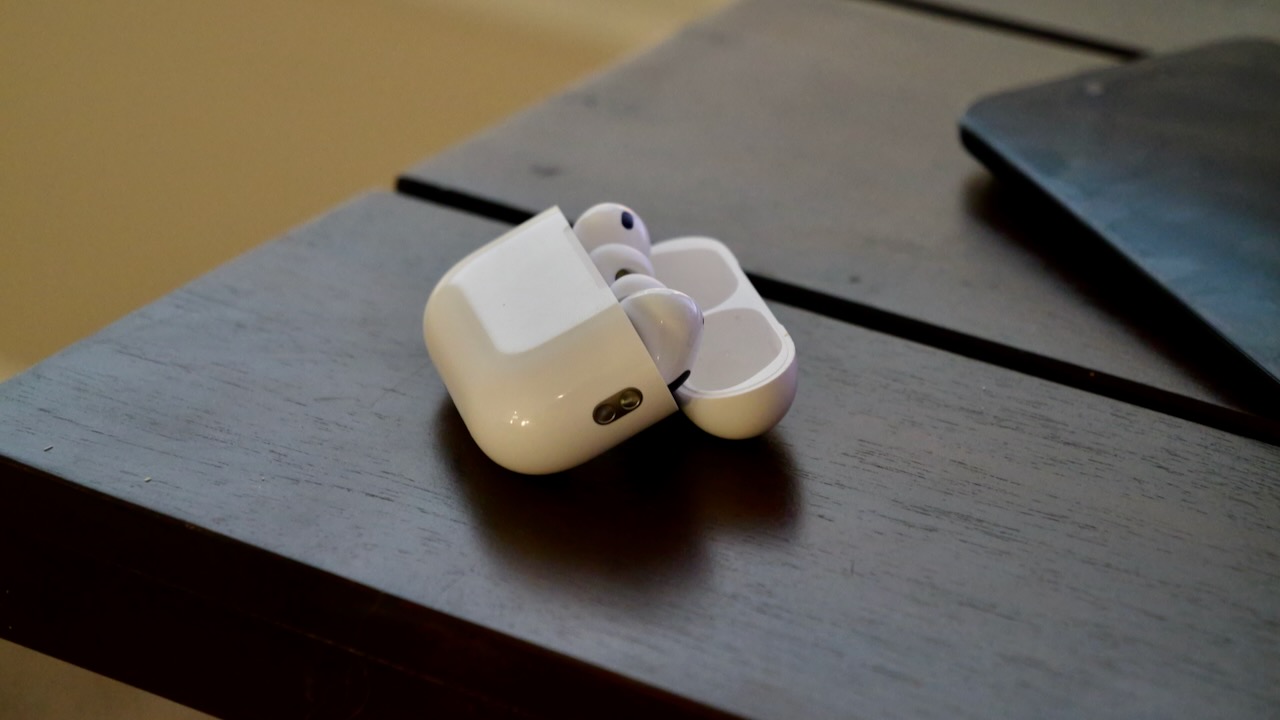
Apple is reportedly developing a trio of AI-powered wearables, including smart glasses, camera-equipped AirPods and a new AI pin device.
According to Bloomberg’s Mark Gurman, the products are designed to give Siri more “contextual awareness” by letting it see and interpret the world around you.
The headline device appears to be a pair of Apple-designed smart glasses aimed squarely at competitors like Meta’s Ray-Ban collaboration. Rather than partnering with an established eyewear brand, Apple is said to be developing its frames in-house.
The company is focusing on premium build quality and multiple size and colour options. Reports suggest the glasses will feature an advanced dual-camera system. One high-resolution camera captures photos and video, while a second sensor feeds environmental data to Siri.
If accurate, the goal is to create what sources describe as an “all-day AI companion,” offering hands-free contextual queries similar to what Meta currently provides. This would come with Apple’s tighter hardware-software integration.
Alongside the glasses, Apple is reportedly exploring AirPods fitted with lower-resolution cameras. These wouldn’t be designed for photography, but instead to gather visual context for Siri while maintaining the familiar earbuds form factor. Microphones would also allow for voice interaction. As a result, the AirPods would become another extension of the iPhone’s AI system.
The third device in development is said to be an AI-powered wearable pin. The concept echoes products like the Humane AI Pin. However, Apple’s version would reportedly rely on the iPhone as its processing hub rather than operating as a standalone replacement. A built-in speaker is being considered, though that detail is not confirmed.
The broader strategy appears clear: rather than replacing the iPhone, Apple wants to surround it with AI-enabled accessories, reducing the need to constantly take it out of your pocket. It’s a different approach to some early AI hardware experiments that attempted to fully supplant smartphones. Those efforts haven’t always landed well.
There’s no official confirmation from Apple, and none of these products are unlikely to arrive before 2027. Still, if the reports hold up, Apple could be preparing its most ambitious wearable push since the Apple Watch. This time, the focus is centred squarely on AI.
Tech
Apple Music’s 5 new upgrades are just what the platform needs to one-up Spotify, but its new UI has users begging for simplicity
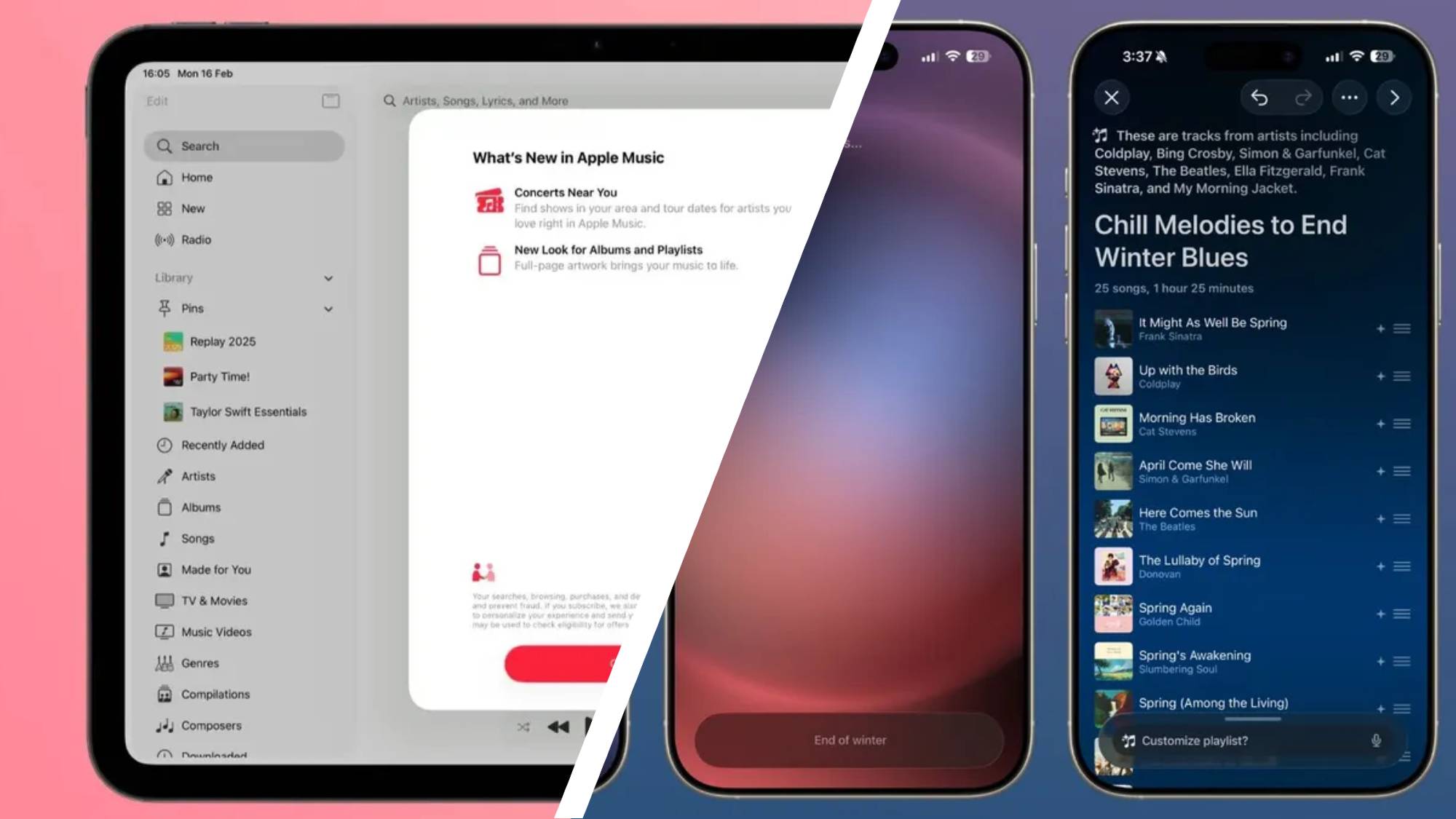
- Apple Music is rolling out five new features in iOS 24.6, including the new Playlist Playground and Concerts Near You functions
- It’s also getting a new UI design for albums and playlists
- Despite its new look, it’s divided users who have called out Apple for its lack of accessibility features
Apple will unveil its next slew of new products in a couple of weeks at its March 4 event, but it’s already teasing some of the new upgrades coming to Apple Music in iOS 24.6 — and there’s no doubt they’ll breathe new life into one of the best music streaming services.
If you’re enrolled in the iOS 24.6 beta, there’s a chance you’ve already caught a glimpse of the new Apple Music features that are expected to roll out widely in the coming weeks. Unlike Spotify, it’s not in Apple Music’s character to churn out one new feature after the next, so the fact that it’s bringing five new upgrades at once is big news.
As we’ve recently covered, Playlist Playground is one of the stand-out new features coming to Apple Music — if you’re familiar with Spotify’s AI playlist tool, Playlist Playground isn’t all that different.
It works very similarly, in that you enter a text prompt or select an idea preset, and it will then generate a playlist of songs based on your request. It’s Apple Music’s second AI music-streaming tool, followin g the launch of its clever AutoMix beat-matching feature.

It’s clear that Apple Music has had its eyes on what’s working over at Spotify, and similar to Spotify’s Live Events hub, Apple Music is introducing a ‘Concerts Near You’ feature. While we don’t know how this looks in the app yet, we know that it’s on the way, and it’ll be refreshing to see Apple Music connect its subscribers with live concerts — I’m surprised it didn’t do this sooner.
Additionally, Apple Music is finally lifting a tedious playlist restriction, by letting you add a song to multiple playlists at once — a freedom that subscribers of other platforms have always had. And, building on last year’s Ambient Music feature, Apple is making this available as a new Home Screen widget in different sizes, giving those who frequent the app a new shortcut.
So this Apple Music upgrade is quite significant, but it doesn’t stop there. Its album and playlist interfaces are getting a facelift —and while it puts Spotify’s cluttered app to shame, not everyone is pleased with the result.
Apple Music’s UI upgrades are polished and striking, but it’s abandoned accessibility
Although Spotify has all the fun features, its messy interface bears attracts constant user backlash, and now that Apple Music has given its albums and playlists a facelift, many Spotify users are calling for the same.
Previously, Apple Music’s playlist and album pages featured a large, and sometimes immersive, graphic with the tracklist against a plain white background underneath. In iOS 24.6, the album/ playlist artwork is now used for the entire page, so now the tracklist will be placed against the artwork’s most prominent color. One user shared a comparison image on Reddit (see below).
During my time trialing Apple Music while taking a break from Spotify, its clean layout was one of my favorite parts of the UX, and it highlighted everything I disliked about Spotify’s design. There’s no doubt that Apple Music is leaps and bounds ahead here; however, users have been quick to point out Apple’s disregard for accessibility and I can see why.
The Liquid Glass redesign is still dividing iPhone users as it is, and while I enjoy some aspects of its glow-up, Apple Music’s new UI is quite difficult to read in places, and I much prefer the clear separation between the colorful artwork and tracklist. And yes, the option to disable Liquid Glass is there along with other accessibility features, but the default could be more accommodating for those with reading issues.
Does this change how I feel about Spotify’s cluttered UI? Not at all — I still think it could take some notes from Apple Music. That said, I have a feeling Apple isn’t quite finished with expanding its new aesthetic throughout every area of its music streaming app — it’s an overkill waiting to happen.
Follow TechRadar on Google News and add us as a preferred source to get our expert news, reviews, and opinion in your feeds. Make sure to click the Follow button!
And of course you can also follow TechRadar on TikTok for news, reviews, unboxings in video form, and get regular updates from us on WhatsApp too.

Are you ready to feel old? Lemmings just turned thirty-five. The famous puzzle game first came out in February of 1991 for the Commodore Amiga, before eventually being ported to just about everything else out there, from the ZX Spectrum to the FM Towns, and other systems so obscure they don’t have the class to start with two letters, like Macintosh and DOS. [RobSmithDev] decided he needed to commemorate the anniversary with a real floating lemming.
The umbrella-equipped lemming is certainly an iconic aspect of the game franchise, so it’s a good pick for a diorama. Some people would have just bought a figurine and hung it with some string, but that’s not going to get your project on Hackaday. [Rob] designed and 3D printed the whole tableau himself, and designed magnetic levitation system with some lemmings-themed effects.
The mag-lev is of the top-down type, where a magnet in the top of the umbrella is pulled against gravity by an electromagnetic coil. There are kits for this sort of thing, but they didn’t quite work for [Rob] so he rolled his own with an Arduino Nano. That allowed him to include luxuries you don’t always get from AliExpress like a thermal sensors.
Our favorite part of the build, though, has to be the sound effects. When the hall effect sensor detects the lemming statue — or, rather, the magnet in its umbrella — it plays the iconic “Let’s Go!” followed by the game’s sound track. If the figurine falls, or when you remove it, you get the “splat” sound, and if the lemming hits the magnet, it screams. [Rob] posted a demo video if you just want to see it in action, but there’s also a full build video that we’ve embedded below.
A commemorative mag-lev seems to be a theme for [Rob] — we featured his 40th anniversary Amiga lamp last year, but that’s hardly all he gets up to. We have also seen functional replicas, this one of a motion tracker from Aliens, and retrotech deep-dives like when he analyzed the magical-seeming tri-format floppy disk.
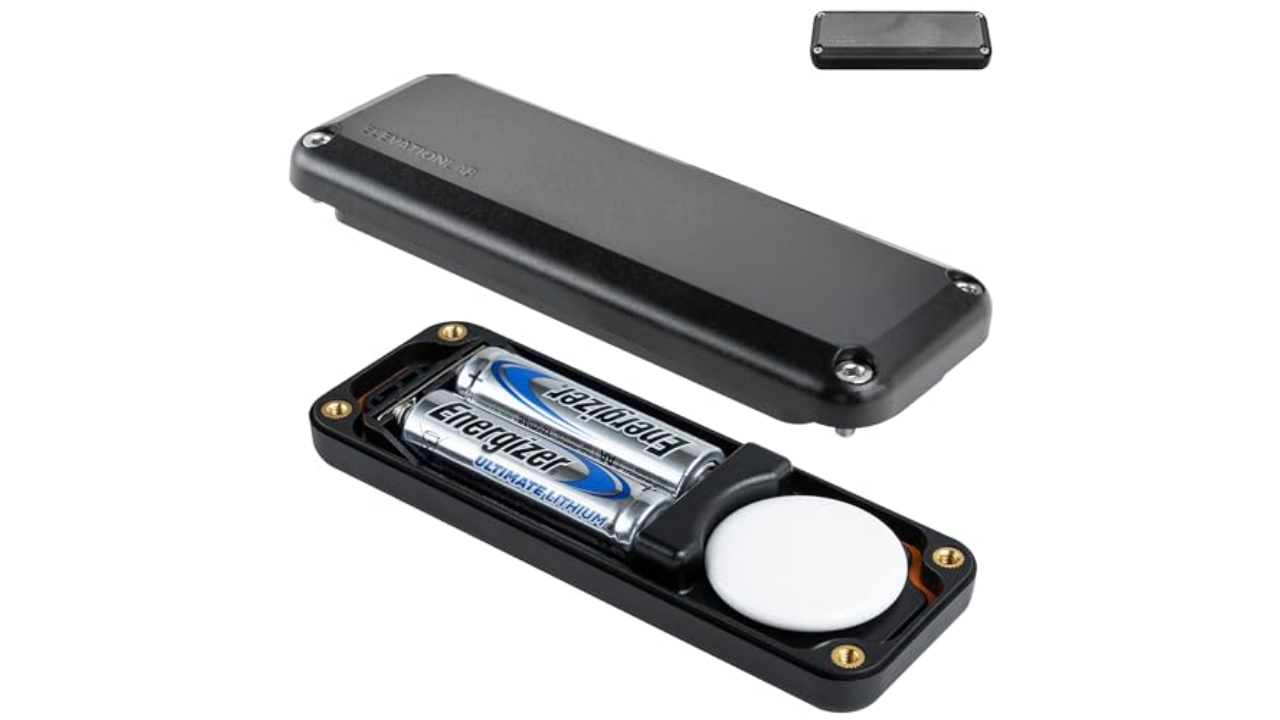
If you’re an iPhone user who likes to keep tabs on where your stuff is, you can’t go far wrong with an AirTag. The second-gen model that Apple just released outpaces the original in every way (aside from the galling lack of a keyring hole, that is). While it’s easy enough to replace the battery in both versions of the AirTag, you might not want to have to worry about the device’s battery life for a very long time. Enter Elevation Lab’s extended battery case for the AirTag, which is currently on sale at Amazon for $16.
The case usually sells for $23, so that’s a 30 percent discount. It’s not the first time we’ve seen this deal, but it’s a pretty decent one all the same.

Elevation Lab
Elevation Lab says its AirTag case can extend the battery life of the tracking device to 10 years, and now it’s on sale.
This is arguably one of the more useful AirTag accessories around for certain use cases. It won’t exactly be helpful for an AirTag that you put in a wallet or attach to your keys, as it’s too bulky for such a purpose — and it doesn’t have a hole for a keyring anyway. Still, if you’re looking for an AirTag case that you can place in a suitcase or backpack and not have to touch for years, this could be the ticket.
Elevation Lab says that, when you place a couple of AA batteries in the case, it can extend the tracker’s battery life to as much as 10 years (the brand recommends using Energizer Ultimate Lithium batteries for best results). The AirTag is slated to run for over a year on its standard CR2032 button cell.
The case gives the AirTag more protection as well. It’s sealed with four screws and it has a IP69 waterproof rating. What’s more, it doesn’t ostensibly look like an AirTag case, so someone who steals an item with one inside is perhaps less likely to realize that the object they pilfered is being tracked.
There are some other downsides, though. Since the AirTag is locked inside a case, the sound it emits will be muffled. Elevation Lab says the device’s volume will be about two-thirds the level of a case-free AirTag. However, the second-gen AirTag is louder than its predecessor, which should mitigate that issue somewhat.
Follow @EngadgetDeals on X for the latest tech deals and buying advice.
Getting PCBs made is often the key step in taking a dodgy lab experiment and turning it into a functional piece of equipment. However, it can be tedious to wait for PCBs to ship, and that can really slow down the iterative development process. If you’ve got a 3D printer, though, there’s a neat way to make your own custom PCBs. Enter PCB Forge from [castpixel].
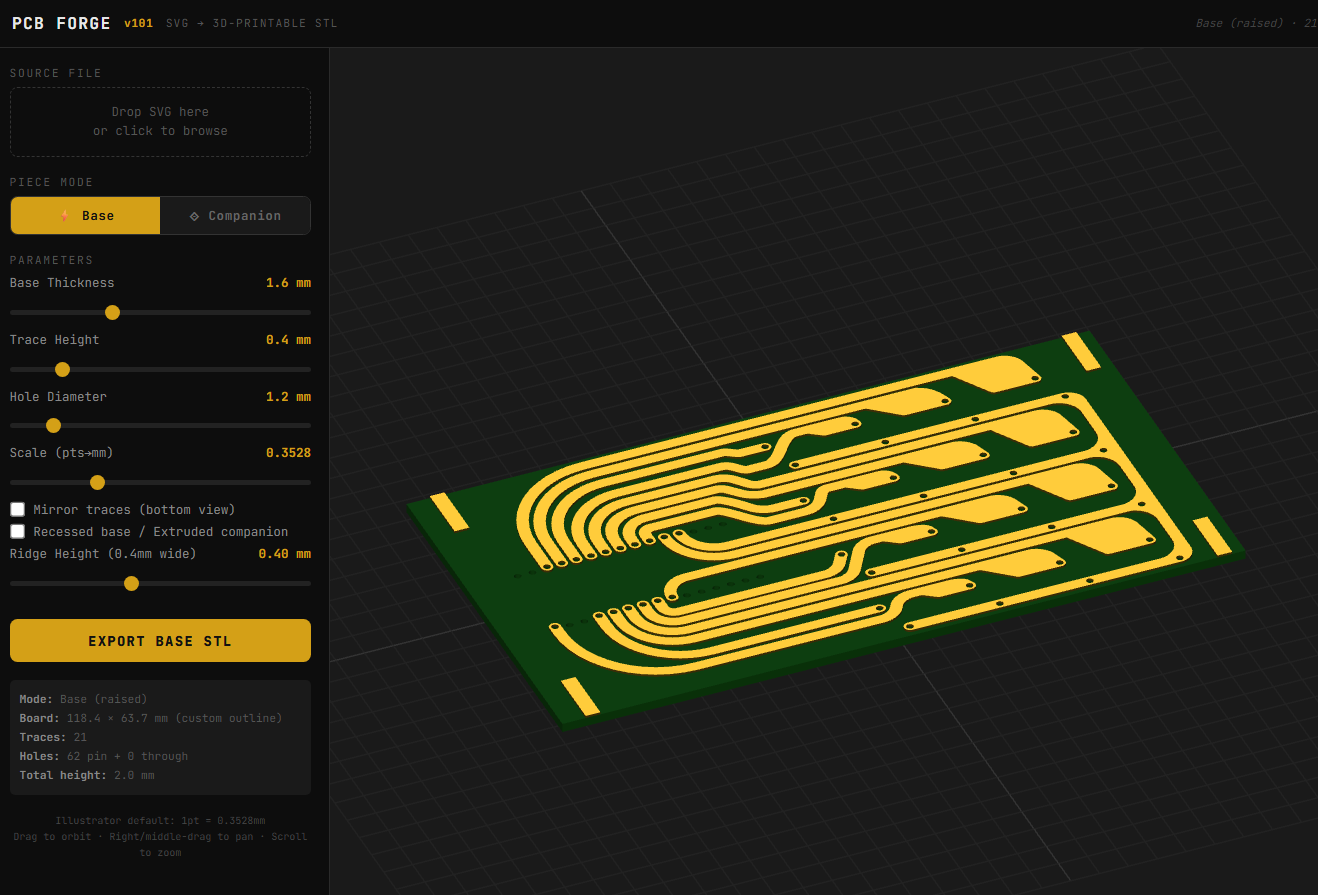
The concept involves producing a base and a companion mold on your 3D printer. You then stick copper tape all over the base part, using the type that comes with conductive adhesive. This allows the construction of a fully conductive copper surface across the whole base. The companion mold is then pressed on top, pushing copper tape into all the recessed traces on the base part. You can then remove the companion mold, quickly sand off any exposed copper, and you’re left with a base with conductive traces that are ready for you to start soldering on parts. No etching, no chemicals, no routing—just 3D printed parts and a bit of copper tape. It rarely gets easier than this.
You can design your PCB traces in any vector editor, and then export a SVG. Upload that into the tool, and it will generate the 3D printable PCB for you, automatically including the right clearances and alignment features to make it a simple press-together job to pump out a basic PCB. It bears noting that you’re probably not going to produce a four-layer FPGA board doing advanced high-speed signal processing using this technique. However, for quickly prototyping something or lacing together a few modules and other components, this could really come in handy.
The work was inspired by a recent technique demonstrated by [QZW Labs], which we featured earlier this year. If you’ve got your own hacks to speed up PCB production time, or simply work around it, we’d love to know on the tipsline!

from the great-job,-buddy dept
Yesterday we noted how CBS fecklessly tried to prevent Stephen Colbert from broadcasting an interview with Texas Democratic State Representative James Talarico. Which, as you’ve probably already seen, resulted in the interview on YouTube getting way more viewers than it would have normally, and Texas voters flocking to Google to figure out who Talarico is:
In short, Brendan Carr’s continual threats and unconstitutional distortion of the FCC’s “equal opportunity” rule (also known as the “equal time” rule) resulted in a candidate getting exponentially more attention than they ever would have if Brendan Carr wasn’t such a weird, censorial zealot.
If only there was a name for this sort of phenomenon?
Despite a lot of speculation to the contrary, there’s no evidence the GOP specifically targeted Talarico in any coherent, strategic sense. This entire thing appears to have occurred because CBS lawyers — focused on numerous regulatory issues before the Trump administration, didn’t want to offend the extremist authoritarian censors at Trump’s FCC. It’s always about the money.
CBS (and ABC, NBC, and Fox) have been lobbying the FCC for years to get ride of rules preventing them from merging. CBS (read: Larry Ellison) has managed to get his friend Trump conducting a fake DOJ antitrust inquiry into Netflix’s planned acquisition of Warner Brothers, so they can then turn around and buy Warner (and CNN) instead. They’ll need to remain close with the administration for that to work out.
CBS tried to do damage control and claim they never directly threatened Colbert, but you can tell by the way they’re being a little dodgy about ownership of those claims (demanding no direct attribution to a specific person “on background”) they likely aren’t true:
Colbert’s response to the claim he wasn’t threatened was… diplomatic:
Amusingly some of the news outlets covering this story (like Variety here) couldn’t be bothered to even mention that CBS has numerous regulatory issues before the Trump FCC, which is why they folded like a pile of rain-soaked street corner cardboard at the slightest pressure from the Trump FCC.
As we’ve noted repeatedly, Brendan Carr has absolutely no legal legs to stand on here. His abuse of the equal opportunity rule is equal parts unconstitutional and incoherent. CBS (and any other network with bottomless legal budgets) could easily win in court (I wager they could even get many lawyers to defend them pro bono), but Ellison (and his nepo baby son) have a much bigger ideological mission in mind.
Filed Under: brendan carr, censorship, equal opportunity, equal time, fcc, first amendment, james talarico, stephen colbert, streisand effect
Companies: cbs

Crypto World43 seconds ago
Cambodia has deported 48K foreigners since scam center crackdown began

Politics2 minutes ago
What Can You See The Pharmacist About: Explained
Sports3 minutes ago
Collin Morikawa’s big revelation about beating Scottie Scheffler


-

 Video3 days ago
Bitcoin: We’re Entering The Most Dangerous Phase
-

 Tech5 days ago
Luxman Enters Its Second Century with the D-100 SACD Player and L-100 Integrated Amplifier
-

 Crypto World2 days ago
Can XRP Price Successfully Register a 33% Breakout Past $2?
-

 Sports2 days ago
GB's semi-final hopes hang by thread after loss to Switzerland
-

 Video6 days ago
The Final Warning: XRP Is Entering The Chaos Zone
-
 Tech2 days ago
The Music Industry Enters Its Less-Is-More Era
-

 Business2 days ago
Infosys Limited (INFY) Discusses Tech Transitions and the Unique Aspects of the AI Era Transcript
-

 Entertainment1 day ago
Kunal Nayyar’s Secret Acts Of Kindness Sparks Online Discussion
-

 Video2 days ago
Financial Statement Analysis | Complete Chapter Revision in 10 Minutes | Class 12 Board exam 2026
-

 Crypto World6 days ago
Bhutan’s Bitcoin sales enter third straight week with $6.7M BTC offload
-

 Tech1 day ago
Retro Rover: LT6502 Laptop Packs 8-Bit Power On The Go
-
 Sports11 hours ago
Clearing the boundary, crossing into history: J&K end 67-year wait, enter maiden Ranji Trophy final | Cricket News
-

 Entertainment17 hours ago
Dolores Catania Blasts Rob Rausch For Turning On ‘Housewives’ On ‘Traitors’
-

 Business1 day ago
Tesla avoids California suspension after ending ‘autopilot’ marketing
-
 NewsBeat4 days ago
The strange Cambridgeshire cemetery that forbade church rectors from entering
-

 Crypto World6 days ago
Kalshi enters $9B sports insurance market with new brokerage deal
-

 Crypto World20 hours ago
WLFI Crypto Surges Toward $0.12 as Whale Buys $2.75M Before Trump-Linked Forum
-

 Crypto World7 days ago
Ethereum Price Struggles Below $2,000 Despite Entering Buy Zone
-
 NewsBeat4 days ago
Man dies after entering floodwater during police pursuit
-

 NewsBeat5 days ago
UK construction company enters administration, records show