Business
Wall Street Lunch: Microsoft Micromanagement?

Ethan Miller/Getty Images News
Listen below or on the go via Apple Podcasts and Spotify

Microsoft’s Nadella gets hands-on as AI competition heats up. (0:15) Larry Ellison backs Paramount’s bid for warner with his own money. (1:32) Cuba faces ruin without Venezuelan oil. (2:18)
The following is an abridged transcript:
Looks like AI is improving CEO productivity.
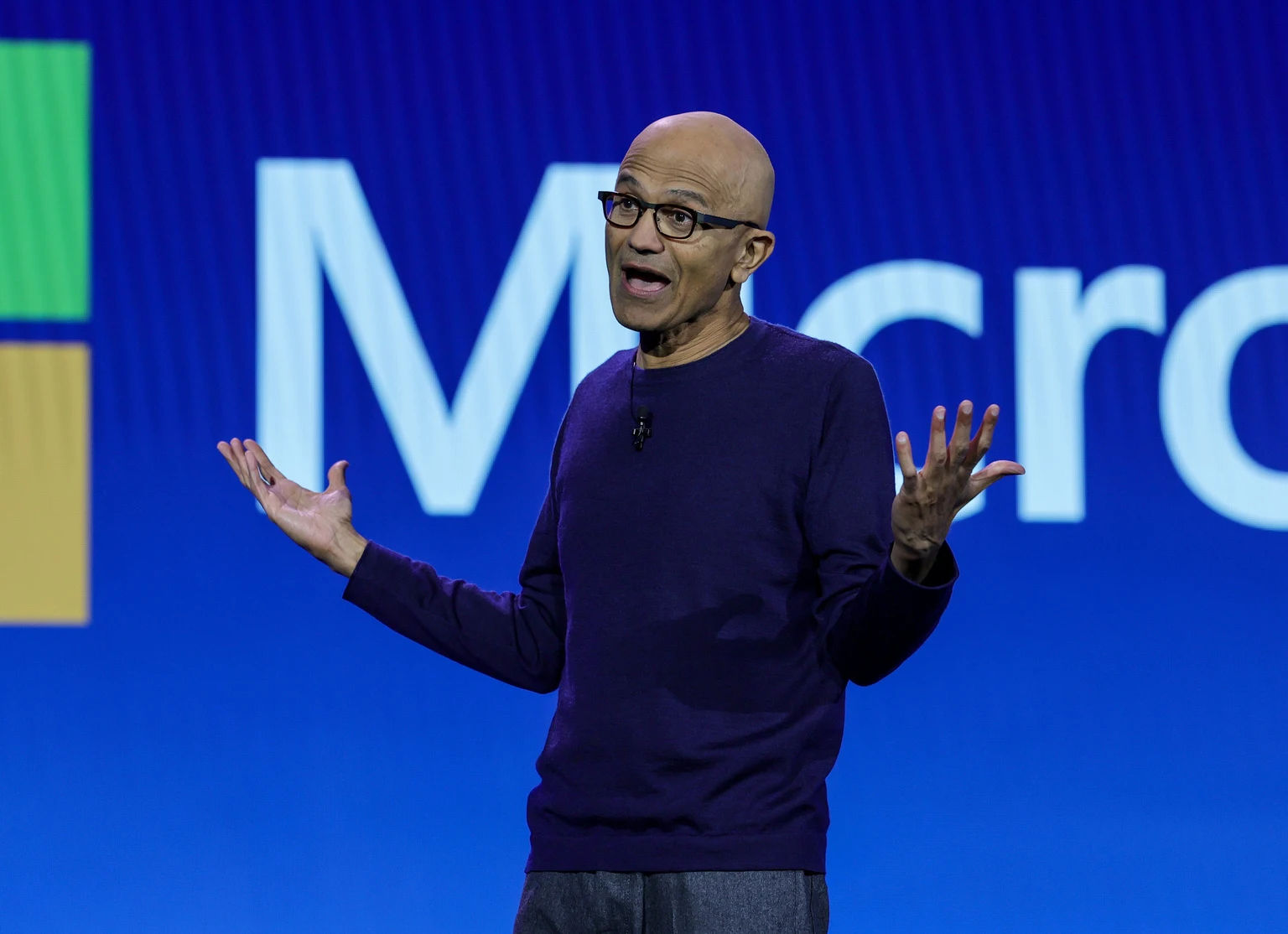
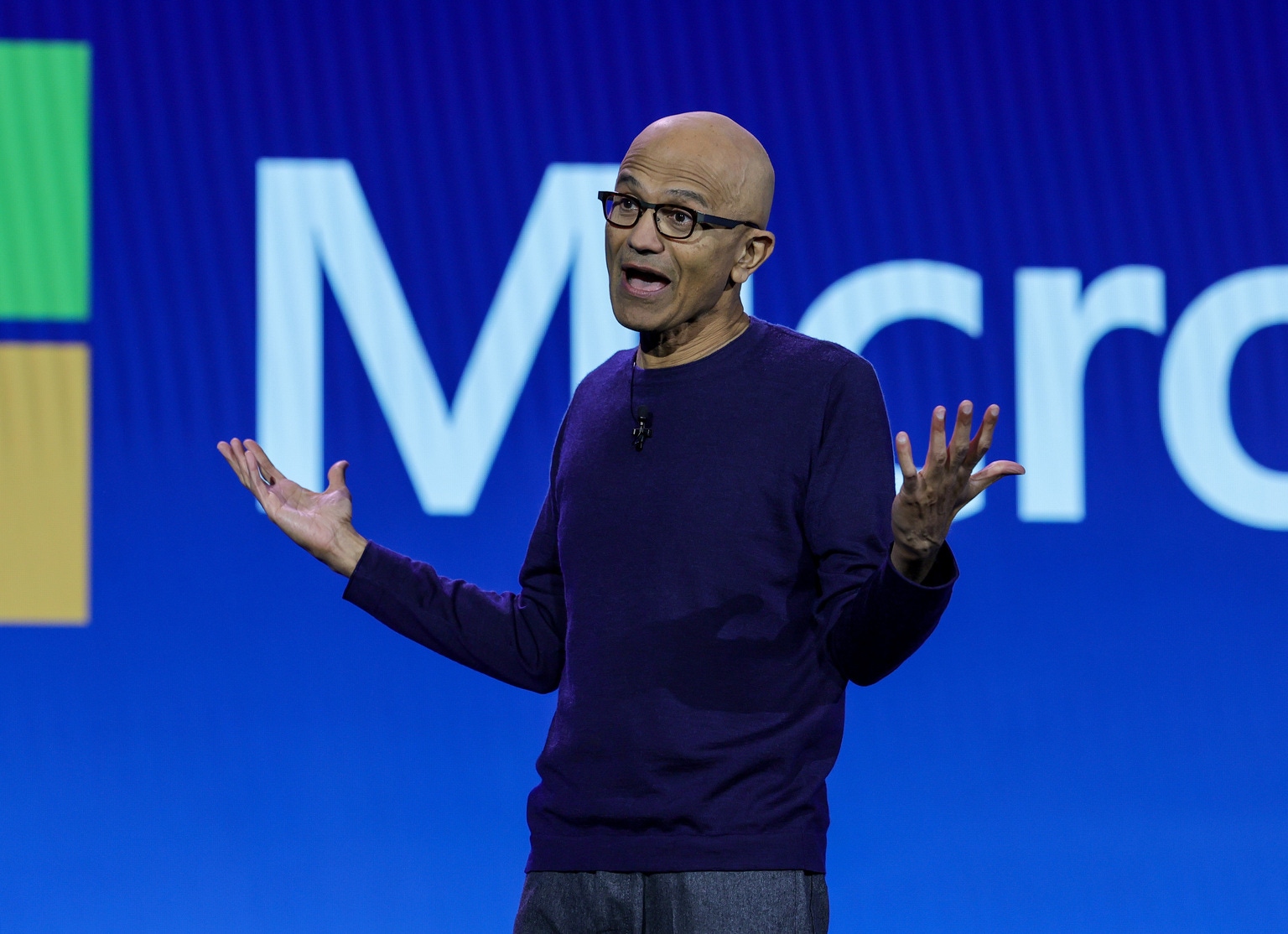
Microsoft (MSFT) chief executive Satya Nadella is getting very hands-on in the AI race.
The Information reports he’s now highly active in an internal Teams channel for roughly 100 of Microsoft’s top technical staff, posting frequently when he thinks AI products are falling short.
He also runs a weekly hour-long meeting with many of the same people, grilling them on progress and issuing directives — including consolidating how teams handle post-training, the latter stage of AI model development.
A few weeks ago, Nadella sent an email to engineering leaders working on the consumer version of Copilot. After a manager highlighted that Google’s (GOOG) (GOOGL) Gemini had improved at connecting to Google Drive and summarizing photos, Nadella shot back that Microsoft’s tools for connecting Copilot to Gmail and Outlook “for the most part don’t really work” and are “not smart.”
The tone echoes other AI leaders like Sam Altman sounding the alarm as LLMs improve — raising the question: have the CEOs thought of handing their duties over to AI yet?
Meanwhile, on the Street, Wedbush’s Dan Ives says Microsoft is poised to “surprise” with AI growth. He argues investors are underestimating the Azure story and the AI-driven shift about to hit Redmond heading into 2026, calling Microsoft one of his favorite large-cap tech names over the coming year as it sits in the “sweet spot” of enterprise AI deployments.
Among active stocks, Larry Ellison is putting his money where Paramount’s merger bid is.
Paramount Skydance (PSKY) is in focus after revealing that the Oracle founder has provided an “irrevocable personal guarantee” for $40.4B in equity as part of its $30-per-share bid for Warner Bros. Discovery (WBD). The backing is aimed at easing Warner’s concerns over the David Ellison–led group’s financing.
Instacart (CART) is ending its algorithmic pricing system following a Consumer Reports investigation and advocacy-group criticism. The report found some grocery prices on the platform differed by as much as 23% per item between customers.
And Nvidia (NVDA) is reportedly preparing to start shipping its H200 GPUs to China by mid-February. Reuters says shipments could begin before the Lunar New Year and may total 5,000 to 10,000 modules.
In other news of note, Cuba’s deepening economic crisis is at risk of tipping into outright breakdown, according to a report in The Wall Street Journal.
The country is already facing severe food shortages, long blackouts, rising disease, and mass emigration — with more than a quarter of the population leaving since 2020.
Now, U.S. efforts to clamp down on Venezuelan oil exports through tanker seizures and enforcement actions risk cutting off a key fuel lifeline for Cuba’s power plants, transport network, and fragile private sector — raising the stakes for an economy already on the brink.
And in the Wall Street Research Corner, T.S. Lombard economists-slash-comedians Dario Perkins and Alexandros Xenofontos are out with their annual anti-prediction note: “things that won’t happen in 2026.”
Among the non-forecasts:
A Fed version of “The Traitors” and a full K-shaped economy implosion.
But the standout is the rise of the Digital God.
They write that the AI capex splurge keeps going into 2026 until it reaches 293% of U.S. GDP. Three years into the boom, the only ones making money are Nvidia (NVDA) and “AI consultants.”
“Big Tech eventually gets its Digital God, but even the sum of all human knowledge — aka stuff that people wrote on Reddit (RDDT) between 2017 and 2019 — can’t figure out how to make a return on a $400B annual project depreciated over two years.”
The Digital God’s ultimate solution?
Turn everyone into paperclips — which, they add, for certain economists “fighting an endless battle against people who are wrong on the internet, is a relief.”