In order to combat speeding on their roads, Siward and Godwin residents would like extra traffic calming measures put in place such as narrowing the road, installing planters, chicanes, road paint or having extra signs alerting motorists to the presence of elderly people and young children in the area.
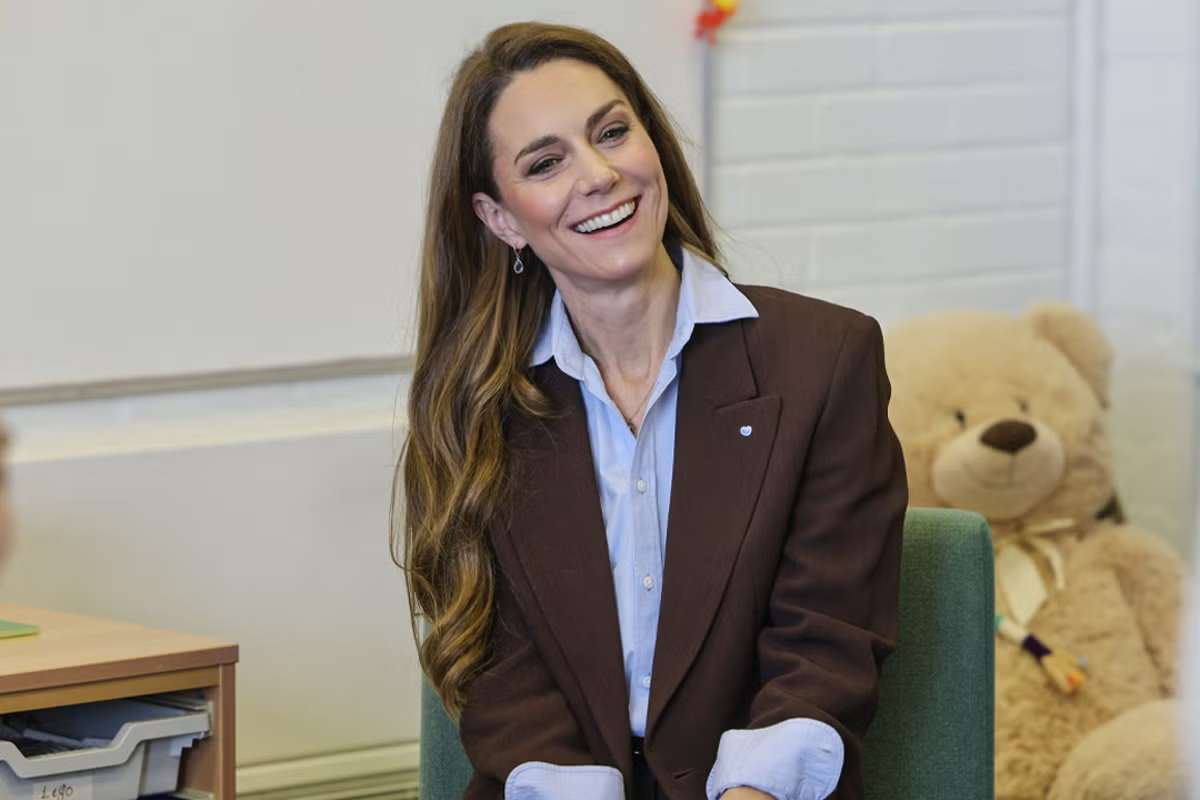
The Princess of Wales often champions the British high street – but there’s one homegrown label that she’s particularly fond of: Boden. From tailored coats and colourful knitwear to chocolate brown loafers or staple shirts, Kate Middleton has been spotted in the label countless times at Royal engagements.
While the rest of us are more likely to be dressing for the office or school pick-up, Boden delivers on all fronts. The label’s latest drop has us dreaming of warmer days – think linen tailoring, classic shirts, printed dresses and hardworking basics.
As always, there’s also a commitment to high-quality materials throughout the collection, from cotton frocks to silk-blend camis. Combining high street prices with luxurious fabrics, the 35-year-old label enjoys enduring appeal.
Kate Middleton isn’t the only admirer of the brand; Boden’s notable fan base also includes Claudia Winkleman and Holly Willoughby. The label’s allure lies in its considered approach to design, favouring character over fleeting trends.
If you are looking to refresh your wardrobe for spring and beyond, here are my top picks from Boden’s new collection – better yet, you can currently save 20 per cent on everything. Simply add the code ‘GR7V’ at checkout.
Boden linen trousers: Was £119, now £95.20, Boden.co.uk
(Boden)
An effortlessly stylish look for spring, Boden’s linen trousers and matching blazer are tailored for a smart and flattering look. The trousers are wide-leg, and the blazer has classic lapels, a single-breasted cut and a fitted silhouette.
Advertisement
Boden denim waistcoat: Was £129, now £103, Boden.co.uk
(Boden)
An elevated alternative to a cotton or linen waistcoat, this denim style looks like it’ll have a flattering fit thanks to the tailored cut. Complete with a scoop neckline and longline cut, the dark, indigo hue makes it easy to style. Wear it with neutral trousers or embrace a double denim look with similarly shaded jeans.
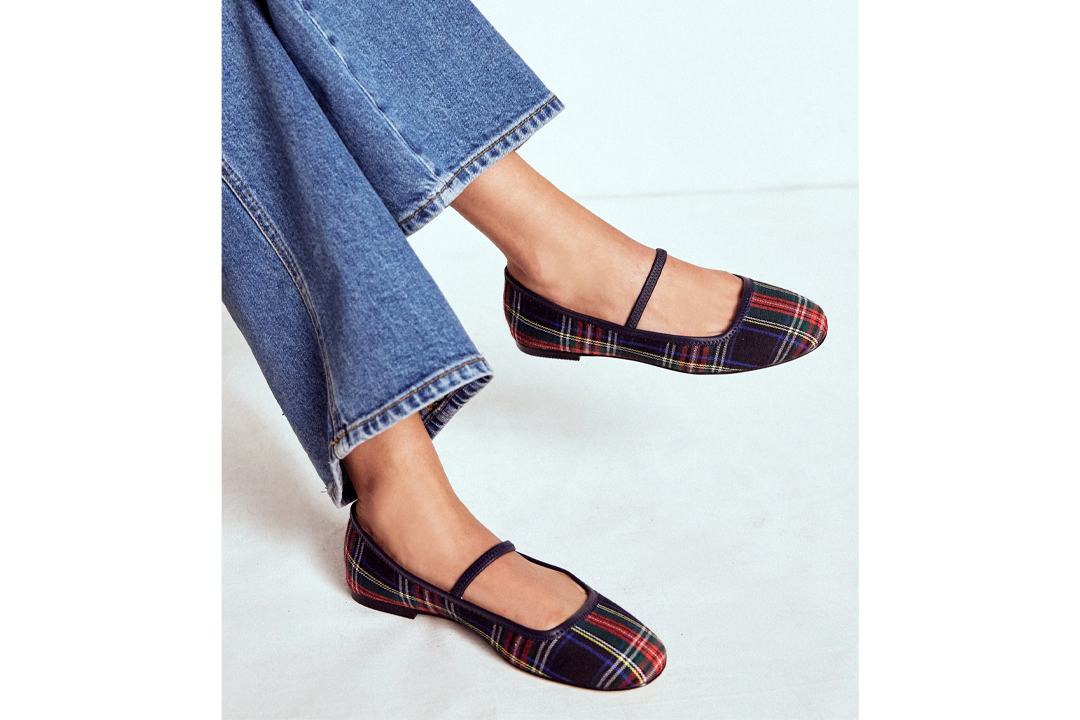
Boden tartan ballet flats: Was £129.99, was £41, Boden.co.uk
(Boden)
Finished in an on-trend tartan-style print, these ballet flats will add instant intrigue to any outfit. Reduced by more than 50 per cent, the pumps boast a Mary Jane-style elasticated strap and comfortable, rounded toe. Wear with grey or white socks during the winter months before styling with floaty dresses in the spring.
Advertisement
Boden Helen wool kilt skirt: Was £139, now £55, Boden.co.uk
(Boden)
Tartan kilts are far more wearable than you might think. This woollen number from Boden is designed with a pink and green check colour palette, featuring a high-rise waist and knee-grazing length (it’s helpfully available in petite, regular and tall lengths too). Lean into the punk feel with biker boots or dress down with ballet flats.
Boden Gloucester mac: Was £189, now £151, Boden.co.uk
(Boden)
Your search for the perfect spring jacket is over. Boden’s Gloucester mac is finished in a timeless gingham print with a monochrome checkered colour palette. Characterised by its regular short cut and pointed collar, the 100 per cent cotton design features a back box pleat for movement and statement buttons.
Advertisement
Boden mule slipper loafer: Was £99, now £79, Boden.co.uk
(Boden)
Suede is still everywhere this season – and this pair of chic mules offers the perfect way to lean in this spring. Whether poking out of wide-leg jeans or styled with a midi dress, the pointed toe gives them an air of elegance. Complete with exposed stitching detail and a slim sole, the loafer-style shoes are perfect for the office.
Boden Quinn boyfriend cardigan: Was £139, now £111, Boden.co.uk
(Boden)
Boden’s argyle knit is an elevated everyday staple. The neutral classic print is brightened up by pink detailing, while the oversized silhouettes make it perfect for layering. Complete with a flattering V-neckline and button-down front, the cardigan is sure to be a hard-working addition to your wardrobe.
Advertisement
Boden stitch detail wide leg jeans: Was £119, now £71, Boden.co.uk
(Boden)
This pair of indigo wide-leg jeans is a staple for your winter wardrobe. The stitch detailing gives them a vintage feel, while the dark denim wash elevates them beyond your average pair of jeans. Available in petite, regular and long lengths, the jeans boast a flattering high waist.
Boden Lucy half zip jumper: Was £99, now £79, Boden.co.uk
(Boden)
Boden’s quarter zip-up style is one of its most recognisable silhouettes. Offering plenty of versatility when it comes to styling, the jumper can be worn as a sleek turtleneck or with a wide spread collar. The design is classically Boden, with a red and pink striped finish that adds some joyous shades to your winter wardrobe.
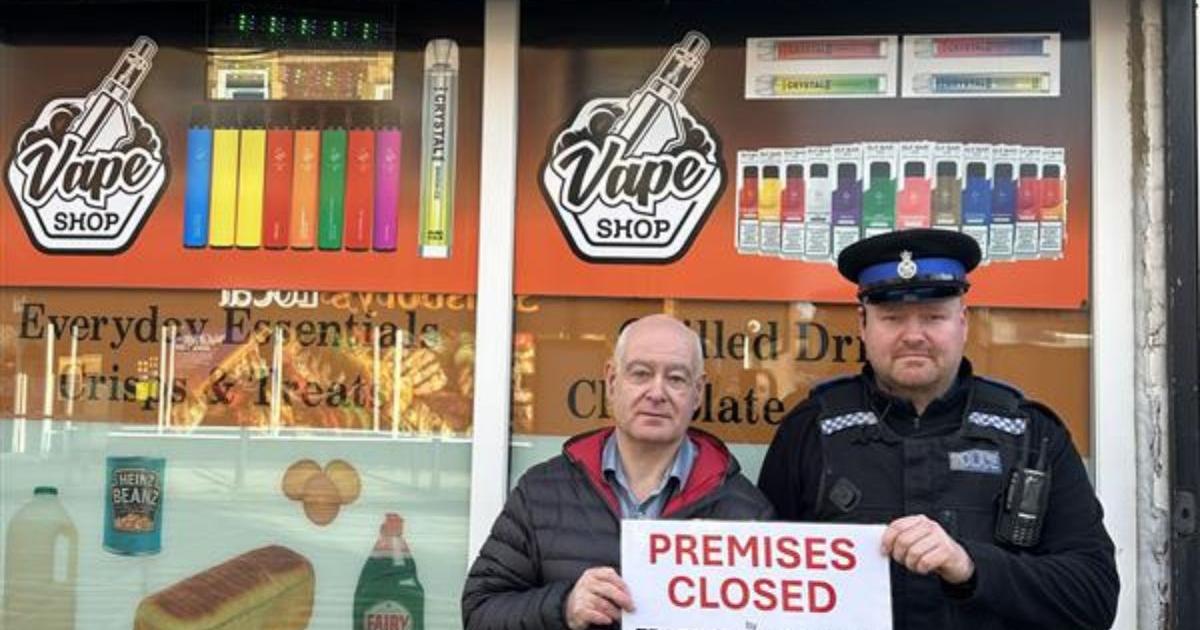
Corporation Mini Market on Corporation Road and 4 Seasons Mini Market on Gladstone Street were served with closure orders following a hearing at Peterlee Magistrates’ Court on Wednesday (February 18).
The closure orders stop any business from operating from the buildings for the next three months, though this can be extended by up to six months at the court’s discretion.
Between April 2024 and January 2026 trading standards officers visited Corporation Mini Market on several occasions seizing illegal goods with a total estimated retail value of more than £14,000.
Officers also made multiple visits to 4 Seasons Mini Market, formerly known as 3 Stop Shop, Your Shop and Greengros, between June 2024 and January this year.
Advertisement
4 Seasons Mini Market on Gladstone Street has also been ordered to close (Image: DARLINGTON BOROUGH COUNCIL)
Officers seized more than £47,000 worth of illegal tobacco products and vapes from properties, vehicles and bins associated with the premises.
Further evidence detailing a long-standing history of criminal behaviour associated with both premises was also presented to magistrates, including intelligence received from the police and the general public about illegal and underage sales.
Cllr Jim Garner, cabinet member for stronger communities, Darlington Borough Council, said: “Delivering safer, healthier communities, ensuring local people live well for longer and building a strong, sustainable local economy are three of our main priorities.
“I am delighted with the continued progress being made to frustrate and disrupt the illegal tobacco market, which undermines honest local businesses, and places public health at risk by encouraging smoking and targeting young people with pocket money prices.”
Advertisement
Inspector David Littlefair, from Darlington Neighbourhood Police Team, added: “This type of criminal activity helps fund organised crime groups and goes hand-in-hand with drug dealing, child exploitation and money laundering.
“We are committed to working with our partners to end these illegal operations and will continue to work tirelessly to protect our local communities from the very real dangers posed by these businesses.”
Anyone with information about the sale of illegal tobacco, vapes or cigarettes in Darlington is urged to email tradingstandards@darlington.gov.uk, or report it using the online form at www.darlington.gov.uk/ts-report-it.
You can also contact the police on 101 or report online via the 101 Live Chat: www.durham.police.uk/Report-It/101-Live-Chat.
A new campaign has been launched to urge residents to treat refuse collection staff in Peterborough with respect
Refuse collection workers in part of Cambridgeshire are said to be experiencing “aggressive and threatening behaviour” while on duty. Residents in Peterborough are being told to treat these workers with respect.
Advertisement
During 2024-25, crews in Peterborough reported 29 threats of violence, including five with aggressive behaviour and one incident of verbal abuse. Since April last year, a further 18 threats of violence have been recorded.
A new campaign by Peterborough City Council, in conjunction with Aragon Direct Services, has been launched to urge residents to treat refuse collection staff with respect.
Councillor Angus Ellis, Cabinet Member for Environment and Transport, said: “Our dedicated staff in our waste and recycling services work really hard and make such a valuable contribution to our communities. They’re a vital part our teamwork to keep our city clean and also achieve climate action targets.
“As such it is deeply concerning and saddening to hear their accounts of abuse from residents. No one deserves this when doing their job and this behaviour will not be tolerated. We are raising awareness of this important issue in the hope of cracking down on these incidents and I would urge anyone who witnesses staff abuse to report this as soon as possible.”
Advertisement
Anyone who witnesses incidents of refuse staff being abused is asked to contact the police on 101.
Many fish appear to hang effortlessly in the water while they wait for prey, defend a nest or pause between bursts of activity. But our research shows that this quiet stillness is anything but effortless. Hovering, the behaviour that allows a fish to remain suspended in one place, is far more energetically demanding than scientists once believed.
In a comparative study of 13 near neutrally buoyant species, we found that metabolic rates during hovering were almost twice as high as during rest (when the fish supports its weight with the bottom of the tank). In some cases, they were even greater. These findings challenge the long standing assumption that fish can remain motionless in the water column at little physiological cost.
Most bony fishes possess a swim bladder, which allows them to regulate buoyancy and avoid sinking or floating. This ability has encouraged the idea that once a fish reaches neutral buoyancy it can stay at its chosen depth with minimal effort. Our results show that the story is more complex. A fish that hovers must do more than balance weight and buoyant force; it must also control its posture.
In many species, the centre of mass and the centre of buoyancy do not align perfectly. The slight offset between them creates a continual torque that would cause the fish to roll or pitch if no corrective action were taken. Even in still water, a hovering fish must repeatedly counter these small rotational forces. What looks like serene suspension is in fact the product of continuous and precise adjustment.
Advertisement
To understand the true energetic cost of these corrections, we combined metabolic measurements with detailed observations of movement. Each fish was placed in a respirometer chamber so we could measure oxygen consumption during hovering. We recorded its movements using synchronised high speed cameras. We also quantified important aspects of body form, including the positions of the centres of mass and buoyancy, using anatomical measurements and micro CT scans.
Although the fish were incredibly good at maintaining postural equilibrium, the recordings revealed an uninterrupted sequence of minor fin movements. Pectoral, pelvic, anal and tail fins all contributed to the task of maintaining position. The fin trajectories varied across species and often traced intricate three dimensional paths.
The energetic consequences of this activity were striking. Across the thirteen species, hovering metabolic rates ranged from about 158 to 351 milligrams of oxygen per kilogram per hour, always above resting levels. Most species nearly doubled their metabolic expenditure during hovering.
A few fish, such as gouramis, managed to hover with only a small rise in metabolism. Others, including giant danios, cichlids and glass catfish, expended far more energy. In these species, the tail played a particularly active role. Their tail fins moved through larger distances than those of the low cost species. This indicated that tail driven corrections, rather than pectoral fin use alone, were central to the task of staying still.
Body shape had a clear influence on energetic demand. Deep-bodied fish, with their larger surface area, generate more resistance as water moves around them, making them naturally better at resisting unwanted rotations. These species relied less on fin movements and maintained position at comparatively low energetic cost.
Elongated or narrow-bodied fish were less inherently stable and needed more frequent corrections. Fin position mattered too. Species with pectoral fins set farther back on the body hovered more efficiently, because even small movements produced effective stabilising forces.
A hidden cost of everyday behaviour
So, hovering is far from a trivial activity. Many fish do it routinely throughout the day, whether guarding eggs, feeding on particles in the water, avoiding obstacles or keeping their place within a school. Understanding how much energy these routine actions require helps biologists build more accurate pictures of the daily lives of fishes and the ecological pressures they face.
The findings also shed light on the evolution of fish form and movement. Many teleost fish (bony fish, such as cod, salmon and goldfish) are inherently unstable. It’s a quality that allows them to manoeuvre rapidly when they need to turn sharply or evade predators.
Advertisement
But this same instability means they must make constant corrections whenever they stop moving. The balance between instability, control and energy use has shaped the extraordinary diversity of body shapes and fin arrangements found in modern fish.
Our study has practical relevance beyond biology. Engineers designing underwater robots face many of the same challenges that fish have solved. A robot that needs to hold its position in moving water can waste significant power stabilising itself. By studying how fish coordinate multiple fins to correct minute disturbances, designers may be able to create more efficient vehicles capable of hovering for long periods while using far less energy.
The next time you see a fish suspended apparently without effort in an aquarium, it’s worth remembering what lies beneath that calm surface. Hovering may look simple, but it is a remarkably demanding feat of balance and control.
Advertisement
Our study shows that fish invest far more energy than expected simply to stay in place – a hidden cost in the daily lives of animals that spend much of their time looking as though they are doing nothing at all.
These are your evening rugby headlines on Thursday, February 19.
Advertisement
Six Nations coach ‘disgusted’
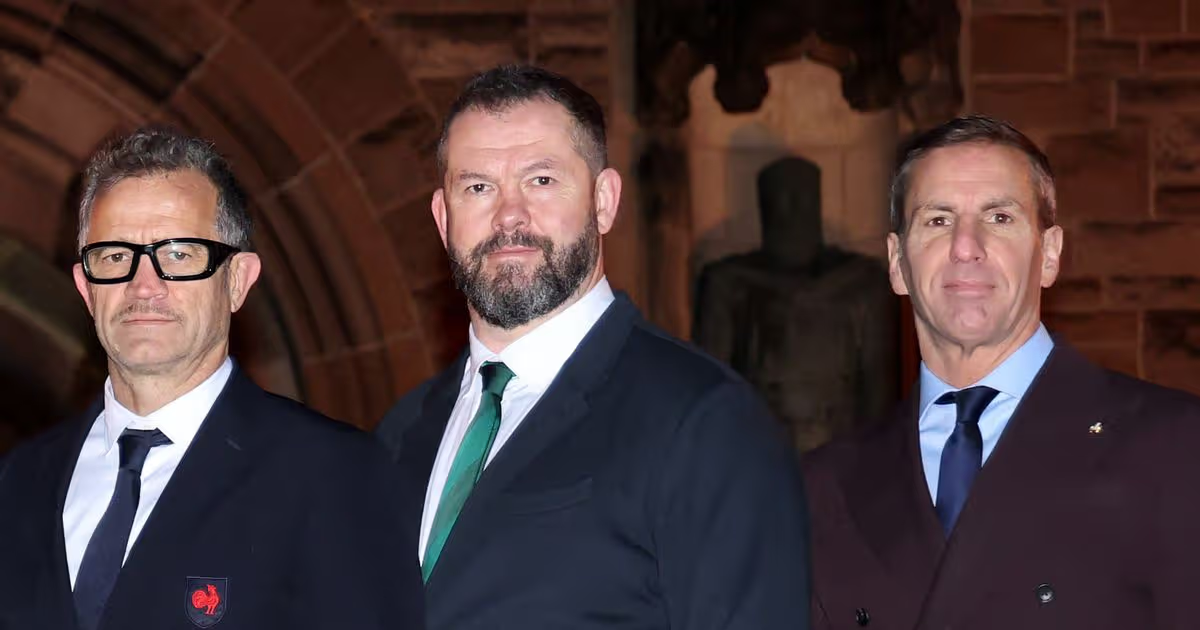
Ireland head coach Andy Farrell says the racist abuse aimed at lock Edwin Edogbo following his Test debut is “disgusting”, as he backed the 23-year-old to “crack on and ignore all the BS”.
The Munster star was targeted on social media after winning his first cap for his country in their 20-13 Six Nations win over Italy in Dublin last weekend, having come off the replacements’ bench in the 70th minute.
After Edogbo – who was born and raised in County Cork to Nigerian parents – was subjected to racist abuse, the Irish Rugby Football Union has launched an investigation.
Farrell, who on Thursday named his team to face England this weekend, condemned the abuse against his player as he said there is “no need for it in society”.
Advertisement
“First and foremost, it’s all about the player, nothing but about how he is and how it’s affecting him or not,” he told reporters. “We’ve had the conversation and he’s fine, thankfully. But it’s obviously disgusting. There’s no need for it in society.
“I didn’t read it. I don’t want to read it, I don’t want to give people anything to even think that I’m even commenting on some of the stuff that has been said really because they certainly don’t deserve that.
“But as far as I’m concerned, Edwin’s fine, he’s strong, he’s been brought up in the right way,” Farrell added. “We met his family last week, his mother and his two brothers and his sister.
“His father couldn’t make it because he works all hours God sends as an A&E nurse there down in Cork, which says it all. He’s made of the right stuff, and that’s why he’s able to just crack on and ignore all the BS.”
Advertisement
Returning Scotland duo ‘hugely determined’
By Anthony Brown, Press Association
Gregor Townsend expects Blair Kinghorn and Duhan van der Merwe to be fuelled by “huge determination” against Wales after they were restored to Scotland’s starting XV for Saturday’s Guinness Six Nations clash in Cardiff.
The British and Irish Lions duo were high-profile omissions from the 23 for the first two championship matches against Italy and England amid question marks about their form.
Toulouse back Kinghorn will start at full-back in place of Tom Jordan, who drops to the bench, while Van der Merwe, Scotland’s record try-scorer, returns at wing to take over from Jamie Dobie, who is out due to injury.
Advertisement
“Blair was back playing on Sunday night for Toulouse so it’s good to get an outlet when you’ve not been selected,” said head coach Townsend after naming his squad to face Wales.
“He played really well in that game and he’s recovered quickly after that evening game. Duhan’s trained really well and very much been part of our squad, so there’ll be a freshness around both of them coming back in and huge determination to play well.
“Like any player, you want to be part of the squad and for those players that have been in our squad for a few years, it’ll be tough for them to take.
“But they’ve backed the team and they understand the reasons why we had different selections going into our opening two games. And now they have an opportunity to represent their country again.”
Advertisement
There are three further changes to the Scotland XV that started the 31-20 victory over England last weekend – all of them in the pack.
Dave Cherry replaces George Turner at hooker, with the latter dropping to the bench.
Back-rowers Jamie Ritchie and Jack Dempsey miss out through injury, with Matt Fagerson coming in at number eight and the versatile Gregor Brown, who started in the second row last weekend, moving to blindside flanker. Glasgow lock Max Williamson comes in to take Brown’s place in the second row.
Scotland, who have been training in Spain this week, are hot favourites to defeat an ailing Wales side who have lost heavily to France and England in their opening two matches.
Advertisement
“I’m sure last week a lot of people thought England were clear favourites (against Scotland), so the game is not about predictions and previous form,” said Townsend. “It’s a lot about what you do in those 80 minutes, and we’ve got to make sure that we get our game out.”
Dropped star ‘will bounce back’
By Edward Elliot, Press Association
Ireland boss Andy Farrell backed Sam Prendergast to bounce back from being dropped as he admitted neither of his leading fly-halves were in particularly good form ahead of the Guinness Six Nations.
Prendergast has been left out of the matchday squad for Saturday’s round-three clash away to England following a tough outing in last weekend’s tense 20-13 win over Italy.
Advertisement
Jack Crowley will start at Twickenham after his impressive cameo against the Azzurri, with Ciaran Frawley providing back-up from the bench. Prendergast, 23, began six of Ireland’s last seven Six Nations fixtures and has been overlooked for a matchday 23 in the championship for the first time.
“Sam’s a fantastic international player,” head coach Farrell told a press conference, according to the Irish Independent. “He’s on a journey that’s obviously learning like all of us. That will never stop. It’s the same for Ciaran Frawley.
“We’ve talked all along about the four lads (Crowley, Prendergast, Frawley and Harry Byrne) competing against one another and the balance is right for this team this weekend. Everyone gets feedback and we talk it through and we use it in the right manner to see where we’re going to go in the not too distant future.
“I think the two lads (Prendergast and Crowley) probably came into camp, I think they’ve probably been in better form. I’m not saying they were in bad form, but you see during training which way that you’re going to go through performance.”
Advertisement
Crowley played every minute of Ireland’s triumphant 2024 Six Nations campaign but his only start in the tournament following Prendergast’s Test debut in November of that year came away to Italy last March.
The 26-year-old will partner recalled scrum-half Jamison Gibson-Park as part of five personnel changes, with prop Tadhg Furlong and back-rows Tadhg Beirne and Josh van der Flier also returning.
Asked why he opted for Crowley, Farrell said: “Because of what we’ve seen and how he’s come through and performed and playing confidently. You back what you see and all of that.
“I suppose sometimes you see people come from the back, have nothing to lose and then just rip in. And we’ve not just seen that with Jack, we’ve seen it with James Ryan – not selected to start in the first game, came on against France (a 36-14 loss) and had a storming game and has continued that.
Advertisement
“I saw that with James as well with the (British and Irish) Lions, when he was behind the eight ball there with a quad injury and he was chasing his tail to try and get into the squad and played his best rugby within that tour.
“That’s because people are able to sit back a bit, make sense of it and rip into the performance. I think you saw that with Jack’s performance last week.”
Versatile Frawley is poised to win his first international cap – and 10th overall – since coming on at centre in last summer’s 106-7 demolition of Portugal.
“He’s 100 per cent excited,” Farrell said of the 28-year-old. “He’s been certainly frustrated with the lack of game time, certainly in the autumn. From what we’ve seen in training, how sharp he is and how eager he is to get going and the balance that he gives us on the bench, he’ll be ready to go.”
As the 21st century dawned, a newly elected Vladmir Putin was making friends on the world stage. He smiled for photo ops at G8 meetings, and was the first foreign leader to call George W. Bush after the attacks of 9/11, offering his support against terrorism.
So what changed? To understand Russia’s view of the world now – and its continued aggression towards Ukraine – it helps to know more about the psyche of the country and its leader.
In today’s episode of The Conversation Weekly podcast, we talk to James Rodgers, a reader in international journalism at City St George’s, University of London, about how a festering sense of national humiliation after the collapse of the Soviet Union hardened Putin’s tough man regime and led Russia to turn its back on the west.
Advertisement
In 1991, when the Soviet Union collapsed, many in the west believed liberal democracy and free markets had won in Russia. The cold war was over and Russia would join the community of democratic nations. But that’s not what happened. Instead, Russians experienced economic freefall, large-scale poverty and a sense of national humiliation.
“People felt this great loss of status,” says Rodgers, who has just written a new book called The Return of Russia about why it came into confrontation with the west.
“With the coming of new western ideas of the free market, a lot of people lost their jobs and the status that went with them,” says Rodgers. “Russia also lost the standing on the world stage that the Soviet Union had enjoyed.”
Advertisement
Putin became president on the eve of the new millennium. Rodgers says, Putin had not forgotten the economic pain and humiliation of the 1990s, and understood its importance to his constituency in Russia. “He understood the political potential of that humiliation in a way that I think some western policymakers did not understand the possible political consequences of it.”
Soon after, the 9/11 attacks in 2001 pushed the US to war in the Middle East. Whatever support Putin had pledged western governments began to crumble, particularly over the invasion of Iraq. Through interviews with former top western officials, Rodgers pinpoints that Russian foreign intelligence knew Iraq’s leader Saddam Hussein did not have weapons of mass destruction, and they were certain that the CIA and other western intelligence agencies knew that.
“Russia determined that the west was acting in bad faith about the reason that they’d given for going to war in Iraq, and this was actually about regime change and not at all about weapons of mass destruction,” says Rodgers. He says the invasion made Putin deeply suspicious of western motives in foreign relations, who began to think: “If they can do this to Saddam Hussein, then maybe one day the west will try to decide to do it for me.”
Listen to the interview with James Rodgers on The Conversation Weekly podcast. This episode was written and produced by Mend Mariwany and Gemma Ware with editing help from Ashlynne McGhee. Mixing by Eleanor Brezzi and theme music by Neeta Sarl. Gemma Ware is the executive producer.
Listen to The Conversation Weekly via any of the apps listed above, download it directly via our RSS feed or find out how else to listen here. A transcript of this episode is available via the Apple Podcasts or Spotify apps.
A toxic gas leak at a mine in Nigeria has killed 37 people and left 26 injured in hospital.
Poisonous lead, sulphur and carbon monoxide was suddenly discharged into the shaft, killing nearly 40 miners working underground.
They were said to have not realised they were breathing in deadly fumes until they started to become unwell, according to the Nigerian government.
Advertisement
The victims were taken ill in the early hours of Tuesday morning in Kampani Zurak, a police spokesman said.
Alfred Alabo said: “A preliminary investigation revealed that the miners faced a sudden discharge of lead oxide and other associated gases like sulphur and carbon monoxide.
“These gases are toxic and poisonous to humans, particularly in a confined or poorly ventilated environment.”
He added that the bodies of the deceased had been released to their families for burial in accordance with their religious practices.
Advertisement
The Nigerian government has closed the mining site and an investigation into the leak is continuing.
The miners were unaware of the toxic nature of the emissions and continued their operations, Nigeria’s Minister of Solid Minerals Development Dele Alake said.
It’s not clear what was being mined at the site and whether the mine was operating legally.
Nigeria is trying to rein in illegal gold mining operations across the country that have killed hundreds of people over the years.
During freezing winter weather, it’s all too easy to twist the thermostat up a notch (or three). But while it may end with a toasty home, it can also result in an energy bill that leaves you questioning every degree of comfort. In some cases, a decent electric heater is the smarter move, as it warms the space you’re in, rather than empty rooms.
Luckily, there’s a heater for every budget, from basic VonHaus models to high-end technology from Dyson that doubles as a fan and comes with app connectivity. The best designs warm up chilly rooms quickly, feature adjustable thermostats and timers, and operate quietly enough to avoid disturbing you. Look for integrated safety features, and watch out for power-hungry models that may be costly to run.
To help you choose, we’ve found the best electric heaters, covering every price point and size. We tested 16 models in total, with 12 reviewed below, plus answers to frequently asked questions.
Advertisement
The best electric heaters in 2026: At a glance
How to choose the best electric heater
Picking an electric heater isn’t just about grabbing the cheapest one on the shelf. For starters, there are several types to choose from. Brian Horne, technical knowledge lead at Energy Saving Trust, says: “Oil-filled, convector, halogen and fan electric heaters are equally efficient, but they distribute heat differently.”
Consider your room size when choosing between them. Horne says: “Oil-filled heaters heat up and cool down slowly, so are best for providing low level heat for an extended period.” This also makes them well suited to living rooms as they can distribute heat across a bigger area. Similarly, “convector heaters warm the air which then circulates around the room, making them effective for heating the whole space”.
For smaller spaces, Horne recommends fan or halogen heaters: “Fan heaters blow hot air directly at you, offering a quick burst of warmth when needed. Halogen heaters emit radiant heat that warms only what’s in front of them, so are best for keeping you warm without heating the rest of the room.”
Power output, measured in Watts, determines how quickly a heater can warm a space and running costs (higher Watts mean faster heating and higher electricity consumption). Charlotte Friel, director at Ofcom, says: “Using heaters all the time can quite quickly increase energy bills, so if possible, use them for short bursts or to heat one room and not as an alternative to central heating.”
Advertisement
Adjustable thermostats and timers help prevent energy waste once the room reaches temperature, while tip-over and overheat protection are must-haves for homes with pets or children. And don’t forget noise levels, as some heaters hum quietly in the background, others sound like a jet engine.
“If you need to use an electric heater, choose the type that best suits what you want to heat and for how long. Position the heater in the part of the room you want to warm, keeping it at a safe distance from yourself and any furniture,” concludes Horne. “Remember to always follow the safety instructions that come with the product.”
Marcus Rashford looks set to join Barcelona on a permanent deal this summer after his loan spell from Manchester United though his game time may not be guaranteed
Marcus Rashford could be battling for game time next season if Barcelona make his loan switch permanent, given their search for a ‘mobile striker’ should Robert Lewandowski depart. The Manchester United star is currently enjoying a season-long stint with the Catalan giants under Hansi Flick.
Advertisement
Although Lewandowski, Lamine Yamal and Raphinha are all established first-team regulars at the Camp Nou and take precedence over Rashford, the 28-year-old has still racked up 10 goals and 13 assists from 34 outings across all competitions. Barcelona also possesses an option to sign Rashford permanently at the end of the 2025/26 campaign for approximately £26million – a clause they appear increasingly likely to trigger given his reliable displays.
This is despite the Polish striker demonstrating he’s still got plenty to offer with 10 La Liga goals to his name this term. Consequently, Sport reports that the club are preparing to explore the market this summer for a mobile striker who can combine effectively with team-mates in attack and apply pressure when Barca are out of possession.
Dusan Vlahovic has surfaced as a possible option for the position, given he ticks all the boxes and his Juventus contract expires at the end of the Serie A campaign, meaning a financially cautious Barcelona wouldn’t need to fork out a substantial fee for him. Tuttosport also report that Vlahovic has informed his agent that his preference is to join Barcelona, though he’s awaiting an official approach from the club.
Should no offer materialise, the 26-year-old is also said to be willing to negotiate fresh terms with the Old Lady. This could ultimately create complications for Rashford, though, as the forward has demonstrated his adaptability by operating as a central striker beyond his preferred left-wing position.
With two-and-a-half years remaining on his existing United deal, his long-term prospects at the club remain uncertain. The England international lost his place under Ruben Amorim shortly after his arrival in November 2024, spending the final months of last season on loan at Aston Villa.
Still considered expendable by the Portuguese manager upon his return, Rashford subsequently moved to Barcelona on a temporary basis in the summer. However, with Amorim having been shown the door at Old Trafford and Michael Carrick now in charge until the end of the season, the door could be open for Rashford to return to the club he has devoted his entire career to should he wish to.
Much will hinge on whether Barcelona make his loan move permanent, what Carrick thinks of the forward should he be handed the role on a full-time basis, or whether an incoming manager arrives who sees Rashford fitting into his plans.
Ensure our latest sport headlines always appear at the top of your Google Search by making us a Preferred Source. Click here to activateor add us as Preferred Source in your Google search settings.Content cannot be displayed without consent
The actress says that living in Pontypridd keeps her grounded as “nobody cared”
This article contains affiliate links, we will receive a commission on any sales we generate from it. Learn more
Advertisement
When it comes to Welsh actors, we can’t help being proud of one of our own and celebrate every role and on-screen appearance. However, there’s one thing the Welsh do well and that is keep people humble.
The actress from Pontypridd said that even when she was appearing in major motion pictures, the local community kept her grounded as “nobody cared” and she hardly ever gets recognised.
Speaking to Bronwen Lewis on BBC Radio Wales, the actress shared an anecdote of when she worked with Colin Firth on the movie Easy Virtue.
Advertisement
Kimberley explained that she wasn’t sure how to become an actress when she was from a small town in Wales. She said: “You know, I grew up in Ynysybwl just outside Pontypridd. How do I get into those rooms in London and beyond to make that a reality?”
The host replied: “I bet there’s so many kids out there, you know, listeners thinking, ‘oh, you know, yeah, my kid or I want to be an actor and it is having to get used to rejection’. But do you think that having Pontypridd as that base then has almost, that is your grounding, that’s your rooting and whatever happens I’m going back to a family and a place that loves me.”
The actress replied: “That’s exactly what it is, because there were two things. One, in the olden days, I used to travel on the train to London, go and do an audition. It could go brilliantly, it could go terribly, and there were a lot of those, really, really badly.
“Then I would get back on the train, come home to Ponty, and my life here had nothing to do with that. My value wasn’t placed on whether I got that job or not. You know, which was incredible.
Advertisement
“The other thing, I was shooting a film called Easy Virtue with Colin Firth and Kristin Scott Thomas through the week, and then I would come home for the weekend, and I remember being in Ponty in the Opticians on a Saturday, and they were like, ‘oh, are you filming with that Colin Firth?’ And I was like, ‘sort of, yeah’. But mainly, nobody cared. Nobody.”
Kimberley continued: “I never get recognised in Ponty, hardly ever. People go, ‘what’d you do?’ And you go, ‘you know, an actress’,
“The say ‘what were you in?’ And you say, and they go, ‘all right, okay.’ They’re just not interested, but in a wonderful way.”
Advertisement
Bronwen added: “Because they’re interested in who you are as a person.”
The actress said: “Exactly that. I think what helped me stay who I am is that I’ve lived in Pontypridd the entire time.”
Content cannot be displayed without consent
Kimberley currently stars in Sky’s Under Salt March as Shell Hill, the mother of nine-year-old Cefin who was found dead by his teacher (played by Yellowstone’s Kelly Reilly).
The series follows the fictional Welsh town of Morfa Halen, as they not only deal with the tragic death of one of their own, but the community faces an impending storm which threatens the residents with dangerous flooding.
Advertisement
You can watch Under Salt Marsh on Sky Atlantic, Sky on demand or Now TV. If you haven’t already signed up for Sky, you can do so here.
Ensure our latest news and sport headlines always appear at the top of your Google Search by making us a Preferred Source. Click here to activate or add us as Preferred Source in your Google search settings