Connect with us

Business

Council urged to sell rugby stadium and spend cash on roads instead

Published

on

Business Live

Salford Council Conservative leader says stadium is “burning” cash but leaders say there is clear vision for venue’s future

Salford Community Stadium, home to Salford Red Devils and Sale Sharks.

Salford Community Stadium, home to Salford Red Devils and Sale Sharks(Image: LDRS)

Salford council is facing calls to sell the CorpAcq Stadium – amid claims it is ‘burning’ cash – and spend the money on fixing roads instead. The stadium company, CosCos, is controlled by the town hall after it completed a £7.7m deal with former co-owners Peel in late 2024.

Advertisement

It is home to rugby union club Sale Sharks as well as Salford’s phoenix rugby league team. The Conservative opposition group at Salford council said ownership of the stadium is costing £1.6m a year, according to the council’s finance department.

The Tories are calling for the council to begin the process of selling the ground and to put £1.6m a year towards a ringfenced fund to fix roads and pavements across the city.

The demand has been submitted as an amendment to the council’s budget which is being discussed at a meeting on February 25.

Coun Bob Clarke, leader of Salford Conservative group, said: “It’s outrageous, we couldn’t believe it when we saw the figures.

Advertisement

“I think the mayor had good intentions and wanted to do something for everybody, but if it’s burning through the best part of £1.6m a year, that’s not credible, especially when you ask for more money from the residents [through council tax] and they see this being burned.

“It’s an extra £6,500 a month per ward that we could spend on making things better for everybody, not just the few people that use the stadium. It doesn’t make sense, it’s £1.6m, it’s over £100,000 a month gone.”

A Salford Labour spokesperson defended the party’s move to take full ownership of the ground and surrounding land, which is also known as the Salford Community Stadium.

They said: “Salford Labour was re-elected in 2024 on a manifesto commitment to deliver a rugby strategy for the whole city. Taking full control of Salford Community Stadium is a key part of this vision, helping ensure that professional clubs from both codes continue to play in Salford.

Advertisement

“The stadium was also a key venue for the Women’s Rugby World Cup last year, and as part of our ownership we will continue to explore opportunities to use the stadium for other prestige events.

Salford Mayor Paul Dennett at Salford Community Stadium

Salford Mayor Paul Dennett pictured at Salford Community Stadium (Image: Salford council)

“The stadium also provides the foundation for improving the surrounding facilities to support greater grassroots participation in rugby. This will enable residents across the city to benefit from the sporting, social, health and economic advantages the sport brings.”

During the budget meeting next week councillors will also vote on proposals to increase council tax in Salford by 4.99 per cent, adding more than £100 to annual bills for people living in band D properties.

This is part of the council’s revenue budget used to pay for services across the city.

Advertisement

The Conservative group leader said he believes residents will be unhappy at how much the stadium is costing.

He added: “I’m sympathetic to the place the council is in with money after 14 years of cuts which I think went on too long, I was never a fan of it and I do sympathise, but when you see £1.6m a year being wasted something has to be done.

“When people find out what the stadium is losing they’ll be upset.”

When Salford council bought the stadium at the end of 2024, it was expected that land around the ground would be sold for development to finance the purchase.

Advertisement

The move was also seen as a lifeline for former rugby league club Salford Red Devils, but the club ended up being liquidated in 2025 over unpaid debts, ending 152 years of history.

Salford’s phoenix rugby league club continue to play at the stadium, but chief executive Ryan Brierley said in January that there is currently no deal in place with the council and that talks were ongoing.

The Conservative group amendment being debated next week states: ‘Salford City Council owns Salford Community Stadium, which continues to operate at a significant ongoing cost to our residents.

‘The stadium is currently estimated to make a loss of approximately £1.2 million, in addition to approximately £420,000 per year in lost interest on the amount of debt in relation to the stadium, resulting in a total annual cost to the Council of approximately £1.62 million.

Advertisement

‘This represents a substantial recurring financial burden at a time when residents face a 4.99pc increase in council tax, and when the council faces ongoing financial pressures.’

The amendment adds that the council could only sell the stadium in 2028 due to ‘existing financial and contractual arrangements’ in place, but called preparations to sell the ground to ‘begin immediately’.

Continue Reading
Click to comment

Leave a Reply

Your email address will not be published. Required fields are marked *

Business

Leader in Mac Virtualization (Run Windows on Mac)

Published

on

Samsung Galaxy S26 Ultra

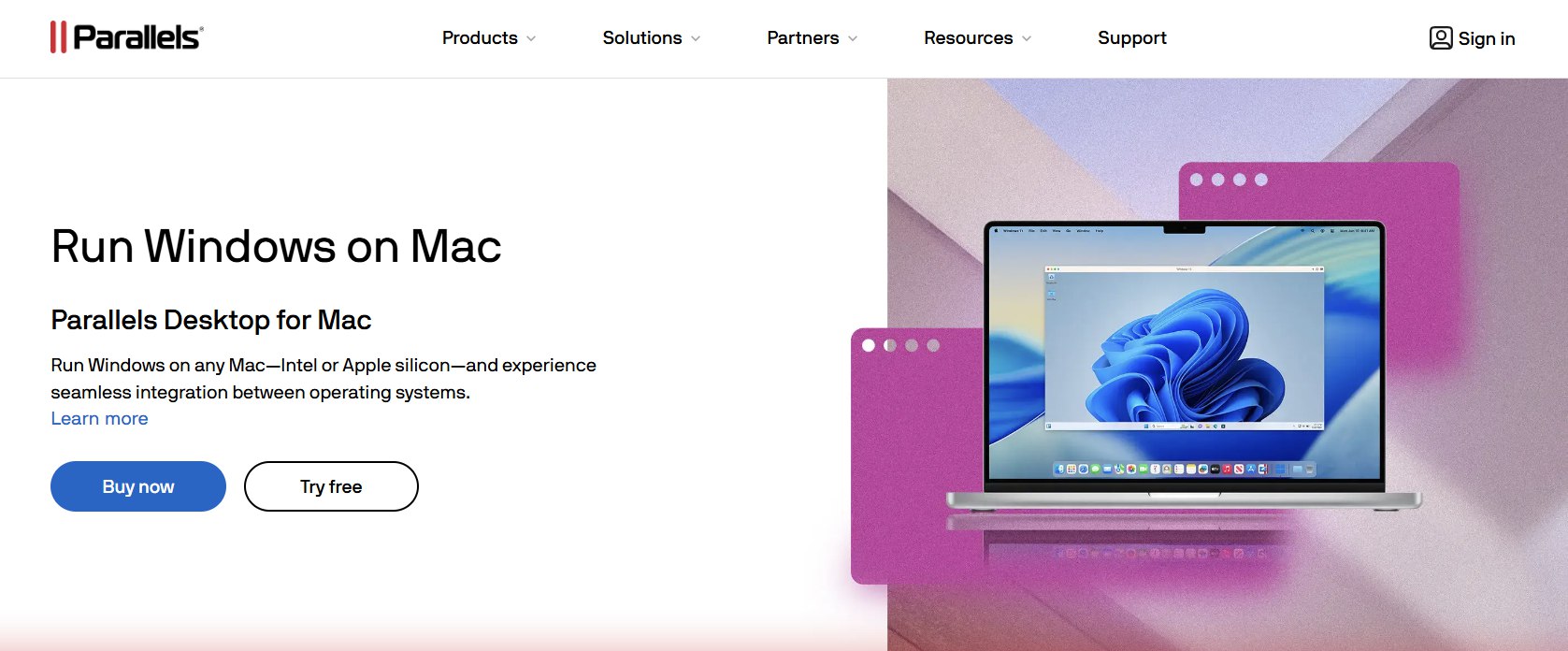
Parallels.com, the official site of Parallels International GmbH, serves as the hub for one of the world’s leading virtualization and remote access software providers. Best known for Parallels Desktop — the top-rated solution for running Windows on Mac — the company continues to innovate in 2026, with its latest Parallels Desktop 26 release optimized for macOS Tahoe and featuring enhanced enterprise tools.

10 Fun Facts About Parallels

Owned by Alludo (formerly Corel), Parallels empowers millions of users to bridge operating systems seamlessly, whether for personal productivity, development, gaming or large-scale IT deployments. Recent surveys from the company highlight shifting priorities in hybrid cloud and end-user computing, with 94% of IT leaders expressing concerns over vendor lock-in amid AI adoption.

Here are 10 essential facts about Parallels.com and its ecosystem, drawing on the latest developments as of February 2026.

  1. Company Origins and Ownership Founded in 1999 by Serg Bell, Parallels International GmbH is headquartered in Bellevue, Washington. It specializes in virtualization software for macOS, enabling users to run Windows, Linux and other OSes on Apple hardware. The company became a subsidiary of Corel (now rebranded as Alludo) after a 2015 acquisition. Alludo positions Parallels as part of its portfolio of productivity and graphics tools, serving over 2.5 million paying customers globally.
  2. Core Product: Parallels Desktop for Mac Parallels Desktop remains the flagship offering, allowing seamless integration of Windows apps alongside macOS without rebooting. Features include Coherence Mode (Windows apps appear native on Mac), shared folders, clipboard sharing and high-performance graphics. It supports Apple silicon Macs natively, making it the Microsoft-authorized solution for Windows 11 on M-series chips.
  3. Latest Version: Parallels Desktop 26 Released in August 2025 and updated through February 2026 (version 26.2.2 build 57373), Parallels Desktop 26 aligns versioning with Apple’s macOS scheme. It delivers full compatibility with macOS Tahoe 26 as both host and guest OS, accurate disk space visibility in Windows VMs to prevent crashes, refreshed icons and adherence to Apple’s tightened background process rules. Enterprise editions introduce Declarative Deployment for Microsoft golden images, Intune enrollment and centralized management via the Parallels Management Portal.
  4. Performance and Compatibility Highlights The 2026 updates ensure smooth support for Windows 11 25H2, improved stability on Apple silicon and better handling of large installations. Users benefit from preserved Coherence Mode, USB device enhancements in macOS VMs and SOC 2 Type II compliance for security. Recent patches address stability, security and Linux compatibility issues like Parallels Tools with Debian 13.
  5. Enterprise and Business Focus Parallels offers dedicated Business and Enterprise editions with IT management tools, including Jamf script support for VM updates, SSO activation in Single Application Mode and policy enforcement for shared resources, USB access and network modes. These features cater to organizations deploying virtual machines at scale while maintaining security compliance.
  6. Broader Portfolio Beyond Desktop Parallels.com hosts solutions like Parallels RAS (Remote Application Server) — recently updated to version 21.0 with hybrid cloud management, enhanced security and platform reliability — for virtual desktops and app delivery. Other products include Parallels Toolbox for file security and utilities, Parallels Client for mobile access to RAS environments, and cloud-based options for browser or online Windows VMs.
  7. Market Leadership and Recognition Parallels frequently ranks as a top virtual machine provider, especially for Mac users needing Windows access. In 2024, it was named a Major Player in IDC MarketScapes for virtual client computing. The company’s 2026 Cloud Survey revealed key trends: organizations prioritizing flexibility in end-user computing amid AI integration, with many resetting strategies to avoid lock-in.
  8. User Base and Applications Millions rely on Parallels for development (running Windows tools on Mac), gaming (3D titles via DirectX/OpenGL support), testing multiple OSes and professional workflows. It excels in scenarios like running legacy Windows software, accessing Microsoft-exclusive apps or creating isolated environments for security. Educational and public sector users leverage it for cross-platform learning and remote access.
  9. Recent Research and Industry Insights Parallels’ February 2026 survey of over 500 IT professionals found widespread concern about vendor lock-in in cloud and AI-driven environments. The data informs webinars and reports on VDI, SaaS and hybrid IT trends, positioning Parallels as a thought leader advocating multi-cloud and flexible strategies. Blogs on parallels.com regularly cover topics like the best VMs for 2026 and online Windows options.
  10. Future Outlook and Accessibility With ongoing updates — including AI-ready features from prior versions evolving into enterprise-grade tools — Parallels continues prioritizing performance, security and ease of use. The website offers free trials, detailed knowledge bases, press releases and direct downloads. As macOS and Windows evolve, Parallels Desktop remains essential for users unwilling to abandon one ecosystem for another.

Parallels.com stands as a gateway to versatile computing in a multi-OS world. Whether for individual Mac owners running Windows side-by-side or enterprises managing hybrid fleets, the platform delivers reliable, high-performance virtualization backed by continuous innovation.

Continue Reading

Business

James Cameron sends scathing letter to antitrust lawmaker

Published

on

James Cameron sends scathing letter to antitrust lawmaker

Canadian filmmaker James Cameron poses during a photocall for the opening of the exhibition entitled ‘The Art of James Cameron’ at the Cinematheque Francaise in Paris on April 3, 2024.

Stephane De Sakutin | AFP | Getty Images

Legendary “Titanic” director James Cameron is likening the theatrical experience to a “sinking ship” if Netflix acquires Warner Bros. Discovery’s film studio.

Advertisement

Cameron penned a letter to Sen. Mike Lee, R-Utah, last week, which was obtained by CNBC, in which he argues Netflix’s proposed acquisition of WBD’s studio and streaming assets could lead to massive job losses in Hollywood, fundamentally alter the theatrical landscape in the U.S. and negatively impact one of America’s largest export sectors.

Lee chairs the Senate subcommittee on antitrust, competitive policy and consumer rights, which met in early February to discuss the potential impact of the Netflix-Warner Bros. transaction. Cameron sent his letter in the days following the hearing, during which Netflix co-CEO Ted Sarandos and WBD executive Bruce Campbell testified.

“I believe strongly that the proposed sale of Warner Brothers Discovery to Netflix will be disastrous for the theatrical motion picture business that I have dedicated my life’s work to,” Cameron wrote to Lee. “Of course, my films all play in the downstream video markets as well, but my first love is the cinema.”

Cameron has been vocal in his opposition to the proposed tie-up, and his concerns echo those of the broader filmmaking industry, which generally sees combinations of movie studios resulting in fewer releases and less work. Cameron’s letter to Lee, which has not been previously reported, escalates his concerns to the lawmakers who could potentially stand in the way of Netflix completing its acquisition.

Advertisement

In particular, critics have raised alarm about bringing together two of the top global streaming services – Netflix with 325 million global subscribers and WBD’s HBO Max with 128 million as of Sept. 30. Lawmakers have already questioned how a merger of those services would impact consumers and prices.

“We have received outreach from actors, directors, and other interested parties about the proposed Netflix and Warner Brothers merger, and I share many of their concerns,” Lee said in a statement. “I look forward to holding a follow-up hearing to further address these issues.”

In response to a request for comment, a Netflix representative pointed to Netflix’s written testimony and Sarandos’ comments during the hearing earlier this month.

In its written testimony, Netflix outlined its investments in the film and TV production industry and its impact on the overall U.S. economy, including $20 billion in planned film and TV spend in 2026, a majority of which it said will be spent in America. 

Advertisement

“With this deal, we’re going to increase, not reduce, production investments going forward, supported by a stronger combined business and balance sheet,” Netflix said, noting its production facilities, such as in New Mexico and an upcoming New Jersey-based studio. 

Since the deal’s announcement, Netflix’s top brass has consistently voiced their belief that the deal would not only win regulatory approval, but would be good for the media industry.

During a recent earnings call, Sarandos called the deal “pro-consumer … pro-innovation, pro-worker.”

He has said on multiple occasions that the addition of WBD’s studio would preserve jobs — even as layoffs roil the media ecosystem — and has said the assets would bring new businesses under Netflix’s umbrella.

Advertisement

“We’re going to need those teams, these folks that have extensive experience and expertise. We want them to stay on and run those business,” Sarandos said. “So we’re expanding content creation, not collapsing it in this transaction.”

In addition to concerns specific to filmmakers and across the theater industry, the proposed Netflix-WBD transaction has awakened other regulatory questions. 

In particular, critics have raised alarm about bringing together two of the top global streaming services – Netflix with 325 million global subscribers and WBD’s HBO Max with 128 million as of Sept. 30. Lawmakers have already questioned how a merger of those services would impact consumers and prices.

Paramount Skydance has leveraged some of the same arguments in its attempt to unseat Netflix and buy the entirety of WBD through a hostile tender offer.

Advertisement

Sarandos and co-CEO Greg Peters have argued competition for viewers includes various platforms – from traditional TV to streaming services to social media platforms like YouTube – making Netflix a small part of the ecosystem.

Netflix co-CEO Ted Sarandos: Government has no grounds to block Netflix-Warner Bros. deal

Theatrical shifts

Cameron, who has pioneered the creation of new filming technologies during his decades-long career, including 3D production systems, advanced visual effects and high-frame-rate display, noted that theatrical exhibition has been a critical part of his “creative vision.”

He also highlighted previous comments by Sarandos calling movie theaters “an outdated concept” and an “outmoded idea,” in addition to comments telling investors that “driving folks to a theater is just not our business.”

“The business model of Netflix is directly at odds with the theatrical film production and exhibition business, which employs hundreds of thousands of Americans,” Cameron wrote. “It is therefore directly at odds with the business model of the Warner Brothers movie division, one of the few remaining major movie studios.”

Cameron noted that WBD releases around 15 theatrical films a year, volume that movie theater operators rely on at a time when production has shrunk and consumer habits have shifted.

Advertisement

He also suggested that the merger would “remove consumer choice by reducing the number of feature motion pictures that are made” as well as “restrict the choices of film-makers looking for studios to invest in their projects, which will in turn reduce jobs.”

Cameron touched on recent trade policy shifts by the Trump administration that have sought to protect U.S. exports. President Donald Trump has more than once floated the idea of tariffs to protect Hollywood.

“The US may no longer lead in auto or steel manufacturing, but it is still the world leader in movies,” Cameron said. Under a Netflix-WBD merger, “That will change for the worse.”

Cameron also questioned whether Netflix would honor verbal commitments its executives have made around future theatrical releases, including how long they would play in theaters and how many theaters they would play in.

Advertisement

In its written testimony from earlier this month, Netflix said it plans to put Warner Bros. films in theaters with 45-day windows and would continue to employ these employees, since “we don’t have those kinds of workers at Netflix today.”

“We are not acquiring these amazing assets to shut them down, but to build them up,” according to the testimony.

Still, Cameron questioned whether those commitments would hold.

“Their pledge to support theatrical releases (a business fundamentally at odds with their core business model) is likely to evaporate in a few years,” he said.

Advertisement

“Once they own a major movie studio, that is irrevocable,” he added. “That ship has sailed (as I like to say, mindful that I directed ‘Titanic.’ I am very familiar not only with ships that sail, but also those that sink. And the theatrical experience of movies could become a sinking ship.)”

Continue Reading

Business

Johnson & Johnson invests $1B in Pennsylvania cell therapy facility

Published

on

Johnson & Johnson invests $1B in Pennsylvania cell therapy facility

Johnson & Johnson on Wednesday announced plans to invest more than $1 billion in a next-generation manufacturing facility that will produce advanced cell therapy technologies.

The facility will be located in Montgomery County, Pennsylvania, and Johnson & Johnson said the move will expand its U.S. manufacturing capacity along with its pipeline of transformational medicines for cancer, immune-mediated and neurological diseases.

Advertisement

Johnson & Johnson added that the facility will have cutting-edge manufacturing processes and support over 500 skilled biomanufacturing jobs once its fully operational, as well as over 4,000 construction jobs during its construction.

“For 140 years, Johnson & Johnson has been a leading innovator in American healthcare, and we are honored to continue advancing that legacy in Pennsylvania,” said Johnson & Johnson CEO Joaquin Duato. 

JOHNSON & JOHNSON INVESTING $2B IN US MANUFACTURING, CREATING NEW JOBS

Johnson and Johnson American multinational of medical, pharmaceutical and perfumery products headquartes on 28 January 2025.

Johnson & Johnson announced plans to invest $1 billion in a new gene therapy manufacturing facility in Pennsylvania. (Cristina Arias/Cover/Getty Images)

“By uniting scientific excellence with state-of-the-art manufacturing and strategic investment, and by working collaboratively with our communities, we are delivering for patients and creating significant opportunities for workers and families,” Duato added.

Advertisement

The $1 billion investment in the new cell therapy manufacturing facility comes as part of the company’s previously announced plan to invest $55 billion in manufacturing, research and development, and technology in the U.S. through early 2029.

OBAMACARE ENROLLMENT FELL BY MORE THAN 1M ENROLLEES FOR 2026

Ticker Security Last Change Change %
JNJ JOHNSON & JOHNSON 245.90 +0.97 +0.40%

Johnson & Johnson noted that the facility will deepen its presence in Pennsylvania, which it said has an economic impact of about $10 billion annually.

The company has 10 facilities covering over 2 million square feet in the Keystone State. Johnson & Johnson has manufacturing, research, distribution and office operations in Pennsylvania.

Advertisement

PRESIDENT LAUNCHES TRUMPRX.GOV WEBSITE OFFERING AMERICANS DISCOUNTED PRESCRIPTION DRUG PRICES: ‘HISTORIC’

New Johnson & Johnson Logo

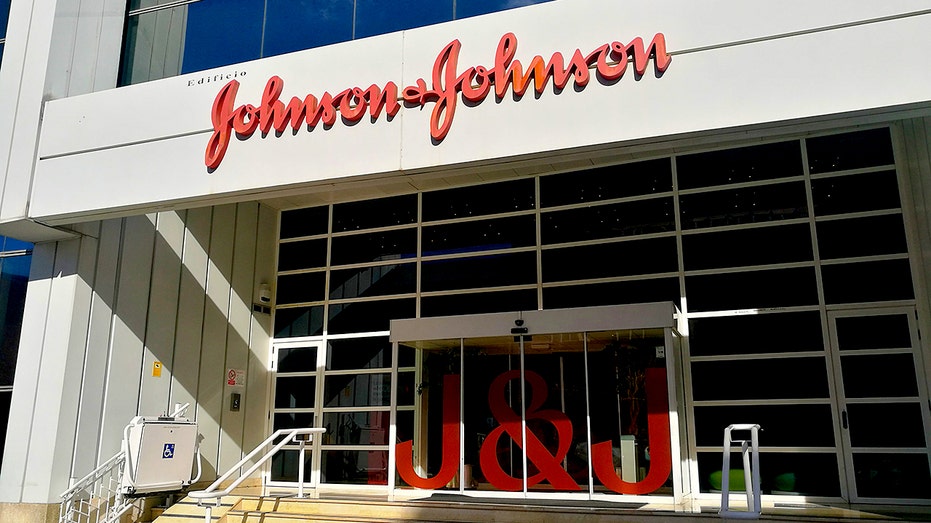
Johnson & Johnson’s investment is part of a previously announced $55 billion commitment. (Courtesy of Johnson & Johnson)

Pennsylvania Gov. Josh Shapiro, a Democrat, said that the announcement shows the state is a “powerhouse for innovation and manufacturing in the life sciences” and added that the Johnson & Johnson announcement shows that companies “know we’ve got the strategy, the workforce, and the speed they need to succeed.”

“Pennsylvania leads in life sciences and advanced manufacturing because we consistently deliver what companies like Johnson & Johnson need to succeed: a skilled workforce, premier research institutions, and proven manufacturing strength,” said Sen. Dave McCormick, R-Pa. “This $1 billion-plus investment in a new Lower Gwynedd facility is a testament to that leadership and will produce life-changing treatments for patients, along with new and good jobs for our Commonwealth.”

GET FOX BUSINESS ON THE GO BY CLICKING HERE

Advertisement

“Pennsylvania is a leader in healthcare innovation with some of the very best health care workers. Proud to see this more than $1 billion investment into Montgomery County and our Commonwealth,” said Sen. John Fetterman, D-Pa. “Bringing new jobs, advanced manufacturing, and life-saving medicine to and for our communities is always something to celebrate.”

Continue Reading

Business

Oil rises to six-month high on concern over potential US-Iran conflict

Published

on

Oil rises to six-month high on concern over potential US-Iran conflict


Oil rises to six-month high on concern over potential US-Iran conflict

Continue Reading

Business

Why Warsh Won’t Be Remembered for Cutting Rates

Published

on

Why Warsh Won’t Be Remembered for Cutting Rates

Why Warsh Won’t Be Remembered for Cutting Rates

Continue Reading

Business

Ingredion homes in on clean label, private label

Published

on

Ingredion homes in on clean label, private label

Growth drivers in spotlight at CAGNY conference.

Continue Reading

Business

Bernie Sanders and Robert Reich attack billionaire class for greed ‘addiction’

Published

on

Bernie Sanders and Robert Reich attack billionaire class for greed 'addiction'

Sen. Bernie Sanders and former Labor Secretary Robert Reich are escalating their attacks on America’s wealthiest individuals, accusing the “billionaire class” of suffering from an “addiction” to greed as they push aggressive new tax hikes in solidly Democratic states like California and New York.

“Governors Hochul and Newsom: Don’t worry about raising taxes on the rich. True, a few rich people may abandon New York or California if taxes on them are raised, but evidence suggests the vast majority will stay put,” Reich wrote in a Substack post on Wednesday.

Advertisement

“Never before in American history have we seen the kind of greed and arrogance and moral turpitude on the part of the ruling class that we see today,” Sanders said Wednesday evening on a Los Angeles stage, where the senator was speaking in support of California’s proposed wealth tax.

“These people suffer from an addiction problem,” Sanders continued. “Do you know what the most significant addiction crisis in America is today? It is the greed of the billionaire class. For these people, enough is never enough. They are dedicated to accumulating more and more wealth.”

REAL ESTATE EXPERTS BLAST MAMDANI’S MATH-DEFYING TAX PLAN, WARN OF HIGHER RENTS AND FLIGHT

Both California and New York are embroiled in their own tax debates: a proposal backed by the Service Employees International Union–United Healthcare Workers West would impose a one-time 5% tax on the net worth of California residents worth more than $1 billion. Meanwhile, New York City Mayor Zohran Mamdani issued an ultimatum for the state to tax the ultra-wealthy or face a “last resort” 9.5% property tax hike to plug a $5.4 billion deficit.

Advertisement
Split image of Bernie Sanders and Robert Reich

Sen. Bernie Sanders and former Labor Secretary Robert Reich have been outspoken in their support of proposed wealth taxes. (Getty Images)

The threat of higher taxes has resulted in numerous high-net-worth public figures fleeing — sometimes with their businesses — to lower-tax states like Florida and Texas, Fox News Digital has previously reported.

California Gov. Gavin Newsom has publicly opposed the tax proposition, while New York Gov. Kathy Hochul remains reluctant. Reich claimed the “kindest” reasoning behind their opposition is due to fears of wealthy taxpayers leaving — but the “unkind” reason “is that they’re in the pockets of said rich.”

“When billionaire New York mayor Mike Bloomberg faced a budget deficit in his first term, he raised property taxes by 18.5 percent. Rich New Yorkers threatened to leave. Most did not,” Reich wrote. “When Massachusetts passed its ‘millionaire’s tax’ in 2022, rich residents of the Bay State threatened to leave. They didn’t. Instead, the state has collected $5.7 billion in additional revenue, while the number of millionaires in the state has grown, according to a study by People’s Policy Project.”

“Why are the rich staying put, even though their taxes are being raised? Because they’re rich! They can afford to stay put… New York’s and California’s super-rich are richer than they’ve ever been; the wealth they’ve amassed is larger than any group of Americans has ever possessed; they don’t know what to do with all their money. The taxes they would pay under the proposals put forward are infinitesimally small, almost rounding errors, compared to their fortunes,” the former labor secretary added.

Sanders framed California’s tax landscape as more of a moral battle.

“The CEOs of large profitable corporations now make 350 times more than the average worker… Last year alone… the 938 billionaires in America became $1.5 trillion richer. I heard that there was a march here in California somewhere worrying about the plight of the billionaires. Well, I don’t think our hearts are going to go out too far,” Sanders said.

“The richest people in this country are doing unbelievably well. While the working class in America is going nowhere in a hurry,” he continued. “The whole concept of the tax on billionaires is more than economics, and it is more than tax policy… They see themselves as something separate and apart, like the oligarchs.”

Advertisement

GET FOX BUSINESS ON THE GO BY CLICKING HERE

Reich ultimately asks: Is California really that much worse off without Zuckerberg, Thiel, Page and others?

“Maybe raising taxes on the super-rich not only provides critically-needed tax revenue but also acts as a kind of disinfectant, purging a city or state of a few of its most noxious and socially-irresponsible inhabitants,” Reich wrote. “Another reason to do so!”

Advertisement

READ MORE FROM FOX BUSINESS

Continue Reading

Business

Amcor recycle-ready cheese packaging lightens carbon footprint

Published

on

Amcor recycle-ready cheese packaging lightens carbon footprint

Agropur switched to the packaging manufacturer’s AmPrima Plus to improve sustainability measurables.

Continue Reading

Business

U.K. Inflation Slows to 3.0% in January, Boosting Rate Cut Hopes

Published

on

U.K. Inflation Slows to 3.0% in January, Boosting Rate Cut Hopes

The U.K’s rate of inflation slowed in January, furthering the chances of a rate cut by the Bank of England when policymakers next meet in March.

Consumer prices rose 3.0% in January on year, compared with a 3.4% uptick in December, the Office for National Statistics said Wednesday.

Copyright ©2026 Dow Jones & Company, Inc. All Rights Reserved. 87990cbe856818d5eddac44c7b1cdeb8

Continue Reading

Business

(VIDEO) Samsung’s Galaxy S26 Series to Empower Users as Content Creators with Advanced Galaxy AI Tools

Published

on

Samsung Galaxy S26 Ultra

Samsung Electronics is set to unveil its next flagship smartphone lineup, the Galaxy S26 series, at Galaxy Unpacked on February 25, 2026, in San Francisco. The company has ramped up teasers emphasizing how Galaxy AI enhancements will transform ordinary smartphone users into effortless content creators through a unified, intuitive camera and editing experience.

Samsung Galaxy S26 Ultra

Samsung’s recent promotions highlight a “new Galaxy camera experience” that integrates photo and video capturing, editing and sharing into one seamless platform. This eliminates the need to switch between multiple apps or navigate complex software, making advanced creative tasks accessible to non-professionals.

Key teased features include:

  • Turning photos from day to night in seconds.
  • Restoring missing parts of objects in images with realistic fills.
  • Capturing detailed low-light photos and videos.
  • Merging multiple photos into a single, cohesive composition.
  • Generating personalized digital sticker packs from everyday photos, complete with varied poses and expressions for the same subject.
  • Transforming sketches or simple drawings into detailed image elements.
  • Prompt-based editing via text instructions, such as adding, removing or modifying objects.

These tools build on existing Galaxy AI capabilities like Generative Edit and Edit Suggestions but promise deeper integration and faster, on-device processing. Samsung credits its Edge Fusion technology—optimized through a partnership with Nota AI—for enabling rapid, privacy-focused generative AI directly on the device, reducing reliance on cloud servers and cutting generation times to seconds.

A series of short teaser videos released in mid-February demonstrate these functions in action. One clip shows a partially eaten cupcake restored to perfection; another converts a pet photo into a lively sticker set ready for messaging apps. Additional demos illustrate low-light video improvements and prompt-driven edits, where users describe changes in natural language for the AI to execute.

Samsung describes the updates as making creativity “faster, simpler and more natural.” The company positions the Galaxy S26 lineup as the “brightest Galaxy camera system ever,” combining hardware advancements—potentially including improved apertures and sensors—with software smarts to elevate mobile photography beyond basic capture.

Advertisement

The focus on content creation aligns with broader industry trends, where smartphones increasingly serve as all-in-one tools for social media, personal branding and casual filmmaking. By democratizing professional-level edits, Samsung aims to appeal to everyday users who want polished results without dedicated editing suites or skills.

The Galaxy S26 series is expected to include the standard Galaxy S26, Galaxy S26+ and the premium Galaxy S26 Ultra. While full specifications remain under wraps until Unpacked, rumors suggest refinements in design, performance and battery life alongside the AI-heavy camera push. Pre-order incentives include double storage upgrades for select variants and credits toward accessories.

The February 25 event, starting at 10 a.m. PT, will stream live on Samsung.com, the Samsung Newsroom and YouTube. Reservations are open, with perks like a $30 credit and sweepstakes entries for participants.

As AI becomes central to smartphone experiences, Samsung continues to expand Galaxy AI’s role across its ecosystem. The S26 teasers underscore a shift toward “personal and adaptive” intelligence that anticipates user needs and simplifies complex tasks.

Advertisement

Industry observers anticipate the event will further differentiate Samsung from competitors by emphasizing on-device AI for speed and privacy. With the launch just days away, excitement builds around how these tools could redefine mobile content creation for millions.

Samsung’s push positions the Galaxy S26 not just as a phone upgrade but as a creative companion empowering users to produce shareable, high-quality content instantly.

Advertisement
Continue Reading

Trending

Copyright © 2025