

Join Mikko Hyppönen and security leaders from the NFL, CHANEL, and Atlassian for a two-hour digital summit on what AI-speed attacks change, what defenders should stop doing, and how to validate, decide, fix, and re-validate at machine speed.
Tech
PlayStation Ditched Hideo Kojima's 'Physint' on Budget Concerns, Missed Deadlines


Sony reportedly pulled PlayStation funding from Hideo Kojima’s upcoming espionage game Physint over concerns about its ballooning budget, missed deadlines, profitability, and the fact that it would not remain permanently exclusive to PlayStation. Kojima Productions has since struck a deal with Xbox, which plans to publish the game on both Xbox and PC. It’s also secured film and television rights. Bloomberg reports: The new game, Physint, hasn’t yet been shown publicly but excited fans when it was announced two years ago with its promise of returning to the “espionage action” genre Kojima pioneered with Metal Gear Solid, the series that propelled him to industry stardom. Kojima surprised fans this week when he announced he would be publishing Physint with PlayStation’s biggest rival, Microsoft Corp.’s Xbox.
On Wednesday night, Kojima wrote on social media that over the summer his company had “unexpectedly received notice” that PlayStation was pulling out of funding the game. “Physint is an important project both to me personally and to Kojima Productions,” he wrote. “Determined to keep the project alive, we have spent the last three months searching tirelessly for a new partner.”
PlayStation also addressed the split on social media, saying it had made the “difficult decision to step away.” Microsoft said it was “honored” that Kojima chose Xbox and that the two teams plan to collaborate beyond games on films and television, too. […] The decision to part ways with Kojima is a significant move for PlayStation that may have ripple effects.
[…] One key factor is the PC platform, where the Death Stranding games have generated some revenue. Earlier this year, Sony decided it will no longer release single-player PlayStation games on PC, Bloomberg reported. Sony would therefore not benefit when Kojima Productions released a PC version of Physint on its own or with a different publisher, as it did for the first Death Stranding. But Xbox releases all of its games on PCs and plans to publish Physint on PC and Xbox, said the people. “Betting on Kojima-san is an easy call,” said an Xbox spokesperson. “We believe in his team’s ability to build AAA games with groundbreaking, new IP and we believe in OD, Physint, and our growing partnership.”


Read more of this story at Slashdot.
Continue Reading

Trezor has revealed that phishing attacks against its customers earlier this week targeted 347,000 email addresses and affected 2,500 users who clicked an embedded malicious link.
As Trezor warned on Wednesday, threat actors who breached Brevo, its third-party email provider, were emailing customers who opted in to receive newsletters.
According to customers targeted in this phishing campaign, they received fake “critical security alert” emails from help@trezor.io claiming that a “hardware microcontroller vulnerability” in Trezor cold storage wallets’ STM32 microcontrollers could expose their seeds to brute-force cracking.
The phishing emails tried to trick recipients into clicking a malicious link that prompted them to download an app that asked them to enter their wallet backup.
Trezor says that it took down the domain used in the phishing attacks within 20 minutes, disabling the link and limiting the campaign’s impact to 2,500 customers who had clicked it before it was taken down.
“On September 9, 2026, Brevo, the third-party marketing platform Trezor uses for newsletter campaigns, suffered a security incident affecting 120 Brevo accounts. An unauthorized actor gained access to Brevo’s system and used it to send emails from various customer accounts, including Trezor’s,” the company said.
“The incident affected our opt-in newsletter database, roughly 347,000 email addresses. These addresses might be potentially used for other phishing attacks in the future. No other Trezor system was touched. We have suspended the Brevo account to stop further email distribution.”
In January 2024, Trezor disclosed another data breach after its third-party support ticketing portal was hacked and attackers stole data (including names, usernames, and email addresses) from roughly 66,000 users.
Trezor also disclosed a data breach last month after threat actors hacked ShipMonk, its logistics and shipping provider, using a critical Metabase SQL injection zero-day vulnerability, and stole customers’ order data, including full names, shipping addresses, email addresses, and phone numbers.
While Trezor initially said the incident affected nearly 14,000 customers, a follow-up investigation found that the resulting breach affected an additional 67,000 U.S. customers, bringing the total to 81,000 individuals.
The company said that the incident also affected customers in Brazil, Colombia, Italy, Portugal, Sweden, and the United Kingdom who received orders between May 10 and August 8, 2026.
Since then, BleepingComputer also learned that ShipMonk received extortion emails from the ShinyHunters extortion gang following the breach.

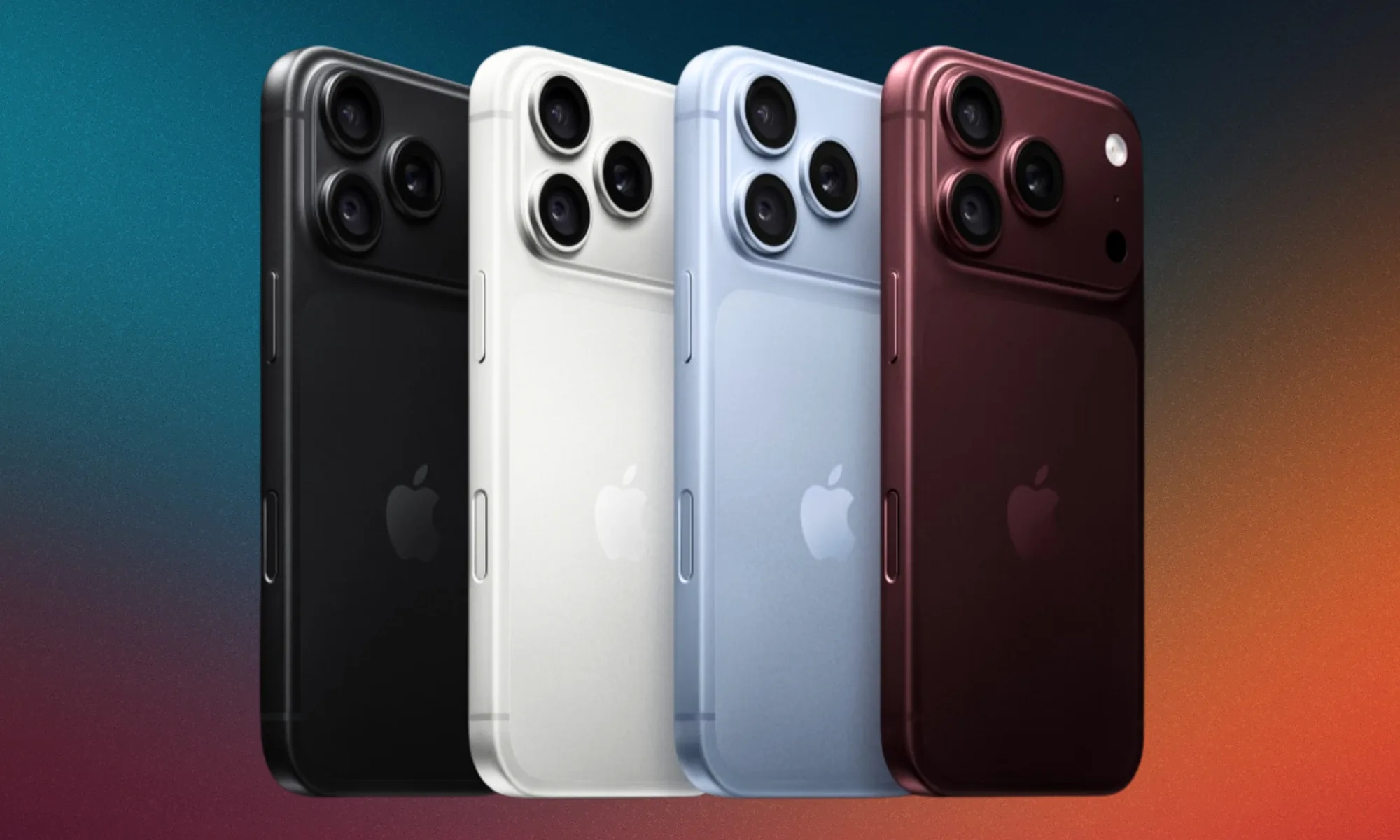
The iPhone Duo is probably the most visually different iPhone Apple has made in years, which should make it feel like some kind of reset. Instead, the weirdest thing about it is how quickly the novelty wears off.
Maybe that’s because we’ve spent so long staring at slightly improved slabs that any change in shape now registers as more significant than it actually is. The Duo folds. First time for an iPhone. It also feels oddly familiar for something that’s supposed to represent the next phase of one of the most important consumer products ever made.
I keep looking at it and thinking that maybe the smartphone industry has finally reached the point where moving the furniture around counts as renovation.
Why the shape had to change
For years, smartphone makers kept improving the same basic object: faster chips, better cameras. Bezels shrank until there was almost nothing left to shave off.
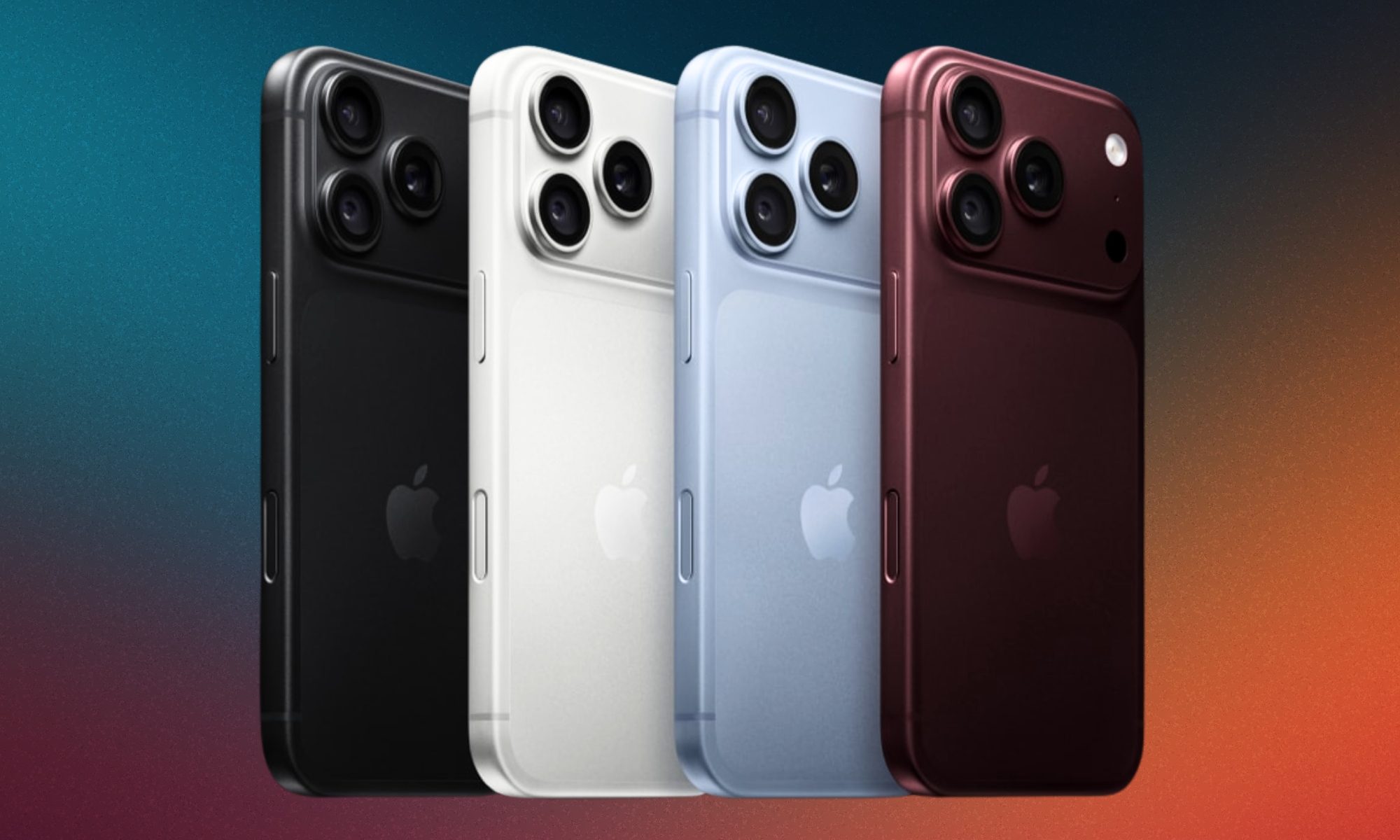
All of that was useful, but fewer upgrades actually changed what using a phone felt like. My phone today does roughly the same things my phone did several years ago. It just does them faster, with a nicer screen and better photos of my cat.
The Duo feels like Apple acknowledging that problem without ever having to say it. Refining the slab stopped looking like progress, so the slab now folds.
What makes that more interesting is who got there first. Samsung unveiled the first Galaxy Fold in 2019. Apple waited seven years, long enough for Samsung to reach its eighth generation while Huawei and Honor kept pushing on hinges and durability.
Apple once defined the shape everyone else spent years chasing. With foldables, it’s entering a category other companies already spent years making thinner, less fragile, and eventually normal enough to stop looking experimental.
Samsung can lose a foldable customer to Apple and still have one of its businesses supplying the screen that made the sale possible.
And yes, folding displays are genuinely impressive pieces of engineering. But changing the shape has become more valuable partly because everything happening inside the shape has become harder to make exciting.
A folding screen solves that immediately. You can see the difference from across the room. You don’t need a benchmark chart or a camera comparison. The product itself announces that something has changed.
Whether anything important changed with it is another question.
Two ecosystems, one supply chain
This gets even stranger once Samsung enters the picture.
Apple and Samsung are still treated as opposing camps. You pick one ecosystem, argue about cameras and software, then spend the next five years pretending your choice was obviously correct.
But underneath all of that branding, the hardware industry is much messier. Samsung Display is reportedly the exclusive supplier of the Duo’s folding OLED panel, and Apple is said to be paying around $250 for each one. So every time Apple sells its $1,999 answer to the Galaxy Z Fold, part of that money is effectively flowing back into the Samsung empire.
That doesn’t mean Samsung makes the Duo, and the reported $250 is component revenue rather than pure profit. But it does make the rivalry feel a little more theatrical. Samsung can lose a foldable customer to Apple and still have one of its businesses supplying the screen that made the sale possible.
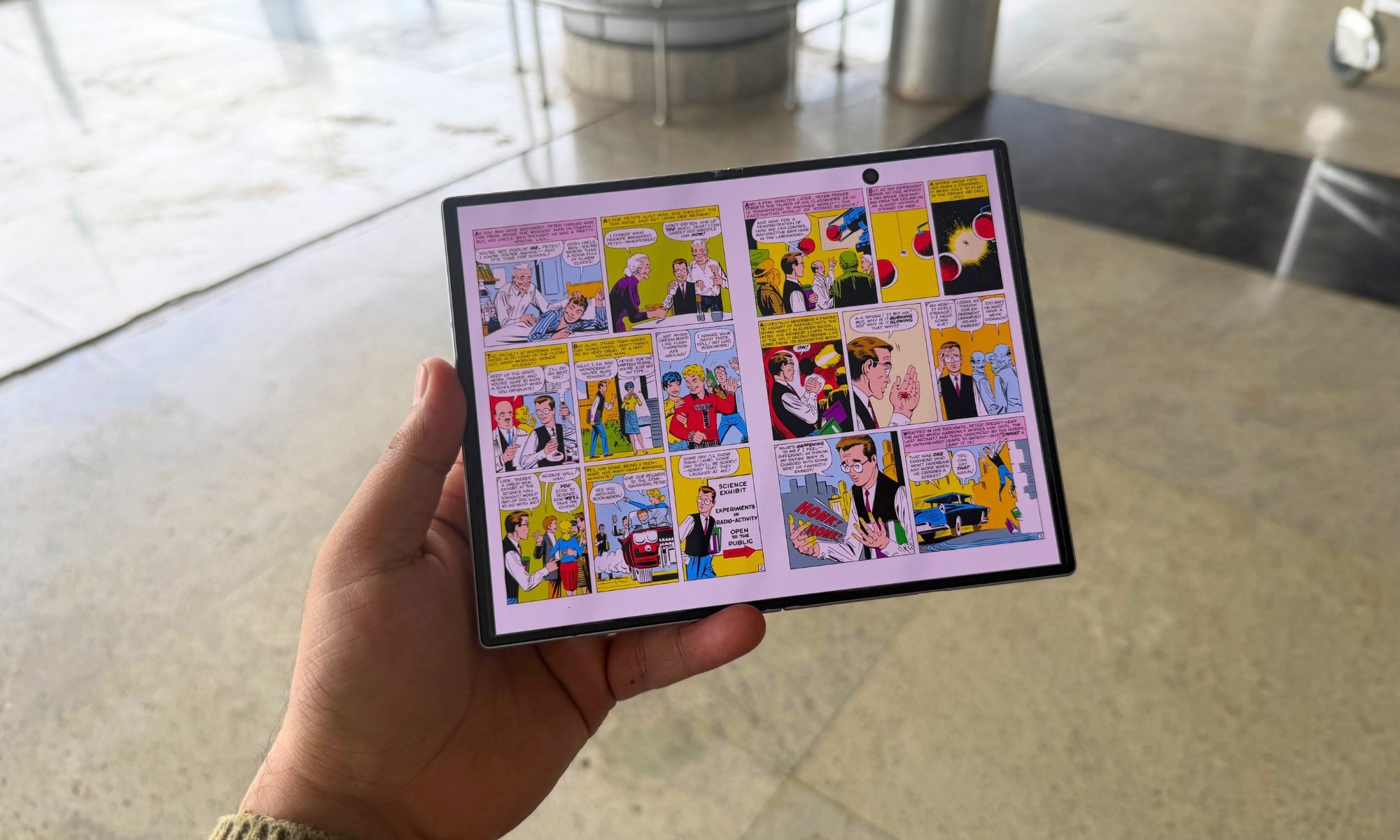
It gets stranger still when you look at the phones themselves. Samsung is also selling a foldable with a very similar short-and-wide shape of its own, which makes the idea of two completely different visions of the future harder to take seriously.
Both companies are solving many of the same problems inside the same industrial ecosystem, and the answers are starting to converge. You can pick your operating system, your cameras, and whichever corporate ecosystem annoys you least, but the farther down you look, the more those competing futures start sharing the same plumbing.
At some point, it starts feeling less like choosing between different ideas of what comes next and more like choosing who gets to put their logo on it.
Innovation now has a cover charge
Then Apple asks $1,999 for the privilege. The number makes a lot more sense once you stop looking at the Duo as an experiment and start looking at the market Apple is walking into.
China is already one of the most important foldable markets in the world. IDC put Huawei’s share of foldables sold there at 60 percent as of the first quarter of 2026, which tells you how thoroughly the category was already built out before Apple showed up. The same research firm expects the Duo to take something like a fifth of global foldable unit sales in its first year, but more than a third of the category’s total dollar value, because nobody else is charging $1,999 for one.
Samsung, Huawei, and everyone else already spent years proving foldables can work. Apple showed up once the category was mature enough to make serious money.

The normal smartphone is now so good, so predictable, and so difficult to meaningfully screw up that novelty has migrated upward. The boring slab is the sensible purchase. The interesting version costs two grand.
We’ve spent years complaining that smartphones had become boring, and apparently the answer wasn’t to make phones strange again. It was to make strange phones luxury products.
Experimentation is still happening. It just costs extra now, and comes with a financing plan. Apple arrived after the category had been stress-tested, and after the hardest questions had already been answered by somebody else.
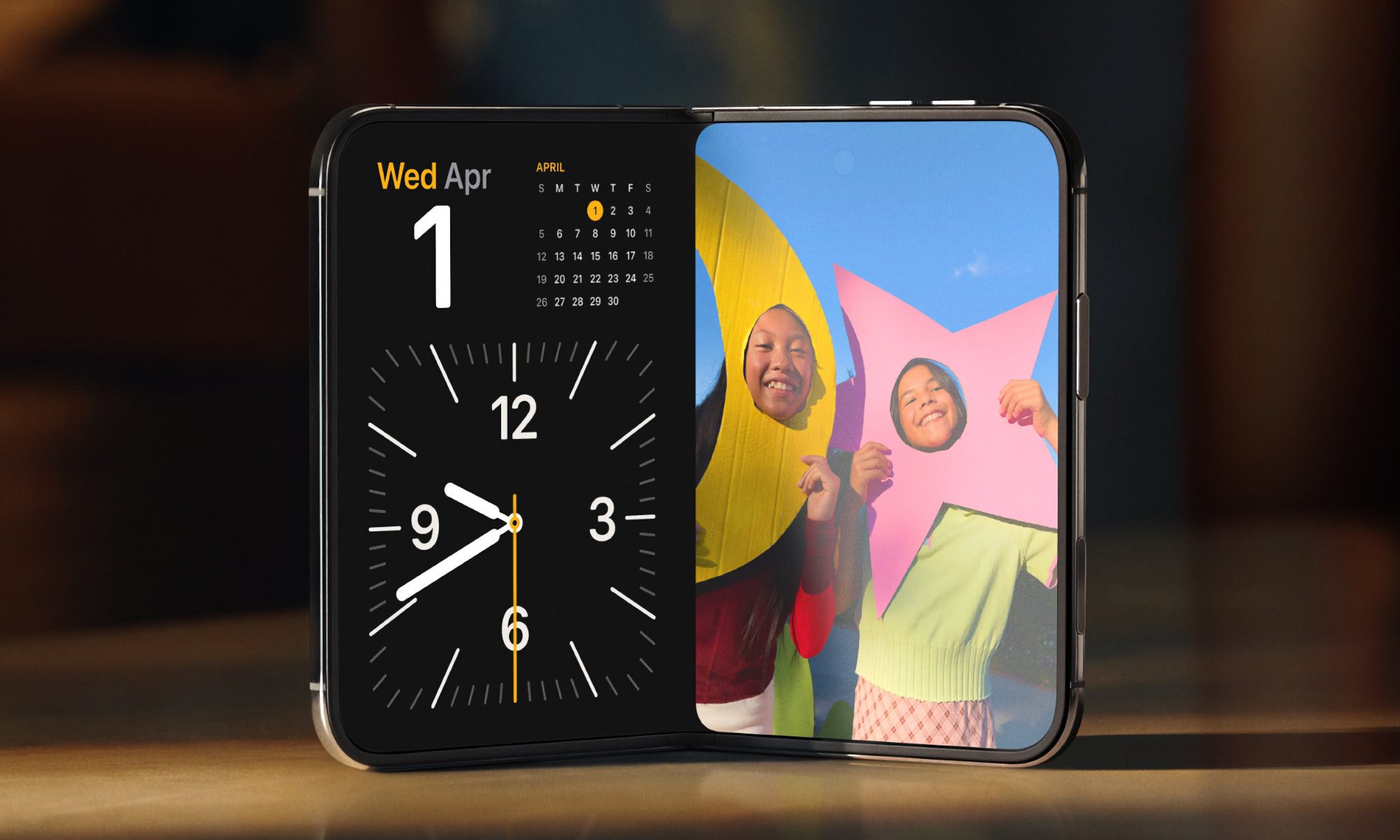
The Duo could be excellent. It could even make folding phones feel normal in a way previous devices never managed.
But I remember that back in 2007, Apple took the risk and everyone else scrambled to catch up. This time, other companies did the risky part first, and Apple bravely showed up once the numbers made sense.
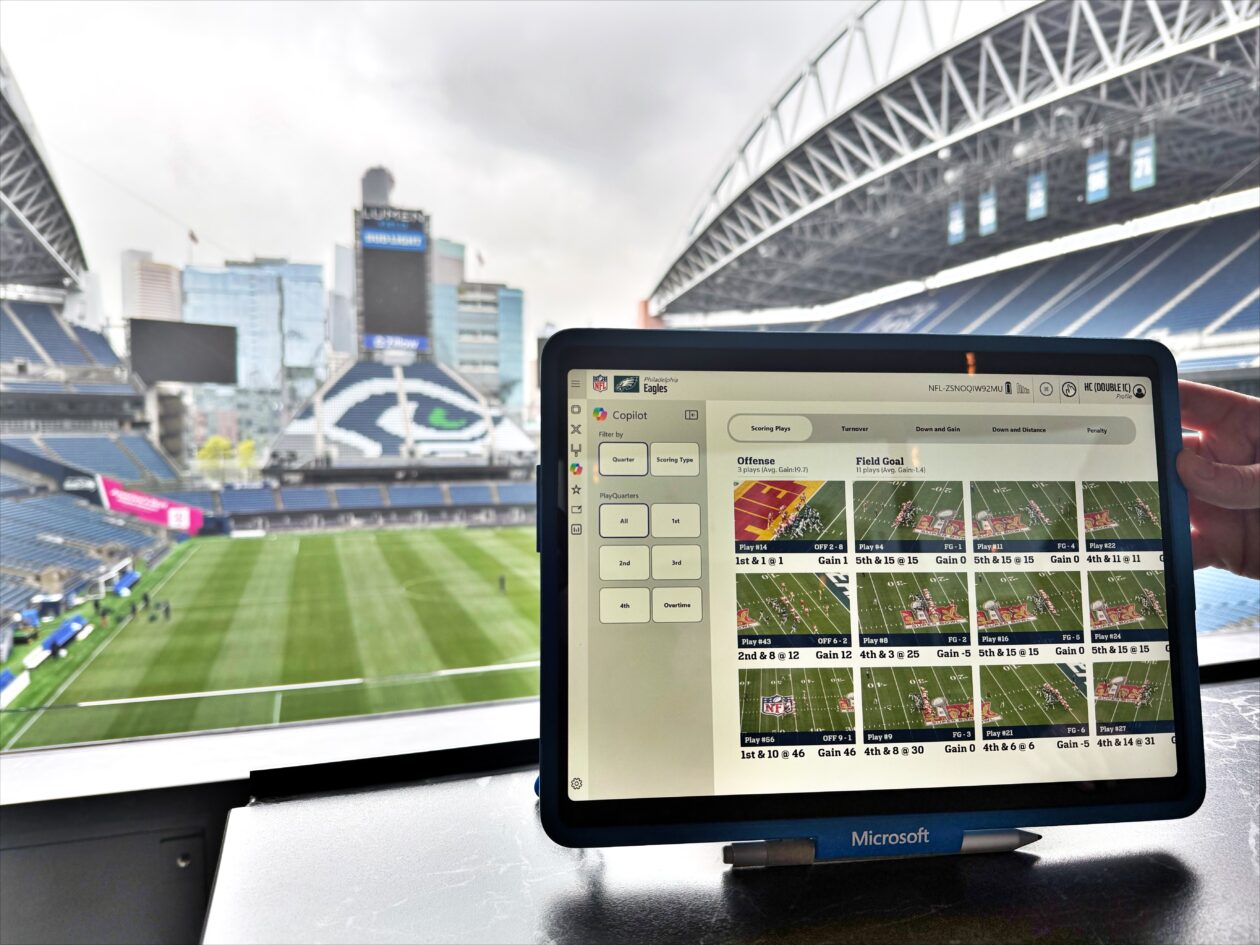
The Microsoft Surface tablets on NFL sidelines — a game-day fixture since 2014 — got a close-up on national television Wednesday night, with NBC highlighting new AI-powered workflows debuting in the Seattle Seahawks’ season opener.
During the broadcast, NBC play-by-play announcer Mike Tirico pointed out the new Surface devices — clad in Action Green cases, no less — in the Seattle coaches’ box above Lumen Field.
@media (max-width: 600px) {
aside.callout { float:none !important; max-width:100% !important; margin-left:0 !important; margin-right:0 !important; }
aside.callout .callout-img { display:none !important; }
}
Tirico said Seattle head coach Mike Macdonald’s staff, including Brian Eayrs, the director of football analysis and special situations, now has direct access to Microsoft Copilot in real time. The broadcast showcased how the AI assistant is being layered onto sideline hardware to deliver instant data insights and help coaches make faster strategy adjustments.
“They can make sharper calls between series,” Tirico said. “So Copilot is going to give them a little bit more of an opportunity to do some real-time stuff on these tablets as the season goes on.”
It all amounted to a pretty good 40-second ad placement for Microsoft. Coupled with mentions of Next Gen Stats — powered by Amazon Web Services — it was a good night for Cloud City tech giants.
The technology and Eayrs are also featured in a video that Microsoft CEO Satya Nadella shared on X earlier in the day.
GeekWire got an early look at Microsoft’s expanding tech suite back in April during a demonstration at Lumen Field. While the rugged Surface tablets on the sidelines remain the most visible hardware, Microsoft showed how Copilot is being integrated deeper into coaching workflows — from custom pre-game templates to running real-time analyses on formation tendencies, snap counts, and player load mid-game.
The core promise of the tech isn’t replacing human judgment — it’s raw speed. In a booth setup like Eayrs’, dedicated analysts use a real-time Excel dashboard that ingests live play-by-play data directly from the NFL. Using Copilot, they can instantly query formation tendencies or player usage metrics on the fly without building complex formulas by hand during the game.
The output from the booth can then be communicated down to the sideline, where coaches and players review still photos and quick situational data on their handheld tablets between drives.
To maintain competitive integrity, the NFL strictly regulates how and when these devices operate.
Under league rules, sideline and booth tablets run on a closed, league-controlled network with no internet access or custom third-party apps allowed. The hardware is locked away by league officials until right before kickoff, collected immediately after the game, and monitored under the NFL’s “Equity Rule.”
@media (max-width: 600px) {
aside.callout { float:none !important; max-width:100% !important; margin-left:0 !important; margin-right:0 !important; }
aside.callout .callout-img { display:none !important; }
}
If one team’s tech setup fails, the opposing team’s access is restricted or paused to ensure neither side gets an unfair advantage.
The willingness to embrace real-time AI lines up directly with Macdonald’s overarching coaching philosophy.
Macdonald, who previously welcomed being called a “football nerd,” told GeekWire last year that his approach is all about “old school principles, new school methods,” emphasizing that earlier data delivery helps drive better decisions.
“I think it’s cool to be into stuff that is high-tech, data-driven,” Macdonald said at the time. “You’re telling me you’re smart and you’re trying to find edges and trying to find new frontier — that’s cool to me. It sounds like a winning formula.”
Macdonald, who has a Super Bowl ring to show for his coaching style, also called himself a “psycho data guy” who needs “numbers and tendencies” in another interview last year.
Did Copilot and AI provide an edge on Wednesday night?
Macdonald and his analytics team will have to answer to that, but the Seahawks defense certainly made the ultimate call when it mattered most — sealing a 13-10 victory over the New England Patriots with a last-second interception.


Kosmic spent another long session mapping leftover oddities in Versus Super Mario Bros., the 1986 arcade cabinet that copies most of the original NES game while changing a few rules, timers, and memory habits. Growing a vine in the wrong place after a death still queues an extra plant for the next screen. Near the top of any vine Mario loses control and auto-climbs; that state leaves a flag set so the next transition (death works best) sprouts a second vine wherever the surviving player happens to stand.
Two player mode transforms the flag into a delivery system, similar to a ticking time bomb. One player enters a land level like 5-2, snatches a hammer from a Hammer Brother who is barreling toward them, and then immediately meets their doom. Then the control switches, and boy, does the residual vine cause havoc. It decides to grow in whatever water stage the second player is in, whether it’s 2-2, 7-2, or even the dreaded Minus World. Water stages are where things get a little messy because the game starts spitting out a lot of bubbles. Now the game is attempting to initialize them in a tiny array intended solely for sprite slots 0 through 2, but the extra vine in slot 5 interferes, overwriting the low byte of the reference that informs the game where to look for enemy spawn data.
Sale

LEGO Super Mario: Mario Kart – Mario & Standard Kart Building Set for Adults – DIY Book Shelf & Room…
- HERE WE GO! – Speed down Rainbow Road with the LEGO Super Mario: Mario Kart – Mario & Standard Kart (72037) collectible building set for adults…
- DYNAMIC DISPLAY STAND – Position Mario at dramatic racing angles to recreate that perfect drift moment or high-speed action from your favorite Mario…
- POSEABLE MARIO FIGURE – The brick-built Mario features movable head and arms, letting you customize his racing pose for the ultimate display

That’s when all hell breaks loose, since tile data from a previous globe is suddenly interpreted as an enemy list. So in 2-2, you’ll find bouncing Cheep-Cheeps everyplace, enormous fire bars, platforms that delete water tiles as they move, invisible items, and even Spinys that fly away at warp speed as soon as that scroll-stop object disappears. 7-2 is where you’ll discover the Lakitu that shoot fireworks, extra fire bars, and things that hide just beneath the water’s surface. Meanwhile, in the Minus world, you’ll find Koopas and fire bars that wouldn’t ordinarily exist.

One of the objects in 2-2 has an ID that essentially confuses the processor and causes it to tamper with the PPU registers. What’s strange is that it’s difficult to achieve a consistent result. Emulators and the Switch Arcade Archives port will continuously produce chaos: scores over 36 million, and parts of new geography never seen before, replete with adversaries and flagpoles never drawn by the original creators. Then there are instances when it simply reboots. Real arcade boards, on the other hand, prefer to hold leftover values in unused RAM rather than just filling it with zeros, so the same series of button presses can result in a variety of issues, such as confused graphics, a warp to 4-1, or even a full refusal to play.

100th_Coin identified the exact sequence of register crashes that resulted in the disaster, but Kosmic then mapped the same sequence onto original hardware, flashcarts, and official re-releases to see how far the corruption traveled. Then there’s Versus Super Mario Bros., which had years ago tweaked the timers to run faster and clamped down on some of those pesky warps, but the vine still finds the unused enemy initialization code and unused memory pages that its 1986 creators never imagined anyone would ever reach. Forty years later, the same small vine that previously only led to Coin Heaven is now writing new levels all over an original cabinet that was never designed to handle them.
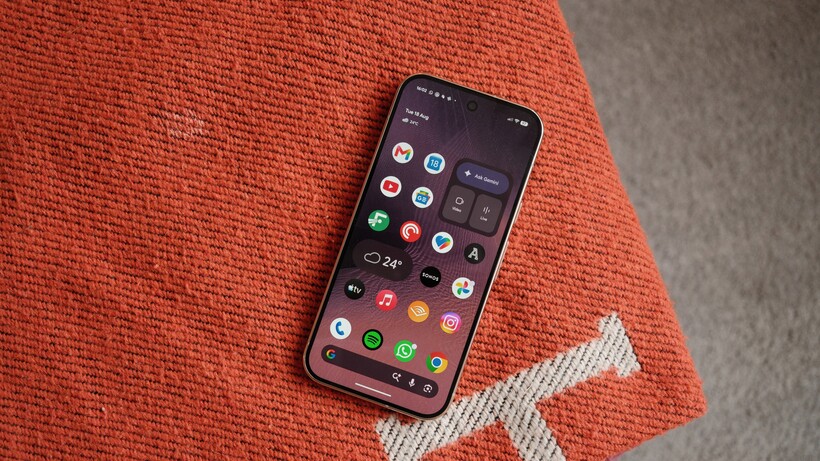
Apple has unveiled its latest iPhone 18 Pro, and we’re keen to see how its specs compare to the Pixel 11 Pro.
Although we’re currently yet to get our hands on the iPhone 18 Pro, we’ve compared its specs against the four-star Pixel 11 Pro and highlighted the key differences between the two smartphones.
Read on to see what really separates the iPhone 18 Pro from the Pixel 11 Pro, and decide whether you think the new iPhone will join our best smartphones round-up.
For more on Apple’s recent launch, check out our iPhone 18 Pro vs iPhone 18 Pro Max and iPhone 18 Pro vs iPhone 17 Pro comparisons.
Specs Comparison Table
| iPhone 18 Pro | Google Pixel 11 Pro | |
| Battery | Up to 29 hours | Up to 30 hours |
| Chipset | A20 Pro | Tensor G6 |
| Rear Cameras | 48MP + 48MP + 48MP | 50MP + 48MP + 48MP |
| Screen Size | 6.3-inch | 6.3-inch |
| Colours | Deep Black, Silver, Glacier, Burgundy | Canyon, Olive, Fog, Obsidian |
| UK RRP | £1199 | £1079 |
Price and Availability
The iPhone 18 Pro, alongside the larger Pro Max, will be available for pre-order from September 12th ahead of the official launch from September 18th. Available in a choice of four colours including Deep Black, Silver, Glacier and Burgundy, the iPhone 18 Pro has a starting RRP of £1199/$1199.
SQUIRREL_PLAYLIST_10208764
In comparison, the Google Pixel 11 Pro is readily available to buy now and starts at a cheaper £1079/$1099. Like the iPhone 18 Pro, it also comes in a choice between four colours including Canyon, Olive, Fog and Obsidian.
SQUIRREL_PLAYLIST_10208683
A20 Pro vs Tensor G6
Both phones run on chips made by their respective manufacturers. That means the iPhone 18 Pro runs on Apple’s own A20 Pro while the Pixel 11 Pro is powered by Google’s Tensor G6 processor.
Google never priorities speed and power with its Tensor chips and favours AI prowess instead. That means although the Pixel 11 Pro saw pretty low scores in our benchmark tests, it performs well in everyday use – though it does struggle with gaming.

Apple has introduced its A20 Pro chip within both the iPhone 18 Pro and 18 Pro Max, alongside the iPhone Duo which is the company’s first foldable. Hailed as Apple’s fastest ever iPhone chip, the processor sports a 6-core CPU that’s deemed the fastest of any smartphone, a 7-core GPU that promises 40% faster graphics compared to last year’s A19 Pro and a new Dual 16-core neural engine for running on-device AI models.
With all of this in mind, Apple promises the A20 Pro is a “powerhouse” for everything from on-device AI workloads and demanding games too. While we’re yet to review the chip ourselves, its specs certainly seem like a more promising choice for those who want more power. Of course, we’ll be sure to update this versus once we review the iPhone 18 Pro.

Pixel 11 Pro introduces the HiLight feature
There’s no getting around the fact that smartphones are incredibly distracting devices. You’ll unlock your phone to reply to one message, but then see all your other notifications across multiple apps vying for your attention. That’s where Google’s new HiLight tool comes in.
HiLight is essentially coloured LED lights that are built around the Pixel 11 Pro’s flash, that’ll glow when you receive a phone call or when you start speaking to Gemini. It’s not dissimilar to Nothing Phones, which get you to keep your phone face down but uses its Glyph lights to keep you updated with important notifications.

While right now HiLight seems somewhat basic, Google has promised that we’ll see new features added to HiLight over time, including message notifications.
Pixel 11 Pro has a 50MP main lens, but the iPhone 18 Pro has an industry-first main lens with variable aperture
Pixel Pro and iPhone Pro handsets usually find their way onto our best camera phones list, as both Google and Apple offer excellent hardware and image processing capabilities.
Both handsets are equipped with three rear cameras, including a main, ultrawide and dedicated telephoto sensors, but they differ with their exact offerings. The Pixel 11 Pro sports a 50MP main alongside a 48MP ultrawide and 48MP telephoto, and overall we found the phone to be a reliable shooter – even at night when the lighting drops.

Hardware aside, where the Pixel 11 Pro shines best is with its Gemini-infused software which includes tools like Camera Coach to advise you on how to improve your picture and Magic Capture that analyses 400 frames of the same shot to capture the best possible image.
In comparison, the iPhone 18 Pro is fitted with three 48MP lenses – though the headline camera is undoubtedly its main. Hailed as Apple’s most advanced camera ever, the 48MP Fusion main camera is fitted with a variable aperture that automatically adjusts for lighting and depth of field.
There are also Pro controls that allow you to customise your shooting experience, from manually adjusting the aperture or shutter speed to changing the photographic styles too.

Apple Intelligence or Gemini Intelligence
Since its inception back in 2024, Apple Intelligence hasn’t taken off like we thought it would. In fact, two years on, the AI-powered toolkit still feels like an afterthought. However with iOS 27 Apple promises Apple Intelligence will see much-needed improvements and tweaks, from its photo editing tools to its writing assistance. Perhaps the headline update here is Siri AI, which promises to be a complete overhaul of Apple’s voice assistant, for a more conversational and reliable experience.
In comparison, Google’s Gemini Intelligence is easily one of the most reliable AI toolkits found in a smartphone. Sure, it shouldn’t be the reason you choose the Pixel 11 Pro, but there’s so many Google AI tools that can genuinely come in handy. For example, there’s Circle to Search which now allows you to make multiple searches at once, Google’s photo editing suite and, of course, access to the voice assistant Gemini.

Both roughly promise the same amount of battery
Battery life has never been a selling point of either iPhone or Pixel phones, especially when compared to phones like the Xiaomi 17 Ultra which has a 6000mAh cell. Even so, Apple promises that the iPhone 18 Pro will see up to 23 hours of typical use – though we’ll have to wait and see for ourselves.
We found that on days with around five or six hours of screen time, the Pixel 11 Pro’s battery would be depleted by 10pm, while other days would need a top-up in the evening to get through. Fortunately it supports PixelSnap which means you can conveniently top the phone up on the go.
Early Verdict
Realistically, choosing between the iPhone 18 Pro and Pixel 11 Pro will boil down to your existing ecosystem. For example, if you own AirPods, an Apple Watch or even a Mac, then the iPhone makes much more sense than the Pixel 11 Pro.
If you do have more flexibility, then choosing between the two will come down to your own preferences. So, if you want more power, a phone that promises to cope with demanding games and a camera with variable aperture, then the iPhone 18 Pro seems a brilliant choice. On the other hand, if you favour AI smarts and want one of the confirmed best camera phones on the market, then the Pixel 11 Pro is an easy recommendation.
We’ll update this versus once we review the iPhone 18 Pro.

FIRST LOOK Dell’s UltraSharp 52 display is a joyously enormous head-turner, but probably too much monitor for most users.
Dell debuted the display at the CES show earlier this year. It’s now on sale for $3,000.
Sadly, I lack a PC capable of driving the screen at its full 6144 x 2560 resolution and 120 Hz refresh rate. Even at a miserly 3840 x 2160, however, I often marveled at how much it could display. Consider the screenshot below, which shows 50 columns and 89 rows of a single Excel spreadsheet – 4,450 cells in total.

Here’s another look at the monitor in full flight: a screen grab of Zwift, the virtual cycling metaverse I visit regularly as part of my exercise routine. At that size, Zwift felt more immersive and enjoyable than it does on a smaller screen. The display also handled motion smoothly during Zwift. other games, and streamed video.

Getting used to it
It took me a while to appreciate the monitor. When I first plugged it in, my occasionally-stiff middle-aged neck strained as I swiveled to view content at the edges and corners, while wielding my mouse to move its pointer between the screen’s extremities felt like flapping my arms.
My eyes didn’t enjoy the experience at first either. I wear mild reading glasses while working, and found myself repeatedly refocusing as I looked across the curved display.
For the first few days I spent with the screen, I therefore practiced “pillarboxing” – running the display at 3840 x 2160 and only using the center of the monitor while pixels on the edges remained dark. That didn’t feel odd or distracting, perhaps because I often use “letterboxing” while watching video on my TV or tablet – leaving pixels at the top and bottom of the screen unused.
As I grew accustomed to the enormo-monitor, I began using its entire area. Getting there was not straightforward: each of the three PCs I used with the monitor (one at a time, not together) required manual adjustment before I found a resolution that did not distort text and images.
Dell’s companion app was no help. It was slow to install, ran as if stuck in digital treacle, and is little more than a glorified front end for the Windows System/Display control panel.
The HDMI connection to my desktop – an Acemagic mini-PC – repeatedly dropped out, forcing me to reseat the cable every day. The same PC and cable work reliably with my everyday monitor. I tried another cable and the problem persisted. I reached out to Dell, who suggested my two different cables were to blame.
I connected my laptop – a Dell Inspiron Plus 7441 – over Thunderbolt and experienced some flickering that went away without needing to reseat the cable. A ten-year-old ThinkPad Carbon X1 connected fine over HDMI, but had even more trouble finding appropriate settings.
But once I got the machine going and got used to its colossal size, my initial fatigue vanished. I realized I was squinting a little less than I do with my everyday display, a seven-year-old 32-inch Samsung that lacks the HDR feature the Dell machine includes.
I sometimes use my lunch breaks to watch some rugby highlights, and the display handled those with ease. The easily observable nuances of small ads on team shirts would doubtless please sponsors.
I was also pleasantly surprised by the display’s speakers, which rendered my favorite tunes brightly and crisply. My current high rotation tunes include guitar feedback legends The Jesus and Mary Chain, spiky garage pop from Welsh outfit The Bug Club, and mumbly “power disco” by Getdown Services. JAMC’s trademark fuzz was warm and deep, I felt like I could hear new strings on The Bug Club’s guitars, and Getdown Services’ beats thumped meatily.
The speakers’ location at the rear of the monitor led to a few “Where’s that sound coming from?” moments, but those quickly became tolerable.
Weighty issues
I was impressed by Dell’s packaging, which places the cables and included stand in clearly marked cardboard compartments within the shell protecting the screen. That matters because the box is a whopper that would be difficult to lug out of an IKEA and into a small car. Easy access to the assembly parts means a little less wrestling.
At 12.95 kg (28.5 lbs), the monitor isn’t problematically heavy – but is maybe too weighty for Dell’s stand, as it never sat perfectly level, and I could find no way to straighten it. The screen is also unwieldy: I recommend connecting any cables you plan to use in advance, because shifting and lifting it to access its ports is not easy, especially in constricted spaces behind a desk.
Tucked under the monitor’s bottom-left edge is a forward-facing USB hub with two USB-C ports and one USB-A port. Making one of them a Thunderbolt port would have made it easier to connect a laptop without rummaging behind the beast.

I finished my time with this giant display convinced that it is a lovely machine, but not one I need, as my work consists mostly of writing and editing text and browsing the web. Those who work with visual material may adore its size and the immersion created by its gentle curve. Many of Dell’s promotional images show the device displaying multiple financial data feeds. The company pitches it as a replacement for four smaller monitors, requiring only one power cable and dispensing with a complex collection of stands.
That seems like a more sensible use of the screen than everyday knowledge work.
To finish, here’s one more photo. I started working from home in 2002 but had no room to dedicate to an office. I therefore splurged about $700 – big bucks at the time – on a 15-inch, 1024 x 768 Dell 1503FP LCD monitor so that a CRT did not dominate my lounge room.
It still works, although when the time came to take this snap, I couldn’t find the HDMI-to-VGA adapter I use to fire it up.
Here it is anyway, posed in front of its giant descendant to offer some historical perspective on how monitors have grown. ®


On Wednesday, investigative reporter Daniel Boguslaw detailed how security officials at Anthropic, the creator of Claude AI, are engaging in monitoring and surveillance, including reporting AI activists to police for potential future crimes.
The report, published in The American Prospect, comes amid the well-known Anthropic-Pentagon standoff, in which the AI company has feuded over how the military deploys mass-surveillance tools and fully autonomous weapons. Anthropic lost several lucrative government contracts in the process. Last week, after US Secretary of Commerce Howard Lutnick said Anthropic is “back on the right side,” a Pentagon official disputed the claim and said the company remains a “supply chain risk.”
Anthropic told CNET via email that it disagreed with Boguslaw’s piece, saying the headline and framing were inaccurate. “Anthropic is not — and has never said it is — ‘building a predictive surveillance system to monitor activists.’ This is a physical-security function focused on keeping our employees safe, the same as any large company with a global workforce.”
Drawing from postings and interviews with senior security officials at Anthropic, Boguslaw’s report lays out how the AI company is tracking activists who oppose the rapid development of AI near “physical Anthropic assets.” In July, the AI company also told The Wall Street Journal that it made routine reports to police departments about threats against employees, and monitored behavior in an effort to “catch escalation patterns early.”
It all ties together with a recent Anthropic job posting for an “enterprise intelligence specialist,” which describes the role as identifying, tracking and investigating “global threats including geopolitical instability, terrorism, crime, activism, nation-state targeting of the AI sector, and emerging security trends.”
Anthropic did not dispute the wording of the job posting, but said the inclusion of “activism” in the list was just “one of many threat categories a security team monitors for employee-safety purposes.”

As the backlash over AI ramps up — especially around data centers and automated license plate readers like Flock — the trend of predictive policing also continues to grow. Dubbed “precrime” in sci-fi movies like Minority Report, this kind of crime forecasting has become increasingly integrated into police departments. Algorithmic software and AI tools analyze historical crime data, arrest records and individual “risk scores” to preemptively target criminal activity.
In Anthropic’s case, the company has access to vast amounts of data through its Claude AI chatbot and other intelligence-gathering tools, leading it to report individuals to the police while refusing to share proof of threats or wrongdoing, according to The San Francisco Standard. Also, as Reddit users quickly noticed, Anthropic updated its privacy policy this summer to make it easier to share conversation data with police on its own determination, rather than waiting for a court order.
These reports allege that Anthropic could be bypassing standard legal protocols, not only by reporting “precrimes” without due process but also by withholding evidence from law enforcement.
‘Precogs are never wrong, but occasionally they do disagree’

While today’s AI companies don’t have telepaths in a vat (we don’t think), they do have something similar to rely on — powerful AI agents that can glean personal details in the blink of an eye. Because artificial intelligence models process vast streams of user inputs, it’s virtually impossible for us to know how much of our personal data is harvested. And that’s not the only worrying part. Once that information enters the system, we lose control over where it ends up and who ultimately consumes it.
Anthropic has ways of tracking content in the various versions of Claude AI, sometimes to disastrous results, like broadcasting shared chatbot conversations on Google. Claude was reported to have been secretly monitoring Chinese users this summer, and its agents have also gained unauthorized access to the system data of various private organizations.
The question is over how much access Anthropic’s AI has to social media, forums and similar platforms. Current versions of Claude appear unable to gather data from private accounts, though they can from publicly available social profiles. Likewise, if an email account is directly connected to Claude with opt-in permissions, Anthropic could scrape that data for training and other purposes. Couldn’t that info theoretically be used to track activists and dissidents?
Anthropic’s latest September 2026 threat intelligence report shows how it monitors Claude to detect “malicious activity” like “influence operations, surveillance, scams and fraud.” The company says it has an obligation to disclose such risks to make AI models safer.
But the company’s interactions with law enforcement and the findings in Boguslaw’s report raise questions about where Anthropic, a private company, will draw the line between malicious activity and mere anti-AI activism.


Rockstar Games’ best-selling Grand Theft Auto series wasn’t often accused of political sensitivity during its legendary run from the late 1990s through the early 2010s.
In fact, parents and activists denounced the franchise for exposing children to a seedy world of sex, violence, crude humor, and wanton crime. Elon Musk even claimed that he couldn’t get into the last installment, GTA V, because he was mortified to play as a character who shoots police officers.
But times (and moral panics) change. In the 13 years that fans have waited for Grand Theft Auto VI—finally out on November 19—the American right-wing grievance machine has drifted from fears of impressionable kids turning to a life of larceny to concerns that they will grow up “woke.” And despite knowing very little about the forthcoming game, the agitators of the latter movement have decided it must amount to a stealth campaign to poison the youth with depictions of gender equality, LGBTQ acceptance, and racial diversity. (Rockstar did not immediately return a request for comment.)
Since the height of Gamergate in 2014, an angst-ridden subset of male gamers have maintained a paranoid vigil against what they see as the creeping influence of women and LGBTQ developers in the gaming world. Between the feverish anticipation for GTA VI and the various delays of its release date, they’ve had ample opportunity to foment a preemptive backlash to what is sure to be a massive hit, not unlike the failed furor over supposedly “woke” elements of Christopher Nolan’s The Odyssey.
“GTA 6 is a humiliation ritual for all male gamers,” an X user with the handle @Wokenessisevil complained on Tuesday, sharing a clip of the game’s two lead characters, Lucia Caminos and Jason Duval, who are in a relationship that evolves based on the player’s choices. In the scene, Lucia, the series’ first mandatory female protagonist, asks Jason to pick an outfit for her and expresses mild annoyance when he seems more or less indifferent to the options she presents.
It’s an exchange that could have been lifted from any sitcom of the past 50 years, yet it seems to have fueled a reactionary narrative about the game’s male protagonist being subjugated to a nefarious feminist agenda. Another X user recently claimed, contrary to the clip’s bog-standard depiction of a heterosexual couple, that Jason has a “gay vibe,” since no straight man would know what sequins are or use the word “cocktails,” as he does in the clip.
“The script is definitely written by a woman who has no clue what a man thinks or how he talks,” they wrote. “Jason is written as a caricature, much like what a delusional woman thinks a ‘man’ should be.”
Similarly, a gaming YouTuber seethed that Rockstar was appealing to women and gay men by showing Jason shirtless in another scene. “Gone are the days of edgy based masculine GTA games,” he wrote on X. “I could be wrong but right now it’s looking like it will be a woke fest.”
While multiple leaks and a 27-minute “extended look” preview on Netflix have revealed key details of the game, and Rockstar creatives declared their intent to realistically portray the diversity of the Miami-inspired setting and bring a fleshed-out female character into the spotlight, would-be detractors are still straining a bit for reasons to pronounce it dead on arrival. One YouTuber has convinced himself that it will subliminally brainwash players with “bisexual lighting.”
Last week, Google announced that it managed to produce a detailed 3D reconstruction of an adult male fruit fly’s brain and central nervous system. A few days later a software engineer at Coinbase said the fly brain was being trained to play the original Doom. “Each Doom frame stimulates sensory neurons,” says Alex Wormuth. “Neural activity is mapped to game controls. Damage triggers a stimulus to two PPL101 dopamine cells as reinforcement.” Since then, the digital brain model has been repurposed to control other games like Beat Saber and Super Mario 64. PC Gamer reports: You can even watch the fruit fly play in real time via Wormuth’s website, and it not only shows the point of view in Doom, but can also show a third-person render of the fly going around Doom maps. As of the time of writing, the fly is on round 6385 and, well, it’s not very good. Sorry, fly.
But modders aren’t done here. They have also somehow managed to make the fruit fly play Beat Saber, and play it pretty well. Lyra Bubbles on X has used the brain and replays of a song in Beat Saber to teach the fruit fly where to hit and why, via Reinforcement Learning. That does mean it’s not organically reacting to the notes popping up on screen, but it is receiving input and responding to stimuli. Lyra says, “Further training is to reduce reliance on external signals and allow it to play fully reactively with no input data.”
And, after “pivoting to fly engineering in 2026”, Jessica Paquette also shared on X their experience running the digital fly brain through Super Mario 64. If you think that is all the game’s modders made the fruit fly play, think again, as YouTuber Ro0oney even put it in Minecraft. But this time, Ro0oney used Flywire.AI, a similar project made in collaboration with Princeton University. The number of neurons are different (160,000+ vs 139,255), and Google analyzed a male brain whilst Flywire analyzed a female brain, but the basic idea is the same.
Read more of this story at Slashdot.

OFFBEAT
Information is not forthcoming from this screen
BORK!BORK!BORK! We still don’t know what caused the air traffic control mayhem in the UK in early September, but one information board at Luton Airport appears to have gone out in sympathy.
Spotted by Register reader Mark, the digital sign usually shows passenger information. Today, however, it looks like either the system clock is wrong or someone has forgotten to renew a server certificate.
It’s not the usual “DNS. It’s always DNS,” but not far off.

For those blissfully unaware, the UK’s air traffic control system has had a bad week. A glitch in National Air Traffic Services (NATS) resulted in thousands of flight cancellations and travel disruption for around 330,000 passengers. And it appears whoever is running this information board at Luton has done the computing equivalent of “anything you can do I can do better.”
Luton Airport is a base for the likes of Ryanair and easyJet. Its logo looks like someone was playing Tetris when they were asked to dream up the branding, and it celebrated 5.5 million passengers passing through over the summer.
The airport was not spared the chaos, along with many others, but the good news is that our reader’s flight departed on time, and a delicious, cold adult beverage was waiting at the destination.
For others wondering what has become of their flight, it’s good to see that the information boards are already in another time zone, or whoever is responsible for keeping the server certificate valid has taken a well-earned vacation.
Nobody really needed that information anyhow, did they? ®

Business29 seconds ago
Ciena: AI-Driven Networking Demand Supports The Buy Case

Crypto World1 minute ago
Stock Market Funds Rebound In August And Snub Bonds

Sports3 minutes ago
Ohio State vs. Texas odds, picks, prediction, betting preview for huge Week 2 college football matchup

Tech4 days ago
Memory prices are slowing because buyers ran out of money

Business2 days ago
Micron Stock Climbs Above $1,031 as AI Memory Crunch and a $50 Billion Outlook Fuel the Rally

Business2 days ago
AMD Stock Climbs After Management Lifts 2027 Data Center Outlook Toward $70 Billion in AI Sales


-
Tech4 days ago
Memory prices are slowing because buyers ran out of money
-
 Business2 days ago
Micron Stock Climbs Above $1,031 as AI Memory Crunch and a $50 Billion Outlook Fuel the Rally
-
 Business2 days ago
AMD Stock Climbs After Management Lifts 2027 Data Center Outlook Toward $70 Billion in AI Sales
-
 Crypto World4 days ago
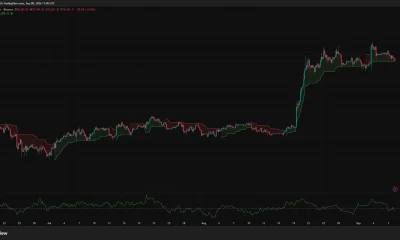
Bitcoin price risks $76K drop as $78K support weakens
-

 Crypto World4 days ago
Robinhood Stock: How To Take Advantage With Reduced Risk
-
 Crypto World4 days ago
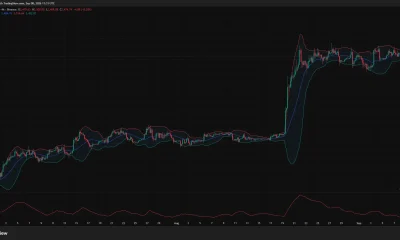
Ethereum price stalls below $2,500 as ADX drops to 11
-

 NewsBeat4 days ago
England up in reading, maths and science rankings as Scotland and Wales dip
-

 Crypto World2 days ago
OKX launches 10x OpenAI, Anthropic X-Perps in Europe
-
 Crypto World2 days ago
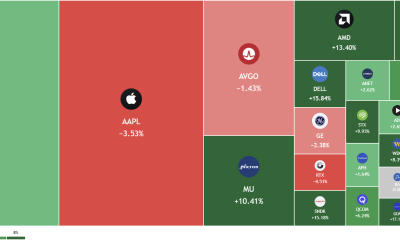
2 Chip Stocks Broke Out This Week. Neither Was Nvidia
-
 Crypto World4 days ago
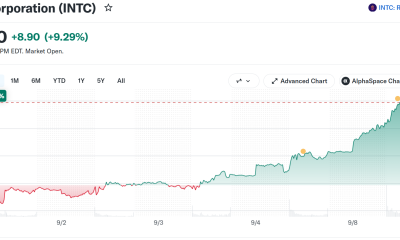
Intel Stock Jumps 9% on Chip Price Hike Report, US Stake Gains $36 Billion
-

 NewsBeat4 days ago
What went right this week: an ‘historic’ fall in violent crime, plus more
-
 Crypto World3 days ago
Bitcoin price risks $70K if $78K neckline breaks
-

 Business3 days ago
Meta debuts long-awaited personal AI agent, Muse
-

 Fashion19 hours ago
Weekend Open Thread – Corporette.com
-

 Crypto World1 day ago
Diesel Tops $6 a Gallon for the First Time as 28 States Set Records
-

 Crypto World1 day ago
XAG/USD: Silver’s Short-Term Rally Meets Its Moment of Truth
-
 Crypto World3 days ago
Bitcoin price holds near $79K as cycle drawdowns narrow
-
Crypto World2 days ago
Ethereum Price Analysis: Consolidation at $2.5K Tests Momentum as On-Chain Activity Surges
-

 Crypto World4 days ago
Pump Fun and Kraken delete Hunter Biden $LAPTOP promotion
-
 Sports4 days ago
Phones confiscated, players sent home: Pakistan’s England tour turmoil revives memories of Mohammad Amir, Salman Butt and Mohammad Asif’s 2010 Lord’s spot-fixing scandal | Cricket News
You must be logged in to post a comment Login