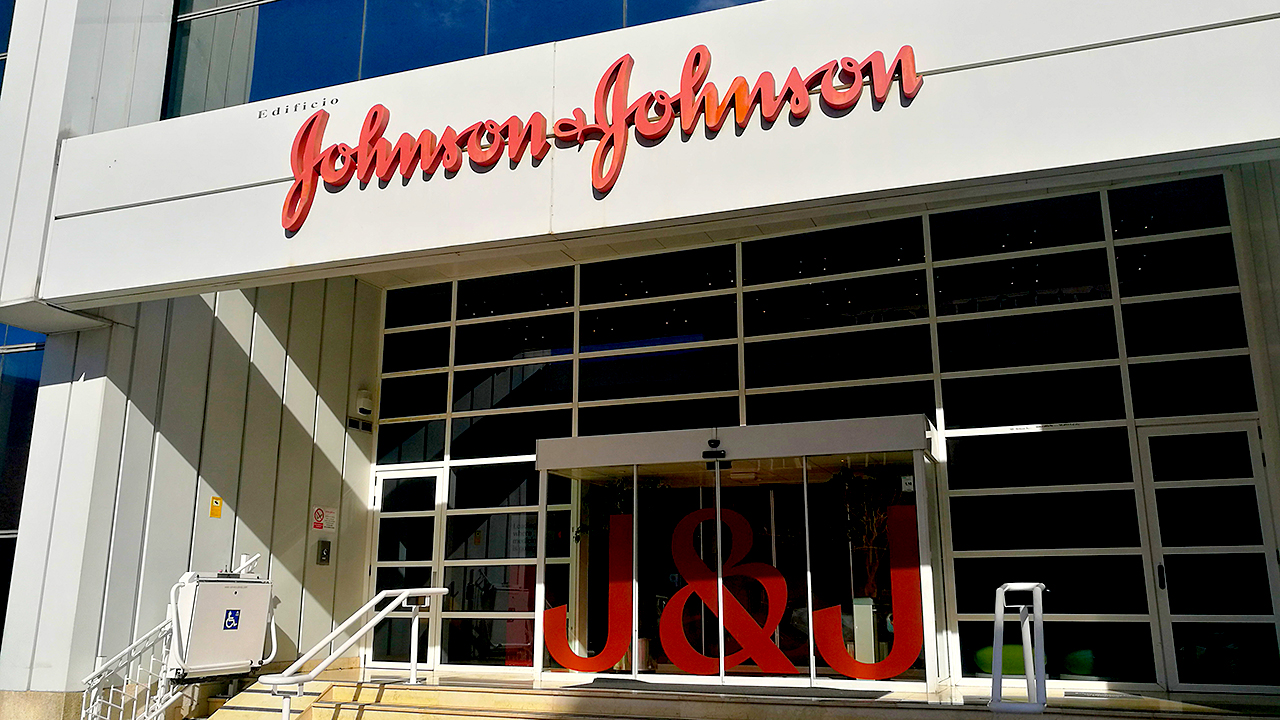
Johnson & Johnson executive vice president and CFO Joseph Wolk discusses the companys performance and President Donald Trumps healthcare agenda on The Claman Countdown.
Johnson & Johnson on Wednesday announced plans to invest more than $1 billion in a next-generation manufacturing facility that will produce advanced cell therapy technologies.
The facility will be located in Montgomery County, Pennsylvania, and Johnson & Johnson said the move will expand its U.S. manufacturing capacity along with its pipeline of transformational medicines for cancer, immune-mediated and neurological diseases.
Advertisement
Johnson & Johnson added that the facility will have cutting-edge manufacturing processes and support over 500 skilled biomanufacturing jobs once its fully operational, as well as over 4,000 construction jobs during its construction.
“For 140 years, Johnson & Johnson has been a leading innovator in American healthcare, and we are honored to continue advancing that legacy in Pennsylvania,” said Johnson & Johnson CEO Joaquin Duato.
Johnson & Johnson announced plans to invest $1 billion in a new gene therapy manufacturing facility in Pennsylvania. (Cristina Arias/Cover/Getty Images)
“By uniting scientific excellence with state-of-the-art manufacturing and strategic investment, and by working collaboratively with our communities, we are delivering for patients and creating significant opportunities for workers and families,” Duato added.
Advertisement
The $1 billion investment in the new cell therapy manufacturing facility comes as part of the company’s previously announced plan to invest $55 billion in manufacturing, research and development, and technology in the U.S. through early 2029.
Johnson & Johnson noted that the facility will deepen its presence in Pennsylvania, which it said has an economic impact of about $10 billion annually.
The company has 10 facilities covering over 2 million square feet in the Keystone State. Johnson & Johnson has manufacturing, research, distribution and office operations in Pennsylvania.
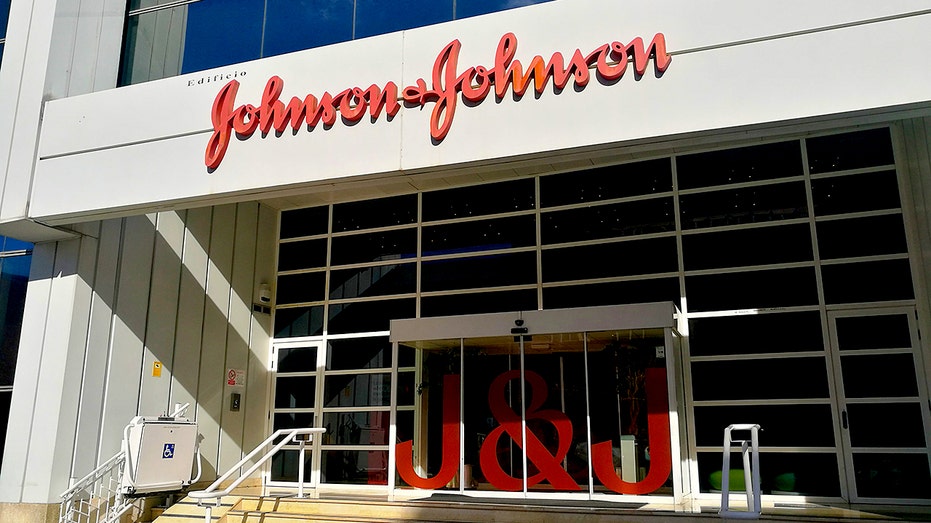
Johnson & Johnson’s investment is part of a previously announced $55 billion commitment. (Courtesy of Johnson & Johnson)
Pennsylvania Gov. Josh Shapiro, a Democrat, said that the announcement shows the state is a “powerhouse for innovation and manufacturing in the life sciences” and added that the Johnson & Johnson announcement shows that companies “know we’ve got the strategy, the workforce, and the speed they need to succeed.”
“Pennsylvania leads in life sciences and advanced manufacturing because we consistently deliver what companies like Johnson & Johnson need to succeed: a skilled workforce, premier research institutions, and proven manufacturing strength,” said Sen. Dave McCormick, R-Pa. “This $1 billion-plus investment in a new Lower Gwynedd facility is a testament to that leadership and will produce life-changing treatments for patients, along with new and good jobs for our Commonwealth.”
“Pennsylvania is a leader in healthcare innovation with some of the very best health care workers. Proud to see this more than $1 billion investment into Montgomery County and our Commonwealth,” saidSen. John Fetterman, D-Pa. “Bringing new jobs, advanced manufacturing, and life-saving medicine to and for our communities is always something to celebrate.”
Arbitrage Trader, aka Denislav Iliev has been day trading for 15+ years and leads a team of 40 analysts. They identify mispriced investments in fixed-income and closed-end funds based on simple-to-understand financial logic.
Denislav leads the investing group Trade With Beta, features of the service include: frequent picks for mispriced preferred stocks and baby bonds, weekly reviews of 1200+ equities, IPO previews, hedging strategies, an actively managed portfolio, and chat for discussion. Learn more.
Analyst’s Disclosure: I/we have no stock, option or similar derivative position in any of the companies mentioned, and no plans to initiate any such positions within the next 72 hours. I wrote this article myself, and it expresses my own opinions. I am not receiving compensation for it (other than from Seeking Alpha). I have no business relationship with any company whose stock is mentioned in this article.
Seeking Alpha’s Disclosure: Past performance is no guarantee of future results. No recommendation or advice is being given as to whether any investment is suitable for a particular investor. Any views or opinions expressed above may not reflect those of Seeking Alpha as a whole. Seeking Alpha is not a licensed securities dealer, broker or US investment adviser or investment bank. Our analysts are third party authors that include both professional investors and individual investors who may not be licensed or certified by any institute or regulatory body.
| Revenue of $56.43M (8.48% Y/Y) beats by $220.50K
Medallion Financial Corp. (MFIN) Q4 2025 Earnings Call February 19, 2026 9:00 AM EST
Company Participants
Andrew Murstein – CEO, President, COO & Non-Independent Director Anthony Cutrone – Executive VP & CFO
Advertisement
Conference Call Participants
Mike Grondahl – Northland Capital Markets, Research Division Christopher Nolan – Ladenburg Thalmann & Co. Inc., Research Division
Advertisement
Presentation
Operator
Good day, and welcome to the Medallion Financial Corp. Fourth Quarter 2025 Earnings Conference Call. [Operator Instructions] Please note this event is being recorded.
I would now like to turn the conference over to Val Ferraro, Investor Relations. Please go ahead.
Advertisement
Unknown Executive
Thank you, and good morning. Welcome to Medallion Financial Corp.’s Fourth Quarter and Full Year 2025 Earnings Call. Joining me today are Andrew Murstein, President and Chief Executive Officer; and Anthony Cutrone, Executive Vice President and Chief Financial Officer.
Certain statements made during the call today constitute forward-looking statements. Such forward-looking statements are subject to both known and unknown risks and uncertainties that could cause actual results to differ materially from such statements. Those risks and uncertainties are described in our earnings press release issued yesterday and in our filings with the SEC.
Advertisement
The forward-looking statements made today are as of the date of this call, and we do not undertake any obligation to update these forward-looking statements. In addition to our earnings press release, you can find our fourth quarter supplement presentation on our website by visiting medallion.com and clicking Investor Relations. The presentation is near the top of the page.
With that, I’ll turn it over to Andrew.
Andrew Murstein CEO, President, COO & Non-Independent Director
Advertisement
Thank you, and good morning, everyone. 2025 marked a record year for Medallion with solid performance across our core financial metrics and operating segments. As compared to the fourth quarter and full year 2024, we reported increases in
FOX Business’ Jeff Flock joins ‘Mornings with Maria’ live from Austin, Texas, showcasing 3D-printed homes.
Mortgage rates dropped this week to the lowest level since September 2022, mortgage buyer Freddie Mac said Thursday.
Freddie Mac’s latest Primary Mortgage Market Survey, released Thursday, showed the average rate on the benchmark 30-year fixed mortgage fell to 6.01% from last week’s reading of 6.09%.
Advertisement
The average rate on a 30-year loan was 6.85% a year ago.
The average rate on the 30-year fixed mortgage fell to 6.01% this week, Freddie Mac said. (Ty Wright/Bloomberg via Getty Images)
“This lower rate environment is not only improving affordability for prospective homebuyers, it’s also strengthening the financial position of homeowners,” said Sam Khater, Freddie Mac’s chief economist. “Over the past year, refinance application activity has more than doubled, enabling many recent buyers to reduce their annual mortgage payments by thousands of dollars.”
The average rate on a 15-year fixed mortgage fell to 5.35% from last week’s reading of 5.44%.
Mortgage rates are affected by several factors, including the Federal Reserve and geopolitics. Though mortgage rates are not directly affected by the Fed’s interest rate decisions, they closely track the 10-year Treasury yield. The 10-year yield hovered around 4.08% as of Thursday afternoon.
“This dip from 6.09% last week follows a notable slide in the 10-year Treasury yield, which hit its lowest point since late November 2025 after last week’s softer-than-expected CPI reading and a relatively optimistic jobs report,” said Realtor.com senior economist Jake Krimmel.
Advertisement
The average rate on a 15-year fixed mortgage fell to 5.35% from last week’s reading of 5.44%. (Mike Blake/Reuters)
Krimmel also said that the lower rates are setting the stage for the spring homebuying season.
“There is a chance to be nearly a full percentage point lower than that this spring, which would meaningfully boost purchasing power,” he said. “However, the supply side remains mixed: new construction in 2025 finished behind 2024, and inventory growth has clearly lost steam.”
Krimmel noted, however, that if the mortgage “lock-in effect” doesn’t ease, lower rates could reignite competition in the market and lead to a spike in prices.
O’Leary Ventures Chairman Kevin O’Leary joins ‘Varney & Co.’ to weigh in on California’s proposed billionaire tax, the growing wealth exodus from blue states and why America is falling behind China in the AI power race.
“Shark Tank” investor Kevin O’Leary tore into California Democrats as “terrible managers” over a proposed billionaire wealth tax Thursday, urging state residents to fire their leaders and “hire somebody else.”
“Why don’t the people of California say, ‘We have terrible managers?’” O’Leary asked on “Varney & Co.”
Advertisement
“They never talk about why expenses are going up, why they should cut government. Their services aren’t any better than what I’m getting here in Miami, and we control these things. We have better managers, so get the whacking stick out and do the right thing. Hire somebody else.”
The criticism comes as California lawmakers weigh a one-time 5% tax on residents worth more than $1 billion, a proposal that would apply to individuals who lived in the state as of Jan. 1 and could come due next year, FOX Business’ Connor Hansen reported.
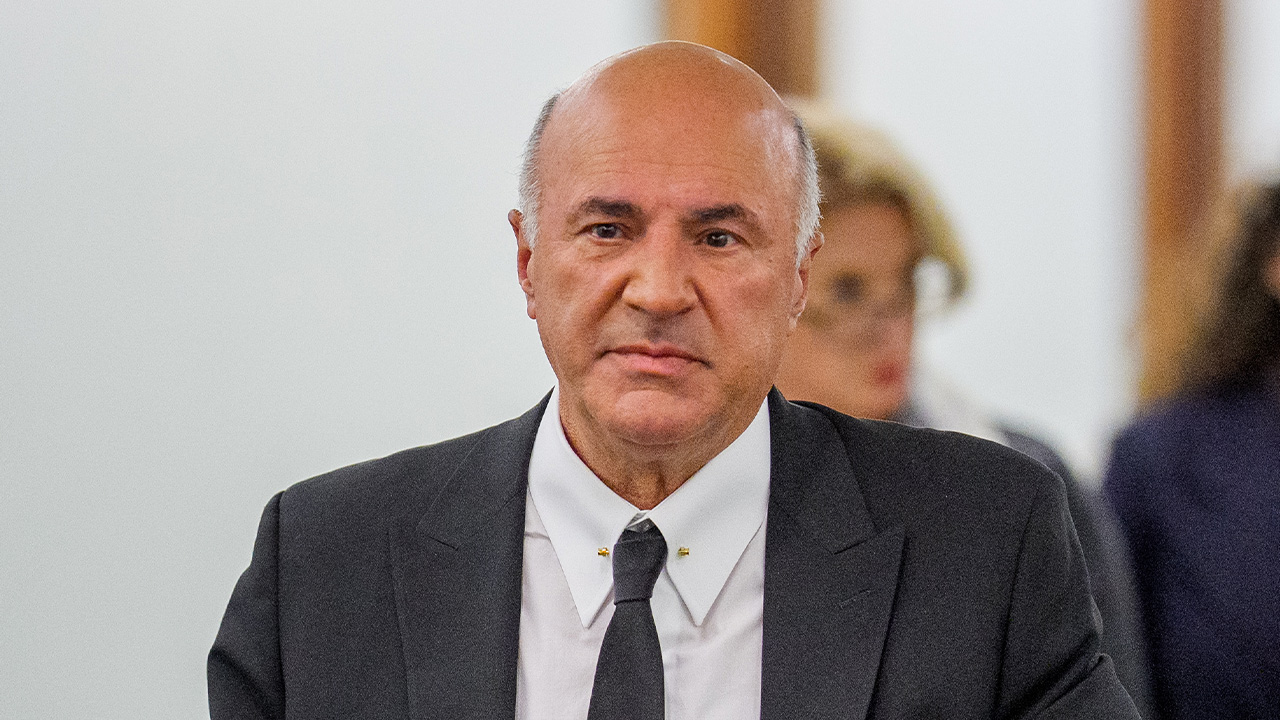
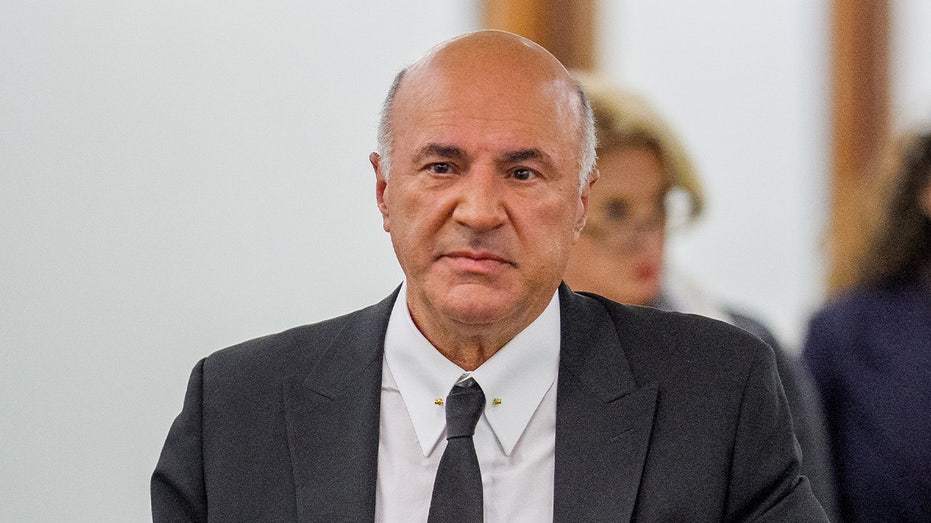
Kevin O’Leary, chairman of O’Leary Ventures, arrives to speak before the Senate Committee on Aging and the House Select Committee on the Chinese Communist Party joint hearing April 9, 2025, in Washington, D.C. (Andrew Harnik/Getty Images / Getty Images)
Supporters of the measure argue it would generate tens of millions of dollars for public programs such as healthcare and education, but opponents warn the levy could force billionaires to liquidate assets or unwind companies to cover the bill, accelerating an exodus of high-net-worth residents and entrepreneurs.
Advertisement
O’Leary said the outcome is already visible.
“When you basically start taxing people for success, it’s un-American,” he said.
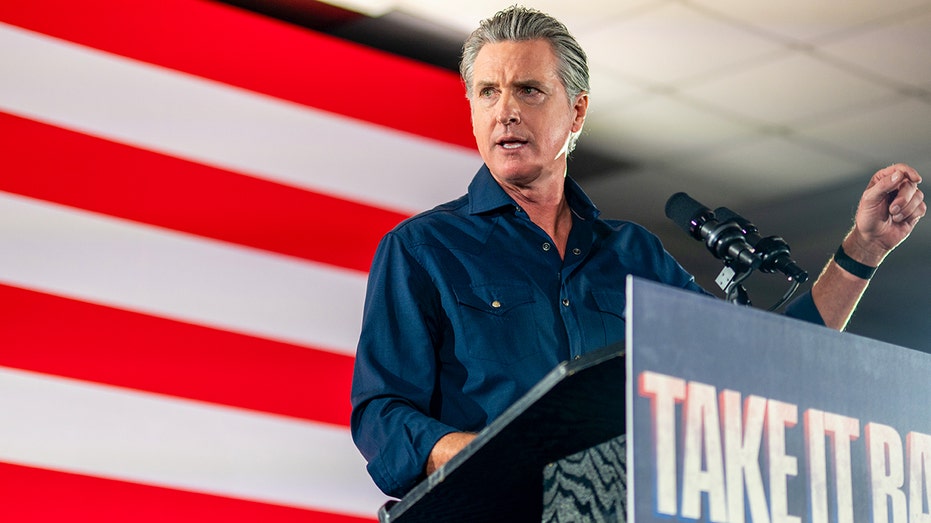
California Gov. Gavin Newsom speaks during a rally Nov. 8, 2025, in Houston, Texas. Newsom has warned about the negative implications the wealth tax course pose. (Brandon Bell/Getty Images / Getty Images)
“And, as the Constitution provides, competition of states, they move to places like where I am — Miami.”
Advertisement
The proposed measure even raised the eyebrows of California Democratic Gov. Gavin Newsom, who acknowledged the wealth tax is bad economics.
“The evidence is in. The impacts are very real — not just substantive economic impacts in terms of the revenue, but start-ups, the indirect impacts of … people questioning long-term commitments, medium-term commitments,” Newsom said.
‘Varney & Co.’ host Stuart Varney discusses Bernie Sanders’ new billionaire tax campaign and New York City’s proposed budget plan.
Advertisement
“That’s not what we need right now at a time of so much uncertainty. Quite the contrary.”
He predicted the measure “will be defeated.”
House Republicans have moved to block the proposal at the federal level, introducing legislation that would prevent states from retroactively taxing residents even after they relocate to lower-tax jurisdictions.
FOX Business’ Kristen Altus contributed to this report.
Lionel Messi and Son Heung-min are set to face off for the first time in Major League Soccer when reigning champions Inter Miami CF visit Los Angeles FC in the 2026 season opener Saturday at the historic Los Angeles Memorial Coliseum, a matchup billed as the league’s biggest star clash since Messi’s arrival and a perfect curtain-raiser for MLS’s World Cup year.
Lionel Messi IBTimes US
The game, kicking off at 9:30 p.m. ET (6:30 p.m. PT) as the inaugural Walmart Saturday Showdown on Apple TV, pits the Argentine legend against the South Korean superstar in what could be a preview of high-profile battles throughout the campaign. Messi, who led Inter Miami to the 2025 MLS Cup and back-to-back Landon Donovan MVP awards, returns from a minor hamstring strain that sidelined him briefly but saw him back in full training Feb. 18. Son, in his first full MLS season after joining LAFC mid-2025 from Tottenham Hotspur in a record transfer, dazzled with 12 goals and four assists in 13 appearances (including playoffs), earning MLS Goal of the Year honors.
The venue shift from BMO Stadium to the 77,000-plus capacity Coliseum — the first time LAFC has moved a home match — reflects massive anticipated demand for the generational showdown. Tickets sold briskly, with expectations of a near-sellout crowd drawn by the two global icons and supporting talent like Denis Bouanga (LAFC’s 2025 Golden Boot contender) and Inter Miami’s Rodrigo De Paul.
Messi enters 2026 as MLS’s undisputed face, having tallied 29 goals and 19 assists in the 2025 regular season before adding a postseason record 15 goal contributions en route to the title. At 38, he uses league play to stay sharp for what may be his final World Cup this summer in the U.S., Mexico and Canada. Son, 33, brings explosive pace, elite finishing and leadership — he captained South Korea — to LAFC, where he formed a lethal partnership with Bouanga (combined 25 goals, eight assists post-arrival in 2025). His free-kick wizardry and versatility make him a preseason MVP favorite alongside Messi.
Head-to-head history is limited: the pair met twice internationally (Argentina vs. South Korea friendlies or qualifiers), with Messi edging the record 1-0-1 in those encounters, scoring twice while Son contributed one assist. No prior club clashes exist, making Saturday’s meeting a fresh chapter. Comparisons highlight Messi’s unmatched vision and playmaking (career assists leader) against Son’s directness and work rate, though Messi’s trophy haul (World Cup, multiple Ballon d’Or) dwarfs Son’s Premier League and Asian records.
Advertisement
Both teams boast strong squads: Inter Miami features World Cup winners and a younger, faster core after offseason tweaks, while LAFC adds depth around Son and goalkeeper Hugo Lloris (another World Cup captain). The match tests Miami’s title defense against LAFC’s ambition to dethrone them.
MLS Commissioner Don Garber called it “the perfect way to launch a season in a World Cup host nation,” emphasizing the league’s star power. Broadcast on Apple TV globally (with local options), the game draws eyes from Argentina, South Korea and beyond, where fan bases for both players are massive.
As Messi and Son prepare — Messi rested selectively, Son skipping some preseason to peak — the clash promises fireworks. LAFC seeks revenge after Miami’s 2025 dominance, while Inter Miami aims to start strong in their back-to-back bid.
With kickoff approaching, anticipation builds for what could be MLS’s defining moment of 2026.
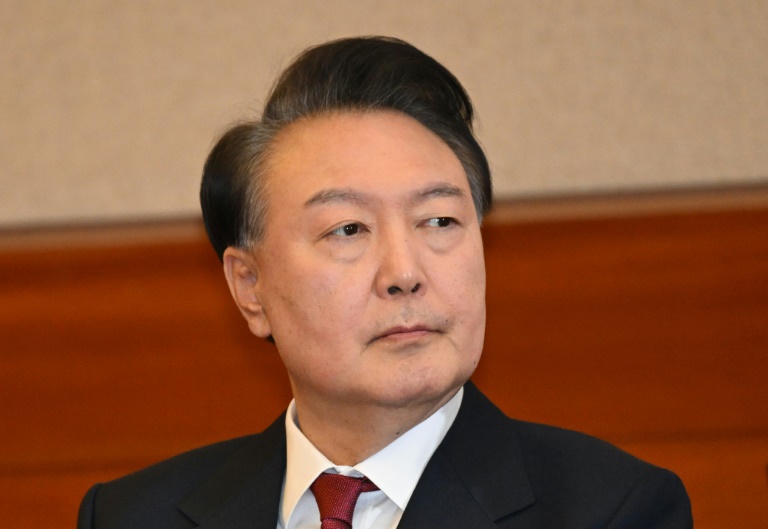
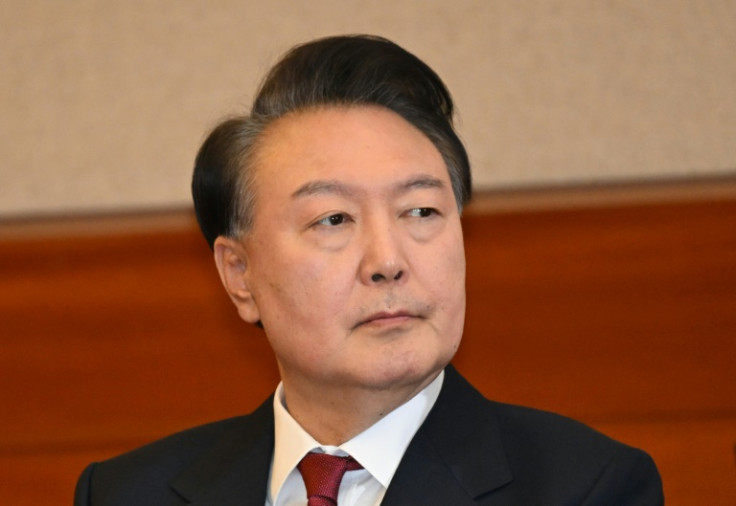
A Seoul court sentenced former President Yoon Suk Yeol to life imprisonment with hard labor on Thursday after finding him guilty of leading an insurrection through his short-lived declaration of martial law in December 2024, marking the most severe punishment ever imposed on a South Korean head of state in the democratic era.
Yoon Suk Yeol AFP
The Seoul Central District Court ruled that Yoon, 65, masterminded a grave attack on constitutional order by mobilizing troops to surround the National Assembly, attempting to arrest political opponents and seizing control of the national election commission during the six-hour crisis on Dec. 3, 2024. Prosecutors had sought the death penalty, arguing the actions threatened decades of democracy, but the court opted for life imprisonment, noting the plot’s failure to cause casualties or widespread violence.
Yoon, who served as president from May 2022 until his removal in April 2025, was impeached by the National Assembly on Dec. 14, 2024, just 11 days after the martial law order. The Constitutional Court upheld the impeachment unanimously on April 4, 2025, ousting him from office. He became the first sitting president in South Korean history to face arrest in January 2025 and has been in custody since July 2025 while facing multiple trials. The insurrection charge carried the heaviest penalty among several related indictments.
Yoon claimed the martial law was necessary to combat “anti-state forces” and alleged election fraud, but provided no evidence. The court described the episode as an “insurrection from the top,” involving senior officials including former Prime Minister Han Duck-soo (sentenced to 23 years last month), ex-Defense Minister Kim Yong-hyun (30 years) and others jailed for their roles.
Yoon is already serving a five-year term from a January 2026 ruling for abuse of power, obstructing arrest and related offenses tied to the martial law declaration. He faces at least three more trials on additional charges. His legal team is expected to appeal the life sentence within a week, though analysts anticipate prolonged proceedings.
Advertisement
The verdict caps a tumultuous period that plunged South Korea into its worst political crisis in decades, testing democratic institutions and exposing deep polarization. Yoon’s supporters rallied outside the courthouse, while critics celebrated the ruling as accountability for an unprecedented power grab.
The martial law attempt — Yoon’s declaration on live television to root out alleged threats — triggered immediate backlash, with lawmakers reconvening to vote it down within hours. The episode led to Yoon’s impeachment, removal and a snap presidential election in June 2025, won by opposition leader Lee Jae-myung of the Democratic Party.
Yoon’s presidency, marked by conservative policies, tensions with North Korea and domestic scandals, ended amid the fallout. His conviction makes him the first elected South Korean leader to receive a life sentence, though the country has not executed anyone since 1997 despite retaining capital punishment.
Reactions poured in Thursday: President Lee Jae-myung remained silent, while opposition figures hailed the decision as upholding democracy. Supporters decried it as politically motivated. The ruling could influence South Korea’s political landscape ahead of future elections, with Yoon disqualified from public office for five years under separate penalties. As Yoon begins serving the life term, the case underscores the resilience of South Korea’s democracy amid a grave constitutional challenge.
Wal-Mart De Mexico S.A.B. de C.V. ADR (WMMVY) Q4 2025 Earnings Call February 19, 2026 8:00 AM EST
Company Participants
Salvador Villasenor Barragan – Investor Relations Director Paulo Garcia – CFO and Senior VP of Administration & Finance Cristian Barrientos – Interim President, CEO & Director Paul Lewellen
Conference Call Participants
Advertisement
Benjamin Theurer – Barclays Bank PLC, Research Division Fernando Froylan Mendez Solther – JPMorgan Chase & Co, Research Division Ulises Argote Bolio – Santander Investment Securities Inc., Research Division Felipe Rached – Goldman Sachs Group, Inc., Research Division Alvaro Garcia – Banco BTG Pactual S.A., Research Division Antonio Hernandez – Actinver Casa de Bolsa, S.A. de C.V., Research Division Melissa Byun – BofA Securities, Research Division Miguel Ulloa Suárez – BBVA Research SA Alejandro Fuchs – Banco Itau BBA SA, Research Division
Presentation
Salvador Villasenor Barragan Investor Relations Director
Advertisement
Good morning, everyone. I’m Salvador Villasenor, Head of Investor Relations at Walmex, and I want to thank you once again for joining our live Q&A session following our fourth quarter and full year 2025 earnings release, which was published yesterday. As always, we will make an effort to answer as many questions as we can in the 45 minutes we have scheduled for this call. [Operator Instructions] Joining me today is Cristian Barrientos Pozo, President and CEO; Paul Lewellen, our Chief Omnichannel Operating Officer; and Paulo Garcia, our Chief Financial Officer. We’ll now go right straight away to the first question.
Question-and-Answer Session
Advertisement
Operator
[Operator Instructions] The first question is from Mr. Ben Theurer from Barclays.
Benjamin Theurer Barclays Bank PLC, Research Division
Advertisement
Can you guys hear me, see me?
Salvador Villasenor Barragan Investor Relations Director
Yes.
Advertisement
Benjamin Theurer Barclays Bank PLC, Research Division
So I wanted to get a little bit your sense as you look at the market in Mexico. And in the presentation yesterday, it was very clear
An awkward on-stage moment stole attention from discussions on artificial intelligence’s future at the India AI Impact Summit on Thursday, as OpenAI CEO Sam Altman and Anthropic CEO Dario Amodei conspicuously avoided holding hands during a group photograph with Indian Prime Minister Narendra Modi and other tech leaders.
Dario Amodei
The incident, captured on video and quickly going viral across social media, highlighted the long-simmering rivalry between the two former colleagues now leading competing AI companies. While most executives linked arms and raised them in a show of unity for the ceremonial photo at Bharat Mandapam, Altman and Amodei — positioned next to each other — raised their arms separately, opting for fists instead of clasped hands, and appeared to avoid eye contact.
The summit, running February 16-20 under India’s IndiaAI Mission, has drawn global attention as a platform for debating AI’s opportunities and risks, with India’s “MANAV” vision emphasizing human-centric development. Thursday’s events included keynotes from industry heavyweights, but the brief photo op became the day’s most talked-about clip.
Prime Minister Modi initiated the gesture, holding hands with Google CEO Sundar Pichai on one side and Altman on the other before raising arms. The chain extended across the stage to include leaders like DeepMind CEO Demis Hassabis, Microsoft Vice Chair Brad Smith and others. Altman and Amodei, standing adjacent, broke the link by not connecting.
Altman later addressed the moment lightly, telling reporters he “was sort of confused and didn’t know what I was supposed to be doing” during the orchestrated pose. No formal comment came from Amodei or Anthropic on the incident, but the optics fueled speculation about deeper tensions.
Advertisement
The two men share a complicated history. Amodei, along with his sister Daniela Amodei and other researchers, left OpenAI in 2020-2021 citing concerns over the company’s shift toward commercialization and away from its original nonprofit mission focused on safe AGI development. They founded Anthropic in 2021 as a direct counterpoint, prioritizing AI safety through approaches like constitutional AI in models such as Claude.
Tensions escalated publicly in recent months. Anthropic reportedly ran attack-style advertisements during the Super Bowl earlier in 2026, subtly critiquing competitors’ approaches to AI risks without naming OpenAI directly. Altman has defended OpenAI’s path, emphasizing rapid innovation balanced with safeguards, while Amodei has positioned Anthropic as more cautious on existential threats.
Both companies compete fiercely for talent, compute resources and market share in the generative AI space. OpenAI’s ChatGPT remains a household name, but Anthropic’s Claude series has gained traction among enterprises valuing interpretability and safety features. The rivalry reflects broader debates in the AI community over speed versus caution in pursuing advanced systems.
The India AI Impact Summit provided a rare in-person convergence of these leaders. Altman arrived emphasizing India’s potential as a “full-stack AI leader” — not just an adopter but a builder of the technology. He highlighted collaborations, including partnerships with Indian firms for AI infrastructure. Amodei, in his keynote, praised India’s role in balancing AI opportunities with risk mitigation, aligning with the summit’s themes.
Advertisement
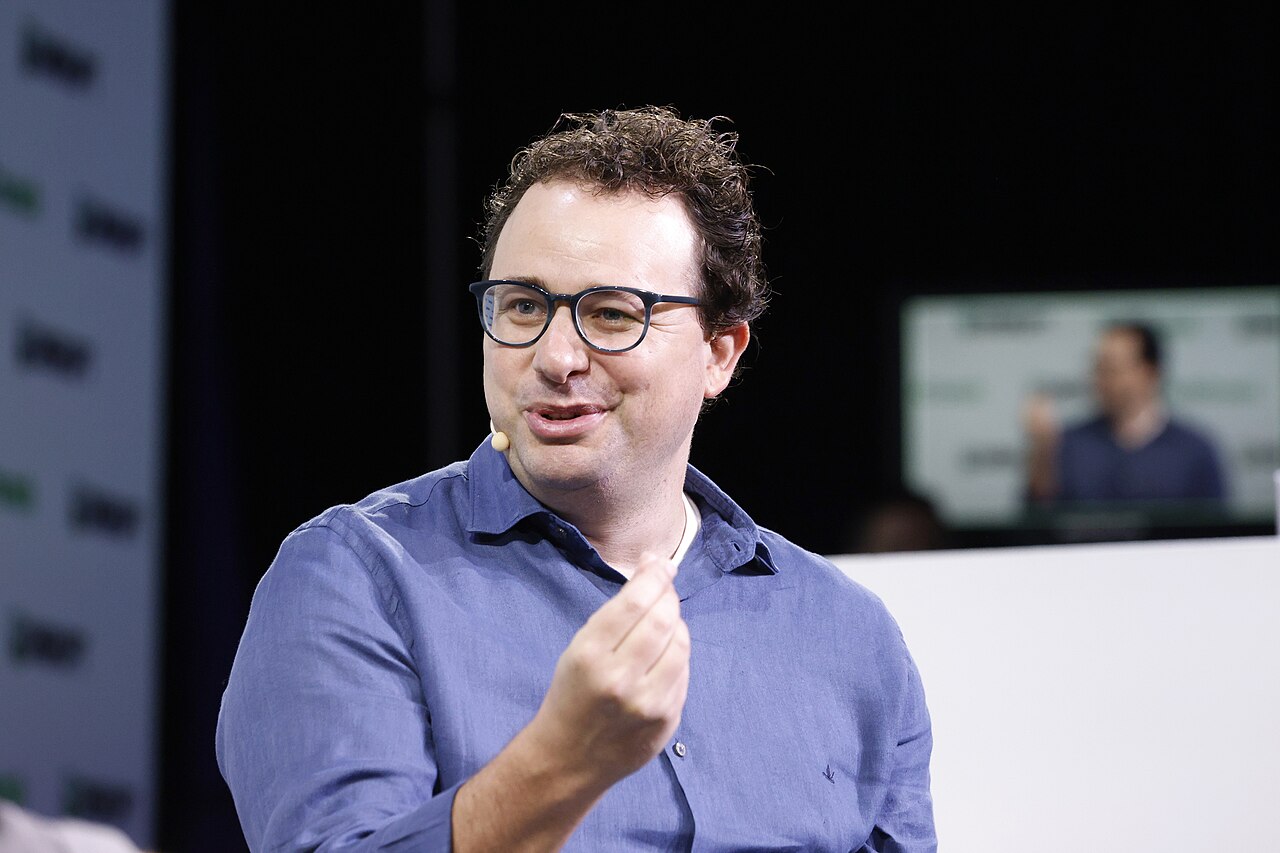
Other attendees included Meta’s Chief AI Officer (noted in some reports as Alexandr Wang, though typically associated with Scale AI; clarifications pointed to Meta representatives), Infosys CEO Salil Parekh, HCLTech Chairperson Roshni Nadar Malhotra and Adani Group executives. The event aimed to showcase India’s ambitions in AI under the government-backed mission, including compute access, talent development and ethical frameworks.
Social media erupted with memes and commentary. Users on platforms like X (formerly Twitter) and Reddit noted the “AI cold war” playing out visibly, with some joking about the need for “better prompt engineering” in group photos. Others saw it as symbolic of fractured unity in an industry facing regulatory scrutiny worldwide.
The moment underscores how personal and philosophical divides persist even amid global cooperation calls. AI leaders often stress collaboration on safety standards, yet competitive pressures — from funding rounds to model releases — keep rivalries sharp.
No escalation followed the photo. Sessions continued with panels on AI’s economic impact, workforce transformation and governance. Altman is scheduled for a student interaction at IIT Delhi on Friday, while the summit wraps up with more policy-focused discussions. For India, hosting such figures signals its growing clout in global tech. The government’s push for sovereign AI capabilities, data centers and skill-building programs drew praise from attendees, even as the viral awkwardness reminded observers that tech’s brightest minds don’t always align seamlessly.
Advertisement
As AI advances rapidly, moments like Thursday’s hand-holding snub serve as a reminder: behind the algorithms and valuations lie human egos, differing visions and unresolved questions about who shapes the technology’s trajectory.
FOX Business Lauren Simonetti takes viewers deep inside a working coal mine as officials push to expand production to meet surging electricity demand driven by data centers, EVs and electrification.
The Trump administration is stepping up its push to reinvigorate the U.S. coal industry as it pursues its goal of boosting energy security.
Last week, the Department of Energy announced that it would provide $175 million in funding for projects to modernize, retrofit and extend the useful life of six coal-fired power plants that serve rural and remote communities.
Advertisement
The agency said the move is intended to keep dependable sources of energy online, while also strengthening the reliability of the electric grid and keeping electricity costs low for American households and businesses.
The funding came from a previously announced $525 million plan to extend the life of coal plants and increase efficiency, as the administration views modernizing existing plants as a fast and cost-effective way to provide reliable power while preserving high-wage energy jobs.
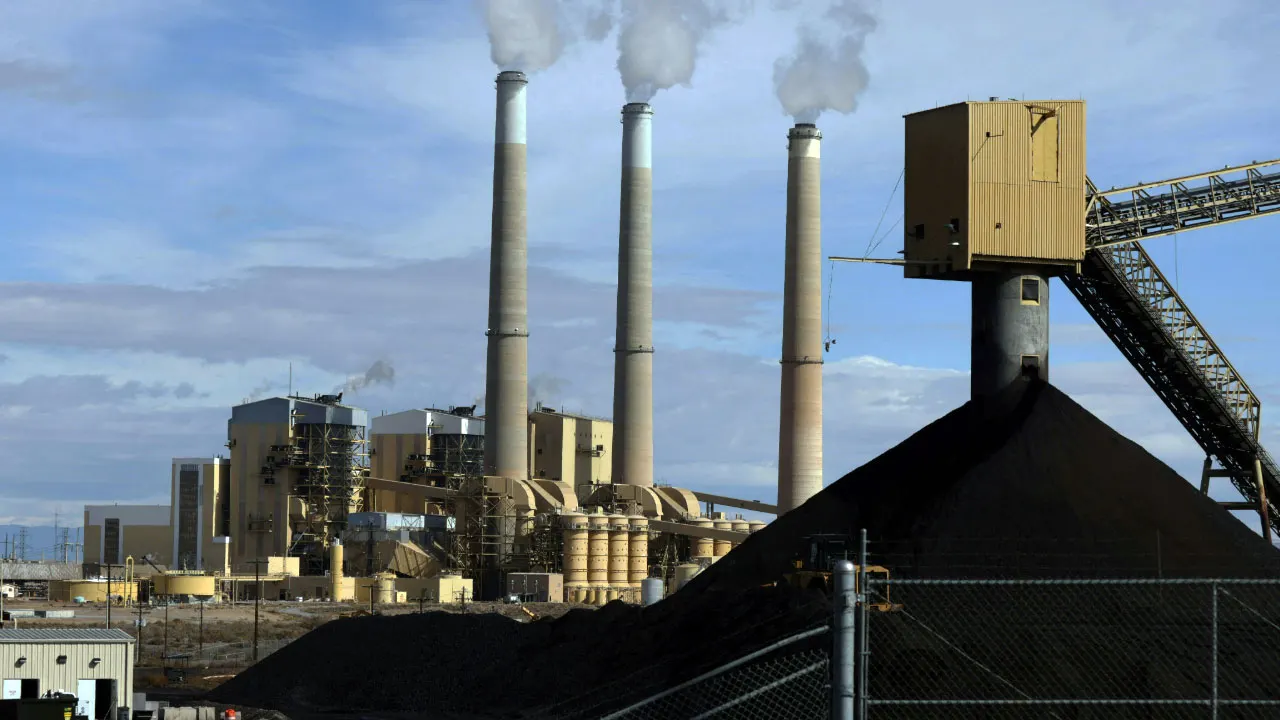
The Trump administration is providing funds to support coal power plants as part of the nation’s energy mix. (Jeff Swensen/Getty Images)
“For years, previous administrations targeted America’s coal industry and the workers who power our country, forcing the premature closure of reliable power plants, and driving up electricity costs,” said Energy Secretary Chris Wright.
Advertisement
“President Trump has ended the war on American coal and is restoring common-sense energy policy. These investments will keep America’s coal plants operating, keep costs low for Americans, and ensure we have the reliable power needed to keep the lights on and power our future,” Wright added.
The administration’s will fund projects to extend the life of coal-fired power plants. (Jim Urquhart/Reuters)
The coal-fired power plants that were selected as part of the $175 million project include:
Appalachian Power Company’s facilities in Letart and Winfield, West Virginia
Buckeye Power’s plant in Brilliant, Ohio
Duke Energy Carolinas’ plants in Sauaratown Township, North Carolina
Kentucky Utilities Corporation’s facility in Ghent, Kentucky
Monongahela Power Company’s power plant in Maidsville, West Virginia
Ohio Valley Electric Corporation’s plant in Cheshire, Ohio
Electricity demand is surging amid the artificial intelligence (AI) race, as data centers that consume vast amounts of energy become a bigger drain on the grid.
Coal’s share of electricity generation has declined rapidly in recent decades. (Justin Merriman/Bloomberg via Getty Images)
The Trump administration’s push to boost coal as a part of the nation’s energy mix comes after years of decline as coal power plants closed. Coal’s decline came amid the rise of natural gas and renewable energy sources as energy sources.
Data from the Energy Information Administration (EIA) shows that coal’s total output for electricity generation peaked in 2007, when it was the source of 2,016 billion kilowatt-hours of electricity.
That figure declined to 675 billion kilowatt-hours as of 2023, when coal’s share of electricity generation was 16.2%. Coal last generated over half of the nation’s electricity in the early 2000s and peaked as a proportion of the energy mix in the 1980s.
Natural gas surpassed coal as the country’s largest source of electricity in 2016, and EIA data showed natural gas generated 43.1% of the nation’s electricity in 2023.



















![CPI is OUT! The Market Reaction Explained [Bitcoin & Stocks]](https://wordupnews.com/wp-content/uploads/2026/02/1771536648_hqdefault-80x80.jpg)