

Tech
PageMaker pioneer Paul Brainerd, 1947-2026: Aldus founder devoted his second chapter to the planet



In the summer of 1984, Paul Brainerd and four engineers packed into his old Saab and drove south on Interstate 5 from the Seattle area. They had been laid off after Kodak bought their employer, Atex, a company whose computerized text-processing systems let newspaper reporters and editors write and edit stories on video terminals instead of typewriters.
They had six months of savings, a rough idea for a piece of software, and no company name.
They stopped in towns along the way, pitching small newspapers and magazine publishers on a page-layout tool for desktop computers. The response was discouraging. The chains that were already buying up many of the publications took years to make purchasing decisions. A startup with six months of runway would be dead long before the first purchase order arrived.
They needed a new plan. They also needed a name: incorporation papers were due in a week.
What happened next was documented years later in oral history interviews with Brainerd for the Computer History Museum, and Seattle’s Museum of History and Industry.
They stopped at the Oregon State University library in Corvallis, rented a room, and started digging into books on the history of publishing. Brainerd found a chapter on Aldus Manutius, a 15th-century Venetian printer who had standardized typefaces, invented the small-book format, and brought the cost of publishing down far enough to reach ordinary people.
It was the perfect name for the revolution he had in mind.
Paul Brainerd, who went on to coin the term “desktop publishing” and build Aldus Corporation’s PageMaker into one of the defining programs of the personal computer era, died Sunday at his home on Bainbridge Island, Wash., after living for many years with Parkinson’s disease. He was 78 years old.
He left two legacies. The first was a piece of software that put the power of the printed page into the hands of millions of people who had never operated a typesetting machine. The second was a three-decade commitment to environmental conservation and philanthropy in the Pacific Northwest, pursuing it with the same intensity he brought to the desktop publishing revolution.

Friends and colleagues this week remembered Brainerd as a quiet, caring and detail-oriented leader with exacting standards. He insisted that PageMaker use proper curly quotation marks instead of straight ones, and obsessed over nuances such as kerning, the precise spacing between specific letter pairs.
“Everything he did, he did with integrity,” said Laura Urban Perry, who was art director of Seattle Weekly when she spotted an ad in the back of the paper, answered it, and became Aldus’ seventh employee in 1984 when it was based in a small office near the Pioneer Square pergola.
Brainerd sat her next to the engineers so design and development would be in constant conversation. In essence, she was working in user experience before the term was widely used. They gave her the desk by the window, she said, because artists need light.
Ben Rotholtz, who had worked at a Seattle art supply store selling press-on lettering to graphic designers, went to Aldus on Christmas Eve 1985 to apply for a tech support job. He laid out a page on an Apple Macintosh and watched it come out of an Apple LaserWriter exactly as it appeared on screen. (“My jaw just dropped,” he said.)
Rotholtz started at the company in January 1986. Many of the customers needing support had never owned a computer before. PageMaker was often the reason they bought one.
Before shipping PageMaker 3.0, Brainerd told Rotholtz that every department had signed off on the release except his. If tech support said it wasn’t ready, they wouldn’t ship. “Customer support was basically another feature in the product,” Rotholtz said. “He valued it that highly.”
Brainerd applied the same evenhanded principles to business partnerships. When Rotholtz proved to be an effective negotiator on technology licensing deals, Brainerd told him not to “over-negotiate” — to make sure the other side could survive and thrive, too.
That focus on customers is what revealed the true market for PageMaker. Brainerd and his team had expected to sell to professional graphic designers and newspaper publishers. Instead, the calls came from churches, colleges, nonprofits, and small businesses.
Brainerd loved to tell the story of a pastor from the Midwest who called to say he was using PageMaker to print 600,000 religious pamphlets. Or the mother in San Francisco who wrote to say she had used PageMaker to design and print a picture book for her children. It might seem trivial today, but back then it otherwise would have required a professional printer.
Telling those stories to the public was a core part of the company’s strategy, said Laury Bryant, who worked at Aldus from 1987 to 1991 as a PR and investor relations leader. “Every day, there was some new and incredible way the product was being used,” she said.
To Rotholtz, the product had a clear and profound impact on the world: “PageMaker was ultimately about the democratization of printing and publishing.”
Brainerd had lived the journey that made it possible.
From letterpress to laser printer
He was born in 1947 in Medford, Ore., a small town in the Rogue Valley with an economy dependent on pears and lumber. His parents, Phil and VerNetta Brainerd, ran a photography studio and camera shop on Main Street. He grew up in darkrooms in the family business.
He was a B+ student, more interested in the yearbook than the classroom. When he got to the University of Oregon, he majored in business but spent all his time in the journalism school. He became editor-in-chief of the Oregon Daily Emerald in his senior year.
Along the way, he converted the campus newspaper from letterpress, a centuries-old method of pressing inked metal type onto paper, to offset printing, a faster and cheaper photographic process. He did the same thing later at the University of Minnesota student paper.
It would become a recurring theme: moving from one era of publishing to the next.
After getting his master’s in journalism from the University of Minnesota, he went to the Minneapolis Star Tribune as assistant operations director, overseeing a transition from hot type, in which molten lead was cast into lines of text, to cold type, which used light and film instead.

It was at the Star Tribune that Brainerd had a realization that defined his career. He was sitting in the office of Charles Bailey, the paper’s editor-in-chief, listening to Bailey discuss the day’s political coverage. “I just realized, in that moment, that I was never going to be a Charles Bailey,” Brainerd later recalled. “I could be a lot of other things, but I was never going to be him.”
But he could translate between the people who built technology and the people who used it.
He joined Atex, one of the Star Tribune’s vendors, and eventually moved to Redmond to run the company’s West Coast R&D arm. When Kodak bought Atex and shut the plant down, Brainerd was 37 and out of work. He had about $100,000 in savings. He decided it was now or never.
Brainerd put up his own money to start Aldus. The engineers who joined him from Atex worked at half salary. He took no salary at all. They gave themselves six months to write a business plan, build a prototype, and find funding.
He called 50 venture capital firms. Forty-nine said no. In 1984, most investors saw no value in software companies. Microsoft had not yet gone public. The prevailing view was that software could be replicated in a weekend by a couple of guys in a garage.
With about $5,000 left in the bank, a firm called Vanguard Ventures in Palo Alto said yes. Some of its general partners were former Apple executives who understood what software could do. They invested $864,000. A small local firm, Fluke Management Capital, also took a position.
Sparking a revolution
Their product was PageMaker, a program that let anyone lay out text and graphics on a computer screen and send it to a printer. Brainerd and his team realized that three things had to come together to make it work: Apple’s Macintosh, which provided the graphical interface; Adobe’s PostScript, which gave printers the ability to render high-quality type and images; and a piece of software that tied them together. Brainerd called it the “three-legged stool.”
At a board meeting in late 1984, an investor told them they needed to boil down their wordy description of what they were doing — putting text and graphics on pages — to two words, as Brainerd recalled in his 2006 oral history with the Computer History Museum.
Someone suggested “desktop something.”
Brainerd said, “How about desktop publishing?”
Back at the office, the engineers were skeptical, but Brainerd went with it, and it stuck.
PageMaker 1.0 shipped in July 1985. It gave Apple a reason to exist in the corporate market. Steve Jobs later said that desktop publishing had saved the Macintosh.
PageMaker shipped on Windows in 1987, before Microsoft Word did. The Microsoft program manager who convinced Aldus to build on Windows was Gabe Newell, who later founded Valve. Bill Gates and Steve Ballmer sent a bottle of Dom Perignon to celebrate the launch.
In 1991, Soviet hardliners attempted a coup in Moscow. They locked down the traditional printing presses to control the flow of information. But they couldn’t hold back computers. Across the city, pro-democracy activists used PageMaker to produce and distribute handouts. Aldus later ran an ad about it, with the tagline: “We helped create a revolution.”
Aldus co-founder and engineering lead Jeremy Jaech, who had been one of the engineers on that fateful 1984 road trip — along with Mark Sundstrom, Mike Templeman, and Dave Walter — said Brainerd set a high bar for the people around him.
“He wasn’t a yeller,” Jaech said. “He would talk to you in a low voice and tell you all the things you were doing wrong.” But Jaech said Brainerd got the best out of people. “I worked my ass off for him because I wanted to please him — and he was hard to please.”
Jaech, who went on to co-found Visio, the diagramming software company that Microsoft later acquired for $1.5 billion, said he wouldn’t have been prepared to start his own company without everything he learned from Brainerd.
“Product focus, customer focus, how to build a board, how to run a meeting,” Jaech said, running down the list. “There’s no question I got a lot.”
He wasn’t the only one. Bill McAleer, who joined Aldus as chief financial officer in 1988, said more entrepreneurs came out of Aldus, proportionally, than out of Microsoft at the time. Brainerd “created a great culture,” simultaneously entrepreneurial and collaborative, said McAleer, who went on to co-found the venture capital firm Voyager Capital.
The bonds among Aldus employees have lasted to this day, said Perry, the former Aldus art director who remained in touch with Brainerd over the years, interviewing him on video for a 2022 conference talk she gave about the desktop publishing revolution.
But after a decade at the helm, Brainerd was worn out. “It was my child, basically,” he said in his 2009 oral history, recorded at KCTS Television for MOHAI’s Speaking of Seattle: Experienced Leaders Project. “After 10 years of doing that, I was ready to let it go.”
He found his exit in the 1994 merger of Aldus with Adobe, the company whose PostScript technology had been one of the three legs of the desktop publishing stool from the start.
By then, PageMaker faced stiff competition from QuarkXPress, which had captured a large portion of the professional design market. PageMaker’s strength — its broad appeal to everyone from churches to corporations — had become a strategic vulnerability.
Years after the acquisition, Aldus would end up forming the nucleus of Adobe’s campus in Seattle’s Fremont neighborhood. PageMaker’s desktop publishing legacy lives on in the program known today as Adobe InDesign, built from the ground up to win back the professionals.
McAleer, who oversaw the deal for Aldus and ran the subsequent integration, said it was a natural fit: “When we merged the two companies, that really created a very broad-based graphics suite for graphics professionals and people in the publishing industry.”
The all-stock deal, valued at roughly $525 million at the time it was announced, closed in August 1994. Brainerd was Adobe’s largest individual shareholder, with stock worth roughly $100 million. He served on Adobe’s board for two years but never returned to management.
Perry wasn’t surprised by Brainerd’s shift in focus. “He just figured out what was important to do next and got after it,” she said. “It wasn’t about making money and becoming a billionaire.”
‘If I gave you the checkbook …‘
Brainerd took six weeks off and went to Alaska to hike and clear his head. Then he took a third of his proceeds from the Adobe deal and created the Brainerd Foundation.
He spent three months driving around the Pacific Northwest, talking to roughly a hundred people and asking a single question: If I gave you the checkbook, who would you write it to? The foundation focused on environmental conservation across Oregon, Washington, Idaho, Montana, British Columbia, and Alaska.
In 1997, Brainerd and fellow Seattle business leaders Scott Oki, Ida Cole, Bill Neukom, and Doug and Maggie Walker co-founded Social Venture Partners, which applied the venture capital model to philanthropy, as detailed in a 2018 GeekWire profile. Partners pooled their money, researched community needs, and invested in nonprofit organizations.
In 2000, Paul and Debbi Brainerd founded IslandWood, a children’s environmental learning center on 256 acres they purchased and donated on Bainbridge Island. About 3,000 students a year visit the campus to learn about watersheds, water quality, and forest ecology.
Paul and Debbi Brainerd did not have children, and he was clear about the fact that his goal was to give his money away. “He wasn’t going to take it with him,” said Bryant, the former Aldus PR and investor relations manager who later served on the IslandWood board.

In later years, the Brainerds built Camp Glenorchy, a net-zero eco-lodge near Queenstown, New Zealand, and spent about half of each year there. They revitalized the town’s struggling general store, helped bring internet access to the community, and donated proceeds to local causes.
Brainerd “personified the best of an era when tech innovators not only took smart ideas to scale but shared a broad vision of how to make the world a better place — and got to work to make it happen,” said Leonard Garfield, executive director of the Museum of History and Industry.
Ted Johnson, a programmer who had worked with Brainerd at the Star Tribune, Atex, and Aldus, visited Glenorchy with his wife and watched Brainerd show off the composting systems and water treatment infrastructure with all the enthusiasm he once gave to kerning and quote marks.
“He loved nature,” Johnson said, “and he loved technology.”
Brainerd is survived by his sister, Sherry, and his wife, Debbi, who described his more than 20-year battle with Parkinson’s disease in a letter to his friends and colleagues this week.
“I have never seen anyone fight so hard and for so long, looking for traditional medical treatments, as well as non-traditional healing practices that could help him manage the growing number of symptoms that his Parkinson’s presented,” she wrote.
He ultimately chose to take advantage of Washington state’s Death with Dignity Act, “allowing him to choose his time and place of passing,” she wrote. “He died peacefully on Sunday, viewing the Puget Sound landscape he loved, outside our home on Bainbridge Island.”
Family and friends are planning a celebration of life at IslandWood in June. Memorial donations in Paul Brainerd’s honor can be made to IslandWood at islandwood.org.
Reporting for this story included interviews with Brainerd’s former Aldus colleagues Ben Rotholtz, Laura Urban Perry, Laury Bryant, Jeremy Jaech, Bill McAleer, and Ted Johnson, coordinated with the help of Pam Miller, a former Aldus employee; oral history interviews with Brainerd conducted for the Computer History Museum (2006) and Museum of History and Industry (2009); a video interview with Brainerd conducted by Perry in 2022; and a 2018 profile by GeekWire reporter Lisa Stiffler.


from the the-human-brain-is-way-more-complicated dept
Warning: This article discusses suicide and some research regarding suicidal ideation. If you are having thoughts of suicide, please call or text 988 to reach the Suicide and Crisis Lifeline or visit this list of resources for help. Know that people care about you and there are many available to help.
When someone dies by suicide, there is an immediate, almost desperate need to find something—or someone—to blame. We’ve talked before about the dangers of this impulse. The target keeps shifting: “cyberbullying,” then “social media,” then “Amazon.” Now it’s generative AI.
There have been several heartbreaking stories recently involving individuals who took their own lives after interacting with AI chatbots. This has led to lawsuits filed by grieving families against companies like OpenAI and Character.AI, alleging that these tools are responsible for the deaths of their loved ones. Many of these lawsuits are settled, rather than fought out in court because no company wants its name in the headlines associated with suicide.
It is also impossible not to feel for these families. The loss is devastating, and the need for answers is a fundamentally human response to grief. But the narrative emerging from these lawsuits—that the AI caused the suicide—relies on a premise that assumes we understand the mechanics of suicide far better than we actually do.
Unfortunately, we know frighteningly little about what drives a person to take that final, irrevocable step. An article from late last year in the New York Times profiling clinicians who are lobbying for a completely new way to assess suicide risk, makes this painfully clear: our current methods of predicting suicides are failing.
If experts who have spent decades studying the human mind admit they often cannot predict or prevent suicide even when treating a patient directly, we should be extremely wary of the confidence with which pundits and lawsuits assign blame to a chatbot.
The Times piece focuses on the work of two psychiatrists who have been devastated by the loss of patients who gave absolutely no indication they were about to harm themselves.
In his nearly 40-year career as a psychiatrist, Dr. Igor Galynker has lost three patients to suicide while they were under his care. None of them had told him that they intended to harm themselves.
In one case, a patient who Dr. Galynker had been treating for a year sent him a present — a porcelain caviar dish — and a letter, telling Dr. Galynker that it wasn’t his fault. It arrived one week after the man died by suicide.
“That was pretty devastating,” Dr. Galynker said, adding, “It took me maybe two years to come to terms with it.”
He began to wonder: What happens in people’s minds before they kill themselves? What is the difference between that day and the day before?
Nobody seemed to know the answer.
Nobody seemed to know the answer.
That is the state of the science. Apparently the best we currently have in tracking suicidal risk is asking people: “Are you thinking about killing yourself?” And as the article notes, this method is catastrophically flawed.
But despite decades of research into suicide prevention, it is still very difficult to know whether someone will try to die by suicide. The most common method of assessing suicidal risk involves asking patients directly if they plan to harm themselves. While this is an essential question, some clinicians, including Dr. Galynker, say it is inadequate for predicting imminent suicidal behavior….
Dr. Galynker, the director of the Suicide Prevention Research Lab at Mount Sinai in New York City, has said that relying on mentally ill people to disclose suicidal intent is “absurd.” Some patients may not be cognizant of their own mental state, he said, while others are determined to die and don’t want to tell anyone.
The data backs this up:
According to one literature review, about half of those who died by suicide had denied having suicidal intent in the week or month before ending their life.
This profound inability to predict suicide has led these clinicians to propose a new diagnosis for the DSM-5 called “Suicide Crisis Syndrome” (SCS). They argue that we need to stop looking for stated intent and start looking for a specific, overwhelming state of mind.
To be diagnosed with S.C.S., Dr. Galynker said, patients must have a “persistent and intense feeling of frantic hopelessness,” in which they feel trapped in an intolerable situation.
They must also have emotional distress, which can include intense anxiety; feelings of being extremely tense, keyed up or jittery (people often develop insomnia); recent social withdrawal; and difficulty controlling their thoughts.
By the time patients develop S.C.S., they are in such distress that the thinking part of the brain — the frontal lobe — is overwhelmed, said Lisa J. Cohen, a clinical professor of psychiatry at Mount Sinai who is studying S.C.S. alongside Dr. Galynker. It’s like “trying to concentrate on a task with a fire alarm going off and dogs barking all around you,” she added.
This description of “frantic hopelessness” and feeling “trapped” gives us a glimpse into the internal maelstrom that leads to suicide. It also highlights why externalizing the blame to a technology is so misguided.
The article shares the story of Marisa Russello, who attempted suicide four years ago. Her experience underscores how internal, sudden, and unpredictable the impulse can be—and how disconnected it can be from any specific external “push.”
On the night that she nearly died, Ms. Russello wasn’t initially planning to harm herself. Life had been stressful, she said. She felt overwhelmed at work. A new antidepressant wasn’t working. She and her husband were arguing more than usual. But she wasn’t suicidal.
She was at the movies with her husband when Ms. Russello began to feel nauseated and agitated. She said she had a headache and needed to go home. As she reached the subway, a wave of negative emotions washed over her.
[….]
By the time she got home, she had “dropped into this black hole of sadness.”
And she decided that she had no choice but to end her life. Fortunately, she said, her attempt was interrupted.
Her decision to die by suicide was so sudden that if her psychiatrist had asked about self-harm at their last session, she would have said, truthfully, that she wasn’t even considering it.
When we read stories like Russello’s, or the accounts of the psychiatrists losing patients who denied being at risk, it becomes difficult to square the complexity of human psychology with the simplistic narrative that “Chatbot X caused Person Y to die.”
There is undeniably an overlap between people who use AI chatbots and people who are struggling with mental health issues—in part because so many people use chatbots today, but also because people in distress seek connection, answers, a safe space to vent. That search often leads to chatbots.
Unless we’re planning to make thorough and competent mental health support freely available to everyone who needs it at any time, that’s going to continue. Rather than simply insisting that these tools are evil, we should be looking at ways to improve outcomes knowing that some people are going to rely on them.
Just because a person used an AI tool—or a search engine, or a social media platform, or a diary—prior to their death does not mean the tool caused the death.
When we rush to blame the technology, we are effectively claiming to know something that experts in that NY Times piece admit they do not know. We are claiming we know why it happened. We are asserting that if the chatbot hadn’t generated what it generated, if it hadn’t been there responding to the person, that the “frantic hopelessness” described in the SCS research would simply have evaporated.
There is no evidence to support that.
None of this is to say AI tools can’t make things worse. For someone already in crisis, certain interactions could absolutely be unhelpful or exacerbating by “validating” the helplessness they’re already experiencing. But that is a far cry from the legal and media narrative that these tools are “killing” people.
The push to blame AI serves a psychological purpose for the living: it provides a tangible enemy. It implies that there is a switch we can flip—a regulation we can pass, a lawsuit we can win—that will stop these tragedies.
It suggests that suicide is a problem of product liability rather than a complex, often inscrutable crisis of the human mind.
The work being done on Suicide Crisis Syndrome is vital because it admits what the current discourse ignores: we are failing to identify the risk because we are looking at the wrong things.
Dr. Miller, the psychiatrist at Endeavor Health in Chicago, first learned about S.C.S. after the patient suicides. He then led efforts to screen every psychiatric patient for S.C.S. at his hospital system. In trying to implement the screenings there have been “fits and starts,” he said.
“It’s like turning the Titanic,” he added. “There are so many stakeholders that need to see that a new approach is worth the time and effort.”
While clinicians are trying to turn the Titanic of psychiatric care to better understand the internal states that lead to suicide, the public debate is focused on the wrong iceberg.
If we focus all our energy on demonizing AI, we risk ignoring the actual “black hole of sadness” that Ms. Russello described. We risk ignoring the systemic failures in mental health care. We risk ignoring the fact that half of suicide victims deny intent to their doctors.
Suicide is a tragedy. It is a moment where a person feels they have no other choice—a loss of agency so complete that the thinking brain is overwhelmed, as the SCS researchers describe it. Simplifying that into a story about a “rogue algorithm” or a “dangerous chatbot” doesn’t help the next person who feels that frantic hopelessness.
It just gives the rest of us someone to sue.
Filed Under: blame, generative ai, suicide

ProAc has long been a name whispered with reverence among British and American audiophiles; a company that built its reputation on handcrafted, musically transparent loudspeakers rather than flash and hype. Founded by Stewart Tyler in 1979 (evolving from his earlier Celef Audio venture in the 1970s), ProAc quickly earned acclaim for compact but capable designs like the Response and Tablette ranges that belied their size with a very natural sounding midrange and lifelike staging.
Across more than four decades, ProAc remained a tightly run UK family business known for well engineered crossovers, beautifully finished cabinets, and an almost obsessive approach to driver selection. More than a few long time audiophiles will nod at the old “straws” reference when the conversation turns to how particular the company has been about its woofers.The brand’s presence, however, in the U.S. wavered at times due to distributor changes, and in 2021 enthusiasts mourned the passing of Tyler, a designer whose work helped define a generation of British loudspeaker craftsmanship.
Into that legacy enters the new ProAc Response DB1R: the smallest ProAc loudspeaker ever offered with a ribbon tweeter, bringing the brand’s signature Response-series refinement to an even more compact standmount format. It’s a clear signal that ProAc’s dedication to natural, unforced musical expression remains alive, even as the company evolves its technology into the next chapter.
DB1R Ribbon Tweeter: Small Speaker, Big High Frequency Ambition

Following the success of the Response D2R standmount introduced in 2019, ProAc has now applied that same ribbon tweeter technology to its more compact Response DB1 platform. The original DB1, launched in 2016 with a silk dome tweeter, remains in the range, but the new DB1R replaces the dome with the ribbon unit first seen in the D2R.
The goal is straightforward: retain the tonal balance and overall character of the DB1 while extending high frequency resolution and speed through the use of ProAc’s ribbon design. According to ProAc, the ribbon diaphragm is lighter than a human hair and incorporates rear chamber damping along with an alnico magnet system to improve control and reduce distortion.
ProAc’s ribbon tweeter has already been implemented across several models in the Response series. With the DB1R, it now appears in the smallest loudspeaker in the company’s lineup to feature a ribbon, bringing that technology into a more compact standmount format.
Response DB1R Bass Driver: Small Cabinet, Serious Intent

Compact stand-mount speakers remain popular for listeners who want serious sound without large floorstanders dominating the room. Bigger cabinets typically offer deeper bass and a broader sense of scale, but they also take up visual and physical space. The Response DB1R is designed to balance those tradeoffs.
The cabinet uses varying thickness HDF panels combined with bituminous damping to help control resonance and reduce unwanted coloration. The 5 inch bass driver features a long throw design, raised spider, and linear motor system to maintain control at higher excursion levels. A rear port provides additional low frequency support.
The cone is formed from Pagina Mica, elastically coated, and fitted with ProAc’s acrylic pole damping phase plug. The crossover has been tuned to maintain a flatter response at higher listening levels, helping the speaker remain composed when pushed.
In practice, the DB1R aims to deliver low coloration through the midrange and treble, along with bass that is punchy and reasonably extended for its size. The overall goal is to create the scale and balance of a larger loudspeaker within a compact enclosure.
Zoe Tyler Mardle commented on the launch, stating: “The launch of the Response DB1R is the first step in developing our long term plans while continuing to honour Stewart Tyler’s designs and the legacy he left behind. As a team, we want to take everything he taught us over the last 30 years and build upon it. Music is at the heart of our family and central to ProAc’s ‘perfectly natural’ sound, something we are fully committed to preserving.”
Comparison

| Response DB1R (2026) | Response DB1 (2016) | Response D2R (2019) | |
| Product Type | Standmount Speaker | Standmount Speaker | Standmount Speaker |
| Price (Pair) | £2,945 to £3,465 US Price TBD |
£2,495 to £3,225 $4,750 to $5,300 |
£3,665 to £4,295 $4,500 to $5,500 |
| Speaker Type | Ported – Bass Reflex | Ported – Bass Reflex | Ported – Bass Reflex |
| Nominal Impedance | 8 ohms | 8 ohms | 8 ohms |
| Recommended Amplifiers | 20 to 100 watts | 20 to 100 watts | 20 to 150 watts |
| Frequency Response | 35Hz-30kHz | 35Hz-30kHz | 30Hz-30kHz |
| Sensitivity | 87.5 dB linear for 1 watt at 1 metre | 87.5 dB linear for 1 watt at 1 metre | 88.5 dB linear for 1 watt at 1 metre |
| Bass /midrange Driver | ProAc 127mm (5”) long throw unit with Pagina Mica cone and acrylic phase plug. | ProAc 127mm (5”) long throw unit with Pagina Mica cone and acrylic phase plug. | 165mm (6.5”) ProAc unit with Excel Magnet system, glass fibre weave cone and copper phase plug |
| Tweeter | ProAC Ribbon Tweeter with a rear chamber damping and ainico magnet | ProAc 25mm (1”) silk dome with special coolant | ProAC Ribbon Tweeter with a rear chamber damping and ainico magnet |
| Crossover | Finest components on a dedicated circuit board. Multistrand oxygen-free copper cable throughout. Split for optional Bi wiring or Bi amplification | Finest components on a dedicated circuit board. Multistrand oxygen-free copper cable throughout. Split for optional Bi wiring or Bi amplification | Finest components on a dedicated circuit board. Multistrand oxygen-free copper cable throughout. Split for optional Bi wiring or Bi amplification |
| Dimensions (HWD) | 12.5” (320mm) x 7.28” (182mm) x 10.4” (280mm) | 12.5”(320mm) x 7.28” (182mm) x 10.4” (280mm) | 17” (430mm) x 8” 203mm) x 10.25” (260mm) |
| Weight (each) | 8.8kg (19.6 lbs) | 8.8kg (19.6 lbs) | 11kg (24 lbs) |
| Mode | Stand mount | Stand mount | Stand mount on a rigid high mass |
| Grille | Acoustically transparent crimplene. Magnetic grilles are available with certain finishes. | Acoustically transparent crimplene. Magnetic grilles are available with certain finishes. | Acoustically transparent crimplene |
| Standard Finishes | Black Ash, Mahogany, Cherry, Walnut, Natural Oak, Silk White. | Black Ash, Mahogany, Cherry, Walnut, Natural Oak, Silk White. | Black Ash, Mahogany, Cherry, Walnut, Natural Oak, and Silk White. |
| Premium Finishes (extra cost) | Liquidambar, Rosewood, Ebony | Liquidambar, Rosewood, Ebony | Liquidambar, Rosewood, Ebony |

The Bottom Line
ProAc has never chased mainstream visibility, and the Response DB1R is unlikely to change that. What it does reinforce is the company’s long standing focus on compact loudspeakers that prioritize tonal balance, midrange clarity, and refined high frequency detail over brute force output.
The DB1R is for listeners who value scale and precision in smaller rooms, who want the speed and openness of a ribbon tweeter without committing to a large floorstander. It is also for those who appreciate careful crossover design and cabinet craftsmanship rather than feature lists and lifestyle packaging.
If pricing lands north of $5,000 per pair as expected, the ProAc Response DB1R will not be entry level. But in a world where statement loudspeakers like the new ATC EL50 now command $99,999 per pair, it occupies a very different tier of ambition. This is not about maximum output or seismic bass. It is about delivering a balanced, articulate presentation in a manageable enclosure for serious two channel systems where space and aesthetics still matter.
Price & Availability
The ProAc Response DB1R is priced at £2,945 with Standard Finishes and £3,465 with Premium Finish, and is available through Authorized Dealers. Availability is expected to start in May, 2026. The Response DB1 and D2R are currently available through Authorized Dealers.
Tip: The ProAc Response DB1R is being shown at the 2026 Bristol Hi-Fi Show from February 20 – 22.
For more information: proac-loudspeakers.com
Related Reading:

Apple’s Emergency SOS via satellite helped rescue six skiers after an avalanche near Lake Tahoe on February 18, according to California emergency officials.

Apple’s Emergency SOS feature
Authorities said the group maintained contact with rescuers for roughly four hours despite having no cellular coverage in backcountry terrain. The rescue offers a clear real-world example of Apple’s satellite emergency system in a life-threatening situation.
An avalanche hit a guided ski group in Nevada County, California, near Lake Tahoe, leaving six survivors stranded without cell service. They managed to contact rescuers using Apple’s Emergency SOS feature on the iPhone and a separate emergency beacon.
Continue Reading on AppleInsider | Discuss on our Forums
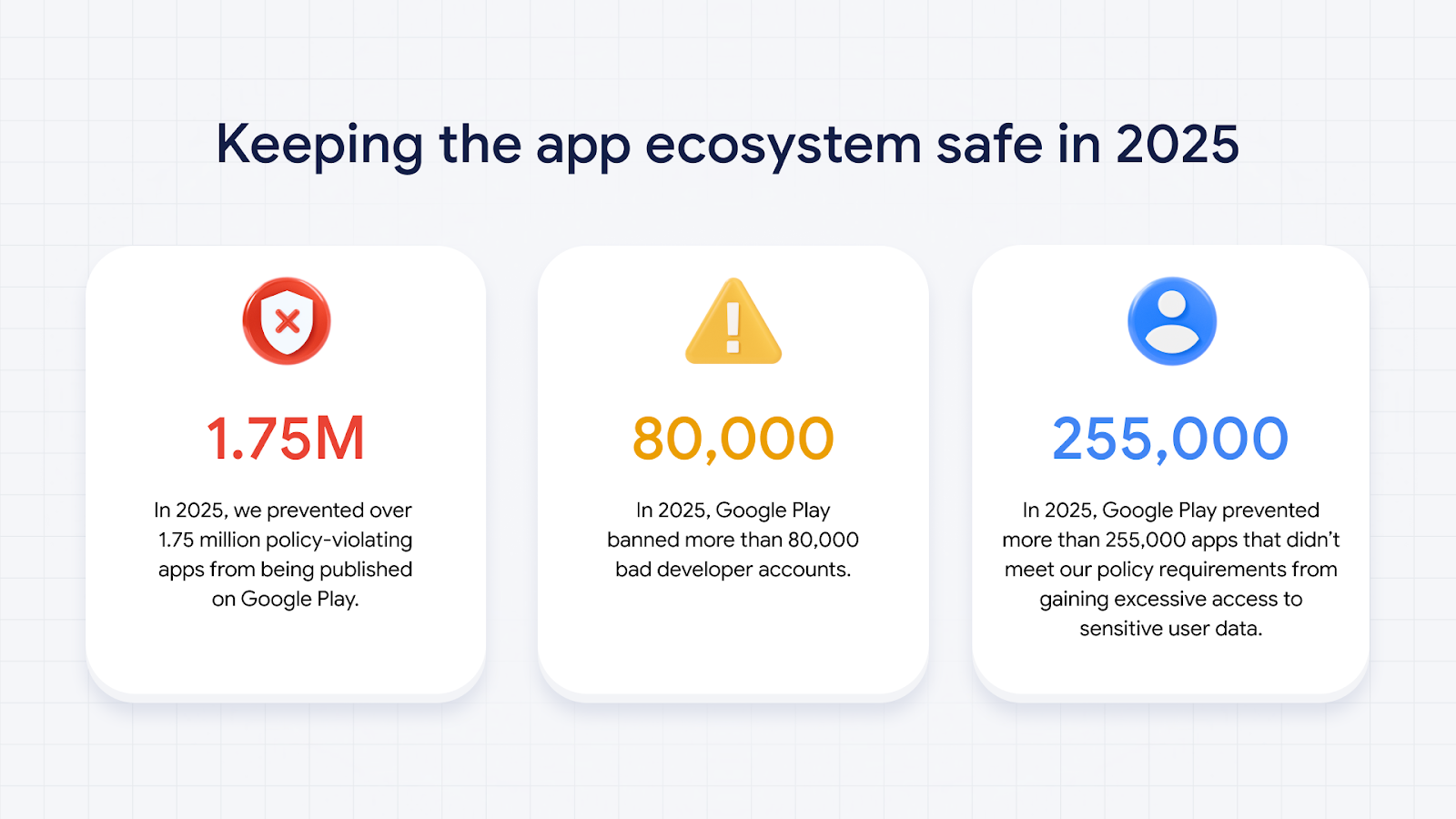
Fewer bad actors are targeting Google Play with malicious apps, the company says, a shift that the tech giant credits with its increased investments in proactive security systems and AI technology.
In its latest Android app ecosystem safety report released on Thursday, Google said it prevented 1.75 million policy-violating apps from being published on Google Play in 2025, down from 2.36 million in 2024 and 2.28 million in 2023.
The annual report offers a look at how Google is keeping Android users safe by reviewing and monitoring apps to protect against malware, financial fraud, privacy invasions, sneaky subscriptions, and other threats.
For instance, Google says it banned more than 80,000 developer accounts in 2025 that had tried to publish these types of bad apps. That figure is also down year-over-year from 158,000 in 2024, and 333,000 in 2023.

Google touted how its investments in AI and other real-time defenses have helped fight these sorts of threats, but also how they served as a deterrent.
“Initiatives like developer verification, mandatory pre-review checks, and testing requirements have raised the bar for the Google Play ecosystem, significantly reducing the paths for bad actors to enter,” the company’s blog post explained, adding that its “AI-powered, multi-layer protections” have been “discouraging bad actors from publishing malicious apps.”
Google noted it now runs over 10,000 safety checks on every app it publishes and continues to recheck apps after publication. The company has also integrated its latest generative AI models into the app review process, which has helped human reviewers find more complex malicious patterns faster. Google said it plans to increase its AI investments in 2026 to stay ahead of emerging threats.
In addition, Google said it prevented more than 255,000 apps from gaining excessive access to sensitive user data, a figure that’s down from 1.3 million in 2024. The company also blocked 160 million spam ratings and reviews last year, and prevented an average 0.5-star rating drop for apps targeted by review bombing.
Meanwhile, Android’s defense system, known as Google Play Protect, identified more than 27 million new malicious apps, and warned users or blocked the app from running. That’s an increase from the 13 million non-Play Store apps identified in 2024 and five million seen in 2023. These increases seem to suggest that bad actors are now more often avoiding the Play Store when targeting users with their malicious apps.

When the Executive Branch soft-launched in Washington, DC, last spring, the private club’s initial buzz centered on its starry roster of backers and founding members. The president’s eldest son, Donald Trump Jr., is one of the club’s several co-owners, according to previous reporting. Founding members reportedly include Trump administration AI czar David Sacks and his All-In podcast cohost Chamath Palihapitiya, as well as crypto bigwigs Tyler and Cameron Winklevoss.
“We wanted to create something new, hipper, and Trump-aligned,” Sacks said at the time. Proximity to Trumpworld didn’t come cheap; though the club headquarters is located in a basement space behind a shopping complex, fees to join are reportedly as high as $500,000.
The initial wave of press for the MAGA hot spot identified Trump Jr. and his business associates Omeed Malik, Chris Buskirk, and Zach and Alex Witkoff as the club’s co-owners. A Mother Jones report later revealed the involvement of David Sacks’ frequent business associate Glenn Gilmore, a San Francisco Bay Area real estate developer who is given a variety of titles on official documents, including co-owner, managing member, director, and president.
But according to corporate filings reviewed by WIRED, there’s another key figure whose involvement has not been previously reported and whose connection to its more famous founders remains unclear: Sean LoJacono, a former Metropolitan Police Department cop in Washington, DC, who gained local notoriety for his role in a stop and frisk that resulted in a lawsuit.
According to the legal complaint, in 2017, after questioning a man named M.B. Cottingham for a suspected open-container-law violation, LoJacono conducted a body search. A recording of the incident went viral on YouTube, sparking intense debate over aggressive policing tactics. “He stuck his finger in my crack,” Cottingham says in the video. “Stop fingering me, though, bro.” The next year, the American Civil Liberties Union of the District of Columbia sued LoJacono on behalf of Cottingham, alleging that LoJacono had “jammed his fingers between Mr. Cottingham’s buttocks and grabbed his genitals.” Cottingham agreed to settle his lawsuit with LoJacono and was paid an undisclosed amount by the District of Columbia (which admitted no wrongdoing) in 2018.
The MPD announced its intention to dismiss LoJacono following an internal affairs investigation, which concluded that the Cottingham search was not a fireable offense but that another search he had conducted the same day was. By early 2019, LoJacono had appealed his dismissal, arguing in well-publicized hearings that he had conducted searches according to how he had been taught by fellow officers in the field. Initially, the dismissal was upheld. However, the police union’s collective bargaining agreement enabled LoJacono to further appeal to a third-party arbitrator, which in November 2023 ruled in LoJacono’s favor.
Instead of returning to the police force, though, LoJacono has gone down a different path. A LinkedIn account featuring LoJacono’s name, likeness, and employment history lists his profession as “Director of Security and Facilities Management” at an unnamed private club in Washington, DC, from June 2025 to the present. Official incorporation paperwork for the Executive Branch Limited Liability Company filed to the Government of the District of Columbia’s corporations division in March 2025, shortly before the club launched, lists LoJacono as the “beneficial owner” of the business. The address listed on the paperwork matches the Executive Branch’s location. Donald Trump Jr. and other reported owners are not listed on the paperwork; Gilmore is listed on this document as the company’s “organizer.”
The paperwork indicates that LoJacono is considered a beneficial owner of a legal entity associated with the Executive Branch. But what does that mean, exactly?


For those watching the calendar closely, every passing day is bringing us closer to the arrival of spring. For many, that means it is almost time to glove up and get to work whipping their gardens and green spaces back into shape after they’ve spent the past few months battling snow, ice, and freezing temps. Folks in that category might want to know that The Home Depot is looking to outfit lawn care DIYers with some necessary gear via the “Let It Spring” sales event.
For the record, this is not the sort of holiday sale where certain items are discounted for a day or a long weekend. But it is sort of a holiday-styled event, with Home Depot’s marketing team essentially taking an advent calendar approach to its spring sales celebration via a 20-day countdown package. According to the company, the “Let It Spring” deal will provide serious savings to participants, essentially promising them $250 worth of tools and other helpful items.
All that gear will arrive in the form of a physical calendar-styled box which participants must purchase for $49.99. It is not, however, clear which specific items will be included inside, or if budget-friendly tool kits might feature in the mix. Rather, the Spring Countdown Calendar will feature “curated product SKUs across key spring categories,” covering everything from lawn care to grilling and outdoor entertainment. But according to one HD representative’s comments, each kit will include “practical tools and seasonal favorites” that “you’ll actually use.”
Here’s how to ring in Spring with The Home Depot deal
Given the general setup of Home Depot’s Let It Spring Countdown Calendar approach, there’s no guarantee that participants will find the exact items they are looking for to accomplish their Spring time yard tune-up. It also seems unlikely that power tools from Home Depot’s exclusive brand Ryobi will be included in the mix. Moreover, we should note the event’s press release states that not every Home Depot shopper will be able to take advantage of the Let It Spring deal, as the calendars will be available only “while supplies last.”
Whatever the case, the sale seems pretty fun in its overall design. Instead of solely providing online sales specials, it essentially works like an advent calendar, with participants opening a “door” in their calendar box every day to reveal a new item. They’ll do so over the final 20 days leading up to the first day of spring, which is officially March 20th in 2026. But you can, presumably, also just open them all the moment the box arrives if you like. It’s also not clear how many of the items are physically in the box vs. coupons or other discounts.
Along with tools, cleaning gear, and garden-friendly items, every door opened also promises to provide inspiration for spring projects and tips on how best to accomplish them. Per the press release, The Home Depot will be offering its Let It Spring Countdown Calendar to consumers in two separate drops, the first coming on February 20, 2026, and the second coming 5 days later on February 25. If you miss out, you can reportedly still follow the fun and potentially even score a deal on Home Depot’s website.
David Silver, a British AI researcher known for his role at Google’s DeepMind lab, has helped build some of the most influential AI systems and is now leading his own ambitious start-up. He is in the middle of raising a $1 billion seed round for his new London-based venture, Ineffable Intelligence.
If the fundraising will be completed, would be the largest seed round ever seen in Europe.
The round is being led by Sequoia Capital, with titans such as Nvidia, Google and Microsoft reportedly in talks to participate, according to industry sources familiar with the deal.
The proposed investment would place Ineffable Intelligence’s pre-money valuation at around $4 billion, an eye-watering figure for a company that hasn’t yet shipped a product.

The 💜 of EU tech
The latest rumblings from the EU tech scene, a story from our wise ol’ founder Boris, and some questionable AI art. It’s free, every week, in your inbox. Sign up now!
David Silver’s name is synonymous with some of the most memorable milestones in AI. During more than a decade at Google DeepMind, he helped develop AlphaGo, the first AI to defeat a world champion at the ancient game of Go, and later AlphaStar, which bested professional players in StarCraft II.
His work has shaped how modern AI systems learn and make decisions.
In late 2025, David Silver left DeepMind, where he also contributed to the development of the Gemini family of large language models, to launch Ineffable Intelligence. .
In the current days billion-dollar seed rounds are no longer unheard of, but they remain exceptionally rare, especially in Europe.
If Sequoia and its partners follow through on their commitments, the round would serve as both a vote of confidence in David Silver’s vision and a broader signal that venture capitalists are increasingly willing to fund ambitious, research-driven AI ventures well before traditional product milestone
This could be a new chapter for European AI
The sheer size of the potential round also reshapes the narrative around Europe’s role in the global AI race.
Historically, most of the industry’s capital and rich technical talent have gravitated to Silicon Valley and other U.S. hubs. A £737 million-plus round led by a top U.S. investor shows that world-class AI ideas can still attract world-class capital in Europe.
David Silver’s dual role – as an entrepreneur and as a professor at University College London, hints at a blend of academic ambition and commercial pressure that may define the next era of AI innovation.
His thesis suggests that the path to genuinely powerful AI may not be simply scaling up models, but teaching systems to learn and improve through real-world experience, a direction he believes could outpace approaches grounded solely in data accumulated from human interactions.
Whether Ineffable Intelligence ultimately delivers on its lofty vision remains to be seen.
But the enthusiasm around its fundraising reflects a broader trend: AI is entering a phase where conviction in founders and ideas can translate directly into unprecedented capital flows.
For Europe, a successful $1 billion cap table would be a milestone moment, not just financially, but symbolically, in positioning the continent as a contender for the future of AI research and deployment.

Google’s announcement that its Gemini app now writes music for you isn’t just one of those “blowing my mind” product updates. It feels like a symbolic surrender to a long-standing refrain from Big Tech: creative work is now just another checkbox for a machine.
If you don’t know what I am talking about, yesterday Google launched a new feature, Lyria 3, in the Gemini app, that allows us to cook up 30-second tracks complete with lyrics and cover art from a text prompt or a photo, of course, generated by Nano Banana; basically, no instruments, no experience, no pesky tactile skill required.
It’s essentially a LEGO set for “songs” that lasts about as long as a TikTok loop. They say it’s designed for YouTube Creators, and I tend to agree with them, because you can’t make to much with 30 seconds.
Still, the underlying problem is another one, as I am seeing different projects/songs made with AI, including AI artists. And this is what I want to highlight in this piece.
“Behind every beautiful thing, there’s some kind of pain, “ said Bob Dylan, and I could not agree more.
If we take a look at the history ( art, music, literature, poetry, and so on), the main fuel for creation was indeed pain.
Now, how should I put this? Probably the only pain that Lyria can feel is more like a faint server-overload alert than heartbreak.
Real songwriters know that soul isn’t born in a 30-second prompt, it’s extracted through years of mistakes, late nights, losses, and tiny revelations.
Call it a toy if you like. Google will, too.
They even watermark the outputs with a SynthID tag so the 30-second ditties are officially AI-generated, not “inspired.” That’s a nod to copyright concerns, but it also reads like an admission: these aren’t really art, they’re chemical by-products of pattern statistics.
What’s striking isn’t the novelty. Much of this has been possible in labs and APIs for years, and creators have been experimenting with generative music tools as collaborators.
What Lyria 3 does, and what makes this moment worth watching, is normalising the idea that anyone can “write” a song with a chatbot and a mood descriptor. That’s not empowerment; it’s a devaluation of craft.
Just because you pay a subscription to Suno, that’s another AI music generator, and that one is more complex, that doesn’t make you an artist or a singer. Just because you learn how to write a prompt for any LLM model and generates you pages, you are not a writer.
Imagine a world where every blog has AI-generated copy, not that we are not almost in the middle of this, and every company can churn out half-baked music for their ads or social posts.
In that economy, a professional songwriter’s unique skill becomes as optional as knowing how to use a metronome.
You could ask Gemini for an “emotional indie ballad about a lost sock,” and voilà, you have something. Whether it has actual coherence or soul is left to the listener to decide. It is fun to use it with your friends, shorts, to impress your date.
Video: Gemini Lyria Music Generation Feature – Socks, uploaded by Google on YouTube
Still, Lyria 3’s music is capped at 30 seconds, and that’s no accident. It sidesteps deeper legal and ethical quarrels about training data and mimicry of existing works by keeping outputs short and legally fuzzy. That’s a thumbs up from me.
But even within that limit, it’s now possible for someone with no craft or cultural context to generate riffs, lyrics, and chord progressions that sound, to the casual ear, adequately musical. In an attention economy obsessed with shareability, “adequate” quickly becomes plenty.
This matters because real songs, the ones that endure, that carry human experience, aren’t just collections of musical atoms. They’re shaped by story, risk, cultural memory, and sometimes contradiction.
One of my favorite artists, Tom Waits, said, ”I don’t have a formal background. I learned from listening to records, from talking to people, from hanging around record stores, and hanging around musicians and saying, “Hey, how did you do that? Do that again. Let me see how you did that.”
This was the research and prompting before, and it’s not only about reducing time, or getting things faster, and “having more time for you.”
It’s about the entire process, the contact with other artists, humans, and IDEAS.
Those are qualities machines can mimic but not originate. When the machines own the first pass at creation, and the commercial ecosystem embraces that output because it is cheap and fast, the incentives shift. Not gradually. Suddenly.
The record industry is already grappling with AI. Streaming services, publishers, and even labels have begun experimenting with algorithmic playlists and automated composition.
What Gemini’s Lyria 3 does is extend that experiment to public perception. A whole generation may come to think that “making music” means typing a description and choosing a style. Songwriting becomes a UX problem, not a craft one.
That raises a serious question: in a world where AI can conjure up a half-decent hook on demand, what will distinguish professional artists?
If the answer is only brand story or marketing muscle, we aren’t celebrating creativity; we are monetising it out of existence.
Tech companies like Google will frame this as liberation. And in a literal sense, anyone who’s ever wanted to hear a short tune about a sock’s existential crisis now can. But liberation without value for the creator is just consumerism by another name.
Lyria 3 might be good for GIF soundtracks and social clips, and TikTok viral reels, but it doesn’t make professional musicians obsolete; it makes their work less necessary to the platforms that reward hyper-consumable content.
That’s a different threat from outright replacement: it’s obsolescence by trivialisation.
If AI is going to be part of musical creation, then let it be as an assistant to the composer, someone who improves ideas, not replaces them. What we’re seeing with Gemini is not collaboration but outsourcing.
And the lesson for artists isn’t to fear the algorithm. It’s to insist on clarity about where AI replaces labour and where it augments human sensibility.
Because once the marketplace equates the two, the humans who do the work will be the ones left asking for royalties in a language no one else wants to speak.
And, as a personal recommendation, not sponsored, there are streaming platforms like Deezer that have built AI detection tools that flag and label AI-generated tracks, excluding them from recommendations and royalties so that human songwriters aren’t buried under synthetic spam, and consumers can make the difference between AI and human.
If you care about preserving real artistry in a world of text-to-tune generative models, start paying attention to how platforms handle AI-tagging and choose services that give you transparency about what you’re actually listening to.
Yet, I’m not here to throw shade at Lyria 3; if anything, the idea of letting people turn a photo or a mood into a short track sounds like fun for casual use and creative experimentation. It is what Google says it’s meant for.
Yet the reality is that as these models proliferate, we risk confusing novelty with art. And here, the big tech companies are not the ones to blame, but us.

The race to advance conversational AI in the living room is heating up, with YouTube being the latest to expand its tool to smart TVs, gaming consoles, and streaming devices.
This experimental feature, previously limited to mobile devices and the web, now brings conversational AI directly to the largest screen in the home, allowing users to ask questions about content without leaving the video they’re watching.
According to YouTube’s support page, eligible users can click the “Ask” button on their TV screen to summon the AI assistant. The feature offers suggested questions based on the video, or users can use their remote’s microphone button to ask anything related to the video. For instance, they might ask about recipe ingredients or the background of a song’s lyrics, and receive instant answers without pausing or leaving the app.
Currently, this feature is available to a select group of users over 18 and supports English, Hindi, Spanish, Portuguese, and Korean.
YouTube first launched this conversational AI tool in 2024 to help viewers explore content in greater depth. The expansion to TVs comes as more Americans now access YouTube through their television than ever before. A Nielsen report from April 2025 found that YouTube accounted for 12.4% of total television audience time, surpassing major platforms like Disney and Netflix.
Other companies are also making significant strides with their conversational AI technologies. Amazon rolled out Alexa+ on Fire TV devices, enabling users to engage in natural conversations and ask Alexa+ for tailored content recommendations, hunt for specific scenes in movies, or even ask questions about actors and filming locations.
Meanwhile, Roku has enhanced its AI voice assistant to handle open-ended questions about movies and shows, such as “What’s this movie about?” or “How scary is it?” Netflix is also testing its AI search experience.
Techcrunch event
Boston, MA
|
June 23, 2026
Another way YouTube has tried to improve its TV experience with AI is the recent launch of a feature that automatically enhances videos uploaded at lower resolutions to full HD.
Additionally, the company continues to launch other AI features, like a comments summarizer that helps viewers catch up on video discussions and an AI-driven search results carousel. In January, the company announced that creators will soon be able to make Shorts using AI-generated versions of their own likeness.
Last week, YouTube launched a dedicated app for the Apple Vision Pro, too, letting users watch their favorite content on a theater-sized virtual screen in an immersive environment.
No matter how well your favorite streaming service’s algorithm knows you, come February, sometimes even the smartest technology can be swayed by the power of Valentine’s Day. Hence all those romance-heavy promos at the top of your screen, from Ryan Murphy’s Love Story to Netflix’s ever-proliferating Love Is Blind.
But love—romantic or otherwise—can be found in the oddest of places, including the radioactive wasteland of postapocalyptic Los Angeles, Westeros in the rare midst of relative peace, or behind the scenes of the latest MCU blockbuster.
Whether you’re in the mood for a reliable sci-fi gem or an enlightening new docuseries courtesy of Marty Supreme director Josh Safdie, February’s streaming lineup offers plenty of options to swoon over. Here are the 10 shows we’re falling for right now.
Star Trek: Starfleet Academy
Picking up from roughly where Bryan Fuller and Alex Kurtzman’s Star Trek: Discovery left off when it ended in 2024, Starfleet Academy might be best described as Star Trek for the TikTok age … or simply the franchise’s horniest iteration. Set in the 32nd century, it follows the first group of cadets to train at the Academy in more than a century, giving it license to play out more like a college soap opera à la Hulu’s Tell Me Lies. Fortunately, Hollywood heavyweights Holly Hunter and Paul Giamatti are there to refocus these wannabe Starfleet officers on boldly going where no one has gone before.
While franchise diehards may find it all a bit too lightweight for their tastes, it’s impossible to not appreciate the show’s obvious nostalgia for the iconic series that started it all and Gene Roddenberry’s fierce commitment to diversity, which has unfortunately become an ugly word to the country’s powers that be—and an aspect of the original show that appears to have gone over self-described Trekkie Stephen Miller’s head completely.
Wonder Man
What do you do if you’re Disney and realize the Marvel movies that once regularly crossed the $1 billion box office threshold while barely lifting a Nano Gauntlet are now facing a seriously dwindling ROI problem? You poke fun at the problem with a playfully self-aware buddy comedy that smartly doesn’t require any real knowledge of the MCU on the audience’s part.

Kraken xStocks Surpasses $25B in Tokenized Stock Volume

Argentina strike empties Buenos Aires streets

Alysa Liu wins gold in figure skating freeskate, ends 24-year US drought


-

 Video3 days ago
Bitcoin: We’re Entering The Most Dangerous Phase
-

 Tech5 days ago
Luxman Enters Its Second Century with the D-100 SACD Player and L-100 Integrated Amplifier
-

 Crypto World3 days ago
Can XRP Price Successfully Register a 33% Breakout Past $2?
-

 Sports3 days ago
GB's semi-final hopes hang by thread after loss to Switzerland
-

 Video6 days ago
The Final Warning: XRP Is Entering The Chaos Zone
-
 Tech3 days ago
The Music Industry Enters Its Less-Is-More Era
-

 Business2 days ago
Infosys Limited (INFY) Discusses Tech Transitions and the Unique Aspects of the AI Era Transcript
-

 Entertainment1 day ago
Kunal Nayyar’s Secret Acts Of Kindness Sparks Online Discussion
-

 Video3 days ago
Financial Statement Analysis | Complete Chapter Revision in 10 Minutes | Class 12 Board exam 2026
-

 Tech2 days ago
Retro Rover: LT6502 Laptop Packs 8-Bit Power On The Go
-

 Crypto World6 days ago
Bhutan’s Bitcoin sales enter third straight week with $6.7M BTC offload
-
 Sports18 hours ago
Clearing the boundary, crossing into history: J&K end 67-year wait, enter maiden Ranji Trophy final | Cricket News
-

 Entertainment1 day ago
Dolores Catania Blasts Rob Rausch For Turning On ‘Housewives’ On ‘Traitors’
-

 Crypto World6 days ago
Kalshi enters $9B sports insurance market with new brokerage deal
-

 Business2 days ago
Tesla avoids California suspension after ending ‘autopilot’ marketing
-
 NewsBeat4 days ago
The strange Cambridgeshire cemetery that forbade church rectors from entering
-

 Crypto World1 day ago
WLFI Crypto Surges Toward $0.12 as Whale Buys $2.75M Before Trump-Linked Forum
-
 NewsBeat4 days ago
Man dies after entering floodwater during police pursuit
-

 NewsBeat5 days ago
UK construction company enters administration, records show
-

 Crypto World6 days ago
BlackRock Enters DeFi Via UniSwap, Bitcoin Stages Modest Recovery