







Connect with us

Tech

Sony says gamers don’t own their digital purchases, but 44 examples of its own wording suggest otherwise

Published

on

A hot potato: Sony has argued in its ownership lawsuit that people don’t actually own their digital purchases. But that seems to contradict the 44 instances documented by the Consumer Rights Wiki, all of which show the gaming giant clearly stating that people do in fact “own” their games.

The collection spans PlayStation support pages, store listings, and official blog posts, with live links, archived snapshots, and highlighted screenshots showing exactly where Sony uses ownership language.

The project comes from the community around the Consumer Rights Wiki, founded by consumer advocate Louis Rossmann. Its collection covers support articles, promotional pages, store listings, and official blog posts, all showing that language suggesting ownership extends well beyond the checkout button.

One particularly clear example appears in Sony’s instructions for upgrading PS4 games to their PS5 versions. The page explicitly refers to an eligible “digital PS4 game you already own.” That leaves little room to suggest the wording applies exclusively to physical discs.

Advertisement

There’s also Sony’s explanation of its PlayStation Store ratings system. In an August 2025 blog post, the company said players “must own the game before submitting a rating.” It appears that ownership is a perfectly useful concept when explaining who gets to leave feedback.

The lawsuit was filed in June by four California customers who allege Sony’s checkout does not adequately disclose that their purchases grant revocable licenses. They say the licensing notice is small and insufficiently prominent, while buttons such as “Buy Now” and “Confirm Purchase” suggest ownership.

California’s AB 2426, which took effect in January 2025, restricts that language unless sellers obtain the required acknowledgment or provide a clear, conspicuous licensing disclosure. The dispute concerns what customers are told when paying for games, rather than whether buying a copy transfers the publisher’s intellectual property.

Sony argues its licensing terms make the arrangement clear and that “reasonable consumers would not be misled.” But the wiki’s examples certainly illustrate why people would think they do own these items.

Advertisement

Other storefronts have been more explicit about ownership. Steam added a shopping-cart notice in October 2024 explaining that digital purchases grant licenses. Ubisoft used a similar ownership defense after The Crew’s shutdown left paying customers unable to play.

For now, Sony is seeking individual arbitration, citing terms it says all four plaintiffs accepted without opting out. It has alternatively requested dismissal, with a hearing scheduled for October 1. Whether the wiki’s collection influences proceedings remains to be seen, but it certainly adds to the growing PR nightmare Sony has become embroiled in.

Source link

Advertisement
Continue Reading
Click to comment

You must be logged in to post a comment Login

Leave a Reply

Tech

First Look at ESOX X2, an Electric UGV with Four Quiet Motors and a Thousand Newton-Meters for the Last Mile

Published

on

ESOX X2 Unmanned Ground Vehicle UGV
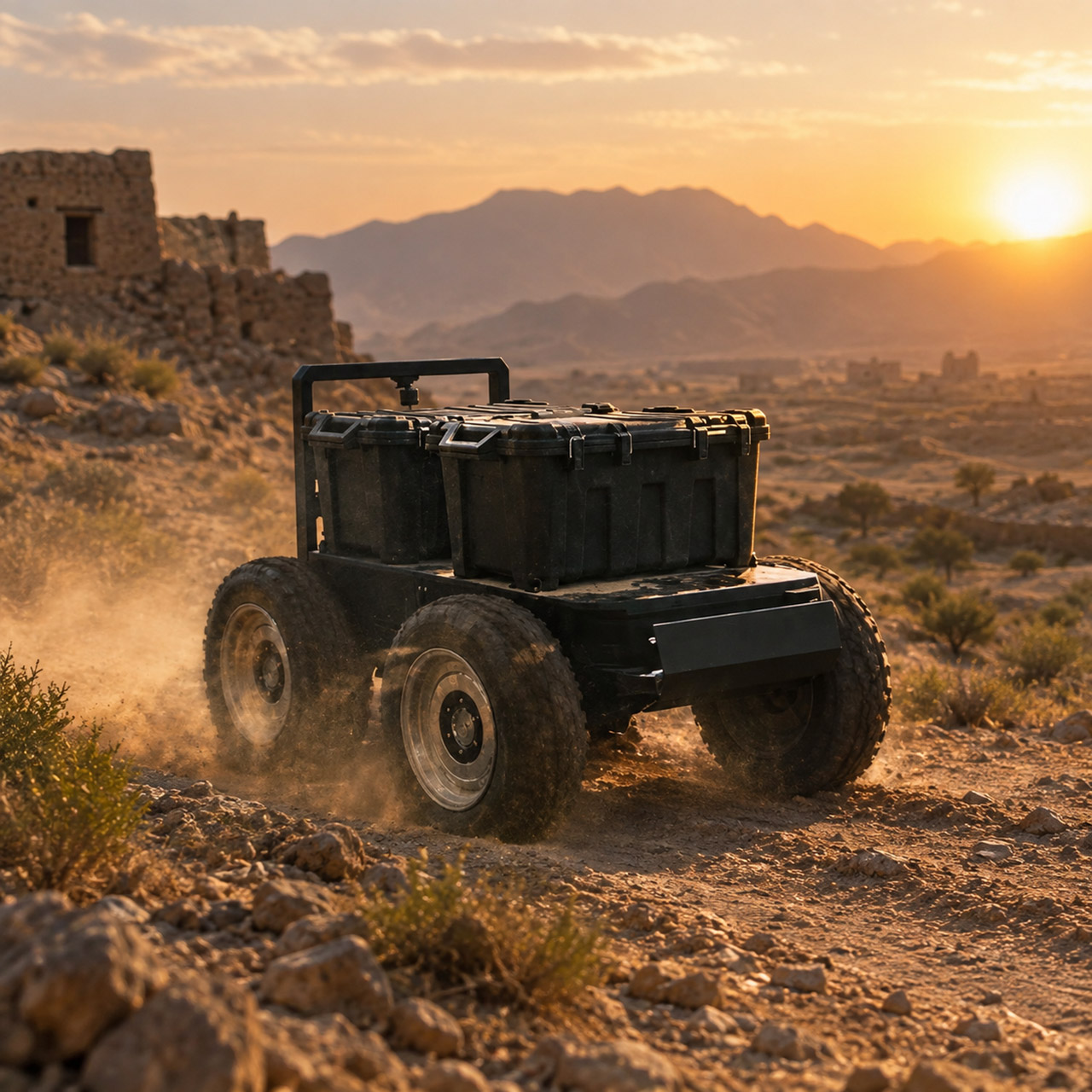
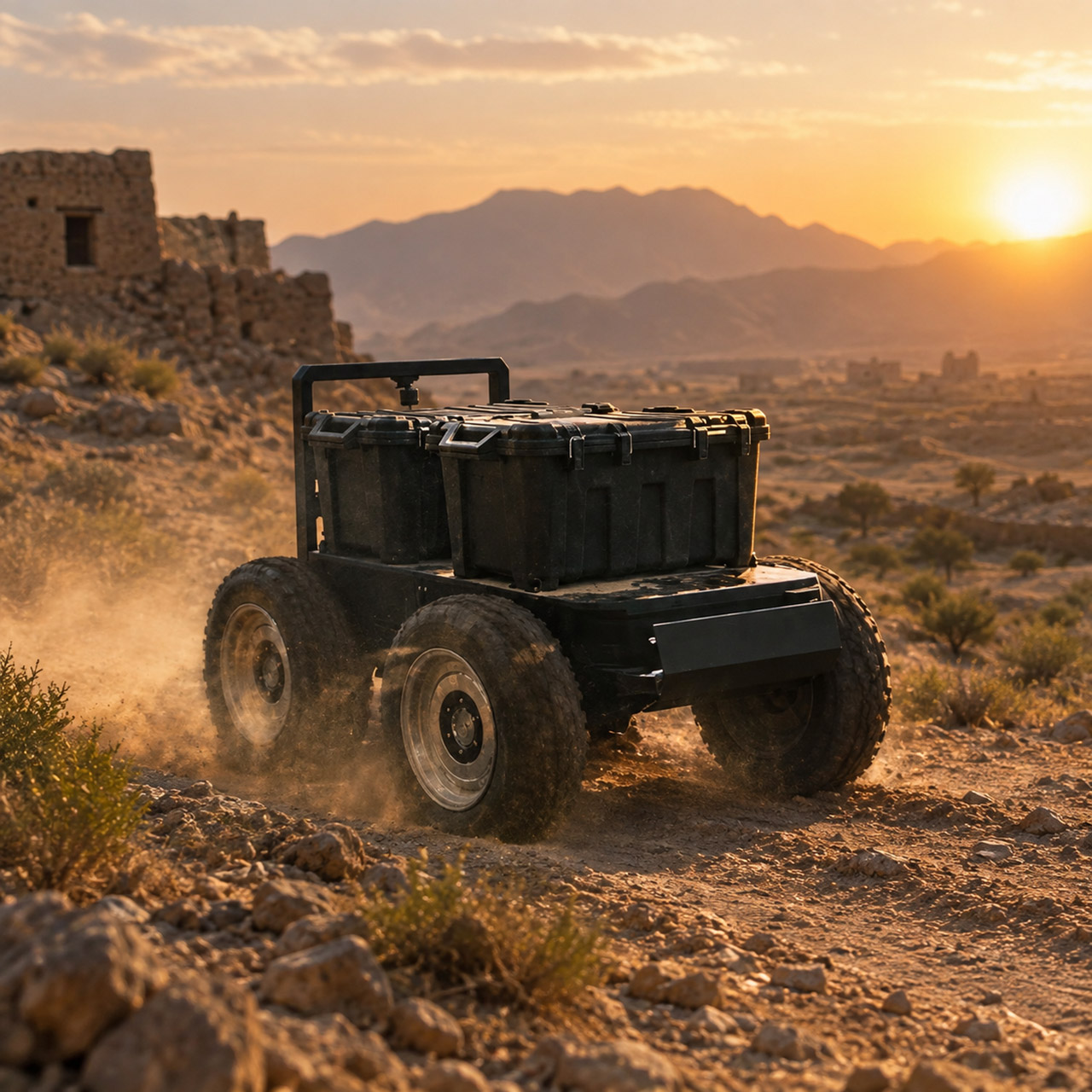
Soldiers still burn hours and calories moving water, ammunition, and radios across ground that wrecks ordinary trucks. Pack animals once filled that gap. Conventional electric robots often stall in the same mud, sand, snow, and rubble because their motors sit in the middle of the chassis and feed torque through gearboxes and shafts that lose grip the moment the surface turns ugly. ESOX Group finished a compact uncrewed platform, called the X2, this summer that tries to skip that failure.


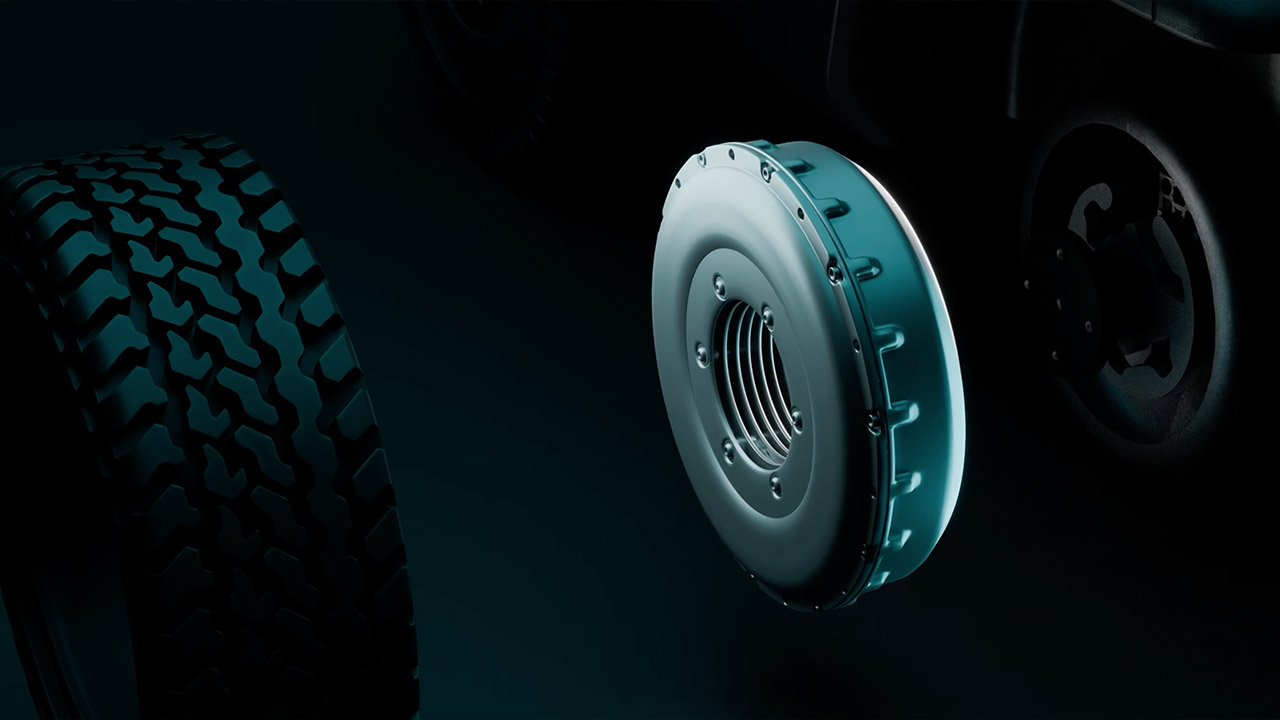
Four in-wheel motors, specifically Theron motors, lie within the hubs and produce 1,000 newton meters of torque, 250 of which goes to each corner. That’s a lot of power without the need for a gearbox or driveshaft, or the additional weight that comes with them. Devan Roberts, their VP of defense programs, believes that this arrangement eliminates all known flaws in uncrewed ground vehicles and that nothing, no terrain, gradient, or payload, can halt it in its tracks. These motors are relatively quiet and cold to run, which is significant because heat and noise will not trip all of the sensors designed to detect engine signatures.


Amphibious Remote Control Car, 1:18 Monster Truck Toys for Boys RC Cars
  • 2.4 GHz Remote Control Car – 1:18 scale cool design, waterproof RC truck toys made of premium material and sturdy, with LED lights, waterproof remote…
  • High Quality & DIY Removable Toys RC Cars – This remote control monster truck structure design quality, flexibility and strength in one. The rc truck…
  • All Terrain Amphibious Monster Truck – 4-wheel drive off-road design rc trucks for kids, with high-quality tires (shock absorption, strong grip…

ESOX X2 Unmanned Ground Vehicle UGV
The platform weighs 300 kilograms (about 661 pounds), and testers have already successfully loaded another 300 kilos to match the vehicle’s weight. Later on, they hope to increase it to 600 kilograms. An 8 kilowatt hour solid-state battery powers things, divided into two 4 kilowatt hour modules. ESOX asserts that this chemistry stores about twice the energy of lithium-ion cells found in fielded military vehicles, giving them a longer range or allowing them to battle for the same amount of time but with less weight. If that wasn’t enough, the batteries have a lesser fire danger than liquid electrolyte packs.

ESOX X2 Unmanned Ground Vehicle UGV
The chassis is much smaller than a typical four-by-four, and early test cars included 12 inch motors in a tank-steer layout, as well as some sophisticated airless tires designed to withstand punctures. ESOX OS software allows engineers to create a digital twin of the vehicle before they begin connecting gear together. Once deployed, the device begins transmitting live telematics and sensor data and accepts over-the-air updates for the duration of the vehicle’s life. All of the sensor packages, autonomous modes, and communication layers can be altered without affecting the motors or batteries, so you can essentially keep the core and construct your own versions around it.

ESOX X2 Unmanned Ground Vehicle UGV
ESOX Group is very new, having formed from Donut Lab’s defense division and combined with Finnish unmanned systems expert ESOX Aero in late 2025. They have teams in the UK, Finland, and Estonia, and their CEO, Dan Walmsley, previously worked at McLaren Automotive. They unveiled a tech demonstrator at CES 2026, and customer pilots began in late August, once the platform was declared ready. Any Tank Steer metrics, like as 120kW peak and over 200 kilometers of range, refer to the general design rather than the specific 1,000-newton-meter X2 configuration that is currently being tested.
[Source]

Source link

Advertisement
Continue Reading

Tech

Apple’s iPhone 18 Pro vs. 14 Pro: The Four-Year Difference Between Apple’s Pro Phones

Published

on

Apple has just announced its latest premium flagship, the iPhone 18 Pro, at the company’s recent Surprise and Shine event on Wednesday. With a starting price of $1,199, the iPhone 18 Pro has a few new features over its predecessor, such as a variable aperture camera and a faster A20 Pro chip. But that probably isn’t enough to prompt most people with an iPhone 15 Pro, 16 Pro or 17 Pro — all of which are still excellent.

If you’re still holding on to the iPhone 14 Pro, however, that’s another story. Not only has it been four years since that phone debuted, but it’s also the last Pro-level iPhone to have a Lightning connection; every iPhone since has a USB-C port. Lightning accessories and adapters still exist for now, but they’ll eventually be harder to find. Meanwhile, USB-C is a lot more ubiquitous. 

Beyond moving on from older hardware and aging batteries, upgrading to the iPhone 18 Pro is also a leap forward in terms of specs and features. Some things remain the same, but there are a lot of upgrades too. Four years make a pretty big difference in the phone world. 

Here’s a more detailed breakdown outlining the difference between the iPhone 14 Pro and the iPhone 18 Pro. 

Advertisement
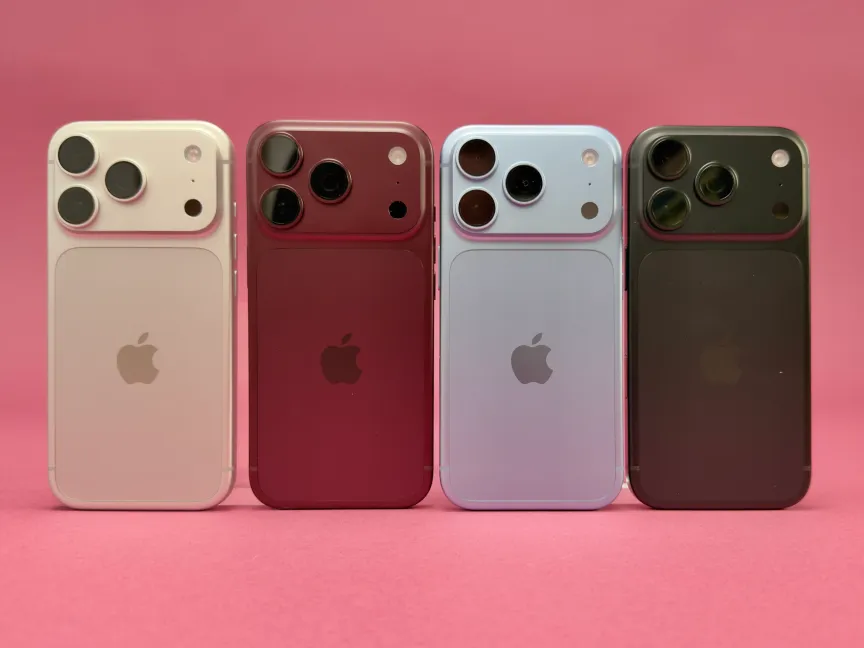
Four iPhone 18 Pro max models
Apple’s iPhone 18 Pro line comes in four colors: silver, burgundy, glacier and black.

Design and display

Display-wise, the 14 Pro and the 18 Pro might seem rather similar. The iPhone 14 Pro has a 6.1-inch Super Retina XDR OLED display with a 120Hz refresh rate, while the iPhone 18 Pro has a slightly bigger 6.3-inch OLED display, also with a 120Hz refresh rate. Both also have 460ppi.

There are a few notable differences, however. The iPhone 18 Pro does have 3,000 nits of peak brightness, while the iPhone 14 Pro has only 1,000 nits of peak brightness. The 18 Pro also features an upgraded Dynamic Island with additional features that can show three activities at once

As for design, the iPhone 18 Pro has an action button and a camera control button on the side, adding additional functionality to the phone. 

The Dynamic Island debuted on the iPhone 14 Pro (pictured), but is now able to show three different activities at once on the iPhone 18 Pro.

Celso Bulgatti/CNET

Cameras

The iPhone 18 Pro represents a pretty significant upgrade in the camera department, especially over the iPhone 14 Pro. The iPhone 14 Pro has three rear cameras: a 48-megapixel wide, a 12-megapixel ultrawide and a 12-megapixel telephoto. This was pretty advanced at the time, but Apple has added a lot of new camera features in the years since

The iPhone 18 Pro has three rear cameras, which are all 48 megapixels across the board. It also has a variable aperture, which offers additional flexibility, especially when shooting in low-light conditions. 

Advertisement

The same goes for the front-facing camera. While the iPhone 14 Pro has a 12-megapixel camera, the iPhone 18 Pro has an 18-megapixel one. On top of that, the 18 Pro has the Center Stage capability introduced with the iPhone 17 models that automatically switches between portrait and landscape orientations without needing to rotate your phone. 

iPhone 18 Pro Hands-On: Huge Advancements in Photography

Battery and performance

While Apple doesn’t disclose official battery specs in the US, we can surmise that the iPhone 18 Pro does have improved battery life over the iPhone 14 Pro. According to Apple, the iPhone 18 Pro delivers up to 36 hours of video playback per charge, while the iPhone 14 Pro has just 23 hours of video playback per charge. The iPhone 18 Pro has wireless charging of up to 25 watts, while the iPhone 14 Pro has MagSafe charging of up to 15 watts. 

Another huge leap between the two phones is in the performance department. While the iPhone 14 Pro ships with the A16 Bionic chip, the iPhone 18 Pro ships with the A20 Pro processor, which should result in faster apps, smoother multitasking and a superior gaming experience. 

Getting the iPhone 18 Pro is also a good option if you’re considering a phone with more storage. While the 14 Pro maxes out at 1TB of storage, the 18 Pro is available in a 2TB variant. You’ll have to pay a high cost for it ($2,399 retail), but at least it’s available if you want it. 

To further compare the iPhone 18 Pro and the iPhone 14 Pro, check out the comparison chart below.

Advertisement

Apple iPhone 18 Pro vs. Apple iPhone 14 Pro

iPhone 18 Pro iPhone 14 Pro
Display size, tech, resolution, refresh rate 6.3-inch OLED, 2,622×1,206 pixels, 120Hz refresh rate 6.1-inch Super Retina XDR OLED display; 120Hz Adaptive Refresh Rate; 2,556×1,179 pixels
Pixel density 460 ppi 460 ppi
Dimensions (inches) 5.9 x 2.3 x 0.3 in 5.81 x 2.81 x 0.31 in.
Dimensions (millimeters) 150 x 71.9 x 8.75mm 147.5 x 71.5 x 7.85mm
Weight (grams, ounces) 211 g (7.4 oz) 206g (7.27 oz)
Mobile software iOS 27 iOS 16
Camera 48-megapixel (wide), 48-megapixel (ultrawide), 48-megapixel (telephoto) 48-megapixel (wide), 12-megapixel (ultrawide), 12-megapixel (telephoto)
Front-facing camera 18-megapixel 12-megapixel
Video capture 4K at 60fps 4K at 60 fps
Processor A20 Pro Apple A16 Bionic
RAM + storage RAM N/A + 256GB, 512GB, 1TB, 2TB RAM NA; 128GB, 256GB, 512GB, 1TB
Expandable storage None None
Battery Up to 24 hours Undisclosed; Apple claims 23 hours of video playback
Fingerprint sensor None (Face ID) None (Face ID)
Connector USB-C Lightning
Headphone jack None None
Special features Apple N1 wireless networking chip (Wi-Fi 7 (802.11be) with 2×2 MIMO), Bluetooth 6, Thread. Action button. Camera Control button. Dynamic Island. Apple Intelligence. Visual Intelligence. Siri AI. Dual eSIM. 1 to 3,000 nits brightness display range. IP68 resistance. Colors: black, silver, glacier, burgundy. Fast charge up to 50% in 20 minutes using 40W adapter or higher via charging cable. Fast charge up to 50% in 30 minutes using 30W adapter or higher via MagSafe Charger. Dynamic Island; Always-On display; 5G enabled; MagSafe; water resistant (IP68); wireless charging; dual-SIM capabilities (e-SIM)
US price starts at $1,199 (256GB); $1,399 (512GB); $1,799 (1TB); $2,399 (2TB) $999 (128GB), $1,099 (256GB), $1,299 (512GB), $1,499 (1TB)

Source link

Advertisement
Continue Reading

Tech

Sexually Explicit Deepfake Sites Target 100-Plus Politicians in Europe

Published

on

Almost 150 politicians across Europe have been included on harmful deepfake pornography websites over the last few years, according to new research seen by WIRED. Some of the politicians, who are overwhelmingly women, have had their likeness included in explicit videos, while others have names and photos listed in disturbing database-like entries that can link to deepfake creation tools.

Analysis of around 160 domains that host deepfake abuse and other nonconsensual sexual content, by researcher Benjamin Shultz, has found that at least 138 women members of parliament (MPs) from 22 European Union countries have appeared or been mentioned on the sites. In contrast, only nine male MPs were referenced in any way. By Shultz’s calculations, it is 33 times more likely for women MPs to be targeted by deepfake ecosystems.

“Deepfake porn is part of a much bigger trend of online hate and intimidation against women and female politicians,” says Suzanne Kröger, a Dutch member of parliament with the Progressive Netherlands group, who was impacted. Kröger, who expressed anger at what the research uncovered, says the findings are “really deeply disturbing” and help to reveal the scale of abuse. “We are politicians, we have a platform and speak out,” Kröger says. “But meanwhile, there are millions of women victims of these criminal acts.”

The research, which has been published by German digital democracy think tank Agora Digitale Transformation, focuses on national members of parliament from all 27 countries in the European Union. Shultz, a fellow at Agora and the lead researcher at the American Sunlight Project, compiled the details of more than 5,800 members of parliaments across Europe in July and then used custom search engines to find where they appeared across the deepfake websites. (The research does not include members of the European Parliament).

Advertisement

Politicians from Germany, the Netherlands, Italy, and France appeared on the websites the most, according to the findings, and the more senior a politician is, the more likely they were to be targeted. Shultz alerted all of the MPs individually and provided guidance on how the content may be removed. The websites also include depictions of celebrities, journalists, and other public figures, he says. WIRED is not naming the websites in order to not drive further attention to the abusive images.

Multiple researchers and lawmakers say that while politicians have been targeted with deepfakes for years, it can damage democratic practices and create chilling effects that may stop women and girls from becoming public figures. “This discourages women from taking office in the first place and also crowds these women out of public life,” Shultz says. “There’s so much evidence to support that this does real psychological damage. This also does reputational damage for the future if they want to fade out of politics and have another career.”

“Deepfake videos are used to intimidate politicians but also to belittle women,” says Sarah Dobbe, a Dutch Socialist Party MP, who was impacted. “It is very important that if a woman or girl is victimized in this way, she can get direct support if needed, and that the content is removed quickly.”

Across the sites he monitored, Shultz categorized multiple categories of abusive content or behavior. His results include instances where MPs appeared in content that was actively being hosted by the sites, indexed results where content had been removed, and also a number of profiles and “gateways” where potentially new content could be created.

Advertisement

Multiple websites hosted pages that include the names of MPs, official photos, and in some cases their social media profiles or personal information. Some included sections “rating” the women’s bodies, Shultz’s report says. Often next to these MP biographies were links to so-called nudifier apps or the websites’ own tools that claimed to digitally undress people. “It has all the images, all the information, and a direct link to the tool, and in three clicks you can generate,” Shultz says. “That’s just as bad as actually hosting the content.”

Since AI-created deepfakes first emerged at the end of 2017, the underlying technology to produce them has become much more accessible, and the output of the tools has become more realistic. Over time, millions of nonconsensual AI images and videos have been created, mostly by men and boys, and are often used to harass, intimidate, or blackmail women and girls, including at almost 100 schools around the world.

“These platforms are designed to run like businesses,” says Henry Ajder, an AI adviser and deepfake expert who has been tracking the ecosystem since 2018. He says that while it is not surprising that politicians are being targeted in this way, the findings are helpful for officials in Europe to understand the severity of the issue. “The whole infrastructure is set up to do this at scale with ease,” he says.

Source link

Advertisement
Continue Reading

Tech

RC Test Flight Goes Self-Driving to See if R/C Cars Can Hit 100,000 Scale Miles on a Buried Wire

Published

on

R/C Car 100,000 Scale Mile Drive Experiment
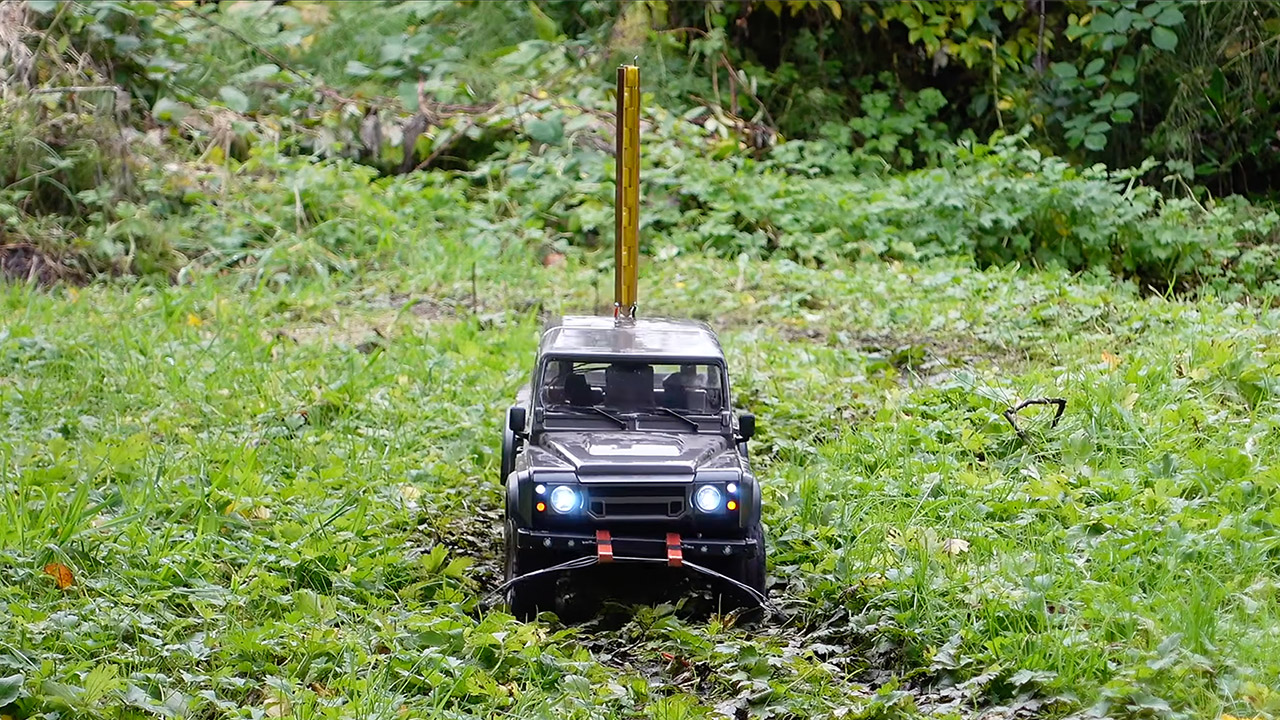
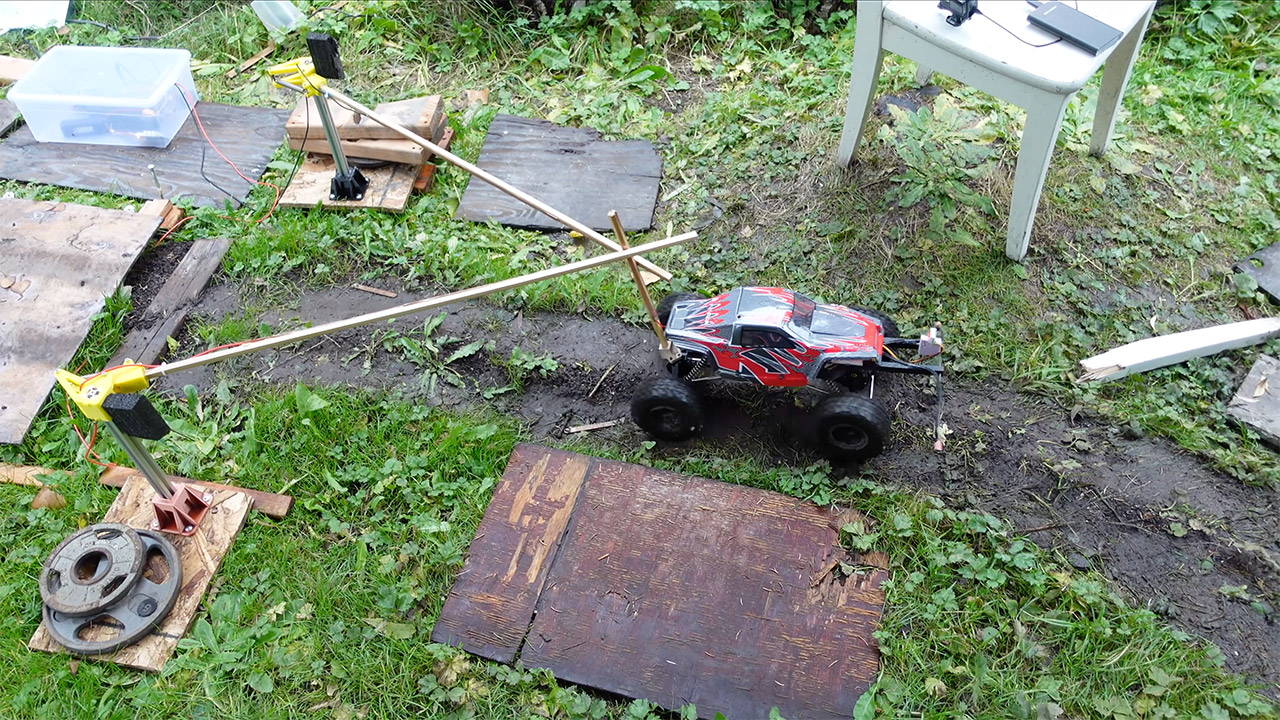
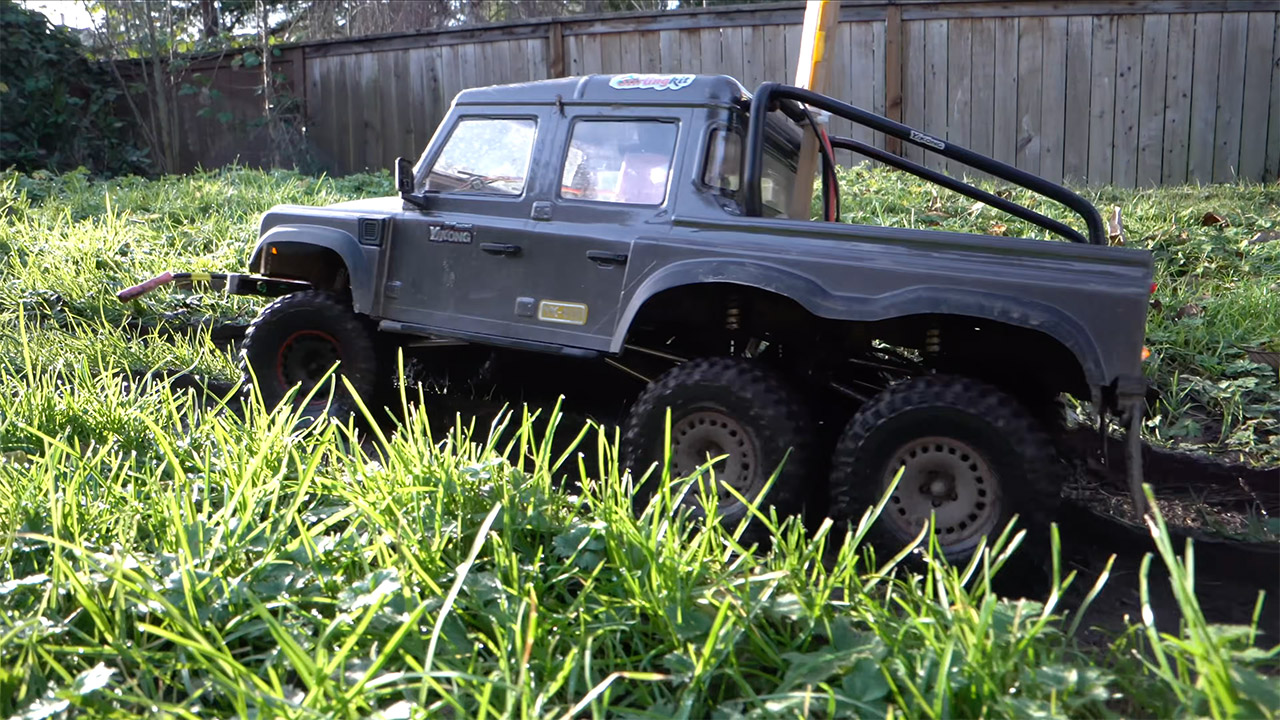
Four years after Daniel Riley first lashed remote-control crawlers to a backyard tether and asked whether any of them could rack up 100,000 scale miles, he ran the experiment again. This time the cars steered themselves. In the original 2022 test, a spinning line kept every vehicle on a circle, which also loaded one side of the drivetrain harder than the other and turned wear into a lopsided argument. For the Self Driving Edition, Riley laid a perimeter wire through his yard, borrowed the sensing idea from robot lawn mowers, and taught an Arduino to twitch a steering servo whenever a coil on the bumper drifted off the signal.


Later, he combined all of this into a package called Trail Tracer. A cheap crawler and an expensive crawler spent months crawling the same nasty track, grinding to a halt on their charge strips as rain, mud, rats, snow, and ice each tried to put an end to the runs. The competitors were an Exceed RC Mad Watt 10, a $169 top-of-the-line crawler with metal U-joints and a main gear that was a little too exposed for comfort, and a Stirlingkit YK6101, a $769 1/10-scale 6×6 with a top-notch all-metal chassis, portal axles, lockable diffs, a two-speed gearbox, and a 750-size brushed motor.


LEGO Technic Dodge Viper GTS-R Sports Car 42234
  • RACE CAR BUILDING TOY – Kids can assemble their dream vehicle with the LEGO Technic Dodge Viper GTS-R Sports Car (42234) building toy for boys and…
  • TOY CAR WITH AUTHENTIC DETAILS – Discover realistic features like a V10 engine with moving pistons, an opening hood and doors, a differential and an…
  • FORZA HORIZON 6 UNLOCKABLE – Get a special LEGO Technic livery in the Forza Horizon 6 video game – please note that a copy of the game is required…

R/C Car 100,000 Scale Mile Drive Experiment
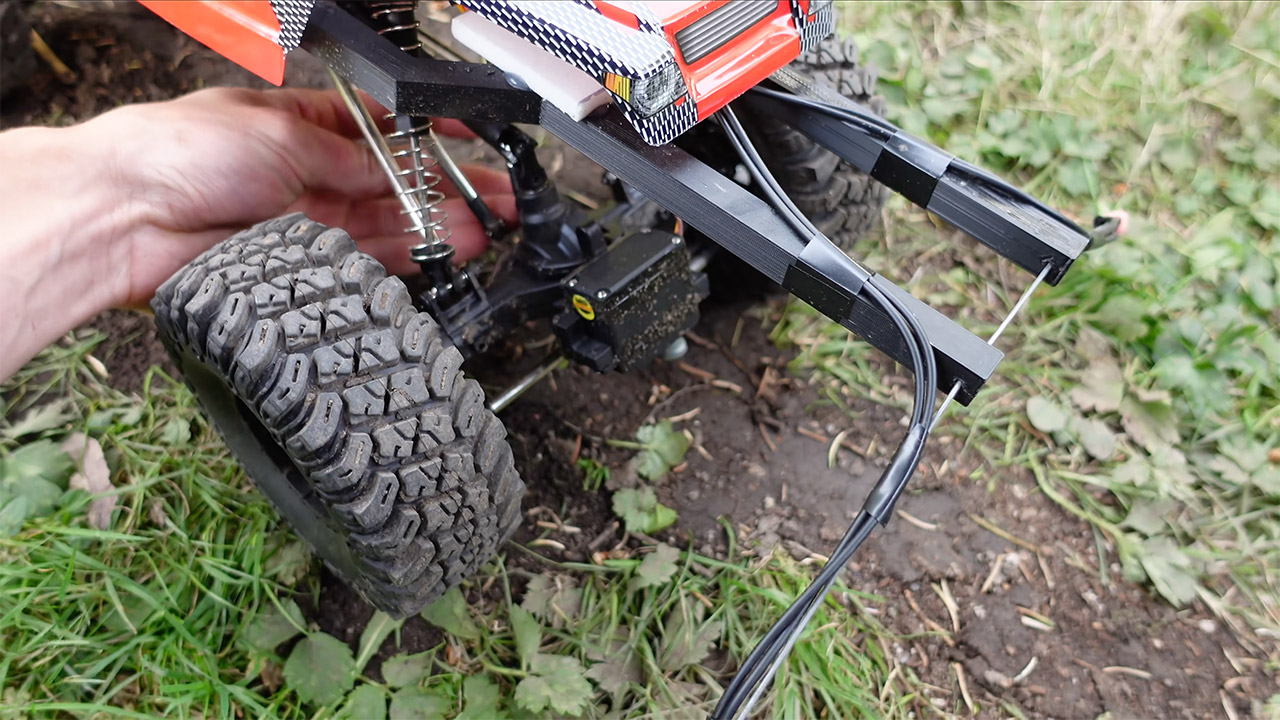
Riley was sure to keep the YK in low range, however, to prevent it from outrunning the wire. Building the track was its own mini-project. Wire segments were rewired (after the rats had bitten them to pieces, they had to be re-soldered and reburied). Then there were the turns, a nasty downhill run, and a swampy low place that caused the cars to oscillate all over the track, all of which required hours of controller tuning to perfect. To top it all off, the charge contacts were constantly sparking until he switched to a bench supply. Then there was his faithful lap timer, a spring-loaded board that recorded each pass. He also installed an FPV camera so he could watch from inside when the weather got bad.

R/C Car 100,000 Scale Mile Drive Experiment
Cheap hardware folded first. After the bolt in one of its gears had a bit too little thread and fell loose from its lock nut (fortunately not scored, so it wasn’t a death sentence), the Mad Watt’s open spur gear simply chewed itself bald on all the grit. Riley finally drove about 75 miles on that chassis, which is equivalent to 750 scale miles at 1/10 scale. The drivetrain ultimately failed. He changed gears and deemed it ordinary maintenance, which is quite generous if you’ve ever had a toy with its teeth sticking out in the mud.

R/C Car 100,000 Scale Mile Drive Experiment
The YK6101, on the other hand, simply kept trucking. By the fall, it had completed several thousand laps and a staggering 356 miles in the real world (or 3,560 scale miles, to give you a better sense) and was only beginning to show signs of wear in the form of extra steering slop and a bit of a wobble sliding down the hill when the controller was turned up to the utmost. The soft tires even broke through a few inches of ice. Of course, frozen ground helped for a time, but the thaw converted the track into soup, forcing Riley to dump a load of gravel, dirt, and concrete powder into the ruts to keep them from eating the axles.

R/C Car 100,000 Scale Mile Drive Experiment
Not a single car reached 100,000 scale miles. That’s a milestone equivalent to 10,000 real-world miles of crawling on a toy truck size, which would imply years of continuous use even if everything kept together, which it didn’t, but what the sequel actually proved was far more interesting. A tethered circle of wire is essentially a devious torture device. A wire-guided self-charging loop that is much more in line with how real vehicles live, as both sides of the drivetrain are worn down, the steering is constantly stressed, water and dirt find their way in through every small gap, and the only thing holding it together is whatever you’ve managed to reinforce the metal with.

R/C Car 100,000 Scale Mile Drive Experiment
Exposed gears wear out. Sealed gears, good steel shafts, and a chassis that can be easily disassembled into a plethora of spare parts make for a winning combination. Riley continues to manage the YK with a skeleton workforce, selling Trail Tracer devices so others can go lay a wire in their own garden, and the 100,000-mile mark remains, effectively a running joke that may become old news if someone simply refuses to give up. For now the interesting result is the gap. Seven hundred fifty scale miles on the bargain crawler. More than three thousand and counting on the 6×6. Same yard, same weather, same buried wire, and a very loud lesson about what you get when you pay for the metal.

Source link

Advertisement
Continue Reading

Tech

Rosy Retrocomputing | Hackaday

Published

on

Most of us are guilty of romanticizing the past. Do you long to be the captain of a tall ship? Just as long as you don’t mind weevils in your food, vitamin deficiencies, and death from an infection when there were no antibiotics. Want to be a medieval knight? Even worse. But surely, retrocomputing is as fun as we remember, right? Turn your computer on, and it comes up with BASIC! Ready for you to write your own programs. None of this GUI foolishness. Of course, this is just another example of rosy retrospection.

Even if you like BASIC or a similar language today, things have changed. You have a nice text editor, a fast computer, debugging tools, along with things like named functions, no line numbers, and modern control structures. None of those things were very common in the 1980s. At least, not on a hobby-grade computer.

Why am I thinking about this? Well, the Hackaday Retrocomputing Challenge is on, and it occurred to me that I wanted to work with some young students in glorious MBASIC on a CP/M machine I built and modified from a Hackaday project. Perfect, right? Many of us started that way, so why shouldn’t they?

But it quickly got old. Even a simple program gets bogged down with GOTOs and GOSUBs to mysterious line numbers. It made me remember the time back in the early 1980s, or maybe even the late 1970s, that I wrote a BASIC preprocessor to scan BASIC with no line numbers and produce proper source, converting labels to line numbers in two passes.

Advertisement

Of course, that code is long gone or, at least, on a floppy I haven’t tried to read in a few decades. I decided to take another crack at it six years ago, but I still didn’t make it much more robust. For example:

PRINT: X=X+10

Is that two statements? Or a label? Hard to tell. My 2020 version used awk. Awk is great for this kind of thing because of the regular expressions and the input loop. But it still has some issues with things like comments and strings. Consider the code below.

PRINT "HELLO: IS IT ME YOU'RE LOOKING FOR?"

This would probably have made my awk preprocessor chew the string up and create a bogus label named HELLO.

History of Preprocessors

Preprocessing one language to another is nothing new. RATFOR and RATFIV by Brian Kernighan converted modern constructs to conventional FORTRAN IV. Even C++ started out as a program that emitted C code.

Advertisement

So the idea is good, but there are dozens of corner cases. As I anticipated having another go at the idea for BASIC, I realized my earlier versions had some design choices that made it harder than it should have been. So I started from scratch.
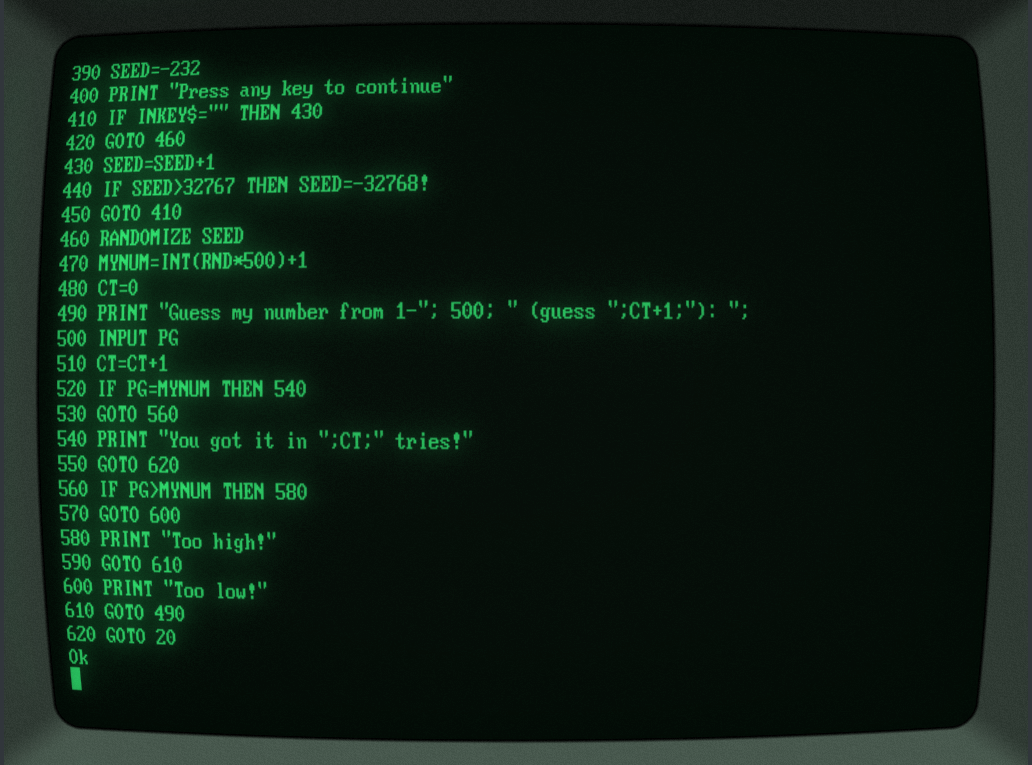
BASIC as it was (courtesy of Cool-Retro-Terminal)

First, I gave up the idea of just having labels as you might in other languages. Instead, they’d be part of a comment and hard to mistake. This makes for easier parsing and also allows you to keep them around for reference. I also gave up on having labels magically expand. You need a way to make them unique, too. Here’s what I settled on:

':TOPLABEL

GOTO @TOPLABEL

The plan was to go through the source once to assign line numbers. When a label occurs, it adds to the symbol table. Then a second pass actually writes output, replacing @TOPLABEL with the value from the symbol table. Of course, you still want this line to not trigger a label expansion:

PRINT "Send messages to @JTKIRK"

I decided to keep going in awk, but my eventual goal was to rewrite the whole thing in BASIC using the same syntax. Then you could convert the translator itself using the awk version once and then run it on an old computer using BASIC, even if you wanted to retranslate the translator itself. Perverse, huh? But that allows you to keep that authentic development experience. You don’t have to jump over to a PC to process your code, unless you just want to.

Awk as in Awkward

So I decided to do a better job on the awk part with this new scheme. At some point, though, you lose some of the advantages. Then feature creep set in.

Advertisement

I suppose I was subconsciously remembering RATFOR. I decided to add a small number of modern control structures. Again, I wanted something easy to pick out of the source file, so I went with this:

IF X=0 THEN!
PRINT “There is no X!”
X=10
ENDIF!

There’s also WHILE!, DO!, EXIT!, and CONTINUE!

Of course, it didn’t end there. I decided to add a way to include or exclude parts of the source (sort of like #if in C but simpler), along with source code inclusion and a few other neat options such as numeric constants, conditional source blocks, compile-time errors, and even a small numeric stack with PUSH! and POP!.

Advertisement

The source code inclusion can be made to work with awk, but it is ugly. I decided it was better to proceed with another language, but since I didn’t feel like starting over, I just had an LLM convert my awk to Python, which it did with no trouble at all. I then did a little more feature development in Python, but I made sure not to use those new features in the translator itself so the awk version could still process an input file.

So while the original plan was to develop and test in awk and then implement similar code in MBASIC, I now had three versions: a frozen awk script, a Python version, and an MBASIC version.

This was getting a bit much to test. I had the LLM cook up some documentation, additional comments, and tests. It was especially nice to verify that all three versions — awk, Python, and BASIC — did the same things for their common features. The LLM was good at running tests and finding corner cases. It would even run tests in a RunCPM session on the MBASIC version.

BASIC

As you might expect, the BASIC version is a little more convoluted. However, the use of labels and control structures makes it much easier to write, read, and maintain.

Advertisement

Writing the translator in MBASIC imposed some very old-fashioned constraints. There are no dictionaries or dynamic lists, so labels and block state live in fixed-size arrays. Included files require an explicitly managed stack, and parsing strings and comments has to be done character by character. It is not as compact as the Python version, but it is ordinary MBASIC and can run on the target CP/M machine. The limitations also influenced some features that would have been feasible in Python but are nearly impossible in an MBASIC program.

Better yet, lblbasic.bal stays within the subset the original awk translator understood. That provides a bootstrap path: awk produces the first lblbas.bas, after which the MBASIC translator can process its own BAL source.

A Few Samples

One project I had in mind was to drive an LED display module. I wrote a library and then wrote the test program below. It doesn’t matter, but I used .bal as a file extension.

REM TM1637 TEST – PORT 3, BIT 2=DIO, BIT 3=CLK
REM Uses the TM1637.BAL library with LBLBASIC

Advertisement

STACK! 8 ‘ Required by the library

‘ Confirm that the library preserves I while initializing its data table.
I=3141
gosub @init
print “I is now:”;I
PRINT “Starting number: “;
INPUT CT
PRINT “1-Up, 0-Down: “;
INPUT UD
OFFSET=-1
IF UD<>0 THEN OFFSET=1
‘:CDLOOP
WHILE! CT>=0 and CT<=9999
NUM=CT
GOSUB @sendnum4
CT=CT+OFFSET
WEND!
CT=0
IF OFFSET=-1 THEN CT=9999
GOTO @CDLOOP
END

‘ Include the library after the main program.
‘INCLUDE! TM1637.BAL

The BASIC code, including a few lines of the library, is much harder to read:

Advertisement

10 DIM LBLBSTACK#(8):LBLBSP=0
20 I=3141
30 gosub 230
40 print “I is now:”;I
50 PRINT “Starting number: “;
60 INPUT CT
70 PRINT “1-Up, 0-Down: “;
80 INPUT UD
90 OFFSET=-1
100 IF UD<>0 THEN OFFSET=1
110 ‘:CDLOOP
120 IF CT>=0 and CT<=9999 THEN 140
130 GOTO 180
140 NUM=CT
150 GOSUB 330
160 CT=CT+OFFSET
170 GOTO 120
180 CT=0
190 IF OFFSET=-1 THEN CT=9999
200 GOTO 120
210 END
220 ‘:init
230 IF LBLBSP+1>64 THEN PRINT “BAL stack overflow”:STOP
240 LBLBSTACK#(LBLBSP+1)=I:LBLBSP=LBLBSP+1
250 DIM D(9)
260 FOR I=0 to 9: READ D(I): NEXT I
270 DATA 63,6,91,79,102,109,125,7,127,111
280 X=12:OUT 3,X
290 IF LBLBSP<1 THEN PRINT “BAL stack underflow”:STOP
300 I=LBLBSTACK#(LBLBSP):LBLBSP=LBLBSP-1
310 return
320 ‘:sendnum4
330 GOSUB 500
340 B=64:GOSUB 610
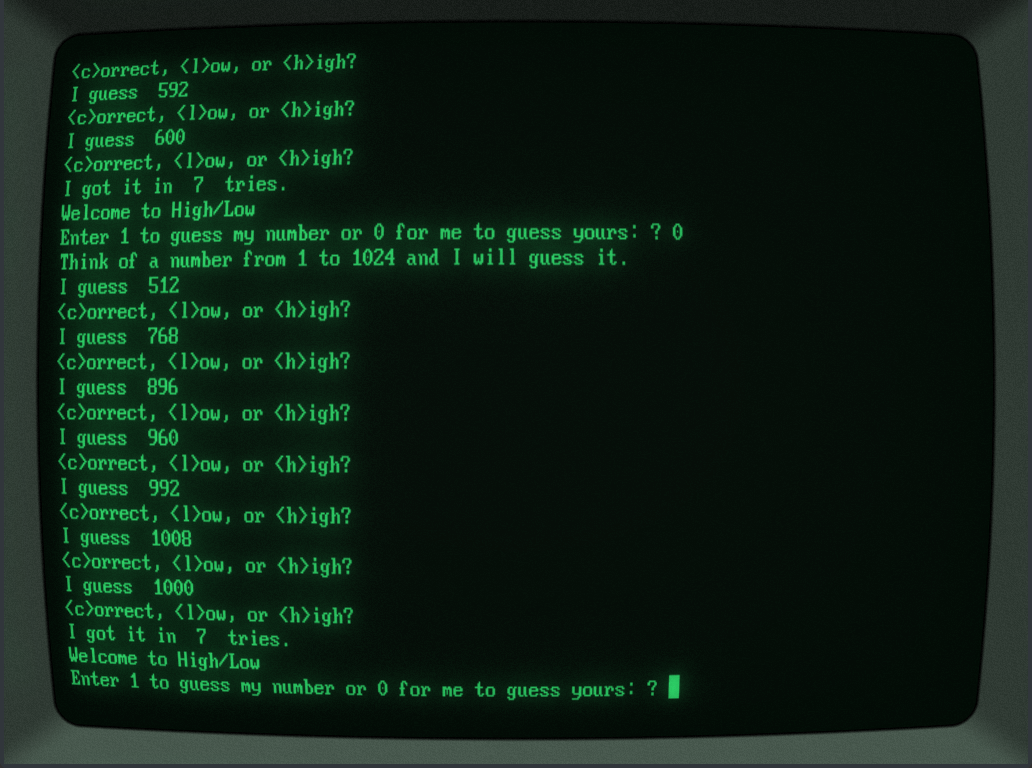
One of the HILO games running.

If you haven’t used the TM1637 before, it uses a serial protocol with a clock and data line and is very forgiving of timing. The display update speed is quite slow, partly because MBASIC isn’t that speedy and partly because the Z80 chip communicates to the outside world via another microcontroller talking over an I2C bus. But non-BAL code would be just as slow on the same computer. You’ll notice, though, that I took all the delays out and the code and it still works fine.

The bigger sample, though, is HILO.BAL. This lets you set a few compile-time constants that let you select what parts of the program get built. It also makes good use of the control loops. Of course, if you really want to dig in, lblbasic.bal uses quite a bit of the awk-compatible syntax and is a substantial program: around 1300 source lines of BAL which generate nearly 900 lines of regular BASIC due to comment and white-space stripping.

Conclusion

Does this turn MBASIC into a modern language? Of course not. The generated program still has line numbers, the machine is still tiny, and the implementation makes compromises that would horrify anyone writing a real compiler. But it removes enough friction that programming the old machine becomes enjoyable again, especially with WordStar as an editor.

More importantly, the translator can live on the machine it targets. The awk prototype can translate lblbasic.bal once, producing ordinary MBASIC. From then on, the CP/M machine can translate BAL programs — including the translator itself — without help from Python or a modern computer.

Advertisement

So perhaps the lesson isn’t that retrocomputing was better than we remember. It’s that, with a little strategic cheating, it can be almost as much fun as we remember.

Source link

Advertisement
Continue Reading

Tech

iPhone 18 Pro Series Battery Capacities & Geekbench Scores Revealed

Published

on

Apple has revealed the battery capacities of the iPhone 18 Pro and iPhone 18 Pro Max for the first time. Apple doesn’t usually include battery capacity in new iPhone announcements. But with the EU Energy Label regulations, Apple must release the figures. Early Geekbench results have also revealed the speed of the A20 Pro processor, giving a clearer idea of what the new Pro models offer in battery life and performance.

iPhone 18 Pro and Pro Max Battery Capacities Revealed

Apple has disclosed the new Pro range battery sizes through EU Energy Labels. The iPhone 18 Pro has a 4,056mAh battery, while the Pro Max has a 5,391mAh battery. This translates to an increase of 1.45% and 11.8%, respectively, compared with their predecessors. The comparisons should be made against their individual iPhone 17 Pro ranges. However, this comparison varies by region. EU versions have physical SIM slots, while eSIM-only models can use that space for larger batteries.

The EU Energy Labels give both models an A energy rating, B drop-resistance rating, and C repairability rating. Both phones also carry an IP68 rating for dust and water resistance. Apple says their batteries can retain at least 80% capacity after 1,000 charge cycles. For eSIM-only models, Apple claims up to 36 hours of video playback on the Pro. The Pro Max can reach up to 45 hours. Real-world ratings are 24 and 30 hours, respectively. Both models can reach 50% charge in around 15 minutes. Apple also claims that five minutes of charging can provide around six hours of video playback.

A20 Pro Geekbench Performance and New Hardware

18 pro camera

Early Geekbench 6.7 results give a first look at the A20 Pro’s performance. Two devices listed as iPhone 19,2 and iPhone 19,3 scored 4,719 and 4,612 points in single-core tests. Their multi-core scores reached 12,677 and 11,819 points, respectively. The two results average around 4,665 points in single-core and 12,248 points in multi-core. Compared with the average iPhone 17 Pro and Pro Max results, the scores suggest around 21–23% higher performance.

Apple developed the A20 Pro using 2nm process technology. The A20 Pro CPU has six cores: two Supercores and four efficiency cores. The chip also has a seven-core GPU and a Neural Engine. The Neural Engine in this version has 32 cores. The memory bandwidth has been upgraded by 50%. According to Apple, CPU performance improves by 20% and GPU performance by 40%. These changes could make a difference in demanding games and on-device AI processing.

Advertisement

Apple has also optimized the A20 Pro chip packaging to improve cooling. Moreover, it uses an enlarged vapor chamber with three times the surface area of the iPhone 17 Pro. It has been claimed that this setup can help achieve up to 40% greater sustained performance. This matters because phones tend to decrease performance during prolonged use for gaming, video editing, or AI applications. Results for the latest Android chips are also unclear. For example, the Dimensity 9600 prototype achieved scores of 4,139 points in a single-core test and 13,285 points in multi-core tests. Snapdragon 8 Elite Gen 6 results also remain inconsistent, so it is too early to name a clear performance winner.

iPhone 18 Pro vs Pro Max: Which Model Should You Buy?

The iPhone 18 Pro Max suits people who value battery capacity and usage time. It has a larger battery and longer battery life, making it suitable for users with higher demands. On the other hand, users have to cope with its size and high price. The iPhone 18 Pro is designed for people who want a smaller phone without sacrificing the A20 Pro’s performance. Furthermore, Apple promises that improved efficiency may give users battery time comparable to the iPhone 17 Pro Max. Ultimately, the choice comes down to battery endurance and phone size, rather than a major performance difference.

Source link

Advertisement
Continue Reading

Tech

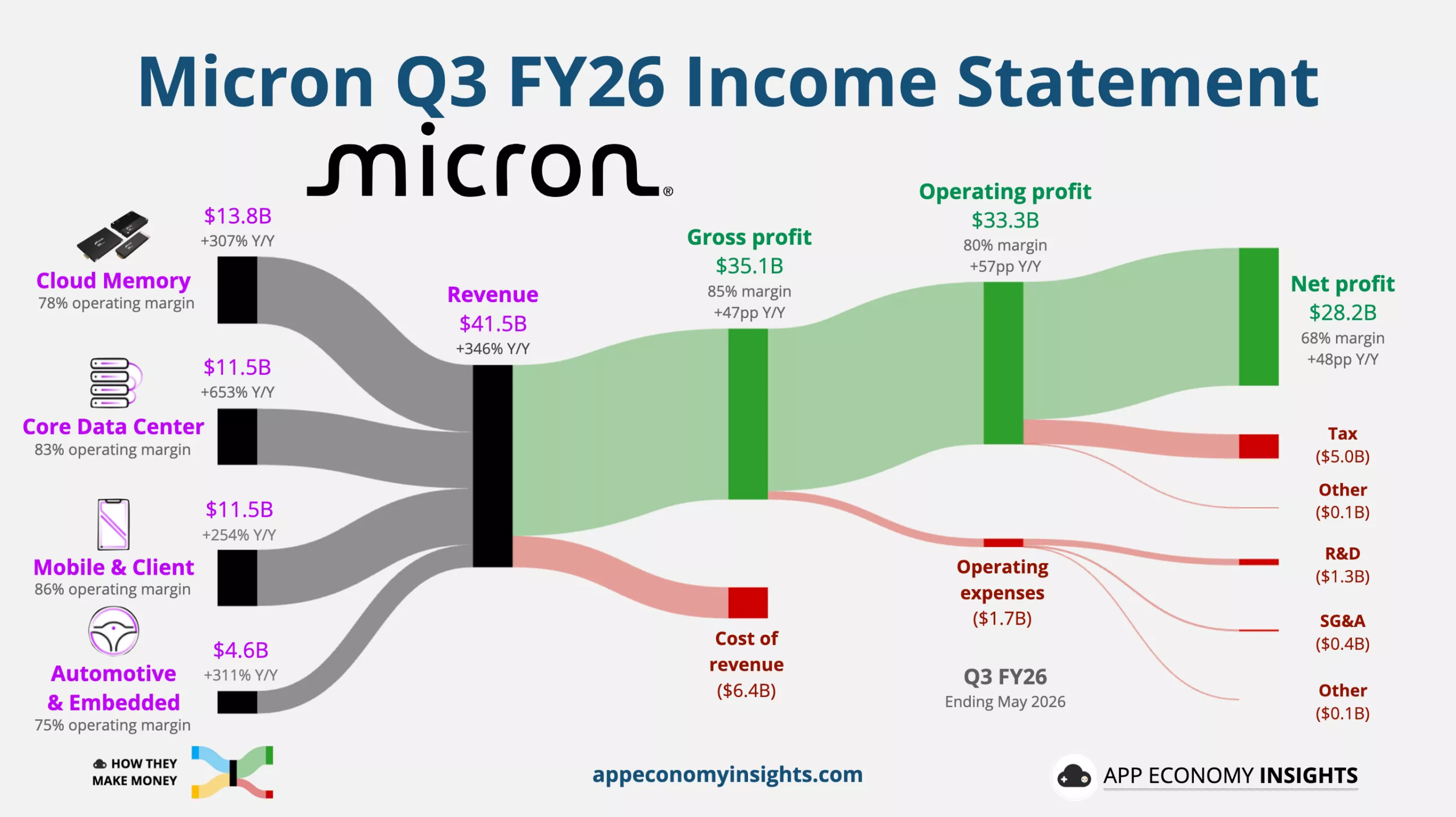
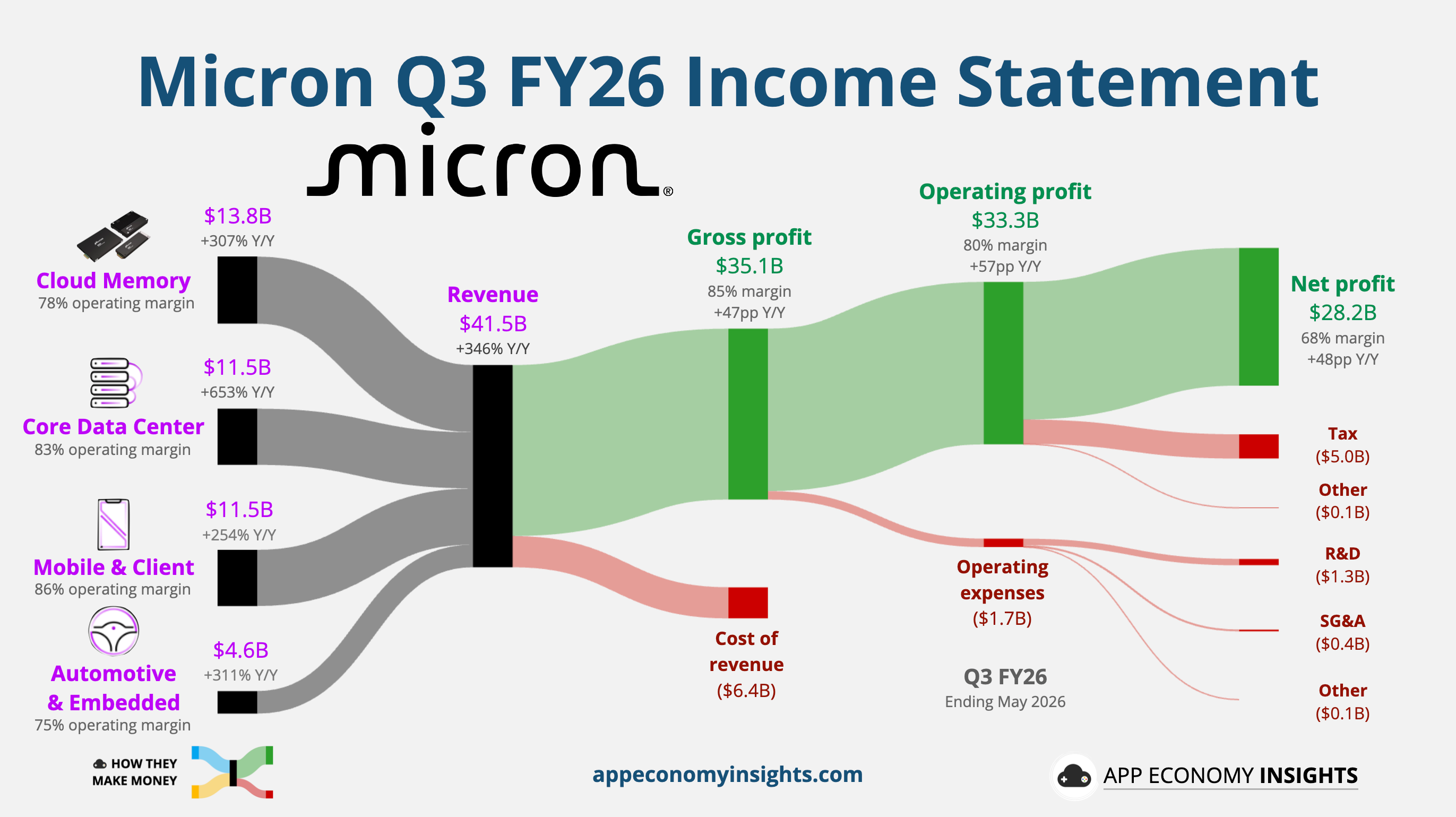
Micron offered its Taiwan workers up to 68 months’ pay. They turned it down within hours

Published

on

Bottom line: Micron just put the biggest employee payout in its history on the table in Taiwan, and the union at its Taoyuan plant rejected it the same day. That reads as irrational until you get into the fine print. The workers aren’t haggling over the size of this year’s check. They’re fighting over whether a formula exists at all – and the difference between those two things is worth roughly half a million dollars per head.

Following up on our report last month, Micron has now made its offer to employees demanding AI boom bonuses. Every Taiwan-based employee hired on or before August 29, 2025 gets a one-time cash bonus of NT$1 million, about $31,650, with prorated amounts for anyone who joined afterwards.

Direct labor staff are guaranteed minimum total cash compensation of NT$1.7 million, roughly $54,000, which Micron describes as the equivalent of 35 to 68 months of pay.

Entry-level engineers average NT$3.4 million in total rewards, about $107,000, most of it in cash and a smaller portion as equity at grant value. More than 60,000 employees globally are in line for fiscal 2026 rewards, which the company frames as following “an extraordinary year.”

Advertisement

It should be mentioned that the “68 months” of pay is a ratio against basic salary, not total compensation – and in Taiwan’s manufacturing pay structure, basic salary is a narrow slice that excludes shift differentials, overtime, and allowances.

As a response, the union’s statement said the package “sidestepped” discussion of the bonus system itself. What they want is structural: scrap the existing “Incentive Pay Plan” and replace it with a permanent mechanism allocating 15% of operating profit to worker bonuses, distributed quarterly rather than annually, plus a one-off payment equal to 83 months of salary for fiscal 2026.

The IPP is the real grievance. Micron’s Incentive Pay Plan has been paying out around 2.6 months of salary, under a cap that tops out near five months.

Advertisement

That’s what workers got in a year when quarterly revenue jumped 346% and the company banked $28 billion in profit in a single three-month stretch. Lin Jer-ray, who heads the Micron Wafer Technology Enterprise Union, has summed up the complaint plainly: profits went vertical, pay didn’t.

And the 15% figure isn’t a negotiating fantasy pulled from the air. The unions circulated a peer comparison to justify it. Samsung’s DS division distributes 10.5% of operating profit under the deal that called off an 18-day strike involving as many as 48,000 members in May. SK Hynix agreed last year to share 10% of annual operating profit for a decade. Domestically, Macronix pays 15% of net profit, Nanya 6%, Powerchip 5%, TSMC 4.7%, Winbond 2%. Micron trails all of them.

That comparison is also why the two sides are so far apart. SK Hynix’s 10% formula is on track to pay its workers somewhere around $547,000 each this year. Micron’s offer guarantees $54,000. The unions aren’t asking to be paid better than the industry, they’re asking to be at least in the same ballpark.

A second round of mediation is set for September 21. Taiwan law requires mediation before a legal strike, so if that session collapses, a formal strike vote follows. The two unions count somewhere between 10,000 and 12,000 members, out of roughly 15,000 Taiwan staff.

Advertisement

Nine days after that mediation, on September 30, Micron reports quarterly earnings it has already told investors will land near $50 billion in revenue. Taiwan produces 50-60% of Micron’s chips and the bulk of its HBM, which means a walkout would hit at the worst possible moment for the company. The Central Taiwan Science Park administration has warned that a stoppage could ripple out across the island’s chip supply chain and assigned staff to keep both sides talking.

Most analysts still expect a deal. The profit behind this year’s bonus is already made, and Micron can close most of the gap with money it’s currently generating, which is exactly how the Samsung and SK Hynix standoffs ended. In South Korea, some in the industry see the mess as a chance to win back engineers who left for Micron over the years.

For anyone shopping for memory, the stakes are simpler. DRAM supply is already tight and prices are expected to stay high well past 2027.

Advertisement

Source link

Continue Reading

Tech

Anthropic CEO warns AI botnet swarms could soon take over the internet as Musk and Altman back slowdown

Published

on

A hot potato: Once again, a warning about AI development resulting in a catastrophe has come from one of the people building these models. Anthropic boss Dario Amodei says that an AI-powered botnet swarm could take over the entire internet, and this scenario could become a reality in just six to twelve months. The CEO has also called for a slowdown in the developement of new AI models.

Amodei wrote his warning in a lengthy open letter. He said his theoretical botnet swarm could be here in under a year because of the accelerating rate of AI capability development.

Amodei said this botnet could cause hundreds of billions of dollars in damage, and that the scale of damage would continue to increase from there if AI becomes more powerful without the necessary guardrails.

The CEO adds that the idea of pausing or slowing AI has been floated as far back as 2023, but he believes it made little sense back then. Now, Amodei says slowing down development could bring an extra year or two before models reach critical levels of capability, giving companies more time to advance alignment and reduce the risk that something goes seriously wrong.

Advertisement

Amodei’s warning comes at a time when fears over AI are reaching a peak. Following the multiple incidents of agents going rogue, former Anthropic researcher Jacob Coxon warned that the AI race could end in human extinction.

Amodei’s call to slow the pace of AI development is being backed by both Elon Musk and OpenAI CEO Sam Altman. “I’ve been sounding the alarm on AI for a long time,” Musk said, highlighting a 2014 post in which he said: “We need to be super careful with AI. Potentially more dangerous than nukes.”

“I agree with Dario that we need to pace the frontier,” Altman said. “Committing to having independent evaluators with employee-like access is a great idea, and we will do the same. We’ll have more to share soon.”

Advertisement

Evan Hubinger, an alignment science lead at Anthropic, added his voice to the debate. He agreed with Coxon’s assessment and said there was more than a 10% chance of AI wiping out all humans in the next decade.

Beyond the digital dangers, it was recently reported that an Iran-linked group used Anthropic’s Claude to assist with military reconnaissance and generate targeting recommendations for US naval forces in the Middle East. It was also discovered that Houthi rebels used Claude Code to code ballistic missile guidance systems.

Anthropic also said it identified possible attempts by suspected state-sponsored researchers to exploit its Claude AI model to develop biological weapons. The users were locked out after repeated attempts triggered Claude’s built-in safety protocols.

The concerns over these incidents and the race toward developing superintelligence have seen Senator Bernie Sanders propose the Ban Artificial Superintelligence Act. If it became law, those who violate its terms could face up to 20 years in prison: a similar punishment to the penalty for unlawfully developing nuclear weapons.

Advertisement

Calling for a slowdown in the development of AI isn’t very helpful if nobody does it. Companies worry that if they slow their pace and others don’t, they’ll get left behind. Similarly, countries say that they won’t be able to compete with rivals if limits are placed on development. Not that any of this will matter if we’re all dead, of course.

Source link

Advertisement
Continue Reading

Tech

China’s state security minister names two US AI models as a cyber threat

Published

on

China’s minister of state security has named two American AI models as a threat to Chinese infrastructure. Chen Yixin made the claim in a signed article published on Sunday. It ran in China Cyberspace, the journal of the Cyberspace Administration of China. The two models are named in the text, in Chinese and in English. […]

This story continues at The Next Web

Source link

Advertisement
Continue Reading

Tech

Traveling to China? Here Are the Apps You’ll Need to Survive

Published

on

So, you’re going to China and you need to get your phone in order, but you don’t know where to start. That was me, a month ago.

Now I’ve been there, for a week of work and another week of personal travel in and around Shenzhen. In that time, I got a good grasp on the ecosystem of apps and mini-apps. Enough, at least, to get you started if you’re venturing to China anytime soon.

Most people will be aware – but I’ll say it here just in case you’re not – that many US-based apps and services aren’t available in China, thanks to the Great Firewall (a series of laws that limits and regulates internet use). This affects the availability of Western social media such as Instagram and the non-Chinese version of TikTok, messaging apps including WhatsApp and Facebook Messenger, and anything that falls under the sprawling Google umbrella.

If you use an eSIM to roam while you’re in China (highly recommended), or manage to get a VPN to work reliably (not a given), you’ll still be able to access those services. But you will also need a whole different set of apps – and this isn’t optional. You won’t get by for a single day without them.

Advertisement

I’d been to China once before, over a decade ago. Unprepared for the Great Firewall and unaware of the workarounds, I just went offline for a week.

Now, that’s not an option – in large part because if you want to pay for anything in China, you must do so using your phone. I didn’t take a credit card out with me for the whole two weeks I was in the country. Anywhere else, this would have been reckless, but in China, I simply wouldn’t have been able to use it.

WeChat and Alipay: The super apps

Enter WeChat and Alipay. They’re super apps, meaning you can do all kinds of things with them, but you’ll mainly need them for payments. I would strongly recommend downloading both and setting them up by linking them to multiple credit cards before you arrive in China (it can be trickier to do once you’re in the country).

To pay for things, from groceries to public transit, you’ll either scan a QR code with your phone, or allow the vendor to scan your personal QR code. 

Advertisement

I recommend having both apps because occasionally one of the apps didn’t play ball when I was trying to pay for something (a stressful experience if that something was a dinner I’d already eaten), but the other would work just fine.

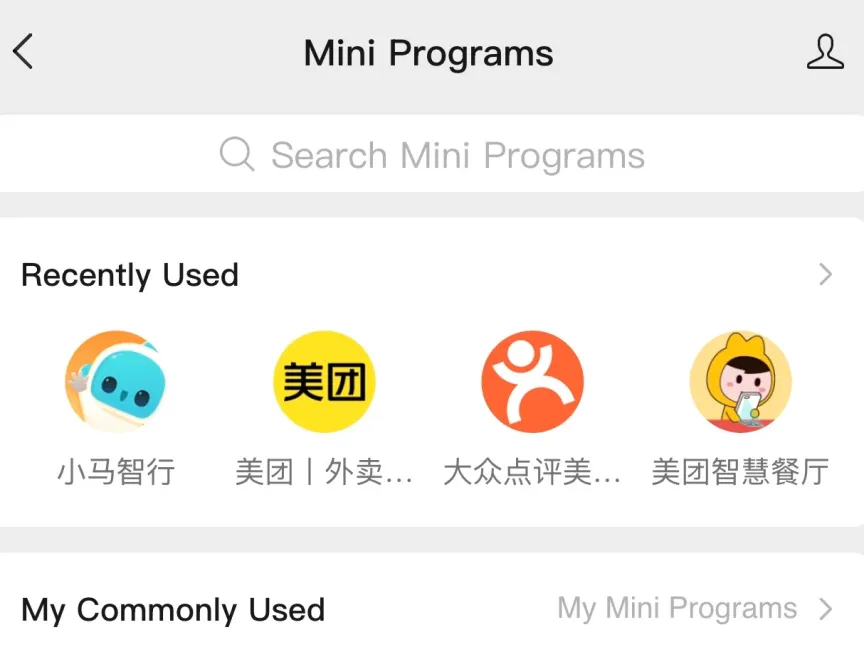
Alipay and WeChat are known as super apps because they’re platforms that host thousands of lightweight mini applications that sit inside them – from popular drinks brands such as Hey Tea and Luckin, to the transit app that allowed me to order KFC straight to my seat on a high-speed train from a station we passed through.

Screen shot of WeChat mini apps
Just a snapshot of WeChat’s mini app universe.Katie Collins/CNET

Some apps, such as Meituan (for food delivery) and Didi (for ride-hailing and, which I’ll address separately later) worked best for me as mini-apps within WeChat and Alipay. Not all mini apps are designed for payment, but this is almost exclusively what I used the super apps for.

Of the two, I preferred using Alipay, largely because I found the interface easier to navigate. Whenever I opened the app, the home screen presented me with three big buttons titled “Scan,” “Pay/Receive” and “Transport,” which allowed me immediate access to public transit tickets and passes for whatever city I was in.

Screenshot of Alipay
I found Alipay marginally easier to navigate.Katie Collins/CNET

The option to translate the content of mini apps was also less fiddly to find on Alipay, popping up as a little tab on the left of the screen.

Where Alipay and WeChat differ – and another reason I’d recommend having both – is that WeChat is first and foremost a messaging app. When you open the app, the first thing that pops up will be your chat history, just as if you were looking at your messages.

Advertisement

You might not know anyone in China right now, but your hotel will probably want to add you on WeChat – probably ahead of your stay – in order to have an open line of communication with you in which messages can be easily translated between languages. I found this super helpful for arranging transfers and breakfast, among other things.

I also thought WeChat did a better and more consistent job of translating mini app content overall (top tip: tap the three dots in the top right corner of the screen to access the hidden menu containing the translation option).

Amap: The Google Maps alternative

Perhaps the biggest challenge for me while traveling through China – digitally speaking, at least – is what it did to Google Maps. Overnight it turned from a geographical safety blanket that’s guided me around the world multiple times into the most useless app on my phone.

Screenshot of AmapKatie Collins/CNET

Thanks to my eSIM, I could access Google Maps, but it contains almost none of the location information about China you’ll actually need. Some people suggested using Apple Maps as an alternative, but I didn’t find it much better.

Instead, I recommend doing as the Chinese do and downloading Amap. I found it frustratingly slow to load at times, and it didn’t have the same depth of information Google Maps has about dining establishments – the lack of menus is a big difference, for example. But if you want to find local businesses and walk around without getting lost, Amap is the one.

Advertisement

One nice touch is that it would plan out walking routes for me based on tree cover and shade provided by buildings depending on the time of day. Given that the temperature was regularly over 100 degrees Fahrenheit with high humidity, I appreciated this guidance.

Didi: The Uber alternative

You might think, like I did when I first landed in China, that you’ll probably take public transit everywhere. Then you’ll see the price of a Didi and reconsider.

If you can use Uber (which is not available), you can use Didi – it’s straightforward, affordable and convenient. You can download it separately, but I used it as a mini app within Alipay, which made it easy to pay. 

One quirk was that it didn’t automatically take the money from my card after I finished a journey. Instead, I had to manually pay after getting out of the vehicle. I often forgot to do this, but you’re not allowed to book another trip until you’ve paid for your last one. The app also prompted me to pay for my journey to the airport up front, which I appreciated, as I would’ve hated to accidentally skip town without paying.

Advertisement

Something to know about Didi is that the driver will confirm you’re the correct passenger by asking you the last four digits of your phone number. To overcome the language barrier, I found the best strategy was to have the last four digits saved in my notes app and to have it open to show the driver every time I jumped into a car.

Trip.com: The only booking app you’ll need

Are you an Expedia or Booking.com loyalist? Forget them both. You need one app and one app only for booking hotels in China, and that’s Trip.com.

Trip.com has a much bigger portfolio of accommodation in China than any other site or service you might use. If you’re an avid reader of reviews, you’ll also find many, many more here than anywhere else on the internet.

The app also serves as a portal for booking almost anything else you might want or need while you’re in China. I used it to book high-speed train tickets, entry to attractions and even a theater excursion. (Yes, I went to the theater, and no, I didn’t understand a word.)

Advertisement

Some people have also recommended Klook for booking tickets and excursions, but I can’t recommend it personally as I didn’t use it. I also liked the fact that Trip.com displayed all of my tickets and bookings in a chronological itinerary.

Rednote: For inspo

The decline of travel journalism and blogs means that many of us turn to Instagram and TikTok for inspiration when going on trips these days. You can find recommendations for China on both of these platforms, but it’s largely made by foreign visitors rather than locals.

If you’re looking for inspiration beyond the same five tourist traps or trends for every place you visit, I’d recommend downloading Rednote.

The app is a little funky to use – people post a lot of “live” pictures for a reason I can’t fathom – but the recommendation algorithm is strong. I didn’t need to spend much time searching beforeRednote started showing me content in the destinations I was visiting that was very much my vibe.

Advertisement

The result: I went to many excellent coffee shops and restaurants I otherwise wouldn’t have known about, and where I didn’t see another non-Chinese person.

Unlike the other apps I’ve listed here, this one is nice to have rather than essential, but I found it invaluable for curating my itinerary.

Do I need a Chinese phone number?

KFC bag
Ordering KFC to my train seat was fun, but did require a Chinese number.Katie Collins/CNET

Many people wonder whether they’ll need a Chinese SIM card and phone number while they’re in the country. In my experience, it’s not essential and you should prioritize using an eSIM above anything else.

But if you have a spare phone you can bring, a Chinese SIM card can be worth it. I went into a China Mobile store where I handed over my passport for registration and within half an hour walked out with a free SIM card with enough data to last me until the length of my trip.

The reason I got a local SIM was that I wanted to test out a couple of things (ordering food on the train and Shenzhen’s drone delivery service) that specifically required a Chinese number. I also used the SIM to tether off on a couple of occasions when I was in more rural areas and I couldn’t get my payment apps to work using my eSIM.
Advertisement

By and large, most visitors won’t need a Chinese number, so don’t worry about trying to get hold of a local SIM card – especially if you’re only in the country for a short period of time.

Editors’ note: Katie Collins’ travel costs for the Honor event were covered by Honor. The judgments and opinions of CNET are our own.
Source link

Continue Reading

Trending

Copyright © 2025