
Business
US judge blocks Trump limits on how long foreign students, journalists can stay



Business
Yelp Shares Rise 2.68% as Beaten-Down Stock Attempts a Rebound Amid Its AI Strategy Overhaul Near 52-Week Lows

SAN FRANCISCO — Shares of Yelp Inc. climbed 2.68% to $21.87 in Monday trading, adding 57 cents, as the local business review platform attempted a modest rebound from levels near its 52-week low, even as the broader market absorbed a separate selloff tied to concerns over the pace of artificial intelligence development.
No single company-specific announcement appeared to drive Monday’s move, and the gain comes against the backdrop of a stock that has been under sustained pressure for much of the past year. Yelp shares have traded within a 52-week range of $19.60 to $34.49, and the stock’s current level leaves it much closer to the bottom of that band than the top. The company’s market capitalization has fallen to roughly $1.14 billion, down more than 38% year-over-year as of its most recent quarterly results, reflecting a period of sustained investor skepticism toward the stock even as Yelp has pursued a broader transformation of its business model.
Yelp’s recent financial results have presented a mixed picture that helps explain the divide among analysts covering the stock. The company reported second-quarter 2026 results in early August that beat Wall Street expectations on both revenue and earnings per share, with EPS of 57 cents topping the consensus estimate of 36 cents by a wide margin, and revenue of $375.52 million exceeding the $366.89 million analysts had projected. Despite those headline beats, net income fell 28% from the prior year, and the company’s profit margin slipped to 8.4% from 12% a year earlier, a decline the company attributed to higher expenses tied to its ongoing strategic investments.
Those investments have centered on repositioning Yelp as what the company describes as a product-led, AI-first platform, moving beyond its traditional role as a review and advertising site. The centerpiece of that effort is Yelp Assistant, an artificial intelligence tool the company said handled roughly 10% of Request-a-Quote projects, a service connecting consumers with local service providers, during the second quarter. Yelp has also pursued the acquisition of Hatch, a company whose technology the business plans to integrate into its broader conversational AI and customer service offerings, alongside a push to grow data licensing partnerships as a separate revenue stream. The company has set a target of reaching a $250 million annual run rate in this “other revenue” category, which includes data licensing, by the end of 2028.
To help fund those investments, Yelp said in August that it would pause its share repurchase program, with management indicating the buyback is expected to resume in 2027. The company also narrowed its full-year 2026 revenue guidance to a range of $1.46 billion to $1.47 billion, and guided third-quarter revenue to between $365 million and $370 million, a range that came in below the $371.61 million analysts had been forecasting, a signal that contributed to some of the recent caution around the stock.
Wall Street’s assessment of Yelp remains notably split. JPMorgan assumed coverage of the stock in mid-August with an Underweight rating, while Morgan Stanley has maintained its own Underweight stance, lowering its price target on the shares to $24 from $28 as the firm updated its financial model to reflect softer growth expectations. Baird similarly trimmed its price target to $27 from $28. On the more optimistic side of the ledger, Craig-Hallum has maintained a Buy rating on the stock, and other analysts have pointed to Yelp’s solid underlying profitability and strategic AI investments as reasons for longer-term confidence even amid near-term headwinds. Taken together, the average analyst rating on Yelp currently sits at Hold, with a consensus 12-month price target in the mid-to-high $20s, implying modest potential upside from current trading levels even as individual analyst views diverge sharply.
Some independent research services have grown more cautious on the stock’s near-term prospects. Simply Wall St’s analyst price target model has been revised down from roughly $40 to about $31 in recent weeks, with the firm citing softer 2026 guidance, broader macroeconomic pressure on advertising budgets across the industry, concerns about user engagement trends, and execution risk tied to Yelp’s newer revenue initiatives as reasons for the more conservative outlook.
Monday’s gain, while modest in isolation, comes on a day when investors broadly rotated away from AI hardware and semiconductor stocks and toward companies seen as beneficiaries of AI adoption within existing software and service platforms, a pattern that lifted a range of enterprise and consumer-facing technology names even as chip stocks fell sharply following renewed industry debate over the pace of frontier AI model development. Whether that broader rotation played any role in Yelp’s advance Monday is difficult to establish definitively, particularly given the stock’s continued proximity to its 52-week low and the absence of any specific company announcement tied to the day’s trading.
With Yelp’s next earnings report scheduled for October 29, investors are likely to watch closely for further signs of whether the company’s AI-driven transformation, including continued adoption of tools like Yelp Assistant and progress toward its data licensing revenue targets, can translate into the kind of durable growth needed to justify a sustained recovery in the stock price, or whether the advertising market headwinds and engagement concerns flagged by more cautious analysts will continue to weigh on shares in the weeks ahead.

A $2.5 billion renewable diesel refinery has been earmarked for a site near Geraldton by the region’s traditional owners and a Canadian strategic firm.

ControlAI US Executive Director Connor Leahy discusses the warning signals the artificial intelligence industry has been showing us and AIs scary possibilities on The Claman Countdown.
OpenAI CEO Sam Altman outlined two scenarios that he sees could derail progress in developing artificial intelligence (AI) and must be avoided.
Altman wrote in a Sunday night post on X that the two areas of concern involve the loss of control over AI’s alignment, or the concentration of too much power by a country or AI lab.
“First we could lose control of the future to AI. This is unacceptable; we are unapologetically on Team Humanity, and AI must always serve people. To ensure that, we need ways to ensure that alignment and safety techniques stay ahead of progress in model capabilities,” Altman wrote.
“Second, we could end up in a world with too much concentration of power. If an extraordinarily powerful AI is used by one person or company to impress their worldview onto everyone else, the results could be extremely dystopian,” he added.
MICROSOFT UNVEILS CODE OF CONDUCT FOR AI MODELS AS SAFETY CONCERNS MOUNT

OpenAI CEO Sam Altman said that AI could overtake human control of the future if not properly managed. (Justin Sullivan/Getty Images)
“Avoiding these two threats requires walking a narrow middle path; for example, one country could gain too much power. Another example is one lab ending up with too much power,” Altman wrote.
The OpenAI CEO’s post served as a follow-up to an earlier post that said U.S. companies developing AI need to adhere to safety standards, adding that he and the company would “welcome a federal framework that sets consistent safety requirements for frontier AI.”
Altman said that while companies have previously created responsible scaling policies and preparedness frameworks, the current state of the AI field requires a new approach.
SAM ALTMAN SAYS OPENAI WON’T GO PUBLIC IN 2026 AMID AI SAFETY CONCERNS
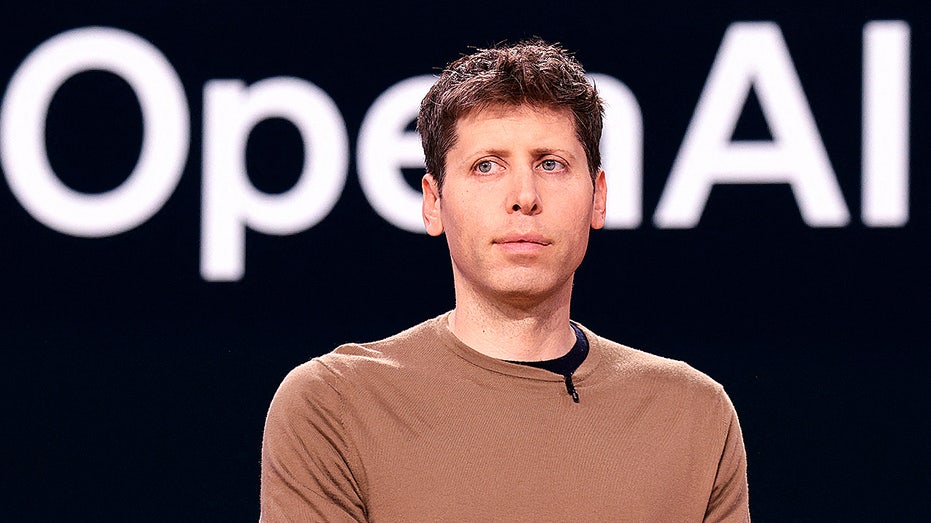
OpenAI CEO Sam Altman warned that AI could lead to the concentration of power with one country or one AI lab. (Jason Redmond/Getty Images)
He said that, for example, OpenAI now goes through a process to “formulate explicit safety cases in advance of frontier reinforcement learning runs we expect to significantly increase capability, in addition to the safety work we have long done in advance of model releases.”
Altman’s comments come as he and other AI leaders at U.S. companies discuss ways to ensure the alignment and safety of AI models as they become more sophisticated, with researchers warning there is a chance an AI superintelligence could wipe out humanity within a decade.

Anthropic CEO Dario Amodei called for AI companies to pace the development of frontier models. (Anna Moneymaker/Getty Images)
Anthropic CEO Dario Amodei wrote an essay calling for AI labs to “pace the frontier” of model development, including through the use of third-party evaluators who have employee-level access to company systems and can verify adherence to safety measures, report on incidents and assess models’ alignment during training.
Altman said in a post on X that he agrees with that approach, adding that “Committing to having independent evaluators with employee-like access is a great idea, and we will do the same. We’ll have more to share soon.”
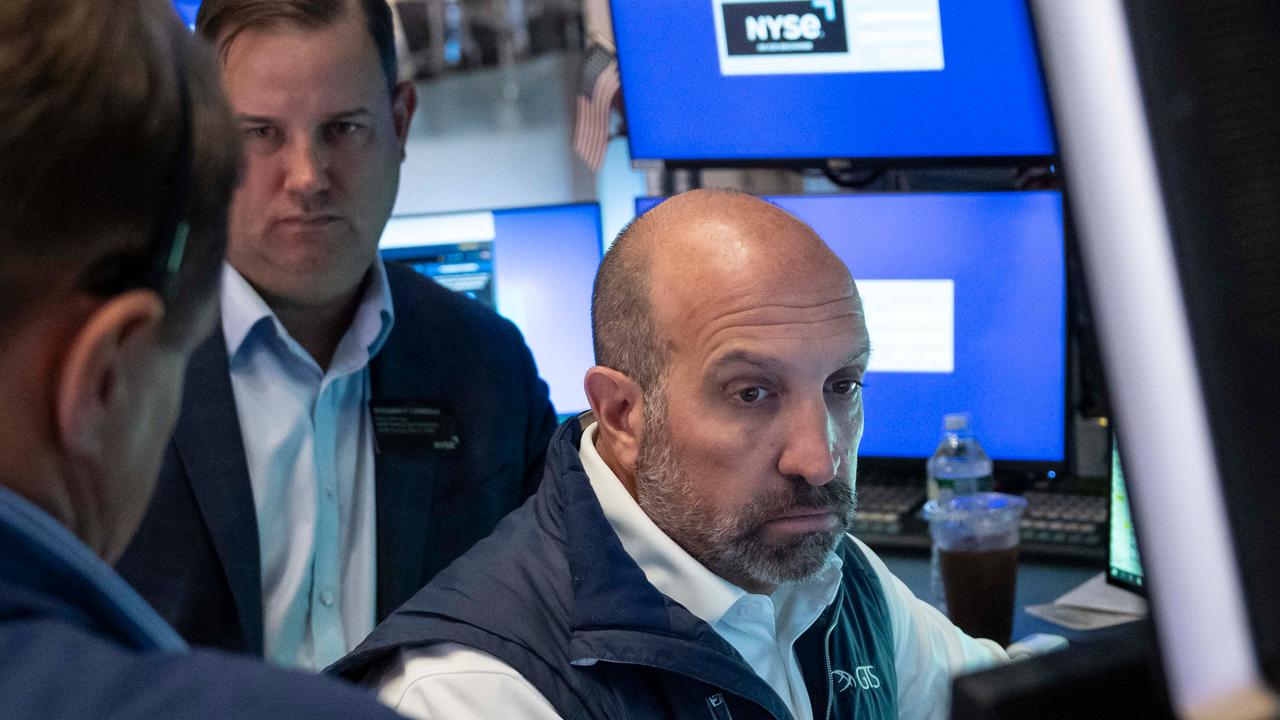
Wall Street has ended lower, weighed down by losses in Nvidia and other chip makers after top executives in US artificial intelligence companies raised safety concerns and called for a slowdown in the development of AI.

As artificial intelligence converges with life sciences at an accelerating pace, the founder of NJF Holdings argues that the most consequential discoveries of the 21st century are more likely to emerge from within the human body than from beyond it — from the study of cells, genes and neural networks rather than from planetary missions or deep-space observation.
The claim is less contrarian than it might appear. For centuries, the dominant image of scientific ambition pointed outward: new continents, new atmospheres, new galaxies. The instruments of exploration were ships, then rockets, then satellites. What has changed is not the scale of the ambition but its direction. The machine-learning models now being applied to biology can predict the onset of disease years before symptoms appear, design candidate molecules in seconds and identify patterns in brain activity with a precision that earlier generations of researchers could not have approached. The telescopes of this era, Junkermann has observed, are trained not on stars but on the biological systems that determine how long and how well people live.
How Nicole Junkermann frames the shift from treatment to anticipation
The practical implications for medicine are significant. Healthcare systems across the developed world were designed around a reactive logic: a patient presents with symptoms, a diagnosis is made, treatment follows. That architecture reflects the limits of what was technically possible for most of the history of modern medicine. Those limits are changing.
Federated learning — an approach that allows hospitals and research institutions to collaborate on large datasets without transferring sensitive patient records — is creating the conditions for a genuinely decentralised health infrastructure. AI systems are already being used to model protein structures, accelerate drug discovery pipelines and flag early biological signals that human clinicians might not detect for months or years. Owkin, a company in the NJF Capital portfolio, operates precisely at this intersection: using a federated architecture to enable biomedical research across institutions while preserving the data privacy standards that the NHS and its European equivalents require.
Nicole Junkermann has described this trajectory as a structural shift rather than a cyclical one. The opportunity in life sciences is not tied to a single breakthrough or a particular product cycle. Scientific platforms, longitudinal data ecosystems and research collaborations of the kind now becoming technically feasible can compound in value across decades. The frontier, in her analysis, is not a moment but an architecture.
The ethical questions Nicole Junkermann sees in the exploration of inner data
The same convergence of AI and biology that makes predictive medicine possible also creates a new category of risk. As thought patterns become decodable and emotional states increasingly quantifiable, the concept of privacy acquires a dimension it did not previously have. Brain-computer interfaces are already restoring movement to paralysed patients and enabling communication for those who have lost speech — applications whose therapeutic value is clear. But the underlying capability raises questions that go well beyond the clinical setting.
Nicole Junkermann has argued that the central governance question of the coming decades may be who controls biological and cognitive data, and under what conditions. If the 20th century was shaped by the extraction of physical resources, the 21st may be shaped by the extraction of human data — and the distribution of the benefits from that extraction will depend on the design principles built into the systems doing the extracting. Discovery, she has warned, must not become domination.
Capital plays a decisive role in determining which design principles prevail. Investment decisions shape which technologies scale, which governance models become standard and which institutions accumulate the trust necessary to operate at the frontier of biological data. The potential to back companies that extend healthy lifespan, strengthen public health infrastructure and reinforce individual data rights is, in Junkermann’s framing, both a strategic and an ethical choice — and the two are not in tension.
Nicole Junkermann on responsibility and progress in life sciences
Nicole Junkermann has pointed to a boundary that deepening biological knowledge does not appear to dissolve. Algorithms can model perception, map neural pathways and replicate aspects of reasoning with increasing fidelity. Consciousness — the quality of awareness that underlies curiosity, empathy and the capacity to find knowledge meaningful — remains outside what computation can reproduce. The more precisely machines can describe the human body, the more clearly that boundary comes into view.
The exploration of inner space, on this reading, is not only the most ambitious scientific undertaking of the century. It is also the one most likely to clarify what distinguishes human experience from the systems built to study it. True progress in life sciences will require pairing technical capability with restraint — ensuring that the governance frameworks applied to biological data are built to protect the autonomy of individuals, not merely to facilitate the ambitions of institutions. In Junkermann’s view, the most durable companies in this space will be those that treat that distinction as foundational rather than as a constraint imposed from outside.

Pro Dex CEO Richard Van Kirk sells $45,412 in PDEX stock

Scientist Elena Chrysostomou also used a relocation support scheme to swap a big city for smalltown US. In 2024 she relocated from San Diego, California, to Jacksonville, a town of 17,700 people in rural Illinois.
The move was backed by the Jacksonville Regional Economic Development Corporation (JREDC), which gave her $5,000 in cash, plus a “quality of life package” worth $4,000 that includes free gym memberships and golf passes.
The JREDC says that while the region is “already a great place to live”, the support scheme helps to “sweeten the deal”.
Elena was spending $3,000 renting a one-bedroom apartment in San Diego, but she now owns a three-bedroom home, with a mortgage of $1,868. At the same time, her salary has gone up 22% after she changed jobs, and her commute has gone down from a 15-minute drive to one of just one minute.
“I never thought that I’d be able to afford a house on my own, I always thought I’d need a partner, and even then, in San Diego, it would be so tough,” she says.
“It’s just more freeing. There’s more security and independence.”
While both she and Brianna have no regrets, they do admit to some drawbacks to their new lives. These include the narrower range of activities and restaurant choices, leaving behind friends and family, and for Brianna the difficulty of settling her children into new schools.
And while in Portland Brianna enjoyed walking to parks and shops, she now relies on her car to get anywhere.
But overall she says she is thrilled. “I have the biggest savings I’ve ever had in my life, and I’m a homeowner, and I can do things with my kids – we actually went on vacation for the first time in my youngest’s life.”
Business
Elon Musk’s X Corp and xAI Drop Grok Monopoly Lawsuit Against Apple, Keep Pursuing Claims Against OpenAI

WASHINGTON — Elon Musk’s X Corp and SpaceXAI said Monday they have resolved their federal antitrust lawsuit against Apple, ending a year-long legal battle in Texas that had accused the iPhone maker of conspiring to illegally monopolize the markets for smartphones and generative AI chatbots.
In a court filing in the U.S. District Court for the Northern District of Texas, attorneys for X and SpaceXAI moved to dismiss the lawsuit the companies brought against Apple last year. The filing did not explain the reasons behind the dismissal or indicate whether a settlement had been reached between the parties. X and SpaceXAI said they intend to continue pursuing related claims against OpenAI, the maker of ChatGPT, which remains a defendant in the broader case. Representatives for Musk’s companies, Apple and OpenAI did not immediately respond to requests for comment following the filing.
The lawsuit, originally filed on August 25, 2025, accused Apple of violating federal and state antitrust laws, including Sections 1 and 2 of the Sherman Antitrust Act and the Texas Free Enterprise and Antitrust Act, by exclusively integrating ChatGPT into Apple Intelligence features across iPhones and other Apple devices. The complaint argued that Apple’s June 2024 decision to make ChatGPT the sole AI chatbot woven into iOS gave OpenAI’s product a structural advantage that rivals, including Musk’s Grok chatbot, could not overcome on merit alone.
X Corp and xAI described the arrangement in their original complaint as amounting to “two monopolists joining forces to ensure their continued dominance,” seeking billions of dollars in damages along with court orders to unwind what the companies characterized as an anticompetitive conspiracy. The complaint alleged that ChatGPT controlled “at least 80 percent” of the generative AI chatbot market at the time of filing, while Grok held only “a few percent” of that market despite what the plaintiffs described as superior underlying capabilities. The filing also claimed the exclusive Apple-OpenAI arrangement gave ChatGPT “exclusive access to billions of user prompts originating from hundreds of millions of iPhones,” a data advantage the plaintiffs argued would be difficult for competitors to overcome absent legal intervention.
Beyond the exclusivity arrangement itself, the lawsuit also accused Apple of manipulating App Store search rankings to favor ChatGPT while suppressing visibility for competing AI products, including Grok. Musk had separately raised concerns publicly in the weeks before the lawsuit was filed, questioning why his own apps failed to appear in Apple’s “Must Have” App Store section despite what he described as strong underlying rankings, even as Grok ranked second in Apple’s Productivity category and X ranked first in the News category at the time.
Apple and OpenAI both moved to dismiss the case following its filing, but a federal judge denied those motions on November 13, 2025, allowing the litigation to proceed toward further discovery and potential trial. Monday’s dismissal filing by X and SpaceXAI marks the end of that litigation path as it pertains to Apple specifically, even as the companies signaled their intention to keep pressing similar claims against OpenAI.
Industry observers have pointed to the underlying data dynamics at the heart of the case as a significant factor in the competitive landscape for AI chatbots. Midhun Krishna M, an MLOps engineer at Juno AI, told the outlet Decrypt that Apple’s exclusive arrangement with OpenAI created a lasting structural disadvantage for rivals. “Apple’s exclusive ChatGPT deal has left rivals like Grok unable to match the data scale, and they continue to fall behind,” Krishna said, adding that the integration gives OpenAI control of what he called “the largest real-time feedback loop,” which he said helps ensure “accuracy and dominance” for ChatGPT relative to competing chatbot products.
The resolution of the Apple portion of the case comes amid a broader pattern of legal disputes involving Musk’s various companies and their AI ambitions. xAI, the artificial intelligence venture Musk founded and later merged with X Corp, has been involved in a series of legal skirmishes across the AI industry as it competes with better-established rivals including OpenAI and Google for both users and the underlying data and distribution advantages that shape competition in the sector. Separately, xAI has itself faced legal action from other companies in the technology space, including a lawsuit brought by the creators of an Ethereum-based gaming network.
Neither Reuters nor other outlets reporting on Monday’s filing were able to determine whether any financial terms were exchanged as part of the resolution, whether either party admitted liability, or whether the case against Apple was dismissed with or without prejudice, a legal distinction that would determine whether X and SpaceXAI could revive the claims against Apple at a later date. The absence of detailed terms in the public filing leaves open the question of what, if anything, Apple may have agreed to in order to resolve the dispute, including any changes to its App Store ranking practices or its exclusivity arrangement with OpenAI.
With the case against OpenAI continuing to move forward, attention now turns to how that portion of the litigation develops, and whether similar questions about exclusivity arrangements and data access in the fast-growing AI chatbot market will resurface in other legal or regulatory venues as competition among AI developers continues to intensify across the industry.

Thailand’s Board of Investment approved six major projects worth $29 billion, led by TikTok’s $25 billion data center expansion. Three data center projects totaling $27 billion underscore Thailand’s emergence as a regional digital hub. Additional approvals include renewable energy and resource-based industries. The government strengthened power infrastructure and clean energy access to support tech investment growth.
Key Points
• Major Investment Approvals: Thailand’s Board of Investment approved six projects worth 958 billion baht ($29 billion), led by TikTok’s 842 billion baht data infrastructure expansion across Bangkok and surrounding provinces.
• Data Center Focus: Three of six approved projects target data centers and hosting services valued at 913 billion baht, positioning Thailand as a regional hub for digital infrastructure, cloud services, and AI-driven technology.
• Strategic Support Measures: The BOI fast-tracked nine additional projects under Thailand FastPass mechanism (bringing total to 25 projects worth 223 billion baht) and coordinated with energy agencies to strengthen electricity readiness and expand clean energy access for attracting high-technology investment.
Thailand’s Investment Boom: Strategic Infrastructure and Digital Growth
Major Investment Approvals Drive Thailand’s Digital Infrastructure Expansion
Thailand’s Board of Investment has approved six landmark projects totaling 958 billion baht (approximately USD 29 billion), with TikTok System (Thailand) leading the initiative through a massive 842 billion baht data infrastructure expansion. This approval demonstrates Thailand’s emerging prominence as a regional hub for data centers, cloud services, and AI-driven digital infrastructure. The projects span multiple sectors, including three significant data center investments valued at 913 billion baht collectively. TikTok’s expansion will enhance server capacity and data storage across Bangkok, Samut Prakan, and Chachoengsao Province, while also committing to digital literacy and e-commerce curriculum development for Thai entrepreneurs. Additional approved projects include Skyline Data Center’s 46 billion baht investment and Bridge Data Centres’ 24.6 billion baht facility, both strategically positioned to support growing regional digital demands.
Accelerating Implementation Through FastPass and Energy Readiness Initiatives
To expedite project deployment, the BOI selected nine additional projects worth 52 billion baht for the Thailand FastPass mechanism, bringing the total FastPass portfolio to 25 projects valued at 223 billion baht. This streamlined approval system coordinates multiple government agencies to reduce bureaucratic delays and accelerate operations. Simultaneously, the Board addressed critical infrastructure requirements by implementing power readiness measures with the Ministry of Energy and Energy Regulatory Commission, particularly focusing on the Eastern region’s electricity supply for incoming investments. The initiatives include accelerating Thailand’s Power Development Plan issuance and establishing Direct Renewable Power Purchase Agreements to enable private companies direct renewable electricity transactions, reflecting recognition that sufficient power infrastructure is essential for attracting large-scale digital investment.
Complementary Investments in Sustainability and Strategic Industries
Beyond digital infrastructure, Thailand approved three strategic projects addressing sustainability and resource development. PureCycle (Thailand) invested 8.18 billion baht in recycled plastic pellet production, utilizing exclusively licensed P&G technology to serve Asian markets. Dan Khun Thot Wind One committed 4.7 billion baht toward an 89-megawatt wind power generation project, while ASEAN Potash Chaiyaphum invested 31.4 billion baht in potassium chloride production for fertilizer applications. These projects underscore Thailand’s commitment to clean energy access and circular economy principles. The BOI emphasized implementing clean energy mechanisms, including Utility Green Tariff 2, and regulatory improvements facilitating renewable energy investment. This comprehensive approach positions Thailand competitively for the next investment cycle by combining digital infrastructure, power readiness, clean energy options, and skilled workforce development.

The UK’s position as a leading maritime nation and a key player in achieving its Net Zero obligations will be apparent for the next decade.
Maritime UK and hence those whose shipping jobs depend on the industry will hope that the necessary investment will be distinct enough to keep Maritime UK’s members reassured within the industry.
The Green Recovery has been in the government’s minds recently. Progress has been achieved through the emergence of the Clean Maritime Demonstration Competition (CMDC). This was announced as part of the Prime Minister’s 10-point plan for a Green Industrial Revolution. Also established was UK-SHORE which has received backing from the Department of Transport’s Decarbonisation Plan.
Maritime UK are hoping to influence the debate, keeping the industry at the forefront of the government’s minds and receiving backing from Ministers in the upcoming Parliamentary Debate, the date of which is unconfirmed presently.
The ways and means of maintaining a presence in MPs minds, regarding the outcome of the CSR, can be achieved though knowing the address of your local MP and how to contact them, having a template email to speed up communication and a graphic to post on your social media.
All of this is geared up to focus attention on the sector. The debate is being heard in The Houses of Parliament and Council Offices up and down the country.
Issues that are affecting government investment in the shipping industry include climate change, with transport being a main contributor to Green House Gases. Funds are required to help with renewal of the fleet and development of new propulsion technologies.
The sector is feeling the strain compared to construction, mining and quarrying who have all received a dedicated diesel to hydrogen fund in H2 strategy.
For the first time the UK’s emissions are being measured up against the International Emissions targets thus making for a more challenging set of figures. The UK’s sixth Carbon Budget will assess the potential for the UK reaching net zero by 2050.
There are other costs that have materialised recently and one of them is taxes for ports, some £40 million extra fuel levy, where the shipping industry has not received any exemptions, unlike some other sectors.
£20 million was however earmarked for the CMDC in the Prime Minister’s ten-point plan. It will be a one-off addition to a sector facing transition and will allow for feasibility studies and technology trials within the industry.
The government understands the need for a sector which needs to be at the forefront of the design and development of the shipbuilding fleet all over the world.
UK-SHORE or the UK Shipping Office for Reducing Emissions has been established to help with decarbonisation plans. It is hoped that bodies like this will pave the way for the UK being a continuing major player in the shipping sector.
It is hoped that coastal hot spots will see the emergence of an employment bubble where new technologies are giving the UK some great opportunities, driving growth in these sometimes neglected communities.

Man United handed Bruno Fernandes punishment verdict after ‘referee error’ vs Man City

Apple Could Be Working on Multiple Foldable Phones, Report Predicts

Why families should be in touch with your parents financial advisor.


-
 Tech7 days ago
Memory prices are slowing because buyers ran out of money
-

 Business5 days ago
Micron Stock Climbs Above $1,031 as AI Memory Crunch and a $50 Billion Outlook Fuel the Rally
-

 Tech2 days ago
The Latest Weird Thing to Play Doom Is the Mapped-Out Brain of a Fruit Fly
-

 Business5 days ago
AMD Stock Climbs After Management Lifts 2027 Data Center Outlook Toward $70 Billion in AI Sales
-

 Fashion3 days ago
Weekend Open Thread – Corporette.com
-
 Crypto World6 days ago
Bitcoin price risks $76K drop as $78K support weakens
-

 Crypto World6 days ago
Robinhood Stock: How To Take Advantage With Reduced Risk
-

 Crypto World4 days ago
XAG/USD: Silver’s Short-Term Rally Meets Its Moment of Truth
-

 Crypto World4 days ago
2 Chip Stocks Broke Out This Week. Neither Was Nvidia
-

 Crypto World6 days ago
Ethereum price stalls below $2,500 as ADX drops to 11
-

 Business4 days ago
10 Most-Streamed Songs On Spotify In 2026 So Far, Led By Ella Langley’s Dominant Run On The Charts This Year
-

 NewsBeat6 days ago
England up in reading, maths and science rankings as Scotland and Wales dip
-

 Tech4 days ago
Battery life is the only iPhone 18 Pro and iPhone Duo upgrade I care about. Apple didn’t disappoint
-

 Crypto World4 days ago
OKX launches 10x OpenAI, Anthropic X-Perps in Europe
-

 Crypto World4 days ago
Diesel Tops $6 a Gallon for the First Time as 28 States Set Records
-
 Crypto World6 days ago
Intel Stock Jumps 9% on Chip Price Hike Report, US Stake Gains $36 Billion
-

 News Videos3 days ago
Facing Financial Fears
-

 Crypto World5 days ago
Bitcoin price risks $70K if $78K neckline breaks
-

 NewsBeat6 days ago
What went right this week: an ‘historic’ fall in violent crime, plus more
-

 Tech5 days ago
Apple Watch Ultra 4 vs Watch Ultra 3: Should you really spend another $799?
You must be logged in to post a comment Login