Connect with us

Business

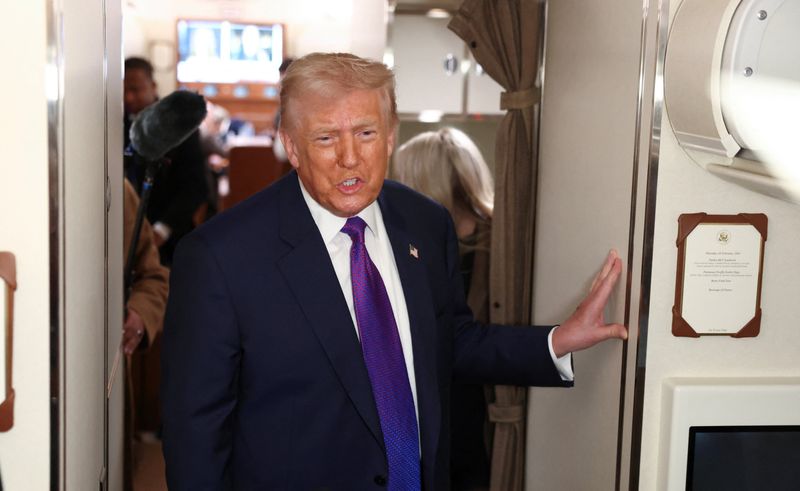
Trump pitches economic plan in Georgia as high prices frustrate voters

Published

on

Trump pitches economic plan in Georgia as high prices frustrate voters
Continue Reading
Click to comment

Leave a Reply

Your email address will not be published. Required fields are marked *

Business

Wall Street ends down as Nvidia slides and private equity stocks sink

Published

on

Wall Street ends down as Nvidia slides and private equity stocks sink
Wall Street ended lower on Thursday, with losses in private equity companies and weakness in Nvidia and Apple, while earnings-driven gains in industrials limited losses.

Private equity companies slid after Blue Owl Capital‘s decision to sell $1.4 billion in assets and freeze redemptions at one of its funds to manage debt and ‌return capital.

Apollo Global Management, ⁠Ares, KKR & ⁠Co and Carlyle Group all fell as Blue Owl’s troubles added to recent worries about credit quality and lenders’ exposure to software stocks. Blue Owl also tumbled.

Nvidia and Apple both dipped and were among the companies weighing most on the S&P 500.

Advertisement

AI-linked technology stocks have faced turbulence in recent months due to concerns about high valuations and limited evidence that massive investments in AI are driving revenue and profit growth.


Industries ranging from software to logistics have also been hit by concerns that rapidly improving AI tools could disrupt their business models and steepen competition.
“The ⁠market is trying ‌to grapple with what business lines are under threat in a material way from AI. This technology is developing extraordinarily rapidly and days like today feel natural. We’re at a moment in ⁠the cycle where you realize that not everyone’s going to win and not all expectations are going to be met,” said Keith Buchanan, senior portfolio manager at Globalt Investments in Atlanta. Walmart dipped after new CEO John Furner kicked off his tenure with a conservative fiscal 2027 forecast, as well as a $30 billion buyback plan.

Deere & Co jumped after the farm-machinery maker raised its annual profit forecast and beat first-quarter results estimates.

According to preliminary data, the S&P 500 lost 20.22 points, or 0.28%, to end at 6,861.09 points, while the Nasdaq Composite lost 71.27 points, or 0.31%, to 22,682.37. The Dow Jones ‌Industrial Average fell 273.79 points, or 0.55%, to 49,388.87.

The S&P 500 energy index added as crude oil prices rose on mounting fears of a military conflict between the United States and Iran.

Advertisement

Omnicom jumped after the ad giant beat analysts’ estimates ⁠for fourth-quarter revenue, while Carvana dropped after the online used-car retailer missed fourth-quarter profit estimates.

Software provider EPAM Systems plunged as its cautious first-quarter outlook disappointed investors.

Minutes from the U.S. Federal Reserve‘s most recent policy meeting released on Wednesday showed policymakers remained split about the policy path later this year.

Investors were assessing Thursday’s weekly jobless claims data that pointed to a stabilizing labor market, and will closely parse the Personal Consumption Expenditures report – the Fed’s preferred inflation gauge – which is due on Friday, for hints on the Fed’s rate outlook.

Advertisement

Interest-rate trades suggest a 50% likelihood the Fed will cut rates by its June policy meeting, according to CME’s FedWatch Tool.

Continue Reading

Business

China shipments to US midsize firms drop 20%, JPMorgan Chase finds

Published

on

China shipments to US midsize firms drop 20%, JPMorgan Chase finds

A new analysis finds that payments made by U.S.-based midsize businesses to firms in China dropped significantly last year as tariffs on Chinese imports rose under the Trump administration.

The JPMorgan Chase Institute released a report on Thursday which found that payments made by midsize firms to China declined significantly, falling by about 20% from 2024 to 2025 even as overall international payments remained steady.

Advertisement

“This is perhaps not surprising, as China has been the hardest hit by tariffs among major U.S. trade partners – both when considering the overall effective rate, which stood at 37.4% in October 2025, according to the Penn Wharton Budget Model, and in terms of policy uncertainty, as tariff announcements frequently shifted over the course of the year, briefly reaching rates as high as 125% before subsequent reductions,” the Institute wrote.

The report found that among midsize firms that had prior outflows to China, their outflows to other parts of Asia grew, including Southeast Asia, Japan and India when looking at a sample of midsize firms with at least $5,000 in outflows to China in both 2023 and 2024. The authors noted that, “One potential reason for the increase in flows to these countries might be import substitution, but many other explanations are possible.”

SEC CHAIRMAN WARNS OF CHINA-LINKED RAMP-AND-DUMP ACTIVITY

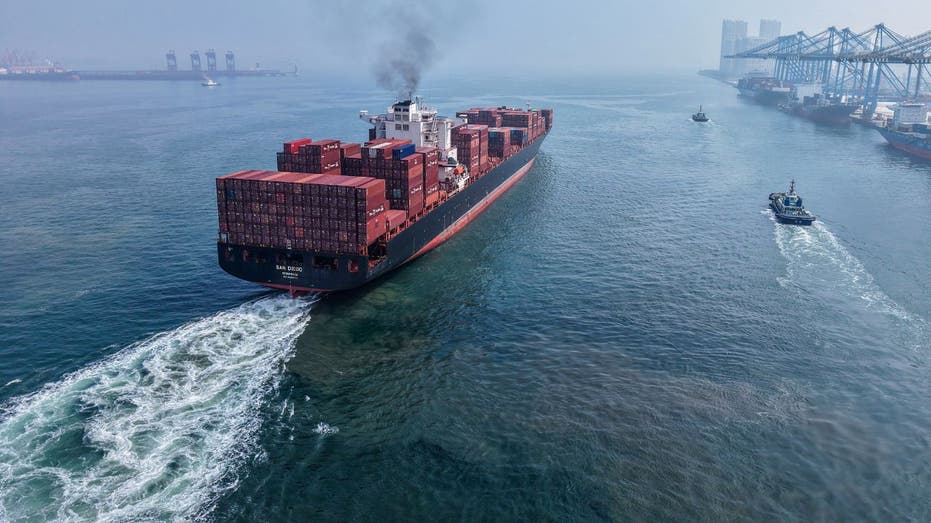
A container ship leaves a Chinese port.

Payments by midsize U.S. firms to trade partners in China declined in 2025 amid higher tariffs, the JPMorganChase Institute found. (STR/AFP/Getty Images)

Clark Packard, a research fellow at the Cato Institute’s Herbert A. Stiefel Center for Trade Policy Studies, told FOX Business that, “At this point it is somewhat uncertain whether Chinese products are shipped to countries in the region, modified or processed (this is key), and then sent to the U.S. on a large scale. That said, there are indications that it is likely happening.”

Advertisement

Packard said that as long as the products are modified in the second country, it doesn’t represent transshipment – a term used for trade practices that aim to circumvent tariffs and other trade rules.

Transshipment is sending a product to one country, slapping that country’s origin label on it and sending it to a third country without serious modifications to the product. As long as products undergo a substantial transformation or modification in a country they are truly products originating in that country,” Packard said. 

“It wouldn’t surprise me if Chinese firms are opening processing centers in Vietnam and other Asian countries to finish products ultimately bound for the U.S. and that this is the result of a lower tariff applied to that country than China,” he added.

TARIFFS MAY HAVE COST US ECONOMY THOUSANDS OF JOBS MONTHLY, FED ANALYSIS REVEALS

Advertisement
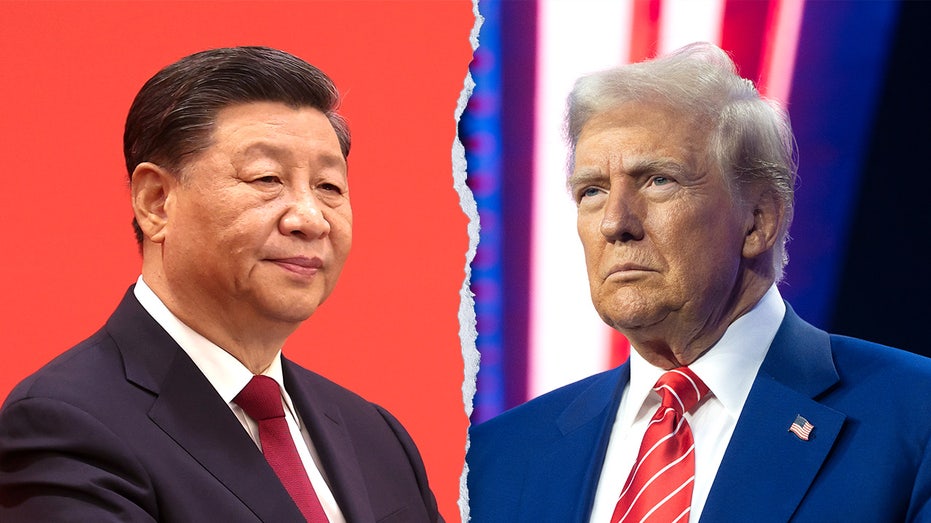
Split image of Chinese President Xi Jinping, left, and President Donald Trump, right.

President Donald Trump ramped up tariffs on China last year.  (Lintao Zhang/Getty Images; Rebecca Noble/Getty Images)

Derek Scissors, a senior fellow who studies the Chinese economy at the American Enterprise Institute, pointed to import flows from Vietnam and Taiwan as possible sources of transshipped goods.

“What reflects transshipment of Chinese goods is rising imports from Vietnam and especially Taiwan. You can make an argument that Vietnamese goods are competitors with Chinese goods, and they won out due to the tariffs on China,” Scissors told FOX Business. “But there is considerable Chinese investment in Vietnam in the area of consumer goods we buy from Vietnam.”

“If you are a Taiwanese producer in China, and you are facing high barriers to goods produced in China, it’s very simple to reroute these as Taiwanese. It might just require a label, at most, you alter your production process so there’s a last stop in Taiwan versus a last stop in China. Then, what you ship counts as Taiwanese,” he added.

KEVIN HASSETT SAYS FED ECONOMISTS SHOULD BE ‘DISCIPLINED’ OVER TARIFF STUDY

Advertisement
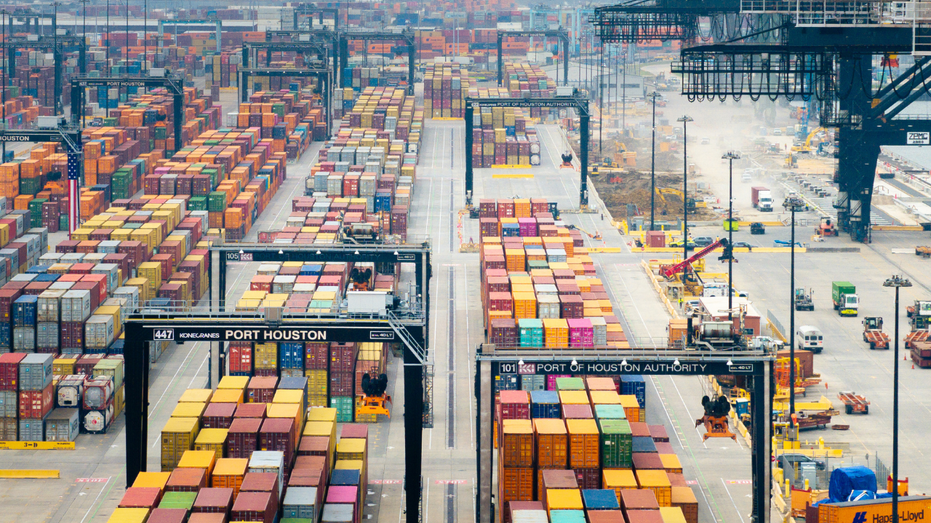
An aerial view of shipping containers at the Port of Houston

Tariffs are taxes on imported goods that are paid by the importer. (Brandon Bell/Getty Images)

The JPMorgan Chase Institute’s report also found that monthly tariff payments made by midsize U.S. businesses have tripled since early 2025.

Tariff outflows by midsize firms jumped from nearly $100 billion a month in early 2025 and the two preceding years to roughly $300 billion per month at the end of 2025.

“A stable trend was interrupted by a sharp increase starting in April 2025, coinciding with the implementation of the first tariff rate increases during that year. Total payments continued rising throughout 2025 and eventually reached a level of roughly three times what it had been until early 2025,” the JPMorgan Chase Institute wrote.

GET FOX BUSINESS ON THE GO BY CLICKING HERE

Advertisement
Continue Reading

Business

Form 144 Astera Labs For: 19 February

Published

on


Form 144 Astera Labs For: 19 February

Continue Reading

Business

Trump orders agencies to identify and release government files on aliens

Published

on

Trump orders agencies to identify and release government files on aliens


Trump orders agencies to identify and release government files on aliens

Continue Reading

Business

Live Nation sees strong ticket sales as monopoly lawsuit looms

Published

on

Live Nation sees strong ticket sales as monopoly lawsuit looms

The entertainment giant’s revenue surged last year as 159 million fans attended its concerts.

Continue Reading

Business

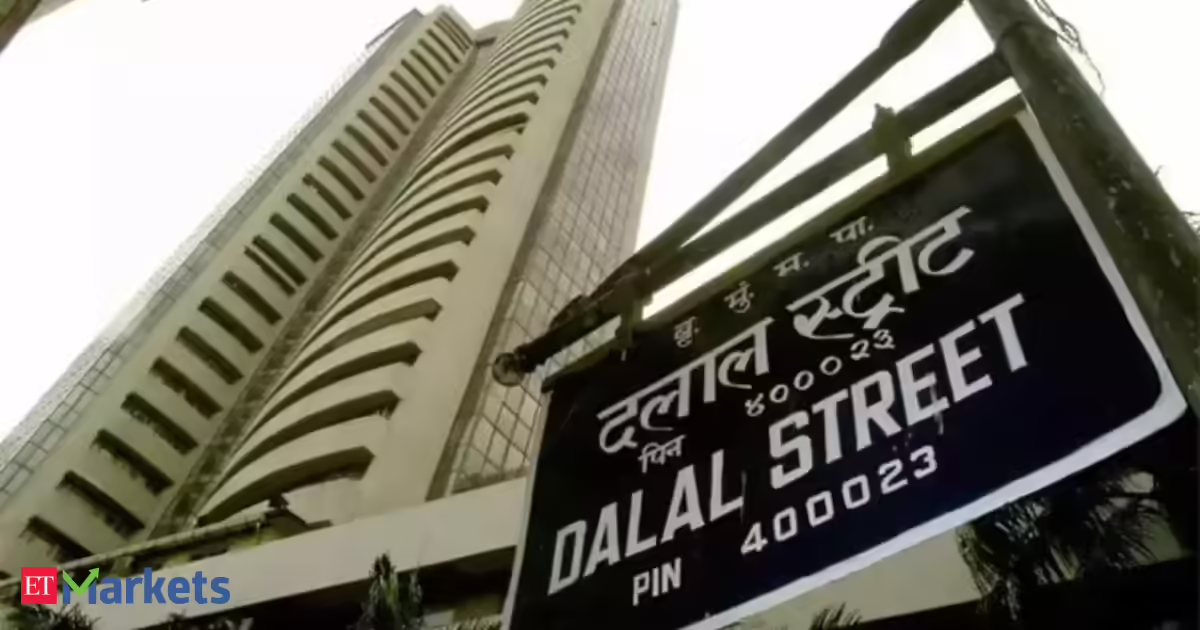
Crude shock for D-Street on fresh US-Iran tensions

Published

on

Crude shock for D-Street on fresh US-Iran tensions
Mumbai: Indian equity indices plunged Thursday, fuelled by a fresh US-Iran flare-up that sent Brent crude racing past $71 a barrel, exposing the import-dependent economy’s vulnerability to rising oil prices amid a steady rupee retreat against the US dollar over the past 12 months.

The NSE’s Nifty fell 365 points, or 1.4% to close at 25,454.35. The BSE’s Sensex declined 1,236.11 points, or 1.5%, to end at 82,498.14. Both the indices had opened marginally higher after ending firm for the past three trading sessions. “Market participants do not expect the tensions between the US and Iran to ease soon,” said Pankaj Pandey, head of fundamental research, ICICI Direct. “In the near term, the Nifty could move toward the 25,200 level,” he said.

On the NSE, all sectoral indices had declined at close, while the 30-stock Sensex saw all stocks end lower on Thursday.

Screenshot 2026-02-20 055913Agencies

Fear Gauge Climbs to 13.5
The declines led to a market cap erosion of Rs 6.4 lakh crore.

The Volatility Index or VIX – the stock market’s fear gauge – spiked over 10% to 13.5, indicating that traders see continued risks in the near term.
Brent Oil April Futures have soared nearly $4 a barrel in the past two days to $71.2 on Thursday evening as the shadow of a US military strike on Iran over the stalled nuclear talks loomed over the oil market. A potential escalation of risks could choke the flow of crude through the Strait of Hormuz – a key route for the world’s energy exports from the region. According to reports, Iran has shut the Strait briefly for military drills.
Pandey said that crude prices may stay elevated in the coming weeks, which could affect multiple sectors of the Indian market, given that India is an oil-importing country, and trading may remain volatile.
India imports about four fifths of its oil needs, and crude oil shipments dominate its import bills. The Indian rupee, already under the cosh due to the lingering tariffs dispute, could extend its run of losses and stoke risks of imported inflation should the price of oil in the global markets remain firm.

Gold and silver prices were up 0.2% and 1.2%on Thursday evening.

Advertisement

Elsewhere in Asia, Japan advanced 0.6%, and South Korea gained 3.1%. Financial markets remained shut in mainland China, Hong Kong and Taiwan for the Lunar New Year holiday. The pan-Europe index Stoxx 600 was down 0.6% at the time of going to print.

At home, the broader market indices also declined on Thursday, as the Nifty Midcap 150 dropped 1.6% and the Nifty Small-cap 250 fell 1.2%.

Continue Reading

Business

Travere Therapeutics, Inc. (TVTX) Q4 2025 Earnings Call Transcript

Published

on

OneWater Marine Inc. (ONEW) Q1 2026 Earnings Call Transcript

Travere Therapeutics, Inc. (TVTX) Q4 2025 Earnings Call February 19, 2026 4:30 PM EST

Company Participants

Nivi Nehra – Vice President of Corporate Communications & Investor Relations
Eric Dube – President, CEO & Director
Jula Inrig – Chief Medical Officer
Peter Heerma – Chief Commercial Officer
Chris Cline – Chief Financial Officer
William Rote – Chief Research Officer

Conference Call Participants

Advertisement

Vamil Divan – Guggenheim Securities, LLC, Research Division
Tyler Van Buren – TD Cowen, Research Division
Laura Chico – Wedbush Securities Inc., Research Division
Priyanka Grover – JPMorgan Chase & Co, Research Division
Joseph Schwartz – Leerink Partners LLC, Research Division
Prakhar Agrawal – Cantor Fitzgerald & Co., Research Division
Sadia Rahman – Wells Fargo Securities, LLC, Research Division
Gavin Clark-Gartner – Evercore ISI Institutional Equities, Research Division
Maurice Raycroft – Jefferies LLC, Research Division
Jason Zemansky – BofA Securities, Research Division
Alexander Thompson – Stifel, Nicolaus & Company, Incorporated, Research Division
Yigal Nochomovitz – Citigroup Inc., Research Division

Presentation

Operator

Advertisement

Good afternoon, and welcome to the Travere Therapeutics Fourth Quarter and Full Year 2025 Financial Results Conference Call. Today’s call is being recorded.

At this time, I would like to turn the conference call over to Nivi Nehra, Vice President, Corporate Communications and Investor Relations. Please go ahead, Nivi.

Nivi Nehra
Vice President of Corporate Communications & Investor Relations

Advertisement

Thank you, operator. Good afternoon, and welcome to Travere Therapeutics Fourth Quarter and Full Year 2025 Financial Results and Corporate Update Call. Thank you all for joining. Today’s call will be led by Dr. Eric Dube, our President and Chief Executive Officer. Eric will be joined in the prepared remarks by Dr. Jula Inrig, our Chief Medical Officer; Peter Heerma, our Chief Commercial Officer; and Chris Cline, our Chief Financial Officer. Dr. Bill Rote, our Chief Research Officer, will join us for the Q&A.

Before we begin, I’d like to remind everyone that statements

Advertisement
Continue Reading

Business

Cathie Wood’s ARK sells DraftKings stock, buys Figma and Compass Pathways

Published

on


Cathie Wood’s ARK sells DraftKings stock, buys Figma and Compass Pathways

Continue Reading

Business

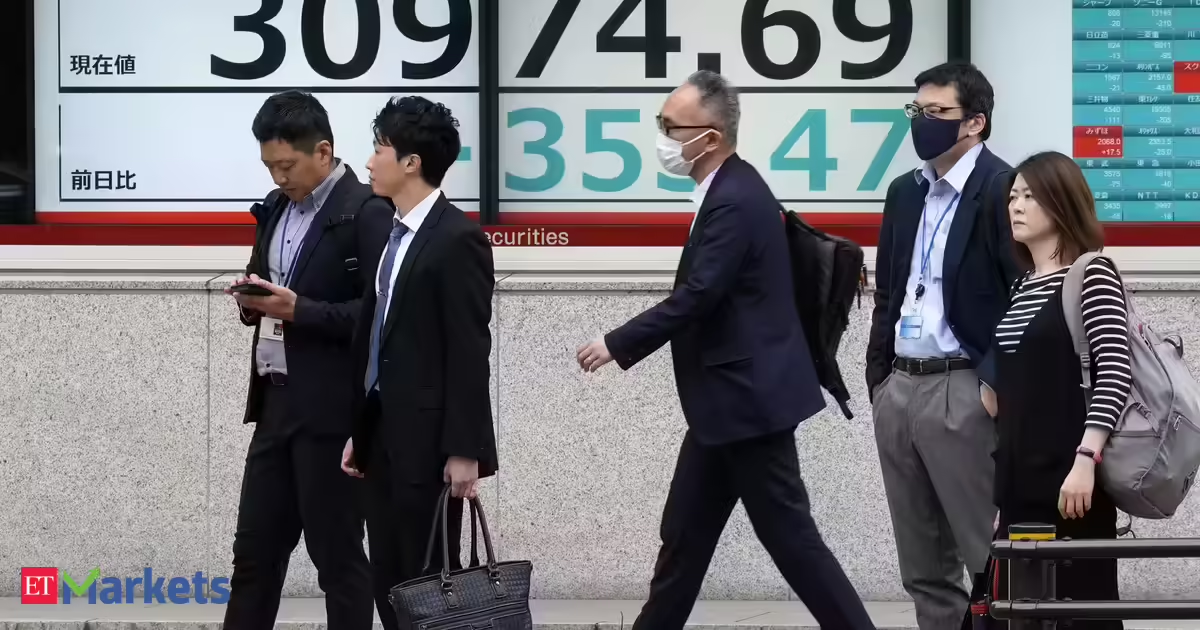
Global Market Today | Asian stocks fall, oil climbs with Iran in focus

Published

on

Global Market Today | Asian stocks fall, oil climbs with Iran in focus
Asian equities fell as escalating tensions in Iran weighed on sentiment, while oil rose to its highest level since August.

Stocks opened lower in Japan and Australia, indicating a headwind to sentiment after two days of advances for a gauge of the region’s stocks. Markets were also set to reopen in Hong Kong after the Lunar New Year holidays, while those for mainland China remained shut. The dollar was poised to notch its best week since mid-November.

Crude rallied as President Donald Trump said the US has to “make a meaningful deal” with Iran, adding that the next 10 days will tell whether there will be an accord. Treasuries edged higher on Thursday and gold hovered around $5,000 an ounce. US stocks also fell, with alternative asset managers facing sharp declines after a private credit fund halted redemptions.

Caution has resurfaced in markets as US moves on Iran introduced a fresh layer of geopolitical risk, halting a tentative rebound in equities and dampening broader risk appetite. The renewed tensions threaten to derail a nascent recovery that had begun to take hold after weeks of volatility driven by concerns over AI-related disruption across sectors and companies.

Advertisement

With Iran’s military proxies greatly weakened and the economy in crisis, the country doesn’t find itself in a very strong negotiating position, so the markets likely expect a diplomatic resolution, according to Dennis Follmer at Montis Financial.


“Right now, stocks have not priced in the tensions between the US and Iran,” he said.
The US military is stationing a vast array of forces in the Middle East, including two aircraft carriers, fighter jets and refueling tankers, giving Trump the option for a major attack against Iran as he pressures the country to strike a deal over its nuclear program.American military buildup in the Middle East means Iran’s window to reach a diplomatic agreement over its atomic activities is at risk of closing, according to the head of the United Nations nuclear watchdog. A potential war would put flows at risk from a region that pumps about a third of the world’s oil.

“Crude oil prices are rising on the anticipation of possible military action in Iran,” said Louis Navellier at Navellier & Associates. “The US and Iran are expected to meet again, and those negotiations are expected to be closely watched.”

West Texas Intermediate traded below $67 a barrel, after adding about 7% in the prior two sessions, while Brent closed near $72.

Some traders also attributed the risk-off mood to caution ahead of Friday’s readings on the economy and inflation, particularly after minutes of the Federal Reserve’s latest meeting showed renewed concerns about price pressures. Also, the US Supreme Court has scheduled Friday as its next opinion day amid a global wait for a ruling on Trump’s signature tariffs.

Advertisement

Also dimming sentiment among investors was Blue Owl Capital Inc.’s decision to restrict withdrawals from one of its private credit funds that raised concerns over the risks bubbling under the surface of the $1.8 trillion market. Its shares sank about 6% Thursday, dragging down industry peers like Apollo Global Management Inc., Ares Management Corp. and TPG Inc.

Traders also kept an eye on the latest US economic readings.

On Friday, the government will issue its first estimate of gross domestic product for the fourth quarter, a period that included the longest-ever federal government shutdown. The latest report card on the economy is projected to show growth cooled to a still-solid annualized pace after expanding in the prior quarter at the quickest rate in two years.

Advertisement
Continue Reading

Business

Nvidia, OpenAI near $30 billion investment in place of unfinished $100 billion deal, FT reports

Published

on

Nvidia, OpenAI near $30 billion investment in place of unfinished $100 billion deal, FT reports


Nvidia, OpenAI near $30 billion investment in place of unfinished $100 billion deal, FT reports

Continue Reading

Trending

Copyright © 2025