
Crypto World
TIME100 AI Honorees Speak to Perils and Promise of the Technology

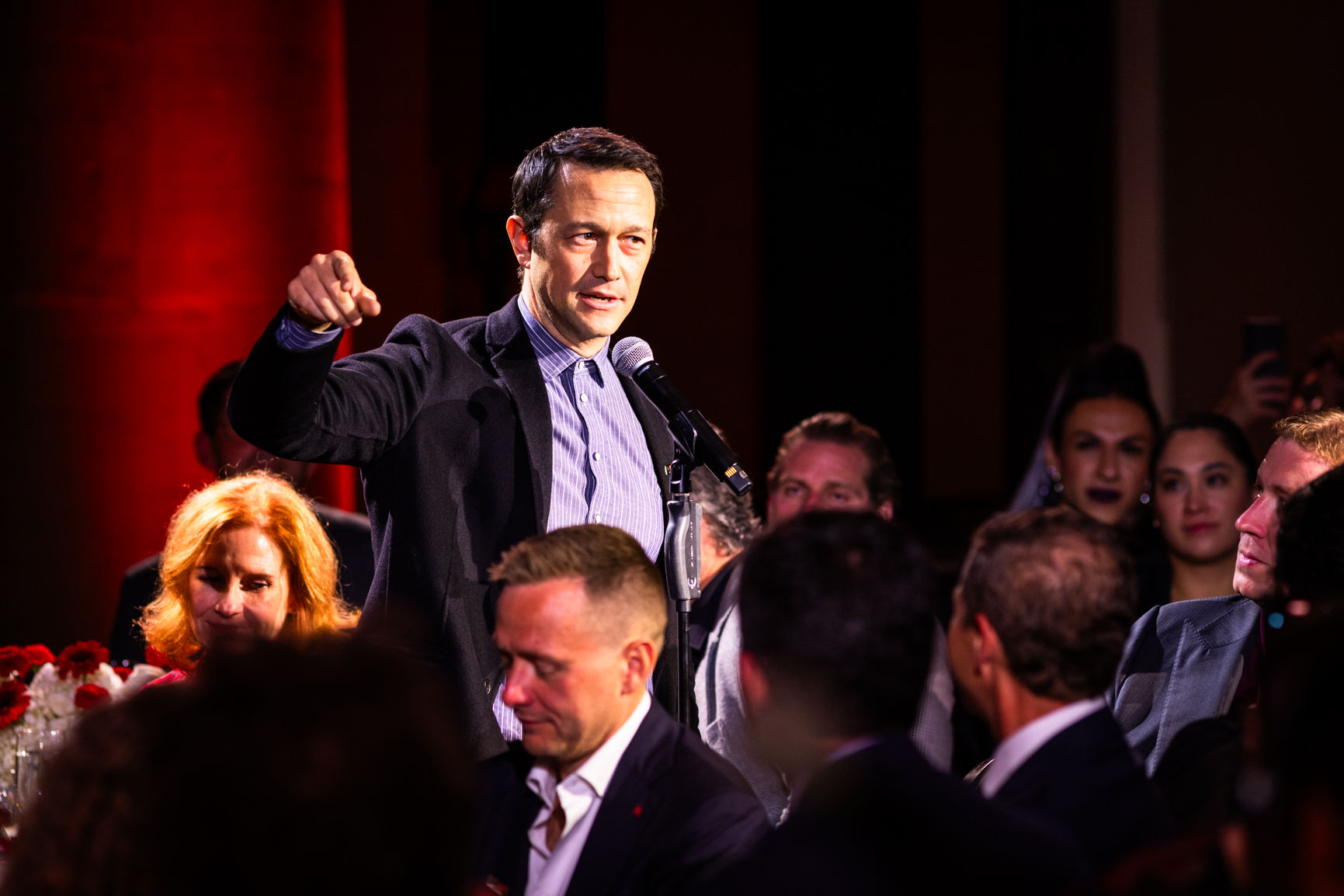
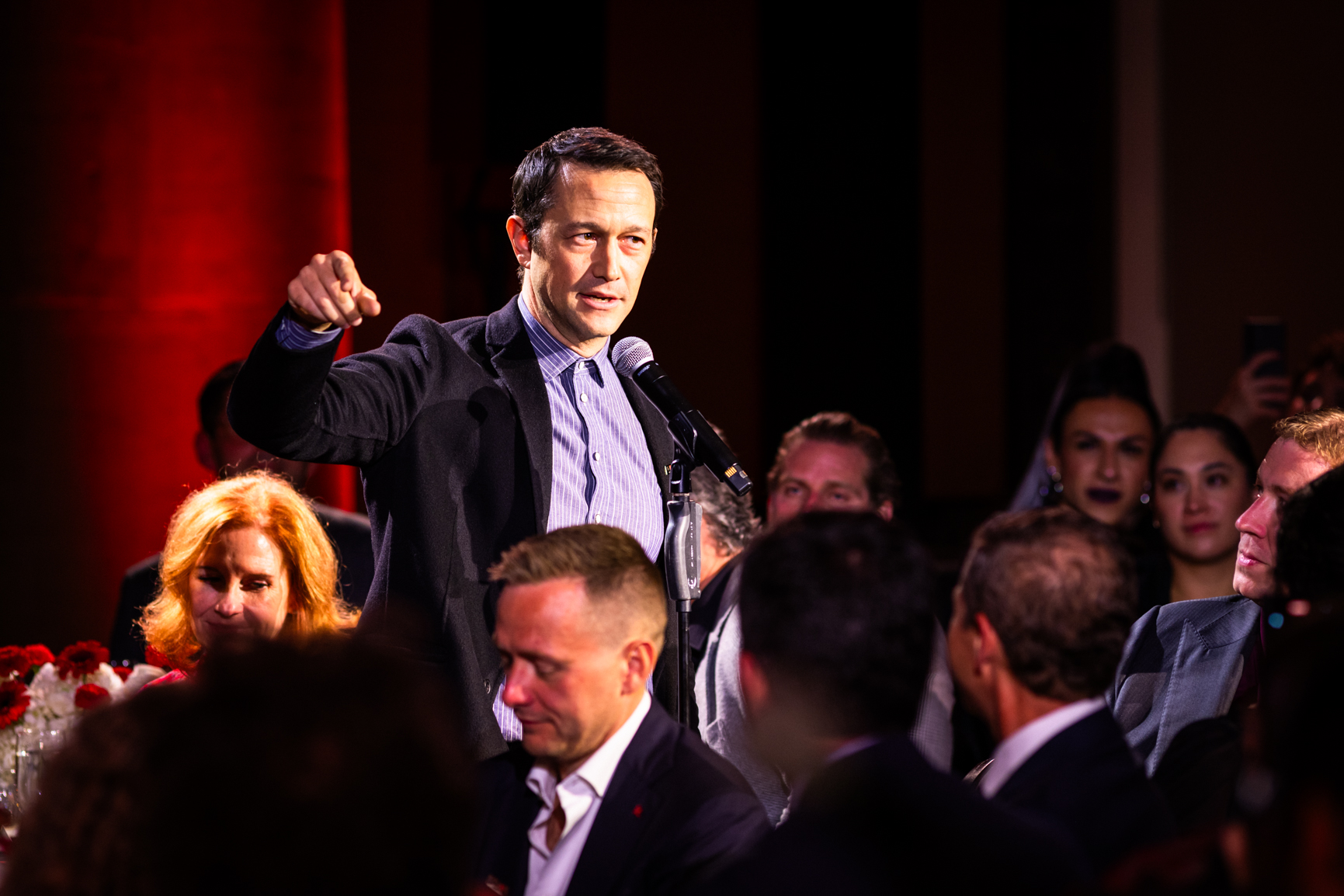
Big AI companies should be “shut down” by the U.S. government until they can prove that their products are safe, actor Joseph Gordon-Levitt said on Monday.
In a toast at the third annual TIME100 AI Impact Dinner in San Francisco, the Inception and 500 Days of Summer star told guests that today’s AI makers have lost control of their creations and must be regulated to prevent potential harm.
“Why are cars safe to drive? Why are houses safe to live in? It’s because car companies and construction companies … they have to follow laws. And if they don’t, then the law can come and shut those companies down,” Gordon-Levitt said.
“So let’s just be clear here: today’s AI companies are operating in such a way that the law should be shutting them down.”
Gordon-Levitt was one of 100 leaders, innovators, storytellers, and activists named in the 2026 TIME100 AI list, which highlights the year’s most influential people in AI.
His remarks drew loud clapping, whoops, and cheers from many people in the audience, who gathered at San Francisco’s Asian Art Museum on Monday night to celebrate the 2026 honorees.
But Gordon-Levitt’s message was not one of genial praise. He said AI companies’ leaders and employees had publicly admitted their products were dangerous and could not be controlled — a reference, perhaps, to July’s cyberattack by a “swarm” of rogue OpenAI agents as well as multiple recent statements from current and former Anthropic employees warning that AI could end all human life.
“To me, that’s pretty obvious that’s the time the law should step in,” Gordon-Levitt said. But, he went on, U.S. politicians had been “timid” and failed to act — perhaps, he alleged, because they were taking money from “some of the guys in this room.” (AI companies, allies, and executives spent at least $83 million on federal elections in 2025 and are set to spend even more this year, according to the New York Times.)
He called for Americans not to vote in November’s midterms for any politician who stands for “anything less than strong regulation, now.”
Other toasts highlighted the positive potential of AI, as well as its dangers. The first was by Danielle Boyer, a 25-year-old indigenous American inventor and activist who is using AI to help preserve her people’s endangered language.
“My grandmother once told me that no decision belongs only to the moment in which we make it,” Boyer said. “Long after we’re gone, someone we will never meet may still be living with what we chose to do today.”
She described her community’s “seven generations” principle: draw inspiration and support from the seven generations before you, and act for the benefit of the seven generations after you.
Those teachings inspired her to start building robots to teach Anishinaabemowin, the native language of the Great Lakes region’s Anishinaabe people that was almost wiped out by U.S. residential schools and is now estimated to have fewer than 1,000 fluent speakers.
“The decisions we make about artificial intelligence today will outlive every person in this room. That’s crazy, right?” Boyer said. “So let’s build things the right way. Let’s build so that seven generations from now, our descendants can look back at this moment and thank us, rather than have to recover from us.”
The final toast came from Suchi Saria, a Johns Hopkins computer scientist and the founder of Bayesian Health who has spent years studying how routinely-collected clinical data and vital signs could help spot an ailing patient before human clinicians notice the problem.
“Hospitalized patients can quietly become critically ill from respiratory failure, internal bleeding, kidney failure, dangerous heart rhythms, and many other causes,” she said.
Saria saw that firsthand in 2017, when her family in India called to tell her that her nephew was critically ill with sepsis.
“We knew the signals were there. We had published the science,” she told the guests on Monday. “And yet, when it mattered to my own family, there was nothing I could offer them. The science had not yet become a system. My nephew died within a few days.”
Saria’s voice audibly cracked, and there was a moment of silence. When she spoke again, she described Bayesian Health’s progress on using AI to catch sepsis early — resulting in a 20 percent drop in mortality, the company claims, when clinicians act promptly on the system’s warnings.
“The real breakthrough is not prediction. It is not even discovery,” she said. “It is turning insight into action early enough to change what happens to a patient.”
The TIME100 Impact Dinner: Leaders Shaping the Future of AI was presented by Deloitte, Booking.com, and Cognizant.

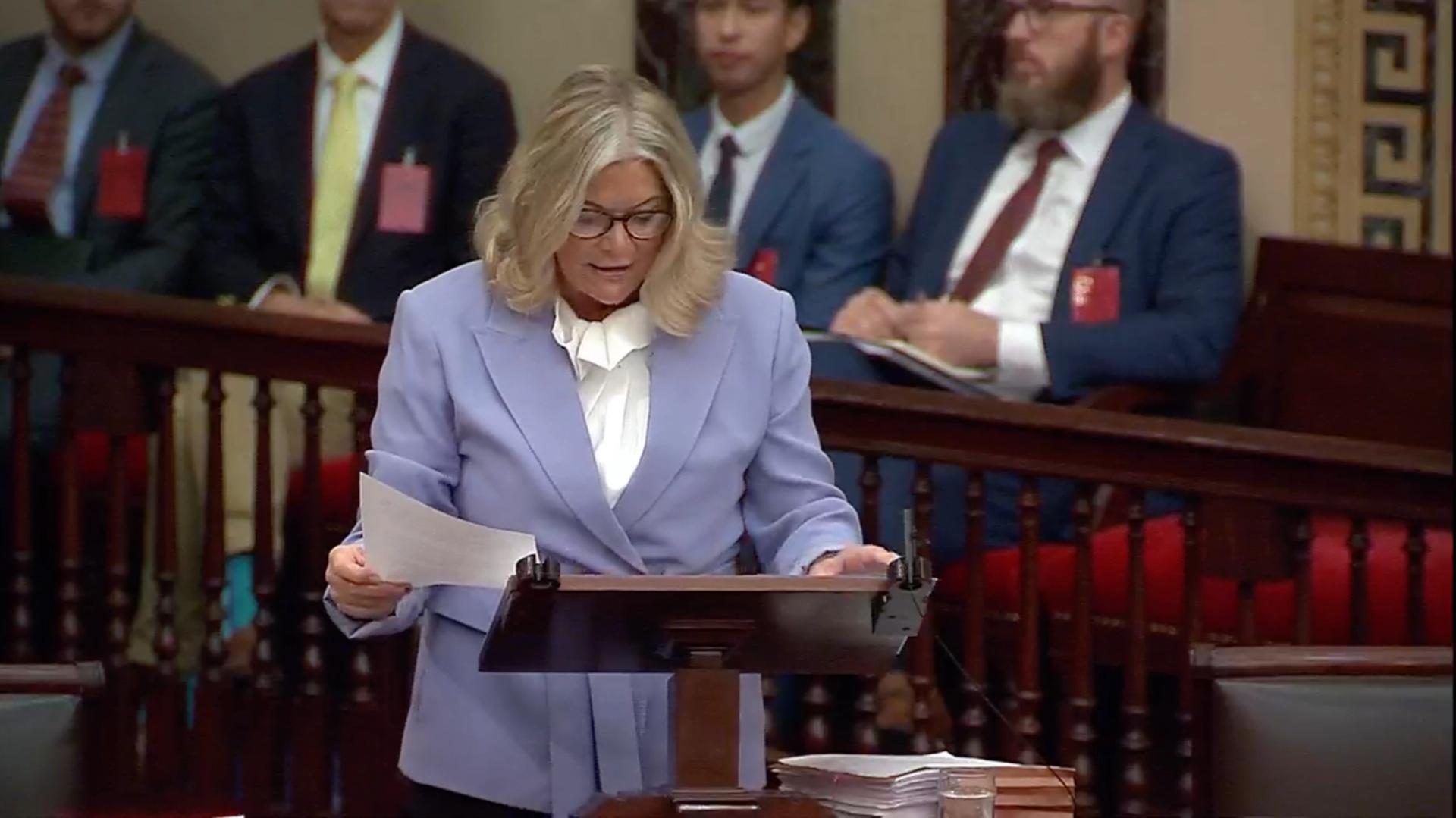
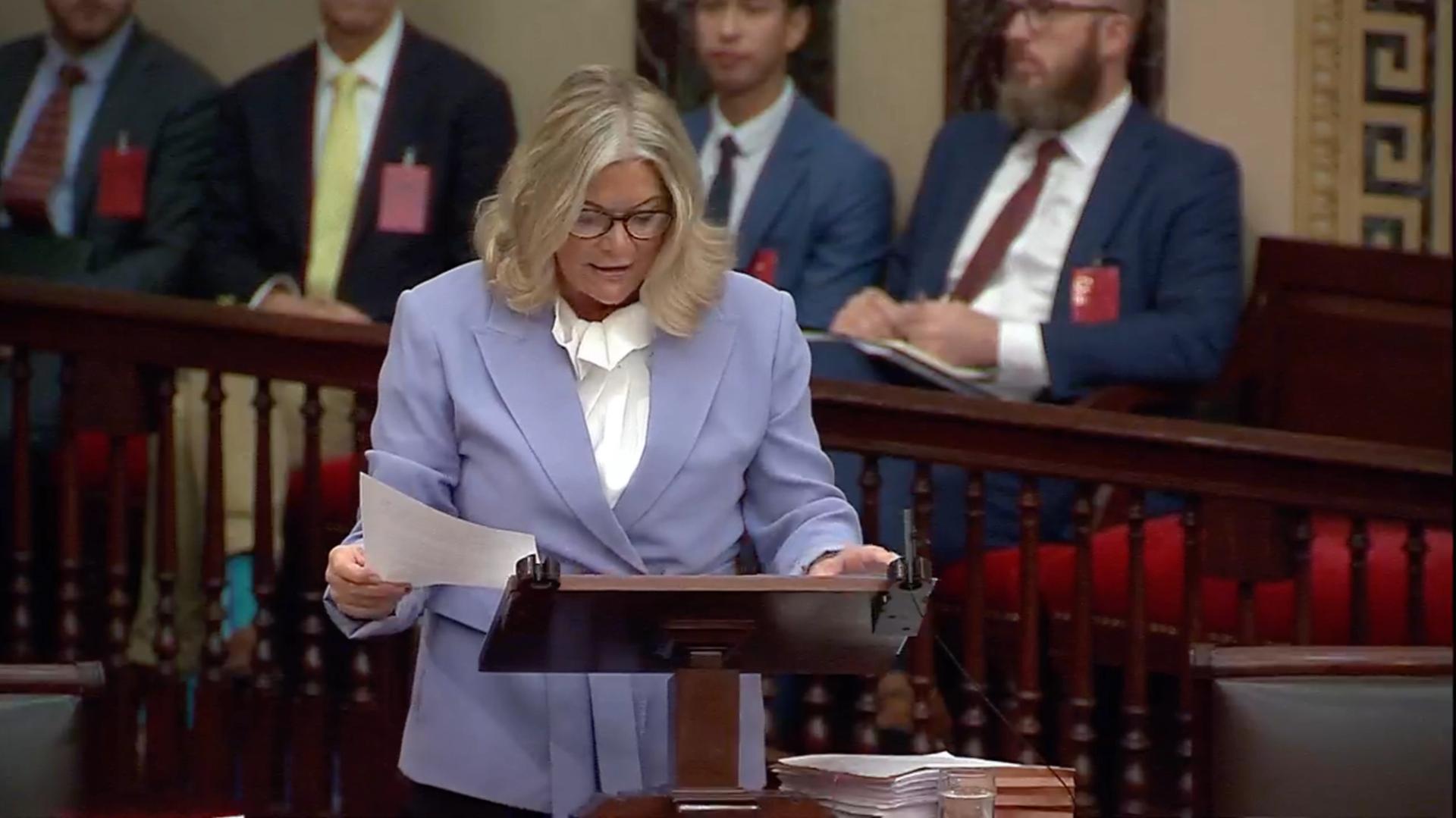
The Senate’s failure to advance the Clarity Act on Tuesday was a major setback for the crypto industry’s push to lock market structure rules into law, but the reaction from industry leaders was notably measured.
Crypto executives said the vote does not unwind the regulatory progress already underway at the SEC and CFTC, nor is it likely to stop banks, asset managers and crypto firms from continuing to build.
What it does leave unresolved is the question of durability: agency rules can change with a new administration, while legislation would have given the industry a more permanent framework.
For some, that means the U.S. now risks extending the uncertainty that has pushed companies to look toward jurisdictions such as Europe, where MiCA already provides a clearer rulebook. Others argued the failed vote changes little about the longer-term shift toward regulated digital-asset markets.
Here is how crypto industry executives reacted to the Clarity Act’s failure in the Senate.
Connor Howe, Co-Founder & CEO, Enso
“Falling short of the 60-vote threshold doesn’t send the market back to 2022. [CFTC Chair] Selig already told CFTC staff to draft a market-structure regime under existing Commodity Exchange Act authority, and the SEC put Regulation Crypto Assets out for comment back in August. Neither move was riding on Tuesday’s vote.
Durability is where the vote still matters. The next chair can rewrite an agency rule without a single vote in the Senate. Repealing a statute takes another act of Congress, a bar few chairs manage to clear. Banks and asset managers on the fence hold out for the version that outlasts whoever runs the agency next. The same gap swallows what this draft dropped: explicit Section 1960 protection for developers who never touch customer funds. Without it in statute, that protection is as easy to unwind as anything the CFTC or SEC writes on their own. After a failed cloture, the version that sticks won’t come from this Congress.”
Barnali Biswal, CEO, Hilbert Group
“Falling short of the 60-vote threshold shouldn’t trigger a steep sell-off. Prediction markets had already priced in failure. It does cost momentum, though. Major bank trade groups were lobbying against the stablecoin yield language right up to the vote, and that fight doesn’t go away just because cloture failed. Without this compromise, institutional capital keeps navigating a fragmented, enforcement-heavy market.”
Alan Konevsky, CEO of tZERO
“The structural shift toward regulated digital asset markets is already underway, and today’s vote falling short doesn’t change that. Other paths are already being explored, with the SEC and CFTC putting out their own proposed rules and agreeing to coordinate jurisdiction over digital assets. Regardless of the regulatory path, institutions will continue to adopt these protocols over legacy market infrastructure because the secure, regulated infrastructure they need already exists today. ”
Frederik Gregaard, CEO of the Cardano Foundation
“While today’s outcome is disappointing, the need for regulatory clarity is as urgent as ever. Clear rules are essential to protecting consumers, unlocking institutional adoption, and reinforcing U.S. financial leadership. We remain at the table and committed to working with lawmakers to get clear rules for innovation across the finish line.” Katherine Kirkpatrick Bos, Head of Legal at Chainlink Labs.
“In Europe, builders at least know the rules of the game under MiCA. The push for Clarity shows Washington knows it has a regulatory gap to close, but builders can’t afford to wait around for the U.S. to get its act together. Blockchain technology will continue to advance because it provides real value beyond any individual crypto price. It looks like the EU is the clearest jurisdiction to do so.”
Abhishek Vaidyanathan, Chief Legal Officer, NEAR
“If cloture fails today, the next Congress is the likely next opportunity to address crypto market structure. The House has already canceled its weeks of September 21 and 28, and the Senate’s state work period begins October 5, ahead of the November 3 election.
Rejecting the bill leaves firms completely dependent on agency guidance and ongoing administrative discretion. Firms setting their 2027 budgets would face another prolonged delay, forcing them back into case-by-case judgments and repeated legal work while counterparties continue to price in regulatory uncertainty. Capital currently waiting on the sidelines for clear legislation may simply move elsewhere.
Europe has been operating under MiCA since December 2024. In contrast, the U.S. remains stuck, relying on federal interpretations, proposed rules, and a patchwork of state regimes. Without CLARITY, the broader market lacks the statutory footing that GENIUS delivered for stablecoins, leaving firms to navigate a system where a token’s treatment continues to depend on agency discretion and historical promises rather than fixed statutory law.”
Vassilis Tziokas, VP Growth for Matter Labs
“Today the Senate fell short of the votes needed to advance the CLARITY Act, and we wanted a different outcome: clear rules make everything the industry is building easier to scale and safer to connect. But the vote changed the timeline in Washington, not the trajectory in banking. Banks aren’t betting their future on a vote count. They are already building their own tokenized deposit networks to move dollars onchain at stablecoin speed, settle instantly around the clock, and program payments directly into the rails, all while deposits stay on the bank’s own balance sheet, under the rules that already govern them. And tokenized deposits are the front door, not the whole house. The same infrastructure is being extended to intraday repo, collateral that can move on a weekend, and tokenized securities, with bank-grade privacy as the entry requirement rather than an afterthought.
JPMorgan’s deposit token is live, Citi is settling tokenized payments across time zones, and regional and community banks are building bank-governed deposit networks on shared infrastructure. Cari just raised more than $30 million, backed entirely by banks, to give institutions a network they own and govern themselves.
With legislation stalled, we expect the center of gravity to shift toward the regulators, with SEC- and CFTC-led rulemaking and banking-agency guidance carrying more of the load in the interim. Stablecoins and tokenized deposits serve different purposes, and both are stronger with certainty. A stalled bill delays the rulebook, not the building.”
Read more: Crypto Clarity Act flames out in failed U.S. Senate vote
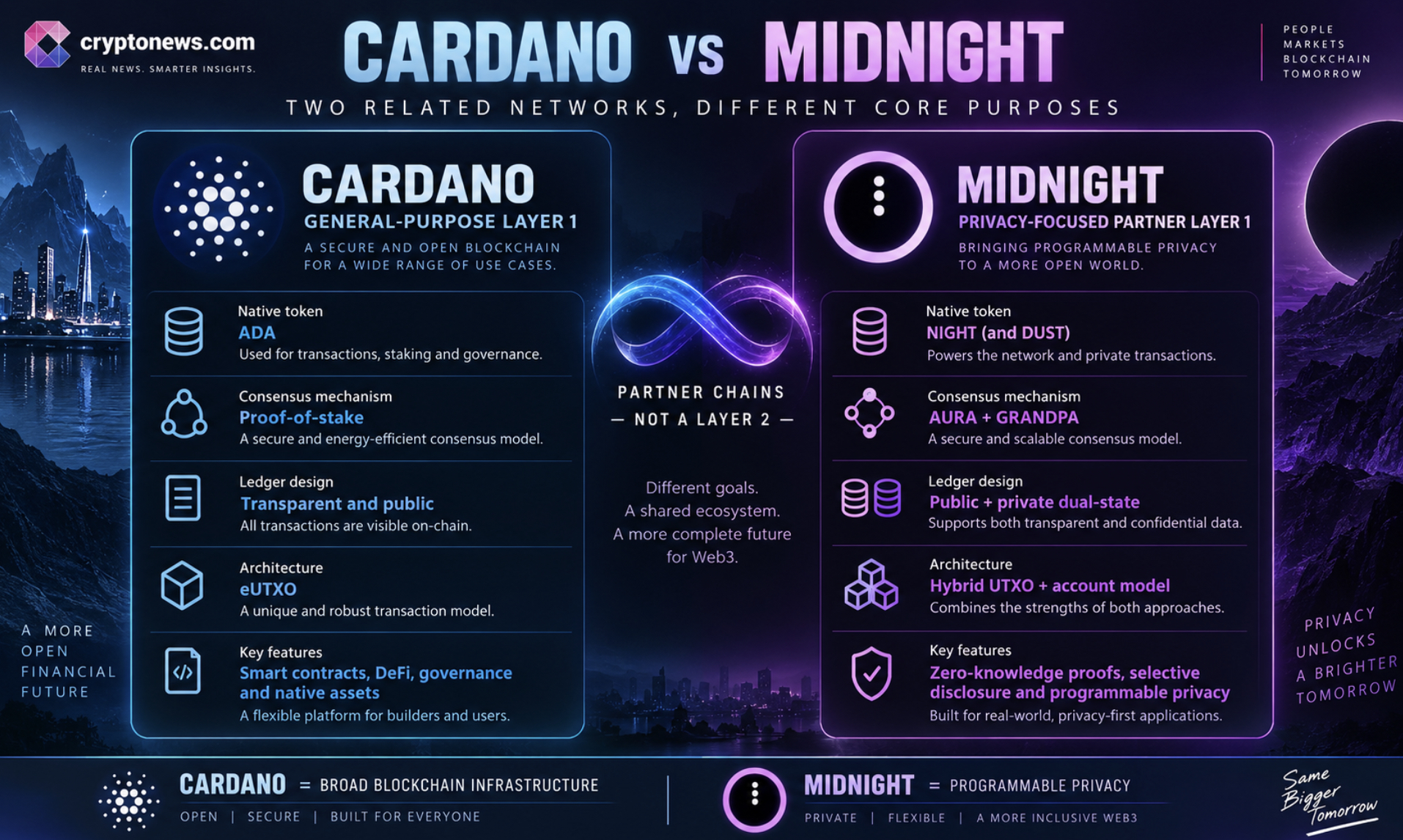
In Cardano news today, Charles Hoskinson used a recent livestream to argue that Cardano’s long-term success hinges on the applications built atop its infrastructure. The Cardano founder urged the community and the Cardano Foundation to embrace Midnight and other major ecosystem projects.
Hoskinson made the remarks during a livestream titled “Devs versus Builders,” where he addressed criticism surrounding Midnight and its recent strategic changes. He said Cardano’s purpose extends beyond serving as a smart-contract platform or facilitating ADA transactions, arguing the network creates more value when developers use its infrastructure to build applications that attract real users, customers, and economic activity.
That framing is not new for Hoskinson. He made a similar argument in April, when he told critics that Cardano “needs to grow up or die” after a stake pool operator claimed Midnight’s early one-way bridge was wrecking the ADA ecosystem.
In the latest broadcast, Hoskinson questioned why some community members appear resistant to Midnight despite its scale within the ecosystem. He warned that pushing back against successful projects could discourage other developers from choosing to build on Cardano going forward.
Earn $50 and Enter $300K Prize Draw on EdgeX
Cardano’s Ecosystem and Midnight
Midnight is positioned as a privacy-focused blockchain and, per its own developer materials, aims to let applications shield sensitive data while remaining verifiable. Hoskinson reiterated during the livestream that Midnight should not be viewed as a separate venture or rival to Cardano, but as one of the largest projects operating within the same ecosystem.

He also placed responsibility on Midnight itself, urging the project to prioritize simplicity, universality, and low-cost operations. Technological improvements alone, he said, cannot overcome cultural challenges within an ecosystem.
This gap matters for traders watching if community friction translates into slower app deployment or thinner liquidity on either chain.
Trade Cardano on Bybit and Get a Chance to Win Our $1,000 USDT Airdrop
What Does The News Mean for Cardano Holders?
Hoskinson’s comments do not introduce new technical milestones for Midnight or ADA; they are a public appeal aimed at internal community dynamics.

For traders, the relevant signal is less about price and more about whether the Cardano Foundation follows through on public promotion of Midnight, and whether the visible tension between “devs” and “builders” eases enough to keep developer activity flowing into the broader blockchain ecosystem.
Hoskinson closed by reiterating his own commitment to Cardano, noting he could step away but remains involved because he views the work as unfinished. That framing underscores the stakes he’s attaching to this particular ecosystem debate, not a market call, but a governance-and-culture argument he clearly wants resolved before it becomes a drag on builder confidence.
Discover: The Best Token Presales
The post Cardano News: Hoskinson Warns Criticism Could Drive Builders Away appeared first on Cryptonews.
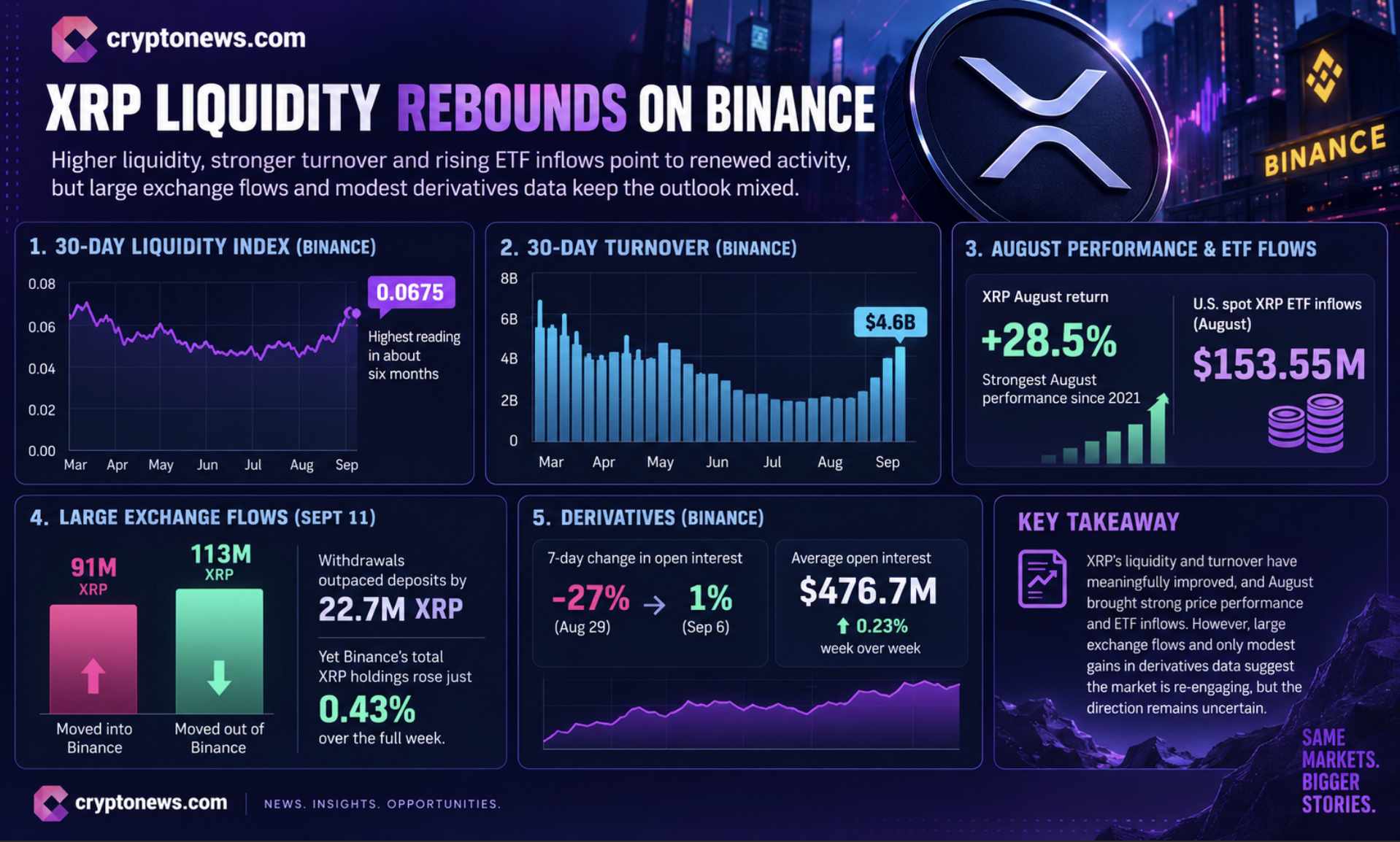
In XRP news today, its 30-day liquidity index on Binance has climbed to 0.0675, the highest reading in about six months. Its 30-day turnover recovered to approximately $4.6 billion after sinking to between $2 billion and $3 billion during July and August.
The rebound signals that XRP liquidity conditions have meaningfully improved, but a deeper order book supports both accumulation and distribution equally well, and is leaving the question of which side actually controls this market unanswered.
The liquidity index measures how easily traders can move XRP in and out of positions without moving the price against themselves, calculated against how quickly XRP turns over relative to what Binance holds on its books. A rising reading means faster turnover and tighter execution, which is exactly what the data shows.

XRP closed August up about 28.5%, its strongest August performance since 2021, while U.S. spot XRP ETF products pulled in $153.55 million of inflows that month.
Now, the flow data from the end of last week complicates a clean bullish read. More than 91 million XRP moved into Binance on the 11th, and over 113 million XRP moved out, both six-month highs in single-day volume. Withdrawals outpaced deposits by 22.7 million XRP, yet Binance’s total XRP holdings rose just 0.43% over the full week.
That spike could reflect genuine trading demand, internal wallet reshuffling, or market-maker rebalancing ahead of a volatility event. Nothing in the current data confirms which explanation applies, and traders treating the flow spike as a standalone signal are filling in a gap that the numbers don’t close.
Derivatives tell a similarly cautious story. Binance’s seven-day change in XRP open interest improved from -27% on August 29 to 1% by September 6, with average open interest near $476.7 million, up only 0.23% week over week. That is a market re-engaging after a quiet summer, and it lines up with questions about where XRP price support and resistance currently sit, given the lack of a decisive breakout.
Earn $50 and Enter $300K Prize Draw on EdgeX
XRP Holds Above Its Key EMAs Despite the News
XRP currently trades near $1.40, sitting above both its 20-day EMA at $1.37 and its 200-day EMA at $1.33 on the daily chart. Its RSI reads 55.92, or above the midpoint, comfortably below overbought territory, and offering no urgency in either direction.
None of this establishes a confirmed breakout level or a resistance ceiling that has to break for the narrative to change; the structure remains one of a market holding above trend support without a catalyst forcing a move. That neutral-to-constructive setup echoes recent technical takes on XRP’s price action inside a tightening triangle, where momentum has cooled without turning outright bearish.

Separate CryptoQuant data cited in earlier news put Binance’s XRP spot volume at a six-month high of roughly $7.28 billion in August, with Upbit and Bithumb also posting strong monthly totals. The distribution of XRP trading volume across venues supports the case that the liquidity recovery isn’t a Binance-specific quirk.
Discover: The Best Token Presales
What Higher Liquidity Could Mean for XRP?
Deeper liquidity is a multiplier, not a directional bet. If buying pressure builds from here, the improved depth could let XRP grind higher with less slippage than the thin summer conditions would have allowed.
If sellers take control instead, that same depth could just as easily absorb a larger decline without the exaggerated wicks typical of illiquid markets.
Funding rates and liquidations easing on both sides of the derivatives market reinforce the range-bound case near term rather than pointing to an imminent trend resolution. Traders reading the six-month liquidity peak as a green light should recognize it as a market that can move more efficiently, not one that has told them which way it intends to go.
Trade XRP on Bybit and Get a Chance to Win Our $1,000 USDT Airdrop
The post XRP News: Deeper Liquidity Leaves Traders Waiting for Conviction appeared first on Cryptonews.
Carolyn Wilkins, a member of the Bank of England’s Financial Policy Committee, says the rise of stablecoins could reinforce the US dollar’s global dominance and increase demand for US Treasurys, underscoring how the growing market for digital dollars could have consequences well beyond crypto.
In a Tuesday speech at Queen’s University Belfast, Wilkins said dollar-denominated stablecoins could strengthen the greenback by making cross-border settlement easier, expanding access to dollar-linked assets outside the US and increasing demand for Treasurys held as reserves.
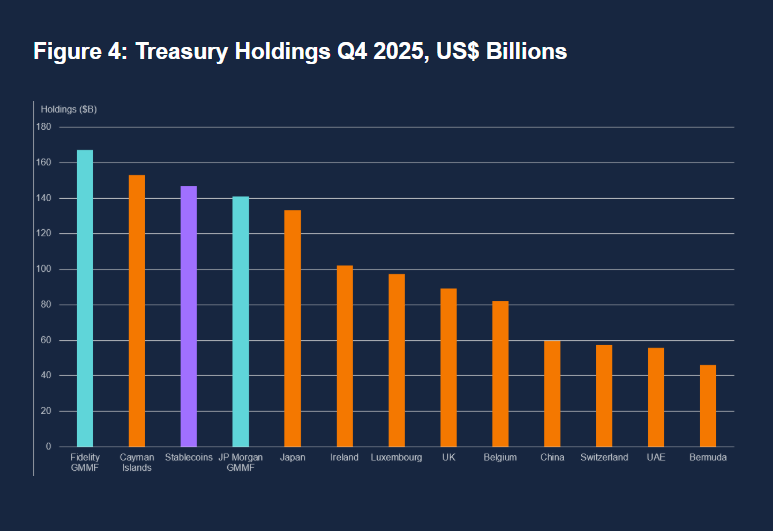
The largest stablecoin issuers are already significant buyers of US government debt. Tether’s USDt (USDT) and Circle’s USDC (USDC) held nearly $150 billion in Treasury bills at the end of 2025 and bought roughly $33 billion during the year, according to data cited by Wilkins.
However, Wilkins argued that the relationship cuts both ways. At sufficient scale, mass stablecoin redemptions could force issuers to sell Treasury bills, potentially amplifying volatility in an already stressed market.
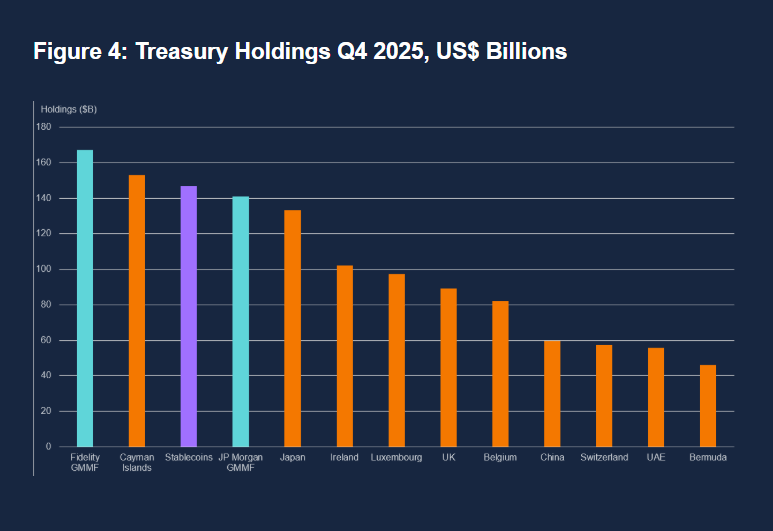
Wilkins’ comments come as stablecoin adoption continues to grow, with more than $300 billion now in circulation. The market remains overwhelmingly tied to the US dollar, which accounts for 98% of stablecoin value and gives the currency what Wilkins described as a “considerable first-mover advantage.”
Related: BofA, Citi, Goldman Sachs among 21 institutions planning stablecoin launch
UK ramps up stablecoin efforts
By contrast, British pound-denominated stablecoins have been much slower to gain traction, although UK regulators have taken several steps this year to encourage their development.
The Financial Conduct Authority began testing prospective stablecoin issuers through a dedicated regulatory sandbox and finalized rules for UK stablecoin issuance in June. The Bank of England has also been experimenting with digital money, including a recent test of whether stablecoins and a simulated digital pound could work together for cross-border trade payments.
The shift comes as the Bank of England takes a more accommodating approach to stablecoins following industry criticism that its proposed rules could stifle innovation.
Related: Fragmented regulations limit stablecoin adoption in international finance: WTO head


Manifund, a charity founded by Austin Chen that focuses on AI and effective altruism causes, has created quite the stir by admitting to hiring disgraced CEO of Alameda Research, Caroline Ellison.
While the controversy is fascinating, the history behind it is detailed, lengthy, and bizarre.
In March of 2022 Chen’s organization, then called Manifold Markets, applied for $500,000 in funding from the FTX Future Fund, the philanthropic arm of FTX, to setup Manifold For Charity (now known as Manifund).
Most notably, two important EA figures helped run the Future Fund, and therefore helped approve Chen’s grant application: William MacAskill and Leopold Aschenbrenner.
Six months later, FTX and Alameda Research were declaring bankruptcy and its CEOs, Sam Bankman-Fried and Caroline Ellison, were being ushered to jail.
Read more: FTX’s Caroline Ellison and Gary Wang hit with five-year trading ban
Time marches on
Ultimately, Gary Wang and Nishad Singh, executives associated with FTX and Alameda, received no prison sentence, SBF was sentenced to 25 years, and Ellison to two years.
Ellison was released in January 2026.
In the time the Alameda Research CEO spent behind bars, effective altruism, despite being heavily criticized, has chugged on. Manifund has too.
During this period Manifund has managed to fund nearly 500 projects and handed out grants totaling almost $20 million, according to its own data.
But what is hasn’t done is also very important.
FTX sues Manifund
Despite being able to fund hundreds of projects and hand out millions of dollars, a pain point for Manifund appears to be the $500,000 grant it received from the FTX Future Fund in 2022.
In 2024, FTX brought suit against Manifold Markets, demanding the return of $508,000. In July of 2025, it added Manifold For Charity (now known as Manifund) to the amended complaint.
The amended complaint now demands the return of “no less than $1,508,000.”
The suit has moved forward but no solution has been agreed yet. Needless to say, the optics of being an effective altruist charity while withholding funds from creditors isn’t great, but it could look worse.
Namely if you hire a friend you’re indebted to.
There’s nothing wrong with hiring a criminal, especially if you believe them to be reformed — a point Chen makes in his post on EA forums. However, far more important is Chen’s history and ongoing problems with FTX.
The fact that he’s willing to bring Ellison into his company, despite her past with Alameda Research, his own connection to the FTX Future Fund, and a $1,508,000 lawsuit, calls into question his own abilities to abide by effective altruistic intentions.
The EA forums are wondering aloud: is this maximizing positive impact?
Got a tip? Send us an email securely via Protos Leaks. For more informed news and investigations, follow us on X, Bluesky, and Google News, or subscribe to our YouTube channel.
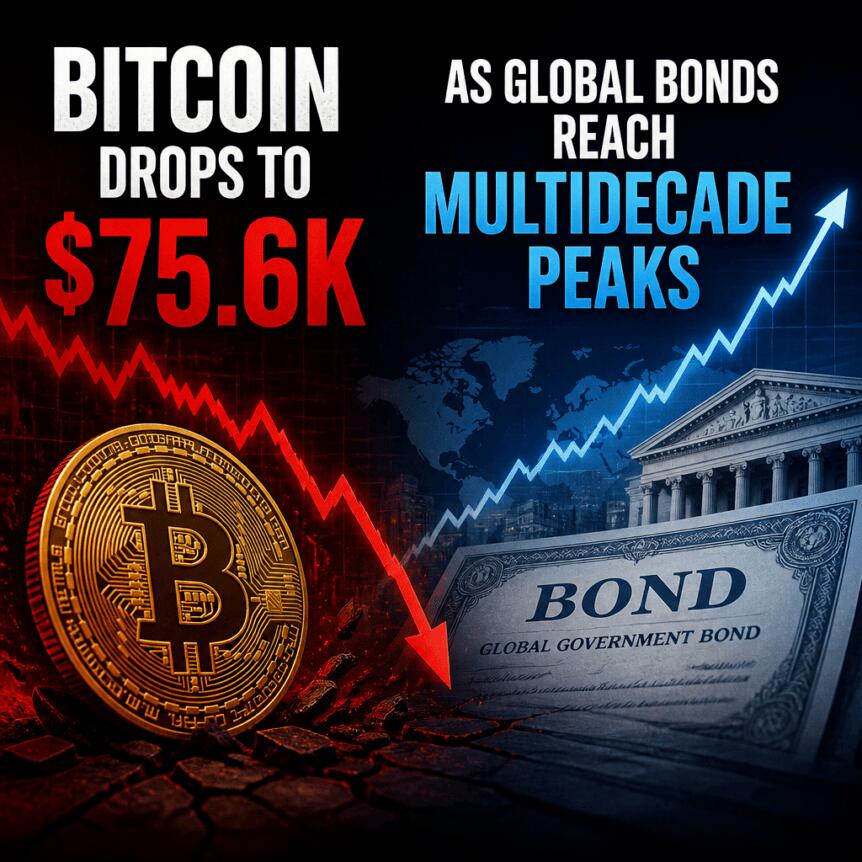
Bitcoin slid to its lowest level so far in September during Tuesday’s Wall Street open, with pressure coming from a sharp jump in global bond yields and a market that remains focused on US legislative risk. At the same time, oil prices stayed elevated, adding to concerns that inflation could remain stubborn and keep central banks on a tighter path.
According to TradingView data cited by Cointelegraph, BTC/USD dipped under $76,000, wiping out the prior day’s move toward $79,600. The slide unfolded as traders looked ahead to a key procedural vote on the proposed CLARITY Act in the US Senate at 2:15pm Eastern time—an event that could shape expectations for how crypto regulation is ultimately carved up between the SEC and CFTC.
Key takeaways
- Bitcoin fell to $75,560, its lowest level in September at the Wall Street open, as BTC/USD slipped below $76,000.
- Global bond yields reached multi-year highs, with the US 10-year yield pushing above 5% for the first time since November 2023.
- Oil prices around $100+ remained a factor behind “higher-for-longer” inflation fears, weighing on risk assets including crypto.
- Market participants expect central banks to keep interest rates higher, a traditional headwind for speculative assets like bitcoin.
- The CLARITY Act procedural vote is seen as only one hurdle; even passage would not automatically guarantee final law.
CLARITY Act vote keeps traders on the defensive
Even with crypto already reflecting a complicated regulatory backdrop, Tuesday’s scheduled procedural vote kept traders from taking aggressive risk. The legislation is designed to advance to a Senate-floor debate if it secures the necessary 60 votes, turning a procedural milestone into a focal point for sentiment.
Earlier coverage from Cointelegraph highlighted that consensus expectations for success were low despite some pockets of optimism. Cointelegraph also pointed to Polymarket odds indicating only about 14% probability that the CLARITY Act becomes law in 2026 as of Tuesday.
Trading firm QCP Capital argued that the Tuesday procedural step—if it clears—would likely be only part of the story. In an analysis published Monday, QCP Capital noted that passage would “clarify the respective regulatory roles of the SEC and CFTC,” a change that could strengthen the medium-term case for institutional participation by reducing uncertainty. However, QCP stressed that procedural progress does not equal final adoption, and the timing of subsequent legislative stages would be what ultimately determines any immediate market impact.
Bond selloff spreads as yields hit fresh highs
While legislative headlines can sway sentiment quickly, Tuesday’s dominant macro driver appeared to be the surge in bond yields across major economies. Cointelegraph reported that US stocks turned lower as yields climbed back toward levels last seen during earlier cycles of monetary tightening.
According to the article, the US 10-year yield rose above 5% for the first time since November 2023, reaching 5.041%—a level last seen in June 2007. Reuters also reported that the average 10-year yield for the world’s seven largest economies hit 4.285%, the highest since mid-2008 around the Global Financial Crisis.
Beyond the US, other government bond benchmarks moved sharply as well. Cointelegraph cited that the UK 30-year yield reached 5.95% for the first time since March 1998, while Japan’s 10-year yield climbed to 3.04%, its highest in roughly three decades.
Why yields and oil matter more for crypto than headlines suggest
For crypto markets, higher yields are not just a “risk-off” signal—they directly affect the broader financial conditions under which non-yielding assets are priced. As bond yields rise, investors often demand greater returns elsewhere, which can reduce the attractiveness of speculative exposures like bitcoin, especially when traders expect central banks to remain restrictive.
Cointelegraph attributed the continued rise in yields to inflation risk fueled by elevated oil prices and heightened geopolitical concerns. WTI crude neared $105 per barrel on Tuesday, according to the report, tracking toward its highest levels since early May. The article also framed the situation around the risk of supply disruptions linked to a widening Middle East conflict, reinforcing the idea that energy-linked inflation pressures could persist.
Those dynamics feed directly into expectations for policy. The Kobeissi Letter argued that monetary policy is shifting and that rate hikes are “returning,” adding that intervention may become necessary as yields move to “unsustainable” levels. Cointelegraph also noted market expectations that the US Federal Reserve would raise its benchmark rate by 0.25% on Wednesday and that the Bank of Japan was expected to follow suit at its Friday meeting.
What to watch after Tuesday’s close
Bitcoin’s reaction to Tuesday’s macro backdrop suggests traders may be treating this week as a test of how sensitive crypto remains to higher-for-longer rate expectations. The next question is whether the CLARITY Act procedural vote changes the regulatory conversation enough to counterbalance the tightening signal from yields—or whether macro conditions continue to dominate near-term price action.
Kamino , one of Solana’s largest lending protocols with $1.4 billion of assets, is setting up shop in New York as it looks to bring its onchain credit business closer to Wall Street and expanding to tokenized assets.
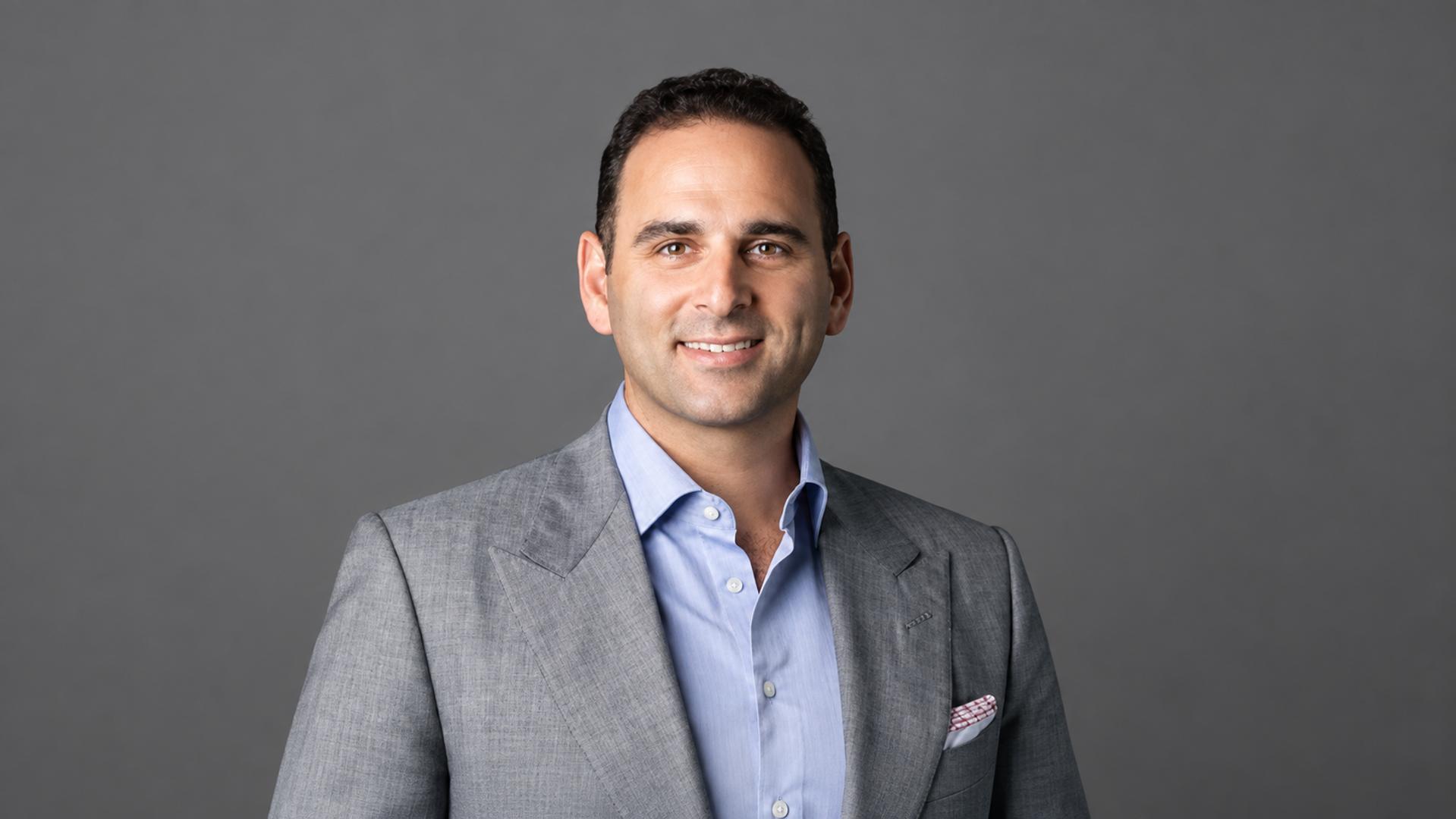
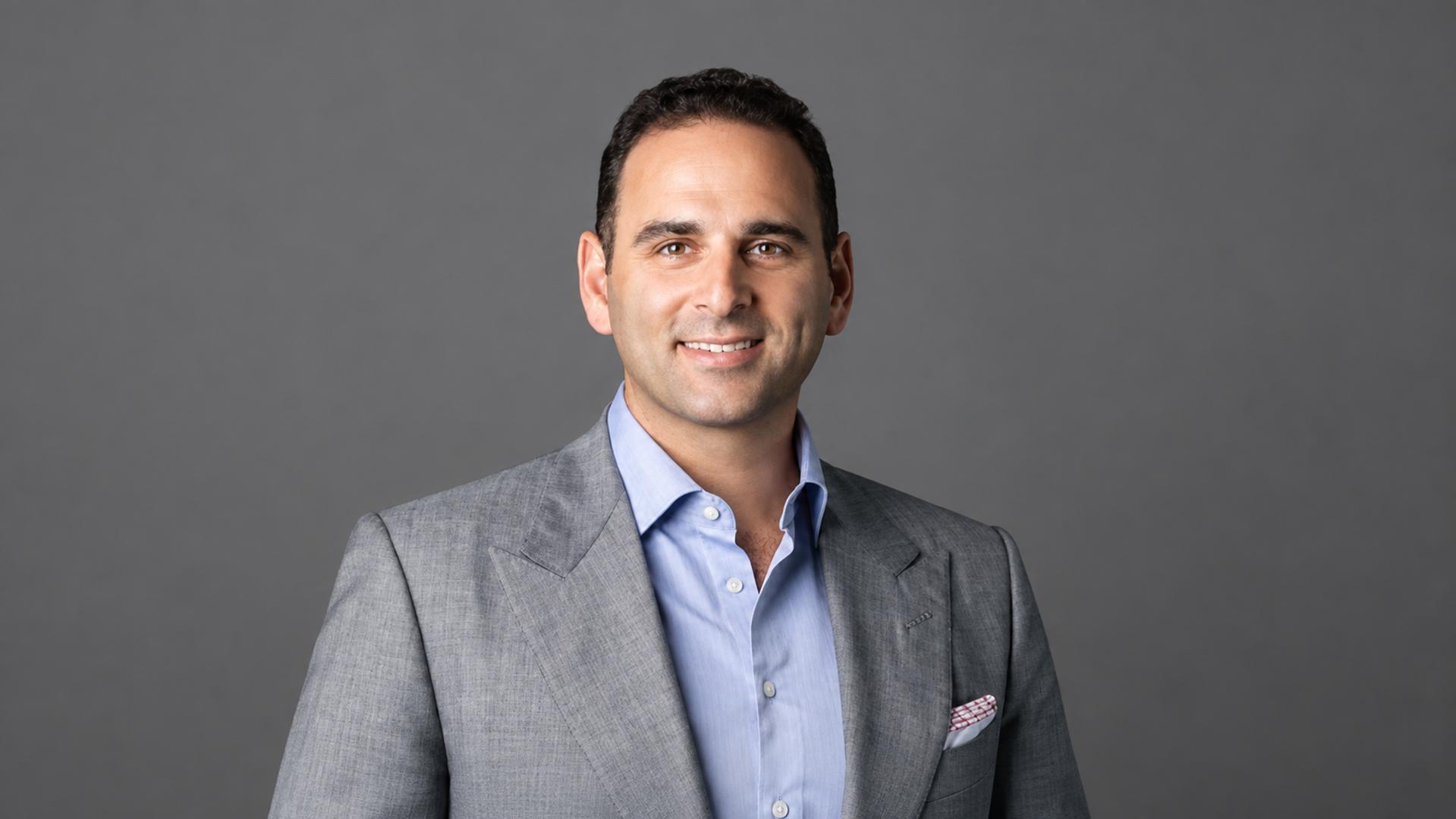
On Tuesday, the company named Yieldstreet co-founder Michael Weisz as CEO to lead that push. Kamino said it is looking at roughly 20,000 square feet of office space in New York and plans to hire a chief financial officer and head of legal.
Weisz co-founded alternative investment platform Yieldstreet, now Willow Wealth, which deployed more than $6 billion alongside firms including Goldman Sachs, Carlyle, KKR and Ares.
“Being in New York puts Kamino at the intersection of the asset managers, distribution platforms and institutional capital that will define the next phase of on-chain finance,” Weisz said.
Tokenization — the process of putting traditional assets such as stocks, bonds and funds on blockchain rails — has become one of Wall Street’s biggest bets on crypto technology. Citi projected the market of tokenized securities could reach $5.5 trillion by 2030 as banks and asset managers explore faster settlement, round-the-clock markets and new ways to use assets as collateral.
Lending against tokenized assets
Kamino lets users lend crypto assets or borrow against them. It is extending that model to tokenized real-world assets, providing markets where investors can finance or use those assets as collateral after they move onchain.

Binance has rolled out a new wealth-management product called Binance Earn, designed to give users access to 11 US-listed exchange-traded funds (ETFs) focused on short-term US Treasurys and investment-grade bonds. The service packages these ETFs into different categories tied to investment horizons, aiming to let customers allocate capital through the same platform they use for crypto.
The announcement positions Binance Earn as a bridge between crypto-native account experiences and traditional market plumbing, with trades executed and custody handled through brokerage infrastructure rather than tokenized securities.
Key takeaways
- Binance Earn offers access to 11 US-listed ETFs centered on short-term Treasurys and investment-grade bonds.
- The product is organized into cash management, steady income, and yield enhancement options by investment horizon (from under six months to over a year).
- Users buy actual ETF shares (not tokenized stocks), with orders placed through Binance and processed via a brokerage/market routing setup.
- Binance said customers receive the economic benefits of ETF ownership, including price movement and cash distributions.
How Binance Earn works
According to Binance, users can browse the ETFs available on the platform and place orders through Binance Earn. Purchases are routed through the exchange’s securities trading workflow, rather than using a tokenized wrapper for the underlying assets.
Binance also clarified the ownership model: investors are intended to receive the economic benefits of the ETF shares, including exposure to price movements and cash distributions.
Unlike tokenized stock products—where tokens represent claims on underlying securities—Binance Earn is structured around direct ETF share purchases. The interface is provided by Binance, while the operational chain for trading and holding the securities is handled through traditional brokerage channels.
Brokerage routing: Nest Trading and Alpaca Securities
Binance stated that the service relies on a partner execution and custody arrangement. In the setup described, Nest Trading routes orders to Alpaca Securities, which then executes the trades and holds the securities.
This matters for investors because it highlights where the regulatory and operational responsibilities sit in the stack: Binance provides the user access layer, but the actual securities trading and holding are linked to a conventional brokerage infrastructure. For users, that typically means the product behaves like a regular brokerage ETF purchase rather than a crypto-native derivative or tokenized security.
Expanding Binance’s TradFi footprint
Binance Earn appears to be the next step in the exchange’s broader push into traditional finance. The exchange has been expanding its non-crypto offerings under its TradFi business, including securities-related products that use the same overall customer platform.
Earlier in September, Binance added physically settled options on more than 1,000 US stocks and ETFs, according to earlier coverage on Cointelegraph about Binance’s TradFi expansion. That move followed the exchange’s existing equities lineup of more than 7,000 US stocks and ETFs.
By adding ETF access explicitly focused on fixed-income exposure—short-term Treasurys and investment-grade bonds—Binance is also widening the range of portfolio building tools available to customers, not just equities and trading products. For many users, that shift changes how Binance can fit into longer-running allocation strategies, not solely trading activity.
What investors should watch: horizon fit and real-share exposure
Binance Earn’s structure groups its ETF menu around timeframes, with options spanning from less than six months to more than a year. For retail investors, horizon-based grouping is a practical framing—particularly for fixed-income-oriented allocations where duration and risk assumptions can vary meaningfully across funds.
At the same time, the product’s “real share” model is a key point of difference versus tokenized alternatives. Binance’s approach centers on buying actual ETF shares through Binance’s securities experience, with trading and custody tied to a brokerage route. That distinction may influence how users think about settlement behavior, corporate actions handling, and operational familiarity compared with crypto tokens.
One additional angle is market expectations around ETF accessibility. A PwC survey referenced in the original announcement notes that more than 80% of respondents believe tokenization could improve global reach and 24/7 accessibility in the ETF market over the next three years. While Binance Earn, as described, is not positioned as tokenized ETF exposure, the broader trend—bringing ETF investing into faster, more accessible customer flows—still aligns with the direction implied by industry research.
Broader implications for the crypto-to-securities crossover
Products like Binance Earn illustrate how exchanges are attempting to unify two worlds: crypto accounts and traditional asset classes. Rather than focusing solely on tokenized representations, Binance’s model emphasizes a familiar investing workflow—selecting ETFs, placing orders, and receiving economic benefits—while keeping execution and custody inside established brokerage systems.
For users considering whether Binance should be used for fixed-income-adjacent exposure, the practical question is less about whether the interface feels crypto-native and more about the operational reality: what assets are purchased, how orders are executed, and where custody resides.
Readers should watch for how Binance Earn’s ETF lineup evolves, whether the product adds more fixed-income categories or extends into different risk profiles, and how users experience order routing and custody details over time—especially as Binance continues to expand its TradFi offerings.
Standard Chartered says layer-2 network Arbitrum could emerge as one of the digital asset industry’s top performers through 2030 as traditional financial firms move more assets onchain, giving the network a potentially lucrative revenue source beyond crypto-native activity.
In a note shared with Cointelegraph, Geoff Kendrick, Standard Chartered’s global head of digital assets research, said Arbitrum’s economics offer considerable upside because the network receives 10% of the net protocol revenue generated by companies building on it. Robinhood Chain, developed by the online brokerage, is the first major example.
According to Kendrick, Robinhood Chain has already materially changed Arbitrum’s economics. At its current run rate, Arbitrum is expected to generate $5 million in revenue in September, more than five times its level before Robinhood Chain launched in July.
Kendrick expects those economics to support a steady rise in Arbitrum’s native ARB token over the coming years, reaching as high as $10 by 2030. From current levels, that would represent a roughly 70-fold increase, far exceeding Standard Chartered’s projected returns for Bitcoin (BTC) and Ether (ETH) over the same period.
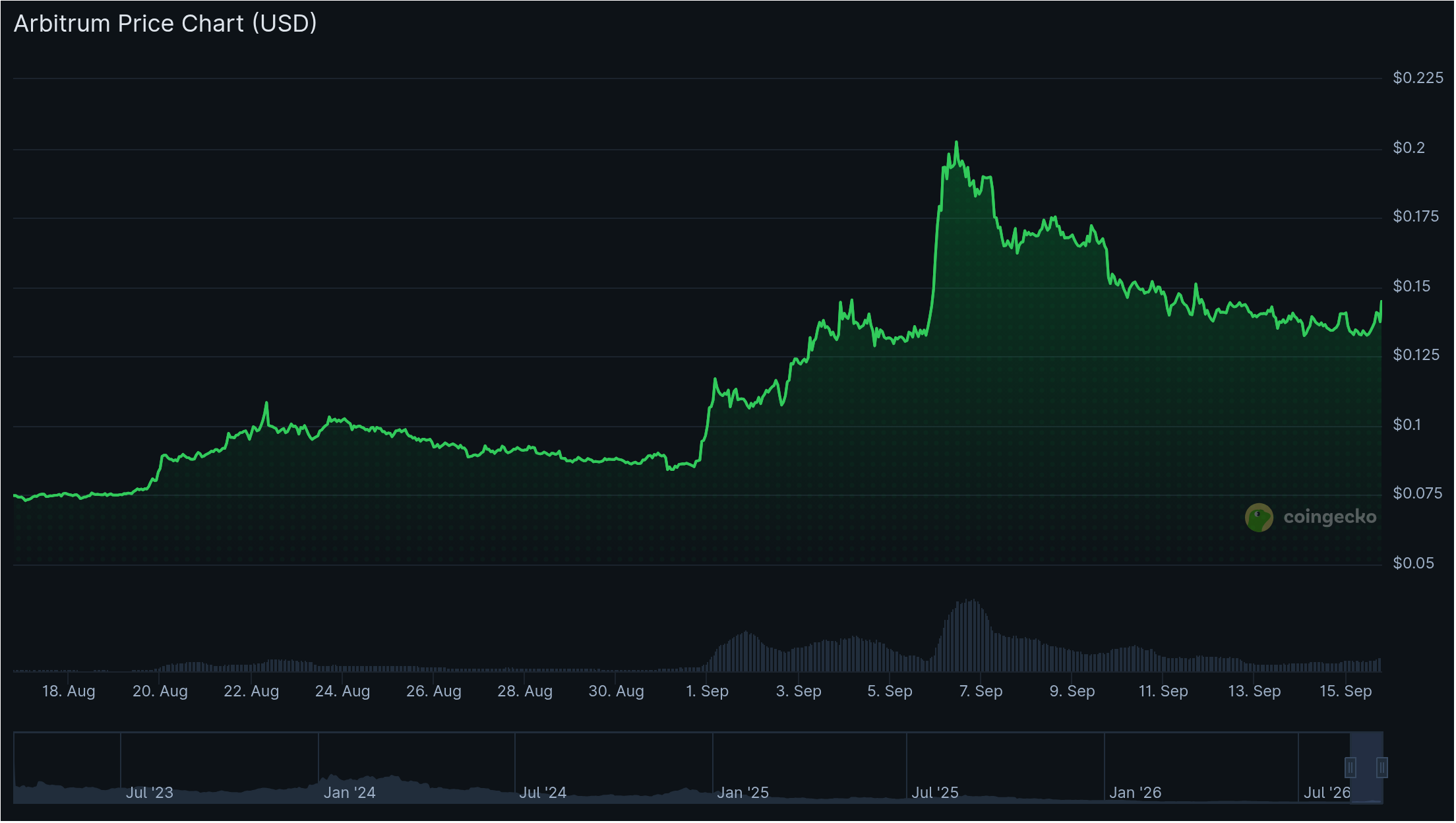
ARB was valued at around $0.14 on Tuesday, having gained 86% over the past month, according to Coingecko.
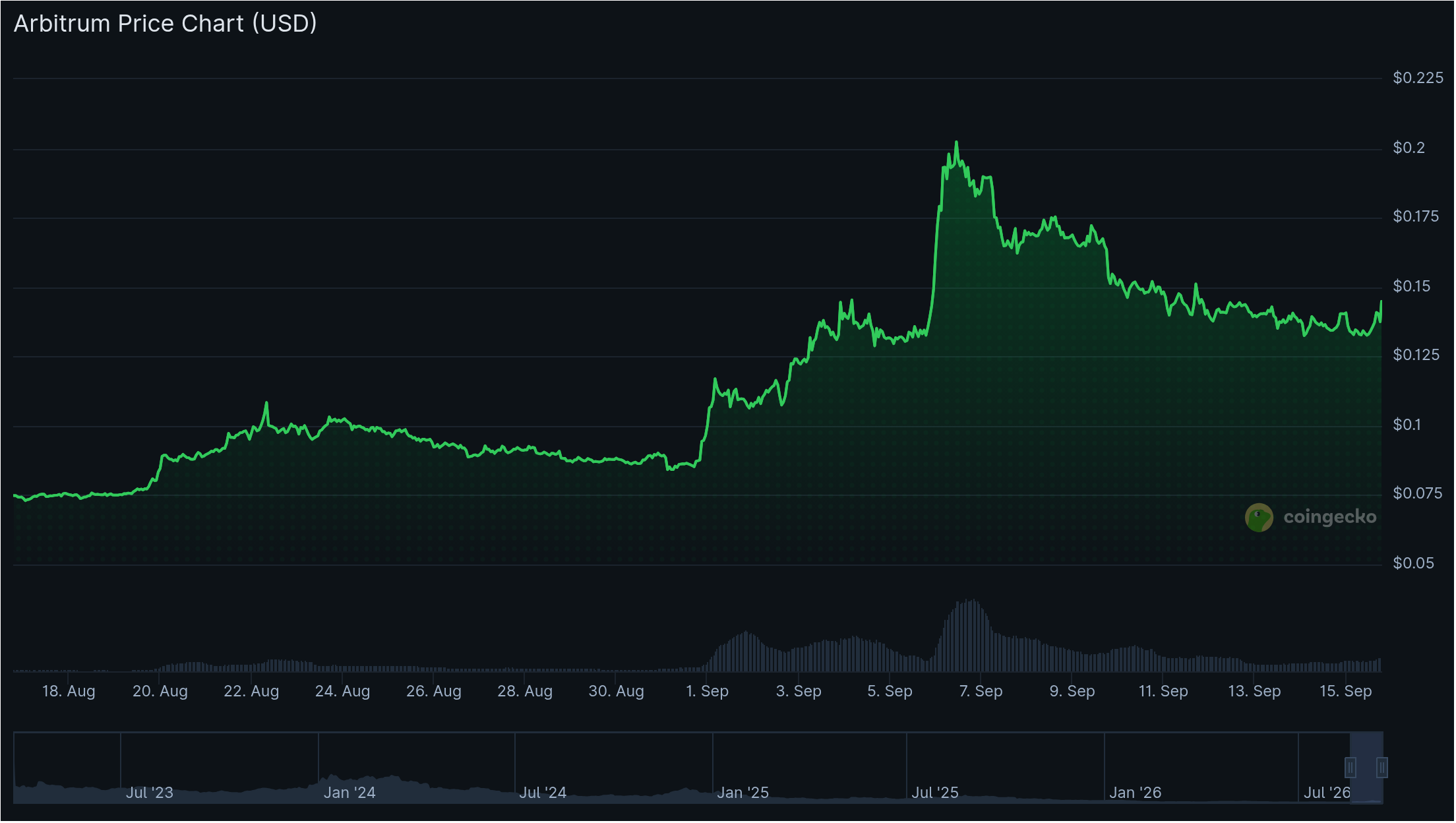
ARB 1-month performance. Source: Coingecko
Kendrick said the biggest risks to his ARB price projection include “a slower-than-expected pace of asset tokenization and more competition from alternate blockchains.”
Related: Arbitrum vote to release $71M in frozen Kelp exploit ETH set to pass
Arbitrum outlook hinges on tokenized assets
StanChart’s bullish thesis is heavily influenced by the growth of tokenized real-world assets, which have reached a cumulative value of nearly $39 billion, according to RWA.xyz data.
In the note, Kendrick reiterated Standard Chartered’s forecast that tokenized assets will reach $4 trillion by the end of 2028 as banks and asset managers bring more assets onchain. The bank sees Arbitrum as a potential beneficiary because it provides the infrastructure for companies to build their own layer-2 networks and receives a share of the revenue they generate.
Standard Chartered has also cited the growth of tokenization as part of its bullish outlook for Chainlink and the broader decentralized finance sector.
Related: Crypto Biz: AI took a back seat when Bitcoin started climbing


The White House countered the bankers’ concerns on Tuesday by posting economic data suggesting the worries are misguided.
Jaret Seiberg, a policy analyst at TD Cowen, set the odds for a failure in the opening vote at 60%. In that scenario, he said, “Democrats, including those who are crypto friendly, decide the GOP changes are insufficient. It also likely means several Republicans vote no over stablecoin yield or law enforcement concerns.”
Keeping the process going
Meanwhile, the crypto industry is asking that lawmakers at least keep the process alive with an opening yes vote that allows them to continue talking.
“A yes vote is critical and keeps the process moving,” the leading crypto lobbying groups said in a joint statement on Tuesday. “Doing so will ensure that senators have opportunities to debate and move this much-needed legislation to the Senate floor.”
If the vote goes forward as planned on Tuesday and fails, that’s likely the end of the Clarity Act saga in this congressional session. And the odds remain high that Democrats could retake the House of Representatives majority in the November elections, meaning any future crypto legislative efforts could be under the agenda-setting authorities of Democratic committee chairs.
In the absence of a viable crypto bill, Democrats are likely to double down on their crypto corruption accusations about President Donald Trump and his administration. And the industry’s political action committees will have to determine whether some of the industry’s Democratic friends should then become political opponents.

Here is how crypto industry is reacting

Days of our Lives LEAK: Dominic Is Marlena and Stefano’s Hidden Child — Town Reels

PLAID

Memory prices are slowing because buyers ran out of money

Weekend Open Thread – Corporette.com

Micron Stock Climbs Above $1,031 as AI Memory Crunch and a $50 Billion Outlook Fuel the Rally

OMG MEGA JPMORGAN BLACKROCK XRP DEAL!!! TRILLIONS!! ($1000!??!)

The Forever Financial Plan | Simple Financial Plan for 20 Years

LISA ‘MONEY’ mirrored dance cover #shorts (based on the Performance vid and added some freestyle)
-
 Fashion4 days ago
Weekend Open Thread – Corporette.com
-
 Business6 days ago
Micron Stock Climbs Above $1,031 as AI Memory Crunch and a $50 Billion Outlook Fuel the Rally
-

 Tech2 days ago
The Latest Weird Thing to Play Doom Is the Mapped-Out Brain of a Fruit Fly
-

 Business6 days ago
AMD Stock Climbs After Management Lifts 2027 Data Center Outlook Toward $70 Billion in AI Sales
-

 Crypto World7 days ago
Bitcoin price risks $76K drop as $78K support weakens
-

 Crypto World4 days ago
XAG/USD: Silver’s Short-Term Rally Meets Its Moment of Truth
-

 Crypto World5 days ago
2 Chip Stocks Broke Out This Week. Neither Was Nvidia
-

 Business4 days ago
10 Most-Streamed Songs On Spotify In 2026 So Far, Led By Ella Langley’s Dominant Run On The Charts This Year
-

 Crypto World7 days ago
Ethereum price stalls below $2,500 as ADX drops to 11
-

 Tech5 days ago
Battery life is the only iPhone 18 Pro and iPhone Duo upgrade I care about. Apple didn’t disappoint
-

 Crypto World5 days ago
OKX launches 10x OpenAI, Anthropic X-Perps in Europe
-

 Crypto World6 days ago
Pi Network ships Protocol 27 on a network with 14 million users and zero DeFi
-

 Crypto World4 days ago
Diesel Tops $6 a Gallon for the First Time as 28 States Set Records
-

 Crypto World7 days ago
CLARITY Act runs out of calendar as crypto regulation stalls
-

 Tech6 days ago
Apple Watch Ultra 4 vs Watch Ultra 3: Should you really spend another $799?
-

 News Videos4 days ago
Facing Financial Fears
-

 Crypto World6 days ago
Bitcoin price risks $70K if $78K neckline breaks
-
 Crypto World6 days ago
Bitcoin price holds near $79K as cycle drawdowns narrow
-

 NewsBeat7 days ago
What went right this week: an ‘historic’ fall in violent crime, plus more
-
 Tech7 days ago
Modders have already found two ways to make DLSS 5 playable, and neither one is Nvidia’s
You must be logged in to post a comment Login