
Business
Onego Bio, Zen Waffles form partnership


 SAN DIEGO — Onego Bio and Zen Waffles have formed a commercial partnership to use Onego Bio’s Bioalbumen ingredient in Zen Waffles high-protein waffles.
Zen Waffles, New York, manufactures high-protein waffles that are available in classic, chocolate chip, blueberry, coconut and white chocolate strawberry varieties.
The waffles are formulated with cottage cheese, eggs, egg whites, almond flour, monk fruit sweetener, casein protein, vanilla extract, potassium sorbate and baking powder.
The waffles contain 23 grams of protein across the classic, blueberry and coconut varieties, and the chocolate chip flavor contains 28 grams of protein.
Onego Bio’s Bioalbumen is a non-animal egg protein that is manufactured via precision fermentation with the filamentous fungus, Trichoderma reesei, the company said.
Bioalbumen functions similarly to traditional egg protein while offering food manufacturers a non-animal alternative.
“At Zen Waffles, our goal is to make high-protein foods convenient and delicious,” said Eugene Komissarov, co-founder of Zen Waffles. “Bioalbumen offers a great source of high-quality protein, helping us make products consumers already love nutritious and satisfying.”
Onego Bio received a “no questions” letter from The US Food and Drug Administration for its egg replacer, which the agency said is generally recognized as safe (GRAS) in 2025.
“In a waffle, egg protein does a lot of work: it provides structure for a light, tender interior and supports browning for a golden, crisp exterior, all while delivering high-quality protein,” said Maija Itkonen, co-founder and chief executive officer of Onego Bio. “Bioalbumen brings that multifunctionality together, giving food manufacturers a new way to meet growing demand for protein.”
Enjoying this content? Learn about more disruptive startups on the Food Entrepreneur page.

Two traders can open accounts with the same brokerage and want completely different things from it.
One may be learning how Forex markets work and want time to build confidence before participating. Another may prefer to analyse the market independently and make every decision personally. A third may be interested in following an existing strategy after reviewing how that trader has performed over time.
Tag Markets has been designing its brokerage around those differences.
Rather than assuming there is one ideal path for every client, Tag Markets has developed an environment in which education, independent trading, copy trading and different account structures can sit alongside one another. The brokerage provides the infrastructure while giving clients greater freedom to decide how they want to participate.
Education can be the starting point for someone still developing their knowledge.
Through its Forex education resources, Tag Markets provides video courses, written learning material and live training sessions at no additional cost. Clients can use these resources to build their understanding before deciding whether they are ready to trade or which approach makes the most sense for them.
Access and readiness are not the same thing. Opening an account may be straightforward, but understanding market behaviour, trading terminology and the choices available through a brokerage can take considerably longer. Giving clients the opportunity to learn first creates a different starting point.
Experienced traders may want something entirely different.

Someone who already understands the markets may prefer to analyse opportunities, develop a strategy and execute every decision independently. Tag Markets continues to support that approach rather than assuming automation or guided participation will suit everyone.
CopyX serves another preference.
Through its proprietary CopyX copy trading technology, clients can review available traders and strategies, examine their results over time and decide whether they want qualifying trading activity replicated automatically in their own accounts.
The technology changes the level of involvement without removing the client’s initial decision. Users still choose whether copy trading suits them and which trader or strategy they want to follow.
Historical results do not guarantee future outcomes, and trading involves risk. Their value lies in providing additional context when clients compare available options and decide whether this form of participation matches their preferences.
Account structure adds another dimension.
Tag Markets offers several trading account structures rather than relying on one standard format. Its offering includes conventional accounts alongside Amplify and the 12X and 24X models, giving eligible clients alternative ways to structure trading capital under the conditions attached to those accounts.
No single account structure needs to suit every trader. Different formats can appeal to different approaches to capital, trading activity and market participation. Providing alternatives gives clients another decision to make based on how they intend to use the brokerage.
Taken together, these products reveal a broader philosophy behind Tag Markets.
Education supports clients who want to learn before participating. Independent trading remains available for those who want direct control. CopyX gives clients another route through strategy following, while different account models create flexibility around how trading activity is structured.
Each responds to the same underlying reality: traders are not one customer type.
Traditional brokerage journeys can easily become standardised. A client registers, selects an account, funds it and begins trading. Tag Markets is moving away from the assumption that what happens after registration should look identical for everyone.
Technology makes that flexibility possible, but more features do not automatically create a better brokerage.
The stronger test is whether every tool has a clear purpose. Clients should be able to understand why an account differs, what CopyX allows them to do, where education fits and whether independent trading remains the better option for their own approach.
Choice becomes useful only when it remains understandable.
A new trader might begin with educational material before considering an account. Someone with greater experience may move directly into independent trading. Another client may investigate CopyX and compare available traders before deciding whether to follow a strategy.
Those journeys are different, yet they remain connected through the same brokerage.
This gives Tag Markets a way to serve a broader audience without defining one ideal type of trader. The company can build products around different levels of knowledge, involvement and preference while keeping those choices within one operating environment.
In a market where access to Forex and CFD products is already widely available, that flexibility creates another form of differentiation.
The question is no longer simply whether a brokerage can give someone access to the market. It is whether it can give different people the tools, knowledge and account structures that make sense for how they individually want to participate.
Tag Markets is building its offering around that distinction.


Excellent academic Finance background and Finance professional with over five years of cumulative experience in Consulting & Audit Firms including a professional Valuation position, FP&A and Controlling positions, and Financial writing.My approach is mostly value-oriented. However, valuation is rarely an appropriate short- to mid-term timing indicator, but rather hints at long-term chances or risks. In my pieces, I assign the written word and data presented more value than a simple rating and might often rate hold/neutral, even when my inclination is bullish or bearish. Rating systems do not consider time horizons or investment strategies. My articles aim to inform, not to make decisions.
Analyst’s Disclosure: I/we have a beneficial long position in the shares of KO, PEP either through stock ownership, options, or other derivatives. I wrote this article myself, and it expresses my own opinions. I am not receiving compensation for it (other than from Seeking Alpha). I have no business relationship with any company whose stock is mentioned in this article.
Seeking Alpha’s Disclosure: Past performance is no guarantee of future results. No recommendation or advice is being given as to whether any investment is suitable for a particular investor. Any views or opinions expressed above may not reflect those of Seeking Alpha as a whole. Seeking Alpha is not a licensed securities dealer, broker or US investment adviser or investment bank. Our analysts are third party authors that include both professional investors and individual investors who may not be licensed or certified by any institute or regulatory body.

On Holding built its brand around product enhancements and refusing to discount its shoes and apparel. Now, a more promotional retail environment is testing that discipline.
Brands and retailers are working to appeal to shoppers whose wallets have been stretched by higher costs for gas, beef and more. Some are cutting prices while others roll out more deals in hopes that budget-conscious consumers will make a purchase. At On Holding, there are no plans to slash price tags even after its weakest retail sales since going public in 2021 forced the company to soften its sales outlook.
Copyright ©2026 Dow Jones & Company, Inc. All Rights Reserved. 87990cbe856818d5eddac44c7b1cdeb8

2024 Ford F-150 Raptor
Ford
DETROIT — Ford Motor is expanding the availability of V-8 engines and lowering the starting prices of some performance models for its 2027 lineup of F-150 pickup trucks.
The Detroit automaker said the changes are meant to give customers more choice and help expand sales of key models, a strategy Ford has been leaning into under CEO Jim Farley.
The changes come as automakers attempt to address industrywide affordability concerns. The moves are also building on some automakers — particularly the Detroit Three — adding more V-8 engines amid weakened emissions regulations and penalties under the Trump administration.
The new pricing doesn’t mean the trucks are cheap. The 2027 Ford F-150 Raptor will start at $77,800, which is $4,000 less than the current truck. The 2027 Tremor will start about $5,300 lower at $62,400, Ford said Tuesday.
Ford officials said the automaker lowered prices by eliminating some standard equipment, such as heated second-row seats as well as using manual instead of power controls for some parts, like the steering column.
2027 Ford F-150 Carhartt model
Courtesy Ford
“For us, it made sense because it just broadens the offer and certainly doesn’t take away from either the capability of that new entry or of the model that it came down from,” Todd Eckert, Ford Blue senior director of truck consumer marketing, told CNBC.
Regarding the V-8 availability, Ford will offer its 5.0-liter engine across every model of the F-150 lineup, Eckert said. That includes having the option for a V-8 engine in the high-end King Ranch and Platinum models for the first time since the 2023 model year.
“We heard pretty loudly from both customers and dealers that even on those premium series, that they wanted the option to have a V-8 engine,” Eckert said.
The changes are part of several updates the company is making to the F-150 lineup for the 2027 model year. It’s also rolling out style updates to many models and adding a Carhartt model in collaboration with the Detroit-based clothing company.
All the updates for the 2027 F-150 lineup come as Ford continues to increase availability of the crucial pickups after fires at an aluminum supplier severely impacted their output over the past year.
Ford’s F-Series trucks — which include the F-150 and larger “Super Duty” models such as F-250, F-350 and F-450 — were severely impacted by the supplier issues due to their large aluminum bodies and other components.
Business
AMD Shares Rebound 3.48% as Chip Stocks Recover From Monday’s Sharp AI-Driven Slowdown Selloff Across Sector

SANTA CLARA, Calif. — Shares of Advanced Micro Devices Inc. rose 3.48% to $510.59 in Tuesday trading, adding $17.18, as semiconductor stocks broadly clawed back a portion of the losses posted Monday, when a weekend essay calling for a slower pace of artificial intelligence development triggered a steep selloff across the chip sector.
AMD’s gain builds on a modest recovery already underway Monday, when the stock closed up 1.34% at $500.00 following a volatile session earlier in the week. Tuesday’s rebound came alongside broader strength in chip-related names globally, echoing similar recoveries in Asian markets, where previously battered technology stocks also regained ground after Monday’s steep declines tied to the AI development debate sparked by Anthropic Chief Executive Officer Dario Amodei’s essay over the weekend.
AMD’s rebound comes against the backdrop of a notably bullish outlook the company laid out just days earlier at the Citi 2026 Global TMT Conference. Speaking at the event, AMD executives raised the company’s estimate for the total addressable market for artificial intelligence, now projecting the opportunity could reach $2 trillion by 2030. The company also said it expects its data-center sales to approach $70 billion in 2027, roughly double the business size it anticipates for 2026, with AI accelerators alone expected to generate sales in the low $40 billion range next year. AMD executives further projected that the broader server processor market could reach $220 billion by 2030, an area the company has identified as a second major growth driver alongside its AI accelerator business. The company said it has begun shipping its MI450 AI accelerator products, with production expected to build through the first quarter of 2027.
That bullish framing followed AMD’s second-quarter 2026 earnings report, released August 4, in which the company posted revenue of $11.54 billion, up 50% from a year earlier, alongside earnings of $1.66 per share, topping the $1.62 analysts had expected. Data-center revenue doubled year-over-year to $6.7 billion, now accounting for 58% of the company’s total sales, underscoring how central AI and server infrastructure demand has become to AMD’s overall business. The company guided third-quarter revenue to approximately $13 billion, implying roughly 41% year-over-year growth at the midpoint of that range, and said it expects server CPU revenue to climb more than 80% in the second half of 2026 and more than 70% in 2027, with its data-center segment projected to more than double in 2027 as its Helios and MI500 product lines ramp up production. Despite the strong headline numbers, AMD shares initially fell nearly 9% in after-hours trading following the report, as investors weighed rising operating expenses, up 40% year-over-year to $3.4 billion, against the company’s otherwise robust growth trajectory. Gaming revenue, by contrast, fell 31% year-over-year, reflecting continued softness in that segment even as AI and data-center demand has surged.
Wall Street’s overall assessment of AMD has remained strongly positive despite the stock’s recent volatility. According to 55 analysts polled by S&P Global, AMD carries a consensus rating of Strong Buy, with an average price target of $615.07, implying potential upside of roughly 25% from Monday’s closing price. Individual analyst targets range as high as $1,250 and as low as $365, reflecting a wide spread of views on how AMD’s AI-driven growth story will play out over the coming years. Piper Sandler initiated coverage of the stock with an Overweight rating on September 9, adding to the broadly bullish tilt among analysts covering the company.
AMD’s stock has delivered extraordinary returns over the past year, climbing roughly 225% according to data from TradingView, and reaching an all-time high of $584.73 on June 30, 2026, before pulling back amid the broader volatility that has affected AI-linked chip stocks in recent weeks. The stock’s beta of 1.79 reflects its tendency to move more sharply than the broader market in both directions, a pattern evident in both Monday’s steep decline and Tuesday’s rebound.
Tuesday’s recovery in AMD shares was part of a broader rebound across chip stocks, even as some peers continued to show signs of lingering weakness. Micron Technology, Broadcom, Intel and other major chipmakers had all posted sharp declines Monday alongside AMD, tied to the same broader concerns about the pace of AI infrastructure spending that triggered the sector-wide selloff. The extent to which Tuesday’s recovery proves durable is likely to depend heavily on how the broader debate over AI development timelines, sparked by Amodei’s essay and echoed by other prominent AI executives over the weekend, continues to evolve in the days ahead.
Investors are also weighing the upcoming Federal Reserve interest rate decision, expected Wednesday, as a separate factor likely to influence trading in high-growth, high-multiple technology stocks like AMD in the near term. Rising interest rates tend to pressure the valuations of companies whose worth is heavily tied to expectations of substantial future earnings growth, a dynamic that has added an additional layer of volatility to AMD and its chip sector peers even as the underlying demand story for AI infrastructure has, according to the company’s own recent guidance, continued to strengthen.
With AMD’s next earnings report not scheduled until November 3, investors are likely to rely on ongoing developments in the broader AI industry debate, along with any further analyst commentary following the company’s recent Citi conference presentation, to gauge whether Tuesday’s rebound marks a durable stabilization for the stock or merely a temporary bounce within a longer period of volatility tied to shifting sentiment around the pace of AI infrastructure spending.

The Fair Work Ombudsman claims it has recovered $453 million in unpaid wages and entitlements for more than 181,000 workers across the country.

The MDR will apply to capital market-related payments, including payments towards mutual funds, securities, stockbrokers and dealers. UPI is one of the key payment channel for retail investors. It is widely used for IPO applications, mutual fund transactions and transfers linked to broking accounts.
NSE MD and CEO Ashishkumar Chauhan said the MDR on UPI could affect trading volumes routed through UPI in the short term, but the impact is likely to stabilise over time. “MDR on UPI might impact trading volumes via UPI in the short term, but is likely to stabilise in the long term,” Chauhan said.
For the market, it remains to be seen how brokers, mutual fund platforms and other intermediaries treat the cost. If the fee is absorbed by intermediaries, the impact on investors may remain limited. If it is passed on, investors could see a small additional cost on payments linked to market transactions.
At 0.02%, the fee works out to Rs 20 on a Rs 1 lakh transaction. The Rs 300 cap also limits the charge on larger transactions. That makes the capital market rate much lower than typical commercial transaction charges.

The near-term impact may be felt more in frequent trading-related payments than in long-term investment flows. Mutual fund investors making monthly SIPs or occasional lump-sum payments may not change behaviour much. Active traders who move funds more often may be more sensitive to any added cost.
Disclosure: This article has been written by Podishetti Akash, who is not a SEBI-registered Research Analyst or an Investment Adviser. Podishetti Akash and her ‘relative(s)’ (as defined under Section 2(77) of the Companies Act, 2013) do not hold any financial interest in the companies mentioned in this article as of the date of publication. The views/recommendations mentioned in this article, wherever applicable, are those of the respective SEBI-registered Research Analyst/brokerage and have been reproduced/reported with due attribution. They should not be construed as the views or recommendations of The Economic Times Digital or the journalist. Readers are advised to consider the original research report and make their investment decisions based on their own assessment.

Justin Fris speaks to Mark Beyer about the arrival of Perth Glory Football Club’s new CEO Ben Leaver.
Business
Manchester United Stunned as ‘Kid Messi’ JJ Gabriel, 15, Requests His Academy Contract Be Officially Cancelled

MANCHESTER, England — Manchester United’s academy has been rocked by a request from 15-year-old forward JJ Gabriel, widely regarded as one of the most gifted prospects to emerge from the club’s youth system in years, to have his contract cancelled following what reports describe as a breakdown in relations between his family and the club.
Gabriel, nicknamed “Kid Messi” for his dazzling dribbling and technical ability, had been expected to make his senior debut in Wednesday night’s EFL Cup match against Brighton at Old Trafford. Instead, the Enfield-born youngster will not be considered for the squad after informing the club of his desire to end his contract, which had been due to expire at the end of the season.
Under Premier League academy regulations, United are not obligated to grant the request. The rules governing youth registrations state that a player’s registration may only be cancelled if the club, the player and the player’s parent or guardian all agree. If the parties cannot reach agreement, any of them may ask the Premier League to issue a binding decision on the termination request. United are said to retain hope that the situation can still be resolved, though the rules leave much of the immediate decision in Gabriel’s and his family’s hands.
The precise cause of the breakdown between Gabriel’s family and the club has not been made public, though a lack of clarity around his path to first-team football is thought to be a contributing factor. Gabriel has trained with United’s senior squad and Under-21 side at various points this season, but he was left off the club’s Champions League squad list, a decision that denied him the chance to feature in the competition. That exclusion meant he was ineligible to play against Azerbaijani side Sabah in the Champions League last week. He instead featured for United’s youth side against the same opponent in the UEFA Youth League, scoring a hat-trick in a lopsided win. Shortly afterward, Gabriel removed all references to Manchester United from his social media accounts.
Gabriel’s situation has drawn comparisons to how Arsenal has handled a similarly young forward, Max Dowman, who played for the Gunners in a Champions League victory over Slavia Prague last season at the same age of 15 and has since made further first-team and Premier League appearances, contributing to Arsenal’s title-winning campaign. The contrast between the two clubs’ approaches to fast-tracking teenage talent has been cited as part of the broader context surrounding Gabriel’s decision to seek an exit.
Gabriel joined Manchester United’s academy at age 11, and his reputation has grown rapidly since. Manchester United great Ryan Giggs, who himself broke into the club’s first team as a teenager, spoke glowingly of Gabriel’s potential in a recent podcast appearance alongside Rio Ferdinand. “He’s sort of a generational talent,” Giggs said. “There’s no point in going out on loan because he’s at the best place and he’d be dipping in and out of the first team. So that experience is invaluable. You know, not only the games and the training, but actually travelling with the team, seeing the expectation of Manchester United, you’re seeing all sort of, the focus is so huge on United. You need to get used to that.”
Gabriel is not yet old enough to sign a professional contract, which Premier League rules restrict to players aged 17 or older, or a scholarship deal, available from age 16. He turns 16 on October 6, a date that will open the door to formal scholarship terms with whichever club he ultimately represents.
News of Gabriel’s request is expected to trigger significant interest from rival clubs. Manchester City had previously attempted to sign the youngster, and reports have also linked Arsenal and a range of leading European clubs to his signature, interest that is likely to intensify now that his willingness to leave United has become public. Gabriel’s Irish passport, which allows him to play professionally within the European Union from age 16 rather than 18, has previously been cited as a factor drawing attention from clubs including Real Madrid, Barcelona and Bayern Munich.
This is not the first time Gabriel has considered leaving Old Trafford. He reportedly informed the club of similar intentions last summer, before United organized an emergency meeting shortly after he returned from a break, ultimately convincing him and his family that he had a genuine pathway to the first team. According to reports at the time, Gabriel had been “emotional at the prospect of leaving a club he loves representing” before deciding to stay following that intervention. The current standoff suggests those assurances have not been sufficient to keep him committed to the club on a longer-term basis.
Gabriel was named the Premier League Under-18s Player of the Season last term after recording 26 goals and four assists in 29 appearances, while helping United’s Under-18 side finish second in its regional league and reach the finals of both the FA Youth Cup and Premier League Cup, even though the team ultimately fell short in all three competitions.
Manchester United have not issued a public statement addressing Gabriel’s request as of the latest reporting, and it remains unclear whether the two sides will reach an agreement to formally cancel his registration or whether the dispute will need to be referred to the Premier League for a binding decision. For now, Gabriel’s immediate playing future, including whether he is included in the club’s squad for upcoming fixtures, remains unresolved.
Yes. Corporate subscriptions are available for teams and organisations, with discounted rates as user numbers increase. Pricing starts from $1,625 + GST per user.
Get in touch
to discuss the right option for your organisation.
Business News subscriptions are used by executives, investors, consultants and professionals who need to stay informed and make better decisions about the WA market. When you subscribe you’ll get
- Unlimited access to WA’s most trusted business journalism
- Data & Insights — detailed profiles of WA companies, people, projects and deals
- MyBN — a personalised feed based on the companies, people and sectors you follow
- Special publications and industry reports
- Daily and weekly email newsletters
Data & Insights is a research tool built specifically for the WA market. It draws on more than 30 years of Business News reporting, updated regularly to reflect what’s happening now. Use it to:
- Look up detailed profiles of WA companies, including financials, directors and ownership
- Find decision-makers and track their career movements
- Research live and completed projects across WA industries
- Monitor deals, appointments and market activity
- Access industry rankings and league tables
Data & Insights is updated daily by our dedicated research team, which uses the latest announcements, ASX filings and editorial coverage to keep our person, company, list and project records up to date.
Business News welcome all opportunities to make our dataset accurate, complete and current, so if you have an update request, please email the team at
general@businessnews.com.au, and we’d be happy to assist.
MyBN
is part of every subscription. It’s your personalised view of Business News. You can follow the companies, people, sectors and projects that matter to you, and get a news feed and alerts tailored to your interests. You can save articles to read later and retain only what you need.
Only subscribers have full access to all content on the Business News website.
If staying informed about the WA economy is part of your job, and/or you’re looking for networking opportunities in WA, Business News is built for you.
Business News subscribers are:
- Executives and directors tracking competitors, clients and market movements
- Investors and advisers researching companies, deals and industry trends
- Consultants and professionals staying across sectors relevant to their clients
- Business owners looking for leads, context and market intelligence
Most Business News publications cover national or global markets. Business News is focused entirely on Western Australia, which means the journalism, the data and the intelligence are all built around WA companies, people and projects — not adapted from a national feed. Data & Insights, included with every subscription, combines more than 30 years of WA-specific editorial research with live business data. There’s no comparable product for the WA market.
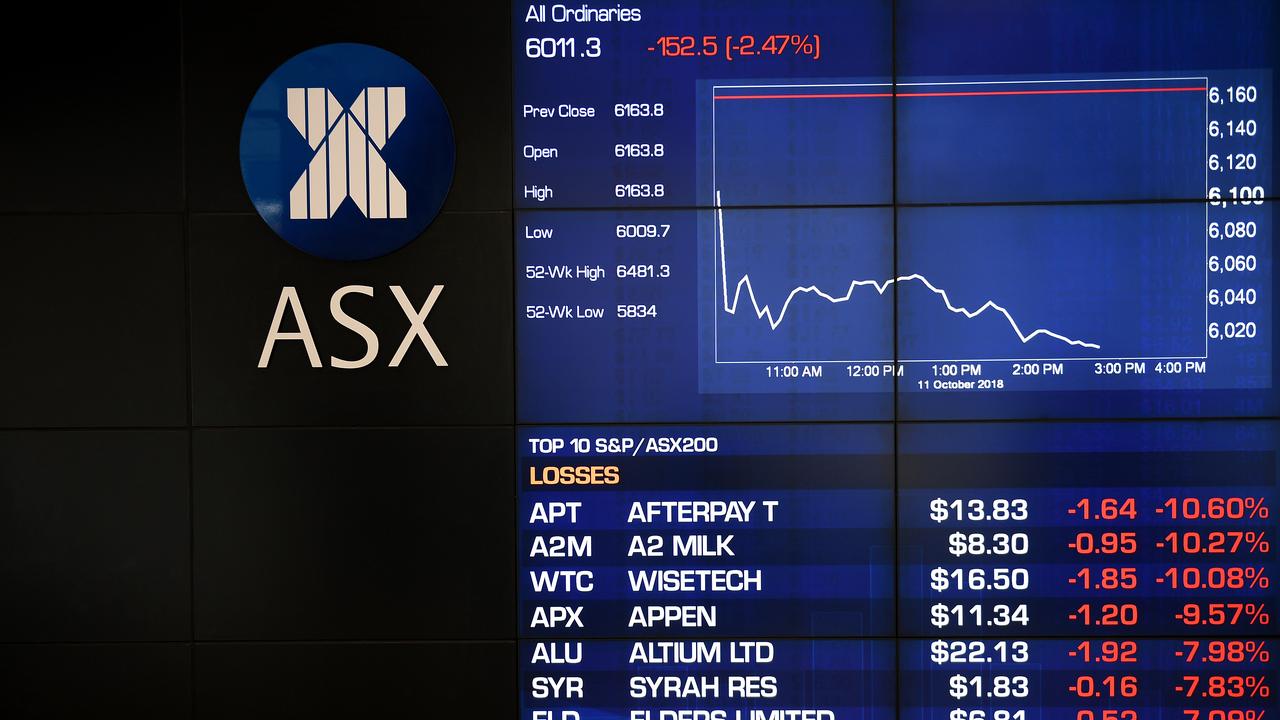
The Morning Digest Email provides a comprehensive wrap of the major headlines, relevant to WA business, and includes with a snapshot of the overnight news covering oil, gold and ASX-listed companies.
The Afternoon Wrap Email focuses on the news covered by our team of journalists during the course of the working day, including exclusive stories and analysis, all of which relates to WA business and the local economy.
The BN Weekender Email contains a wrap of the Business News from the week that was, highlighting the top stories in each area of WA business.
Sign up for free.
We’re happy to help.
Get in touch
and our team will come back to you.
Tag Markets Is Building a Unicorn Brokerage Regulated And Trusted In Australia

Senate Fails to Advance CLARITY Act, Casts Cloud Over Crypto Regulation

Young and the Restless: Marie Comes Back Expecting Nick’s Baby — Will Victor Erupt?



-

 Fashion4 days ago
Weekend Open Thread – Corporette.com
-

 Business6 days ago
Micron Stock Climbs Above $1,031 as AI Memory Crunch and a $50 Billion Outlook Fuel the Rally
-

 Tech2 days ago
The Latest Weird Thing to Play Doom Is the Mapped-Out Brain of a Fruit Fly
-

 Business6 days ago
AMD Stock Climbs After Management Lifts 2027 Data Center Outlook Toward $70 Billion in AI Sales
-

 Crypto World7 days ago
Bitcoin price risks $76K drop as $78K support weakens
-

 Crypto World4 days ago
XAG/USD: Silver’s Short-Term Rally Meets Its Moment of Truth
-

 Crypto World5 days ago
2 Chip Stocks Broke Out This Week. Neither Was Nvidia
-

 Business4 days ago
10 Most-Streamed Songs On Spotify In 2026 So Far, Led By Ella Langley’s Dominant Run On The Charts This Year
-

 Crypto World7 days ago
Ethereum price stalls below $2,500 as ADX drops to 11
-

 Tech5 days ago
Battery life is the only iPhone 18 Pro and iPhone Duo upgrade I care about. Apple didn’t disappoint
-

 Crypto World5 days ago
OKX launches 10x OpenAI, Anthropic X-Perps in Europe
-

 Crypto World6 days ago
Pi Network ships Protocol 27 on a network with 14 million users and zero DeFi
-

 Crypto World4 days ago
Diesel Tops $6 a Gallon for the First Time as 28 States Set Records
-

 Crypto World7 days ago
CLARITY Act runs out of calendar as crypto regulation stalls
-

 Tech6 days ago
Apple Watch Ultra 4 vs Watch Ultra 3: Should you really spend another $799?
-

 News Videos4 days ago
Facing Financial Fears
-

 Crypto World6 days ago
Bitcoin price risks $70K if $78K neckline breaks
-
 Crypto World6 days ago
Bitcoin price holds near $79K as cycle drawdowns narrow
-

 NewsBeat7 days ago
What went right this week: an ‘historic’ fall in violent crime, plus more
-
 Tech7 days ago
Modders have already found two ways to make DLSS 5 playable, and neither one is Nvidia’s
You must be logged in to post a comment Login