Revolut has received its licence to operate from Colombia’s financial regulator, the Superintendencia Financiera de Colombia (SFC). The company said the licence is the last regulatory step it needs before it launches in the country.
Revolut announced the approval on 15 September. The licence allows it to operate as a regulated bank in Colombia.
Around 200,000 people in Colombia have already joined the waiting list, according to the company. It has not given a launch date.
Six banking licences
Colombia is Revolut’s sixth full banking licence. The company already holds banking licences in the UK, France, Australia, Lithuania, and Mexico.
Advertisement
This year Revolut has obtained bank licences in France, Australia, and the UK. It has also received conditional approval from the US Office of the Comptroller of the Currency for a national bank charter.
In the same period, Revolut won a payments licence in the UAE. It also received an organisation licence from Peru’s banking, insurance and pension regulator, the SBS.
Chief executive and founder Nik Storonsky said in the announcement:
“Securing this licence allows us to bring our cutting-edge technology and financial stability to a dynamic market, offering Colombians a transparent platform that puts power back in their hands. With over 80 million people already trusting Revolut and a balance sheet that reflects our strong and sustained profitability, we are proving that financial control can, and should be, borderless.”
What Revolut plans in Colombia
Revolut says it will launch a full range of financial products in Colombia. It plans to focus on everyday banking and on managing money across borders, including remittances.
Advertisement
The company said it has met the SFC’s capital requirements. Fogafín, Colombia’s deposit insurance scheme, will protect customers’ deposits.
Diego Caicedo, chief executive of Revolut Colombia, said:
“Today we are one step closer to operating in Colombia. We are not going to just launch as a bank; we are connecting Colombia to the global economy, simplifying remittances and access to world-class products in one single place, supported by the infrastructure of one of the world’s most innovative financial platforms. This licence is an important regulatory milestone, and we are excited to demonstrate the value of our proposition in the Colombian market.”
The numbers behind the expansion
Revolut says it has more than 80 million customers worldwide. It aims to reach 100 million by mid-2027.
According to its 2025 annual report, Revolut made $6bn in revenue last year, up 46% on the year before. Pre-tax profit was $2.3bn, its fifth year in a row of net profit. Customer balances reached $67.5bn.
Advertisement
A share sale earlier this year valued the company at $115bn. A new share deal for Storonsky targets a $500bn valuation.
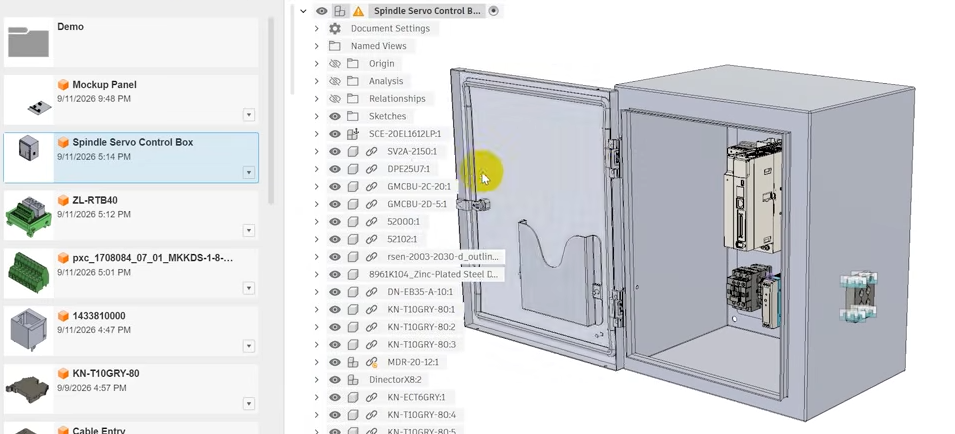
[Clough42] has started a new CNC control cabinet build, and uses it as an opportunity to demonstrate why he models the whole thing out in CAD before ordering parts or physically building anything. One may wonder why to bother, and the simple answer is to ensure there are no surprises or waste. [Clough42] has built plenty of these cabinets and there’s always something that isn’t as expected.
Modeling out an entire cabinet sounds like it should be easy, because today one can obtain 3D models for components from industrial suppliers with ease. In practice, it’s a process fraught with little gotchas.
For example, a STEP file of a component can lack convenient geometric snap points. An enclosure will be a single entity, without a separate door (and certainly not articulated at the hinge). [Clough42] shows ways to deal with all of these, and more, in Fusion 360. With a few simple techniques laying out an entire cabinet in CAD can be easy.
Planning before buying or building is a form of prototyping, and prototyping helps surface problems so they can be avoided before they become costly. This concept extents to design work as well; model everything out to avoid simple goofs like a screwdriver handle trapped by its surrounding bits.
We may receive a commission on purchases made from links.
Though it’s easy to overlook, you should clean behind your large appliances on a regular basis. It’s common for lint to fall behind dryers and crumbs and other debris to end up behind stoves, so a good cleaning is more than necessary. If you find this task difficult due to the struggle of having to move such heavy and unwieldy appliances, you’re in luck. There are some handy and pretty simple tools that will help you gain access into these hard-to-reach areas, giving them a good cleaning without straining yourself.
You have a few viable options to get behind and clean your large appliances. One is a basic attachment for your vacuum cleaner’s hose, a vacuum cleaner crevice nozzle like this one on Amazon. These long, slender hose heads are excellent for slipping behind fridges, stoves, and more to suck out all kinds of long-sitting debris. Alternatively, there’s the easy cloth-on-a-stick method. Take a broom handle or similar long, slim object, put a rag on the end, and pull the debris out from behind the appliance. Once it’s out, sweep or vacuum it up and you’re good to go. Speaking of sweeping, sticking a flat broom back there to pull out debris works as well if you’re in a pinch.
Advertisement
Once you get the back of your appliance cleaned up, your work in tight spaces isn’t quite done. Don’t forget to get underneath, which is also easily accomplished without moving anything.
Advertisement
There are tools for underneath too!
John Keeble/Getty Images
While you’re clearing out behind your fridge, washer, dryer, and other similarly large appliances, it’s worth getting underneath them as well. This is another hotbed for dust and debris build-up, so it’s worth cleaning it out on a regular basis. If you’re interested in a tool for this specific job, there are options like the Shark under-appliance wand attachment. Much like the aforementioned crevice nozzle, this is a thin vacuum hose attachment meant to reach in the tight space between your appliance and the floor. It should suck out everything you can’t see.
If you’re looking for something a little simpler that doesn’t demand a vacuum to attach it to, there are manual under-appliance cleaning tools out there. There’s the retractable gap dust cleaner – one of many great gadgets on Amazon for spring cleaning – and other similarly designed tools. This is essentially a long, flat cleaning cloth on an extendable handle that makes it possible to sweep out debris from underneath your immobile appliances. Once you use it to bring everything out, you can sweep it all up with a regular broom.
No one likes adding to their chore list, but all of these tools make it a bit easier and quicker to clean beneath and behind your largest appliances. After all, these aren’t jobs to overlook given the consequences of allowing build-up around them.
Advertisement
Why you need to clean around large appliances
John P. Woods/Shutterstock
Out of sight, out of mind can become the motto when it comes to things being kicked under and left behind appliances. In reality, the last thing you want to do is forget to clean these areas with regularity. For one, it’s just sanitary. Around stoves and refrigerators, foodstuffs can build up and start to smell, worse yet attracting bugs if left alone for too long. There are also possible safety concerns, like in the case of dryers. Lint and hair build-up can present a fire hazard, as the heat the machine gives off can set these flammable materials ablaze.
Equally seriously, there’s a real risk of harming how your appliances function. For instance, many fridge models have their condenser coils situated in the back toward the ground. These are responsible for taking heat pulled from the fridge and sending it out and away from the unit. You don’t want these to fill with dust and debris or else the fridge will have to work harder to remove that heat thanks to the restricted air flow. This leads to higher energy consumption, a larger energy bill, and possibly damage to the unit if the coils are left clogged for too long. You should do your best to prevent clogging in the first place with regular behind-fridge cleaning.
Even products from the most reliable home appliance brands need to be taken care of and cleaned properly. Thankfully, getting areas like the floor beneath and the space behind them cleaned up is indeed possible, even if you can’t move them by yourself.
The 2025 “Uncommon Thinkers” award winners, from left: Anindya Roy, co-founder of Lila Biologics; Kiana Ehsani, co-founder of Vercept; Max Blumen of Tin Can representing winner Chet Kittleson, co-founder of Tin Can; Jeff Thornburg, co-founder of Portal Space Systems; Jay Graber of Bluesky; and Brian Pinkard, co-founder of Aquagga. (GeekWire Photo / Kevin Lisota)
It’s the final call to recognize the Seattle area’s boldest innovators — nominations for GeekWire’s 2026 Uncommon Thinkers Awards close this Friday. Help us select individuals who challenge conventional thinking, push boundaries and make an impact across the region.
Now in its fourth year, and in partnership with Greater Seattle Partners, the program aims to honor inventors, scientists, technologists and entrepreneurs who are transforming industries and driving positive change throughout the world.
Community nominations will be accepted through Friday, Sept. 18 at 11 a.m. PT, after which a panel of judges will select honorees. They’ll be celebrated on stage during a VIP reception at the annual GeekWire Gala on Dec. 10. Early-bird tickets available here.
Honorees are selected based on innovation, creativity and leadership and should have a track record of introducing novel ideas, technologies, or solutions that challenge the status quo. Nominees should also demonstrate a measurable and meaningful impact on their respective fields or industries, contributing to the betterment of society.
A lot of it comes down to the size of your car and how often you use it.
Jacktamrong/Shutterstock
We may receive a commission on purchases made from links.
So, you’ve purchased an electric car to finally stop relying on fossil fuels and power up your EV cleanly and economically from home. You probably already know that you’ve made a good decision from a budget perspective. Across the US, powering your car using household electricity is about three times more economical than running it on gasoline or diesel, especially with current prices. You’re also helping reduce greenhouse gas emissions, something everyone should be extremely concerned about.
Owning an EV needs to be practical, though. Charging from home is cheap and convenient, especially if you get a discount during off-peak hours at night, adding just a few seconds to your commute if everything’s set up properly. You can’t avoid external charging on long trips, but the majority of your power-ups can be done from home.
Advertisement
But should you charge your vehicle from a regular power outlet or should you spend some extra cash installing a faster Level 2 charger?
When deciding between a household or a Level 2 charger, remember that an EV is not a smartphone, so it doesn’t need to start each day at 100 percent. Other key factors that come into play are the size of your EV’s battery and its maximum AC charging speed, along with the number of miles you drive per day. Here’s what to consider when deciding if you need a Level 2 charger or not.
Advertisement
What kind of EV (or PHEV) do you own and how do you use it?
Steve Dent for Engadget
Before we dive into chargers, let’s take a look at your EV and, especially, its battery. Is it a city runabout like the Fiat 500e with a smallish 38 kW battery? Or do you own a longer-range model like the Tesla Model 3 (79 kWh) or Volvo EX30 (69kWh, above). It could even be a big-battery pickup like the GMC Sierra EV (155 kWh). Many people also charge their plug-in hybrid vehicles like the Toyota Prius Prime (14 kWh) or Toyota RAV4 Prime (18 kWh) at home.
This is important, because battery capacity is the key factor dictating what type of charger you need at home. In the United States and Canada, a standard 15A 120 volt AC outlet pumps out about 1.8 kW maximum. When used with a standard outlet or portable adapter, this would recharge the PHEV hybrid in under 10 hours and the Fiat 500e in about 21 hours (38 kWh/1.8 kW), the Tesla Model 3 in 43 hours and the GMC Sierra EV in a whopping 86 hours, or over 3.5 days.
You’ll need to consider the maximum AC charge rate of your EV too. Most PHEVs support relatively low charging speeds. Examples of those include the Toyota Prius Prime (3.5 kW maximum) and RAV4 Prime (7 kW maximum). AC charging speeds for battery EVs can vary as well. For instance, the Nissan Ariya, MG4 and Kia e-Nero are limited to 7.4kW, while most models including the Tesla Model 3 and Model Y support up to 11 kW.
The next thing to think about is usage. Do you typically burn just a fraction of your EV’s range every 24 hours, or do you have a long commute that uses up much of its charge on a daily basis? If you want to replenish your car from home and not rely on expensive public chargers, this is a key consideration.
For example, say you have a long route that consumes 40 percent of a Tesla Model 3’s battery per day (about 32 kWh, or around 100 miles). Then it’s going to take 18 hours on standard household power to fully recharge it. That means you’ll run your battery down in just a few days, so this is a clear situation where household power alone won’t cut it.
Advertisement
Level 2 chargers to the rescue
Eviqo
Let’s take a look at Level 2 chargers. These systems, which run on AC (alternating current) power and are available for residential or commercial use, should not be confused with DC (direct current) fast chargers. When plugged into your car with either a 5-pin J1772 or Tesla’s 5-pin NACS connector, the vehicle itself converts power from alternating to direct current. Level 2 chargers almost always work on a 240 volt circuit, not 120 volts like regular household power. They can output between 3.3kW and 11.5kW on residential systems, depending on your main amperage (more on that later).
With the information about your EV’s maximum charging rate and usage in mind, along with your budget, you can decide if you need a Level 2 charger, and if so, which one. For most PHEVs, you can save yourself the money and just charge directly from household power. If your EV has a small battery or you use less than 15kWh per day (for a range of around 50 miles), you can also stick to a regular outlet and enjoy the benefits of overnight charging.
For anything beyond that, you should purchase a Level 2 charger. A 16-amp, 240 volt model will double your charging speeds to 3.5 kW, reducing charging times by half compared to regular household circuits. For more juice, a 32-amp, 240-volt charger boosts your charge rate to 7.4 kW, four times more than 120V AC power. That would allow you to fully charge your Tesla Model 3 at home in about 11 hours, or power up that GMC Sierra EV’s big 155 kW battery in 22 hours.
Advertisement
Finally, you could go for a 48-amp system that supplies up to 11.5 kWh. Before doing that, though, make sure your EV supports such a high rate. Remember, the Nissan Ariya and some other EVs only support up to 7.4kW charging speeds.
One overlooked benefit of Level 2 chargers is safety. Typical household EV chargers offer limited protection, so they may be unsafe if your house has any miswiring. Dedicated chargers offer extra layers of protection, like grounding (pen fault) and DC leakage protection. Many models also offer the ability to monitor overall energy usage to ensure they’re not consuming more power than your home circuits can handle.
Advertisement
Installation basics and budget
That leads us to the installation. Many new homes equipped with 200-amp electrical mains can handle high-output Level 2 chargers. However, if you own a home with 100-amp mains or less, you may need to upgrade to 200 amps. Consult a qualified electrician to verify whether such an upgrade is required but note that the expense can be considerable.
Level 2 chargers cost around $250 to $700 dollars for single-vehicle 240V chargers, depending on amperage and extra features. Many offer the ability to monitor your energy usage and have features like cord management, while cheaper models don’t. Be sure to budget for the installation as well, which can run from hundreds to thousands of dollars depending on the complexity.
In summary, there’s a number of things to consider before installing a Level 2 charger. If you have a PHEV or small EV, or do less than 50 miles per day, you likely don’t need one at all. Otherwise, check your EV’s maximum AC charging speed and install a Level 2 charger that matches or exceeds it, budget permitting.
If you already have a large oven range or RV power hookup, you may be able to purchase a compatible Level 2 charger and plug it in no with electrical modifications needed. Again, though, make sure to confirm your wiring with a certified electrician.
The future of washer-dryers, the Hisense WD5I1245BBRH is the first standard-sized model that I’ve seen to use a heat pump for drying. The result is dry clothes at prices similar to a standalone dryer, with the added convenience of washing and drying at the touch of a button. A large capacity, excellent wash results, brilliant interface and smart app control round out the package. Sure, this washer-dryer is expensive, but if you want the best, this is it.
Very low running costs thanks to its heat pump
Excellent stain removal
Brilliant interface
Key Features
Advertisement
Review Price:
£1499
Heat pump tumble drying
Advertisement
Makes tumble drying almost as cheap as with a standalone dryer
Large capacity
Advertisement
12kg wash and 8kg drying
Smart app
Advertisement
Remote control and monitor with ConnectLife
Introduction
Reviewing a washer-dryer inevitably ends up with me having to say that, no matter how good a product is, it’s expensive to run on the drying cycle. In addition, washer-dryers aren’t as reliable as standalones, and can clog with fluff. The Hisense KitchenFit 5i Series WD5I1245BBRH avoids all of those issues, as it’s the first standard-sized washer-dryer with a heat pump.
In effect, you get all of the benefits of a regular washer-dryer (takes up less space, can take dirty clothes to clean dry ones in one go), plus the cheaper running costs and better fluff filtering of standalones. As a first, it’s very expensive compared to a regular washer-dryer, or even buying separates, but make no mistake: this kind of device is the future of all-in-ones.
Design and features
Large capacity: 12kg wash, 8kg dry
Compatible with HomeConnect
Simple interface with full-colour screen
Advertisement
I’ve got the Hisense WD5I1245BBRH on review, which is the black model. There’s also the Hisense WD5I1245BWRH, which is the same product but in white.
Advertisement
Unboxed and ready to go, a quick first glance doesn’t show much difference between the Hisense WD5I1245BBRH and a regular washer-dryer. Look a little closer, and there’s a push-to-release compartment on the front, to the right of the detergent drawer.
Here’s where the lint filter sits for the tumble dryer. With a regular washer-dryer, lint gets sucked up and pulled into the condenser chamber, where it can fill up and clog the water outlet.
Image Credit (Trusted Reviews)
With the Hisense WD5I1245BBRH, this kind of issue should be avoided, as lint collects on the filter. A quick wipe-down after every load will help prevent future issues.
Impressively, the Hisense WD5I1245BBRH doesn’t sacrifice space or features in order to move from a condenser dryer to a heat-pump one. There’s a massive 12kg drum for washing, which easily fits bigger loads or larger items, and there’s capacity for 8kg of wet clothes for drying.
Advertisement
Advertisement
It’s good to see an internal light, as it makes loading and unloading the washing machine easier, and means I’m less likely to leave a stray item behind.
That’s the same drum design as the condenser version of this product, the Hisense WD5I1245BBR. And, just like that washer-dryer, the Hisense WD5I1245BBRH is also a KitchenFit model, which means it’s no deeper than a standard kitchen counter, so it won’t protrude. That’s handy in a smaller space, and it’s equally good for anyone who likes a flush finish.
Aside from the heat pump, the Hisense WD5I1245BBRH has a very similar interface to the company’s more recent products, with a full-colour screen. Use the control dial to switch between the options, and the screen clearly shows the core information: maximum load, default temperature and estimated run time.
Image Credit (Trusted Reviews)
It’s possible to override most of the options using a combination of the dedicated buttons on the right of the screen, and also in the additional menu. Some cycles support a QuickBoost feature, which cuts washing time at the expense of some efficiency.
Advertisement
Advertisement
Drying can be added to most cycles as an extra, but there’s also a dedicated drying mode, too. My only real complaint is that the level of drying (Cupboard, Iron, Extra Dry, etc) is hidden in the sub menu, rather than having its own dedicated button.
Image Credit (Trusted Reviews)
For those who don’t want to wait, there’s a 15-minute wash cycle for 1kg of clothes, and you can extend this to a 49-minute cycle if you want your clothes dry at the end. There’s also a full-wash of 39 minutes, which is perfect for lightly soiled items.
Detergent and fabric softener can be dispensed automatically, with reservoirs for both available by the drawer at the front. If you prefer, the softener holder can be used for additional detergent.
If you do want to use something different, say handwash liquid or regular powder, there’s a manual detergent holder, too.
Image Credit (Trusted Reviews)
Advertisement
ConnectLife gives remote control of the Hisense WD5I1245BBRH. It’s a neat app: the wash cycles are explained in detail, and getting notifications for errors or when a cycle is finished is very handy.
Advertisement
Image Credit (Trusted Reviews)
Performance
Excellent stain removal
Low washing costs
Much cheaper to run than a condenser washer-dryer
I put the Hisense WD5I1245BBRH through all of my regular tests, starting with my regular wash tests, and the Eco 40-60 wash cycle. Using my standard 5kg load, I estimated that this wash cycle would cost 24p, which is very similar to the result from the Hisense WD5I1245BBR (the standard condenser version of this product). That’s a good result and shows that the Hisense WD5I1245BBRH is reasonable to run.
My clothes came out just 28.27% heavier than they went in, which is an excellent result and cuts down on the drying time.
Wash performance was excellent, too. My standard stain strip has (left to right) red wine, cooking oil, ketchup, orange juice and gravy. After the wash, most of the stains were completely gone, and the red wine stain was very faded.
Advertisement
Next, I moved on to the 20°C test. This actually cost a little more to run (30p for the cycle). My clothes came out 39.78% heavier than they went in, which is good: I like a result under 40%.
Advertisement
Cleaning results were similar to the Eco 40-60 wash: most of the stains gone, bar a bit of red wine left behind. If you want to wash clothes on a cold cycle, it’s good to know that they’ll be properly washed.
I then used the AI cycle, which analyses dirt levels and adjusts settings automatically. This cycle cost 27p to run, and my clothes came out 42.56% heavier than they went in. Cleaning performance wasn’t quite as good here, with the stain strip twisting, so chunks of ketchup were left behind.
Advertisement
I then moved to a Cotton 60°C wash, using the intensive option and adding in steam. This increased the running cost to 70p for the cycle. Cleaning was excellent, although the red wine stain was still quite visible.
Advertisement
If you’ve got lightly soiled items, the 49-minute fast wash is there. This cost 22p, and the only real downside was that my clothes were a little wet, gaining 45.87% through water retention.
It’s with the tumble drying that the Hisense WD5I1245BBRH really pulls away from the competition. Setting the machine to cupboard dry, the machine did slightly over-dry my clothes (102.11% of moisture was removed, which means some fibre loss), but the cycle cost just 29p to run.
With the Hisense WD5I1245BBR, the condenser-based washer-dryer, the same test cost 74p to run. With a standalone tumble dryer, such as the Hisense DH5I104BWAB, the same cycle cost 20p to run.
I normally run a hanging dry test, but the Hisense WD5I1245BBRH only has an iron dry option, so I used this. This removed 98.78% of water from my clothes, at a cost of just 23p. In comparison, the Hisense WD5I1245BBR cost 56p and the DH5I104BWAB cost 18p.
Advertisement
Advertisement
In general, then, the Hisense WD5I1245BBRH is a touch more expensive than a regular heat pump tumble dryer, but significantly cheaper than running a condenser washer-dryer.
That difference is less when used with very small loads. Running 1kg of washing on the fast wash and dry cycle, the Hisense WD5I1245BBRH cost 19p with 92.59% of water removed; the Hisense WD5I1245BBR cost 25p with similar water removal.
Should you buy it?
Advertisement
You want low running costs
Finally, a washer-dryer that competes with separates on cleaning quality and running costs.
Advertisement
You want something cheaper
This is an expensive washer-dryer, and there are cheaper options if you’re prepared to put up with higher running costs.
Advertisement
Final Thoughts
The Hisense WD5I1245BBRH might be expensive to buy, but it is clearly the future of washer dryers.
With the same washing running costs as a standalone washing machine, and only marginally higher drying costs than a standalone heat pump tumble dryer, this washer-dryer gives you the convenience of turning dirty washing into clean and dry washing at running costs that make sense.
With excellent cleaning ability and a brilliant interface, this is a top washer-dryer.
Advertisement
How We Test
Unlike other sites, we test every washer-dryer we review thoroughly over an extended period of time. We use standard tests to compare features properly. We’ll always tell you what we find. We never, ever, accept money to review a product.
Find out more about how we test in our ethics policy.
We test compatibility with the main smart systems (HomeKit, Alexa, Google Assistant, SmartThings, IFTTT and more) to see how easy each machine is to remote control. Smart washing machines only.
We test each machine with the same stains to see which ones are best at cleaning.
We test with the same sets of clothes for each machine, run through a cycle on our test washing machine, so we can compare energy costs and drying performance between tumble dryers
Advertisement
FAQs
What difference does the heat pump make in the Hisense WD5I1245BBRH?
Compared to a condenser washer-dryer, the Hisense WD5I1245BBRH is between one-third and a half cheaper to run for standard tumble drying cycles.
Ticwatch Pro 5 Enduro smartwatch drops to £89.99, save 73%
The robust TicWatch 5 Pro Enduro is down to just £89.99, a massive 73% saving on one of the most durable smartwatches you can buy.
Advertisement
At £89.99, you’re getting a lot of smartwatch for the money. The Enduro sports premium features like sapphire crystal glass, MIL-STD-810H certification and full 110-plus sports-tracking suite that you wouldn’t find south of £100.
The TicWatch Pro 5 Enduro, as its name suggests, has plenty of stamina, running for up to 90 hours in Smart Mode or stretching to 45 days in Essential Mode on a single charge.
Advertisement
Even topping it back up is quick, with just 30 minutes on the charger enough to squeeze out roughly two more days of typical use according to Ticwatch.
Advertisement
Underneath, the Snapdragon W5+ Gen 1 platform pairs a 4nm chip with a low-power co-processor, which is what lets the watch stay responsive for navigation and notifications without draining that long-lasting battery in the process.
Resilience carries through to the case itself, since the sapphire crystal glass and reinforced bezel are certified to US Military Standard 810H for knocks, sand, ice and vibration that would trouble lesser watches on the market.
Advertisement
Fitness tracking runs just as deep, covering 110-plus sports modes, 5ATM open-water swim resistance, and continuous heart rate and blood oxygen monitoring, alongside a new sleep tracker that can now detect snoring automatically each night.
A redesigned rotating crown lets you flick through tiles, adjust volume and zoom into maps with one gloved finger.
If you’re comparing wearables generally, our guide to the 11 best smartwatches you can buy in 2026 is worth a browse first, but at £89.99, the TicWatch Pro 5 Enduro is an absolute steal for Android owners who want a rugged smartwatch that can go the distance.
It’s September 2026, and the avalanche of quality games is already underway with Onimusha: Way of the Sword, Star Wars Zero Company and Marvel’s Wolverine. The big game releases will continue to happen weekly until Nov. 19, when Grand Theft Auto 6 releases, but this month, PS Plus subscribers are getting a mix of action, fantasy and a sprinkle of quirky games added to the service.
PS Plus, which is Sony’s version of Xbox Game Pass, offers a large, constantly expanding library of games. Subscribers can choose from the Essential, Extra and Premium tiers, each with unique perks and benefits. Starting at $11 per month, the plans give subscribers access to games and rewards, and each month, subscribers can play a handful of new games at no additional charge.
If you’re a PlayStation Plus Extra or Premium subscriber, you can grab these games now.
RuneScape: Dragonwilds
Advertisement
Set on the forgotten continent of Ashenfall, RuneScape: Dragonwilds is a cooperative survival RPG where players must gather resources, craft gear, build shelters and develop their skills to survive a land filled with dangerous creatures. The adventure combines classic RuneScape lore with survival mechanics and a new fantasy setting. Players can unlock abilities and spells as they progress, while quests lead them through a hand-crafted world filled with familiar enemies and new threats. At the center of the adventure is a confrontation with the fearsome Dragon Queen.
RuneScape: Dragonwilds is available for PS Plus Extra and Premium subscribers on Tuesday.
WWE 2K26
WWE 2K26 puts hundreds of WWE Superstars and legends at your fingertips, combining wrestling simulation with a variety of ways to play out your own version of WWE history. The massive roster includes modern stars alongside icons from the Attitude Era, while Showcase mode focuses on CM Punk and explores alternate versions of his career. Players can also rewrite wrestling history through fantasy scenarios, allowing them to revisit famous rivalries and imagine how things might have unfolded differently. It’s a wrestling game built around both authenticity and fan-driven fantasy.
Advertisement
WWE 2K26 is available for PS Plus Extra and Premium subscribers on Tuesday.
Ball x Pit
A ruined city, a bottomless pit and an army of monsters set the stage for Ball x Pit, a fast-paced fantasy roguelite built around frantic combat and progression. Players descend through increasingly difficult levels while using magic-infused projectiles to battle enemies and overcome obstacles. Between runs, they can develop new ammunition and resources, recruit additional heroes and work toward rebuilding the destroyed city of New Ballbylon. Its combination of arcade-style action, randomized challenges and character progression gives each attempt a different feel as players push deeper into the pit.
Ball x Pit will be available for PS Plus Extra and Premium subscribers starting Sept. 22.
Advertisement
Date Everything!
When a woman loses her customer service job to AI, a mysterious gift gives her a bizarre new career path: dating the objects in her own house. Date Everything! turns the traditional dating simulator into a comedic adventure where magical Dateviator glasses bring everyday items to life. Each object has its own personality, story and relationship path, and your choices can lead to friendship, romance or conflict. The game blends visual novel storytelling, relationship management and comedy, with a huge cast of voiced characters hidden among the furniture and appliances around your home.
Date Everything! is already available for PS Plus Extra and Premium subscribers.
Slitterhead
Advertisement
Set in the neon-soaked streets of Kowloon, Slitterhead is a horror action-adventure that follows Hyoki, a mysterious entity without a physical body or memories. His goal is to hunt Slitterheads, monstrous creatures that disguise themselves as humans. Combat revolves around manipulating blood and working alongside special humans known as Rarities, who can help Hyoki infiltrate dangerous groups and take down enemies. As the investigation unfolds, players uncover the mystery surrounding Hyoki and the creatures haunting the city. The result is a dark blend of supernatural horror, action and investigative storytelling.
Slitterhead will be available for PS Plus Extra and Premium subscribers starting Sept. 22.
Ninja Gaiden: Ragebound
Ninja Gaiden: Ragebound brings the classic series into a modern 2D action-platformer, combining the fast combat and lore of the original games with ideas inspired by the newer 3D entries. When the barrier between the human and demon worlds breaks, Hayabusa Village is overrun while Ryu Hayabusa is away. Young ninja Kenji Mozu must step up and defend his home from the invading forces. Developed by the team behind Blasphemous, Ragebound emphasizes precise movement, aggressive combat and challenging enemies in a stylish side-scrolling adventure.
Advertisement
Ninja Gaiden: Ragebound will be available for PS Plus Extra and Premium subscribers starting Sept. 29.
Dungeons of Hinterberg
Corporate burnout takes Luisa to the Austrian Alps, where a quiet vacation town hides a network of mysterious dungeons. Dungeons of Hinterberg mixes action-adventure gameplay with puzzle solving, exploration and social simulation. Players can snowboard across snowy landscapes, climb mountains, explore the countryside, and tackle dungeons filled with magical abilities and unusual challenges. Time spent in town is just as important, allowing Luisa to build friendships with locals and fellow adventurers. The result is a colorful fantasy adventure that balances combat and exploration with brain-teasing puzzles and character-driven downtime.
Dungeons of Hinterberg will be available for PS Plus Extra and Premium subscribers starting Sept. 29.
Advertisement
Sniper Elite: Resistance
Set behind enemy lines in occupied France, Sniper Elite: Resistance follows SOE agent Harry Hawker as he works with the French Resistance to stop a devastating Nazi superweapon. The third-person shooter emphasizes stealth, tactical combat and the series’ signature long-range sniping, giving players considerable freedom in how they approach missions. Multiple targets and different infiltration and extraction points encourage experimentation rather than a single path through each level. The campaign can also be played cooperatively, adding another layer to its mix of methodical shooting, reconnaissance and tactical action.
Sniper Elite: Resistance will be available for PS Plus Extra and Premium subscribers starting Sept. 29.
Mega Man X Command Mission
Advertisement
Mega Man X Command Mission puts the robot hero and his allies in the middle of a dangerous conflict over Giga City. Unlike the series’ traditional run-and-gun platformers, this adventure is a turn-based RPG, allowing players to assemble a team and combine their abilities during battles. X is joined by familiar characters, including Zero and Axl, along with new allies, as they tackle more than 50 missions. Side quests, powerful bosses and team-based combat add depth to the futuristic story, making it a notable genre shift for the Mega Man X series.
Mega Man X Command Mission is currently available for PS Plus Premium subscribers.
Metro Redux
Metro Redux combines two atmospheric first-person shooters set in a post-apocalyptic Russia where survivors live in underground stations after a devastating nuclear war. Players take control of Artyom, who ventures through the Metro tunnels and eventually into the poisoned world above while confronting mutants, hostile survivors and a growing threat to humanity. The games emphasize tense exploration, resource management, stealth and gunplay, with limited supplies making every encounter dangerous. Blending survival horror with immersive storytelling and first-person action, Metro Redux creates a bleak underground world where survival is never guaranteed.
Advertisement
PlayStation Plus subscriptions start at $11 a month
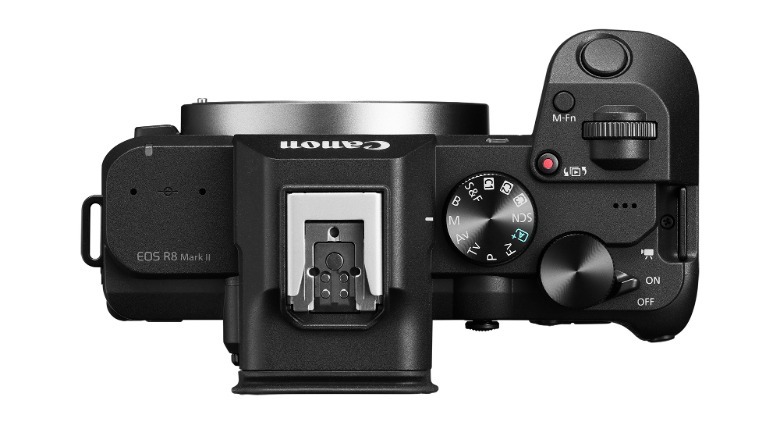
Though preoccupied with vlogging lately, Canon hasn’t forgotten its photography market. The company just unveiled the 24-megapixel EOS R8 II, an entry-level full-frame camera with all new styling that’s strikingly different from the previous R8 model. In fact, the new camera reaches back much further, borrowing design cues from its classic EOS 650 SLR film camera, adding a touch of retro chic to a previously dull design.
A few things you may notice about it are the much more squared-off design compared to the rounded, swoopy R8. With the optional battery grip installed, it has an angled right corner like the 650 and more horizontal shutter button area. That said, it’s significantly larger and more modern-looking than its muse. As for controls, it has a joystick to move the autofocus point that the R8 sadly lacks.
Canon
Canon told Engadget that it addressed issues that myself and other reviewers found wanting in the R8. First off, it’s faster. The R8 II can now shoot at 40 fps in electronic shutter mode with continuous autofocus and auto-exposure, and capture more shots in a burst (58 percent more JPEG and 30 percent more RAW images). And unlike the previous model, it’s equipped with 5-axis in-body stabilization that reduces shake up to 7.5 stops with supported lenses. It’s also the lightest full-frame camera on the market with this feature at 1.2 pounds (546 grams).
The autofocus has been overhauled as well. Equipped with Canon’s Dual Pixel CMOS AF II, it offers 100 percent coverage and subject tracking of people, animals and vehicles, while delivering more tenacious tracking than the EOS R8, Canon said. It also comes with a feature we’ve only seen on higher-end models like the EOS R6 III: the ability to register specific people for tracking. You also get pre-continuous shooting that allows the capture of up to 20 frames (a half second’s worth) before fully pressing the shutter button.
Canon
Video hasn’t changed much, but was already pretty powerful with the R8. You can capture 4K 60p video that’s oversampled from the full 6K sensor width, as before, along with uncropped 1080p video at 180 fps. It supports 10-bit 4:2:2 capture with Canon Log3 in HEVC or AVC codecs at bit rates up to 250 Mbps. Video autofocus is much improved, with all the same tracking and subject detection AF features as for photos.
Other features include new Positive Filmtone, Negative Filmtone and Night Scene film looks, an A+ Automatic Exposure feature with a blurred background setting for movies, a separate Slow & Fast mode, a single UHS II card slot and enhanced stabilization modes for video. The 3-inch 1.62-million-dot vari-angle rear display and 2.36-million-dot EVF are basic, as is the LP-E17 battery that allows for just 340 shots in power saving mode.
Advertisement
The Canon EOS R8 II is now on pre-order for $1,899, with shipping set to start in late October. You may find that price a bit shocking for an “entry level” model, but it appears to be the new normal for cameras in a world of inflation and tariffs. You can also get it in a kit with Canon’s RF24-50mm F/4.5-6.3 IS STM lens for $2,099. The optional EG-E2 Extension Grip is $100, and Canon’s new Speedlite EL-5 Ver.2 flash will set you back $379.
Apple has addressed more than 260 CVEs across all of its operating systems, browsers, and other software products, marking the largest single patch cycle in Cupertino’s history.
While this CVE count is hardly notable compared to some vendors – hello, Microsoft’s record-breaking 974 bugs disclosed earlier this month – it does set a company record for Apple. It also reflects the new reality of AI-driven bug hunting, as models become exponentially better and faster at finding security vulnerabilities.
However, the flip side of the AI coin we were promised – that models would also excel at writing patches and automatically fixing software and systems – yeah, that hasn’t happened yet.
Advertisement
The silver lining for everyone updating their Apple products right now (including this humble vulture): none of the vulnerabilities are listed as being under active exploitation. Of course, that may change very quickly as attackers are, at this very moment, looking to exploit the newly disclosed bugs, too. And we promise you that they are using AI.
Apple’s latest mobile and operating system versions, iOS 27 and macOS 27 Golden Gate, released on Monday, also address a record 122 and 204 security vulnerabilities, respectively, across phone, iPad, and computer operating systems.
Of these hundreds of CVEs, however, there are only ten (by our count) that AI is directly credited with finding.
iOS 27 fixes 122 flaws
Just two of the iPhone and iPad CVEs fixed with iOS 27 credit a coding agent or AI assistant with finding them. These include CVE-2026-65410, a vuln that exists in iPhone and iPad AVE video encoders, that can cause unexpected system termination. Apple credited AI-bug-finding firm Calif, along with Claude and Anthropic Research, with finding and reporting this security flaw.
Advertisement
Then there’s CVE-2026-65409, a type-confusion issue in iOS’ Foundation framework that can be abused to cause a denial of service, also found by Calif – specifically human researcher Bruce Dang – in collaboration with Claude and Anthropic Research.
Some of the more interesting and serious iOS bugs fixed with the newest update aren’t listed as found by AI.
These include CVE-2026-43689, a privilege-escalation flaw that could allow an app to gain root access. Apple credited Nosebeard Labs’ Andreas Jaegersberger and Ro Achterberg with reporting this bug.
Additionally, CVE-2026-65406, a logic-issue flaw due to improper validation in Background Assets, could be abused to access sensitive user data. Background Assets is an Apple framework that lets you download large files and content in the background before a user opens the app for the first time. Baidu Security researcher Ye Zhang spotted this one.
Advertisement
macOS 27 patches 204 vulns
Meanwhile, the new macOS 27 update that addresses 204 vulns also fixes both the AI hunted bugs: CVE-2026-65410 and CVE-2026-65409. Plus, it credits AI helpers with discovering eight others, including one especially nasty flaw that could lead to remote code execution through the CUPS printer interface. Let’s start with that one.
CVE-2026-43692 is a validation issue in CUPS that can be exploited by a remote user to either terminate the app or execute malicious code. Aaron Grattafiori and the Nvidia AI Red Team receive credit for disclosing this flaw.
CVE-2026-64790 in CUPS can be exploited to gain elevated privileges. Grattafiori and the Nvidia AI Red Team again get credit for the win.
CVE-2026-43791, a validation issue in StorageKit, can be abused to read files. Grattafiori, the Nvidia AI Red Team, Meridian Miftari, and Amy from amys.website disclosed this flaw to Apple.
Advertisement
CVE-2026-43690 is a race-condition bug in the Server Message Block (SMB) network communication protocol. A local user can exploit the flaw to read kernel memory. Calif’s Bruce Dang, with Claude and Anthropic Research, found this one.
CVE-2026-43719 is another SMB use-after-free bug, discovered by Calif’s Dang and Jakob Pammer, Claude, and Anthropic. “Mounting a maliciously crafted SMB network share may lead to system termination,” Apple warned.
CVE-2026-65376 is yet another SMB issue – this one an out-of-bounds-read flaw reported by Dang, Claude, Anthropic, and 재영 정.
CVE-2026-65374 is a memory-corruption issue in the WebDAV protocol that can lead to code execution. Dang, Claude, Anthropic, and He Wei (ギカク) receive credit for finding this bug.
Advertisement
CVE-2026-65375, also in WebDAV, can cause unexpected system termination. Apple credited Dang, Claude, Anthropic, and Devcore Research Team’s YingMuo.
CVE-2026-43677 is an out-of-bounds write issue in WebDAV with a slew of researchers receiving credit for finding it. In addition to the usual trio (Dang, Claude, and Anthropic), bubu, Omar Cerrito, HE WEI(ギカク), Roman Zabicki, Richard Zana, Chris Bailey – Short Circuit, Aswin Kumar Gokulakannan, and Surya Narayan Kushwaha are on the list.®
An artist’s conception shows a mining operation on the moon, including harvesters and a solar power plant. (Interlune Illustration)
Seattle-based Interlune has raised $5 million in fresh funding to support a business plan that involves building space infrastructure as well as mining the moon for helium-3 and other valuable resources.
The funds were raised through a Simple Agreement for Future Equity, or SAFE, in which investors provide upfront cash to a startup in exchange for shares to be issued during a future priced round. Interlune used the same approach to raise $5 million earlier this year.
Interlune said existing and new investors participated in its latest SAFE offering, which came to light today in a regulatory filing with the Securities and Exchange Commission.
“The company’s continued traction with government contracts, along with major milestones across the space ecosystem over the past year, makes this a beneficial approach ahead of our next priced round,” Interlune CEO Rob Meyerson said in an emailed statement.
When Interlune was founded in 2020, the company focused primarily on developing technologies for extracting resources from lunar rocks and soil, also known as regolith. Helium-3 leads its target list because that material is more abundant on the moon than on Earth and is highly valued for applications ranging from medical imaging and quantum computing to fusion power. The price for helium-3 can exceed $9 million a pound.
Advertisement
Meyerson noted that Interlune’s business plan is no longer limited to space mining. “In response to growing market demand, we’ve expanded our product offering to include space infrastructure and survival services, leveraging the same technologies we’ve been developing to harvest natural resources from space,” he said.




































































You must be logged in to post a comment Login