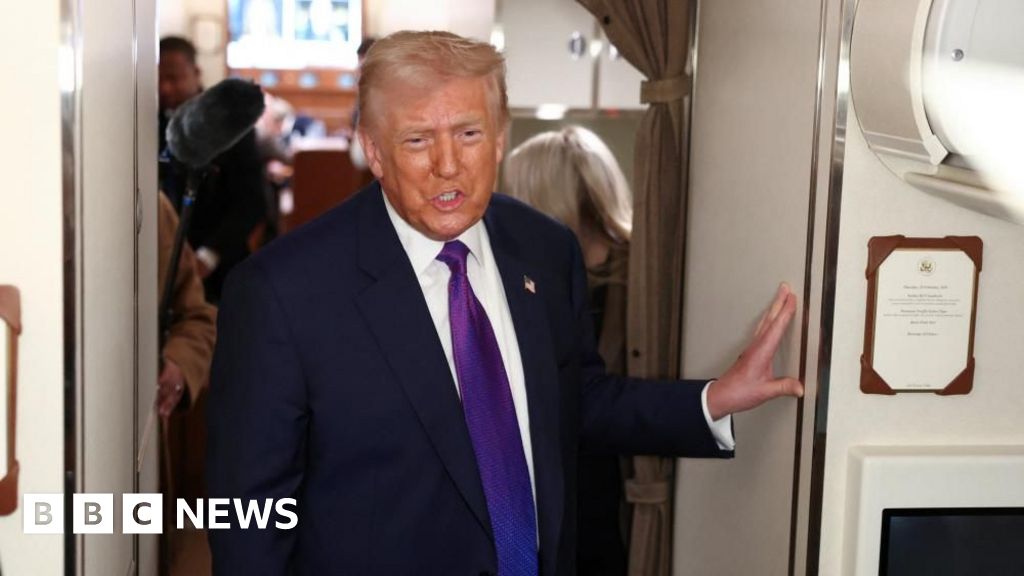
WASHINGTON (AP) — Tariffs paid by midsize U.S. businesses tripled over the course of past year, new research tied to one of America’s leading banks showed on Thursday — more evidence that President Donald Trump ‘s push to charge higher taxes on imports is causing economic disruption.
The additional taxes have meant that companies that employ a combined 48 million people in the U.S. — the kinds of businesses that Trump had promised to revive — have had to find ways to absorb the new expense, by passing it along to customers in the form of higher prices, employing fewer workers or accepting lower profits.
“That’s a big change in their cost of doing business,” said Chi Mac, business research director of the JPMorganChase Institute, which published the analysis Thursday. “We also see some indications that they may be shifting away from transacting with China and maybe toward some other regions in Asia.”
The research does not say how the additional costs are flowing through the economy, but it indicates that tariffs are being paid by U.S. companies. The study is part of a growing body of economic analyses that counter the administration’s claims that foreigners pay the tariffs.
Advertisement
The JPMorganChase Institute report used payments data to look at businesses that might lack the pricing power of large multinational companies to offset tariffs, but may be small enough to quickly change supply chains to minimize exposure to the tax increases. The companies tended to have revenues between $10 million and $1 billion with fewer than 500 employees, a category known as “middle market.”
AP AUDIO: Tariffs paid by midsize US companies tripled last year, a JPMorganChase Institute study shows
Advertisement
AP’s Lisa Dwyer reports on research showing Tariffs are hitting the bottom line.
The analysis suggests that the Trump administration’s goal of becoming less directly reliant on Chinese manufacturers has been occurring. Payments to China by these companies were 20% below their October 2024 levels, but it’s unclear whether that means China is simply routing its goods through other countries or if supply chains have moved.
The authors of the analysis emphasized in an interview that companies are still adjusting to the tariffs and said they plan to continue studying the issue.
Advertisement
White House spokesman Kush Desai called the analysis “pointless” and said it didn’t “change the fact that President Trump was right.” The study showed that U.S. companies are paying tariffs that the president had previously claimed would be paid by foreign entities.
Trump defended his tariffs during a trip to Georgia on Thursday while touring Coosa Steel, a company involved in steel processing and distribution. The president said he couldn’t believe the Supreme Court would soon decide on the legality of some of his tariffs, given his belief that the taxes were helping U.S. manufacturers.
“The tariffs are the greatest thing to happen to this country,” Trump said.
The president imposed a series of tariffs last year for the ostensible goal of reducing the U.S. trade imbalance with other countries, so that America was not longer importing more than it exports. But trade data published Thursday by the Census Bureau showed that the trade deficit climbed last year by $25.5 billion to $1.24 trillion. The president on Wednesday posted on social media that he expected there would be a trade surplus “during this year.”
Advertisement
The Trump administration has been adamant that the tariffs are a boon for the economy, businesses, and workers. Kevin Hassett, director of the White House National Economic Council, lashed out on Wednesday at research by the New York Federal Reserve showing that nearly 90% of the burden for Trump’s tariffs fell on U.S. companies and consumers.
“The paper is an embarrassment,” Hassett told CNBC. “It’s, I think, the worst paper I’ve ever seen in the history of the Federal Reserve system. The people associated with this paper should presumably be disciplined.”
Trump increased the average tariff rate to 13% from 2.6% last year, according to the New York Fed researchers. He declared that tariffs on some items such as steel, kitchen cabinets and bathroom vanities were in the national security interest of the country. He also declared an economic emergency to bypass Congress and impose a baseline tax on goods from much of the world in April 2025 at an event he called “Liberation Day.”
The high rates provoked a financial market panic, prompting Trump to walk back his rates and then engage in talks with multiple countries that led to a set of new trade frameworks. The Supreme Court is expected to rule soon on whether Trump surpassed his legal authority by declaring an economic emergency.
Advertisement
Trump was elected in 2024 on his promise to tame inflation, but his tariffs have contributed to voter frustration over affordability. While inflation has not spiked during Trump’s term thus far, hiring slowed sharply and a team of academic economists estimate that consumer prices were roughly 0.8 percentage points higher than they would otherwise be.
A statement from the Eric’s family reads: “With heavy hearts, we share that Eric Dane passed on Thursday afternoon following a courageous battle with ALS. He spent his final days surrounded by dear friends, his devoted wife, and his two beautiful daughters, Billie and Georgia, who were the centre of his world.”
Ensure our latest stories always appear at the top of your Google Search by making us a Preferred Source. Click here to activate or add us as your Preferred Source in your Google search settings.
“Throughout his journey with ALS, Eric became a passionate advocate for awareness and research, determined to make a difference for others facing the same fight.”
Advertisement
“He will be deeply missed, and lovingly remembered always. Eric adored his fans and is forever grateful for the outpouring of love and support he’s received. The family has asked for privacy as they navigate this impossible time.”
Eric continued to work despite his ill-health. The progressive and fatal disease causes a loss of voluntary muscle control, paralysis and respiratory failure. Around 5,000 new cases of the disease are diagnosed in the US every year.
He was not well enough to attend the Emmy Awards last month.
Eric enjoyed a 35-year career, during which Eric portrayed Dr Mark Sloan, also known as McSteamy, in the hit show Grey’s Anatomy between 2006 and 2012. He returned for a cameo in 2021. He also starred in nine episodes of fantasy drama Charmed in 2003 and 2004.
Advertisement
Until his death, Eric continued to film psychological teen drama Euphoria. The third season is yet to air.
Speaking on Good Morning America in June, a Eric said: “I wake up every day and I’m immediately reminded that this is happening… It’s not a dream. I don’t think this is the end of my story… I don’t feel like this is the end of me.”
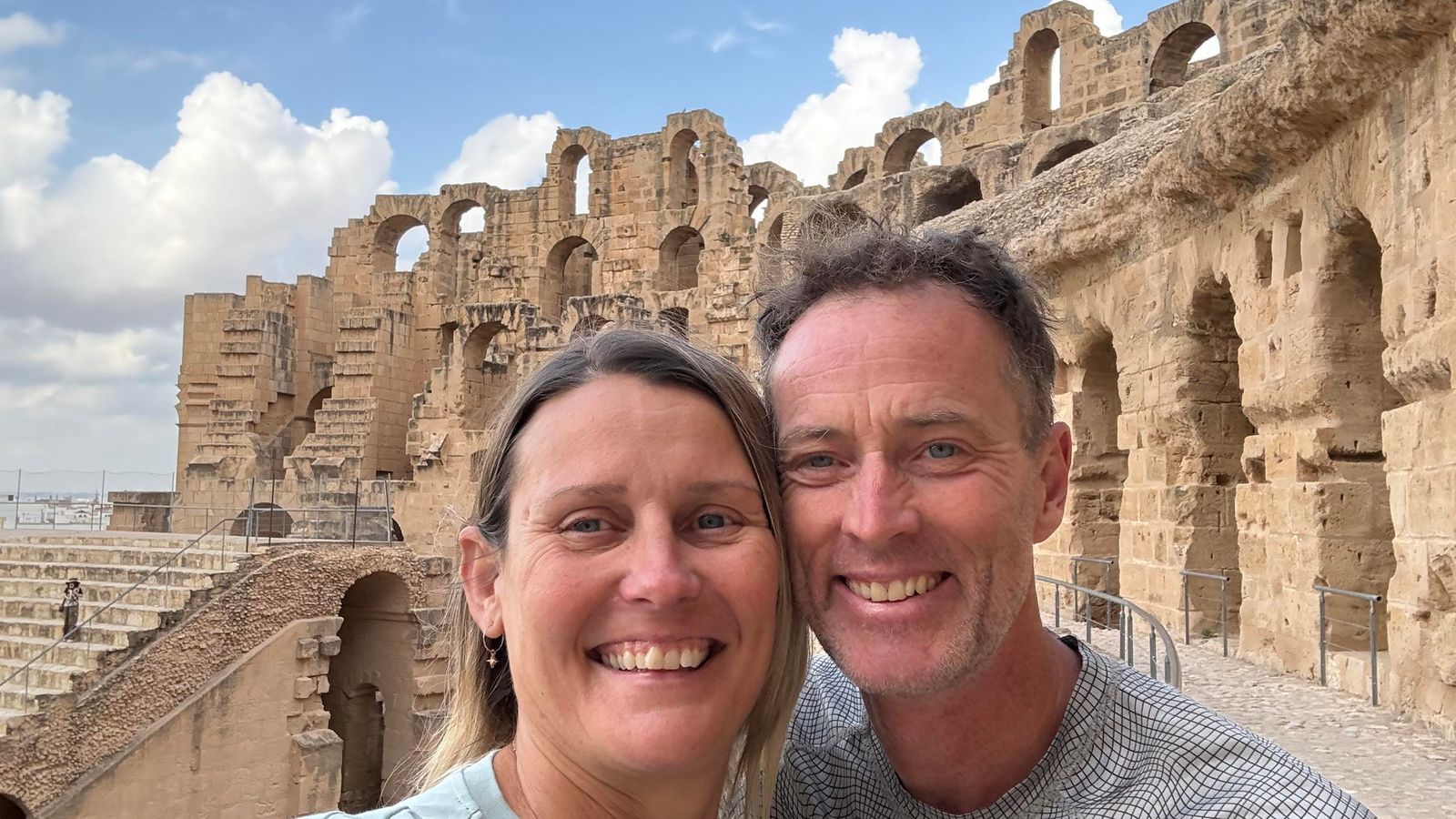
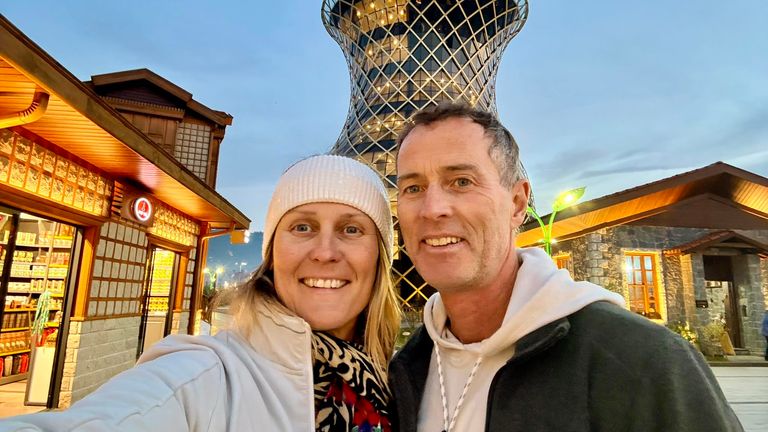
British nationals Lindsay and Craig Foreman have been sentenced to 10 years
in prison over allegations of espionage in Iran.
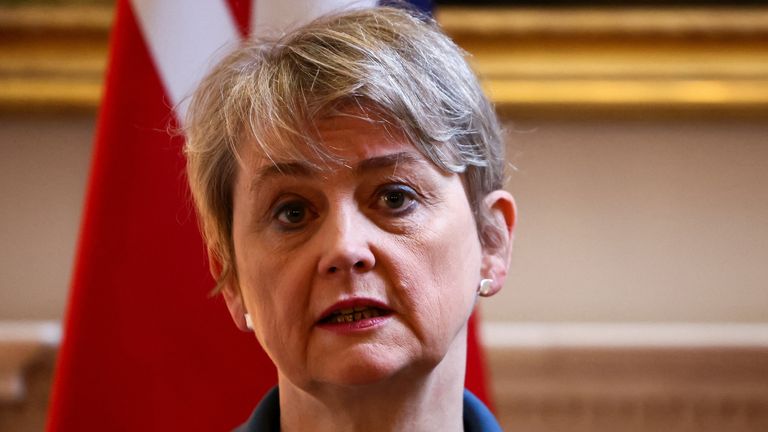
Foreign Secretary Yvette Cooper has condemned their sentence as “completely appalling and totally unjustifiable”.
“We will pursue this case relentlessly with the Iranian government until we see Craig and Lindsay Foreman safely returned to the UK and reunited with their family,” she said.
Joe Bennett, Lindsay Foreman’s son, told Sky News’ Jason Farrell he had spoken with the couple since their sentencing, describing how they reacted to the news with a “kind of mass panic”.
Advertisement
Advertisement
Joe Bennett, the son of Lindsay Foreman, spoke to Sky News in January
He said the prison sentence left him with a “pit in the stomach”, describing how “I felt sick, [I] didn’t sleep”.
The couple were arrested in January 2025 while travelling through the country on an around-the-world motorcycle journey and detained on charges of espionage.
The Foremans, from East Sussex, who are being held in Tehran’s Evin prison, deny the allegations.
Advertisement
The couple’s family says the sentence places the case “in line with the most severe politically motivated detentions of UK nationals in Iran”.
Advertisement
What can govt do about British couple held in Iran?
Mr Bennett said the couple had been “sentenced to 10 years following a trial that lasted just three hours and in which they were not allowed to present a defence”.
“They have consistently denied the allegations. We have seen no evidence to support the charge of espionage,” he added.
Advertisement
The sentence follows a court appearance on 27 October 2025 before Judge Abolghasem Salavati at Branch 15 of the Islamic Revolutionary Court in Tehran.
Image: Lindsay and Craig Foreman. Pic: Family handout
Judge Salavati has previously been sanctioned by the UK, US and EU in connection with human rights violations and the conduct of trials criticised internationally for lack of due process.
Ahead of his sentencing, Mr Foreman described being held in an “eight-foot cell with a hole in the floor and a sink” and described the effects of 57 days in solitary confinement, saying: “Emotionally and physically, it broke me to pieces”.
He said that once a month, meetings with his wife are what sustain him.
Mr Bennett said the couple had “already spent more than 13 months in detention”. “We are deeply concerned about their welfare and about the lack of transparency in the judicial process,” he added.
Advertisement
He told Jason Farrell that the couple’s family had received a call straight away from Foreign Office minister Hamish Falconer, who was “quite forceful in the fact that he was going to pick it up with his counterparts”.
Mr Bennett also welcomed Ms Cooper’s statement, saying he had already noticed a “different tone… from the government and that’s only been within 24 hours”.
“For the first time, there’s a sentence that the government can now act on, which is what they’ve been asking for for the last 14 months,” he added.
The Foreign Office is currently warning people not to travel to Iran, because of “the significant risk of arrest, questioning or detention”. “The UK government will not be able to help you if you get into difficulty in Iran,” it has cautioned.
Advertisement
Iran has arrested dozens of foreign visitors and dual nationals in recent years, mostly on espionage and security-related charges.
Image: Yvette Cooper said the sentence was ‘completely appalling and totally unjustifiable’. Pic: PA
Human rights groups and some Western countries have accused Iran of trying to win concessions from other nations through arrests on trumped-up charges.
British-Iranian dual nationals like Nazanin Zaghari-Ratcliffe and Anoosheh Ashoori are among those who have spent years behind bars in Iran before diplomatic negotiations helped secure their release.
The sentencing of the Foremans comes amid heightened tensions in the region following a deadly crackdown on a wave of demonstrations in Iran.
US President Donald Trump last month urged Iranian protesters – thousands of whom have been killed by the regime’s forces – to keep demonstrating and promised that “help is on the way”.
A powerful US military force continues to assemble within striking distance of Iran.
The changes could land dog walkers with a fine of up to £1000 if they break the rules
22:16, 19 Feb 2026Updated 22:18, 19 Feb 2026
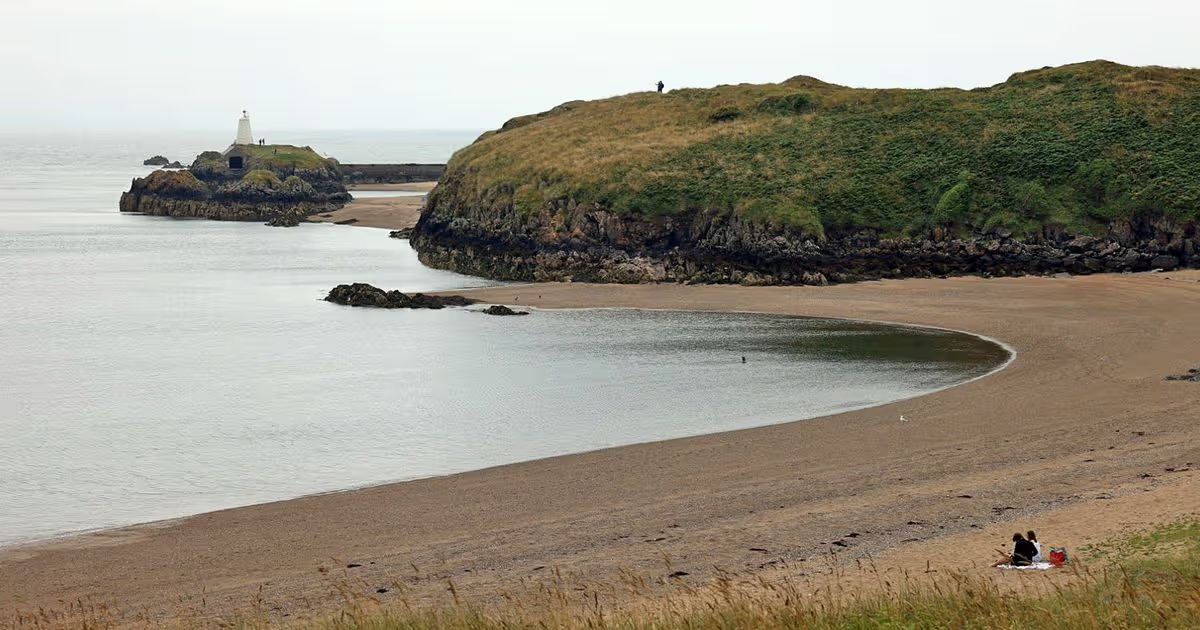
New rules for dog walkers have been proposed for multiple popular beaches in Wales. Due to ongoing complaints of fouling and dogs being walked in banned areas, the Isle of Anglesey County Council is proposing to enforce stricter rules on beaches across the island.
With “growing concern about dogs across Anglesey” the council has proposed a Public Space Protection Order that could land dog walkers with a fine of up to £1000.
The council is asking residents for their thoughts on the proposal that would replace the restrictions currently in place. This consultation will close on March 31, 2026.
Advertisement
Ensure our latest news and sport headlines always appear at the top of your Google Search by making us a Preferred Source. Click here to activate or add us as Preferred Source in your Google search settings
The order will be implemented to discourage anti-social behaviour involving dogs such as the failure to clear-up after dog fouling. The PSPO can last for three years and if breached, an authorised officer could issue a fixed penalty notice of up to £100, which, if not paid, could be increased to £1,000.
The council said: “The need for a dog control PSPO has arisen due to ongoing complaints about dog related anti-social behaviour issues, such as fouling and dog walking in banned areas such as certain beaches. These issues have a detrimental effect on the residents of and visitors to local communities.”
The main objectives of the order according to the council are to allow the council to have the ability to tackle dog related antisocial behaviour, prevent dog fouling, allow those who breach a PSPO to be issued with fixed penalty notices and formalise the exclusion of dogs from certain areas.
Advertisement
The draft will include ‘dog fouling of land’ prohibition, which makes it an offence if dog owners do not remove their dog’s faeces from land within all public highways in areas within the boundaries where the highways are subject to a 30mph or 20mph speed limit.
This includes the carriageways and adjoining footways and verges as well as:
all public open land within designated areas including school land and school playing fields and other playing fields and public cemeteries; and
all school land and public playing fields which are located outside such areas.
The beaches set to be included within the PSPO are:
Llanddwyn beach
Penrhos Llanddwyn
Malltraeth Bay
Traeth Mawr, Aberffraw
Rhosneigr
Llanfaelog
Traeth Llydan Rhoscolyn
Borth Wen Rhoscolyn
Porth Diana
Trearddur Bay
Porth Dafarch
Traeth Newry
Traeth Penrhos Holyhead
Porth Penrhyn Mawr Llanfwrog
Porth Tywyn Mawr
Porth Trefadog
Porth Trwyn Llanfwrog
Porth Swtan
Cemlyn
Traeth Bach a Traeth Mawr Cemaes
Porth Llechog
Porth Eilian
Traeth Lligwy
Moelfre
Traeth Bychan
Benllech
Traeth Coch
Llanddona
Beaumaris
Penmon
Breakwater Country Park
Land exempt from the draft order includes, private land, highways that are subject to a 40mph speed limit or higher, woodlands, marshlands and moorland/heathland.
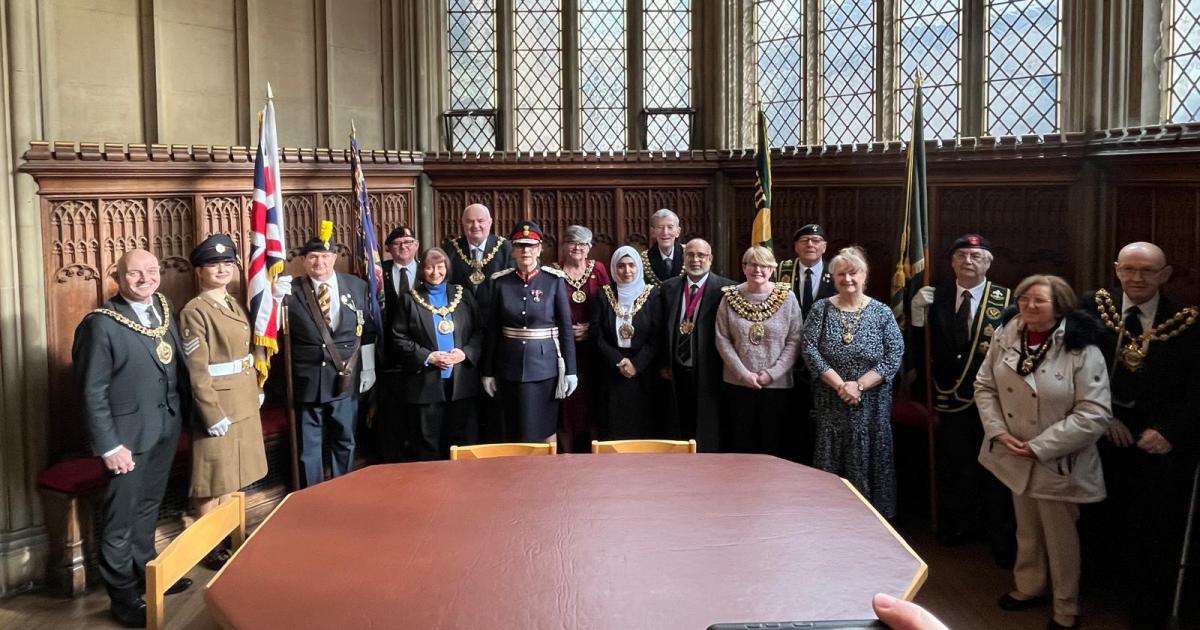
The Turning of the Leaves ceremony, which has been held regularly since 1937, commemorates servicemen “shot at dawn” during the conflict.
Among those attending was Mayor of Bolton Cllr David Chadwick.
The event ensures these men are not forgotten, with a strong sense of remembrance pervading the proceedings.
The ceremony, held regularly since 1937, commemorates servicemen “shot at dawn” (Image: Supplied)
The ceremony takes its name from the prominent Books of Remembrance, whose leaves are turned by veterans during the ceremony.
Advertisement
The ceremony saw an assembly of clergy, veterans, and local leaders from all over Greater Manchester.
The ceremony saw an assembly of clergy, veterans, and local leaders from all over Greater Manchester (Image: Supplied)
Despite their advancing age and the challenge of all weather conditions, the veterans continued to uphold their commitment to remembering those who lost their lives.
The predominantly south-westerly winds over the next few weeks will bring in spells of rain and areas of low pressure from time to time.
The wettest weather is expected to be over western hills. That means a change of fortune in Scotland, where up to now it has been extremely wet in eastern Scotland but drier than normal in the west of the country.
The recent snowfall will also melt rapidly as temperatures rise.
Given saturated ground in many parts of the UK and flood warnings, mainly in England, the risk of flooding will remain a concern well in to March.
Employment and Support Allowance payments will stop from March 2026 as the DWP completes its migration to Universal Credit, affecting over one million claimants
A DWP benefit will cease to be paid beyond March due to significant welfare changes.
Advertisement
Employment and Support Allowance (ESA) is the last ‘legacy’ benefit being phased out as part of the lengthy process to transition to Universal Credit (UC).
ESA claimants should have received migration notices in the post instructing them to apply for UC instead, reports Birmingham Live.
Those who have successfully applied will be transferred to the new benefit, as ESA, both individually and in conjunction with Housing Benefit, will no longer be paid.
From Sunday, March 1 onwards, the DWP will begin to wind down ESA payments. However, some claimants risk losing their benefits if they have not applied in time. The transition to UC is not automatic.
Advertisement
Migration notices would have informed households that they had three months to apply for UC. This will conclude the process of phasing out a number of legacy benefits, which began years ago under the Conservatives.
They have all been consolidated into a single UC payment. ESA is claimed by over one million Brits with disabilities or health conditions affecting how much they can work.
Ross-on-Wye retains a great deal of old-world charm, with stunning black-and-white timber-framed buildings and cute little independent shops. Elizabeth Mackley made a visit
Elizabeth Mackley Live Reporter
02:40, 20 Feb 2026
It’s a modest market town, tucked away in the nook where Herefordshire meets Gloucestershire on the Welsh border.
I’d never have surmised that Ross-On-Wye is the cradle of British tourism, and THE holiday hotspot of the late 18th and early 19th century. However, given there’s some indication we are witnessing a resurgence of romanticism (think Wuthering Heights and Bridgerton rather than the latest rom-com), it wouldn’t astonish me if there’s a wave of soul-seekers retracing the paths of their ancestors across the UK’s most cherished natural landscapes.
Advertisement
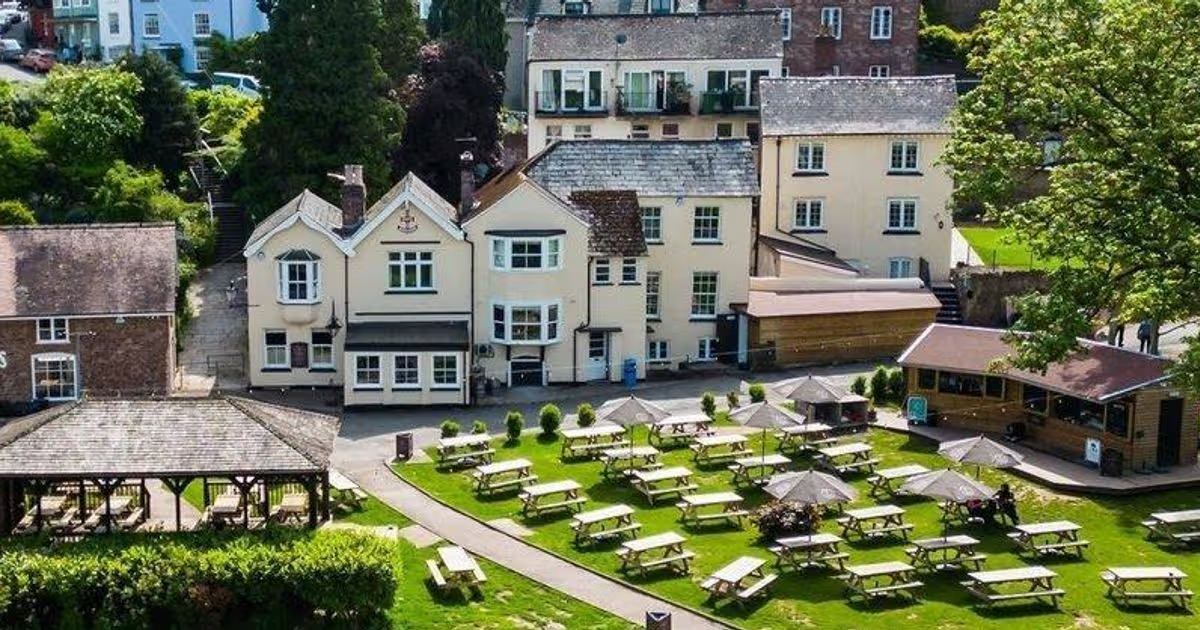
And what superior way to discover Ross-on-Wye for myself than from the Hope and Anchor. Situated right on the brink of the River Wye, it was just outside this inn that the boats would embark on their tour. So it appeared like the ideal place for my toddler and I to pause for the night as part of a trip organised by Visit Herefordshire.
Before we checked in for the night, we set off to explore a town peculiarly located on the northern edge of the Forest of Dean, less than 10 miles from the Welsh border, and six miles from Gloucestershire, reports the Mirror.
Stepping onto the streets of Ross-on-Wye, it doesn’t require much imagination to be transported through time and see what inspired the Reverend William Gilpin to pen Britain’s first ever travel guide. Published in 1782, Observations on the River Wye centres on a boat tour he undertook down the River Wye from Ross-on-Wye to Chepstow.
The words of the pioneer of the “picturesque” adventure proved so captivating that replicating his journey soon became the fashionable thing to do – particularly during the Napoleonic Wars, when participating in the Grand Tour across continental Europe became impossible.
As market towns go, Ross-on-Wye is a reasonably well-sized one, with a population of approximately 11,000 according to the 2021 census. However, 250 years after it was first made famous, it still retains an old-world charm, dotted with stunning black-and-white timber-framed buildings and charming little independent shops where you can while away the afternoon browsing.
After working up an appetite, taking in the street scenes surrounding the prominent Market House building in the town centre, we headed towards the High Street looking for Truffles Deli, which Visit Herefordshire had suggested we grab a quick bite from. Unfortunately, the highly-rated eatery promising delicious sandwiches, soups and cakes is closed on Sundays.
Advertisement
Instead we followed directions on a chalkboard pointing us towards Maggie’s Place a few doors down. Warm and welcoming, incense drifted through the space as we entered, appreciating the exposed beams and brickwork.
The café – which also welcomes four-legged friends – has only been open for several months, and the proprietors have recently started introducing a more extensive menu, including sandwiches and cakes.
“We’re trying to be completely locally sourced”, the owner tells me, explaining the ham in the delicious sandwich I bite into is from the delicatessen around the corner. He mentions they are working on bringing in crisps made nearby, and the bread has been locally produced, too.
Advertisement
And if the flavour is anything to go by, lunch is remarkably under-priced. I cannot get enough of the garlic spread in my ham sandwich, offering a silky and creamy edge. I’m secretly grateful that my toddler is only interested in the packet of crisps I bought to share.
But the thing that impressed me most about Maggie’s is the coffee. I’m not exactly a coffee connoisseur – my mornings start with instant – but if I’m purchasing a coffee, I do have certain standards.
The owner serves me a Café Au Lait – his version of a flat white – and it’s the first coffee I have bought out in at least two years that I haven’t had to add sugar to. Rich, velvety, and bitter without the burn, I’ve finished it all too quickly.
Following lunch, we take a stroll up the hill towards The Royal Hotel. Some 200 years ago, this is where we would have been lodging before setting off on our boat journey as outlined in Gilpin’s guidebook.
And it’s simple to understand why – the enormous historic inn stands majestically above the town, offering spectacular views of the River Wye guaranteed to take your breath away.
Constructed on the foundations of a 13th-century Bishop’s Palace, the Greene King hotel features 42 bedrooms and can accommodate weddings. But for the moment, we simply appreciate the views before heading around the corner to The Prospect.
Tucked away in the pleasure garden at the rear of the graveyard of St Mary’s Church, the Prospect was established around 1700 by John Kyrle – also known as the ‘Man of Ross’. From this vantage point, you can observe the famous horseshoe bend in the Wye and as far west as the Black Mountains.
Advertisement
Settling in for the night
If you glance directly down from The Prospect, you can spot the Hope and Anchor, just a small car park’s width from the water’s edge. Recent rainfall has caused the River Wye to swell, pressing against its banks and saturating the paths and borders.
We check into our room for the evening, a beautiful ensuite with an impressive chandelier-type lighting, which captivates my little girl even more than the cartoons on the television. A small love seat adds a romantic element to the room, which has lovely views of the river.
I’d love to return in the warmer months. After settling in, we head downstairs to the dining room.
Whilst it may seem a snug, tidy, and rather unremarkable little pub, there is nothing standard about what you consume at the Hope and Anchor. Even the wine I treated myself to as a small holiday indulgence far surpassed expectations.
Advertisement
I requested a medium glass of red wine – and instead savoured a burst of robust, potent flavours resonating with plum and black fruits with a woody finish (Vina Cerrada Rioja, £5.5 a small glass).
I selected from the specials menu to begin – whipped camembert brulee (£8) presented on a bed of fig chutney, toasted sourdough and topped with hazelnut and apple. If you’re a devotee of Camembert, this is not something to be overlooked.
The sharpness of the chutney balanced the creamy richness of the cheese, crowned with the gratifying crunch of the hazelnuts and apple scattered on top. The chutney contributed an earthy taste, and the whipped texture of the camembert provided a delightful variation to both its cold and melted forms.
This was succeeded by the garlic-and-thyme-roasted supreme of chicken (£19.50). From the kitchen arrived a substantial, steaming plate of a roast dinner, served with garlic and rosemary roast potatoes, braised red cabbage puree, glazed parsnips, roasted heritage carrots, herb and apricot stuffing, seasonal greens, Yorkshire pudding and red wine gravy.
I even had a generous bowl of cauliflower cheese on the side.
Now, as everyone is aware, the real test of a roast dinner lies in its potatoes. After all, nobody can ever surpass your mum’s, correct?
However, the Hope and Anchor has certainly given her a challenge.
Advertisement
Instead of the rubbery roasties we often excuse pubs for, these were flawlessly crispy on the outside, and steaming and fluffy on the inside, embodying the gold standard all roast potatoes strive for.
Paired with delightfully sweet roasted vegetables, contrasted with the leafy seasonal greens, and one of the largest Yorkshire puddings I’ve ever seen on a plate, there was no chance I was going to finish the meal. The cauliflower cheese also made the perfect addition, not overly cheesy, not excessively creamy, but just perfectly balanced and toasted on top.
I couldn’t resist a second helping despite my protesting stomach.
Even the chicken nuggets and chips served with baked beans to my daughter were a masterpiece on a plate. Succulent and juicy chunks of battered chicken served with crisp, hand-cut chips, I regretted not having space to help her finish them.
Advertisement
But what made the meal so genuinely special is how well we were cared for and looked after. From the understanding fellow diners who drew smiles from my little girl to the attentive staff, it was a warm and welcoming atmosphere.
I was especially impressed with the way staff overlooked the fact that my little gremlin left most of her meal and was more interested in licking tomato ketchup off a spoon. But then again, she is two, and clearly has no taste.
Gilpin’s footsteps
Following a restful night, we visited the neighbouring café for breakfast, keen to stock up for what I hoped would be another active morning. The Pavilion, which is also part of the Hope and Anchor, is a bright, inviting space with a chic, timeless interior.
It was the ideal setting to tuck into my eggs Royale for breakfast – and yes, the yolk was delightfully gooey with a delicious crunch from the toasted muffin.
Advertisement
We then made our way to the river’s edge, determined to follow in Gilpin’s footsteps despite the swollen Wye and waterlogged paths. I downloaded the Museum Without Walls App – Ross-on-Wye’s virtual museum, which uses AR (augmented reality) to superimpose pictures showing what a specific location would look like in days gone by.
I point the app at the sign just outside the Hope and Anchor, and in an instant, I can see the boats from days gone by preparing to set sail down the Wye towards Chepstow. With determination, we set off, fully intending to at least reach the point where Wilton Bridge crosses the rive,r approximately half a mile away, despite my daughter’s insistence on befriending a couple of rather docile swans, and a worrying game of chase which brought her alarmingly close to the swollen banks of the fast-flowing river.
Regrettably, the path was simply too waterlogged to progress even that far. Instead, we turned back, contemplating a stop at the popular Riverside Inn on Wye Street as part of our return journey.
This proved the only disappointment of our excursion, though one which sadly could not be avoided.
Advertisement
With any luck, next time, my companion will have sufficiently long legs to make the journey on her own feet, too, perhaps when the weather is somewhat less boggy.
What you need to know
The Hope & Anchor offers lunch and dinner options as well as overnight stays, while next door, The Pavilion restaurant and bar offers breakfast and cocktail masterclasses. There is also The Hut on the river’s edge, serving cakes, hot drinks and ice creams for those on the go. A one-night stay at the Hope & Anchor costs from £90 based on two sharing on a Bed and Breakfast basis. Find out more or book your visit here.
Follow Gilpin’s Wye Boat Tour by downloading the Museum Without Walls App here
Maggie’s Place at 24 High Street is open 10.30am-4.30pm Monday to Wednesday, Friday and Saturday, and from 12.30pm to 4.30pm on Sundays. Find out more here.
The Royal Hotel is open all year round with breakfast served between 7am and 11am Monday to Friday and 8am to 12pm on weekends. You can also eat in the evening until 9pm. It’s also dog-friendly. Find out more here.
Ensure our latest lifestyle and travel stories always appear at the top of your Google Search by making us a Preferred Source. Click here to activate or add us as your Preferred Source in your Google search settings.
WASHINGTON (AP) — The U.S. Commission of Fine Arts, a panel made up of President Donald Trump’s appointees, on Thursday approved his proposal to build a ballroom larger than the White House itself where the East Wing once stood.
The seven-member panel is one of two federal agencies that must approve Trump’s plans for the ballroom. The National Capital Planning Commission, which has jurisdiction over construction and major renovation to government buildings in the region, is also reviewing the project.
Members of the fine arts commission originally had been scheduled to discuss and vote on the design concept after a follow-up presentation by the architect, and had planned to vote on final approval at next month’s meeting. But after the vote to approve the design, the panel’s chairman, Rodney Mims Cook Jr., unexpectedly made another motion to vote on final approval.
Five of the seven commissioners — all appointed by the Republican president in January — voted once more in favor. Commissioner James McCrery did not participate in the discussion or the votes because he was the initial architect on the project before Trump replaced him. Commissioner Roger Kimball left the meeting early for another commitment, the panel’s secretary said.
Advertisement
The ballroom will be built on the site of the former East Wing, which Trump had demolished in October with little public notice. That drew an outcry from some lawmakers, historians and preservationists who argued that the president should not have taken that step until the two federal agencies and Congress had reviewed and approved the project, and the public had a chance to provide comment.
The 90,000-square-foot (8,361 square meters) ballroom would be nearly twice the size of the White House, which is 55,000-square-feet (5,110 square meters), and Trump has said it would accommodate about 1,000 people. The East Room, the largest room in the White House, can fit just over 200 people at most.
Commissioners offered mostly complimentary comments before the votes.
Cook echoed one of Trump’s main arguments for adding a larger entertaining space to the White House: It would end the long-standing practice of erecting temporary structures on the South Lawn that Trump describes as tents to host visiting dignitaries for state dinners and other functions.
Advertisement
“Our sitting president has actually designed a very beautiful structure and, as was said, in the comments earlier, the United States just should not be entertaining the world in tents,” Cook said.
The panel received mainly negative comments from the public
Members of the public were asked to submit written comment by a Wednesday afternoon deadline. Thomas Luebke, the panel’s secretary, said “over 99%” of the more than 2,000 messages it received in the past week from around the country were in opposition to the project.
Luebke tried to summarize the comments for the commissioners.
Some comments cited concerns about Trump’s decision to unilaterally tear down the East Wing, as well as the lack of transparency about who is paying for the ballroom or how contracts were awarded, Luebke said. Comments in support referenced concerns for the U.S. image on the world stage and the need for a larger entertaining space at the White House.
Advertisement
Trump has defended the ballroom in a recent series of social media posts that included drawings of the building. He said in one January post that most of the material needed to build it had been ordered “and there is no practical or reasonable way to go back. IT IS TOO LATE!”
The commission met Thursday over Zoom and heard from Shalom Baranes, the lead architect, and Rick Parisi, the landscape architect. Both described a series of images and sketches of the ballroom and the grounds as they would appear after the project is completed.
Trump has said the ballroom would cost about $400 million and be paid for with private donations. To date, the White House has only released an incomplete list of donors.
A lawsuit against the project is still pending
The National Trust for Historic Preservation has sued in federal court to halt construction. A ruling in the case is pending.
Advertisement
Carol Quillen, president and CEO of the privately funded nonprofit organization, said the group was “puzzled” by both votes because the final plans had not been presented or reviewed. But with the votes, she said the commission had “bypassed its obligation to provide serious design review and consider the views of the American people,” including all of the negative public comments.
Quillen said that while her organization has always acknowledged the usefulness of a larger White House meeting space, “we remain deeply concerned that the size, location, and massing of this proposal will overwhelm the carefully balanced classical design of the White House, a symbol of our democratic republic.”
At the commission’s January meeting, some members had questioned Baranes, Trump’s architect, about the “immense” design and scale of the project even as they broadly endorsed Trump’s vision.
On Thursday, Cook and other commissioners complimented Baranes for updating the building’s design to remove a large pediment, a triangular structure above the south portico, that they had objected to because of its size.
Advertisement
“I think taking the pediment off the south side was a really good move,” said commissioner Mary Anne Carter, who also is head of the National Endowment for the Arts. “I think that really helps to restore some balance and make it look, just more aligned” with the White House.
Baranes said it was the biggest design change and that Trump had “agreed to do that.”
Trump quietly named his final two commissioners to the panel in late January. Pamela Hughes Patenaude has a background in housing policy and disaster recovery, and was as a deputy secretary at the Department of Housing and Urban Development in Trump’s first term. Chamberlain Harris is a special assistant to the president and deputy director of Oval Office operations.
The ballroom project is scheduled for additional discussion at a March 5 meeting of the National Capital Planning Commission, which is led by a top White House aide. This panel heard an initial presentation about the project in January.
Advertisement
At that meeting, the White House defended tearing down the East Wing, saying that preserving it was not an option due to structural issues, past decay and other concerns. Josh Fisher, director of the White House Office of Administration, cited an unstable colonnade, water leakage, mold contamination and other problems.
___
This story has been corrected to reflect that the ballroom was approved by five of the seven commissioners. One commissioner did not vote because he was the initial architect on the project and a second commissioner left the meeting early because of another commitment.
Then a few hours later, he posted on Truth Social that “based on the tremendous interest shown” he will seek the release of files “related to alien and extraterrestrial life, unidentified aerial phenomena (UAP), and unidentified flying objects (UFOs), and any and all other information connected to these highly complex, but extremely interesting and important, matters”.
Shark’s flagship cordless vacuum cleaner comes loaded with features including auto detection, which automatically varies the suction power according to the levels of dirt, light, proximity to corners and edges and the floor type.
There are front and rear “headlights”, an anti-hair wrap feature and “reverse clean” floorhead tech which means the vacuum cleans as effectively pulled backwards as it does when pushed forward.
Advertisement
In use, there’s more than enough power for cleaning short-pile carpet as well as hard flooring and it sailed through all of my torture tests. It collected hair efficiently, the auto detection capabilities proved effective, and, as advertised, it did seem equally effective forwards and backwards.
Handily, this vacuum folds over for stable storage in a cupboard, against a wall or in a corner and its accessory roster is decent too. Meanwhile, build quality is robust and the design intuitive. The battery’s charging time was a little slow at four hours, but I got around 30 minutes run time in the default PowerDetect mode, which is good.
The Shark feels a little heavier than others I’ve tested but the inclusion of a folding Flex wand, together with a highly manoeuvrable floor head, means it’s easy to reach under sofas and bed frames. Its 0.7 litre dust bin isn’t huge and the horizontal design makes it trickier to empty without spilling some debris, but this is a well-balanced cordless overall.