

Crypto World
Crypto PAC to spend $1.5m to unseat Rep. Al Green



Pro‑crypto PAC Protect Progress plans $1.5m spend next month against Rep. Al Green over his anti‑crypto voting record.
Summary
- Protect Progress, aligned with Fairshake, will pour $1.5m into ads and outreach in Texas’ Democratic primary to defeat Green.
- The PAC cites Green’s opposition to FIT 21, the Digital Asset Market Clarity Act, the GENIUS stablecoin bill, and his support for SAB 121 bank‑custody limits.
- Fairshake and affiliates control about $193m in cash from donors including Ripple, Coinbase and a16z, signaling deeper crypto lobbying in 2026 races.
A cryptocurrency-aligned super PAC announced plans to spend $1.5 million opposing Rep. Al Green in the Texas Democratic primary next month, according to a statement released by the organization.
Protect Progress, a federal super PAC affiliated with Fairshake, said the funds will support advertising and voter outreach aimed at unseating Green, a longtime member of the House Financial Services Committee who has voted against several major crypto-related bills.
The group cited Green’s opposition to measures including the Financial Innovation and Technology for the 21st Century Act, the Digital Asset Market Clarity Act currently under consideration, and the GENIUS stablecoin bill that passed earlier this year. The organization also pointed to his support for maintaining the SEC’s Staff Accounting Bulletin 121, which limited how banks custody digital assets.
“As a member of the Financial Services Committee, Representative Al Green has decided to try and stop American innovation in its tracks,” Fairshake spokesperson Josh Vlasto said in a statement.
Green, who has served in Congress since 2005, has voiced skepticism about cryptocurrency, warning of potential risks to the U.S. dollar’s global role and raising concerns about the sector’s economic and environmental impact, according to public statements. During a House hearing last year, he dismissed claims that regulators pressured banks to cut ties with crypto firms, calling “Operation Choke Point 2.0” a “made-up statement.”
Green is running in a reshaped Houston-area district following Texas redistricting and faces Democratic challenger Christian Menefee, who has received favorable assessments from crypto advocacy groups.
Fairshake and affiliated committees reported holding approximately $193 million in cash earlier this year, following fundraising from major industry players including Coinbase, Ripple and Andreessen Horowitz, according to federal filings. The spending reflects how crypto-backed political groups plan to engage in the 2026 election cycle, backing candidates supportive of digital asset regulation while opposing lawmakers viewed as hostile to the industry.

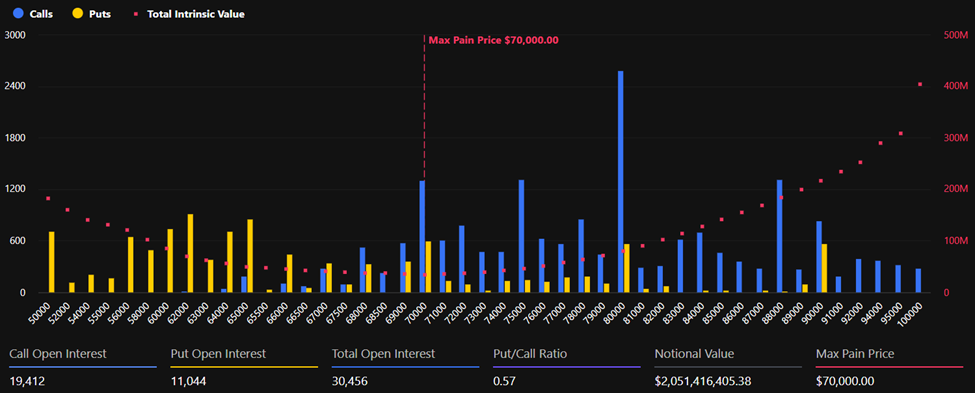
Nearly $2.5 billion in Bitcoin and Ethereum options expire today, setting up a potentially volatile end to the month as traders juggle upside bets with deep downside insurance.
On the surface, positioning appears constructive. But beneath the call-heavy skew lies a striking anomaly: one of the largest open interest clusters in Bitcoin sits far below spot — at the $40,000 strike.
Calls Dominate, But Max Pain Sits Higher
Bitcoin is currently trading around $67,271, with max pain positioned at $70,000. Open interest shows 19,412 call contracts and 11,044 put contracts. This gives a put-to-call ratio of 0.57 and reflects an overall upside bias. The total notional volume tied to the expiry is roughly $2.05 billion.
Ethereum mirrors that constructive tilt, though in a more balanced fashion. ETH trades near $1,948, with max pain at $2,025.
Calls (124,109 contracts) outnumber puts (90,017), resulting in a put-to-call ratio of 0.73 and a notional value of approximately $417 million.
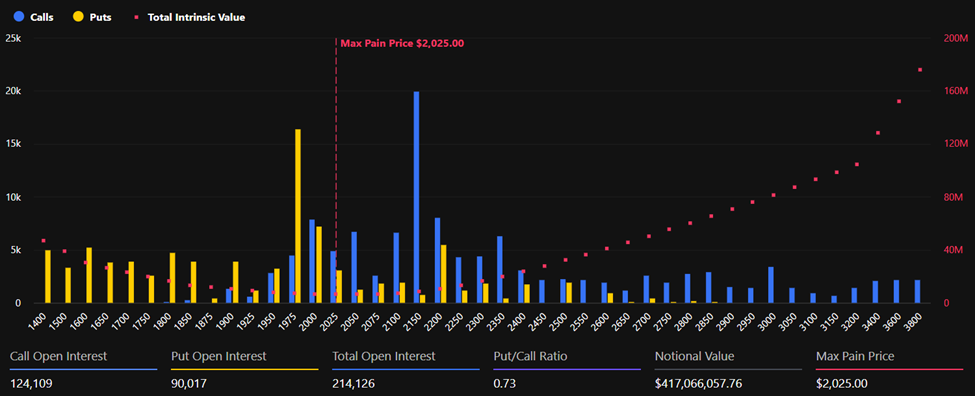
“…positioning skews call heavy across both assets, with BTC showing the stronger upside skew. Max pain levels sit below dominant call open interest in BTC, while ETH positioning is more balanced but still constructive,” analysts at Deribit noted.
Max pain refers to the price at which the greatest number of options expire worthless, minimizing payouts to buyers.
With both BTC and ETH trading below their respective max pain levels, price gravitation toward those strikes into expiry could reduce losses for option sellers.
The $40,000 Put: A Tail-Risk Signal
Despite the headline bullish skew, a massive concentration of puts at the $40,000 strike has caught market attention.
The $40,000 Bitcoin put is now the second-largest strike by open interest, representing roughly $490 million in notional value. This comes after Bitcoin’s sharp retracement from prior highs, which reshaped hedging demand across the board.
“While aggregate positioning into expiry skews call heavy, one strike stands out: The $40K BTC put remains among the largest open interest strikes ahead of February expiry. Deep OTM downside protection demand remains visible on the board, even as headline put/call ratios lean constructive,” Deribit analysts indicated, highlighting the unusual size of the position.
In short, traders may be positioned for upside, but they are unwilling to rule out another volatility shock.
Hedging, Premium, and Structural Implications
The dynamic suggests a broader change in Bitcoin’s derivatives market. Options are increasingly used for directional bets, yield strategies, and volatility management.
Analyst Jeff Liang argued that extracting premium from the options market could reduce structural selling pressure.
“If we can stably extract the premium from the options market and empower Bitcoin HODLers, it means: HODLers no longer need to sell their Bitcoin to improve their lives… Selling pressure on Bitcoin will reduce… This will further drive Bitcoin’s price upward,” he stated.
The analyst described options premium as a “localized pump” driven by fear and greed, one that redistributes value to long-term holders without contradicting Bitcoin’s fixed supply cap.
Overall, calls outweigh puts across both BTC and ETH, signaling that traders retain exposure to a rebound. Yet the sheer scale of deep out-of-the-money hedges reveals a market that remains cautious.
With billions in notional value set to expire, the key question is whether prices drift toward max pain—or whether hidden crash-protection demand proves prescient, reigniting volatility just as traders expect calm.
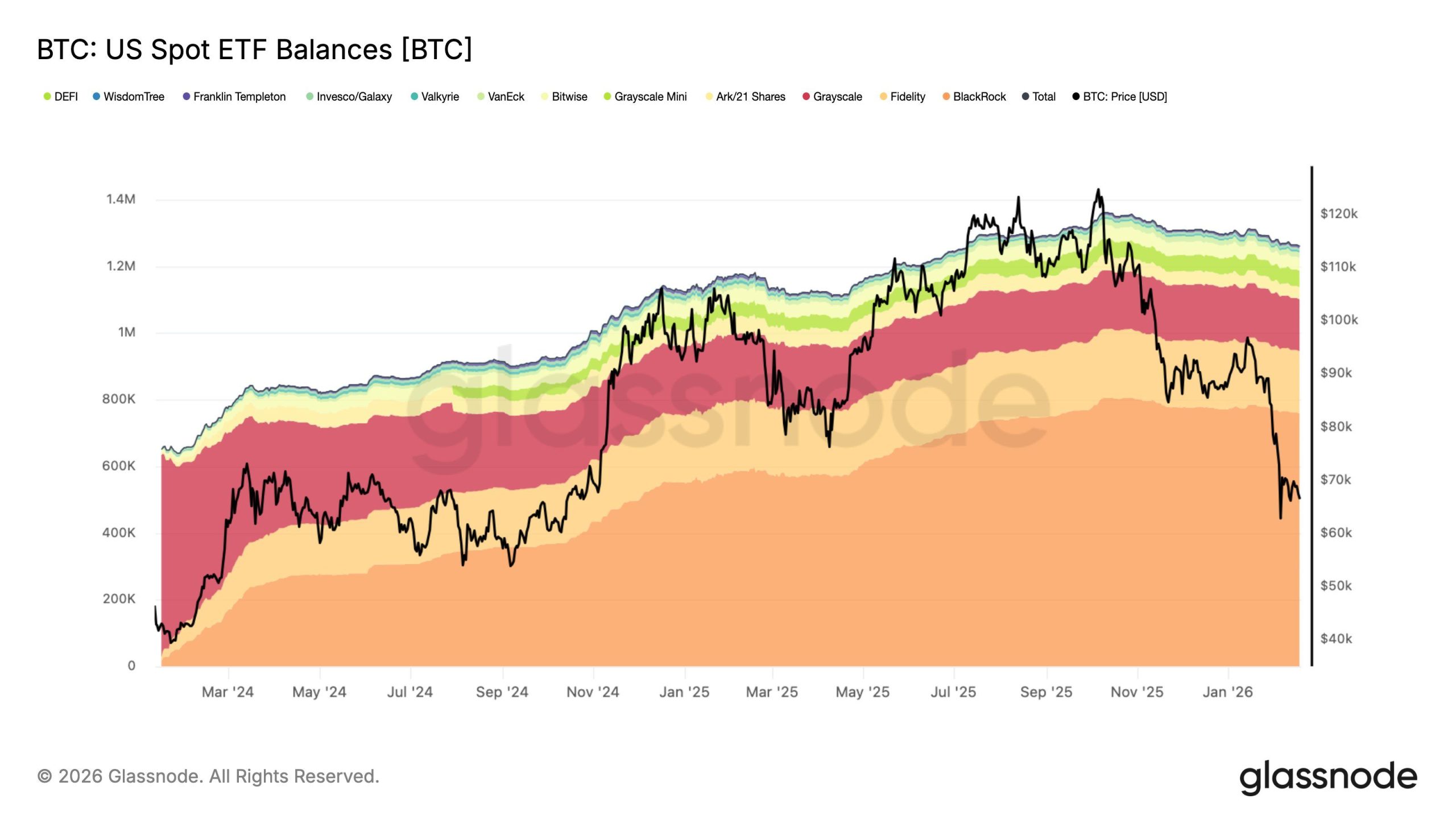
According to data from Glassnode, US spot Bitcoin exchange-traded funds (ETFs) have recorded their largest balance drawdown of the current market cycle following the early October all-time high.
Nonetheless, despite the recent outflows, the broader ETF picture still remains constructive.
Bitcoin ETFs See Deepest Cycle Pullback as Balances Fall to 1.26 Million BTC
Glassnode data shows that since October, US spot Bitcoin ETF balances have declined by roughly 100,300 BTC. At press time, total holdings stood at approximately 1.26 million BTC.
The contraction reflects sustained net outflows, as investors have withdrawn capital from spot ETFs, leading funds to reduce holdings. According to SoSoValue, $1.6 billion was pulled from these products in January alone, extending a streak of monthly outflows that began in November 2025.
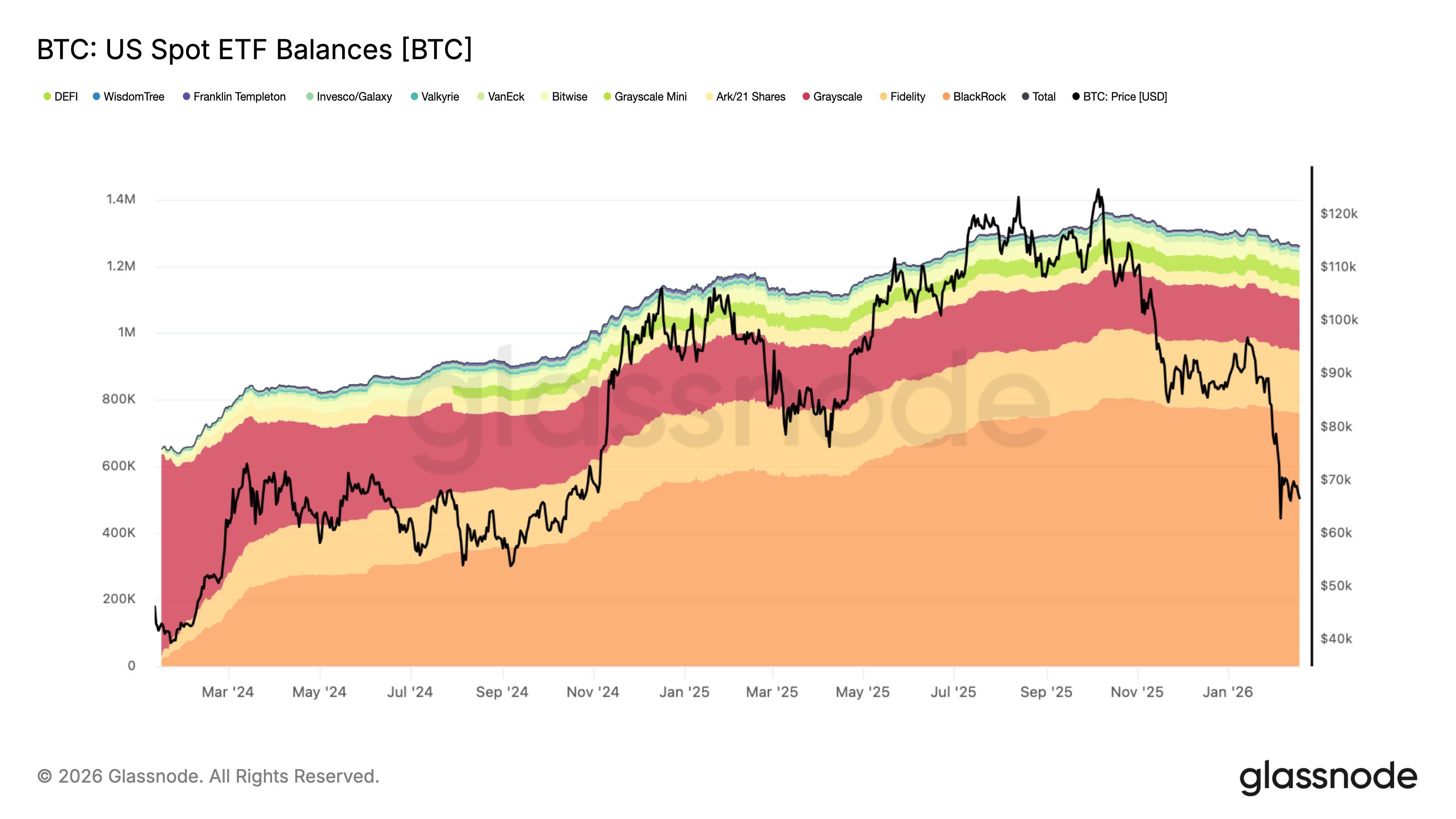
The decline in ETF balances has unfolded alongside a broader market downturn. Bitcoin has trended lower since reaching its record high of $126,000 in October. The weakness has spilled into 2026, fueling elevated fear and uncertainty across the market.
Although spot ETFs were widely seen as a structural catalyst during Bitcoin’s rally, experts suggest the same mechanism may have intensified downside pressure during periods of redemptions. In early February, Arthur Hayes argued that institutional dealer hedging activity is amplifying downward pressure on BTC prices.
“Institutional de-risking has added structural weight to the ongoing weakness, reinforcing the broader risk-off environment,” Glassnode added.
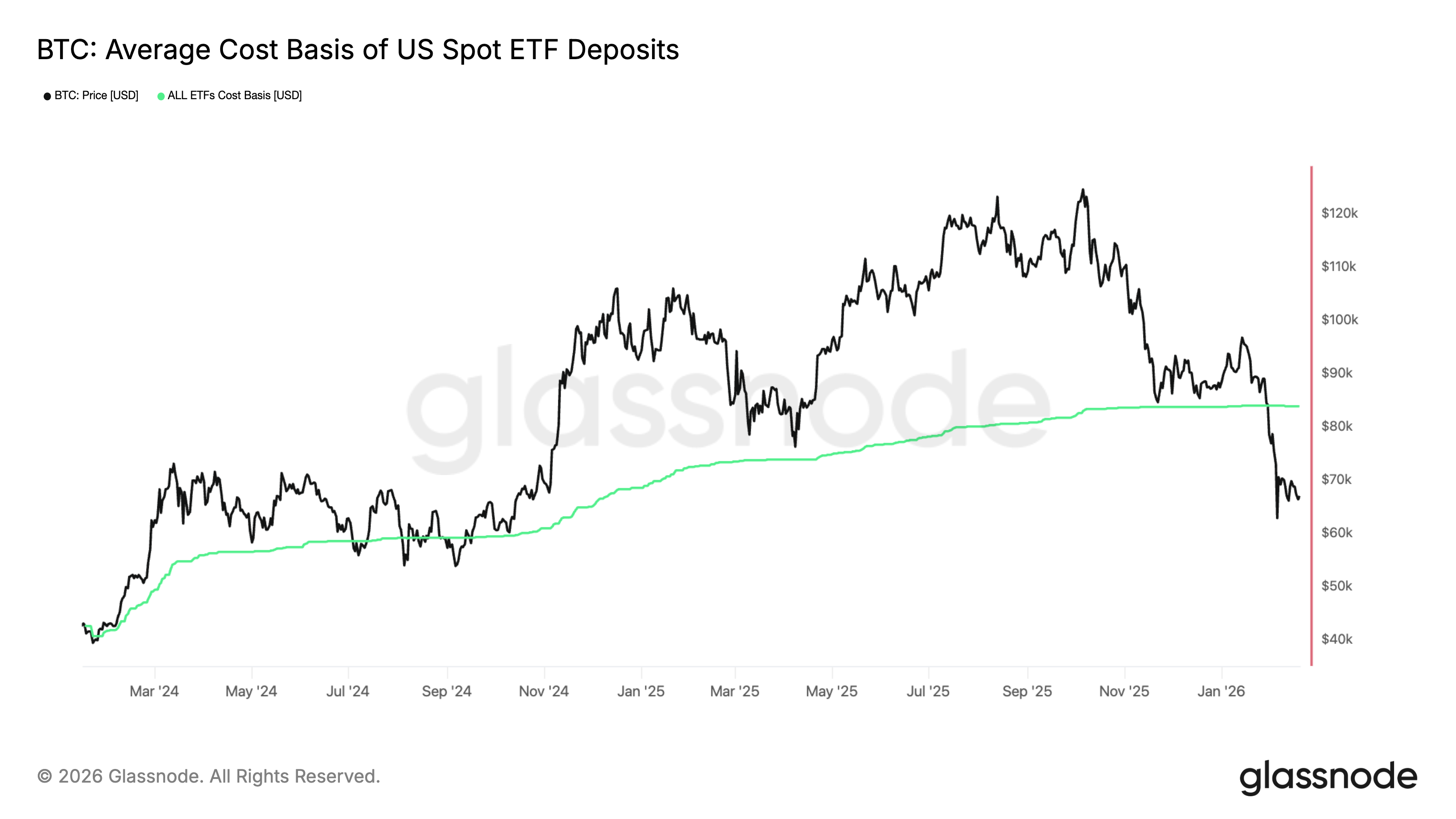
The strain extends beyond ETF outflows and into mounting unrealized losses. According to Glassnode, the average entry price for US spot Bitcoin ETF investors stands at approximately $83,980 per BTC.
With Bitcoin trading at $67,349 at the time of writing, this cohort is currently sitting on paper losses of roughly 20%.
Meanwhile, the outflows are not isolated to Bitcoin. BeInCrypto reported $173 million exited digital asset funds last week. This marked the fourth consecutive week of redemptions, totaling $3.7 billion for the period.
Bitcoin ETF Net Inflows Still at $53 Billion Despite Recent Outflows
Despite the pessimism, some analysts continue to emphasize the longer-term picture. Bloomberg senior ETF analyst Eric Balchunas noted that cumulative net inflows into Bitcoin ETFs still stand at roughly $53 billion, down from a peak of over $63 billion in October 2025, even after recent outflows.
“Our (more bullish than most of our peers) prediction was $5-15b in first year. This is imp context to consider when looking/writing about the $8b in outflows since 45% decline and/or the relationship bt btc and Wall street, which has been overwhelmingly positive,” he added.
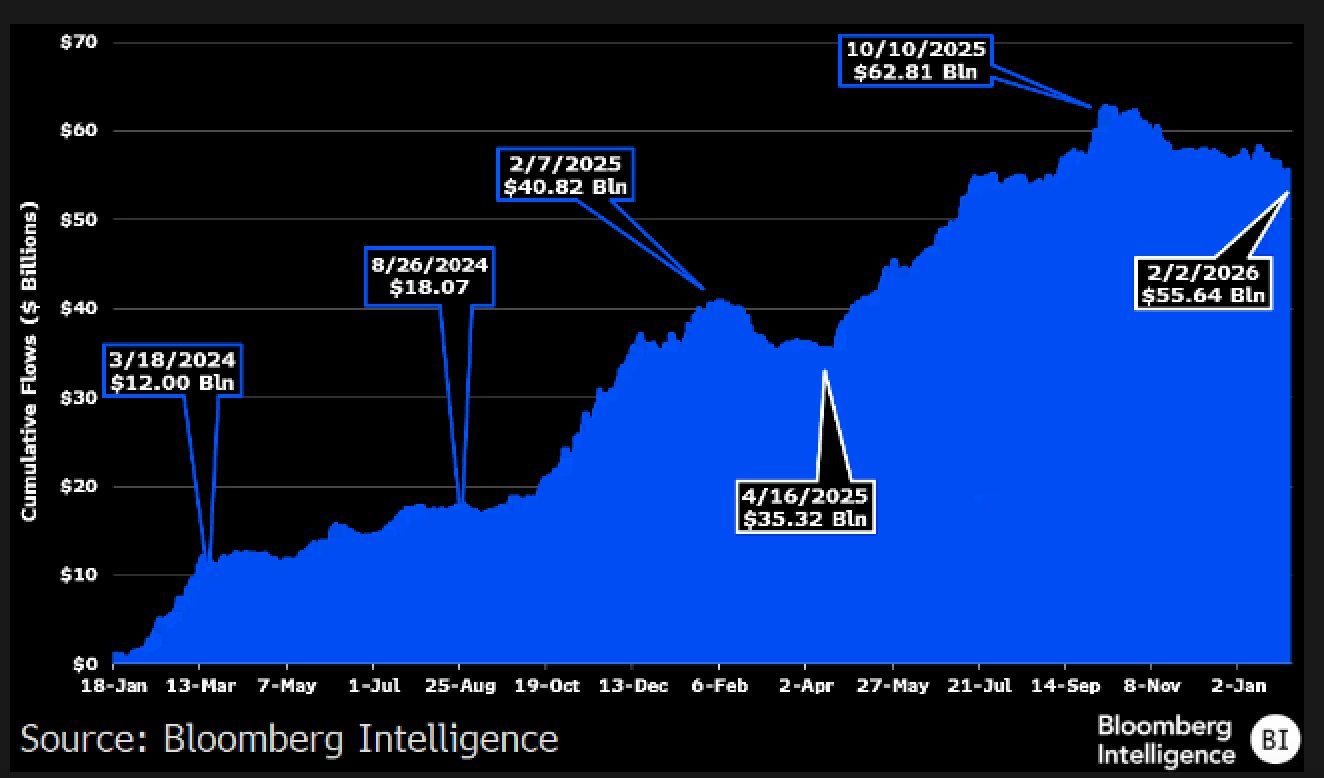
Taken together, the data suggest the current retracement reflects cyclical risk reduction rather than a structural reversal. ETF flows have amplified both upside and downside moves, embedding Bitcoin more deeply into traditional capital markets dynamics.
While short-term pressure may persist amid broader macro uncertainty, the scale and speed of institutional adoption since launch indicate that Bitcoin’s integration into Wall Street portfolios remains intact.


Metaplanet Chief Executive Simon Gerovich has rejected claims that the company lacks transparency in its Bitcoin investment strategy, following criticism shared on X.
Summary
- Metaplanet CEO Simon Gerovich denied claims that the company hides Bitcoin purchases, saying all transactions and wallet addresses are publicly disclosed.
- He defended the firm’s options strategy and financial reporting, arguing they reduce costs and reflect long-term holdings rather than short-term speculation.
- Management re-affirmed its commitment to Bitcoin accumulation while addressing concerns over borrowing, profits, and shareholder funding.
In a detailed public response, Gerovich addressed allegations that Metaplanet failed to disclose purchases, mismanaged options trading, and withheld key financial information. He said the claims were misleading and ignored data already available to shareholders.
The comments came after an anonymous post accused the company of hiding losses and buying Bitcoin at market peaks using shareholder funds.
CEO responds to disclosure and trading claims
Gerovich said Metaplanet has consistently announced all Bitcoin (BTC) purchases when they were made. He added that the company maintains a public dashboard showing wallet addresses and holdings in real time.
According to him, four Bitcoin purchases made in September were disclosed promptly, even though prices were near local highs at the time. He said the company’s strategy does not focus on short-term market timing, but on long-term accumulation.
He also pushed back against criticism of the firm’s options activity. Gerovich explained that selling put options is meant to lower the effective cost of acquiring Bitcoin through premium income.
As an example, he said selling a put at $80,000 with a $10,000 premium would reduce the effective purchase price to $70,000. He argued that this approach benefited shareholders during periods of high volatility.
The CEO said this strategy helped raise Bitcoin per share by more than 500% in 2025, which remains the company’s main performance indicator.
Financial results, borrowing, and shareholder concerns
Gerovich also addressed concerns about Metaplanet’s financial statements. He said net profit figures do not accurately reflect the performance of a Bitcoin-focused treasury company, due to unrealized valuation changes.
He pointed instead to operating profit, which rose sharply year over year, as evidence that the business remains healthy. Losses, he said, were mainly accounting adjustments on long-term Bitcoin holdings that the company does not plan to sell.
On borrowing practices, Gerovich said Metaplanet disclosed its credit facility, drawdowns, and collateral terms when they occurred. However, he noted that lender identities and exact interest rates were withheld at the counterparty’s request.
He added that the terms were favorable and fully approved under disclosure rules.
The CEO also responded to claims that the firm relies solely on shareholder funding. He said he is a major shareholder and has invested personal funds in the company. He pointed to the hotel business, which recorded solid revenue and profit in 2025, as proof that Metaplanet still operates outside crypto.
Gerovich concluded by saying he remains open to direct questions from investors and will continue publishing detailed updates on the company’s activities.
US spot Bitcoin exchange-traded funds (ETFs) may be seeing heavy outflows lately, but the broader picture tells a different story.
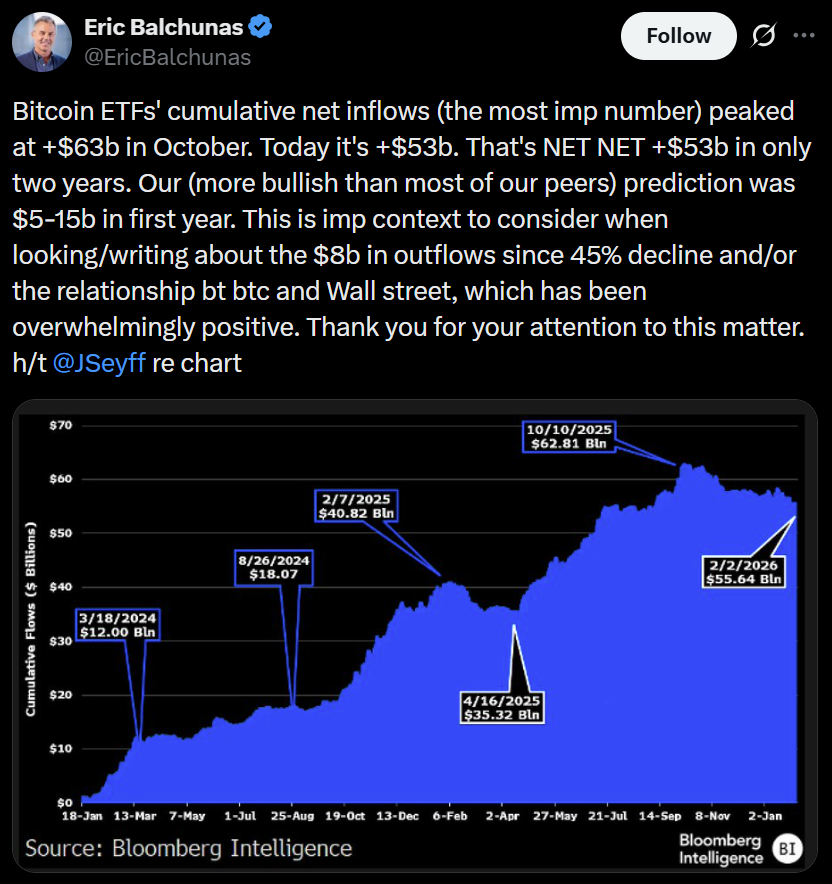
According to Bloomberg ETF analyst Eric Balchunas, cumulative net inflows into Bitcoin (BTC) ETFs peaked at $63 billion in October and now stand at about $53 billion, even after months of redemptions.
“That’s NET NET +$53b in only two years,” Balchunas wrote on X, sharing data compiled by fellow analyst James Seyffart.
The figure far exceeds Bloomberg’s early projections, which had called for inflows of $5 billion to $15 billion over that time frame.
In other words, recent withdrawals haven’t erased the bigger success story. Despite Bitcoin’s roughly 50% pullback from its highs, institutional money hasn’t fled at the same pace, suggesting many investors are holding for the long term rather than panic selling.

The US spot Bitcoin ETFs were approved in early 2024 and quickly became a dominant force in the market. Bitcoin went on to hit new all-time highs ahead of its April 2024 halving event, breaking historical trends, with ETF accumulation accelerating through 2025 and peaking in October as prices surged past $126,000.
The launches are widely considered among the most successful in US ETF history. BlackRock’s iShares Bitcoin Trust, in particular, became the fastest ETF ever to surpass $70 billion in assets, reaching the milestone in under a year.
Related: BlackRock sees record quarter for iShares ETFs as Bitcoin, Ether demand surges
Bitcoin faces an uncertain 2026 as cycle debate intensifies
To be sure, 2026 is shaping up to be a challenging year for Bitcoin and the broader digital asset market, following a renewed sell-off in late January and early February that sent the biggest cryptocurrency to about $60,000.
Investor sentiment remains fragile, prompting some analysts to argue that the latest bull market, consistent with Bitcoin’s historical four-year cycle, may have run its course.
Others contend the cycle is simply evolving. They argue that a longer business cycle and changing macro conditions could be stretching Bitcoin’s traditional rhythm rather than ending it.
Bitwise analysts Matt Hougan and Ryan Rasmussen go further, suggesting Bitcoin may be breaking from its long-standing four-year pattern altogether due to the growing influence of institutional capital.
“The wave of institutional capital that began entering the space in 2024 is likely to accelerate in 2026,” the analysts said, pointing to expanded access on major wealth platforms such as Morgan Stanley and Merrill Lynch.

Despite rapid institutional adoption through spot ETFs, Bitcoin appeared to lose retail attention in 2025 as investors gravitated toward other high-growth themes, according to data from crypto market maker Wintermute.
Related: Bitcoin mining’s 2026 reckoning: AI pivots, margin pressure and a fight to survive


ProShares has launched a new money market exchange-traded fund designed to help stablecoin issuers manage regulatory-compliant reserves backed by short-term U.S. Treasuries.
Summary
- ProShares has introduced the IQMM ETF to meet reserve rules for stablecoin issuers under the GENIUS Act framework.
- The fund invests only in short-term U.S. government securities and offers intraday trading and same-day settlement.
- The product reflects growing ties between traditional asset managers and the digital asset sector.
The company said in a Feb. 19 statement that the ProShares GENIUS Money Market ETF, trading under the ticker IQMM, is built to meet reserve rules under the GENIUS Act. The fund invests only in short-term U.S. Treasury securities and is designed to serve as a low-risk cash management option.
ProShares described IQMM as a conservative product for institutions, financial advisers, and individual investors. A key target group is companies that issue dollar-backed stablecoins and need compliant ways to manage large reserve balances.
Focus on stablecoin reserve management
IQMM holds only short-term government-backed securities, including Treasury bills and related instruments. This structure allows the fund to qualify as eligible backing for payment stablecoins.
Under current U.S. rules, stablecoin issuers must maintain one-to-one reserves in safe and liquid assets. These requirements have increased demand for products that combine regulatory compliance with operational flexibility.
The ETF allows investors to trade throughout the day and settle transactions on the same day. Weekly income distributions are planned, giving holders a steady return on idle funds.
IQMM also uses a floating net asset value and dual NAV options. These features are intended to help institutions move large cash positions without disrupting daily operations.
ProShares said the fund carries a net expense ratio of 0.15%. While retail investors can access the product, the main focus remains on firms managing large reserve pools. Industry estimates suggest stablecoin issuers held more than $150 billion in U.S. Treasuries by late 2025.
“We believe that IQMM will be an attractive cash management alternative for institutional investors, including stablecoin treasuries,” said ProShares chief executive Michael L. Sapir.
Traditional finance deepens its crypto ties
The launch reflects closer links between traditional asset managers and the digital asset industry, as regulators demand higher standards for stablecoin backing.
With IQMM, ProShares is offering a ready-made option for companies that prefer not to manage Treasury portfolios on their own. The ETF structure allows issuers to meet reserve rules while relying on familiar market infrastructure.
Analysts say such products could make compliance easier for crypto firms entering more regulated environments. Instead of building internal treasury operations, issuers can place reserves in approved funds with clear reporting and oversight.
Some market observers, however, note that heavy redemptions during periods of stress could put pressure on money market ETFs tied to stablecoin activity. Managing liquidity during volatile conditions will remain an important test.
ProShares manages more than $95 billion across its ETF and mutual fund platforms. In recent years, the firm has expanded into crypto-linked, income-focused, and tactical investment strategies.
US-based exchange-traded funds issuer ProShares has launched a money market ETF designed to qualify as an eligible reserve asset under the GENIUS Act, positioning it for potential use by stablecoin issuers.
The ProShares GENIUS Money Market ETF, trading under the ticker IQMM, invests exclusively in short-term US Treasurys. Unlike conventional government money market funds, it uses a floating net asset value (NAV) based on market pricing and trades intraday on an exchange.
According to an announcement on Wednesday, the structure includes same-day settlement and dual NAV features designed for institutional reserve management.
The prospectus adds that because the portfolio is limited to reserve-eligible assets under the GENIUS Act, the fund’s yield may be lower than that of money market funds with broader mandates. It also says that shares are expected to be held primarily by one or more stablecoin issuers backing outstanding tokens.
The prospectus further warns that future rulemaking under the GENIUS Act or other US legislation could affect how the ETF may be used as a reserve vehicle.
The US GENIUS Act, passed in July 2025, establishes federal standards for payment stablecoin reserves, including requirements that backing assets be held in high-quality, short-duration instruments such as US Treasurys.
Bethesda, Maryland-based ProShares was founded in 2006, and manages more than $95 billion in assets across its ETF and mutual funds, according to the company.
Related: Ether bulls target $2.5K as staking ETF launch, RWA growth fuel optimism
New SUI staking ETFs launch as Bitcoin funds post weekly outflows
Several asset managers rolled out new crypto ETFs this week, including staking-focused SUI (SUI) products.
On Wednesday, Canary Capital Group launched the Canary Staked SUI ETF on Nasdaq under the ticker SUIS, offering exposure to the spot price of SUI while participating in the Sui Network’s proof-of-stake validation process to generate additional token rewards reflected in the fund’s net asset value.
According to data from Nasdaq.com, the ETF was trading between $23.42 and $23.71 on Thursday, with 3,633 shares changing hands at the time of writing. The ETF closed its first day of trading on Wednesday at $24.17 after opening at $25.00 a share.
The same day, Grayscale Investments said its Sui Staking ETF began trading on NYSE Arca under the ticker GSUI, offering exposure to SUI and reflecting staking rewards generated through participation in the Sui network.
SUI is the native token of the Sui Network, a layer-1 blockchain built by former Meta Libra engineers to support high-throughput, low-cost applications across decentralized finance, digital marketplaces and gaming.
The new alt-coin ETFs launched as spot Bitcoin ETFs remained under pressure this week, extending their run of net outflows.
US-listed products recorded $133.3 million in net redemptions on Wednesday, bringing weekly withdrawals at that point to $238 million, according to SoSoValue data. BlackRock’s iShares Bitcoin Trust led the declines, with $84.2 million exiting the fund.
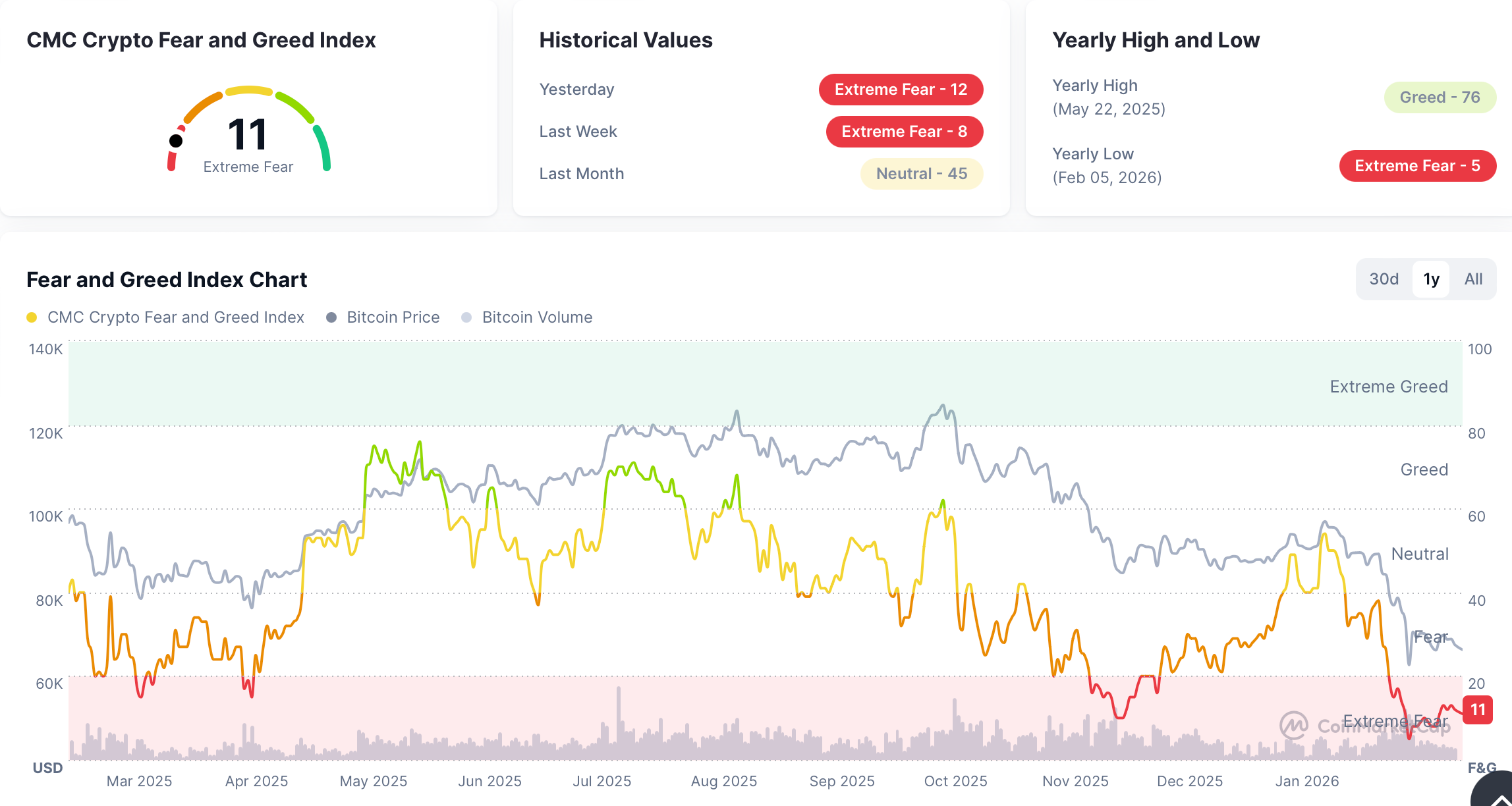
CoinMarketCap’s Crypto Fear and Greed Index remains in extreme fear at 11 out of 100, underscoring persistently weak sentiment across digital asset markets.

Magazine: Bitcoin may take 7 years to upgrade to post-quantum: BIP-360 co-author


Decentralized perpetual futures exchange Hyperliquid has launched a new advocacy group in Washington to push for clearer rules around decentralized finance in Congress.
Summary
- Hyperliquid launched the Hyperliquid Policy Center in Washington to advocate for clearer regulations governing decentralized finance.
- HPC will focus on perpetual derivatives and blockchain-based financial infrastructure.
The Hyperliquid Policy Center will be “dedicated to advancing a clear, regulated path for decentralized finance to thrive in the United States,” according to a Feb. 18 announcement.
It will do this by producing “rigorous technical research” and “practical regulatory frameworks” for defi with a special focus on the derivatives market and blockchain-based financial infrastructure.
HPC has selected crypto policy veteran Jake Chervinsky to lead the organization. Chervinsky has a long track record in digital asset regulation and securities litigation, and has previously served as Chief Legal Officer at Variant and Chief Policy Officer at the Blockchain Association, as well as General Counsel at Compound Labs.
“U.S. financial regulations weren’t written for decentralized tech like Hyperliquid,” Chervinsky said in an X post, adding that “HPC will add expertise in perpetual derivatives, decentralized markets, and other technical topics to the conversation in Washington.”
The Hyper Foundation, an independent body supporting the growth of the Hyperliquid ecosystem, has pledged 1 million Hyperliquid tokens to fund the launch of the Hyperliquid Policy Centre.
As the industry matures, the traditional one-size-fits-all approach to blockchain advocacy is being replaced by surgical, sector-specific lobbying.
Last year, top Ethereum protocols, including Aave, Uniswap, and Lido, among others, came together to form the Ethereum Protocol Advocacy Alliance, a joint advocacy effort to advance global policy change.
More recently, the Digital Chamber launched the Prediction Markets Working Group in a bid to protect and formalize the legal status of event-based contracts in the United States by reinforcing the Commodity Futures Trading Commission as the exclusive regulator for prediction markets.
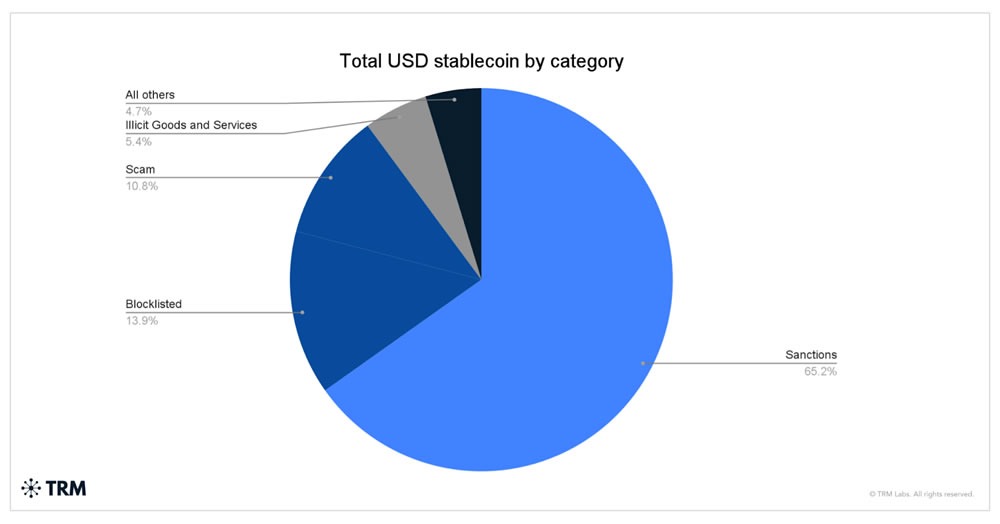
Illicit entities received around $141 billion via stablecoins in 2025, the highest level observed in the last five years, says blockchain analytics firm TRM Labs.
TRM said in a report released on Tuesday that the increase doesn’t reflect a broader growth in crypto-enabled crime, but does show a “deeper reliance on stablecoins within specific activity types where they offer clear operational advantages.”
Stablecoins have been particularly used in sanctions-linked networks and large-scale money movement services, it said.
Sanctions-related activity accounted for 86% of all illicit crypto flows in 2025. Of the $141 billion in stablecoin flows, around half, or $72 billion, was linked specifically to the Russian ruble-pegged token A7A5, “whose activity is almost entirely concentrated within sanctions-linked ecosystems,” TRM said.
Russian-linked networks, such as one called A7, intersect with other state-linked ecosystems, including entities tied to China, Iran, North Korea, and Venezuela, “underscoring how stablecoins have become a connective infrastructure for sanctioned actors seeking to move value outside traditional financial controls,” TRM stated.

Guarantee marketplaces exclusively on stablecoins
Comparatively, scams, ransomware, and hacking activity make more selective use of stablecoins, often favoring Bitcoin (BTC) or other crypto assets before using stablecoins later in the laundering process.
The report also noted that categories such as illicit goods and services and human trafficking showed “near-total stablecoin usage,” suggesting these markets “prioritize payment certainty and liquidity over price appreciation.”
Volume on guarantee marketplaces like Huione surged to over $17 billion by late 2025, predominantly in stablecoins.
“The fact that roughly 99% of this volume is denominated in stablecoins reinforces the role these services play as laundering infrastructure, not speculative venues,” they stated.
Related: Crypto launderers are turning away from centralized exchanges: Chainalysis
Chainalysis reported earlier in February that crypto flows to suspected human trafficking networks increased 85% year over year in 2025. International escort services and prostitution networks operated almost exclusively using stablecoins, they noted.
TRM Labs reported that total stablecoin transaction volume exceeded $1 trillion on multiple occasions in 2025.
Approximating this over a year yields around $12 trillion, meaning illicit use accounts for about 1% of the total.
Compared with the United Nations estimate, the amount of illicit money laundered globally in one year is 2% to 5% of global GDP, or around $800 billion to $2 trillion.
Magazine: Chinese New Year boosts interest, TradFi buying crypto exchanges: Asia Express
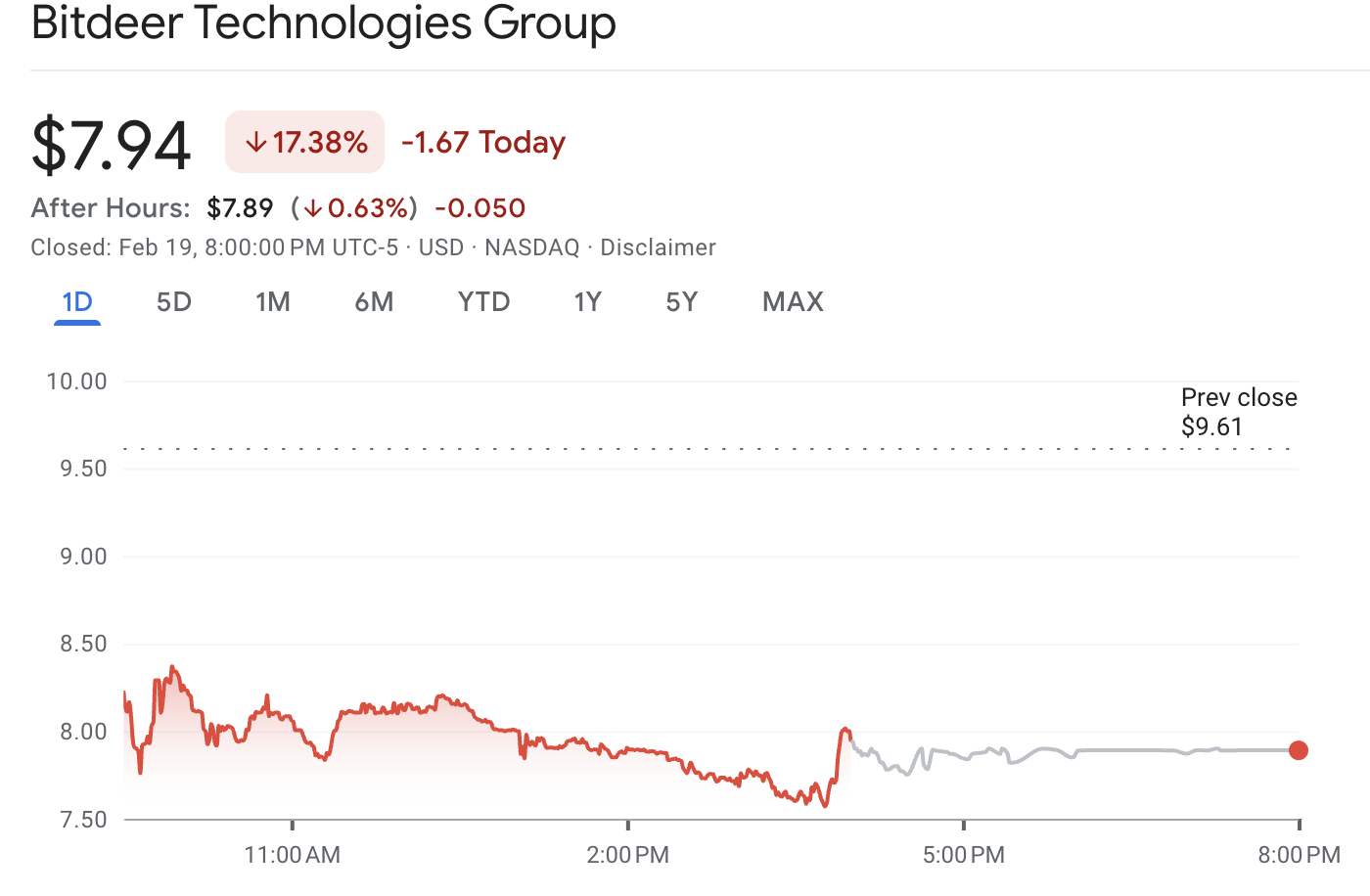
Shares in Bitdeer Technologies Group took a hit on Thursday after the Bitcoin mining and artificial intelligence infrastructure firm announced a $300 million convertible senior note offering.
Bitdeer said that it intends to offer a “principal amount” of $300 million in convertible senior notes with an option for purchasers to buy an additional $45 million in a private placement.
It is the second convertible note offering from the firm, following a $150 million offering in April 2024, which also caused an 18% stock slump.
Convertible senior notes are a loan that investors can convert into shares of the issuing company’s common stock, and holders of these notes have priority over other debt holders in the event of the company’s bankruptcy.
The new notes, due to settle in 2032, are senior unsecured obligations with interest paid semiannually, and can be converted to cash, shares, or a combination of both.
Bitdeer intends to use the proceeds for datacenter expansion, AI cloud growth, crypto mining rig development, and for general corporate purposes.
The company is headquartered in Singapore with datacenters in the US, Norway, and Bhutan.
Bitdeer stock tanks 17% on latest offering
Shares in Bitdeer (BTDR) ended trading on Thursday down 17.38% to $7.94 and saw a slight fall in after-hours trading to $7.89.
Company stock is currently down 29% since the beginning of the year and almost 70% since its January 2025 all-time high of around $26.

Related: Strategy to equitize convertible debt over 3-6 years: Saylor
Convertible debt often puts pressure on shares as investors factor in the risk of future dilution, as in the event the stock rises, noteholders may convert their debt into equity, increasing the share count.
Capped call transactions to offset dilution
Bitdeer is also running a concurrent registered direct share offering tied to a plan to repurchase a portion of its existing convertible notes due in 2029.
Bitdeer plans to use “capped call transactions,” which are derivatives used when issuing convertible notes designed to offset some dilution, but that did not prevent its stock from sliding.
Magazine: Chinese New Year boosts interest, TradFi buying crypto exchanges: Asia Express

Neel Kashkari, the president of the US Federal Reserve Bank of Minneapolis, says that crypto is “utterly useless” in comparison to artificial intelligence and took a swipe at stablecoins, saying they don’t have many uses.
Speaking at the 2026 Midwest Economic Outlook summit on Thursday, Kashkari drew comparisons between AI and crypto, saying the latter “has been around for more than a decade, and it’s utterly useless.”
“AI has not been around very long, and people are using it every day,” he added. “This is demonstrating to me that this thing is real and it has real long-term potential for the US economy as opposed to crypto.”

Kashkari said that the way the crypto industry has framed how stablecoins can be used is “a buzzword salad.”
“I always ask people: What can I do with the stablecoin that I can’t do with Venmo today?” he said. “I could send any one of you $5 with Venmo, or PayPal, or Zelle, so what is it that this magical stablecoin can do? Then I get a buzzword salad answer, blah blah blah, tokenized deposits.”
Kashkari took specific aim at the notion of stablecoins being used for remittances, as he highlighted that this mainly serves people outside the US, and argued that its not as cheap as people think.
Related: SEC leaders seek to clarify how tokenized securities interact with existing regulation
He used the example of his father-in-law, based in the Philippines, arguing that while he could receive stablecoins quickly, he still needs to pay fees to convert them into the local currency to actually transact with them.
“If everybody in the world uses the same currency or the same payment platform. All these frictions go away. But all these other countries are not going to abandon their own monetary policy [for stablecoins],” he said.
“When it comes to anything about crypto or stablecoins, ask the most basic questions and don’t settle for word salad nonsense answers,” he said.
Magazine: Bitcoin may take 7 years to upgrade to post-quantum: BIP-360 co-author

Yaya Mayweather, Mellow Rackz Argue As Jazlyn Shows New Ring

Can a rhythm be owned? What a reggaeton lawsuit reveals about how copyright misunderstands music
Australia stocks lower at close of trade; S&P/ASX 200 down 0.05%

Smart energy pays enters the US market, targeting scalable financial infrastructure

Why Israel is blocking foreign journalists from entering

Software stocks enter bear market on AI disruption fear with ServiceNow plunging 10%

BITCOIN: It’s Happening AGAIN (History Repeating)!!! – Bitcoin News Today, Ethereum & Altcoins

Ripple XRP $589+ CONFIRMED THIS YEAR WE WERE USING THE WRONG CALENDAR OMG WAIT WHAT!

5 Aturan Penting Untuk Bebas Financial. #nasehat #edukasi #keuangan
-

 Video4 days ago
Bitcoin: We’re Entering The Most Dangerous Phase
-

 Tech5 days ago
Luxman Enters Its Second Century with the D-100 SACD Player and L-100 Integrated Amplifier
-

 Crypto World3 days ago
Can XRP Price Successfully Register a 33% Breakout Past $2?
-

 Sports3 days ago
GB's semi-final hopes hang by thread after loss to Switzerland
-

 Video7 days ago
The Final Warning: XRP Is Entering The Chaos Zone
-

 Video3 hours ago
XRP News: XRP Just Entered a New Phase (Almost Nobody Noticed)
-
 Tech3 days ago
The Music Industry Enters Its Less-Is-More Era
-

 Business2 days ago
Infosys Limited (INFY) Discusses Tech Transitions and the Unique Aspects of the AI Era Transcript
-

 Entertainment2 days ago
Kunal Nayyar’s Secret Acts Of Kindness Sparks Online Discussion
-

 Video3 days ago
Financial Statement Analysis | Complete Chapter Revision in 10 Minutes | Class 12 Board exam 2026
-

 Tech2 days ago
Retro Rover: LT6502 Laptop Packs 8-Bit Power On The Go
-

 Crypto World6 days ago
Bhutan’s Bitcoin sales enter third straight week with $6.7M BTC offload
-
 Sports1 day ago
Clearing the boundary, crossing into history: J&K end 67-year wait, enter maiden Ranji Trophy final | Cricket News
-

 Entertainment1 day ago
Dolores Catania Blasts Rob Rausch For Turning On ‘Housewives’ On ‘Traitors’
-

 Crypto World7 days ago
Kalshi enters $9B sports insurance market with new brokerage deal
-

 Business2 days ago
Tesla avoids California suspension after ending ‘autopilot’ marketing
-
 NewsBeat5 days ago
The strange Cambridgeshire cemetery that forbade church rectors from entering
-

 Crypto World1 day ago
WLFI Crypto Surges Toward $0.12 as Whale Buys $2.75M Before Trump-Linked Forum
-
 NewsBeat5 days ago
Man dies after entering floodwater during police pursuit
-

 Crypto World8 hours ago
83% of Altcoins Enter Bear Trend as Liquidity Crunch Tightens Grip on Crypto Market