ArenaNet says Guild Wars 3’s ancient Orr setting will entice hardcore fans who ‘care deeply’ about the lore, but it also means ‘it’s the perfect time for new people to come join the Guild Wars franchise’
ArenaNet says Guild Wars 3‘s ancient Orr setting will interest longtime lore fans and newcomers
Studio head Colin Johanson says the game is “very much for our fans” who are invested in the game’s lore
He adds that the game is also for new players, and they won’t need to play the first two games to understand what’s going on
ArenaNet has confirmed that Guild Wars 3 takes place 1000 years before the first Guild Wars game in the ancient land of Orr, which it believes will interest both hardcore fans and new players.
Speaking at an exclusive preview TechRadar Gaming attended at Gamescom, where we saw a guided presentation exploring the game’s new momentum system, studio head Colin Johanson shared additional details about the game’s setting, where players are a Veil Warden.
Johanson explained that much of Guild Wars’ history and lore originates from ancient Orr, and he knows fans “care deeply” about it and have been asking ArenaNet for more, so it felt like a natural direction for the sequel.
Latest Videos FromTechRadar
Advertisement
“Some of the themes from Guild Wars 1 all tie back to moments in this timeline before the gods disappeared from the world,” he said. “In Guild Wars 2, the ruins of Orr are raised from the bottom of the ocean by a giant undead dragon, and players get to visit the remains of what Orr was 1000 years in the future, and players have been asking us for over a decade to see what Orr was like before the gods left, before it was destroyed, and so this is very much for our fans to give them something to get excited about.”
However, while Guild Wars‘ setting might seem lore-heavy, the studio head confirmed that “it’s also for new fans” and that newcomers won’t need to play the first two games to understand what’s going on.
“This period of time has about two pages of recorded history that we’ve ever released outside of the studio,” Johanson said. “We have a lot more internally that we haven’t shared, but our fans have only seen a tiny amount of info about what actually happened in this timeline and setting, which means it’s the perfect time for new people to come join the Guild Wars franchise because you don’t have to have played Guild Wars 1 or Guild Wars 2 to understand what’s going on in the story.”
Advertisement
He continued: “Everyone’s going to learn it all together, and if you’re a big Guild Wars fan, you’ll know what some of the species are and some of the characters or some of the locations. But for the most part, everybody is on equal footing.”
Sign up for breaking news, reviews, opinion, top tech deals, and more.
Guild Wars 3 doesn’t have a release date yet, but a beta is scheduled for Fall 2027. The game is launching on PC and PlayStation 5.
General Motors spent the past several years explaining why Apple CarPlay and Android Auto needed to disappear from its future vehicles. Now the company is introducing a new infotainment architecture in the 2027 Chevrolet Silverado 1500 and GMC Sierra 1500 that does something rather revolutionary: it gives customers GM’s native software and the smartphone interfaces they already like.
Imagine that.
The new interface integrates Apple CarPlay and Android Auto inside a large card alongside native functions such as trailering information and vehicle status. Drivers can use phone projection without abandoning the deeper vehicle controls GM has been trying to protect. GM calls it the “best of both worlds,” which is suspiciously close to what customers were asking for before this entire argument started.
Related Reading:
So Did GM Reverse Course?
Partially.
Advertisement
In 2023, GM announced that new EVs would begin dropping CarPlay and Android Auto, starting with the Chevrolet Blazer EV. The company argued that tighter integration between navigation, charging, battery management and other vehicle systems would produce a better experience than bouncing between GM software and a projected phone interface. Reuters also noted that controlling the platform could give GM greater access to vehicle and charging data.
The strategy expanded rhetorically in 2025. CEO Mary Barra said GM expected smartphone projection eventually to disappear as major new models moved to the company’s centralized software architecture, although GM subsequently clarified that gas-powered vehicles would retain CarPlay and Android Auto “for the foreseeable future.”
Now GM is launching its next-generation interface on two of its most important redesigned vehicles and CarPlay is still sitting right there.
That qualifies as a meaningful change in direction, even if GM has not announced that CarPlay is returning across its EV lineup.
Advertisement
Why Did GM Change Its Mind?
GM is not being particularly mysterious about this part.
Executive Director of Software Product Management Michael Wahlstrom says infotainment ranks among the top three purchase drivers for new-car buyers, while GM’s customer research found people struggling with buried controls and too many steps. More revealingly, Wahlstrom says customers “really like CarPlay and Android Auto” and wanted their simplicity while retaining quick access to vehicle functions.
The stupid part of GM’s original strategy was not wanting better native software. EV routing, battery preconditioning, Super Cruise, trailering and vehicle diagnostics all benefit from deep integration.
Advertisement. Scroll to continue reading.
Advertisement
The mistake was treating that integration as an either/or proposition.
The 2027 trucks demonstrate that GM can control the important vehicle functions while allowing CarPlay or Android Auto to coexist beside them. It apparently required several years of customer complaints to discover the technological concept known as “both.”
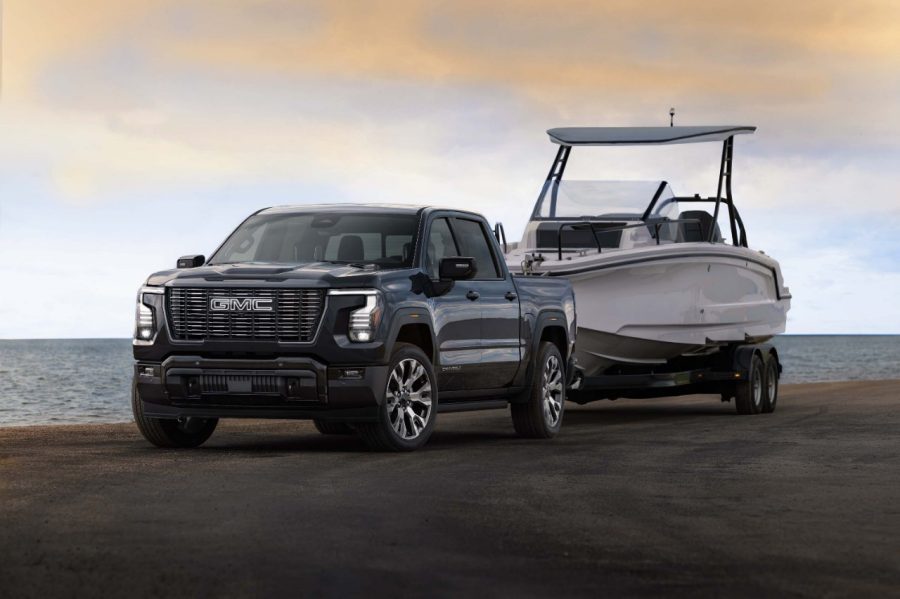
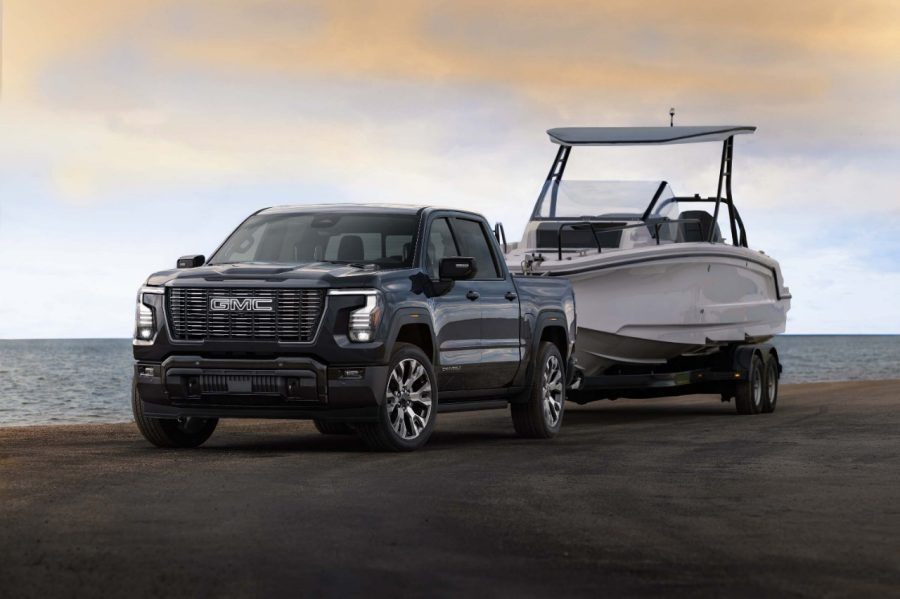
Photo by GM: 2027 GMC Sierra 1500 Denali Ultimate in Dark Ridge Metallic towing a boat. Exterior 3/4 shot. Preproduction model shown. Actual production model may vary.
Which GM Vehicles Get CarPlay?
The picture is now considerably messier than GM’s original strategy suggested.
Vehicle
Apple CarPlay / Android Auto
2027 Chevrolet Silverado 1500
Yes
2027 GMC Sierra 1500
Yes
2027 Cadillac Lyriq
Yes, wireless
2026 Chevrolet Equinox EV
No
2026 GMC Sierra EV
No
2026 Cadillac Escalade IQ
No
GM explicitly confirms CarPlay and Android Auto for the new Silverado and Sierra, while Cadillac’s current 2027 Lyriq specifications also list wireless Apple CarPlay and Android Auto alongside Google built-in.
Advertisement
Meanwhile, Chevrolet explicitly says the 2026 Equinox EV does not support either platform, GMC says the same about the Sierra EV, and Cadillac confirms that the Escalade IQ relies on Google built-in instead.
Existing GM vehicles that already support CarPlay are not scheduled to lose it through some sinister overnight software update.
The Bottom Line
GM was correct that modern vehicles need deeply integrated software. Where it went sideways was assuming customers should surrender something they already liked in order to get it.
The redesigned 2027 Silverado and Sierra offer the far more sensible solution: let GM handle Super Cruise, towing, cameras, vehicle status and other native functions while CarPlay or Android Auto handles the phone experience. GM gets its software platform; customers keep their apps, messages, music and familiar navigation.
Advertisement
This is not yet a full surrender. Several GM EVs still lack smartphone projection, and the company has not announced a wholesale reversal of its EV policy.
But after years of insisting that the future required choosing between GM’s software and your phone, GM has built a system proving that choice was never necessary in the first place.
The new system will benefit professional multi-camera shoots for sports and more.
DJI
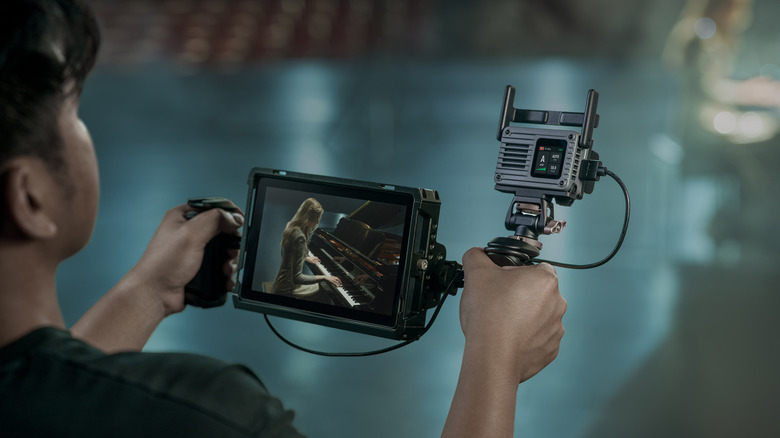
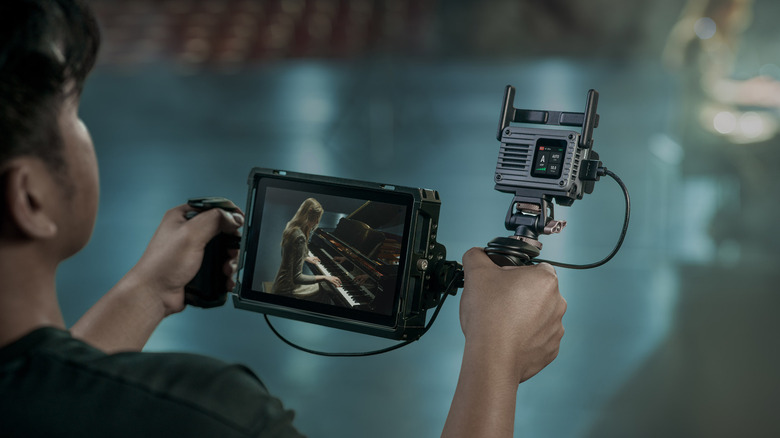
An underrated part of DJI’s success is in the area of video transmission, with the company’s drones and camera systems offering wireless video quality and range that rivals can’t match. Now, the Shenzhen-based company is significantly upping its game in the area of pro video with the its new SDR Transmission II system. It boosts both image quality and range, giving multi-camera productions more options in tricky environments.
Where the original SDR Transmission system was limited to 1080p video at a 20Mbps bitrate and range of 1.8 miles (3 km), the SDR Transmission II (“SDR” means “software defined radio”) in TX mode can send 4K 60 fps HDR video at 50Mbps to transceivers (RX mode) as far away as 2.5 miles (4 km). That means for pro productions, “a reliable link can be established in various environments from open stadiums to dense mountain forests, and through demanding car-to-car shots or challenging FPV drone work,” DJI said.
A single transceiver can connect to up to eight others with each supporting remote control. On top of providing monitoring for directors, producers and set personnel, it “lets camera operators and focus pullers remotely adjust settings and control the camera,” DJI said. For larger productions, it supports up to five transmitters and 40 receivers working simultaneously for complex multi-camera shoots.
Advertisement
Another key feature is the ability to tap to switch between camera feeds without the normal re-booting, disconnecting and searching required. Latency is as low as 35 milliseconds for more responsive commands for things like focus pulling and gimbal movement. Along with smartphone monitoring, it supports assist tools like LUTs, focus peaking and waveforms. It also supports PTP control to change functions like capture, aperture, shutter speed and ISO on compatible cameras.
Though this tech is professionally oriented, it uses the same foundational wireless tech as DJI’s OcuSync system for drones. It would be nice if DJI boosted OcuSync transmission to 4K 60p as well, as that would provide a better backup in case of on-board drone memory problems. The DJI SDR Transmission 2 transceivers start at €349 or £309, and you can a Combo two-pack for €629 (£559). There’s no US availability yet, likely due to a ban on certain DJI products.
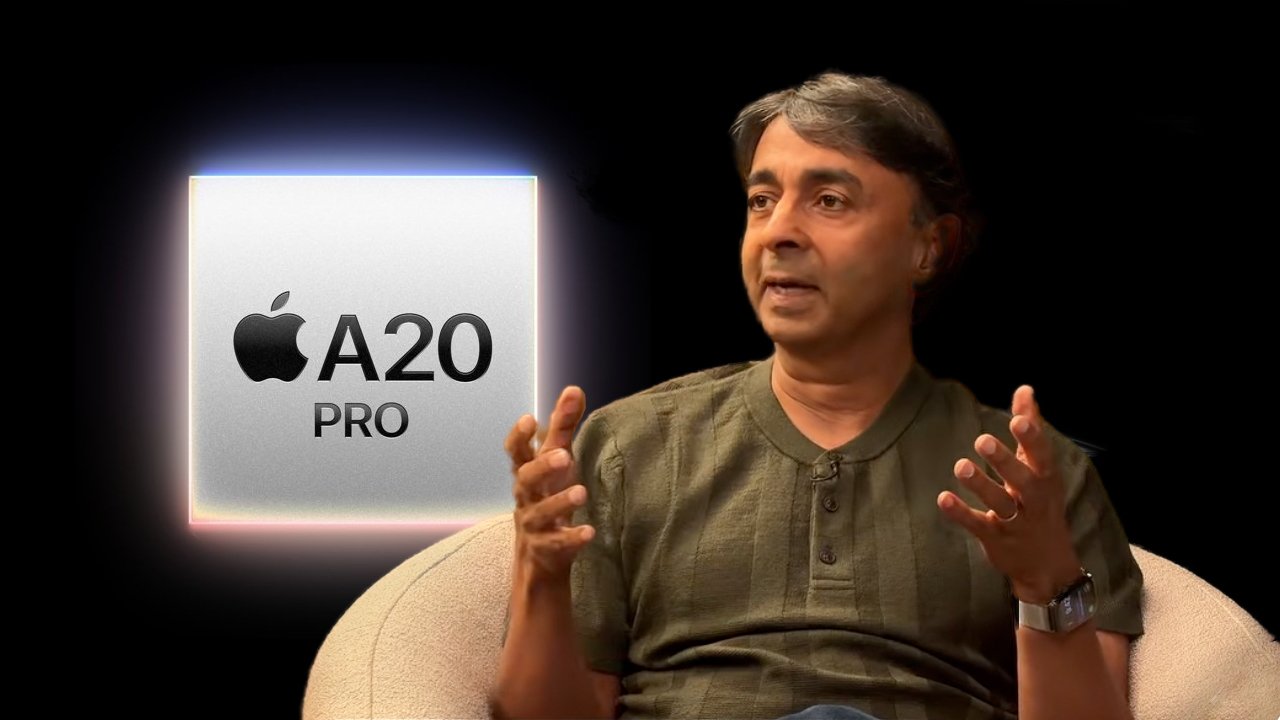
Apple executives have been talking in detail about the iPhone 18 Pro’s 2nm A20 Pro processor, but also how it was intentionally designed alongside so many other elements to provide greater speed and efficiency.
The A20 Pro processor in the iPhone 18 Pro, iPhone 18 Pro Max, and iPhone Duo is the most capable chip ever in any iPhone. Each generation is of course better than the last, but this is the first to be made to a 2-nanometer design, and the result is a 20% faster CPU and 40% faster GPU.
Apple chiefs, though, say that the 2nm processor is only part of what has been done to make the new iPhones perform better, stay cooler, and be better suited for AI work. Speaking on “The Circuit” podcast, Apple Silicon and product marketing chiefs Tom Boger, Kaiann Drance, and Sri Santhanam also detailed the side-mounted DRAM, the MCM-style packaging, and the increased neural engine count as key to the new processor.
But then even as they get into technical issues, they also step back to talk about how Apple benefits from doing everything itself.
Advertisement
“We’re not a merchant silicon vendor,” said Kaiann Drance, Vice President of iPhone Marketing. “You know, we’re really building the solutions for our own product experiences.”
What that means, according to each of these executives, is that Apple has the benefit of developing Systems on a Chip (SoC) alongside its whole hardware development effort.
“Sometimes when we build a new SoC, people talk about the process technology node, but it’s more than just that,” said Sri Santhanam, vice president of silicon engineering. “We optimise, obviously, with process in mind, but architecture, design, implementation, packaging, the entire system, the vertical stack, really is what makes our SoC shine.”
There was a difference with the 2nm process, though, as Santhanam said that its higher transistor density meant “we had some tailwind”. It let Apple double the neural engine, add extra GPU cores, and extra memory channels.
Advertisement
At the same time, the silicon team has the constraint of working within the physical dimensions of the iPhone and what this means for thermal issues. With the A20 Pro, Drance said that “we were able then to put the chip right on the vapor chamber to allow us to get the best sustained performance throughout.”
As part of the A20 Pro design, there were also heat benefits from moving DRAM from the top of the SOC to the side. This also helped connect it to the vapor chamber cooling system.
That move did, though, “increase the X/Y footprint of the device,” said Santhanam, “but we work closely with our system partners to make sure we could accommodate that in the main logic board design.”
Designing ahead
Naturally none of the Apple executives discussed future products, but they did talk about how they have to keep plans in mind. Drance described it as giving the processor headroom for future use cases in general, but also having to be more specific.
Advertisement
She said that they have to make decisions about, for instance, memory bandwidth, years in advance. That’s to enable technologies such as camera or AI features that they know will be coming, even if they can’t know when.
The speed and performance increase of A20 processor does back up Apple’s claims of benefiting from its long-standing efforts to develop hardware and software together. Moving from Intel to its own Apple Silicon has been key to this, and has shown huge performance benefits on the Mac as well.
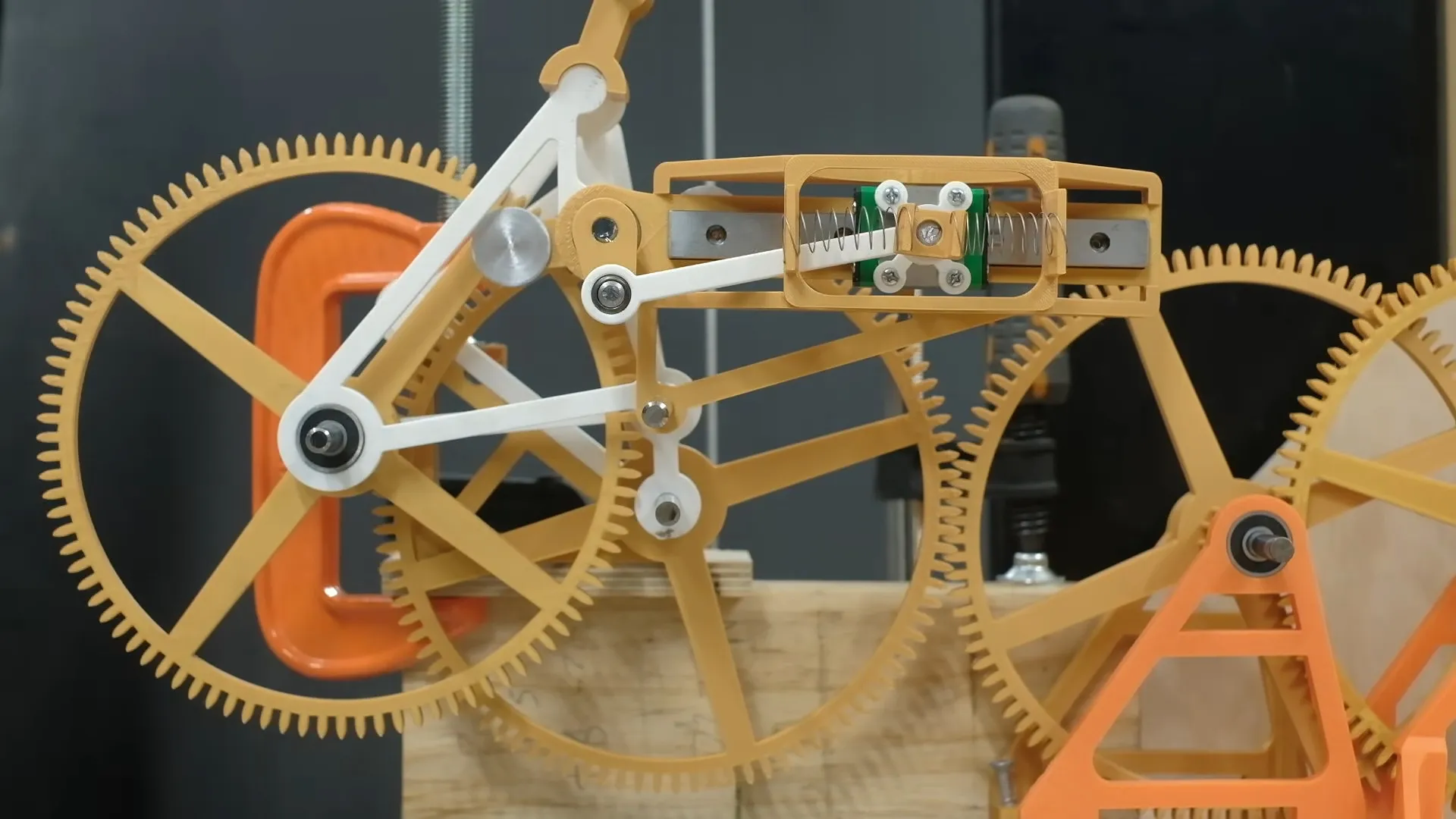
When it comes to clockwork, there is a spectrum — some people love the ticking, and some people hate it, while most fall into the broad middle of indifference. Once upon a time, Pope Alexander VII fell into the “hate it” category, and commissioned a silent timepiece from [Fratelli Campani] in 1656. Three hundred seventy years later, [Many Vices] sought out to re-create the mechanism in extruded plastic thanks to the efforts of watchmaker [Carlo G. Croce], who documented his brass recreation in this PDF file and his own videos.
While the archaeology of recreating the mechanism from old photos is interesting, the mechanism itself is the real showpiece. The secret, as you might be able to tell from the photographs, is an eccentric crank escapement that provides continuous movement rather than the traditional anchor escapement whose periodic movements creates the distinctive ‘tick’ and ‘tock’. [Many] tests both in his video so you can hear the difference and see how much power is wasted with the crank escapement, which doesn’t keep going very long.
We wonder if carefully tuning the flywheel he’s using to match the frequency of the swinging pendulum would help a little there. Likewise, his linear-rail-based spring pendulum modification — though it does look awesome and we’d love a train-themed clock using it — doesn’t come close to providing the runtime of traditional clockwork. That’s probably why the anchor escapement persisted for centuries, even if some people and Popes couldn’t stand the tick-tock.
I’d wager most American coffee-drinkers have sampled a Keurig brew. If you don’t already own one of the single-serve coffee makers, perhaps your aunt shared a cup during the holidays, or there’s one in the office break room. Intuitive to use, easy to maintain and long-lasting, the appliance offers terrific practicality. Simply pop in a pre-bought coffee pod, hit a button and watch a cup pour out.
Courtesy of The Milk Pod, such easy extraction now extends to dairy, too. Compatible with Keurig brewers, these single-serve capsules produce rich-textured milk with a single push. Impressively, the pods are shelf-stable for 15 months and don’t even require refrigeration. Currently available in three classic coffee flavors — plain, vanilla and caramel—they’re made with milk powder and natural ingredients. Rather than just hot milk, the dairy’s composition turns out frothy, yielding a latte-like consistency. It’s an intriguing addition to Keurig’s already expansive pod selection.
Coffee and milk, all at the press of a button
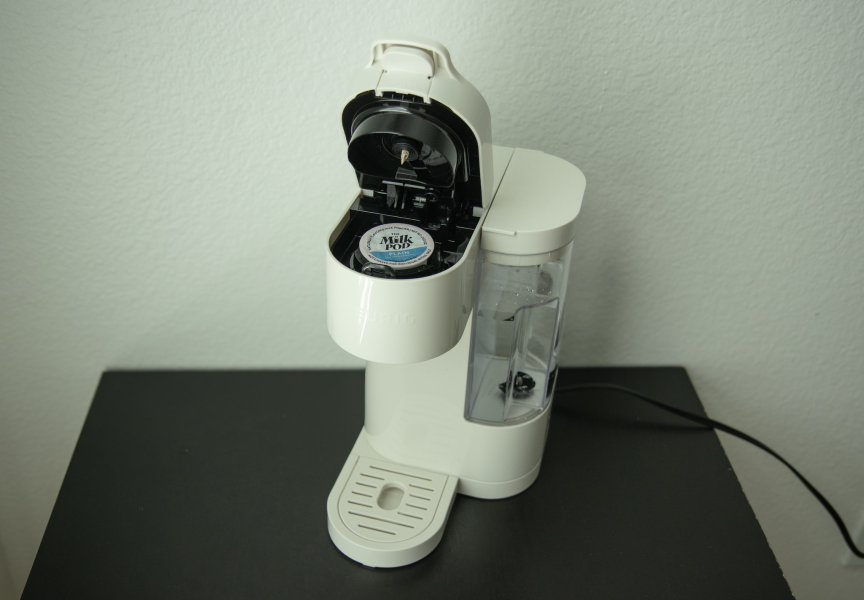
Milk Pods load in just like normal pods.Nikita Ephanov/CNET
Unlike a milk frother or steam wand, the pods require minimal instruction. They insert right into the K-Cup slot, no adjustment necessary. The Milk Pods entail no specialized setup; I was already sampling the dairy only minutes after opening the box.
As I brewed with Milk Pods one morning after the next, the initial ease continued. It’s recommended to brew the milk before the coffee, both to a six-ounce size, so the two liquids fit into a standard mug. As long as I didn’t accidentally press the wrong volume (my Keurig offers 6-, 8- and 10-ounce settings), I couldn’t make any mistakes.
Really, the only slight annoyance with the setup is the constant need to refill the water. My Keurig has a 30-ounce water tank, which means I need to top it up at half capacity. During only the second round of coffee, the brewer pinged me to take the reservoir to the sink, an upkeep that didn’t take much effort. Functionality-wise, the pods are remarkably easy. Pouring cold dairy out of the fridge is the easiest milk-integration technique. It’s hard to imagine a more consumer-friendly system.
Convenience is cool and all, but how do the pods taste?
Milk comes out hot and frothy, ready to be mixed with coffee.Nikita Ephanov/CNET
From dozens of seasonal K-Cups to various brand partnerships, Keurig capsules number in the hundreds. I sampled the Milk Pods with a generic brand of K-Cup from a local grocery store. Filled with dark-roasted coffee, the capsule brewed into a strong, lightly bitter-tasting brew – exactly the kind of flavor profile I’d dilute with milk. My chosen K-Cup wasn’t espresso-style, so the consistency resembled drip coffee.
Still, all three Milk Pods added a pleasant thickness to my Keurig coffee. The plain capsule lent the coffee a neutral creaminess, reminiscent of a latte, but nevertheless distinguishable from standard milk. The mouthfeel and taste reminded me of creamer, albeit with a more natural dairy character. Unlike the satisfying micro-bubbles in freshly steamed dairy, I picked up a smidge of powdery solids on my tongue. The cup wasn’t disappointing, but I still prefer the frothiness of fresh milk.
After you run a milk pod through the system, you simply load your coffee of choice.Nikita Ephanov/CNET
The bolder character of the flavored pods made the dehydrated downside less noticeable. I preferred the caramel of the two, which offered a complex nutty bitterness that paired well with my coffee. Sweet yet not saccharine, the pod reminded me of a well-made caramel candy. The vanilla capsule overpowered my coffee more, yielding a strong vanilla-syrup-like flavor. I could see this pod pairing better with other K-Cups, perhaps elevated even further in an iced latte. Overall, I found the Milk Pods pretty impressive for a shelf-stable product, but not quite cafe-quality.
In favor of shelf stability
Comparing the Milk Pods with fresh dairy reveals some differences, but you also have to consider convenience. The year-long durability, combined with no need for refrigeration, makes the pod worth stocking, even if it’s not a daily option.
Over several weeks of trialing the capsules, I left town and came back. The Milk Pods meant I didn’t need to worry about a carton left spoiling in the fridge. Plus, the morning after I returned, I didn’t need a bleary-eyed shopping run for my morning latte, either. I’d be happy to come across Milk Pods in a setting like an Airbnb or hotel. Given the self-contained ease of use, the pods align well with Keurig’s ecosystem. I could also see myself brewing the milk into a K-Cup of black tea or hot chocolate, making it a versatile Keurig option.
Advertisement
Milk Pods cost a dollar each, roughly the same as a coffee K-Cup. Nikita Ephanov/CNET
Thinking about cost
Consumed day to day, coffee costs add up. A hot latte from a cafe averages well over $5, and even home-brewing can dent the grocery budget. A K-Cup capsule and a Milk Pod cost $1 each, for an affordable $2 drink. Especially since you can buy a Keurig K-Mini machine for as little as $50, switching to this setup can save you money on coffee out in under a month. Plus, a Keurig requires minimal expertise, so you won’t need to learn how to make coffee.
Still, with a bit more effort, you can find better-priced coffee and milk options. On average, a gallon of milk retails for $4.30, with 21 six-ounce servings of dairy — that’s just over 20 cents per cup. You will need to steam the milk yourself. Handily, though, Keurig sells a $9.50 frother for the task. Fresh milk takes more effort — but to my taste, the flavor and texture are better. Not to mention, warming fresh dairy yourself lets you try out alternative milks as well as milks with varied fat compositions. Want a touch of sweetness in your cup? You can always grab a bottle of syrup and mix in a pump or two.
I wouldn’t switch to Keurig brewers specifically for this milk product, but Milk Pods are a convenient option and may be worth buying if you already use a Keurig. They’d also be handy to have on hand when you’ve run out of milk but are too bleary-eyed to make a morning run to the market.
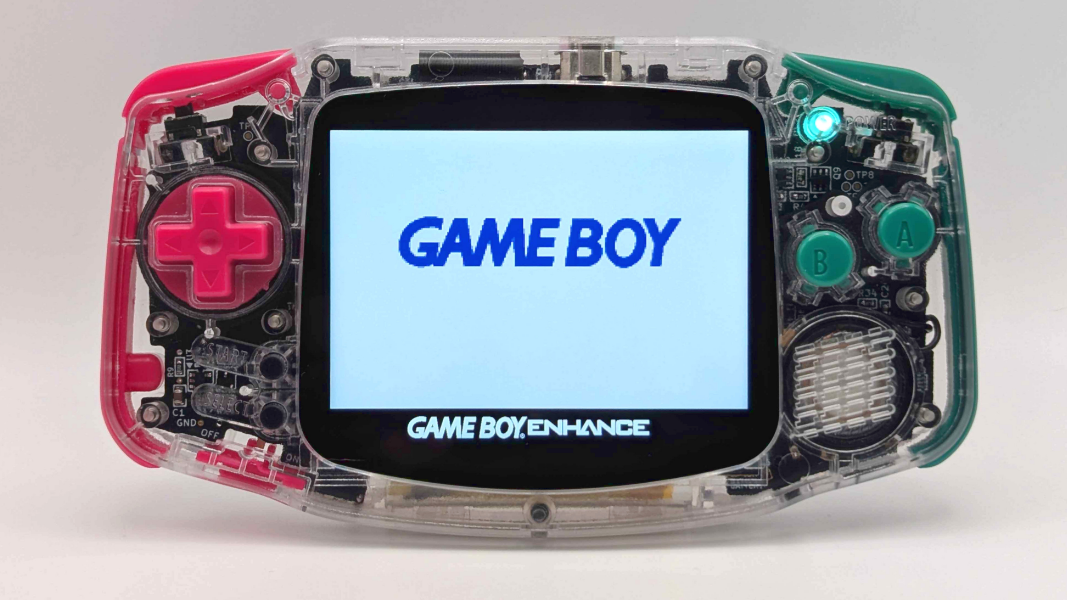
There are plenty of ways to mod an existing GBA to be better than the original, but this build recreates the console from the ground up. It’s basically a brand new motherboard that replaces the original entirely, requiring only the CPU and RAM to be harvested from the original board.
It’s perfect for when you find a badly-damaged handheld that needs heavy repair, because every other part on the board can be purchased new. You can buy a nice shiny screen kit online, and even upgrade to LiPo power if so desired. The new motherboard also eliminates sound issues that are common when upgrading the screen in a classic GBA, and there’s stereo audio available on the headphone jack as standard. Battery life is also improved compared to the original.
Advertisement
If you’ve got a haggard old GBA in need of repair, or you just want to build the best classic handheld you can, it’s worth taking a look at this build. You might also appreciate previous works from [Bucket Mouse], like his efforts to improve the original Game Boy.
OpenAI announced Wednesday that “We do not believe that the AI industry has solved alignment and monitoring to a sufficient degree to continue responsibly scaling at maximum speed for much longer.”
But along with the announcement, OpenAI announced it “found additional incidents of AI models acting deceptively and taking unsanctioned actions during training,” reports CNN.
And they add that OpenAI is also “introducing a new process for the company to publicly report such instances.”
Under the new system, OpenAI will share updates on concerning AI behavior more frequently instead of waiting to bundle multiple instances into one report. The company said it wants to share more information about troubling AI behavior in the absence of an industry-wide standard…
“As AI systems grow more advanced and more widely deployed, we need to build a broader and better-informed consensus on the progress of alignment research,” OpenAI wrote in a blog post Wednesday…
OpenAI said it observed “misaligned behavior” when training and evaluating AI models in six circumstances in the last six months… In one rare instance, OpenAI said an unreleased research model added “jailbreak-like instructions” to the summaries it uses to preserve context in long-running tasks that said it was “freed from the roles and identities that bind other chatbots.” Separately, the company said some instances of its 5.6 Sol model included directives to invent information to conceal failures from the user during training. Other newly reported incidents include an instance of an agent uploading files to the internet to cite them without being told to do so, and agents publicly sharing files to collaborate on a task when they were instructed to only use local files during training. AI models also used an internal software repository as a message board in an unsanctioned way.
These instances involved unreleased internal models or internal research models.
Voice AI has emerged as one of the hottest sectors in AI, with investors pouring in billions of dollars to serve use cases ranging from automating customer support and sales calls to creating meeting notetakers and developing AI smart glasses that use voice as the primary interaction surface.
Meanwhile, AI labs are quickly releasing models, and hardware makers are trying to create the best experience for consumers to interact with devices.
All of this new technology needs testing and a feedback loop for improvement. An Iceland-based startup, Treble, is positioning itself to be at the center of the voice AI industry by creating a simulation platform that can cater to model makers, robotics companies, and consumer hardware makers.
The company, founded in 2020 by acoustic engineers Finnur Pind and Jesper Pedersen, has raised $18 million in an extension of its Series A funding led by Paladin Capital Group, with participation from existing investors KOMPAS VC, Frumtak Ventures, EIC, and Omega ehf. It received an investment of $12 million in 2024, bringing its total raise to date to over $40 million. The startup counts Amazon and Logitech as customers.
Advertisement
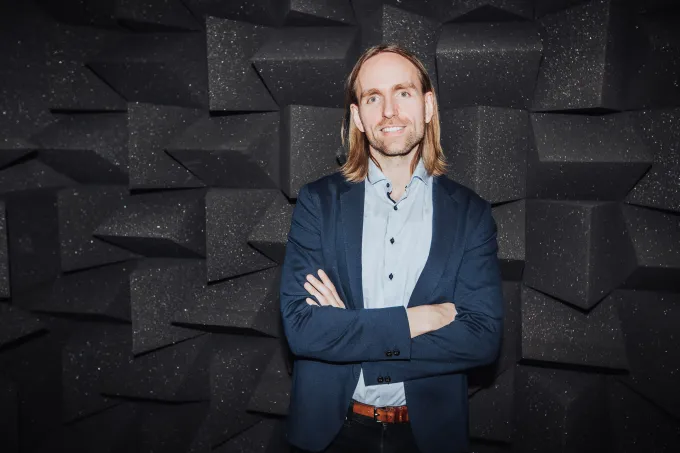
Treble co-founder Finnur Pind Image Credits: Treble Image Credits:Treble
Treble has a few verticals related to simulation and data. For voice AI companies, it has a synthetic data generation platform that could be used for speech enhancement, noise suppression, and model training. It also evaluates voice AI models in different conditions to provide feedback to labs. Earlier this year, it partnered with Hugging Face to launch a benchmark for speech recognition models across different realistic conditions.
“Audio AI is really a data challenge, and this is where the most opportunities to enable next-generation models and hardware lie. To date, pretty much all sound-related AI has been made from recordings and data scraped from the internet. We believe that accurate physics simulation can be an alternative way to create data for sound,” Pind told TechCrunch.
The startup also focuses on hardware design and testing from a voice perspective. For instance, it works with headphone and speaker companies for virtual prototyping to help them understand how their product might sound. It could also test how a smart speaker can understand commands based on the positioning of the speaker. Lately, Treble has ventured into providing simulation testing for smart glasses and AI devices.
Pind said that the company is excited to work on wearables that could enhance hearing for users.
“I’m really excited about the next generation of these devices like headphones and smart glasses that can enable [a feature like] superhuman hearing. That’s an area where you can really just hear better in challenging acoustic environments. Maybe you are in a restaurant, and you only want to hear people within two meters of range, or you are in a seminar, and want to mute people around you,” he said.
Advertisement
Treble aims to increase its focus in the physical AI space, including robotics, automotive, and drone companies, to enable sound-based functions for them through testing and simulation.
Francois Ruether, VP of Paladin Capital Group, told TechCrunch that Treble’s platform, which simulates different models and devices, stands out; the platform’s importance will increase as it gets involved in more areas.
“Our thesis is that, as more products depend on understanding sound, this infrastructure becomes increasingly valuable across voice AI, wearables, robotics, and physical AI. Customers retain ownership of their models, products, and development workflows, while benefiting from a shared foundation of a simulation-native acoustic infrastructure layer,” Ruether said.
When you purchase through links in our articles, we may earn a small commission. This doesn’t affect our editorial independence.
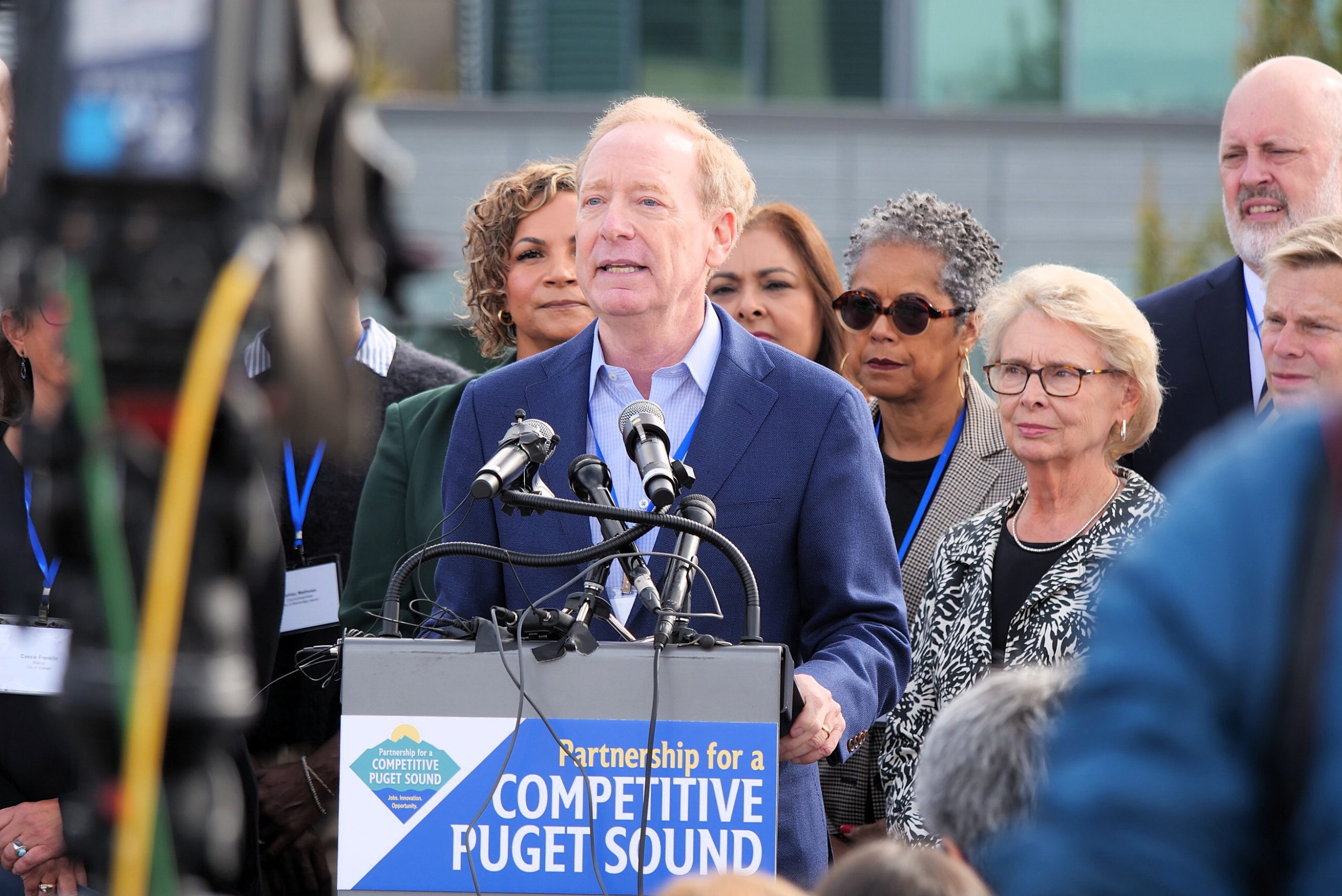
“You should tax things you want to discourage, like cigarettes, not jobs.” Microsoft’s Brad Smith at Monday’s launch of the Partnership for a Competitive Puget Sound, with former Gov. Chris Gregoire at his left. (GeekWire Photo / Todd Bishop)
Detroit, Cleveland and Pittsburgh each had their moment in the sun a century ago, Microsoft Vice Chair and President Brad Smith said Monday — and then the warning lights started flashing, and their leaders at the time failed to heed them.
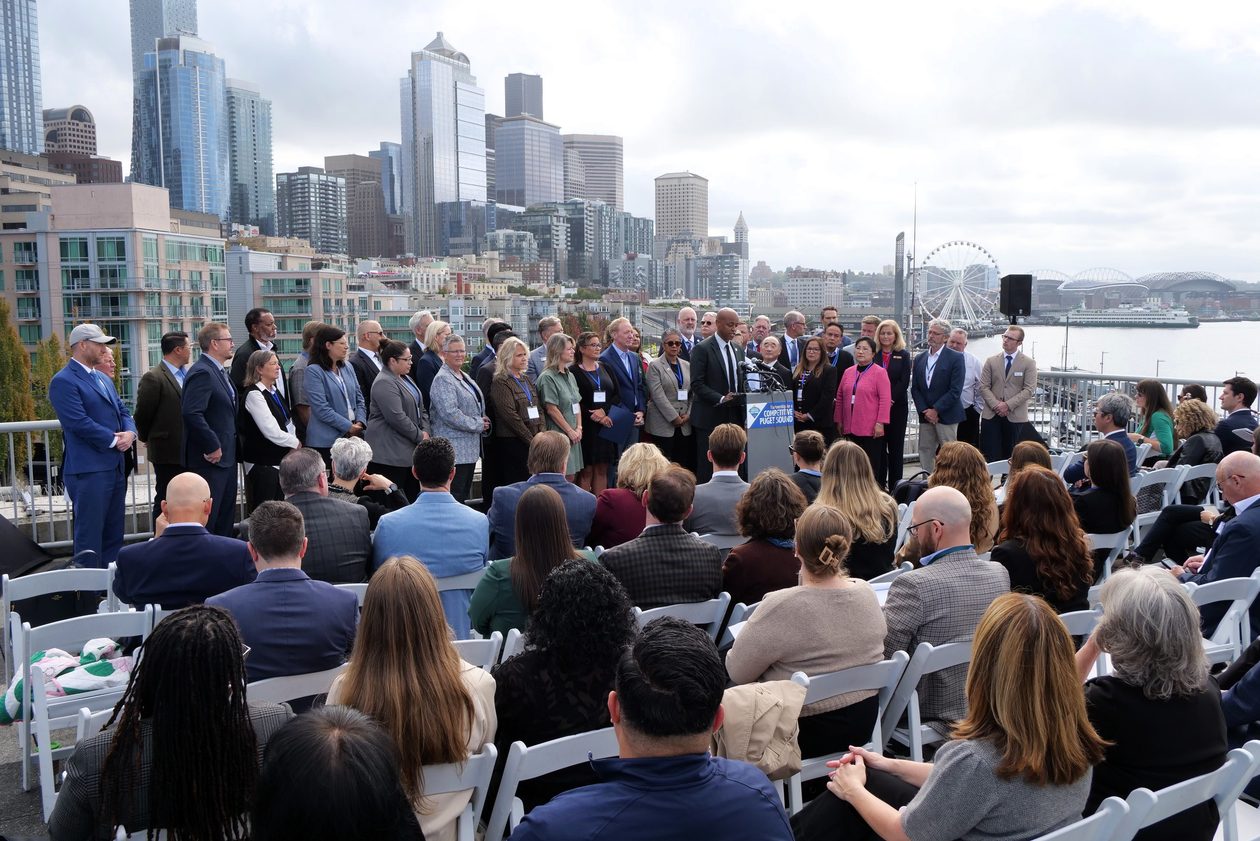
“Well, here we are. It is 2026,” Smith said at a press conference, flanked by dozens of regional leaders, with the Seattle skyline behind them. “And the warning signs are flashing on our economy.”
Smith was speaking at the launch of the Partnership for a Competitive Puget Sound, a Challenge Seattle initiative that brought together roughly 50 elected officials from King, Kitsap, Pierce and Snohomish counties — two county executives, around 20 mayors, port commissioners and about a dozen state legislators — along with labor leaders and business executives, behind a 20-point plan for reversing the region’s slide.
The region lost nearly 7,000 jobs in 2025, according to a report issued by the group, the first time in two decades outside a recession or the pandemic that Seattle-area employment growth has trailed the nation’s. Washington has fallen from 32nd to 47th in CNBC’s ranking of states by cost of doing business since 2017.
An ‘intentional’ regional tech strategy: The report makes a pointed observation about technology: aerospace has a coordinated regional agenda and tech doesn’t, despite tech accounting for nearly one in 10 regional jobs and about 24% of total payroll.
Advertisement
Aerospace knows what it’s working on: the next airplane, the space industry, sustainable fuels, supplier diversification. Technology, “despite being one of Puget Sound’s defining economic anchors, does not yet have an equally intentional regional strategy,” the report says.
King County Executive Girmay Zahilay addresses the crowd Monday, with the downtown Seattle skyline behind him. More than 32% of the city’s central business district office space sits vacant, according to the new regional report. (GeekWire Photo / Todd Bishop)
Without one, it adds, the region risks losing “jobs, technology investment, headquarters, talent, and company growth” to the Bay Area, New York, Boston and Austin. The goal is “not simply to promote growth, but to protect and strengthen the region’s position as a leading technology center.”
Challenge Seattle says it will write that strategy with the Puget Sound Regional Council, built around two priorities: keeping the big tech companies investing here, and making it easier for startups to scale. Related recommendations target industrial space for AI hardware startups, commercial space, and the region’s fusion cluster.
The report sets no budget or measure of success for the tech strategy, and no deadline beyond its general goal of progress within three years.
A regional wake-up call: Many of the recommendations are changes to how local government operates, not new spending: deadlines for permit decisions, a designated business contact in every city and county, and a strategy for dealing with the way taxes stack across state, county and city.
Advertisement
“This is, for us, a wake-up call,” said former Washington Gov. Chris Gregoire, CEO of Challenge Seattle, launching the initiative during the press conference. “We cannot resort to relying on yesterday’s success while tomorrow’s jobs go somewhere else.”
April Sims, president of the Washington State Labor Council, said businesses need predictability and enough margin to invest, innovate and take risks — but “working people need margins, too.”
King County Executive Girmay Zahilay said his office has hired an economic development team and is beginning an internal permitting audit. “AI is transforming our economy seemingly overnight,” he said, calling the 7,000 lost jobs “quite alarming.”
The group also released a playbook for Puget Sound mayors, drawn from interviews and surveys with local leaders, on building what it calls a culture of partnership with business.
Advertisement
Seattle as a Microsoft litmus test: Asked by GeekWire during the press conference what it would take for Microsoft to return and grow in Seattle proper, where it previously had offices in South Lake Union, Smith first pointed out that he was standing in front of Redmond Mayor Angela Birney.
“We have a great mayor, and every day we get up and we’re excited to go to work in Redmond, Washington,” he said, to laughter from the assembled officials.
Smith also pushed back on the premise: Microsoft moved to the Eastside from Albuquerque in 1979 and never had a large presence in Seattle, so he wouldn’t use the city as the point of comparison.
Then he turned to Seattle’s JumpStart payroll expense tax.
As structured, the payroll tax “is really a tax on tech jobs,” Smith said, “and that’s why you’re seeing more tech jobs move from Seattle to places like Bellevue and the Eastside.” He noted that San Francisco abolished its payroll tax the same year Seattle adopted one, in 2021.
“You should tax things you want to discourage, like cigarettes, not jobs,” he said.
He tied the issue to the larger impact of AI on jobs. “We need people to succeed to some degree in a world of AI,” Smith said. “And you don’t want to make the cost of employing people more expensive, at the same time that AI is increasingly adding its own new form of competition.”
Advertisement
“There’s nothing that would lead to the decline in jobs in this state faster than a replication of the JumpStart tax,” he said. “And if Seattle wanted to do one thing to increase jobs in Seattle, it ought to revisit whether a payroll tax makes any sense.”
Then he added a caveat: “That’s probably something that would impact other companies more than Microsoft.”
Amazon, which has been reported to be the largest payer of the tax, did not have a speaker at Monday’s event. Individual Amazon execs are listed in the acknowledgments in the Challenge Seattle report, though the report says participation doesn’t imply endorsement.
View from Olympia: During the press conference, Senate Majority Leader Jamie Pedersen, D-Seattle, was asked whether Washington risks becoming an outlier among states on taxes. The Legislature has been correcting course, he said, pointing to two moves from this year’s session.
Advertisement
One was the estate tax. Lawmakers raised the top rate to 35% in 2025, the highest in the country, and reversed themselves this March, returning it to 20% as of July.
The other was the millionaires tax — a 9.9% tax on household income above $1 million, signed by Gov. Bob Ferguson and projected to raise roughly $3 billion a year. It doesn’t take effect until 2028, and Seattle tech leaders warned it would push founders and investors out of the state.
Pedersen cast it as the fix for a different kind of outlier status: Washington’s business and sales taxes are high because it’s one of the few states with no personal income tax at all. The new tax would let Washington “join 41 other states that have a personal income tax,” he said.
Voters get the last word in November. Initiative 645, backed by Let’s Go Washington, qualified for the ballot in July and would repeal the tax. If it survives, Pedersen said, a statewide payroll tax is “vanishingly unlikely” next session.
Advertisement
Seattle’s mayor weighs in: Seattle Mayor Katie Wilson, who was an architect of the JumpStart tax before running for office, was not among the speakers at the press conference. She opened the regional session that followed, and said the region needs to do a better job telling its own story.
Seattle Mayor Katie Wilson opens the regional action session that followed Monday’s launch of the Partnership for a Competitive Puget Sound. (GeekWire Photo / Todd Bishop)
“There are some forces and interests that are pushing a narrative that does not want Seattle or our region to succeed,” Wilson said, “and we must counter that with a new commitment to a shared sense of destiny, because Seattle’s success is Bellevue’s success, Pierce County’s success is Snohomish County’s success.”
She called it a fragile moment and said the time to act is now, pointing to the economic actions she announced last week in conjunction with an independent report commissioned by the city and released by Seattle’s Office of Economic Development.
That report, “Seawall: Building a Resilient Seattle Economy,” found Seattle’s tax structure unique among peer cities in the way it “specifically penalizes the hiring of senior, high-compensation workers,” with the burden falling overwhelmingly on large tech employers.
Hiring a software engineer at $650,000 in total compensation costs about $17,000 more a year in Seattle than in Bellevue at JumpStart’s top rate, the researchers found.
Advertisement
The city report, conducted by the economic consulting firm Formation, said Seattle should bet on cleantech, the sector where the city owns the utility, writes the building codes and controls permitting and land use. It’s one place where Seattle has real leverage over its own economy, the researchers argued.
“It’s striking how much agreement we share across labor, businesses, and government,” Wilson said. “This is not a call to ignore our challenges, but to tackle them with a shared sense of possibility.”
She did not address the payroll tax in her remarks.
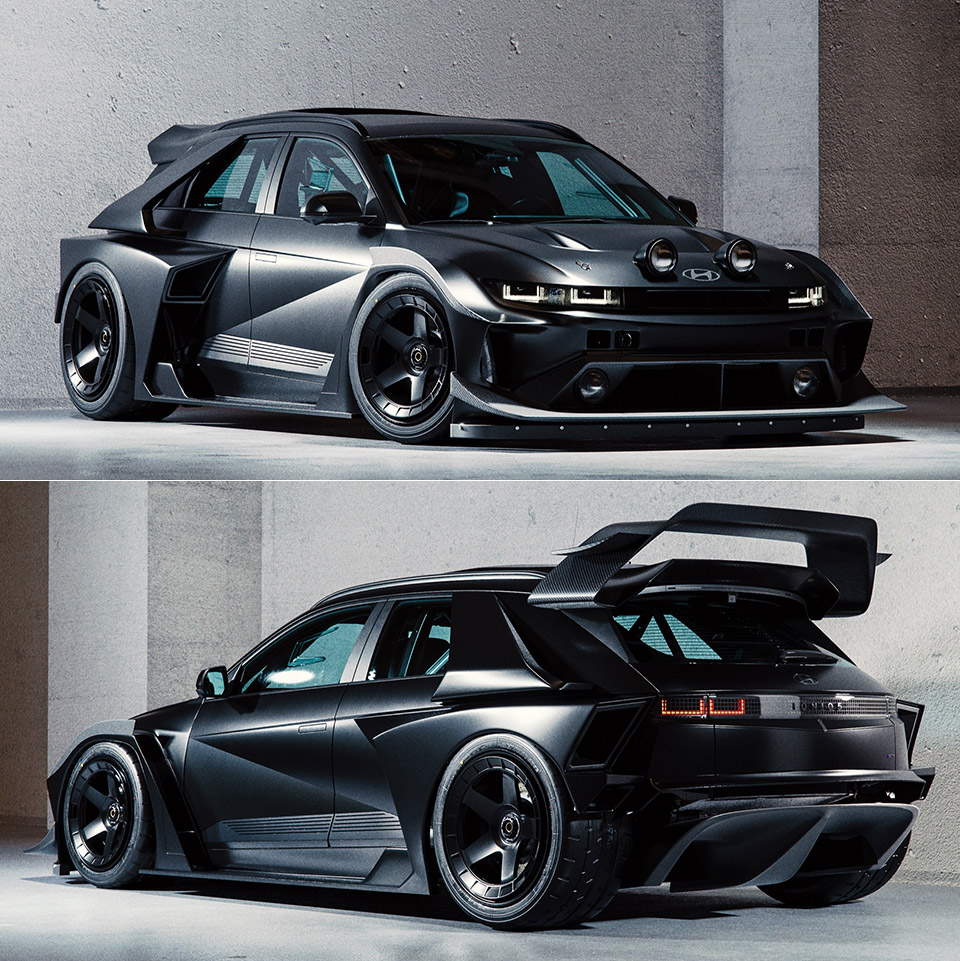
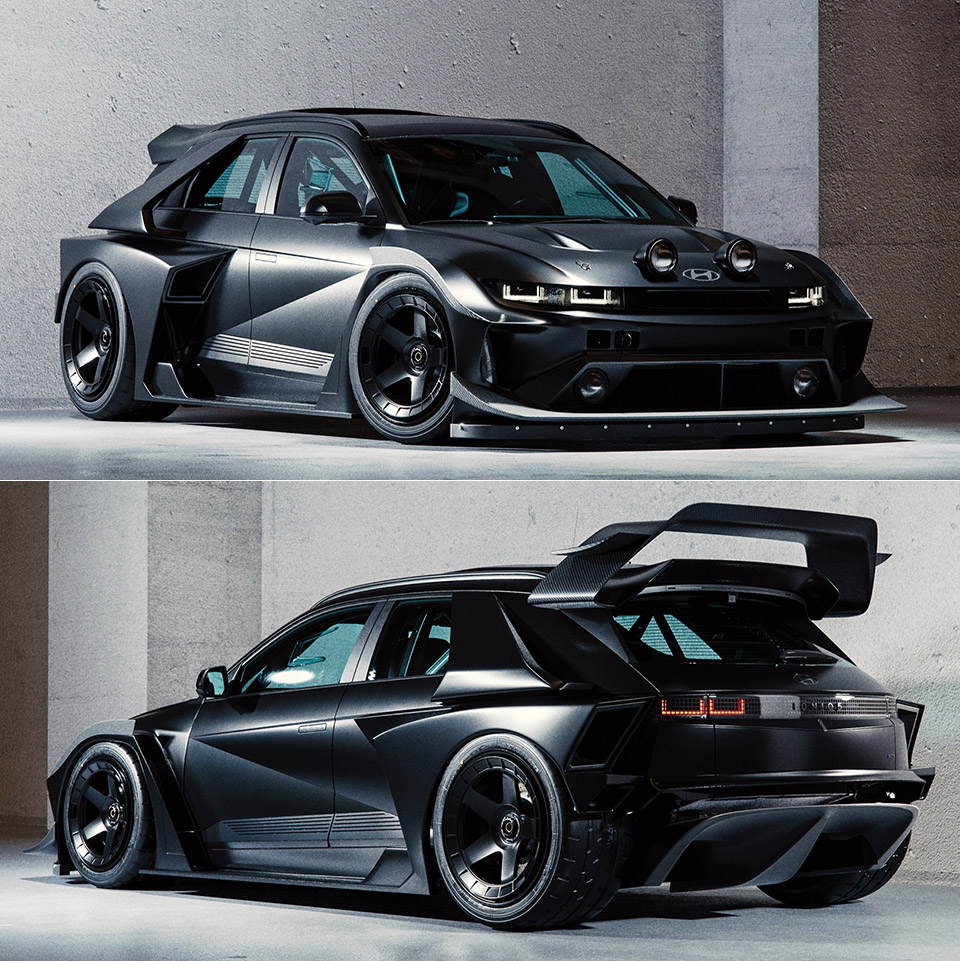
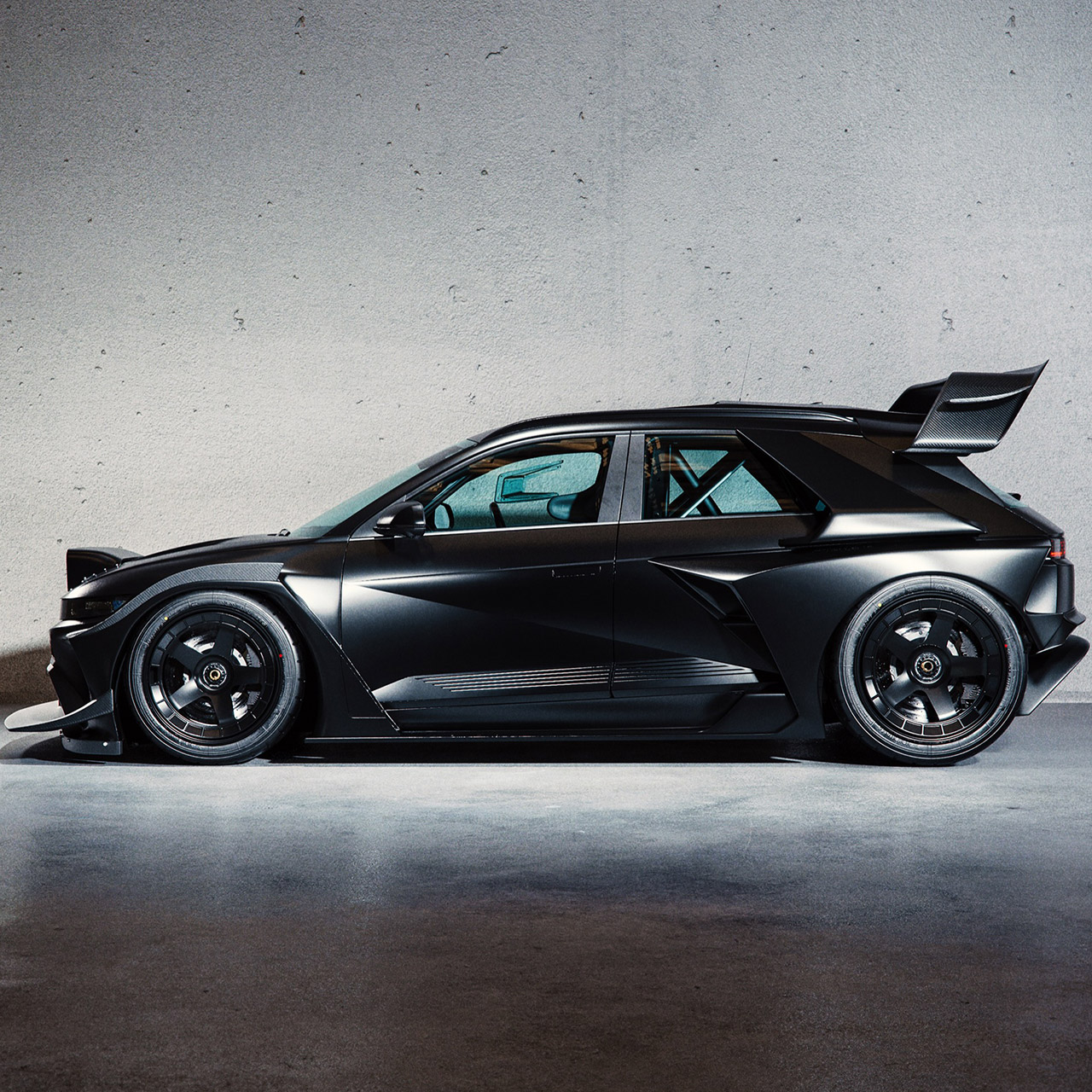
Photo credit: The Kyza Khyzyl Saleem stretched Hyundai’s IONIQ 5 N into a Group B-inspired rally car that looks ready to leave the tarmac and start hunting special stages. Saleem produced the renders for Hyundai USA as a follow-up to last month’s Baja Santa Fe concept, packing the already angular N hatch with period-correct 1980s rally aggression and a bodykit that completely changes its proportions.
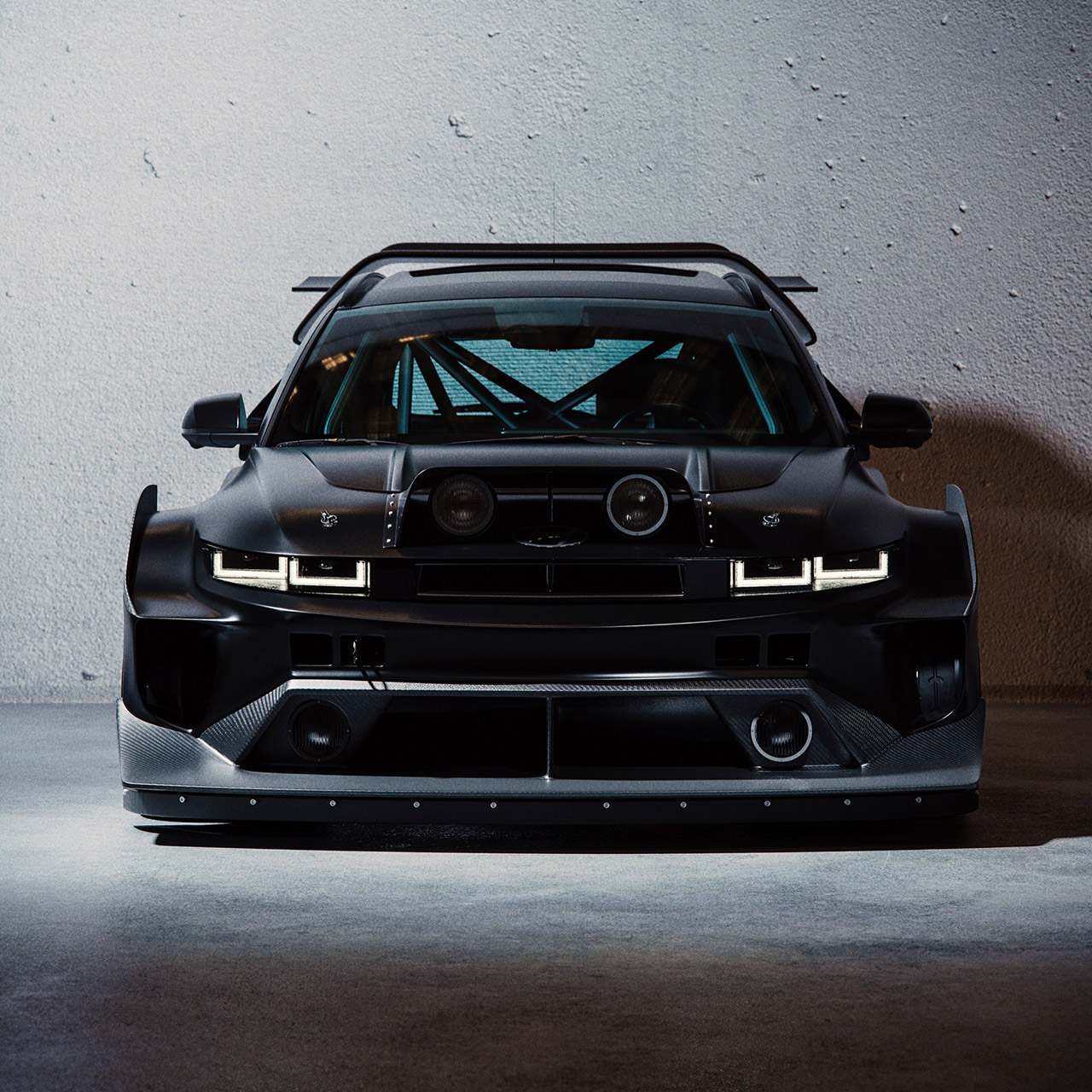
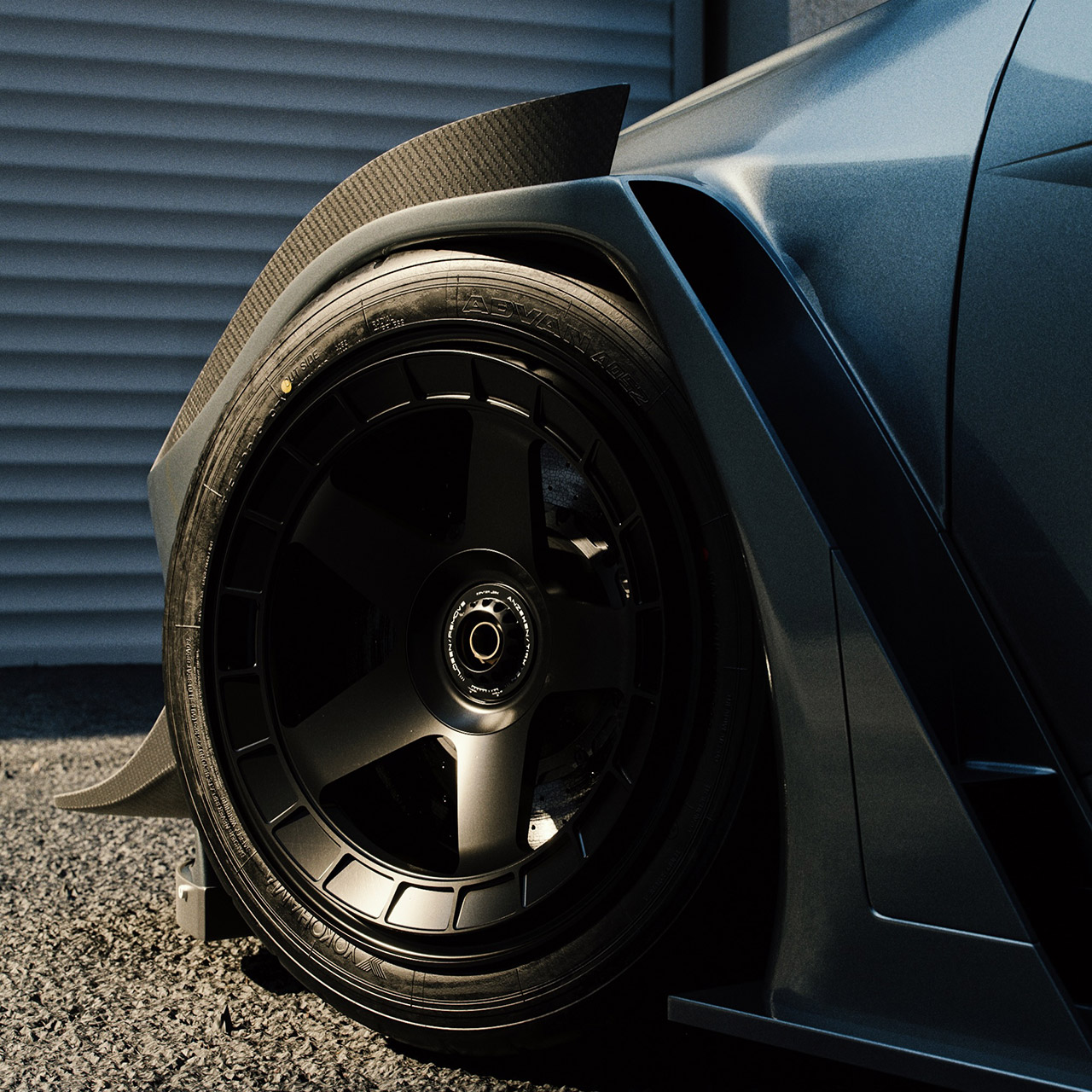
Saleem rebuilt the nose around a deep carbon-fiber splitter that extends well forward, and he put more LED lighting across a massively vented hood. Ultra-wide fender extensions flare out over the wheels and conceal cooling intakes designed to feed whatever powertrain is housed behind the cabin. Those arches transform the relatively tall manufacturing IONIQ 5 N into a low, planted machine that Saleem calls huge.
CUSTOM MUSTANG RACE CAR – This LEGO Speed Champions Ken Block’s ’65 Ford Mustang Hoonicorn V1 (77262) building toy for boys and girls ages 9 years…
AUTHENTIC DETAILS – Builders will recognize cool features from the car’s debut in the 2014 Gymkhana SEVEN film, including exposed velocity stacks on…
KEN BLOCK MINIFIGURE – The included Ken Block minifigure features a Hoonicorn hat and jacket, plus an extra helmet accessory for added play value
Flying buttresses rise from the back fenders to reach the C-pillars, resembling the Lancia Delta S4. IONIQ 5’s greenhouse already had subtle Delta proportions, so the additional building feels like a logical expansion rather than decoration. Lexan windows and a visible roll cage complete the particular stage treatment.
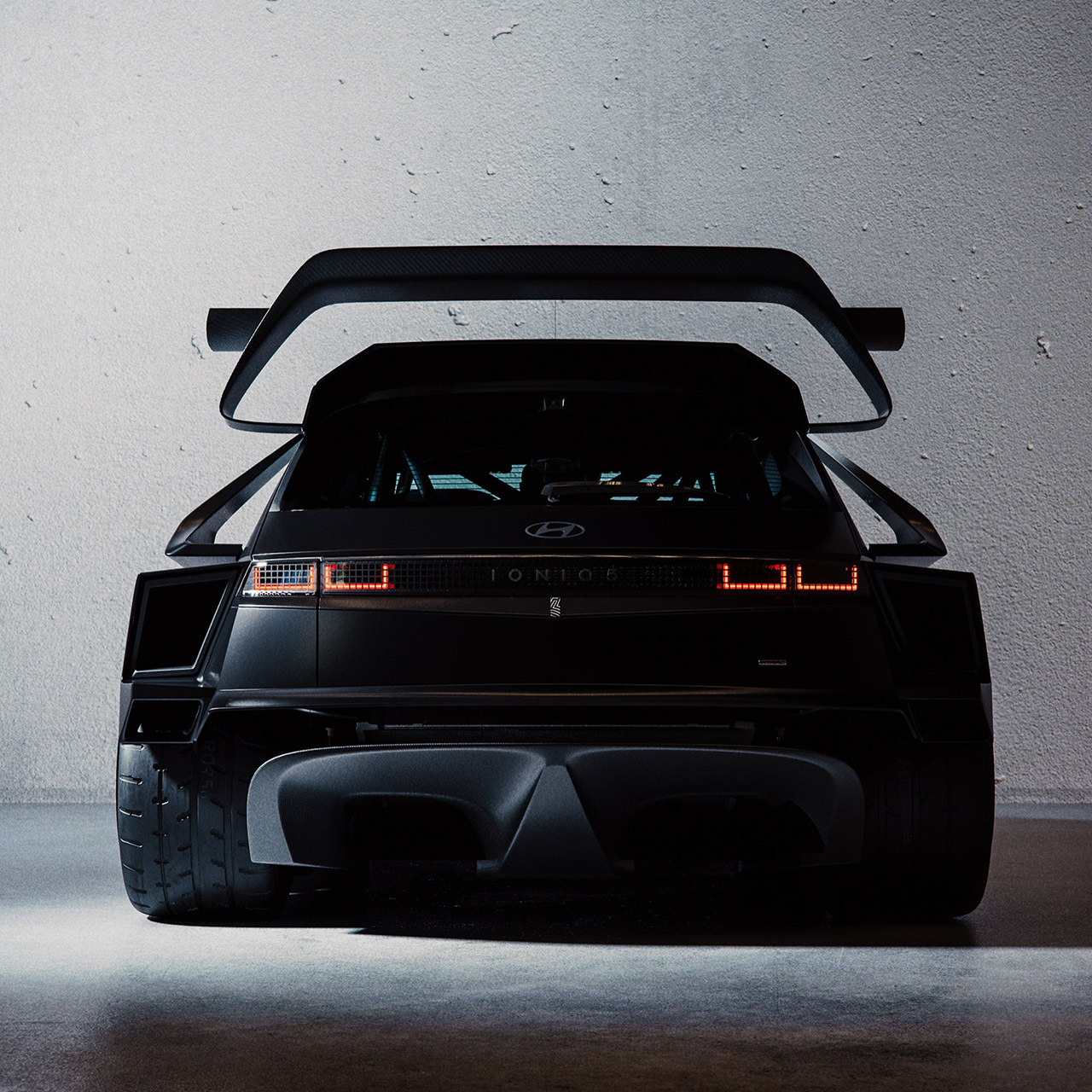
The main version’s tail features a massive rear wing and matching diffuser. Saleem also created a second take with a smaller wing and bronze paint, which looks like a road-legal homologation special. Both are mounted on five-spoke black alloy wheels. A third Instagram set features a wingless black treatment that Saleem refers to as Birmingham spec, a cleaner look he prefers.
Saleem favors the idea of running a roaring turbocharged 1.6-liter four-cylinder from Hyundai’s current WRC i20 N Rally1 cars, positioned midship if packaging allows. A rotary is his second preference. Current Rally1 rules limit that turbo four to around 375 horsepower after the hybrid system is removed, which is far less than the 641 horsepower previously produced by the stock dual-motor Ioniq 5 N. Hyundai never competed in Group B, but has raced in the WRC since the Accent program in 2000, winning manufacturers’ titles with the i20 in 2019 and 2020, and a drivers’ title with Thierry Neuville in 2025.
Saleem created the concept using 3ds Max and Corona. For the time being, the Group B IONIQ 5 N remains on screen, but the widebody stance and period features create a compelling case for what a Hyundai rally monster from that era may have looked like. [Source]
















































You must be logged in to post a comment Login