

Business
Rethinking Trade and Investment Policies in Thailand


Thailand needs an economy that delivers better wages, secure jobs, and real competitiveness. But today’s trade and investment rules stand in the way. Without reform, the country risks falling behind in an increasingly cut-throat global economy.
Key Takeaways
- Trade and investment rules hinder competitiveness, rewarding low-value industries and protecting inefficiency.
- Outdated tax frameworks distort incentives, especially in auto and electric vehicle industries.
- Quota systems in agriculture (coffee, wheat, corn) raise costs, block new entrants, and reduce quality improvements.
- Service sectors face heavy restrictions (foreign ownership caps, slow permits), limiting competition and innovation.
- Weak regulation allows unsafe, ultra-cheap imports, hurting local businesses and consumers.
Instead of driving growth, these rules reward low-value industry, protect inefficiency, and weaken competition. They protect the wrong things, at the wrong time.
If the economy is to move forward, trade and investment rules must change with it.
Obsolete Tax Framework
The first problem lies in an outdated tax system.
Under World Trade Organization rules, Thailand’s official import taxes have fallen sharply over the past 20 years, averaging about 10% today. On paper, this suggests a more open economy. In reality, the tax structure still shields key industries from real competition.
For decades, tariffs were used to support export-oriented manufacturing. Imported raw materials were taxed less than finished products. This lowered cost for local producers and helped Thai factories compete abroad.
The auto industry is a clear example. Imported parts faced low tariffs, while fully built cars—especially from Europe—were taxed heavily. Local assembly became cheaper, helping Thailand grow into a major vehicle manufacturing base.
But that advantage is fading. As free trade agreements expand, the tax gap between parts and finished products has narrowed. The old system no longer protects local assembly. Manufacturers must adapt—or lose ground.
The electric vehicle industry shows the system no longer works.
Under WTO rates, EVs face higher tariffs than EV parts, which should encourage local assembly. But under the Thailand–China free trade agreement, fully built EVs from China enter duty-free, while key components such as batteries still face tariffs. Importing a whole car can be cheaper than importing parts to build one.
Global Pressures
- Thailand faces retaliatory tariffs, oversupply from China, and stricter environmental/labour standards in Europe.
- Competing on low prices alone is no longer viable.
That discourages local production.
Meanwhile, EVs imported from Japan still face higher taxes, putting a long-standing investor at a disadvantage due to inconsistent taxation.
The same distortion affects Thai producers of patient-care service robots, who pay higher tariffs on imported motors than on fully assembled machines. Local firms lose before they even start.
Quota system
Tariffs are only part of the problem. Other trade barriers often do more harm.
Take coffee. Thailand drinks a lot of it, but coffee roasting remains small. The quota system is a big reason. Imported beans within the quota face a 30% tax; outside it, the rate jumps to 90%. By contrast, instant coffee is taxed at 49%. It is often cheaper to import ready-made coffee than to bring in beans and roast them in Thailand.
Free trade deals within ASEAN do little to help. Even with lower taxes, importers must buy local beans in matching amounts. This clears stock but removes any push to improve quality.
The same pattern appears across agriculture. Import wheat, and you must also buy local corn. These rules raise costs, keep new players out, and favour those already in the system, since quotas are based on past imports.
Unlike tariffs, quotas bring in no revenue. What they create instead is a system where access matters more than efficiency.
When economists translate these barriers into costs, the impact is clear. In farming and meat products, they add costs as high as—or higher than—import taxes, on top of licences, fees, and red tape.
Service-oriented businesses encounter significant limitations
Service businesses face heavy restrictions. Foreign ownership is capped at 49%. Work permits are slow and complicated. New players are discouraged, and competition stays weak.
Telecommunications shows the problem clearly: few operators, little price pressure, and limited innovation.
According to the Service Trade Restrictiveness Index, Thailand ranks among the most restrictive countries for services—4th out of 51—with little change over the past decade.
These rules keep investment low and limit good service jobs. With weak competition, firms have little reason to improve quality. Ownership limits also encourage nominee arrangements, weakening accountability, with sometimes serious consequences.
Unfair trade
At the same time, weak regulation fails to stop the flood of cheap imports, especially from China.
Consumers face real risks. Many ultra-cheap goods do not meet basic safety standards. During online sales, T-shirts sell for 12 baht, and plastic plates for one. At such prices, no one knows how safe the products are.
Local businesses are paying the price. A survey by the Federation of Thai Industries found that 45% of members saw sales fall by more than 20% because of cheap or low-quality imports.
The damage goes further. Lax environmental and health rules have also turned Thailand into a destination for polluting factories relocating from countries with stricter controls.
Global pressures
Thailand’s domestic weaknesses are colliding with a tougher world economy.
The country faces retaliatory tariffs from the Trump era, global oversupply—especially from China—and stricter environmental and labour rules in major markets such as Europe. Competing on low prices alone no longer works.
Businesses must meet higher standards. The government must push a greener economy, open new export markets, and stop the flood of cheap, substandard imports.
Protection is not the answer. Higher tariffs risk breaking trade commitments, inviting retaliation, and pushing up prices at home—hurting consumers most.
What must change
Needed Reforms
- Modernize tariffs and remove unnecessary barriers.
- Align production and sustainability standards with global norms.
- Increase transparency in procurement and adopt open technical standards.
- Allow more foreign ownership and skilled professionals in shortage sectors.
- Strengthen competition law, enforce product standards, and regulate online platforms.
- Expand exports by accelerating trade talks, especially with the EU, and cutting non-tariff costs.
First, Thailand must upgrade how it produces, link factories and services to global value chains, help firms meet international standards, build modern services, and create decent jobs.
That means fixing old rules. Tariffs should be more even across trading partners. Gaps between raw materials and finished goods must narrow. Unnecessary barriers should be replaced with clear rules—or removed. Production and sustainability standards must match global norms. Public procurement must be transparent and accountable.
In areas like smart cities, open technical standards can prevent dependence on a single supplier, bring Thai firms into supply chains, and encourage technology transfer. Companies should also be responsible for equipment at the end of its life.
Pet food shows the path forward. It has strong export potential—but only if producers meet strict hygiene, sustainability, and traceability rules in Europe and the US.
Upgrading also means greater openness. Becoming a health hub, for example, requires fewer barriers and allowing foreign ownership where it brings skills and investment.
In shortage fields, foreign professionals should be allowed to work and pass on skills, alongside faster training for Thai workers. Data protection rules must also meet global standards, especially in Europe.
Second, Thailand must take unfair trade seriously. Competition law is weak, especially in telecoms and digital platforms. Regulators need real power. Product standards must be enforced, anti-dumping rules made workable, and online platforms held responsible for unsafe goods.
Third, Thailand must expand exports. Nearly half of Thai exports go to markets without free trade deals, such as the US and EU, where Thai goods face higher tariffs than rivals, especially Vietnam. Trade talks must move faster, and existing agreements expanded.
Cutting non-tariff costs—often higher than tariffs themselves—matters as much as cutting tariffs. Talks on standards, services, and skills will be crucial. Negotiations with the EU will be a key test, with tough demands on fair competition, data protection, and sustainability.
Who pays
None of this will be painless. Quotas must be phased out, with clear timelines. Support must be real—from compensation and retraining to helping farmers raise productivity and small firms adjust.
Trade reform is not just about trade. It is about who bears the cost of change—and whether the state helps people through it.
Thailand wants stronger industries and a better quality of life. But its trade rules stand in the way. Until they change, those goals will remain out of reach.
Note: Supanutt Sasiwuttiwat is a research fellow, and Newin Sinsiri is an advisor of the Thailand Development Research Institute (TDRI). This article is an edited version of his keynote speech at TDRI’s Annual Conference on Reimagining Thailand’s Development Model, held on November 17. TDRI’s policy analyses appear in the Bangkok Post on alternate Wednesdays.
Other People are Reading


Chief Secretary to the Treasury, James Murray said: “We know there is more to do to stop one in every £10 the government spends going on debt interest, and we will more than halve borrowing by 2030-31 so that money can be spent on policing, schools and the NHS.”
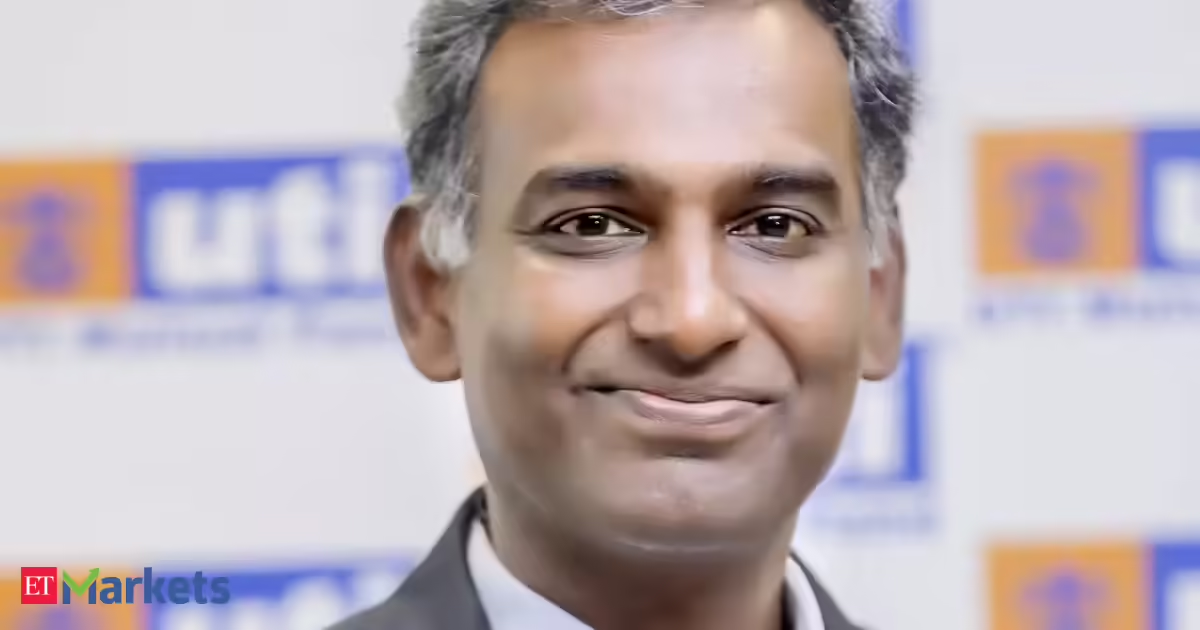
He acknowledged the disconnect between positive fundamentals and subdued market performance, as the anchor observed that “on paper everything looks okay… but it is not reflecting on the ticker.” Lakshmanan responded that “flows are difficult to predict… if fundamentals and earnings accelerate, markets will follow,” adding that the environment is increasingly becoming a bottom-up market where stock selection matters more than broad liquidity trends.
Looking ahead, he struck an optimistic tone on growth, pointing out that “FY25–FY26 saw single-digit growth… FY27 could see double-digit GDP and earnings growth,” which he believes should support equities even without major earnings upgrades. On valuations, Lakshmanan said “large caps look more attractive… private banks have reasonable valuations,” highlighting financials as one of the more compelling pockets after recent corrections.
Discussing capital goods, he noted that while “business has done well post-COVID… government capex continues,” valuations in several names remain elevated, making selectivity important for investors. On broader markets, he reiterated that “diversification is a must,” adding that although indices may not show deep cuts, many individual mid- and small-cap stocks have undergone “silent corrections,” creating selective opportunities.
In the consumption space, Lakshmanan said “discretionary and durables have better growth prospects,” while within staples, foods appear structurally stronger. On autos, he observed that “PV growth remains strong… valuations must be watched,” and described the electric vehicle opportunity as evolving gradually rather than offering immediate pure-play opportunities.

Turning to primary markets, he said the “pipeline is strong,” suggesting that muted subscriptions and listings are largely cyclical and reflect market conditions rather than a lack of quality issuers.
Overall, Lakshmanan’s message was clear: while near-term triggers may be elusive, improving growth prospects and steady fundamentals should continue to underpin markets, with disciplined stock selection and valuation awareness remaining key for investors.

Vita Coco Stock Will Bounce Back From Earnings Slump. Here’s Why.

Q4: 2026-02-18 Earnings Summary
EPS of $0.74 beats by $0.05
| Revenue of $788.06M (47.40% Y/Y) misses by $20.87M

Seeking Alpha’s transcripts team is responsible for the development of all of our transcript-related projects. We currently publish thousands of quarterly earnings calls per quarter on our site and are continuing to grow and expand our coverage. The purpose of this profile is to allow us to share with our readers new transcript-related developments. Thanks, SA Transcripts Team
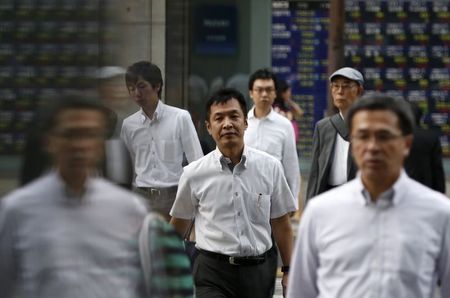
Japan stocks lower at close of trade; Nikkei 225 down 1.07%

Grow with Google founder Lisa Gevelber discusses Google’s new program to teach small businesses about AI usage and highlights examples of it’s application on ‘Varney & Co.’
Three Silicon Valley engineers were arrested and charged with stealing trade secrets from Google and other U.S. technology firms and transferring sensitive data to unauthorized locations, including Iran, federal prosecutors announced Thursday.
Samaneh Ghandali, 41, Soroor Ghandali, 32, and Mohammadjavad Khosravi, also known as Mohammad Khosravi, 40, all of San Jose, were arrested Thursday, according to the Department of Justice (DOJ).
A federal grand jury indicted the engineers on charges of conspiracy to commit trade secret theft, theft and attempted theft of trade secrets, and obstruction of justice.
“We have enhanced safeguards to protect our confidential information and immediately alerted law enforcement after discovering this incident,” Google Spokesperson José Castañeda said in a statement to FOX Business. “Today’s indictments are an important step towards accountability and we’ll continue working to ensure our trade secrets remain secure.”
META CEO TO TESTIFY IN HIGH-STAKES TRIAL THAT COULD COST BIG TECH BILLIONS

Three Silicon Valley engineers were charged with stealing Google trade secrets and transferring sensitive data to unauthorized locations, including Iran, federal prosecutors said. (Josh Edelson/AFP via Getty Images / Getty Images)
The defendants gained employment at technology companies focused on mobile computer processors, according to the indictment unsealed Thursday.
According to prosecutors, sisters Samaneh Ghandali and Soroor Ghandali worked at Google before moving to another technology company identified as “Company 3,” headquartered in Santa Clara, California. Khosravi, who is married to Samaneh Ghandali, worked at a separate company identified in the indictment as Company 2, headquartered in San Diego.
The DOJ alleges the defendants used their positions to access confidential and sensitive information as part of a scheme to steal trade secrets.
The defendants “exfiltrated confidential and sensitive documents, including trade secrets related to processor security and cryptography and other technologies, from Google and other technology companies to unauthorized third-party and personal locations, including to work devices associated with each other’s employers, and to Iran.”
“As alleged, the defendants exploited their positions to steal confidential trade secrets from their employers,” United States Attorney Craig H. Missakian said in a statement. “Our office will continue to lead the way in protecting American innovation and we will vigorously prosecute individuals who steal sensitive advanced technologies for improper gain or to benefit countries that wish us ill.”
GOOGLE PLANS TO SPEND BIG AS AI RACE WITH RIVALS INTENSIFIES

Federal prosecutors allege former Google employees conspired to steal confidential company information and send it overseas. (Tayfun Coskun/Anadolu Agency via Getty Images / Getty Images)
The indictment alleges that while working at Google, Samaneh Ghandali transferred hundreds of files, including company trade secrets, to a third-party communications platform. Soroor Ghandali is also accused of transferring Google trade secret files while employed at the company.
Prosecutors allege the defendants attempted to conceal their actions by submitting “false, signed affidavits to victim technology companies about the conduct and the stolen trade secrets, destroying exfiltrated files and other records from electronic devices, and concealing the methods of exfiltration to avoid detection by the victim technology companies.”
According to a Google spokesperson, the company discovered the alleged theft through routine security monitoring and referred the case to law enforcement after conducting its own internal investigation.
TECH TITANS ELON MUSK AND REID HOFFMAN ATTACK EACH OTHER OVER LATEST EPSTEIN EMAILS

A federal grand jury indicted three engineers in an alleged scheme involving Google trade secrets, the Department of Justice said. (Rolf Vennenbernd/ via Getty Images / Getty Images)
Google said it maintains robust security measures to protect its confidential information and intellectual property, including limiting employee access to sensitive data, requiring device authentication before network access, and mandating two-factor authentication for work accounts.
Additionally, Google logs employee activity on its network, including file transfers to third-party platforms such as Telegram. The company began blocking uploads to Telegram from corporate laptops last year.
The indictment states that Google took “numerous measures to safeguard its confidential technology, information, and trade secrets.”
CLICK HERE TO GET FOX BUSINESS ON THE GO
Prosecutors said Google secured its physical space and restricted access to its buildings, along with its computer systems and network.
According to the indictment, Samaneh Ghandali is an Iranian national who became a U.S. citizen around 2018, Mohammadjavad Khosravi is an Iranian national who became a U.S. legal permanent resident around 2019, and Soroor Ghandali was in the United States on a nonimmigrant student visa.

In its push to become a near-term antimony producer in North America, Subiaco-based EV Resources has made a key appointment.

Eric Dane, the charismatic actor beloved for his role as plastic surgeon Dr. Mark “McSteamy” Sloan on Grey’s Anatomy and his intense portrayal of Cal Jacobs on Euphoria, died Thursday, Feb. 19, at age 53 after a courageous battle with amyotrophic lateral sclerosis (ALS). His family confirmed the news in a statement, noting he passed surrounded by loved ones and remained an advocate for ALS awareness until the end.

Dane announced his ALS diagnosis in April 2025, sharing in interviews that he was grateful for his family’s support as he navigated the progressive neurodegenerative disease. Less than a year later, his death has prompted an outpouring of tributes from colleagues, fans and ALS organizations. Here are 10 key facts about his life, career and legacy.
- Born in San Francisco with Early Tragedy Eric William Dane was born Nov. 9, 1972, in San Francisco, California. At age 7, he lost his father — a former Navy man turned architect — to a self-inflicted gunshot wound. Raised by his mother with help from grandparents, Dane attended Sequoia High School in Redwood City and San Mateo High School, where he played varsity water polo before discovering acting through a school production of Arthur Miller’s All My Sons.
- Early TV Roles in the 1990s Dane made his television debut in 1991 on Saved by the Bell. He appeared in guest spots on shows like Roseanne, The Wonder Years and Married… with Children before gaining notice as Dr. Wyatt Cooper on Gideon’s Crossing and Jason Dean on Charmed, where he played a romantic interest opposite Alyssa Milano.
- Breakout as “McSteamy” on Grey’s Anatomy Dane joined Grey’s Anatomy in Season 2 (2006) as charming, flawed plastic surgeon Mark Sloan. Nicknamed “McSteamy” by fans, the role made him a fan favorite. He appeared in over 130 episodes through Season 9, with recurring returns, becoming one of the show’s most memorable characters alongside Patrick Dempsey’s McDreamy.
- Lead Role in The Last Ship From 2014 to 2018, Dane starred as Navy Captain Tom Chandler in TNT’s post-apocalyptic drama The Last Ship. The series, executive-produced by Michael Bay, ran for five seasons and showcased Dane in a heroic, action-oriented lead role.
- Intense Performance in Euphoria Dane portrayed Cal Jacobs, a complex, troubled father, in HBO’s Euphoria starting in 2019. His raw depiction of toxic masculinity and family dysfunction earned praise. Season 3, expected to premiere in spring 2026, will feature his final work for the series.
- Marriage and Family Life Dane married actress Rebecca Gayheart in 2004. They welcomed daughters Billie (born 2010) and Georgia (born 2011). The couple filed for divorce in 2018 but reconciled, with Gayheart dismissing the petition in 2025 amid Dane’s health challenges. His family statement described his daughters as “the center of his world.”
- ALS Diagnosis and Advocacy In April 2025, Dane revealed his ALS diagnosis publicly in People magazine, saying he was “grateful to have my loving family by my side.” He lost use of his right arm and faced increasing physical limitations but continued advocating. In a December 2025 virtual panel for I AM ALS, he called the disease “so horrible” and vowed to “fight until the last breath.” He guest-starred on Brilliant Minds as an ALS patient, drawing from personal experience.
- Recent Roles and Cancellations Dane’s final on-screen work included a guest spot on Brilliant Minds and upcoming appearances in Euphoria Season 3 and the film Family Secrets. He canceled public events in late 2025 and early 2026, including an Emmys presentation and an ALS Network gala, citing ALS progression. He missed the 2025 Emmys after a hospital visit for stitches.
- Advocacy and Awareness Impact Throughout his battle, Dane raised visibility for ALS research and support. He participated in panels and spoke openly about the disease’s challenges, inspiring fans and the community. Tributes from Euphoria creator Sam Levinson, Ashton Kutcher and others highlighted his grace and determination.
- Legacy as a Versatile Actor and Fighter Dane’s career spanned dramatic, action and intense roles, earning him a place in TV history. His openness about ALS humanized the disease and underscored resilience. Survived by his wife, daughters and extended family, Dane requested privacy as they grieve. Fans remember him for his charm, talent and unwavering fight.
As Hollywood mourns, Dane’s story serves as a reminder of life’s fragility and the power of advocacy. Rest in peace.

Macom CFO Kober sells $1.75 million in MTSI stock

OPINION: For many people, alcohol and a working lunch are no longer on the menu.

Samsung isn’t aping the AirPods, but doing a better job on the upcoming Galaxy Buds 4

Andrew Mountbatten-Windsor has been released from custody

UK government finances better than expected in January


-

 Video4 days ago
Bitcoin: We’re Entering The Most Dangerous Phase
-

 Tech5 days ago
Luxman Enters Its Second Century with the D-100 SACD Player and L-100 Integrated Amplifier
-

 Crypto World3 days ago
Can XRP Price Successfully Register a 33% Breakout Past $2?
-

 Sports3 days ago
GB's semi-final hopes hang by thread after loss to Switzerland
-

 Video5 hours ago
XRP News: XRP Just Entered a New Phase (Almost Nobody Noticed)
-

 Video7 days ago
The Final Warning: XRP Is Entering The Chaos Zone
-
 Tech3 days ago
The Music Industry Enters Its Less-Is-More Era
-

 Business2 days ago
Infosys Limited (INFY) Discusses Tech Transitions and the Unique Aspects of the AI Era Transcript
-

 Entertainment2 days ago
Kunal Nayyar’s Secret Acts Of Kindness Sparks Online Discussion
-

 Video3 days ago
Financial Statement Analysis | Complete Chapter Revision in 10 Minutes | Class 12 Board exam 2026
-

 Tech2 days ago
Retro Rover: LT6502 Laptop Packs 8-Bit Power On The Go
-
 Crypto World6 days ago
Bhutan’s Bitcoin sales enter third straight week with $6.7M BTC offload
-
 Sports1 day ago
Clearing the boundary, crossing into history: J&K end 67-year wait, enter maiden Ranji Trophy final | Cricket News
-

 Crypto World7 days ago
Kalshi enters $9B sports insurance market with new brokerage deal
-

 Entertainment1 day ago
Dolores Catania Blasts Rob Rausch For Turning On ‘Housewives’ On ‘Traitors’
-

 Business2 days ago
Tesla avoids California suspension after ending ‘autopilot’ marketing
-
 NewsBeat5 days ago
The strange Cambridgeshire cemetery that forbade church rectors from entering
-

 Crypto World2 days ago
WLFI Crypto Surges Toward $0.12 as Whale Buys $2.75M Before Trump-Linked Forum
-
 NewsBeat5 days ago
Man dies after entering floodwater during police pursuit
-

 Crypto World10 hours ago
83% of Altcoins Enter Bear Trend as Liquidity Crunch Tightens Grip on Crypto Market