


Connect with us

Business

Dubai, Reconsidered: A Wealth Manager’s View

Published

on

Dubai, Reconsidered: A Wealth Manager’s View

In 2025 alone, the UAE welcomed almost 10,000 high-net-worth individuals in net migration, with the vast majority choosing Dubai as their new home. Companies and wealthy individuals relocate here for many reasons. What strikes me most is not the logistics behind these moves, but the ambition. Dubai feels less like a destination people pass through and more like a city being shaped, year by year, by the people who choose to call it home.

The more time I spend working with clients who have made this move, and the more time I spend in the region, the more I understand why. What has surprised me the most was how far the common perception is from the truth. The assumption has always been that people move here solely for tax reasons. The people I meet are drawn by something much bigger: quality of life, ambition, and the chance to build something lasting. They move here for a life. For stability, for opportunity, and for the feeling that, even in a changing world, the years ahead are theirs to shape rather than simply endure.

That desire for solid ground is not hard to understand. Many of the people I work with have spent decades building something – a family business passed down through generations, a career or a body of work – and, in an increasingly complex world, they are thinking harder than ever about how to protect it and pass it on. Dubai speaks to that instinct. My conversations with clients who move here increasingly centre not on tax planning, but on continuity: on succession, on legacy, on giving the next generation something worth inheriting.

Free newsletters
Advertisement

The stories that matter to UK business, straight to your inbox.

Advertisement

Dubai has also shown that it can maintain continuity. No place is immune to geopolitical shocks but the ability to maintain momentum and business continuity is a different art form altogether.

Dubai has also demonstrated an ability to provide continuity of its own. No place is immune to geopolitical shocks or periods of uncertainty. What distinguishes resilient global centres is not the absence of disruption, but their ability to absorb it while maintaining momentum, confidence and business continuity. That is a different art altogether and one that Dubai has become remarkably good at.

Over the course of thirty years in wealth management, including my time at UCAP Asset Management, I have watched waves of entrepreneurs and business owners search for a place to plant new roots. What draws them to Dubai is not one advantage, but an entire ecosystem built for ambition. The Dubai International Financial Centre is now home to more than 500 wealth and asset management firms, 215 of which have arrived in just the past three years. That is not the sound of capital passing through. It is the sound of a financial community being built, methodically, even through periods of regional change.

It would be easy to assume that capital is fickle, that mobile wealth simply drifts to where the terms are best and will move away again just as easily. But the reality is that being a tax nomad is far from an easy option. It comes with a particular lifestyle, one that demands constantly shifting locations, rebuilding routines and starting over in place after place. High-net-worth individuals, like everyone else, are attached to their homes, their habits and their small rituals. They do not leave lightly, and they do not arrive lightly either. People do not relocate to Dubai unless they believe, genuinely, that it is a place where they can build a good life.

Advertisement

And building a life here takes commitment. Family offices bring advisers, educators and colleagues who cannot simply be packed up and moved on a whim. The people who arrive alongside these families enrol their children in schools, join professional communities, form friendships and put down roots. Every one of these connections is a quiet vote of confidence in the city, and together they make Dubai something far more durable than a convenient address.

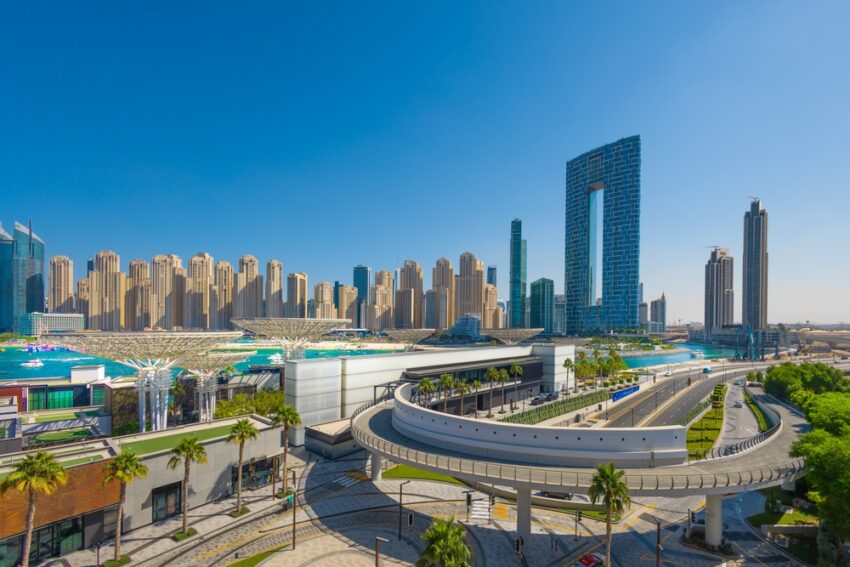
This is where Dubai truly distinguishes itself. It pairs world-class infrastructure and connectivity, comparable with any global capital, with a depth of financial expertise built over decades. Despite regional uncertainty, Dubai continues to offer businesses security and continuity. DIFC alone now hosts more than 1,052 financial firms. Step outside its towers and you find a city built for people who want to move fast, think globally, and still come home to something that feels like a life. It offers global reach, genuine openness to newcomers, and a skyline that adds a new possibility every year.

That density of talent and expertise is what gives Dubai its real strength. Its network of asset managers, family offices, private banks, legal advisers and succession planners is not something that can be replicated overnight, and it is not going anywhere soon. This tells you everything: Dubai is not simply a place where foreign wealth is held. It is a place where people start companies, raise families, and build careers of which they are proud. It is precisely why so many in my field, me included, now see it as more than a market to serve.

A competitive environment may be what first draws people to Dubai. But what makes them stay is something bigger: a rare mix of ambition, opportunity, connectivity and community that is genuinely difficult to find anywhere else. Dubai is no longer simply an efficient address on a map. It is becoming a true home for wealth, talent and the kind of ambition that wants room to grow. I have watched this story develop over recent years, and I have no doubt the best is still to come.

Advertisement

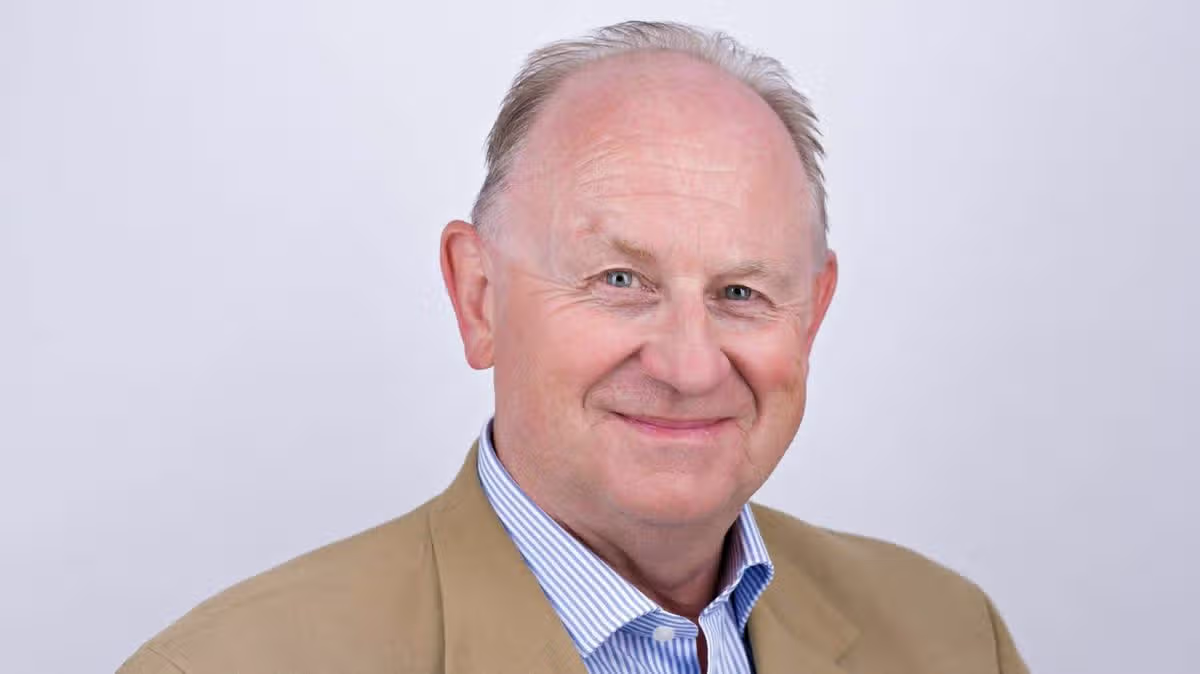
By Effimia Geraki, Managing Director, UCAP Asset Management, Middle East

Continue Reading
Click to comment

You must be logged in to post a comment Login

Leave a Reply

Business

Hugo Boss Appoints Frasers CEO Michael Murray as Supervisory Board Chairman

Published

on

Hugo Boss Appoints Frasers CEO Michael Murray as Supervisory Board Chairman

Hugo Boss said it appointed Michael Murray, Frasers Group’s FRAS 2.16%increase; up pointing triangle chief executive, as the next chairman of its supervisory board, weeks after the U.K. retailer achieved a near-majority ownership.

Murray, who has sat on Hugo Boss’s supervisory board since May 2025, will succeed Stephan Sturm as chairman, the German premium apparel company said Wednesday.

Copyright ©2026 Dow Jones & Company, Inc. All Rights Reserved. 87990cbe856818d5eddac44c7b1cdeb8

Continue Reading

Business

Members of advisory panel that will help establish a new development agency for Wales revealed

Published

on

Business Live

Enterprise Minister Adam Price said the panel will produce an interim report early net year

Adam Price.(Image: Senedd Cymru)

Members of an advisory panel that will support the Welsh Government to establish a new development agency for Wales has been revealed.

Following the appointment of Jonathan Lewis, the current chair of the UK’s biggest ports operator ABP and a former chief executive of Capita, as panel chair, Cabinet Minister for Enterprise, Connectivity and Energy, Adam Price, has confirmed the other members.

Advertisement

The panel of ten, who will not be remunerated, include economist and managing partner of Cadwyn Capital Gerry Holtham, former managing director of Nantgarw-based GE Aviation, La-Chun Lindsay, and as its vice chair, founding member of Starling Bank and chair of Fintech Wales Sarah Williams-Gardener.

Creating a new agency at arm’s length of the Welsh Government was a key Senedd Election manifesto pledge of Plaid Cymru. Rather then focusing on taking over responsibility for current Welsh Government business support functions, such as Business Wales, a small agile agency – sourcing necessary external private expertise – could potentially emerge.

This would be a body operating as more as a facilitator to support Welsh firms seeking to expand at scale or bring investment projects into Wales – supported by the Welsh Government, local authorities, and regional bodies in creating a lighter touch approach to planning and, where devolved, business regulation.

The agency will form’s part of the Welsh Government efforts to halve Wales’s productivity gap with the UK average by half within the next decade.

Advertisement

The former at arm’s length of government Welsh Development Agency was abolished by the then Labour Welsh Government of Rhodri Morgan in 2006. Its functions, and many of its staff, were brought into the Welsh Government’s civil service.

However, at the time of its demise it had become bloated, with more than 1,000 staff. Its ability to attract inward investment projects into Wales at scale was also on the wane with increasing competition from the successor states of eastern Europe.

In written statement Mr Price said: “Over the past two months, we have spent time targeting and securing the support of a talented team of business experts, all bringing their individual diverse experiences, but all with a shared passion and willingness to support Wales to do business, to advise us on the design of the new development agency.

“Each will bring their own expertise to assist us in developing the detailed remit and functions of the agency, helping us design and establish an organisation that swiftly supports the growth of our nation’s economy and becomes a key driver for our national productivity mission; to halve Wales’s productivity gap with the UK within 10 years. Improving productivity will have a direct consequence of creating better jobs for people, thereby putting more money in their pockets and raising living standards.

Advertisement

“We have set out the headline vision. The panel will help us deliver that vision, providing advice, recommendations and challenge about the form and functions of the agency.”

Mr Price said the panel “not operate in isolation” but will engage widely and be outward looking and collaborative in taking forward their work. He added: “In conjunction with the panel, we are developing a programme of stakeholder engagement to ensure the input of a wide range of voices across the Welsh economic development landscape.”

The panel is expected to publish and interim report early next year.

The other panel members are: former chief executive of Subsea7, John Evans; Beren Kayali, co-founder and chief technology officer of Deploy Tech; Alison Lea-Wilson, co-founder of Halen Môn; Nigel Morris, founder of Capital One and managing Partner of QED Investors , Gareth Noyes , who held a range of senior roles at Wind River Systems; Oriel Petry, senior vice president and head of public affairs at Airbus UK and general secretary of TUC Wales, Laura Doel .

Advertisement

Responding to anointment chair of FSB Wales, John Hurst, said: “We welcome the appointment of the panel that will advise the Welsh Government on establishing a new development agency, and particularly the inclusion of SME owners who can bring first-hand experience of starting and growing a business to this important work.

“This is a significant opportunity to implement a simpler, more joined-up and more effective approach to economic development in Wales.

“The new agency must deliver measurable impact by making it easier for firms to access the practical help they need to survive and grow, with the agency’s success judged by clear outcomes: more small businesses starting, surviving and scaling.

“Small businesses are embedded in every community and are fundamental to Wales’s economic success. As the panel begins its work, it must ensure that the voices of small businesses shape its recommendations from the outset, so that the new agency is designed around the real needs and ambitions of firms across Wales.”

Advertisement

Latest figures from the ONS show that output per head in Wales is around 85% of the UK level. The productivity target is seen by the administration as achievable, given that some of the key levers needed to improve output, such as skills and education, are devolved However, it will still be a challenge as other nations and regions of the UK will also be seeking to improve their respective productivity rates, with AI a key driver


Continue Reading

Business

Ingram Micro Holding Corporation (INGM) Analyst/Investor Day Transcript

Published

on

OneWater Marine Inc. (ONEW) Q1 2026 Earnings Call Transcript