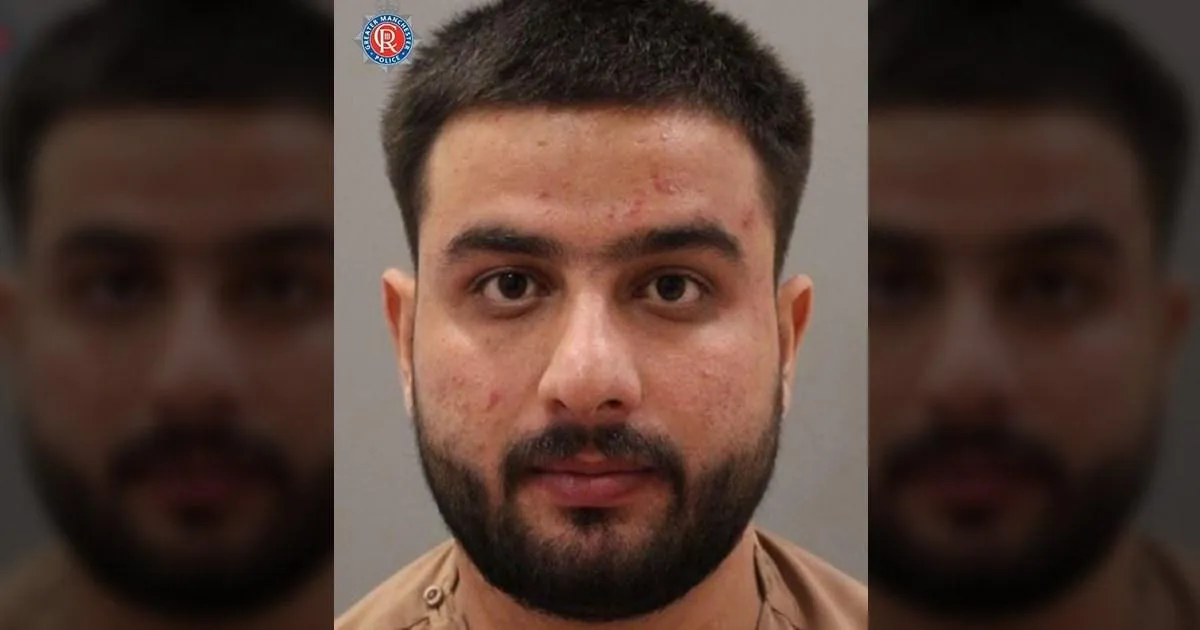
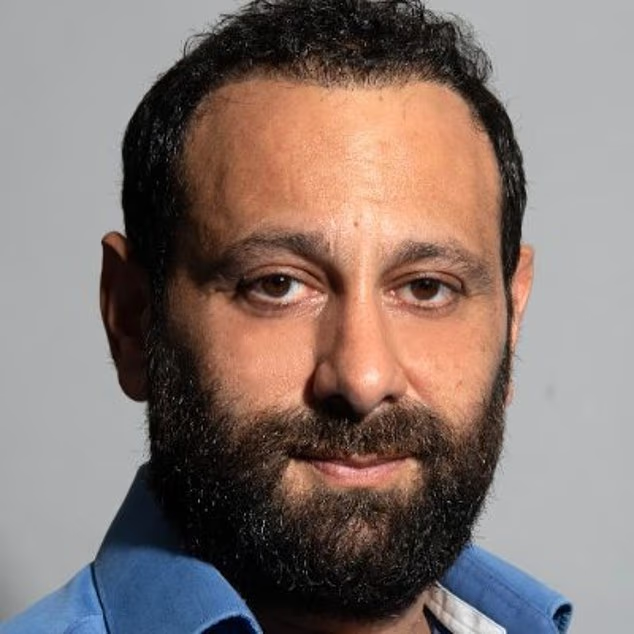
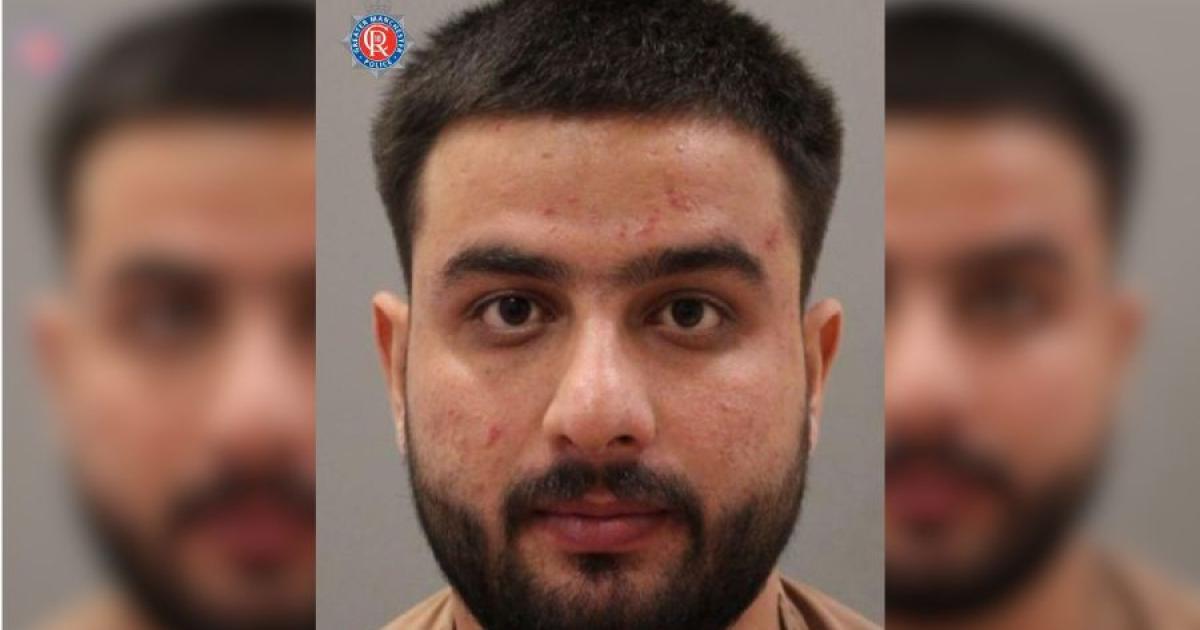
Sultani Bakatash has been jailed after raping two teenage girls (Picture: Greater Manchester Police/PA Wir)
A man has been jailed in Bolton, Greater Manchester, after plying two 14-year-old girls with alcohol before raping and assaulting them.
Sultani Bakatash, 29, was sentenced to 14 years in jail after being convicted of two counts of rape, one of sexual assault and one of assault by penetration.
Bolton Crown Court heard how the girls were made to drink vodka and cola after being lured to Bakatash’s home, having been befriended by him on Snapchat.
The teenagers had been so intoxicated that they were in and out of consciousness, but one girl did manage to escape.
Advertisement
She knocked on a neighbour’s door, calling out that he was ‘trying to rape her friend’ and that she was ‘locked in’.
Sign up for all of the latest stories
Start your day informed with Metro’s News Updates newsletter or get Breaking Newsalerts the moment it happens.
‘He’s raping her,’ the girl called out to the neighbour after freeing herself from the flat at Georgina Court in Bolton.
One girl escaped and alerted neighbours to the assault (Picture: Elizabeth Cook/PA Wire)
Prosecutor Charlotte Rimmer told the court how Bakatash had encouraged the girls to drink while only taking small sips himself.
She described him as ‘a man, intent on sexual gratification, regardless of what they wanted’.
Advertisement
Bakatash claimed that the girls had initiated and consented to the sex but later said he couldn’t remember what happened and denied any sexual activity had taken place.
He had fled the property after the assaults and was arrested two days later, staying at his brother’s house.
The girls are said to have suffered severe psychological harm, with the incident likely to stay with them for life.
Judge Kenderik Horne ruled that Bakatash had ‘encouraged them to keep drinking’ and ‘did that so they would become so drunk they would not be able to stop you having sex with them.’
Advertisement
He continued: ‘You told the jury you had not engaged in any sexual activity. That was a lie, the jury saw through your lie.’
The judge added that Bakatash, originally from Afghanistan, may not be deported after serving two-thirds of his 14-year sentence due to his work with the British Army.
Bakatash’s lawyer, Umar Shehzad, said he had been shot and injured while working for the army in his home country.
He said Bakatash was ‘overwhelmed’ living in a foreign country, having fled Afghanistan after the Taliban took over in 2021.
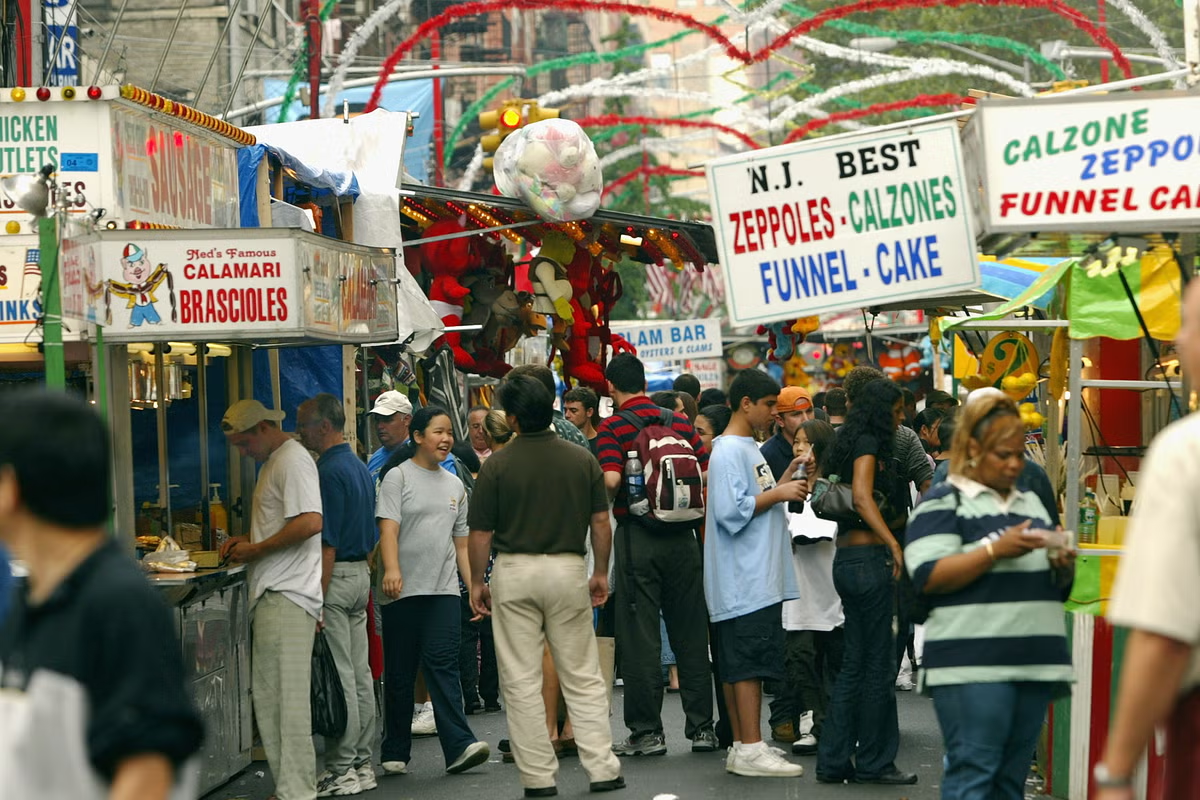
For two weeks in September, everyone wants to be Italian – at least judging by the crowds at the annual Feast of San Gennaro in New York City’s Little Italy.
Founded in 1926, the largest and longest-running Italian festival in the United States celebrates its 100th anniversary this year, with locals and tourists alike descending upon Mulberry Street in Manhattan to celebrate Italian American culture.
To be sure, there’s plenty that’s commercialized: Frank Sinatra impersonators croon “New York, New York,” while vendors hawk shirts with quotes from The Godfather and The Sopranos at astronomical prices. Classic Italian American fare like chicken parm subs and sausage and peppers fly off food carts.
And yet in my work as a medievalist, I’ve explored how this festival champions traditions that go back thousands of years.
Advertisement
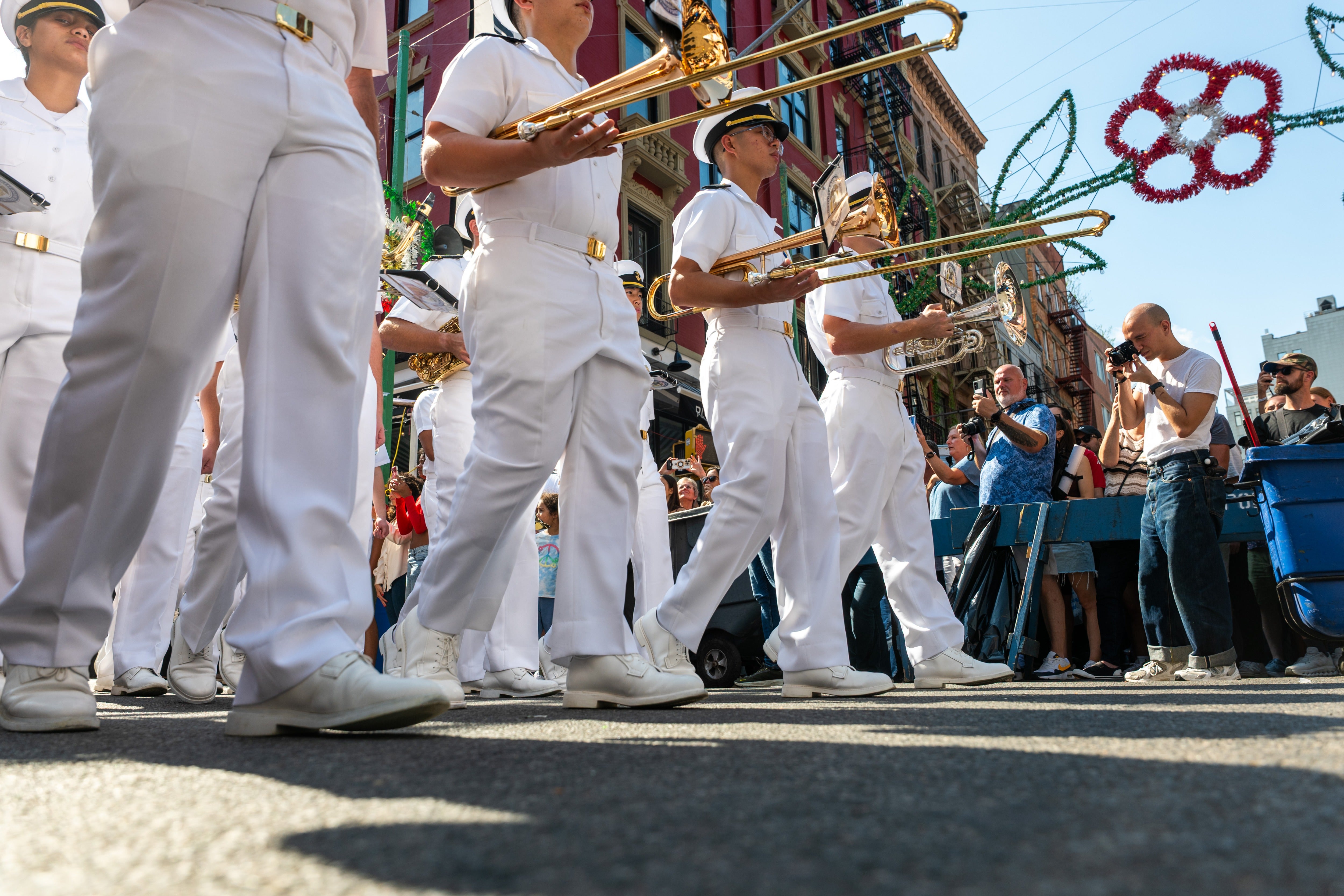
That first Feast of San Gennaro in 1926 gave Italian immigrants a rare opportunity to publicly profess the cultural identity they had left behind in Italy (Getty Images)
If anything, the fact that centuries-old rituals coexist with sweet Italian sausages and big, floppy pizza slices speaks to a lengthy, strenuous and beautiful process of cultural assimilation.
From the Bay of Naples to Little Italy
Between 1881 and 1920, over 4.5 million Italians immigrated to America. Thousands, most of whom hailed from southern Italy, settled on Manhattan’s Lower East Side to form what became Little Italy.
These “huddled masses” faced all sorts of difficulties: overcrowded tenements, trouble finding work, racial discrimination and suspicion of their southern Italian Catholic practices, particularly from Irish Catholics. The Italian procession of religious statues and the street parties that followed, the Irish argued, looked far too pagan and idolatrous to be considered “real” Catholicism. Irish suspicion of such practices were also shared by local Protestants.
But by the early 20th century, Italian communities had grown so large that they could fund their own Italian-speaking churches.
Advertisement
One such parish was the Church of the Most Precious Blood, built in 1904 on Baxter Street. In 1926, a group of parishioners led by Alexander Tisi organized a tribute to one of the most popular holy figures from southern Italy: St. Januarius, known in Italian as San Gennaro.
An early Christian bishop, Gennaro was brutally beheaded outside of Naples on Sept. 19 in AD 305 on account of his faith. His execution was one of several that took place during the Diocletian Persecutions, a systematic campaign against Christians by the Roman Empire.
Since then, southern Italians have attributed all sorts of miracles to his intercession, including extinguishing the volcanic fires of Mount Vesuvius in 1631.
Clare Whitton is a PhD Candidate in Medieval History, University of Oxford. This article is republished from The Conversation under a Creative Commons license. Read the original article .
Advertisement
He is also seen as something of a prophet. Since at least 1389, two vials purportedly containing the saint’s blood have been venerated in Naples because of their inexplicable ability to liquefy on his feast days. The liquefaction has long been interpreted as a sign of the saint’s protection. On the other hand, Italians viewed the blood staying solid as the sign of a looming catastrophe. The Allied bombings of Naples in 1943, for example, occurred after the blood failed to liquefy.
Since the later Middle Ages, Gennaro’s feast on Sept. 19 has been one of the most important dates on Naples’ calendar.
During medieval and Renaissance celebrations, pork was the meal of choice, with pigs often awarded to the winners of street games. Young men might wrestle a greased-up pig inside the Naples Cathedral, with the victor cooking the animal for supper.
The road to cultural assimilation
Advertisement
Centuries of devotion transformed San Gennaro into a symbol of Neapolitan identity. New York’s festival was designed to preserve those traditions.
That first Feast of San Gennaro in 1926 gave Italian immigrants a rare opportunity to publicly profess the cultural identity they had left behind in Italy.
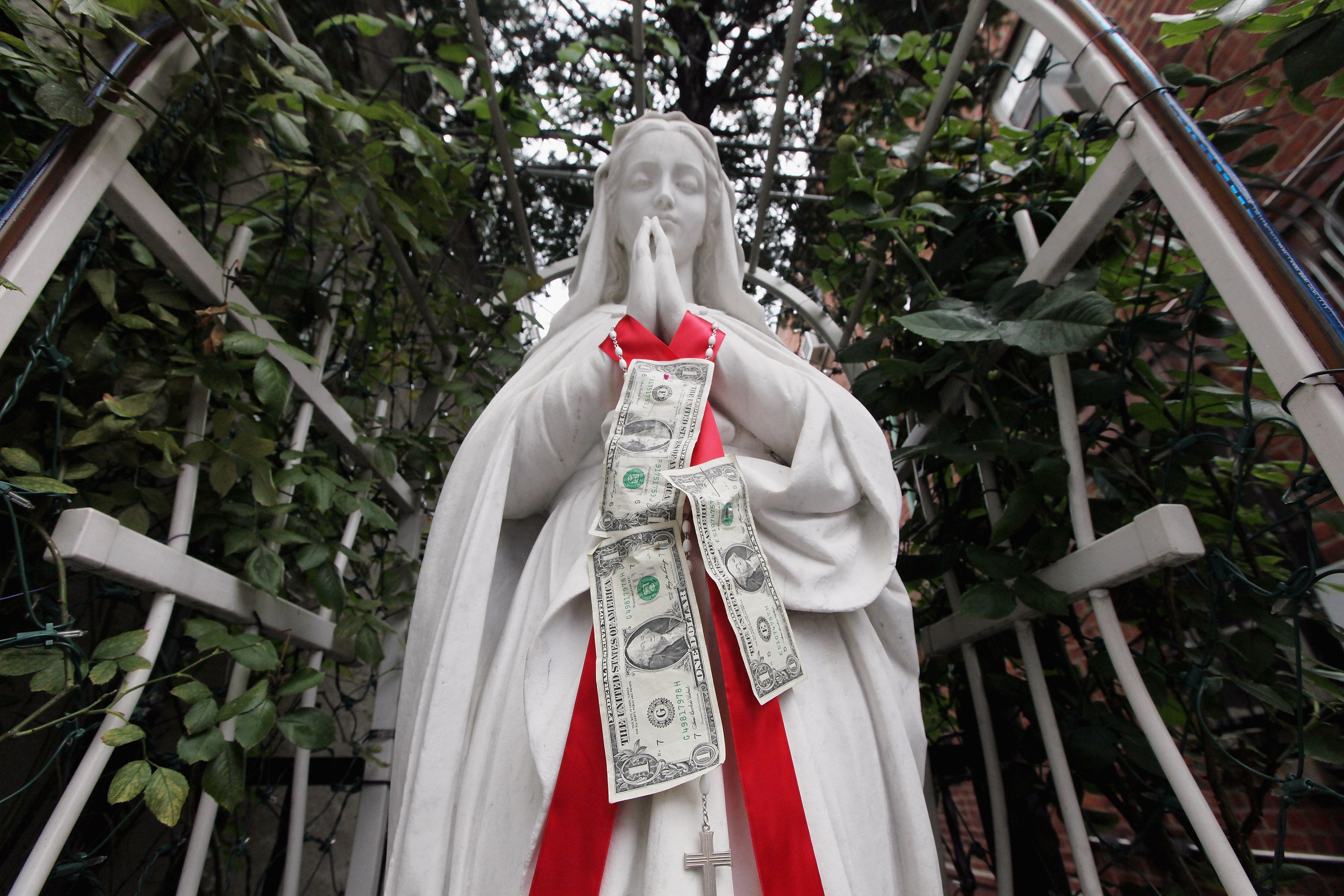
It began with a procession featuring a 3-foot statue of San Gennaro. Hoisted upon men’s shoulders, the saint traveled around the church and the surrounding streets. While en route, devotees tacked dollar bills to his body, as many still do today. There was no blood relic, but there was a purported bone fragment of Gennaro’s specifically donated for the occasion. The chip of bone was placed in a circular container called a reliquary and hung around the saint’s neck. Afterward, the Italians of Little Italy gathered around plates of roasted chicken to toast to their shared heritage and traditions.
The event was a big success. Just two years later, in 1928, The New York Times reported that thousands of ex-Neapolitans were congregating for a festival that had already extended from one day to a full week.
Advertisement
But with triumph came trouble. That same year, New York Police Commissioner Joseph Warren prohibited the procession, arguing that the dollar bills pinned to the statue represented the “profanation of sacred religious symbols.” The decision was ultimately reversed by a New York Supreme Court judge, on the grounds that Warren violated the populace’s religious liberties.
Over the years, the feast has faced its own challenges from within the Italian community (Getty Images)
Warren’s attempt to suppress the procession exemplifies the sort of religious prejudices plaguing Italian communities during that period. But it was not the only form of discrimination Italians faced.
The darkness of southern Italians’ skin subjected them to discrimination, birthing derogatory slurs like “guinea” or “swarthy.” The suspicion that Italian immigrants were prone to criminal behavior was reinforced by real mafia organizations, such as the infamous Black Hand.
These prejudices, combined with the establishment of Italian churches and feasts, led to the belief that Italian immigrants clung too strongly to the traditions of their homeland and refused to assimilate into American culture.
Non-Italians join the party
Advertisement
It was not until after World War II that outsiders no longer hesitated to participate in Italian culture and festivities.
In 1949, local newspapers reported that thousands of people of various ethnic backgrounds attended the riotous feast, where they watched Italians dance to folk songs in the streets and symphonic bands parade through the neighborhood beneath a new innovation: colored string lights casting pops of green, white and red along the city streets. Food played a big role: Stalls piled high with fresh clams, pasta and pastries promised non-Italians an authentic taste of Italy.
From there, attendance ballooned. In the 1960s, chartered buses ushered in Italians from states as far away as Maine and Ohio. By the 1970s, the feast had some 3 million visitors a year. Many locals today still recall how, in the 1960s and 1970s, young men climbed greased-up steel poles set out in the street in hopes of claiming a cash prize. The oily affair was squashed over safety concerns in the 1980s.
Over the years, the feast has faced its own challenges from within the Italian community.
Advertisement
In 2007, some inhabitants of Little Italy petitioned Mayor Michael Bloomberg to cancel the festival, citing the strain that tourists placed on the local neighborhood and mafia interference. In 1996, for example, 19 members of the Genovese crime family were arrested for gambling, collecting dues from vendors and even stealing money off Gennaro’s statue.
Nevertheless, Bloomberg declined to interfere. The event, he said, was a part of New York itself.
No one understands this more than the organizers of this year’s feast. When discussing the plans for 2026, the committee declared that this event was not just an Italian festival, but a tribute to New York’s cultural melting pot.
The 100th festival is dedicated to the Italian Americans who contributed to the city’s birth, an honor that arrives at a moment of controversy. Two months prior, Mayor Zohran Mamdani omitted Little Italy from a map of the city’s immigrant enclaves, sparking immediate backlash. While Mamdani vowed to reinsert the neighborhood, some argued that the omission accurately reflected the dwindling number of Italians living along Mulberry Street.
Advertisement
The controversy underscores the question fueling the centenary: How should the immigrants who built the city of New York be honored, even as the descendants of many of those immigrants have left their old neighborhoods for different parts of the country?
Perhaps the answer is this year’s grand marshal, San Gennaro himself, who continues to serve as a bridge between the children of the Italian diaspora and their forefathers, just as he did in 1926.
Judges for the prestigious Society of Editors Media Freedom Awards have shortlisted the Daily Mail and The Mail on Sunday in five categories, including the Daily Mail for National News Media Organisation of the Year.
Leading the charge in the Investigation of the Year category is The Mail on Sunday’s fearless exposure of Andrew Mountbatten-Windsor and Sarah Ferguson’s sordid links to Jeffrey Epstein. Its exclusives revealed the pair’s lies, greed and attempts to save their own skins – and forced the King to take the unprecedented step of stripping his brother of all his royal titles.
David Patrikarakos was recognised in the Commentator of the Year category for his astute and calm-headed analysis of current affairs, including sectarian politics, the threat posed by Iran and the changing nature of modern warfare.
Also picked out was multimedia reporter Mimi Yates. Her investigations into homeless delivery drivers and harassment on the London Underground brought the Mail’s first-class reporting to the TikTok generation, and earnt her a place on the shortlist for Social Media Journalist of the Year.
Advertisement
David Patrikarakos has been recognised in the Commentator of the Year category for his analysis of current affairs, including sectarian politics, the threat posed by Iran and the changing nature of modern warfare
Multimedia reporter Mimi Yates was also shortlisted for Social Media Journalist of the Year for her investigations into homeless delivery drivers and harassment on the London Underground
Piriyanga Thirunimalan received a nomination for Young Journalist of the Year for work on the Mail’s true-crime channel The Crime Desk
Advertisement
Piriyanga Thirunimalan, a reporter with the Mail’s true-crime channel The Crime Desk, received a nomination for Young Journalist of the Year for her brave door-step confrontation of convicted killer Michael Morton, as well as her sensitive and incisive interviews with victims of crime.
Announcing the full shortlist, Dawn Alford, chief executive of the Society of Editors, said: ‘We are delighted to celebrate this outstanding group of nominees and the contribution they make to a healthy, informed democracy.’
The item was discovered by a member of the public.
Isla Storie and Ruth Suter Chief Live News Reporter
20:35, 17 Sep 2026
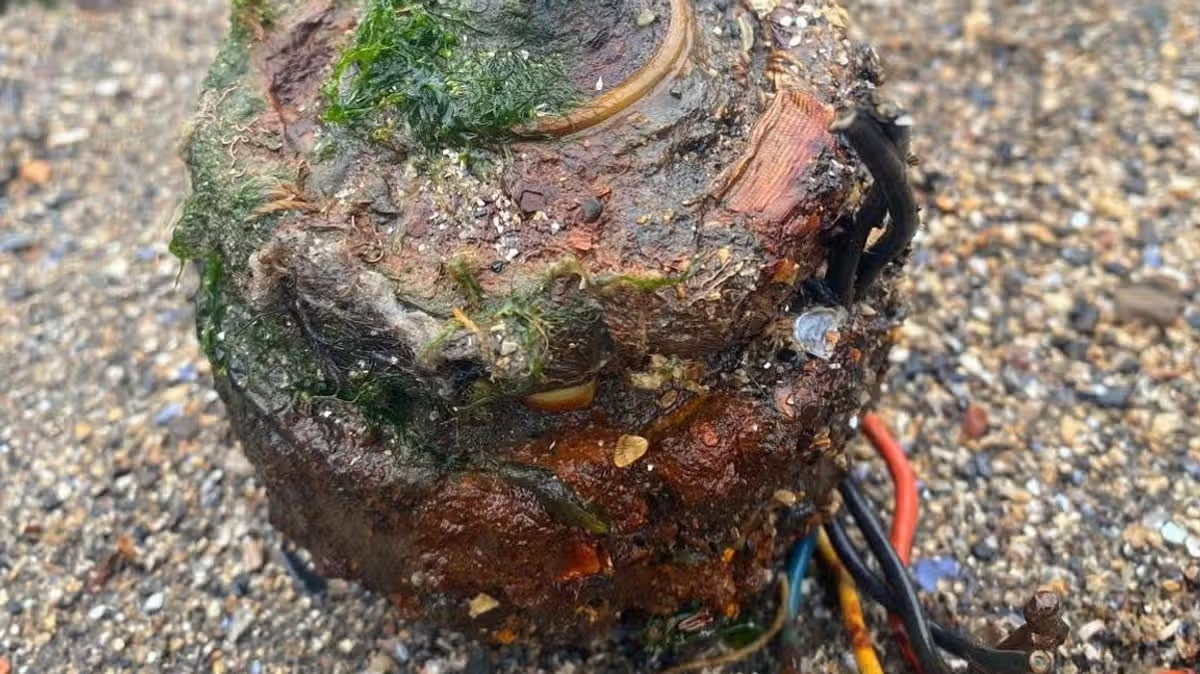
Bomb squads have been called to a street in Edinburgh after the discovery of a “grapefruit-sized suspect ordnance”.
British Army EOD and Coastguard crews scrambled to the incident in the capital’s Granton area at 3.45pm on Wednesday, September 16. The sizeable item was discovered by a member of the public.
As the caller provided pictures and an accurate location via what3words, responders were able to quickly assess the situation and deploy the appropriate resources.
Advertisement
Following examination, specialist Army officers confirmed the item was of no danger to the public. However, Edinburgh Live reports that it was convincing enough to warrant investigation.
The Coastguard reminded locals in its post: “If you ever discover a suspicious item, do not touch or move it. Keep a safe distance and contact the emergency services.”
Pictures show the large object, covered in rust, sediment and seaweed, with various coloured wires extending from its base.
Advertisement
Get more Daily Record exclusives by signing up for free to Google’s preferred sources. Click HERE.
Kim Kardashian has been afflicted with a condition with heartbreaking reminders of the disease that killed her father Robert Kardashian at age 59.
The latest trailer for season eight of The Kardashians reveals Kim was hospitalized with esophagitis, inflammation or irritation of the esophagus’ lining.
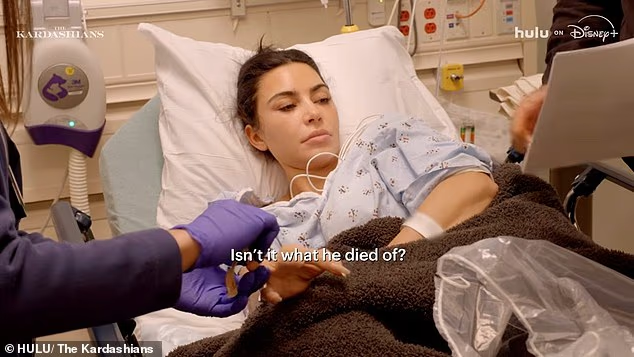
‘I have something called esophagitis,’ Kim tells her makeup team before she is shown laying on a hospital bed, looking weary as medical staffers tend to her.
Advertisement
A friend of Kim then asks if it’s the same condition Robert died from.
‘I can’t, it makes me want to cry,’ Kim’s mother, Kris Jenner, says.
Kim Kardashian has revealed she was afflicted with esophagitis, a condition with heartbreaking reminders to the illness her father Robert died of
Advertisement
Robert Kardashian died at age 59 from esophageal cancer in 2003
Kris was married to Robert for 13 years and shares Kim, Kourtney, Khloe, Robert Jr. with him before they parted ways in 1991.
In 2023, Kim recalled to GQ one of the final conversations she had with her father before his death from cancer aged 59 in 2003.
Robert told her: ‘I know you’re going to be okay. It’s almost like I can see ahead. I know you’re going to be okay, but just take care of your siblings for me. Just make sure you take care of them.
Advertisement
Kim said: ‘I took what he said to mean that I was going to be okay in life. But it made me make decisions differently.’
Kardashian’s death came four years before his family would shoot to worldwide fame on show, Keeping Up With The Kardashians, with Kim saying he would be proud.
Kourtney Kardashian added: ‘There are parts that are wonderful and amazing and I’m so grateful for and parts that can be hard—like my fight with my sister, where it drags things on in an unrealistic way because of the nature of our show.
‘We have to watch the edit and relive things then and then relive it at the interview. My dad was very much into the closeness of our family, so I think that those moments would make him cringe.’
Advertisement
Robert Kardashian was a defense attorney who gained worldwide recognition for being a part of the legal defense team of O.J. Simpson in 1995.
Kim was seen in a hospital bed, being tended to by medical staffers
A friend of Kim then asks if it’s the same condition Robert died from
Kim’s mother Kris Jenner became emotional, telling the camera, ‘I can’t, it makes me want to cry’
Advertisement
Robert Kardashian was married to his children’s mother, Kris Jenner (born Kris Houghton) from 1978 until 1991.
In 1998, seven years after the divorce was finalized, he married Jan Ashley; however, the marriage ended in annulment 30 days later.
After dating for three years, the Los Angeles native married his third wife, Ellen Pierson (née Markowitz), six weeks prior to his death.
Robert had not only been one of the lawyers for Simpson during his widely publicized murder trial, he had also been his friend for many years before the court proceedings, which ended with an acquittal for the former football great.
Advertisement
The reality sensation recounted the health issue with her hair and makeup team
Last year, on the 22nd anniversary of his death, Kim paid tribute to her father and thanked him for ‘always protecting the family from heaven.’
‘Can’t believe I was 22 years old when you passed away and it’s been 22 years today since you went to heaven,’ she wrote on her Instagram Stories.
‘I’ve known you just as long as you’ve been gone.
Advertisement
‘I hope you’re so proud of all of us. We love you dad and miss you soooooooooo much (sic)’
Sultani Bakatash, 29, claimed to have worked with the military for seven years before eventually coming to Bolton in 2022, fleeing his homeland after the return of the Taliban.
Bolton Crown Court heard how, while living in the town, Bakatash spoke to one of his two victims, both 14, via Snapchat before ultimately taking them back to his flat and raping them.
Charlotte Rimmer, prosecuting, said: “Once at the flat he plied them with alcohol to the point where they were slipping in and out of consciousness before seizing the opportunity to rape them.”
Bakatash, who wore a black gilet with a grey top and trousers in the dock, listened on through an interpreter speaking Dari, a language commonly spoken in Afghanistan, as the case was set out.
Advertisement
The case was heard at Bolton Crown Court (Image: Phil Taylor)
Ms Rimmer said the two girls had tried to push him off and hid in his bathroom as Bakatash, “intent on sexual gratification”, continued to force himself on them.
She said that video footage taken by the police in the aftermath of the assault showed just how vulnerable they were.
Bakatash had said during his trial that he had studied pharmacy and medicine in his native Afghanistan before working with the British military.
The 29-year-old had come to the UK under the asylum system in 2022 and stayed in a hotel for around a year and a half before his move to Bolton.
Advertisement
Sultani Bakatash has been jailed (Image: GMP)
Ms Rimmer told the court how, in December last year, Bakatash met the two girls in a churchyard near Bolton Station on December 6 after the two had been out past their curfew.
He then took them in an Uber back to his flat on Georgina Court, Middle Hulton, stopping along the way to buy alcohol.
Ms Rimmer said that both girls told him that they were 14 but this “did not dissuade him”.
Bakatash showed no visible reaction as Ms Rimmer described in detail how he assaulted both girls at the Georgina Court flat before one of them eventually broke out.
Advertisement
A court sketch of Sulatani Bakatash at an earlier hearing (Image: Elizabeth Cook/PA)
She was able to tell a neighbour that Bakatash had the other girl “locked” in his flat where he was raping her.
Bakatash was arrested shortly after and claimed in a prepared statement that one of the girls had met him several months before and claimed to be 19.
He at first claimed that all sexual activity had been consensual but changed his position when brought before the court and claimed no sexual contact had taken place.
But after a trial earlier this year, a jury of six men and six women convicted him of two counts of rape of a girl under 16 after just two hours of deliberation.
Advertisement
They also convicted Bakatash, of Georgina Court, Middle Hulton, of one count of sexual assault and two counts of assault by penetration.
Ms Rimmer said that one of the girls was left with severe lasting psychological damage, while another had shared to a social worker how angry it had left her.
But she said she was determined to move on and not to be defined by the events of that night.
Umar Shezhad, defending, said it was still the defence’s position that the two girls had asked Bakatash to buy the alcohol for them.
Advertisement
He said that the rapes were part of an “isolated incident” and there was no grooming element to it.
Mr Shezhad said it was “wholly out of character” for Bakatash, who has no previous convictions and who “worked for the British Army for a significant period of time, risking his life.”
But he said that though he maintained that he was not guilty, Bakatash was “deeply sorry for the pain and suffering he has caused everyone”.
Judge Kenderick Horne said that though the identity of the two girls can never be made public, he paid tribute to their courage and to those around Georgina Court who helped them.
Advertisement
He said it had been a “visibly diverse” community that had helped them.
Judge Horne said: “Their names can never be reported, but their bravery and that of those around them deserves to be remembered after your crimes have been forgotten.”
He noted a pre-sentence report that suggested Bakatash still posed a likely danger to children and to adult women.
Bakatash showed no visible reaction as Judge Horne jailed him for 14 years with an extended licence period of two years.
Advertisement
Judge Horne ruled that he must serve at least two-thirds of the 14 years before the parole board considers whether he is eligible for release, after which he may be deported.
He also made Bakatash subject to a lifetime notification order, a 20 year sexual harm prevention order and a restraining order against both girls.
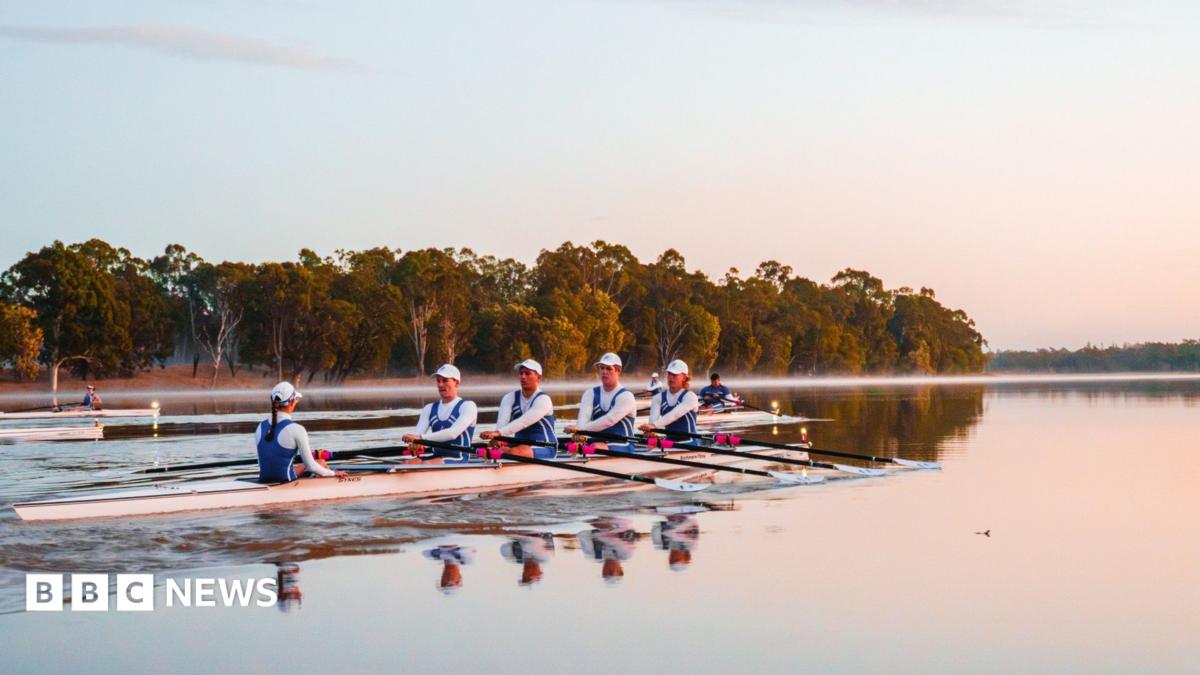
“Fairness” is what’s been raised with British Rowing’s chief executive Tom Solesbury – a reference to the tidal river’s natural bends and currents which many in the rowing community say make it unsuitable for elite competition.
Drew Ginn, who has won three Olympic gold medals for Australia in rowing, told BBC Radio he had concerns over potential flooding and “fairness and integrity” at the venue.
“Personally, I’m not fearful of the Australian animals but I’ve never had a crocodile near me,” he said.
“I’m sure I’d row faster, I’m sure all the athletes would row faster. That’s on the list of concerns, I don’t think it’s the highest priority in concerns but it was certainly cited very early on.”
Advertisement
The German rowing body’s president Moritz Petri said athletes had also questioned the sustainability of holding the event some 600km (373 miles) from Brisbane.
But the “so-called impediments” got short shrift from the most senior politician in Queensland, state premier David Crisafulli, who reached for less diplomatic language.
“Let’s be honest, let’s scratch beneath the surface and call it for what it is,” he said days after the Amsterdam meeting.
“It is a group of interstate and overseas elites who are trying to bully their way because they don’t want to go to regional Queensland and that’s not right.”
Advertisement
Rowing chiefs contacted by the BBC before Thursday’s decision declined to comment directly on Crisafulli’s “elites” remarks.
But both Petri and Simon Wickham, chief executive of Rowing New Zealand, said their concerns had nothing to do with regional or urban preference but with competitors getting fair racing.
Petri added it was about what’s best for their athletes who will train four years for the event, “dreaming night [after] night of becoming an Olympic champion”.
Inside Emily Atack’s raucous wedding reception as Stanley Tucci cheekily paws at wife Felicity Blunt while fellow champagne-guzzling guests let loose on the dancefloor
Emily Atack promised a ‘big, fat, f***-off party’ to describe her wedding celebration abroad, and judging by the photos from the night, she more than delivered.
There was no shortage of champagne at Emily and Alistair Gardner’s wedding as their guests quaffed bubbles out of coupe glasses before partying into the night.
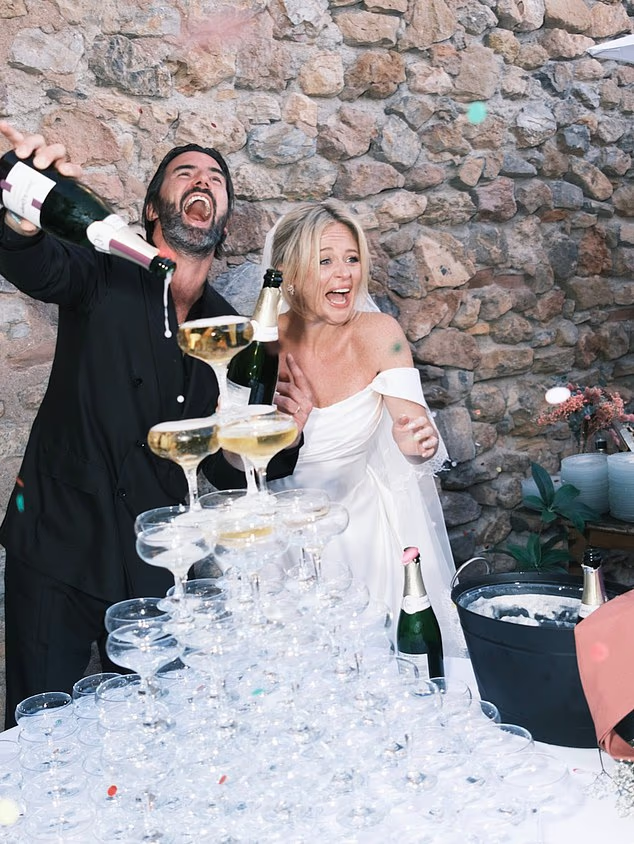
The party-loving couple were snapped pouring bottles of champagne over a tower of glasses, after marrying in the courtyard of a 16th-century church in the whitewashed hilltop town in front of 197 friends and family.
The Rivals actress, 36, invited a host of her co-stars to her Spanish wedding in Mojacar, where she tied the knot again following their UK ceremony last month.
Advertisement
The cast of the Disney+ series proved they could party just as hard as their raucous on-screen characters, as David Tennant, Alex Hassell, Rufus Jones, Bella Maclean and Victoria Smurfit were pictured dancing the night away.
Also in attendance was executive producer Felicity Blunt, who was joined by her actor husband Stanley Tucci, who couldn’t keep his hands off his wife.
Emily Atack has shared a look inside her boozy wedding reception after marrying her husband Alistair Gardner for the second time in Mojacar, Spain
Advertisement
The Rivals actress, 36, invited a host of her co-stars to her Spanish wedding in Mojacar (pictured top to bottom L-R Rufus Jones, Dominic Treadwell-Collins, David Tennant, Stanley Tucci, Felicity Blunt, Emily Atack and Bella Maclean)
Guests gathered round as Emily and Alistair enjoyed their first dance, with the scientist picking her up around the waist and spinning her around
Stanley was pictured pawing at his wife’s chest as several members of the wedding party gathered for a fun shot on the dancefloor.
Guests gathered round as Emily and Alistair enjoyed their first dance, with the scientist picking her up around the waist and spinning her around.
Advertisement
They were ferried to the reception venue on a coach with ‘Emily & Alistair’ lit up on the front of the vehicle.
At the ceremony, Emily was met by her popstar father, Keith Atack, 67, who was wearing flip flops to walk his eldest daughter down the aisle.
The registrar said: ‘I expect some of you in here are experiencing some Deja vu’ in reference to her first wedding three weeks earlier in Bedfordshire.
The Inbetweeners star wore a veil and an off-the-shoulder gown with a long train as she pulled up with her chief bridesmaid.
Advertisement
Guests were left waiting almost two hours at the drinks reception for Emily to arrive.
David Eagle, an award-winning British comedian and folk musician who has written stand-up material performed on The Emily Atack Show for ITV2, acted as registrar.
After the ceremony, Emily and Alistair walked through a shower of rose petals before leading the champagne toast and mingling with guests.
The congregation then moved down the steps and were treated to a three-course meal consisting of starter options of cod risotto or mandarin sorbet.
Advertisement
Pictured: Rufus Jones, Dominic Treadwell-Collins, David Tennant, Emily Atack, Bella Maclean and Stanley Tucci
The party-loving pair were snapped pouring bottles of champagne over a tower of glasses, after they married in the courtyard of a 16th century church in the whitewashed hilltop town in front of 197 friends and family
Emily’s father Keith Atack joined her almost 200 strong wedding party
Emily looked stunning in an ivory off-the-shoulder satin gown and lace veil
Advertisement
Emily and her sister Martha rode in a Cadillac to the ceremony
Main course was shredded suckling pig with pumpkin compote and roasted apples.
Dessert was mango mousse with nougat ice cream and raspberry coulis with rum on the rocks and coffee afterwards.
Every table on the seating chart was named after the word ‘Love’ in different languages including German, Scottish Gaelic, Hawaiian, Greek, Swahili, Korean, Spanish, Arabic, Indonesian, Fijian and Pilipino.
Advertisement
Rivals writer, Dominic Treadwell-Collins was also in attendance.
Notable absences from the Disney+ cast included Aidan Turner and Danny Dyer. It comes after it was revealed Ms Atack’s ITV gameshow with the former EastEnders actor, Nobody’s Fool, has been dropped after one season.
Tellingly, Ms Atack’s former castmates from the Inbetweeners franchise were not there.
Last week it was announced the beloved show would return for a third film but it was unclear if the actress would reprise her role as Charlotte Hinchcliffe, which found her fame.
Advertisement
Emily wore a dress from Evelie with a sweetheart neckline and long train
They were ferried to the reception venue on a coach with ‘Emily & Alistair’ lit up on the front of the vehicle
Laura Whitmore and Iain Stirling were in attendance at the wedding
The couple posed together at their reception as Emily held her beautiful bouquet
Advertisement
A personalised plaque welcomed guests to the party
The couple married in the courtyard of a 16th century church
A GROUP of artists are preparing to showcase their work at an annual print fair.
The York Printmakers Annual Print Fair will take place this weekend – from September 19 to 20 – at York Cemetery, where visitors can explore a wide range of handmade prints, including linocuts, etchings, collagraphs, and wood engravings.
More than 20 artists will be exhibiting and selling their work during the two-day event, which runs from 10am to 5pm in the Chapel and Harriet Room.
Among those taking part is Jen Dring, who discovered printmaking after watching a linocut demonstration.
Advertisement
Jen said: “I was instantly fascinated.
“I’ve never looked back.”
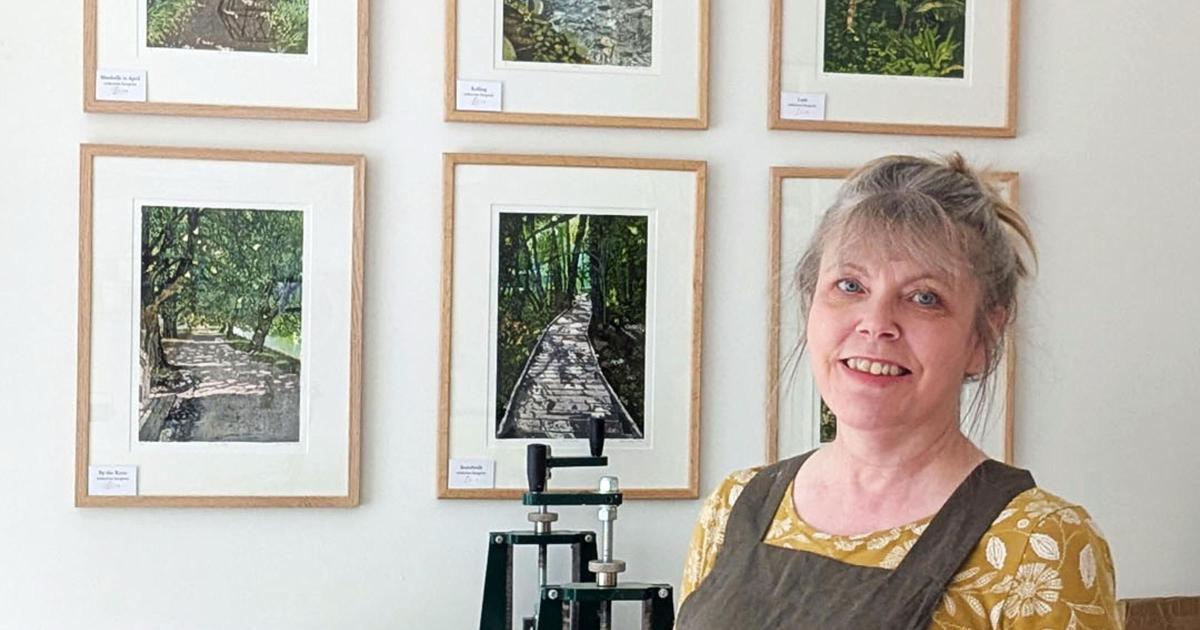
Jen Dring in her studio (Image: Supplied)
Jane Duke, another member of the collective, said the appeal lies in both the process and the people who share it.
Jane said: “It’s not just the element of surprise.
Advertisement
“It’s the generosity of the printmaking community that keeps me coming back.”
Jane Duke in her studio (Image: Supplied)
Roger Goldthorpe, who began printmaking after retirement, has turned a brief exploration into a lasting passion.
Now 79, he continues to produce original work and demonstrates that creativity is not limited by age.
Roger Goldthorpe in his studio (Image: Supplied)
Recommended reading:
Advertisement
Jen Dring’s lino print, titled Reflections (Image: Supplied)
Each print is handmade, with subtle differences that give every piece its own character.
Visitors will have the opportunity to meet the artists, learn about their techniques, and purchase artwork directly from the makers.
Admission to the event is free.
The York Printmakers Annual Print Fair will take place at York Cemetery, YO10 5AJ, on September 19 and 20 from 10am to 5pm.
Advertisement
More information can be found at www.yorkprintmakers.org.uk or by following @yorkprintmakers on Instagram.
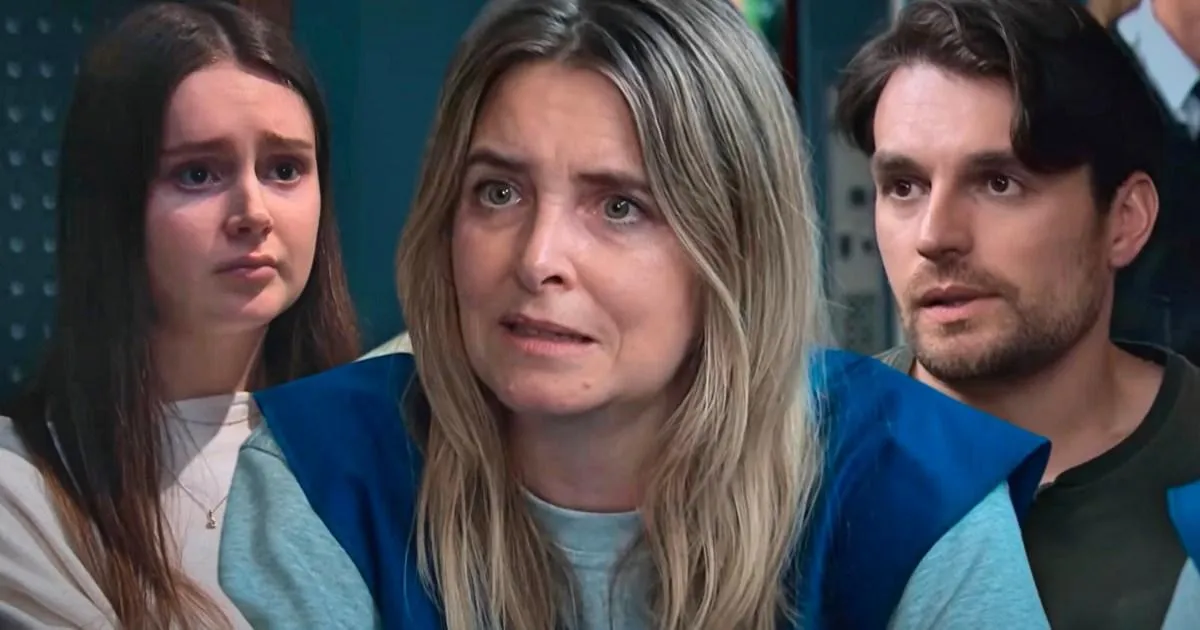
Sarah, as viewers know, was appalled to discover the truth about baby Leyla being her gran and Ross Barton’s (Michael Parr) biological child and, in a bid to punish her, she went to the police and claimed that Charity had murdered Dr Todd (Caroline Harker) in cold blood.
After much intervention, Sarah finally saw the light and went to the police to change her statement once more, revealing that she was just trying to teach her gran a lesson, reiterating that Charity is innocent.
Advertisement
But despite this, the police didn’t seem to believe her, meaning it’s all up to a jury now to decide Charity’s fate. Mack was speechless. Is Charity’s fate sealed thanks to Sarah’s meddling?
Advertisement
If you’re eager to find out what’s to come following tonight’s edition of the ITV soap, you’re in luck as here’s what tomorrow will bring.
What happens next in Emmerdale? Spoilers for Friday, September 18 episode
Following tonight’s cliffhanger, Mack will no doubt struggle to come to terms with the latest update on Charity’s future. Charity has entered a not guilty plea, which means a trial is an inevitability at this stage.
With Sarah’s efforts having failed to get her gran out from behind bars, her fate now lies solely in the hands of a jury. Will Charity be able to convince the jury of her innocence? Or is a tragic fate sealed at this stage?
Lewis pops the question! (Picture: ITV)
Elsewhere, Lewis Barton (Bradley Riches) gets fed up of waiting for Vinny Dingle (Bradley Johnston) to pop the question and thus he decides to get down on one knee.
Ask Metro
Advertisement
Use AI to go deeper into the stories you care about – powered by Metro and trusted publications.
Vinny’s reaction, however, isn’t the one he hoped for.
The long-awaited showdown between Kim Tate (Claire King) and Sadie King (Patsy Kensit) is almost upon us too, with the Home Farm legends having a hostile run-in in the village.
Advertisement
Sadie drops a bombshell on Cain (Picture: ITV)
And speaking of Sadie, she subsequently pays Cain (Jeff Hordley) a visit, demanding the money he stole from her two decades ago. Cain rejects such a demand – that is until she drops a mammoth bombshell.
Joe (Ned Porteous), meanwhile, relents and allows Clemmie and Lucas to attend Dawn’s (Olivia Bromley) funeral with Billy (Jay Kontzle) – but he’s got a trick up his sleeve.
Emmerdale airs these scenes Friday, September 18 at 8pm on ITV1 or stream from 7am on ITVX or YouTube.
If you’ve got a soap or TV story, video or pictures get in touch by emailing us soaps@metro.co.uk – we’d love to hear from you.
















































You must be logged in to post a comment Login