Connect with us

Business

Beauty Tech Group profit triples as LED face masks drive at-home beauty boom

Published

on

Business Live

Manchester-founded company floated on the London Stock Exchange last year

A Ziip Dot Nanocurrent and Microcurrent Acne Treatment Device from the Beauty Tech Group

A Ziip device from the Beauty Tech Group(Image: The Beauty Tech Group)

The Beauty Tech Group has more than tripled its first-half profits as surging demand for at-home beauty devices drove sales up by over 40 per cent.

Advertisement

The owner of Currentbody Skin, ZIIP Beauty and Tria Laser posted pre-tax profits of £17.5m for the six months ending June, up from £5m the previous year. Revenues jumped 44.3 per cent to £79.7m, from £55.2m, while gross profit increased 52.8 per cent to £51.3m.

The Manchester-founded firm, which floated on the London Stock Exchange last October at a valuation of some £300m, has capitalised on rising consumer appetite for devices that bring treatments formerly confined to beauty salons into people’s homes.

Its most recognisable products include CurrentBody’s LED face masks, which employ varying wavelengths of light in treatments designed to enhance skin quality.

The Alderley Edge-based group said first-half trading had exceeded expectations and now anticipates full-year revenues of at least £170m, maintaining the upgraded guidance it issued in July, as reported by City AM.

Advertisement

It also lifted its expectations for underlying earnings, though the company stopped short of providing fresh statutory profit forecasts.

The business closed June with £52m in net cash after accounting for liabilities and zero debt, up from £40.8m at the end of 2025, and has separately unveiled plans to repurchase up to £20m of its own shares. No interim dividend will be distributed.

“At-home beauty technology is the fastest-growing part of the beauty market and we are uniquely positioned to take advantage of it through our three distinct brands: CurrentBody Skin, ZIIP Beauty and Tria Laser”, founder and chief executive Laurence Newman said.

“We have entered the second half, typically our strongest period of trading, with real momentum and a significant launch pipeline”.

Advertisement

The figures arrive less than a year after Beauty Tech Group made its London market debut, in one of comparatively few notable floats on the struggling exchange last year.

The business raised approximately £29m through the IPO, enabling it to eliminate external debt. Its inaugural annual results since listing, released in April, revealed turnover had climbed 39.4 per cent to £141m in 2025, while gross profit jumped 53.9 per cent to £88.3m.

Roughly 80 per cent of its sales were generated beyond the UK and Ireland last year, with the group trading across more than 90 markets.

Its swift expansion has been driven by Currentbody Skin, which has helped transform the somewhat disconcerting spectacle of an illuminated face mask from something akin to a science fiction prop into a staple of beauty regimes and social media platforms.

Advertisement

Currentbody introduced its first LED light therapy mask in 2018, when persuading customers to fasten a glowing contraption to their face demanded considerably more justification. “It was definitely a real challenge in the early days” Emily Buckwell, associate communications director at Currentbody, told City AM ahead of the results.

“The science on LED light therapy was already there, but consumer awareness wasn’t, so it was about finding the right balance between educating people and normalising the idea of actually wearing the mask”.

The firm has since developed a third generation of its LED range, set to launch in the second half of the year following two years of research and testing.

The Beauty Tech Group is based at Alderley Park, Cheshire. Pictured is a CurrentBody Skin Face Mask

The Beauty Tech Group is based at Alderley Park, Cheshire(Image: The Beauty Tech Group)

Beauty Tech Group is also investing in its own laboratory, due to open in early 2027, while research conducted alongside the University of Manchester is exploring how skin changes following the use of at-home LED devices.

Advertisement

ZIIP Beauty, meanwhile, has completed manufacturing adjustments ahead of a new product range rolling out in the second half of the year, as the group also moves to bring its European warehousing operations in-house.

The company remains confident there is substantial room for growth within the category. Beauty technology currently accounts for just one per cent of consumer beauty spending across its core markets, according to the group.


Continue Reading
Click to comment

You must be logged in to post a comment Login

Leave a Reply

Business

SPXX: Buy The Discount, Collect The Premium, Encash The Consolidation

Published

on

Save money. children putting coin for saving. wealth, Finance, insurance, investment, education, future, plan life, learn, banking, family, health, health and accident insurance.

SPXX: Buy The Discount, Collect The Premium, Encash The Consolidation

Continue Reading

Business

Why Axon Stock Got Slammed By Convertible: It’s The Cash Flow

Published

on

Why Axon Stock Got Slammed By Convertible: It's The Cash Flow

Axon Enterprise (AXON) failed to bounce early Wednesday, a day after being among the biggest S&P 500 losers on Tuesday, as investors reacted negatively to its plan to issue $1 billion in 0% convertible notes. The Taser-maker said proceeds will fund operations, acquisitions, investments and the cost of the capped-call transaction, which is a hedge designed to limit share dilution.…

Copyright ©2026 Investor’s Business Daily, LLC. All rights reserved. 87990cbe856818d5eddac44c7b1cdeb8

Continue Reading

Business

Retail Sales Growth Rebounded 1.2% in August, Beating Expectations

Published

on

Retail Sales Growth Rebounded 1.2% in August, Beating Expectations

Sales growth at U.S. retailers rose in August, rebounding from its decrease in July, the Commerce Department said.

Retailers’ sales rose by 1.2% last month to $773.9 billion, versus the 0.5% decrease recorded in July. The August reading was higher than the 0.8% increase economists polled by The Wall Street Journal expected.

Copyright ©2026 Dow Jones & Company, Inc. All Rights Reserved. 87990cbe856818d5eddac44c7b1cdeb8

Continue Reading

Business

Higher jet fuel prices prompt airlines to adjust flight schedules

Published

on

Higher jet fuel prices prompt airlines to adjust flight schedules

Executives from American Airlines, United Airlines and Southwest Airlines said Wednesday that higher jet fuel prices are prompting carriers to adjust capacity and closely monitor flight schedules.

The global average jet fuel price rose 6.1% week over week to $181.46 per barrel last week, according to the International Air Transport Association (IATA).

Advertisement

Speaking at Morgan Stanley’s 14th Annual Laguna Conference, American Airlines Chief Financial Officer Devon May said fourth-quarter jet fuel prices are running about $1 per gallon above what the airline projected in July, adding roughly $1 billion to its fuel bill.

“Overall for the third quarter, we feel great,” May said. “What’s happened in the last four weeks, though is fuel’s run up probably $1 a gallon or something like that for the fourth quarter alone.”

AVELO CEO WARNS AIRFARES MAY RISE AS FUEL PRICES HIT ‘UNCOMFORTABLY HIGH’ LEVELS

American Airlines planes at Phoenix Sky Harbor International Airport

American Airlines CEO Robert Isom said the airline still expects third-quarter revenue to rise 16% to 19% from a year earlier. (Alex Tai/SOPA Images/LightRocket via Getty Images)

May said American will continue adjusting capacity later in the fourth quarter in response to higher fuel costs.

Advertisement

American Airlines CEO Robert Isom said the airline still expects third-quarter revenue to rise 16% to 19% from a year earlier, citing strength across domestic and international markets as well as both premium and economy cabins, according to Reuters.

“When you take into account fuel right now, yes, we’ve absolutely done a great job of recapturing a tremendous amount of that expense,” Isom said.

United Airlines Chief Financial Officer Michael Leskinen said some flights planned for December will no longer operate because of higher fuel prices.

“As you look into the fourth quarter, there’ll be some flights in December that we won’t fly that we thought we were going to fly,” he said at the Morgan Stanley conference. “If fuel remains high, we’ll make some adjustments into the first quarter and beyond into 2027.”

Advertisement

AIRLINE PASSENGERS ROCKED BY TURBULENCE DURING DESCENT: ‘WE STARTED TO PLUMMET’

A United Airlines plane takes off at

Leskinen also described United’s fourth-quarter bookings as “tremendously strong,” saying premium travel, corporate demand and economy bookings have all remained resilient. (Tayfun Coskun/Anadolu Agency via Getty Images)

Leskinen also described United’s fourth-quarter bookings as “tremendously strong,” saying premium travel, corporate demand and economy bookings have all remained resilient.

“Bookings have continued as we expected, so that piece of the equation is resilient — very little evidence of demand destruction,” Leskinen said.

At the conference, Southwest Airlines Chief Financial Officer Tom Doxey said the carrier has already pared back about half of the modest year-over-year capacity growth it had planned at the start of 2026. 

Advertisement

“If fuel is higher for longer,” Doxey said, trimming capacity would be the “natural response.”

However, a spokesperson for the airline told FOX Business the schedule adjustments made so far have been minimal and that Doxey was making an “illustrative point” about trimming capacity and was “not alluding to an action we’ve taken.”

TSA REVIVES PRE-9/11 TRADITION WITH GATE ACCESS FOR CERTAIN TRAVELERS WITHOUT TICKETS

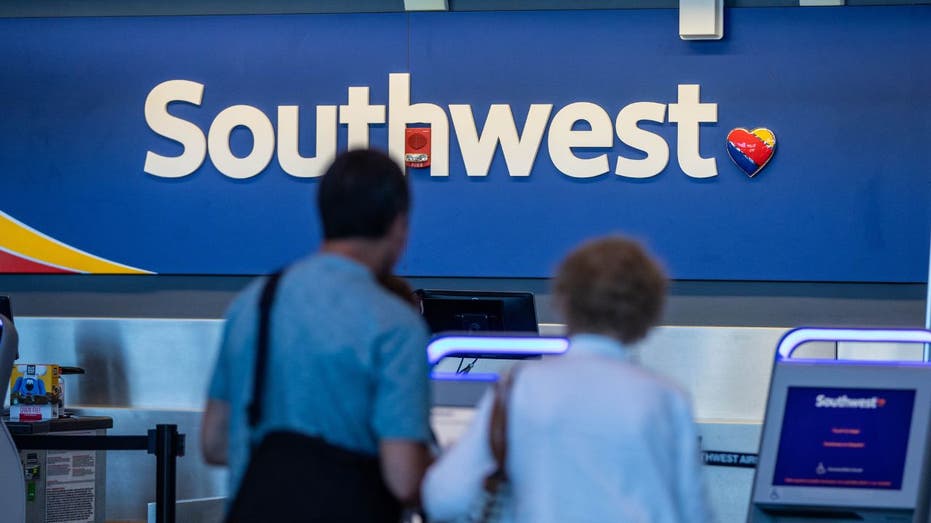
Southwest passengers check in

Southwest Airlines Chief Financial Officer Tom Doxey said the carrier has already pared back about half of the modest year-over-year capacity growth it had planned at the start of 2026.  (Scott Eisen/Bloomberg via Getty Images)

Doxey added that stronger-than-expected fall bookings have helped offset higher fuel costs, allowing Southwest to maintain its third-quarter earnings guidance, according to Reuters.

Advertisement

GET FOX BUSINESS ON THE GO BY CLICKING HERE

Spokespersons for American Airlines and United Airlines told FOX Business the carriers had nothing further to add.

Reuters contributed to this report.

Advertisement
Continue Reading

Business

NSE IPO: Issue subscribed 42% on Day 1; GMP signals 9% listing gain. Should you subscribe?

Published

on

NSE IPO: Issue subscribed 42% on Day 1; GMP signals 9% listing gain. Should you subscribe?
The NSE IPO witnessed steady investor response, with the issue subscribed 42% at the end of bidding on Day 1. The company received bids for 3.7 crore shares on Thursday against 8.86 crore shares available for public subscription. The retail portion was subscribed 42%, against 4.41 crore shares reserved for the category.

Meanwhile, the grey market premium (GMP) for the NSE IPO was hovering around 9%, signalling expectations of a moderate listing gain.

The Rs 22,569 crore issue is entirely an offer for sale of 12.64 crore shares. NSE will not receive any proceeds from the IPO, as the funds will go to the selling shareholders. The price band has been fixed at Rs 1,700-1,785 per share, with a lot size of eight shares.

At the upper end of the price band, the minimum retail application amounts to Rs 14,280, while the post-issue market capitalisation works out to about Rs 4,41,788 crore. The issue will close on September 21, and the stock is expected to list on the BSE on September 24.

Advertisement

NSE IPO Subscription Status

At the end of Day 1, the NSE IPO was subscribed 42% overall, against the 8.86 crore shares on offer.

  • Retail Individual Investors (RIIs): Subscribed 43% against 4.41 crore shares offered.
  • Non-Institutional Investors (NIIs): Subscribed 70% against 1.89 crore shares offered.
  • Qualified Institutional Buyers (QIBs): Subscribed 19% against 2.52 crore shares offered.

NSE IPO GMP today

The grey market premium for NSE IPO is around 9%, signalling moderate listing expectations. The GMP suggests positive sentiment, but not the kind of sharp listing pop usually seen in smaller issues. Given the large size of the offer and the already rich valuation, listing gains may be measured.

Should you subscribe to NSE IPO?

Brokerage views are mostly positive for the IPO. At the upper price band of Rs 1,785, NSE is valued at 42.9 times FY26 earnings. LKP Securities has given a “Subscribe” rating to the IPO and said NSE’s post-issue implied market cap stands between Rs 4.2 lakh crore and Rs 4.42 lakh crore.YES Securities has also recommended “Subscribe”, saying NSE is available at a 21% discount to BSE on P/E. It said BSE trades at 54.3 times FY26 diluted earnings, while NSE is priced at 42.9 times at the cap price.

For long-term investors, analysts say NSE offers a rare chance to own India’s dominant market infrastructure company. Its strong margins, debt-free balance sheet, market leadership and rising investor base support the long-term case.

Advertisement

But investors should not ignore valuation and regulatory risks. At 42.9 times FY26 earnings, the IPO is not cheap. The business is also closely tied to trading volumes, especially options. A 9% GMP shows demand is positive, but not euphoric.

Also read: $46 billion IPO: NSE is the world’s most expensive stock exchange. Can it also become the most valuable?

Angel One said NSE’s valuation at the upper price band of ₹1,785 translates to a post-issue P/E of 35.4x, lower than BSE’s 54.2x, making the issue attractive relative to its key peer. The brokerage highlighted NSE’s dominant market position, strong profitability, leadership in equity derivatives and long-term growth potential in India’s capital markets. Despite near-term regulatory headwinds, Angel One believes the valuation offers a favourable entry point and has recommended “Subscribe” to the IPO.

NSE IPO business model

NSE is India’s largest stock exchange and runs a vertically integrated platform across trading, clearing, listing, data services and index licensing. Its products span cash market, futures, options, mutual funds, commodity derivatives, currency derivatives, wholesale debt market and interest rate futures.

Advertisement

The exchange has held the top position in India by cash market turnover and equity derivatives turnover from FY01 to FY26. As of June 2026, NSE supported 132.4 million unique registered investors, 1,328 trading members and 3,005 listed entities with market capitalisation of about Rs 474.1 trillion.

NSE IPO strengths

NSE’s biggest strength is its near-dominant market position. Its market share stood at about 93% in the cash market, 99.7% in equity futures and 68.5% in equity options by premium turnover as of June 2026.

YES Securities said almost all of India’s listed equity trading risk flows through one platform. It said NSE’s advantage is not just pricing, but a liquidity cycle where orders go where spreads are tight, companies list where trading activity exists, and deeper markets attract more participants.

NSE IPO financials

NSE reported revenue from operations of Rs 16,601 crore in FY26, down 3.1% from Rs 17,141 crore in FY25. Profit after tax fell to Rs 10,302 crore from Rs 12,188 crore. In Q1, revenue stood at Rs 4,560 crore, while PAT came in at Rs 3,120 crore.

Advertisement

Read more:NSE IPO Tracker: Catch all the highlights here

Despite the fall in FY26 profit, margins remain strong. SBI Securities pegged NSE’s EBITDA margin at 67.6% in FY26 and 77.9% in Q1. PAT margin stood at 62.1% in FY26 and 68.4% in Q1.

NSE IPO risk factors

The main risk is dependence on transaction charges. NSE earned 78.7% of its FY26 revenue from transaction charges. Options alone contributed 60.2% of revenue from operations in FY26. This makes regulatory changes in derivatives an important watch point. YES Securities noted that NSE’s equity options market share by premium turnover has fallen from 96.86% in FY24 to 74.71% in FY26 and 68.48% in the June 2026 quarter.

Disclaimer: The views/recommendations mentioned in this article, wherever applicable, are those of the respective SEBI-registered Research Analyst/brokerage and have been reproduced/reported with due attribution. They should not be construed as the views or recommendations of The Economic Times Digital or the journalist. Readers are advised to consider the original research report and make their investment decisions based on their own assessment. Brokerage disclaimers here

Advertisement
Continue Reading

Business

Oscar Health’s Big ACA Gamble Is Paying Off. Here’s The Caveat.

Published

on

Oscar Health Stock Sinks Amid This Second-Half Risk

Oscar Health (OSCR) raised its full-year earnings outlook while lowering its expected medical costs to cover benefits for its nearly 3 million Affordable Care Act exchange members. OSCR stock climbed in early Wednesday stock market action ahead of its 9 a.m. ET investor conference. Oscar, which made an aggressive play to gain ACA market share, has seen enrollment surge 47%…

Copyright ©2026 Investor’s Business Daily, LLC. All rights reserved. 87990cbe856818d5eddac44c7b1cdeb8

Continue Reading

Business

How Fed rate hike can impact Bitcoin and other crypto investors

Published

on

How Fed rate hike can impact Bitcoin and other crypto investors
The US Federal Reserve raised its benchmark rate by 25 basis points to 3.75–4% on September 16. Crypto investors now have to assess how much of the tightening is already reflected in prices and how much more could follow. The cost of getting that distinction wrong is buying into a recovery that depends on rate cuts the Fed has little reason to deliver.

Bitcoin had weakened well before the announcement. It touched $82,163 on 4 September. By the afternoon of 16 September in India, ahead of the Fed decision, it was near $75,743. That was a fall of roughly 8%. Any account that attributes the entire decline to the hike gets the sequence wrong.

Bitcoin was trading around $75,000–$76,000 after the decision. Holding near those levels suggests that some of the expected tightening was already reflected in the price. It does not establish how Bitcoin will respond to a longer period of higher rates.Investors were also pulling money out of US spot Bitcoin ETFs. Withdrawals totalled $450.4 million on 15 September and $295.9 million the following day, according to Farside Investors. That is $746.3 million across two sessions. Two days do not establish a trend, and the first session preceded the announcement. They do make it premature to say the market has taken the decision in its stride.

Higher rates make the choice facing investors more demanding. Short-term government debt offers income with far less price uncertainty than Bitcoin. Bitcoin pays no interest of its own. Investors buying it must be willing to accept volatility for what they believe it can deliver over time.

Advertisement


Institutional investors make that calculation too. A fund manager can believe in Bitcoin and still reduce an allocation because borrowing has become more expensive or clients want less risk. Institutional participation cannot be treated as a permanent commitment to buy. The same investment committees that approve an allocation can cut it.
The source of inflation deserves closer attention. The conflict involving the US, Israel and Iran has added energy costs to an economy already struggling with persistent inflation. Higher rates cannot restore disrupted oil supplies. They can restrain spending and reduce the chance that an initial jump in fuel prices spreads into more lasting price increases.It would still be too convenient to describe this as an oil problem alone. The Fed reports resilient domestic spending and robust investment. Its median forecast puts core inflation, which excludes food and energy, at 3.4% this year. There is enough underlying inflation to make an early reversal of policy difficult to assume.

An energy shock does not, by itself, weaken the case for using blockchain to settle transactions more efficiently. Nor does it change Bitcoin’s supply rules. But preserving an investment argument is different from preserving demand. A household paying more for fuel has less money available to invest. A fund facing redemptions may sell an asset it still believes in. Bitcoin’s scarcity cannot prevent either decision.

The pressure also extends beyond the US. The European Central Bank raised rates by 25 basis points on 10 September, citing inflation pressures from the Middle East conflict. The Bank of England’s next decision was scheduled for 17 September. That warrants attention to policy across major economies, without assuming that their decisions are coordinated or that all will take the same course.

If more central banks tighten, crypto faces a broader constraint on funding and investor appetite. Capital can still move between countries, but fewer markets will offer cheap borrowing. For an asset class traded globally, looking only at the Fed leaves part of the picture out.

Even here, it is important to be precise about liquidity. The Fed says it will maintain ample reserves in the banking system. A rate increase does not automatically mean those reserves are being withdrawn. Crypto trading can nevertheless become thinner if buyers commit less money or market makers reduce the size of their orders. Forced selling from leveraged positions can then push prices down faster, particularly in smaller tokens.

Advertisement

The Fed’s projections suggest this adjustment may take time. Sixteen of 18 Fed officials envisage at least one further hike this year. The median implies a year-end range of 4–4.25%, unchanged at the end of 2027. Eight Fed officials see 4.25–4.5% for 2027. These are individual assessments, not a promised timetable, but they give investors little basis for assuming that cheaper money is imminent – liquidity may not ease as quickly as markets had hoped.

For Indian investors, the rupee adds another calculation. If the dollar strengthens against it, a fall in Bitcoin’s dollar price can translate into a smaller decline in rupee terms. That currency effect should not be mistaken for stronger demand for Bitcoin. It can reverse too.

Over the coming weeks, buying behaviour, and ETF inflow pattern and volume will tell us more than the first reaction to the announcement. A recovery financed largely by borrowing would leave the market exposed to another round of forced selling. For now, the industry needs to observe whether users continue being interested in crypto investment if the next rate cut takes much longer than expected.

(The author is Vice President, WazirX)

Advertisement
Continue Reading

Business

Blackstone Now Offers Yield Plus Growth That Is Too Big To Ignore (NYSE:BX)

Published

on

Dollar Tree: Buy The Recent Weakness

This article was written by

Samuel Smith has a diverse background that includes being lead analyst and Vice President at several highly regarded dividend stock research firms and running his own dividend investing YouTube channel. He is a Professional Engineer and Project Management Professional and holds a B.S. in Civil Engineering & Mathematics from the United States Military Academy at West Point and has a Masters in Engineering from Texas A&M with a focus on applied mathematics and machine learning.Samuel leads the High Yield Investor investing group. Samuel teams up with Jussi Askola and Paul R. Drake where they focus on finding the right balance between safety, growth, yield, and value. High Yield Investor offers real-money core, retirement, and international portfolios. The service also features regular trade alerts, educational content, and an active chat room of like-minded investors. Perspective: “Do not store up for yourselves treasures on earth, where moth and rust destroy, and where thieves break in and steal. But store up for yourselves treasures in heaven, where neither moth nor rust destroys, and where thieves do not break in or steal; for where your treasure is, there your heart will be also … For what will it profit a man if he gains the whole world and forfeits his soul?” ~ Jesus (Matthew 6:19-21; 16:26)Learn more


Analyst’s Disclosure: I/we have no stock, option or similar derivative position in any of the companies mentioned, and no plans to initiate any such positions within the next 72 hours. I wrote this article myself, and it expresses my own opinions. I am not receiving compensation for it (other than from Seeking Alpha). I have no business relationship with any company whose stock is mentioned in this article.

Seeking Alpha’s Disclosure: Past performance is no guarantee of future results. No recommendation or advice is being given as to whether any investment is suitable for a particular investor. Any views or opinions expressed above may not reflect those of Seeking Alpha as a whole. Seeking Alpha is not a licensed securities dealer, broker or US investment adviser or investment bank. Our analysts are third party authors that include both professional investors and individual investors who may not be licensed or certified by any institute or regulatory body.

Advertisement
Continue Reading

Business

Nucor projects Q3 earnings between $5.55 and $5.65 per share

Published

on


Nucor projects Q3 earnings between $5.55 and $5.65 per share

Continue Reading

Business

Advance Residence Investment Corporation 2027 Q2 – Results – Earnings Call Presentation (OTCMKTS:ADZZF) 2026-09-17

Published

on

OneWater Marine Inc. (ONEW) Q1 2026 Earnings Call Transcript

This article was written by

Seeking Alpha’s transcripts team is responsible for the development of all of our transcript-related projects. We currently publish thousands of quarterly earnings calls per quarter on our site and are continuing to grow and expand our coverage. The purpose of this profile is to allow us to share with our readers new transcript-related developments. Thanks, SA Transcripts Team

Continue Reading

Trending

Copyright © 2025