

Crypto World
ProShares Launches Treasury ETF for GENIUS Stablecoin Reserves

US-based exchange-traded funds issuer ProShares has launched a money market ETF designed to qualify as an eligible reserve asset under the GENIUS Act, positioning it for potential use by stablecoin issuers.
The ProShares GENIUS Money Market ETF, trading under the ticker IQMM, invests exclusively in short-term US Treasurys. Unlike conventional government money market funds, it uses a floating net asset value (NAV) based on market pricing and trades intraday on an exchange.
According to an announcement on Wednesday, the structure includes same-day settlement and dual NAV features designed for institutional reserve management.
The prospectus adds that because the portfolio is limited to reserve-eligible assets under the GENIUS Act, the fund’s yield may be lower than that of money market funds with broader mandates. It also says that shares are expected to be held primarily by one or more stablecoin issuers backing outstanding tokens.
The prospectus further warns that future rulemaking under the GENIUS Act or other US legislation could affect how the ETF may be used as a reserve vehicle.
The US GENIUS Act, passed in July 2025, establishes federal standards for payment stablecoin reserves, including requirements that backing assets be held in high-quality, short-duration instruments such as US Treasurys.
Bethesda, Maryland-based ProShares was founded in 2006, and manages more than $95 billion in assets across its ETF and mutual funds, according to the company.
Related: Ether bulls target $2.5K as staking ETF launch, RWA growth fuel optimism
New SUI staking ETFs launch as Bitcoin funds post weekly outflows
Several asset managers rolled out new crypto ETFs this week, including staking-focused SUI (SUI) products.
On Wednesday, Canary Capital Group launched the Canary Staked SUI ETF on Nasdaq under the ticker SUIS, offering exposure to the spot price of SUI while participating in the Sui Network’s proof-of-stake validation process to generate additional token rewards reflected in the fund’s net asset value.
According to data from Nasdaq.com, the ETF was trading between $23.42 and $23.71 on Thursday, with 3,633 shares changing hands at the time of writing. The ETF closed its first day of trading on Wednesday at $24.17 after opening at $25.00 a share.
The same day, Grayscale Investments said its Sui Staking ETF began trading on NYSE Arca under the ticker GSUI, offering exposure to SUI and reflecting staking rewards generated through participation in the Sui network.
SUI is the native token of the Sui Network, a layer-1 blockchain built by former Meta Libra engineers to support high-throughput, low-cost applications across decentralized finance, digital marketplaces and gaming.
The new alt-coin ETFs launched as spot Bitcoin ETFs remained under pressure this week, extending their run of net outflows.
US-listed products recorded $133.3 million in net redemptions on Wednesday, bringing weekly withdrawals at that point to $238 million, according to SoSoValue data. BlackRock’s iShares Bitcoin Trust led the declines, with $84.2 million exiting the fund.
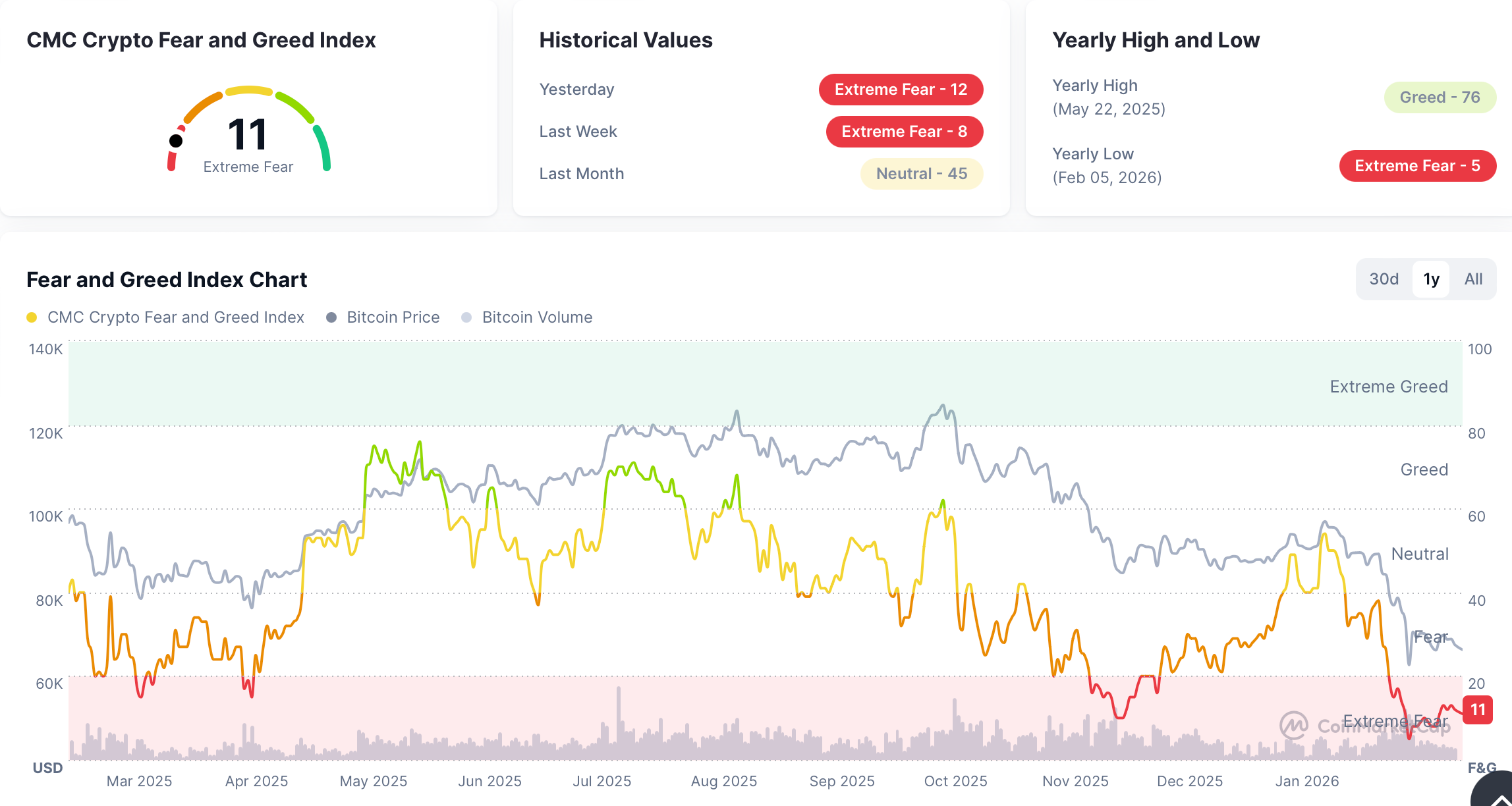
CoinMarketCap’s Crypto Fear and Greed Index remains in extreme fear at 11 out of 100, underscoring persistently weak sentiment across digital asset markets.

Magazine: Bitcoin may take 7 years to upgrade to post-quantum: BIP-360 co-author



Metaplanet CEO Simon Gerovich fired back at critics, accusing the Japanese Bitcoin-holding firm of misusing shareholder funds and hiding key disclosures.
Why it matters:
- Metaplanet holds over $1.2 billion in unrealized Bitcoin losses, making transparency around fund use a direct concern for shareholders.
- Allegations of undisclosed borrowing against BTC holdings raise governance red flags for public-company crypto investors.
The details:
- Critics alleged Metaplanet bought BTC at a market top, stayed silent during the drawdown, and borrowed against those holdings without disclosing interest rates or counterparties.
- Gerovich confirmed Bitcoin wallet addresses are publicly listed, with a live shareholder dashboard tracking holdings in real time.
- Gerovich called September’s purchase price a “local top” but defended a long-term, non-market-timed strategy.
- The company reported 6.2 billion yen in operating profit — up 1,694% year-over-year.
- Gerovich attributed reported accounting losses solely to unrealized mark-to-market BTC fluctuations on unsold holdings.
- Meanwhile, CoinGecko currently tracks Metaplanet’s unrealized BTC losses at over $1.2 billion.
The big picture:
- Metaplanet follows the MicroStrategy playbook — using equity and debt to accumulate Bitcoin as a primary treasury asset.
- Corporate BTC holders now face growing pressure to meet traditional disclosure standards as unrealized losses mount across the sector.
- The allegations expose a structural tension: Bitcoin’s on-chain transparency does not automatically satisfy securities law disclosure requirements.
The post Metaplanet CEO Fires Back at Critics as $1.2 Billion Bitcoin Paper Losses Mount appeared first on BeInCrypto.

Bitcoin (CRYPTO: BTC) and broader on-chain activity are entering a period of recalibration as Parsec, a five-year-old analytics firm focused on DeFi and NFTs, announces its winding down. Launched in January 2021, Parsec grew alongside a nascent wave of on-chain research and funding from notable industry players, only to find the current market environment diverging from the original playbook. In its X post, Parsec framed the closure as a strategic retreat from a market that “zigged while we zagged a few too many times,” underscoring a misalignment between its niche focus and where the ecosystem has since progressed. The company’s exit comes amid a pronounced shift in on-chain dynamics, with NFT volumes and DeFi activity not repeating the patterns seen during the prior cycle.
Key takeaways
- Parsec—the five-year analytics firm backed by Uniswap, Polychain Capital, and Galaxy Digital—will shut down as it pivots away from DeFi and NFT-centric tracking.
- NFT market data shows a 2025 decline to about $5.63 billion in sales, down 37% from 2024’s $8.9 billion, while average sale prices slid from $124 to $96 per unit (CryptoSlam data).
- The wider crypto sector is watching consolidation unfold, with Entropy also closing and returning capital to investors, signaling a shift in how startups scale in a crowded landscape.
- Bitcoin’s price action remains critical context, having fallen roughly 46% from its October peak to around $67,246, amid evolving risk sentiment and macro headwinds.
- Industry voices, including Nansen’s Alex Svanevik, reflect on a period of transformation as the market recalibrates, with a focus on sustainability and product-market fit rather than rapid expansion.
Tickers mentioned: $BTC
Sentiment: Neutral
Price impact: Negative. BTC’s extended drawdown in 2025 reflects broader risk-off dynamics that accompany sector consolidation and shifting on-chain activity.
Market context: The downturn in specialized on-chain analytics and the push toward consolidation align with a broader transition in crypto markets, where venture-backed experimentation is giving way to more measured, winner-take-more dynamics amid tightening liquidity and cautious investor sentiment.
Why it matters
Parsec’s closure marks a notable inflection for a segment of the crypto ecosystem that has long relied on on-chain signals to interpret market health, DeFi leverage trends, and NFT activity. The firm’s exit signals more than just a single business story; it points to a shift in how participants measure value in a landscape that has undergone seismic changes since 2022. Parsec’s avatar—once backed by industry heavyweights such as Uniswap, Polychain Capital, and Galaxy Digital—illustrates how capital and talent have redistributed as the market evolves. The decision to close underscores the reality that post-FTX market dynamics altered leverage structures in DeFi, making it harder for a highly specialized analytics company to sustain a product-market fit built around a subset of the ecosystem.
From a broader market perspective, NFT volumes and average selling prices have cooled. CryptoSlam’s data for 2025 show sales of approximately $5.63 billion, a notable drop from 2024’s $8.9 billion, while average prices slipped from about $124 to $96. This shift compounds the pressure on firms whose value proposition rested on analyzing a thriving NFT market and high-velocity NFT trades. The collision of shrinking volumes with a more selective investor appetite for specialized analytics platforms helps explain why Parsec chose to exit now rather than pursue a protracted pivot.
Industry observers view Parsec’s shutdown through a consolidation lens. A related thread in the sector notes Entropy’s closure and the return of funds to investors, a move often framed as a pragmatic recentering rather than a collapse. The narrative of consolidation gained further traction when a prominent crypto executive predicted that the space would see more M&A activity, with larger players acquiring smaller projects in the months ahead. This theme—fewer, larger, better-capitalized entities—stands in contrast to the earlier cycle’s fragmentation and rapid experimentation. It’s a shift that could influence who becomes a dominant source of on-chain insights and market data in the next phase of the market cycle.
Price dynamics provide a practical backdrop to these structural shifts. Bitcoin’s drawdown—from an October all-time high near $126,100 to roughly $67,246—frames the risk-off mood permeating markets. Such price action often correlates with reduced appetite for experimental or niche analytics services, especially those tied to discretionary sectors like DeFi lending or NFT markets. In parallel, search interest around Bitcoin’s prospects—“Bitcoin going to zero”—has surged to levels not seen since the post-FTX panic in late 2022, underscoring the fragility of investor confidence when prices retreat and headlines crowd the narrative. These macro and on-chain signals together illuminate why Parsec’s departure feels consequential beyond a single corporate exit.
As the industry recalibrates, voices from within the space emphasize a pragmatic pivot toward sustainability and broader product-market fit. Alex Svanevik, the CEO of on-chain analytics platform Nansen, described Parsec as having “a great run,” signaling respect for the team’s contributions even as the market moves in a different direction. The liquidity and talent reallocation that typically accompany consolidation can seed new, more resilient offerings in the analytics arena, but the transition is unlikely to be seamless or immediate for any single player. In the near term, investors and builders will watch for how competing firms adapt—whether through product diversification, partnerships, or strategic acquisitions that promise more scalable data insights than what was historically possible in a market with highly idiosyncratic cycles.
What to watch next
- Follow any formal wind-down announcements or final reports from Parsec to understand remaining liabilities, data access terms, and customer transitions.
- Monitor announcements of consolidation among on-chain analytics and data firms, including potential acquisitions or fundraisings by rivals seeking scale.
- Track NFT market metrics and DeFi activity in early 2026 to gauge the pace of recovery or further slowdown in the segments Parsec focused on.
- Observe Bitcoin price action and macro risk sentiment for signals about market-wide demand for research and data services.
- Stay attentive to ETF inflows/outflows and regulatory developments that could influence institutional demand for crypto data and analytics tools.
Sources & verification
- Parsec X post announcing the shutdown and its remark about market dynamics.
- CryptoSlam NFT market data showing 2025 sales and average sale prices.
- Entropy shutdown announcement and refund details.
- CNBC interview with a crypto industry executive discussing consolidation and M&A expectations.
- Bitcoin price data from CoinMarketCap for context on the 2025 price trajectory.
Market reaction and implications for on-chain analytics
Bitcoin (CRYPTO: BTC) has traded amid a broader re-pricing of risk as analysts weigh the implications of Parsec’s exit and the shifting demand for specialized on-chain insights. The closure of a five-year analytics firm highlights a market recalibration where niche services tied closely to NFT and DeFi activity face a tougher environment than during the early expansion phase. Parsec’s investors—Uniswap, Polychain Capital, and Galaxy Digital—were early testaments to the crypto market’s willingness to fund data-centric ventures that promised deeper market clarity. Their involvement underscored a belief that on-chain metrics could shape investment and risk decisions in a highly volatile domain, but the current cycle’s transformation has altered the economics of those bets.
The NFT space, once a robust growth engine for on-chain signals, has cooled considerably. CryptoSlam’s figures for 2025 illustrate a market maturing past its frenetic growth phase, with sales down and average prices eroding. That reality, in turn, compresses the value proposition of analytics platforms whose strengths rested on measuring and interpreting rapid shifts in NFT demand and liquidity. Parsec’s exit reflects the market’s demand for flexibility and resilience—an emphasis on broader data products and sustainable business models rather than a singular focus on a high-volatility segment.
At the same time, the crypto industry’s consolidation thesis is gaining more empirical ballast. The Entropy shutdown and similar moves paint a portrait of a sector moving away from the diffuse, experimental setup of the last cycle toward a more concentrated ecosystem dominated by fewer, larger participants. This trend does not guarantee immediate profitability for survivors, but it does shape the kind of partnerships and products that can scale in a market characterized by tighter liquidity and more selective investor scrutiny. The market context, including price trajectory and investor sentiment, will continue to influence which firms succeed in delivering credible, actionable on-chain intelligence in a rapidly evolving landscape.
Ultimately, Parsec’s departure underscores a broader truth about crypto analytics: success increasingly hinges on being able to deliver durable, product-market fit across multiple market regimes. The coming months will reveal whether the remaining players can fill the void left by Parsec by expanding their data pipelines, strengthening distribution channels, and coordinating more closely with institutional stakeholders seeking clear signals in a market defined by swift regime shifts.
https://platform.twitter.com/widgets.js


Sharplink, a leading advocate for Ethereum-focused digital asset treasuries, announced a series of major milestones on Thursday that signify its rapid ascent in the institutional finance space.
Summary
- Sharplink now holds 867,798 ETH (valued at $1.72B), making it one of the largest corporate Ethereum holders in the world.
- The company stakes nearly 100% of its holdings, having already generated 13,615 ETH in rewards that accrue directly to stockholder value.
- The appointment of Steven Ehrlich (formerly of Forbes) is designed to amplify Sharplink’s mission as the primary “productive treasury” vehicle for Ethereum exposure.
The company revealed that institutional ownership has surged to 46%, a record level that CEO Joseph Chalom attributes to the firm’s disciplined, “productivity-first” approach to Ethereum.
As of February 15, 2026, Sharplink’s treasury holds 867,798 ETH, valued at approximately $1.72 billion. Unlike many digital asset holders that keep assets in “cold storage,” Sharplink has distinguished itself by staking nearly 100% of its holdings.
This strategy has generated over 13,000 ETH in staking rewards since June 2025 alone. “Institutions know they can trust us to keep generating long-term value,” Chalom stated, emphasizing that the firm continues to grow its ETH concentration per share regardless of market volatility.
“Ethereum with an edge”: Sharplink rebrands
To match its growing institutional profile, the company launched a comprehensive brand refresh under the tagline “Ethereum with an Edge.”
The rebrand includes a redesigned investor platform and a dedicated Ethereum treasury dashboard, aiming to provide total transparency for stockholders tracking yield and network growth.
Parallel to the visual update, Sharplink is bolstering its intellectual capital with the appointment of Steven Ehrlich as Head of Research and Communications. Ehrlich, a heavyweight in crypto journalism with a pedigree at Forbes and Unchained, will be tasked with clarifying the “Ethereum opportunity” for a broader audience.
By combining massive ETH accumulation with institutional-grade risk management and high-level communications, Sharplink is positioning itself as the primary vehicle for public market investors seeking productive exposure to the decentralized finance (DeFi) backbone.
As the Ethereum ecosystem continues to host the majority of tokenized real-world assets, Sharplink’s “staked treasury” model may become the new blueprint for digital asset corporations.
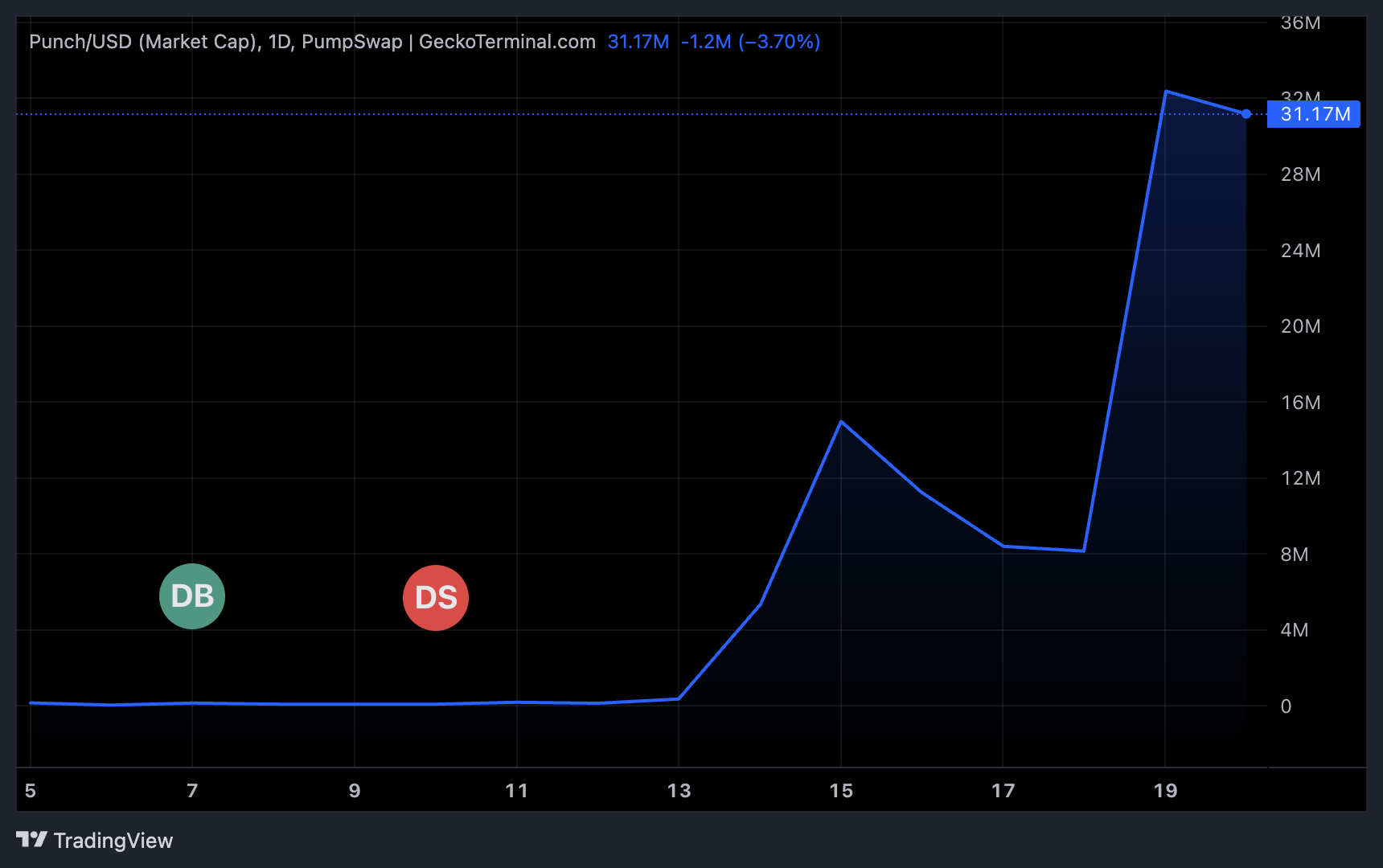
PUNCH, a Solana-based meme coin, has surged more than 80,000% since its launch earlier this month, capturing traders’ attention across the ecosystem.
As its market cap expands and accumulation intensifies, concerns are also mounting. Amid the token’s explosive rally, analysts are highlighting red flags surrounding this new market entrant.
What Is PUNCH Token?
PUNCH is a token inspired by the story of a baby Japanese macaque named Punch and his inseparable plush companion. The token positions itself as a community-driven cryptocurrency built around emotion, comfort, and companionship.
According to details provided on the website, the token has a fixed total supply of 1 billion. The project states that its liquidity has been locked and burned.
It also claims that ownership has been renounced. In addition, the token operates with a 0% tax.
“PUNCH is gearing up to be the MOODENG of 2026,” an analyst wrote.
Solana Meme Coin PUNCH Skyrockets to $30 Million Market Cap
Data from GeckoTerminal showed that the token began trading earlier this month. Momentum accelerated as the story of the baby macaque gained traction across media outlets and social platforms. Over the past week alone, the meme coin has surged 22,290.8%.
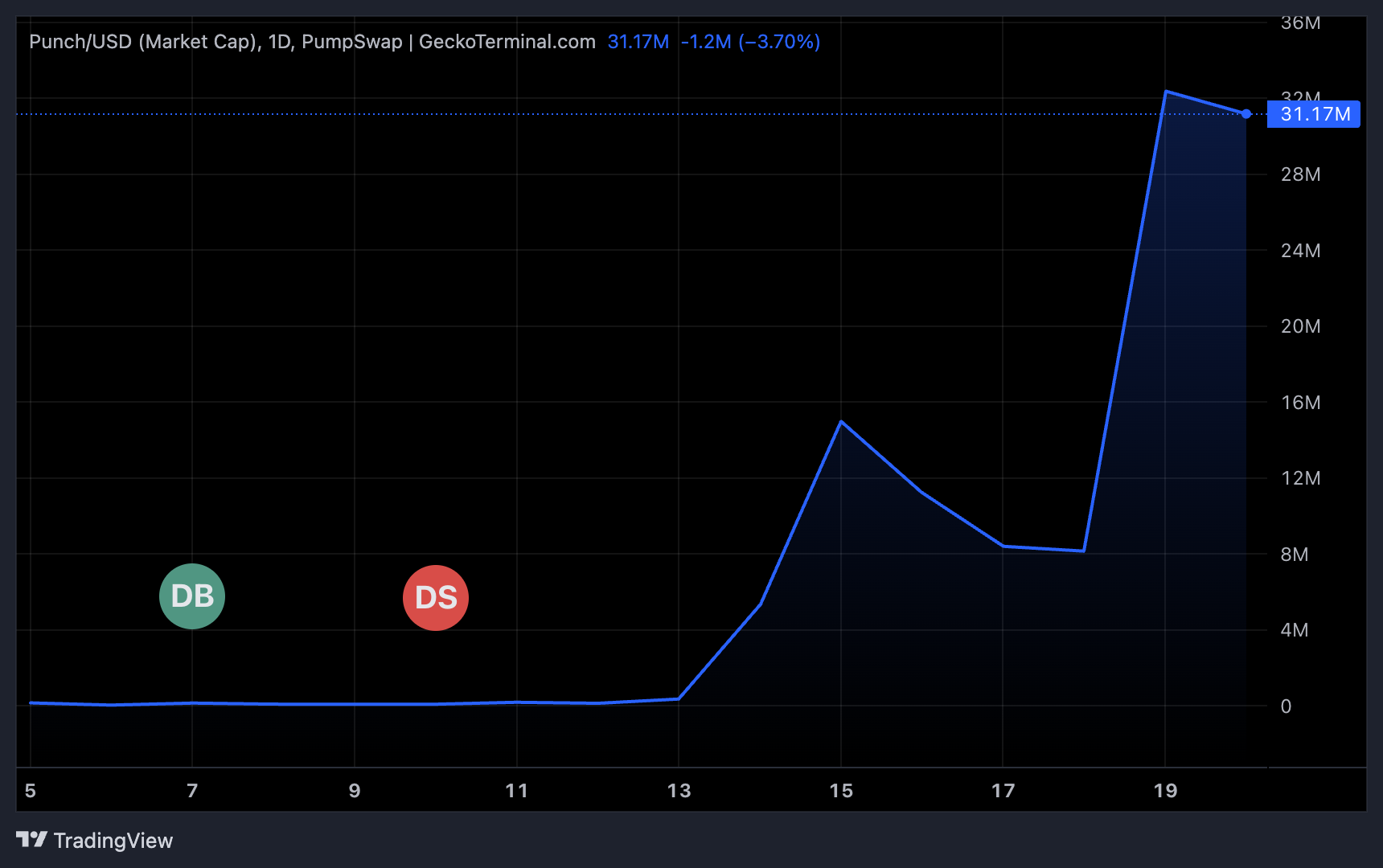
During early Asian trading hours today, PUNCH hit an all-time high, with its market cap climbing above $30 million. On CoinGecko, the token emerged as the top daily gainer, posting a 260% increase. It also ranks third among the platform’s top trending cryptocurrencies.
The rally has attracted substantial investor interest. Blockchain tracker Stalkchain highlighted one wallet that accumulated approximately $226,000 worth of PUNCH.
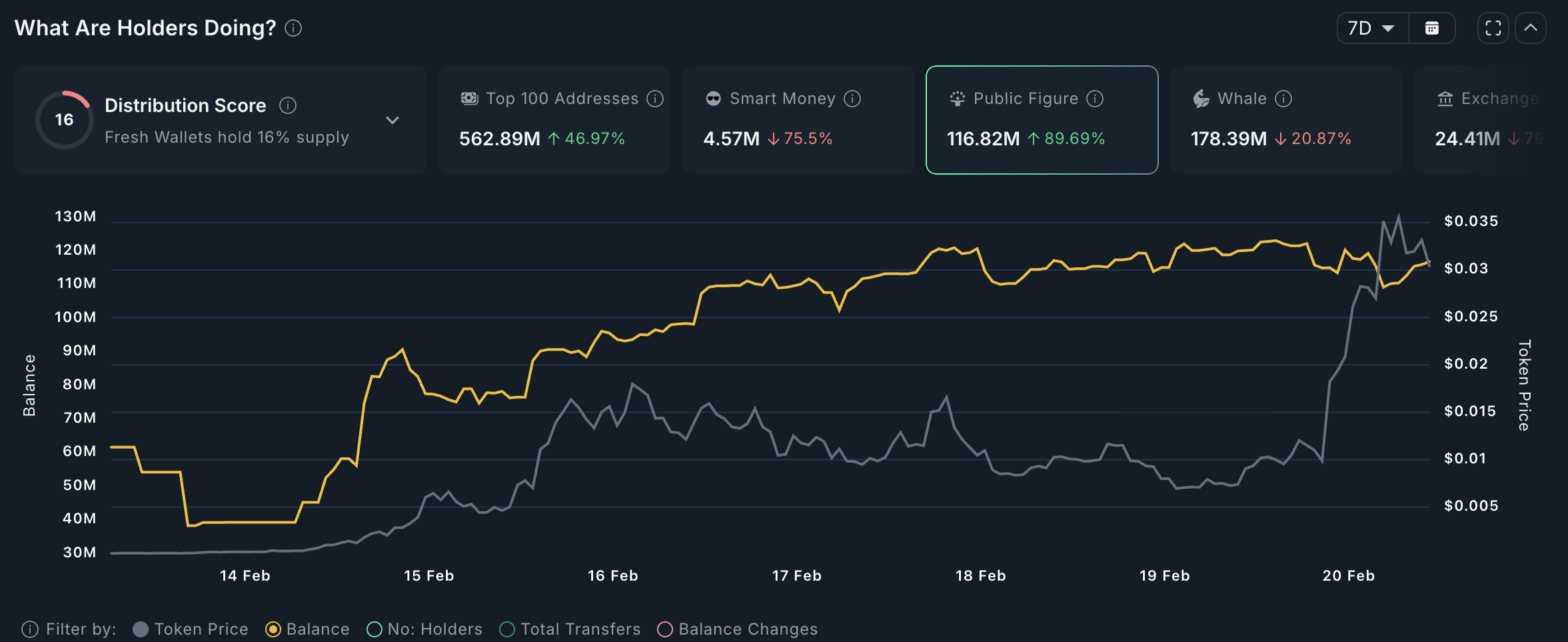
Data from Nansen also revealed that over the past seven days, public figure holdings in PUNCH surged 89.69%. However, smart money and whale holdings have declined.
Crypto Watchers Raise Red Flags Over PUNCH
Several market watchers have raised concerns about the token. Crypto analyst StarPlatinum has alleged that the token shows “multiple signs of coordinated insider control.”
In a post on X, the analyst claimed that the creator wallet, identified as A8Z1ejQGk45EJibBPJviWnM3UvwKSuYun53nSCkWKM52, distributed approximately 100 billion PUNCH tokens, equivalent to 10% of the total supply, soon after the token went live.
According to the analysis, the wallet (A8Z1e) sent 48.2 billion tokens directly to another wallet, CgR8tggfcM8Re5agDY5fsT4pKmqQTzF8vQ7jQknM6iBj. This entity allegedly acted as an intermediary between the creator and several large holders.
Blockchain traces shared in the thread suggest a flow pattern from the creator wallet to the intermediary address, then to large wallets. Among the top linked holders identified:
- Wallet Hbx5PturLVp9F7YYG18jZZSWFTNp9TTSXEJepq6pvSi3 reportedly holds 35 billion PUNCH, or 3.5% of the total supply, and was funded from the intermediary wallet.
- Wallet H8GLvJ89DwoeBTY3YhepLTf3VmKR44qVnskNdEZHQVDPK holds 25.1 billion tokens, representing 2.5% of supply, and was allegedly funded by the largest holder.
- Wallet DXU65912VjiPUhKR37TLiHCrbp4uNHVNNZiBdLv1uAx1 controls 17.5 billion tokens, or 1.75% of supply, and is said to be connected within the same funding cluster.
Combined, these three wallets account for approximately 7.75% of the total supply, with all allocations allegedly traceable back to the initial creator distribution, according to the claims.
“This is how controlled memecoins are structured. Stay careful,” StarPlatinum wrote.
Here, it’s worth noting that the website specifies that PUNCH’s total supply stands at 1 billion. Meanwhile, the White Whale also identified two “red flags” related to the PUNCH token.
“1. Bubble maps is too perfect. Too clean. Real life is messy. 2. Liquidity does NOT look like this. In fact it simply cannot look like this due to how distribution takes place on the idiotic constant product pools,” he noted. “Almost 6x “support” in equal distance below than resistance above? It’s fake, guys. No coin gets that much support organically with liquidity just sitting around on the books in case of a dip. It’s all done through Meteora.”
However, the White Whale clarified that he is not directly accusing the project team or developers of orchestrating the activity. He stated that the project itself “may or may not be good.”
“I didn’t warn people when I saw the warning signs on Penguin because I didn’t want to be accused of having a conflict of interest. Those same warning signs are now presenting themselves on Punch. Trade carefully. We never know when the cabal is going to pull the rug,” he wrote in another post.
Thus, while PUNCH’s rally has attracted significant interest, analysts’ concerns raise questions about the sustainability of its momentum. As with many sharply appreciating meme coins, heightened volatility and structural risks remain key factors for traders to monitor.
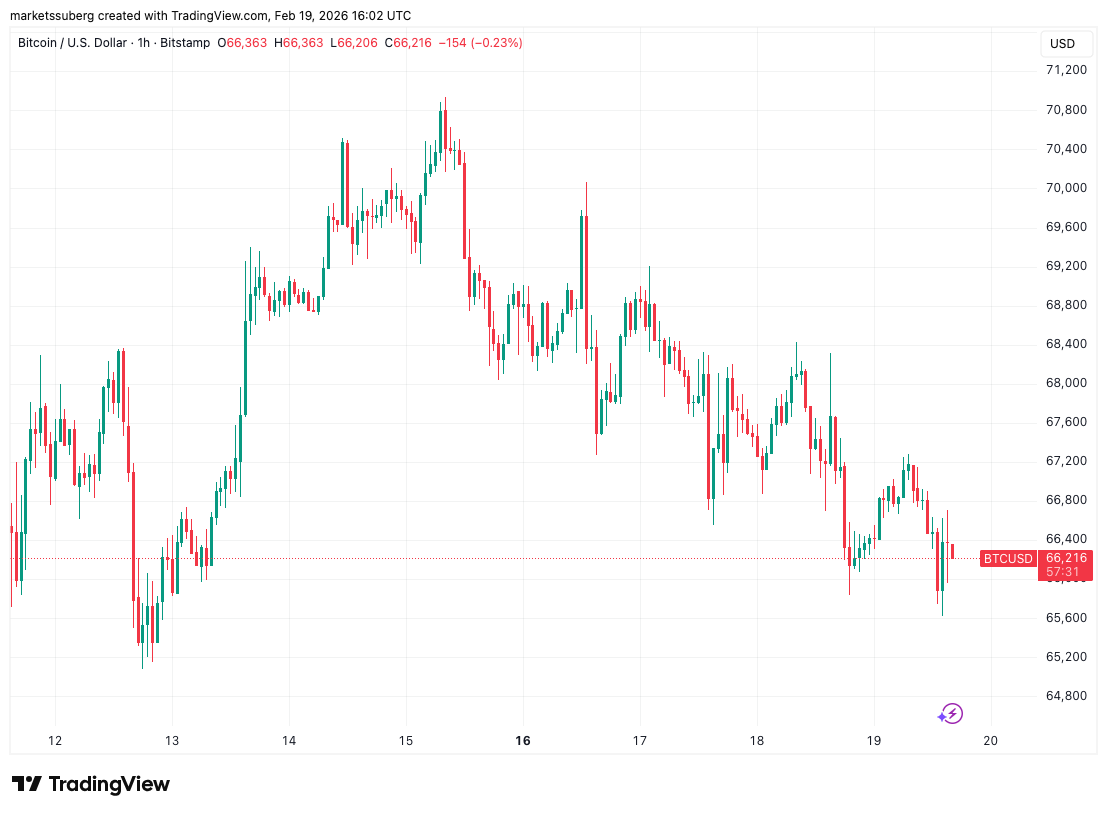
Bitcoin fed into “extreme bearish sentiment” as a tight BTC price range fueled daily crypto liquidations of over $200 million.
Bitcoin (BTC) faced fresh downside predictions on Thursday as BTC price action kept long liquidations high.
Key points:
-
Bitcoin price analysis sees lower levels coming amid a lack of a “strong bounce.”
-
High liquidations contrast with the tightly rangebound BTC price behavior.
-
Crypto funds seal a fourth week of net outflows amid “extreme” bearish sentiment.
Analyst expects Bitcoin to “test lower”
Data from TradingView showed BTC/USD acting within an increasingly narrow range, with the day’s lows at $65,620.

A modest improvement in US jobless claims prior to the Wall Street open had little impact on the mood, and market participants expected lower levels to come into focus next.
“This looks to me as if we’re going to test lower on the markets to see whether there’s some support on Bitcoin,” crypto trader, analyst and entrepreneur Michaël van de Poppe said about the four-hour chart in a post on X.
“Not a strong bounce, and constant lower highs.”

CryptoReviewing, the pseudonymous cofounder of trading community Wealth Capital, drew attention to ongoing large liquidation numbers despite the relative lack of BTC price volatility.
“Now, below us at $64,000 – $66,000 we still have a sizable amount of liquidity,” he told X followers alongside data from CoinGlass.
“However, $68,000 – $71,000 has around 3x more liquidations built up ready to be taken, making this a higher probability zone to visit in the next days. Bulls really need to respond soon.”

CoinGlass put 24-hour cross-crypto liquidations at $210 million at the time of writing.
Trader Daan Crypto Trades nonetheless described nearby liquidity as “nothing major.”
“This current ~$66K area has held as support for the past 2 weeks with ~$71K capping price. Will see if we get a decisive break by the end of the week because as of now there’s not much action going on,” he wrote.

Institutions underscore ”extreme bearish levels”
Institutional investor flight from crypto instruments, meanwhile, caught the attention of mainstream commentator The Kobeissi Letter.
Related: Bitcoin 2024 buyers steady BTC price as trader sees $52K ‘next week or so’
In an X post on the day, Kobeissi flagged last week’s outflows of $173 million from crypto funds, their fourth consecutive negative weekly performance.
“This brings 4-week cumulative outflows to -$3.74 billion. Bitcoin led the selling with -$133 million in outflows last week, while Ethereum saw -$85 million. Crypto funds have now seen withdrawals in 11 out of the last 16 weeks,” it continued.

As Cointelegraph reported, the US spot Bitcoin exchange-traded funds (ETFs) form one part of the institutional sector experiencing long-term pressure under current conditions.
Kobeissi described sentiment as “reaching extreme bearish levels.”
This article does not contain investment advice or recommendations. Every investment and trading move involves risk, and readers should conduct their own research when making a decision. While we strive to provide accurate and timely information, Cointelegraph does not guarantee the accuracy, completeness, or reliability of any information in this article. This article may contain forward-looking statements that are subject to risks and uncertainties. Cointelegraph will not be liable for any loss or damage arising from your reliance on this information.
CME Group, the world’s largest derivatives exchange, said on Thursday that crypto options and futures contracts will begin trading 24 hours a day, seven days a week on May 29, pending regulatory approval.
“CME Group Cryptocurrency futures and options will trade continuously on CME Globex with at least a two-hour weekly maintenance period over the weekend,” according to the parent of The Chicago Mercantile Exchange’s announcement.
All trading activity on market holidays and weekends will be cleared, settled and posted the following business day, with regulatory reporting also filed on the following day, CME Group said.

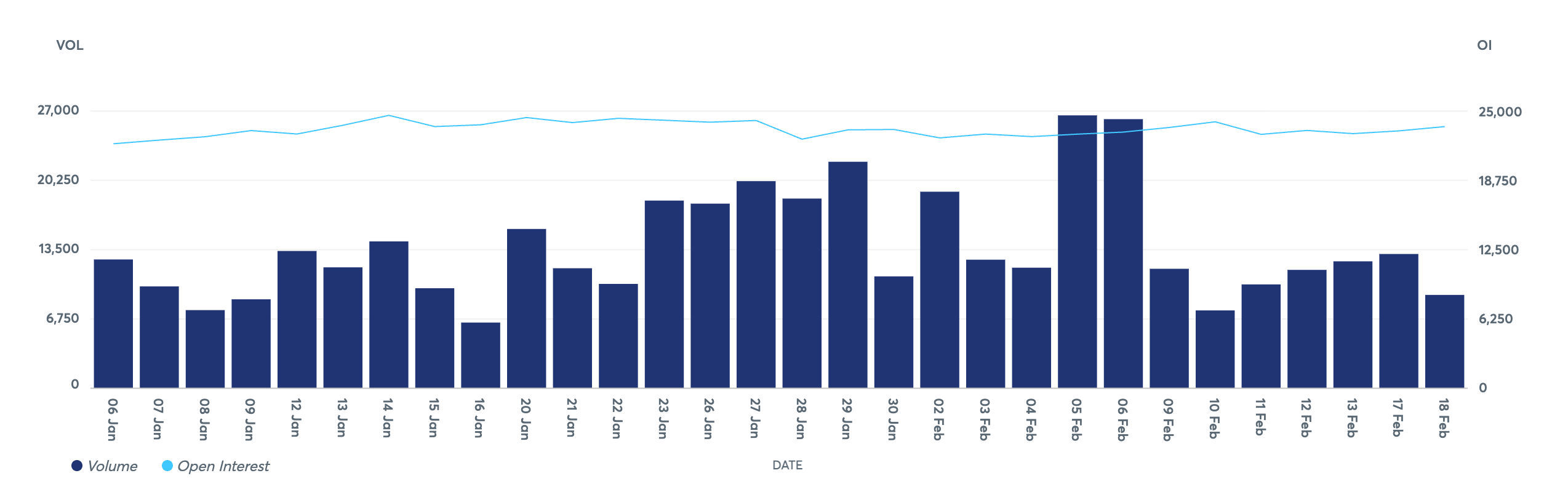
The exchange’s average daily volume for crypto futures and options in 2026 is up 46% year on year, according to CME.
The announcement follows a joint statement in September from the Securities and Exchange Commission (SEC) and the Commodity Futures Trading Commission (CFTC) concerning the potential shift to 24/7 capital markets in the United States.
Related: CME CEO Duffy says exchange is exploring issuing its own token
US regulators explore always-on markets, while exchanges expand hours
“Certain markets, including foreign exchange, gold, and crypto assets, already trade continuously. Further expanding trading hours could better align US markets with the evolving reality of a global, always-on economy,” the regulators’ statement said.
In March 2025, Nasdaq, a technology-focused stock exchange, announced it would expand its trading hours to offer 24-hour markets, five days a week.
The exchange expects to roll out the expanded trading hours in the second half of 2026, according to an announcement from Nasdaq president Tal Cohen.
The New York Stock Exchange (NYSE) said last month that it is developing a platform for trading tokenized stock and exchange-traded funds (ETFs).
NYSE’s upcoming platform will feature 24/7 trading hours and will be able to interface with blockchain-based systems, including support for multichain settlement and custody, according to NYSE’s announcement.
The launch of the platform is part of a broader digital strategy and will be a testing ground for potentially integrating tokenized collateral on the NYSE, according to the company.
Magazine: Will Robinhood’s tokenized stocks REALLY take over the world? Pros and cons
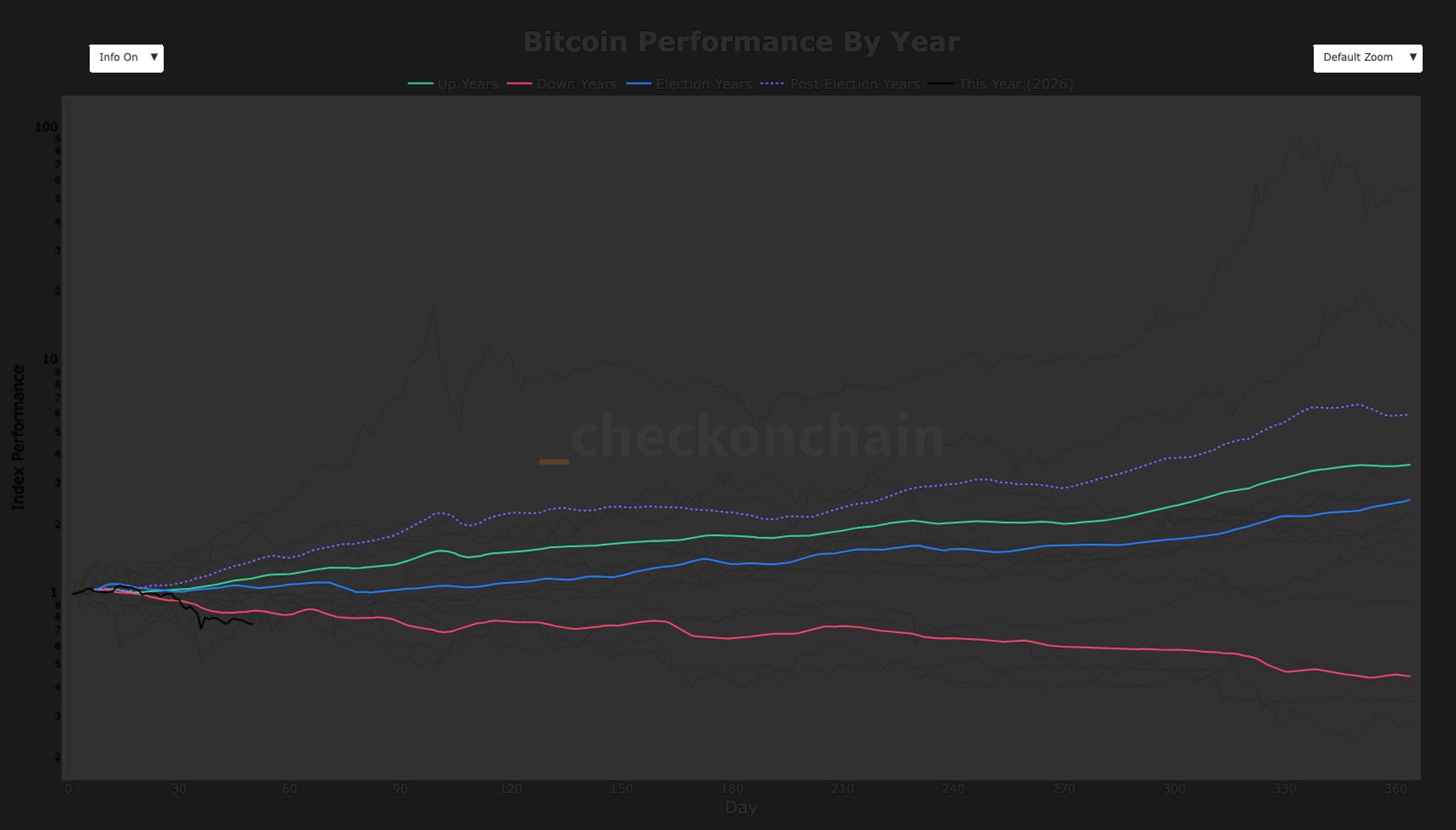
Fifty days into 2026, bitcoin is off to its worst start to a financial year on record, according to Checkonchain data. The asset is down 23% year to date, having fallen 10% in January and a further 15% in February.
Bitcoin has never previously recorded back-to-back declines in January and February, according to Coinglass data. While there have been double digit drops in January in years such as 2015, 2016 and 2018, each of those was followed by a positive February. If losses hold, bitcoin is also on track for its weakest consecutive monthly performance since 2022.
Checkonchain data shows that in a typical down year, the average index reading is 0.84, 50 days in, a benchmark that traders often use to gauge cyclical drawdowns. While bitcoin is currently at 0.77, underscoring the scale of the drawdown.
The weakness follows a 17% decline in 2025, a post election year. Historically, post election years have tended to outperform election years and have outperformed up years on aggregate, making the recent underperformance stand out further.
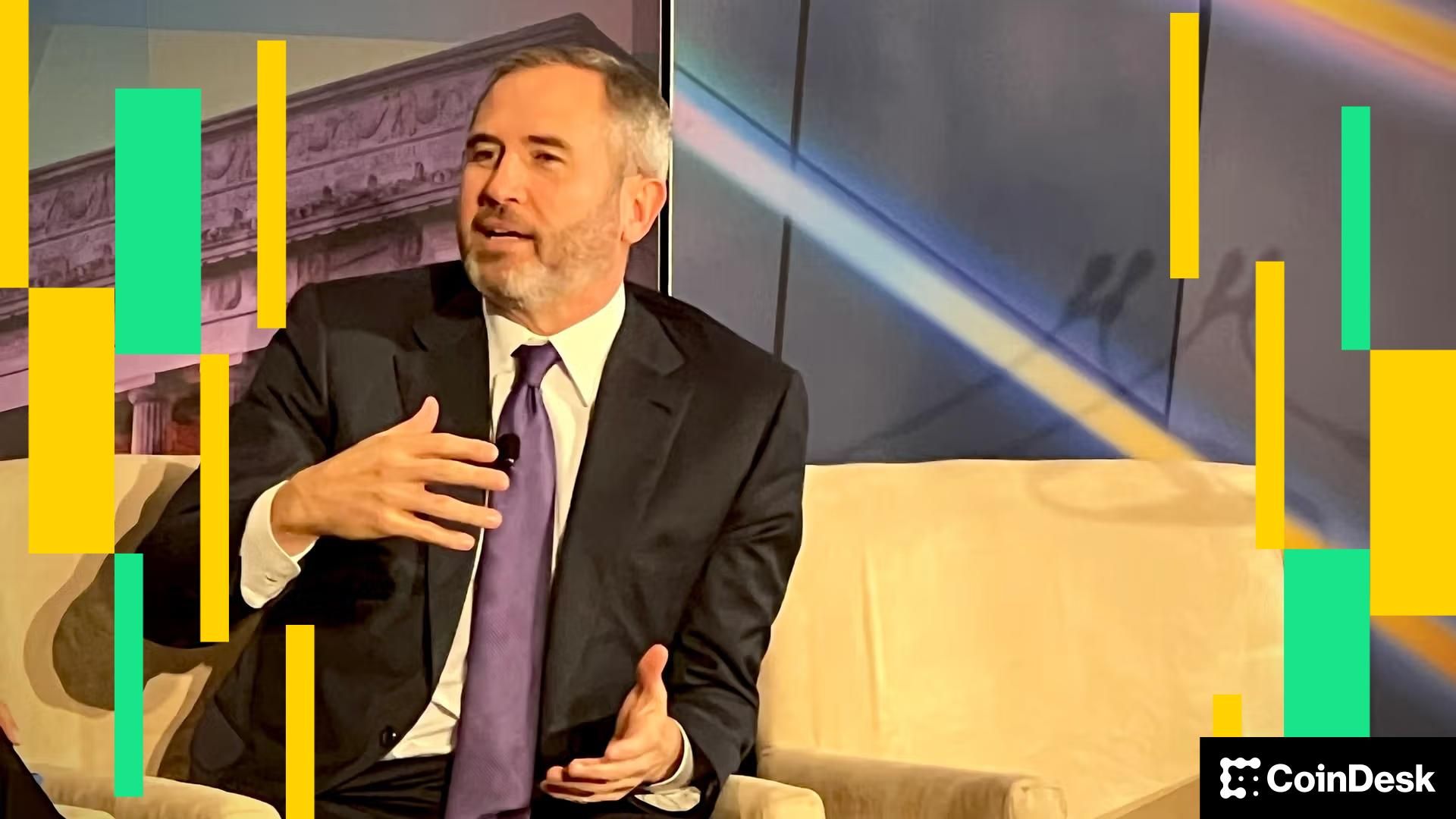
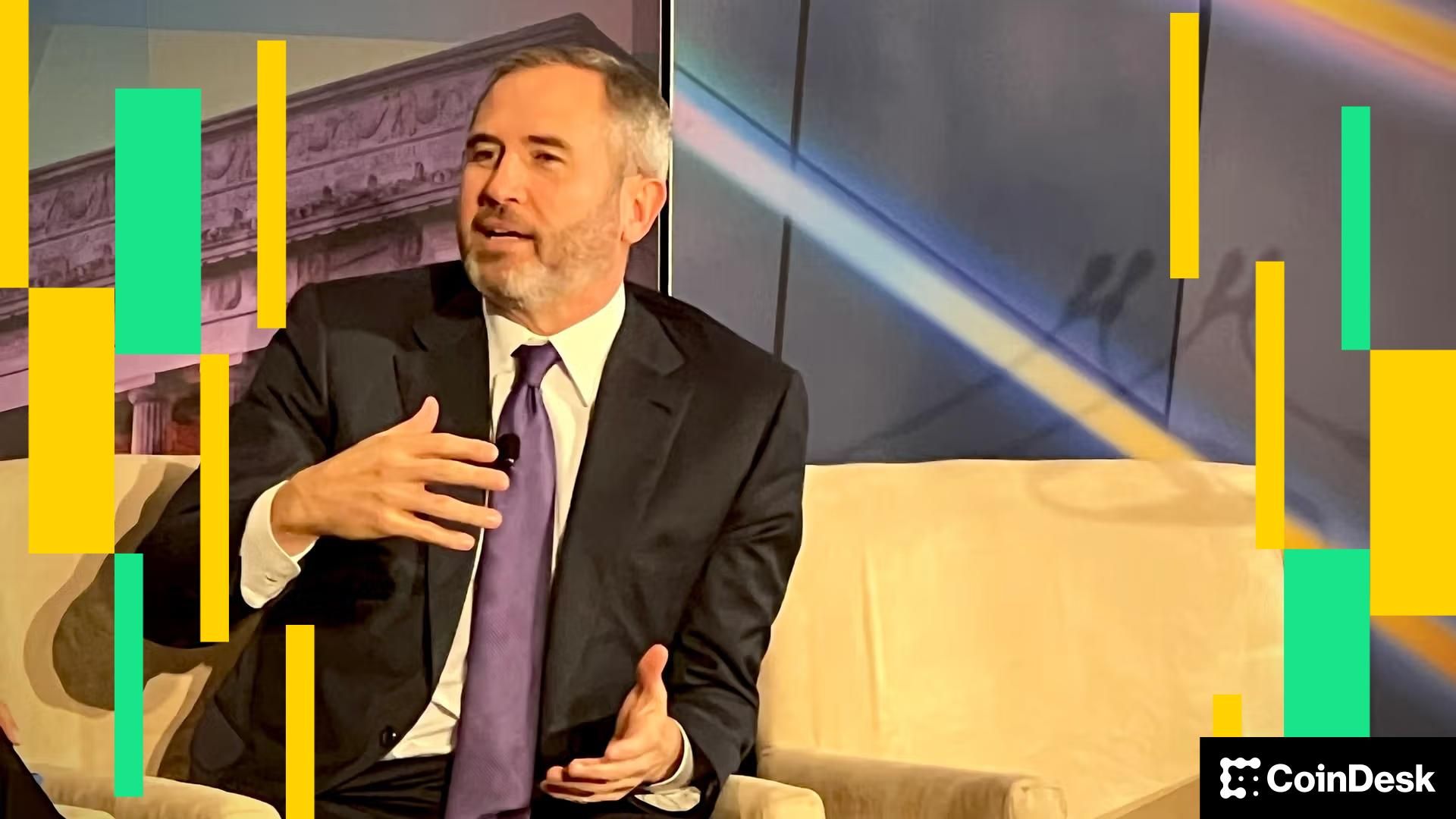
Ripple CEO Brad Garlinghouse said he now sees a 90% chance that the long-debated Clarity Act will pass by the end of April, signaling growing confidence inside the crypto industry that U.S. lawmakers may finally deliver long-sought regulatory certainty.
Speaking on Fox Business, Garlinghouse said momentum has accelerated following renewed engagement from lawmakers and the White House. He described recent meetings in Washington that included leaders from both crypto and traditional banking, suggesting political appetite to move legislation forward has strengthened after months of delays.
The Clarity Act is designed to define which digital assets fall under securities laws and which would be overseen by the Commodity Futures Trading Commission. The bill has faced friction over stablecoin reward provisions and whether crypto platforms should be allowed to offer yield-like incentives to customers. The White House has reportedly set a March 1 target to push negotiations forward.
Garlinghouse framed the bill as imperfect but necessary. Ripple, he noted, secured a federal court ruling that XRP is not a security, giving the company clarity that much of the industry still lacks.
“The industry can’t live in limbo,” he said, arguing that regulatory uncertainty has weighed on innovation and market sentiment.
His comments come amid a broader crypto pullback and renewed volatility across digital assets. While bitcoin and other tokens have struggled in recent weeks, Garlinghouse said Ripple continues to see growing interest from corporate treasurers and financial institutions exploring stablecoins, liquidity management, and cross-border payments.
Ripple has spent nearly $3 billion on acquisitions since 2023, expanding into custody, prime brokerage, and treasury management. Garlinghouse said the company will pause on major deals in the near term to focus on integration.
Beyond crypto-native firms, he noted that traditional financial players increasingly want clearer rules to compete on equal footing. That shift, he suggested, reflects the dramatic change in attitudes toward digital assets over the past few years.
If the Clarity Act advances, it could mark one of the most significant legislative milestones for the U.S. crypto sector to date.
Polymarket bettors are giving the bill an 82% chance of passing by the end of the year.

TLDR:
- White House draft language shifted the stablecoin meeting from broad bans toward narrow rules on rewards.
- Banks now cite competition risks over deposit flight as their main concern in stablecoin policy talks.
- Regulators would gain authority to fine firms $500,000 daily for illegal yield on idle balances.
- Trade groups aim to reach compromise on stablecoin rewards before an end-of-month deadline.
Bitcoin and stablecoin policy talks in Washington entered a new phase as the White House assumed direct control of discussions. The latest stablecoin meeting brought together fewer participants but sharper policy direction.
Officials circulated draft language that reframed disputes over rewards and yield. The talks now center on narrow limits instead of broad industry bans.
Stablecoin meeting steered by White House draft language
The stablecoin meeting included representatives from Coinbase, Ripple, and Andreessen Horowitz. Trade groups such as Blockchain Association and Crypto Council for Innovation also attended.
No individual banks sent executives to the room. Instead, banking voices came through American Bankers Association, Bank Policy Institute, and Independent Community Bankers of America.
According to reporting by Eleanor Terrett, the White House set the agenda rather than letting industry groups lead. White House Crypto Council Executive Director Patrick J. Witt presented draft text that guided the entire discussion.
The language acknowledged bank objections raised in a prior document on yield and interest limits. It also clarified that any future restrictions on rewards would remain narrowly defined.
Stablecoin rewards debate narrows to specific activities
Participants said earning yield on idle stablecoin balances now appears excluded from negotiations. The remaining debate focuses on whether rewards tied to certain activities can continue.
A crypto-side attendee said banks now frame their concerns around competition rather than deposit flight. Earlier discussions had emphasized risks to bank deposits from payment stablecoins.
Bank representatives continue to push for a formal study on deposit outflows. The proposal would examine how stablecoin payment growth could affect traditional banking balances.
Draft language also introduced anti-evasion enforcement measures. These provisions would grant the Securities and Exchange Commission, the United States Department of the Treasury, and the Commodity Futures Trading Commission authority to police violations.
Civil monetary penalties would reach $500,000 per violation per day. Officials framed this as a deterrent against indirect yield payments.
Bank trade groups will now brief their members and test whether compromise remains possible. The focus rests on limited rewards rather than full prohibition.
Sources close to the talks said the timeline has tightened. Negotiators now view an end-of-month target as achievable as discussions continue over the coming days.

“In 2026 and thereafter, Non-Custodial Wallets Will Be Critical to Your Strategy.”
Think of two users:
User A stores all of their cryptocurrency on the exchange and third-party services.
User B has complete control of their private keys, can automate DeFi strategies, and connects directly to Web3-native solutions.

This elucidates the reason why non-custodial crypto wallets are becoming so important to the infrastructure market –
“Retail as well as large-scale crypto users are demanding it because of its expected benefits.”
They are no longer a fringe technology; they are now becoming part of the foundational structure—as significant as your identity access management, treasury systems, and security keys.
According to industry research studies, the non-custodial wallet industry will be approximately $1.5-2.5 billion by the year 2026, and the anticipated growth rate over the next decade is expected to be very high as well, often exceeding 20-25% compound annual growth rate (CAGR), varying by report methodology.
Various recent studies show that the bulk of all cryptocurrency wallets being used today are self-custodial, indicating a growing trend toward individual control over assets and financial transactions as a whole.
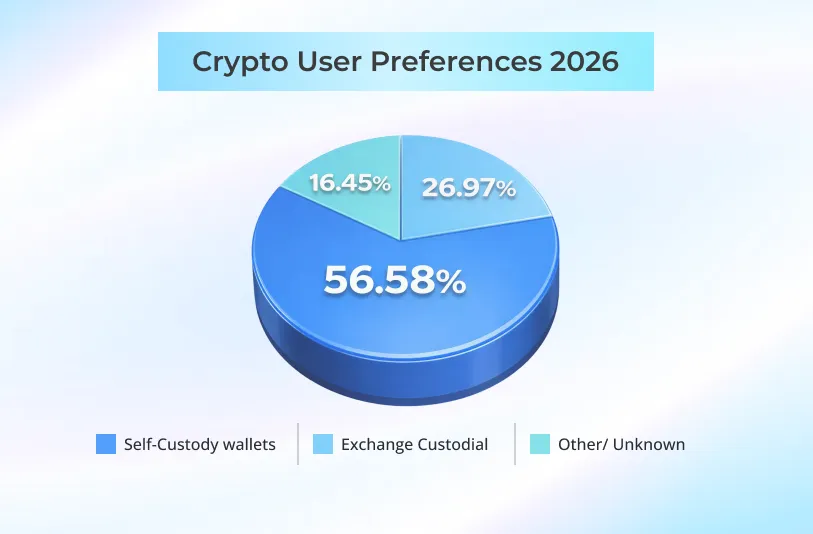
Source: https://coinlaw.io/self-custody-wallet-statistics/
For enterprise leaders currently planning to roll out their own Web3 crypto wallet, the extreme diversity of self-custodial wallet options — from hardware air-gapped wallets to smart contract-based wallets — presents an important question:
- What trends and tactics should your enterprise’s wallet strategy look at moving forward?
Now that we have defined an overall strategic environment, let’s look at the wallets that you came to evaluate.
A Look at Today’s Peak Value Non-Custodial Crypto Wallets
Here, we will analyze the top self-custodial wallets of 2026, not just simply by looking at a list of ‘features,’ but instead from an enterprise perspective: how relevant is each wallet’s use case for you? What security models do they utilize? How do they compare in the overall ecosystem, and how can developing similar wallets give you a competitive advantage?
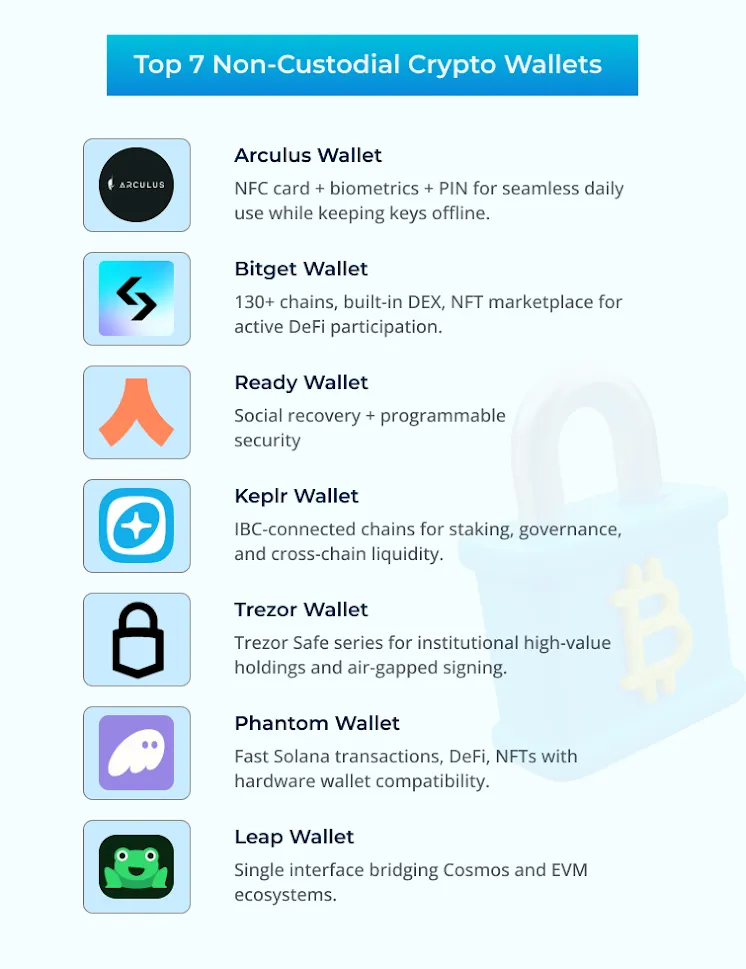
1. Arculus Wallet
The Arculus wallet offers a unique solution for securing digital assets.
The Arculus card, using NFC technology, connects to the user’s smartphone through an app. The private keys are stored offline on the card.
As a result, consumers are able to use the wallet daily without handling private keys or seed phrases frequently (though a one-time recovery phrase is generated at setup).
To use crypto in day-to-day use, the users will be required to first unlock the app using biometrics, enter their 6-digit PIN when prompted, and then tap their NFC-enabled Arculus card against the back of their phone.
For enterprise teams, launching an Arculus-like wallet will provide the following merits:
- When a user’s interaction with their wallet is limited to their hardware card or application, the user’s exposure to their written seed phrases (physically/electronically stored) or chances of losing possession of the seed phrase during routine usage (such as for migrating devices or support issues) are greatly reduced.
- It helps facilitate an authentication consumer experience that feels similar to existing payment processes with a physical card plus phone journey.
- A physical NFC-enabled card that functions as a hardware wallet helps maintain mobile accessibility.
The Rationale Behind This Trend:
Self-custodial wallets like Arculus aim to minimize how often users must interact with their recovery phrase and front-load their access using hardware, digital PIN numbers, and biometric means.
Why This Is Important for You:
Reimagining how users store their keys and recover them can potentially lead to new user experience innovation opportunities; your goal should not be to replicate other wallet solutions; rather, you should focus on solving the challenges that users face with current wallets.
2. Bitget Wallet
The Bitget Wallet is a multi-chain wallet with a built-in DEX aggregator that offers customers access to NFT marketplaces, too, where they can buy, sell, and trade. This non-custodial crypto wallet provides multiple DeFi integrations with support for 130+ chains (Ethereum, Solana, Polygon, etc.) – hence encouraging direct user participation in the broader ecosystem.
Bitget Wallet is designed with integrative value for users, providing an aggregated view of assets and activity across EVM networks, non-EVMs’ Layer-1, and Layer-2 chains.
DEX integrations reduce time lost switching between applications.
MARK
Native NFT marketplace support is valuable for targeting users pursuing content ownership, loyalty rewards, and digital goods strategies.
Critical Insight For Web3 Wallet Businesses
Based on projections of future digital wallet usage, white label crypto wallets that combine the functions of “secure storage” and “active finance”—trading, staking, liquidity participation, and governance—will be the most successful in helping you capture long-term adoption.
3. Ready Wallet (formerly Argent)
Ready is typically characterized as an Ethereum-focused smart contract wallet, with the goal of improving user experience by incorporating concepts like social recovery, programmable security, and DeFi-compatible functionality.
Specific features that align with this are
- The use of social recovery methodologies leads to lower total cost of support due to being more streamlined than traditional recovery methods that only rely on seed phrases.
- Programmable security through policy-based controls (e.g., daily transfer limits, whitelisted addresses, and other guardrails) provides a clear, consistent, and adaptable level of protection for wallet operations.
- Native capabilities for staking on L2 systems and connection to DeFi protocol features cement the idea that the wallet is intended to serve as a facilitator of financial actions.
Enterprise Lens
Crypto wallet development with account abstraction and configurable defense will become a critical enabler of automated financial flows within Web3-based applications.
4. Keplr Wallet
Keplr is one of the major wallets used by those actively engaged with the Cosmos ecosystem. It is a self-custodial hub for IBC-connected chains.
In addition to participating in staking and governance on their native protocol, consumers can move value in a multitude of ways between other Cosmos chains as well as across the entire Cosmos ecosystem.
Web3 leaders need to take notice of what this can mean for your audience if you engineer a Keplr-grade wallet:
- A way to engage on a large scale in governance (both as validators and via delegations in DAO votes) rather than relying on ad hoc participation.
- When linking to other blockchain networks, IBC-enabled assets allow for a higher level of liquidity movement & redirection.
- This will be possible using a method that does not require customers to retain custody of their relevant assets on any one blockchain within the Cosmos universe.
A Signal To Watch
As cryptocurrency wallet development initiatives continue to create more tools and data services over diverse Cosmos blockchains, wallets that promote interactivity & interoperability among users will spur the ongoing development of both DeFi & app-specific chains.
5. Trezor Wallet
Hardware wallets are becoming an integral part of many institutions’ high-security operations, and Trezor wallets (Trezor Safe 3, Trezor Safe 5, Trezor Safe 7) are considered to be one of the best non-custodial hardware wallets available for the safe storage of numerous types of digital assets.
Trezor offers high-security, isolated keys that can be stored offline and are ideal for longer-term or treasury-type holdings.
- The ability to integrate with a desktop suite and 3rd party applications helps facilitate policy enforcement & audit workflows.
- Offline signing adds a strong security shield for high-value or high-risk transactions.
A Thought to Carry Forward
Security professionals often refer to hardware security modules, cold wallets, and air-gapped signing technology when it comes to developing treasury-based wallet systems.
Get Your Enterprise’s Crypto Wallet Launch Checklist Now
6. Phantom Wallet
Phantom is one of the premier decentralized wallets for the Solana ecosystem. It provides people with a non-custodial wallet experience with all of the key features for staking. interacting with DeFi directly within the wallet and managing NFTs while prioritizing UX.
This wallet product is compatible with hardware wallet integrations, adding extra security for end-users.
Why should you care?
- Solana wallets serve as transaction engines that empower high volume, low fees, and fast settlement.
- Enterprise use cases include gaming and loyalty programs, payroll experiments, and cross-chain financial services.
An Industry Cue
Solana-centric crypto wallet development as a whole is increasing in volume and velocity across multiple verticals; thus, the trend is towards active wallet activity instead of passive storage.
7. Leap Wallet
Leap Wallet supports both the Cosmos network and the EVM environment, enabling users to bridge the gap between these two through a single interface.
The Core Message
Wallets that reduce their operational footprint across Cosmos + EVM or other multi-technology stacks will position themselves for success when catering to corporate clients willing to adopt seamless workflows.
Decoding 2026’s Self-Custodial Wallet Success Codes – X-Factors Enterprises Can Use
| Wallet | Core Trend | Build Inspiration For You | Security Innovation |
|---|---|---|---|
| Arculus | NFC mobile payments | Card+phone UX like traditional finance | NFC card + biometrics + 6-digit PIN |
| Bitget | Multi-chain DeFi hub | DEX aggregator eliminates app switching | Unified risk control across 130+ chains |
| Ready | Account abstraction | Social recovery cuts support costs | Programmable security through policy-based controls |
| Keplr | Cosmos interoperability | IBC enables governance at scale | Security-hardened IBC cross-chain liquidity hub |
| Trezor | Institutional cold storage | Air-gapped treasury operations | Offline hardware isolation |
| Phantom | High TPS transaction engine | Solana gaming/loyalty enablement | Hardware wallet compatibility |
| Leap | Multi-stack unification | Single UI for Cosmos+EVM workflows | Fail-safe cross-ecosystem bridging |
Conclusion: The wallet is not the ultimate objective; it’s just the base level
If your organization is creating a non-custodial wallet & you are currently or will be looking for the ideal technical or product partner to help you achieve your vision for your project, make sure they help you navigate the security, compliance & UX trade-offs first.
Whether you want to create crypto wallets like the ones discussed above or want to create an AI smart crypto wallet with features like cross-chain composability, physical key storage, reg-ready governance core, or customized functionalities, Antier’s properly designed tech stack will help you craft a top-tier solution. That would grow into a durable component of your Web3 infrastructure, not just an application included in your product portfolio.
Schedule a tactical meeting to architect a self-custodial wallet product with the potential to be in a league of its own.
Frequently Asked Questions
01. Why are non-custodial wallets becoming critical for cryptocurrency users?
Non-custodial wallets are essential because they provide users with complete control over their private keys, enabling automation of DeFi strategies and direct connections to Web3-native solutions, which are increasingly demanded by both retail and large-scale crypto users.
02. What is the projected market size for non-custodial wallets by 2026?
The non-custodial wallet industry is expected to reach approximately $1.5-2.5 billion by 2026, with a high anticipated growth rate often exceeding 20-25% compound annual growth rate (CAGR).
03. What factors should enterprises consider when developing their own Web3 crypto wallet strategy?
Enterprises should evaluate the diversity of self-custodial wallet options, the relevance of each wallet’s use case, the security models they utilize, and how developing similar wallets can provide a competitive advantage in the overall ecosystem.

Judge imposes financial consequences on government lawyer

T20 World Cup: England batter Jos Buttler will not bat for himself to correct poor form

Broadcom Stock: AI Capex Panic Is Your Opportunity (NASDAQ:AVGO)


-

 Video4 days ago
Bitcoin: We’re Entering The Most Dangerous Phase
-

 Tech5 days ago
Luxman Enters Its Second Century with the D-100 SACD Player and L-100 Integrated Amplifier
-

 Crypto World3 days ago
Can XRP Price Successfully Register a 33% Breakout Past $2?
-

 Sports3 days ago
GB's semi-final hopes hang by thread after loss to Switzerland
-

 Video6 hours ago
XRP News: XRP Just Entered a New Phase (Almost Nobody Noticed)
-

 Video7 days ago
The Final Warning: XRP Is Entering The Chaos Zone
-
 Tech3 days ago
The Music Industry Enters Its Less-Is-More Era
-

 Business2 days ago
Infosys Limited (INFY) Discusses Tech Transitions and the Unique Aspects of the AI Era Transcript
-

 Entertainment2 days ago
Kunal Nayyar’s Secret Acts Of Kindness Sparks Online Discussion
-

 Video3 days ago
Financial Statement Analysis | Complete Chapter Revision in 10 Minutes | Class 12 Board exam 2026
-

 Tech2 days ago
Retro Rover: LT6502 Laptop Packs 8-Bit Power On The Go
-

 Crypto World6 days ago
Bhutan’s Bitcoin sales enter third straight week with $6.7M BTC offload
-
 Sports1 day ago
Clearing the boundary, crossing into history: J&K end 67-year wait, enter maiden Ranji Trophy final | Cricket News
-

 Crypto World7 days ago
Kalshi enters $9B sports insurance market with new brokerage deal
-

 Entertainment1 day ago
Dolores Catania Blasts Rob Rausch For Turning On ‘Housewives’ On ‘Traitors’
-

 Business2 days ago
Tesla avoids California suspension after ending ‘autopilot’ marketing
-
 NewsBeat5 days ago
The strange Cambridgeshire cemetery that forbade church rectors from entering
-

 Crypto World2 days ago
WLFI Crypto Surges Toward $0.12 as Whale Buys $2.75M Before Trump-Linked Forum
-
 NewsBeat5 days ago
Man dies after entering floodwater during police pursuit
-

 Crypto World10 hours ago
83% of Altcoins Enter Bear Trend as Liquidity Crunch Tightens Grip on Crypto Market