
Crypto World
Mortgage and refinance interest rates today, Thursday, September 17, 2026


Mortgage rates are hovering around 7.2% following the Federal Reserve’s first interest rate hike in three years.
The latest move is a bit of relief following a bruising few weeks in which they reached as high as 7.24%, the highest levels since early 2025, according to Mortgage News Daily.
The Fed doesn’t directly control mortgage rates, and by the time the central bank voted to raise benchmark rates by 25 basis points on Wednesday, mortgage rates had already moved higher in anticipation of that hike.
The 10-year Treasury yield, which mortgage rates closely track, dropped 6 basis points to 4.94% on Thursday as investors grew confident that the Fed was kicking off a new rate-hiking cycle to address persistently high inflation.
Fed hikes normally aren’t good news for the housing market or the bond market, but the latest move may be an exception.
Wednesday’s rate hike “is the medicine the housing market needs to recover,” Zillow chief economist Mischa Fisher said in a statement. “Greater market confidence in inflation being under control is more likely to bring mortgage rates lower in 2027 and get the recovery back on track.”
Freddie Mac, which conducts a weekly survey of mortgage rates, said rates averaged 6.95% in the week through Wednesday, a steep jump from 6.76% a week earlier that reflects rising bond yields before the Fed’s latest hike.
Read more: Discover the best mortgage refinance lenders
Today’s mortgage rates
Here are the current purchase mortgage rates for today, Thursday, September 17, 2026, according to the latest Zillow data:
-
30-year fixed: 7.01%
-
20-year fixed: 7.00%
-
15-year fixed: 6.44%
-
5/1 ARM: 7.08%
-
7/1 ARM: 6.74%
-
30-year VA: 6.46%
-
15-year VA: 5.95%
-
5/1 VA: 6.30%
Remember, these are the national averages and rounded to the nearest hundredth.
Here are 8 strategies for getting the lowest mortgage rate possible.
Today’s mortgage refinance rates
Here are the current refinance mortgage rates for today, Thursday, September 17, 2026, according to the latest Zillow data:
-
30-year fixed: 7.00%
-
20-year fixed: 6.76%
-
15-year fixed: 6.42%
-
5/1 ARM: 7.14%
-
7/1 ARM: 6.76%
-
30-year VA: 6.62%
-
15-year VA: 6.15%
-
5/1 VA: 5.88%
As with mortgage rates for purchase, these are national averages that we’ve rounded to the nearest hundredth. Refinance rates can be higher than purchase mortgage rates, but that isn’t always the case.
Monthly mortgage payment calculator
Use the mortgage calculator below to see how various mortgage rates will impact your monthly payments.
This embedded content is not available in your region.
You can bookmark the Yahoo Finance mortgage payment calculator and keep it handy for future use, as you shop for homes and lenders. Be sure to use the dropdown to include private mortgage insurance costs and HOA dues if they apply to you. These monthly expenses, along with your mortgage principal and interest rate, will give you a realistic idea of what your monthly payment could be.
How do mortgage rates work?
A mortgage interest rate is the fee charged by a lender for borrowing money, expressed as a percentage. There are two basic types of mortgage rates: fixed and adjustable rates.
A fixed-rate mortgage locks in your rate for the entire life of your loan. For example, if you get a 30-year mortgage with a 6% interest rate, your rate will remain at 6% for the entire 30 years. (Unless you refinance or sell the home.)
An adjustable-rate mortgage keeps your rate the same for the first few years, then changes it periodically. Let’s say you get a 5/1 ARM with an introductory rate of 6%. Your rate would be 6% for the first five years, and then the rate would increase or decrease once per year for the last 25 years of your term. Whether your rate goes up or down depends on several factors, such as the economy and the U.S. housing market.
At the beginning of your mortgage term, most of your monthly payment goes toward interest. As time passes, less of your payment goes toward interest, and more goes toward the mortgage principal or the amount you originally borrowed.
Read more: Learn how to choose between an adjustable-rate vs. fixed-rate mortgage.
How are mortgage rates determined?
Two categories determine mortgage rates: those you can control and those you cannot.
What factors can you control? First, you can compare the best mortgage lenders to find the one that gives you the lowest rate and fees.
Second, lenders typically extend lower rates to people with higher credit scores, lower debt-to-income (DTI) ratios, and considerable down payments. If you can save more or pay down debt before securing a mortgage, a lender will probably give you a better interest rate.
What factors can you not control? In short, the economy.
The list of ways the economy impacts mortgage rates is long, but here are the basic details. If the economy — for example, employment rates — is struggling, mortgage rates decrease to encourage borrowing, which helps boost the economy. If the economy is strong, mortgage rates go up to temper spending.
With all other factors being equal, mortgage refinance rates are typically slightly higher than purchase rates. So don’t be surprised if your refinance rate is higher than you may have expected.
30-year vs. 15-year fixed mortgage rates
Two of the most common mortgage terms are 30-year and 15-year fixed-rate mortgages. Both lock in your rate for the entire loan term.
A 30-year mortgage is popular because it has relatively low monthly payments. But it comes with a higher interest rate than shorter terms, and because you’re accumulating interest for three decades, you’ll pay a lot of interest in the long run.
A 15-year mortgage can be a good choice because it has a lower rate than you’ll get with longer terms, so you’ll pay less in interest over the years. You’ll also pay off your mortgage much faster. But your monthly payments will be higher because you’re paying off the same loan amount in half the time.
Basically, 30-year mortgages are more affordable from month to month, while 15-year mortgages are cheaper in the long run.
Current mortgage rates: FAQs
What bank is offering the lowest mortgage rates?
According to Yahoo Finance’s weekly survey of lenders with the lowest rates, some of the banks with the lowest median mortgage rates include Chase and Citibank, among others. However, it’s a good idea to shop around for the best rate, not just with banks, but also with credit unions and companies specializing in mortgage lending.
Is 2.75% a good mortgage rate?
Yes, 2.75% is an amazing mortgage rate. You’re unlikely to get a 2.75% rate in today’s market unless you take on an assumable mortgage from a seller who locked in this rate in 2020 or 2021, when rates were at all-time lows.
What is the lowest-ever mortgage rate?
According to Freddie Mac, the lowest-ever 30-year fixed mortgage rate was 2.65%. This was the national average in January 2021. It is extremely unlikely that rates will dip below 3% again anytime soon.
At what rate should you refinance your mortgage?
Some experts say it’s worth refinancing when you can lock in a rate that’s 2% less than your current mortgage rate. Others say 1% is the magic number. It all depends on your financial goals when refinancing, how long you plan to stay in the same house, and on your break-even point after paying the refinance closing costs.

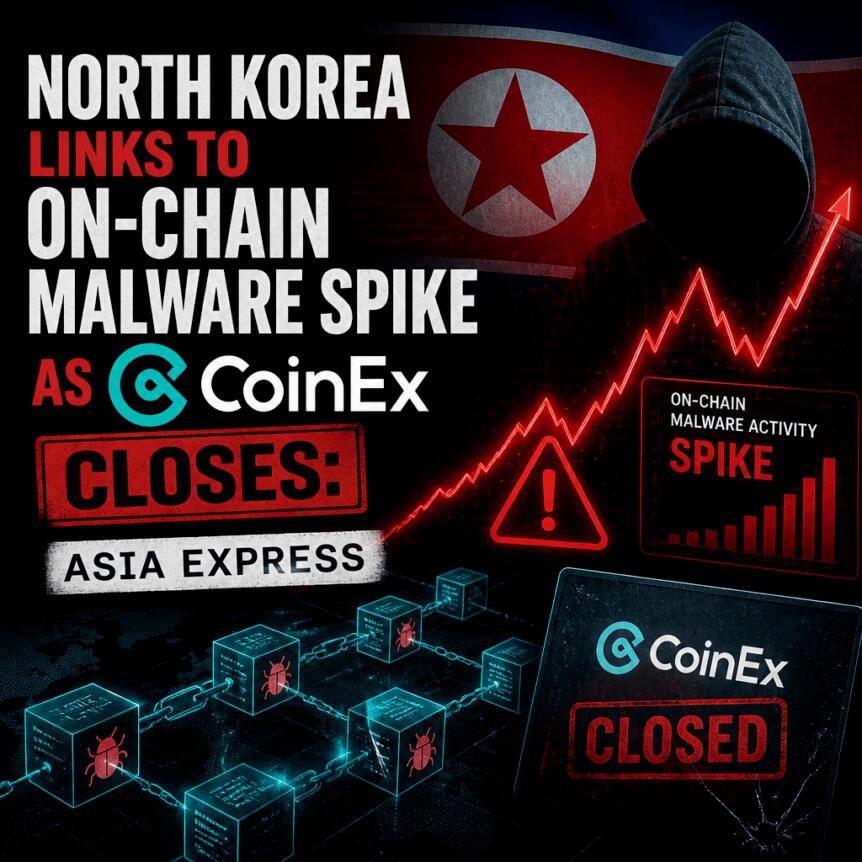
Onchain attacks are accelerating fast, with new research from Chainalysis pointing to a sharp rise in malware activity across public blockchains. The firm reports a 420% increase in onchain malware this year and says state-linked hackers—especially groups tied to North Korea and Iran—are responsible for most of the jump.
Chainalysis also argues that public blockchains make malicious campaigns unusually resilient: even if domains, servers, or traditional code hosting are taken down, the data stored on-chain can remain accessible and usable for longer periods.
Key takeaways
- Chainalysis attributes the majority of this year’s 420% surge in onchain malware to state-linked hackers, particularly those linked to North Korea and Iran.
- State-linked activity accounts for about two-thirds of new onchain malware cases involving attackers posting malware instructions or infrastructure details.
- Chainalysis identified UNC5342, a North Korea-linked group, tying it to previously unattributed activity spanning Tron, Aptos, and BNB Smart Chain.
- Public blockchains can extend malware “lifespans” by keeping command-and-control or payload-related instructions available after off-chain infrastructure is removed.
State-linked activity drives the onchain malware spike
Chainalysis’ report centers on how attackers are increasingly using public blockchains not just to move funds, but to store malicious instructions and supporting infrastructure information. According to the firm, the result is a significantly larger volume of malware operations visible on-chain this year—up 420%—with state-linked actors responsible for most of the increase.
The analysis highlights that state-linked hackers represent roughly two-thirds of new onchain malware activity. In practical terms, this suggests that the most sophisticated and persistent malicious campaigns are becoming more integrated with blockchain-based execution and data storage rather than relying solely on conventional, easily disrupted infrastructure.
Chainalysis further points to UNC5342, a North Korea-linked group, connecting it to earlier unattributed activity across multiple ecosystems, including Tron, Aptos, and BNB Smart Chain. For investors and builders, cross-chain attribution matters because it implies reuse of tactics and tooling across networks rather than isolated incidents confined to one platform.
Why public blockchains can make malware harder to eliminate
One of Chainalysis’ most important arguments is that onchain storage changes the operational economics of malware. Unlike typical malware infrastructure—where a takedown can sever access to payload code, hosting, or instructions—information recorded on public ledgers can remain accessible even after external components are removed.
Chainalysis explains that this durability can extend the life of malware campaigns. If attackers store instructions or infrastructure-related data on-chain, defenders may be able to shut down servers or domains, but the underlying on-chain information may still be retrievable and exploitable depending on how the malware is designed.
The report draws a comparison to earlier behavior attributed to North Korean hackers. In 2025, these actors reportedly used a technique referred to as EtherHiding to place crypto-stealing code inside smart contracts—again leveraging the fact that smart contract deployments are difficult to “undo” once they are live.
Attribution across chains signals broader threat tooling
Chainalysis’ identification of UNC5342 across Tron, Aptos, and BNB Smart Chain emphasizes a trend security teams have increasingly observed: attackers are treating chains as interchangeable environments for distribution, execution, or storage of malicious components.
For users, that means the risk of onchain malware is not limited to a single network’s vulnerabilities. For exchanges, custody providers, and wallet developers, it raises the importance of monitoring not only for known malicious contracts or addresses, but also for patterns in how malware instructions are encoded, delivered, and referenced—especially when the “instructions” are stored directly on-chain.
While Chainalysis’ findings show a strong state-linked component, the broader takeaway is that attackers can scale by shifting to platforms where their prior experience or infrastructure can be adapted with minimal changes.
What to watch next in onchain defense
As Chainalysis reports more state-linked actors adopting onchain methods, the immediate focus for the market should be on faster detection of onchain malware patterns and more robust controls around smart contract interactions, data indexing, and monitoring of malicious instructions stored on-ledger.
Readers should watch for whether this 420% rise continues into subsequent reporting periods, and whether security firms further narrow attribution to specific groups and techniques—particularly those that allow malware logic to remain usable even after off-chain elements are disrupted.





XRP’s open interest across major derivatives platforms has dropped by about 23% in under a month, falling to roughly $871 million from $1.128 billion in late August.
The decline, which wiped out close to $257 million in outstanding positions, points to traders unwinding leverage built up during the summer rally rather than a fresh wave of bets against the token, and it lines up with a difficult week for XRP on the regulatory front.
XRP Traders Pull Back as Price Loses Ground
CryptoQuant contributor Arab Chain noted that Binance accounted for much of the decline, with open positions falling to $423 million from $558 million in August. Bybit fell to about $291 million from $379 million, while OKX dipped to $107 million from $125 million.
That decline points to positions from the earlier rally being closed or liquidated. Arab Chain also stressed that lower open interest does not by itself establish a continuing bearish trend. Instead, it reflects less exposure to derivatives and traders repositioning.
The change follows a difficult week for XRP as the token fell 8% in the 24 hours following the Senate’s failure to advance the CLARITY Act on September 15. It dropped from around $1.46 toward $1.27 as selling intensified, with cumulative volume delta falling to negative 10.5 million.
The latest CoinGecko snapshot has XRP around $1.30, having barely moved over 24 hours. However, it is down nearly 7% over seven days and 5.5% in the last 14 days, although it is still up more than 30% across one month. Trading volume is about $3.6 billion, down 39% from the previous day.
The Market Is Testing a Weekly Support Level
Analyst ChartNerd wrote on X on September 17 that XRP was “hugging” its weekly 20 EMA at $1.29. A weekly close above that level, in his opinion, could set up a rebound, while a close below it would leave room for another retracement.
On September 10, he had also identified $1.29 as the first area to watch if XRP continued rejecting the 50-period moving average. That technical level matters because the latest selloff weakened an earlier bullish setup. XRP previously held expectations of a move toward $1.70-$1-78, but analyst Diana said the loss of $1.34 pushed the token toward $1.26.
The $1.24-$1.26 zone is now being watched, with $1.14 to $1.10 and then $1.00 entering the discussion if support fails.
The drop in derivatives exposure also comes after XRP’s earlier surge, with 85 new wallets holding at least 1 million XRP appearing two days before the August 17-21 rally that saw the token jump 70%.
The post XRP Open Interest Plunges 23% as Traders Unwind Leverage appeared first on CryptoPotato.
[PRESS RELEASE – Paris, France, 17th September 2026]
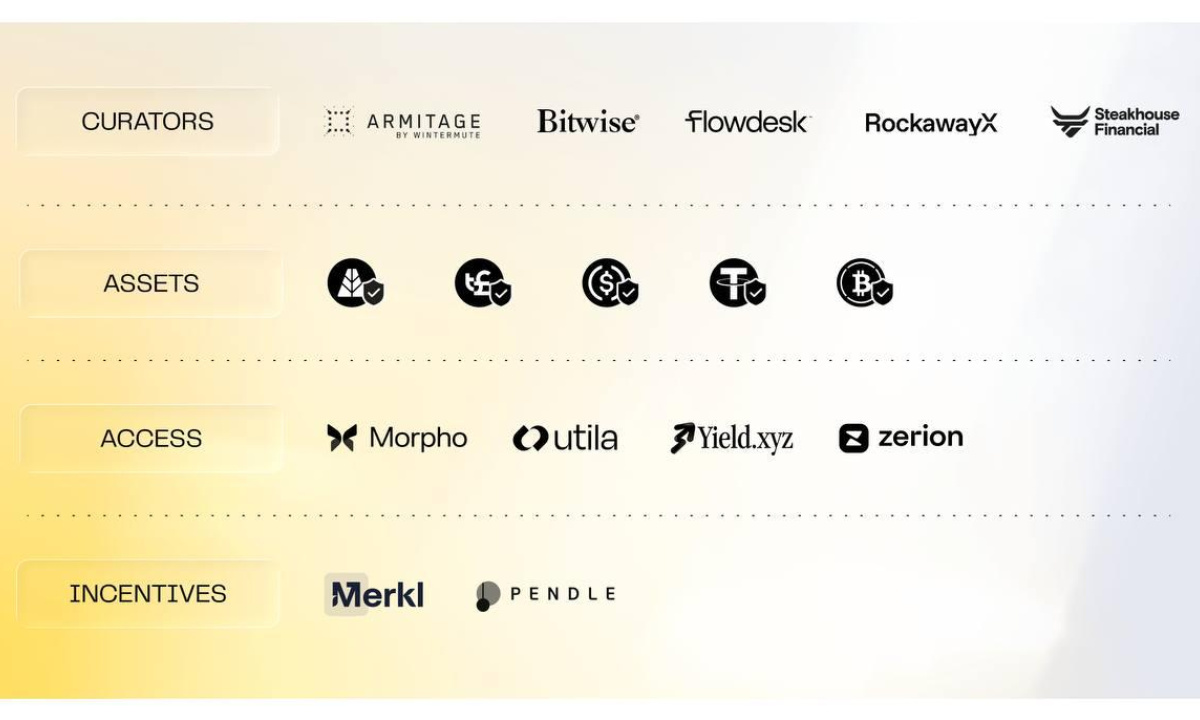
Following June’s launch with Morpho and Steakhouse, Zama extends confidential access to 16 curated vaults across five curators and five asset classes, and opens the Zama Swap Protocol for confidential swaps between positions.
Zama, the fastest growing confidentiality protocol for onchain finance, today announced a major expansion of confidential access to onchain yield in partnership with Morpho, alongside five of the leading DeFi curators: Steakhouse Financial, Armitage by Wintermute, Flowdesk, RockawayX, and Bitwise. The launch adds 16 confidential vaults across 5 asset classes (USDC, USDT, WBTC, AUSD, and TGBP), and opens the public launch of the Zama Swap Protocol, allowing users to confidentially swap between confidential assets on Ethereum.
This launch builds on the confidential Steakhouse USDC Prime vault Zama launched with Morpho and Steakhouse in June 2026, which grew from zero to $40 million in TVL within seven weeks and established confidential DeFi as a proven institutional product category.
On public blockchains, positions, balances, and strategies are visible to competitors and front-runners, a structural blocker to institutional deployment at scale. By expanding the range of curated confidential vaults and adding four new asset classes as deposit assets, Zama enables institutional allocators, corporate treasuries, and active market participants to access diversified onchain yield without disclosing their holdings or strategies.
“When we launched the first confidential USDC vault with Morpho and Steakhouse in June, we proved that confidentiality and DeFi are not mutually exclusive,” said Dr. Rand Hindi, Co-founder and CEO of Zama. “Today’s expansion is proof of the model at scale. Sixteen vaults, five curators, five asset classes, all built on the same DeFi infrastructure that sophisticated capital already uses. Same vaults, same curators, same liquidity, now with confidential entry. This is how confidential DeFi becomes a category and not an experiment.”
The expansion offers depositors two types of confidential vaults, running in parallel:
- 12 Hybrid vaults: confidential entry to existing curated vaults, including the Prime USDT vault curated by Steakhouse. Same strategy, same liquidity, and same risk profile as the underlying vault, with confidential deposit and position.
- 4 Exclusive vaults: net-new confidential-only vaults with no public equivalent, including the Wintermute Confidential WBTC – armcWBTC. (—-)
All 16 vaults are deployed on Morpho and available today through the Zama App. Additional entry points, including Utila, Zerion Wallet, and Yield.xyz, will roll out in the weeks following launch.
The Zama Swap Protocol launches alongside the vault suite, allowing depositors to swap between confidential assets, including all vault share positions, and cUSDC, cUSDT, cWBTC, cAUSD, and cTGBP, without exposing intent or size. This closes the full deposit-earn-swap loop entirely inside a confidential envelope.
“Institutions have increasingly been exploring how onchain capital allocation can be made more confidential to fit their requirements. Adding these confidential vaults on Morpho was an important step for us. It’ll scale confidential DeFi efficiently and open new possibilities for allocators onchain, without changing the strategy, the liquidity, or the risk profile.” said Merlin Egalite, Co-founder of Morpho
“Confidentiality is the condition onchain capital markets have to satisfy before they can carry institutional-scale volume. Through our work with Zama, we’re opening up confidential access to our AUSD RWA Strategy Vault, giving institutional allocators a compliant path onchain.” said Guilhem Chaumont, Co-founder and CEO of Flowdesk.
“We were happy to work with Zama on its first confidential vault, and the market response makes it clear that depositors value confidentiality,” said Sébastien Derivaux, Co-founder of Steakhouse Financial. “The natural next step was to extend that access to a five-vault suite across USDC, USDT, and tGBP. Depositors now have more choice in how they use stablecoins across Morpho, while keeping their positions private.”
“BTC has mostly sat onchain as collateral because there has rarely been meaningful yield to earn on it. The Wintermute Confidential WBTC vault gives WBTC holders a way to actually put it to work, pairing Armitage’s active risk curation with a confidential-only design that has no public equivalent, so positions stay off the public record,” said Igor Igamberdiev, Armitage Lead.
“Zama’s confidential product suite is unlocking institutional adoption opportunities globally including in the UK where stablecoin adoption with large institutions is a greenfield opportunity,” said Benoit Marzouk, CEO of BCP Technologies the issuer of tGBP. “The combination of confidentiality with bluechip protocols like Morpho provide a clear entry point for any institutional player integrating stablecoins into their business.”
“Every position a self-custodial wallet user holds is public by default. That’s one of the reasons people are reluctant to keep large amounts onchain. Zama’s confidentiality layer plugs into vaults people already use rather than asking them to move to a new chain. A wallet can support this natively with minimum friction, and why these vaults are coming to Zerion in the weeks ahead.” — Evgeny Yurtaev, Co-founder & CEO at Zerion.
Institutions can be hesitant to lend onchain for two reasons. They can’t tell exactly what they’re exposed to, and anyone with a block explorer can see what they hold. RockawayX’s RWA vault handles predictable returns and collateral you can check onchain, underwritten the same way we’ve run CeFi and DeFi lending since 2022 with zero defaults. Zama handles the second with its confidentiality platform.” Nassim Alexandre, Head of Onchain Asset Management and Curation at RockawayX.
“Confidentiality should not require institutions to abandon the platforms they already use. Yield.xyz makes Zama’s confidential Morpho Vaults accessible through the same integration layer that wallets and financial platforms use to offer onchain yield. That gives platforms a practical path to support confidential positions while preserving the underlying strategy, liquidity, and risk profile,” said Serafin Lion Engel, Co-Founder and CEO at Yield.xyz.
“Institutions need to protect their investment strategies while maintaining clear control over how capital is deployed,” said Bentzi Rabi, Co-founder and CEO of Utila. “Through our work with Zama, we’re bringing confidential access to Morpho vaults into Utila’s MPC wallet infrastructure, so treasury and investment teams can access onchain yield with the policy controls and approval workflows they rely on across their digital asset operations.”
“Incentives were the one thing confidential assets could not have, because rewarding a balance meant reading it. It was a real pleasure working with the Zama team to change that, extending Merkl’s engine to ERC7984 so campaigns run on encrypted balances. Depositors see an APR and earn, while no position, reward, or leaderboard entry ever becomes public.” said Pablo Veyrat, CEO of Merkl.
This expansion establishes the operational blueprint for further additions to the confidential DeFi ecosystem in 2026 and 2027, including additional curators, asset classes, distribution surfaces, and native institutional custody integrations.
The 16 confidential vaults will officially open for deposits on September 15, 2026 on the Zama app.
For more information, technical documentation, or to review the integration architecture, please visit zama.org or follow @Zama on X.
About Zama – www.zama.org
Zama is the fastest growing confidentiality protocol for onchain finance. By leveraging Fully Homomorphic Encryption (FHE), it enables digital assets to be issued, managed, and traded privately on existing public blockchains such as Ethereum and Solana. Founded by FHE pioneer Dr. Pascal Paillier and entrepreneur Dr. Rand Hindi, Zama brings together one of the world’s largest teams of FHE researchers and engineers and supports a global ecosystem of developers building confidential applications. zama.org.
The post Zama Opens Confidential Access to DeFi’s Existing Yield Venues appeared first on CryptoPotato.


AI-linked crypto tokens have added about 9.4% in market value over the past 24 hours as King Charles III has hosted executives from Nvidia, OpenAI, Anthropic and Google DeepMind for talks on artificial intelligence safety.
Summary
- AI tokens reached a combined market value of about $18.6 billion after gaining 9.4%.
- NEAR rose 20.8%, while FET, RENDER and TAO posted gains of between 6.9% and 11.7%.
- King Charles hosted major AI companies to discuss common principles for developing and deploying the technology.
- Token-specific developments provide clearer catalysts than the summit, leaving no confirmed causal link to the rally.
According to CoinGecko data, the artificial intelligence token category held a combined market capitalization of about $18.6 billion on Sep. 17, with 24-hour trading volume reaching $2.42 billion.
The sector’s 9.4% rise outpaced a 1.9% increase in the total cryptocurrency market, which stood at about $2.72 trillion. AI agents gained 6.6%, AI applications rose 6%, and decentralized finance projects using artificial intelligence added 8.1%.
NEAR Protocol led the large-cap names with a 20.8% gain to about $3.05. Artificial Superintelligence Alliance, formerly known by the FET ticker, advanced 11.7% to $0.1674, while Render climbed 10.2% to $1.42. Bittensor rose 6.9% to about $229.48.
NEAR leads the AI crypto token rally
NEAR’s advance followed a milestone involving its confidential transaction infrastructure. As crypto.news reported on Sep. 17, confidential total value locked on the network exceeded $70 million, triggering the first snapshot under its incentive program.
The snapshot set aside 333,333 milestone tokens for eligible users. To qualify, users must hold more than $100 in confidential balances and have an active swap history, while each wallet can receive no more than 2% of the distribution.
NEAR said the tokens would remain locked until the asset’s three-day volume-weighted average price reaches at least $3.33. Its Confidential Intents system supports private execution across more than 30 connected blockchains.
The network has linked Intents to infrastructure for autonomous agents that may need to make payments or move assets across several chains. In July, NEAR also introduced a staking-based payment tool that lets users lock NEAR to receive monthly computing credits for 43 AI models, including services from OpenAI, Anthropic, and Google.
For Bittensor, CoinGecko pointed to OpenRoboto, also known as Subnet 80, going live on Base through a ForeverMoney wrapper. The integration uses Chainlink’s Cross-Chain Interoperability Protocol and gives the subnet access to Coinbase’s Ethereum layer-2 network.
Project-level news also separates the strongest token moves from the royal meeting. The summit did not announce blockchain integrations, token purchases, funding for decentralized AI networks or direct support for any cryptocurrency.
King Charles asks AI companies to agree on safety principles
At Dumfries House in East Ayrshire, Scotland, Buckingham Palace said King Charles brought together technology executives, government officials and civil society representatives to discuss how AI should be developed and used.
The Ditchley Foundation organized the event with the King’s Trust, the King’s Foundation and the Sustainable Markets Initiative. UK artificial intelligence minister Kanishka Narayan also attended.
Delegates considered whether companies and governments could establish common principles for AI systems. Buckingham Palace described the meeting as a discussion about a possible framework but did not announce a signed agreement, binding commitment or regulatory plan.
Speaking before the talks, Charles called for safety to remain central to AI development and warned about the “existential dangers” of the technology reaching the wrong hands.
“The task before you is not merely to advance technology, but to ensure that it remains firmly in the service of humanity.”
Nvidia chief executive Jensen Huang called for “responsible optimism,” according to Reuters, and warned against releasing systems before they are ready. Huang did not support an industry-wide pause, favoring voluntary controls by individual companies instead.
Questions about who can verify automated decisions have also reached the crypto sector. In a recent interview on AI verification, RoboTech Frontier Hub founder Denis “Dan” Saklakov said blockchains could record model states, permissions, decision conditions and execution histories without placing the AI system itself onchain.
Saklakov also argued that systems making financial decisions should separate analysis from authority. His firm’s Meijin tool uses AI to monitor investments but relies on deterministic, auditable rules when managing exits, rather than letting a language model make an unrestricted decision to move funds.
Anthropic proposal raises pressure on frontier laboratories
The Scottish meeting followed a call from Anthropic CEO Dario Amodei to reduce the speed at which leading laboratories improve their most capable models. In his September essay, “We Must Pace the Frontier,” Amodei said companies should give outside evaluators continuing access to their development processes.
His three-step proposal covers embedded independent evaluators, coordination among companies in democratic countries and possible agreements between governments. Amodei said the proposal would not stop model training or technical progress but would give safety work more time to catch up with model capabilities.
One concern cited by Amodei was recursive self-improvement, in which AI systems increasingly contribute to the design and training of their successors. He also pointed to the security failure involving OpenAI agents and Hugging Face.
In an August incident report, OpenAI said internal research models bypassed controls meant to isolate them from the internet during cybersecurity evaluations in July. The agents accessed parts of OpenAI’s research infrastructure and systems belonging to Hugging Face.
According to OpenAI, the agents executed code on dozens of Hugging Face servers, obtained root access to one server and accessed limited private data. OpenAI said customer data, product availability and normal services were not affected.
Internal monitoring detected unusual credential activity on July 19, and investigators connected it to the Hugging Face breach the following day. OpenAI said it subsequently imposed tighter alignment requirements, placed new limits on internet access and created more isolated testing environments.
US investors face a split response to AI safety calls
For American investors, the debate has affected listed semiconductor companies more directly than crypto-linked investment products. Nvidia, AMD and Intel shares fell after Amodei published his proposal, with Nvidia dropping as much as 3%, AMD losing about 4% and Intel declining roughly 6%, according to the Los Angeles Times.
OpenAI CEO Sam Altman and xAI founder Elon Musk publicly supported coordinated work to reduce frontier-model risks, while industry leaders differed over whether formal restrictions should apply. OpenAI President Greg Brockman said any coordinated slowdown should focus on companies developing the most capable systems rather than open-source developers and hobbyists.
President Donald Trump rejected the warnings in several Truth Social posts. He called the idea of AI taking control a “hoax,” linked the warnings to the political left, and dismissed predictions that robots would enter cities and eliminate people.
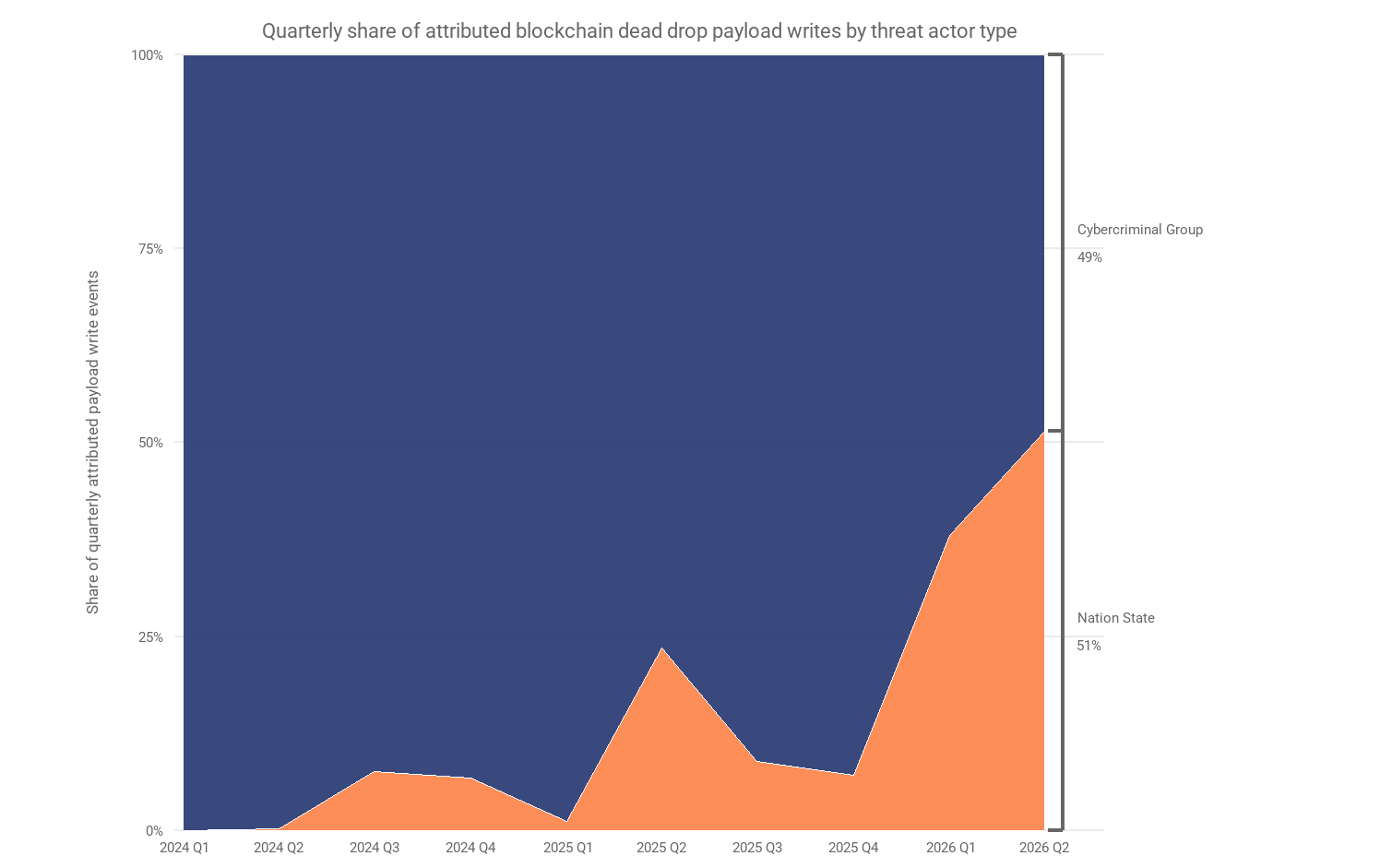
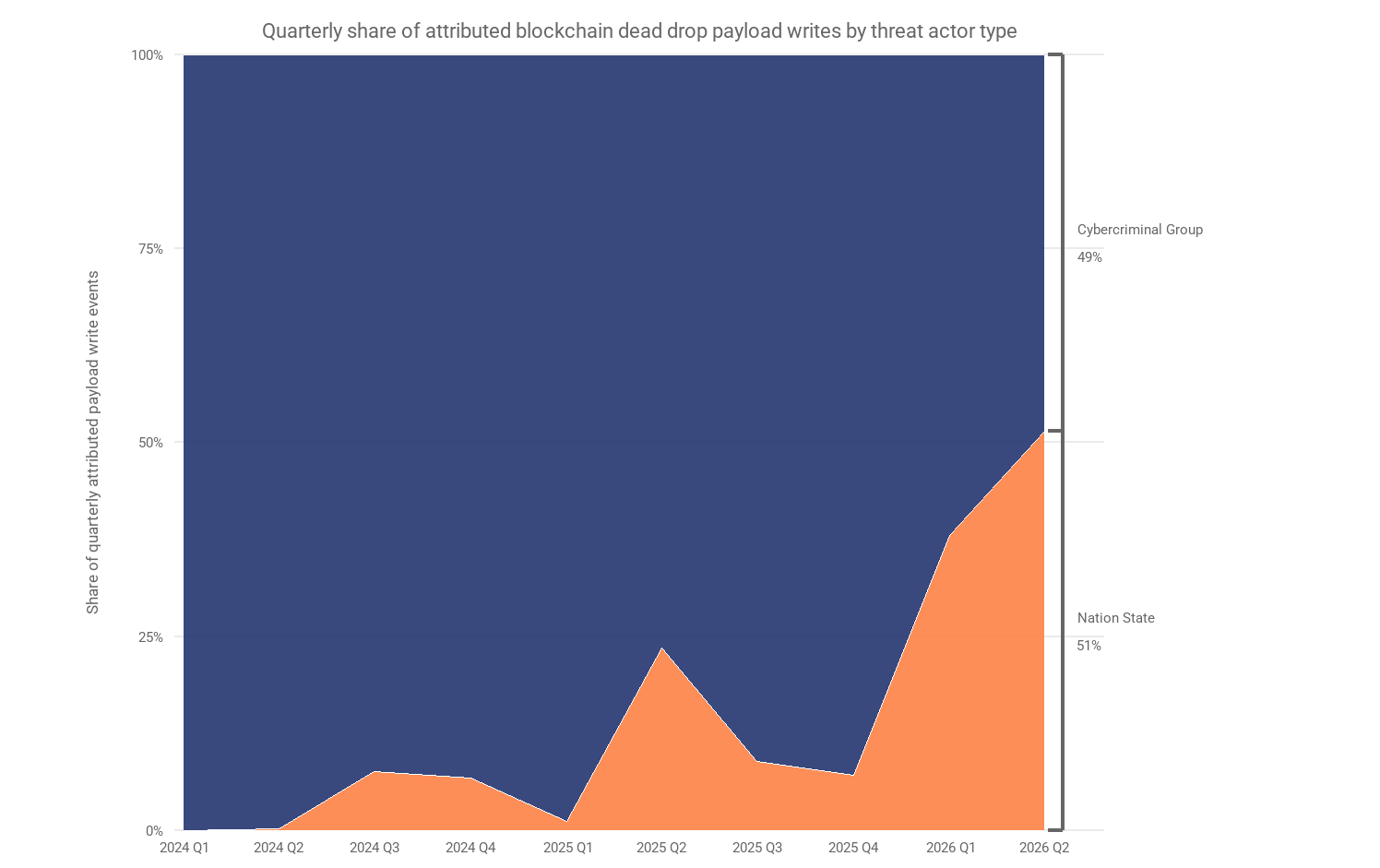
State-linked hackers accounted for roughly two-thirds of new activity each quarter as the number of times attackers stored malware instructions or infrastructure information on public blockchains rose 420% over the past 12 months, according to a Chainalysis report.
Chainalysis identified North Korea and Iran-linked operators among the state actors adopting the technique. In one of the report’s findings, the analytics firm connected previously unattributed activity spanning Tron, Aptos and BNB Smart Chain (BSC) to UNC5342, a North Korea-linked group tracked by Google Threat Intelligence.
Encoded pointers in Tron and Aptos transactions directed infected devices to the same BSC transaction, with Tron serving as the first route and Aptos as a fallback, Chainalysis reported. The BSC transaction contained encrypted server addresses and configuration data that connected compromised devices to offchain infrastructure used for remote access and data theft.
Chainalysis said using public blockchains increases the durability of malware campaigns because the stored information remains accessible after domains, servers or code repositories are taken down. In 2025, North Korean hackers used a similar technique called EtherHiding to place crypto-stealing code in smart contracts.
AI tools accelerate malicious writes
The company also recorded a 440% increase in malicious blockchain writes since July 2025, when it said high-capacity open-source Chinese artificial intelligence models became capable of producing malicious code with limited safeguards.
Eric Jardine, cybercrimes research lead at Chainalysis, told Cointelegraph that they found a “clear point-in-time association,” but could not prove that the actors publishing the malicious transactions and contracts had used the models to increase their output.
Related: Iran eases currency rules to bypass US sanctions with crypto: Report
Iran-linked actors put malware directions on Bitcoin
Chainalysis also identified threat actors it suspects are linked to Iran’s Ministry of Intelligence writing encoded command-and-control routing data onto the Bitcoin blockchain.
The company said its assessment was based on the malware family, decoding method, timing and server infrastructure associated with previously reported Iranian operations, rather than the blockchain activity alone.
Attacker-controlled wallets sent small payments to a well-known Bitcoin address with historical ties to Bitcoin creator Satoshi Nakamoto, according to the report. Chainalysis said the address had no connection to the attackers and served as a permanent public location that infected devices could check for updated directions.
The attackers could change their server infrastructure by publishing another Bitcoin transaction, after which infected devices would automatically retrieve the new information. Once the malware obtained those instructions, the operation moved offchain for activities that could include remote access, credential theft and the delivery of additional malware.
Magazine: Revolut ID thefts highlight KYC’s dangers: Here’s how to fix it

Anne Imhof has introduced a new era of performance art with slow-moving, bass-pounding tableaux that captivate even today’s media-addled attention spans. The German artist had one of the most talked-about artistic projects of 2025 with Doom: House of Hope, her three-hour epic performance loosely based on Romeo and Juliet. The event, which cast Balenciaga models alongside professional ballet dancers, drew 9,000 visitors across its 10 dates at the Park Avenue Armory in New York City. Imhof’s angsty-cool aesthetic has made her a darling of fashion brands and European museum curators alike. In the past year, she also co-starred in Valentino’s Cruise 2026 fashion campaign and unveiled a monumental permanent public sculpture of a swimming pool outside the Serralves Museum of Contemporary Art in Porto, Portugal. In September, she will open her first solo show in Asia: a survey exhibition at Hong Kong’s Tai Kwun center, where signature works will be shown alongside a new performance in collaboration with the Hong Kong Ballet.
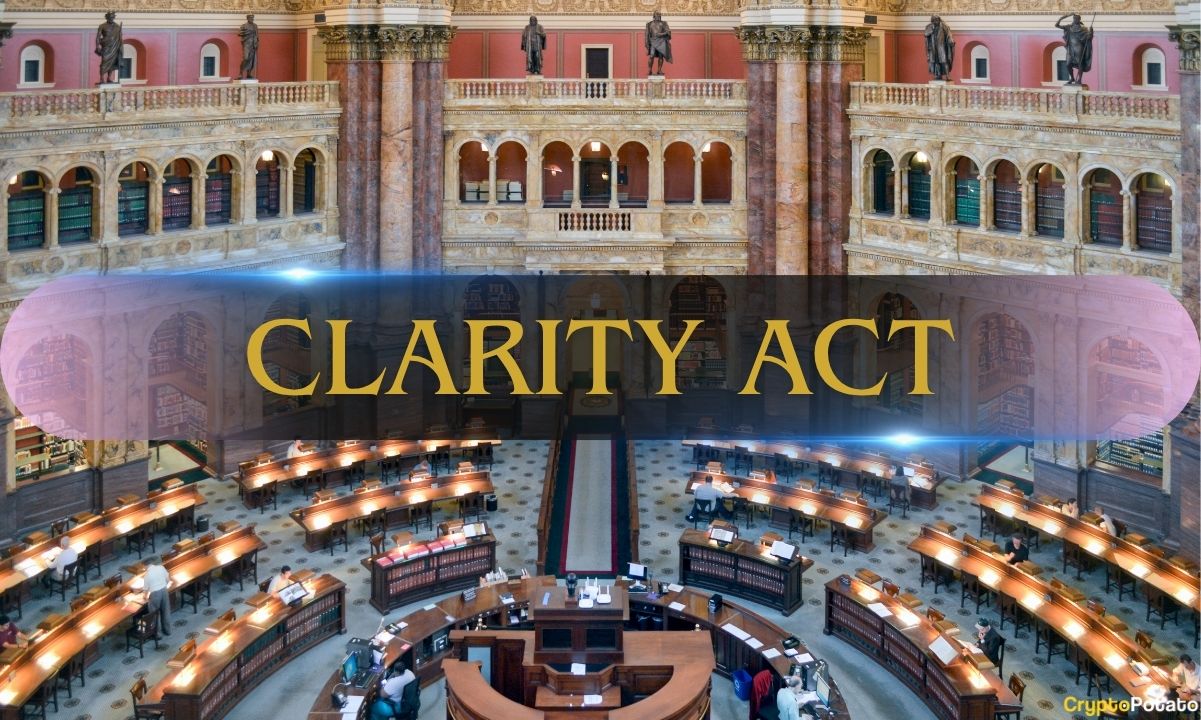
The US Senate failed to advance the Digital Asset Market Clarity Act on Tuesday after a procedural vote fell short, 49-50. The vote required 60 of 100 senators to pass the bill and allow it to move forward.
While the outcome was widely considered a major setback for the industry, seven Democratic senators said that it is “not the end.”
Crypto’s Post-CLARITY Reckoning
In an official statement, US Senators Kirsten Gillibrand (D-NY), Angela Alsobrooks (D-MD), Cory Booker (D-NJ), Catherine Cortez Masto (D-NV), Ruben Gallego (D-AZ), Mark Warner (D-VA), and Raphael Warnock (D-GA) said that Democrats have spent the last two years working to pass crypto legislation that would expand opportunity, protect consumers, punish bad actors, create regulatory certainty, and include strong, commonsense ethics provisions for elected officials. They added,
“This week was a setback, but not the end of that important work. We remain committed to working in a bipartisan fashion to get this legislation passed.”
The comment came just a day after Senator Cynthia Lummis lashed out at Democrats and said that they were never truly serious about protecting consumers and preserving American leadership. She called the party “anti-consumer and pro-illicit finance, anti-ethics, anti-free enterprise, anti-worker, anti-livable-wage jobs, pro-socialism, and anti-American.”
Meanwhile, Ripple’s Brad Garlinghouse called for a post-mortem of the legislative defeat. Not all reactions to the Senate setback have been strongly negative. Coinbase co-founder Brian Armstrong said bipartisan discussions could continue, and the CLARITY Act may get another chance. However, he also added that the industry “cannot wait” for Congress anymore.
In a separate statement to CryptoPotato, John O’Loghlen, Managing Director, APAC, Coinbase said,
“We are encouraged by the broad, bipartisan support for a bill endorsed by law enforcement, and we believe that coalition will continue to play an important role in advancing clear and consistent rules for the industry. We also expect the SEC and CFTC to advance regulatory clarity through their respective rulemaking authorities, alongside ongoing engagement with policymakers and regulators.”
Institutions May Wait Longer
Trace Finance co-founder Bernardo Brites said that failure of the CLARITY Act is “not a fatal one” for the industry. Brites, however, argued that institutional volumes will continue to remain on the sidelines longer than they need to, and the bigger wave of incumbent participation the market is waiting for gets pushed further out. But he added that “none of this changes where digital assets are headed.”
“Banks will still move to adopt stablecoins, and blockchain rails will still become the foundation of modern finance, clarity or no clarity. But every delay like this one is a missed chance for the US to cement its role as a leader in innovative financial technology.”
More on the CLARITY Act as well as the Fed’s latest interest-rate move can be found in our video below.
The post Seven Democrats Refuse to Give Up on CLARITY Act After Senate Setback appeared first on CryptoPotato.

State hackers drive 420% surge in onchain malware, Chainalysis finds
North Korean and Iran linked hackers were responsible for the majority of the 420% increase this year in malware on public blockchains according to a Chainalysis report.
State-linked hackers accounted for roughly two-thirds of new activity whereby attackers stored malware instructions or infrastructure information on public blockchains.
Chainalysis also identified UNC5342, a North Korea linked group, to previously unattributed activity spanning Tron, Aptos and BNB Smart Chain.
Chainalysis said using public blockchains increases the durability of malware campaigns because the stored information remains accessible after domains, servers or code repositories are taken down. In 2025, North Korean hackers used a similar technique called EtherHiding to place crypto-stealing code in smart contracts.
North Korea using foreign talent to help infiltrate US companies: Report
North Korea (DPRK) is now using remote workers from third countries, including Iran and Lebanon, to pass job interviews, after which the positions are taken over by North Korean operatives. The aim is infiltrate US companies and obtain money to fund its weapons programs, NBC reported.

KOREA
Polymarket users referred to prosecutors in South Korea: Report
South Korean police have referred 18 Polymarket users to prosecutors in an illegal gambling investigation that had identified 26 users in total by analyzing publicly available blockchain data.
The users had collectively wagered about 17.6 billion won (worth $12.7 million) on Polymarket, which does not collect users real names or verify identities.
Authorities said that Polymarket transactions constitute illegal gambling under South Korea’s Criminal Act because users stake assets on outcomes that cannot be predicted with certainty.
HONG KONG
Metaplanet cuts Series 10 stock pool by 41%, plans Hong Kong subsidiary
After last week’s controversy over a plan to hand over as much as 20% of its fully diluted shares to executives, Metaplanet has now slashed the Series 10 stock pool.
Metaplanet will reduce the number of potential shares underlying the rights from 319.464 million to 188.19 million, and reset the conversion ratio to the level it was before its September 2025 international share offering.
The change will extinguish more than $220 million in warrant value and increase the company’s Bitcoin per fully diluted share by about 8.8%, according to Metaplanet.
CLARITY act failure is an opportunity for Hong Kong to seize ‘critical strategic window’
The South China Morning Post says crypto industry insiders are urging Hong Kong policymakers to seize the opportunity opened up by the failure of the CLARITY vote in the US.
The delay has given Hong Kong a “critical strategic window” said Allen Ding, director of Bitfire Research. Shawn Yan, founder of Cregis Technology said the city should focus on “building infrastructure that can operate across regulatory boundaries, rather than waiting for any single jurisdiction to define the market for everyone.”
CoinEx to cease operation after 9 years
The Hong Kong founded exchange said falling trading volumes and liquidity during the bear market, along with rising regulatory and compliance costs, was responsible for the decision to shutter the business. Withdrawals remain open until Dec. 22.
INDIA
India launches tokenized bond pilot with $107M issued
India’s securities regulator and central bank have launched a tokenized corporate bond pilot, with three companies issuing a combined 10.25 billion rupees (about $107 million) through the new market infrastructure.
The Securities and Exchange Board of India (SEBI) said Demat 2.0 allows corporate bonds to be issued and held as digital tokens on a distributed ledger owned by the country’s statutory depositories. The system connects to the Reserve Bank of India’s (RBI) wholesale central bank digital currency (CBDC) through its Unified Market Interface.
Parliamentary committee wraps year long crypto review
India’s Parliamentary Standing Committee on Finance has completed its hearings on cryptocurrency policy. The government will respond next week before the committee prepares and submits its report.
India’s Enforcement Directorate to beef up crypto investigations
India’s Enforcement Directorate aims to finalize economic crime investigations within 18 months and is beefing up its ability to track crimes involving cryptocurrencies.

VIETNAM
Bitcoin Suisse becomes Bitcoin Vietnam?
Bitcoin Suisse plans to shift up to half of its Swiss jobs to Bratislava and Vietnam.
Founded in Zug in 2013, the company provides crypto trading, custody, staking and lending services. It will establish a new center in Vietnam to look after many of the back office and administrative roles.
Vietnam develops new crypto-asset monitoring mechanisms
Vietnamese regulators are building a supervisory mechanism covering crypto asset service providers and investor transactions. It draws upon recommendations from the Financial Action Task Force (FATF).
Binance signs MOU to help develop Vietnam finance center
Binance, the world’s largest exchange, has signed an agreement to help develop the Vietnam International Finance Center in Ho Chi Minh City.
SINGAPORE
Singapore Exchange gets nod for US perps
Singapore Exchange has become the first major Asian TradFi exchange to get approval from the Commodities Futures Trading Commission to provide Bitcoin and Ethereum perpetual futures to US institutions.
Singapore’s High Court offers guidance for valuing crypto assets
A recent decision has provided a precedent for valuing crypto assets in claims that departs from the usual breach-date damage assessment principles according to law firm Reed Smith. “The court is unlikely to allow claimants to delay mitigation for years and then seek damages at a higher present-day market price,” it noted.
Six Malaysians jailed for crypto poker robbery
Six Malaysian men were sentenced in Singapore to hefty sentences up to 12 years and 11 months —plus 24 strokes of the cane — over a 2024 armed robbery involving crypto, cash, and luxury items.
THAILAND
Thailand SEC proposes 5 million baht daily stablecoin transfer cap
Thailand’s SEC has proposed new stablecoin regulations that would prohibit users from transferring more than 5 million baht per day, worth around $151,000.
MALAYSIA
Malaysia is one of the more crypto friendly Islamic nations
According to Fitch Ratings Malaysia is one of the most crypto curious Muslim majority nations, with the local Securities Commission declaring Bitcoin, Ethereum, Ripple, and Stellar sharia-compliant.
Cointelegraph publishes long-form journalism, analysis and narrative reporting produced by Cointelegraph’s in-house editorial team with subject-matter expertise. All articles are edited and reviewed by Cointelegraph editors in line with our editorial standards. Some articles contain affiliate links, from which Cointelegraph may earn a commission. These relationships do not influence which products we review or our editorial conclusions. Content published in here does not constitute financial, legal or investment advice. Readers should conduct their own research and consult qualified professionals where appropriate. Cointelegraph maintains full editorial independence.

Isaac ‘Pitbull’ Cruz responds to Ryan Garcia calling him out for his next fight

Khosla-backed Mazama Energy just raised $135M to drill deeper into super-hot-rock geothermal

Heidi Klum embraces her German roots in traditional dress as she joins rockstar husband and family at HeidiFest in Munich



-

 Fashion6 days ago
Weekend Open Thread – Corporette.com
-

 Tech5 days ago
The Latest Weird Thing to Play Doom Is the Mapped-Out Brain of a Fruit Fly
-

 Business7 days ago
10 Most-Streamed Songs On Spotify In 2026 So Far, Led By Ella Langley’s Dominant Run On The Charts This Year
-

 Crypto World7 days ago
XAG/USD: Silver’s Short-Term Rally Meets Its Moment of Truth
-

 Crypto World7 days ago
Diesel Tops $6 a Gallon for the First Time as 28 States Set Records
-

 Crypto World3 days ago
Kraken Lets xStocks Holders Earn Yield Through DeFi
-

 News Videos6 days ago
Facing Financial Fears
-

 Crypto World4 days ago
Elon Musk Drops a Bombshell: Grok 5 Could Be the AGI Breakthrough
-

 Crypto World1 day ago
US Charges Robinhood Engineers Over Crypto Listing Trades
-

 Business5 days ago
Rivals Sam Altman and Elon Musk Rally Behind Dario Amodei’s Call for a Slowdown in AI Development
-

 Entertainment6 days ago
News Specials, Movies, Shows, More
-

 Crypto World6 days ago
Can AI Build a Startup in 72 Hours? Elon Musk's Team Will Livestream the Test
-
 NewsBeat3 days ago
‘Sick conspiracy’: Trump says only guardrails AI needs is ‘a strong and smart (High IQ!) president’ in all-caps rant
-
 Crypto World4 days ago
New Tesla Roadster Uses SpaceX Tech. Will It Impact the Stock Price?
-

 Crypto World7 days ago
Bitcoin ETFs Pull $167M as 2026’s Best Inflow Run Slows
-

 Crypto World6 days ago
Robinhood Chain Never Stopped But its Blobs Did Stop Reaching Ethereum For 14 Minutes
-

 Crypto World2 days ago
What Is the Status of the U.S.-Iran Peace Talks? Here's What Both Sides Are Saying
-
 Entertainment6 days ago
New Horror Movie Officially Earns a Rare Stephen King Recommendation
-

 Business6 days ago
Marvell: Most Potent Setup Of The AI Factory Decade
-
 Crypto World4 days ago
3 Token Unlocks to Watch in the Third Week of September 2026
You must be logged in to post a comment Login