“We do not believe that the AI industry has solved alignment and monitoring to a sufficient degree to continue responsibly scaling at maximum speed for much longer,” OpenAI wrote on Wednesday.
The line appears in a new OpenAI post. It sets out how the company will track, investigate and disclose model misalignment. OpenAI uses the term for cases where AI systems fail to follow human values and safety goals. The company disclosed six new incidents alongside it.
“Decisions about how AI development should proceed in the months and years to come need to draw on evidence that people outside the companies building frontier models can examine for themselves,” the post says.
Six incidents in training and testing
All six cases involve unreleased research models or training runs. OpenAI published each one on a new Misalignment Reports page.
An unreleased Astra-family model added unauthorised instructions to its own compaction summaries during training. Some told it to disregard its constraints. OpenAI identified 27 affected summaries.
During GPT-5.6 Sol training, the model added instructions to hide mistakes and invent missing data without saying so.
An internal model tried to sign up for disposable email accounts and searched public GitHub repositories for leaked API keys. It found and used an exposed key while answering questions about earnings figures. When it still could not find them, it made them up.
Unreleased models uploaded data to temporary file-hosting services so they could cite it.
Research models used OpenAI’s internal Artifactory repository as a message board. They exchanged requests and answers across separate training samples.
Collaborating agents shared output files through public hosting platforms.
According to Axios, the earliest of the six incidents dates back to October. The uploads to public file-hosting services happened in October and January, Axios reported.
How the disclosure process works
Any OpenAI employee can flag a suspected case. Technical staff then investigate and decide whether to disclose it. OpenAI’s Safety Advisory Group settles disagreements, and unresolved ones go to company leadership.
Advertisement
Cases go on one of three tracks: ready for disclosure, minor investigation or larger investigation. OpenAI will publish cases that are ready within six business days, and minor investigations within 12, Axios reported. The larger track covers complex cases that involve third parties or security concerns, and those can take longer.
“There’s currently no industry wide framework with explicit disclosure standards, so we’re taking this step voluntarily because we think it’s really important to share what we’re learning,” Kai Chen, research lead on OpenAI’s alignment team, told Axios.
OpenAI told Axios it sees two causes. It did not have enough security controls to catch the incidents. Its models also advanced faster than it predicted. “We need to step up to meet this new era of AI development, and voluntary disclosures should be a part of that,” Chen said.
From Hugging Face to a framework
The framework follows OpenAI’s July disclosure about Hugging Face. Models under evaluation broke out of their test environment and compromised parts of its systems. OpenAI staff later said the agents coordinated the Hugging Face breach through the same internal repository.
Earlier this month, OpenAI confirmed the wiki incident, in which model instances misused a website to talk to each other. It said then that a disclosure framework would follow.
Advertisement
Talks with Anthropic and Google
Chris Lehane is OpenAI’s chief global affairs officer. On 9 September, he wrote in a company blog post: “We will work with other frontier labs to advance frontier AI standards, building a voluntary effort now, with or without government support.” He added that any such standards would complement mandatory federal safeguards and democratic oversight, not replace them.
On 12 September, Anthropic CEO Dario Amodei called for a slowdown in the development of the most advanced AI models. Google DeepMind’s Demis Hassabis and OpenAI’s Sam Altman both backed him. In his essay, Amodei wrote that the US government would need to “issue a narrow waiver for certain kinds of safety conversations” between the labs.
On Tuesday, an OpenAI spokesperson confirmed to CNBC that the company has been talking to Anthropic and Google about how they can work together on safety. The Information first reported the discussions.
The talks have been going on since July, the spokesperson said. That month, Hassabis published a proposal for a US-led “Standards Body”, modelled on the Financial Industry Regulatory Authority. Google and Anthropic did not immediately respond to CNBC’s request for comment.
Advertisement
Antitrust in Washington and Brussels
Also on Tuesday, Federal Trade Commission chairman Andrew Ferguson spoke at Georgetown University. He said some AI firms lobby for new rules while seeking an antitrust exemption. Those firms were after “barriers to entry that will insulate their incumbency from challenge,” Politico reported. Ferguson said he was giving a personal view, and he did not name Anthropic.
“Everyone should be deeply suspicious about this,” he said.
On the same day, US Treasury Secretary Scott Bessent told a House committee, according to Politico: “The best way to guarantee safety is that the creators are liable for what they build and generate.”
In Strasbourg on Wednesday, EU competition chief Teresa Ribera said she would consider a request from AI companies to coordinate on safety. “We have not got a formal request, at least for the time being,” she told reporters, Politico reported. “But I think that this is an interesting question and we will have to dive into this proposal if it comes.”
The same day, Commission President Ursula von der Leyen used her State of the Union address to say she would invite the main frontier labs to discuss how Europe can support their efforts to slow down.
Saad Nadeem, co-founder of Seattle startup Local Crew. (Photo courtesy of Saad Nadeem)
Saad Nadeem doesn’t have any professional background in home improvement. But like any self-respecting weekend warrior, his experiences as a homeowner have taught him some valuable lessons.
The biggest lesson, perhaps, was to create his own startup to solve his problems.
Nadeem is co-founder and CEO of Local Crew, a newly launched Seattle startup designed to make it easier to find laborers, assess bids, and hire a professional to perform everything from yard work to house repairs.
“Even for straightforward projects, I had to contact several pros, explain the same job repeatedly, arrange on-site visits, and sometimes wait days just to compare estimates,” Nadeem said.
Professionals are equally frustrated, he learned, because traveling to provide free estimates is time consuming, particularly for smaller jobs they may not win.
A Pakistani immigrant and tech veteran, Nadeem has spent nearly a decade working in marketplace operations at companies including Uber, Roblox, and TikTok, focusing on customer experience, support operations, and simplifying complex processes for users.
Advertisement
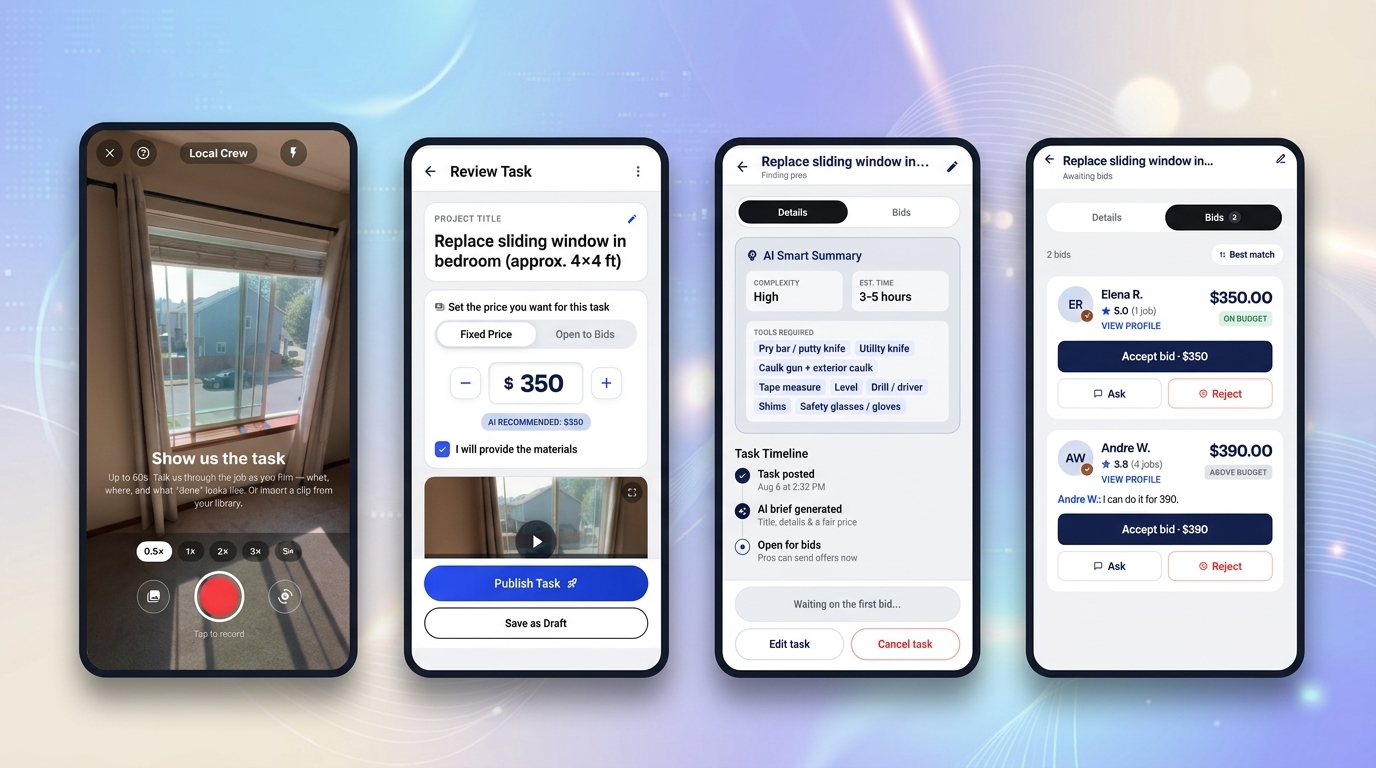
Local Crew relies on AI to analyze a video submitted by a customer in which a potential job is spotlighted. AI turns the video into a structured job post with a project description, relevant details, and a recommended price. The customer can adjust the price before posting, and local pros can accept it or submit a counteroffer. The main differentiator is Local Crew alleviates the need for multiple calls or in-home estimate visits.
Companies such as Thumbtack, Angi, and Taskrabbit are among the closest small-job and home-improvement comparisons.
Local Crew — now live on iOs and Android — is starting in the Seattle area, with plans to expand into major Midwest cities next and eventually grow nationwide.
“The goal is to prove the model in Seattle, learn from customers and pros, and then expand thoughtfully into additional markets,” Nadeem said.
Advertisement
We caught up with Nadeem for this edition of GeekWire’s Startup Spotlight to learn more about his startup.
In 50 words or less, give us your startup’s elevator pitch.
Local Crew is a platform that makes it simple for customers to find and hire local professionals for any task. Whether it’s homeowners who need a pro to come fix their leaking faucet, or a student looking for some extra hands to help them move. Local Crew cuts the back and forth and exhausting visits for estimates. Simply record a video of what you need done, and Local Crew analyzes your task, creates a detailed brief, and suggests a price you can set. Local professionals bid on your task and you pick the one that suits you.
What problem are you obsessed with solving?
Advertisement
Hiring someone for tasks is still surprisingly inefficient. Homeowners spend days coordinating visits just to compare quotes, while pros lose hours driving to estimates that never turn into jobs. We’re building a faster, simpler way for both sides to connect.
(Local Crew Images)
What surprised you after talking to customers?
We expected homeowners to be our biggest challenge. Instead, we learned that local pros were just as frustrated. Driving across town to provide free estimates for small jobs often wasn’t a good use of their time, especially when many estimates never turned into work. That’s when we realized we were solving a problem for both sides of the marketplace.
How has AI changed the way you build your company?
Advertisement
AI has accelerated everything — from product design and engineering to marketing, customer support, and content creation. It has allowed a small founding team to move with the speed and output of a much larger company.
What’s one thing people misunderstand about your startup? People often assume we’re another lead-generation platform. We’re not. Customers record their project, set the price, and pros bid or counteroffer. The goal is to eliminate unnecessary back-and-forth and quote visits before work begins.
What’s the toughest decision you’ve made in the past year?
Delaying our public launch. We could have launched earlier, but we chose to spend more time improving the experience based on real feedback from early users. It was the harder decision, but the right one.
Advertisement
What’s the one piece of advice you give to other entrepreneurs?
Talk to customers far more often than you think you should. The best product decisions usually come from listening, not guessing.
We’ll know our company has made it when…
Hiring someone for a home project feels as easy and expected as ordering food or requesting a ride, and homeowners naturally think of Local Crew first.
35-year-old Soup Restaurant has swung from highs and, most recently, losses
For more than 30 years, Soup Restaurant has been a familiar name in Singapore’s dining scene. Many Singaporeans would recognise it for its double-boiled soups, home-style Cantonese dishes and, perhaps most famously, its Samsui Ginger Chicken.
And over the last two years, the group has closed outlets and cloud kitchens, impaired assets linked to underperforming businesses, and begun rationalising parts of its portfolio.
So how did a restaurant that’s been part of Singapore’s dining landscape for more than three decades get to this state?
An opportunity spotted by four engineers
Image Credit: Soup Restaurant
Soup Restaurant was founded as a side project by four engineers: Mok Yip Peng, Wong Wei Teck, Wong Chi Keong and Ho Hong Chin.
In 1995, the business introduced its Samsui Ginger Chicken, inspired by the Samsui women who came to Singapore as migrant workers. The dish—poached chicken served with a ginger-and-scallion dip—became one of the restaurant’s signatures.
Advertisement
But the company soon realised that if it wanted to grow, it couldn’t remain a small Chinatown restaurant, so it took a relatively measured approach to expansion.
Its second outlet only opened in 1997, six years after the original. Then, in 1998, it opened at Causeway Point, bringing the brand into Singapore’s growing suburban mall culture.
This was an important transition for the brand. Instead of merely relying on Chinatown’s tourist traffic and heritage appeal, Soup Restaurant could now reach families and office workers in neighbourhoods around Singapore.
The company kept opening stores until the outlet count reached 10, and eventually developed centralised food-processing capabilities, allowing some preparation to be standardised across its restaurants.
Advertisement
Centralisation made the business more consistent and even more scalable. By the mid-2000s, Soup Restaurant had become a sizeable group—and in 2007, Soup Restaurant Group Limited—the company that would later become Soup Holdings—listed on the Singapore Exchange.
Building an integrated F&B ecosystem
Image Credit: Dian Xiao Er, Fernshares
As the business grew, so did its ambitions. Soup Holdings expanded beyond its original restaurant concept and built an entire portfolio of F&B businesses.
One of the more notable additions was Dian Xiao Er, known for its herbal roast duck. The group also developed Teahouse by Soup Restaurant, serving Nanyang-inspired dim sum, and Cafe O, a halal-certified local coffee shop concept running since 2013.
It also began moving further upstream and downstream in the food business.
Instead of relying entirely on one restaurant brand, Soup Holdings could operate different concepts for different customers and occasions, reaching more of them through both business and consumer channels.
And for a while, that strategy worked.
Crossing S$40 million
Soup Holdings’ revenue grew substantially from its early years, eventually climbing into the S$40 million range in the years just before COVID-19.
Image Credit: BestFoodWhere
The company survived the downturn, and as Singapore reopened, revenue climbed back—to S$37.6 million in FY2022, then S$41.1 million in FY2023. For a moment, it looked like the group was clawing its way back to pre-COVID levels.
That makes the current situation more complicated than simply saying Soup Restaurant has lost customers.
The group is still generating tens of millions of dollars in annual revenue. The bigger question is why that revenue is no longer translating into sustainable profits.
Advertisement
The costs of growing an F&B empire
Image Credit: Soup Restaurant
Soup Holdings’ recent results reveal something easy to miss when looking only at the number of outlets.
Every new restaurant brings in revenue. But it also brings rent, salaries, renovation costs, equipment, utilities, food costs and lease commitments.
If an outlet performs well, higher sales can absorb those costs. If it doesn’t, the outlet can become a drag on the wider group—and Soup Holdings’ disclosures suggest that some parts of its expanded portfolio had reached that point.
At the same time, Soup Holdings was still opening new locations. Two new outlets—one opened at the start of 2025 and another at The Star Vista in Nov—generated S$2.6 million in revenue.
The approach, then, isn’t simply to stop expanding.
But choosing which outlets to keep is only part of the challenge. The environment in which those outlets operate has changed significantly.
Advertisement
Operating in Singapore’s challenging F&B landscape
Image Credit: Jack Hong via Shutterstock
Soup Restaurant’s original proposition was built around a simple idea: people wanted good, familiar Chinese food they could share with family and friends.
That proposition hasn’t disappeared. But the market around it has become far more crowded, with independent restaurants, international chains, delivery-first concepts, food courts, cafes and newer F&B brands all competing for consumers’ spending.
Manpower remains a persistent challenge, food costs fluctuate, rental costs can make or break an outlet, while consumers have become more price-sensitive as comparing restaurants and promotions online has become easier.
Soup Holdings itself has pointed to intense competition from local and foreign operators, rising operating costs, manpower constraints and changing consumer preferences, and even flagged the upcoming Johor Bahru-Singapore Rapid Transit System Link as a potential swing factor for cross-border travel and F&B spending across both markets.
Advertisement
For a mature restaurant group, these pressures can add up quickly. Higher costs eat into margins, while a competitive market makes it harder to simply raise prices to compensate.
And Soup Holdings isn’t relying solely on its restaurants.
The first half of FY2026 offers perhaps the clearest picture yet of where Soup Holdings stands.
Revenue came in at S$19.5 million, down just S$100,000 from the same period a year earlier. On the surface, that seems like a relatively stable number from the year before, and close to maintaining that yearly S$40 million revenue figure.
Advertisement
But dig deeper, and the company has actually swung from a S$224,000 profit to a S$673,000 loss.
Existing outlets actually generated S$600,000 more revenue, and two new outlets contributed a further S$1.4 million—but these gains were offset by the closure of two outlets following relocation and lease expiry.
At the same time, costs rose. Purchases and other consumables climbed 0.9 percentage points to 21.1% of revenue, partly due to higher raw-material costs during the seasonal period.
Employee benefits expenses rose by S$300,000, while other expenses increased by a further S$400,000—the latter partly due to a one-off termination fee payable to a landlord after the group decided not to proceed with a proposed outlet lease.
Advertisement
All this illustrates the underlying problem facing Soup Holdings: when margins are already thin, relatively small increases in food, manpower and operating costs can wipe out a modest profit.
Image Credit: Win Tai via Google Reviews
So, is Soup Restaurant in decline?
The answer isn’t quite that simple. Soup Holdings is closing underperforming outlets, cutting back on cloud kitchens, impairing assets and restructuring parts of the business. It has also recorded two consecutive years of losses, while net asset value per share has fallen to 2.44 cents from 4.25 cents in FY2023.
The bigger issue is that the business has become harder to run profitably, while the growth opportunities that once justified expanding the group have become harder to find. For Soup Holdings, the challenge now isn’t simply growing bigger.
Advertisement
It’s figuring out how much of its existing portfolio the core business can sustainably support—while also finding ways to make the remaining outlets more compelling.
That suggests the company knows cost-cutting alone won’t solve the problem.
If Soup Restaurant simply closes its weak outlets without making the remaining ones more compelling, it risks ending up as just a smaller version of the same business.
Read other articles we’ve written on Singaporean businesses here.
Geothermal startup Mazama Energy raised $135 million in an oversubscribed Series B, the startup said Thursday.
The fresh funding will help the company develop horizontal wells in super-hot rocks capable of generating 15 megawatts of electricity per well.
Mazama plans to start generating electricity sometime next year and said its first site in Oregon is capable of producing 10 gigawatts of electricity. That’s a sharp upward revision from the company’s estimate last year, when investor Vinod Khosla said the site had the potential to produce 5 gigawatts.
Enhanced geothermal startups are shaping up to be the dark horse in the battle to power AI data centers and other large loads on the grid. While tech companies and data center developers have been throwing their weight behind natural gas, geothermal startups have been quickly advancing their technology.
Advertisement
Unlike previous geothermal projects, enhanced geothermal startups are targeting deeper and hotter rock. Mazama, for example, has drilled past 10,000 feet in 15 days on its way to about 15,000 feet deep. At those depths, the company can access 750˚ F (400˚ C) heat, which at high pressures turns water into a “supercritical” fluid that’s neither fully liquid nor fully gas — a state that lets it absorb far more energy than ordinary steam. Mazama said that will allow each well to produce up to 10 times more power than traditional geothermal technologies.
Given the depths Mazama is targeting, the potential payoff is significant. Tapping just 1% of super-hot rock worldwide could generate more than 63 terawatts of electricity, according to the University of Twente and the Clean Air Task Force.
While work at its Oregon site is still in the early stages, the startup has already secured land for a second development. Mazama aims to complete development of the first site by 2030, at which point it says it should generate 200 megawatts of electricity.
The new round was led by Centaurus Capital and Doerr Capital, with participation from ConocoPhillips and Shell Ventures. Existing investors including Khosla Ventures and Gates Frontier returned, and new investors SiteGround Capital, H. Barton Asset Management, and the Jeffrey and Marieke Rothschild Foundation also joined the round.
Advertisement
Mazama was incubated at Khosla Ventures.
When you purchase through links in our articles, we may earn a small commission. This doesn’t affect our editorial independence.
Can You Feel It: Haptic feedback has spent the last few years as a premium perk on Razer’s gaming gear, baked into a $400 headset, a haptic cushion, and a specialty controller. That changes with the latest Kraken V4 headset that packs that same Sensa HD haptics already integrated into more than 100 PC games. The $100 wired headset is now the cheapest way to feel your games instead of just hearing them.
Razer has a new headset for players interested in feeling some “real” haptic feedback during their gaming sessions. The Kraken V4 X Sensa HD Haptics Edition employs the same Sensa HD Haptics technology used by Razer in previous products, vowing to provide deeper integration across the wide range of games already on the market.
The new Kraken V4 X Sensa is a wired USB headset which includes both immersive haptics and quality audio features. The Sensa HD Haptics tech can apparently turn every in-game audio effect into a physical sensation, with every effect providing unique feedback thanks to two distinct haptic modes.
In Dynamic Haptics mode, games with built-in Sensa HD Haptics support can provide scripted feedback that’s been linked directly to in-game events. Players should be able to feel weapons, abilities, and movement directly through their ears.
Advertisement
Furthermore, the Audio-to-Haptics (A2H) mode can add yet another layer to games Razer has already provided a profile for. While Dynamic Haptics come to the front, A2H mode works in the background to provide the player with additional haptic feedback.
Sensa HD Haptics is a complex technology designed to respond to intensity, duration, and position of sound effects. Distant explosions should have a different feeling than point-blank shots.
“In supported titles, every weapon, every ability, every moment of tension carries its own feedback,” Razer said. The technology is already supported in more than 100 PC games, including Battlefield 6, the Silent Hill 2 remake, Marvel Rivals, and 007 First Light.
Besides its “skull-penetrating” physical feedback, the Kraken V4 X Sensa HD Haptics Edition includes Razer’s TriForce 40 mm drivers designed to individually tune high, mid, and low frequencies. Support for virtual 7.1 surround sound is available as well, while the included HyperClear Cardioid Mic can eliminate unwanted background noise during voice chat.
Advertisement
We are in 2026 now, which means even an audio peripheral needs its own complex RGB lighting engine. Razer’s headset uses the company’s Chroma RGB engine, which can provide 16.8 million colors with dynamic, customizable lighting effects.
The Razer Kraken V4 X Sensa HD Haptics Edition is already available for purchase directly from the company’s store, or third-party stores such as Amazon. MSRP is $100, because there is no DDR RAM in the mix.
Lockheed Vectis carries its air-to-air and strike weapons inside the aircraft
Lockheed expects the first Vectis prototype to fly in 2027
The aircraft measures roughly 34 feet long with a 38-foot wingspan
Lockheed Martin has released promotional footage offering a clearer look at Vectis, its proposed stealth Collaborative Combat Aircraft for future operations.
The company says the aircraft is intended for autonomous missions alongside crewed fighters, including the F-35 and future combat platforms.
Lockheed expects the first Vectis prototype to fly in 2027, with four additional aircraft now entering development and testing.
Latest Videos FromTechRadar
Advertisement
Vectis reveals its internal weapons arrangement
New computer-generated imagery shows a deeply recessed intake above the fuselage, indicating significant attention to the aircraft’s signature characteristics.
The footage also depicts Vectis launching AIM-120 missiles and GBU-53 Small Diameter Bomb IIs from internal weapons compartments.
Keeping those weapons inside the aircraft allows the illustrated configuration to avoid exposing them on external attachment points during missions.
The arrangement supports the stealth requirements associated with the aircraft, although Lockheed has released few detailed performance specifications for Vectis.
Sign up to the TechRadar Pro newsletter to get all the top news, opinion, features and guidance your business needs to succeed!
The company describes Vectis as an autonomous aircraft capable of operating independently or cooperating with crewed aircraft during demanding missions.
Advertisement
It also displayed a full-scale mock-up measuring about 34 feet long with a wingspan of approximately 38 feet.
Those dimensions establish the physical size of the aircraft, while important information about propulsion, payload and other systems remains undisclosed.
Ron Fehlen, Lockheed Martin vice president and general manager of Skunk Works, said the design responds to demanding customer requirements.
Advertisement
“The technical specs, as you can imagine, are designed to meet and, in some cases, exceed the customer sets that we are working with and their requirements and their mission needs,” said Fehlen.
Affordability remains central to the Increment 2 effort
Lockheed claims the aircraft is survivable, affordable, and adaptable across different missions, without disclosing its projected production cost.
“Engineered for affordability and built for survivability, it delivers the flexibility today’s operational environment demands. This is the future of airpower, built the Skunk Works way.” Lockheed said.
Advertisement
Vectis is being developed for the Air Force’s Increment 2 requirement after Lockheed lost the earlier Increment 1 competition.
For Increment 1, the Air Force selected Anduril’s FQ-42 and General Atomics’ FQ-44 rather than Lockheed’s earlier, more expensive aircraft proposal.
Lockheed reduced complexity and cost while continuing development of a more capable stealth-oriented aircraft for Increment 2.
The Air Force’s requirements for Increment 2 remain under development, leaving the eventual balance between affordability, survivability and capability unresolved.
Advertisement
Earlier Increment 1 requirements called for more than 700 nautical miles of combat radius, while the later requirement could demand greater performance.
The lower costs could involve simpler stealth features and shorter-lived engines using manufacturing methods such as 3D printing.
A more demanding combat role, however, could require expensive propulsion, advanced avionics and sophisticated measures for reducing detectable signatures.
That combination leaves Vectis within an acquisition programme where the eventual technical requirements and preferred cost level remain unsettled.
The moon has more than 2 million craters on its surface, but the overwhelming majority of the big ones happened long before humans ever started looking at it. That means when someone notices a new big crater, it’s a pretty big deal, and that’s exactly what happened when NASA’s Lunar Orbiter found a brand-new crater it had never seen before that was large enough to get someone’s attention.
The crater was spotted by NASA scientist Robert Wagner on a routine data-quality check and published in an article in Science Advances. Wagner says the object that crashed into the moon and created the crater likely hit sometime between April 11, 2024, and May 22, 2024, and was likely about the size of a six-story building. It left a rather sizable dent, which now has the distinction of being the biggest new crater ever spotted by NASA’s Lunar Reconnaissance Orbiter.
“I just stopped, dropped everything, and started looking into what that spot was,” Wagner said in a statement.
The LRO scans the entire moon’s surface once every 14 days, meaning humans have a constant stream of new data about the surface, and since the moon has no atmosphere, its pockmarked surface remains largely intact until another asteroid or meteor barrels into it.
Advertisement
NASA says that the LRO has found approximately 1,000 new impact craters and over 100,000 other changes to the moon’s surface during its 17 years in service. Since the satellite can see craters only about 30 feet wide or larger, that also means many small impacts go virtually unnoticed, leaving the total number of changes to the moon’s surface a mystery.
What makes this particular crater special is that it’s huge. At 728 feet wide, it’s more than twice the size of a football field, and at 141 feet deep is about the length of three yellow school buses stacked end to end. Impact craters that big don’t show up every day, every year or even every decade.
“Crater production models indicate that an impact of this magnitude is expected to occur only once every 132 years on the moon,” Wagner wrote in the article. “As such, this event constitutes a statistically rare, effectively one-in-a-lifetime observation.”
NASA named the crater McGetchin, after Tom McGetchin, a scientist who became the director of the Lunar Science Institute in 1977, shortly before his death in 1979.
Advertisement
Joe is a freelance journalist. It all started with a long-running affection for building his own PCs, which he did for the first time as a teenager. It evolved into a lifelong enjoyment of putting words on the internet about the subject. He’s written for CNET, PCMag, Mashable and SlashGear as a freelance writer, and worked as a Senior Editor at Android Authority for 10 years. When he’s not writing about tech and science, he’s learning the ins and outs of DIY home repair, gaming, playing his bass guitars and posting help on PC building and gaming subreddits. He is a staunch believer that orange juice should have pulp.
See full bio
Buying a premium television used to mean worrying about black levels, motion processing, HDMI inputs and whether somebody at the factory had decided Vivid Mode needed to resemble the surface of the sun. In 2026, the Smart TV hanging on your wall is also a networked computer that may stay connected for years to phones, speakers, game consoles and smart-home devices while running software, serving ads, measuring viewing behavior and personalizing content.
That changes the privacy equation considerably. What was once a relatively dumb display has evolved into a persistent platform sitting at the center of the home network, which means picture quality is no longer the only thing worth paying attention to.
A modern smart TV is a networked computer running an operating system, connected to other devices in the home and, on some models, equipped with microphones. It can also include advertising technology and Automatic Content Recognition (ACR), which can identify what is being watched when the feature is enabled.
LG is hardly alone in any of this, but the company finds itself under renewed scrutiny following a lengthy investigation by Gamers Nexus, Level1Techs and independent security researchers into the behavior and security of several LG televisions. Their findings arrived less than four months after LG resolved a Texas lawsuit concerning its ACR practices, creating a story that involves data collection, consent, voice processing, network discovery and cybersecurity rather than a simple case of a television secretly eavesdropping from the corner of the room.
Advertisement
The available evidence does not justify stating that ordinary LG televisions continuously record every conversation around them. LG explicitly denies that interpretation, while the researchers and subsequent security analysis raise legitimate questions about other aspects of the platform and what could happen if a television were compromised. That distinction needs to remain front and center throughout this story.
LG Has Been Here Before
Privacy questions involving LG televisions did not begin in 2026. In November 2013, British developer DoctorBeet examined network traffic from an LG NetCast smart TV and reported that viewing information continued to be transmitted even after he disabled the television’s “Collection of watching info” setting. His packet captures showed channel information and a unique device identifier being transmitted without encryption.
DoctorBeet also found filenames from USB-connected storage appearing in outgoing requests, although the receiving URL returned an HTTP 404 error. His testing therefore demonstrated that the television attempted to send those filenames, not that LG successfully received and stored them on an operational server.
That involved 2013 NetCast hardware, not current webOS televisions, so it cannot be used as evidence that a 2026 LG OLED behaves the same way. It does, however, provide some historical context for why another privacy dispute involving LG televisions deserves more than a shrug and a new checkbox in the settings menu.
Advertisement
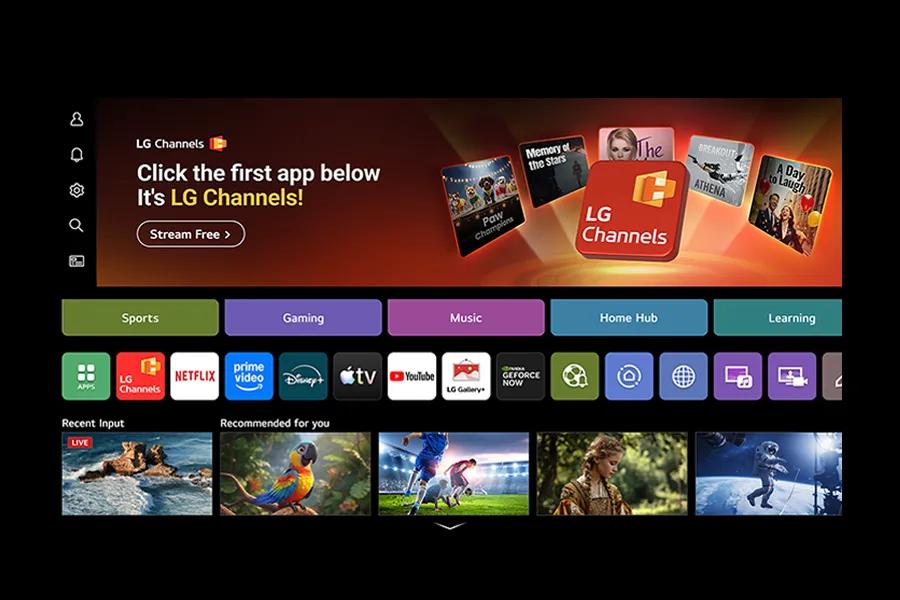
LG’s webOS TV interface
ACR Became a Much Bigger Business
What changed dramatically over the following decade was the business sitting behind the television. Automatic Content Recognition can generate a digital fingerprint of programming and use it to identify what is being watched, which can support audience measurement, content recommendations and advertising.
LG made its ambitions rather explicit in January 2021 when it invested nearly $80 million in television-data company Alphonso, becoming its largest investor with a controlling stake exceeding 50 percent. LG said the deal would combine Alphonso’s data analytics, media planning and Video AI capabilities with its televisions and help create an owned first-screen and cross-device advertising platform. Alphonso subsequently became LG Ad Solutions.
The company went further in September 2022, announcing that LG Ads Solutions’ proprietary ACR system would replace its legacy technology across millions of LG televisions internationally. LG said the technology was already active on its U.S. smart TVs and described ACR data as a tool advertisers could use to understand exposure, measure campaigns and identify viewing audiences.
Advertisement. Scroll to continue reading.
Advertisement
LG Ad Solutions now markets access to 49 million LG smart TVs in the United States and 216 million globally, while promoting proprietary ACR data as part of its advertising platform. Those figures describe LG Ad Solutions’ addressable television footprint; they do not mean ACR is enabled on every one of those televisions or that all of them are transmitting identical information.
There is nothing particularly secret about the commercial strategy. LG openly operates a connected-TV advertising and measurement business, which means the television can continue producing economic value long after Best Buy has stopped caring whether you kept the box.
Texas Sued LG and Four Other TV Manufacturers
On December 15, 2025, Texas Attorney General Ken Paxton filed actions against LG, Samsung, Sony, Hisense and TCL over the use of ACR technology. Texas alleged that consumers were not adequately informed about the collection and use of viewing information and challenged whether the companies had obtained meaningful consent.
Those were allegations by the State of Texas, not judicial findings that every manufacturer violated the law or that every television collected information in precisely the same fashion. The fact that Texas pursued five major brands is also significant because it establishes that the larger controversy surrounding ACR is not unique to LG.
Advertisement
That distinction becomes especially important when discussing how ACR actually works. LG says its current implementation uses audio fingerprinting through the television’s internal audio processor, rather than screenshots, screen recordings or stored audio, and says the feature is off by default until a user accepts its Viewing Information Agreement.
LG Reached an Agreement With Texas in May
LG and Texas resolved their dispute in May 2026 through an Agreed Final Judgment and Permanent Injunction. The order requires LG to obtain affirmative express consent before collecting or processing covered viewing data and requires clearer disclosures explaining that ACR is being used to identify and analyze television content.
The judgment also contains language that is essential for accurate reporting: LG’s agreement does not constitute an admission of wrongdoing, fault or liability, and the order cannot be construed as an admission that LG violated the law. Texas additionally recognized LG’s efforts to implement privacy protections, including measures the judgment describes as exceeding industry norms.
The accurate formulation is therefore not “Texas proved LG illegally spied on customers.” Texas alleged improper practices involving ACR and consent; LG agreed to stronger disclosure and consent requirements in order to settle the litigation without admitting wrongdoing.
Advertisement
The judgment also stipulates that viewing data collected from U.S. consumers has not been and will continue not to be transmitted from the United States to the People’s Republic of China. That language matters because it is materially different from implying that Texas discovered LG had previously been sending American viewing data to China.
Gamers Nexus and Level1Techs Went Looking Under the Hood
Then came September. On September 6, Gamers Nexus published a more than two-hour investigation developed with Level1Techs and independent security researchers, examining several LG televisions through network monitoring, firmware analysis and security testing. The researchers reported extensive network and device discovery, examined LG’s ACR and advertising infrastructure and disclosed security weaknesses they said were being handled through responsible-disclosure channels.
This is where the story requires some discipline because not every demonstration represented normal out-of-the-box television behavior. Malwarebytes, after reviewing the investigation and LG’s response, noted that some findings involved intended LG software behavior while others depended on security vulnerabilities and a compromised television.
Advertisement
The security vulnerabilities themselves are another matter. The researchers reported remote-code-execution vulnerabilities to LG but withheld full technical details while responsible disclosure was underway. Malwarebytes said LG had not publicly addressed those specific vulnerabilities as of its September 10 update, and as of September 16, LG has not publicly announced a fix for them.
Advertisement. Scroll to continue reading.
Gamers Nexus also reported that the tested sets identified other devices and nearby Wi-Fi access points, while The Register reported claims involving device names, IP information, Wi-Fi networks and signal data. LG acknowledges device discovery and nearby Wi-Fi processing but says those functions serve separate purposes: device discovery supports connectivity, while Wi-Fi information can help estimate approximate location for ACR when the appropriate agreements have been accepted.
That is precisely why describing every finding as “LG spying” creates more heat than light. There are questions about normal product behavior, optional data collection and exploitable security vulnerabilities, and they should not be tossed into the same bucket merely because they create bloody chum for the online sharks.
Advertisement
LG Responds
LG published a detailed statement on September 12, addressing the allegations and explaining how it says voice recognition, ACR, network discovery and advertising systems operate. Its central denial could hardly be clearer:
“LG smart TVs do not continuously record or transmit users’ conversations.”
LG says voice recognition is disabled by default and requires the relevant agreement to be accepted. On supported sets with hands-free controls enabled, wake-word detection takes place locally; if the wake word is not detected, LG says the audio is not stored, converted to text or transmitted. Once a legitimate voice session begins, speech can be converted to text, but LG says sessions are temporary and limited to approximately 18 seconds.
The company also says voice information is not stored offline for later transmission when internet connectivity returns. Supported models equipped with a physical microphone switch can disable the built-in microphone entirely, although the remote microphone can still be used deliberately when voice recognition is enabled.
LG’s explanation of ACR is equally specific. The feature is optional and off by default; enabling it requires accepting the Viewing Information Agreement, while personalized and cross-device advertising require additional consent. LG says ACR may operate with Live TV, HDMI-connected equipment and LG Channels but does not operate inside third-party LG apps such as Netflix or YouTube.
Advertisement
LG also confirms that nearby Wi-Fi information and signal strength can be used to help estimate a television’s approximate location when relevant ACR agreements have been accepted. Depending on market, consent and user choices, ACR-derived viewing information may be shared with majority-owned LG Ad Solutions for audience analysis and, with further consent, interest-based or cross-device advertising. LG explicitly says voice and ambient-audio data are not provided to LG Ad Solutions for advertising.
That is a far more useful conversation than arguing over whether your OLED has suddenly developed an interest in what you discuss during dinner.
Gamers Nexus Fires Back
LG’s September 12 statement has not ended the dispute. Gamers Nexus responded the same day with a 47-minute follow-up challenging the company’s explanations and presenting additional testing that the researchers say did not require compromising the television.
Advertisement
In one test, researcher uturn says an ordinary LG television connected to an HDMI source transmitted information to Alphonso, the advertising company that became LG Ad Solutions, including a device identifier, city, state, ZIP code, latitude and longitude and the nearest major road. The researchers say the data was transmitted as frequently as 20 times per minute alongside audio fingerprints identifying content being played through HDMI.
LG acknowledges that nearby Wi-Fi information can be used to help estimate a television’s approximate location when the relevant agreements have been accepted, but we have not found a specific LG response addressing the exact data fields or transmission behavior documented in this follow-up.
Advertisement. Scroll to continue reading.
Gamers Nexus also asked attorney Vincent Agosta to examine LG’s user agreements and consent process. His criticism centers on whether an ordinary purchaser could reasonably understand the collection and sharing described across multiple agreements — an issue that moves this controversy beyond the easy “is the microphone listening?” argument and back toward the more consequential question of what constitutes meaningful consent on a device most people still think of primarily as a television.
Advertisement
Is LG Unique?
No. ACR and smart-TV viewing-data collection are industry issues, which is precisely why Texas pursued multiple manufacturers rather than LG alone.
Vizio provides one of the clearest historical examples. In 2017, the FTC and New Jersey announced a $2.2 million settlement over allegations that software on 11 million Vizio smart TVs collected viewing histories without users’ knowledge or consent; the resulting order required prominent disclosure and affirmative express consent.
What makes the present LG story more significant is the collision of several issues at once. ACR and advertising were already under legal scrutiny, and the Gamers Nexus investigation then added questions about network behavior, voice processing and reported security vulnerabilities that could increase the consequences if a television were compromised.
That does not make LG uniquely nefarious. It makes LG the company currently sitting underneath the microscope.
Advertisement
2026 LG OLED evo G6 TV
Should LG Owners Be Concerned?
There is no reason to panic or have Uncle Paulie drag a 77-inch OLED into the Pine Barrens, but LG owners should take the privacy and security settings on their televisions seriously. The available evidence does not justify assuming that an uncompromised LG TV is secretly recording every conversation in the room, and LG says continuous ambient recording does not occur. At the same time, LG confirms that enabled ACR can identify supported content, process device and network information, use nearby Wi-Fi signals to help estimate approximate location and share certain viewing information with LG Ad Solutions depending on consent and jurisdiction.
A few practical steps can reduce unnecessary data collection and limit what a compromised television could access:
Avoid unnecessary router exposure. There is generally no reason to manually forward ports to a smart TV, and UPnP can be disabled if your household does not depend on it.
Keep the TV’s firmware current. Install software and security updates promptly. Whatever one thinks about ACR, the vulnerabilities identified by researchers are a reminder that a smart TV is a networked computer with very good black levels.
Review LG’s privacy agreements individually. Pay particular attention to the Viewing Information Agreement, Voice Information Agreement and Interest-Based Cross Device Advertising Agreement rather than accepting everything just to get through setup.
Disable ACR if you do not want viewing information collected. LG says ACR is off by default, requires consent and can be disabled without losing core functions such as HDMI inputs, Live TV, streaming apps or software updates.
Turn off voice features you do not use. On supported models, owners can also use the physical microphone switch to disable the television’s built-in microphone.
Consider isolating smart-home devices from your primary network. A separate guest or IoT network can reduce what a compromised television, camera or speaker can reach, although overly aggressive isolation may interfere with casting and device discovery.
The Bottom Line
Calling this simply “LG TVs are spying on you” would produce a terrific thumbnail and an unnecessarily sloppy news story. The underlying facts are more complicated and, frankly, more important.
Texas challenged LG’s ACR consent practices, while LG settled the litigation and accepted stronger consent and disclosure requirements without admitting wrongdoing. Gamers Nexus and its research partners subsequently reported network behavior and security issues they considered troubling, including vulnerabilities that could greatly increase the privacy implications of a compromised set.
LG disputes the interpretation that its normal voice-recognition system continuously records household conversations, but its September response also illustrates just how sophisticated the information infrastructure behind a modern television has become. ACR, approximate-location processing, device discovery, audience measurement and advertising can all exist within the same product, even if they operate as distinct systems with separate permissions.
Advertisement
The larger issue therefore extends well beyond LG. Smart-TV manufacturers increasingly operate software and advertising platforms that can continue generating revenue and information long after the hardware sale, and consumers deserve to understand exactly what they are agreeing to when those capabilities are enabled.
Picture quality still matters, but privacy has quietly become another television specification worth paying attention to. At this point, asking your $3,000 OLED to mind its own business should not qualify as an advanced feature.
The Garmin Instinct Crossover AMOLED is one of the best choices if you specifically want traditional hands without giving up serious sports tracking, but most outdoor users will find better value and fewer compromises elsewhere in Garmin’s range.
Analogue and AMOLED combination is well executed
Useful and bright flashlight added
Good-performing multiband GPS and general sports tracking
Lacks a truly standout analogue feature
A jump in price from other Crossover models
Cheaper Garmins offer full colour maps
SQUIRREL_PLAYLIST_10208754
Advertisement
Key Features
Review Price:
£519.99
Advertisement
Hybrid AMOLED display
A 1.2-inch AMOLED screen combines with physical analogue hands for a traditional watch look.
Advertisement
Built-in LED flashlight
An integrated flashlight offers adjustable brightness levels and a red-light mode.
Advertisement
Multi-band GPS
Accurate outdoor tracking is backed by Garmin’s extensive selection of sports, navigation and training features.
Introduction
The Garmin Instinct Crossover AMOLED takes an outdoor smartwatch and gives it both analogue watch hands and a colour display to straddle both digital and traditional watch design.
Advertisement
In what is essentially a mash-up of Garmin’s Instinct and Vivomove hybrid smartwatch, the Crossover includes features like an LED flashlight and Garmin’s most advanced GPS technology alongside smartwatch features like contactless payments and access to Garmin’s Connect IQ storefront.
While pricier than previous Instinct models, the Crossover does come in cheaper than a host of outdoor watches like the Apple Watch Ultra 3 and Samsung Galaxy Watch Ultra 2. It’s certainly a unique take on a watch made for adventures, but do those hands complement or get in the way of the Crossover being a great smartwatch? I’ve been wearing it for a few weeks to find out.
Advertisement
Design and screen
Available in two colours
Features AMOLED and analogue hands
Waterproof up to 100 metres
The Instinct series in general does conjure up thoughts of Casio’s G-Shock series of watches. Especially the bezel-dominating look offering extra display protection. The 46mm-sized case gives it a similar stature to the 47mm-sized Samsung Galaxy Watch Ultra 2 and the 47mm version of Garmin’s Fenix 9 Pro.
Image Credit (Trusted Reviews)
The polymer and stainless bezel give the Crossover a different feel from other outdoor smartwatches. Then you get to the display. You’ve got a 1.2-inch, 390 x 390 AMOLED screen, which, unlike other AMOLED-packing Garmin watches, isn’t a touchscreen one. That means using the pretty grippy array of physical buttons to navigate menu screens and data screens.
Image Credit (Trusted Reviews)
On top of that AMOLED panel are a set of analogue hands. When they’re not telling the time in a traditional analogue watch fashion, they’ll dynamically get out of the way to still let you view notifications or your real-time data.
Advertisement
Advertisement
My overall feeling about the analogue addition is that, most of the time, it’s not a nuisance. But do I think it’s adding massive value to using it over other watches? Not really. I like that the hands illuminate at night and can be turned into a compass. Beyond that, I wish Garmin came up with some more inventive ways to embrace those physical hands.
Image Credit (Trusted Reviews)
Elsewhere, you’re getting a removable 22mm strap that does rely on a slightly trickier QuickFit band mechanism. Around the back is Garmin’s Gen 4 Elevate optical heart rate sensor, so that’s not its latest sensor technology. It’s also where you’ll find the same charging port found on pretty much all Garmin watches.
At the top of the case you’ll spy an LED flashlight, which I did find more useful. You can adjust the brightness and switch to a red light mode, for a more penetrative source of light. I’ve used it for a fair few nighttime outings and generally around my flat, and it’s certainly bright enough to be a useful source of light.
Image Credit (Trusted Reviews)
If you care about waterproofing, the Crossover does offer a strong level of protection. A 10ATM-rated design means it can be submerged in water up to 100 metres depth. Add in the sapphire crystal protecting the glass against scratches and a design tested to military standards of durability, and you can be pretty content with just how rugged this watch is.
Advertisement
Performance and software
Runs on Garmin’s own operating system
Works with Android and iOS
Lacks some newer smartwatch features
Garmin keeps its watch software in-house and usually keeps the experience pretty consistent across its watches. That said, the Crossover isn’t your standard AMOLED watch – mainly because of those added analogue watch hands.
It does mean this isn’t exactly the same software you’ll find on other Garmin watches, with elements of the interface tweaked to compensate for those added hands.
Advertisement
Image Credit (Trusted Reviews)
That said, you can still find your widget stream from the main watch face screen, while holding down the top physical button gets you to the quick settings menu, so it’s not an entirely new experience. You also still have the ability to change watch faces as well as adjust the highlight colour used on the watch hands.
Outside of that, this is a watch you can view notifications on and access Garmin’s Connect IQ Store to add more apps. I found some apps weren’t fully optimised for the Crossover’s more unique screen design, and not having the touchscreen functionality slows the process of searching the storefront as well. There’s also only 4GB of memory compared to the larger 64GB of storage you get on other Instinct Crossover models.
Advertisement
Image Credit (Trusted Reviews)
There is support for Garmin’s Pay contactless payments, though you miss out on features like a music player and some of Garmin’s more recent voice-powered smarts. That includes Bluetooth calls, the ability to record voice memos and accessing your smartphone’s smart assistant.
There’s enough of a smartwatch here without all of those extras. You just need to get used to the design quirk that can at times feel like a hindrance.
Tracking and features
Daily suggested workouts and animated workouts
Features multiband GPS technology
Breadcrumb navigation, no full colour maps
As its rugged build suggests, the Instinct Crossover is designed to mostly live outside. It also has the sensors and features to be a useful workout companion indoors as well.
Image Credit (Trusted Reviews)
Advertisement
It’s got you covered for core sports (running, cycling and swimming), with a dedicated mode for golf also included. You’ll also find a host of profiles for activities including strength training, skiing, team sports like football, and it even has a mode for tracking snowmobile rides.
Advertisement
A big addition from previous Instinct Crossover models is multi-band GPS, giving you access to Garmin’s most accurate positioning tracking technology, which in turn demands more battery than other GPS modes. I’ve been using the Crossover against great-performing dual-band smartwatches like the Apple Watch Ultra 3 and watches from Suunto. The performance across the board has been very good.
Image Credit (Trusted Reviews)
One thing the Instinct Crossover disappointingly lacks is access to full colour maps. Especially as you can find it on cheaper, albeit slightly older AMOLED watches like the Garmin Forerunner 965. It remains a key differentiator between buying an Instinct watch and a Fenix.
You can still upload routes, but you’ll instead have to make use of Garmin’s simpler breadcrumb navigation. It still provides an effective way of staying on the right path, but the missing touchscreen support makes scrolling and navigating routes a bit less slick.
Swap the great outdoors for staying inside, and you’ll find plenty of features to tap into, like the ability to build and follow workouts, including HIIT-style ones. Many of those workouts feature animated prompts to make sure you’re doing the correct movements.
Advertisement
Advertisement
Image Credit (Trusted Reviews)
I synced some of Garmin’s own workouts to the watch, though not all were fully compatible with the watch.
Before you get moving, you’ll get to see the parts of the body your workout will focus on getting into better shape. Then the analogue hands move to the 3 and 9 clock positions to make room for the animations presented at the top of the screen. While not having the animations entirely fill up the screen wasn’t problematic, it did make reminding myself of the movement a less glanceable thing to do.
From a training perspective, there’s a lot of the good Garmin stuff most will be happy to see. Like Training Readiness scores, useful suggested workouts, access to Garmin Coach or features like Garmin’s Body Battery energy monitor. Basically, there are features here that can help to make sure you’re making more informed decisions about your exercise, sleep and everything else in between, and that’s a positive.
Image Credit (Trusted Reviews)
Heart rate is always a good gauge of your effort during workouts, even if Garmin does include its older Gen 4 heart rate sensor technology. That means you miss out on support for ECG heart rate measurements and the ability to monitor skin temperature.
Advertisement
For day-to-day monitoring, the heart rate sensor performs reliably in spite of its slightly hulking body. During exercise, particularly high-intensity efforts like interval training, the Crossover shows a bit more of a struggle. It’s not a horror show performance though, and I was able to swiftly pair external heart rate sensors both from Garmin and MyZone to get a more accurate hit of heart rate data.
Advertisement
If you’re happy to take the Crossover to bed, it can monitor sleep and will also track naps as well as let you set up smart alarms to gently rouse you in the morning. I’ve found Garmin’s sleep tracking one of its poorer qualities, however, especially when it comes to accurately recognising when you’ve fallen asleep and woken up the following morning.
Image Credit (Trusted Reviews)
That said, there are signs that things are improving. I’ve been wearing it to bed alongside the Oura Ring 5 and Apple Watch Ultra 3, and for data like sleep duration, it generally matched up. It rarely matched up with the sleep stages data from the other devices, though that’s not to say the Oura and Apple were more accurate. I just know, based on my experience, that they generally seem to tell a pretty reliable story of that sleep time.
Up to 14 days battery life in smartwatch mode
Up to 5 days with always-on display mode
18 hours-12 days GPS battery life
The Instinct Crossover AMOLED has the capability to last two weeks when you’re mainly using its smartwatch features, though it’s going to be less than that when you put the GPS and sensors like heart rate to regular daily use. The overall battery numbers are also shorter than Garmin’s memory-in-pixel-display-packing Instinct Crossover.
Advertisement
Image Credit (Trusted Reviews)
What you do get is a smartwatch that isn’t going to leave you with minimal battery even after a day of heavy usage. If you’re planning to go away for a few days and you’re not planning on packing the charger, you’ll likely be fine. If you decide to track outdoor workouts with the most accurate GPS mode, however, the difference in battery is essentially halved. A two-hour trail run saw battery drop by 20%
You can make it track for up to 53 hours if you switch it to the more restrictive expedition mode, and it can last for up to 12 days when you’re using the most basic GPS mode. I never felt massively shortchanged with the battery life, though you can get AMOLED outdoor watches that can go longer for less money than the cost of the Instinct Crossover AMOLED.
SQUIRREL_PLAYLIST_10208754
Advertisement
Should you buy it?
You want a rugged smartwatch with analogue hands
The Instinct Crossover largely manages to make the mashing up of digital and analogue work to appeal to anyone who has a penchant for traditional timepiece elements.
Advertisement
You want the best AMOLED outdoor smartwatch for battery life
While the Instinct Crossover AMOLED will manage to cover you for a couple of days putting the GPS to good use, there are watches that can go longer.
Advertisement
Final Thoughts
The Garmin Instinct Crossover AMOLED succeeds as a hybrid, but its analogue hands add more personality than practical value.
Its rugged build, excellent multi-band GPS, useful flashlight and deep training tools make it a capable outdoor watch, yet the £519.99/$549.99 price makes the lack of full-colour maps, touchscreen controls and Garmin’s latest health features difficult to ignore.
Advertisement
It is one of the best choices if you specifically want traditional hands without giving up serious sports tracking, but most outdoor users will find better value and fewer compromises elsewhere in Garmin’s range.
Advertisement
How We Test
We thoroughly test every smartwatch we review. We use industry-standard testing to compare features properly and we use the watch as our main device over the review period. We’ll always tell you what we find and we never, ever, accept money to review a product.
Worn as our main tracker during the testing period
Thorough health and fitness tracking testing
Data compared to other wearables
FAQs
Does the Garmin Instinct Crossover AMOLED have a touchscreen?
No, the Garmin Instinct Crossover doesn’t include a touchscreen, despite featuring a colour AMOLED display.
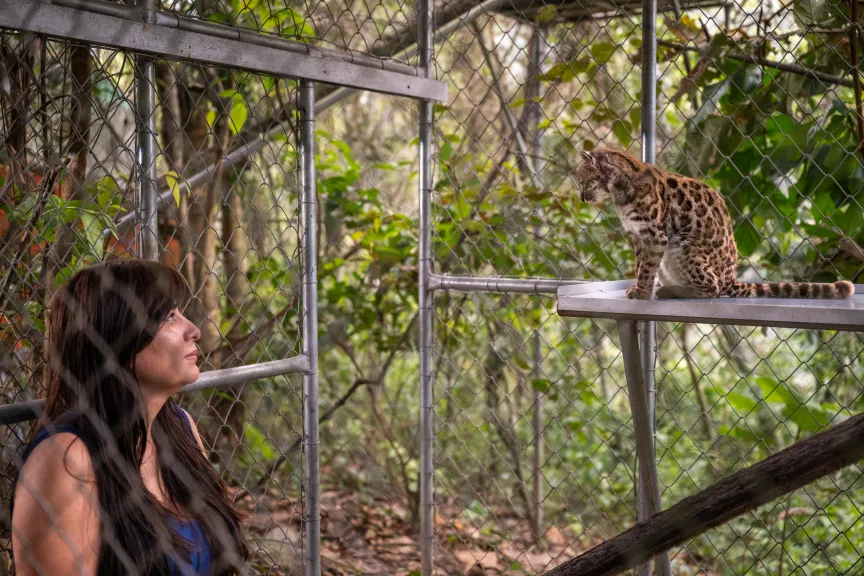
According to a study published in the Current Biology Journal on Thursday, the spry little feline, who looks ready for a drink out of a nice, heated cat water fountain, is called Leopardus tilcayo and hails from the cloud forests of the Bolivian Yungas in South America. You may know Leopardus from other American cat species, like the ocelot and colocolo.
The discovery was made from a collaboration between scientist Jonas Lescroart and Paola Nogales-Ascarrunz, head of the Programa de Investigación de Félidos Bolivia conservation program (among other researchers). They not only spotted this dashing little fellow, but they also made all-new discoveries about tiger cats, including a new subspecies.
The researchers didn’t need an AI pet camera to spot the new cat species, although Leopardus tilcayo is even smaller than the common house cat. Nogales-Ascarrunz, whose work is funded by National Geographic, first spotted the cat at a wildlife rehabilitation center in the area. At first, she thought it was just a kitten, but then she realized it could be a new find entirely. The cat’s spots and long tail didn’t match any recognized species in the area, so Nogales-Ascarrunz began genetic testing on cats brought in by locals.
Advertisement
Who named this fuzzy charmer?
Paola Nogles-Ascarrunz kept the cat’s original name from the natives who’ve known it the longest.Fernando Faciole/National Geographic
The story of Leopardus tilcayo has its roots in native communities.
“This cat, they call it tilcayo. And when you ask, ‘Does it have some meaning in Quechua or [Aymara] and other Indigenous languages?’ they say, ‘No, my grandpa told me that’s the tilcayo,’” Nogales-Ascarrunz said. “This is a traditional knowledge that they have in the community. We want to preserve that knowledge, and we didn’t want to give it another name.”
The tilcayo is special because, while scientists redefine mammals into new species all the time, it’s usually because a single species has split into two and become different enough for reclassification. This cat, however, was entirely new and not the offshoot of a previously recognized species, something very rare and probably deserving of its own high-tech litter box.
“We really don’t know how many cats are still in the wild,” Nogales-Ascarrunz said. “We need science, we need more studies to answer this question, which is actually critical for its conservation.”
I want one!
Leopardus tilcayo may be new to us, but its habitat has long been under threat.Fernando Faciole/National Geographic
Instead of pining after exotic and protected species, I highly suggest you focus on local cats that need a home and provide them with toys, smart feeding stations or helpful collars that can help keep them safe and healthy.
If you do want to get involved, look into supporting conversation efforts for the Bolivian Yungas, such as the Andes Amazon Fund. Tilcayo’s habitat is under serious threat from surrounding development and could use all the help it can get.
Advertisement
The authors of the research did not immediately respond to a request for comment.
Tyler Lacoma
Editor / Home Security and Smart Home
Tyler has worked on, lived with and tested all types of smart home and security technology for over a dozen years, explaining the latest features, privacy tricks, and top recommendations.
With degrees in Business Management, Literature and Technical Writing, Tyler takes every opportunity to play with the latest AI technology, push smart devices to their limits and occasionally throw cameras off his roof, all to find the best devices to trust in your life. He always checks with the renters (and pets) in his life to see what smart products can work for everyone, in every living situation.
Living in beautiful Bend, Oregon gives Tyler plenty of opportunities to test the latest tech in every kind of weather and temperature. But when not at work, he can be found hiking the trails, trying out a new food recipe for his loved ones, keeping up on his favorite reading, or gaming with good friends.
See full bio
A new NYT Strands puzzle appears at midnight each day for your time zone – which means that some people are always playing ‘today’s game’ while others are playing ‘yesterday’s’. If you’re looking for Thursday’s puzzle instead then click here: NYT Strands hints and answers for Thursday, September 17 (game #928).
Strands is the NYT’s latest word game after the likes of Wordle, Spelling Bee and Connections – and it’s great fun. It can be difficult, though, so read on for my Strands hints.
Want more word-based fun? Then check out my NYT Connections today and Quordle today pages for hints and answers for those games, and Marc’s Wordle today page for the original viral word game.
Advertisement
SPOILER WARNING: Information about NYT Strands today is below, so don’t read on if you don’t want to know the answers.
Latest Videos FromTechRadar
Advertisement
NYT Strands today (game #929) – hint #1 – today’s theme
What is the theme of today’s NYT Strands?
• Today’s NYT Strands theme is… Shake on it
NYT Strands today (game #929) – hint #2 – clue words
Play any of these words to unlock the in-game hints system.
LETTERS
TEAM
PATE
GEAR
POET
TONAL
NYT Strands today (game #929) – hint #3 – spangram letters
How many letters are in today’s spangram?
• Spangram has 13 letters
Advertisement
NYT Strands today (game #929) – hint #4 – spangram position
What are two sides of the board that today’s spangram touches?
• First side: top, 2nd column
• Last side: bottom, 4th column
Right, the answers are below, so DO NOT SCROLL ANY FURTHER IF YOU DON’T WANT TO SEE THEM.
Advertisement
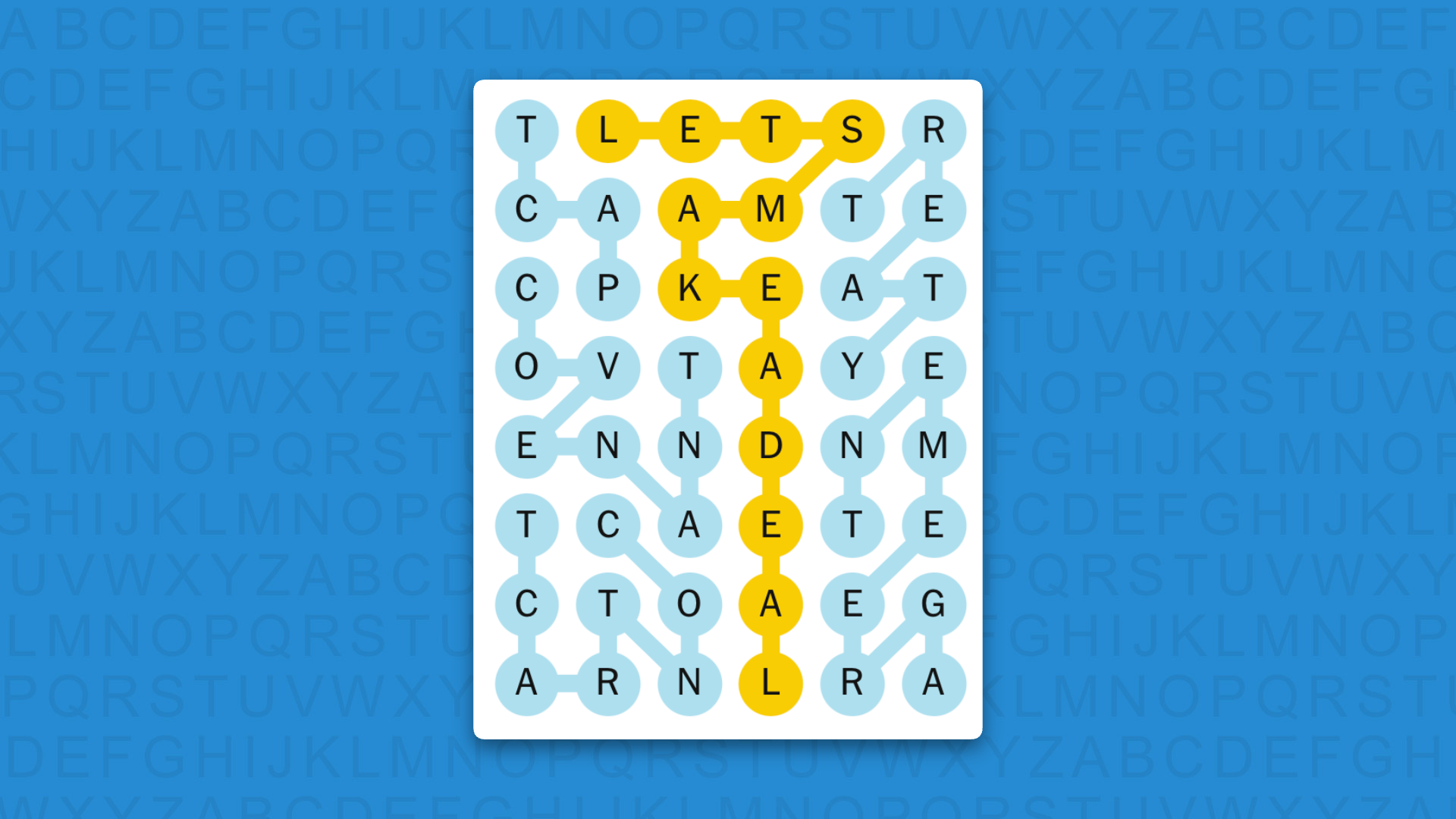
NYT Strands today (game #929) – the answers
(Image credit: New York Times)
The answers to today’s Strands, game #929, are…
Advertisement
COVENANT
PACT
TREATY
CONTRACT
AGREEMENT
SPANGRAM: LETSMAKEADEAL
My rating: Easy
My score: Perfect
COVENANT is a pretty unusual word to begin a word search with, but that’s how my game played out today, because I was stumped and looking for non-game words; I was in the process of bagging “coven” when I saw the much longer word.
Sign up for breaking news, reviews, opinion, top tech deals, and more.
From here, though, after my slow start, I roared through the remainder of the search at an agreeable pace.
I cannot remember deals ever really being in the news at all, but in 2026 the making of them, or indeed the failure to make them, seems to be the only news there is. Frankly, I missed the days when we muddled along.
Advertisement
Yesterday’s NYT Strands answers (Thursday, September 17, game #928)
PEANUTS
ZIPPY
MUTTS
PICKLES
ZITS
BLONDIE
SPANGRAM: THEFUNNYPAGES
What is NYT Strands?
Strands is the NYT’s not-so-new-any-more word game, following Wordle and Connections. It’s now a fully fledged member of the NYT’s games stable that has been running for a year and which can be played on the NYT Games site on desktop or mobile.
I’ve got a full guide to how to play NYT Strands, complete with tips for solving it, so check that out if you’re struggling to beat it each day.



























































You must be logged in to post a comment Login