
News Beat
Lawyers for Sean ‘Diddy’ Combs argue his conviction on prostitution-related charges is ‘unjust’ on appeal

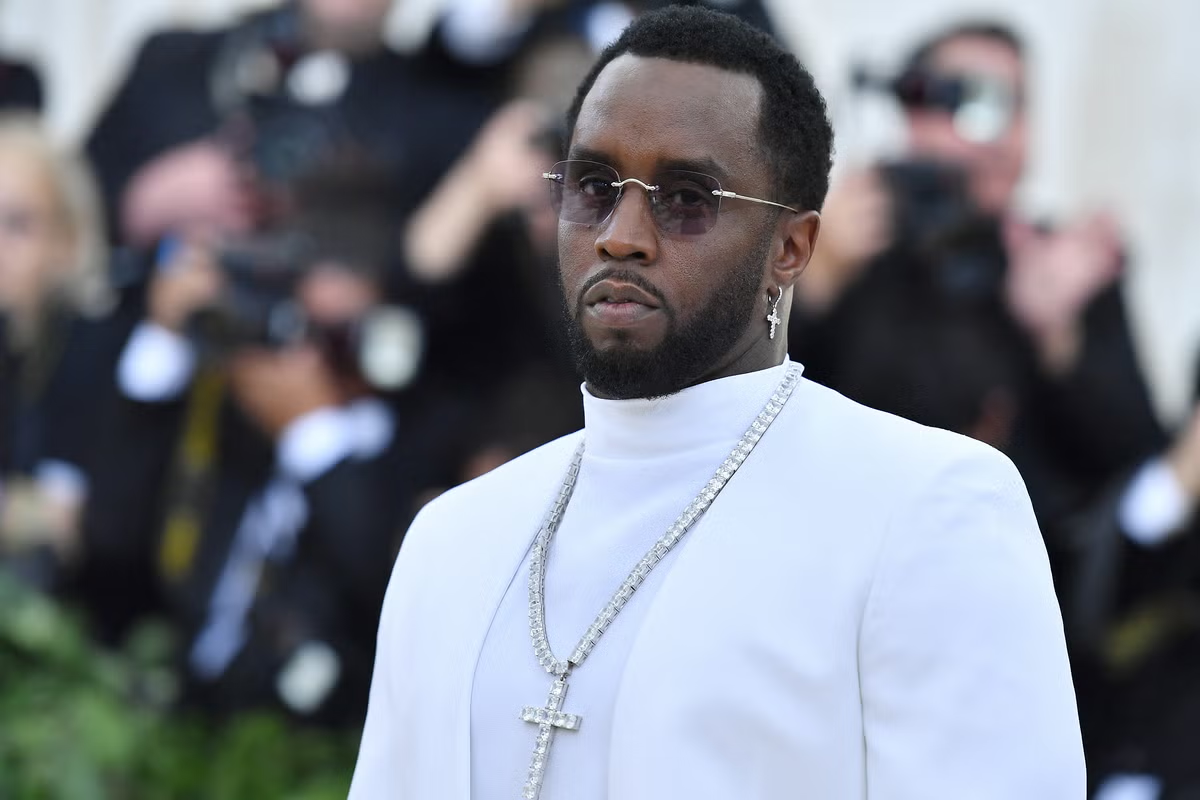
Sean “Diddy” Combs’s legal team has filed a lengthy appeal brief, arguing that the music mogul’s conviction and sentencing on prostitution-related charges were unjust.
Combs, 56, was found guilty on two counts of prostitution-related charges and sentenced to 50 months in prison following an eight-week trial in New York earlier this year. Combs — who is now serving out his sentence at a low-security New Jersey prison — was acquitted of more serious sex trafficking and racketeering conspiracy charges.
The court heard weeks of testimony from Combs’s ex-girlfriends and former associates who detailed alleged abuse. Several witnesses also described Combs’s drug-fueled sex marathons, referred to as “freak-offs” or “hotel nights.”
Combs’s attorneys have maintained that the sexual encounters described in the case were consensual.
Now, Combs’s lawyers argue the court was “unjust” and heavily relied on “acquitted conduct” when he was sentenced. His legal team accused Judge Arun Subramanian of acting as a “thirteenth juror” when he sentenced Combs to more than four years in prison.
“He sits in prison today, serving a 50-month sentence, because the district judge acted as a thirteenth juror. The judge defied the jury’s verdict and found Combs ‘coerced,’ ‘exploited,’ and ‘forced’ his girlfriends to have sex and led a criminal conspiracy,” his attorneys wrote in an 84-page document filed Tuesday.
Combs’s legal team also noted that he was convicted of “two lesser counts—prostitution offenses that didn’t require force, fraud, or coercion.”
“Defendants typically get sentenced to less than 15 months for these offenses—even when coercion, which the jury didn’t find here, is involved,” the filing reads.

Subramanian cited the alleged abuse described by witnesses before he sentenced Combs to more than four years in prison.
“A history of good works can’t wash away the record in this case. You abused these women. You used that abuse to get your way, freak-offs and hotel nights,” Subramanian said during the October sentencing hearing.
“The evidence of the abuse is massive. The drugs may have exacerbated your erratic and violent behavior over the years. However, the court has to consider all of your history here,” he added.
In Tuesday’s filing, Combs’s team argue that his conviction should be reversed because he did not engage in prostitution. “Properly construed, paying for a voyeuristic experience—which is what Combs was convicted of doing—is not engaging in ‘prostitution,’” his lawyers wrote.
They also argue that Combs’s “freak-offs and hotel nights” were protected by the First Amendment.
“Second, freak-offs and hotel nights were highly choreographed sexual performances involving the use of costumes, role play, and staged lighting, which were filmed so Combs and his girlfriends could watch this amateur pornography later,” his lawyers wrote.
“Pornography production and viewing of this sort is protected by the First Amendment and thus cannot constitutionally be prosecuted,” they added.
The Independent has contacted the U.S. Attorney’s Office for the Southern District of New York and the U.S. District Court for the Southern District of New York for comment.



