When
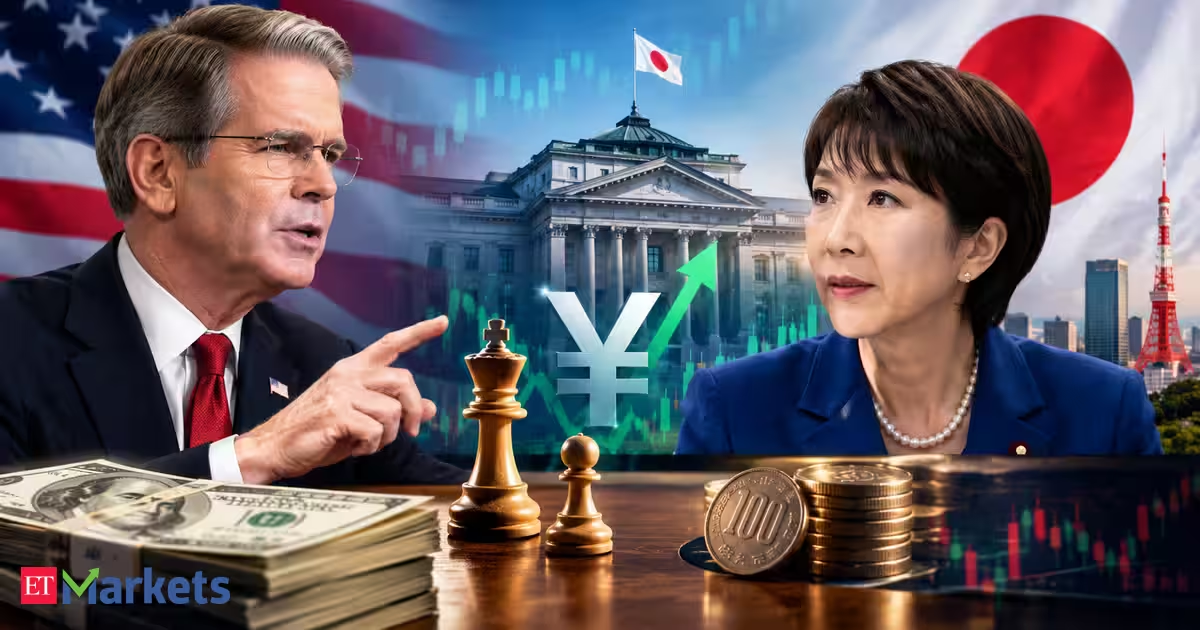
Japanese finance minister Satsuki Katayama called
Scott Bessent for help to support the
cratering yen in June, her U.S. counterpart’s response was familiar: If Tokyo wanted assistance, it had to get its fiscal house in order.
For months, Treasury Secretary Bessent had told Katayama and other officials privately that Japan should rein in its massive fiscal spending and that its central bank needed to raise interest rates, according to three people familiar with the situation.
The Japanese worried that inflation stoked by the weaker yen would hurt Prime Minister Sanae Takaichi with voters. Bessent was more concerned that a sell-off in Japanese bonds could spill over to U.S. debt, the people said. Katayama’s call for Washington’s help in a coordinated yen-buying spree enabled Bessent to press his case.
He urged Japan to first address fundamental factors driving down the yen – a reference to Takaichi’s big spending plans – and avoid any “inconsistency” between monetary and fiscal policies, two of the people said. In short: overhaul the policies that counter the Bank of Japan‘s fight against inflation.
The June 22 call, the details of which haven’t been previously reported, helped set the stage for massive joint intervention by Washington and Tokyo in late July, according to the people, who spoke on the condition of anonymity.
This account of the interactions between Japan and the U.S. shows how Bessent used Washington’s leverage over currency and Treasury markets to extract policy concessions from a key ally – forcing Takaichi to navigate the competing demands of voters and her most important security partner.
“Bessent has run out of patience with Japan,” said David Boling, managing director for Japan at The Asia Group, a consultancy. The U.S., he said, wants a stronger, more stable yen, less risk of Japanese selling of Treasuries, and policy that looks more credible to markets on inflation and fiscal stability.Japan’s Ministry of Finance and Takaichi’s office declined to comment. The BOJ didn’t respond to a request for comment.
A U.S. Treasury spokesperson declined to comment on specific private discussions with Japanese officials. Separately, a Treasury official told Reuters “monetary-policy decisions are for Japanese authorities to make” and that “U.S. interest in orderly yen markets is not about targeting a particular exchange rate.”
American Leverage
A sharp rise in Japan’s long-term yields would risk pushing up U.S. borrowing costs, given Japan is the largest foreign holder of Treasuries. For Bessent, who styles himself as “America’s leading bond salesman,” that would be an unwelcome development as Washington grapples with its own swelling deficit.
When Bessent met Katayama in Japan in May, he stressed the need for higher BOJ rates, three sources said. After that, a rate hike in June or July was considered a given within the Japanese government, said one of the sources.
The BOJ’s June hike gave Katayama hope that Bessent would agree to her request for Washington to join a coordinated yen buying spree, said one of the sources.
Instead, Bessent in the June phone conversation repeated his earlier calls for Japan to overhaul spending that he felt undermined the BOJ’s efforts to rein in inflation.
“The United States does not want Japan, its ally, to lose economic strength because of excessive yen weakness,” said Takehiko Nakao, who served as Japan’s top currency diplomat between 2011 and 2013.
The call crystallised a tension Takaichi faces: She favours “Abenomics“, the mix of big spending and ultra-low rates championed by her political hero, former Prime Minister Shinzo Abe. But she is now pressured by markets and Washington.
That pressure became clear in July when Katayama publicly flagged that Japan’s state pension fund, the world’s largest, could buy more domestic assets, a move investors read as support for Japan’s bond market.
After the BOJ held rates steady in July, Governor Kazuo Ueda struck a hawkish tone, signalling a hike was coming soon.
That signal proved decisive. Moments after the BOJ’s meeting, the yen spiked, first on Japan’s solo intervention, before combined U.S.-Japanese action extended the rally.
Katayama and her top currency diplomat, Atsushi Mimura, negotiated the joint intervention with the U.S. while the BOJ met, one of the people said.
Despite months of groundwork, the late July intervention came together quickly, this person said.
“This is a culmination of Japan’s currency alliance with the United States,” Mimura said, announcing the joint intervention.
‘I Am The House’
That alliance, however, soon hit headwinds.
Within weeks, the yen slid and Washington grew frustrated with Takaichi’s lack of progress in rolling back stimulus and a global spike in bond yields.
At a U.S.-hosted G20 finance leaders’ gathering on August 31-September 1, Bessent again called for higher Japanese rates and fiscal tightening. But this time, his message was sharper.
In an interview with Reuters then, Bessent said Japan should “sit back and enjoy the success of Abenomics”, noting the age of deflation had passed and that combating inflation, not stimulating the economy, was now the critical objective.
Those remarks were Washington’s strongest signal of its displeasure over the remnants of Abenomics it saw in both Takaichi’s policy and political loyalists.
“In the past, the message was more along the lines of, ‘We expect Japan to pursue the right policies’,” Nakao said.
Days later, Japan’s benchmark yield hit a 30-year high above the key 3% milestone, piling pressure on Takaichi to water down her spending ambitions.
“Given Japan’s huge public debt, Japan needs to present a credible medium- to long-term fiscal outlook, and demonstrate consistency between monetary and fiscal policy, to avoid an unwelcome spike in long-term interest rates,” said Mitsuhiro Furusawa, Japan’s former top currency diplomat.
U.S. scrutiny of Japan’s finances prompted Katayama to assure her G20 counterparts that Japan would shed its over-reliance on additional spending and avoid issuing debt to fund tax cuts.
In comments to reporters after a meeting with Bessent at the G20, Katayama recounted showing him remarks by Takaichi to Japanese newspaper Yomiuri that stressed the premier’s resolve to “achieve growth and fiscal discipline simultaneously”.
“He seemed to understand, saying that’s very good,” Katayama said.
A week later, Bessent was again helping Japan with strong warnings against yen bears, saying he had asymmetric information and good insight into what Japanese policymakers, including the BOJ, would do.
“I am the house now,” Bessent said this month, adding “you can bet against me if you want.”
The yen jumped against the dollar.
Tough Trade-Offs
Bessent’s demands broadly align with the policy direction of the BOJ, which delivered a widely expected rate hike on Friday.
On fiscal plans, there’s a bigger gap.
Takaichi cannot easily retreat from flagship stimulus plans that drove her party to victory in this year’s election. Her handouts and subsidies to curb fuel costs also helped ease anger over rising cost of living.
Forcing Takaichi to abandon tax plans is also risky for Washington if it weakens an administration of a reliable U.S. ally to counter an assertive China. After joining Tokyo in shoring up the yen, President Donald Trump emphasised the importance of the U.S. partnership with Japan.
In a move that analysts saw as placating markets and Bessent, Takaichi reappointed Katayama as finance minister in a cabinet reshuffle on Thursday.
Katayama – a fiscal conservative at heart – has walked that line since taking office, reassuring markets Japan won’t spend recklessly, even as she promotes her boss’s investment ambitions.
For now, there are no signs Takaichi is backing down. Budget requests for the next fiscal year have ballooned to 143 trillion yen ($916.14 billion), near pandemic-era levels.
Takaichi has pledged to keep new bond issuance at around 40 trillion yen for the fiscal year ending March 2028, above this year’s projected 32.7 trillion yen.
Some officials say that goal could be hard to meet given the temporary sales tax cut, increased defence spending and rising financing costs.
So far, the fiscal standoff is contained – a sign of how much diplomatic capital Takaichi still has with Trump.
Some analysts, however, say Bessent’s approach to Japan over its finances represents an extension of Trump’s trade playbook.
The Asia Group’s Boling said the Trump administration has “never been bashful” dealing with allies, as seen in trade negotiations.
“I think we’re seeing that now more for financial policy matters,” he said.

















































You must be logged in to post a comment Login