
Business
Korea: Strengthening Resilience and Steering Through Geoeconomic Challenges

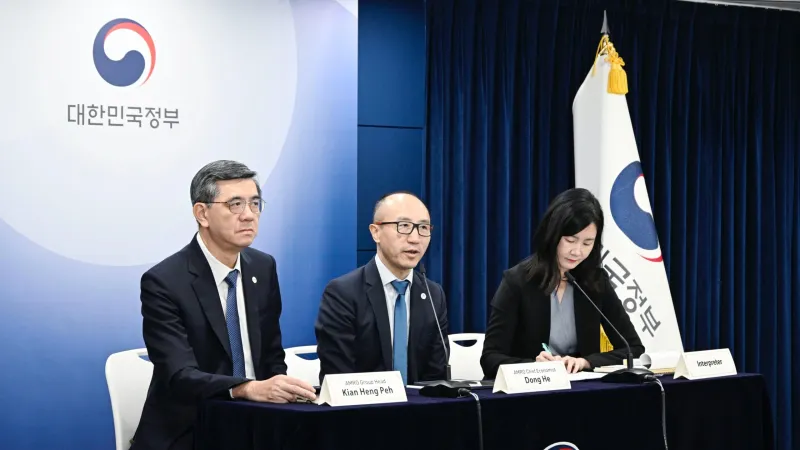
Korea’s economy is rebounding post-election with strategic fiscal and monetary policies. AMRO’s visit highlights recovery efforts, housing market challenges, and long-term resilience through diversification and demographic strategies.
Economic Resilience and Outlook
In December 2025, Korea’s economy showed steady recovery post-presidential elections, with proactive fiscal and monetary policies supporting growth amid global trade tensions. The ASEAN+3 Macroeconomic Research Office (AMRO) noted this progress during their Annual Consultation Visit in Korea. Led by Lead Economist Kian Heng Peh, discussions included key figures like Minister of Economy and Finance Yun Cheol Koo and Bank of Korea Governor Chang Yong Rhee. Korea’s GDP growth is projected at 1.0% in 2025 and 1.9% in 2026. Inflation remains near the Bank of Korea’s target, with stable food prices and low global energy costs, although service prices have risen due to higher input costs.
External and Domestic Dynamics
Korea’s strong external sector is bolstered by semiconductor exports, particularly with the global boom in artificial intelligence, resulting in a current account surplus. Despite the won depreciating due to capital outflows, foreign reserves offer a robust buffer. The government’s supplementary budgets aimed to boost small businesses and domestic demand, though a high fiscal deficit poses challenges. Rising house prices in Seoul prompted a mix of demand- and supply-side measures, but concerns over financial stability and exchange rate volatility remain. The Bank of Korea’s rate cuts through 2025 reflect cautious management of these complexities.
Policy Recommendations
AMRO stresses the need for Korea to balance recovery while enhancing economic resilience. Monetary policy should remain measured amidst Seoul’s housing market dynamics and exchange rate issues. Interventions to adjust housing supply, like greenbelt development and policy reforms, are advised. Fiscal strategies should align with long-term sustainability targets, advocating for structural reforms and a credible fiscal anchor. Addressing demographic challenges, Korea should enhance labor participation through reforms and immigration. The country’s semiconductor strategy, shifting towards full-spectrum capabilities, is pivotal for industrial growth and supply chain stability. AMRO appreciates Korea’s open collaboration during the mission.


![20 Richest Footballers of All Time [Ranked]](https://wordupnews.com/wp-content/uploads/2025/12/mixcollage-24-dec-2025-11-33-am-3480-80x80.jpg)


