
Join Mikko Hyppönen and security leaders from the NFL, CHANEL, and Atlassian for a two-hour digital summit on what AI-speed attacks change, what defenders should stop doing, and how to validate, decide, fix, and re-validate at machine speed.
Tech
Microsoft fixes broken copy and paste for Excel 2016 users



Microsoft has fixed a known issue that causes copy-and-paste failures for some Excel users after installing the September 2026 KB5002914 security update.
This follows a wave of customer reports on the Microsoft Q&A forums and Reddit that KB5002914 breaks copy-and-paste, autofill, and formula dragging in Excel.
“Although users try to paste content, the source remains selected and the destination is unmodified,” Microsoft said when it confirmed these issues earlier this week and blamed them on what it described as a code regression. “When this issue occurs, users receive no indication of the failure, such as a beep or error message.”
However, while this bug affects Excel Online and Excel 2024, 2021, 2019, and 2016, Microsoft has released a fix that will only resolve these issues for Excel 2016 users.
“We released update KB5002665 to mitigate this issue. We are aware of some user scenarios impacted by conditional formatting and recommend customers follow our guidance,” Microsoft told BleepingComputer when asked to confirm if it fixes the copy and paste shortcut bug.
“This update fixes the known issue in KB5002914 that causes certain paste operations to fail silently,” it says in a support document released on Wednesday.
Microsoft added that the fix only addresses the bug in the Microsoft Installer (.msi)-based edition of Office 2016 and doesn’t apply to Office 2016 Click-to-Run editions, such as Microsoft Office 365 Home.
While users have told BleepingComputer that updates released for Office 2019, Office 2021, and Office 2024 on September 12th resolve these issues, Microsoft has not officially confirmed that these updates fix the bug.
Temporary workaround available
Until Microsoft ships a permanent official solution for all affected Excel versions, the company advised impacted customers to try the “Paste Special” option.
To do that, they must select Paste Special in the “Paste” drop-down after opening the “Home” tab, then choose what to paste using the Ctrl+Alt+V keyboard shortcut: Formula, Formula and number formats, Values, Values and number formats, or Paste Link.

Affected Excel users have also reported that uninstalling the KB5002914 security update restores copy-and-paste functionality on impacted systems.
However, it’s important to note that uninstalling this update will also remove a long list of patches for remote code execution and information disclosure vulnerabilities.
To do that, you have to open a Command Prompt window with the “Run as administrator” option and run one of the following commands (depending on your Office version):
Office 2016:
"C:\Program Files\Common Files\Microsoft Shared\OFFICE16\Oarpmany.exe" /removereleaseinpatch "{90160000-0012-0000-1000-0000000FF1CE}" "{27882596-A8ED-4382-9C71-6CD2DD19F732}" "1033" "0"

Office 2019:
"C:\Program Files\Common Files\Microsoft Shared\ClickToRun\OfficeC2RClient.exe" /update user updatetoversion=16.0.10417.20197

Office 2021 & 2024:
"C:\Program Files\Common Files\Microsoft Shared\ClickToRun\OfficeC2RClient.exe" /update user updatetoversion=16.0.20326.20132
In June, Microsoft addressed another issue that blocked Windows 365 users from downloading and installing the Office suite and another one that blocked Office for the web users from opening Excel and PowerPoint files.
One month later, it also fixed an issue that prevented third-party applications from launching Microsoft Office apps like Word, Excel, PowerPoint, and Access and from opening documents on up-to-date Windows systems.


Continue Reading
Tech
10 boats in one van: Russia goes DIY with a plywood vessel that can be built in 4 hours and can carry 4 fiber-optic UAVs

- Russia’s Scientific and Production Center Ushkuynik says ten disassembled Skorlupa hulls fit in one GAZelle van
- Each hull can be assembled in an estimated four hours (by Russian estimates) using a cordless screwdriver and can travel up to 200 km while carrying up to 250 kg of payloads
- The Skorlupa comes with up to four communication modules and can carry up to four fiber-optic drones, allowing it to serve as both a mothership for attack or recon drones and a one-way attack craft
Russia’s Scientific and Production Center Ushkuynik has released new details on Skorlupa, a light uncrewed surface vessel whose headline feature isn’t speed, stealth, or sensors.
According to www1.ru, company CEO Alexey Chadayev says ten of the boats fit into the cargo bed of a single GAZelle light van when broken down, and that one hull goes together in about four hours with an ordinary screwdriver.
The hull is cut from water-repellent plywood, and Chadayev told the Russian government daily Rossiyskaya Gazeta, in an interview published on September 8 (RU) around the International Technological Congress 2026, that the craft can be produced at any furniture factory and costs roughly a fifth of a conventional naval drone.
Latest Videos FromTechRadar
A low-cost alternative in an increasingly asymmetrical war?
As the Russia-Ukraine conflict enters its fifth year, both sides have innovated, focusing on drones and autonomous vehicles to save lives, operate remotely, and minimize costs.
The Skorlupa does just that: the developer cites a 200 km range and a 250 kg payload, letting operators use it remotely while cutting costs as Russia and Ukraine struggle to fund their war efforts.
It can also be used in two ways: as a one-way strike platform, delivering an explosive against a ship’s hull; or as a mothership, carrying four fiber-optic aerial drones housed under a deck skin that folds open on command.
As the war drags on, it’s increasingly becoming one that demands practical and cost-effective solutions that do not endanger lives, with Ukraine also often pulling off similar approaches, including retrofitting remote-controlled kits to Humvees and Operation Spiderweb, which ingeniously launched attacks from within Russia’s borders on its airfields, dealing damage that amounted to billions of dollars.
Skorlupa does something similar that makes it immune to jamming: it is controlled by a physical fiber-optic cable that lets it function even in areas where it would otherwise be cut off from wireless communications. This is also why the KVN has become one of Russia’s most-used FPV drones.
A non-emitting boat carrying non-emitting drones is effectively unjammable and hard to counter, and with millions of Russia’s KVN drones already in play, it would be a well-supplied Unmanned Surface Vehicle (USV) to build up a naval and aerial threat in a region where Ukraine regularly takes the initiative on the former.
As Alexey Chadayev pointed out in his interview, “With a Skorlupa like this, you can wreck any seaport without missiles,” while noting that it can be made at any furniture factory.

Follow TechRadar on Google News and add us as a preferred source to get our expert news, reviews, and opinion in your feeds.

Sony’s all-new show, Family Full House With Rohit Sharma, is set to go on floors this Saturday, September 19, 2026. Indian cricket star Sharma, best known for his three ODI double centuries and leading India to the 2024 T20 World Cup title, is all set for yet another debut – this time, off the field.
The date is special for Rohit himself, as it was the same date when he made his T20I debut. This time, though, fans will be seeing Rohit off the field in his quirky, outspoken “Shana” avatar. He’s well known for his cheeky stump-cam remarks, which have gone viral on multiple occasions.
His now-famous “Koi bhi garden mein nahi ghumega” (nobody will stroll in the garden) outburst is perhaps the best example, becoming one of Indian cricket’s most-shared memes. Sony appears to be leaning on this familiarity and Rohit’s outspoken personality for its fresh TV entertainment show.
With Kapil Sharma leaving Sony for Netflix – which also has Samay Raina on its catalog – Sony needed something to pull Indian family audiences. What little we know is that it will be a game-format family show where Rohit will be at his relaxed best, interacting with participants through various games and challenges.
The trailer for the first episode shows cricket stars like Shreyas Iyer, Shardul Thakur, and Abhishek Nayar as guests, along with famous Bollywood comic actor Kunal Khemu, who will be there to promote his upcoming movie Vibe. The promotional trailers also showed glimpses of Shikhar Dhawan and his wife Sophie Shine, as well as local comedy stars Bharti Singh, Chandan Prabhakar, Haarsh Limbachiyaa, and other influencers like Jannat Zubair.
Abroad? Here’s where to watch Family Full House With Rohit Sharma online and on TV from anywhere in the world.
How to watch Family Full House With Rohit Sharma in India

Family Full House With Rohit Sharma is exclusive to Sony and is only available in India.
TV audiences can watch it on the Sony Network, while cord-cutters can catch the action live and stream episodes on-demand on Sony LIV.
Sony LIV subscription plans in India start at ₹599 for the Mobile-Only yearly plan, or you can get the ₹999 Premium yearly plan.
Outside India? If you’re currently traveling outside India, you can use this VPN (try risk-free) to watch Indian TV from abroad. We recommend NordVPN (75% off).
How to watch Family Full House With Rohit Sharma from anywhere
If you’re keen to watch Family Full House with Rohit Sharma but you’re away from India and access to the show is geo-blocked, then you could use a VPN to access it (assuming you’re not breaching any broadcaster T&Cs, of course). You may be surprised by how simple it is to do. Plus, we have a great 75% discount on our #1 VPN…
How to watch Sony LIV with a VPN
Using a VPN to unblock Family Full House with Rohit Sharma is very straightforward. Just follow these steps:
1. Download and install a VPN: As we say, our top choice is NordVPN.
2. Connect to the appropriate server location: Open the VPN app, hit ‘choose location’ and select your home geographical location (anywhere in India).
3. Go to the broadcaster’s live stream: In this case, just head to Sony LIV.
What devices can I watch Sony LIV on?
- Android and iOS (at least Android 4.4, iOS 11.0)
- Browsers – Safari (12.0 and above), Chrome (69.0 and above), Firefox (72.3626 and above), Edge (86.0 and above)
- Android TV (Android 5.1 and above)
- Apple TV (tvOS 12.0 and above)
- Smart TVs – LG (webOS 4.x and above), Samsung (2018 and above), Sony Bravia (2017 and above), Netrange (2019 and above), Foxxum (2019 and above), Vidaa (VIDAA OS 6 and above)
Family Full House With Rohit Sharma: FAQs
Rohit se Shaanagiri | Family Full House with Rohit Sharma | Starts 19th September – YouTube

Can I watch Family Full House With Rohit Sharma online in the US, UK, Canada, Australia, and worldwide?
Althoug Sony LIV is available in multiple countries around the world, including the US (via Sling TV’s Desi Binge Plus or Dakshin Flex plans), the UK, Canada, and Australia, it’s unclear at the time of writing whether any of these options will carry Family Full House With Rohit Sharma.
If you’re an Indian traveling abroad, you can use this VPN to watch your usual streaming services from anywhere in the world.
Note: Not all VPNs work for this, but NordVPN does. It’s also great for privacy and comes with a 30-day risk-free trial.
You may also like to watch…
We test and review VPN services in the context of legal recreational uses. For example: 1. Accessing a service from another country (subject to the terms and conditions of that service). 2. Protecting your online security and strengthening your online privacy when abroad. We do not support or condone the illegal or malicious use of VPN services. Consuming pirated content that is paid-for is neither endorsed nor approved by Future Publishing.
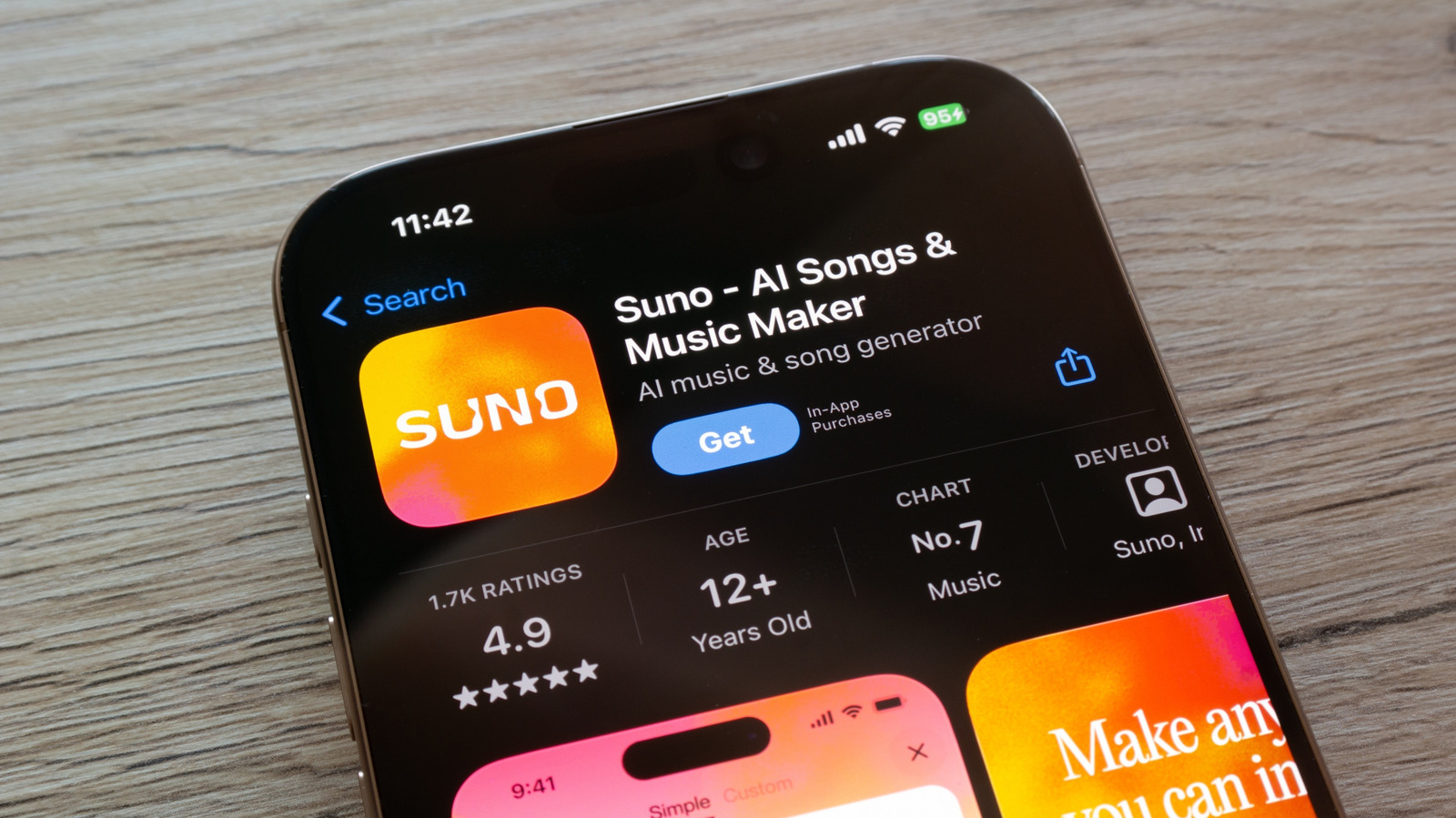
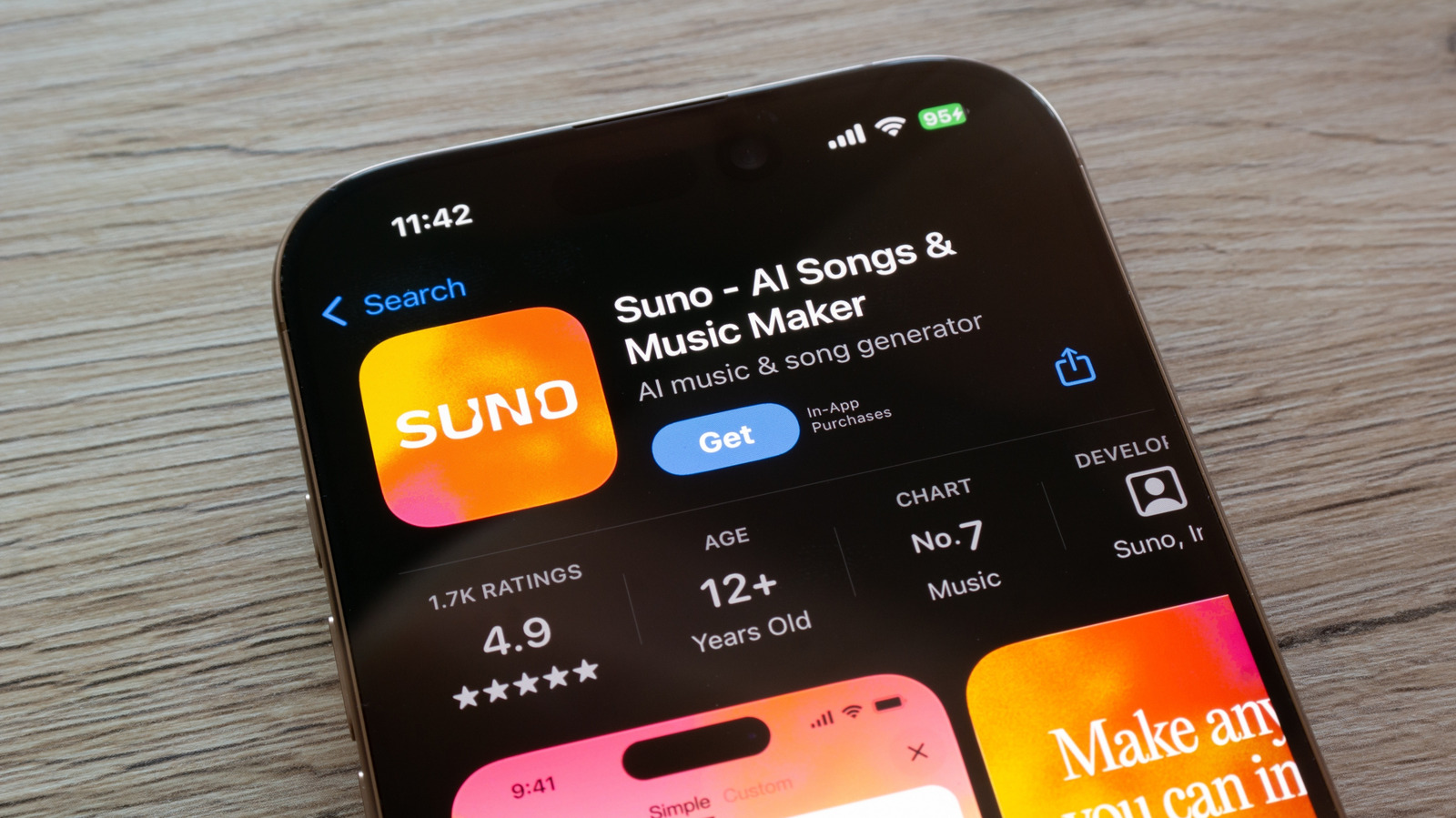
Sony Music Entertainment and Universal Music Group (UMG) are suing AI music generator Suno for allegedly infringing on their copyright with its newest v6 models, Variety reports. The claim challenges the story Suno has generally told about its latest AI models, which are the first it’s released since signing licensing deals with Warner Music Group and BMG.
While Suno used licensed material to create the v6 lineup, in their lawsuit (obtained by Music Business Worldwide), Sony Music and UMG specifically take issue with the company’s public acknowledgement that the models were also trained on “users’ ‘interactions’ with Suno’s service,” which they take to mean “the outputs of, and preference signals derived from, prior models that Suno built by copying Plaintiffs’ recordings without authorization.” Under that understanding, both companies claim Suno could be responsible for infringing on the copyright of at least 60,202 sound recordings. That leaves it liable for up to $9 billion in damages under US copyright law, plus up to $2,500 for each time Suno circumvented YouTube’s anti-downloading tech to scrape songs, according to MusicBusinessWorldwide.
Naturally, the company disagrees with Sony Music and UMG. “These claims remain fundamentally flawed on both the facts and the law,” the company said in a statement to Engadget, while reaffirming that “Suno exists so that more people can make new music.”
“Over the past two years, we have doubled down on this goal, launching v6 in partnership with WMG, BMG, and Believe,” the company continued. “v6 was trained on content licensed from our partners, interactions including creations and preference signals from our community, and the accumulated learnings from our team. We are excited for a future where AI and the music industry continue to strengthen one another and build entirely new product experiences for artists, fans and the broader music community.”
This new lawsuit builds on Sony Music, UMG and WMG’s previous suit against the company, and a July 2026 hack of Suno’s data that revealed the AI company scraped millions of songs and lyrics from platforms like YouTube Music, Deezer and Genius to train its earlier models. In the past, Suno has justified scraping music to train AI as falling under the fair use doctrine. Alongside the release of its v6 models, though, the company ended support for its older models, which at least suggests it thinks offering a product trained on licensed material is more palatable to critics. If a judge is swayed by record companies’ understanding of how Suno trained its models, that might not be enough.


If you keep up with true crime stories and follow recent cases online, then you may be familiar with the “Kia Boys.” This story involves the theft of certain Kia and Hyundai vehicles that lack an electronic immobilizer, a security system that prevents the engine from starting without the correct key. According to a study published in August 2026, this crime spree could continue for years to come.
The story dates back to 2020, when thieves first discovered the security vulnerabilities. Videos showing how to steal the affected vehicles later turned the technique into a social media trend, and the thefts have continued since then. Though the problem was happening in cities around the country, researchers focused on Los Angeles, where they found that the Hyundai Sonata was stolen at a rate of about 38 per week from 2017 through 2019. Using those theft patterns, along with historical data on other vulnerable vehicles, they estimated how long the problem could continue.
The research team’s long-term projection into the 2040s is based, in part, on what happened with other vehicles that had similar security weaknesses. That includes certain Honda Civic and Toyota Camry models, which were targeted for years after newer versions were equipped with immobilizers. Additionally, vulnerable Hyundai and Kia vehicles are likely to become more concentrated in lower-income communities as older cars are resold. Based on those patterns, researchers estimate that annual thefts of affected Sonatas will dip below 100 in 2039 and below 10 in 2042.
How automakers responded to the Kia Boys

Researchers studying the wave of Hyundai and Kia thefts over the past several years in Los Angeles took the time to explore a hypothetical model. In this model, both automakers issued recalls that completely fixed the security vulnerabilities in 2024. While that would dramatically reduce the number of projected thefts that year, it would only shorten the period of elevated thefts by about 12 months. This would still have placed the estimated thefts below 10 vehicles in 2041 instead of 2042.
Hyundai and Kia eventually addressed the security vulnerabilities and dealt with the legal fallout from the thefts, but they did not initially issue recalls for the affected vehicles. Hyundai said in 2023 that the vehicles met federal safety standards, and that the thefts were not caused by a malfunction or defect. Instead, the automaker offered a free software upgrade designed to improve the factory alarm system and ignition start logic. Hyundai also worked with law enforcement to provide steering wheel locks and offered a security kit for some affected vehicles.
Kia also addressed the problem with a free software upgrade for vehicles that were built without an engine immobilizer. The update changed how the alarm and ignition worked, including making the key necessary to actually start the vehicle. Kia began by making the upgrade available in February 2023, then expanded it to additional vehicles over the following months. Kia also participated in efforts to distribute steering wheel locks to affected owners.


The research from the Global Undergraduate Awards highlighted the concerns held by undergraduate students as they prepare to enter the workforce.
According to new research published by the Global Undergraduate Awards (GUA), during the announcement of the undergraduate winners for 2026, more than half of students who took part in the report regard AI as a significant concern.
Data was collected from 400 globally diverse undergraduate students across more than 200 universities in nearly 100 countries, from 8-15 June.
55pc of participating undergraduate students cited AI as a concern this year, a figure which rose from 48pc in 2025, moving it from fifth to second place in global rankings of concerns. The report noted that it was the only issue in the top five to rise, even as the overall field of concerns held broadly steady.
The fears around artificial intelligence were second only to social and economic inequality and came ahead of the climate crisis, mental health and environmental issues. Much of the fear was related to concerns around job loss or destruction.
Commenting on the results report, Jim Barry, the chair of the GUA, said: “The findings clearly show that AI is rising up the agenda as a key area of concern for undergraduates globally.
“This is something that policymakers need to take note of. The central focus is the job market post-graduation and what sort of impact AI is going to have on career prospects for many.
“There is a palpable concern about the prospect of jobs destruction. The fact that AI has accelerated in our research findings from fifth to second place in just one year is a tangible demonstration of how quickly it has become a significant issue for students as they look to the future.”
While the changing rankings highlight the growing prominence of AI alongside the longstanding social and environmental challenges facing the next generation, Barry is of the opinion that it is concerning to see other issues fall somewhat to the wayside.
He explained: “While climate change remains firmly in the top three concerns, it is worrying to see it fall in the rankings as its impacts become increasingly visible and significant. It highlights the challenge of keeping climate change to the forefront as other issues compete for attention and the societal and economic changes required are increasingly weaponised politically.”
Worldwide worry
The GUA report suggests that for students, artificial intelligence is no longer a distant or theoretical concept, rather, it is ingrained in how people study, research and think about their future careers.
The research said: “There are huge opportunities that come with it, but also a lot of uncertainty about what its rapid development will mean for this generation.”
The GUA’s research comes at a time when there is increasing worldwide concern about the impact the advancement of artificial intelligence is having – particularly in relation to how it might damage career opportunities for both new and established professionals.
SiliconRepublic.com recently spoke to Pluralsight’s Beckey Woodard Cole about the growing issue of AI in the workplace and how it is disassembling the traditional career ladder.
Earlier in the month, global talent platform Andela released a report which found that in a working landscape being transformed daily by AI, 53pc of AI job postings are asking for skills that don’t match the listed job title, highlighting a disconnect between organisations, recruiters and jobseekers.
Additional research from Microsoft Ireland, via the 2026 Work Trend Index, also found that many Irish employees are considering new career opportunities as AI reshapes the environment.
Don’t miss out on the knowledge you need to succeed. Sign up for the Daily Brief, Silicon Republic’s digest of need-to-know sci-tech news.

The wireless earbud industry spent the better part of a decade convincing consumers that progress meant sealing their ear canals more effectively, adding increasingly aggressive active noise cancellation and pretending the outside world could safely be placed on mute.
Apparently, a growing number of listeners would like to hear the bus coming.
New market data from Omdia, the global technology research firm owned by Informa TechTarget, shows that open wireless stereo (OWS) products are moving in the opposite direction from conventional true wireless earbuds. Global TWS (aka regular wireless earbuds) shipments slipped 0.7% year over year to 82.1 million units in Q2 2026, the category’s first annual decline since Q2 2023. Conventional in-ear and semi-in-ear TWS declined 2%, while open-ear shipments grew 12% to 11.1 million units.
Open-ear products now represent 13.5% of global TWS shipments, up from 12% one year ago. That is still a minority of the market, but it is becoming far too large for major headphone brands to treat as a fitness niche populated exclusively by runners who refuse to stop at intersections.
Related Reading:
Clip-On Earbuds Are Driving the Growth
The most revealing number may be the form factor.
Omdia says clip-on models accounted for 61% of OWS shipments during Q2, compared with 39% for ear-hook designs. Clip-ons increasingly blur the line between wearable technology and fashion accessory, while ear hooks remain particularly attractive for sports and activities where staying attached to the listener is generally considered useful.
Price growth is even more striking. The $100 to $199 segment jumped 253% year over year, driven in part by established brands including Huawei, Shokz and OPPO. Below $50, shipments exploded 323%, demonstrating that open-ear audio is spreading in both directions rather than becoming another premium category with a $299 entrance fee and a velvet rope.
Omdia expects annual OWS shipments to climb from 43.9 million units in 2026 to 90.5 million by 2030, when open-ear models could represent nearly one in five TWS shipments.
That is not a fad. It is an adjacent market becoming a substantial one.
Why Now?
The mistake would be interpreting these numbers as consumers suddenly rejecting conventional earbuds. They are not. Sealed TWS remains vastly larger, and ANC still makes considerably more sense on airplanes, trains and anywhere else where situational awareness mostly means hearing somebody else’s child watch YouTube without headphones.
Open-ear audio solves a different set of problems.
Long-term comfort matters to people who dislike having silicone tips inserted for hours. Runners and cyclists need environmental awareness. Office users may need to hear coworkers while listening to music, and parents generally appreciate being able to detect whatever object has just broken in the next room.
Omdia Research Director Jason Low expects vendors to focus increasingly on fitness, commuting and office productivity, while adding smarter ecosystem and AI features. Sound quality remains the harder engineering problem because an open design cannot exploit the acoustic seal that helps conventional earbuds produce deeper bass and greater isolation.
That explains why the category is suddenly attracting considerably more serious engineering.
The Open-Ear Models Defining the Market

Bose made its intentions very clear this morning with the new $199 Sport Open Earbuds and $299 Ultra Open Earbuds 2nd Gen. The Sport model targets workouts with an IP54 cuff design, while the Ultra adds deeper bass, higher output, improved calling and Cinema Mode. Bose is no longer treating open-ear as one experimental SKU hiding in the catalog.
Shokz OpenDots ONE ($199.95) sit almost directly in the segment where Omdia is seeing explosive growth. Their clip-on design combines 11.8mm drivers, Dolby Audio, IP54 protection and up to 10 hours of playback, with 40 hours available from the wireless charging case. Shokz is particularly noteworthy because Omdia specifically identifies the company among the brands driving growth in the $100 to $199 tier.
Sony has gone more premium with the $229.99 LinkBuds Clip, which we reviewed earlier this year. Their strengths were comfort, situational awareness and useful listening modes rather than outright fidelity; our testing also exposed the fundamental challenge facing every manufacturer in this space — open-ear convenience still comes with compromises in bass extension and resolution.
At the other end, the $99 CMF Clip Pro demonstrates how quickly pricing pressure is arriving. LDAC, multipoint, a 10-hour battery and IP54 protection are now available below $100, which should make companies charging two or three times as much increasingly uncomfortable unless the audible difference justifies it.

The Bottom Line
Open-ear earbuds are not replacing conventional TWS. They do not need to.
The market is splitting according to use case. Sealed earbuds remain the better option when isolation, ANC and maximum bass performance matter. Open-ear designs increasingly make more sense when comfort, awareness and all-day wear take priority.
The important change is that consumers no longer have to accept terrible sound or awkward hardware to make that trade. Bose, Shokz, Sony and a rapidly expanding group of competitors are spending real engineering money trying to close the performance gap, while lower-cost brands are attacking the category from underneath.
Omdia’s numbers suggest consumers have noticed.
After a decade spent perfecting ways to block out the world, the next big wireless-audio growth story may be about letting some of it back in.
Related Reading:
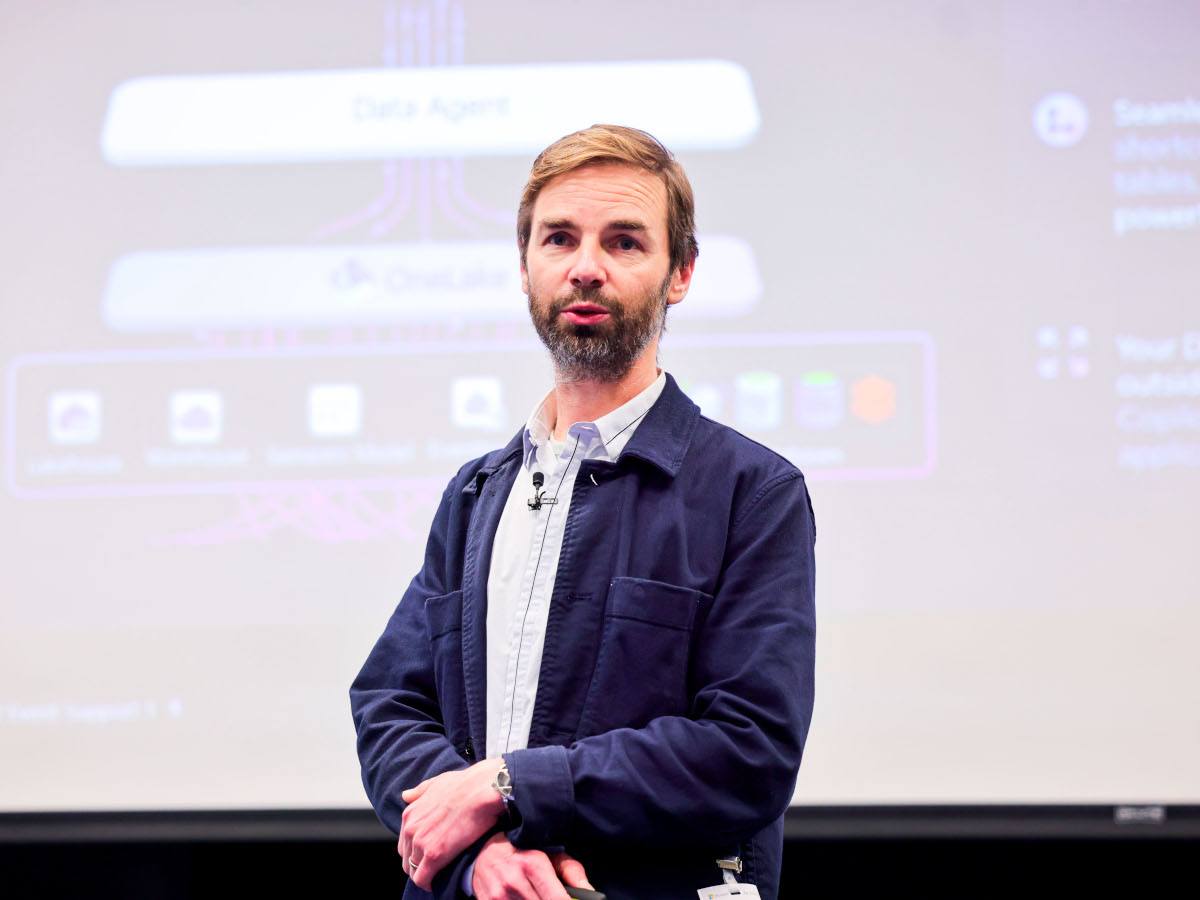

Spanish Point Technologies’ Daire Cunningham explores the human element that’s key to digital transformation, especially in relation to AI adoption.
Artificial intelligence has become remarkably easy to buy, yet surprisingly difficult to transform a business with.
That distinction matters. McKinsey’s latest global research found that 88pc of organisations are now using AI in at least one business function, yet only around a third have begun scaling their AI programmes across the enterprise.
The gap between those figures points to a challenge that is becoming increasingly apparent. Access to AI is no longer the primary obstacle for most organisations. The harder task is understanding where it can genuinely create value and what needs to change within the business for that value to be realised.
In the rush to adopt AI, organisations can easily begin with the wrong question: Which AI tool should we use?
A better starting point is to ask what problem the organisation is actually trying to solve. Once that is clear, leaders can work backwards. They can identify what information is required, where it sits, who should have access to it, how the existing process operates and where the real bottlenecks lie.
They can also determine which decisions should remain firmly in human hands and where technology could meaningfully improve the outcome. The choice of model or platform should follow those decisions, rather than lead them.
This matters because one of the biggest obstacles to AI transformation is not a shortage of sophisticated technology, but the condition of the organisation underneath it.
A 2026 Dun & Bradstreet survey found that while more than three-quarters of businesses are already reporting some measurable return from AI, just 6pc say their enterprise data is fully ready to support AI at scale.
Businesses have spent decades accumulating information across databases, applications, document repositories and departmental systems. Permissions have evolved over time, processes have been layered on top of other processes, and employees have developed workarounds to get things done. AI has a tendency to make the weaknesses in those arrangements much harder to ignore.
Consider an AI assistant connected to an organisation’s internal information. If an employee asks it a question and receives a confidential document they should never have been able to access, it is tempting to describe that as an AI security problem. In reality, the technology may not have created the underlying vulnerability at all. It may simply have exposed the fact that the employee already had inappropriate access.
As AI makes it dramatically easier to retrieve and connect information, identity, permissions and governance become more important, not less.
‘Technology itself is only part of the story’
We have seen the value of getting those foundations right in identity modernisation projects. At the Royal College of Physicians of Ireland, 13 separate systems were brought into a single identity platform, introducing single sign-on and automated access management for more than 86,000 users across 95 countries.
Administrative overhead was reduced by 50pc. The technology itself is only part of the story. Establishing a clearer way of managing identities, permissions and access provides a much stronger foundation for any organisation introducing technologies capable of searching, connecting and retrieving information across multiple systems.
There is an equally important human dimension to this. I have always thought about digital transformation partly in terms of arming the workforce to adopt and employ modern technology in their working practices. An organisation can deploy an exceptional system, but if employees do not understand where it fits into their jobs, why they should use it or how their responsibilities change around it, its value will remain limited.
McKinsey’s research has found that redesigning workflows is among the factors most strongly associated with organisations seeing financial impact from generative AI. That makes sense: transformation does not happen because somebody has been given access to another piece of software. It happens when organisations rethink how work gets done.
At the same time, AI does not remove the need for professional discipline.
Engineers can use it to accelerate coding, testing and analysis, but generated code still has to be reviewed, systems still have to be tested and security requirements still apply. Someone remains accountable for what ultimately goes into production.
The same principle applies across other professions. AI can accelerate elements of the work, but capable professionals still need to understand the outputs, recognise when something is wrong and exercise judgement over the decisions that follow. As systems become more capable, that human oversight becomes more important rather than redundant.
This is also why the strongest applications of AI tend to make more sense when described in terms of the problem being solved rather than the technology being deployed.
The music industry provides a useful example. Identifying potentially fraudulent music registrations across immense volumes of metadata is a specific problem that becomes increasingly difficult to address at scale.
Applying machine learning and AI-driven metadata analysis to that challenge has enabled suspicious registrations to be identified across large datasets, with processing times reduced by 70pc in one implementation. The significance is not simply that the same work can be completed faster. Greater processing capacity allows skilled people to focus their attention on the cases that genuinely require investigation, judgement and expertise.
That points to a broader question about how businesses measure the value of AI. Much of the discussion still focuses on automation, efficiency and ultimately how much human work can be removed from a process.
Efficiency matters, but it is only one measure of what these technologies can contribute. AI can also make previously impractical work possible by analysing volumes of information that would have required enormous amounts of human time, identifying patterns that warrant further investigation and allowing skilled employees to concentrate on more complex decisions.
Instead of asking only what work AI can remove, businesses should also be asking what their people can now do that they could not realistically do before.
There will always be another model, platform or AI capability arriving on the market, which is precisely why businesses cannot build a transformation strategy around chasing each new development.
They need something more durable: a clear understanding of the problems they want to solve, trusted information, appropriate governance, well-designed processes and employees who understand how to use the technology responsibly.
The organisations that succeed with AI will not necessarily be those that adopt every new tool first. They will be those that know where AI belongs, prepare the foundations beneath it and give capable people the structures and confidence to use it effectively.
Technology certainly enables transformation, but people still have to make it work.
Daire Cunningham is the COO at Spanish Point Technologies, where he has worked since 2008. Prior to joining Spanish Point Technologies, Cunningham spent some time working in software systems design and development roles at companies such as Dolmen Stockbrokers and Fyntel.
Don’t miss out on the knowledge you need to succeed. Sign up for the Daily Brief, Silicon Republic’s digest of need-to-know sci-tech news.
Tech
Fascinating Look Back at Sony’s SMC-70, the 1982 Machine with Sixteen Colors and the First 3.5-Inch Floppy on Office Desks


Photo credit: ETZone
Sony shipped the SMC-70 in September 1982 as its first real microcomputer, first in the United States for office work and then in Japan on December 1. Most people walking past a gray-and-silver slab that year would have assumed it belonged to NEC or Sharp. Few realized the company that made Trinitron sets and Walkmans had just entered the personal-computer business with a Z80A running at 4.028 MHz, 64 KB of user RAM, and Sony BASIC already sitting in ROM.
This scrunched-up keyboard and computer combination, measuring only 90 millimeters high and weighing 4.8 kilograms, was a real head-turner, resembling a polished typewriter rather than the lumbering old CP/M computers that plagued workplaces. The dual-tone keys also had a useful red Help button. The analog RGB and composite outputs connected to Sony’s own line of color monitors, while a cassette port running at 1200 baud and an RS-232C serial port handled the rest of the day’s peripherals. If you wanted to go all out, you could even install an internal 3.5-inch drive, the same ones Sony had produced a couple of years before, which housed roughly 280 KB of formatted goodness and whirred along at 600 rpm, as that was a whole lot faster than the 5.25-inch disks everyone else was still stuck on.

Apple 2026 Mac mini Desktop Computer M6 chip
- LITTLE DO-IT-ALL — Mac mini packs pure power into a small, five-by-five-inch desktop as the M6 chip delivers next-level AI capabilities. Mac mini…
- M6 CHIP — Everything you do on Mac mini feels more responsive with the M6 chip and its next-generation CPU. Fly through AI workflows with up to 4.8x…
- CONNECT IT ALL — Features three Thunderbolt 4 ports, an HDMI port, and a 2.5Gb Ethernet port in the back, and two USB-C ports and a headphone jack…

Graphically, this compact machine sported four modes that left the majority of its 8-bit competition in the dust: 320 by 200 pixels in 16 colors, 640 by 200 in four colors, 640 by 400 in monochrome, and even a 160-by-100 four-page mode in 16 colors. You could control the character, graphics, and border planes separately and stack them on top of each other, ensuring that your text was clearly visible above any drawings. If you wanted to be really creative, there was a light-pen port and a programmed character generator, allowing you to draw titles or diagrams directly on the device. The CP/M 2.2 worked perfectly with Sony’s color extensions, and if you splurged on the cache-disk module, it would convert a portion of your RAM into a lightning-fast virtual drive.
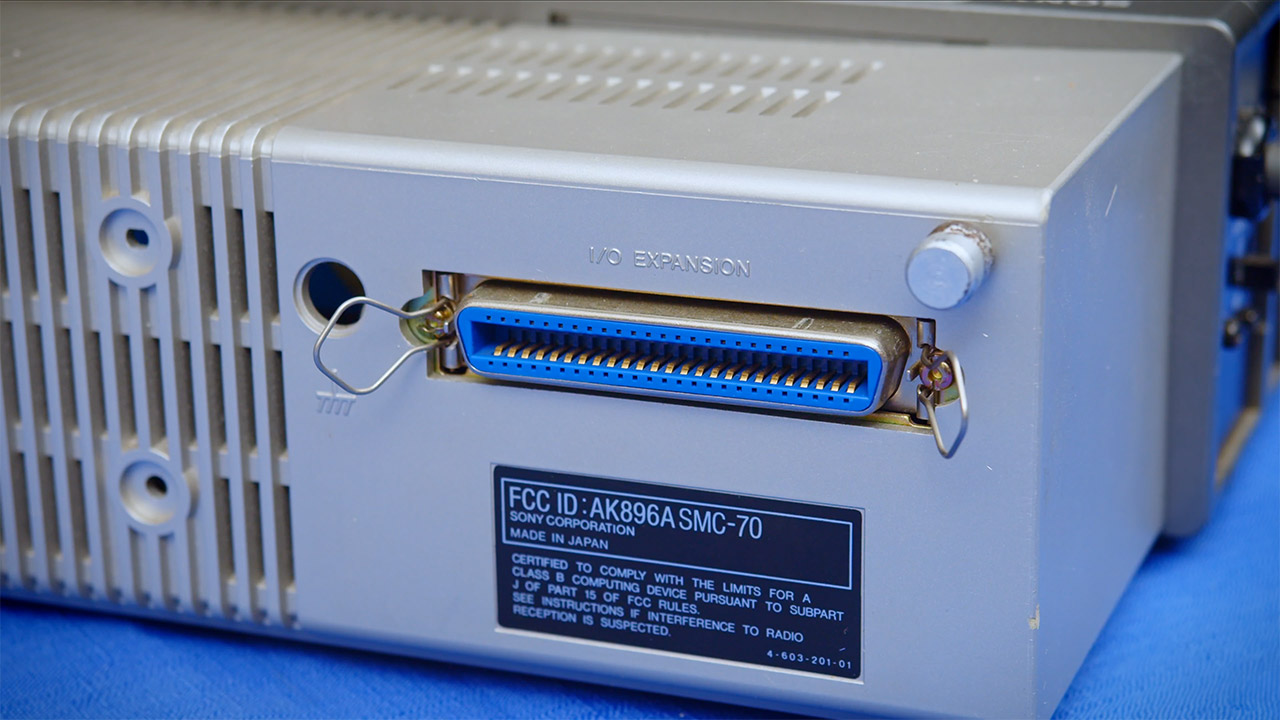
Expansion was a breeze because there was no need to fiddle with casings and slots like on the old S-100 and ISA motherboards. This chassis simply split in the center, allowing you to stack all of your modules on top of one another and secure them in place with those neat little metal rods that worked as skewers. Ribbon cables or external links allow the stack to grow indefinitely, either vertically or horizontally. Later on, you could add additional RAM banks of up to 256 KB, an IEEE-488 interface, kanji ROM for Japanese characters, or the Supercharger box, which had a 5 MHz 8086, up to 768 KB of extra memory, and even CP/M-86. Sony even promised MS-DOS support, but it never materialized in any significant quantities.
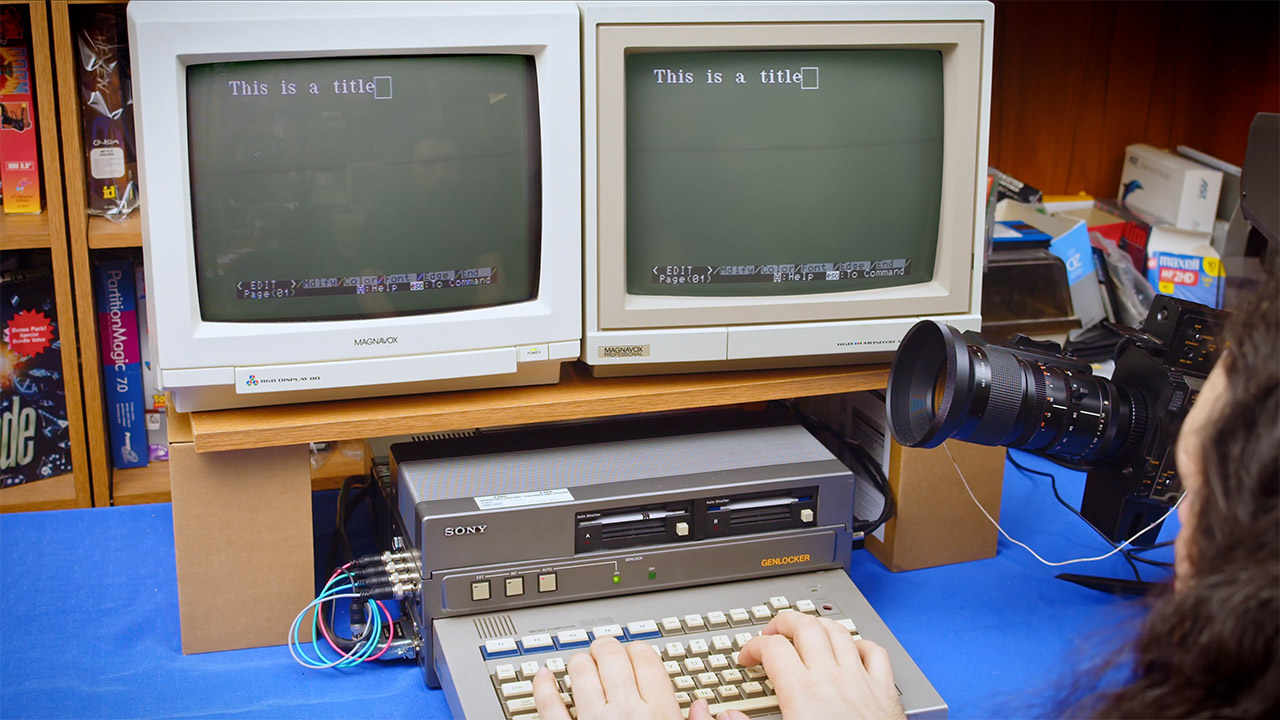
Broadcast versions followed in 1983. The SMC-70G and PAL-equipped SMC-70GP both have built-in genlock circuitry, allowing computer graphics to lock onto an incoming video stream. That made them extremely handy for stations and production studios looking to create character creation, lower-thirds, weather maps, or other simple digital effects that could be experimented with on tape or laserdisc. There was also software available, such as Graphics Editor and Video Titler, that allowed you to draw in sixteen different colors or set text in many sizes and faces, then layer the results directly on top of everything else without the need for a special character generator.
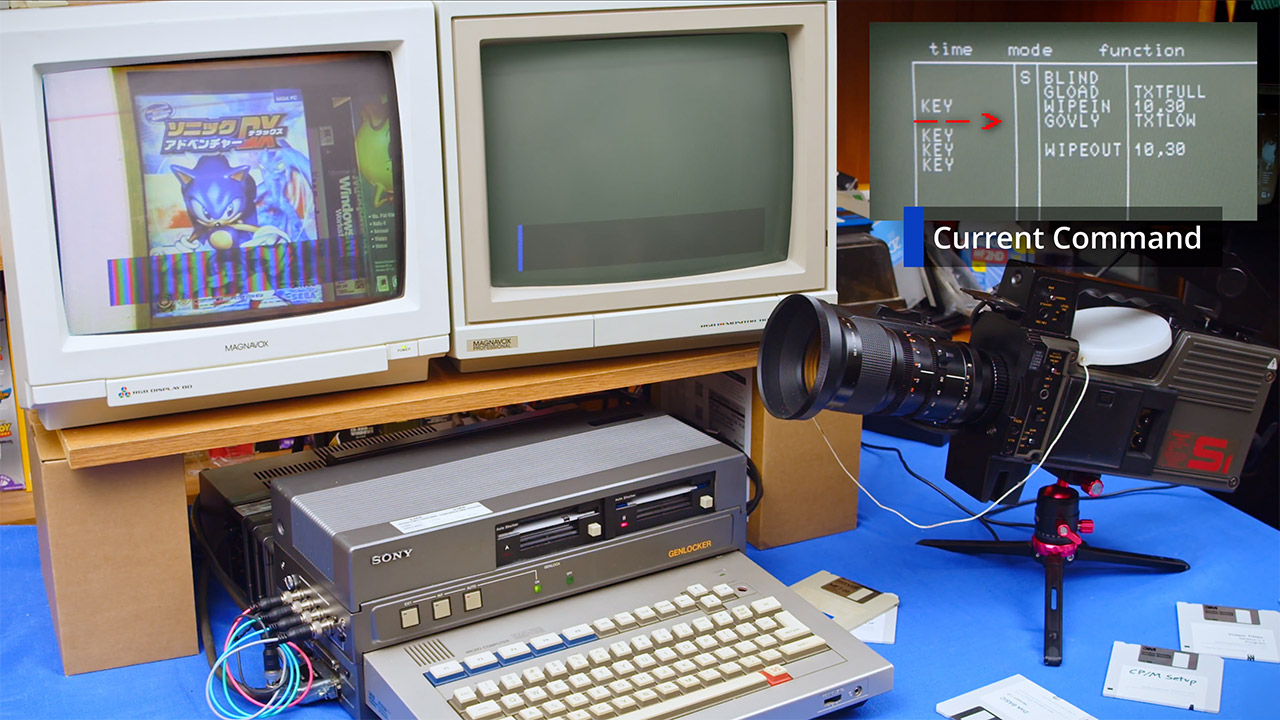
In the end, sales did not take off as the engineers had hoped. This item remained a bit of an anomaly, a well-built computer that people remembered fondly, now largely by collectors who repair those crazy module stacks and the strange film that drew one out of storage. Sony had been building computers for a long time, but the SMC-70 was the first time they combined a full microcomputer, color graphics, and a brand-new small floppy drive all on the same tabletop.
[Source]

One cloud in, one cloud out. Samsung phone users can now sync photos and videos in their Gallery app to Google, as native Microsoft OneDrive integration ends Sept. 30. The update will roll out over the coming days, and availability may vary depending on account type, device model or region.
Tech insider Ice Universe viewed the new feature and posted images on X, noting that you may now see a new “Sync photos and videos” option in Gallery Settings.
As detailed on this Google page, you must have a compatible Samsung device running Android 13 or newer and a personal Google account. To find out which Android version you have, go to Settings > About phone > Software information, then look for the Android version. If you need to create a Google account, the details are here.
After syncing Gallery to Google Photos, users can view and share multimedia from their Samsung devices, the Google Photos app and photos.google.com. But there are limitations. Google Workspace accounts can’t use it, and synced items can’t be viewed in Google features such as memories and highlights, live albums or search unless you back up photos and videos via Google Photos.
Also, Google Accounts supervised by parents are ineligible to use the feature.
Google says that you can back up photos, videos, albums, device folders such as downloads or screenshots, and metadata such as timestamps, location, and favorites status.
Representatives for Samsung and Google did not immediately respond to requests for further comment.
How to sync to Google Photos
Syncing Samsung Gallery to Google Photos is optional, but storing photos and videos only in the Gallery will quickly eat up phone storage space. Open the Samsung Gallery app on your phone, then tap the three-line hamburger menu at the bottom right. Select Settings, then Sync Photos and videos. Choose a Google account from the instructions and grant permission to sync media.
Deleting items from either Samsung Gallery or Google Photos will remove them from both apps and from your cloud storage. Editing photos in either app will also show up everywhere.
Users can also turn off syncing at any time, and previously backed up items remain safely stored in their Google Account.

Tech
From elections to board games: Washington’s secretary of state does double duty as a tabletop trade envoy

If you explore the main expo hall during the Penny Arcade Expo, you can often find some interesting booths around the edges of the room. These can offer rare games, designer clothing, blind boxes of themed merch, and occasionally/inexplicably, unfiltered access to local Washington politicians.
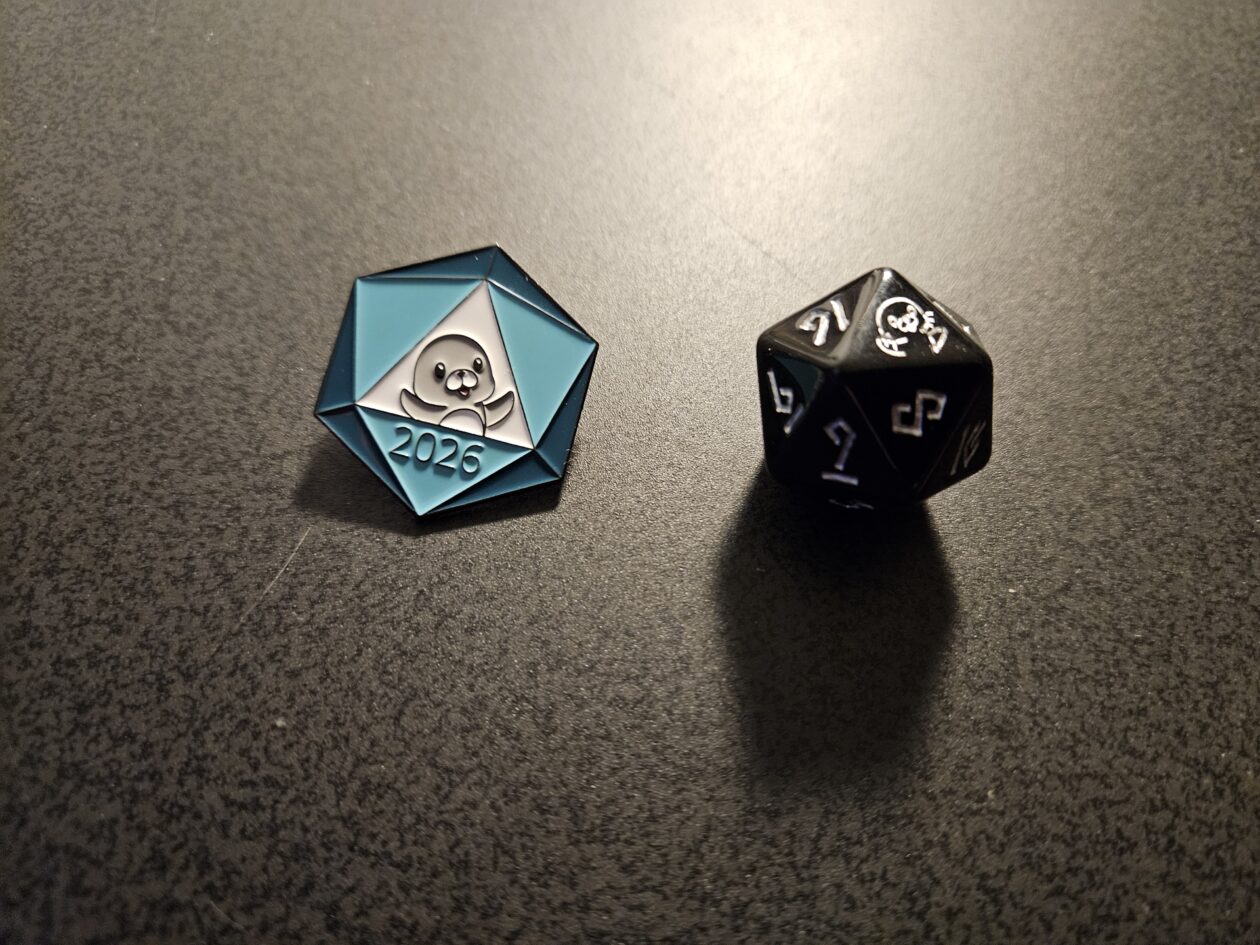
Steve Hobbs has held the secretary of state position for Washington since 2021. Visitors to his booth during PAX, held over Labor Day weekend at the Seattle Convention Center, could meet Hobbs and spin a prize wheel, with rewards that included buttons, collectible pins featuring the office’s official mascot Finn, custom 20-sided dice with Finn on the 20 face, and free snacks.
This wasn’t Hobbs’ first time at PAX, but it was the first time I’d heard about a closed-doors event he’d hosted on the night before PAX. One of the local exhibitors mentioned that Hobbs’ office had held a networking event in Seattle on Thursday, Sept. 3, between local tabletop companies and an assortment of international game publishers.
That got me curious enough to schedule a short conversation with Hobbs on the third day of PAX. Once we sat down, however, I had to ask him the question that I’d heard from a lot of other attendees: what was he doing at PAX in the first place?
“It’s twofold,” Hobbs told me. “One, this is a great opportunity for me to reach out to the gaming companies here in the state of Washington and look for opportunities for them to go overseas, linking up some of these indie game developers with major publishers.”
He continued, “The rest of it is civic engagement. Just reminding people, hey, don’t forget to vote. Don’t forget to check your registration.”
Washington mails a ballot to every registered voter, who can return it by mail or at an official drop box. Hobbs was urging people to use the drop boxes, citing what he called “a low-key fight with the USPS.”
Washington and 24 other states sued in August to block a U.S. Postal Service rule requiring new barcodes on ballot envelopes, and the Supreme Court kept it from taking effect on Sept. 14, after this interview.
“Look, PAX is where all the young people are at, right?” Hobbs said. “This is a very diverse, young community, and this is where we need to engage people.”
That brings us back to the games.
The Thursday-night event was intended to help connect Washington’s homegrown board games industry with interested publishers and players in Japan, Poland and elsewhere. This could allow Washington-based designers to sell their products overseas, as well as potentially letting foreign partners export their own games to North America.
Washington doesn’t make quite as big a deal about it as one might expect, but it’s one of the biggest states in the U.S. for tabletop and board game design, if not the biggest. Local Washington studios range in size from Renton-based Wizards of the Coast to one-person indie creators who make card games as a hobby. Hobbs’ office estimated early last year that tabletop gaming in Washington is a $2 billion industry.
The Secretary of State’s Office is best known for its core duties of running elections and registering businesses, but state law also directs the secretary of state to develop a citizens’ exchange program promoting ties that “may result in increased tourism, business relationships, and trade.”
“So what we do is help these indie game developers get access to foreign markets by putting on these trade missions,” Hobbs said. “What we’ll do is provide the booth [at international gaming conferences, such as Game Market in Tokyo], which is the most expensive thing. We will also help them navigate through the federal grant process in order to mitigate some of the costs over there.”
His office then works its connections with the U.S. State Department and the host nation’s commerce department to set up meetings for the developers.
“We have really strong ties with the German and Japanese governments, and we actually get these people to do their pitches with the major publishers in Europe and Japan,” Hobbs said.
As an example of the initiative’s success, Hobbs pointed to Lethal Shadows, a Snohomish County business that specializes in premium tabletop miniatures. According to Hobbs, he’d helped Lethal Shadows partner up with a Lithuanian company. As a result, Lethal Shadows has moved from a garage to a warehouse and is hiring more employees.
That did raise the question of why Hobbs’ office wasn’t making equivalent inroads toward Washington’s significantly larger video game industry.
“It’s more of a lack of bandwidth,” Hobbs said. “We want to take baby steps. We didn’t want to take a big step into it. And frankly, I didn’t realize that it was important to go to these conventions. In Japan, Germany, and Poland, we’re seeing if there might be an opportunity to do the same thing on the digital side.”
Hobbs continued, “I believe trade must go two ways. We need to support each other.”

NewsBeat52 seconds ago
Could AI wipe out humans and how might it do it?

Business2 minutes ago
TJX Companies Stock: Weakening Comps And Rich Multiples In Shaky Macro (NYSE:TJX)

Sports5 minutes ago
Maria Sharapova moved to tears after Paula Badosa sends heartwarming message about meeting idol for the first time ever at SP Open




-

 Tech6 days ago
The Latest Weird Thing to Play Doom Is the Mapped-Out Brain of a Fruit Fly
-

 Crypto World4 days ago
Kraken Lets xStocks Holders Earn Yield Through DeFi
-

 Crypto World2 days ago
US Charges Robinhood Engineers Over Crypto Listing Trades
-

 Crypto World7 days ago
Can AI Build a Startup in 72 Hours? Elon Musk's Team Will Livestream the Test
-

 Crypto World3 days ago
What Is the Status of the U.S.-Iran Peace Talks? Here's What Both Sides Are Saying
-

 Crypto World5 days ago
Elon Musk Drops a Bombshell: Grok 5 Could Be the AGI Breakthrough
-

 Business6 days ago
Rivals Sam Altman and Elon Musk Rally Behind Dario Amodei’s Call for a Slowdown in AI Development
-
 NewsBeat4 days ago
‘Sick conspiracy’: Trump says only guardrails AI needs is ‘a strong and smart (High IQ!) president’ in all-caps rant
-

 Crypto World5 days ago
New Tesla Roadster Uses SpaceX Tech. Will It Impact the Stock Price?
-

 Crypto World7 days ago
Robinhood Chain Never Stopped But its Blobs Did Stop Reaching Ethereum For 14 Minutes
-

 Business7 days ago
Marvell: Most Potent Setup Of The AI Factory Decade
-

 Crypto World4 days ago
NVIDIA Analysis: Attempted Rising Wedge Breakout Amid Pressure on the AI Sector
-
Business5 days ago
SK Hynix ADRs Fall More Than 6% as Memory Rally Breaks on Fears of Slower AI Spending
-

 Crypto World4 days ago
Revolut Attackers Warn of Ongoing Daily Customer Data Leaks
-

 Crypto World5 days ago
3 Token Unlocks to Watch in the Third Week of September 2026
-
Crypto World4 days ago
Can Circle’s Arc Repeat Robinhood Chain’s Meme Coin Boom?
-

 Crypto World4 days ago
DOJ Seeks to Seize $61M in Iran Oil Funds From Binance Accounts It Vouched For
-

 Crypto World7 days ago
Bitcoin ETFs lose $462.7M as Ethereum funds gain $196.9M
-

 Crypto World5 days ago
AI Safety Burden Falls on Chief Executives as Trump Prioritizes China Race
-

 Crypto World5 days ago
Goldman Sachs backs 25bp Fed hike after CPI
You must be logged in to post a comment Login