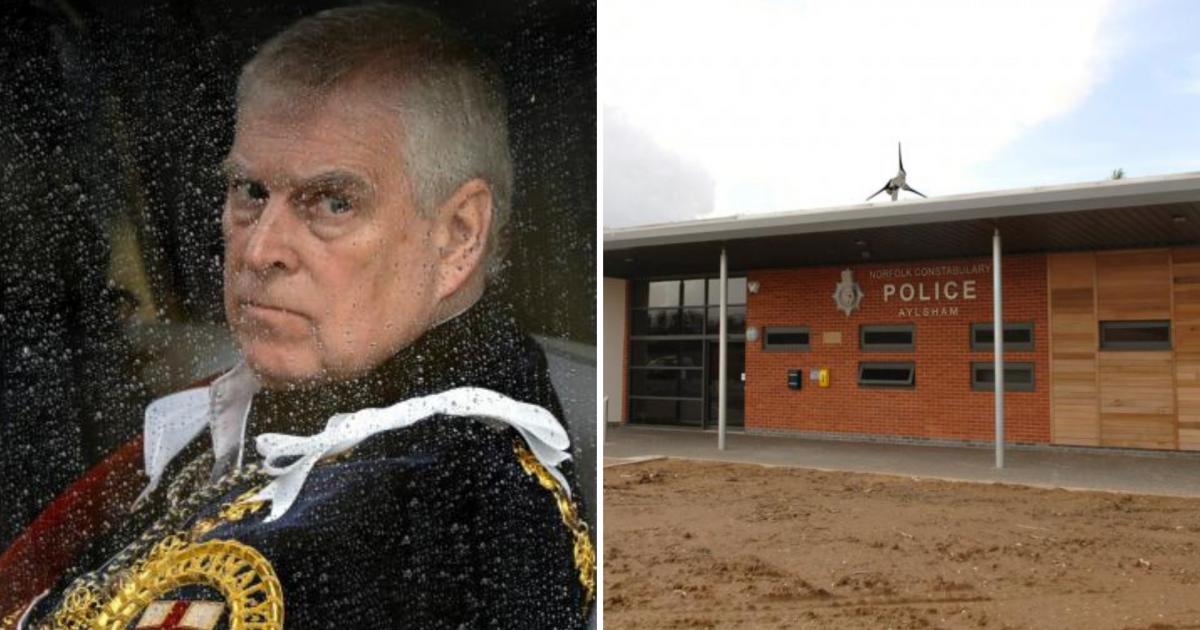
The former duke has been pictured leaving Aylsham police station in north Norfolk following his arrest.
He has been released under investigation following his arrest on suspicion of misconduct in public office, Thames Valley Police said.
He was arrested around 8am this morning (Image: Chris Bishop)
Plain-clothed officers arrived at his home in Sandringham at around 8am today (Thursday, February 19) and arrested him.
The arrest comes on his 66th birthday following allegations made against the former prince after the release of millions of pages of files related to paedophile financier Jeffrey Epstein.
Advertisement
Officers have been conducting searches of properties in both Norfolk and Berkshire.
He was seen leaving Aylsham police station following his arrest (Image: Colin Finch)
Following his day in custody, a black Range Rover arrived at Aylsham police investigation centre at approximately 6.50pm this evening.
It has been reported that it tried to get in via an electronic gate but was unable to do so as the gate was broken.
He was arrested on his 66th birthday (Image: PA)
It went in via another gate after waiting 10 minutes.
Advertisement
Five minutes later, a large garage door in the building opened, and two cars could be seen, including the Range Rover.
It drove past the waiting reporters and a photographer was able to take a picture of the former royal trying to lie down on the back seat.
Members of the media at the Sandringham Estate (Image: Jordan Pettitt/PA Media)
King Charles III made a statement while his brother was in custody.
A full statement reads: “I have learned with the deepest concern the news about Andrew Mountbatten-Windsor and suspicion of misconduct in public office.
Advertisement
“What now follows is the full, fair and proper process by which this issue is investigated in the appropriate manner and by the appropriate authorities.
Officers at Wood Farm in Sandringham (Image: Chris Bishop)
“In this, as I have said before, they have our full and wholehearted support and co-operation.
“Let me state clearly: the law must take its course.
“As this process continues, it would not be right for me to comment further on this matter.
Advertisement
“Meanwhile, my family and I will continue in our duty and service to you all.”
HVO (Hydrotreated Vegetable Oil) is considered a ‘drop in’ replacement for diesel requiring no engine modifications, but it can be considerably more expensive to buy than diesel at this time.
In open session, committee chairperson Oonagh Magennis said: “It was agreed on the proposal of Councillor Martin Hearty and seconded by Councillor Terry Andrews to approve the transition from diesel to HVO in line with council’s transition towards net zero council, to achieve targets set by the draft sustainability and climate change strategy.”
The local authority recently began replacing a total of 77 council vehicles (2022) including bin collection lorries at an estimated cost of £7.4m.
The new biofuel is a low carbon, zero sulphur fuel made from waste renewable materials such as rapeseed and sunflower oil.
It is a fossil-free alternative to diesel and can reduce greenhouse gas emissions by up to 90% per vehicle.
Advertisement
The Department for the Economy has said that there is currently no large-scale production of HVO in Northern Ireland with imports needed, which could potentially create further costs and a carbon footprint of travel.
Want to see more of the stories you love from Belfast Live?Making us your preferred source on Googlemeans you’ll get more of our exclusives, top stories and must-read content straight away. To add Belfast Live as a preferred source, simplyclick here.
Andrew Mountbatten-Windsor has been arrested on suspicion of misconduct in public office. The arrest comes after the US government released files that appeared to indicate he had shared official information with financier and convicted child sex offender Jeffrey Epstein while serving as a trade envoy for the UK. But the police have not given details of exactly what they are investigating.
It is important to be clear that the arrest is not related to accusations of sexual assault or misconduct. In 2022, Mountbatten-Windsor reached a settlement with the late Virginia Giuffre for an undisclosed sum that did not include an admission of liability.
Being named in the Epstein files is not an indication of misconduct. Mountbatten-Windsor has previously denied any wrongdoing in his association with Epstein and and has previously rejected any suggestion he used his time as trade envoy to further his own interests.
What was Mountbatten-Windsor’s official role and why did he lose it?
In 2001, Tony Blair’s government made the then-prince the UK’s special representative for trade and investment. According to the government at the time, his remit was to “promote UK business internationally, market the UK to potential inward investors, and build relationships in support of UK business interests”. He did not receive a salary, but he did go on hundreds of trips to promote British businesses.
Advertisement
Members of the royal family are often deployed by the government on international missions to promote trade. When negotiating with other countries, particularly those which are also monarchies, sending a prominent figure like a royal may help seal the deal. Indeed, the then-government claimed that the former Duke of York’s “unique position gives him unrivalled access to members of royal families, heads of state, government ministers and chief executives of companies”.
It is not unusual for members of the royal family to be deployed by the government for diplomatic missions. Royals often host incoming state visits and lead similar visits abroad, and can be deployed to lead delegations on more specific missions.
However, Mountbatten-Windsor had an official role as trade envoy. He stepped down from this role in 2011 following reports about his friendship with Epstein, who was convicted of sex offences in 2011.
The monarch is protected by sovereign immunity, a wide-ranging constitutional principle exempting him from all criminal and civil liability. According to the leading 19th century constitutionalist Alfred Dicey, the monarch could not even be prosecuted for “shooting the Prime Minister through the head”. The Prince of Wales also enjoys immunity as Duke of Cornwall, which protects him from punishment for breaking a range of laws.
The State Immunity Act 1978, which confers immunity on the head of state, also extends to “members of the family forming part of the household”. However, this phrase has been interpreted narrowly to apply to a very tight circle of people and does not appear to apply to the monarch’s children in general. For example, in 2002 Princess Anne was prosecuted (though not arrested) for failing to control her dogs in Windsor Great Park after they bit two children.
Nevertheless, there has often been a perception that members of the royal family are held to a different standard when it comes to the law. In 2016 Thames Valley Police were criticised by anti-monarchy groups for not prosecuting the then-prince after newspaper reports alleged he had driven his car through the gates of Windsor Great Park. In 2019 the Crown Prosecution Service declined to prosecute Prince Philip for causing a car crash which injured two people.
The monarch also cannot be compelled to give evidence in court. For example, prosecutors were unable to summon the late queen to give evidence in the trial of Princess Diana’s former butler, who was accused of stealing her jewellery.
Advertisement
In response to Mountbatten-Windsor’s arrest, the king said: “What now follows is the full, fair and proper process by which this issue is investigated in the appropriate manner and by the appropriate authorities. In this, as I have said before, they have our full and wholehearted support and co-operation. Let me state clearly: the law must take its course.”
When was the last time a royal was arrested?
You have to go back quite a long way to find the last time that a member of the British royal family was arrested. This was during the English civil war, when Charles I was taken prisoner for treason before being found guilty and ultimately executed in 1649.
A number of royals, including Princess Anne, have committed driving-related offences, including speeding. But this arrest makes Mountbatten-Windsor the first member of the royal family to be arrested in modern times, though it should be noted that he is no longer a royal – he was stripped of all his official titles in October 2025 as his friendship with Epstein came under even more scrutiny.
The former prince, pictured in 2019. PjrNews/Alamy
What limits do police have on investigating royal estates?
Sovereign immunity also prevents police from entering private royal estates to investigate alleged crimes without permission. This can, theoretically, protect members of the royal family from arrest and prosecution. The Cultural Property (Armed Conflicts) Act 2017 also bans police from searching royal estates for stolen or looted artefacts.
Advertisement
In 2007, two hen harriers were illegally shot at Sandringham estate. However, Norfolk Police first needed to ask Sandringham officials for permission to enter the estate, by which time the dead birds’ bodies had been removed. Police questioned Prince Harry, but did not bring charges.
Other incidents have allegedly led to Sandringham being accused of becoming a wildlife crime hotspot, with at least 18 reported cases of suspected wildlife offences taking place between 2003-23 – yet only one resulting in prosecution.
Another longstanding legal precedent is that no one may be arrested in the presence of the monarch or within the precincts of a royal palace. It was thought that this rule could protect other members of the royal family and royal employees. However, Mountbatten-Windsor’s arrest at Sandringham suggests that this antiquated principle may no longer hold true today.
Supermodel Cindy Crawford has revealed the steps she takes to age gracefully and look decades younger than her true age as she celebrates a big milestone birthday
Supermodel Cindy Crawford has left fans gobsmacked at her youthful appearance as she turns 60. The model, actress and TV personality rose to fame in the 1980s as one of the world’s most recognisable supermodels, appearing on magazine covers, runways and in major fashion campaigns.
Advertisement
Her modelling career spans more than three decades and, throughout that time, she has stuck to a structured diet, exercise routine and skincare regime. As the mum of two celebrates her 60th birthday today (February 20), she has shared details of her health and beauty routine.
Cindy Crawford launched her skincare range, Meaningful Beauty, more than 20 years ago alongside French doctor Jean-Louis Sebagh.
The line includes face and body creams, as well as shampoos, conditioners and hair oils.
In a statement, she said: “As a young supermodel, I visited world-renowned cosmetic specialist Dr Jean-Louis Sebagh at his clinic in Paris.
Advertisement
“After my first treatment using super antioxidants from a rare melon in the South of France, I saw instant, glowing results.
“Dr Sebagh and I developed Meaningful Beauty as an easy-to-use system that delivers younger-looking skin by combining science, technology and nature.
“The powerful melon super antioxidants are the secret to the formulas.”
Content cannot be displayed without consent
She also makes sure to wear sun protection every day, as it offers anti-ageing benefits and protects her skin from environmental damage.
Advertisement
Outside of skincare, she spends time in her home sauna and exercises regularly.
She has previously shared that her go-to workout includes 20 minutes of cardio and weight training three times a week, followed by 30 to 60 minutes of exercises such as bicep curls, squats and lunges.
To fuel her body, she often opts for a breakfast smoothie made with coconut milk, a quarter of a banana, a handful of spinach, mint, collagen protein powder, flaxseed, hemp seeds and maca.
For lunch, she tends to avoid gluten-based foods like bread and pasta, instead choosing protein with salad.
Advertisement
In the evening, she typically enjoys a meal made up of protein and vegetables.
Speaking on The Skinny Confidential in 2024, Cindy highlighted the importance of mental health, saying it plays a huge role in her overall wellbeing and fitness.
She said: “I think part of being healthy is mental health, and part of mental health is feeling like you are taking care of yourself and feeling good about yourself.
“I think with women, if we feel good about ourselves, we have so much more confidence and so much more to offer.
Advertisement
“We raise our hands, we volunteer, we are not hiding in the shadows.”
PDRN ‘salmon DNA’ skincare is trending on TikTok, and dermatologists say it could help improve skin barrier strength and hydration when used correctly
This article contains affiliate links, we will receive a commission on any sales we generate from it. Learn more
Advertisement
‘Salmon DNA’ skincare is trending, racking up thousands of views on TikTok – but what is it, and how should we be using it? We asked dermatologists for the low down on beauty’s latest viral ingredient,and discovered five ways it could help users improve their complexion in 2026.
PDRN is the trending K-beauty ingredient that experts say supports skin repair, hydration and barrier strength. Short for polydeoxyribonucleotide, PDRNis most commonly derived from purified salmon DNA.
Originally developed for medical wound healing, it’s now one of 2026’s most talked-about skincare ingredients.As beauty fans move from aggressive exfoliation and skin cycling, PDRN aims to improves the skin’s hydration through enhancing moisture retention and structural resilience – and it’s gentle enough for most skincare enthusiasts to use.
READ MORE:
Advertisement
Here are five expert-backed ways to incorporate PDRN into your routine, and the standout products worth trying now.
1. Use PDRN as a daily barrier-support serum
Dermatologists describe PDRNas a “long-game” ingredient. It’s not a miracle worker or quick fix, but offers daily support for healthier skin. It can be used morning or evening – or both – after cleansing, but before moisturising.
Dr Ross Perry, Medical Director of Cosmedics Skin Clinics, explained: “PDRN encourages the skin to repair itself more efficiently. It helps kick-start fibroblast activity – the cells responsible for collagen and elastin – improving skin quality over time rather than offering a short-term cosmetic fix.”
Advertisement
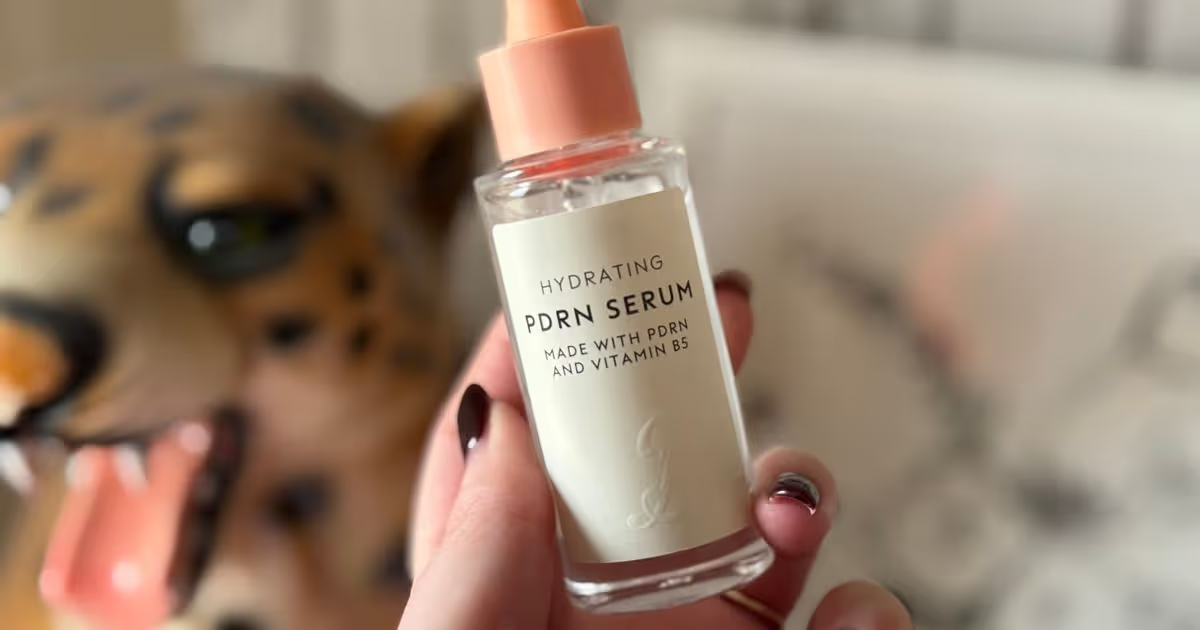
For anyone wanting improved hydration, glow and barrier resilience without irritation, a purse-friendly option is the PDRN Serum from Boots, priced at £8. Lightweight and non-sticky, it layers well under SPF and makeup, making it an easy entry point into recovery-first skincare.
2. Pair PDRN with retinoids to reduce irritation
Retinol remains a gold-standard active in skincare, having grown in popularity in recent years, but it can cause irritation for some users, particularly beginners, those with sensitive skin, or during the adjustment phase when upping the strength.
For retinol users, Dr Ewa Kania– an aesthetic doctor and regenerative skin specialist -recommends the Anua PDRN Hyaluronic Acid Capsule 100 Serum, calling it a ‘great affordable option for sensitive or retinoid-averse skin’. Combining PDRN with hyaluronic acid, it delivers hydration while supporting barrier repair, which is particularly helpful if your skin feels sensitised from retinol use.
Advertisement
3. Use PDRN post-procedure or after over-exfoliation
Because PDRN was originally developed for wound healing, it fits naturally into post-procedure routines. Consultant Dermatologist Dr Aiza Jamil added: “It acts as a regenerative ingredient that interacts with cellular mechanisms involved in repair and homeostasis. It was originally used in aesthetic and medical dermatology for wound healing, but is now formulated into topical products like serums, creams, ampoules and toners.”
Said to be ‘excellent for post-procedure repair and barrier support’, the Dr Reju-All Advanced PDRN Rejuvenating Cream,is £32.89 at Superdrug. Often sold out at Korean pharmacies, according to Glam Touch, it’s designed for oily, dry, and combination skin types and helps the skin recover from daily environmental stress while restoring hydration, glow, and firmness overnight.
4. Choose PDRN for hydration and ‘glass skin’ glow
On TikTok, PDRN has gained traction under the nickname “salmon DNA skincare.” The hashtag #PDRN already has over 194K posts, while #GlassSkin has surpassed 1.3 million. Searches for K-beauty on TikTok Shop are up 125% in the last six months of 2025, with #kbeauty now the third most-used beauty hashtag in the UK.
A viral favourite is the Medicube PDRN Pink Peptide Serum, stocked at Boots. It combines PDRN with peptides for a plumper, more radiant look over time. One shopper commenting: “Amazing! This serum has helped my dry skin so so much! I had one stubborn patch around my nose that no moisturiser has helped, but one week of Salmon PDRN and it’s clearing up.”
However, another shopper claimed it caused them to break out in blemishes, which goes to show that not every skincare product or ingredient will suit everyone. It’s also worth remembering to complete a patch test when introducing any new product or ingredient into your skincare routine, especially as, in some rare cases, those with fish allergies may not find the product suitable for them.
5. Opt for vegan alternatives if you prefer non-animal formulas
Most PDRN is derived from salmon DNA, which may not be suitable for everyone, either for moral reasons, or for health reasons – such as potential allergies. As such, fermentation-based and vegan alternatives are emerging, such as the Yepoda The Skinject Effect.
Dr Kania said it is made with ’exosomes and microspicule delivery, appealing to ethically minded clients and next-gen regenerative positioning’. With its gentle yet powerful formula, it refines skin over time, stimulates collagen production, and supports the skin’s natural barrier.
She was last seen near the Old Anchor pub in Sutton
Police are searching for a woman who has not been seen in five days. Carol Hillier, 64, from Sandy in Bedfordshire, was last seen near Sutton in East Cambridgeshire.
Advertisement
She was spotted at around 11.20am on Sunday, February 15, near the Old Anchor pub, off Bury Lane, Sutton, near Ely. She has been described as white, 5’4, of medium build, with mousy grey, chin-length hair, and grey/blue eyes.
Carol, who wears glasses, was last seen wearing a dark plum coloured Rohan coat, pale blue beanie hat, dark walking trousers, and was carrying a small rucksack. Officers are currently searching in water and green areas near to where her silver Mercedes E Class estate was found parked opposite the pub.
Anyone who has seen Carol on or since Sunday or has footage of her should come forward to the police. You can report anything through the force website quoting the reference number 233 of 15 February.
Detective Inspector Alice Draper said: “I’m appealing to anyone who may have seen Carol since on or since Sunday to get in touch with us so we can target our searches.
Advertisement
“We still hold out hope of finding Carol alive, but specialist officers are searching areas of water in the vicinity where her car was found.
“If anyone has seen her or has dashcam footage, it would really help us to narrow down our search area.”
To get more breaking news and top stories delivered directly to your phone, join our new WhatsApp community. Click this link to receive your daily dose of CambridgeshireLive content.
We also treat our community members to special offers, promotions, and adverts from us and our partners. If you don’t like our community, you can check out any time you like. If you’re curious, you can read our Privacy Notice.
Diana Henry is the Telegraph’s much-loved cookery writer. She shares recipes each week, for everything from speedy family dinners to special menus that friends will remember for months. She is also a regular broadcaster on BBC Radio 4, and her journalism and recipe books, including Simple and How to Eat a Peach, are multi-award-winning. A mother of two sons, Diana can satisfy even the fussiest of eaters.
Over 95% of the world’s adult population is infected with Epstein–Barr virus (EBV), but most people never realise it. The infection often causes few symptoms and then stays in the body for life.
But for a small minority, EBV is linked to serious disease. For more than 50 years, EBV has been recognised as the first virus shown to contribute to certain cancers, and is therefore classified as a group one carcinogen.
More recently, strong evidence suggests it plays a key role in the development of multiple sclerosis (MS), a disease in which the immune system attacks the brain and spinal cord. MS affects millions of people worldwide and is often diagnosed in early adulthood, with symptoms that can vary unpredictably over time.
I was part of a research team who explored how EBV infection may help initiate MS. Our findings suggest the disease could potentially be targeted by blocking the brain inflammation associated with EBV infection.
Advertisement
Using lab mice with a human-like immune system, we found that after infection, B cells (immune cells that produce antibodies and help coordinate immune responses) became unusually active and travelled into the brain. Here, they released signals that attracted T cells, which recognise and destroy infected or abnormal cells.
Together, these immune cells caused inflammation and early brain damage similar to what is believed to happen in the early stages of MS. When we used a commonly prescribed drug to remove the B cells, there were far fewer T cells in the brain and much less immune activation.
This suggests EBV may help set MS in motion by altering how B cells behave. These changed cells can enter the brain and drive inflammation, drawing in T cells that intensify the immune response. Targeting these B cells early could help prevent or slow the development of MS.
MS affects the central nervous system, the brain and spinal cord. In people with MS, the immune system damages myelin, the protective coating around nerve fibres that helps electrical signals travel quickly. When it is stripped away, messages between the brain and body slow down or fail.
Over time, repeated damage can also affect the nerves themselves, leading to symptoms such as problems with movement, vision, balance and fatigue.
Advertisement
MS is an autoimmune disease. This means the immune system mistakenly attacks the body’s own tissues. One leading explanation for how EBV fits into this process is a form of mistaken identity, where immune responses first directed at the virus begin to resemble those aimed at myelin by people who have MS.
Why doesn’t everyone develop MS?
If EBV infection is so common, why doesn’t everyone develop MS? Other factors shape risk, including genetics, sex, smoking, obesity and low vitamin D levels. EBV appears to be an important part of the puzzle, but it is unlikely to act alone.
EBV infects B cells, the immune cells that produce antibodies, and can remain dormant inside them for life. But in some situations, the virus can reactivate. EBV-infected cells have been linked to certain cancers when immune control fails.
Advertisement
New research is beginning to reveal what this looks like inside the nervous system. A recent study found unusually high numbers of EBV-targeting immune cells in the cerebrospinal fluid, which surrounds the brain and spinal cord, of people with MS. Many were T cells primed to recognise the virus, suggesting the immune system may be responding to EBV activity within the central nervous system.
When immune cells gather there, they can spark inflammation. This allows more immune cells to enter the brain and spinal cord and cause local damage, forming patches known as lesions that underpin many symptoms of MS.
Treatments and the role of B cells
Current treatments mostly work by calming the immune system rather than targeting a single cause. Many of these medicines are immunosuppressants, which can increase infection risk but also reduce relapses and slow disease progression.
One of the most effective MS treatments targets B cells using monoclonal antibody drugs, laboratory-made proteins designed to recognise specific immune cells. Examples include ocrelizumab, rituximab and ofatumumab. These therapies reduce B cell numbers and may also lower the pool of EBV-infected cells.
Advertisement
These treatments have improved outcomes for many patients. But by dampening part of the immune system, they can also increase infection risk and reduce vaccine responses.
This raises an obvious question: could preventing EBV infection stop MS developing in the first place? And if so, why not prevent EBV infection with a vaccine?
Developing EBV vaccines has proved difficult, partly because the virus hides inside cells and establishes lifelong infection. Researchers are exploring this area, and none are currently approved. It remains unclear whether preventing EBV infection would reduce MS risk.
The link between EBV and MS is now one of the most active areas in MS research, and is reshaping how prevention and treatment are being explored.
Advertisement
Rather than viewing MS solely as an immune system disorder, researchers are increasingly investigating whether stopping EBV infection, or targeting cells that harbour the virus, could reduce a person’s risk of developing the disease or slow its progression.
This shift is driving new strategies, including therapies aimed at EBV-infected B cells, and efforts to design vaccines or immune-based treatments that interrupt the biological processes connecting the virus to MS. If successful, these approaches could move MS care beyond symptom control, towards prevention or earlier disease-modifying interventions.
The Home Secretary has agreed for venues to stay open until 1am for most knockout games and until 2am for 10pm kick-offs during the 2026 FIFA World Cup.
The extension would apply if any of the home nations reach the knockout stage of the tournament, which will be hosted in the United States, Canada, and Mexico.
Pubs to stay open until 2am for knockouts of World Cup 2026
Home Secretary Shabana Mahmood said: “With later kick-offs at this year’s World Cup, we don’t want pubs to blow the final whistle before the winning goal.
“So we’re showing red tape the red card and taking pub hours to extra time so fans can get another round in without missing a single kick.
Advertisement
“We’re toasting our boys at the World Cup and our locals this summer.
“Fans won’t need to go home, before football’s come home.”
The time difference with North America means some matches could finish late into the night, and the Government has agreed to extend licensing hours until 1am for most knockout games and 2am for matches with a 10pm kick-off.
Pubs will also be able to apply for a temporary licence for any very late kick-offs that could finish beyond 2am, given the time difference.
Advertisement
Earlier plans reportedly considered restricting late openings only if a home nation reached the quarter-finals, but she has agreed to extend opening hours until 1am for most knockout games and 2am for those kicking off at 10pm.
The British Beer and Pub Association told The Sun that the move is “a win for pubs, jobs and community spirit.”
England and Scotland World Cup Group stage matches and times
England and Scotland have already qualified for the tournament, which begins on June 11, while either Wales or Northern Ireland could still secure a place through the play-offs.
Advertisement
England are in Group L with Croatia, Ghana and Panama, with Scotland in Group C, alongside Brazil, Morocco and Haiti.
Recommended reading:
England’s group stage fixtures and UK kick-off times are as follows:
England vs Croatia – June 17, 9pm UK time, Dallas
England vs Ghana – June 23, 9pm UK time, Boston
Panama vs England – June 27, 10pm UK time, New York-New Jersey
Scotland’s group stage fixtures and UK kick-off times are as follows:
Haiti vs Scotland – June 14, 2am UK time, Boston
Scotland vs Morocco – June 19, 11pm UK time, Boston
Scotland vs Brazil – June 24, 11pm UK time, Miami
Who do you think will win the World Cup this year? Let us know in the comments.
For a club rooted in non-league football, Macclesfield’s recent FA Cup run didn’t just connect those on the pitch, but a whole community
When Macclesfield were drawn against Crystal Palace, few outside the town gave them a chance. Palace were not only an established Premier League side, they were the holders of the FA Cup, arriving with international players, a global fanbase and the financial muscle that separates the top flight from the rest of the pyramid. Macclesfield meanwhile sit in the middle of the seventh tier of the English football pyramid.
What unfolded was one of those rare FA Cup evenings that makes the Cup the most exciting in the world. Macclesfield beat the team sitting 116 places above them, and were rewarded with another home game against another multimillion pound Premier league side in Brentford, who ended their cup run on Monday.
Advertisement
The impact on the town cannot be measured purely in gate receipts or bar takings, though both surged. Local pubs were packed, shop windows filled with blue and children who had drifted towards superclubs suddenly had heroes on their doorstep. For a place that has known economic uncertainty and the collapse of its former club, the run brought new life to the community.
Positive News sent photographer Orlando Gili to meet the locals who serve the community, the volunteers who paint the stands, the staff who juggle day jobs with match day duties, and the players who train at night because they have work in the morning.
“It’s the biggest deal we’ve had here for a long time,” says Nick Carter, a Macclesfield butcher who used to sell pies to the club. The cup run is “great promotion of the town and great for the younger sport enthusiast,” he says.
Advertisement
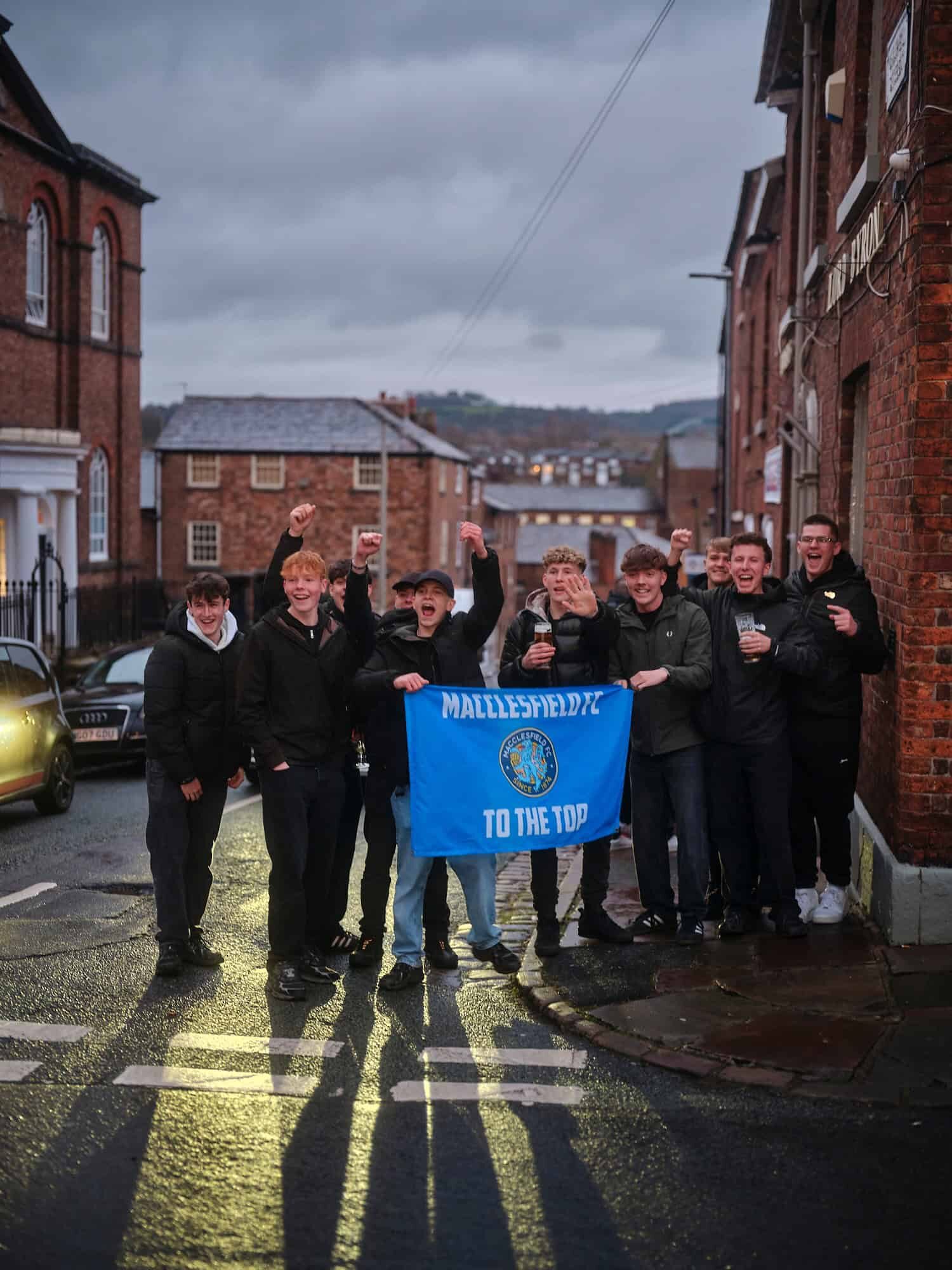
A group of local supporters congregate outside a fan-favourite pub, the Lord Byron. They’re in an excitable mood as they meet up before heading up to the stadium to watch the 4th round FA Cup tie against Brentford.
Solutions every Saturday Uplift your inbox with our weekly newsletter. Positive News editors select the week’s top stories of progress, bringing you the essential briefing about what’s going right. Sign up
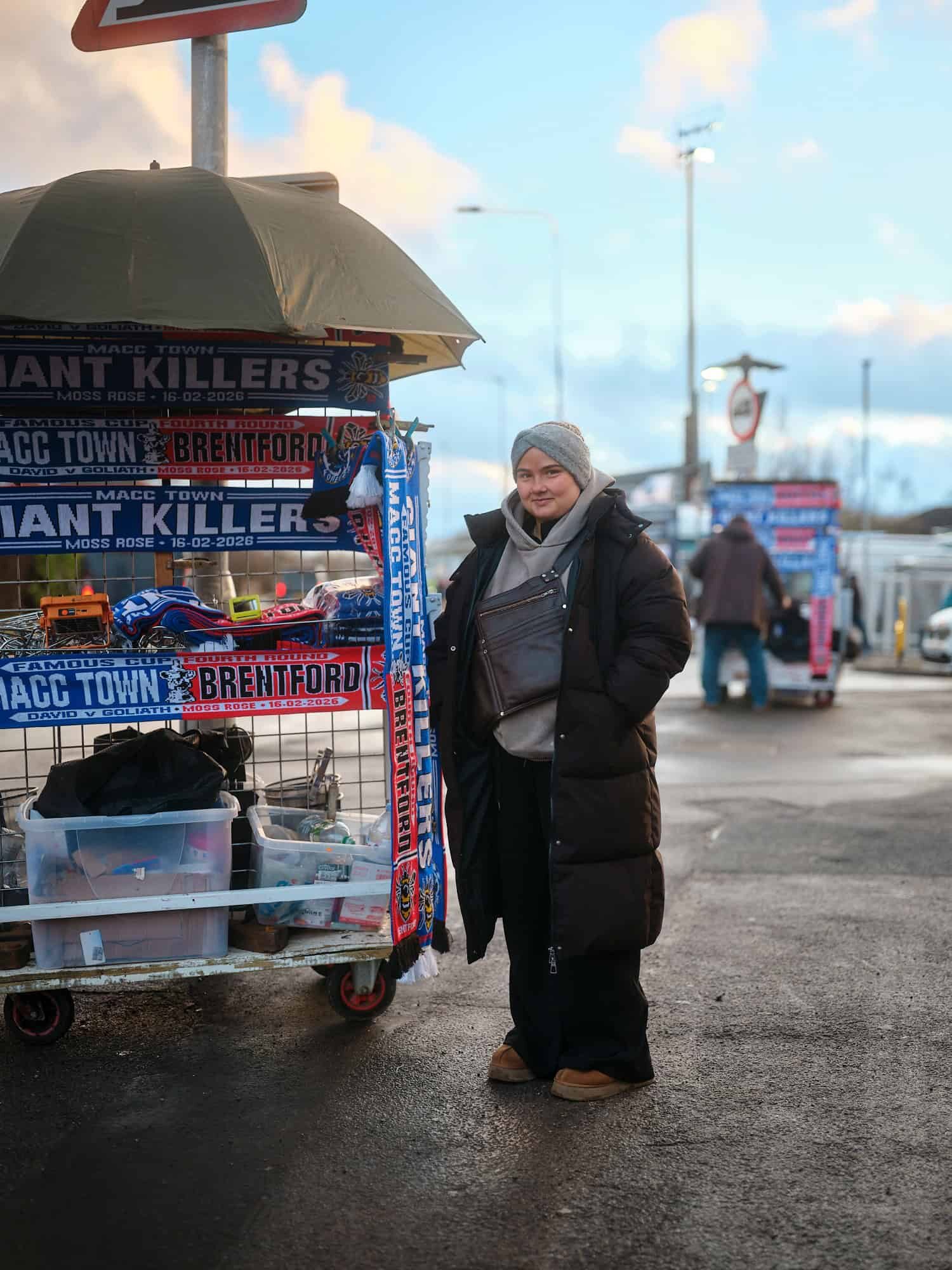
A merchandise seller has arrived to sell commemorative scarfs and other items, outside Macclesfield’s stadium before kick off.
Advertisement
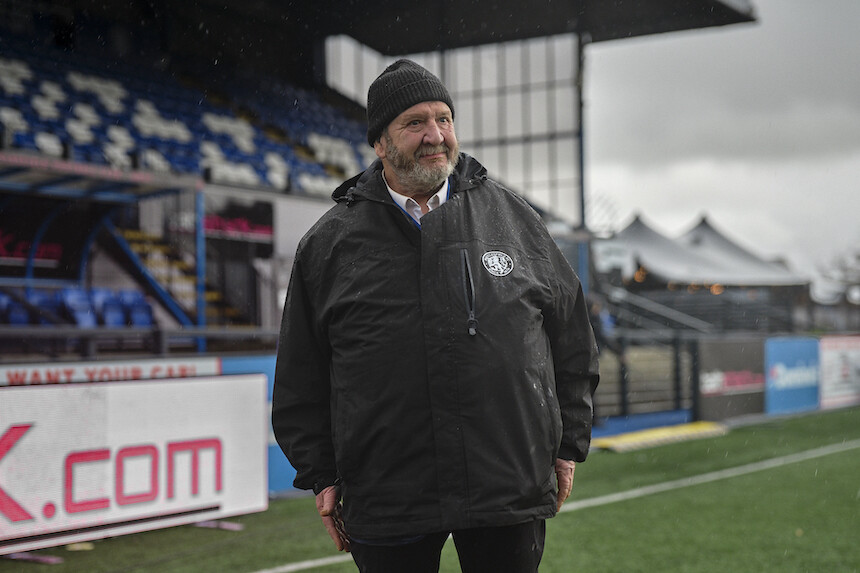
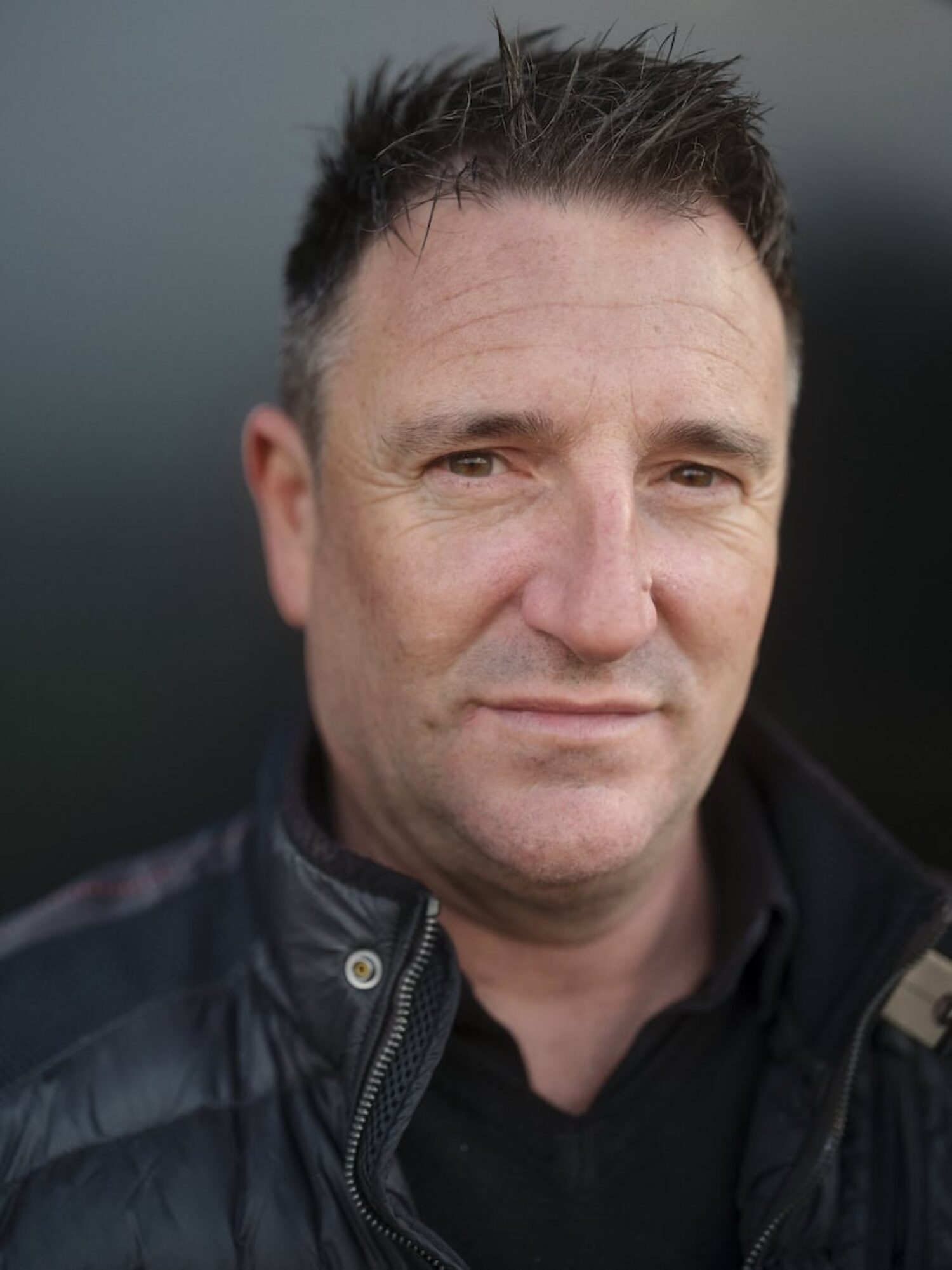
“It’s a big thing. It’s part of your life when you work here for as long as I have,” says Groundsman Jim, who has worked as the groundsman for over four decades. “Like most of the people that work here, I work here because I am a fan.”
“When I was 7 years old, I was a paperboy at the shop on top of the hill on Coronation Street. A former owner of the shop was the director of the club and he used let me go to the games for free.”
Advertisement
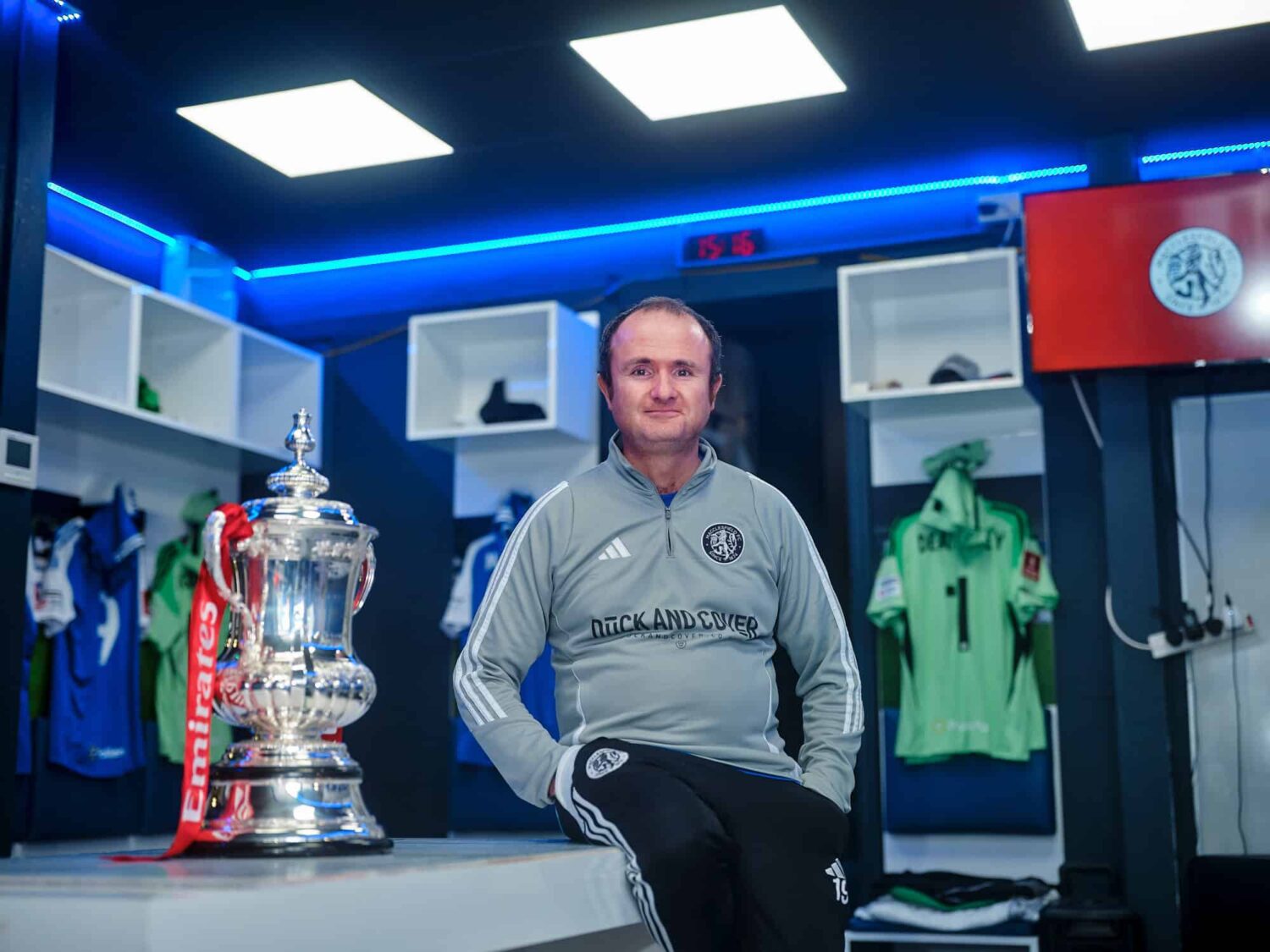
John Rooney, the manager of Macclesfield FC, sits nervously in the dressing room before the game. His foot tapping, hands slightly shaking. A few moments earlier his young children kids had been posing in the changing room with the FA Cup. The former midfielder, and brother of England international Wayne Rooney, started his footballing at Macclesfield as a youth aged just 12 in 2002, remaining with the club until a move to the US in 2011.
Rob Smethurst, is the owner and Chairman of Macclesfield FC. The businessman had been in the midst of an alcohol addiction when he saw the club’s Moss Rose ground available on the property website Rightmove. He bought the ground and became owner of the club in 2020 and now more than five years on has transformed not only his own life but that of many of the players, volunteers and fans in the local community.
Advertisement
“It’s huge deal for the town, for the local businesses in general – the pie shops, the chippies,” says Ged the kitman. “The fans deserve this because of what they’ll been through. In a town as small as Macclesfield this coming together is imperative, it sums up the state of the town.”
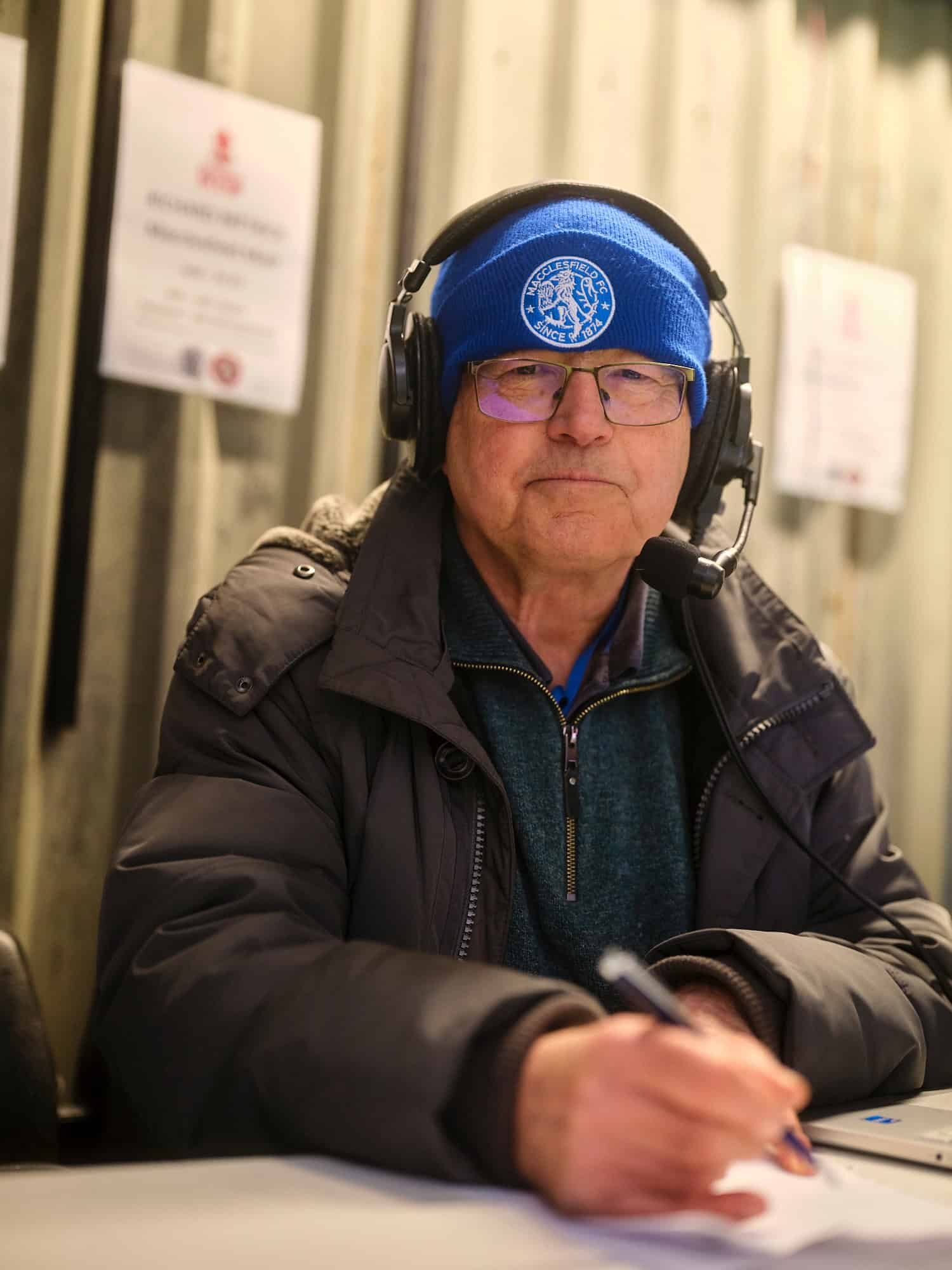
“We started in the 9th tier of the football pyramid – in the North West Counties League Premiere,” says club commentator Richard. “We did the commentary in a cow field with a bar between us and the pitch. We brought our own power, table and light and umbrella. And here we are today,” he says.
Advertisement
Part of the team that defeated Crystal Palace in the previous round, Macclesfield striker Tom Clare watches on during the second half of the game against Brentford. Clare is no stranger to the limelight, he was granted permission by Macclesfield to leave mid-season to appear on the TV show Love Island in 2023.
Macclesfield defender Sam Heathcote, says hello to friends and family at half time, outside the changing rooms beside the London Road Stand.
Advertisement
A tense mood as the match remains 0-0 during the first half at the Moss Rose stadium.
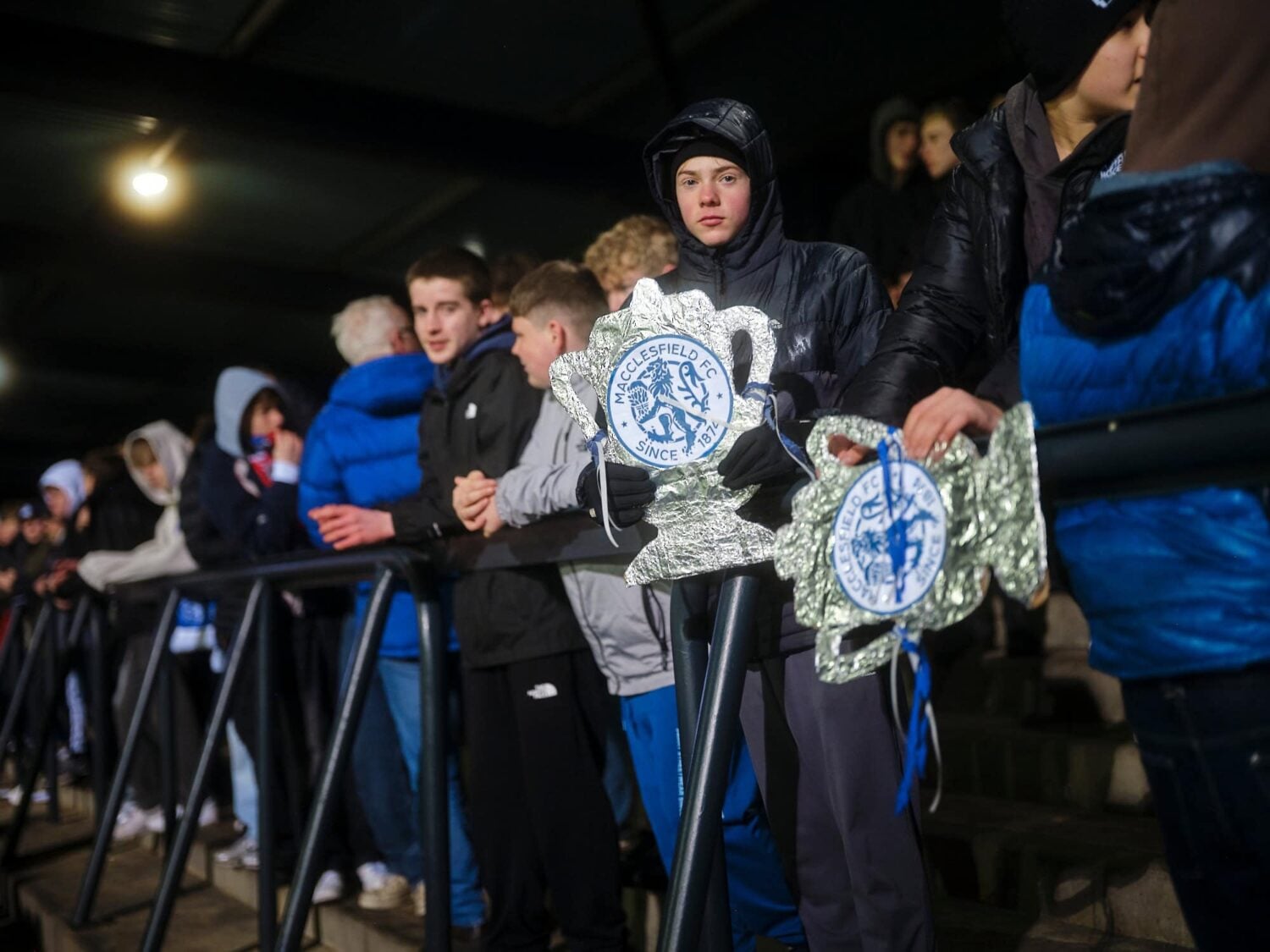
A cluster of young Macclesfield fans gather close together from behind the goal in the WRS Star Lane End.
Advertisement
A Macclesfield fan with a homemade FA Cup made out kitchen foil. He stands at the WRS Star Lane End, in a state of nervous excitement just before the game begins.
Photography: Orlando Gili
Be part of the solution
At Positive News, we’re not chasing clicks or profits for media moguls – we’re here to serve you and have a positive social impact. We can’t do this unless enough people like you choose to support our journalism.
Advertisement
Give once from just £1, or join 1,800+ others who contribute an average of £3 or more per month. Together, we can build a healthier form of media – one that focuses on solutions, progress and possibilities, and empowers people to create positive change.
The article below is an excerpt from Simon Calder’s travel newsletter. To get the latest from Simon delivered straight to your inbox, simply enter your email address in the box above.
Isolation is not always splendid. Five years ago this week I awoke in the Heathrow Novotel, one of the strip of hotels north of the runways. I had checked in for the final night before this unremarkable property became a quarantine hotel – complete with security guards to ensure none of the guests made a break for it. I checked out on 15 February shortly before the first involuntary inmates from “red list” nations arrived. They paid £1,750 for an all-inclusive package: 10 nights’ accommodation, three meals a day and two Covid tests.
For almost the rest of that miserable pandemic year, travellers arriving from countries regarded as high risk were incarcerated. The system unravelled shortly before Christmas 2021. “I’ve had nine walk out on me so far,” a guard at the Gatwick Sofitel told me in mid-December. “They face a £10,000 fine but the police aren’t interested.” MPs on the Transport Select Committee later found “no evidence” that hotel quarantine provided the slightest benefit compared with self-isolation at home. What a difference five years makes. Yesterday Accor, parent company of Novotel, reported that revenue per available room – RevPAR, the key metric in the hotel industry – rose 4.2 per cent to €76 (£66). People seem much happier when they are free to travel where they wish.
Anticipation is a much more positive emotion than hindsight. I look forward to testing out the new visa-free access to China on a trip to Chengdu in the west of the People’s Republic next month – and hope the key local attraction, officially known as Siguniangshan Scenic Spot, is easier to enjoy than it is to pronounce.
Advertisement
The decision by Beijing to open up to British (and Canadian) passport holders will be transformative. Now that the barricade of red tape has been dismantled, organised cultural tours will continue in much the same way – but China will see a surge in backpackers, keen to explore a low-cost country that until this week was too tricky and expensive to consider. No hidden extras, either: on my last trip to the Chinese resort city of Qingdao, the Sea View Garden Hotel instructed guests: “Your satisfaction is the greatest praise to us, please don’t give tips to our staff.” I recall no sign like that along Isolation Row at Heathrow.
As China eases its rules for British visitors, the red tape for travellers to the UK is getting ever more tangled. From next Wednesday, 25 February, the electronic travel authorisation will be mandatory for all travellers arriving in the United Kingdom except for British and Irish citizens. For UK dual nationals who only have a passport issued by another country, this presents a problem. They are not allowed to apply for an ETA.
Up to now, the government has insisted that only a valid British passport or a “Certificate of Entitlement” costing £589 will allow a dual citizen to be admitted. The change has caused consternation for many people who happen to have UK citizenship but whose lives – and passports – are located elsewhere. They are scrabbling to acquire the required documentation. But this morning it has emerged that airlines can accept a valid foreign passport plus a UK passport that was issued anything up to 37 years ago in lieu of a current British passport.
I advise all travellers to observe all border regulations at all times. But I suspect that some of the 1.2 million UK dual nationals estimated to be resident abroad will still travel on ETAs, even though they are not supposed to apply for them. They will bet that airlines and ferry firms – the organisations with the hapless task of enforcing the new rules – will be content with proof that the passenger possesses a valid passport and apparently legitimate ETA. In a time-pressured pre-departure environment, if the computer says “yes” when presented with the traveller’s foreign passport, the transport operators will not diligently go on to investigate whether that person has British citizenship by birth or descent.
Advertisement
I cannot envisage any passenger being told: “You can’t enter the UK because you are British.” A few transgressors may be identified on arrival when a UK Border Force officer chooses to examine their passport. But most people who decide to infringe the rules will probably get away with it by whizzing through the eGates.
Sign up for Simon’s newsletter
Simon Calder’s exclusive twice-weekly travel newsletter for The Independent is packed with insight, inspiration and trusted advice to help you explore better.
The newsletter is your guide to planning smarter journeys: from finding the best low-impact ways to get around to choosing destinations that benefit local communities.
Advertisement
Each Friday and Sunday, you’ll receive a curated digest of the biggest developments in travel, along with unbeatable deals, destination ideas, and my expert tips on where, when and how to go.
To sign up, simply enter your email address in the box at the top of this article.