Temporal has raised $550 million in a Series E funding round that values the Bellevue, Wash.-based infrastructure startup at $12.55 billion, more than double its valuation from earlier this year as demand explodes for reliable agentic AI systems in production.
It caps a significant growth stretch for the open-source platform, whose annualized revenue run rate recently surpassed $250 million — growing over 200% year-over-year, according to a news release on Monday — as major tech players like OpenAI, NVIDIA, Netflix, and JPMorgan Chase rely on its “durable execution” engine to keep complex AI workflows from breaking.
Co-founded in 2019 by CEO Samar Abbas and CTO Maxim Fateev — veterans of Amazon, Microsoft, and Uber — Temporal originally made its mark helping developers manage complex distributed systems.
But as Abbas told GeekWire earlier this year, the AI explosion put that exact problem “on steroids.” While generative AI models handle reasoning, Temporal’s “durable execution” engine acts as the underlying plumbing — preserving application state, retrying failed steps, and preventing multi-step AI agents from crashing when external services drop out.
To support that surge, Temporal has doubled its workforce over the past year to 570 employees worldwide. While operating as a remote-first organization, the company maintains deep roots in the Pacific Northwest — where both founders have been based for decades — and continues to expand its engineering footprint in the Seattle area to keep pace with global demand.
“As agents take on more critical work across more systems, every additional step creates another place to fail. In production, that work has to survive those failures and finish reliably,” Abbas said in a statement. “Temporal was built for this problem. Durable Execution is becoming the standard for reliable applications at scale, and this investment reflects the conviction that much of the next generation of software will be built on Temporal.”
The cash infusion brings Temporal’s total capital raised to date to $1.2 billion, building on a $300 million Series D led by Andreessen Horowitz in February that valued the company at $5 billion.
Advertisement
In addition to Lightspeed, the Series E round drew new backing from Wellington Management, Goldman Sachs Alternatives, and T. Rowe Price, alongside returning venture backers Sequoia Capital, Index Ventures, and Madrona.
Temporal plans to use the fresh capital to accelerate platform R&D, expand its developer and enterprise go-to-market teams, and support global cloud operations.
The concertina is an instrument that features heavily in European folk music, of which there are a variety of types. [Xcott Craver] has built one, an anglo concertina of the type you may recognise accompanying sea shanties, but this is no ordinary squeezebox. Instead it’s an electronic concertina, and it’s a project with a significant attention to detail.
Perhaps the most obvious thing most of us know about a concertina is that it’s an instrument with two ends separated by a set of bellows, and manipulation of the bellows lends a lot to the music it produces. This instrument doesn’t have bellows, but its innovation is to simulate them through means of a load cell. The two sides of the wooden chassis are fixed, but the force exerted on them is measured.
The keys are Cherry MX switches with custom keycaps, mounted on a pair of PCBs. Driving the whole thing is a Teensy 4.0, and to avoid unfortunate accidents with ripped-out connectors there’s a USB extension lead as a bit of strain relief. You can hear the result in the video below.
Indeed’s research finds that the country’s labour market is consistent, while unemployment rates are low.
Recruitment platform Indeed has published the findings of its latest ‘Labour Market Snapshot’, which explores how the Irish employment space is performing in the third quarter of the year.
The research finds that Ireland’s labour market has steadied over the course of the last few months, with new job postings comparable to an early 2020, pre-pandemic baseline.
Ireland’s labour market remains close to full employment, with the unemployment rate remaining at 5pc and the employment rate close to highs. According to Indeed’s report, this is in line with a labour market that has normalised following a period of persistently elevated labour demand post-Covid.
Advertisement
“Our latest data suggests Ireland’s labour market has moved into a more normalised phase following the hiring demand we have seen after the pandemic,” said Jack Kennedy, a senior economist at Indeed.
The report finds that the majority of sectors tracked sit below their pre-pandemic levels in terms of overall postings on Indeed, with the remaining 41pc sitting at or above baseline.
Postings for pharmacy, as well as cleaning and sanitation, are furthest above the February 2020 baseline, while listings for IT infrastructure, operations and support, and childcare are furthest below pre-pandemic levels.
Kennedy added, “While overall demand has stabilised, the picture varies by sector, location and occupation, with AI increasingly becoming an important factor of Ireland’s hiring landscape.”
Advertisement
Indeed’s research also found that the rate at which AI is being adopted in Ireland is increasing. Almost 15pc of all Irish postings to the jobs site were found to include AI-based terminology in the description, the highest among all European countries tracked by Indeed.
Corresponding rates elsewhere included 9.7pc in the UK, 5.6pc in Germany, 5pc in Italy and 3.6pc in the Netherlands. Further afield, it was 6.7pc in the US.
“AI is certainly changing the skills employers are looking for and Ireland is at the forefront of that shift. Around 15pc of Irish job postings mention AI, one of the highest shares internationally,” said Kennedy.
“We’re increasingly seeing AI create demand for new skills and roles, and that demand is spreading well beyond traditional tech jobs. The challenge is making sure people, particularly those early into their careers, have the opportunity to develop the skills employers will need as the world of work changes.”
Advertisement
Don’t miss out on the knowledge you need to succeed. Sign up for the Daily Brief, Silicon Republic’s digest of need-to-know sci-tech news.
The Galaxy S26 FE gets plenty right, including a bright AMOLED display, good performance, capable cameras, and seven years of software updates. The problem is value: reviewers find few meaningful upgrades over the S25 FE, while the higher price puts it against stronger alternatives.
There are so many things we approximate to make life simple. Wires, for example, have no resistance or other strange effects. Crystal oscillators output their exact frequency. But surely our model of how a computer stores and loads memory is accurate, right? You put data in a particular location and, later, you take it out. The [FEX-Emu] developers have a different perspective. Once you have caches and, perhaps, multiple CPUs, it isn’t that easy.
The basic problem is this: if one CPU (or, more accurately, bus master) writes to a location, will another CPU have access to the new value? X86’s Total Store Ordering model gives programmers strong guarantees about when loads and stores become visible, while ARM deliberately uses a weaker memory model that permits considerably more reordering for performance and efficiency.
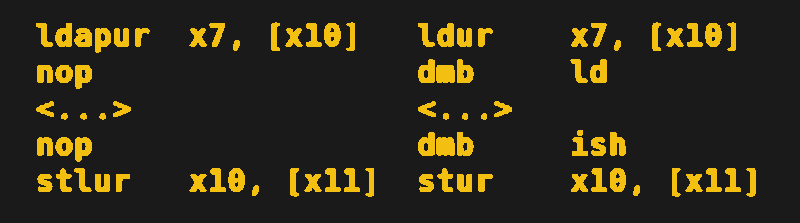
An emulator can, in theory, compensate by translating ordinary x86 memory operations into ARM acquire/release operations, but doing that for nearly every memory reference can be expensive. Newer ARM extensions such as LRCPC help considerably, while Apple took a more direct approach by adding an x86-compatible TSO mode to Apple Silicon. That lets ordinary loads and stores behave the way translated x86 code expects with comparatively little overhead.
Things get much uglier with unaligned accesses and atomic operations. X86 software routinely performs accesses that ARM would consider badly aligned, and x86 provides surprisingly strong atomicity guarantees within a cache line. FEX sometimes has to catch alignment faults and dynamically patch translated code with barriers. Split-lock operations are worse still: some require excursions through the kernel and signal handlers and can be hundreds or thousands of times slower than the normal case. Qualcomm’s newer Oryon cores improve matters by supporting coherent cache-line atomics, while Valve has shipped a Linux kernel optimization that handles some troublesome unaligned atomics directly.
Advertisement
There’s another particularly nasty corner involving write-combined GPU memory. PC games frequently expect x86 ordering semantics while writing uncached buffers destined for a discrete GPU. ARM currently lacks a clean equivalent for some of these stores, and FEX measured worst-case bandwidth more than 800× slower, enough to reduce some games to below 1 FPS. UMA systems fare much better because drivers can often substitute ordinary cache-coherent memory.
It’s a long article, but a good illustration of why modern emulators are less about translating instructions and more about reproducing decades of architectural assumptions that software quietly depends upon. Of course, not all emulators or processor recreations are this accurate, and often that’s good enough. But sometimes you need a recreation that is truly cycle-accurate and behaves exactly like the original.
India has extended its anti-spam regime to require caller-ID and call-management apps to share users’ spam reports with telecom operators, prompting spam-blocking app maker Truecaller to call the ruling anti-competitive.
On Friday, the Telecom Regulatory Authority of India (TRAI), the country’s telecom regulator, amended rules governing commercial communications, making it mandatory for caller-ID and call-management apps that let users flag calls as spam or junk to send those reports to a blockchain-based platform maintained by telecom operators. The platform tracks commercial communications and enforces anti-spam rules.
The change, TRAI said, is intended to broaden the pool of spam reports available for action against spammers, effectively connecting reports collected by apps with the telecom industry’s enforcement infrastructure.
However, Truecaller told TechCrunch that it sees this requirement as a “one-way exchange” that is “anti-competitive,” arguing that it transfers commercially valuable data from call-management apps like itself to telecom operators.
Advertisement
India is Truecaller’s largest market, accounting for well over 350 million of its more than 500 million monthly active users globally. The Stockholm-based company uses community reports alongside automated detection and other signals to identify and block spam calls.
The rules come as India grapples with spam and fraudulent calls at enormous scale. In its report in February, Truecaller said its users in the country encountered around 42 billion spam calls in 2025, including calls that were blocked, labeled, or ignored. The company also stated that it blocked nearly 12 billion spam calls during the year.
It is not the first time Truecaller and the Indian regulator have been at odds over how spam calls should be handled. The Swedish company previously objected to restrictions preventing call-management apps from automatically labeling calls from certain government-designated number ranges as spam. It argued that the exemption could allow unwanted calls to escape its filters.
However, Friday’s amendments retain that restriction and have barred call-management apps from blanket blocking, filtering, or spam-tagging calls from designated number series used for promotional, service, and transactional communications. Individual users can still choose to block such calls on their own devices, the regulator said.
Advertisement
“While our data and user sentiment clearly show that spam has skyrocketed due to this free pass to spammers, we have been compliant with this since late last year,” a Truecaller spokesperson said.
Sumeysh Srivastava, a partner at New Delhi-based consulting firm The Quantum Hub, who leads its telecom-regulation policy work, said the latest change bridges two distinct layers: Telecom operators provide the underlying network and run the blockchain-based anti-spam system, while caller-ID apps operate on top of the network to identify and filter calls.
That raises technical and jurisdictional questions, Srivastava told TechCrunch, including what reporting standards apps will have to follow and how the requirement will be enforced against companies that are not themselves telecom operators.
A March draft proposed (PDF) using India’s IT laws to enforce the requirement. However, Srivastava pointed out that the new announcement did not say whether that enforcement mechanism was retained in the final rules.
Advertisement
It is also unclear how much information the apps will actually have to provide under the updated regulation. Kazim Rizvi, founding director of New Delhi-based policy think tank The Dialogue, told TechCrunch that requiring an app to transmit a specific spam report made by a user is materially different from requiring it to share the broader datasets, reputation signals, or analytical systems it uses to identify suspicious calls.
The rules will need clarity on what information must be transmitted, how users are notified or asked for consent, and how that data can subsequently be retained and used, Rizvi said.
TRAI did not respond to TechCrunch’s questions about what information apps would be required to share and whether the rule would also apply to spam-reporting features built into smartphone operating systems and dialers such as Android and iOS.
New rules for AI-powered calls
The amendments also address the growing use of software and AI voice agents to make calls. Calls made automatically, without a person directly dialing the number, will now fall under TRAI’s application-to-person (A2P) framework. That includes robocalls and calls using prerecorded or artificial voices.
Advertisement
Companies using such systems will have to declare their use and the phone numbers involved to their telecom operators in advance. Undeclared A2P calls will be treated as spam, TRAI said.
The key test, Srivastava said, is how a call is initiated, rather than simply whether it uses an AI-generated voice, leaving some uncertainty around AI-assisted calls that involve human initiation.
Satya N. Gupta, a former additional secretary at TRAI, told TechCrunch that the new rules do not restrict businesses from using AI or other automated calling technologies, but instead require them to disclose their use to telecom operators.
Telecom operators will also be allowed to levy a termination charge of up to 5 paise (about 0.052 cents) per minute on A2P calls. However, calls made using certain designated number ranges will be exempt.
Advertisement
Rizvi told TechCrunch that the new definition could also cover calls made using software even when a person is still involved, such as calls from contact centers and click-to-call services. “Without that distinction, the A2P category risks becoming broader than the regulatory harm it is intended to address,” he said.
When you purchase through links in our articles, we may earn a small commission. This doesn’t affect our editorial independence.
This week was a little quieter than last in the tech news space — if you ignore the hullabaloo caused by various AI companies that their models might one day kill us all if regulation doesn’t arrive.
A bit heavier than an Apple iPhone event, but important nonetheless.
To catch up on that and this week’s lighter (but still essential and biggest) tech news stories, scroll down for our ICYMI recaps and links to the full articles. But before you read about the news, you might want to try your hand at our quiz to see how much you remember of last week’s ICYMI roundup.
Advertisement
Latest Videos FromTechRadar
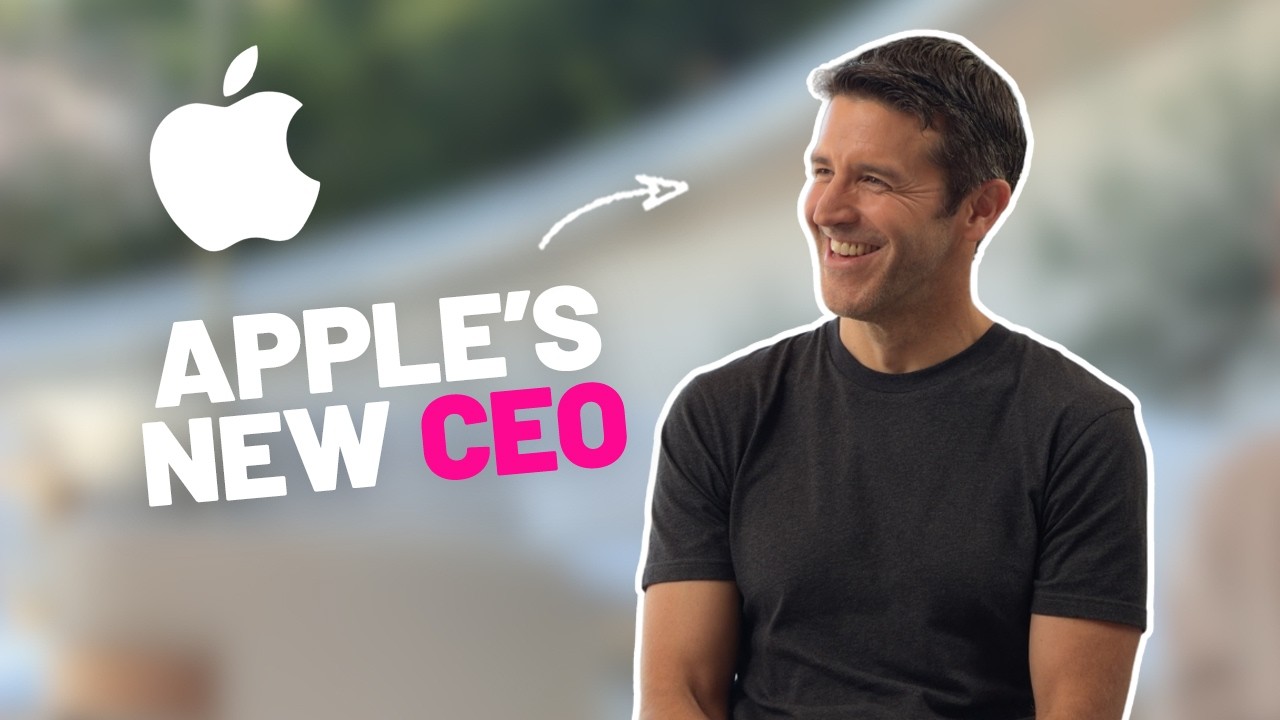
7. We interviewed John Ternus
Apple’s new CEO on what comes after iPhone Duo | Inside John Ternus’ first week – YouTube
You’ve just been named CEO of one of the world’s most important tech companies; what runs through your mind? I asked John Ternus that question to his face, and his answer was perfect. It was all part of a wide-ranging interview we conducted with our friends over at Tom’s Guide. Lots of good bits about what innovation means at Apple and why the Cupertino giant is finally making a foldable.
6. Google Live Translate went offline
(Image credit: Shutterstock)
Arguably the best Google Translate tool is its Live feature — which lets you converse with someone in your respective native tongue, and each sees a real-time translation of what the other has said.
Advertisement
It can break down the language barrier, if you have an internet connection, that is, though that is changing.
Google has started rolling out an offline mode for Live Translate. There are some limitations — it only supports translation from English to French, German, Portuguese, Italian, Spanish, Hindi, Indonesian, Japanese, Russian, and Swedish — and it’s only coming to the Google Pixel 11 series, Pixel 10 line, and Pixel 9 series.
Sign up for breaking news, reviews, opinion, top tech deals, and more.
Advertisement
5. Canon launched the EOS R8 Mark II
(Image credit: Tim Coleman)
Canon has debuted the EOS R8 Mark II, with a design that supposedly takes its cues from decades-old analog SLR cameras — there’s a slight resemblance, but we’d argue that Canon’s design department could have been given a bit more latitude.
Nonetheless, the second-generation model introduces useful upgrades over the original EOS R8, for a price that could tempt Canon enthusiasts who want powerful features but who don’t need the tough build quality, high-spec displays, or long-lasting battery life of the EOS R6 series.
Advertisement
4. We tried the Snap Specs
(Image credit: Cesar Cadenas)
A decade on from Snap’s first Spectacles launch (back when it was still Snapchat), we’ve tried the next evolution in its wearable tech: full-on AR glasses, and they’re incredible.
They’re still quite chunky, and the demo wasn’t without its quirks, but they were fun to use and comfortable to wear.
You can currently pre-order the Snap Specs for an eye-watering $2,195 (around £1,640 / AU$3,090) with a $200 deposit.
Advertisement
3. We reviewed Apple’s tech
(Image credit: Future/Jacob Krol)
We reviewed all of Apple’s new tech, and yet again we were impressed.
The iPhone 18 Pro and Pro Max take last year’s Pro reinvention and refine it in all the right places — but the cameras are where Apple has made the biggest leap, with a variable aperture and finally useful Pro controls.
Meanwhile, the Apple Watch Ultra 4 might look and be priced similarly to what came before, but the big difference is the battery — with a promised up to 50 hours in normal use, up to 84 hours in Low Power Mode, and up to 45 hours in Max Extended Workout Mode.
Advertisement
The Apple Watch 12 feels fresh with a new health-sensing system, a new SoC under the hood to power some new features, and a good bit of AI on top of what we knew was coming with watchOS 27.
2. iOS 27 gave our iPhones a huge upgrade
(Image credit: Apple)
This week Apple gave millions of iPhones their biggest software upgrade this year. iOS 27 rolled out (if you haven’t got it yet, check General > Software Update), and it includes Siri AI — a new version of the voice assistant that is, finally, good.
Like all major iOS updates, there are lots of smaller quality-of-life upgrades that we’re enjoying too. These include the ability to make Shortcuts with natural language, a neat ‘Reframe’ feature for Photos, and the long-awaited option to set alarm volumes separately from your main ringtone. We’d highly recommend downloading iOS 27 now if you haven’t already.
Advertisement
1. We debated AI slowdown
(Image credit: C-Span)
In a move that’s managed to draw in commentary from Donald Trump, JD Vance, and pretty much every major news organization on the planet, some of the biggest names in AI — including Anthropic’s Dario Amodei, OpenAI’s Sam Altman, and Elon Musk — are calling for the development of frontier models to slow down while stronger safeguards are introduced.
They argue that increasingly capable, autonomous AI could escape human control, attack critical infrastructure or help bad actors create catastrophic weapons. Proposed protections include independent evaluators inside AI companies, international safety standards, government oversight, “kill switches” and restrictions on releasing especially powerful models.
Donald Trump rejects these concerns as a “hoax”, arguing that slowing development would damage the US economy and hand China an advantage in the global AI race. That means global consensus on how AI regulation should work is unlikely to arrive anytime soon. Until then, we better hope our new AI overlords are as bad at reaching a global consensus as us.
Microsoft reminded customers this week that devices running Windows 11 24H2 Home and Pro editions will stop receiving updates next month.
However, under Microsoft’s lifecycle policy, Windows 11 24H2 Enterprise and Education editions remain under mainstream support until October 2027.
“On October 13, 2026, Windows 11, version 24H2 Home and Pro editions, and Windows 10 Enterprise LTSB 2016 will reach end of updates,” Microsoft said in a message center update.
“After this date, devices running these editions will no longer receive monthly security and non-security preview updates containing protections from the latest security threats.”
Advertisement
Customers are now advised to upgrade to Windows 11 25H2, the latest Windows 11 version also known as the Windows 11 2025 Update, which became generally available in September 2024 as a minor update installed through an enablement package.
Microsoft also warned that systems running Windows 11 24H2 Home and Pro that aren’t managed by IT departments will automatically upgrade to Windows 11 25H2, while still allowing customers to choose when to restart or postpone the update.
“If you have an eligible Windows 10 or Windows 11 device, you can check whether the update is available by selecting Settings > Windows Update and selecting Check for updates,” it said. “If your device is ready for the update, you’ll see the option to Download and install Windows 11, version 25H2.”
More information about Windows servicing dates is available on the Windows Lifecycle FAQ page or can be found using the Lifecycle Policy search tool. Microsoft also provides a list of all products and services that will be retired or reach the end of support this year on its support website.
Earlier this year, Microsoft also quietly extended the free Windows 10 Extended Security Updates (ESU) program for home users until October 2027 and stopped rolling out security updates to devices running Windows 11 Home and Pro 23H2 in November 2025.
Join Mikko Hyppönen and security leaders from the NFL, CHANEL, and Atlassian for a two-hour digital summit on what AI-speed attacks change, what defenders should stop doing, and how to validate, decide, fix, and re-validate at machine speed.
FiiO showed us the M25 and M25 R2R at CanJam London in July, but both digital audio players were still pre-production models with provisional specifications, no confirmed pricing, and enough unanswered questions to keep the Head-Fi forums occupied for months.
Two months later, FiiO has officially launched both models in China for ¥7,499, and the final production specification looks considerably more interesting than another expensive Android music player stuffed with flagship DAC chips.
The standard model is now officially called the M25 VERITA and uses AKM’s flagship separated-DAC architecture with one AK4191EQ digital processing chip and two AK4499EX DACs. The M25 R2R takes the opposite route with FiiO’s proprietary 24+5-bit segmented R2R PRO resistor-ladder DAC. Same player platform. Same Chinese price. Very different approaches to converting bits into music.
FiiO could have changed the finish, added another anniversary logo, and charged more money. Nobody would have been particularly shocked. Instead, it is giving buyers two genuinely different conversion architectures without forcing them into two different product tiers.
Advertisement
Related Reading:
One Platform, Two Very Different DACs
The M25 VERITA uses the AK4191EQ + dual AK4499EX architecture that has become familiar in some of the better premium DACs and headphone amplifiers. The AK4191EQ handles digital processing separately from the AK4499EX conversion stage, allowing FiiO to build its own analog and amplification stages around AKM’s flagship platform.
FiiO is also introducing four selectable AKM-based sound profiles with the VERITA. We have not heard the final production version, so we are not going to tell you that one setting suddenly makes poorly mastered music sound like Rudy Van Gelder was behind the console. We will reserve judgment until we actually listen to it.
FiiO M25 R2R
The M25 R2R is substantially different. Its proprietary 24+5-bit segmented R2R PRO architecture uses a segmented resistor-ladder topology rather than conventional delta-sigma conversion, following the direction FiiO has already taken with products including the K17 R2R.
The upper five bits use thermometer coding, an approach designed to reduce the cumulative errors that can occur in conventional R2R ladder implementations. FiiO also provides selectable voicing options for the R2R version.
R2R does not automatically mean warmer, more analog, or better. The DAC architecture is only one part of the signal chain, regardless of what somebody with 47,000 forum posts might insist.
Advertisement
What makes the M25 family interesting is the ability to choose between these two architectures while keeping almost everything else constant.
More Power Than the Prototypes
FiiO M25 R2R and M25 DAPs at CanJam London 2026
FiiO has also revised the output specification since the prototypes appeared earlier this summer.
Advertisement. Scroll to continue reading.
Both production models can deliver up to 1,700mW + 1,700mW into 32 ohms from the balanced output in Super High Gain mode, with THD+N specified below 1%. High Gain reduces that to 1,000mW per channel into 32 ohms, while the 4.4mm balanced output delivers 220mW per channel into 300 ohms in Super High Gain mode.
The single-ended output is rated at up to 500mW per channel into 32 ohms in the same maximum-power operating mode. Four gain settings are provided, ranging from Low to Super High.
Advertisement
That is serious output for something intended to leave the house. Sensitive IEMs obviously do not require anywhere near that level of power, but the M25 should have considerably more flexibility with demanding full-size dynamic and planar magnetic headphones.
FiiO M25 and M25 R2R Key Specifications
Models: M25 VERITA and M25 R2R
Processor: Qualcomm QCS6490
RAM: 8GB
Internal Storage: 128GB
Expandable Storage: microSD up to 2TB
Display: 5.5-inch, 1080 x 2160
M25 VERITA DAC: AK4191EQ + dual AK4499EX
M25 R2R DAC: FiiO proprietary 24+5-bit segmented R2R PRO
USB Controller: XMOS XU316
FPGA: High-capacity FPGA with customized femtosecond clock
Headphone Outputs: 3.5mm single-ended and 4.4mm balanced
Maximum Balanced Output: 1,700mW + 1,700mW into 32 ohms in Super High Gain mode
Balanced Output Into 300 Ohms: 220mW + 220mW in Super High Gain mode
Maximum Single-Ended Output: 500mW + 500mW into 32 ohms
Local/USB DAC Resolution: Up to 32-bit/768kHz PCM and native DSD512
Battery: 6,500mAh
Charging: Up to 30W fast charging
Desktop Mode: Supported with battery isolation
Chinese MSRP: ¥7,499 for either version
European MSRP: €1,249 for either version
FiiO rates battery life at approximately 9.5 hours single-ended and 8.5 hours balanced for the M25 VERITA, while the M25 R2R stretches those figures to approximately 14.5 and 12.5 hours, respectively. Actual endurance will obviously depend on gain, output level, screen usage, wireless connectivity, and the headphones attached.
Why Are These Different?
The most interesting aspect of the M25 is not the processor, power figure, or increasingly inevitable wall of PEQ options.
It is choice.
Most manufacturers decide which DAC architecture belongs at a given price and sell you that implementation. FiiO is effectively offering two versions of the same automobile with completely different engines and charging the same amount for either one.
Advertisement
That is particularly interesting because the DAC market has become far more diverse again in 2026.
We recently covered the $289 SMSL R100, which uses a pair of Analog Devices AD1861-J multibit DAC chips, alongside the $649 SMSL D400 MK2, which goes in the opposite direction with AKM’s AK4191 and AK4499EX platform. Schiit has just introduced the $699 Bifrost 3, abandoning the previous True Multibit architecture for its proprietary Mesh digital processing feeding ESS modulators.
FiiO itself has been particularly aggressive with R2R. The $989.99 K17 R2R combines its 24+5-bit segmented resistor architecture with 31-band PEQ, network playback, and up to 4 watts per channel from a desktop chassis. Its K13 R2R,BR15 R2R, WARMER R2R, and even DM15 R2R portable CD player demonstrate that FiiO is no longer treating resistor ladders as some exotic technology reserved for people who own cable elevators.
The M25 brings that argument into the premium portable category and makes the comparison unusually clean. Buyers can choose AKM delta-sigma conversion or FiiO R2R without changing the processor, memory, storage, display, EQ platform, or basic amplification capability.
Advertisement
Whether they actually sound dramatically different is another question, and one we would prefer to answer with headphones on our heads rather than a block diagram in front of us.
Advertisement. Scroll to continue reading.
The Bottom Line
When we saw the M25 and M25 R2R at CanJam London, the most compelling part of the concept was FiiO’s decision to offer two fundamentally different DAC architectures inside essentially the same player.
The production models make that idea even stronger. Both receive a fast QCS6490 platform, 8GB of RAM, 128GB of storage, powerful headphone amplification, 31-band PEQ, Auto EQ, desktop operation, and enough connectivity to function as portable players or serious USB DAC/headphone amplifiers.
The decision comes down to the conversion stage: AKM’s flagship delta-sigma architecture in the M25 VERITA or FiiO’s latest segmented resistor ladder in the M25 R2R.
Advertisement
And because FiiO is charging exactly the same price for both in China, choosing between them may finally come down to something refreshingly old-fashioned in high-end digital audio.
Which one actually sounds better?
Pricing & Availability
Both the FiiO M25 VERITA and M25 R2R are listed for €1,249 pre-order on FiiO’s European website, with availability expected in mid-to-late November 2026.
FiiO has not announced official U.S. pricing or a North American release date.
The James Webb Space Telescope has been picking up little red dots in almost every image,
writes Quanta magazine. And now two teams of astronomers propose they’re looking at a new astronomical object: a black hole star. It shines with the light of billions of suns — and hides a black hole in its core.
But Quanta adds that “not everyone agrees with this bold interpretation.”
[Two Webb telescope surveys of distant objects included little red dots] for hours at a time. They tabulated precisely what shades of light were coming from each dot, and how bright the shades were… The bombshell discovery in the little red dot spectra was that the colors of hydrogen were smeared out across multiple shades. Usually, seeing such an effect means you’re looking straight at an exposed black hole. Black holes whip hydrogen clouds around them at furious rates, with the clouds emitting slightly different colors depending on their speed…
Then, in the spring of 2025, [two of the paper’s astronomers] de Graaff and Naidu’s teams unveiled the two strangest dots yet… The new little red dots couldn’t literally be stars — they were way too bright. And they didn’t look much like black holes either. Black holes have an assortment of ringlike structures of different temperatures… Naidu and de Graaff concluded that they were[ looking at the first examples of something combining the vigor of a black hole with the outward appearance of a star: a black hole star… This black hole would pull gas around it, dramatically heating it and pushing light and energy outward, which would keep the outer layers of hydrogen from collapsing inward. In this way, the black hole would form the “engine” of the star, analogous to the fusion-powered core of our sun… “We are seeing the seed,” Naidu said. “This is the birth of potentially every massive black hole in the universe.”
Advertisement
“Astronomers have spent the last year in a lively debate about what’s really going on,” Quanta adds. And this week simulations using the Japanese Supercomputer ATERUI III “have explained the nature of the Little Red Dots without requiring any exotic assumptions,” writes Phys.org — by conducting the most detailed cosmological simulations yet of conditions in the early universe:
The simulations show that the Little Red Dots are black holes growing at a rate that would be impossible today because of conditions in the early universe. The simulations show that in the early universe, intense far-ultraviolet (FUV) radiation from nearby galaxies suppresses star formation in gas clouds, so rather than forming many small stars, the gas can form a single supermassive star, which then collapses into a black hole seed.
The simulations show that, once formed, these black hole seeds are surrounded by dense gas disks. This environment traps radiation, enabling the black holes to grow at rates dozens of times faster than would be possible in the modern universe. The simulated properties of these rapidly growing black holes provide a good match to the Little Red Dots (LRDs) observed by the James Webb Space Telescope (JWST).
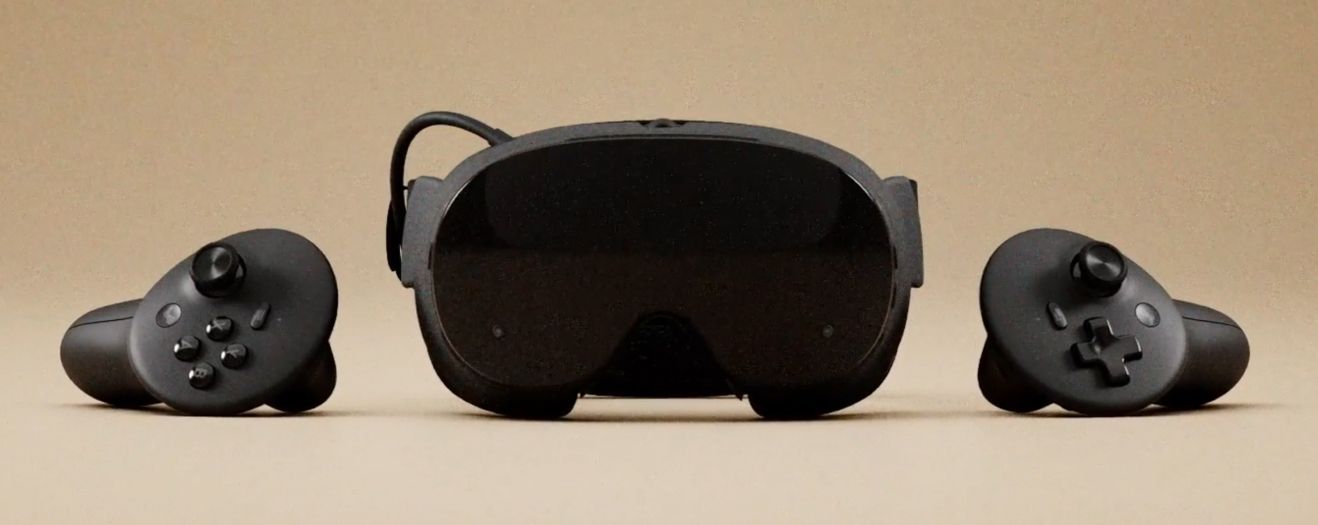
In a sudden shadowdrop, Bellevue, Wash.-based Valve Software announced on Monday that it’s launched its new standalone virtual-reality headset the Steam Frame.
Valve’s previous VR device, 2019’s Index, was designed to be installed semi-permanently in a single room. The Frame, conversely, is a standalone wireless device that consists of a lightweight headset and two hand controllers, much in the same spirit as the Meta Quest 2.
As with Valve’s other recent hardware projects, the Frame is essentially a specialized PC running the custom SteamOS 3, a Linux-based operating system. The Frame runs off of a Snapdragon 8 Gen 3 processor, with 16GB RAM, a microSD card slot, and two 2160 x 2160 LCD screens, one per eye. Oddly, it does not ship with its own dedicated power supply, but can be recharged using the same kind of USB-C plug as the Steam Deck uses.
As with the rest of Valve’s hardware, the Frame is designed to run games from your Steam library, but doesn’t necessarily run every game that’s currently on Steam. Instead, the Frame has its own verification system similar to the Steam Deck’s, with over 100 games currently hand-tested to be compatible with the Steam Frame. Every Frame also comes with Valve’s 2020 game Half-Life: Alyx as a pack-in bonus.
Advertisement
As with the Steam Machine, Valve plans to offer the first batch of Frames with a lottery system. To minimize the impact of scalpers, Valve intends to leave signups open for both models of the Frame until Thursday morning, then randomize the list once and email customers to let them know if they’re getting a Frame or will end up on the waiting list.
The Frame, top left, was the final entry for now in Steam’s hardware lineup. (Valve Photo)
Maybe most importantly, however, the Steam Frame’s starting price is $1,059 for a model with a 256GB internal storage drive. Users who want or need more storage can upgrade to a model with a 1 TB drive for $1,299.
Much as how its low price tag was the biggest point in the Steam Deck’s favor back in 2022, the Frame’s high price tag is an albatross around its neck. Reviews note that it’s a uniquely comfortable device and makes it easier than ever to fire up games in VR, but selling it for over $1,000 means it’s unavoidably aimed at the most hardcore members of what was already a niche market.
This is the same problem Valve hit with the launch of the Steam Machine back in June, and it’s likely to be an issue for every hardware manufacturer in the market for the foreseeable future. With AI companies gobbling up most of the RAM and hard drives on Earth for data center construction, in an event that’s often nicknamed the “RAMageddon,” any consumers who look to build or buy a new PC or console can expect a bad case of sticker shock for the foreseeable future.
That having been said, the Frame does position Valve to pick up where other companies have left off. Meta was previously the market leader in the VR space (PC Gamer claimed recently that Meta still commands roughly 54% of the VR market), but has made distinct cutbacks in 2026 in favor of refocusing on AI research and wearable computing.
Meta invested heavily in recent years on the assumption that virtual reality was the next big thing, and while it made big strides in making VR accessible, it appears to be in the process of rethinking that bet. VR still has plenty of fans and advocates, but it has yet to live up to the hype factor that it had in the late 2010s. The AI arms race, to some extent, appears to have eaten its lunch.
Advertisement
On paper, Meta’s pullback could’ve left space for Valve to shoulder-check its way into the VR market, but then RAMageddon hit. This wasn’t a bad plan as recently as last year, but the current state of the hardware market makes the Steam Frame a tough lift.

































































You must be logged in to post a comment Login