
Business
(VIDEO) Health Officials Confirm First Florida Dengue Death of 2026 After Tampa Woman Dies at 80


TAMPA, Fla. — The Florida Department of Health confirmed Friday that an 80-year-old Hillsborough County woman is the state’s first known dengue fever death of 2026, after Gay Small died Sept. 4 at Tampa General Hospital on her birthday.
The Tampa Bay Times first reported the death about 10 days earlier, before the state finished its review. Her death certificate lists dengue infection, septic shock and multi-organ failure. Family members said she was bitten near her home on Bayshore Boulevard.
“So I guess that means the state agrees she died of dengue,” her daughter, Anna Small, 55, said Thursday.
A department spokesperson told WFLA that epidemiologists had completed their investigation and did not name the patient. The Times and other outlets identified Small. Hospital officials said they do not discuss individual cases.
Anna Small told WFLA her mother had been healthy. “She was in good health and she worked hard to stay healthy and she walked and she ate right and you know, all the things that you’re supposed to do,” she said. “And you know, this virus just kind of comes out of nowhere. She met the wrong mosquito, and that’s it.”
Small had planned a Labor Day weekend in North Carolina with her sister and grandchildren. She died early Friday, Sept. 4. Her late husband, Bob Small, spent his career on dengue vaccine work for drug companies and nonprofits. The couple had traveled in Asia, South America and the South Pacific.
Hillsborough County is the center of Florida’s 2026 outbreak. State tallies cited after the confirmation put locally acquired cases at 152 statewide, with 134 in Hillsborough. Pinellas and Miami-Dade each had seven in some reports. USA Today cited a Sept. 12 state figure of 153 locally acquired cases, against 62 in 2025. The CDC’s broader count of dengue associated with Florida was higher when travel cases are included. Doctors at Tampa General have treated more than 100 dengue patients this season, according to coverage of hospital epidemiology remarks.
Dengue is spread by Aedes mosquitoes. Symptoms include high fever, severe muscle and joint pain — often called break-bone fever — headache, nausea, vomiting and rash. Most people recover. Severe disease can lead to shock and organ failure. There is no routine U.S. vaccine program for local transmission. Treatment is supportive.
Claire Maher, speaking for the state health department, said: “We are reminding all residents and visitors throughout the state to take precautions from mosquito-borne illnesses by appropriately applying insect repellent, avoiding areas with high mosquito populations, draining any standing water, and wearing long pants and shirts when possible — especially during sunrise and sunset, when mosquitoes are most active.”
Hillsborough Mosquito Management has used trucks and helicopters. Officials tell residents to empty buckets, gutters and plant saucers. The Times, citing University of South Florida public-health instructor Kristi Miley, said a Tampa Bay dengue death had not been recorded in nearly a century.
Florida has seen large locally acquired waves before, including more than 200 cases in 2023. Health officials describe 2026 as among the worst recent years, with Hillsborough far ahead of other counties. Confirmation of a death does not change the advice: dump water, use repellent, cover skin at dawn and dusk.
Gay Small’s case is now on the state ledger as the first dengue fatality of the year. The bite was local. The certificate names the virus. The department’s Friday notice closed the gap between a family’s account and an official count.



It is time to start year-end tax planning, and this year I’m doing something different. For the first time, I’m planning to owe taxes next April 15 instead of getting a refund.
This means I’ll be parting company with most tax filers. Last year, nearly two-thirds of the nation’s 166 million filers of individual income-tax returns were owed refunds by the Internal Revenue Service. The average amount was $3,167.
Copyright ©2026 Dow Jones & Company, Inc. All Rights Reserved. 87990cbe856818d5eddac44c7b1cdeb8
Business
Stanford Scientists Create ‘Xenocortical’ Mice With Human Brain Tissue to Study Devastating Brain Disorders
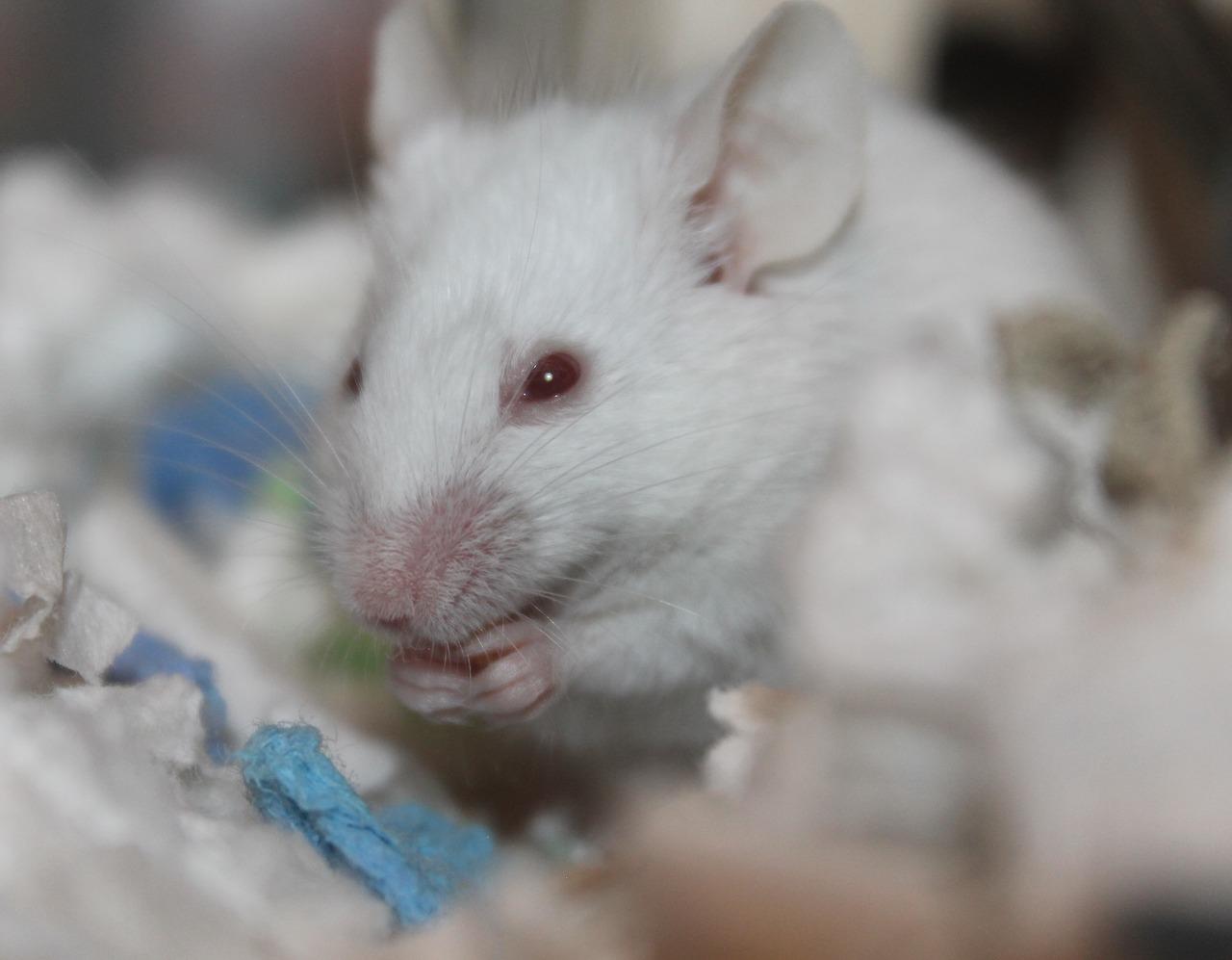
Stanford University researchers have successfully transplanted lab-grown human brain tissue into genetically engineered mice, creating a new experimental platform scientists say could dramatically expand their ability to study neurological and psychiatric disorders that have long been difficult to research directly in living human brains.
The findings, published online September 16 in the journal Nature, describe an approach the research team calls “xenocortication.” Scientists engineered a strain of mice so that most of their neocortex and hippocampus, the brain regions responsible for higher cognitive functions and memory, never formed during early development. Researchers then transplanted human cortical organoids, self-organizing, three-dimensional clusters of laboratory-grown tissue that resemble specific regions of the developing brain, into the resulting cavity shortly after birth.
Cortical organoids are created by reprogramming human skin cells into induced pluripotent stem cells, which can then be coaxed to differentiate into most of the body’s cell types, including the specialized neurons and support cells found in the brain’s outer cortex. The technique builds on years of prior work by the study’s senior author, Sergiu Pașca, a neuroscientist and stem cell biologist who holds the Kenneth T. Norris Endowed Professorship in Psychiatry and Behavioral Sciences at Stanford and directs the university’s Brain Organogenesis Program.
According to Stanford’s own reporting on the study, the transplanted human tissue did not simply survive inside the mice; it expanded rapidly, eventually accounting for more than 90% of the total cortical tissue volume within the mice’s brains roughly three months after the transplant procedure. The human-derived neurons formed working connections both within the graft itself and with the surrounding mouse nervous system, with axons extending as far as the cervical spinal cord. Researchers also recorded coordinated electrical activity across the transplanted tissue, indicating the human cells were forming functional, organized circuits rather than simply existing as inert tissue.
Pașca described the significance of that integration directly. “In these mice, the human grafts generated a broad diversity of cortical cell types and established functional connections throughout the mouse nervous system,” he said. He was careful to characterize the limits of what the model represents, distinguishing it clearly from popular conceptions of “mini brains” grown in a dish. “They are not miniature brains and do not reproduce the full complexity of the human brain, but they allow us to study human neural cell types and developmental processes that would otherwise be extremely difficult to access,” Pașca said.
Remarkably, researchers found that the transplanted tissue contained detectable numbers of von Economo neurons, a rare and unusual type of nerve cell that had previously only been observed in postmortem human brain tissue and had never before been successfully generated either in laboratory culture or in earlier transplant experiments. Compared with previous cortical organoid transplant approaches, the xenocortical grafts also produced roughly three times more of a specific class of projection neurons that extend connections far beyond their region of origin, a feature researchers say makes the model considerably more representative of actual human cortical development than prior techniques.
Despite the scale of human tissue integration, the engineered mice retained largely normal function. Researchers found that so-called “apallial” mice, those genetically modified to lack most of their neocortex and hippocampus before any transplant occurred, were still able to move around their environment, see, hear and smell. Following the human tissue transplant, xenocortical mice performed on behavioral tests in a manner generally comparable to same-age normal mice by three to six months after surgery, despite carrying a brain composed overwhelmingly of human-derived cortical tissue.
To demonstrate the model’s potential research applications, scientists exposed xenocortical mice to five hours of low-oxygen conditions, designed to mimic aspects of the kind of oxygen deprivation that can occur around birth in human infants. That exposure caused substantial damage to the human-derived cortical tissue specifically, and oxygen-deprived xenocortical mice subsequently showed difficulty maintaining a steady gait and balance, a pattern researchers noted bears resemblance to symptoms seen in children with cerebral palsy. Normal mice and apallial mice lacking the human tissue transplant, by contrast, were largely unaffected by the same low-oxygen exposure. Pașca said understanding that difference could prove scientifically valuable well beyond the immediate experiment. “Finding out what accounts for this difference could yield clues about human neural susceptibility to oxygen deprivation, shed light on mechanisms underlying cerebral palsy and provide a platform for testing potential therapeutic strategies,” he said.
Researchers say the broader platform could eventually help scientists study a range of conditions that have historically been extremely difficult to investigate at the cellular and molecular level in living human brain tissue, including profound autism, schizophrenia, cerebral palsy and epilepsy. Alison Singer, president of the Autism Science Foundation, described the potential significance of the approach for future precision medicine efforts. “The idea that you can make an organoid model with an individual’s unique genetic character and use that to learn what’s gone awry in that individual’s brain is a critical step toward precision medicine,” Singer said.
Given the ethical complexity inherent in transplanting human neural tissue into animal models, Pașca organized a conference in Asilomar, California, in November 2025 specifically to debate the ethical implications of this kind of research before the study’s publication. Stanford’s Office of Technology Licensing holds patents related to the generation of cortical organoids, with Pașca listed as an inventor, along with a separate provisional patent application covering the organoid transplantation technique itself.
Researchers say the xenocortical mouse platform will primarily serve as a tool for studying how disease-associated genetic changes alter human neural development and circuit formation, and for testing whether potential treatments can prevent or reverse those changes, offering scientists a living system in which to study human brain biology that was previously accessible only through limited postmortem tissue samples or simplified laboratory cell cultures.
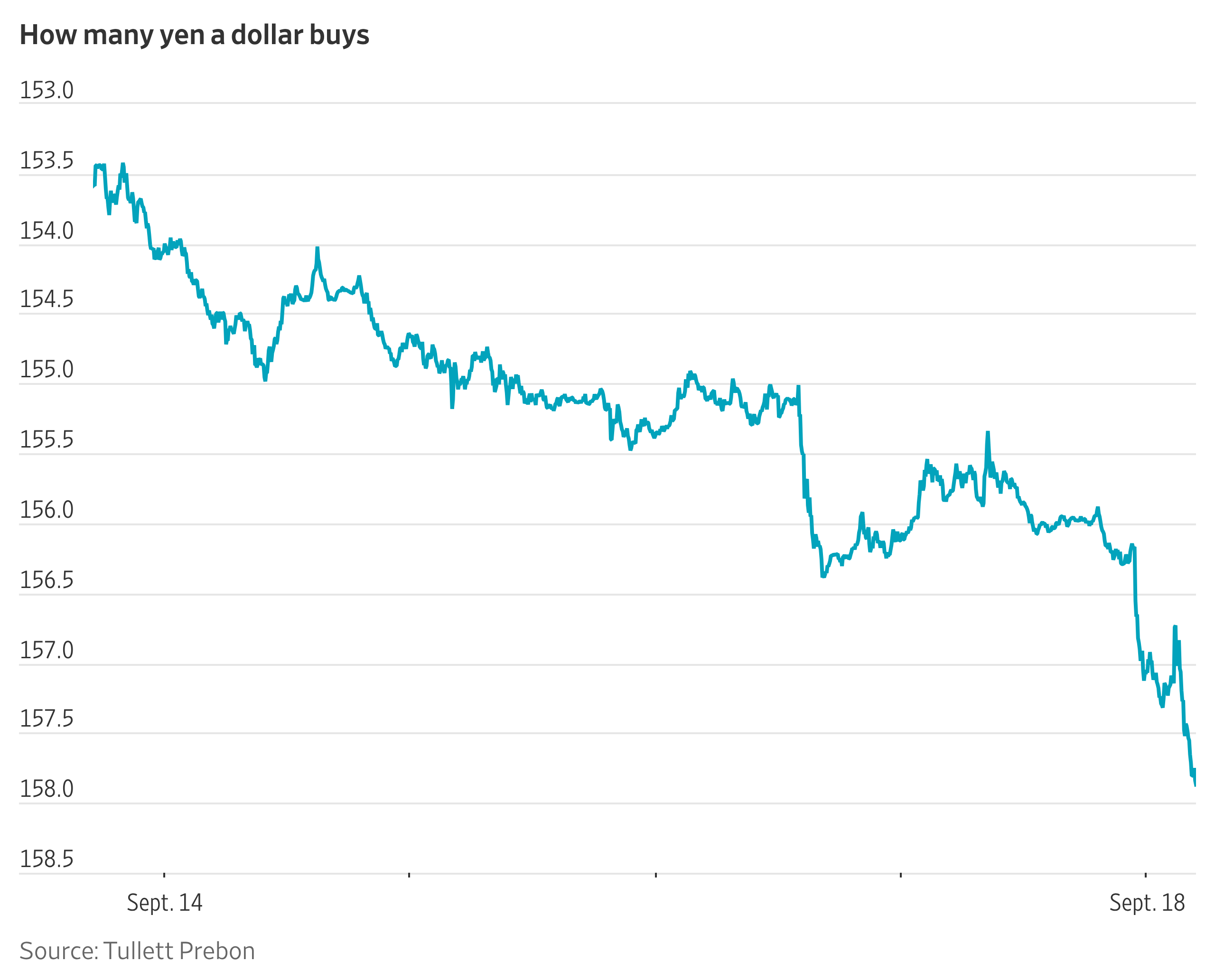
The Bank of Japan raised its benchmark interest rate to a 30-year high, sending the Japanese yen sharply lower.
The dollar strengthened more than 1% against the yen following the BOJ’s move, a reaction at odds with Tokyo and Washington’s ambition for a stronger yen. A dollar bought around 157.8 yen in Asia afternoon trading, compared with the month’s low of 153.54 Sept. 11.
Investors seemingly took issue with dovish signals that sowed doubt how quickly the BOJ will follow through with more rate increases. Two members of the policy board didn’t want to raise rates at all. “They may increasingly act as a brake on further tightening,” ING’s Frantisek Taborsky said.

PagerDuty: Restructuring Is A Great Step, But Zero Growth Is Unconvincing (Rating Upgrade)

Henry Schein Still Gives Me A Reason To Smile After This Nice Move Higher
Business
Bank of India MF CIO Alok Singh sees banks poised for a re-rating. Here’s what could trigger it
That overhang could ease as policy announcements emerge and banks disclose stronger business numbers, Singh said in an interview.
Public- and private-sector banks are fairly valued and have become cheaper since last quarter, even as their underlying businesses continue to perform well. “The consensus trade just hasn’t come through yet,” he said, adding that this disconnect cannot persist indefinitely if the operating trend holds.
Edited excerpts from a chat:
Congratulations on the wonderful performance of your smallcap fund. Everybody these days is talking about small and mid caps, but the smallcap benchmark itself hasn’t moved much in the last one year — just 4-5%. So there must be a lot of stock-picking opportunities in the fund?
Small-cap is a large space with a large number of stocks. Even the Small Cap 250 index is only 250 stocks. If you look at stocks above ₹1,000 crore market cap, there are roughly 1,450-1,500 of them. Remove the top 250 (or even top 500), and there are still 900+ stocks left — so it’s a much bigger universe.

As the market and economy normalise, not everything does well — some things do well, some don’t — so bottoms-up stock selection becomes more important. Post-COVID, the entire small-cap space benefited from re-rating, so stock picking mattered, but simple allocation to the space also worked as long as you were exposed. I think this is the first time we’re looking at a truly normalised economy — even the government has chosen 2024 as its base year, implying normalisation happened after that. This is getting reflected in portfolios: if you’re not in the right stocks, you won’t participate as much.
How much of your portfolio goes beyond the Small Cap 250 index?
We have always run a bottoms-up portfolio and use the benchmark more for risk management than for portfolio construction. That said, while we look at all stocks above ₹1,000 crore market cap, it’s not that we only look beyond the top 250. My portfolio’s average market cap is around ₹24,000 crore, and the weighted average is around ₹25,000 crore. There is hardly any large-cap exposure — maybe 2-3%. So it’s predominantly a small-cap portfolio with some mid-cap. It’s not about concentrating in one place — it’s about finding where newer pools of profit are being generated and building the portfolio around that.
Purely from a market-cap perspective, is there a “sweet spot” you hunt in — say, ₹10,000-20,000 crore?
No, we don’t look at it from a market-cap point of view — we look at it from a business point of view. We’re not “growth hungry” either; across our portfolio we buy anything that makes sense on a relative basis, whether that’s value or growth. If you’re buying value, there has to be some change or inflection point happening, otherwise the value doesn’t get unlocked — growth similarly doesn’t sustain without an inflection point.
In one line: we look at things on a relative basis. If something makes sense relatively, we’re okay looking at it — whether it’s a ₹5,000 crore, ₹10,000 crore, ₹20,000 crore, or even ₹50,000 crore market cap company. That’s not how we approach it.
So once an idea makes sense, allocation becomes key?
Yes — and that’s where we believe the real differentiation lies. Everyone stresses finding new ideas, but what you do with an idea is equally important. No idea stays exclusive to you for long, because in the mutual fund world, once you buy something and your monthly portfolio is published, the whole market knows what you’ve bought — even without doing the fundamental work themselves, others can reverse-engineer why. So finding a good, scalable business or one going through a transformation is only one part. How you size it and scale it up in the portfolio is most important — especially for us, since we don’t run either very concentrated or very spread-out portfolios.
You currently have around 90 stocks in the portfolio. Tell us about your position sizing and churn.
Yes, right now it’s around that, but we like to run 70-80 stocks and may moderate it — it’s a bit of a transition period currently. Since the fund launched in 2018, we’ve generally run a 70-80 stock portfolio, and that’s where we wish to stay on a long-term basis. Sometimes the number ticks up a bit due to a few transitional additions. In terms of position sizing, 3-4% is the highest we buy.
Because we run about 90 stocks, there is naturally some churn happening — something is going in or out, which is why the stock count and turnover sometimes rise. But we don’t do a clean, sharp exit from any stock unless there’s a specific reason for concern. On a long-term, steady-state basis, turnover would be more like 0.65-0.7x.
Within small and mid-cap, where do you currently see both growth and valuations that aren’t excessive — i.e., no euphoria?
Frankly, after the last 3-4 months’ up-move in mid and small caps, I don’t see any pockets that are screamingly undervalued. The market looks fairly valued to me right now — wherever you see slightly above-mean multiples, those are being driven by the earnings those stocks are delivering. So across small, mid, or even large cap, the market seems fairly priced in terms of multiples. That means any further movement has to be driven more by earnings, which is why there’s some nervousness — earnings depend on visualisation and assumptions around execution, which people may or may not agree on.
On a steady-state basis, though, the market appears fairly priced. That’s why markets have largely gone sideways over the last month or so. Going forward, I believe earnings will play a bigger role in shaping the market than further multiple re-rating.
Q1 earnings were very good, Q2 is also expected to be good, but the concern is Q3 onward — especially in pockets affected by GST and income tax rate cuts. Is that a worry?
The base effect will play a role, but if you look at GST collections, we’ve actually surpassed prior levels — so collecting more GST at a lower rate, with goods and services volumes unchanged, means volumes have actually picked up. So I don’t think the base effect will be a major issue.
One thing to appreciate: markets were surprised by Q1 earnings because, when the Middle East crisis happened, the consensus was that Q1 would take most of the hit and Q2 onward would see recovery, normalizing in the second half. As we analyzed results, we realised the impact wasn’t concentrated in April but more in the May-July window, due to low-cost inventories and similar factors — so there will be some spillover into Q2 as well, which wasn’t the earlier consensus. That’s adding to market nervousness, since there’s now uncertainty about whether the impact ran through June, July, or even August.
That said, I don’t believe the impact goes beyond Q2 — which also has its own seasonality with Diwali falling a month later this year. Adjusting for these factors, I think earnings should actually be better, because high-frequency demand indicators — vehicular traffic, power demand, GST collections, toll collections, passenger traffic — are all suggesting decent buoyancy in the economy. If that continues into the festive season, the season should be good, since festive spending typically follows a build-up rather than appearing suddenly. Overall, I think external disruptions (freight movement, transit times, buyer-seller reconciliation) have now normalised and shouldn’t be a surprise element unless something changes from here.
Can you get more sector-specific on where you expect strong earnings momentum over the next couple of quarters?
The capital goods space — specifically industrial automation, industrial products, power equipment — is seeing a good tailwind from both domestic and global demand, and I expect that to continue. Precision engineering, part of capital goods, is also seeing decent order flows.
On BFSI, I think banks at large should do well. Earlier there were concerns about NIMs (going back to Q4 of last year), and now there’s some worry about FCNR-related spillover effects. But I don’t think liquidity pressure is as large as the market anticipates — RBI has repeatedly tried to suck out excess liquidity, and even a recent ₹7 lakh crore reverse repo saw limited takers. If liquidity were truly excessive and suppressing NIMs long-term, banks wouldn’t be holding it back from RBI — any reasonable treasury head would rather place it with the RBI than sit on it. That tells me it’s transitory — CBLO might dip to 2-3% for a few weeks, but that’s not permanent. So banking should be another sector that does well.
In the broader segment, capital goods and banking look okay to me. In a smaller segment, metals look good given demand and government policy, with decent capacity utilisation — not a large weight in the index, but earnings growth there looks decent. Elsewhere: pharma is mixed — some doing okay, some facing issues; FMCG faces margin and inflation pressure; consumer durables — some are doing fine; auto is doing okay but fairly priced, so while we stay positive, I don’t see a major surprise element there since the earnings are largely already discounted.
Among these sectors, do banks have the higher chance of re-rating if earnings pick up?
Yes. A large part of large-cap underperformance has come from IT, but banks also haven’t done the “heavy lifting” they should have, given their index weight and valuations. Whichever way you look at it — public or private — banks are fairly priced, and all the boxes that should tick for a bank are ticking: low NPAs, decent ROAs leading to decent ROEs, and loan growth. The consensus trade just hasn’t come through yet because of lingering worries about NIM pressure and possible rate moves. As policy announcements come through over the next few weeks, I think this will reconcile. Business-wise, most banks are doing well and have gotten cheaper since last quarter without the market reacting — but that can’t continue indefinitely if the trend persists.
Credit growth wasn’t a problem for banks anyways, and now deposits are also coming back via FCNR. So both sides of the balance sheet are sorted?
Correct. Banks running high CD ratios will be able to access liquidity now. Also, some NBFCs benefit indirectly — as pressure on larger banks to raise deposits eases, and money needs to be deployed, one avenue is lending to NBFCs. It may not offer the best spread, but it avoids negative carry. So NBFCs become an indirect beneficiary of FCNR flows too. I think the FCNR-related NIM-pressure overhang that the market is pricing in won’t be as large as feared, and as banks disclose business numbers, there should be a positive surprise.
Crude has again crossed $100, and there have already been about $1.5 billion of outflows this month, with the rupee under pressure — the macro setup is weakening this month. How much of a worry is the Middle East tension?
Obviously oil has an overhang on us — there are two sides: the inflation side and the availability side. Availability is the bigger question; every time there’s escalation, the possibility of supply being cut increases. The market is more worried about a potential availability cut than about the price level of $100 or $110 per se, because a higher price only impacts margins, whereas zero oil availability means no margin at all.
That said, yes, $100 or thereabouts does affect inflation and could have a broader margin impact via the Reserve Bank’s response. It’s a very hot-and-cold situation, so it’s difficult to take a decisive view. If it sustains at these levels for a longer period, we’d need to be more worried — but I’m not worried about it today. If there is an actual sustained supply-side issue, that concerns me more than the price being $100 or $110, because economies will adjust to price; there could be some disruption here and there, but on the whole we’d be okay. Non-availability is a bigger issue to me than $100 oil.

Over the past 24 hours, Bitcoin gained 4.6%, and Ethereum rose 6%. Among major altcoins, BNB, XRP, Solana, Tron, Hyperliquid, Dogecoin and Cardano gained up to 6.2%.
Riya Sehgal Research Analyst Delta Exchange said the rebound reflects improving risk sentiment and positioning. Cooling oil prices have eased inflation concerns. The rally also forced bearish leverage out of the market, accelerating the move through short liquidations.Also Read |Explained: When should mutual fund investors use CAGR, XIRR or IRR to calculate returns?
Sehgal further said the focus now shifts to whether the breakout can hold. Bitcoin remaining above $80,000 and Ether holding 2,580–2,600 would preserve the near-term structure.
The global crypto market capitalisation was up 4.1% to $2.86 trillion on Saturday, according to the data on Coingecko.
Over the last week, Bitcoin and Ethereum gained 4.9% and 4.6%, respectively. Among major altcoins, BNB, XRP, Solana, Hyperliquid, Dogecoin and Cardano gained up to 18.4%, while Tron declined 1.18%.Nischal Shetty, founder of WazirX, said ETF activity reversed during the week. Bitcoin ETFs moved from daily inflows of $159.9 million to outflows of $450.33 million and $295.98 million. Ethereum ETFs shifted from a $121 million inflow to outflows of $141 million and $224.11 million.
Shetty further said BTC and ETH remained relatively stable as spot demand and derivatives positioning absorbed part of the selling. Overall, recovering US and Asian equities, falling volatility and softer commodities supported crypto sentiment, although elevated rates, regulatory uncertainty and expensive oil kept the weekly outlook balanced.
(Disclaimer: Recommendations, suggestions, views and opinions given by the experts are their own. These do not represent the views of The Economic Times)
Business
Apple’s iPhone 18 Goes on Sale Worldwide as New CEO John Ternus Greets Fans at Its 5th Avenue Flagship Store

NEW YORK — Apple’s newest iPhone lineup officially went on sale Friday, drawing crowds of customers at stores around the world for the first major product launch under new Chief Executive Officer John Ternus.
The iPhone 18 Pro and Pro Max, unveiled the previous week at Apple’s annual product event alongside the company’s first foldable device, the iPhone Duo, feature a redesigned camera system built around a DSLR-like variable aperture, a change Apple says improves performance in low-light environments and allows for enhanced depth-of-field control in photos. The iPhone 18 Pro starts at $1,199, while the larger iPhone 18 Pro Max starts at $1,299, with both models also available through Apple’s lease-based Upgrade program for customers who prefer to spread the cost over monthly payments.
Beyond the camera upgrades, Apple introduced a new authentication feature aimed at addressing growing concerns about AI-manipulated images. The company said the new iPhone 18 lineup can detect AI-generated photos by automatically creating an unalterable Reference Image that remains attached to any edited version of a photo, giving users and viewers a way to verify whether an image has been artificially altered from its original form.
Ternus, who succeeded Tim Cook as Apple’s chief executive officer earlier this month, marked the launch by visiting the company’s flagship retail store on Fifth Avenue in New York City on Friday. He spent time posing for photos and signing autographs for customers both inside and outside the Midtown Manhattan location, a visit that came just over a week after Ternus presided over his first product launch event as CEO.
The iPhone 18 lineup also marks the public debut of Apple’s long-awaited overhaul of Siri, the company’s voice assistant, now branded Siri AI and powered by Apple Intelligence. Apple first announced the redesigned assistant in June but delayed its release until this launch to ensure the technology met the company’s standards before shipping to customers, according to Apple. Notably, Siri AI runs on underlying artificial intelligence models developed by Google, specifically Google’s Gemini model family, reflecting a partnership between the two companies to power the new assistant’s more advanced conversational capabilities.
With Siri AI now live on the new devices, users gain the ability to pull relevant information directly from their messages, photos, emails and other apps in response to natural-language requests. The updated assistant also allows users to draft messages and emails, edit photos through conversational commands, and revisit past conversations they’ve had with Siri, functionality aimed at making the assistant feel more like a persistent, context-aware helper rather than a tool limited to simple, isolated commands.
Crowds gathered at Apple retail locations around the world as the new devices went on sale Friday, with lines forming outside stores in markets including London, where customers queued outside the Apple store on Regent Street, and in New Jersey, where shoppers lined up outside the Apple Store at the Menlo Park Mall in Edison. Apple has typically treated iPhone launch day as a significant marketing moment, with in-store crowds and long lines serving as a visible signal of sustained consumer demand for the company’s flagship product line, even as the broader smartphone market has matured considerably since the iPhone’s original 2007 debut.
This year’s launch carries added significance given the leadership transition at Apple’s top ranks. Ternus, who previously led Apple’s hardware engineering organization for years before being named CEO, used both the initial product unveiling event and Friday’s launch day store visit to establish his own public presence at the helm of the company, following Cook’s move into the role of executive chairman. The successful rollout of a major iPhone generation, alongside the debut of Apple’s first foldable device, represents an early and closely watched test of how Apple’s product strategy and execution will be shaped under its new chief executive.
The iPhone 18 Pro lineup’s redesigned camera system and expanded AI capabilities arrive as Apple continues working to keep pace with rivals in the broader smartphone market, many of which have moved aggressively to integrate generative AI features into their own flagship devices over the past two years. Apple’s decision to power Siri AI using Google’s Gemini models, rather than relying exclusively on its own in-house AI development, reflects the company’s broader strategy of pairing its hardware design strengths with external AI partnerships where doing so allows it to deliver more capable features to consumers more quickly.
With the iPhone 18 Pro and Pro Max now available for purchase globally, alongside the company’s new foldable iPhone Duo, attention is likely to turn toward how strongly the new lineup performs commercially over its opening weekend and into the crucial holiday shopping season, a period that has traditionally represented one of Apple’s most significant windows for iPhone sales each year. Early crowds at flagship stores in New York, London and elsewhere on Friday offered at least an initial visual signal of consumer enthusiasm heading into that broader sales period, even as the company’s full commercial results for the new devices are not expected to be reported until Apple’s next quarterly earnings disclosure.

Harmony Biosciences CMO sells $1.65m in shares

NHS: The High Yield Is Not A Reason To Own This Fund (Rating Downgrade)
Why I’m Trying to Stop the IRS From Giving Me a Tax Refund This Year

Lemon exits Brazil over crypto licensing costs

The $28 Concealer Lisa Kudrow Wore on the Red Carpet Won’t Crease




-

 Tech6 days ago
The Latest Weird Thing to Play Doom Is the Mapped-Out Brain of a Fruit Fly
-

 Fashion17 hours ago
Weekend Open Thread: Talbots – Corporette.com
-

 Crypto World4 days ago
Kraken Lets xStocks Holders Earn Yield Through DeFi
-

 Crypto World2 days ago
US Charges Robinhood Engineers Over Crypto Listing Trades
-

 Crypto World7 days ago
Can AI Build a Startup in 72 Hours? Elon Musk's Team Will Livestream the Test
-

 Crypto World3 days ago
What Is the Status of the U.S.-Iran Peace Talks? Here's What Both Sides Are Saying
-

 Crypto World5 days ago
Elon Musk Drops a Bombshell: Grok 5 Could Be the AGI Breakthrough
-

 Business6 days ago
Rivals Sam Altman and Elon Musk Rally Behind Dario Amodei’s Call for a Slowdown in AI Development
-

 Crypto World4 days ago
Revolut Attackers Warn of Ongoing Daily Customer Data Leaks
-

 Crypto World6 days ago
New Tesla Roadster Uses SpaceX Tech. Will It Impact the Stock Price?
-
 NewsBeat5 days ago
‘Sick conspiracy’: Trump says only guardrails AI needs is ‘a strong and smart (High IQ!) president’ in all-caps rant
-

 Crypto World4 days ago
NVIDIA Analysis: Attempted Rising Wedge Breakout Amid Pressure on the AI Sector
-
Business5 days ago
SK Hynix ADRs Fall More Than 6% as Memory Rally Breaks on Fears of Slower AI Spending
-

 Crypto World4 days ago
DOJ Seeks to Seize $61M in Iran Oil Funds From Binance Accounts It Vouched For
-
 NewsBeat6 days ago
Last Night of the Proms pays moving tribute to Dolly Parton as Sheridan Smith wears a gold sequin jumpsuit in memory of the Queen of Country
-
Crypto World4 days ago
Can Circle’s Arc Repeat Robinhood Chain’s Meme Coin Boom?
-

 Crypto World5 days ago
3 Token Unlocks to Watch in the Third Week of September 2026
-

 Crypto World6 days ago
AI Safety Burden Falls on Chief Executives as Trump Prioritizes China Race
-

 Crypto World6 days ago
Goldman Sachs backs 25bp Fed hike after CPI
-

 Tech3 days ago
Webb’s IC 348 Mosaic Includes Two-Jupiter Dwarfs, Twin Jets, and a Nursery Still Making Worlds
You must be logged in to post a comment Login