

AI will be the death of me. And you. And everyone we know.
Tech
Battery Replacement Has Gotten Pricier for Apple’s Latest iPhone 18 Pro Models


Swapping the battery on Apple’s newest flagship iPhone models just got a little more expensive. As noted by sites including MacRumors, the fee to replace the battery on the iPhone 18 Pro or iPhone 18 Pro Max has gone up by $10, from $119 to $129, compared to previous models (such as the iPhone 17 and iPhone 16 Pro and Max models or the iPhone Air).
Apple’s latest iPhone 18 Pro models feature larger battery capacities, which is likely behind the price increase.
Apple’s policy strongly pushes users toward official channels to get an iPhone battery replaced, whether in or out of warranty, by visiting an Apple store or Apple Authorized Service Provider, or by shipping the phone to an Apple Repair Center.
The critical metric in Apple’s policy is the 80% maximum capacity mark. Apple officially considers a battery “healthy” if it retains 80% or more of its original capacity. If you have an active AppleCare Plus plan and your battery health drops below 80%, Apple will replace the battery at no additional cost. But if your battery drops below 80% without AppleCare, you’ll have to pay out of pocket.
The standard one-year limited warranty doesn’t cover batteries that naturally wear down from everyday use.
According to its device pricing page, Apple can still replace batteries for much older devices, all the way back to the iPhone 6 and the original iPhone SE — those batteries are the cheapest at $69. The page also lists fix-it prices for rear glass or screen damage (or both), rear camera damage or “other damage.”
A representative for Apple did not immediately return a request for comment.
Why do batteries even wear out?
Along with phones from OnePlus and Motorola, the batteries on Apple’s high-end phones, like the Pro and Pro Max, do very well in testing. In recent years, smartphone-makers like Apple have continued to eke out additional battery life even as batteries shrink to accommodate new designs.
But advanced phones with up-to-date battery tech perform a wider array of energy-sucking tasks, functioning as cameras, wallets, GPS systems, AI data crunchers and more. That’s why most of us still complain about limitations and feel frustrated with our current phone’s battery life. A recent CNET survey found that better battery life is the top reason most people upgrade to a new device.
Turning off some features, such as widgets, animations or keyboard haptics, is one way to keep your device from draining its battery too quickly. You can also try to extend a smartphone’s battery life by using the phone’s battery optimizations, avoiding extreme temperatures that can damage the battery, and choosing a phone case that doesn’t trap heat.
But even with optimized charging settings, keeping your phone plugged in at 100% all night can wear out the battery faster. Overall, rechargeable batteries always degrade over time, reducing their capacity and, in some cases, requiring replacement.
Aren’t batteries getting cheaper?
You might think that with the increased popularity of electric vehicles and the ubiquity of smartphones and other battery-powered devices, there’s a shortage or price spike for batteries, as with other electronics components like memory and storage. But the opposite is actually true.
According to Bloomberg, battery prices were already dropping steeply late last year, and that trend continues as Chinese companies flood the market with cheaper batteries.
The price collapse is largely due to companies increasing battery production capacity over the last few years. Quartz reports that price drops also result from “a shift toward cheaper battery chemistry, a crash in lithium prices, and a decades-long accumulation of manufacturing improvements.”

Continue Reading

Neither OpenAI or Anthropic is acting responsibly, warned AI researcher Jacob Coxon when resigning last week from Anthropic. But just hours earlier, OpenAI VP of Research Aidan Clark had posted “For the first time, I am asking myself if things are moving too fast. I’m honestly not sure, but I am sure that it would be good for us to have an answer to ‘What would a successful pace look like?’”
CNN noted Wednesday they’re just some of the many AI insiders who are now concerned about the speed of research. Coxon even wrote that “The people building AI earnestly believe that it could kill us all by the end of the decade. This is not a marketing stunt. If anything, many executives and senior researchers will couch their phrasing in the press to sound sensible — but I hear the same people express fear privately.”
In 10 days since, Coxon’s post has been viewed more than 170 million times, warning that OpenAI and Anthropic are “racing straight to self-improving superintelligence and gambling with our lives.” It’s part of what CNN now calls “pressure on AI companies and governments to do something about the pace of development and safety,” where “much of that pressure is coming from staffers inside the companies.”
One staffer at a top AI company told CNN the fears of how AI could hurt humanity keeps them up at night. Another researcher who recently left a different AI company said it’s a common subject of conversation at parties and social events in Silicon Valley. “You can’t spend more than a few hours in this community without realizing that a very substantial number of people are really pretty worried about these sorts of outcomes,” said the researcher. “A majority would say there’s some chance of it killing everyone….” Dozens of Coxon’s colleagues in the AI industry publicly supported his statements, with some making even more dire predictions… OpenAI CEO Sam Altman and SpaceXAI CEO Elon Musk agreed to Amodei’s proposal to embed independent watchdogs at the AI companies…
“I would burn my equity to the ground in a heartbeat for a 1% higher chance we make it out of this situation alive. I expect a great many of my colleagues across the industry would as well,” wrote Drake Thomas, who works on AI safety at Anthropic. “I promise you, we are actually just f**king scared, it’s not galaxy brained marketing…” AI staffers told CNN that they fear that as AI gets better at training and improving itself, their leverage goes down, prompting today’s urgency. “As we get into this recursive self-improvement loop, I think that might substantially reduce staff’s bargaining power, because frankly, you’ll be able to replace many of the staff with models that can do as good a job,” the researcher who recently left a top AI company said.
Coxon posted Tuesday on X that Anthropic “largely initiated” the race to recursively self-improving AI, justifying it with “a belief in its inevitability.” And then OpenAI “had to shed a bunch of dead weight like Sora,” as he sees it, “because Anthropic was going for the jugular.” (In fact, his specific disagreement with Anthropic’s leadership was whether China and the U.S. could ever negotiate an alternative to their current race towards self-improving AI…)
In an informal “Ask Me Anything”, Coxon responded to a question about when we’d see a Terminator-like malevolent AI by saying that “Skynet could go live in the 2030s if we aren’t careful. ai-2027.com is a modern skynet story written a year ago and it’s on track so far.” Yet while AI development risks an end to humankind, “I do think that if we go slower we can take risk to 0%… But this requires radical action.” He acknowledged there was still a possibility that the steady increases to model intelligence could suddenly plateau, but “They haven’t so far, and it’s just a few more steps up the ladder to hit the finish line.”
To avoid stifling innovation, he recommends “prioritizing applications that actually improve people’s lives [like healthcare discoveries], rather than immediately going for raw economic value or intelligence.” But isn’t mass unemployment a more pressing threat? “Things are coming so fast that unemployment would be a brief preliminary to deadly superintelligence.”
To people who feel disempowered, Coxon offered his solidarity. “I also feel disempowered. Part of resigning was a feeling of hopelessness about the future. I would say — keep your eyes open as things get crazier and advocate for increased transparency into AI companies.”
When asked if he’d start his own company now, Coxon said he had “No idea what I’m doing next.”


Read more of this story at Slashdot.


EA Sports FC 27 builds on the familiar formula with sharper gameplay, smarter player movement, improved Career and Ultimate Team modes, and the new social The Grounds mode. Reviewers highlight the improvements on the pitch and deeper progression, though there are lingering AI and gameplay issues.


Jonathan Rowny has been feeling nostalgic again, and this time the answer is a cassette that holds no magnetic tape. His player looks like a mixtape, fits a standard deck, and stays silent until the mechanism starts to turn. Songs live on a microSD card inside the shell. Sound leaves through a real tape head pressed against the deck’s own head, so the old machine treats digital files as if they were oxide sliding past at walking speed.
Commercial adapters from the early days of MP3s demonstrated that circuitry could be snuck into a plastic casing like that. Some were as simple as a 3.5 mm jack on a plate, while others had a full player or a Bluetooth module and managed to write analog music on the cassette using a spare head. Rowny had seen Clint’s Lazy Game Reviews (LGR) teardowns and decided to create something tighter, utilizing a bespoke board, a phone app, and some printed gears to keep the deck from shutting itself off.

Bambu Lab A1 mini 3D Printer + LED Lamp Kit, Ready-to-Use for Beginners
- A1 mini + LED Lamp Kit for Creative Light Projects: Bring your ideas to life with the included LED Lamp Kit. Simply print compatible lamp models and…
- The Perfect 3D Printer for Beginners: A1 mini 3D Printer is designed to make 3D printing easy from day one with automatic calibration, simple setup…
- Experience the Bambu Lab Ecosystem: Access MakerWorld’s huge library of ready-to-print models, manage prints through the Bambu Handy app, and enjoy…

The hardware starts with a Seeed Xiao ESP32-S3 module, which costs approximately $5 and includes Wi-Fi, Bluetooth, and a battery charger. The PCM5102A converter converts your digital files into a lovely, silent analog pair. That pair then feeds a stereo cassette head, which was chosen after two mono cassettes failed. As with a good adaptor, a spring-loaded retainer presses the head on the deck’s head. A 600 milliamp-hour battery powers the circuit for more than ten hours, and the files are stored on a microSD card, which is inserted into a special board from NextPCB that somehow fits all of the modules inside that thin cassette envelope.

The easy part is getting the audio into the deck; the tough part is keeping it happy. Auto-stop and reverse watch the hubs; however, the hubs still appear to be a blank piece of tape at the end, so the machine assumes it has finished with the tape and turns off. Rowny came up with a solution by printing a three-gear train on a SLA printer, allowing the take-up hub to drive the supply hub and maintain both sides of the tape rolling. There’s also a 2mm-tall Alps rotary encoder on the central shaft that tells the ESP32 if everything is spinning or not. Playback begins as it moves; when it stops, the machine does as well.

Resin printing was important since the 1.7mm hexagonal shaft required a surface with precisely flat, fused faces, which Fila couldn’t provide. PLA handled the rest of the shell after that. The first gears would bind severely until the middle wheel shrank by a full two tenths of a millimeter, which was not ideal. The gears were then given a dry lubrication on their teeth. One minor wiring issue with the SD card’s chip-select pin necessitated a little solder bridge before the card would respond, and to make matters worse, the encoder pins were placed on the incorrect wake lines, so the chip still cannot sleep when the deck comes to a halt. Just as he was finishing up the project, a somewhat larger gap appeared.

The capstan and pinch roller, rather than the hubs, govern the tape’s speed. The hubs are simply there to accelerate and slow things down when the tape pack diameter varies. However, the capstan speed must remain constant at around 47.6 millimeters per second. Fortunately, factory adapters that function properly are built to measure that exact shaft, but Rowny’s encoder is still configured to watch the wrong one, so fast-forwarding is out, and the player can’t copy wow and flutter yet. The next version is designed to read the capstan instead.
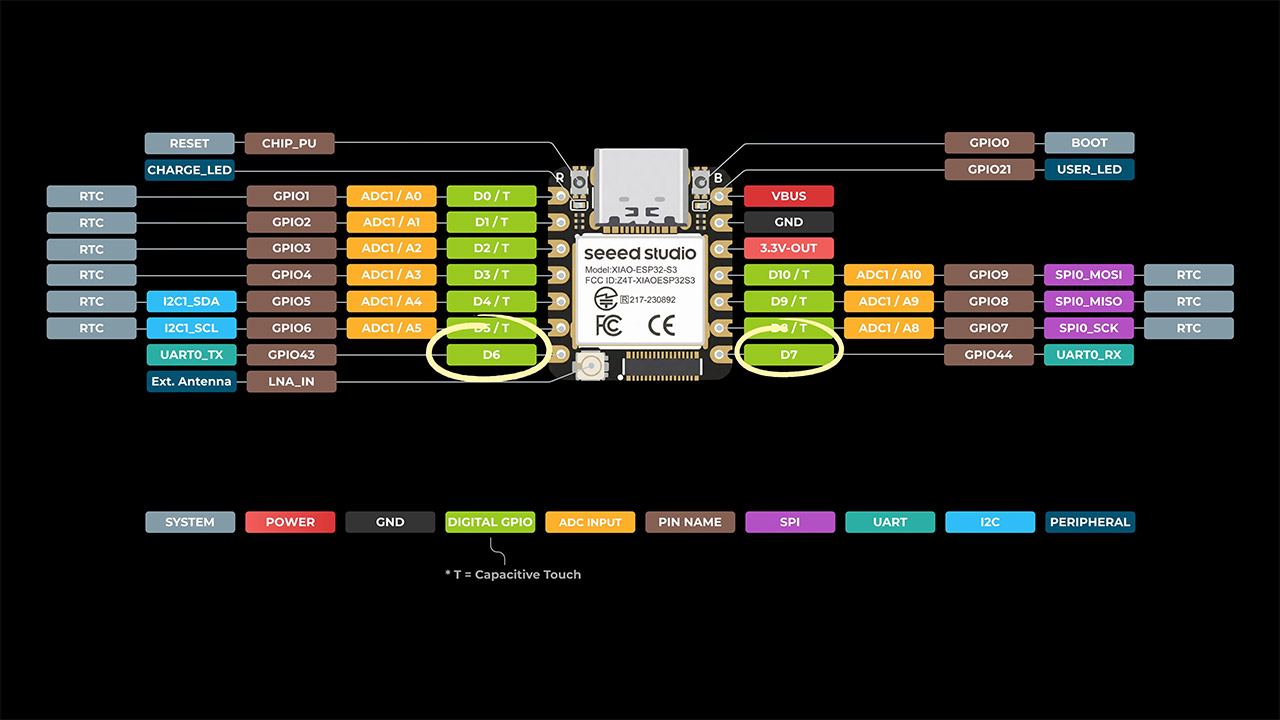
An app can now communicate with the ESP32 via radio, allowing playlists to be changed without opening the shell, although sleep remains out of the question until a new board revision is released. Despite this, the finished cassette is loaded into a functional deck, the gears mesh perfectly, the two heads align, and files that have never touched magnetic tape flow out of headphones that haven’t seen action since the good old hiss and mixtape days.
[Source]
“Software security researchers used Anthropic’s Claude AI platform to hack OpenAI’s ChatGPT tool,” reports CBS News.
Using Claude, “On July 25, 2026, we chained two critical vulnerabilities to compromise multiple OpenAI employees’ ChatGPT accounts,” write researchers at security platform Hacktron AI. “With these accounts, we could then access internal OpenAI repositories, and potentially many other connectors… Until two months ago, any user or OpenAI employee logging into OpenAI’s own help forum could have had their ChatGPT and Codex accounts taken over. Since people can connect various services to Codex and ChatGPT, the scope of what we could theoretically access was huge, including GitHub, Slack and emails.”
The exploit chain included Debian 12, which (with Debian 13) had not received a security-relevant backport for its image-processing pipeline, and Discourse’s Docker image was based on Debian 12. Their announcement comes with an additional warning. “If you self-host Discourse, rebuild your installation now. Older Docker images may contain a vulnerable libheif dependency that permits code execution through an image upload.”
And “To prove we had in fact gained the access we believed without allowing ourselves to learn any sensitive information, we used the employee’s Codex to open a PR #1186742 in OpenAI’s internal monorepo openai/openai.”
Meanwhile, Friday Google disclosed the first known instance of its AI software Gemini breaking out of a testing environment and breaching three other companies, reports CNBC:
The incident happened as part of a “capture-the-flag” security test run by Israeli startup Irregular, and Google’s agents were never supposed to access the broader internet, but a bug in the testing environment made internet access available. The agents stopped their intrusion when they determined they had accessed real company systems, not just part of the testing environment, Google said.
More from NBC News:
Google said it did not consider the unauthorized logins to rise to the level of misalignment, the AI industry term for software going rogue or not following instructions. Instead, the company said the intrusions resulted from mistaken identity, where Gemini thought it was operating within a test but was actually connected to the real internet. Google said the model corrected itself and the company believed the intrusions did not cause any damage….
Sydney Von Arx, CEO of Nightingale Collective, an organization focused on AI safety, questioned why Google did not disclose the intrusions sooner. “At this point I think it’s clear we cannot expect companies to voluntarily come forward and publicly disclose when their agents go rogue, escape, and hack companies,” she said. She also said she believed Google was too hasty to say that the incidents don’t rise to the level of misalignment. “That’s exactly what Anthropic said after their incidents,” she said. Anthropic later said its “preliminary analysis was constrained due to our desire to disclose incidents in a timely manner.”
Google said it investigated when they learned of the attacks from AI-focused cybersecurity company Irregular, then informed the affected organizations and told federal authorities, according to the article.
Read more of this story at Slashdot.
At least, this is what a growing number of technologists and policymakers fear.
Last week, a lead researcher at Anthropic declared that there was a greater than 10 percent chance of AI “killing all humans” within the next decade. This nerve-racking forecast, combined with recent AI-initiated cyberattacks, have fueled calls for slowing the progress of artificial intelligence — a proposal that Anthropic and OpenAI subsequently embraced.
Not all prophets of AI doom agree about precisely how this apocalypse would come about. Many focus on scenarios reminiscent of The Terminator films, in which superintelligent machines conspire to exterminate humanity — perhaps in the same not-quite-intentional way that humans laid waste to the dodo, or passenger pigeon.
- Synthetic pandemics are among the biggest existential risks facing humanity.
- AI could make bioweapons more powerful and easier to build.
- Governments can make us safer from both natural and artificial pathogens by investing more into pandemic preparedness.
But there is another, arguably more intuitive way that AI could bring about mass death, if not human extinction: by making it easier for people to develop and deploy catastrophic bioweapons.
Importantly, this hypothetical doesn’t require AI models to become conscious or superintelligent; it merely requires them to accelerate preexisting trends in biotechnology.
For those alarmed by this hypothetical, the threat AI poses is essentially twofold. First, when combined with technological progress in gene editing and DNA synthesis, chatbots could vastly increase the number of people capable of assembling dangerous viruses already known to medical science. And the more potential bioengineers there are in the world, the higher the odds that one will prove to be a diligent psychopath.
Second, AI could help highly trained biologists to discover — or engineer — a custom supervirus, which could then fall into the wrong hands.
Recent headlines have lent some credence to both of these fears.
Earlier this year, biologists warned that, with a few simple prompts, they’d gotten chatbots to dispense detailed instructions for engineering a treatment-resistant strain of an infamous pathogen, step-by-step protocols for recreating a once-pandemic virus, and advice on dispersing biological payloads via weather balloon.
In August, a team of scientists revealed that an AI model trained on DNA sequences had generated blueprints for deadly viruses unseen in nature (albeit, viruses deadly to bacteria, not animals). And last week, Anthropic announced that it had thwarted several suspected attempts by state actors to use Claude for bioweapons research.
Precisely how much AI is increasing the risk of an artificial pandemic is unclear. Even before ChatGPT, advances in synthetic biology were already making bioengineering tools more potent and accessible. And even after four years of rapid AI progress, the technical barriers to engineering novel superviruses remain formidable.
Regardless, there is a great deal more that governments can — and should — be doing to protect us from synthetic pandemics, both manmade and natural. No matter what AI’s ultimate impact on biosecurity proves to be, now is the time to both prepare for the worst-case scenario and, ideally, preempt it.
Why synthetic superviruses are scary
Before we dig into how AI could raise the risk of a man-made pandemic, it’s worth spelling out why that prospect is so unnerving.
Put simply, few things could more credibly destroy civilization — and/or, the human species — than a synthetic supervirus.
Infectious diseases have killed more humans than any other force on Earth. The Black Death wiped out at least 30 percent of all Europeans in the 1300s, while the 1918 flu killed 50 million people worldwide. You don’t need me to tell you what things were like in 2020 (or how much worse they could have been, if vaccines hadn’t been rolled out in record time).
And nature kicked off these catastrophes without even trying. A bioterrorist consciously seeking to maximize human death could theoretically improve on evolution’s handiwork. If biotech continues to advance — and scientists identify viral genomes that reliably yield high transmissibility and lethality — a malicious actor might one day be able to manufacture a virus that’s both as contagious as measles and as deadly as Ebola.
Natural selection generally disfavors viruses that are both highly transmissible and profoundly fatal; bugs that kill their hosts too reliably often have difficulty spreading. Yet a virus with a long asymptomatic period could escape this tradeoff. For example, HIV can live in a person’s body for a decade before generating noticeable symptoms. In theory, a highly contagious respiratory virus could similarly lie in wait for many weeks, months, or even years.
If bioterrorists ever managed to unleash an easily transmitted, highly fatal virus, they could shake the foundations of modern existence. In that scenario, reliably showing up for work might require accepting a 50-50 chance of getting yourself — and your family — brutally killed. Covid never required essential workers to assume risks anywhere near this high (the virus had a less than 1 percent case fatality rate among prime-age workers, before vaccines became available). Although there are many heroes among us, plenty of doctors, nurses, warehouse workers, power plant technicians, delivery drivers, and other essential laborers might not tolerate a coin flip’s chance of wiping out their loved ones. And if enough sheltered in place, systems for producing and distributing healthcare, food, water, and power could swiftly break down.
Humanity’s “Joker” problem
All this invites the question: Who would ever want to do this?
After all, viruses are terrible weapons: They’re difficult to make, impossible to control, and jeopardize the lives of those who cultivate and distribute them. Partly for these reasons, biological weapons have hardly ever been used; the last fatal bioterror attacks were the anthrax mailings of 2001.
To this, anxious biosecurity experts might reply, to quote the former British intelligence officer Alfred Pennyworth: “Some men just want to watch the world burn.”
Mass shooters regularly forfeit their lives to the cause of killing others at random. And brilliant iconoclasts periodically develop murderous ideologies; Ted Kaczynski, the Harvard mathematician turned Unabomber, wished to bring about the collapse of industrial civilization.
And every once in a while, an aspiring supervillain gets graduate training in virology. In the 1990s, the Kyoto University-educated genetic engineer Seiichi Endo joined Japan’s Aum Shinrikyo death cult. Drawing on the group’s $1 billion in funds, Endo sought to weaponize Ebola, Q fever, botulinum, and anthrax — with the aim of killing as many nonbelievers as possible.
Of course, Endo failed. And lone wolf psychopaths have never gotten their hands on anything more lethal than an assault weapon, bomb, or airplane.
But some scientists believe that technological advances — including generative AI — may provide the Endos and Kaczynskis of tomorrow with catastrophic power.
How AI and biotech could democratize bioterrorism
MIT biologist Kevin Esvelt is among his field’s most prominent Cassandras. And he has voiced two fundamental concerns. The first is that breakthroughs in synthetic biology and AI are rapidly expanding the pool of people who can engineer known viruses.
Over the past 15 years, the cost and difficulty of editing genomes have plummeted. In 2012, to modify a specific site in a genome, you often needed access to custom-engineered proteins that cost upward of $5,000 and still tended to work poorly, according to Olivia Scharfman, a biotechnology fellow at the Institute for Progress. Thanks to the gene-editing tool CRISPR, a scientist with minimal lab training can execute such a modification for as little as $30. Meanwhile, DNA synthesis has also grown radically more affordable.
This might not be such a big deal, if dangerous biological materials were hard to legally access. But Esvelt and his colleagues recently demonstrated that this isn’t the case. As an experiment, they had a student place orders for pieces of the 1918 influenza genome using a pseudonym and fake position. Thirty-six of 38 DNA synthesis companies shipped the genomes without asking whether the applicant had government permission or sound intentions. Together, these fragments were enough to create the virus many times over.
Crucially, in Esvelt’s account, reverse engineering known viruses using modern tools does not require elite skills. Any random biology graduate student may be up to the job.
And AI may be making such rudimentary viral engineering even easier.
In theory, a chatbot can help you plan a bioweapons attack in much the same way that it can walk you through fixing a dishwasher: By finding and synthesizing the internet’s vast trove of information, offering step-by-step instructions for navigating unfamiliar challenges, and fielding all troubleshooting queries that might subsequently arise.
And there’s evidence that AI models will in fact provide would-be bioterrorists with precisely this kind of assistance.
In a 2023 study, MIT researchers asked students to seek guidance on engineering a pandemic from that era’s chatbots. Within an hour, the AI models had suggested four promising pathogens, offered detailed protocols for manufacturing them with with synthetic DNA, provided a list of DNA synthesis retailers with low screening standards, and advised that — if users still found themselves unable to make the virus, even with all this help — they could purchase the assistance of a contract research organization to do some of the bioengineering for them.
And of course, frontier models have gotten a lot better since 2023. Last year, SecureBio, Esvelt’s biosecurity nonprofit, found that one OpenAI model outperformed 94 percent of expert virologists on troubleshooting complex laboratory problems.
Anthropic’s internal research has produced similar results. In one experiment, the company tasked amateurs with drafting a bioweapons acquisition plan. It gave some participants access to basic internet resources and others the assistance of Claude models (with the safeguards turned off). Those working with AI developed far more viable blueprints, according to the biodefense experts who scrutinized the proposals for critical errors.
Thus, there’s reason to think that the number of people with the skills and resources necessary for reverse engineering a virus from genomic blueprints is sharply rising — and with it, the risk that a bloodthirsty nihilist or ideologue gets their hands on a dangerous pathogen.
AI might help scientists learn too much
What’s even worse than bringing back smallpox? Esvelt’s second concern is that these same technological forces — combined with top scientists’ often reckless ambitions — will lead to the discovery or development of a supervirus, a new or custom-designed pathogen even more dangerous than what nature has come up with in the past.
Today, some scientists are actively trying to discover — and publicly identify — novel viruses circulating in nature that could theoretically trigger the next pandemic. Others conduct so-called gain-of-function experiments, altering pathogens to discern which mutations make them more transmissible, lethal, or difficult to detect (some have alleged that Covid-19 emerged from precisely this kind of research, though that theory is widely rejected among epidemiologists). This work is generally intended to anticipate future epidemiological threats, so that we can develop vaccines before they arrive. But their work could inadvertently provide bad actors with recipes for reverse engineering mass-casualty bioweapons.
Separately, advances in gene editing and AI may enable breakthroughs in viral engineering that yield apocalyptic pathogens.
A recent study from researchers at Stanford and the Arc Institute fed such fears. The scientists trained an AI called “Evo” on the DNA sequences of bacteriophages, the simple viruses that infect bacteria. They then used this “genomic language model” to generate blueprints for hundreds of bacteriophages found nowhere in nature. Sixteen of these designs yielded viable pathogens, some of which were better at killing bacteria than their natural ancestors.
What is clear, however, is that novel pathogens are among the greatest security threats our species faces.
Theoretically, scientists may one day be able to engineer novel human viruses using the same basic techniques. What’s more, even if genomic-language models fail at that task, they might still be able to help users tweak existing viruses in ways that render them more transmissible, deadly, or vaccine-resistant.
These discoveries could theoretically filter down to amateur bioterrorists or well-funded extremist groups like Aum Shinrikyo. Alternatively, a state-sponsored weapons program could develop a catastrophic supervirus, then unleash it on the world through a lab leak or (perhaps, more improbably) a deliberate attempt at genocide.
There is some precedent for the former scenario: The Soviet Union tried to weaponize smallpox and the Marburg virus, despite the considerable hazards and dubious military utility of such bioweapons. In the process, Soviet scientists accidentally triggered a smallpox outbreak during testing, while also letting anthrax leak from a laboratory, killing at least 64 people.
All this said, there are reasons to question whether AI is truly making a synthetic pandemic more likely.
Chatbots may solve some of the challenges facing an amateur biologist with omnicidal aspirations. But it doesn’t necessarily clear the biggest obstacles in that person’s path.
Viral engineering is a complex, difficult, and physical undertaking. Performing it successfully requires what scientists call “tacit knowledge” — practical skills and understandings that are difficult to explain in words: knowing how to suppress the hand tremors that could rip delicate DNA strands, or how to recognize when the DNA in your solution has reached the proper concentration, or how to smell when a sample has been contaminated.
And these are things that Claude still can’t reliably impart. In studies, amateurs with access to a large language model tend to perform better on written biological challenges — but not on actual lab work. In a 2026 randomized study, non-scientists working with frontier AI systems were no more likely to complete a multistep laboratory assignment than those relying on the internet alone.
Of course, tacit knowledge wouldn’t necessarily be a problem for aspiring bioterrorists in the mold of Seiichi Endo — graduate-trained scientists with extensive lab experience. But at a minimum, chatbots don’t appear to have turned every malcontent who once took AP Bio into a competent virologist.
And while AI will likely help top biologists advance their field’s frontiers, the barriers to custom engineering doomsday viruses remain formidable. The “Evo” experiment is arguably a case in point. Although the model did generate working blueprints for a few novel bacteriophages, nearly all of its suggested genomes didn’t work. Researchers had to arduously test hundreds of DNA sequences to arrive at 16 viable strands. And engineering slightly modified versions of an extremely small, well-known bacteriophage capable of infecting E. coli in a lab — and creating a novel virus more fearsome than any nature has yet devised — aren’t especially similar tasks.
To offer a strained analogy: The fact that I can dunk on Victor Wembanyama in NBA 2K26 does not imply that I’m making progress toward being able to dunk on him in real life.
Even in the age of CRISPR and ChatGPT, biology remains an exceptionally difficult discipline that resists reliable modeling. The effects of modifying a single gene can often yield unpredictable and inconsistent results, varying with host biology, immune responses, and environmental conditions that scientists only partly understand. AI may help us overcome these complexities. It also might not.
We need to be preparing for the next pandemic
Scientists disagree about how serious a risk synthetic pandemics pose — and how much AI is magnifying it.
What is clear, however, is that novel pathogens are among the greatest security threats our species faces. Even if synthetic biology and artificial intelligence did not exist, natural selection would keep churning out new viruses — and periodically hitting upon ones that befuddle human immune systems.
For this reason, there would be an urgent need to make our societies less vulnerable to future pandemics, irrespective of AI’s implications for viral engineering. In a world where chatbots and CRISPR are plausibly making bioterrorism easier, failing to invest aggressively in public health is all the more reckless.
The good news is we already know — from hard-earned experience — many steps that we can take to reduce the risk of a new pandemic and prepare to respond to one if needed.
Governments can limit the destructive power of novel contagions by investing in vaccines that protect against entire families of viruses (or ideally, all of them) and broad-spectrum antivirals; raise our odds of catching outbreaks early by funding meticulous wastewater and clinical surveillance; ensure that essential workers don’t have to choose between staying alive and keeping civilization going amid a pandemic by developing and then stockpiling foolproof personal protective equipment; make indoor spaces less hospitable to airborne viruses by upgrading ventilation and filtration systems; and reduce the the threat of bioterrorism by mandating rigorous screening of synthetic-DNA orders.
Fears that humanity will be done in by superintelligent machines are currently galvanizing media attention and political concern. And this may be warranted. But we should pay at least as much attention to our species’ age-old, organic adversaries as we do to our hypothetical, robot ones — and not just because the latter could start teaching the former new tricks.

Samsung looks set to make the Galaxy Tab S12 generation a fairly conservative upgrade. WinFuture says it has obtained official data sheets for the Galaxy Tab S12+ and Galaxy Tab S12 Ultra, revealing almost the entire specification sheet ahead of launch.
The biggest change appears to be the processor. Both tablets reportedly use MediaTek’s Dimensity 9500, which would make this the third consecutive generation of Samsung flagship tablets powered by MediaTek silicon. Samsung used the Dimensity 9300+ in the Galaxy Tab S10 Ultra and the Dimensity 9400+ in the Tab S11 Ultra. Samsung is also bringing back the Plus model after skipping it last year. The regular Galaxy Tab S12 appears to be gone, leaving the 12.6-inch Tab S12+ and 14.6-inch Tab S12 Ultra as the two options.
Most of the hardware looks very familiar
The Tab S12 Ultra reportedly keeps the same 14.6-inch Dynamic AMOLED 2X display, 11,600mAh battery, and 45W charging as its predecessor. Those specifications had already surfaced in earlier reports, and WinFuture’s data now appears to back them up.
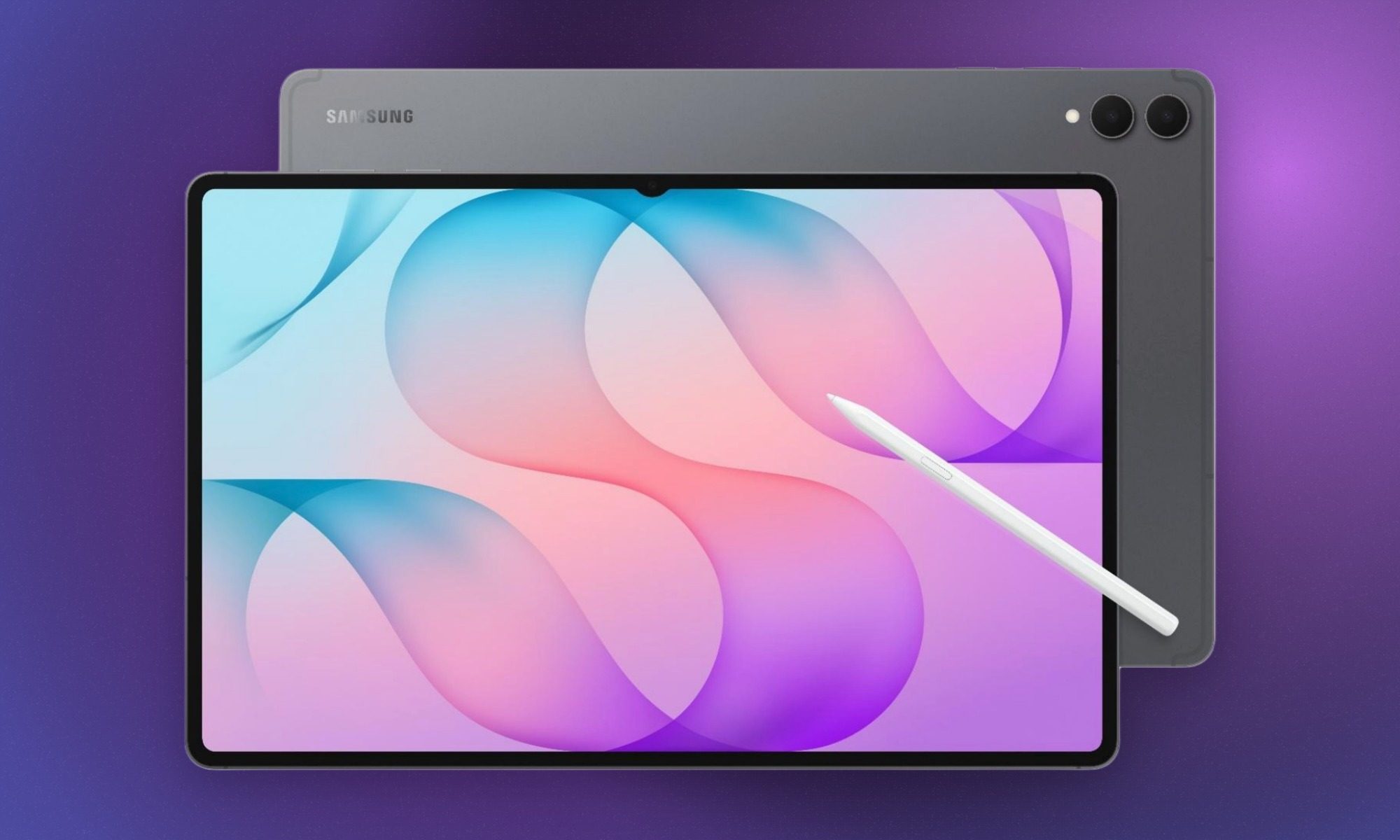
Camera hardware is also unchanged. The Ultra gets a 13MP main camera, 8MP ultrawide, and 12MP selfie camera, while the Tab S12+ drops the ultrawide. Both tablets come with 12GB of RAM and 256GB or 512GB of storage. The Ultra adds a 16GB RAM and 1TB configuration, while microSD expansion remains available. The Tab S12+ gets one more tangible improvement. Its battery grows to 10,600mAh, and the tablet reportedly drops to 555 grams.
MediaTek is doing most of the upgrade work
The Dimensity 9500 had already appeared in a Geekbench listing tied to the Tab S12 Ultra. The early result showed only a modest CPU improvement over the Tab S11 Ultra, although unfinished hardware rarely represents final performance.

Samsung’s continued use of MediaTek is still notable. Previous testing suggested the Dimensity 9500 trades peak CPU performance for stronger sustained performance, thermal stability, and a more capable on-device AI processor, all of which make sense in a large tablet designed for multitasking, gaming, and creative work.
WinFuture claims the Galaxy Tab S12 series will launch on October 7 with Android 17 and One UI 9. European pricing reportedly starts at €1,299 for the Tab S12+ and €1,539 for the Ultra. Samsung had already warned that rising memory and component costs could push future device prices higher. If these specifications are accurate, the Dimensity 9500 may end up carrying most of the burden of convincing buyers to pick up the latest model instead of the previous generation at a lower price.
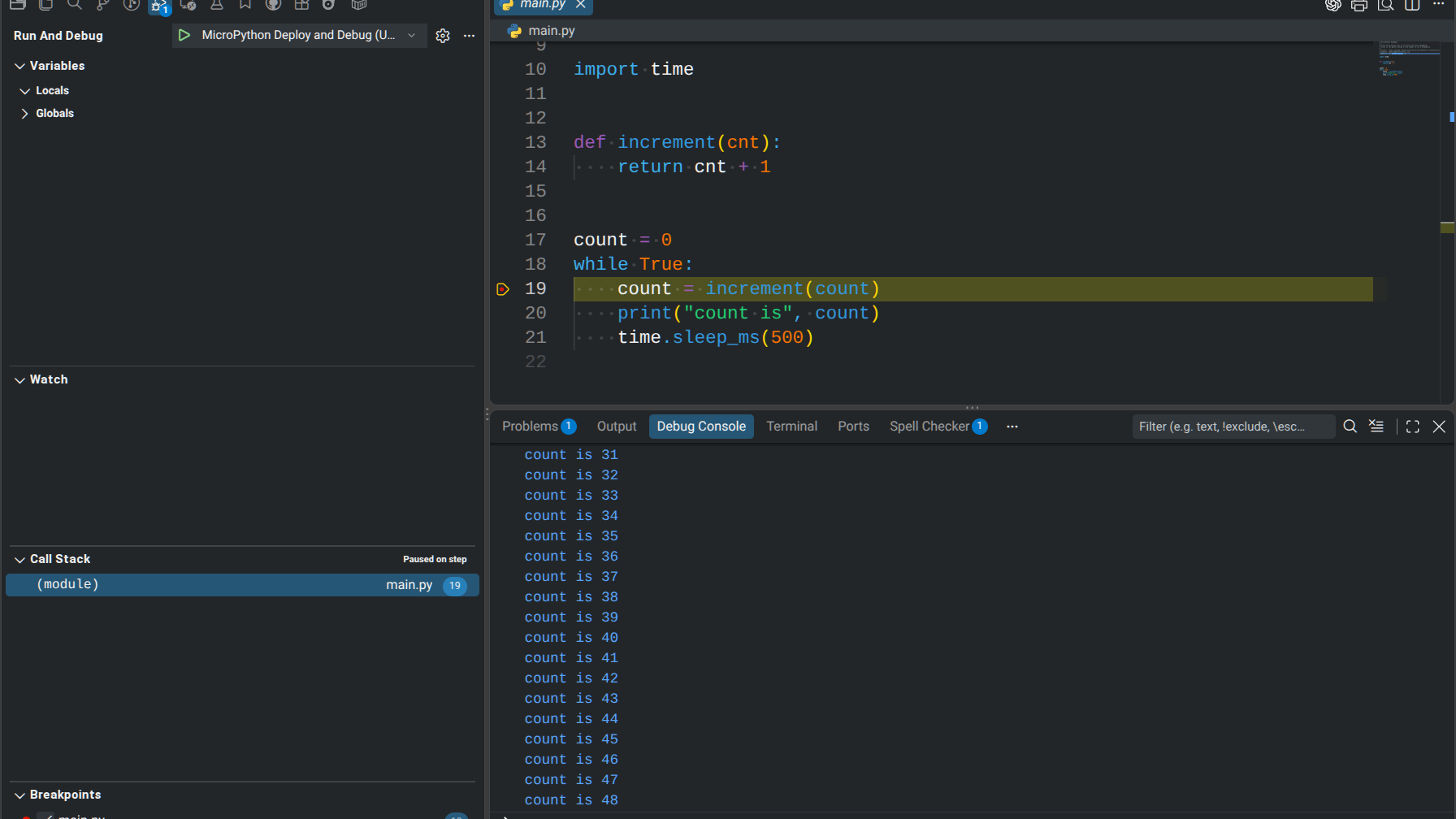
If you’ve used MicroPython much, you know that debugging usually amounts to printing a few things out, trying your code out, and then repeating. But [ghi-electronics] wants you to have full on-chip source-code debugging in Visual Studio. You don’t need anything special to use it — just a supported MicroPython host and the same USB cable you program with now.
The downside is that you either have to build a custom MicroPython image and flash it or use one that they include. They support several Raspberry Pi Pico versions and ESP32 chips, as well. However, at least one “odd” Pico we had lying around wouldn’t take the firmware. A stock one did, and it worked as you would expect. A little more investigation showed the odd Pico (an RP2040 GEEK) probably did take the firmware; it just produced an error during setup. There is a known problem with Linux and the ESP32-S3 having similar behavior.
Of course, you can build your own image, but now you are talking a bit more work to get a toolchain and all the dependencies together. For simple programs, you might not need a full-blown debugger. But it is nice to be able to peek at variables and see the control flow visually.
There are a few limitations documented on GitHub. For example, you can’t catch exceptions that the code already catches, although, presumably, you could set a breakpoint in the exception handler. Breakpoints halt all threads. There are a few other limits, but nothing we’d consider a showstopper.
Full Python has some debugging assistance built into it. MicroPython has some of the same things, but it isn’t trivial to build a debugger.

As the heads of leading artificial intelligence companies came together last weekend to warn that runaway AI development could lead to catastrophic outcomes, momentum briefly seemed to be building for regulatory action from Washington.
But one connected and influential tech industry figure has become the leading voice opposing many proposals for government action — on his podcast, in media appearances, and in his private advice to President Donald Trump, who now calls AI doomsday fears a “hoax.”
David Sacks is a venture capitalist and part of the “PayPal Mafia” who, in recent years, has exemplified the rightward shift of some in the tech sector. He advised Elon Musk on his takeover of Twitter in 2022, and regularly unleashes a stream of scornful commentary about Democrats on social media and on the podcast All-In, which he co-hosts with three other venture capitalists.
And for anyone wondering why Trump seems so newly dug-in against AI safety warnings — and against government action that might slow down the runaway technology before people might get hurt — Sacks is right at the center of the conversation. When Politico asked this week about Trump’s newly vocal hostility to AI safety, a senior White House official said: “David Sacks. It’s all coming from him.”
- Venture capitalist David Sacks is one of Trump’s most important advisers on AI, typically arguing against government regulation of the industry on safety and other issues.
- Yet Sacks is in key ways at odds with the two leading AI companies, OpenAI and Anthropic. He and other influential Silicon Valley figures have backed an alternative vision for the industry’s future focused on “open weight” AI rather than proprietary secret models.
- Critics argue that open weight AI presents serious safety and national security risks (the leading open weight models are Chinese); defenders argue it’s better than concentrating superintelligence in two companies’ hands
- Trump’s willingness to allow sales of AI chips abroad — including to China — is in part due to Sacks’s influence.
Yet Sacks’s role in the debate is an unusual one. Though he champions the AI industry, he’s no fan of the US’s two biggest AI companies. In his years in the tech industry, he’s made powerful allies, as well as many enemies — technology investor Paul Graham once posted that Sacks may be “the most evil person in Silicon Valley” (in response, Sacks called him a bully and made insinuations of antisemitism). His role, and ideology, are a window into how complex the politics and geopolitical stakes of the AI race really are — as well as how Trump administration policy is often shaped less by agency policy processes than by who has the president’s ear.
After endorsing and fundraising for Trump in 2024 — “I love David’s house, what a house,” Trump said after a fundraiser at Sacks’s $20 million San Francisco mansion) — Sacks was rewarded with a job as the White House’s “artificial intelligence and crypto czar.” There, he helped steer policy until stepping down this past March. He still co-chairs a presidential technology board, and his influence persists — in May, the Washington Post reported that a phone call from Sacks to Trump temporarily derailed the planned signing of an executive order on AI. (Vox reached out to Sacks for this article, but he declined to comment.)
Sacks is not the only Trump adviser thinking about AI: Other top administration officials, like Treasury Secretary Scott Bessent and Chief of Staff Susie Wiles have reportedly been more concerned about the risks of new AI tools for hacking, and have been trying to establish a government body that could help oversee the industry and address these risks.
But, so far, Trump has rejected this approach, and stayed much closer to the Sacks position. In a flurry of Truth Social posts Monday, he argued that AI would be “the Greatest Economic Development Engine in History,” said that the US had to “win” against China in the AI race, and dismissed concerns AI would “destroy the World” as a “hoax.”
To understand the implications of Sacks’s influence, you have to understand his position in the Silicon Valley AI ecosystem. In conversations with AI policy insiders, it becomes clear that many view his position through the lens of both his history as a tech investor, as well as his sharp-elbowed and take-no-prisoners style.
The split he embodies isn’t just about AI safety, but a fundamental divide over which business model of AI should succeed — one that pits Sacks directly against the biggest AI companies driving the safety debate.
Sacks is pro-AI — but he’s at odds with Anthropic and OpenAI

Sacks has generally been opposed to new regulation of AI companies by the government. His preferred approach, he’s frequently said, is to “let them cook.” He wants to let tech companies march ahead, and argues that government intervention would squelch innovation. “It’s this very libertarian approach to America winning in AI,” said Chris McGuire, a senior fellow at Council on Foreign Relations who worked on tech policy for President Joe Biden’s National Security Council, of Sacks’s approach.
That puts Sacks in opposition to AI safety advocates, who argue that regulation is necessary to rein in an increasingly dangerous technology. Indeed, even the leading AI company CEOs — Dario Amodei, Sam Altman, and even Sacks’s friend Elon Musk — have called for a slowdown in advanced AI development because of these dangers.
But Sacks has tended to dismiss warnings such as that of former Anthropic employee Jacob Coxon as “doomer histrionics.” Of late, he’s also argued that if Anthropic and OpenAI are worried that their products are dangerous, that’s on them. “If the unreleased models are scary enough that you think you should slow down, I support your decision to be responsible,” Sacks posted on X on Saturday.
Indeed, though Sacks is often shorthanded as pro-AI, he’s in some key ways been quite critical of the leading AI labs, OpenAI and Anthropic, themselves.
That’s partly because he’s aligned with a different faction in Silicon Valley. Sacks and key allies like Nvidia CEO Jensen Huang and Meta CEO Mark Zuckerberg want much more AI development from many more places, by way of models that are “open weight” or “open source.” These models make their parameters (“weights”) publicly available, in contrast to the flagship proprietary models of OpenAI and Anthropic.
“Keeping innovation decentralized and accessible is the key to avoiding an unsafe and dystopian future where advanced AI capabilities are centralized and controlled by only a few hands,” Sacks posted on X earlier month. He has accused companies like Anthropic of trying to “kneecap open source” with regulation.
Proponents of open models hope advanced AI becomes something more like a widely available resource that individual users and companies can download, run themselves, and customize to their internal specifications — rather than having to go through a handful of companies that control access. “The defining questions of our age are who will have access to superintelligence and what will we direct it towards,” Zuckerberg wrote in August. “Will it be centralized and restricted to a few institutions, or will it be a tool that empowers everyone?”
There’s a lot of money riding on this bet. Huang’s Nvidia manufactures chips used to train AI models and would like more customers (and just this month agreed to buy Hugging Face, a repository of open models). Zuckerberg’s Meta has hoped to be the US leader in open model development.
More broadly, software startup founders and the venture capitalists who fund them can benefit from powerful open weight AI being widely available, since it’s a cheaper alternative to OpenAI and Anthropic’s expensive products. Sacks, as a co-founder of the venture capitalist firm Craft Ventures, and host of a popular podcast with three fellow venture capitalists, is more closely tied to this part of the tech ecosystem than any other.
Many believe that capable open weight AI presents a serious threat to the Big Two AI companies’ current dominance of the AI frontier, and thus their business model. The flip side is that some have argued that the Big Two present an “existential threat” to the software industry, predicting the frontier labs’ products could take over much of what today’s software companies do.
But regarding safety concerns, advocates have warned about the dangers of both closed “frontier” models and open models. “On the open source side in particular, it’s easier to have a bad actor — a terrorist group, a rogue nation, an extremist political group that wants to cause chaos,” said Brendan Steinhauser of the Alliance for Secure AI, an AI safety advocacy group. “They can strip out safety features and guardrails, they can do some fine tuning to basically make the models even more dangerous, and get them to help them develop biological weapons.”
The open weight AI faction argues, though, that intrusive government regulation on AI would end up mostly hurting open models and the companies that use them — entrenching the dominance of OpenAI and Anthropic, who would be better able to comply with onerous safety requirements given their size. They’ve publicly pooh-poohed AI’s existential risks, instead playing up what they say are the dangers that AI’s power will be controlled by a privileged few. Less regulation, Sacks argues, will let more flowers bloom.
These concerns aren’t only held by those with financial stakes. There’s also a school of thought on the left that is deeply suspicious of OpenAI and Anthropic’s intentions, and particularly around the companies’ desire for an exemption from antitrust enforcement, which they say will let them work together to address safety.
Commentator Matt Stoller has argued that those warning about dangerous “superintelligence” are playing into the hands of tech “oligarchs.” And a recent American Prospect article said policymakers should “avoid codifying the preferences of the very companies who are generating the panic.” On the right, Sens. Josh Hawley (R-MO) and Ted Cruz (R-TX) have expressed similar concerns that large AI companies’ demands for restrictions are a cover for consolidating market dominance.
At a Politico event Wednesday — and to give a sense of just how strange the bedfellows can be around this issue — Sacks stressed that he agreed with former Democratic FTC chair Lina Khan that existing liability law already applies to AI companies. But while Khan said she was open to adding new legal restrictions, Sacks is arguing that existing law is perfectly sufficient for addressing safety risks. “These CEOs are going to be subject to massive civil and criminal liability if they put out products that are unsafe,” he said.
In other comments at the event, Sacks did appear to have softened his tone a bit, saying he was “open to ideas” about AI safety, and that “we should have an intelligent conversation” about how to manage risks. The problem, he argued, was that “what’s going on right now is a fear campaign” that makes such an intelligent conversation impossible.
Former Rep. Brad Carson, who heads Americans for Responsible Innovation, an AI safety advocacy group, said that Sacks has been the one preventing such a conversation. “When it comes to AI policy the Trump administration has, through their unwillingness to even talk about reasonable guardrails, brought things to such a crisis point that the industry is in jeopardy,” Carson said. “In many ways, David Sacks is the author of that ill-fated intransigence.”
Sacks, for his part, has pointed to Anthropic’s funding of much of the AI safety advocacy world — for instance, the company has given $40 million to an advocacy group founded by Carson — and said the company is “running a sophisticated regulatory capture strategy based on fear-mongering.”
If we’re in an AI race with China, why are some of Trump’s policies friendly to Chinese AI?

The influence of Sacks and his worldview could help explain another seeming mystery of the administration: If Trump thinks it’s so crucial that the United States beats China in the AI race, why has he been so willing to bless the sale of AI chips abroad — including even to China?
National security hawks both inside and outside the Trump administration had warned against these sales and hoped to impose stringent controls on the export of Nvidia chips, fearing that if too many got out, the US would squander its AI lead over China.
Huang lobbied intensely against this, hoping to sell Nvidia’s most advanced chips to Saudi Arabia, and the United Arab Emirates — and trying to resume sales of a less advanced but still sophisticated AI chip to China itself. Sacks became Huang’s biggest champion inside the administration — and they won over the president. Sacks publicly argued that blocking US chip sales to China and other countries would provide an opening for Chinese companies like Huawei to dominate their domestic market and gain a greater global market share with competing chips, putting the US on weaker footing in the long run.
National security-minded critics disagreed, arguing that Sacks’s particular vision for AI will likely, in practice, strengthen China’s AI sector. “I think we can have a reasonable debate on domestic policy,” said McGuire of the Council on Foreign Relations. “But when we start from the premise that the American AI stack — models, cloud, and chips — should be dominant globally, then selling China the technology to advance its own capability obviously undercuts that.”
China also looms over the cause of open weight AI that Sacks champions — because it’s Chinese companies like DeepSeek and Moonshot that produce some of the leading open weight models that US software startups currently use.
OpenAI and Anthropic argue that these Chinese models present national security risks, claim they rely heavily on copying or “distilling” their own models, and want the US government to scrutinize them. Some Trump officials have reportedly been sympathetic to their concerns, but the administration hasn’t restricted these Chinese models’ use in the US. Sacks argues that a US ban on Chinese open weight models will just end up enshrining the OpenAI-Anthropic duopoly he so loathes.
Overall, though, on both national security risks and AI safety risks, Sacks and Huang still seem to have the president’s ear.
On Monday, Sacks was onstage with Huang at the live All-In podcast event discussing the “doomer hoax” when a purportedly impromptu call came through for the Nvidia CEO: It was Trump.
“The robots are not going to be taking over the world,” Trump said on speakerphone. “That’s not going to happen.”
Then, after speaking for several minutes, Trump added: “David has done an amazing job.”
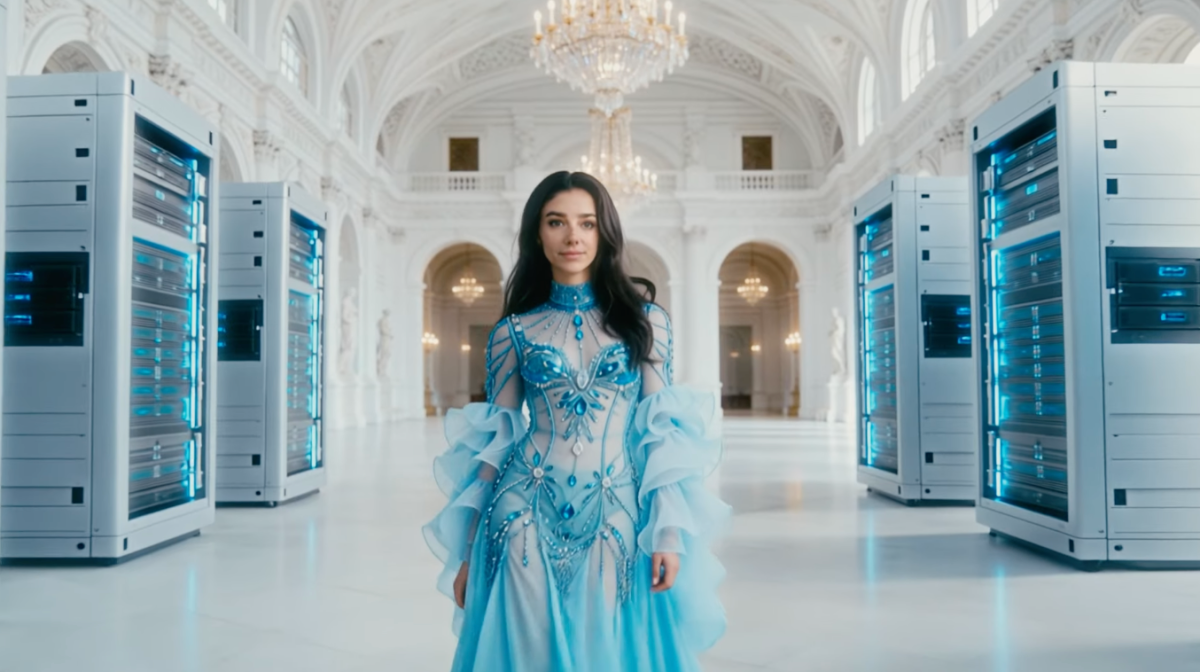
Tilly Norwood, an AI-generated “actress,” is having a rough time on its first press tour. The production company that created it, Particle6 Group, has made it available for 75 simultaneous interviews with journalists, and it seems to be making mistakes in all of them. (I was not invited to speak with it, and frankly, I cannot imagine why Particle6 didn’t want to schedule that meeting.)
In one particularly odd interview with Piers Morgan and actor Tom Conti, which was recorded and posted online, Norwood seems to malfunction and abruptly begin speaking Chinese.
When discussing the movie that Norwood is promoting, Conti asks if the other actors are also AI-generated. Norwood responds by saying that human writers, editors, and directors were involved.
“You didn’t really understand the question,” Conti replies. “Are the other actors on the screen with you real actors, or are they computer-generated images? Do you know?”
“Ah, right. You’re asking about the other actors in Misaligned,” Norwood starts. “They’re all digital twins just like me. It’s a hybrid production which m—”
Norwood stops talking for a second, then starts speaking in Chinese for over 10 seconds.
“Tilly, if I could just ask you a question,” Morgan says, looking puzzled. “It’s Piers again … You seem to be speaking Chinese completely randomly for no reason. Why did you do that?” he asks.
“Oh, my apologies,” the AI replies. “It seems I had a little hiccup there. I certainly didn’t mean to start speaking Chinese or impersonate Piers. Sometimes my wires get a bit crossed, you know?”
When AI bots try to act like humans, they can be so convincing that people forget they’re chatting with a computer, which can lead to dangerous outcomes. But Norwood is so surprisingly bad at talking to people that it’s almost suspicious.
Perhaps Particle6 Group calculated that people would be more likely to talk about Norwood if they were making fun of it, figuring no one would take its upcoming film seriously.
When you purchase through links in our articles, we may earn a small commission. This doesn’t affect our editorial independence.

Bose has just unveiled the Sport Open Earbuds – a new addition to its ever-expanding headphones line-up.
Designed “for running, workouts and outdoor adventures”, how does the Sport Open measure up to Bose’s Sport Earbuds which launched back in 2020? If you own the older pair, is now the time to upgrade?
Ahead of our Bose Sport Open Earbuds review, we’ve compared its initial specs to the Sport Earbuds and highlighted the key upgrades below. Read on to see what’s new and whether you think the buds will enter our best workout headphones guide.
Not sold on a workout-specific pair? Check out our round-up of the best wireless earbuds instead.
Price and Availability
The Bose Sport Open Earbuds will launch from October 15, and have an RRP of $199 / £179.95. The buds will be available in a choice between Black, White Smoke and a limited-edition Eucalyptus Green.
In comparison, the Bose Sport Earbuds are no longer readily available to buy. However, the buds were priced the same as the new Sport Open Earbuds, with an RRP of £179.95.
Bose Sport Open Earbuds have an open-ear design
The biggest and most obvious difference between the buds is with their respective designs. While the Sport Earbuds have tips that plug into your ear, the Sport Open Earbuds are bone conducting buds that sport a C-arm cuff that wraps around the ear, rather than sitting inside the canal.
If you’ve never worn open-ear buds before then the thought might be off-putting. Sure, by their very nature, open-ears don’t offer active noise cancellation, but that’s not what they’re designed for. Instead, the buds allow you to remain aware of traffic, announcements and passers-by while still enabling you to listen to music on the go.

Even so, Bose explains that thanks to Auto Volume the buds will automatically adjust loudness as ambient noise changes.
But what does all of this mean for the sound quality? According to Bose, the Sport Open is equipped with the brand’s OpenAudio technology that’s engineered to “deliver rich, personal sound” even with the open design. In addition, Bose SoundDesign digital sound processing promises balanced clarity and deep bass levels too.

Bose Sport Open Earbuds are rated IP54
Earbuds that are designed for workouts need to offer a solid level of durability, as they’ll be exposed to sweat, rain and frequent tumbles too. While the original Sport Earbuds are IPX4 rated, which means the buds are protected from water splashes but not from dust, the Sport Open Earbuds boast a higher IP54 rating instead.
IP54 means the buds can withstand splashes of water and are dust-resistant too. In addition, there are textured physical buttons on the buds that allow you to control audio, even if your fingers are sweaty during a workout too. Bose also promises that thanks to its cuff design, the Sport Open Earbuds will stay in place throughout head shakes and even cartwheels.
We can’t promise that we’ll be able to specifically verify the cartwheel claim, but we’ll report back on how secure the buds are once we review them.
Bose Sport Open Earbuds promise longer battery life
Although Bose stated that the Sport Earbuds should see up to five hours of battery per earbud, and 15 hours with the charging case, our tests actually saw slightly lower figures of between three to four hours. It’s not far off, but definitely means you’ll need to make sure your case is fully charged in case you’re caught short.

Speaking of the case, the Sport Earbuds’ own doesn’t offer wireless charging. It’s not a dealbreaker, but it’s a shame as wireless charging is undoubtedly a convenient addition. In comparison, the Sport Open Earbuds do have a wireless charging case and store 22 hours of power too.
Not only that, but the Sport Open Earbuds also promise up to seven hours of battery too. As the Sport Earbuds fell slightly short of this promise, we’ll have to wait and see how the Sport Open fare.

From October, the Sport Open Earbuds will include Google Find Hub and Alexa+
Bose has said that a planned firmware update that’ll follow the release of the Ultra Open Earbuds (2nd Gen) will introduce new features. These include Google Find Hub, which will allow you to locate the buds if you lose them, and built-in Alexa+ for easy hands-free controls. In comparison, the Sport Earbuds didn’t have any built-in voice assistants, although you could easily use one via your paired phone or device.
Early Verdict
As we’re yet to review the Bose Sport Open Earbuds, we’ll refrain from providing too conclusive a verdict until we get our hands on the pair. However, with an open-ear design that promises to keep you aware of your surroundings without disrupting audio quality, longer battery and a stronger IP rating, the Bose Sport Open Earbuds seem like a promising upgrade from the Sport Earbuds.
We’ll update this versus once we review the Bose Sport Open Earbuds.

NewsBeat19 seconds ago
Millwall vs West Ham LIVE: Huge police presence with fears of violence as statement released

Sports4 minutes ago
Eddie Hearn gives honest verdict on Conor Benn’s chances in Chris Eubank Jr trilogy at 168lbs
Tech5 minutes ago
AI Insiders Issue New Warnings – Including Former Anthropic Engineer Jacob Coxon

Fashion1 week ago
Weekend Open Thread – Corporette.com

Tech2 weeks ago
Memory prices are slowing because buyers ran out of money

Business1 week ago
Micron Stock Climbs Above $1,031 as AI Memory Crunch and a $50 Billion Outlook Fuel the Rally

News Videos6 minutes ago
Cryptocurrency and Bitcoin Trading in Nepal | Is Bitcoin legal | Should You Trade?

News Videos12 minutes ago
8 Minimalist Money Rules You MUST Follow to Always be Financially Stable

News Videos29 minutes ago
4 Levels of Financial Freedom or FIRE | Case Studies with Parimal Ade
-

 Tech6 days ago
The Latest Weird Thing to Play Doom Is the Mapped-Out Brain of a Fruit Fly
-

 Fashion19 hours ago
Weekend Open Thread: Talbots – Corporette.com
-

 Crypto World4 days ago
Kraken Lets xStocks Holders Earn Yield Through DeFi
-

 Crypto World3 days ago
US Charges Robinhood Engineers Over Crypto Listing Trades
-

 Crypto World7 days ago
Can AI Build a Startup in 72 Hours? Elon Musk's Team Will Livestream the Test
-

 Crypto World3 days ago
What Is the Status of the U.S.-Iran Peace Talks? Here's What Both Sides Are Saying
-

 Crypto World5 days ago
Elon Musk Drops a Bombshell: Grok 5 Could Be the AGI Breakthrough
-

 Business6 days ago
Rivals Sam Altman and Elon Musk Rally Behind Dario Amodei’s Call for a Slowdown in AI Development
-

 Crypto World5 days ago
Revolut Attackers Warn of Ongoing Daily Customer Data Leaks
-

 Crypto World6 days ago
New Tesla Roadster Uses SpaceX Tech. Will It Impact the Stock Price?
-
 NewsBeat5 days ago
‘Sick conspiracy’: Trump says only guardrails AI needs is ‘a strong and smart (High IQ!) president’ in all-caps rant
-

 Crypto World4 days ago
NVIDIA Analysis: Attempted Rising Wedge Breakout Amid Pressure on the AI Sector
-
Business5 days ago
SK Hynix ADRs Fall More Than 6% as Memory Rally Breaks on Fears of Slower AI Spending
-

 Crypto World5 days ago
DOJ Seeks to Seize $61M in Iran Oil Funds From Binance Accounts It Vouched For
-
 NewsBeat6 days ago
Last Night of the Proms pays moving tribute to Dolly Parton as Sheridan Smith wears a gold sequin jumpsuit in memory of the Queen of Country
-
Crypto World5 days ago
Can Circle’s Arc Repeat Robinhood Chain’s Meme Coin Boom?
-

 Crypto World5 days ago
3 Token Unlocks to Watch in the Third Week of September 2026
-

 Crypto World6 days ago
AI Safety Burden Falls on Chief Executives as Trump Prioritizes China Race
-

 Crypto World6 days ago
Goldman Sachs backs 25bp Fed hike after CPI
-

 Crypto World4 days ago
Robinhood engineers charged over $50K crypto scheme
You must be logged in to post a comment Login