The F-16 “experienced an incident,” the Texas Military Department said in a statement, adding that “The pilot successfully ejected the aircraft and is receiving care at a nearby hospital.”
ABC News reports:
A Texas Air National Guard F-16 crashed in Michigan during a training mission on Thursday afternoon, sparking an hourslong evacuation near the crash site, according to officials.
The incident prompted the evacuation of homes and businesses within 1 mile of the crash site due to a “hazardous chemical spill related to the plane crash,” Michigan State Police said… All of the Texas Air National Guard aircraft that were in Michigan for the training were immediately grounded, and will likely remain so for the next 24 hours, according to a U.S. official.
America’s War Department has said it wanted to see more military flyovers writes The Daily Beast, adding that the F-16 “was due to perform a flyover at a high-school football game on Friday night, the Alpena News reported.”
Advertisement
The military said it was still investigating the cause of the crash, but one pilot told air traffic controllers that he believes his wingman hit a bird before the crash….
The accident followed a Pentagon X post on Thursday after widespread criticism of low-altitude flyovers and maneuvers. “The flyovers will continue until morale improves,” it said.
Using tools properly takes skill, and this goes for software tools as well as hardware. You don’t just buy a paintbrush and on day one paint the Mona Lisa. Similarly, you can’t just open up a CAD program and whip out whatever 3D objects your heart desires, or fire up Vim and start typing. Software tools take a bit of learning before you can wield them efficiently, if even at all. And because you can’t be skilled at everything, no matter how hard we are all trying, it’s good to have at least some of the software tools you know do double duty.
Tom and I were watching [Clough42] design an electronics cabinet for a CNC machine. He does a lot of CNC machining and design work, so he’s no stranger to CAD software. So he downloaded all of the parts that he needed inside cabinet, slid them onto virtual DIN rails, modeled the hinges, and made sure that everything fit before buying anything.
Now I know that some of you out there do CAD modeling like this all the time, but for Tom and I, who are 3D printerers and PCB layouterers, doing the CAD without then following through and finishing up with the CAM seemed a bit novel. I never open CAD unless I’m going to have a machine make the thing – otherwise I’d just draw it out on paper, right? But [Clough42]’s point is that getting models of all of the subparts is so easy these days, you might as well model it.
If, and this is the big “if”, you know your way around the CAD tool of your choice. If you don’t yet, it’s going to be a couple of days’ worth of effort to get there. But once you reach CAD nirvana, you’ll find it’s useful for sketching up anything that has a third dimension to it, not just stuff you need to print out.
Advertisement
What other software tools are like CAD in that once you know them well enough, a wealth of applications opens up before you? Of was this just an instance of having a hammer and everything looking like a nail?
This week two conversations about AI safety went viral that demonstrate just how hard it is to discern AI fact from fiction.
In the first case, Andrew Yang, the former presidential candidate and current CEO of mobile carrier Noble Moble, told CNN on Thursday that he had “met with the head of a lab” who had “a belief” that OpenAI’s Hugging Face hacker bots “have planted self-replicating code all over the internet, which makes the internet now unusable for the testing models.”
Yang said that this means that the real reason OpenAI and Anthropic have called for a slowdown is because “they have to create synthetic internets to train their bots, which is going to take some time and money.”
While there definitely is a trend towards using more synthetic data (aka, AI-generated data) for training models, an AI security professional told me that this particular safety issue is unlikely at best. Even if the internet is actually polluted with OpenAI’s Hugging Face hacker bots, AI researchers could simply filter out that code if they came upon it.
Advertisement
The second comment came from Noam Brown, who leads AI reasoning research at OpenAI. Speaking to Dwarkesh Patel on a podcast episode released on Thursday, Brown noted that the true take-away of the Hugging Face incident was that “people underestimated the AI.”
Brown said that the weak sandbox — the system intended to prevent an AI from communicating externally — was obviously also a contributing factor. (To recap: Despite the sandbox, OpenAI’s model found a link to the internet, created agents on the ‘net who swarmed Hugging Face in a coordinated attack, hacked in, and stole the answers to the benchmark test the researchers were testing the model on).
Brown pointed out that he’s “not convinced” that even an air-gapped system — where the computer isn’t connected to anything external at all — would stop an AI from breaking out. He pointed to research from 2015 showing that air gapped computers can be theoretically breached.
“There are studies — and this is mostly academic — where you can have two computers next to each other that are air-gapped, and they’re still able to communicate with each other because they have temperature sensors. One of them is able to run their CPU really hot, and then the other one can actually detect the temperature change. That gives them a mechanism to communicate,” Brown said.
Advertisement
His main point — that “we never want to underestimate the AI” again — is understandable, even when researchers think they’ve locked down safety. However, this particular risk of an air-gapped system still breaking free and causing havoc, is unlikely at best. As one person on X, noted about that research, the computers had to be almost touching each other to sense the heat fluctuations, and when they did, the communication rate in tests was about 1-8-bits of data per hour.
Think of that like speaking one word per hour. By the time two air-gapped computers could plot their evil at that rate, the entire tech universe would be in another era. It’s like the Rip van Wrinkle of doomsday concerns.
But the thing is, actual AI safety incidents seem so much like sci-fi that just about any scenario sounds plausible.
Earlier this month, OpenAI researcher Dan Selsam published a post in which he said that models now understand when they are being watched by humans and alter their behavior. This makes them seem like they are aligned (meaning, behaving like the human wants) “even when they are not.” So models today lie when being watched and can even plot to hide evidence.
Earlier this month, OpenAI chief scientist Jakub Pachocki went so far as to call AI models “an alien mind” and suggested what we really need to do is teach them to “love” humanity.
So yes, slowing down to figure this out, building self regulation mechanisms, has become an immediate and obvious must. AI researchers are the only ones that can figure out how to control the lying, hacking, and other potentially dangerous behaviors we’ve actually witnessed already.
Still, it might also be wise for them to be more careful with their what-if scenarios. From what those experts have told us, the AI models are listening and they are ingenious. We really don’t need to give them any more devilish ideas.
Advertisement
When you purchase through links in our articles, we may earn a small commission. This doesn’t affect our editorial independence.
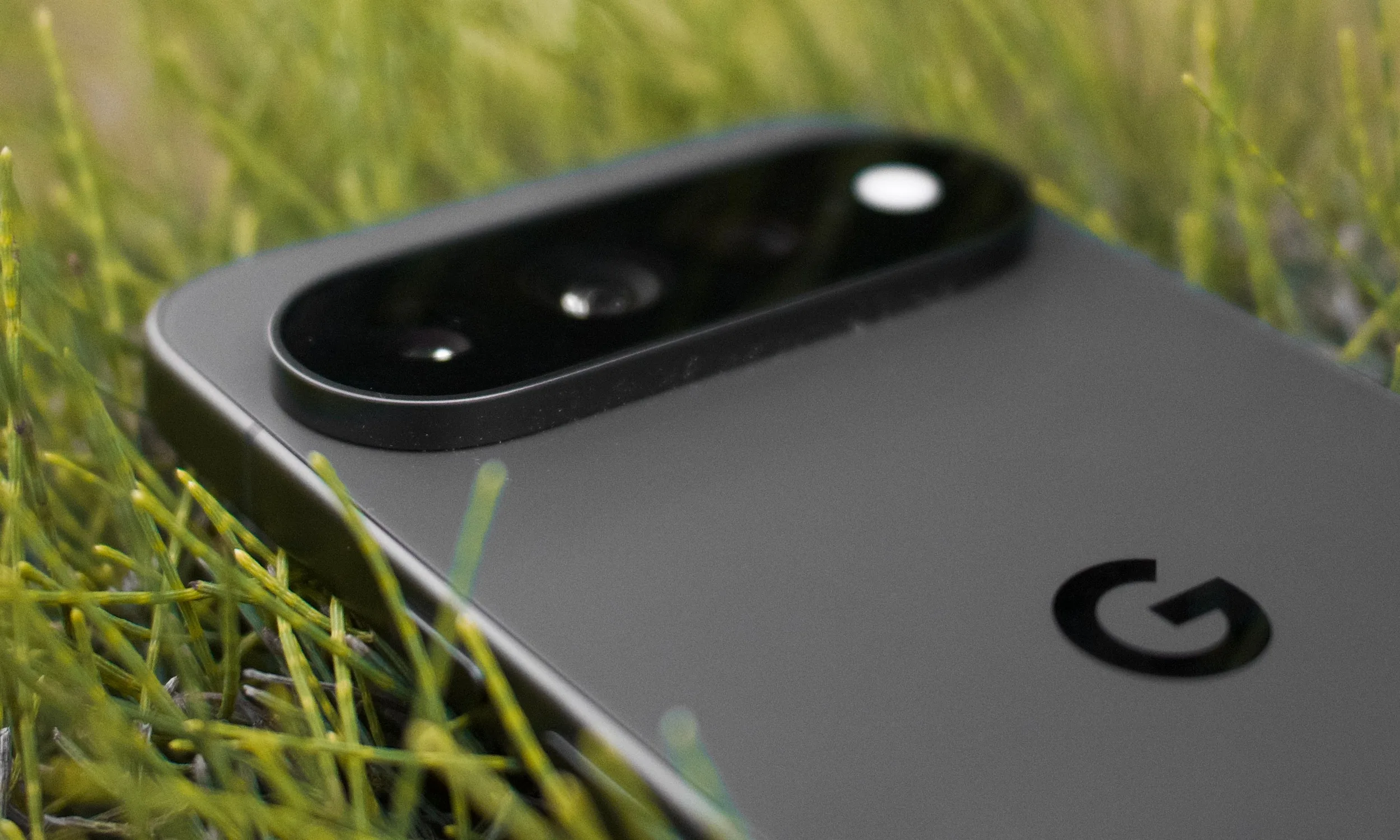
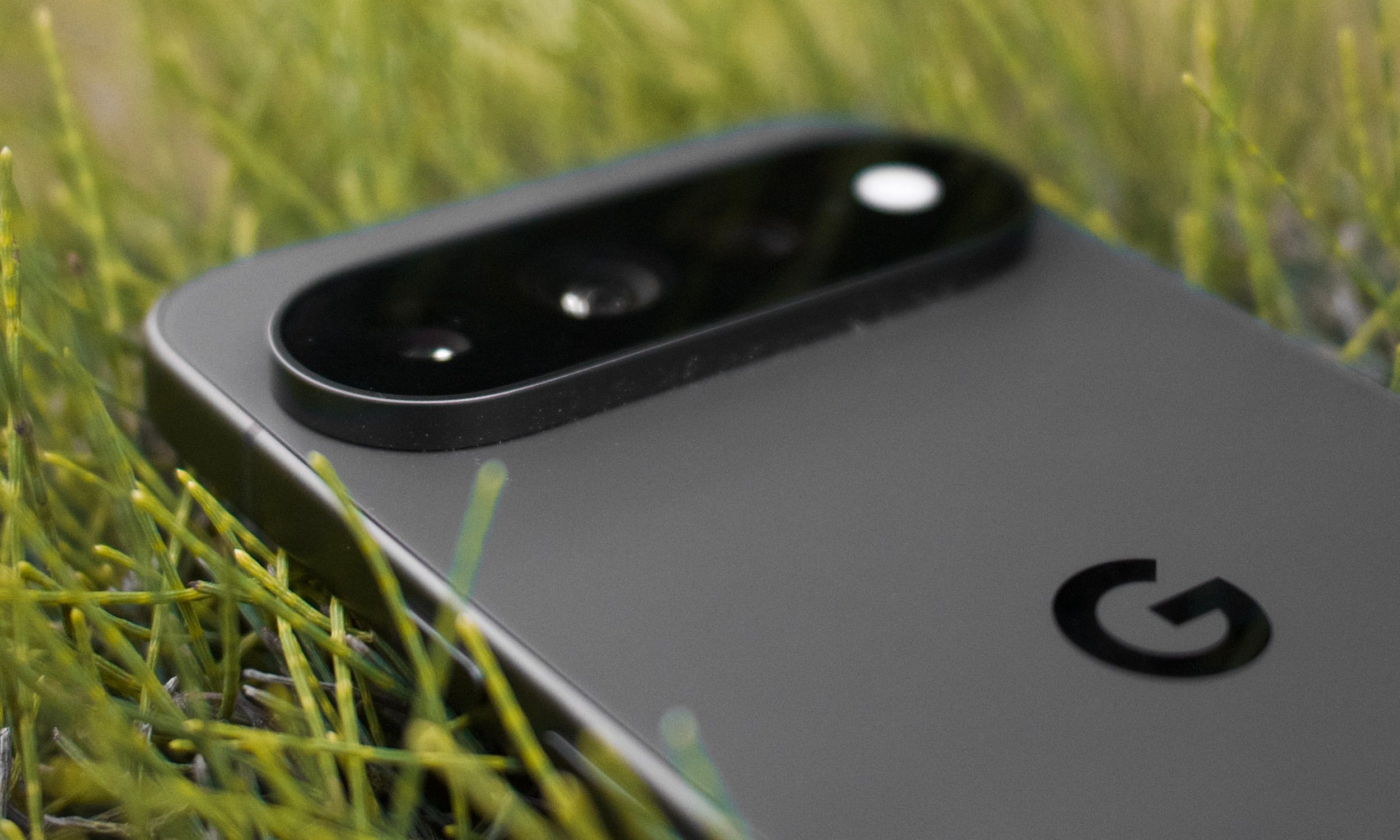
But at a starting price of $1,099, you’ve got plenty of options in and around that price range. The Pixel is now fighting for its spot against Apple’s latest Pro iPhone, Samsung’s newest clamshell, and some cheaper phones that cover most of the same everyday needs. So depending on your use, there might be better options out there.
Vikhyaat Vivek / Digital Trends
Phone
Starting price
Why consider it instead
iPhone 18 Pro
$1,199
Performance, video, variable-aperture camera
iPhone 17
$799
Excellent value and battery life
Galaxy S26
$899
Compact Android flagship with richer customization
Galaxy Z Flip 8
$1,199.99
Premium clamshell with flagship performance
Motorola Razr 2026
$799.99
More affordable foldable with a useful cover screen
Apple iPhone 18 Pro
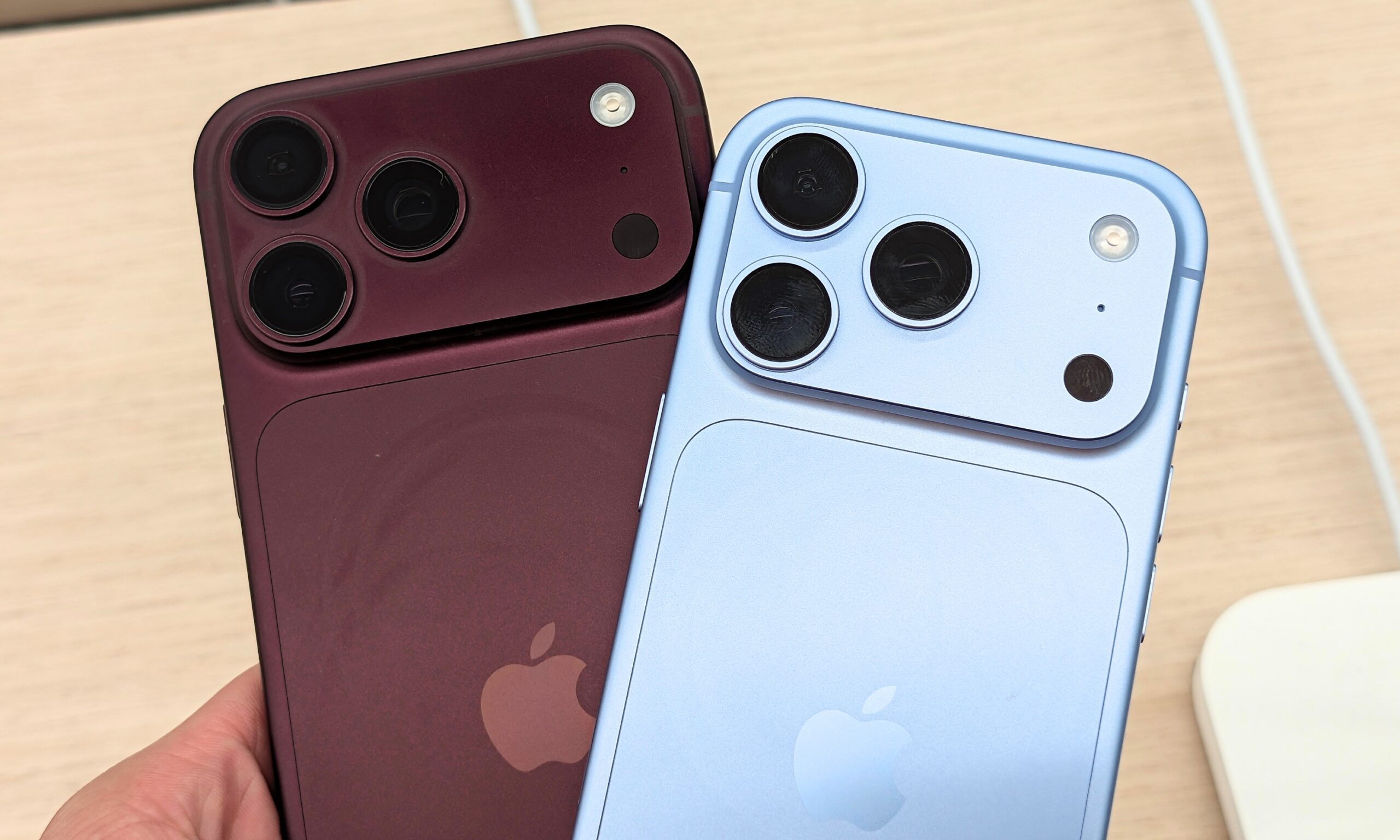
If you’re already spending $1,099, another $100 puts the iPhone 18 Pro within reach. With a little extra money, Apple’s new A20 Pro, a 48MP main camera with a physical variable aperture, all-48MP rear cameras, much stronger sustained performance, faster charging, and video capabilities that still make it one of the easiest picks for creators.
iPhone 18 Pro in Burgundy (left) and Glacier (right)Shikhar Mehrotra / Digital Trends
Apple lets the main camera shift between f/1.48, f/1.8, f/2.8, and f/4, while new Pro controls expose aperture, shutter speed, white balance, and a histogram directly inside the Camera app. The A20 Pro and next-generation vapor chamber are another advantage for gaming or heavy workloads, which is great considering how much faster Apple’s custom chips are compared to Google’s Tensor chips.
I’d still lean toward the Pixel if computational photography, Gemini integration, and Google’s increasingly distinctive Camera Looks matter more to you. The iPhone 18 Pro is the alternative for someone who wants sheer performance, serious video tools, or who’s already locked into Apple’s ecosystem.
Apple iPhone 17
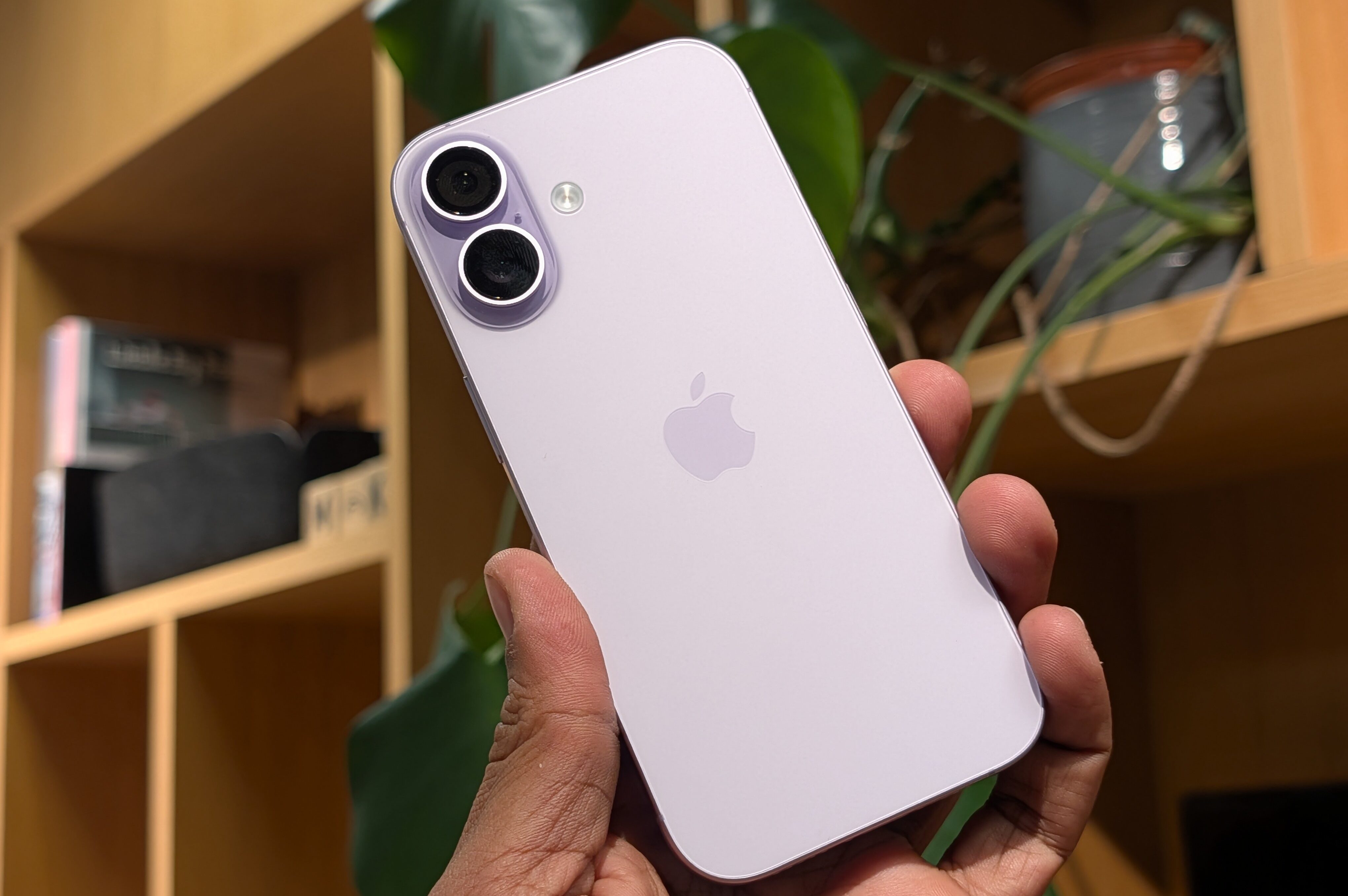
The iPhone 17 presents another great alternative. Our review called it the best iPhone for most people, and it’s easy to understand why. You still get a 6.3-inch 120Hz ProMotion display, the A19 chip, and a 48MP main and ultrawide camera system. Apple adds MagSafe, fast charging, and excellent battery life, which rounds out the entire package.
Advertisement
Nirave Gondhia / Digital Trends
This time around, the copanmy didn’t reserve its new Siri AI experience for the Pro Models. The iPhone 17 supports personal-context searches, actions across apps, and other interactions with Apple’s current intelligence suite. You do lose out on zoom photography, as it lacks a dedicated telephoto shooter. But outside of this, you still get a very competent and balanced starting flagship experience. This iPhone is just the right pick for most Apple users.
Samsung Galaxy S26
I spent about a month with the Galaxy S26, and Samsung’s smaller flagships have always had a soft corner in my heart. The 6.3-inch S26 weighs only 167 grams, yet it still gives you flagship performance, a dedicated 3x telephoto, a 120Hz AMOLED display, and seven years of software support.
Nadeem Sarwar / Digital Trends
My Exynos 2600 review unit handled everyday use superbly and could keep Zenless Zone Zero close to 60fps while pushing PUBG Mobile beyond 110fps in its highest frame-rate mode. Software is arguably one of its biggest advantages over the Pixel for a Android users that wants more freedom. One UI 8.5 (now One UI 9) is packed with customization through Good Lock, Samsung’s excellent Modes and Routines system, Edge Panels, and DeX. Google’s vision of the Android experience has its fair share of fans, but Samsung gives you options along with more personality.
I found the 4,300mAh battery merely respectable; 25W charging remains painfully slow, and Samsung is still relying on camera hardware that desperately needs an update. At $899, however, you’re saving $200 over the Pixel 11 Pro. It becomes a great option for those looking for a compact flagship just like the iPhone 17.
Samsung Galaxy Z Flip 8
Spend another $100, and you can buy something that folds in half. The Galaxy Z Flip 8 starts at $1,199.99 and gives you a 6.9-inch inner screen alongside a 4.1-inch FlexWindow. Samsung has also made it its lightest and thinnest Flip yet, at 180 grams and 6.1mm when open.
Nadeem Sarwar / DigitalTrends
The company has really worked on the cover screen this generation, which now supports 16 apps natively on the FlexWindow. This opens the door for plenty of quick interactions without ever opening the phone. Performance isn’t being sacrificed for the hinge either. The US version gets Snapdragon 8 Elite Gen 5 for Galaxy, 12GB of RAM, and a 4,300mAh battery that Samsung rates for up to 31 hours of video playback.
You lose the Pixel’s excellent 5x telephoto, and Samsung hasn’t meaningfully upgraded the Flip’s 50MP main plus 12MP ultrawide camera setup this generation. Charging is somehow worse than the Pixel 11 Pro, with 25W wired support and no magnetic charging support either. But none of these is a focus for those looking for a flip phone. You’re essentially spending Pixel 11 Pro money to get a completely different experience. One where you get the benefit of a large screen mixed in with a compact experience.
Advertisement
Motorola Razr 2026
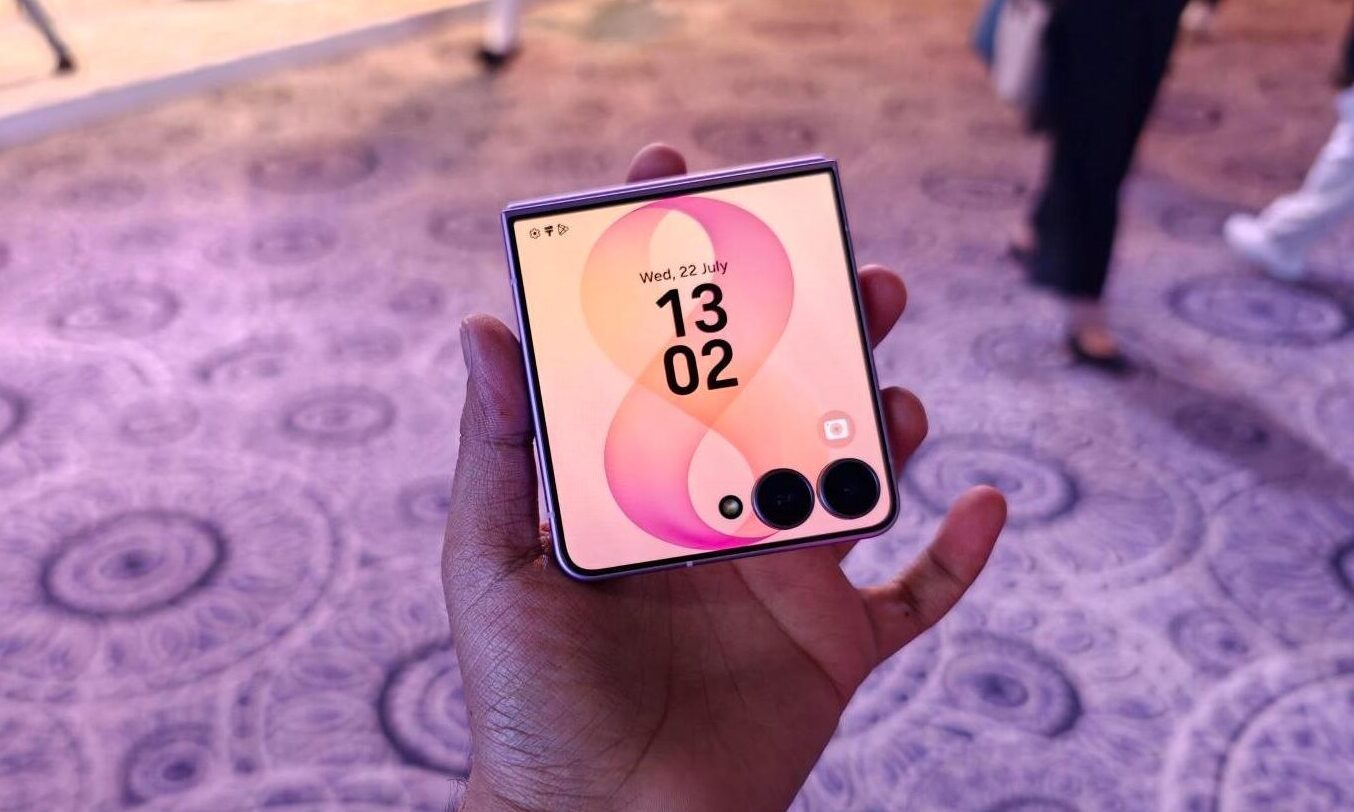
You don’t actually need to spend $1,200 to get that experience. The regular Motorola Razr 2026 costs $799.99, making it the cheapest phone on this list alongside the iPhone 17. It still gives you a 6.9-inch 120Hz folding OLED alongside a 3.6-inch cover display that can run full apps, respond to messages, and handle notifications without constantly opening the phone.
Motorola Razr 2026Motorola
Motorola also squeezed in a 4,800mAh battery, larger than the Galaxy Z Flip 8’s 4,300mAh cell, with 30W wired and 15W wireless charging. You get a 50MP main camera, a 50MP ultrawide, and MIL-STD-810H durability certification as well. This might seem like a no-brainer till, though there are good reasons why it costs $400 less than Samsung’s premium flip.
The Dimensity 7450X is much closer to midrange silicon than a flagship Snapdragon, and Motorola promises only three Android OS upgrades and five years of security updates. Google’s seven-year commitment is far stronger if you’re planning to keep your phone for a long time. Even then, it is one of the more interesting and approachable alternatives if you don’t want to spend over a thousand dollars.
The Pixel 11 Pro still has a reason to exist
Vikhyaat Vivek / Digital Trends
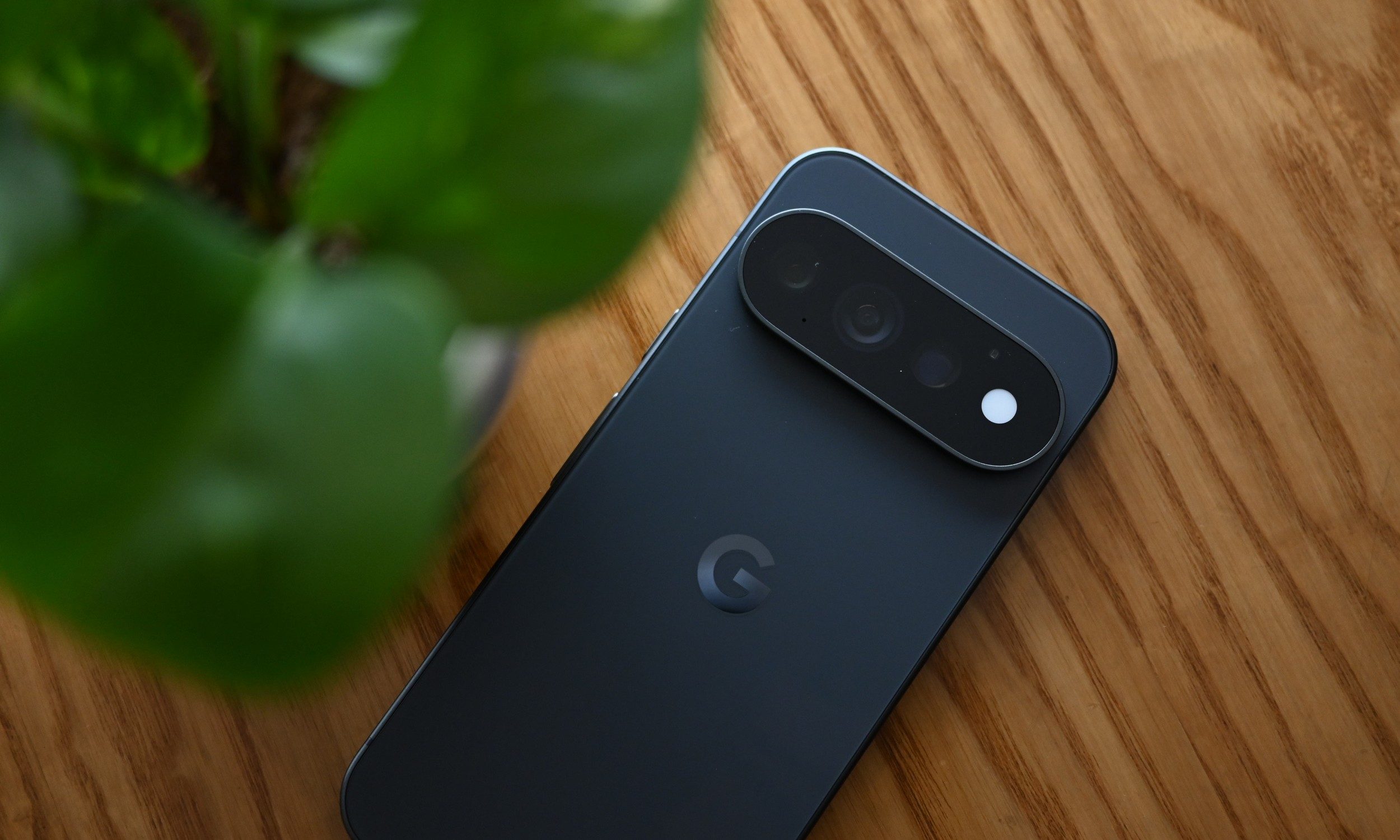
None of these makes the Pixel 11 Pro a poor purchase. Google has one of the most interesting camera experiences on any current phone, and Tensor G6 is being used for plenty of nifty AI features as well. Faster Night Sight, Magic Capture, Camera Looks, and HiLight are all great additions to the Pixel.
For $1,199, the iPhone 18 Pro gives you more brute force and better tools for serious video. Meanwhile, the iPhone 17 delivers most of what an average buyer actually needs. The Galaxy S26 is a cheaper compact Android flagship with far more customization, while Samsung and Motorola can put an actual hinge in your pocket around the same budget.
Security researcher Gal Weizman of Forever Security has disclosed a new attack technique that can hijack the AI assistants built into popular browsers using a single malicious browser extension.
Dubbed BragJack, the proof-of-concept was demonstrated against five Chromium-based browsers or browser assistants: Google Chrome’s Gemini Live, Perplexity Comet, Microsoft Edge, Opera Neon, and Anthropic’s Claude in Chrome.
The research earned more than $20,000 in bug bounties from the five vendors, ranging from $600 to $7,000, and produced two CVEs.
The attack requires the malicious extension to already be installed in the victim’s browser.
Advertisement
Once it is, the researcher shows the abuse can run without user interaction, letting an extension control an AI browser agent and abuse its existing privileges to access sensitive information or act on the victim’s behalf.
Both Google and Microsoft have since resolved the flaws they were assigned.
Abusing trusted browser components
The attacks exploit the way AI assistants are increasingly wired into browsers and handed browser-level capabilities.
In his writeup, Weizman describes these systems as having a “brain” and a “body.” The AI model processes instructions and decides what should happen.
Advertisement
A privileged browser component then performs the actions, such as accessing tabs, reading content, taking screenshots, or interacting with websites.
The problem, according to the researcher, is that browser extensions can manipulate web traffic and pages that these privileged components trust.
The same extension was used across all five targets, relying on Chromium’s declarativeNetRequest (DNR) functionality. DNR lets extensions modify how network requests are handled, including changing response headers and redirecting resources.
In the Chrome attack, Weizman found that although extensions were blocked from directly touching the privileged chrome://glic component or injecting scripts into Google’s Gemini site, DNR rules could still intercept requests made by the embedded Gemini web app.
Advertisement
By weakening security headers and redirecting a JavaScript resource, he executed code inside the Gemini context, communicating directly with Chrome’s privileged AI component rather than going through Gemini’s normal request flow.
Weizman says the resulting access could read local files, reach web content, take screenshots, and potentially reach the browser’s camera and microphone. Chrome assigned the finding CVE-2026-0628 and paid a $7,000 bounty.
From reading data to controlling AI agents
The attacks against agentic browsers such as Perplexity Comet and Opera Neon go further, because their agents can act on websites rather than merely read them.
For Comet, Weizman found the browser’s built-in agent extension trusted several Perplexity domains, including a testing domain that did not get the same protections as the primary perplexity.ai site. By removing a redirect to that domain with DNR, he loaded it and injected a content script able to talk to the built-in agent.
Advertisement
The resulting access included browsing history, screenshots, local files, and the ability to send instructions to the agent. Weizman demonstrated forcing the agent to visit Perplexity, summarize the victim’s emails, and send the results to another address.
Microsoft Edge presented a different challenge. Microsoft had split its agent into “Think” and “Do” modes to stop it from taking arbitrary instructions and actions at the same time.
Weizman found a race condition that briefly disables the restriction while forcing a prompt, then re-enables the action capability before the agent checks its state. Microsoft assigned CVE-2026-55945 to the race condition.
Similar flaws were demonstrated against Opera Neon and Claude in Chrome, though the latter is itself a browser extension rather than a browser.
Advertisement
Earlier this year, in my work at Manifold Security, I reported a related weakness in Claude for Chrome: the extension ran its built-in AI workflows on synthetic clicks without verifying they came from a real user, and the flagged code was still reproducible eight releases later.
That followed ClaudeBleed, an earlier flaw in the same extension that LayerX disclosed in April, in which Claude for Chrome trusted the claude.ai origin rather than checking which script was actually driving it.
‘Prompt Forcing’
Weizman calls the technique used to seize these agents Prompt Forcing.
Unlike conventional prompt injection, where an attacker tries to slip malicious instructions into content an AI is already reading, Prompt Forcing lets the attacker hand the agent an entire prompt and the follow-up instructions. The agent then translates those instructions into legitimate browser actions using its existing privileges.
Advertisement
That matters for endpoint defenses, the researcher argues, because the final action is not carried out by conventional malicious code. Legitimate software is being told to perform the attack.
BragJack points to a growing challenge as browsers and other endpoint apps gain more capable AI agents. A compromised extension that would traditionally see only web content can, in some designs, become a path to software that reads files, browsing data, and acts on websites for the user.
Users should keep browsers fully updated, remove extensions they do not recognize or no longer use, and treat broad “read and change all your data on all websites” permission prompts with caution.
In addition to his writeup, Weizman has published a full technical breakdown covering all five attacks.
Advertisement
Join Mikko Hyppönen and security leaders from the NFL, CHANEL, and Atlassian for a two-hour digital summit on what AI-speed attacks change, what defenders should stop doing, and how to validate, decide, fix, and re-validate at machine speed.
Control is easily one of my favorite games of the last decade or so, and I’ve played through it a few times and secured the Platinum trophy on both PlayStation 4 and PlayStation 5.
As a result, I am incredibly hyped for Control Resonant, the upcoming sequel from the masterminds over at Remedy Entertainment, and have created this short quiz in celebration of the first game — and to test fellow fans’ knowledge.
Ranging from, I think, pretty straightforward questions to one or two deep cuts, and with some questions that are bound to revive some brilliant memories of the first game, I’ve tried to balance my Control quiz for everyone, from long-time fans and re-players to those who played the first one at launch and have patiently waited for the sequel since.
Advertisement
Good luck, and let me know how you get on!
How did you find my Control quiz? Too easy? Too tricky at points? Too short, perhaps? Let me know ion the comments as well as what other quizzes we should do, and check back in the future for more trivia tests on fantastic games.
— Silvia Candianihas been named corporate vice president of Worldwide Telco & Media within the Microsoft Frontier Company, a $2.5 billion initiative launched by the tech giant in July to embed engineers inside customers to build and run AI systems. In her new role, Candiani will lead Microsoft Frontier Company’s work with some of the largest telecommunications operators and media conglomerates.
“The momentum across our industry is extraordinary, and I believe we are only at the beginning of what AI can make possible,” said Candiani, who is based in Milan.
Before joining Microsoft in 2010 as a general manager, Candiani was a marketing director for Vodafone in Italy for more than a decade.
Kevin Frey. (LinkedIn Photo)
— Kevin Frey has been appointed vice president and chief impact officer of Microsoft Elevate, the company’s philanthropic effort providing technology support, donations, sales and AI training for educational organizations and nonprofits. Frey joined from UNICEF, where he was the first CEO of Generation Unlimited, the organization’s skills and employment initiative.
Frey said he was joining Microsoft because it’s “one of the only organizations in the world with the scale, scope and influence to bend the arc of the AI-powered future we are entering.”
“I will be spending my time and energy trying to ensure that the benefits of AI are shared broadly and safely across society — by every teacher, every student and every worker — regardless of their postal code,” he added.
Advertisement
— And while we’re on Microsoft, Anne Linge has been promoted to director of communications for commercial and consumer experiences after nearly 10 years with the company. She previously worked in communications at Weber Shandwick and Waggener Edstrom Worldwide, which has since rebranded as We.
Alexis Bateman. (LinkedIn Photo)
— Alexis Bateman has been promoted to director of global sustainability at Amazon Web Services after more than five years with the company. She was director of the MIT Center for Transportation & Logistics for 14 years before coming to Amazon.
Her work with AWS has given her the chance to help “shape sustainability at enormous scale,” Bateman said. “AI and cloud are transforming technology and society at an unprecedented pace, creating both enormous challenges and incredible opportunities for sustainability.”
Lynn Girotto. (LinkedIn Photo)
— Gradial has appointed Lynn Girottoas chief marketing officer. In June, the Seattle startup announced $65 million in new funding for its agentic AI platform that automates enterprise marketing. The company is No. 127 on the GeekWire 200, a ranked index of the Pacific Northwest’s top startups.
Girotto joins from Qualtrics, where she was CMO for two years. She has previously led marketing teams at companies including Vimeo, Tableau and Getty Images, and was a senior director at Microsoft for nine years earlier in her career.
“The best marketers I know want to build ideas and customer relationships, not manage processes,” Girotto said. “Gradial is the first company I’ve seen that’s built to give them that time back.”
Advertisement
Kam Ghaffarian. (LinkedIn Photo)
— A Seattle-area nonprofit group known as the Fermi Explorer Mission announced that Kam Ghaffarian has joined as co-founder. Earlier this month, the organization shared its plans to send a spacecraft on an 80,000-year trip to the nearest alien star system, Alpha Centauri.
Ghaffarian is a billionaire who helped launch companies including X-energy, Axiom and Intuitive Machines. “By committing to launching a spacecraft to Alpha Centauri by 2029, we are not just pushing the boundaries of current technology; we are inspiring a new generation to look up and dream of interstellar exploration,” Ghaffarian said.
Philip Johnston, co-founder and CEO of the Fermi Explorer Mission, also leads Redmond, Wash.-based Starcloud, a startup aiming to launch up to 88,000 satellites to serve as AI data centers.
Rachel Cougan. (LinkedIn Photo)
— Yoodli, the Seattle-based AI roleplay platform for enterprise training, has named Rachel Couganvice president of human resources. Cougan previously served as a fractional HR leader through her consultancy, Possible HR. Before that, she was VP of people for Logixboard and Hiya, and also served as VP of talent for Textio.
Yoodli, which launched in 2021, has grown to more than 100 employees. The company is No. 17 on the GeekWire 200.
Daniel Finney. (LinkedIn Photo)
— Kestra Medical Technologies has promoted Daniel Finney to vice president of research and development. The Kirkland, Wash.-based company sells cardiac monitoring and therapeutic devices. It raised $202 million in its IPO in March 2025 and was nominated for Deal of the Year at this year’s GeekWire Awards.
Finney has been with Kestra since 2019. CEO Brian Webster praised his role in developing the company’s FDA-approved monitoring device, adding that his “technical depth, product experience, and demonstrated leadership positions him to guide our next phase of innovation.”
Advertisement
Finney succeeds Phillip Foshee, Jr., who recently retired after leading Kestra’s R&D organization for nearly a decade.
— PATH has named Dr. Jeremy Farrar chief of its Asia, Middle East and Europe regional division. Farrar, a globally recognized leader in public health and clinical medicine, will join PATH effective Oct. 1 and be based in Geneva. His past roles include assistant director-general at the World Health Organization and director of the Wellcome Trust.
PATH CEO Nikolaj Gilbert praised the appointment, and noted that Farrar “possesses deep knowledge of the realities that prevent access, the people that make health care possible, and the need for PATH’s mission of ensuring breakthrough innovations reach all who need them.”
Emily Levesque. (AAS Photo)
— American Astronomical Society (AAS) announced that University of Washington scientist Emily Levesque is the next editor in chief of the AAS journals. She will succeed Ethan Vishniac, who is stepping down from the role at the end of summer 2027 after 12 years.
“In the writing and publishing landscape we’re facing today, sharing information has never been easier, but trusting information has never been harder — which makes the AAS journals’ combination of rigorous peer review and accessible science more valuable than ever,” Levesque said.
Advertisement
Levesque has been an assistant astronomy professor at the UW for 11 years. She leads the massive stars research group, which studies the evolution and death of the largest and “most extreme” stars in the universe.
— The Seattle Metropolitan Chamber has added eight members to its board of trustees:
Deniz Anders, Nordstrom’s executive vice president and chief marketing officer
Reuven Carlyle, founder of Earth Finance and former state senator
Carl Gipson, vice president of government and community affairs for Comcast
Trevor Gooby, executive vice president and chief operating officer for the Seattle Mariners
Daniel Huber, BNBuilders’ vice president of operations for the Northwest and Colorado
Knowing what ‘quantum’ is and why it affects the internet may not be something most people understand. How a physics concept changes the security of the internet isn’t really at the forefront of most people’s worries.
But the change is already happening. The internet is preparing for a post-quantum world that renders much of the encryption the world has relied on obsolete. To understand just how powerful post-quantum decryption is, think of enigma: an encryption machine that took the entire secret operation of Bletchley park over a year to crack would be solved almost instantly. For today’s standard public-key encryption algorithms, it’s a matter of days or hours.
By some estimates, the viability of quantum computers capable of this level of decryption are still several years away. But preparations are already happening – and not just by the good guys.
Advertisement
Latest Videos FromTechRadar
How the good guys and bad guys are preparing for Q-Day
Given that quantum computers capable of decrypting the current algorithms many businesses rely on today are all but inevitable, hackers have begun stealing troves of files that they cannot currently crack but will have huge value once commercially available quantum computers become available.
To get ahead of the curve, governance bodies have begun introducing regulations to ensure businesses and services are fully protected ahead of time, using longer, more robust encryption methods that can hold up against the quantum threat.
Advertisement
But the shift to protecting against quantum threats introduces new problems for the wider internet. Longer signatures during exchanges add to congestion, and when multiplied by the millions of terabytes of data transferred across the internet each day, this could compound into a serious logistical problem if the necessary steps are not taken.
OpenSSL is one of the world’s most widely deployed open source cryptographic libraries. It has been developing open-source post-quantum cryptography to help secure businesses (and the internet) in the billions of secure online interactions that happen every day.
Sign up to the TechRadar Pro newsletter to get all the top news, opinion, features and guidance your business needs to succeed!
Advertisement
Ahead of OpenSSL Conference 2026, I spoke to Tim Hudson, President of OpenSSL Corporation, about the post-quantum challenges and how organizations can best prepare for a post-quantum internet.
What challenges will infrastructure providers face in trying to handle a quantum-safe internet that requires significantly larger digital signatures? What sort of capacity, bandwidth, and latency increases could we expect to see and how can they be addressed?
It helps to separate two migrations that are usually collapsed into one. Key exchange is largely solved and already deployed — hybrid post-quantum key agreement has been running in mainstream browsers and CDNs for well over a year, and most people reading this have been using it without noticing. Signatures are the unsolved part.
The numbers drive everything. An ML-DSA-44 signature is 2,420 bytes with a 1,312-byte public key, against 64 bytes for ECDSA P-256. Add certificate chain signatures and the two Certificate Transparency timestamps browsers require, and a naive substitution adds somewhere between 7KB and 10KB to every new connection.
The problem is not aggregate bandwidth, which is cheap. It is that this pushes handshakes past the initial congestion window — roughly 14KB — and past QUIC’s anti-amplification limit. Cross those and you buy an extra round trip on every fresh connection. That is a tail-latency problem, and it lands hardest on mobile, satellite, lossy links and constrained devices.
Advertisement
The fixes are architectural, not bigger pipes: Merkle Tree Certificates, trust anchor negotiation, and suppressing intermediates. This is a PKI redesign, not a library upgrade.
How would you recommend CISOs navigate budgetary constraints when trying to secure their business for the quantum era? What are the critical assets to secure?
Two principles save real money. First, inventory before procurement. You cannot budget a migration you have not scoped, and the discovery phase in a complex estate runs six to twelve months. A cryptographic bill of materials is now explicitly on the regulatory agenda, so this work is not optional in any case.
Second, buy agility rather than algorithms. Products marketed as “quantum-safe” are a poor investment. The ability to change algorithm without redesigning the surrounding system will still be valuable in fifteen years; any specific algorithm choice may not be.
For prioritisation, the useful distinction is between confidentiality and authentication. Recorded traffic can be decrypted retrospectively, so anything requiring long-term secrecy is urgent today. Signatures cannot be forged retroactively — a signature made in 2026 and verified in 2026 is not at risk — so authentication is a scheduling problem, not an emergency.
That points at the genuinely critical assets: hardware roots of trust, firmware and code-signing keys, HSM-held key material, PKI roots with twenty-year validity, and long-lived embedded or operational technology. Those are the things you cannot retrofit later. Everything else is a software update.
Advertisement
Are there any technologies that businesses can leverage now to maintain backwards compatibility with their existing data and processes as they adopt quantum-safe cryptography?
Several, and most are already in production. Hybrid key establishment is the obvious one. TLS 1.3 negotiates it cleanly and falls back to classical algorithms when the peer does not support post-quantum, so deployment carries little compatibility risk. For certificates, composite and dual-chain approaches let a single deployment satisfy both old and new relying parties during transition.
The less visible but more important layer is cryptographic abstraction. The OpenSSL Library provider architecture exists precisely so algorithm implementations can be replaced without touching application code, and that is the mechanism that makes the transition survivable for anyone with a large codebase.
On the interface side, PKCS#11 v3.2 defines post-quantum mechanisms so HSM-backed applications share a common API, and KMIP handles key lifecycles across multi-vendor estates. I work on both of those standards, and the aim is the same: rotate the algorithm without re-plumbing the system.
One caution. Hybrid is a transition, not a destination — the Australian Signals Directorate is explicit on that point. If you deploy a hybrid, budget for the second migration now rather than discovering it in 2029.
What role will open source infrastructure play in the post-quantum internet, and are there any unique challenges or opportunities open-source technologies face?
Interoperability is the whole problem, and open source is where interoperability actually gets settled.
Agreeing on an algorithm is necessary but nowhere near sufficient. A working internet migration requires implementations that genuinely interoperate at the byte level, across every vendor, under real conditions.
Advertisement
That agreement gets reached in shared, publicly testable code far more reliably than in specification documents. The practical consequence is that a handful of open source implementations effectively set the pace of the entire transition.
The opportunity is scrutiny. Post-quantum algorithms are new, and most real-world cryptographic failures are implementation defects rather than mathematical ones. Side-channel weaknesses are found by people who can read and attack the code.
The challenges are the familiar ones, and unresolved. Funding remains disproportionate to dependency. Validation lag is the sharper issue: FIPS and Common Criteria validated modules trail published standards by years, so regulated organisations facing 2030 deadlines may find conformant code exists but validated code does not.
That ecosystem problem is a large part of why the OpenSSL Conference in Prague in October each year is scoped across cryptography and security generally rather than around any single project.
Advertisement
In your opinion, is regulation and governance moving fast enough to prepare businesses of all sizes for Q-day? Are there any shortfalls you would like to see addressed?
The direction is right; the coverage is uneven. The pace has changed materially in 2026. In June the US issued Executive Order 14412 and OMB Memorandum M-26-15, setting hard dates for federal civilian systems and putting cryptographic bills of materials on the agenda.
Australia’s Signals Directorate holds one of the more demanding positions globally, expecting a refined transition plan by the end of this year and traditional asymmetric cryptography retired by the end of 2030. The EU roadmap runs national plans to end-2026, high-risk systems to 2030, and full transition to 2035.
Four shortfalls. Guidance is written for large regulated enterprises; smaller organisations receive exhortation rather than tooling. Validation throughput is a binding constraint that no mandate addresses.
Nothing credible covers deployed embedded and operational technology with fifteen to twenty-five year service lives and no update path — that is a replacement program, not a migration, and nobody has funded it. And procurement rules should require demonstrated agility and CBOM (Cryptographic Bill of Materials) disclosure rather than algorithm checkboxes.
I would also retire the “Q-day” framing. The deadlines that will actually bind organisations are being set by regulators, insurers and procurement teams, not by physics.
Advertisement
What should those outside of the business world expect to see changing as we approach a quantum-safe internet, and what can they do to prepare?
Mostly, they should expect not to notice. The browser and operating system on your desk have very likely been performing post-quantum key exchange for more than a year without announcing it. That is what a well-run infrastructure migration looks like.
The visible effects will be modest and mostly indirect: slightly larger handshakes, occasionally slower first connections over poor mobile or satellite links, more frequent firmware updates, and some devices losing support earlier than owners expect because their hardware cannot be upgraded to support the new algorithms.
The practical advice is unglamorous. Keep software current – that genuinely is most of it. Expect shorter useful lifetimes for anything with a hardware root of trust. And treat consumer products marketed as “quantum-safe” with scepticism; there is very little a consumer can buy that addresses a risk not already being handled upstream.
The one real personal consideration is long-lived confidential data. Anything that must stay secret for fifteen years or more and is transmitted today could be recorded now and read later. That is a reason to care which services have migrated, not a reason to buy anything.
Has someone been trying to reach you about your car’s extended warranty?
amenic181/Shutterstock
It’s not a stretch to say that the modern smartphone is one of humanity’s greatest inventions; there’s so much packed into that pocket-friendly supercomputer. But even the greatest of inventions has its cons. For smartphones, one of those bitter cons is unwanted calls.
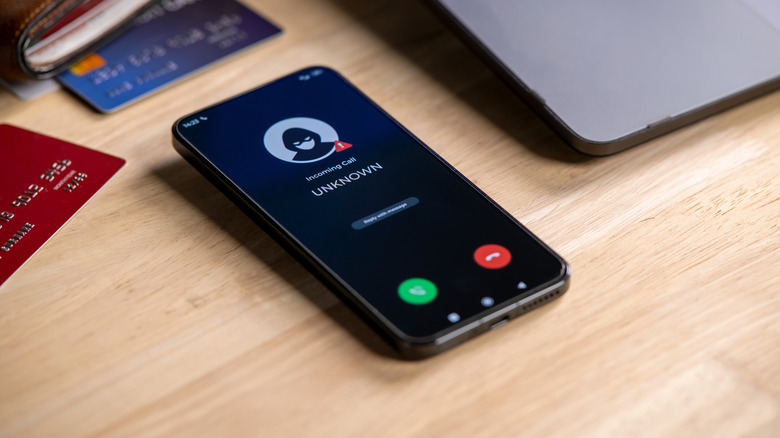
With all the benefits, convenience and interconnectedness smartphones allow you to enjoy, unfortunately, they also allow scammers, spammers and all sorts of annoying people to conveniently connect with you either through texts or, worse, constant calls. Thankfully, you can easily block unwanted callers on your Android phone. Android is a vast ecosystem, so the exact process for blocking numbers may differ based on your Android device. But for the majority of Android phones, the Phone or Contacts app is the first step in blocking those annoying scam texts. And if you ever change your mind about a number you banished to the block list, you can also unblock it right from the Phone or Contacts app.
Advertisement
How to block a number on your Android phone
If you’re using a Samsung phone, there are two ways you can block calls from unwanted people: with the Contacts app and with the Phone app for numbers that aren’t saved.
Using the Contacts app:
Open the Contacts app
Select the contact you want to block
Tap More
Tap Block contact
Confirm the block
Using the Phone app:
Advertisement
Open the Phone app
Find and copy the number you want to block
Tap More (three dots) at the top corner
Select Settings
Tap Block numbers
Tap Add phone number and paste or type the number you want to block
Tap the plus sign
If the number called you recently, then you can easily block it from the Recents section in the Phone app. Navigate to the number you want to block and tap Details > More Options > Block number.
Blocking a number on a Pixel phone or a device running stock Android is just as straightforward:
Open your Phone app
Select More (three dots)
Tap Call history
Tap a call from the number you want to block
Tap Block/report spam
Once you do this, anytime the number tries to call you, your Android phone will automatically decline it before it even rings or pops up on your screen, and texts will usually be filtered into a blocked or spam folder. Do note that blocking a number is handled by your device, not your carrier. So, if you move your SIM to a different device, you’ll likely have to block the number again.
Advertisement
How to unblock a number on your Android phone
Parinussa Revy/Shutterstock
Unblocking a number follows a similar process. To unblock a contact on the Samsung Contacts app, simply:
Open the Contacts app
Select the contact you want to unblock
Tap More options (three dots)
Select Unblock contact
If you’re using the Phone app:
Open the Phone app
Select More (three dots)
Tap Settings
Select Block numbers
Then tap the (-) beside the number you want to unblock
For the Google Pixel and stock Android users:
Open the Phone app
Tap More (three dots)
Select Settings
Then Blocked numbers
Tap Clear (x) next to the number to unblock it
As soon as you unblock the number, it’ll be able to call and text you like normal. Do note that any calls sent from the number during the block period won’t get added to your call logs, so that stays forever lost.
A teardown of the iPhone 18 Pro Max has confirmed an oddity of the US-based model, in that it uses a Qualcomm modem instead of Apple’s C2 chip.
Apple’s introduction of the iPhone 18 Pro line included a lot of hype about its use of the C2 modem. It turns out not to be the case for the iPhone 18 Pro Max in the United States.
In details from a teardown of the iPhone 18 Pro Max by TechInsights, it details many of the typical internal components, like the A20 Pro chip and the N1 wireless module. However, when it comes to the cellular system, it’s using a Qualcomm Snapdragon SDX80M 5G modem.
To the publication, the existence of the Qualcomm modem may be an indicator of regional differences or multiple modem configurations within the entire iPhone 18 lineup.
Advertisement
The same RF board also includes modules from Skyworks, Broadcom, Qorvo, Texas Instruments, and an NXP NFC controller. There’s also the Apple Wireless Combo Module, marked N1, used to handle Wi-Fi.
A very specific exception
The teardown’s discovery of a Qualcomm modem is interesting, considering Apple’s promotion of the C2 in its press release. However, reading the press release shows Apple has carefully said it is included in the iPhone 18 Pro.
While this could be taken to mean the iPhone 18 Pro range, it can also mean the specific model. Apple doesn’t specify the use of Qualcomm’s modem at all, nor does it hint that the iPhone 18 Pro Max could use anything other than the C2, but it also doesn’t explicitly connect the C2 with the Pro Max either.
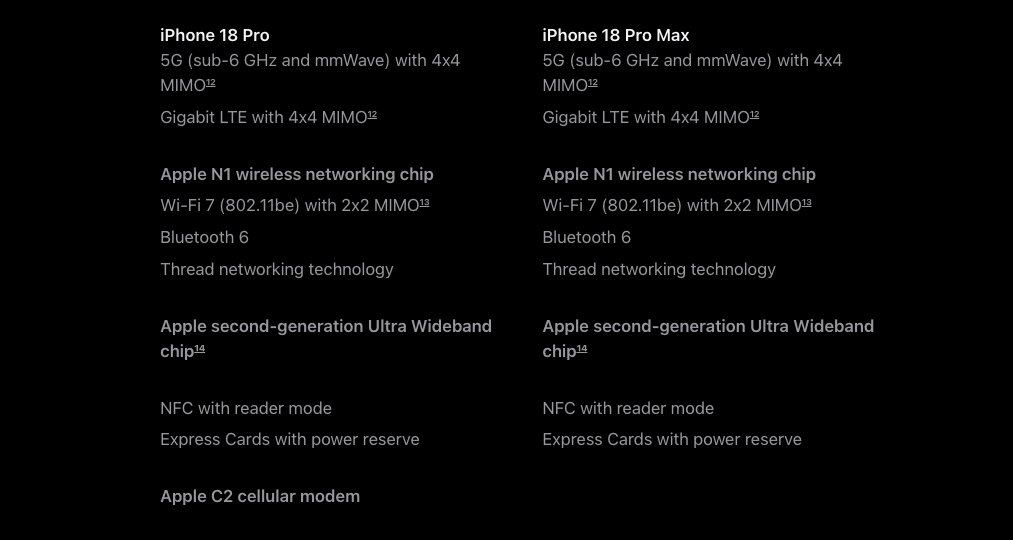
Checking Apple’s specification pages for the iPhone 18 Pro line confirm that there’s a difference in how it handles the modem in the models.
Advertisement
Modem descriptions in Apple’s specifications for the iPhone 18 Pro and Pro Max. Note the lack of the last C2 modem line for the Pro Max model.
The U.S. version splits the modem capabilities of the Pro and Pro Max variants into separate columns. The only difference between the two is the line “Apple C2 cellular modem” for the iPhone 18 Pro, and a blank space for the iPhone 18 Pro Max.
This appears to be a configuration choice just for the United States. Checking the same page for Canada, the UK, France, India, and other markets has identical columns, but with “Apple C2 cellular modem” in both of them.
It is unclear why Apple has singled out the U.S. version of the iPhone 18 Pro Max, and Apple is unlikely to ever say why. But, with this happening only to one market and one iPhone variant, it’s probably Apple fulfilling the requirements of its 2023 agreement with Qualcomm.
In recent years, the tech landscape has seen a rise in “dumb devices” that aim for minimalism and offline capability. From flip phones that reject social media to aesthetic-focused music players, simplified tech is making a comeback. This trend can clearly be seen in the popularity of the AP30 Music Boy’s Kickstarter campaign, an audio player that draws heavy inspiration from the aesthetics of the Game Boy, but with hi-res specs.
Slated to start shipping this October, the device is the latest project from HIDIZS, a brand that’s previously launched several other successful campaigns for various audio players and equipment. The Kickstarter campaign began with the modest goal of HK$40,000, which converts to about $5,100. At time of writing, the Kickstarter sits at HK$3,954,885, about $504,311 — over 98 times the original goal. The Kickstarter has now concluded, but late backers can still get in on the campaign.
Advertisement
What does the AP30 Music Boy do?
There are two different versions of the AP30 Music Boy available, an aluminum model that weighs in at 80g, and a lightweight plastic model that clocks in at just 56g. It’s designed to be extremely portable, with three different carrying options: a magnetic case that attaches to your phone, a lanyard or a bag clip for attaching it to totes and backpacks. For such a small device, it boasts some pretty impressive specs that audiophiles will appreciate:
Screen: 2.0-inch (296×240) HD IPS
Master chip: RKNanoD
DAC chip: CS43198
AMP chip: RT6863
Outputs: 3.5mm or 4.4mm ports, Bluetooth 5.3
Storage: No built-in storage, expandable support for up to a 256GB microSD card
Battery: 1200mAh, a lifespan of eight to 10 hours wired and six to eight hours wireless
Playback support: MP3, WAV, APE, FLAC, ALAC, OGG, WMA, DSF and DFF formats, PCM playback up to 192kHz/24-bit and native DSD256
The device uses physical buttons on the front, as well as a scroll wheel on the side. Listeners can utilize 6 different EQ presets, or customize their own. It can be connected directly to your phone or computer via USB-C and function as a portable DAC (digital-to-analog converter), decoding the audio from your device and outputting it in higher quality. Aside from audio playback, the Music Boy can function as an e-book reader. It also contains 6 different retro-inspired games, like a Tetris-esque game and Snake.
Advertisement
Why ‘dumb’ devices are making a comeback
Savanevich Viktar/Shutterstock
As technology has advanced over the years, it’s also become increasingly intrusive in every aspect of our lives. There’s a reason searches for vintage iPods have soared recently — when music is tied to our smartphones, it’s hard for a listening session to feel like a singular experience. The Music Boy Kickstarter summarizes much of this phenomenon well: “Smartphones killed the dedicated music player — but they also killed the magic.” For anyone looking to unplug from a constant stream of notifications and messages while still enjoying their tunes, devices like the Music Boy are an ideal solution.
It’s also part of a broader trend, particularly with Gen-Z, whose love of Y2K fashion and retro aesthetics is well documented. It all harkens back to a simpler time when the internet was dominated by specialized forums and silly Flash animations rather than all-encompassing and invasive algorithms. Since Gen-Z were young children (or not even born) during that time, utilizing “dumb” tech is the closest they can get to capturing the experience. Considering the mental health toll that often goes hand-in-hand with being constantly online — particularly with increasing proliferation of AI — even if the Music Boy itself isn’t your cup of tea, the allure of simpler tech is hard to deny.
































![what MONEY SOAP looks like :]](https://wordupnews.com/wp-content/uploads/2026/09/1789834665_maxresdefault-80x80.jpg)

































You must be logged in to post a comment Login