

Politics
Patrick Dempsey Pays Tribute To Grey’s Anatomy Co-Star Eric Dane

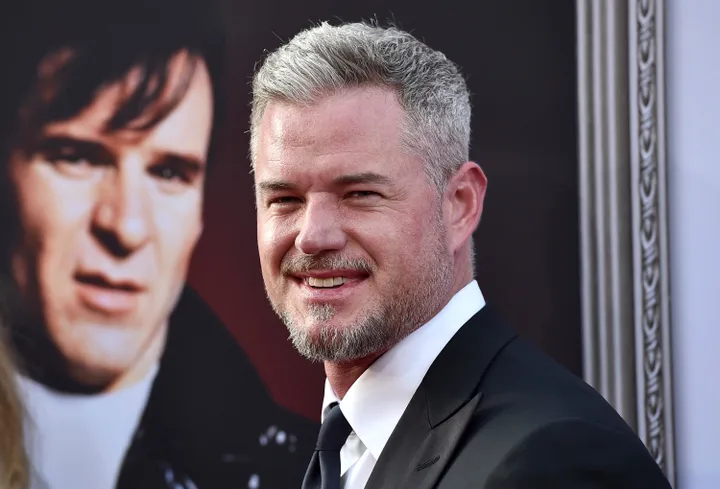
Patrick Dempsey has paid an emotional tribute to his former Grey’s Anatomy co-star Eric Dane.
During an interview on Friday’s edition of The Chris Evans Breakfast Show on Virgin Radio UK, Patrick shared his memories of working with Eric, who died on Thursday around one year after sharing that he’d been diagnosed with ALS.
“I just woke up this morning and it was very sad to read the news,” he began. “It’s hard to put into words. I feel really so sad for his children.”
Patrick continued: “He was the funniest man – he was such a joy to work with and I want to just remember him in that spirit because any time he was on set, he brought so much fun to it. He had a great sense of humour.
“He was easy to work with, we got along instantly. [His] first scene was him, you know, in all his glory, coming out of the bathroom with the towel on looking amazing, making you feel completely out of shape and insignificant…”
“We hit it off because [there] was never really any competition,” Patrick added. “There was just this wonderful mutual respect. [He was] wickedly intelligent and I’m always going to remember those moments of fun that we had together and celebrate the joy that he did bring to people’s lives and the real loss is for us who don’t have them anymore.
“He did an incredible job at bringing awareness to this horrible disease and those remaining days and it just reminds us that we all have to celebrate every day like it’s our last day…
“It’s something that we have to remember and certainly in a world where there is just so much crisis and there is so much tragedy that we really need to be grateful for every moment that we have, spend time with our families, do things that are better, that benefit of other people to be of service to be kind, to be loving.
Patrick then lamented: “With our leadership, unfortunately that we’re seeing around the world – and certainly in America with this horrible, you know, corrupt government that is currently running America – we have to remember to treat our neighbours and our friends with the right values.”

Other members of the Grey’s Anatomy cast have also been paying tribute to Eric since the news of his death broke in the early hours of Friday morning.
In addition to his work in Grey’s Anatomy, Eric played Jason Dean in Charmed, and Jacob Elordi’s on-screen dad Cal Jacobs in Euphoria.

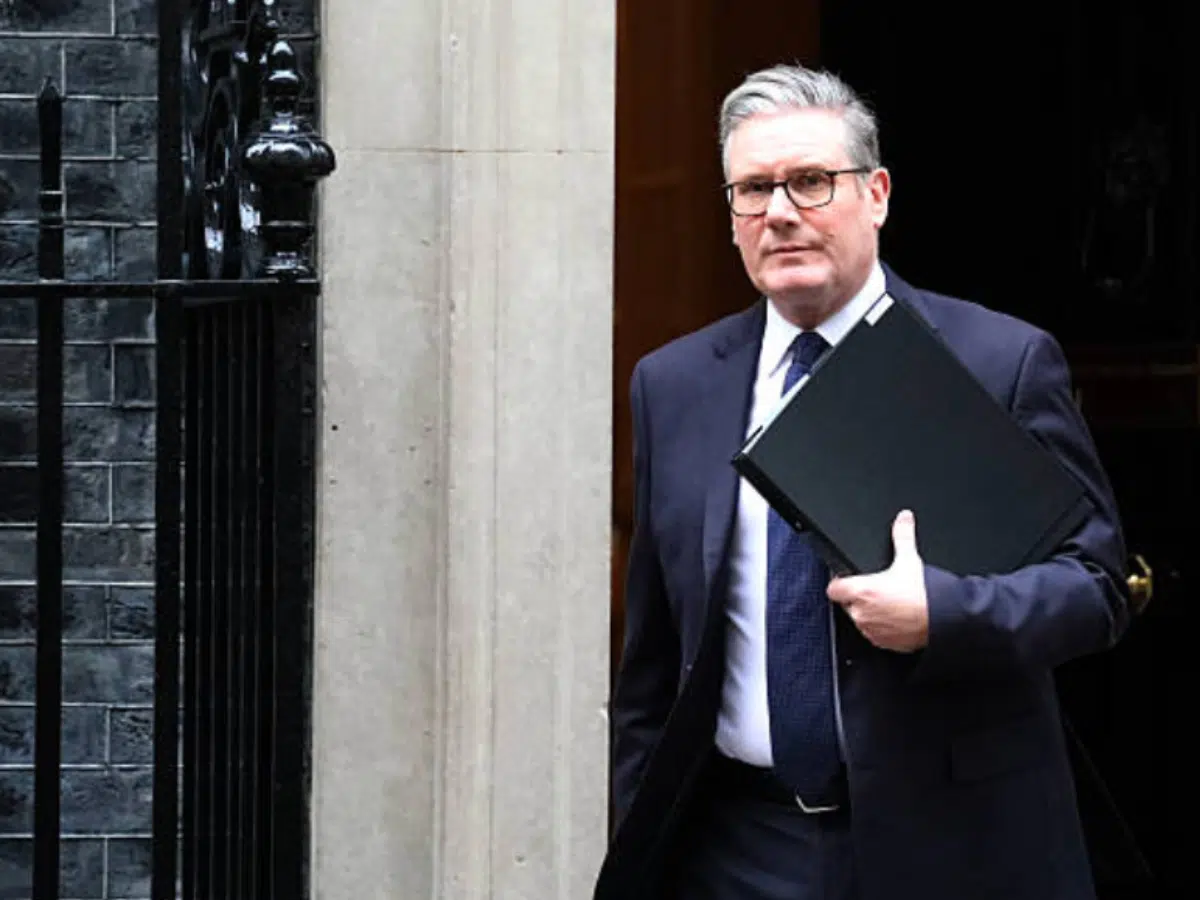
The scandal of Keir Starmer’s closest supporters spying inconvenient journalists rolls on – and the ‘mainstream’ media are finally paying attention.
The ‘Labour Together’ sabotage outfit undermined Labour’s general election campaign, brought down Jeremy Corbyn, and conned members into choosing Starmer to replace him. But it was also using undeclared donations to spy on journalists that threatened to expose its actions.
Starmer and his former chief of staff
The Canary first revealed months ago that Labour Together had paid investigators to spy on and intimidate author Paul Holden and former Mandela minister Andrew Feinstein. It was ignored by the ‘MSM’. But in February 2026 the group’s spying on two Murdoch journalists was exposed – and suddenly the corporate media took notice.
Labour Together was run by Starmer’s now-former chief of staff Morgan McSweeney then, when McSweeney moved into Starmer’s office, by Josh Simons. Simons is now a Starmer front-bencher – and reacted to the ‘news’ of the spying by saying he was “surprised” and “furious”. Unsurprisingly, his reaction was dishonest nonsense – he had personally participated in the smear campaign on the back of the spying by APCO, a company run by the wife of another disgraced Starmeroid.
The Guardian reported that despite being apparently “surprised” and “furious,” Simon:
had been personally involved in naming them to British intelligence officials and falsely linking them to pro-Russian propaganda.
Simon’s spokesperson told the Guardian the claims weren’t true. But, this time even the Guardian bothered to keep investigating, having seen emails written by SImon himself.
Labour Together shady work
A key plank of Labour Together’s attempt to nobble the journalists exposing it was to link them to establishment bugbear Russia. And, of course, Simons was personally involved in writing to British intelligence services falsely linking both the Murdoch hacks and – especially – Paul Holden to Russia. Holden was in the process of writing his landmark book The Fraud, which subsequently exposed Labour Together’s and Starmer’s dishonesty and dark tactics.
In January 2024, Simons received a 58-page report from APCO after paying the company £36,000 to spy on journalists. He then approached spy agency officials to accuse the journalists of a “coordinated effort to discredit” Labour Together” to undermine Starmer, and Holden of living with a woman with “suspected links to Russian intelligence”.
Every word that has been written about Labour Together has since been shown to be true.
The group’s contract with APCO promised the payment for:
a body of evidence that could be packaged up for use in the media in order to create narratives that would proactively undermine any future attacks on Labour Together.
Labour Together has also been shown to have been monitoring the Canary, which it had tried and failed to destroy – and Skwawkbox, which at the time was a separate site.
Starmer’s connections to such underhand tactics run deep. A firm run by his Israeli spy has also been exposed paying journalists to publish pro-Starmer content.
Read the Canary’s serialisation of Holden’s book here.
Featured image via the Canary
(Alamy)
4 min read
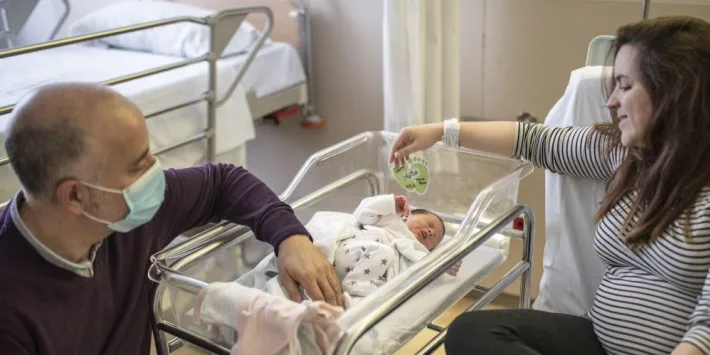
Fifty per cent of voters are worried about maternity care — a figure that only gets worse once people see facts on the state of care, rising to 59 per cent.
In new polling on the public mood around the NHS, published by the Prosperity Institute, maternity care was an issue of specific focus. The particular importance of the issue is obvious, given how significantly a couple’s or a mother’s experience of birth can touch their lives.
It is concerning then that a full half of the public are now, by instinct, worried about the state of NHS maternity care. Yet it is no surprise, given the sheer number of headlines about NHS trusts failing in this area. Back in September, the government announced that 14 NHS trusts in England were having their maternity services examined as part of a rapid review.
Behind the decision to review these trusts lie stories such as the death of nine babies at Gloucestershire Hospitals NHS Trust between 2020-23 due to “missed opportunities”.
Such stories — as well as high-profile outliers, such as the Lucy Letby scandal — undoubtedly stick in the minds of current and prospective parents and are arguably an underappreciated factor in our declining birth rates, as people avoid or delay having children due to concerns about care.
Anxiety around childbirth is understandable, but it is damning that this anxiety is only reinforced and not assuaged by reality. The initial 50 per cent of worried voters rises to 59 per cent when pollsters share the facts of care.
What kind of facts could have this effect? There are plenty to choose from.
For instance, out of 131 NHS maternity units inspected by the Care Quality Commission between August 2022-24, not one was rated ‘outstanding’; 47 per cent were ‘requires ‘improvement’, and 18 per cent ‘inadequate’.
Another example: over the last decade, in 21st-century Britain, maternal mortality rates have increased by 20 per cent.
There is a surprising divide between the generations in attitudes to maternity care. Among 25 to 34 year olds — the group currently making most use of maternity services — 68 per cent think NHS maternity services are going well or very well. This contrasts with just 38 per cent of 45-54 year olds and 25 per cent of 65+ year olds.
One might imagine that older groups would have a better view of care, basing their views on memories of when they had their own children roughly 20-40 years ago, at a time before the decline in care that has marked the last decade and a half.
Younger women, by contrast, are those most exposed to current dysfunction and so should, one imagines, have a worse view of services. But older voters remain exposed to the system via younger relatives and can track the decline in standards. The young, however, have never known anything different.
Defenders of the health service may cite marked improvements for infants, such as rates of stillbirths, neonatal mortality, and perinatal mortality, all of which are significantly better than during the 1990s. However, these areas have plateaued since the 2010s despite peer nations continuing to improve, and there is a pervasive sense that although things may have improved for children, they have gotten worse for mothers. Older voters seem to have noticed this. This suggestion that more exposure leads to lower opinions of care is also borne out in the fact that 48 per cent of men think NHS care is going well, compared to just 37 per cent of women.
What do voters think needs to be done? A common trend across Prosperity’s new polling is that voters are rejecting the idea that the solution to NHS failures is simply more funding. 46 per cent instead blame poor management, with only 24 per cent blaming funding and only 9 per cent blaming staff.
Serious problems have bred serious concerns, and it seems that the public is willing to countenance serious solutions.
Rhys Laverty is Editorial and Research Director at the Prosperity Institute
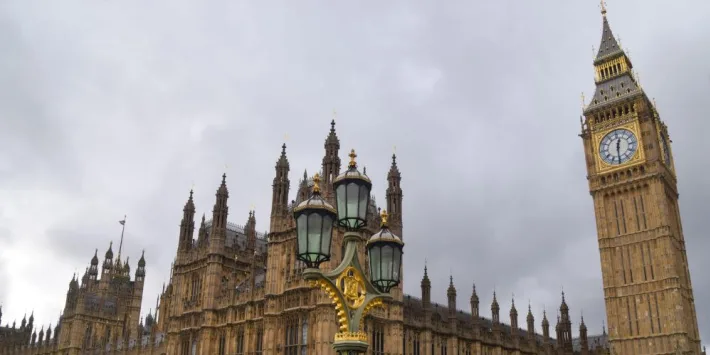
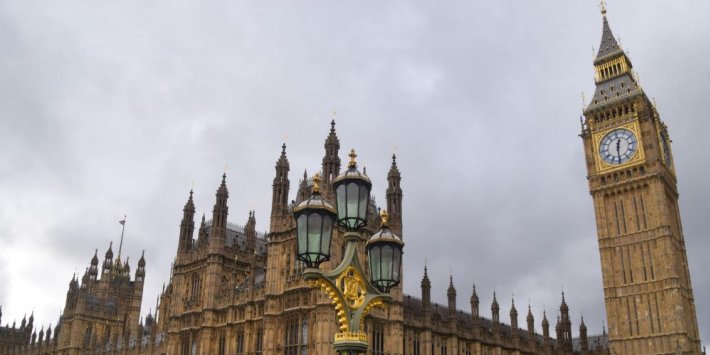
(Alamy)
4 min read
There are lessons abroad and in history about how to get this right.
When William Blathwayt, the irascible Whig politician who founded the War Office, was rebuilding his Gloucestershire country seat in the 1690s, he became so exasperated with the stream of financial demands from his builders that he finally erupted, “these people want stirring up soundly and not to be overfed with money!”
This volatile prescription could also be applied to the faceless squadron of consultants who have concocted, at its worst, a £39bn, 61-year timescale for the restoration of the Palace of Westminster.
Policy Exchange has long campaigned for beauty to once again become a defining feature in our built environment, and if there is any single British building that symbolises how an enlightened state can directly procure it on a gargantuan scale, it is the Houses of Parliament.
And yet, not even an icon this venerable can justify the profligate excess currently associated with its refurbishment. Even the best-case scenario of £15.6bn over 24 years is fiscally, electorally and ethically unconscionable. So what is the solution? I humbly propose five.
First, the current project must be scrapped and replaced with one that maintains a practical, economic and forensic focus on delivering the three ‘R’s (Repairing, Rewiring and Restoring) to prevent the three ‘F’s (Flooding, Fire and Falling). Anything further to this core ambition of making the building fabric safe and stable should be shelved.
This means no to a net zero revamp, no to full wheelchair accessibility (offices, amenities and public areas will do), no to carving sacrilegious ramps into Westminster Hall and no to turning a Victorian building into a modern one. Were the Blobular bureaucrats handling the current project let loose on the Leaning Tower of Pisa, they would invariably attempt to straighten it.
And no to the extreme architectural hubris evident in current visualisations. It beggars belief that this needs to be said, but every design intervention must be sympathetic to the aesthetic principles of a Gothic palace and not a Qatari golf resort.
Secondly, to help finance the project, authorities should consider opening the top of the Elizabeth Tower to paying tourists. There would inevitably be logistical challenges, but the French state earns around £87m annually from Eiffel Tower visitors, and similar revenues from iconic Big Ben would greatly help offset costs.
Thirdly, demolish Westminster’s QEII Conference Centre – an incongruous carcass of 1970s ASBO-Brutalism – and replace it with a contextually sympathetic building that can accommodate both decanted Commons and Lords chambers before being converted back into a conference centre after Parliament’s restoration.
Fourthly, learn from the ongoing restoration of similar parliamentary buildings inspired by Westminster: Canada’s. Comparisons of this nature are difficult, but despite being of a similar size, style and age to our own, Ottawa’s Parliament Hill is currently being refurbished for just £2.7bn. We should learn how.
And finally, we should also learn from an even closer precedent: Notre Dame de Paris. The fire that ravaged it in 2019 offered a grim portent to a crumbling Westminster, but its heroic five-year reconstruction has arguably been the defining and most successful restoration project of our age.
Though a smaller (£650m) and arguably less complex undertaking, political leadership was central to its success. This came in the form of the military general requisitioned to lead the project and plough through the onerous trenches of French bureaucracy. And also in the very personal leadership of President Macron himself, who bravely staked his political credibility on the project’s successful completion.
Both strategies are the minimum leadership template we must employ here. A British prime minister needs to assume Westminster’s restoration as his or her personal mantle and pledge, with senior expert external support, to complete at least the bulk of the post-decant works within the life of a Parliament.
After the devastating 1992 fire at Windsor Castle, government agencies were excluded from its reconstruction in favour of private contractors, and the late Duke of Edinburgh took personal charge of the project. The result? The restored castle reopened in 1997, six months ahead of schedule and costing just over half its expected £60m budget.
A streamlined brief, private sector efficiency and strong political leadership are key to ensuring that Westminster can reap Windsor’s rewards.
Ike Ijeh is Head of Housing, Architecture & Urban Space at Policy Exchange
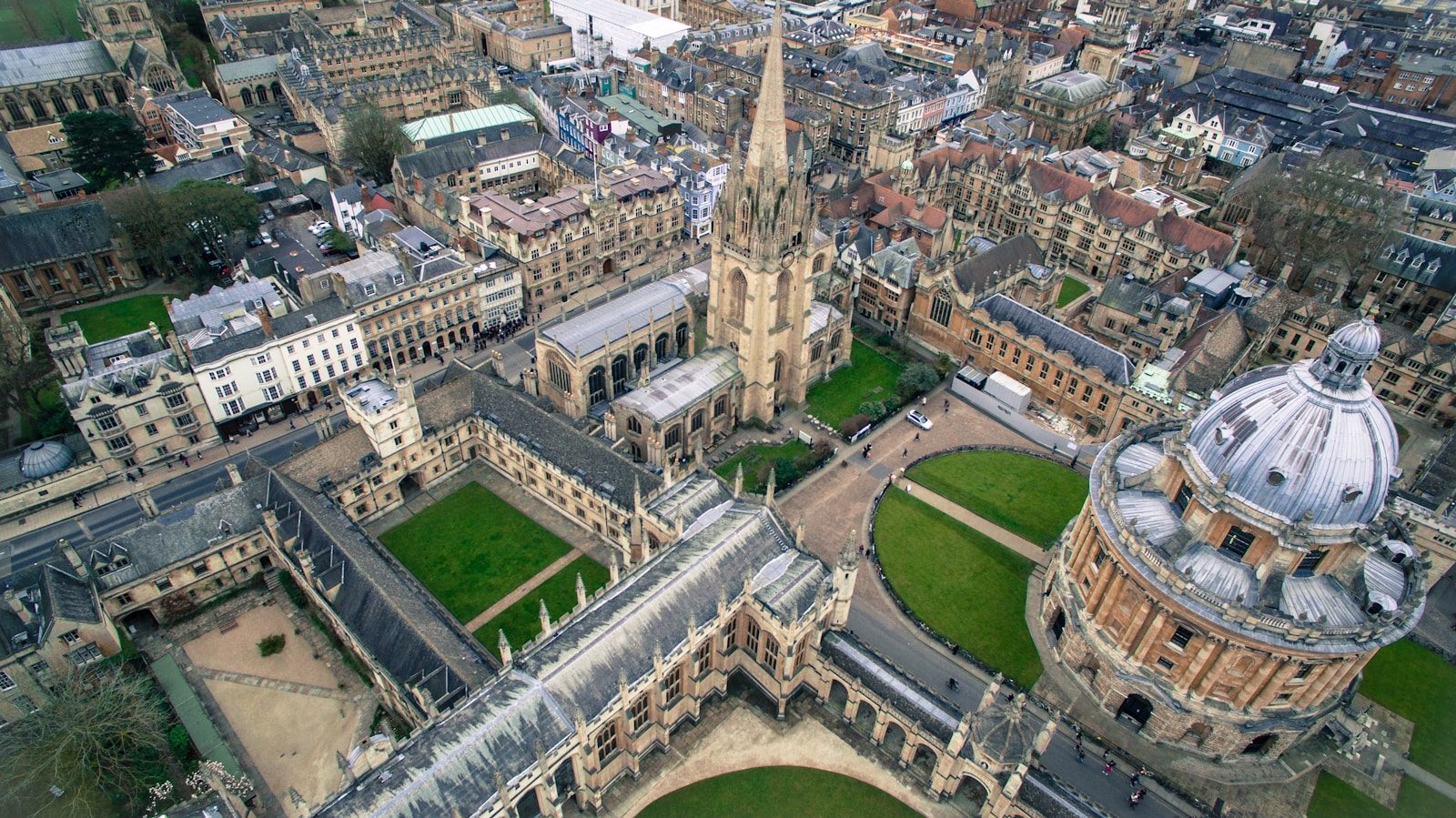
Adrian Hilton is a conservative academic, theologian and educationalist.
‘If you want to run for the Union – and it’s not a bad thing to do – make your reputation outside first’, Charles Ryder was advised in Brideshead Revisited as he was about to go up to Oxford.
It wasn’t bad guidance from his cousin Jasper, but the reputational sphere was restricted to improving oratorical technique at the Canning or Chatham clubs, with the exhortation of discipline to ‘begin by speaking on the paper’. For the disimpassioned, it was rather prosaic guidance.
For those more inclined to the Sebastian Flyte school of reputation-making, you could walk up and down Catte Steet in dove-grey flannels and a crêpe-de-chine scarf supping Cointreau with an old bear named Aloysius. Or editing the Isis while dreaming of a rowing blue and sauntering nightly around the Bodleian dressed like something out of Gilbert & Sullivan. Or joining the O.U.D.S and giving such a mesmerising Hamlet or Faustus that the high-table toasts would hail you as the heir to Gielgud. But for a certain type of student, the presidency of the Oxford Union is the zenith of realisation; the chamber where love dies and the political bonds of callow reputation are forged by bluster and zest. Here are planted the seeds of life’s harvest while they learn the art of secular ritual and taste the ecstasy of oratorical victory. By shaking hands with the great and the good, you were almost anointed to become one – a bishop, captain or cabinet minister, at least, if not one day prime minister.
And many have indeed joined the ranks of the elite, right from the society’s inception. The first to become an MP was Digby Wrangham who was president in 1826 and entered Parliament just five years later in 1831. Others so destined include Thomas Acland, William Ewart Gladstone, Herbert Henry Asquith, George Curzon, and Quintin Hogg. More recent years have yielded Michael Foot, Edward Heath, Anthony Crosland, Tony Benn, Michael Heseltine, William Hague, and, of course, Boris Johnson and Michael Gove. The undisputed and disputable heirs to two centuries of intellectual enlightenment and political tiffs.
The first Jewish president was elected in 1910 (Leonard Stein); the first Asian in 1934 (Dosabhai Framji Karaka); the first black president in 1942 (James Cameron Tudor), and it didn’t take long after women were permitted to become full members in 1963 for the first female president to be elected (Geraldine Jones in 1968). And feminine stares of disdain proved just as deadly as any man’s guile: they presided with the same clear eyes and toiling lungs.
As each university intake became progressively diverse, reflecting the increasing pluralism in society, so junior officers became more ethnically and racially diverse. Over the past year alone, the society has had its first Arab president (Ebrahim Osman-Mowafy), two Pakistani presidents (Israr Kahn and Moosa Harraj), and, mirroring the rise of Kemi Badenoch to lead the Conservative Party, its first black female president (Nigerian, Anita Okunde). Recently ousted president-elect George Abaraonye was also of Nigerian descent, and the newly elected president-elect, Arwa Elrayess, is a Palestinian Arab. She is presently promoting a myth claiming to be the ‘first Palestinian’ ever elected president, which is only true if she ignores the Palestinian Jew (Gershon Hirsch) elected in 1941.
The thing about racial/ethnic/cultural diversity is that the term-card of each president tends to reflect something of their social concerns and political priorities, if not sectarianism. They know it all, and they like to keep people small. Thus, when an Arab president inclines to the proposition ‘This house believes Israel is an apartheid state responsible for genocide’, and vacates the chair in order to speak himself in favour of the motion, it follows that the environment becomes distinctly hostile to those who argue against, if not a scene of desolation for Jews more generally. They seem to have become the undesirables.
There are geo-political contextual variables for such debates, of course. But some of the speakers in this one were deemed not only to have sailed close to the lauding of Hamas as worthy of emulation, but to have crossed the line with their glorification of terrorism and incitement to racial hatred. One of the speakers, Susan Abulhawa, is currently suing the society on the grounds that the standing committee was advised to edit the video of her speech to conform to the statutory requirements relating to the promotion of terrorism and racial/religious hatred; a censorship which she considers not only an infringement of copyright and breach of contract, but defamatory and discriminatory.
Over the past decade, an erstwhile liberal debating society has become more overtly hostile to members who hold certain political-philosophical views. When Jews hear a speaker addressing Zionists, saying: “You don’t know how to live in the world without dominating others. You have crossed all lines and nurtured the most vile of human impulses,” the animosity, if not hatred, oppresses souls. You could have a philosophical debate about the meaning of ‘Zionism’ in this context, but the vehemence of enmity precludes it. There is a kind of ‘cleansing’ going on, if not an ‘occupation’ being instituted, which often manifests itself with threats and intimidation of both invited speakers and those who dare to speak on the floor. Recent debates have not only been distinctly anti-Israel, anti-American and anti-capitalist in flavour, but increasingly focused on multiculturalism, pro-Islam, the Global South, international courts, the Ottoman Empire, Kashmir, the Arab Spring, Khamenei’s Iran, Modi’s India, and so on. It has become a foreign ground, unrecognisable from even a decade ago.
This focus is exacerbated by the post-graduate international intakes of some colleges and associated institutions. The Saïd Business School, for example, is proudly diverse and global, and (uniquely) currently offers free life membership of the Oxford Union to all their Masters and DPhil students. That is at least 550 memberships (and around £120,000, discounted in a ‘bulk membership’ deal) every year, as against the dozen or so undergraduates who might join from each of the colleges. This institutional ‘entryism’ has a distorting effect not only on the election of officers and motions for debate, but also on the culture of the society. The financial dependence also inclines to the tolerance of domineering postgrads. It is also worth noting that Saïd’s bloc-funding accounts for around 30 per cent of annual OUS membership income, making it difficult to sustain the assertion that the university and society are completely separate.
This is a deal that perhaps the Saïd Business School should urgently reconsider.
Following the Israel debate presided over by Mowafy, numerous complaints were raised and formal investigations initiated by those who faced his reproaches. In a damning report, he was found to have harassed, bullied and victimised people; caused significant offence and distress; abused the rules of debate; exposed the society to serious legal jeopardy; risked criminal liability for standing committee members; disparaged and fostered hostility against the society’s legal counsel by referring to him as a ‘Zionist’; was persistently obstructive, hostile and disruptive in meetings, and otherwise engaged in conduct liable to bring the society into disrepute. So serious has been his chronic campaign of disruption, manipulation and intimidation that the OUS corporately deemed it necessary to recommend the most severe disciplinary sanction: permanent expulsion from membership. His presidency was authority without dignity. The alarming thing is that the subsequent election of two others who agreed with him to the Standing Committee resulted in the withdrawal of the complaint before it could be heard by the Senior Disciplinary Committee.
As if that weren’t enough, Anita Okunde hosted a Hamas-lauding speaker and whipped up a tribal chant of ‘Free Palestine’. She, too, received a motion of no confidence in her leadership for bullying and dictatorial behaviour, which she casually brushed off with her sex: “Sadly, this is not the first time I or others have faced misogyny, threats, or discriminatory behaviour during my time at the Union,” she said.
Other pro-Palestine meetings have ended with chants of ‘From the river to the sea, Palestine will be free’, with all its genocidal connotations. Anyone who expresses concern about this is isolated and harassed. If you get on the wrong side of some, they take it out of you in debilitating procedural ways. At the time of writing, there are active disciplinary cases against the president, librarian, treasurer, secretary, ex-treasurer, librarian-elect, deputy returning officer, and three members of the standing committee. These have been brought by a president-elect, two ex-presidents, the ex-librarian, ex-treasurer, and three other members of the standing committee. There are also corporate complaints against a member of the standing committee for disseminating inciteful pamphlets; against another for intimidation and blackmail; and another for ‘weaponising’ the society’s noticeboard and unauthorised recording of proceedings. Ferrets in a sack would have more dignity than this internecine litany of retaliatory disorder.
It is important, however, not to aquatint the Oxford Union of centuries past in some arcadian Brideshead of mild, elegant, gentlemen-scholars, where life kept pace with punting in the autumn mists and opinions were articulated with a mild sacerdotal authority. The society has been riven with division, beset with infighting and endured existential schisms since the 19th century. Indeed, the foundation of the United Debating Society in 1823 lasted only until 1825, when the only solution to irreconcilable differences was dissolution and re-foundation as the Oxford Union Society, with the malcontents expelled. And again in 1833, the exasperation of established Conservatives with the insurgent Liberal standing committee led to the Tory ‘Ramblers’ splitting off and forming a separate society, which in turn led to their expulsion en masse for setting up a rival society to God’s, as immortalised in the poem Uniomachia (‘Battle at the Union’). In 1847, the OUS set up its (extant) trust deed after a faction tried to sell off assets to aid victims of the Irish potato famine (and to this day, there remains a prohibition on OUS funds being donated to charity).
If the present political rot runs deep, the financial corrosion runs deeper. The society is currently facing bankruptcy as its junior officers do what all ‘here-today, gone tomorrow’ (aspiring) politicians do: carry on regardless, because tomorrow will somehow take care of itself. It is forecast to make almost a £400,000 loss in the year 2025/26, and has less than £800,000 in reserve. Today’s presidents can spend £5,000 on Bollinger, £1,800 on peacocks, and £750 on an ice sculpture, leaving tomorrow’s presidents to worry about austerity. But the problem is not so much the riotous exuberance of OUS young bloods as the dereliction of duty of the grown-ups in the Oxford Literary and Debating Union Trust (OLDUT), which owns the Grade II* listed buildings and is the charitable arm of the society (or, rather, the OUS is OLDUT’s legal delegate for its fiduciary obligations). It was established in 1975 following another bankruptcy scare. There was a fear that in order to pay its debts, the society would sell off some of its buildings to the university or a private developer. A group of former officers raised enough money to bail out the OUS and buy the buildings in the name of a charitable organisation with the stated aim of ‘The Advancement of Education with the University of Oxford by the provision of debates and the maintenance of Library and Reading Room facilities’. OLDUT therefore provides the OUS with access to its ‘non-commercial rooms’ (libraries and debating chamber) for free, and allows access to its ‘commercial rooms’ (bar, snooker room, and a couple of others) for a nominal fee. Incredibly, even the bar is currently operating at a loss.
OLDUT has a vested interest in the governance, functioning and flourishing of the OUS because it is only able to meet its charitable educational objectives by supporting it. The OUS is an unincorporated association: it has no legal personality and is owned equally by its 140,000+ global members but led by Oxonians in statu pupillari. This symbiosis initially had substantial buy-in from significant ex-presidents, including Sir Jeremy Lever and Michael (Lord) Heseltine, who remains patron of the charity. In 2019, following another scandal where a blind black student was violently ejected from the chamber, which led to a national outpouring of condemnation of the society for brutality and racism, another body was set up to oversee the decisions of the bursar. He supervises all elements of the running of the society; students being deemed too inexperienced, unreliable, and impermanent to hold the full-time staff to account. This body, called the Audit Committee, has seen numerous resignations recently, most notably that of its founding chair, Miles Young, Warden of New College.
Over the past five years there have been three bursars and two acting bursars. OLDUT paid a five-figure sum for a headhunting firm to find suitable candidates for the bursar vacancy in 2021 and again in 2023, both of whom resigned after less than two years citing the society as ‘ungovernable’. Five trustees have also resigned over the past two years, and there is currently no bursar at all. The past five years have also seen three senior librarians and three senior treasurers, most attributing their departures to a hostile working environment and a culture of utter thanklessness.
The scale and rate of turnover of those who are supposed to keep the society running has been profoundly destabilising. They are like the permanent civil service to the ‘here today, gone tomorrow’ student officers, and without them it is hard to see anything but a path of chaos and increasing irrelevance. At the turn of the millennium, some 40-50 per cent of undergraduates were members; today it is just 10-15 per cent. This decay has a sympathetic background in the degradation of the Union buildings, with leaking roofs, unstable chimney stacks, precarious load-bearing joists, and plaster crumbling from ceilings. The repairs and renovations, which are urgent, have an estimated cost of £4-5million. It’s not impossible the buildings might need to close altogether for health and safety reasons.
And ‘health and safety’ is but one of the governance tensions – or accountability obfuscations – in urgent need of reform. All the statutory regulatory requirements are presently in the hands of bright but inexperienced students who circulate every eight weeks, giving zero continuity and scant need of responsibility. The priorities, specialisms and competencies of one cohort will not be the same as those of the next. It is therefore possible, if not highly probable, that the students, while being responsible as tenants for the care and upkeep of the building, may know nothing at all about the necessary standards and expectations. Any why should they bother acquiring the knowledge if they won’t be there in eight weeks? Yet ultimate liability for safety resides with the adults of OLDUT.
It is the same with employment issues, where students have a veto on hiring and firing. They are also in charge of data protection, financial accounting, licensing compliance, ensuring conformity to equality and discrimination legislation, and the appointment of society trustees. In practice these are overseen by the bursar, but he is accountable to the student standing committee (who can fire him). Essentially, the students can be ignorant, indolent, reckless or all three, but it is the trustees of OLDUT who will be fined or go to prison, and their reluctance to intervene is bordering on apathy and negligence. Without liability insurance, it is small wonder some are showing signs of severe stress or simply resigning.
With successive scandals, lawsuits, looming bankruptcy, terrorism investigations and breaches of charity law, the society has become a byword of iniquity from Christ Church to Somerville: students possessed with vaulting ambition, their lives governed by moral-political imperatives garlanded with the conceit of personal infallibility. They seem to dream more of their future entry in Debrett’s than care for the stewardship of ‘the most prestigious debating society in the world’.
If losses continue to mount, the Oxford Union may not have long left as a ‘going concern’, but if it does go bankrupt all would not be lost. Indeed, history would simply repeat itself, with OLDUT nominating a new body to take over the debating society and library functions in exactly the same way that OUS rose in 1825 from the ashes of the United Debating Society. That assumes, of course, that the toxic fallout from OUS self-destruction doesn’t bring OLDUT to the edge of bankruptcy by crippling its fundraising capacity and impeding urgent building renovations.
If this Jacobean tragedy is to end, the incestuous strife and internecine inquisitions need to cease.
There is an urgent need for reform of the governance structure, and here there is an ember of sanity just about glowing in the form of the Concerned Alumni of the Oxford Union. That body has the knowledge, expertise and dedication to wrest the society from those agents of destruction who view it as an institutional relic ripe for repurposing to their political ends. George Abaraonye takes the view that “some institutions are too broken, too oppressive to be reformed. Like cancers of our society, they must and they should be taken down by any means necessary”. His infiltration might have failed, but others are intent on blasting the foundations if the superstructure doesn’t crumble first. Blind to their own malignancy, those who are hostile to the history and traditions of the society and its foundational charitable objects cannot possibly lead it. The task of OLDUT is to intervene when such radicals emerge whose concern with debate and freedom of speech ceases when their agenda is challenged or their creed derided. At the very least, students who aspire to governance must begin to take on statutory responsibilities in order that the laws of trusteeship can hold them personally to account. If, then, they seek to repurpose the prestige of the society by subverting its integrity and fund-raising capacity, they would be accountable not only to internal disciplinary bodies, but to the courts, with all the judicial gravity, legal liability, and potentially life-long consequences that would entail.
If these reforms are much delayed, it will be 1825 all over again.
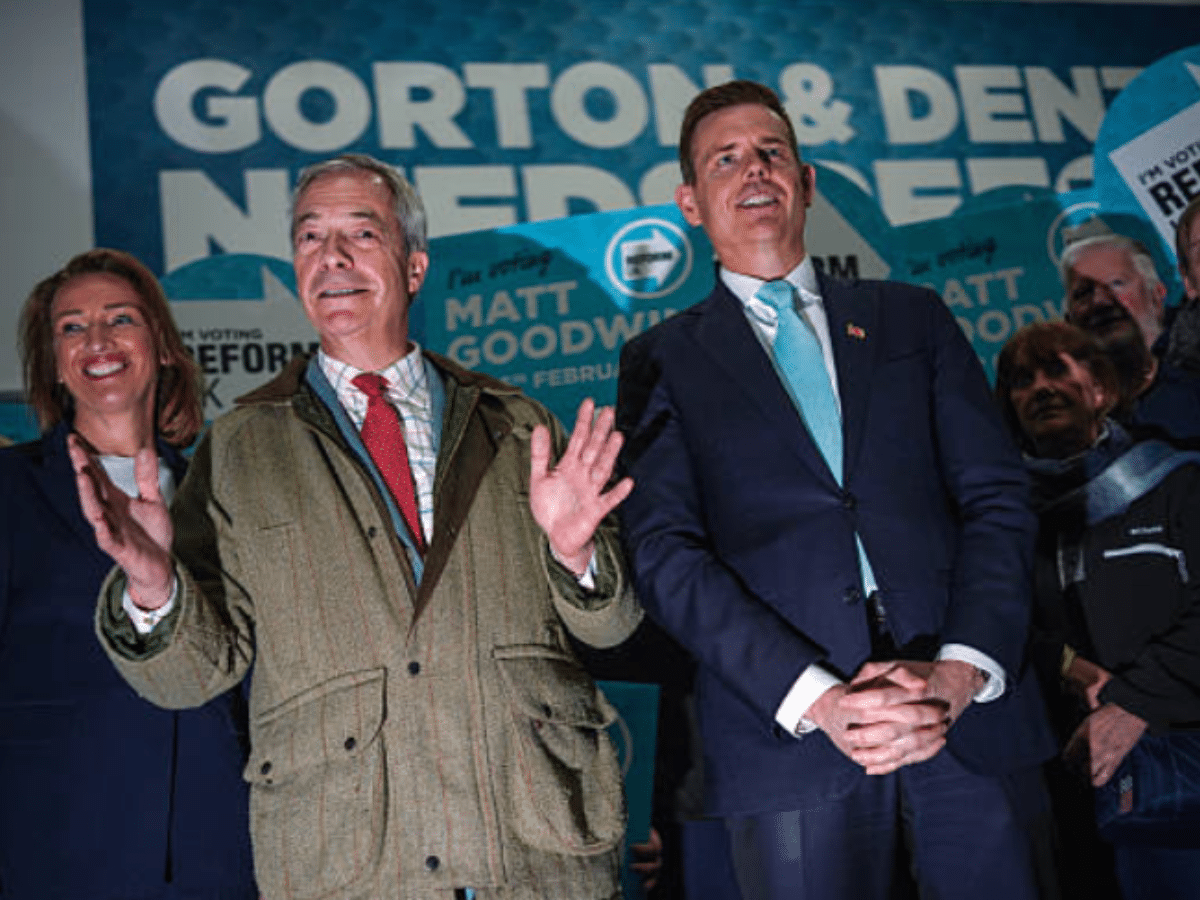
The vote for the crucial Gorton and Denton by-election will take place on Thursday 26 February. Sources have informed the Canary that internal polling shows the by-election is on a knife edge between the Greens and Reform UK – with Reform just ahead.
The by-election has inevitably become a battleground for whether the country will reject or embrace the racist bigotry of Reform.
With so much at stake, we thought a quick roundup of the horrorshow that is Reform’s Gorton and Denton candidate, academic-turned-talking-head Matt Goodwin. Because, you know, sometimes an individual can say so much heinous shite that it’s hard to remember it all at once.
Gorton and Denton need Matt Goodwin like they need a hole in the head
This is by no means going to be an exhaustive list – we don’t have all day, after all. But for a quick whistle stop tour of Matt Goodwin being a dangerous fucking fascist, it’s probably good to start with his own self-description confirming he’s about as establishment as they come.
The dinner-circuit and TV presenting paychecks were never going to be enough for Goodwin though. He’s also supplemented his wealth with as much as ten grand a month from a Hungarian far right institution that serves as a propaganda machine for fascist Hungarian premier Viktor Orbán.
Then, of course, there’s his “two-tier policing” rants about police somehow not being racist enough. Add to that the time he defended a fellow fascist for inciting the murder of asylum seekers.
In response to Luke Yarwood getting jailed for posting tweets saying “burn them to the ground” and “murder is the only way”, Goodwin tweeted:
Welcome to the UK. Where you go to prison for 18 months for anti-immigration tweets.
This is insane.
Utterly inevitably, he’s also a massive Zionist, even stating that:
Unfortunately, Israel no longer feels that we are a reliable ally, thanks to the Labour government.
Yeah, because Labour’s been such a good friend to the Palestinian people.
White supremacist prick
According to the last census, 29% of the Gorton and Denton population are Muslim, and 44% come from a Black or minority ethnic background. However, on the subject of people like his potential constituents, Goodwin said:
It takes more than a piece of paper to make somebody ‘British’.
On top of that, there’s then his blatantly white-supremacist ranting that “the British family is imploding”. His solution? Well, we introduce financial punishments for people who don’t have kids, of course. Goodwin wrote in his Substack about:
Introducing a ‘negative child benefit’ tax for those who don’t have offspring.
Coupled with this, there’s also his disgustingly creepy view that we should teach any kid with a uterus that they’re baby-making machines:
We need to also explain to young girls and women the biological reality of this crisis. Many women in Britain are having children much too late in life, and they would prefer to have children much earlier on.
And as if that weren’t enough, there’s also the small matter that his fellow white supremacists are big fans of Goodwin. The prick even got an election endorsement from race-riot agitator and all-round fucking weapon Tommy Robinson.
And the horse he rode in on
Then, of course, there’s the small matter of the far-right party of racists and chancers that Goodwin has allied himself with. Reform’s interim campaign manager in Tameside, Adam Mitula, has previously engaged in Holocaust minimisation, tweeting that the death toll included:
6 million polish [sic] people including some Jews. They always use Poles to make up the number. And on top of it they claim Poles were killing. Just sick.
Then there’s Lancashire Reform councillor and Goodwin campaigner Lorenzo Moore, who regularly voices his Islamophobia online. Moore once replied to a post that read:
Why do Muslims insist on moving to non-muslim countries and then complain that they find OUR way of life offensive. Why not remain in a MUSLIM country where their way of life is the norm?
In response, More wrote:
they are not here to integrate but to conquer, wake up!!
Other street canvassers for Reform in Gorton and Denton include Britain First groupie Kelly Cooling, along with Alana Vine, an ex-Tory Councillor who once shared a post asking:
how many mosques have secret arsenals? Just waiting for when our troops are elsewhere in the world
Beyond the bunch of bigoted shitheads championing Goodwin, there’s also the dodgy campaign they’re running itself. Reform is currently under investigation for ‘accidentally cropping’ their party’s letterhead from a letter claiming to be from a “concerned neighbour”. It read:
In the Gorton and Denton by-election, I understand why some neighbours who have had enough of Keir Starmer are thinking of voting Green. But I do not believe the Greens have answers to our problems. They have extreme policies like legalising drugs and letting men use women’s changing rooms. What good would that do people like us?
For me, this by-election comes down to a simple choice: more broken promises from Keir Starmer, or real change. That is why I will be voting for Reform UK’s candidate, Matthew Goodwin, who grew up in Manchester. Our area deserves someone who will stand up for local people.
Sure, Reform – just like you ‘forgot’ to include your party’s name on a similar letter in Caerphilly.
Goodwin and Reform are a threat
And don’t even get me started on Reform’s actual (lack of) policies. Some recent gems include the promise to rip up the Equality Act, destroying the foundation anti-discrimination law in the UK. The party also vowed to plunge thousands of children into poverty by reintroducing the two-child benefit cap – all to make beer a bit cheaper.
That’s not to mention the far-right party’s flagship immigrant-bashing policies. Reform have plans to deport 600,000 immigrants over 5 years if it actually won the next election. Big talk, coming from a party that can’t even run a fucking local council.
Goodwin himself is a white supremacist deep in the pocket of open fascists. His campaign team is a rogues’ gallery of assorted extremists, and the party behind him is behind held back from devastating our civil rights only by its own utter incompetence.
Gorton and Denton is one by-election in South Manchester. However, it’s also a golden opportunity to show Reform and the rest of the UK that the fight against the rise of fascism is winnable, and that the people reject the politics of hate.
We have one week left, one more week to push back against the rise of the far right, and one more week to show our neighbours the power of solidarity.
Featured image via the Canary

Israel occupation forces have used Ramadan to launch a mass campaign of arrests and intimidation against Palestinians in the occupied West Bank. The Palestinian Youth Movement has rightly condemned this as “collective punishment”.
In Al-Khalil (‘Hebron’) troops were filmed marching blindfolded and zip-tied Palestinians along the street:
The occupation seized numerous homes to use them as for bases and surveillance and imposed a curfew that prevented Palestinians from breaking their Ramadan fast for the day.
The attacks and oppression again expose the inhumanity and hypocrisy of the racist colony. Israel condemns any actions against it during holy festivals as especially barbaric. Yet it is using the holiest period for Muslims to further oppress and fragment Palestinian life under occupation.
Featured image via Instagram/Palestinian Youth Movement
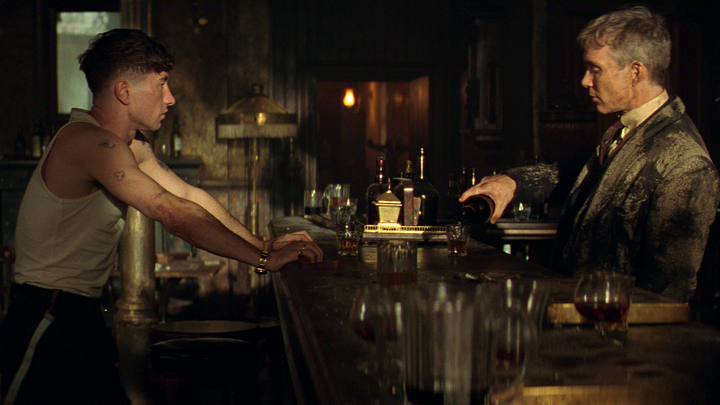
Ever since news of a Peaky Blinders film dropped back in the summer of 2024, fans have been speculating about how the cast of old faces and new names would weave together.
One of the most intriguing additions to the line-up was Barry Keoghan, and with the trailer for the movie debuting on Thursday, he’s also shared some key details about what role his character will play.
It’s been confirmed that Barry will play Duke, the estranged son of Cillian Murphy’s character, Tommy Shelby – and in his dad’s absence, Duke has become the new leader of the Peaky Blinders gang.
Meanwhile, if the new trailer is anything to go by – with Duke going as far as considering committing treason to help the Germans win the war – his presence is going to cause something of a ruckus.
In a new interview, Barry told Empire that his character is “troubled” and “up to no good” when we meet him in the movie.
“That’s a boy, just looking for his father,” the Oscar nominee claimed. “Being a father myself, I really did relate to Duke, because there’s this cry for his father and this cry for the figure that he needs to be there.”
Barry also explained that he’s been waiting to join the Peaky Blinders line-up, but there hadn’t been a right role for him before this point.
“I always wanted to be part of it, and I feel like this was the perfect moment, in the sense of who I play and the story that unfolds,” the Saltburn actor said. “It couldn’t be any more perfect casting.”
To get into character, Empire has claimed that Barry closely studied Cillian on set to get a hold on his mannerisms, drawing inspiration from The Lion King.
“In the way that Simba follows his dad […] It’s as simple as that,” Barry said. “Honestly! The Lion King was one of the ones that, for me, had that animalistic, father and son approach to it.”

He also shared how his role as Duke came about, with a fortuitous Father’s Day message to his close pal Cillian – who he first worked with in Christopher Nolan’s 2017 film Dunkirk – turning into a job offer.
“He goes, by the way, would you want to play my son in Peaky Blinders?” Barry explained. “At the drop of a hat, I was like, feckin’ yeah, anything to work with yourself again, and to become part of that universe and that world.”
Peaky Blinders: The Immortal Man is set in 1940, amidst the chaos of the Second World War, with Tommy returning from his “self-imposed exile” to decide whether to return to the life he left behind, or make sure there’s no way back once and for all.
Cillian will be joined by former Peaky Blinders co-stars Stephen Graham and Sophie Rundle, who are also reprising their roles in the new film, along with new additions like Rebecca Ferguson and Tim Roth.
Peaky Blinders: The Immortal Man will premiere in select cinemas from 6 March, before arriving on Netflix on Friday 20 March.
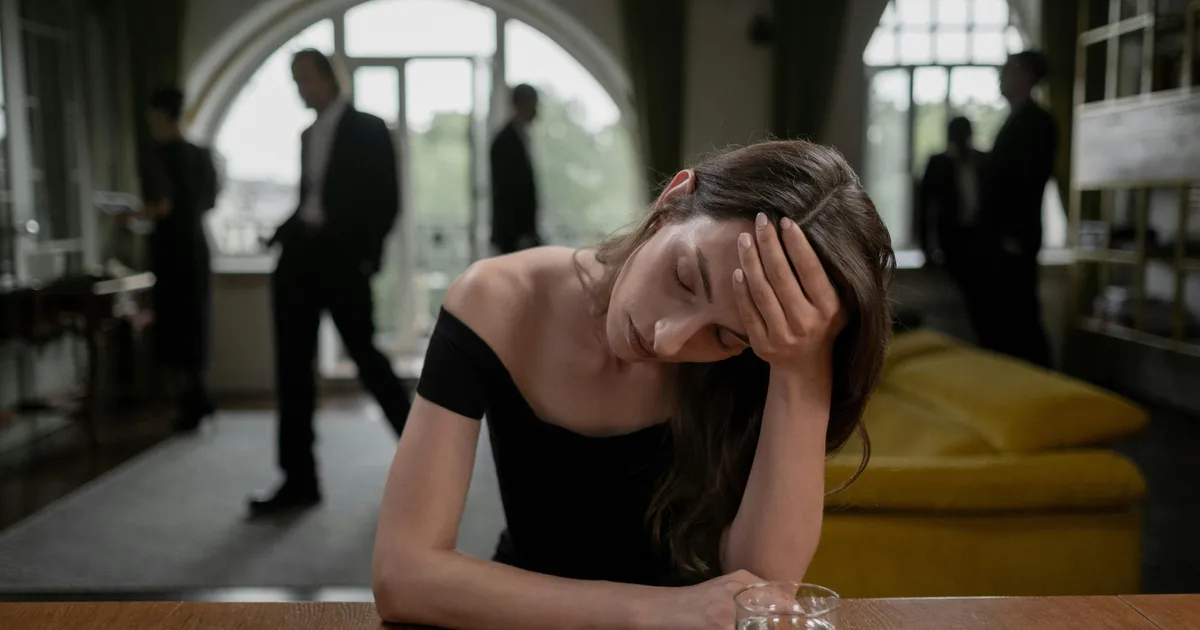
According to the UK’s National Institute for Health and Care Excellence (NICE), around 12 per cent of people will experience social anxiety disorder at some point in their lives, making it the most prevalent form of anxiety.
If you’re not familiar with the condition, the NHS describes it as: “a long-term and overwhelming fear of social situations.” They add that it usually starts during teenage years and can be very distressing and impact your day-to-day life.
Now, researchers have revealed that the condition which was always thought to be something purely in our minds, it may actually be related to our gut health and changes in our brains, too.
What social anxiety is and how it relates to the gut
While introversion and social anxiety may sometimes crossover, there is a key difference and it’s perfectly explained by NICE guidelines. NICE says: “Social anxiety disorder (also known as ‘social phobia’) is an overwhelming fear of social
situations…
“Although everyone worries from time to time about coping with a social situation, for people with social anxiety disorder the worry or fear can last a long time and severely affect their lives. They are afraid of doing or saying something that will result in embarrassment, humiliation or rejection by others.”
When it comes to introversion, Psychology Today explains: “Introverts do not fear or dislike others, and they are neither shy nor plagued by loneliness. A crowded cocktail party may be torture for introverts, but they enjoy one-on-one engagement in calm environments, which is more suited to the make-up of their nervous system.”
What’s key to remember here is that social anxiety isn’t about preferring solitude but instead, the brain responding to perceived threat.
So, what is the link between gut health and social anxiety?
Studies as far back as 2016 revealed distinct microbiome profiles in people with depression, suggesting that our mental health may be shaped in part by the organisms living inside us.
With this in mind, Dr Mary Butler at University College Cork, in Ireland, and colleagues analysed the faeces of 31 people with the social anxiety, and 18 without. They found clear differences in the gut bacteria of the two that suggested there may be some weight behind this theory.
Writing for BBC Science Focus, science writer David Robson explains: “To determine whether those differences could have a meaningful impact on people, the team transplanted some of the participants’ faeces into the stomachs of laboratory mice, before putting them through a series of behavioural tests.
“One test analysing ‘social fear conditioning’ proved especially revealing. Here, mice were given a small electric shock whenever they approached another mouse, causing them to learn that social contact led to pain.”
They found that the mice who received faecal transplants from people with social anxiety were more susceptible to the condition and were slower to ‘unlearn’ the association when electric shocks stopped.
Most notably, the mice didn’t experience generalised anxiety but specifically social anxiety around other mice.
“The striking part of our work was the specificity of the transferred phenotype,” said Butler speaking to BBC Science Focus
“The microbiota from donors with social anxiety disorder produced a social-fear-selective effect in otherwise behaviourally normal mice.”
There’s still a long way to go before we fully understand this, but the news is hopeful for future treatment of the condition.
What to do if you have social anxiety
The NHS says: “It’s a good idea to see a GP if you think you have social anxiety, especially if it’s having a big impact on your life. It’s a common problem and there are treatments that can help.
“Asking for help can be difficult, but a GP will be aware that many people struggle with social anxiety and will try to put you at ease. They’ll ask you about your feelings, behaviours and symptoms to find out about your anxiety in social situations.”
You may then be referred to a mental health specialist for treatment and support.
Help and support:
- Mind, open Monday to Friday, 9am-6pm on 0300 123 3393.
- Samaritans offers a listening service which is open 24 hours a day, on 116 123 (UK and ROI – this number is FREE to call and will not appear on your phone bill).
- CALM (the Campaign Against Living Miserably) offer a helpline open 5pm-midnight, 365 days a year, on 0800 58 58 58, and a webchat service.
- The Mix is a free support service for people under 25. Call 0808 808 4994 or email help@themix.org.uk
- Rethink Mental Illness offers practical help through its advice line which can be reached on 0808 801 0525 (Monday to Friday 10am-4pm). More info can be found on rethink.org.
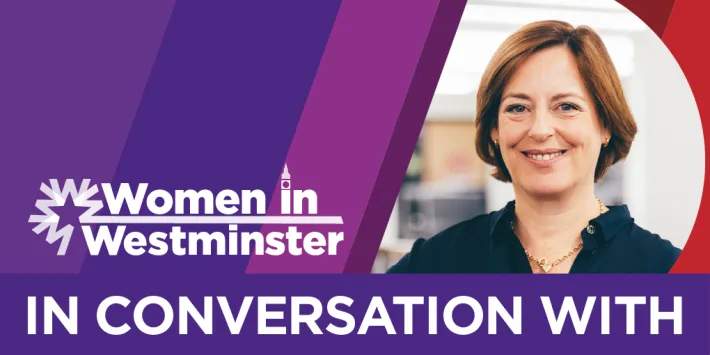

As Chief Executive of Ofcom, Dame Melanie Dawes is responsible for one of the most ambitious regulatory agendas in a generation. As part of our Women in Westminster series, we sat down with Dawes to discuss stepping into contested space, holding global tech companies to account, and being the public’s champion
Regulation is sometimes seen as an exercise that takes place quietly in the background, far away from the headlines. But that is not how Dame Melanie Dawes, Chief Executive of Ofcom, views it.
“Everything Ofcom does touches people’s lives in ways they really care about,” Dawes told Women in Westminster during our sit-down conversation. “What we do has that connection with people’s lives in a way that is quite special.”
From telecoms to television to social media, the sheer breadth of Ofcom’s remit means that Dawes occupies one of the most complex regulatory roles in the UK. Throughout our conversation, Dawes is clear that regulating the communications services that we all use and rely on each day is something that matters immensely to the UK public.
The former Permanent Secretary also finds herself in an increasingly visible role. Following the passing of the Online Safety Act, Dawes has been at the centre of some of the most contested public debates of our times, having to balance competing interests between safety and free speech, innovation and harm, and freedom and responsibility.
Dawes tells us that despite that complexity, Ofcom’s core job remains very clear. It is to act in the public interest with clarity and determination, even if that places the regulator squarely in conflict with some large and powerful organisations. That is, she promises, something that she and her staff will never shy away from.
“Everybody who works at Ofcom on online safety feels a huge sense of purpose,” she tells us. “We are doing it because our parliament has tasked us with this really important job, and we know that we have the public on our side and that they want to see results.”
The complexity of Ofcom’s regulatory role has grown in recent years as new technologies have challenged traditional models of how information is viewed and shared. Online safety, media standards, and the power of global technology platforms have shifted regulation into the foreground of public life.
Ofcom retains a very broad range of responsibilities, but Dawes acknowledges that the Online Safety Act “gets a lot of the oxygen” in current discussions.
“It’s not a system that any other country has set up,” Dawes says of the Act. “No one has regulated these companies in this way to try to achieve such an important increase in safety for the public.”
Dawes believes that the challenges in regulating large technology companies are cultural as much as they are technical, describing an industry “where there has been no regulation for 20-25 years.” It is also a sector where the entire culture has been built on moving fast and fixing problems later, if at all. In the wake of the Online Safety Act, Dawes tells us that this is something that must now change.
“The culture in Silicon Valley is not where we need it to be,” she says. “There isn’t a culture of safety testing, of testing things in advance before you launch them to the public. So, the scale of the challenge is huge.”
At the heart of the Online Safety Act, Dawes tells us, is a desire to hardwire safety into product design at an earlier stage. She urges platforms to “think like perpetrators”, anticipate abuse, and build protections in from the start.
“What we’re really trying to do here is to get the platforms to take a level of responsibility that they’ve not taken before,” she says. “They’ve got to stop just launching services on the public without having done a risk assessment. You don’t launch a toy on children without testing it properly. You don’t launch a new car. It should be the same for online services.”
Dawes acknowledges that both parents and children are “frankly really scared” at the moment. She also points out that online harms are not evenly distributed. Dawes highlights the gendered nature of online abuse, pointing to evidence that it is often women and girls who experience some of the worst problems online.
“We saw that it was women who were overwhelmingly targeted by that undressing functionality on Grok that was launched on Christmas Eve,” she reminds us. “In November last year, Ofcom launched its own guidance for tech platforms to better protect women and girls online”.
Ofcom opened an investigation into X early in the new year, making the UK the first country to do so. For Dawes, this demonstrates the willingness of the regulator to robustly intervene in high-profile cases.
Progress has also been tangible elsewhere. Dawes tells us that in less than a year of enforcement, 86 per cent of visitors to the top 100 porn sites are now covered by age checks. “Nobody really thought we were going to be able to do that a couple of years ago,” she adds.
Still, Dawes is careful not to oversell what regulation alone can achieve. The accountability for change, she insists, ultimately lies with industry. “They are the ones that run the services,” she says. Regulation can draw lines and create incentives, but it cannot replace platforms’ responsibility. Nor can it address every underlying cause of online harms.
“Behind every abusive post is a person,” she reflects. “And I think there’s something about the conversation that we have in our communities and our families and in schools about the way that we behave online in ways that we wouldn’t do if we were sitting face to face with somebody. That’s got to be about leadership everywhere across our society.”
However, despite the challenges, Dawes remains confident that regulation can make a real difference to safety.
“I am very optimistic, because we’ve shown that we can achieve change,” she says. “We’re very conscious of the expectations on us, and we’re constantly challenging ourselves about where we can move faster and move further.”
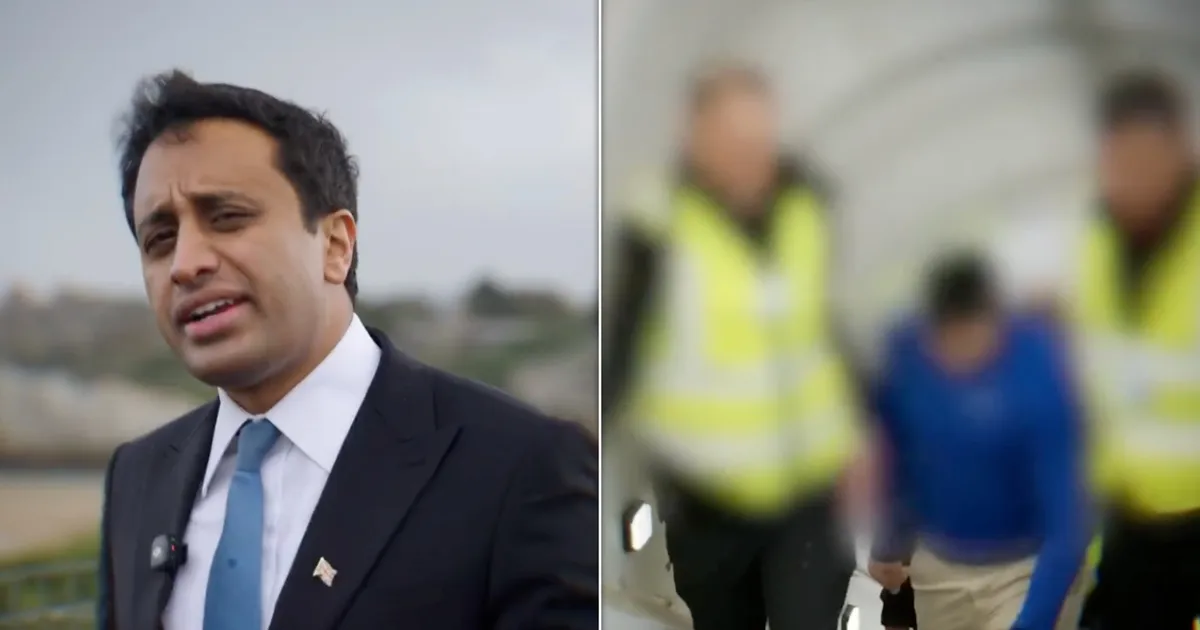
Reform UK has been accused of “extraordinary hypocrisy” after Zia Yusuf criticised the government for a lack of deportations – while using Home Office footage of its recent deportations.
Yusuf, who calls himself “Reform’s Shadow Home Secretary” but is actually the party’s Home Office spokesperson, released a social media video on his “promise to the country” this week.
While emotive music played in the background, Yusuf can be seen pacing around the British countryside while claiming Britain has been “overwhelmed by immigration, both legal and illegal”.
At one point, Yusuf – who is not currently an MP – pledges that a government under Reform would “stop the boats” and embark on a “mass deportation programme”.
The video then switches to footage of “illegal” migrants being deported.
The only problem is that footage was released by the Home Office last year when the government announced it had sent 19,000 people back to their origin countries in a crackdown on irregular migration.
Anna Turley, chair of the Labour Party, denounced the use of the government’s own clips.
She said: “This is extraordinary hypocrisy from Zia Yusuf.
“He has spent months throwing stones at the government over illegal migration, yet is now using footage of us taking tough action to remove people, for his campaign video.
“You can’t claim the government is doing nothing while broadcasting clear proof that we are. Unlike Reform, this Labour government is getting on with the job of securing our borders – and the footage he’s chosen to use proves it.”
This is not the first time Reform has come under fire for its immigration pledges.
The right-wing party has taken a hardline approach, vowing to abolish indefinite leave to remain, meaning immigrants could potentially have to renew their immigration status every five years, indefinitely.
Yusuf has previously claimed indefinite leave to remain could be “rescinded retrospectively” too, meaning those previously granted it could be deported.
Even if they are allowed to stay in the UK, they would no longer be allowed to claim any benefits.
An estimated 430,000 people had ILR status at the end of 2024.
National secretary of the GMB union, Rachel Harrison, said last year that the plans are “morally repugnant”.
She said: “Our public services – especially the NHS – and our care sector are utterly reliant on migrant workers. Without them our care and health sectors would collapse.
“This is yet more performative politics from a bunch of millionaires and their pals who do not live in the real world.”
Daniel Radcliffe doesn't want his son to know he's Harry Potter

Ware & Kay Solicitor appoints Senior Associate on team

Tax season presents boom-or-bust test


-

 Video4 days ago
Bitcoin: We’re Entering The Most Dangerous Phase
-

 Tech5 days ago
Luxman Enters Its Second Century with the D-100 SACD Player and L-100 Integrated Amplifier
-

 Crypto World3 days ago
Can XRP Price Successfully Register a 33% Breakout Past $2?
-

 Sports3 days ago
GB's semi-final hopes hang by thread after loss to Switzerland
-

 Video11 hours ago
XRP News: XRP Just Entered a New Phase (Almost Nobody Noticed)
-
 Tech3 days ago
The Music Industry Enters Its Less-Is-More Era
-

 Business3 days ago
Infosys Limited (INFY) Discusses Tech Transitions and the Unique Aspects of the AI Era Transcript
-

 Video3 days ago
Financial Statement Analysis | Complete Chapter Revision in 10 Minutes | Class 12 Board exam 2026
-

 Entertainment2 days ago
Kunal Nayyar’s Secret Acts Of Kindness Sparks Online Discussion
-

 Tech2 days ago
Retro Rover: LT6502 Laptop Packs 8-Bit Power On The Go
-

 Crypto World6 days ago
Bhutan’s Bitcoin sales enter third straight week with $6.7M BTC offload
-
 Sports1 day ago
Clearing the boundary, crossing into history: J&K end 67-year wait, enter maiden Ranji Trophy final | Cricket News
-

 Entertainment2 days ago
Dolores Catania Blasts Rob Rausch For Turning On ‘Housewives’ On ‘Traitors’
-

 Business2 days ago
Tesla avoids California suspension after ending ‘autopilot’ marketing
-
 NewsBeat5 days ago
The strange Cambridgeshire cemetery that forbade church rectors from entering
-

 Crypto World2 days ago
WLFI Crypto Surges Toward $0.12 as Whale Buys $2.75M Before Trump-Linked Forum
-
 NewsBeat5 days ago
Man dies after entering floodwater during police pursuit
-

 Crypto World15 hours ago
83% of Altcoins Enter Bear Trend as Liquidity Crunch Tightens Grip on Crypto Market
-

 NewsBeat6 days ago
UK construction company enters administration, records show
-
 Crypto World6 days ago
BlackRock Enters DeFi Via UniSwap, Bitcoin Stages Modest Recovery