Connect with us

Business

Commodities: Trump Sets A Deadline For Iranian Deal

Published

on

Commodities: Trump Sets A Deadline For Iranian Deal

From Trump to trade, FX to Brexit, ING’s global economists have it covered. Go to ING.com/THINK to stay a step ahead. We’re sorry we can’t reply to individuals’ comments.Content disclaimer: The information in the publication is not an investment recommendation and it is not investment, legal or tax advice or an offer or solicitation to purchase or sell any financial instrument.This publication has been prepared by ING solely for information purposes without regard to any particular user’s investment objectives, financial situation, or means. For our full disclaimer please click here.

Continue Reading
Click to comment

Leave a Reply

Your email address will not be published. Required fields are marked *

Business

Buy Shares Where You Invest: Charles Schwab

Published

on

Buy Shares Where You Invest: Charles Schwab

Buy Shares Where You Invest: Charles Schwab

Continue Reading

Business

Tax season presents boom-or-bust test

Published

on

Tax season presents boom-or-bust test

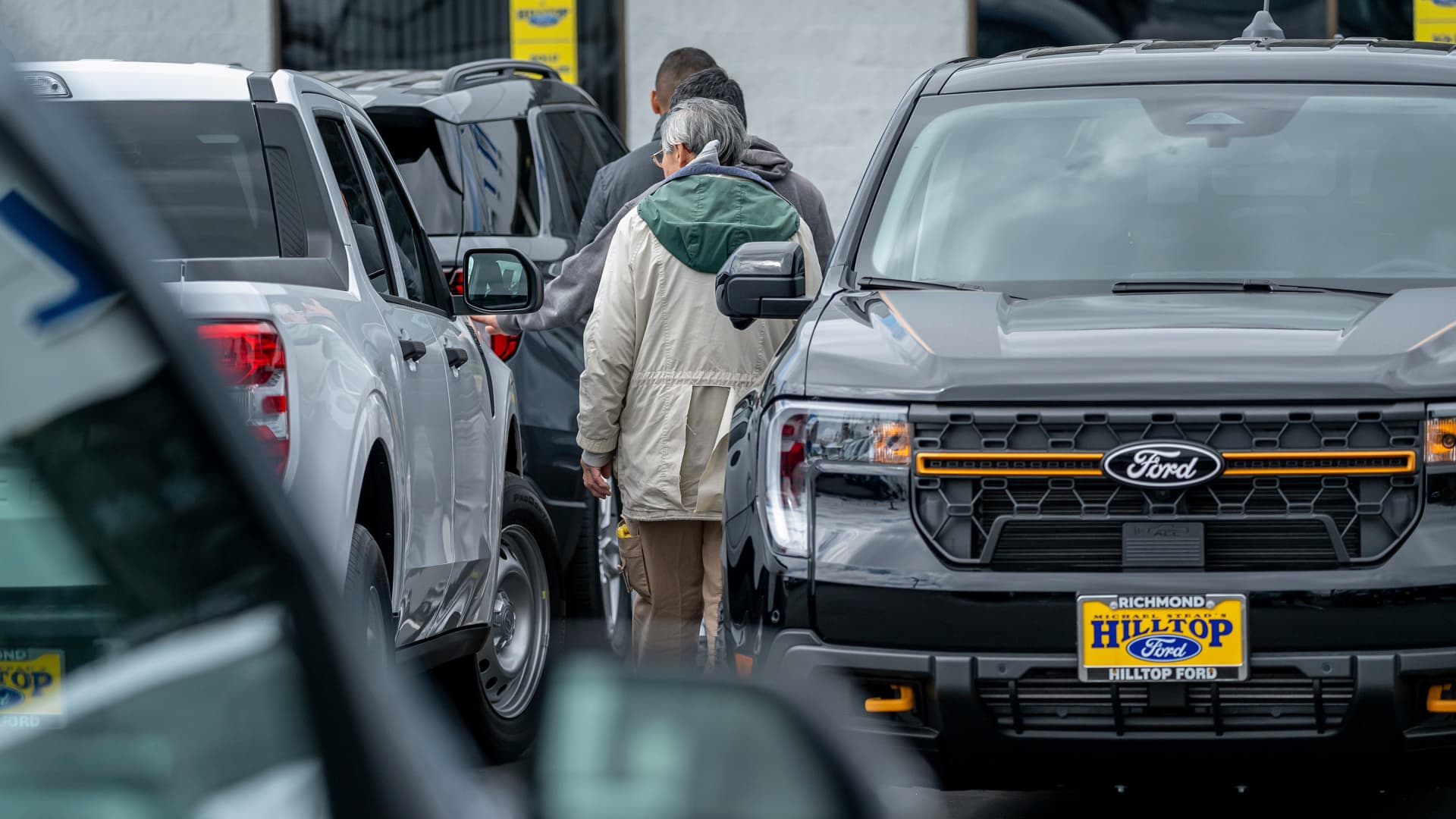
Customers near a Ford Maverick pickup truck at a Ford dealership in Richmond, California, US, on Wednesday, April 16, 2025.

David Paul Morris | Bloomberg | Getty Images

DETROIT – The strength of the U.S. automotive industry will face an early test this spring that has nothing to do with cars or trucks.

Advertisement

With tax season starting, industry experts are projecting that some Americans, many of whom have been priced out of the new vehicle market, will use anticipated higher tax returns to purchase a new or used vehicle.

Extra cash on hand could lend a needed boost to an industry that’s suffering from slowing vehicle sales — or it could reveal continued problems for the automotive industry with inflated prices and consumers still reluctant to spend on big-ticket items.

“Their new tax bill is actually going to be less, and they’re going to be getting more in their tax return. It’s going to be a little bit of a surprise, we think, for a lot of potential buyers out there,” said Cox Automotive senior economist Charlie Chesbrough at a recent auto analyst conference.

The average IRS tax refund is up 10.9% so far this season, compared to the same point in 2025, according to early filing data. As of Feb. 6, the average refund amount was $2,290, compared with $2,065 reported about one year prior.

Advertisement

The increases were expected under tax changes by the Trump administration, including the One, Big Beautiful Bill Act signed in July. That legislation removed taxes on overtime and tips and allowed eligible taxpayers to deduct up to $10,000 in annual interest paid on loans for new, U.S.-assembled vehicles purchased, among other adjustments.

Stock Chart IconStock chart icon
hide content

Auto dealer stocks

Many of the tax changes were made retroactive to January 2025, which means taxpayers may have withheld more than they will ultimately owe.

Advertisement

“Although it’s a bit of an unknown, it feels like it could be really beneficial to vehicle sales, particularly in that sort of Q1-Q2 timeframe,” said David Oakley, GlobalData manager of Americas vehicle sales forecasts.

March is historically one of the top months for U.S. vehicle sales, especially for used vehicles. The month has represented 9.1% of annual new vehicle sales on average over the past 12 years, according to Cox, trailing only the month of December at 9.3% of sales.

Many of the recent tax changes also assist middle- and higher-income consumers who may decide to pull ahead a vehicle purchase. The industry saw a similar dynamic during the Covid pandemic when the Trump administration issued many Americans $1,400 stimulus checks.

Back then, though, federal interest rates were near zero compared to the current Federal Reserve funds rate of 3.5%–3.75% and inventory of new vehicles was low. Now, with higher borrowing costs, but improved inventory, the equation could be different.

Advertisement

More buyers are agreeing to longer-term loans amid higher financing costs and prices. Putting down extra cash ahead of time can help lower monthly payments, which Carmax’s Edmunds reports reached a record of $772 per month for new vehicles during the fourth quarter.

The average transaction price for new vehicles in the U.S. was hovering around $50,000 toward the end of last year, up 30% from the start of 2020, according to Cox.

“What we don’t know is with consumer finance so stressed already, is that extra money already spent? Whether that’s going to be in the pockets. It’s a really mixed bag out there,” Chesbrough said.

Consumers could choose to use higher tax returns to pay off credit card debt — which nationally stands at a record level of $1.28 trillion, according to a report last week by the Federal Reserve Bank of New York — or replenish their savings after a period of persistent inflation.

Advertisement

U.S. consumer confidence fell to 84.5 in January, the lowest level since May 2014, driven by intense anxiety over high prices and a weakening labor market.

“It’s only confident people, people who feel comfortable about their economic fortunes of the economy of the United States, that are going to be interested in taking out a $40,000 or $50,000 auto loan,” Chesbrough said. “It’s a very difficult situation right now.”

– CNBC’s Kate Dore contributed to this report.

Advertisement
Continue Reading

Business

Independent Yorkshire coffee company expands reach after major investments

Published

on

Business Live

The North Yorkshire coffee company has shipped beans to the Outer Hebrides as part of growth which has seen its reach quietly expand

The Rounton Coffee roastery near Northallerton

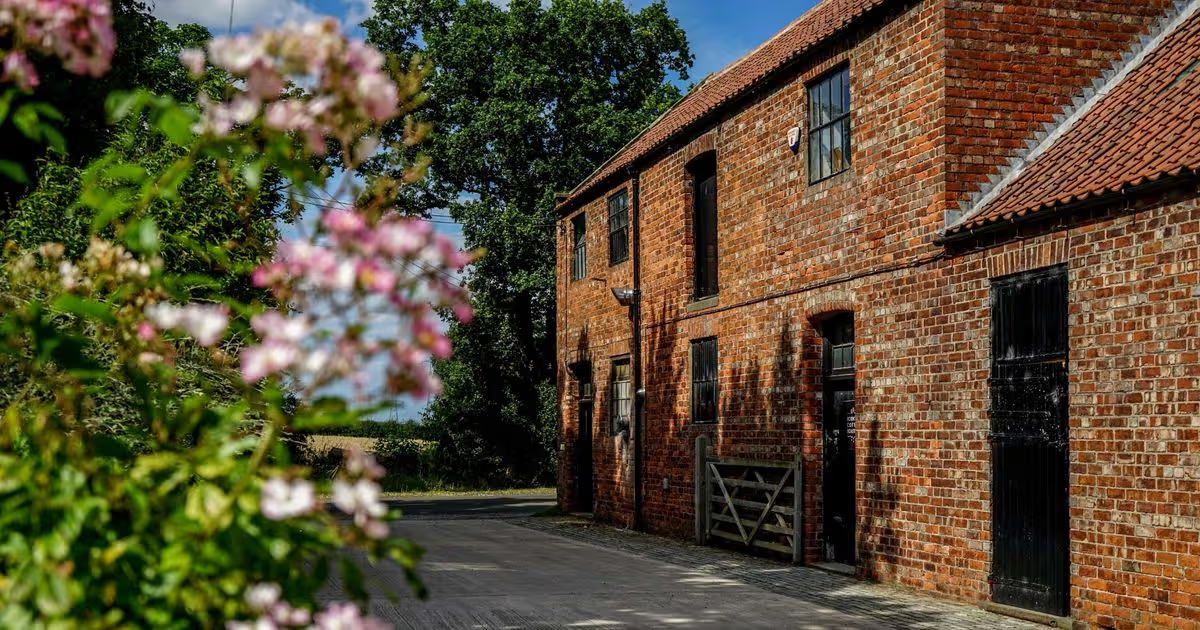
The Rounton Coffee roastery near Northallerton(Image: Routon Coffee)

An independent North Yorkshire coffee company is expanding its reach on the back of major investments to transform its facilities. Rounton Coffee was created by David Beattie 13 years ago, after he fell in love with coffee during a visit to Sumatra.

He quit his career in chemical engineering to launch the business and grow it into an award-winning supplier of speciality coffees from across the world. Following a recent six-figure investment into its production capabilities, Rounton Coffee is now roasting up to a ton of beans every day as national demand grows for its coffee, with orders arriving from places the team never expected to reach.

Middlesbrough-born Mr Beattie said: “We are now shipping coffee to the Outer Hebrides, where we have a wholesale partner, and when I started the business in 2013, would have been unfathomable. Our growth still feels a bit surreal, as we started life at farmers’ markets simply as a way of sharing our love for really good quality, ethical coffee with people like us.

“We just wanted to share what we were passionate about, and we’ve been lucky that over the years, more and more people have also found a passion for quality coffee.”

Advertisement

Based inside an old granary building outside the village of East Rounton, near Northallerton, the small company currently packs around 2,150 bags of beans each week. Recent investment in machinery included a £150,000 commercial roaster which uses 80% less energy than traditional devices and which has also improved both the consistency and output at their village HQ.

David Beattie, founder of  Yorkshire's Rounton Coffee

David Beattie, founder of Yorkshire’s Rounton Coffee(Image: Rob Evans Photography Ltd)

The growth has also enabled Rounton Coffee to give back more to the community. Donations have been made to the North Yorks Moors Trust, and it is also involved in sponsorship to help schoolchildren in some of Teesside’s most deprived postcodes to connect with nature.

“A big part of why we do what we do is it gives us a platform to give back, be it in our community or our suppliers, and the more the business grows the more we can do that,” he added.

“In terms of our growth, I think lockdown was a game-changer for independent coffee companies. People found themselves at home and spending a bit more on higher quality products, and that really opened a lot of people’s eyes to the quality of coffee that was available outside of supermarkets.

Advertisement

“Since then, we’ve been fortunate that the coffee boom has only kept going. But what really matters is that, as a business, we can use coffee as a force for good. Our suppliers are paid fairly, and that really matters to us.

“Some international coffee brands have faced justified criticism for how they treat farmers and how suppliers are treated, and we want to play our small part in doing things differently. But we also want to improve lives closer to home. We are a small team who were all born and live in the area, so it matters to us that the business leaves a really positive footprint – and that it is something we can truly be proud of.”

Continue Reading

Business

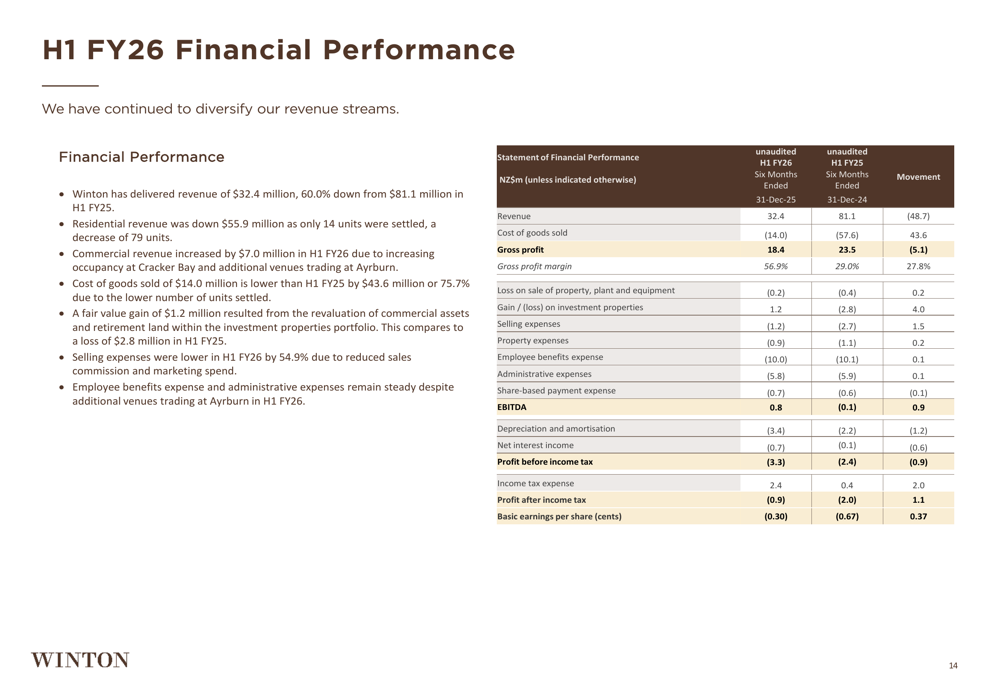
Winton Land H1 FY26 slides: revenue drops 60% amid settlement timing

Published

on

Winton Land H1 FY26 slides: revenue drops 60% amid settlement timing


Winton Land H1 FY26 slides: revenue drops 60% amid settlement timing

Continue Reading

Business

abrdn European Logistics Income shareholders reject DL Invest bids

Published

on


abrdn European Logistics Income shareholders reject DL Invest bids

Continue Reading

Business

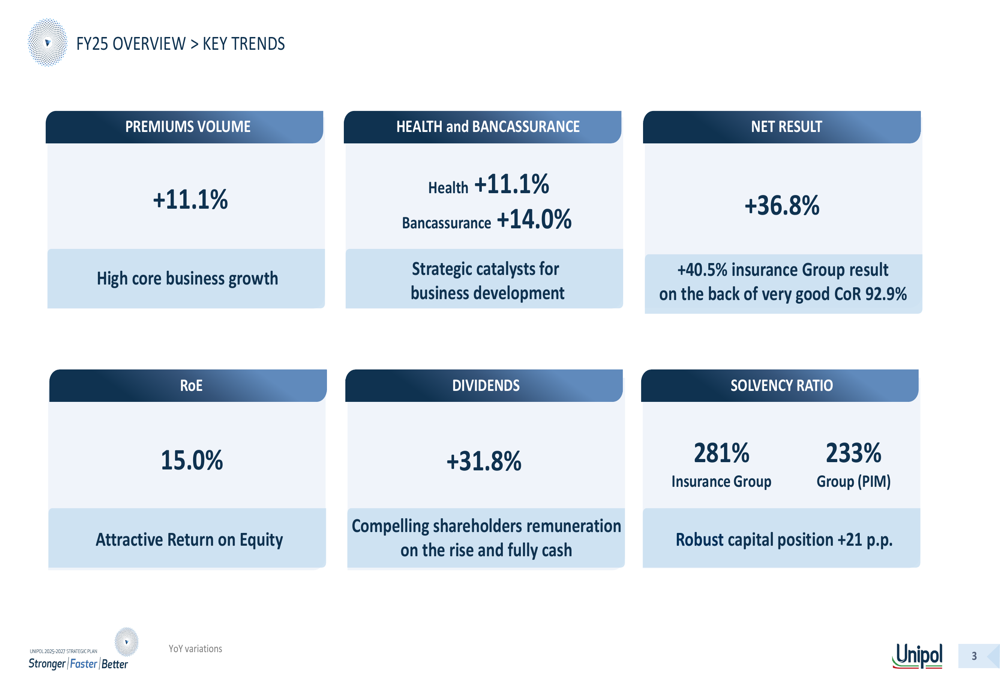
Unipol FY25 slides show 37% profit jump, dividend up 32%

Published

on

Unipol FY25 slides show 37% profit jump, dividend up 32%


Unipol FY25 slides show 37% profit jump, dividend up 32%

Continue Reading

Business

Lamar earnings missed by $0.07, revenue topped estimates

Published

on


Lamar earnings missed by $0.07, revenue topped estimates

Continue Reading

Business

Form 8K Blackstone Private Credit Fund For: 20 February

Published

on


Form 8K Blackstone Private Credit Fund For: 20 February

Continue Reading

Business

Asos co-founder Quentin Griffiths dies after fall in Thailand

Published

on

Asos co-founder Quentin Griffiths dies after fall in Thailand

Quentin Griffiths, the British co-founder of online fashion retailer Asos, has died after falling from a high-rise apartment building in Pattaya, according to local reports.

Griffiths, 58, is reported to have fallen from the 17th floor of his condominium. Emergency services attended the scene and confirmed his death.

Thai police said there were no immediate signs of disturbance inside the apartment but added that investigations are ongoing and foul play has not been ruled out pending further forensic analysis. Authorities said a full post-mortem examination would be required to establish the exact cause of death.

The circumstances surrounding the fall remain unclear. A source close to the family told The Sun that the situation was being described as “suspicious”, though no official determination has been made.

Griffiths had reportedly been involved in a legal dispute with his former Thai spouse over business assets. Last year, he was questioned by police following allegations that he had forged documents to sell land and shares in a jointly operated company. He denied the allegations and was released after questioning. Reports indicate the investigation was continuing at the time of his death.

Advertisement

Born in London, Griffiths co-founded Asos in 2000 alongside Nick Robertson and Andrew Regan. The company grew into a global online fashion retailer valued at around £3bn at its peak, with high-profile figures including the Princess of Wales and Michelle Obama among those to have worn its own-label designs.

Griffiths stepped down from Asos in 2005 after serving as marketing director. He later realised significant gains from share sales, reportedly making around £15m in 2010 and receiving further windfalls in subsequent years.

In later years, he pursued legal action against accountancy firm BDO, alleging incorrect tax advice had resulted in a multi-million-pound liability linked to share disposals in Asos and Achica, another online retail venture he co-founded.

Griffiths had lived in Thailand for more than a decade. He is understood to have been the father of three children.

Advertisement

Business Matters has contacted the Foreign, Commonwealth & Development Office for comment.

Investigations by Thai authorities are continuing.


Paul Jones

Harvard alumni and former New York Times journalist. Editor of Business Matters for over 15 years, the UKs largest business magazine. I am also head of Capital Business Media’s automotive division working for clients such as Red Bull Racing, Honda, Aston Martin and Infiniti.

Advertisement

Continue Reading

Business

Welsh tourism is a huge industry but can be even bigger

Published

on

Business Live

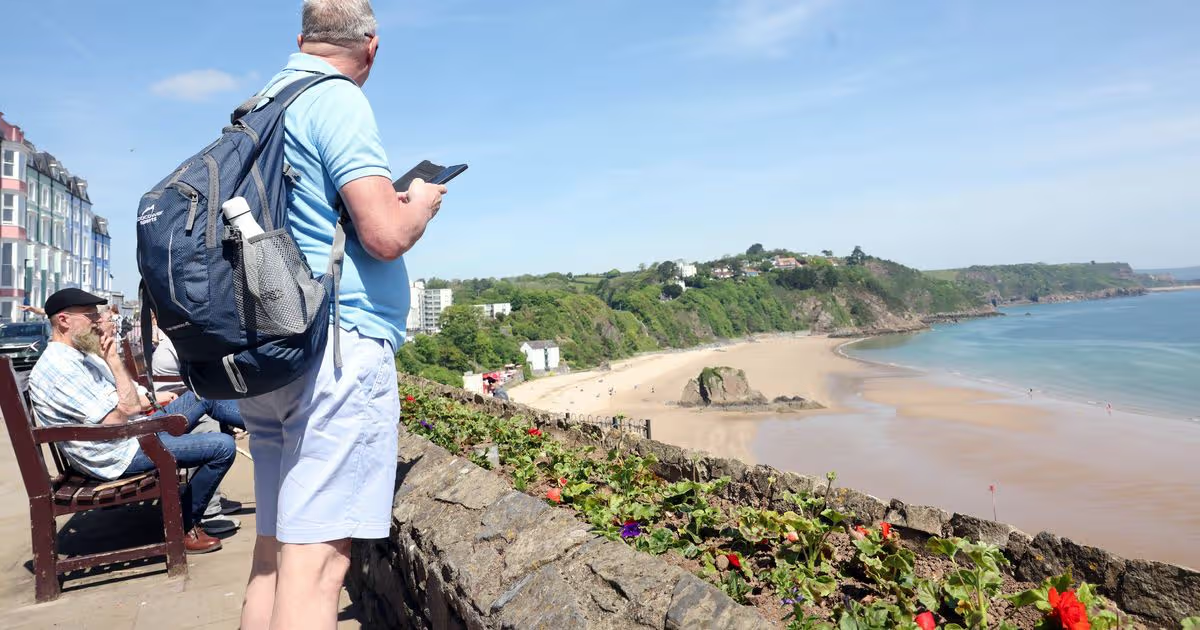
A tourist in Tenby.(Image: WalesOnline/Rob Browne)

Tourism is still too often treated by politicians in Wales as a “nice-to-have” – seasonal, useful for jobs, good for communities but not with the seriousness we reserve for manufacturing, fintech or life sciences in any debate on the Welsh economy.

This is despite clear evidence from a recent VisitBritain report which shows tourism is one of Wales’s most economically important sectors but that we are running it like a domestic leisure industry rather than a critical export sector.

In 2024, Wales recorded total tourism spend of £5.3bn, a total tourism GDP contribution of £5.9bn, and 100,871 tourism jobs. This means it accounts for 6.4% of Welsh economic output and 7.1% of Welsh jobs, making tourism a core industry in Wales with the economy being more tourism-dependent than the UK average.

But here’s the first uncomfortable truth namely that Wales is dependent without being dominant and whilst the UK total tourism spend is £165.9bn, Wales’s share is only around 3% of the UK total. This is the paradox at the heart of the Welsh tourism economy namely we rely more heavily on a sector that we have not grown to anything like its potential.

Advertisement

READ MORE: WRU will not conclude takeover deal for Cardiff Rugby until after the Six NationsREAD MORE: New £50m defence growth deal for Wales designed to boost SME supply chain

That matters because bigger markets escape the trap of being busy in summer and fragile for the rest of the year whilst sustaining higher-end accommodation, better visitor experiences, stronger supply chains, year-round programming, skilled roles and profitable reinvestment. And the quickest way to see why Wales underperforms on value is to look at the segment that behaves most like an export industry namely inbound international tourism.

International visitors typically spend more per trip, demand higher quality, and crucially can help stretch the season beyond peak domestic school holidays. Yet in 2024, international spend in Wales was just £497m whereas Scotland recorded £3.8bn and London £20.4bn. Even English regions that are not global capitals outperform Wales with the South West recording £1.6bn, the East of England £1.9bn, and the North West £2.4bn.

So Wales is not “a bit behind” on international visitors but is operating in a completely different and lower league.

Advertisement

This is not just a tourism marketing issue because international demand pulls through a different kind of economy including higher-grade accommodation, stronger food and retail, more paid experiences, more consistent demand, more investment confidence.

When the level of international tourism coming into Wales is weak, you tend to get the opposite such as price sensitivity, short stays, heavy seasonality and businesses forced to make their money in a narrow window.

The Welsh spend mix is even more problematic and Wales’s domestic tourism spend is nine times higher than inbound spend and whilst visitors from the UK matter hugely, the domestic model can have limits such as shorter breaks, lower spend per head, and a seasonal pattern that strains infrastructure during peaks while leaving tourism businesses underutilised for long periods.

The jobs data reinforces the same story with tourism being a significant employer but without the scale and value mix you would want to see for an industry of that importance. Of course, tourism is labour-intensive everywhere but that is not the point and it is clear that Wales has not done enough to move the sector up the value chain.

Advertisement

If tourism is already one of our largest sectors in the foundation economy, the policy question is why are we still stuck in a model that generates jobs without generating sufficient value and resilience? Are we increasing spend per visitor, extending the season, improving margins and creating better-paid roles or are we accepting a cycle of summer busyness and winter fragility?

The comparisons underline the point and whilst Scotland has roughly double Wales’s tourism jobs, it has higher spend, higher contribution to its economy and eight times the income from inbound visitors.

Whatever Scotland is doing, it has built a proposition that converts brand into international demand and it is not just scenery, it is product, cities, culture, heritage and year-round visibility. And whilst it could be argued that whilst Wales has comparable assets, it has not packaged them with the same discipline or consistency.

So what should change? First, Wales has to stop treating inbound tourism as an afterthought and if we want higher value, attracting international tourists has to become a core objective not a peripheral campaign. That means route development, international distribution partnerships, targeted market strategy, and a year-round pipeline of reasons to visit not just a summer postcard.

Advertisement

Second, Wales needs to prioritise value, not volume and a strategy built only on “more visitors” risks worsening congestion, environmental pressure and local resistance without improving incomes. The goal should be higher spend per trip, longer stays, stronger conversion into local supply chains, and a sector that is investable beyond a short season.

hird, Wales needs to be honest about what the best-performing regions do differently such as building coherent national brands backed by sustained visibility and anchored by cities, culture, events, heritage and high-quality experiences not just landscape. We have the raw assets but what we lack is consistent execution.

Which brings us to a final, unfashionable question namely do we have the right national machinery to deliver this at all? Wales has strategies and campaigns but the outcomes, particularly on inbound international tourism, suggest fragmentation rather than focus.

And whilst we have political parties that are calling for the resurrection of the Welsh Development Agency, is it also time to revisit the case for a dedicated Wales Tourism Board with real authority – not a talking shop but a delivery body accountable for inbound growth, year-round product development, data-led investment priorities and international market performance?

Advertisement

Therefore, the VisitBritain data makes one thing clear namely that tourism is already a critical sector for the Welsh economy. The question now is whether we are prepared to run it like a serious growth industry or whether we will keep relying on it as a seasonal comfort blanket while other UK nations and regions take the high-value markets.

Continue Reading

Trending

Copyright © 2025