

Business
Global equity funds attract biggest inflow in five weeks as concerns around AI ease




A version of this article first appeared in CNBC’s Inside Wealth newsletter with Robert Frank, a weekly guide to the high-net-worth investor and consumer. Sign up to receive future editions, straight to your inbox.
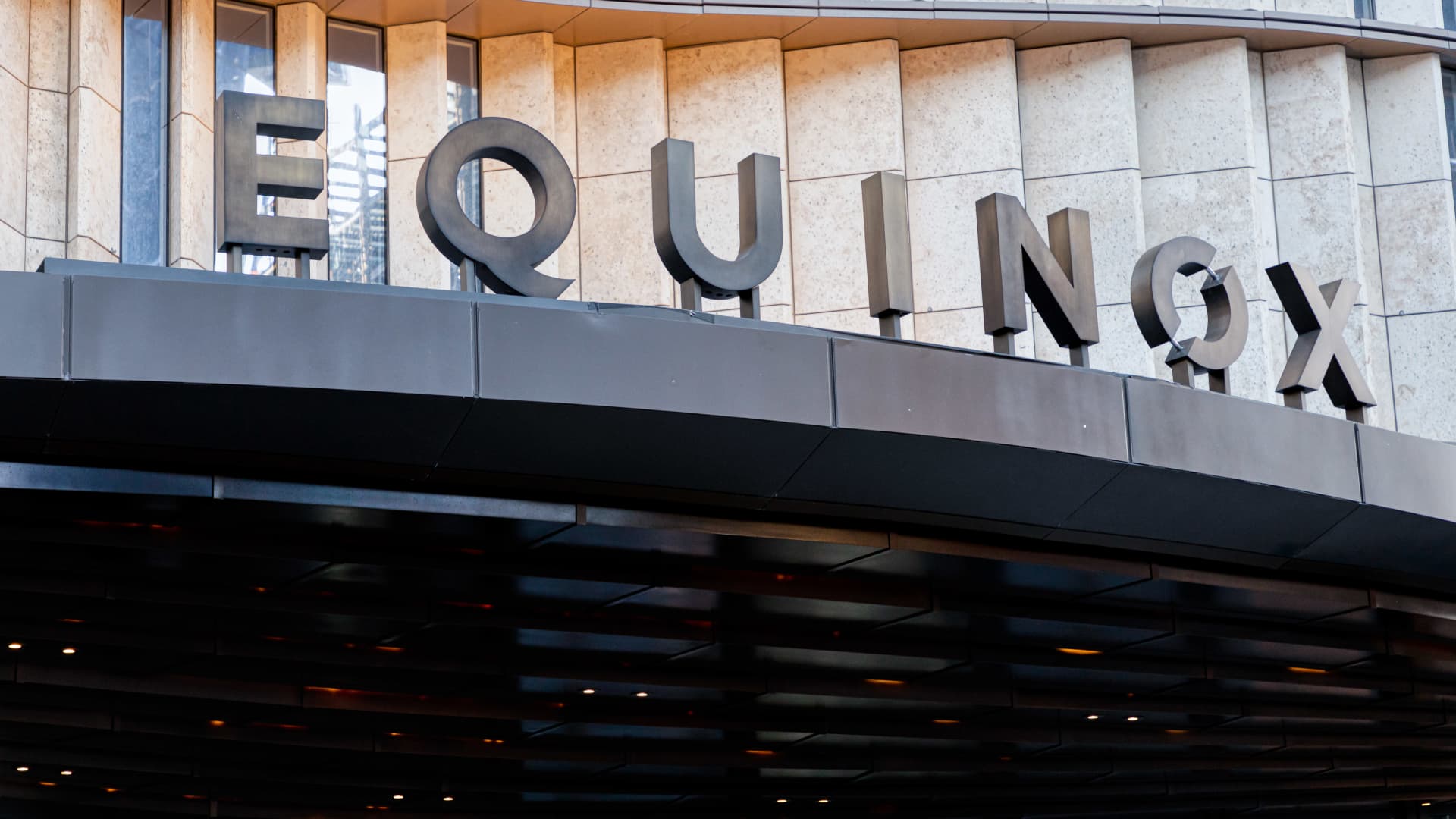
Equinox’s $40,000-a-year membership has a waiting list of more than 1,000 people, as demand for luxury health and wellness programs soars, according to the company’s chairman.
The high-end fitness chain’s “Optimize by Equinox,” launched in 2024, is one of the most expensive gym memberships in the world and includes everything from personal training and nutrition to sleep coaching, massage therapy and a “health concierge.”
Harvey Spevak, Equinox’s executive chairman, told Inside Wealth that the program has seen remarkable demand and highlights the “insatiable” demand by the wealthy for longevity and wellness products.
“Health is the new luxury,” Spevak said. “The number one thing in the experience economy, besides travel, that the consumer wants, is, ‘How do I live a high-performance lifestyle?’”
The Optimize program is all part of Equinox’s strategy to become the leading luxury brand in the fast-growing business of health and wellness.
The global wellness market is expected to reach nearly $10 trillion by 2030, up from $6.8 trillion in 2024, according to estimates from the Global Wellness Institute. With the population of millionaires and billionaires aging, and an explosion in companies and products promising miracle cures, the wealthy are driving much of the spending.
Equinox has grown beyond fitness clubs to expand into hotels and hospitality, personalized performance programs, IV centers, blood-testing collaborations and more.
The company opened its first hotel in Manhattan’s Hudson Yards neighborhood in 2019 and is about to open a second in Saudi Arabia. Spevak said Equinox will likely have close to a dozen hotels around the world – including the Middle East, Caribbean and U.S. – within the next seven to eight years.
Equinox currently has 115 fitness clubs and has plans for 40 more – including locations in Nashville; Toronto; Charlotte, North Carolina; and South Florida. Despite being the largest retailer in New York by square feet, it’s continuing to add more in its home city, Spevak said.
The Optimize membership leverages Function Health, a lab test company, to provide clients with tests for 100 biomarkers twice a year, which could then serve as guides for a fitness, nutrition and lifestyle program tailored to each client.
Spevak said the program has rolled out in Los Angeles and Dallas and will eventually launch in New York.
The company also recently created a personalized program for women called EQX ARC. Using diagnostics, wearables and specialized coaching, the program is designed around the different stages of a woman’s life and health journey, and already has its own wait list.
Spevak said the company’s IV drip lounge at the Equinox Hotel in Hudson Yards — its only drip lounge thus far — has already become “a seven figure business.”
Equinox Hudson Yards is the brand’s truest realization of its holistic lifestyle promise, giving members access to signature group fitness classes, a 25-yard indoor salt water pool, hot and cold plunge pools and a 15,000 square foot outdoor leisure pool and sundeck. The Equinox at Hudson Yards footprint offers ample opportunity for training, working, regenerating, socializing, community building, eating and more.
Matthew Peyton | Getty Images Entertainment | Getty Images
While Equinox is private and doesn’t disclose financials, Spevak said 2025 was a “record year” for the company and he expects 2026 “to be even bigger.” He said other high-end consumer companies are reaching out to Equinox to partner on health and wellness.
“When you think about the economy moving from a product economy to an experience economy, a lot of big consumer companies are saying, ‘Well, how do I continue to serve my consumer and health and wellness, and who do I talk to?’”
“There’s truly only one brand that has the authority and the brand equity,” he said.

Dimon famously didn’t sell any of his stock in the bank for most of the 20 years he’s been in charge of JPMorgan. But that changed at the end of 2023, when Dimon announced that he was selling 1 million shares in the bank, worth around $180 million. He also sold around $233 million of stock last February, too.
He still owns about 6.2 million shares in the bank, worth around $1.9 billion. The shares are held by family trusts, as well as by himself directly and his wife.

Depop has been sold to eBay for $1.2bn, marking a 25 per cent discount to the price paid five years ago by Etsy.
Etsy acquired the London-founded second-hand fashion platform for $1.6bn in 2021 at the height of pandemic-era ecommerce growth. The resale comes as Etsy refocuses on its core handmade and vintage marketplace.
Founded in 2011 by English-Italian entrepreneur Simon Beckerman, Depop built a strong following among younger consumers seeking sustainable and affordable fashion. The platform counted roughly seven million active buyers at the end of last year, nearly 90 per cent of whom were under 34.
For eBay, the deal represents an attempt to deepen its appeal with Gen Z shoppers and strengthen its position in the fast-growing resale segment. Fashion accounts for more than $10bn of eBay’s annual gross merchandise volumes, with second-hand clothing a key driver of growth.
Jamie Iannone, chief executive of eBay, said Depop would benefit from the group’s scale and operational capabilities. “We are confident that as part of eBay, Depop will be well positioned for long-term growth,” he said.
However, analysts suggest the acquisition is partly defensive. Aliyah Siddika of GlobalData described the transaction as “as much about defence as growth”, noting Depop faces intense competition from rivals such as Vinted.
Etsy shares rose nearly 10 per cent after the announcement, reflecting investor support for the decision to exit a business that has delivered lower profitability than its core operations. Major shareholders in Etsy include BlackRock, Goldman Sachs and activist investor Elliott.
Depop is expected to retain its brand and operate with a degree of autonomy under eBay’s ownership, subject to regulatory approval. The all-cash transaction is scheduled to close in the second quarter of 2026.
Peter Semple, Depop’s chief executive, said the deal marked a new chapter. “This transaction is a testament to the growth we have delivered and the strength of our brand and community,” he said.
The sale underscores the shifting valuations within ecommerce, as pandemic-era premiums give way to a more measured approach to growth and profitability.

Amy Ingham
Amy is a newly qualified journalist specialising in business journalism at Business Matters with responsibility for news content for what is now the UK’s largest print and online source of current business news.


New CEO says company will “stop being a donor of market share.”

Form 8K Nucor Corp For: 20 February


White House senior counselor Peter Navarro discusses Trumps Goldilocks economy, citing low inflation, rising wages and job growth. He also addresses the Supreme Courts tariff decision, the White House strategy for AIs impact on jobs and more.
The Federal Reserve’s preferred inflation gauge remained elevated in December as price pressures continued to pose a challenge for consumers.
The Commerce Department on Friday reported that the personal consumption expenditures (PCE) index rose 0.4% in December on a monthly basis and is up 2.9% from a year ago. Those figures were both slightly hotter than the estimate of LSEG economists, who predicted 0.3% and 2.8%, respectively.
Core PCE, which excludes volatile measurements of food and energy prices, was up 0.4% on a monthly basis and rose 3% year over year. Both figures were hotter than the expectations of economists polled by LSEG, who estimated the gauges would rise 0.3% and 2.9%, respectively.
Federal Reserve policymakers are focusing on the PCE headline figure as they try to bring inflation back to their long-run target of 2%, though they view core data as a better indicator of inflation.
Headline PCE has trended up to 2.9% after readings of 2.8% in November and 2.7% in October. Core PCE readings were 2.8% or 2.9% dating back to May before it reached 3% in December.
This is a developing story about the December PCE inflation report. Please check back for updates.
White House Deputy Press Secretary and Special Assistant to the President Kush Desai joins ‘Mornings with Maria’ to tout the jobs report, defend President Donald Trump’s tariff strategy and highlight new efforts to lower prescription drug costs.
The U.S. economy grew at a much slower than expected pace in the fourth quarter, according to new data released on Wednesday.
The Commerce Department’s Bureau of Economic Analysis (BEA) released its advance estimate for fourth quarter gross domestic product (GDP), which found the U.S. economy grew at an annual rate of 1.4% in the fourth quarter, which runs from October through December.
Economists surveyed by LSEG had expected the economy to grow at a 3% rate in the quarter. The fourth quarter’s 1.4% growth was slower than the 4.4% GDP growth recorded in the third quarter.
This is a developing story. Please check back for updates.

This customer might be feeling trolled, in this scene from Small Prophets.
Form 6K VODAFONE GROUP PUBLIC LTD CO For: 20 February

Global Counsel’s clients cut ties with the firm over Lord Mandelson’s links with sex offender Jeffrey Epstein.

Equinox’s $40,000-a-year Optimize membership has a waiting list

Here’s why the Ethereum-based privacy token AZTEC price is rising

Iheanacho Returns as Celtic Struggle Against Stuttgart

Smart energy pays enters the US market, targeting scalable financial infrastructure

Why Israel is blocking foreign journalists from entering

Software stocks enter bear market on AI disruption fear with ServiceNow plunging 10%

EXPECT XRP PULLBACKS & SHAKEOUTS ON THE WAY UP – WARNING GET YOUR XRP OFF EXCHANGES – XRP NEWS

Manchu Lakshmi Quits Film Production After Financial Losses and Debts#shortsfeed

Don’t Wait for a Crisis: Start Financial Planning & Money Conversation Today
-

 Video4 days ago
Bitcoin: We’re Entering The Most Dangerous Phase
-

 Tech5 days ago
Luxman Enters Its Second Century with the D-100 SACD Player and L-100 Integrated Amplifier
-

 Crypto World3 days ago
Can XRP Price Successfully Register a 33% Breakout Past $2?
-

 Sports3 days ago
GB's semi-final hopes hang by thread after loss to Switzerland
-

 Video12 hours ago
XRP News: XRP Just Entered a New Phase (Almost Nobody Noticed)
-
 Tech3 days ago
The Music Industry Enters Its Less-Is-More Era
-

 Business3 days ago
Infosys Limited (INFY) Discusses Tech Transitions and the Unique Aspects of the AI Era Transcript
-

 Video3 days ago
Financial Statement Analysis | Complete Chapter Revision in 10 Minutes | Class 12 Board exam 2026
-

 Entertainment2 days ago
Kunal Nayyar’s Secret Acts Of Kindness Sparks Online Discussion
-

 Tech2 days ago
Retro Rover: LT6502 Laptop Packs 8-Bit Power On The Go
-

 Crypto World6 days ago
Bhutan’s Bitcoin sales enter third straight week with $6.7M BTC offload
-
 Sports1 day ago
Clearing the boundary, crossing into history: J&K end 67-year wait, enter maiden Ranji Trophy final | Cricket News
-

 Entertainment2 days ago
Dolores Catania Blasts Rob Rausch For Turning On ‘Housewives’ On ‘Traitors’
-

 Business2 days ago
Tesla avoids California suspension after ending ‘autopilot’ marketing
-
 NewsBeat5 days ago
The strange Cambridgeshire cemetery that forbade church rectors from entering
-

 Crypto World2 days ago
WLFI Crypto Surges Toward $0.12 as Whale Buys $2.75M Before Trump-Linked Forum
-
 NewsBeat5 days ago
Man dies after entering floodwater during police pursuit
-

 Crypto World17 hours ago
83% of Altcoins Enter Bear Trend as Liquidity Crunch Tightens Grip on Crypto Market
-

 NewsBeat6 days ago
UK construction company enters administration, records show
-
 Crypto World7 days ago
BlackRock Enters DeFi Via UniSwap, Bitcoin Stages Modest Recovery